
#293 – Call In Show #4
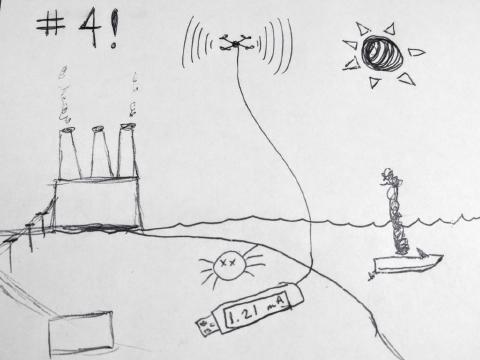
Download episode · 63 MB
Also on Apple · Spotify · YouTube · RSS
Show Notes
- Chris will be leaving for Europe soon. If you're interested in getting together, here are the days he'll be there:
- Berlin, April 5th and 6th.
- London, April 19th, 20th.
- The London meetup will be at the Yorkshire Grey (2 Theobalds Road WC1X 8PN London) at 6:30 pm on April 19th.
- Watch @chris_gammell's twitter account for any last minute updates/changes.
- Callers!
- Trevor
- He works on wholesale electricity and was wondering about how they change voltages on generators. Chris eventually started talking about different taps on the windings, but that could be wrong still.
- Trevor is also interested in DSP
- Chris suggested a theoretical book by Oppenheim.
- Dave mentioned the free online DSP guide.
- This is in hopes of hacking Zwave devices.
- Get in touch! Either correct us in the comments below or talk to Trevor directly on Twitter: @trevorstweeting
- Todd
- Sam
- Wavetek 27xt
- He was asking about whether to start a kickstarter with a friend and whether he can focus on a problem that is sufficiently technical.
- Chris recommends the book "Scale"
- Arsenio
- Arsenio called in to our first callin show about his rocket. There was an issue with i2c layout and the library. He has since gotten a 1054Z at Dave's recommendation. And has shipped off his first board to OSHpark!
- He's having issues with spiders in the workshop. Not as big as the one Dave had in his workshop a few years back.
- Dave recommended trying something like an ultrasonic cockroach repeller. Chris recommended asking Tim and Greg from Backyard brains who have been on the show before.
- Chris
- He's working with a battery powered ATTiny 84 board that controls an RC boat. Recently switched from a linear regulator to a switching power module...and started blowing stuff up.
- Dave predicts that it is SCR Latchup on the logic. He has made a video about that before.
- This could possibly be solved with an N-channel mosfet controlling power distrbution to the rest of the board.
- Intel news
- Andy Grove passed away.
- Intel is toning down their process jumps, indicating a shift in the predictive power of Moore's law.
- William
- The Fried Circuits USB tester has steadily added features, but he's not sure how to get more resolution at the low end. This is a dynamic range problem.
- Current chip is the INA219, also has been looking at the INA169
- The new USB C version requires 24 super narrow pitch pins and does not allow for any breaks in the line because of the high speed signals.
Transcript
Dave Jones: This is The Amp Hour Podcast. Recorded March 30th, 2016. Episode 293. Call-in show number four. Welcome to the Amp Hour. I'm Dave Jones from the EEV blog. And I'm Chris Gammell of Contextual Electronics. It's another call-in show. Another one. I've figured out last time that I've just been calling these by number. So we're on number four. Not really number four. Kind of like four and a half because we had the embedded call-in show and I didn't count that one. I feel like I should just come up with better. We should like color code them or something. I don't know. Right. Okay. Well, it should be a different category. Call-in show blue. Well, you should categorize them on our WordPress website and then people, if they just like the call-in shows, they can just listen to the call-in shows. Oh, no, no. There is a separate category for sure. Okay. No, there is. Yeah. But it's – and guest interviews are called out as well as separate things. Yes, they are. Yeah. So – but no, I just – I don't know. I just – numbering things like that always kind of – I don't know. Right. Yeah. Some people do that, you know. EEV blog number whatever. Stop waffling. Yeah. Let's go to our callers. Nope. Before that. Sorry. I need to announce that I will be – so I mentioned in a previous show that I'll be in Berlin and London. So the Berlin thing is going to be really casual. I still – I've only heard from one person. I'll be hanging out with him on the 5th. But I'll be there the 5th and the 6th. So people still are there and listening and they want to hang out. I'd love to hang out, grab a beer, whatever. And then – He needs more friends, folks. I need more. You have no idea. Okay. And then I got talking to the whole London crew and very helpful people. We are going to be – let me look it up here. We will be at – Who's we? We is like Mike Harrison, Sarr, and a bunch of other people that haven't been on the show yet. But maybe in the future. Who knows? We will be at the Yorkshire Grey. Never a more British-sounding pub name has there been. Exactly. So we'll be there on April 19th at 6.30 p.m. local time in London. The – geez, what is the – I don't think – you just look it up. But it's on Theobald's Road. Theobald's Road. But people have this thing called the internet now. They can find things. If you can't find it, yeah, maybe it wasn't meant to be. So – but yeah, like I said, Berlin, April 5th and 6th. London, April 19th and 20th. But the hangout's on the 19th. And then if people are at Hackaday Belgrade or in Belgrade or around Belgrade, would love to hear from you too. So that's all I got on that end. Just needed to get that stuff in there. And if there are any changes, I will definitely be updating my Twitter. That is the only place that I can reliably say that I will be updating. So just keep an eye on that if you're interested. Are you done? I am. Can we have our callers now? Yeah. Yes. What? I need to – Yeah. It's like, oh, if we have to, you know. Yeah, fine, dude. Dave. Okay. So Dave has all of the prompts I believe I emailed to him. So we have some background information. We usually don't read it, but we have it at least. Right. No. Mostly we – I like to be surprised. It gives a more – Yeah, you know, that is kind of nice actually. Genuine answer, you know, than a canned answer. Right. I agree with that. And, you know, we've been evolving how we do this thing too. And so what I just did – I've been doing, at least for this time, I just sent people a Skype chat invite, and then they can jump on there. So if people are interested in the future, that's all I'm going to basically be doing is send you a Skype chat invite unless you can't make it for some reason. And we do have one of those, so we'll try and get to that as well. Right. And we dumped that other service. We did, yeah. Well, no, it still exists. You can still call in. It's 929 the amp hour to – or sorry, 929 amp hour if you wanted to call and leave a voicemail. But ultimately it wasn't worth it because we just needed to call people direct. So, you ready?
SPEAKER_01: Go.
Dave Jones: Hey, what's your name? Where are you from? Trevor Sutherland from Louisville, Kentucky. Welcome, Trevor. How are you doing? Hey, Trev. Doing well, doing well. How are you guys doing tonight? Good, good. Well, not tonight here. Good. Oh, yeah, right. It's morning there. Oh, yeah. So, what's going on with you? What are you wondering about? Yeah, so I've kind of been a tinkerer for a long time.
Arduinos: Started off with Arduinos probably like 2008, 2009, something like that, and kind of worked through a bunch of different things. And I recently got a job in wholesale electricity. Oh, interesting. Dealing with stuff kind of – yeah, yeah, it's been really cool. It's been absolutely fascinating. But just a lot of the – some of the principles, like I can't really mesh what I knew before with what I'm learning now.
Dave Jones: And like one of the big things is this whole idea of like reactive voltage. Oh, apparent power. Yeah. Yeah. So, before that, could you just walk us through what that actually means to be doing wholesale electricity? Is that like you're at the grid kind of controlling, turning things on and off, or how does that work? Well, my actual job is actually I worked with a consulting company, and we deal with – primarily
Arduinos: most of our clients are larger companies, mostly loads, but we have a few net generators
Dave Jones: that are in places in the U.S. where they don't have to buy their power directly from a local utility company. They can actually buy it on the market. Uh-huh. Interesting.
Arduinos: And so, we provide services just trying to help them with paperwork, regulatory stuff, forecasting load, anything to make – anything to make their lives easier.
Dave Jones: Because I can imagine like when summer comes around and the Kentucky heat kicks in and everybody turns on their A.C., it's a pretty big deal around there, right?
Arduinos: Oh, yeah. It's a huge deal everywhere. And even then, like there are – depending on how well you can forecast what the temperature is going to do and what loads are going to do, you can – I mean, there's room.
Dave Jones: There are what are called capacity payments, which are based on five certain days throughout
Arduinos: the year. There will be a fee that the company will have to pay every day for the next year. Huh.
Dave Jones: And so, potentially by saving these companies money, you know, calling them and saying, hey, you know, this is going to be a big day, it might be worth backing off for an hour or two, you can potentially, you know, save these folks a lot of money. Gotcha. All right. Well, so you were asking about – you were saying about generators and stuff like that, right? Exactly. Yeah. Well, I mean, that's the other side of it too. I just – I can't really get is what actually changes when they're changing voltage. So I have to – We're so out of our field here, Chris. Yeah, I am a little out of my element. You're more into the power field working at ABB. But, yeah, this is like – Yeah, but, you know, that was – I was at ABB and that was grid level, but I was doing like the – when you clamp something onto a line and it was controlled, like measuring that. Right. So here's what I know. I could throw some – I'm going to word cloud it for you. So inductive and capacitive loads, stuff like that. You're asking about generators. When you kick another generator in there, right, usually that puts a lot more inductance on the line. I know that. And then that starts to do that leading lagging thing. That's starting to already get into the gray area. And so you're asking about basically like the – how the voltage changes or how the current's flowing or what's the question there?
Arduinos: Well, I mean, I guess I've kind of got two questions. One was like the reactive voltage and the other one was kind of so, okay, so you've got this generator in and it's synced in at, you know, 60 hertz per second with the rest of the grid. Mm-hmm. And so when, say, one of our generators, they up their – you know, they up what they're generating.
Dave Jones: What are they – what's physically changing in that generator? Ah, well, that's interesting. And you're saying the frequency's changing or the voltage is changing? No, the frequency has to stay the same. Right. So what changes to change the voltage? I mean, I would think based on my small knowledge of generators that you'd actually just be like overdriving the shaft that's internal to the generator, right? So if you look at how generators are built, there is a rotating shaft with like magnetic elements in there. And basically that magnetic movement or the, you know, the generation of fields in there translates into generate electricity. I may end up editing all of this out just so we're clear.
SPEAKER_00: Yeah, that's fine.
Dave Jones: But I would assume that there's some kind of modulation of that, though. That's what I would guess. But you're talking about putting multiple generators in parallel, effectively like switching in another generator because you know a load's about to come on or you're reacting to a load that's come on. So you're going to get a voltage dip. And therefore, I presume that the motor is going to, that the existing generators are going to slow down because they can't supply the power. So that's bad. So that's when they have to switch in another one in parallel and they've got to synchronize it to keep... Yeah, the other thing I knew about is just like when you're, the thing I knew about like at big power plants is that they had to spin up, they had to warm up the generators. Or basically, you know, when they were bringing another turbine online, basically, they had a long time of, you know, heating up the steam and getting it ready to go and then basically bypassing it, then starting it up and before they kick it into the grid. I knew that. Because if you just started to cold start it... And don't they dump it into a load before they kick it onto the grid? Like you can't just have a generator go in with no load apparently. Yeah, you can't go from a dead stop. Right, right. Yeah. So... But I mean, I guess like when you start spinning it faster though, wouldn't that change the frequency of the current? It would, I believe. But that's why I thought that they were heavily synchronized. I don't believe they spin them faster. No, you're right. But then again, we simply don't know. This is a field of power engineering which we're just not familiar with. Trevor, what I can tell you is that there are going to be some very angry people in the comments section. And I cannot wait to hear from them. And you know what? I blame them for not calling in instead. That's what I have to say. It is on my list actually to go to a power generation facility and actually see how it's done. So it's on my list of doing a video for that. Yeah. So... And if not, if I end up in Aussie land, I'll make Dave go too. Yep. Yes. We'll have to go on a road trip. Yep. Road trip. Right. So Trevor, you win the... Well, Chris and Dave are idiots awards. We should have done this. The stump in question of the day. Yeah. Stump the chumps as it was called in part talk, I suppose. But that's when they actually answered a question first. So anything about resistors or small stuff?
Arduinos: Small stuff, I'm actually, I mean, I'm working through some DSP stuff on my own right now,
Dave Jones: but that's all...
Arduinos: That's... Actually, I'm trying to find a good textbook or something I can teach myself some of the
Dave Jones: basics. And... If you have any... What sort of DSP are you using? Yes, we do have actually. The... The... There's a free book out there, but it's a killer book. I like that one. DSP... Oh, I... Let me just type in Google. Yeah. DSP free book. Well, Dave does that. I'm going to actually... So on the theoretical side, there's one by Oppenheim that's really good, but that's very, very theoretical.
Dave Jones: And it's a textbook, so it's going to be pricey. But... But this one is free. It's the Scientist and Engineer's Guide to Digital Signal Processing by Stephen W. Smith, PhD, and it's at worldwidewebdspguide.com. Yeah. And it's free. You can just download it. It's a really good book. We shouldn't confound the two terms, too, right? There's digital signal processing, which is kind of what I was talking about there, and I think what Dave's mostly talking about. You're talking about DSPs, the device, right? Digital signal processors. No. No, actually, what I'm looking at doing is replicating an experiment from a couple years ago where somebody actually injected packets into a Z-Wave home automation system. Oh, interesting. And... Yeah, I thought it was really cool. And the... There was one YouTube video of these guys working on this project, and it kind of failed miserably in the video. But they had a good point. You know, they were saying they're in this auditorium with all these cell phones going, you know, the interference, who knows what's going on. So the actual hardware was about 75 bucks to buy it, and then I've just kind of been working through one issue at a time, trying to get everything pinned down. Had to start... Actually, I got my first taste of programming chips in straight-up NC instead of Arduino from that. Right, right. Now that I've got that under my belt, now it's time to actually understand what I'm doing with the chip. Right. Nice. Because there's a lot of stuff involved in DSP. You know, there's FFTs, there's discrete Fourier transforms, there's convolution, and all sorts of, you know, weird and wonderful, wacky stuff. That, yeah. And it's a highly technical niche field, and that's why you have to get a specific book on it. So I recommend starting out with that dspguide.com, because it covers stuff fairly well. And it's free, like Dave said. Yeah, and it's free. It's worth a try. But as always, people ask these all the time, what is the best book? You know, on whatever. And the best book is the one that you understand. Everyone learns in a different way. So, you know, some people, the art of electronics is fantastic. For others, it's like, well, that didn't tell me what I wanted to know. I don't understand it. You know, so another book might cover it differently. It words things differently. It's ultimately the same stuff is just presented in a different way that makes it understandable for you. So you have to try several. So one other thing, since Dave was talking there a little bit, I was Googling around a little bit, and it came flooding back to me about the voltage stuff. It's about windings, right? So it's how many windings you have, basically. So if you have different taps on the windings, I think you can basically pluck out different voltages like that. But again, the comment section is going to tell us, and we'd love to hear that. That makes sense. We're going to get so hammered. Okay. Yeah. Cool. We can give them your contact info, if you're willing, if you really want to hear an earful, I'm sure. Yeah, sure. I'm okay with that. Well, it's always available in the comments. Yeah. Yeah. Send me your contact info after, especially public stuff like Twitter or whatever, and send it through Skype, and I'll put that in. Cool. Awesome. Hey, thank you much. Thank you very much, Trevor. You guys have a good one. All right. Bye. I'm sorry, but that was so Americans. You guys have a good one. That was great. I love it, man. I know. It's perfect. It was perfect. Kentucky accents are great, actually. Kentucky. Yeah, yeah. Yeah, yeah. And you still understand, like, deep south, like, you can't quite understand. Right. Yeah, yeah, yeah. Kentucky's, like, they always sound very polite. I feel like they're like, I just, you know, it's very polite sounding to me for some reason. Right. It's kind of similar here in Australia, as we've probably talked about before. Like, the further inland you go, the more, you know, the faster people talk like this, you know, and the harder it is to understand them. Right, right. But Aussies are a little weird, so. Yeah, right. All right. Next caller. Here we go. Next. Hey, what's your name? Where are you calling from?
SPEAKER_00: This is Todd. I'm up in the Upper Peninsula of Michigan, United States.
Dave Jones: He's a youper. Hey, Todd. A youper. What's a youper?
SPEAKER_00: Yeah, hey there. Who are you and how did you get this number?
Dave Jones: Dave, a youper is someone that lives in the UP of the Upper Peninsula of Michigan. Oh, right. So if you've seen Michigan's in two parts before. Yeah, I don't know much about the UP other than youpers and that they speak. Is it a term of endearment or is it a, I think, sort of a, you know, insult? Todd, you tell me. Do you prefer being referred to as a youper? Are you okay with that? It depends on the context. Okay. Right. It's like you bloody youper, you know, like that might be bad.
SPEAKER_00: Oh, yeah. Well, that's fine. You can call me Todd. I'll go by any name, but Todd works. Oh, and by the way, I have to mention, Dave, that I saw one of your mailbags where you'd received a postcard from somebody in Sweden. Yep. And it was a Michigan postcard. And that was a town maybe half an hour from where I live. And I think, I don't know if you'd received it from Sweden or maybe it was Germany. But anyway, I got a big kick out of that. That was pretty amazing.
Dave Jones: And I probably pronounced it wrong. It's kind of hard to actually discern between the UP and Sweden in the winter. It's just like, you know, it's like Ice Planet Hoth effectively, right? Right.
SPEAKER_00: I live at the Rebel Base.
Dave Jones: Nice. Nice. So you were calling from your lab, actually, right? You were saying that you're in your lab now. So what was your question and what are you working on?
SPEAKER_00: Oh, yeah. I'm just calling from my home lab. And I was just calling in to bring to your attention something that caught my eye a few months ago and maybe of interest to some of your listeners. It's called Surface Wave Transmission Line. Now, I'm sure you're familiar with transmission lines in general, whether they be electrical or like coax, feeding power from one point to another. Well, this was developed by a fellow named Glenn Elmore. And he's a ham. His call sign is N6GN. And he came across this about 10 years ago. And he would say that it's something that was overlooked in electrical theory for all this time, not really ignored or missed, but overlooked. And what it is is a single-
Dave Jones: So is this the single-wire transmission line? Google's way ahead of you. Correct. Awesome. Yeah, yeah. Dave, we're going to expose very quickly this show that we're just Googling nonstop during shows. Right, exactly. Todd, our last caller, we had no idea. There is a Wikipedia page, single-wire transmission line, which I'm on right now. Okay.
SPEAKER_00: Very good. In fact, Glenn's website may be more useful. I don't always trust Wikipedia for whatever reason. But, you know, I can send you some of this or some of these links that you can include in show notes if that would be easier. Sure. Yeah, yeah. Basically, you can do a search on YouTube for Glenn Elmore. That's Glenn with two N's, both at the end. And Elmore, that's E-L-M-O-R-E and Antenna. And he has his own channel. He has like 10 subscribers and three videos. But he gets the point across. He's a pretty busy guy.
Dave Jones: So could you give us a quick synopsis of what it actually is, though? I mean, because, you know, me and Dave are not very strong in the ways of the ham. It's a very interesting thing, which it's not. It is not a single-wire Earth return system. Right, that is interesting. When I think a single-wire, okay, it's got to have an Earth return, right? That's like the telegraph, right? That was single-wire telegraph stuff. And something comes, or a single-wire data transmission, you know, the one-wire bus thing. Well, it's one wire, you know, but it's got to have ground as well. You know, it's not just magic, you know, hanging off the end of the lines. Right, right. Right. But this is different.
SPEAKER_00: Yes, it's essentially its own return line, which is strange.
Dave Jones: It sounds like over-unity voodoo.
SPEAKER_00: Yeah, kind of. First hand, kind of, you know. Right.
Dave Jones: Trust but verify, trust but verify.
SPEAKER_00: Yeah. Yes, absolutely. Be skeptical, by all means. But I've talked to this guy on the phone, and he seems to be on the level to me. In fact, if I remember right, he mentioned that he was an HP test gear designer.
Dave Jones: Whoa. Ooh. Huge street cred there. Yeah. I'll just drop that fact. Tick, tick, tick, tick, tick. Yeah, it just goes up a couple levels, right?
Speaker ?: Yeah.
SPEAKER_00: He's retired, from what I know, and I'm sure he has some pretty cool test gear in his garage. Yeah. It's very expensive stuff. But, yeah, he'd been working on this for, as I say, maybe about 10 years. And the interesting thing about this is the single wire that goes from point A to point B does not radiate. He turned the electrical, in magnetic mode, EM mode, into M mode. He says that the electrical component is, and I know this is kind of a buzz word too, but it's, come on, I can't think of it right now. Not transverse. Zero point energy. No. No, no, no, no, no, no, no, no, no.
Dave Jones: Dave, just keep throwing out crackpot terms until he remembers it. Right? No, no, no. This is, I am waiting for the name Tesla to be dropped, you know. But no, no, this is Maxwell stuff we're talking about here. This is the E field and the M field and the, you know. Being perpendicular and stuff like that, right? Yeah. Yeah.
SPEAKER_00: Yes, exactly. Normally in an EM or in any wire, your E field radiates, well, radially, you know, comes off at right angles to the wire. And your M field is circular around the wire.
Dave Jones: Yep, right-handed rule.
SPEAKER_00: Now, with his line and the way that it's, it's a little strange, but the E field is going with the wire. So he's turned that 90 degrees. It's interesting.
Dave Jones: So if I was going from zero here, then I would, if I wanted to do the same thing, I would need to be on the, it's on the transmission side, like whatever gear I'm using to transmit is ultimately where the magic sauce is happening. Is that the idea?
SPEAKER_00: The magic happens at both the transmitter and the receiver. So what you're doing is, what he does is he has an RF transmitter, let's say at 146 megahertz. Okay. And this isn't a high pass type of technology, so it doesn't pass low frequencies well. He uses what are called launchers. And in his techniques, he used something called a Klopfenstein transformer. Okay. Yeah, I never heard either, but it's, it's microwave related. Right. So yes, he has a 50 ohm transmitter, which is standard. And then he feeds it into a launcher. And from the launcher, it's kind of a cone shaped thing. And from the launcher, it goes to like a number 36 wire. And then you can go a certain distance. And then on the other end, you have another launcher which converts it back to 50 ohms. Then he can use it as, you know, to power a load or an antenna or whatever.
Dave Jones: Right. So this is not necessarily a, this is more just a demonstration right now. There's no necessarily practical use of this right now, other than showing that it can be done. Is that the idea?
SPEAKER_00: Well, currently, let's see, what was his progression? He started off using this as his transmission line for an antenna. Just, he lives in Northern California. I guess it's fairly mountainous there. So he wants to talk to his Sam buddies. He has a hard time. Yeah. So he sent, he sent up a balloon with a lightweight antenna and this arrangement up about 400 feet. Huh. And it worked just fine. Interesting. The next step, the next step was to raise it up with a quadcopter. And the reason he used a quadcopter is because the wind would tend to blow the balloon around. So you'd lose altitude and everything else. Right. So the quadcopter keeps it fairly stationary. What he's working on now, and this is the really interesting part, is powering the quadcopter with this transmission line.
Dave Jones: Oh.
SPEAKER_00: So all of the power is supplied from the ground. Right. Right.
Dave Jones: Via a single conductor.
SPEAKER_00: Yeah. On a single conductor. Like 36 gauge.
Dave Jones: So does he have a video on his channel about this?
SPEAKER_00: Yes. He has several. Wait. And he's developed this in stages. 36 gauge?
Dave Jones: Like 36 gauge wire? Like really, really thin. That's ridiculously thin. That's almost like in there. Okay. So that's the important piece right there, right? And that's why you can drag it up 400 feet as well, because then the weight doesn't. Okay. I thought it was just like, oh, you cut the weight in half. But you're saying that you get this super lightweight thing as well.
SPEAKER_00: Right. And another interesting part about this particular transmission line is unlike coax, as you go up in frequency, you don't get more loss. Huh. So I could see this having a lot of applications in the future as we use the higher and higher frequencies.
Dave Jones: Yeah. But why aren't people already using it? There's got to be a gotcha.
SPEAKER_00: Yeah.
Dave Jones: I still don't understand how it works, but there's got to be, like, surely the military, everyone else, everyone would be all over this. Right? Why is it so obscure? To me, that means it's not practical.
SPEAKER_00: Well, he holds the patents on this technology. As far as the practicality, I'm not sure. He does have a commercial entity. It's corridorsystems.com. And he shows a picture of using a couple of these launchers on power lines. And the idea is to send high-speed data, like broadband data, over the power lines. Now, I know that that's been proposed in the past. The problem is, how do you keep it from radiating? Right.
Dave Jones: Especially for security and stuff like that, right? You're saying?
SPEAKER_00: Yeah. And losing your signal as you go down the wire. Oh, right. As you radiate.
Dave Jones: Right. Yeah.
SPEAKER_00: But, you know, this is viable. And, you know, like I say, I found this a couple of months ago. I found it very intriguing. Talked to the guy. You know, seems to know what he's talking about. So, I hold out some hopes for this. Yeah. That's very interesting.
Dave Jones: All right. Well, I might have to get a quadcopter and a single wire and see if it works. I mean, we should mention, we've talked about other ones in the past, too, though. Like, Makani Power is one of the, that, it's like the- Makani? Makani Power is these- You're not talking about Makoni, are you? No, Makani. M-A-K-A-N-I. Oh, okay. Right. They're these, oh, that's what it was, Dave. I forgot. Oh, Makani. I've been saying it wrong all these years. No, Makani Power got bought by Google, and they're basically like these kites that fly in circles, and they have turbines on them, and basically they transmit power back to the ground. It's an interesting idea. Oh, right. Okay. Yeah, yeah. Yeah. They have tethers as well. Yes. Yeah. Interesting. Yes. All right. Well, Todd, this has been very interesting. I never would have found this. So noted, yes. We are going to have to investigate. Yeah. It sounded like a crackpot thing, but I don't think it is. I think it's just a really niche application thing, but we'll take a look.
SPEAKER_00: Well, think about it. Cool. You could have a 400-foot portable radio tower at your disposal. Great. Thanks, man. All right. Say it. Keep that wow and flutter to a minimum, Dave. Take care.
Dave Jones: Say it. Okay. So another one where, man, keep the wow and flutter to a minimum. Love it. We should learn more about electronics, Dave. Yeah, right. Okay. That's what the theme of this show is. Yes. Well, hopefully our next caller can talk about something we actually know about. I think he can. All right. Here we go. Excellent. Hey, what's your name? Where are you calling from? Hi, this is Sam, and I'm calling from Peoria, Illinois. Hey, Sam. Welcome. Hey, Sam.
SPEAKER_00: Oh, yeah. United States, I guess.
Dave Jones: Oh, yeah. Bunch of yanks. Three yanks in a row. Hey, whatever. We had that show with, or no, it was the embedded show, and we had nothing but Aussies. So this is balance. This is bringing balance to the force. Sam, what's going on? What's your question? What's going on with you?
SPEAKER_00: Yeah, I guess I had two questions. One of them is kind of, it's just something I observed recently. I have an old multimeter I pulled out of an old toolkit, and it's a WaveTech 27XT. Yep. Anyway.
Dave Jones: Yeah, decent old rugged meter, the old WaveTechs. Yeah.
SPEAKER_00: It was great back when I used it, and it kind of got put away for a number of years, and I pulled it out. I had to change the battery, but it seemed to be working. And then the other day, I went to do a battery measurement, something very straightforward and simple. And instead of giving me kind of like an instantaneous readout, it almost like it was charging up. It got this really slow build of the numbers. Oh. Like it didn't, I grabbed another meter, put it on the battery, and it wasn't like a magic battery or anything. You know, that gave me the nine volts straight away, but this episode, I pulled it around.
Dave Jones: Were you attributing that to just, I mean, did it actually get to the voltage you expected eventually, or what was the deal there?
SPEAKER_00: Not even. No, it never, it never, I wasn't going to wait around. It seemed to climb up. It was a nine volt battery.
Dave Jones: Uh-huh.
SPEAKER_00: And the other, you know, I measured that with the other meter. And, uh, this one just, it's just.
Dave Jones: That sounds like capacitive input charging on the ADC front end. Um, because like, you know, if a multimeter has like a high impedance, uh, mode, for example, that, that isn't your regular 10 meg, then it'll charge up. It'll, you know, just leaving the input open, it'll actually accumulate charge on the input capacitance. Um. But it doesn't sound like. I mean, the other question though, I think is. It's not that. It's weird. Did you verify it was working otherwise? I mean, how did you actually verify it was working otherwise?
SPEAKER_00: Um, well, I could take, you know, ohm, ohm measurements. Um. Actually took a capacitance measurement. So, I mean, like, and then I switched the probes too, just to make sure that it wasn't like. Because I've had that happen. So it was only the voltage mode?
Dave Jones: Can you use a second meter to actually measure the input impedance of the Wavetech meter? And make sure it's actually 10 meg. Yeah. Oh, yeah. Yeah. I didn't even think of it. I mean. That would be my first step. There is sometimes auto-ranging as well internally. Yeah. Ah, the 27 XT is a manual meter. Oh, it is. Okay. Yep. None of this auto-ranger. I hear it now. Yeah, there we go. What about the other ranges? I mean, does it work on any voltage range or no?
SPEAKER_00: Um, it, for, so the thing is now it's working. I don't know. I left that bit out. Yeah. Yeah. So to add to the mystery, it's actually working fine now.
Dave Jones: Um, sounds like a bad contact in your banana jack. I'd open it up. Yeah, something like that. Oh, yeah. Make sure you haven't got a cracked solder joint on, on your banana terminal. Because usually these, I can't remember inside the, uh, meter mans, but usually the banana plugs are soldered directly to the PCB. And when you plug in the probes too many times, that can weaken the solder joints and they can actually crack. Yeah. It'd probably be good to open it too, just to see how, how gunky it is in there. If it's got, you said it's sitting in an old toolbox, you could have a bunch of gunk in there, right?
SPEAKER_00: Yeah, for sure. So I was actually just measuring it now. It doesn't seem to, to be, um, it's, it's much less than 10.
Dave Jones: Oh, okay. So, so it isn't even accurate.
SPEAKER_00: Right.
Dave Jones: Okay. Okay. Something's right. Yeah. No, something's, that's one sick puppy.
SPEAKER_00: Well, it is from, uh, I believe I got it in my first, uh, electronics toolkit in 97.
Dave Jones: Oh, wow. Nice. Well, my, my first thought would be opened up, check for cracked solder joints on the, on the jacks and go from there. And you can let us know that in later shows. Yep. So what was the other question?
SPEAKER_00: Oh, and then the other question was, um, uh, just kind of like, um, I think I even tweeted at you, uh, at the Amp Hour, um, there was some Kickstarter project that went bad.
Dave Jones: Um, yeah, I think it raised 13, 14. Yeah. Well, yeah, I was just kind of, I was talking to a guy about it and I was talking to him, well, I do, you know, some hobbyist stuff and actually I don't do as much as I'd like
SPEAKER_00: to be, but, um.
Dave Jones: Yeah, join the club. Anyway, he was telling me, yeah.
SPEAKER_00: He went, you know, like he went right down into the, uh, oh yeah, we should do something, you know, or come up with some Kickstarter idea. I don't know. And it just got me thinking, um, I watch a couple other guys on, on, uh, YouTube and they're, you know, building things. And it seems like, like there's this, this, and I don't know, maybe it's just cause I'm getting older, but it seems like recently there's like this drive to like turn everything into a product or maybe it's just kind of a.
Dave Jones: Yep. No, that's not you. That's, that's real. That's, that's on point. Yeah, totally. Yeah. So you want to, or you don't want to?
SPEAKER_00: Well, I had, I definitely have, you know, I always thought that that would be the way forward is to come up with some product or project and turn it, you know, turn that into, um, either a Kickstarter or, um, some sort of, um, product idea. But then I started thinking about it and I was kind of wondering, like, where do you, like, how do you guys feel about the state of like hobbyist electronics? I mean, it is strong, but at the same time, it seems like there's a.
Dave Jones: The state of our union is strong. Exactly. It has never been better. I mean, it, there's just so many people doing it, which is also a problem as we're seeing with all these failed Kickstarter ideas and everyone wants to be. An entrepreneur and, you know, which is great. Right. But, you know, they just, you know, all these crackpot ideas and, and people who don't know how to actually produce things there, you know, they think, oh, they can just start a Kickstarter and then pay someone to do it. And well, you know, your odds of failing are, you know, 90% or something, if that's the way you, you know, think it's going to work. Right. Um, but no, there's been no shot. There's no better time to do it. No more. There's been no, uh, there's been, you know, there's just so many resources available these days. Be that, you know, parts, components, modules, libraries, um, PCBs that are dirt cheap, you know, practically free and like everything else. It's just, there has been no better time to be a hobbyist in my opinion. Anyway, I would say as well that, um, the, there's a big difference though, between making one of something, making 10 of something, make a hundred something, make it a thousand of something and understanding if people actually want to buy any of them in the first place. And so the first step is always sell 10 of them, you know, like that is, that's the step that a lot of people skip, I think, unfortunately. And, um, I think that you're, I mean, kind of don't have a feel for the market. They, or marketing in general. I mean, to be honest, no experience. I mean, yeah.
SPEAKER_00: Well, I guess that's actually kind of where I was, where I was kind of going, um, should, you know, like not should, that's not the right word, but like, is it worthwhile to, to think that way? Um, or, you know, marketing, um, coming up with a business idea in terms of more business, uh, mindset than, than a, um, hard technical sort of.
Dave Jones: There's nothing inherently wrong with it. No, in fact, it's a good thing. You know, you think, okay, this is a business. I have to make a profit. You know, I have to do things professionally. I have commitments to customers, blah, blah, blah. They're all good things. Um, you know, I w I would rather somebody do that than some hobbyist go, oh yeah, I'll just throw this up on Kickstarter, but I have no idea how to do it and no commitment to, you know, people who buy these things and, you know, not treating it as, as a business as such. And then they don't follow through and they just go, oh, I couldn't be bothered. You know? Right. Right. I think that there's a, I think that there, you know, a lot of people will say, oh, I just want to just do the technical stuff, but man, like you're going to end up just that. That's the thing I tell people is like, if you want to start a business with a friend doing electronics, get ready to possibly lose your friend, start hating electronics and not actually work on electronics, you know, like there, like there is that, that totally that possibility and it sucks. But if you really, so like you have to really believe in the thing that you're solving, even though you're solving that problem with electronics, I don't, I don't want to like scare anyone off, but like that, like if you were, if you're actually like Dave saying, if you're making a business, there's a, there's a really good book out there called scale that my friend Michael told me about. And, uh, I really like it because it talks about, you know, transforming something like a hobby project into a business because there is that transition. And the thing that I balk at it with it is like, it talks about these different stages of business. And at the end, you're supposed to be able to walk away from it. Like you should be able to walk away from any business, like business you make, not necessarily like, you know, like what me and Dave do is more like lifestyle business, not necessarily like a business. Oh yeah. Like I can't walk away from my business. I, I am the business. Right. So, and that's, that's a totally different thing. But if you want to make a business, if you want to make a living from it, you pretty much have to make a business. So I recommend that book just as a read through. You don't have to do anything in it. It's just really, it's a good book.
SPEAKER_00: Cool.
Dave Jones: Yeah. I'll check that out for sure. Um, like, so on that, on that same vein of like doing something as a business versus sort of just making something technical, technically cool or whatever. Um, you can do both. Yeah. You can. Yeah. I guess that's like, so is that a matter of, of finding that product? Um, I think what it comes down to is you're probably thinking about what you think is technically interesting. Dave, what Dave's saying is that there are technically interesting solutions out there that the world actually needs. If you're thinking though, like I want to do this cool thing, then go do that and do that on your own and do it for yourself or whatever. And then try and sell it on Tindy, like 10 of them on Tindy. And that, that'll tell you a lot about whether people actually want to buy it or not. But that's a, that's different than what that world actually needs. And it's still, it's still technically interesting. If that makes any sense at all. Yeah, definitely. Yeah. Cool. Well, hopefully we answered some of your questions. Yeah. It's a big thing though. It's a big step. I can't get away from the point that you should, you know, like really enjoy and want the thing that you're doing for yourself, you know, rather than think, oh yeah, this will sell a million, but you have no interest in it. You're just doing it purely because you think it might sell. I mean, you know, and, and you don't actually like it yourself or you wouldn't use it yourself. I think that's a bit, you know, it's a bit too far out there. I wouldn't, you can make that work, but you know, um, the better campaigns in terms of the Kickstarter are the ones who are passionate about what they're doing. I completely agree with that. Rather than just, I'm just doing this for, you know, doing this to make a buck. So it really helps, you know. Cool. Well, thanks for calling in, Sam. Yeah. Thanks guys. Uh, it's great listening to you. So it's great talking to you. Thanks, Sam. See ya.
Speaker ?: Yep.
Dave Jones: Bye. Ah, Kickstarters. Yeah. Just a tough one. Do you see that airing thing? What is it? The, no, the, what's the snorkel one? Oh my God. Yeah. Oh God. I feel like there's almost like, there's a level of like BS on Kickstarter where it's like, if you bought into this, you deserve to lose your money. Yeah, I know. It's like, oh, but you know. I know. You can't actually say that. It's easier for, easy for technical people like us to, you know, with some technical bent to, you know, do it. But other people see that and they have, you know, well, I, I, I was going to say they have no choice but to trust, which is bullshit because you can just Google it. You know, you go, oh, this sounds amazing. Why hasn't somebody done this? Well, Google it. Right, right, right. Right. You know, just, you know, put the word, put the product name in there and just look at the first 10 hits and, and put issues or, or scam or, you know, or something afterwards in Google and just, you know, to see what people are saying about it. Um, so yeah, it's, but still you can understand how they can get duped from a flashy video on an idea like that. And I think the designer should be made to go, right, swim underwater, 30 minutes, go. Yeah. That's exactly what I was thinking. Make it work or die. You know. Exactly right. You just hold their head underwater. No, that's cool. All right. Next caller. Here we go. Oh. Oh.
Dave Jones: Oh.
Dave Jones: What's your name? Where are you calling from? Hey, it's me, Arsenio. I'm calling from Stafford, Virginia. Ah, repeat caller. I like this. We're getting, we're getting, we're getting callbacks, Dave. So I think that we're going to hear about some of our terrible advice. And, uh, yeah. So Arsenio, what did that? It ruined my life. I called up last time and my, my wife left me. And, uh, how'd we do? How'd we do? Okay. One, it was a little bit of library wonkiness in the end, but it also was a little bit of capacitance, uh, with those long lines, with the shortened lines of the new compact version that Chris probably saw already. Oh, wait. We have to remind us of what show you're on and everything. Yeah. Sorry. Uh, I was on number two, the first call-in show about the rockets totalization system with, uh, I2C IMU. Gotcha. Oh, yes. Right. Yeah, yeah, yeah. So, sorry. It, it, it was, was the capacitance? Uh, it was, yeah. It was the capacitance and a little bit of oddity with the library and the FIFO, the way it was written, but I fixed that. Now, my other question is- So, I, I think I was right. Sorry. I think I was right there. Yes. Wasn't I? I, I said it was the user lower value pull-up resistor to see if it goes away and then look at the symptoms. Yes. I called it. Yes. Yes. Dave likes nothing better than, than easily distributed advice. Dave, I took your advice. I bought my oscilloscope, the Michael 1054Z. Excellent. Good man. It's a beauty. It's a Bobby Dazzler in it. Yep. For the money anyway. So, my question is about spiders in your workshops. Have you seen the video of my spider in the old workshop? No. Oh, you'll have to link that in. When I was in, when I had my home lab. I remember that. When I was shooting videos in there, I, we, like, it was the EEV log mascot was this giant spider the size of my hand. The size of a softball, yeah. Yeah, yeah. Anyway, we'll have to link in the video. Yeah.
Speaker ?: Yeah.
Dave Jones: Yeah. But, they keep crawling across my feet. And, just the other day, I was soldering, and one of them crawled across my feet, got solder on my face. I don't recommend that. Oh, no. Because, yeah. Yeah. Yeah.
Speaker ?: Yeah.
Dave Jones: So, my suggestion, because I deal with this as well, is, there's ortho home defense, which is actually indoor-outdoor. I thought it wouldn't be safe indoors, but if you look on some of those things, you can just spray indoors. And, basically, I got rid of all the bugs in my, in my basement. And, you know, awesome. Dude, I wouldn't be spraying that shit indoors. I don't spray a lot of it. I spray it once a year. I mean, it's not like I'm, like, huffing this stuff, right? Hosing it down. Yeah. Or, you just spray it on the floor. I don't know. Like, ventilate. You shouldn't, labs should be ventilated anyways, right? So, yeah. Just soldering. Oh, and Chris is going to get a kick out of this. I bought my first PCBs from Osh Park today. Hey, congratulations. That is a great feeling when you'll get that back. So, good for you. That's going to be great when you get it back. I heard, just the other day. I didn't know about this product. Apparently, they're as common as mud. Not spiders, but you can get ultrasonic cockroach repellers that you plug into your PowerPoint or something. I have ultrasonic sensors. And it pumps out ultrasound or something. And it gets rid of cockroaches or something. I don't know. I don't know if it's BS or not. I haven't seen cockroaches. Well, we should call up Greg and Tim from Backyard Brains. I bet those guys would know. Which was a former show, if anyone doesn't remember. Yeah. Yeah. Yeah. All right. I've sent you. Thanks for calling in, man. Good luck with the spiders. All right. No problem. Great talking to you guys. See you, mate. Bye. Have we got time for one more? I think we have actually maybe two more. Let's see. Oh, people are punning in the little chat box here. Right, right. Callers who are, they're all punning. Yes. You seem to have a high reluctance. I don't know if I have the capacitance for this. Like the electronics pun hour. Hey, what's your name? Where are you calling from? Hi, this is Chris Kessler. I'm calling from Greenville, South Carolina. Hey, Chris. Welcome. Hey, Chris. Hey, guys. Thanks for taking my call. No problem. What's going on? What's your question? So I'm working on a pretty simple controller board. It's for an RC boat, but I'm using an ATtiny84 to read standard hobby RC receiver signals, and then using two daisy-chained power logic 8-bit shift registers to control the 14 outputs. Three of them are mechanical relays, four of them are solid-state relays, and then the other seven are LEDs for status and whatnot. So everything's battery-powered, and it's regulated to five volts on board this board, and that also goes then to power the receiver. So in the last revision of this, I replaced the linear voltage regulator with a DC power converter. It was an off-the-shelf part that I found online. Like a module? Yeah, because I tried to build one, and I don't know enough about electronics to build one myself. Yeah, no, it's easy just to buy one. Yep. Right. And the park cost was cheaper to buy one anyway, so I'll reinvent the wheel. Exactly. And then I also added some P-channel MOSFETs for reverse voltage protection, and then a pull-up on the enable line for the 595s, which are active low, just to get positive control, because I don't want the stuff that the outputs are controlling to go hot when I start up the circuit. So anyways... Oh, good thinking. Yep. Well, that was the plan, but after I made all these changes, when I power on the board maybe one in every four or five times, one of the 595s will just spontaneously burn up. Like, burn a hole through the top of it and burn up, you know? That's SCR latch-up. That's SCR latch-up phenomenon. No doubt. No doubt. If your logic chip just blows up and the magic smoke escapes, it's SCR latch-up. I guarantee you. What that means is that... Fix that. Oh, okay. Well, I have done a video on this. Sorry, Chris. It means... Yeah. Just press 4 on your phone now, and that'll send a payment to Dave, and then we... What it means is that one of the inputs has gone above the rail, or the inputs are powering up before the rail has time to power up. That's what I was going to actually say. So if you've got a DC to DC converter, it may be taking some time to start up, and the inputs to your chip are already high, that can cause SCR latch-up. So, Chris, can you walk us through the sequencing as well? So you have this... You have a battery, and then a switcher, and then basically you have 5 volts out of the switcher. Correct. That goes to everything, you're saying, right? Correct, yes. Well, yeah. It effectively goes to everything. The relays, the solid state relays are getting switched straight battery voltage, but that's kind of a side circuit on the board. So what you could do is you could enable, you know, with an end-channel MOSFET or something, you could basically hold the end-channel MOSFET input weak low, basically, like put a 10k pulldown on the gate there. Put the power from the switcher directly to the micro, make sure the micro's up first, and then have the micro turn on the power to the rest of the circuit. That should help. I don't know if that'll do all of your sequencing problems, but if your micro's in control, then it should be able to sequence things as needed. Right. Okay. So... You don't have anything like that now, right? No, I don't. No, I don't. So power sequencing is a really big issue, right? And you often see this with like FPGA circuits where you have to like sometimes even ramp them at the same rate and all this crazy stuff. Have you scoped the... Have you looked at your... How it actually starts up? No, and that's actually... That's... I don't have a scope, and that's... I figured it was something to do with the power startup, because as soon as I added this module, it started happening, and it's fine with the linear voltage regulator, but that's... I'm trying to get a little bit more current capacity out of it to run on the receiver, and there should be another server or two on the receiver that are actually going to draw some current. So... Right. So... I don't know anything about power startup or anything like that, and I figured there was something crazy that I was doing just out of ignorance, basically. Well, is it a 7.4HC 595 that's actually blowing up? No, it's a STPIC 6D 595. It's a high power version to get enough current capability on each of the channels. Okay. For the mechanical relays that I'm switching. Gotcha. Interesting. What about... Yeah, so one of the other things I would say is that if you're buying, like, a cheap power module... Mm-hmm. Not to say that you're being cheap, but what you could have is if it's not properly in regulation. So if it is actually... So when you see it, if you see an in-control DC to DC power module, you should see a nice smooth ramp, you know, from whatever the input is up to 5 volts, right? Sure. And what is the input? What are the batteries? And slow ramp-in, too. Slow ramp-in can also cause SCR latch-up in various devices, so you've got to be careful. Right. So what is the battery? The batteries right now, I'm trying to get it to work on anything from basically 6.6 or 2-lif, you know, 2-lithium to 4, so 13-ish. So anything in that range is kind of the goal. Okay, but it's only doing a buck. So it's not doing buck boost or boost or anything like that on the switching controller. It's never going below 5 volts on the input. Correct. Okay. Right. So, yeah, I think, you know, Dave, this actually might be an interesting... We could do the oscilloscope test for a lot of these issues. So, Chris, why don't you have an oscilloscope? Since we just talked to Arsenio and he just was super pleased with his purchase. Because I haven't had the intestinal fortitude to put out the $400 or whatever to get one yet. Ah, I see. Yep. Yeah, no, I understand that. That's basically what it is. I have a logic analyzer and that's been able to solve the overwhelming majority of my problems up to this point. And this is, I guess, the first real thing I've run into that an oscilloscope would maybe help better with. Absolutely. How many dollars of parts have you blown up so far? 150 probably. 100. No, really? A lot. Oh, yeah. Oh, yeah. Wow. Okay, man. Yeah, that's... The board with everything on it is about 60 bucks. Yeah, it's time. I mean, you don't have to spend 400 bucks to get a scope. That's true. I mean, you can buy, you know, a bloody Handtec or, you know, one of those... Yeah, the USB crappers. ...really cheapy ones. They're like 250 or something. But if you're going to spend 250, just spend 400. I'm sorry. I just, I've stopped suggesting lower than that. I know it's not a small amount of money. I know that. No, no. I don't have a problem getting decent tools. That's... But, you know, it's... There is a line that's any tool under $100. Okay, sure, fine, whatever. But if it's over that, it's kind of like, well... Yeah. Yeah, you think to us. Do I really need it? Yada, yada, yada. Yep. But that's... Well, anyway, that's... Yeah, I would love to hear about the resolution of this, to be honest, what it actually is. So... Okay, yeah, I'll definitely... I'd love to be able to sit there and actually play with it. ...or call into a later show or something and let you know if I can get it solved. Okay, great. Yes, please. All right, appreciate the help. Thanks for calling, Chris. Awesome. Thanks, mate. Bye. Bye. Yeah, that's going to be an interesting test over time, I think. Yep. Because it's a big... I mean, it's a big deal, right? I mean, you get scopes sent to you every week. It's not a big deal for you. But you remember what it was like, your first scope. Exactly. You talked about your pocket money scope, right? Yeah, yeah. Well, it was 800 bucks. I've done a video of this. That's true, yeah. That's true, yeah. Right? The average... 800 bucks in some distant time ago that was worth even more now, right? What's that in today's dollars? It wasn't until about 2008, 2009, when Rigol actually cut the price. No, yeah, it was 2009. They cut the price of the 1052e from 800 bucks to 400 bucks. And it was like, holy crap. Yeah. Right? You can actually get a scope for 400 bucks. For the last... You know, ever since I was born, right? Scopes of all... You know, a half-decent 20 meg dual-channel scope was like 800 bucks. That was the entry-level price to get you a reasonable... You know, a decent scope. Yep. And back then, 800 bucks was worth a hell of a lot more than it is now. Right, right. Exactly. Yeah, exactly. But now you can get someone for half that. Yep. You know, a really kick-ass one for half that. And, well, you know... Thank you, Moore's Law. And it's not worth as much. I know. It's like... It's brilliant. But that, yeah. We should mention, actually, speaking of more, even though it's not more, Andy Grove passed away. And that actually... That guy... Man, that guy was pretty awesome. I'm sure that everybody read about that in the news, but you haven't... Go read about Andy Grove. That guy was groundbreaking. And now they say, Moore's Law, Intel has accepted that Moore's Law is dead. That's also true. Yeah, that was crazy. So... Yeah. We will talk about that in future weeks, I'm sure. Yeah. We have to do it... There's a t-shirt in that. Moore's Law. Moore's Law is Dev. Long live Moore's Law. Or Moore's Law, I still believe. You know what I think? I like that. Yeah. Yeah. Yep. Gotta do it. I might have to create a shirt. I think that's good. That'll be a good one. Yep. All right. Here we go. Last caller. Last caller. Make it quick. Oh, yeah. You're so busy. Oh, I'm so busy, dude. You don't know what the date is. Mm-hmm. Mm-hmm. Hey, what's your name? Where are you calling from?
Arduinos: Hey. William calling from California. Welcome, William.
Dave Jones: What's going on?
Arduinos: Hey, Will. Oh, good. I met you, Chris, a couple times. The last time was in Oregon at the Mini Maker Faire at the bar, that meetup we did.
Dave Jones: Ah, yes. At the bar. Usually at the bar is not a good way for me to remember things. He has no recollection because it was at the bar. You sure it was me? No. Well, I'm glad you called in. So what's going on?
Arduinos: So I don't know if you remember, I had my USB tester that makes it easy to monitor current and voltage. And I'm looking to make a new version of it. And currently it doesn't do microamps very well. So that's what I'm looking to get into. I've tried a couple things.
Dave Jones: Oh, he's a competitor, Dave. He's a competitor. No, no, no, no, no. No, have you looked at, like, there's many of these now, these USB power devices. I've got a real funky one that, you know, does graphs and everything. It's got a little LCD in it. Why are you reinventing the wheel here?
Arduinos: Well, all those Chinese ones are kind of crappy. I don't know which one you have. Well, mine started a few years ago just to break out USB to use your own multimeter. And then it kind of grew with a backpack with an OLED data logging.
Dave Jones: That's how these projects always go. Yep.
Arduinos: I just started out doing this and then. Yeah, right. Exactly. And I tend to try to throw everything I can at it. But currently I'm using this TI chip, this INA-219 that kind of does everything for you on the analog side. But to do microamps, it sucks. And then you go to, there's one that's an INA-169 that does an analog output. But then I'm, you know, in the analog domain, which is out of my comfort zone. And I'm using an STM and it's just not getting the same results that the digital version was over I2C. So now I'm like, well, should I just design a whole analog front end or, you know, go all out?
Dave Jones: The problem you've got here, trying to measure microamps up to what, an amp or half an amp, the 500 milliamp USB limit? Well, going up and going up. Yeah.
Arduinos: Well, I was thinking that you could have one channel that goes microamps to milliamps. So, like, if you have a microcontroller that goes to sleep and wakes up, you want to catch that, that type of thing.
Dave Jones: But then it becomes a dynamic range issue. And just ranging in general, right? I mean, just ranging. Yeah. It's ranging and dynamic range. So either you've got to decide to go with just one current shunt resistor, right, a low value, and then gain the crap out of it, right, to get down to the micro, to measure the microamps. Well, the microcurrent works, and that actually is the right. Well, the microcurrent has three different ranges. You've got to manually switch them. And that's one of the complaints. But, like, or, yeah, and then you've got to use a massive dynamic range, like a 24-bit ADC, to get the dynamic range that scales. There's a bunch of noise. That allows you to measure from 500 milliamps down to, you know, 0.5 microamps or something. Right.
Arduinos: Or you've got to range switch it. I'm able to do all the way from about a milliamp all the way to about three amps.
Dave Jones: Right. Yeah. So what I will tell you is that the parts that you're using, the INA-219 and the 169 that you're looking at, anything with current shunt in the name basically is not meant for low current stuff, basically. It's meant for power monitoring, and it's not – as far as I can tell. I mean, I've looked at them a lot just from my old days of measurement stuff. And if you want to get – you're going to have to do that. If you want to get a good signal and a good analog output, you need to basically build it like Dave did. I mean, you can do digital switching. The thing that Dave didn't do is he didn't put, like, you know, analog switches in there, but that's a cost tradeoff as well. And I think that's – Well, it's also a performance tradeoff when you're trying to switch. That's true. Yeah. You know, it matters when you're trying to eliminate burden voltage. It matters, you know, having these analog switches in there. And to try and do it dynamically – Oh, you're just saying the low resistance you're saying? You're saying? Yep. I got you. And to try and switch ranges dynamically when you're – you use the example you're trying to – when your processor goes to sleep, you want your circuit to switch ranges. So then it can, you know, suddenly provide, you know, greater measurement capability down in the microamps range. Then that's going to upset your circuit from a burden voltage point of view as well. You know, it's like – And I've seen a lot of these circuits before. And the way to do it is with relays. Like Dave's saying, Dave does it with a physical switch. You can do it with relays, which is super slow. Or you can do it with N-channel MOSFETs or a combination of all three, and it gets super messy in every single case. And there's a reason you pay for that stuff. It's a horrible problem. Yeah. It's a horrible problem. Especially when you're trying to design a generic measurement device like this that has to – you know, like people always complain about the microcurrent. Or I want to measure five milliamps, and my circuit goes from five milliamps to five microamps, and I'm going, oh, dull. The microamp has fixed current shunt resistors, and five milliamps is just outside of the full-scale range of the thing. So you can't do it. You've got to go up another range, so you're three orders of magnitude out. You know, like you've got three orders of magnitude less resolution at the higher range. So you either have to design it specific for a use case and tailor your current shunt resistor and your amplifiers and everything else to be just for that application. Or when you've got a generic application like this, trying to design a generic measurement product, it's really tough. So, William, what is your – I mean, so what do you want this thing to be? From the product side, what do you want the product to be at the end?
Arduinos: I don't know. It kind of – it keeps growing and growing. So now I'm working on – you remember the version with the color OLED? I'm actually – I mean, monochrome OLED. Now I'm working on an LCD version with color display and all that, and I'm trying to do super fast measurements so I can catch every little peak and just kind of like an all-in-one device. I guess maybe I'm trying to put too much into one device because I've started to create various connectors instead of just USB. So it's turned into – you know, you can swap the bottom out and do screw terminals. You can swap it out and do – I just did a USB 3.1 this last week. I did a DC jack one. And then last night I finished my Type-C connector one, which was a real mess. But that's another story. Oh, yeah.
Dave Jones: Right. Because then that goes up to 5 amps max, right, and 20 volts. Right.
Arduinos: Well, that and there's 24 connectors and the size of a small connector. So you don't have a lot of –
Speaker ?: Right.
Dave Jones: Those are super tiny pitch. I have been using more USB-C stuff, and I think – I mean, aside from like – I think about the actual – if you look at the control chips, like TI makes a new control chip for it. And it's like a nightmare to deal with on the electronics side. But the actual like use experience of a USB-C is so awesome. It is the future. It is what I've always wanted. You know? It just works. It's great.
Arduinos: Yeah, I still got to order a USB-C device. I have nothing to test with. So I found a PCI Express card that can add Type-C to your computer. So at least I'll have something to test with.
Dave Jones: I just actually got a battery, like a portable 10,000-a-million-hour battery that has it on it, and it was like 25 bucks. So that might be cheap too.
Arduinos: Oh, that's a better idea. That's actually cheaper. Yeah. Yeah, because the hard thing with creating it was to do a pass-through, and then I learned that USB 3 and C swapped the transmitter received inside the cable.
Dave Jones: Yeah. In the cable or in the control chip?
Arduinos: No, in the cable. So it threw me for a huge loop because I had to resend the board again.
Dave Jones: Wow. Yeah, that's crazy.
Arduinos: So I have to swap the pairs again on the board so that on the second cable it gets swapped again.
Dave Jones: Well, I always break them out to test pads so that I can swap them and solder.
Arduinos: Well, that's the problem with USB 3. I cannot get a USB 3 link to establish if I have any breakouts at all. I can't have any branching. It refuses to negotiate. Wow.
Dave Jones: Because of the speed you're saying or what?
Arduinos: Yeah, I can't get the 5 gig connection unless it's a perfectly straight line, no branching, no stubs. It has to be pristine.
Dave Jones: Wow.
Arduinos: Yeah. Yeah, that's fun. I cut some traces to cut off the breakout, and it worked perfectly.
Speaker ?: Hmm.
Arduinos: Yeah. Yeah. So among all that and trying to do low current measurement, it's becoming quite a project. It's really pushing my limits because I'm self-taught, so it's really pushing myself.
Dave Jones: Right. Well, so who are you selling these things to? That's the real question of like, it sounds like you're kind of taking every suggestion and just kind of going with it, and that usually isn't the right choice. You know, you've got to pick one to start. You have to focus.
Arduinos: Well, right now, the base, just the USB breakout Adafruit cells, the entire bundle with the OLED backpack is sold by the Hackaday store, Seed Studio, and myself, Tindy, and my own store. But now I'm kind of wanting to improve that because right now I'm using the Atmega32U4, and I'm like completely out of flash space. Can't add any more features. There's the displays. I've outgrown the display, so I'm kind of taking it to the next step.
Dave Jones: Well, I would, you know, the answer is usually to talk to your customers, too, because the ones that like it, the ones that are going to actually buy the next one, I mean, that's what you really have to care about. So if they actually care about the screen, go with the screen. If they actually care about the, you know, the low range and having switching, go with that. I mean, that sounds like a really stodgy. Focus on, you know, do one thing and do it well. You know, don't try and make this a jack-of-all-trades because it usually does not work out well. Is this your job?
Arduinos: Oh, I wish. No, it's something I do at home. My wife helps, and it's pretty much, you know, my day job is IT doing DBA stuff. So I would love for this to be full-time or anything electronic-related to be full-time, but it's not. So, I mean, hopefully I can grow it into something like that, but we'll see.
Dave Jones: Well, yeah, I mean, there's only so many hours in a day, so like Dave said, I mean, we were talking to someone earlier in the show, too, about, you know, like, something that you want is maybe the best way to go forward, right? So what do you want in a device like this? Especially because you're not going to be doing, you know, you're not the USB-measuring maven yet, but, you know, you might be someday. And I think that Dave's spot on with doing something that you want, especially, because you're going to be stuck with it either way, you know?
Arduinos: Yeah. I mean, I've learned a lot about USB in general just going down this path, more than I ever thought I'd ever know about USB. So, yeah, it's been a good experience one way or another.
Dave Jones: Thanks for calling in. We will definitely link over to that thing, too, because it's – is it Fried Circuits? Is that right? Is that what it's called?
Arduinos: Yeah, Fried Circuits is the name we came up with, yeah.
Dave Jones: Yeah. You'd think, you know, that doesn't really inspire confidence, William, I've got to say.
Arduinos: I was inspired by – Plug this into a USB port. Yeah, I was inspired by SparkFun and then trying to come up with a short name and something that was – I thought, you know, you kind of learn when you fry a circuit. So I kind of went with that, you know. We were actually sitting at a Burger King when I thought of it.
Dave Jones: There you go. That's awesome. It was good talking to you. All right. Thanks, mate. All right. You too. Bye. See ya. All right. Well, there you go. That's a wrap. That is a wrap. Just making sure there's nothing else in the chat. I don't think there is. All right. We're done. Thank you very much to everyone who called in. Yeah, definitely. We'll probably be doing another one early May, you think? Yeah. Early May. Yep. May is – oh, okay. No, it's April tomorrow. Build your questions up for then. I'll be gone most of April. Then we'll probably have to do a catch-up episode. And then we'll do a call-in. Hey, we should take a holiday. Oh, yeah. I should tell you. Yeah, I think I'm going on some sort of holiday soon. I just always assume you do. You are. Right. Aussies are always ready to step out the door and just – That's it. Oh, yeah. By the way, I'll be back maybe. Cool. What else is going on with you? Real quick. Come on. Real quick, Dave update. What's going on with you? I am super-duper busy. I'm looking to actually hire another person to do my packing and shipping. Cool. Nice. Good. So, yep. And, yeah, it's all happening. I'm trying to get my – I have not gotten off my butt and finished my crowdfunding campaign for my new product. New thing, right. Okay. Yes. Multimeter's still selling, right? It's in here ready to go. Yes, I've ordered a whole – A metric butt truck. A truck – yep. A whole freighter full of those. Yeah, nice. Yep. And so, I've got tons of back orders, hundreds of back orders, plus hundreds of people signed up to the email list who want one. So, I'm looking at carrying another product shortly. And, yeah, it's all happening. It's all business, business, business at the moment. Yep. So, yeah, if you've been wondering why the videos haven't been doing much lately, and a lot of, you know, family stuff happening. Family, of course. Of course. Yep. Cool. All right, man. Well, I will update you once I'm back from Europe. We'll probably be – I'll be getting some interviews from the road. And people have suggestions of people to talk to in Europe that might not be able to talk because me and Dave are usually on weird time zones. I'd love to hear from you. Send me an email. Chris at theamphour.com is always a good way to reach me. Cool. Cool, man. Talk to you soon. Catch you next time. Bye.
Speaker ?: Bye.
Archived Discussion (9)
Comments are closed. Archived from the original site.
Show archived discussion (9)Hide discussion
ATtinyBerlinDS1054ZDSPgeneratorsI2CIntelLondonMakaniPowerRigolSCRSurface wave transmissionUSBZWave
Keep current
Every episode, plus the occasional job post, in your inbox.
The frequency is dictated by the rotational velocity of the rotor which is controlled by an engine or stream ...etc. In a power company the frequency of the generator must be matched in frequency and phase of the grid before it comes on line which is referred to as syncing.
This is just my makes sense to me explanation I may be wrong.
Also, does anything, including ultrasound, work on getting rid of crickets?
Finally, Quora has a lot of good questions/answers on Power Factor, lead/lag, etc. ex:
https://www.quora.com/In-an-industry-consisting-of-inductive-loads-why-is-it-hard-to-improve-the-Power-Factor-particularly-at-low-loads-What-is-the-best-solution-to-improve-the-Power-Factor