
#292 – An Interview with Timothy Lamb
Download episode · 37 MB
Also on Apple · Spotify · YouTube · RSS
Show Notes
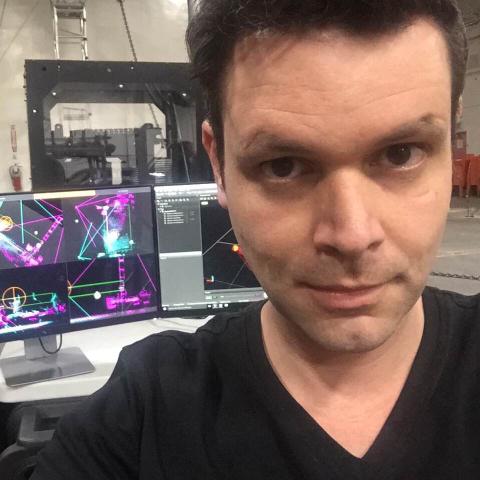
Welcome Timothy Lamb of Spectral Motion!
- Tim works in the special effects industry at Spectral. They worked on special effects in films like Hellboy.
- He has been working with Mark Setrakian who often prototypes using platforms like MaxMSP.Tim also helped to create some of the effects for the Robot Combat League which aired on SyFy.
- The rates in the industry are rather low. People often do it for passion.
- The Hellboy gun is in the lobby of the Spectral office. Some other peoeple try to replicate it on sites like the Replica Prop Forum. Adam savage has also talked about this before on Still Untitled. Adam was building his own version.
- DMX is a form of controlling lights for theater applications (among other things). This is a protocol that looks similar to RS485.
- These days Tim is working with an Jordan Wolfson, an artist. He has had famous pieces on display in the past, including this super creepy "stripper robot"
- Tim also performs "chip tune" music under the name trash80. There are some really catchy tuns over there! He wrote some code that used the game link: this became the arduinoboy, which is very useful for MIDI sounds.
- In the future, Tim would like to try his hand at projection mapping with moving targets, such as robots.
Transcript
Timothy Lamb: Hey guys, before we get started, I wanted to mention we're going to be doing another call-in show on March 30th, about 8 p.m. Eastern Standard Time, and we will have a post with what that is for your local time. If you want to participate, you can write in to feedback at theampire.com. Let us know if you want to talk live, just send in a note, or if you want to record a message, we will give preference to the people who call in live. So, once again, write in to feedback at theampire.com with your interest and what you want to talk about, and we'll get you on the air. As always, thanks for listening. This is The Amp Hour Podcast, recorded March 23rd, 2016. Episode 292. An interview with Timothy Lamb.
Dave Jones: Welcome to the Amp Hour. I'm Dave Jones from the AEV blog.
Chris Gammell: And I'm Chris Gammell of Contextual Electronics. And I'm Timothy Lamb of Spectral Motion.
Dave Jones: He's getting quite excited sitting on Chris's lap. We were not... It's not on my lap, Dave. He told me it was sitting on your lap.
Timothy Lamb: I know. I said that we were sitting very close because we are in a hotel room together. This doesn't sound any better. Tim, I am sitting in the same room as Tim, and... It's an exclusive recording. It's... It's right. It's an interview... Yeah, anyways.
Dave Jones: No, you're in a hotel room... Just like when you recorded with Jeff. A guy who creates stripper robots. I mean, it's just... This show is just getting better and better.
Timothy Lamb: Yeah, yeah. Wow. I didn't even think about that.
Chris Gammell: Anyways, Tim, where are you from? What do you do? I'm from Los Angeles, California. I do programming and some electrical engineering for special effects industry.
Timothy Lamb: Which I think is... I think that's the first time that we've had someone on that's done special effects. I don't... Dave, I mean, have we had anyone else on that's done that kind of thing?
Dave Jones: I don't recall. No, I think it's a first.
Timothy Lamb: So it's definitely a first kind of thing for us. And so could you give us a feel for, like, the industry? Like, what is it like out here? Obviously, I travel out here now. It's brutal. It's brutal. Okay, it's brutal. So what is brutal about it and what do you like about it? Yeah, what makes it brutal?
Chris Gammell: Well, what makes it brutal is the type of work that you end up having to do is basically one-offs and a quick time turnaround. Define quick. What's quick? A month, two months. Okay. Yeah.
Timothy Lamb: But, like, super custom, mechanical, electrical, programming, everything, the whole piece. Yeah. And it has to work, right? There is no failure mode. Right. I think you were telling me that, like, you and some of your coworkers, you're, like, on-site tweaking at the last minute as well, right?
Chris Gammell: Right, yeah. That's, you know, if it's for a film, you're normally on set. Okay. So if something goes wrong or if you're needed for something, you're there. And if it's for something like, we also do work for places like Disneyland and all that where it's supposed to work day in, day out for months on end by actors abusing it. Oh, yeah. And then you have, like, a two- or three-month deadline to create the products that are supposed to work, you know?
Timothy Lamb: And, yeah, that's a really tough, that's, like, a deadline plus an extended deadline because it's got to work for however long until it's done.
Chris Gammell: Yeah, sometimes with theme parks and all that, they're, like, it needs to work five years or 15 years. Oh, Jesus.
Timothy Lamb: Yeah. Right. So it's, like, do you have, like, a testing regimen where it's, like, you bring in testers, it's just, like, five-year-olds just with, like, metal bats?
Chris Gammell: Oh, no, no, no. The theme park work that I've done has been specifically for Disneyland's parade. Okay. They have a new parade now, a new electrical parade, basically. Oh, gotcha. Oh, okay. And, you know, we designed about 20 different costumes of electronics. Yeah. Yeah, and there was, you know, so there was maybe 30 boards total and...
Dave Jones: Flashing LEDs, let me guess.
Chris Gammell: Yep. Lots of flashing LEDs that are, you know, communicating to their, or responding to their wireless so everything's in sync with floats and all that kind of stuff.
Timothy Lamb: Oh, interesting.
Chris Gammell: Okay.
Timothy Lamb: So it's...
Chris Gammell: So it's mainly actors abusing the products and employees not children beating it with that. Okay.
Timothy Lamb: Yeah, and I guess, I mean, there's other stuff there, too. I mean, it's even, like, it's even, like, sweat and things like that. Oh, yeah, yeah, yeah. Like, there's a lot of stuff where it's just human factors and... Right.
Chris Gammell: And, of course, they don't want to pay for any of that, so...
Timothy Lamb: So no conformal coping or anything like that, yeah. Yeah.
Chris Gammell: I mean, yeah, we try to get away with as much as we can. And we do. We do create good products as much as we can. But with that tight of a deadline and that type of thing, you know, there's always a better way to do it once it's made, you know.
Dave Jones: So do you have to, with the tight deadlines, I imagine there's the only possible way you could do it is to have a ridiculously fully stocked shop like the Mythbusters have, you know, with their wall of, you know, warehouse wall full of all those tubs of everything. You know, so they've got everything on hand. Is that kind of what it's like?
Chris Gammell: No. No. No. It's not all like that. I basically am one of the few electronics slash embedded developers that work in a shop like that. Very rarely do you find those types of people in those types of, in that industry. I don't know why that is. I guess the, I don't know, maybe financially it doesn't make sense for them to keep those types of people around. Or maybe it's just the work. I don't know. But, yeah, no, mostly everything, you know, you get a project, you spec it out, you part source, try to get all the parts in, you know, order a variety of them in hopes that one of them will work out right. And then, you know, you throw it all together and see what sticks.
Timothy Lamb: Yeah. Right. So that's an interesting challenge as well just because, okay, so having stuff on hand, there's not a lot of money for that as well, which is actually really interesting to me that, you know, I would think that, you know, you hear about these big effects budgets. And you'd think that there was a lot of that kind of stuff too where it's like, oh, well, you just buy triple of everything or whatever. Right. So what are some of the constraints around purchasing and designing for like a low cost but also high spec kind of thing? Are you kind of...
Chris Gammell: I don't honestly think any of the stuff that we do is necessarily low cost. Okay. Okay. Yeah. But it's low cost if you look at how much it is for if you had real employees working full time. I see. Building that stuff out day in, day out. That would be really, really expensive. But the way this stuff, the way the deadlines are set up and everything else, I think that's what makes it more affordable. But I don't, again, I don't know how much, I don't know, like if I have to order a bunch of stuff, I'm like, oh, I'm going to need like all of these parts, you know, from SparkFun and I'm going to need a Mac Pro or something ridiculous. You know, and they'll go out and buy it without even batting an eye.
Timothy Lamb: Right. It's just a line item.
Chris Gammell: It's just another line item. As long as they know ahead of time how much the project's going to cost, then it's totally fine.
Timothy Lamb: Okay. Yeah. Yeah.
Chris Gammell: I mean, that was an extreme exaggeration. Right.
Timothy Lamb: Of course. Of course. Yeah. No, that's an interesting restriction, too, because I think that often a lot of like people that are working in larger teams as well, there's more restrictions around the purchasing process where it's like, oh, no, no, no. It has to be from these vendors. It has to be, you know, maybe there's still large part buys and stuff like that. But it's still, you know, a large reel of resistors is still 5,000 parts for, you know, $300 or not resistors. But, you know, it's a lot of one thing for a lot of money versus one thing that's a high cost item kind of thing. Right. Right. Yeah. Totally.
Chris Gammell: Yeah. None of this stuff has anything to do with manufacturing. I don't have to worry about any of that.
Timothy Lamb: Right.
Chris Gammell: You know. Right. What's funny, though, is one project I had to make 40 boards and I had them all on a single PCB that all was just, you know, routed out so I could just break them out. Yeah. So like a panel. Yeah. It was all panelized. And, you know, one single board was going to cost me $400, even though it was, you know, it wasn't that big of a board. But because it was panelized, they ended up trying to charge me as much as they can. Right. Now, trying to explain that to a middle manager that doesn't know, you know, anything about electronics. Like, oh, I need this board and it's going to cost $400 and it's going to take three weeks to get it. You'd be like, well, go buy it somewhere else. I don't. And why does it cost so much? I don't understand how this one board is that expensive. Blah, blah. Right. You know, so there's a little bit of that kind of blowback as far as dealing with the daily routine is concerned. But yeah, that just comes with that type of industry, I imagine.
Dave Jones: So back to the financial side of things, do you have any inkling of how the process works? Does the producer or whoever's in charge of shooting the movie, do they get quotes from different effects companies?
Speaker ?: Yeah, I believe.
Dave Jones: And whoever bids the lowest works? I mean, how does it like?
Chris Gammell: Yeah, I believe. I believe it's for the most part, as far as I can tell, it's because I'm not a manager or a project lead that gets those jobs. But probably for the most part, it is your special effects company placing a bid, you know, to get that deal. Right.
Dave Jones: So it's some sort of tender process. Yep.
Chris Gammell: With our shop, I'm sure there are people that come to us directly because it's a known place.
Dave Jones: Because they've worked with you before and they trust you.
Timothy Lamb: And let's say that thing. You mentioned as well that you guys are kind of known for. So what are you guys known for? I mean, like your shop specifically. I would say Spectrum Motion is known for Hellboy. Oh, yeah. Hellboy movies. Right. So I've seen that one. Dave, have you ever seen that movie? No. So it was based on a comic book. It was played by... It was the guy who played the bad guy in Iron Man 2, wasn't it? It was the guy who... We have the internet here. It's fine. I'm thinking City of Lost Children. I don't know. Yeah. Yeah, but they made a second one. It wasn't as good. Guillermo del Toro. I remember that. Oh, yeah. I thought you were talking about the lead actor. No, no. I was talking about... Ron Perlman. Yeah. Ron Perlman. Yeah. Yeah. Yep. So, yeah. Cool. Yeah. But that was some big stuff as well.
Chris Gammell: I think it's a lot with... Mark Satrakian, who I work closely with, is an amazing animatronics expert who can make characters move very realistically. And he makes systems that are designed so that they look very natural in their movement. And his specialty is that kind of stuff. So, a lot of times, some work will come in through him as well, just for him being known in that industry.
Timothy Lamb: No, that's interesting, too, because the robotic side of things... You know, we talk about robotics, but there's also the... It's almost like the cinematics or the theatrical side of robotics. Like, you were showing me some video before of, like, these realistic-looking limbs and things like that. Right. And there is, like, a fluidity, and that's almost like the software side. And so, what are some of the challenges of turning an idea of what an arm or a leg should look like into an actual arm or leg on screen or in real life? What are some of the challenges? Mechanically or software or electrically or stuff that you've had to deal with.
Chris Gammell: Well, yeah, it's definitely all about the software. Oh, really? It's definitely all about accuracy of motors and their tolerances. Okay. You know, if you don't want it to be jittery, if you want it to be smooth and precise control.
Timothy Lamb: Right. It's almost like an uncanny valley, but on a limb basis instead of a face basis, right?
Dave Jones: I can imagine that there would be some sort of... You know, you could do, like, motion capture. So, you could, like, capture human movements, and then you would just get the, you know, the software to sort of, like, replay those movements almost.
Chris Gammell: Yeah, you could totally do that. I mean, motion capture is used all the time for that very... You know, and it's also used for the digital special effects and all that. The shop I work for is mostly all practical effects. So, it's whenever they need an on, you know, camera limb or, you know, character or... Right. If a magician needs some kind of prop that's used on stage or, you know, an artist needs a crazy sexy robot...
Dave Jones: You're going to tell me... You're going to tell me now that they don't actually saw the woman in half, aren't you? And it's not actually her...
Chris Gammell: I'm pretty sure they do saw her in half.
Timothy Lamb: It's just that afterwards, she becomes a robot. She's part robot afterwards. Well, they have to replace her legs afterwards. Yeah, exactly. Right, right, right. It's really... It's not so much sawing a woman in half as making... The making of a cyborg, right? Yeah. Yeah. Yeah.
Dave Jones: My worldview is just shadow.
Timothy Lamb: Yeah, man. It's... The trick is there is no trick. That's right. The trick is how is she walking down the street afterwards? You just saw her now. How do you do it a second time? No, so you were telling me about as well, like, so, like, that some of the tools... So some of the stuff you've had to do is interface with some of these tools that are outside necessarily, like... So it's not necessarily someone that comes in and says, you know, writing a C program where there's a loop and whatever and all these steps. It's more like there's all these other software pieces that then you have to translate into a real world thing. So what are some of the software pieces that you have to turn into a, you know, a piece of hardware like that Max MSP you talked about, stuff like that?
Chris Gammell: Oh, oh, oh, no, no. That's using known control software that's out there to control physical motors and all that kind of stuff. Okay. So, David, had you ever heard of Max MSP before?
Timothy Lamb: Because I had...
Dave Jones: No, not really. So that's the thing. Like, I...
Timothy Lamb: Basically, it's a visual programming language, essentially. Okay. So what's it targeted for?
Chris Gammell: Like, what's the main input? Or what's the main target input? I would say it originally probably started as primarily a MIDI kind of visual programming environment for MIDI data and using serial ports on your computer. Okay. I think initially way back in the day. Okay. And now it's used for audio and video work and all that kind of stuff. Okay. What some people like to use it for with animatronics is just controlling motors in a more intelligent way, in a visual kind of way. Right. It's like abstracted. Where they don't have to, like, write a bunch of code and then compile it and see the results. They could just plug in, oh, I need to multiply this times that, you know, throw a sine wave LFO on there. Right. And kind of see it oscillate and then morph it from there and shape it from there. Right.
Chris Gammell: That's interesting. That's what those visual programming environments allow you to do.
Timothy Lamb: Right. And that's almost like... And that's from the music side as well because, like, I...
Chris Gammell: It's very much like the music side.
Timothy Lamb: I mean, and that's great, too, because it seems like it's a really fast feedback system if you were trying to create a system like that. But, you know, usually when I think about, like, a robotic system, I was like, oh, well, I want to turn a wheel and then calculate how that goes and yada, yada, yada. But if I'm trying to get just a robot to go in a circle, it might be, like, go in a circle and start with a programming language or visual language like that. And then you translate that into whatever the motor has to do in order to make that circle happen or something.
Chris Gammell: I think it's a couple things. I think, for the record, though, using this type of software isn't for stuff that, you know, risks your life or any of that kind of stuff. Oh, sure. It's all for, you know, visually controlling things to make them look cool. Primarily, we're software like Macs or... There's tons of different types of software that does the same thing. But where they really specialize in is, say, you have a joystick input and you want to control, you know, 50 servos like a tentacle with a single joystick input.
Timothy Lamb: Yeah.
Chris Gammell: You know, and you want it to kind of organically, you know, do that kind of sine wave effect when you whip a cord or something.
Timothy Lamb: Yeah, right.
Chris Gammell: That's where you would use something like that. I mean, of course you could do that in C or anything else. But what's cool about having a visual program for rapid prototyping is you could see the result instantly and then, you know, do some basic math on top of it to really kind of shape out what your idea is. And then from there, you could either keep it in that kind of visual programming environment or come to somebody like me and, you know, write some firmware to do it. Optimize it. Yeah. Optimize.
Timothy Lamb: Optimization, yes. Tim's an optimizer day. Did you know that?
Dave Jones: No, that's good though. So what happens if your company wins the contract and you bid, oh, we can do this for $100,000 and, yeah, you're… Not so much, huh? You sort of blow the budget. Who gets to eat it? Well… Do you go, please, sir, can I have some more of your money?
Chris Gammell: I haven't had that happen yet. That's all. Right.
Dave Jones: So you must be really that magic multiplier factor of, you know…
Chris Gammell: Well, generally speaking, I'm a very honest person and those, the manager type of person, if they come to me with a project before they place the bid, hey, how long do you think this will take? I'll be like, you've got to be kidding me. This is never going to happen.
Timothy Lamb: Oh, good. Yeah.
Chris Gammell: Or B, or, you know, it could take a day. It could take a week. It could take a month. Right. So you guess a month. Yeah. Yeah. Oh, no, no. So I tell him that and then he bids for three months and then we're solid. Oh, good. Okay. So that's… It's not my job to make sure that we stay in budget. So hopefully they set that bid high enough so that there's enough wiggle room.
Dave Jones: There's enough paddle room.
Timothy Lamb: Another interesting thing that you were mentioning to me is just that there's not as much focus on it like for just the general costs in the industry, right? There's not as much interest in paying industry rates on the design side. It's more just the get… It's like a project bid, right?
Chris Gammell: I don't think it's that necessarily… We're talking about like if they want to have any come in or something and pay them for something. Sure. I think it's the lack of understanding of what real world numbers are as far as paying employees. Because that industry, the physical special effects industry, has been on downward slope since the invent of the digital age. Right. You know, so… We'll just send it to Korea and get some programmers.
Dave Jones: I would have thought they'd be charging more because there's, you know, a shake up in the number of people doing it. There's a premium. Oh, you want special effects on that new Star Wars? You want real special effects on the new Star Wars movie? Well, you know, rubbing your fingers together.
Chris Gammell: I'm actually… This is kind of out of my scope. I wouldn't know exactly what the number is on. But I would have… I would guess, based on my experience, that whether it's digital or practical, it's probably going to be, you know, expensive either way you go. Right. It's going to be very expensive either way you go. So, I don't think it's necessarily a premium thing. And I think that all good movies have a mixture of both. All good things, you generally mix all of your tools and try to create the best thing possible. And, you know, some directors understand that and others don't. But I don't think there's a premium for it. I don't think that they're… Right. I think it's all expensive.
Dave Jones: But ultimately, what you're saying is that somebody gets the money and it ain't you. Is that what you…
Chris Gammell: Well, yeah, yeah. I would imagine with movies and all that, someone wants to describe it to me as it is a very steep pyramid. You know? With a very wide base. Right. Yeah. It's got a very wide base, but it just, you know… Or it's an inverted pyramid. It's a Washington Monument, is it? Yeah. Is it? Yeah. Yeah.
Dave Jones: Wouldn't it be an inverted pyramid like, you know, all the money's at the top? Like, you know?
Chris Gammell: Oh, like that.
Dave Jones: Classic. It's all trickle-down economics.
Timothy Lamb: No, upside-down pyramid, that would be .com. Yeah, right. Wrong industry.
Dave Jones: I don't know.
Timothy Lamb: I mean, like, Dave, what you're talking about, though, too, is it's not like… I mean, most engineers are in that same spot, though. It's not like, you know, if someone negotiates a million-dollar contract, it's not like the engineers are seeing the benefits of that directly. It's just like, yeah, you know, you get your rate, whatever. You know, you just got to get the work done. So, I mean, I think that's very similar, actually. I think that people listening will have a similar nodding of the head.
Chris Gammell: It's like, oh, yeah. Yeah, I just think with the special effects industry, it seems like it's a little bit harder to try to ask for what you deserve. Right. As far as… Especially, like, as an independent contractor. Like, if I was doing a, I don't know, an install for a store window display to do some kind of interactive, you know, when people walk by, it does some kind of thing. That kind of stuff, you get paid very well for it. But in the movie industry, not so much, yeah.
Dave Jones: Is it better to be like an independent contractor who hires out your services to the companies who got the contract? Probably. Or is it so tough?
Chris Gammell: It's hard to be… Well, it's really hard to be… You're really bank… If you're just a sole… If you're a sole employee working for a single company, chances are if they don't get another job lined up, they're going to lay you off. Right. And then they're going to hire you back on three months later when the next job comes in.
Dave Jones: That's what I'm talking about. It'll be a contractor. You're basically a contractor and they bring you on tap as soon as they get a contractor.
Chris Gammell: You're like a contractor only without the benefits of a contractor nor the benefits of an employee.
Timothy Lamb: You're basically their plaything. So, okay. So, I guess this brings me to the question I should have asked earlier. How did you get into all this and what are the benefits of all this? I mean, obviously you like it. I think that there's interesting things going on here.
Dave Jones: I'm not hearing many benefits at the moment.
Timothy Lamb: I think there are some interesting things here for sure. I mean, some of the work that I've heard about so far sounds interesting. So, how did you get into it first off?
Chris Gammell: Well, God, I don't know. I've always been making weird things, I guess. And, you know, one friend has a job for me that leads to another friend of that person having a job for me which leads to, you know, six, seven, eight years later being at a special effects shop. I think it's just getting one job after another through the work that you do. As far as what keeps me interested in it, every single job is something entirely different and something entirely new. And it's constantly learning and it's constantly figuring out how different things work. And it's super, in that way, it's super exciting. And it's on the schedule.
Speaker ?: Yeah.
Chris Gammell: But, I mean, I also like working theater and that kind of stuff as far as being a techie and that kind of – and it has the same kind of – almost the same kind of adrenaline.
Timothy Lamb: That's an interesting thing to me too because I never really realized that there is like – I mean, I've heard about the whole DMX. Like, I know there's a control scheme for a lot of that stuff. But it's like there's a whole other world there that I just never did anything with. I mean, so like – DMX? Yeah. Well, like the DM – isn't that what it's called? Like the control – DMX is the – yeah, the lighting. That's the lighting stuff, right. But there's other stuff like that, right? So that's what you're talking about? Yeah. The stuff that you're interested in.
Chris Gammell: Yeah. Yeah. I mean, you know, you got everything from projection mapping to DMX stuff to, you know, using sensors to control all sorts of different things to doing animatronics and robotics and, you know, puppetry or, you know, yeah. All that kind of stuff. So it's all super neat and interesting and there's always a new challenge and, yeah. That's good. And that way it's rewarding. It's also like – it's fun work. Like, I could be doing this or I could be in a cubicle somewhere writing code for some stupid website. Some corporate entity, right. Right. Or B, I could help some people build some giant fighting robots. Right. Which you've done. I think you need to talk about that now. Nah, well, I didn't do much for that project. But, yeah, we did – there was a show on Sify – Sify. Sify, as we call it. Yeah. It's been rebranded.
Speaker ?: Really?
Timothy Lamb: Sify? No, they rebranded from Syfy Channel to S-Y-F-I. S-Y-F-Y. Yeah.
Dave Jones: All right.
Timothy Lamb: Yeah.
Chris Gammell: But it was – What was it called again? It was called Robot Combat League. Yeah. And it was basically kind of reality television meets giant fighting rock'em sock'em robots or something.
Dave Jones: Right.
Chris Gammell: Mark Satrachian designed the robots and lots of people worked on them. For that, all I had to do was come in last minute, throw some LEDs on them, and then figure out a way that – so the judges can tell how hard each robot hit each other. Figure out some way of collecting that data for the judges so they can judge who won in a fight, essentially. Got it. Which was – Who inflicted the most damage. Right.
Timothy Lamb: Well, however many LEDs stopped working, man.
Chris Gammell: Yeah. Yeah. And then I wrote some firmware to have the LEDs kind of show the damage as they were beating the crap out of each other. It didn't really work very well, though, because basically what would end up happening is the robots would punch each other on the hydraulic, like, actuator. Oh, God. So it just stopped working completely? On side force. Yeah. Which would snap the shaft. Right. Which would then, like, spray hydraulic fluid all over the place. And then the whole thing shrugs out. So it's like, I'm pretty sure you could tell who won that match. Yeah. You know? Yeah, right. Yeah. Yeah. Whoever's soaked in more corn oil.
Timothy Lamb: Yeah.
Chris Gammell: It was actually funny working on that set was there was – they ended up having Pyro guys on set. I didn't know why. Pyro like sparks. Sparks. They were going to add sparks and that kind of stuff to it. Fireworks, yeah. Which, you know, I could disagree with that decision, but it's not my decision to make. But the Pyro guys ended up running a bunch of, like, speaker wire all bundled together along a walkway. Yeah. And we were loading back one of the robots. So we were holding it and bringing it back through a tunnel. And I ended up stepping on the cable. And then the Pyro guy screamed at me, hey, be careful. That cable will burn a hole right through your foot. And I'm like, wait, so you need thicker gauge wire here? Like, what's going on?
Timothy Lamb: You guys are in charge of the explosives. Is that right? Is that right?
Chris Gammell: Wow. I'm like, you guys are – I think that trick normally works, except for the guys that are building the robots. I don't think that trick really works on those guys.
Timothy Lamb: Right, right. They were basically saying, we don't want to tape that down again. In fact – Right, right. Right.
Chris Gammell: Don't step on it because you might pull on something and pull a cap out of the – Trying to scare the newbies. Yeah, exactly. Yeah.
Timothy Lamb: It's a power thing. That's what's kind of interesting to me about the whole side of the industry and everything too. It seems like a lot of ego and then a lot of just non-technical knowledge as well. Like you were mentioning there's not many people doing hardware or software type stuff out here.
Chris Gammell: I haven't met many people that do the hard work, that do – You know, there are some old guys I know that do their own PCBs, but they're also of that older generation where it's like, oh, I will do everything with analog circuits, like straight up. I'm okay with this. Yeah. Right. But I mean, there's faster ways to go around those problems nowadays. But yeah, for the most part, I haven't met very many people doing it. I imagine it's maybe because a lot of special effects companies don't think they need those types of people or maybe the money is just not there for the type of people that are interested in that type of work. So I don't know which is the thing there. Yeah.
Dave Jones: What happens to all these props? Because especially on the blockbuster Hollywood movies, I mean, these things are worth a fortune, right? You know, imagine like if you've got Luke's – if you design Luke Skywalker's lightsaber or something or something like that. I mean, like is it tempting to keep it, make another one? Do you cannibalize stuff for parts and they just get destroyed after the movie's done?
Chris Gammell: I can't speak for Lucasfilms. I'm pretty sure that went into the Disney vault. Yeah. These days, yeah, for sure.
Dave Jones: But like every – it's like every second movie is like iconic and the props from them are iconic, especially like the sci-fi and the comic book movies and everything else.
Chris Gammell: Yeah, like Hellboy especially. I mean, like that kind of stuff, right? Yeah. It was funny. I was watching a YouTube video of Adam Savage from Mythbusters.
Dave Jones: He made the Hellboy gun.
Chris Gammell: He was making like the – I don't know what it's called, but it's like the hand weapon from one of the villains. Yeah. And he was making it. Oh, it's a Zork thing from Fifth Element, right? No, it was from – Oh, from Hellboy? From Hellboy. Oh, okay. And I'm like, that's funny because that's sitting in a case in the front of our office when you walk through the shop. You see it right there. And he was sitting there, you know, awesome – you know, he did an awesome job, but he's making a replica of it.
Timothy Lamb: Yeah.
Chris Gammell: Yeah, yeah. So a lot of props end up just being on display at our shop.
Timothy Lamb: Yeah, and that's – I mean, so if people listening to this also listen to the Adam Savage and the Tested guys, they do the Untitled podcast. That's good, too. They talk about the replica prop form a lot, stuff like that.
Chris Gammell: Yeah. Yeah, it's funny because I listen to that podcast and I hear Adam talk about Mark Satrakian. Oh, yeah. And I'm like, huh, I'm going into work right now. He's talking about it.
Timothy Lamb: Yeah, that's cool. That's interesting stuff. I mean, I think the thing that strikes me about a lot of that stuff is that it's so much like look and feel. Like that seems like that's the major point of it. Like is the – you know, like to make a ray gun, you know, like to make like a blaster in Star Wars or something, you don't need to have electronics in it. It just needs to look good.
Speaker ?: Oh, yeah.
Timothy Lamb: Yeah, totally. And so the stuff that does have electronics on board is interesting.
Chris Gammell: Yeah, it's mostly with the film-based stuff that I've worked on while being in that shop has really just been either in the background just helping with the motion control software, writing software, doing like, oh, hey, can we run this wirelessly? And then me go grab an XP, you know. Right, right, right. And do all that for them. Yeah. But – or making LEDs blank, which is the most important work ever.
Dave Jones: That seems to be nice.
Chris Gammell: It's what I wake up for, basically.
Dave Jones: I've heard – I commonly hear that like they'll make like, you know, five of a prop or ten of a certain prop because like some are like really – you know, ones that are going to be used in like a real close-up, you know. It's got to be the most intricate, the most accurate, and then they'll use other ones that are just, you know, some cut scene or something like that. Is that quite common?
Chris Gammell: I think that it really depends on the job. I think when it comes to, for instance, when it comes to weapons, I know that they'll make, you know, distant rubber weapons for the fight scenes when the camera's far away. And then they'll make, you know, the hero perfect sword that's shot in the close-up shots. And that same kind of logic applies to everything else, you know.
Timothy Lamb: Well, you were mentioning too that like – so like even this project that you were talking to me about, that a lot of it is, you know, you're making molds of something and like there's early prototypes to a lot of – you know, kind of getting back to the prototyping idea, right? That you have throughout your prototyping process, you're going to have these rough models. And then as you continue to refine, so you can almost like use the early models as the, you know, the faraway type stuff. So that seems like it plays in well. Like just having the early prototypes.
Chris Gammell: Yeah, I imagine that that could play a part. Sure. I know that the guys that do the mold making and sculpting and all of the real core practical physical effects, like they're amazingly talented people. The work that they do is exceptional. So even in their rough drafts, I'm sure would look badass in any YouTube video. Yeah, right, right. I mean, the type of work those guys do is just amazing.
Dave Jones: What sort of design briefs and documentation drawings do you get? Do you get like just concept art or do they come in and say, we need a gun that looks funky? You get the sideways glance, Dave. That's what it is. He's like, fix this.
Timothy Lamb: Fix this. Make it move.
Dave Jones: Yeah, but do you get detailed drawings handed down from somebody and go, make this. It must be exactly like this. Or do you have a lot of leeway to just make it?
Chris Gammell: No. Yeah. You got to basically take what they got and normally that would be, you know, renderings of some kind that then somebody for whatever reason decided to print it out on their dying ink printer and then you try to color match whatever the hell that they're doing. Right. But yeah, you basically follow what the artist's renderings are as closely as possible and then the manager will come by, take a photograph, send it forward to the client for approval and that kind of stuff. Yeah.
Dave Jones: Right. So often it'll just be like an artist's rendering or a drawing or something and then you'll have to figure out how mechanically to build it, I guess. Yeah.
Chris Gammell: Normally that's not necessarily part of my work because I would be more of the mechanical guys. Of course, but others. Yeah, that's right. Yeah. For myself, it'd be like, oh, there's this weird glowing kind of ambient pattern inside of this shield or something. You know, how can we do that with LEDs? And it's like, I don't know, freaking magic. And you basically, you pound your head against the wall and try to figure out something that works for everybody. Yeah.
Timothy Lamb: So what about, so you mentioned, what's your toolkit then, right? So if someone comes to you and they say, I mean, obviously you said there's a lot of LED stuff, but there's other stuff too. Like what is your go-to for processors?
Dave Jones: Micro, he's going to, yeah, he's going to ask the go-to micro.
Timothy Lamb: Yeah, I mean, but you said XP, stuff like that. So like when, you know, I mean, Arduinos, are you doing stuff like that? Are you doing higher bandwidth or higher power stuff or what?
Chris Gammell: As far as microcontrollers?
Timothy Lamb: Yeah, just for prototyping type stuff. WS-28, 12Bs. Yeah, no, hey, that's great. I mean, like that's, I mean, that's, I think that's reassuring to people hearing that too, right? I mean, it's just.
Chris Gammell: No, yeah, well, yeah, no, we do obviously use that stuff. I mean, we use the same sites that everybody else uses, you know. So if I need a quick board made, like I think the other day, not the other day, like a couple weeks ago, I needed a quick RS-485. And it's like, oh, look, SparkFun sells a little tiny breakout board that already has it on there. It takes me five minutes to order it, and that's all it costs the company as far as my time's concerned. That's true, right. So that kind of prototyping, we'll use Adafruit and SparkFun and all that kind of stuff. So I personally love ARM, so I'm a big fan of the teensy stuff is freaking super great. Teensy, right. But of course, I hate using ARM when it's a couple LEDs because you could use a little 8-in micro.
Timothy Lamb: I'm totally okay with that, though. I don't know, like I think that it sounds like. I just feel guilty for wasting that much power. You're not. There's not a lot of power, right? It's like, I mean, like you can measure, you can literally measure it just how long it's everything. No, I mean, power isn't like CPU power.
Dave Jones: When I was a boy, you know, like, come on.
Timothy Lamb: But Dave, I mean, honestly, it's like just optimizing for time, right? I mean, like. Yeah.
Dave Jones: That's the definition of engineering. Right, exactly. It's to get a job done, right? Yeah. And yeah.
Timothy Lamb: Anyone that argues otherwise, I think they're just blowing hot air, right? Because they're like, no, no, no, you have to do it the right way. Right.
Chris Gammell: Well, when you're dealing with the type of numbers that you deal with in the special effects industry, you don't have to worry about manufacturing. You don't have to worry about how much any of these parts cost. Yeah, you're right. If it's $20 for a teensy and it takes you like five seconds to write the code and upload it through USB and you're done, then you just saved everybody a lot of money. Yeah. So.
Timothy Lamb: Yeah. So what is the situation then? So you, I mean, obviously you're doing custom stuff too. So what's the situation where you're like, can't find it online, can't buy just a micro and solder it together. What's, what are some of the custom boards you've had to make in, in your work online or sorry, in your work for the effects industry?
Chris Gammell: Uh, DMX controller boards. Uh-huh. Um. So what does that standard even look like?
Timothy Lamb: I don't actually, I only.
Chris Gammell: Oh, it's just literally a 45. Oh, really? Okay. Interesting. Yeah. No, that's good though. Yeah.
Timothy Lamb: That's good to know. Uh.
Chris Gammell: God, I can't really think.
Timothy Lamb: Every time I hear DMX, I'm just like, what?
Chris Gammell: Yeah. What? Uh, most of, most of the stuff that I've done has been, um, making, uh, I don't know what you call them, daughter boards or whatever. Uh-huh. That would work with like a TNC or a Pro Mini or whatever. Yeah. Um, and then have all of the, the, the layout already done for the resistors, the wiring. Yeah. The, the power supply, you know, all that kind of built up. Yeah.
Timothy Lamb: So you're using it as like a, not a shield, but like an add-on board that basically. Basically a glorified breadboard.
Chris Gammell: Yeah. Yeah. Yeah.
Timothy Lamb: No, that's smart though. And then, and then you already have all the stuff that you need to go and access those things. You have the library set up. That's. Right. That's good.
Chris Gammell: What about that? And a lot of my own custom libraries because, you know, I've been doing this for since 2008, 2009. And in that time now there's like amazing libraries to get stuff done. But back then there, there wasn't Jack. Right. So you end up building your own library of things and all that. Right.
Timothy Lamb: And you trust it.
Chris Gammell: Right. And I know it works for Disney's products, you know, every single day.
Timothy Lamb: Right. And people are calling you because your stuff works, right? That's ultimately why people call you in the first place and they want you to work on things is getting it done. You know? Yeah. Hopefully they call me because they like me, you know. Oh, a little ego there, a little bit. That's a little tiny, that is a little tiny Tim right there. I didn't hear that. That's funny. Yeah. What about the ruggedization? So, I mean, the project I saw the night that was getting thrown around like crazy. But you, I mean, you said robots and other things like that. So do you have to do anything on your side to actually ruggedize and like enclose it to make sure it does, it can survive? Or what's, what are you going to do?
Chris Gammell: No, just hoping for her.
Timothy Lamb: Just hoping for her. Build a second one here.
Chris Gammell: Well, I mean, like, for instance, that one, we were talking about possibly potting. Okay. All the components because it's an art project that I'm currently working on for somebody that it basically drops, you know, 20 feet and hits the ground and bounces. It has a weight to it too. Yeah, yeah, yeah. Every day, day in, day out. So it's like, you know, a co-worker of mine was like, oh, we should informal code it or whatever. And I'm like, why don't we just pot it and call it good? And he's like, eh, potting sucks. And I'm like, okay, you know, you know, we, we figure out the best strategy. And that was a little bit of A, a little bit of B.
Timothy Lamb: Yeah. Because formal coding will be like, I think, for more environmental stuff.
Dave Jones: But the potting, it has some, some mass to it.
Timothy Lamb: But that actually holds parts onto the board.
Chris Gammell: And I'm like, no.
Dave Jones: It holds the parts on. Yeah. The parts can't shear off the board.
Chris Gammell: Oh, that's interesting. I never thought about it like that.
Dave Jones: Due to their weight. Yeah. Oh, yeah. I'm not a mechanical expert.
Chris Gammell: So I'm not going to argue with the guys who are. Yeah. Oh, no.
Dave Jones: I've got extensive experience in dropping electronics and testing for that.
Chris Gammell: No, I'm not, I mean, I'm not you, but I met my co-worker.
Timothy Lamb: For many years. Yeah, yeah. So what happens then, Dave? It's just like, because it's, it's got the, the full coat over top of it that kind of just holds them on there? Or it's just like, what, goop?
Dave Jones: Well, no, the conformal coating does nothing. As you said, it's just for the moisture. But potting, actually, let's say you've got a large, a large cap, right? A large radial cap sticking out of the board. If that, if that board lands at right angles to the ground, like that, that capacitor can just shear straight off if there's nothing holding in place. Hence why they have the retention, mechanical retention pins. But even then, they can be sheared off. So if you pot, or if you've got a lot, you know, a TO220 heat sink, a TO220 pack, he's just freestanding. He can just, boop, shear straight off with very little, very little G-force at all. And it, you know, when, when you pot it, it becomes one big brick. It's unbreakable. Nothing can move or shear off inside. Challenge accepted. Yeah, it's, you know.
Chris Gammell: Right. I mean, one of my major problems with this, with this current project is there's some LCD screens on there. And they're using those, you know, kind of flat flex ribbon cables. Oh, yeah. Those are dainty, right? Yeah. And, and I'm like, well, you know, those displays are not connected to the main, it's hard to explain. But basically the ribbon cables themselves are kind of floating. They're, they're not really tied down to anything because the two parts are distant by space. So I'm like, I wonder how long this is going to last before eventually like that copper in that, in that flat flex is going to wear out. Oh, you mean even just like an actual. Just from it flapping around. Right, right. Yep, yep.
Timothy Lamb: Yeah. Yeah. So. Yeah, that stuff's really, I, I seem to always break those things like the flat flex ones.
Dave Jones: And you don't want to hit the, and you don't want to hit the resonant point either. I mean, just transporting stuff. We've damaged stuff just transporting things because it's on the truck or it's on the plane and there's, there's a huge vibrational response. You know, there, there's all this energy in, in these different frequency bands. And if that happens to hit one of the vibrational modes of that component or that ribbon cable or whatever, it can just boom.
Timothy Lamb: Yeah.
Dave Jones: You know, that's kind of interesting too because. And there are standards for this.
Timothy Lamb: Well, but Dave, you're talking about a setting where like you can actually test for that, right? You could just throw something in a truck. Oh, yeah. The stuff that Tim's doing, it's like, you don't know what's going to happen. Like there is no test for a lot of this.
Chris Gammell: We were thinking about making a jig that just grabs this, this head of this character and just drops it. Picks it back up again, drops it again.
Timothy Lamb: The two-year-old test. Yeah. Yeah, yeah. Hey, Dave, what's Sagan doing for the next couple months? Right, yeah, yeah. The pay isn't very good, but.
Chris Gammell: Yeah.
Timothy Lamb: He'll get huge forearms, you know.
Dave Jones: There are industry standards for these things. There are industry standards for road transport, vibration, and shock. Industry standards for air transport, vibration, and shock. Yeah, like the 100 G's tests and stuff.
Timothy Lamb: Yeah, I know what you're talking about. Yeah. You know, yeah. Yeah. That's crazy. You know, another thing that Tim was telling me about, too, is the, so I got to go see this project today. But the interesting thing was you were talking about the solution was, at first, when you were starting, it was this very broad, undefined problem, and you had a couple things. But eventually, you started going towards off-the-shelf solutions, which I thought was like, it's a very system-level engineering problem, right? Right. So you were talking, I don't remember what you started with.
Chris Gammell: I was, it was, so there's, it's hard to explain without explaining too much, but it's a character's head that needs battery and power and HDMI wirelessly and everything else. It can't have any cables connected to it. And originally, I was like, okay, cool. I'll get some, you know, hobby-grade lipos, throw them in there, make my own power supply for it, and charging solution for it, throw it in there. Dropping lipos is a really good idea. Yeah, yeah, I know. Repeatedly dropping lipos. But it's suspended in magic, so it should be fine. That's right. We're going to fill in that mineral oil. Yeah, and then I had, then I had a, you know, a wireless communication, so the computers can see what power is left on the, on the character, so that way it could be shut down before the power runs out and all this kind of complicated stuff. And I'm like, oh, I don't need necessarily any of this stuff if I just simplify the types of parts I'm using. Right. You know, so instead of using freaking hobby, unregulated, you know, giant batteries that are meant to do, you know, seven, eight amps, draws or whatever, switching that out to one of those, like, little cell phone battery, you know, chargers. Right. That kind of, those kind of products. I don't need to monitor the lipo life of the battery or anything. Right. I don't need, it's already built into the product. Right, exactly. You know, and if that breaks, hey, you know what, go on Amazon or whatever, then there's like 20 more of them.
Timothy Lamb: Right. And I think that the, the, the draw is always to go straight towards the custom solution, but, but especially in those, like, the one-off situations, these, like, it's almost like the top, Dave's going to love this, the top-down stuff that I like talking about now. This is my new thing. Top-down. Yeah. You heard that?
Dave Jones: Yeah.
Timothy Lamb: We're sitting in the same room, so we get to hear Dave's, you know, his smirk from 12,000 miles away. But anyways, yeah. So you're saying I was looking at the problem in the wrong direction. Right. Top-down, not bottom-up, man. But yeah, no, I mean, just like the, like, but you're basically, you're solving the, the problem, the, the large solution first, and maybe that's enough, right? I mean, like these, these broader consumer level solutions first. Like you were mentioning the, the motion tracking stuff too. We were talking about LiDAR versus.
Chris Gammell: Yeah, I was going to roll my own, because I, it also needs sensor equipment to know where this object is in 3D space, as well as its orientation and position.
Timothy Lamb: Right.
Chris Gammell: You know, as well as a whole crowd of people and where they are in a given space and all that kind of stuff. Right. Yeah. We're talking about, I was talking about LiDAR or Kinex or, you know, whatever. And it's like, well, yeah, there's this sensor out there that'll totally do it. It costs $10,000 or you can just go to the GameStop and buy a Kinect. Yeah. Right. Exactly. Yeah. Right.
Timothy Lamb: Yeah. And I saw it and it's working great. So Kinect all the way, man. Like, it's great. It was, it was watching you. Yeah, it was, I don't think I'm allowed to say what it is, Dave, but like, this thing was super creepy, like, super creepy. Did we mention what the other robot?
Dave Jones: Creepier than the stripper robot? Yeah.
Chris Gammell: That was the other thing. The stripper robot. Jordan Wolfson's female figure, I believe is what that art project's called. Stripper robot. Okay. Stripper robot. Okay. Right.
Dave Jones: We will link this in, people. You just need to know, stripper robot, link below.
Timothy Lamb: It's not actually, it's just really creepy. It's just.
Chris Gammell: So yeah, we're just working on his next art project.
Timothy Lamb: That's going to be delivered. That's another thing too. We've talked about art a lot on the show before, but like, it seems like you're pretty close to this stuff. And we don't talk, I mean, so like I mentioned to you, we've had Todd Bailey on the show before. Todd did a lot of stuff with artists in the past as well. And you knew Todd's. Andrew. Yeah. Andrew, his project collaborator on the VEC9. Yeah. But like, it seems like a, it's not like a different world, but it's just a different worldview that like you have to then kind of translate into the real thing. Like you are the translator of like these, these ideas that are sometimes kind of out there, but also kind of push the envelope for you as well.
Chris Gammell: I think that those are kind of, they're ridiculous, but they're awesome. And the reason why, you know, it's obvious why they're ridiculous. It's like, it's, you think it's ridiculous looking at it. Imagine being the engineer or whoever, who the artist comes up to you and says, Hey, could you do this? Right. And you're like, no. No, it's never been done before for a reason probably.
Timothy Lamb: And then, but actually the challenge is that you have to go and figure it out.
Chris Gammell: Yeah. And that, that's what the amazing stuff is. It's, it's, it reminds me of like, uh, I hate to go to a movie reference, but like the matrix when they did the bullet time thing, if you remember that. Yeah. Oh yeah. And, and I remember the visual effects supervisor, uh, said at the time, he's like, yeah, it was just somebody asking the right question at the right time. Could you do this? And I guess we can do this. We just never done it before. Right. And I think it takes kind of that naive attitude of how the world works to come up with these really retardedly crazy ideas that nobody would necessarily engineer without them asking it first.
Timothy Lamb: You know, I, I can think of a person who takes personal pride in telling you when something won't work. He may be on the other end of this line right now, uh, but honestly you need that. Like, so like Dave is the balance point, right? And you're the balance point for a lot of these people as well. Right. But sometimes you even need like the bullheadedness of just like, I don't care. You know, like someone saying, I don't care. Just go do it. Right. And Dave's experienced that. And I've experienced that.
Dave Jones: It works out, but a lot of the time it doesn't. I need probably the majority of the time.
Chris Gammell: The only major thing that drives me crazy with these projects is I need parameters. Constraints. Like that is so irritating. Like a lot of these projects I work on, like it, I'm like, okay, well how far back does this need to be? And how big is this area? Or how long does the battery need to last for? Right. Do you want to charge it every four hours or every eight? Yeah. I don't know. You tell me. And it's like, I can't, you let me know and I'll figure out a solution to design around that.
Timothy Lamb: Because that's also going to determine the price too, right? That's going to be a big piece of the price and how long it takes to do. Right. And what kind of hard to use. And how heavy it's going to be. Exactly. All these things. And that's a really good point. And often that's when you're speccing it. If you were speccing a job just on its own, right, you would spec with those constraints. And then if they come back and they say, it's not four hours, I need it to last eight hours. And you go, and that's a change order. We're going to charge you a little bit more money.
Chris Gammell: But normally they'll tell you that two hours before it opens or whatever for the public. Right. Yeah. So it's like, yeah, a change order is totally fine. But what are you going to do in those two hours to make this thing work for eight? Just cut the power in half, man. Make magic work.
Timothy Lamb: Yeah. That's rough. So on to happier things as well. You also do stuff outside of the effects stuff, right? So you actually have done, you are known for your chip tune music stuff. Yeah.
Chris Gammell: I make chip music sometimes.
Timothy Lamb: What is your artist name? So you are an artist as well as a wrangler of artists. As well as a wrangler of artists. Right. So you wrangle the artists in your effects job. Oh, right, right. You become...
Chris Gammell: I become that weird, crazy artist.
Timothy Lamb: The demander of the impossible on the other stuff.
Chris Gammell: Yeah. It's just something I do as a project on the side and it's been going pretty well.
Timothy Lamb: Cool.
Chris Gammell: Unfortunately, lately I haven't had any time to work on it because...
Timothy Lamb: Because you were saying about the drive. Tell me about that. You said that you haven't had time to do the music stuff because you have these problems sitting there.
Chris Gammell: Oh, yeah. Yeah. The problem is you have a project that you need to deliver within a certain set time and I myself can't work on anything else until that problem is solved. Right. So if it's music or whatever else, I could try to start working on music, but I'll just immediately put it down and start going back onto the project that I needed to finish in the first place.
Dave Jones: Right.
Chris Gammell: So I'm very, very, very one-track mind. Yeah. Which is unfortunate.
Dave Jones: That's very un-engineering-like. Engineers often like to wander and, oh, 90% done. I'll change projects.
Timothy Lamb: I'm not going through that part, but I think I've had times when I'm just like, I'm like, just like... Yeah. It's like the 20 more minutes thing, right? It's like, oh, this layout will take forever. 20 more minutes. Right. Four hours later. Yeah. Yeah. Let's go to bed. 20 more minutes, you know?
Chris Gammell: 3 o'clock in the morning. I guess I should go to bed now because I have to get up in six hours. Yeah.
Timothy Lamb: 20 more minutes. Yeah, exactly. Dave, you can identify with that, too.
Dave Jones: Of course I can. Yeah, of course.
Timothy Lamb: But yeah, no, that's a common thing.
Chris Gammell: So that's good, though. It also depends on how much pressure is involved with the project. If you're talking about a very, very expensive project that has a very firm deadline and you're responsible for some crucial parts working, I can't have a relaxing weekend until that part's solved. Right.
Timothy Lamb: Right. Right. So, yeah. So you mentioned some of the stuff for the music side of things, too. So you have a thing that's known well in the industry, but like in the chiptunes world. In the chiptunes industry. Right. Right. Yeah.
Dave Jones: And it's a hundred billion dollar industry.
Chris Gammell: It's a growth thing. That you've never heard of. Yes, it's right. It's the next hot thing. Yeah. Startups. Chiptunes. Back in 2008, I made my first Arduino project, which was a thing I called at the time Arduino Boy, which is basically a MIDI device, which is a musical instrument digital interface, which is a protocol that musical instruments use to communicate digitally. I made it for the Nintendo Game Boy. So you can use the Game Link jack on the Game Boy to send or receive keyboard or computer note information so it can play. So you can play it like a synthesizer or... So you plug a keyboard into the M Game Boy? You could do that. Yeah. That's cool. You could also plug one of those MIDI saxophones. No, I'm making that up.
Timothy Lamb: Oh, yeah. No, no. The MIDI in-winders. Yeah, yeah, yeah. Yeah, yeah.
Chris Gammell: DJ Logic, man. He used to have a guy that played with them. Yeah. But, yeah. So, yeah. Just little hacks like that for that scene.
Timothy Lamb: That's kind of cool. I mean, like, you're making your own instruments and there's... It seems like there's other people doing that kind of stuff in the chiptune type. I mean, it's still... There was, like, one chip that was really widely used. Is that right? Or... On which computer? On, like, the... C64. Yeah, yeah. There was, like, a sound processor on there? Yes.
Chris Gammell: I think it was... That was the SID chip. 8580 or the 6502 or something? I don't know. Well, 6502.
Dave Jones: No, 6502 is the processor. Right, right. Or a variant of it. We've had Chuck on the show. Yeah, no.
Chris Gammell: Yeah, it's the SID chip.
Timothy Lamb: I just don't remember the exact part number. Okay. I mean, that's okay. I just... I know that there... There was something about, like, the generation. I'm getting mixed up with all that moss. Oh, yeah. All the stuff they made. Yeah. Yeah. Yeah.
Dave Jones: It was the 6581. Oh, I was so close.
Timothy Lamb: Yes. It was like a mishmash with those two numbers.
Chris Gammell: Right, right, right. Yeah. So, yeah, there was that. And then there was the Atari STE that had the YM... God, what was it?
Dave Jones: Yes, it was the Yamaha chip. That was the Duck's Guts back in the day, wasn't it?
Chris Gammell: Yeah.
Timothy Lamb: So what? So you just, like, throw in a couple commands and outputs. It's like a DDS type thing, or what?
Dave Jones: Oh, it was a... It's a multi-voice synthesizer, I believe.
Chris Gammell: Yeah, they all had their different kind of specs. But all... The cool thing about all those, or most of them, I should say, of old computer game consoles, that kind of stuff, is they actually had synthesizer chips, not just PCM playback. Ah, right. Which I think is what... It's not that people want to play a Game Boy and have it sound like a Game Boy, as much as it is, like, it's literally a synthesizer that you can control.
Timothy Lamb: Right, right. So it's an instrument instead of just a playback device. Right.
Chris Gammell: And there's something to be said for working within limitations, especially if you're working on that hardware itself. Right. You know, it's extremely limiting. Which enforces a lot of creativity. There's a lot of people making really good music out of that stuff.
Timothy Lamb: Yeah. And that's kind of like the demo scene thing on the video side. Oh, yeah.
Chris Gammell: It's totally demo scene related, even.
Timothy Lamb: Yeah. Yeah. Yeah, I guess they were probably making videos to go with Chiptoon's music.
Chris Gammell: Yeah, a lot of demo scene music was from the old school trackers and all that stuff that was all part of the same... See, I'm totally new to all this stuff. I mean, I've heard some of the music. But the demo scene, like there's a Game Boy application that somebody made that's for the Game Boy. It's on the Game Boy. It's called Little Sound DJ. Uh-huh. And it's basically a music program so you write music with it. Uh-huh. But I believe it was created because they were working on a demo. Oh. Initially, maybe not that version, but originally it was created for... So it is very... Those two universes are very parallel. Ah, gotcha. In part, they're intertwined, essentially. That's interesting. So...
Timothy Lamb: That's cool, though. And so you do like shows and you do shows in New York and places like that, too.
Dave Jones: Australia and...
Timothy Lamb: Australia, Dave. You hear that? Yeah.
Dave Jones: Yeah, he's touring the world. Hasn't been to Sydney, though.
Timothy Lamb: Yeah. Well, maybe he has. You just haven't heard about it. No, no. No, he hasn't. I specifically try to avoid Dave. Yeah. Okay. Well, now I know.
Chris Gammell: Well, I just figured everybody from Sydney is like him, so...
Timothy Lamb: Yeah, that must be easy. Yeah, right. Yeah, yeah. He's basically like the ambassador of Sydney. That's right. Yeah. You hear that, other listeners in Sydney? You're all like Dave. Boy, I bet we won't get any angry emails after this show.
Dave Jones: I would like to officially announce here on the Amp Hour that I have been selected to star in the next Australia tourism television campaign after Paul Hogan.
Timothy Lamb: Good luck with your future tourist economy there. So what's next, then? I mean, so you've built stuff for work. You've got stuff on the chiptune side. I mean, what else are you building? What else have you built in the past or what do you want to build in the future?
Chris Gammell: I really like mixed media kind of stuff. I don't know if there's a proper name for that, but, you know, I don't know if you know what projection mapping is or... I saw the Grammys this year. That's what a lot of people would probably... I didn't see the Grammys, so I have no idea.
Timothy Lamb: So I only... Actually, I talked to... I know a guy... I met a guy from Intel, actually, over the last weekend at South by Southwest, too. And Intel did a bunch of stuff with Lady Gaga, and basically they did this really cool thing where it was like, projection mapping over her face. They did like the Bowie makeup, you know, all the Ziggy Stardust stuff over top of... So that when Lady Gaga was singing, she looked like Bowie, basically. She's so not Bowie. Yes, of course. She's so not Bowie. Although, I have to say, so this person was telling me, and he said that she wouldn't work with them unless they actually push some tech stuff forward, which I thought, eh, I respect that. So some of the motion control stuff.
Chris Gammell: Oh, yeah, yeah. Yeah. It was in no insult to her as much as it was to Bowie. Yeah, of course. Well, yeah. No, of course she's not Bowie. Just like... The... Yeah, so projection mapping mixed with mechanical movements, whether it be robotics, projecting onto the animatronics, you know, along with doing audio, visual, and all that kind of stuff, mixing things together, those types of mediums, and kind of getting really cool results. That's... As an artist, that's where I want to go. Gotcha. Is mixing those things together.
Timothy Lamb: Whether or not I have the time for it is... So what is the stuff for projection mapping? Like, what is even... What would you... I mean, so you have a projector. Right. Is that right? Yeah. And then, like...
Chris Gammell: Project... Oh, I should describe projection mapping, huh? It's when you... So if you had a box, a box in the middle of a room, and a camera... Not camera. Projector directed at the box in the room. Okay. The box has three sides that are visible from the projector. And what you do is you basically project the same dimensioned box over that box. And what that allows you to do is to have it look like it's flat. Like, you could put a texture over the box from that specific angle. Right. So you'll no longer see the box. It'll be just this flat projection screen. Or you could, from there, have the sides pull out or that kind of stuff. It basically allows... The projector's light is in line with the objects it's hitting. And from there, you could do all sorts of neat lighting tricks.
Timothy Lamb: So... That's cool.
Chris Gammell: It basically, to me, a projector is like a very fancy modern-day light. You know? Like, if you're lighting the stage... A lot of lighting artists, like, hate projectors, hate working with projectors, because they... You know, the projectionist or whoever is telling them, Oh, turn down the stage lights because you're blowing out the projections or whatever. And it becomes really a hassle for traditional lighting people to work with projections. But the reality is, is a projector is just a dynamic digital, you know, source light. Right. Yes, doing, like, DLP-type stuff. You could do all sorts of interesting things, you know, with that. Yeah. So... I don't know. I think that's the thing I want to work on, is it's just combining those pieces together.
Timothy Lamb: That's cool.
Chris Gammell: What's next for spectral stuff? Yeah. Yeah, this coming, I think it's going to be in May, is when the project that I kind of mentioned about goes out in New York. Oh, yeah. Yep, yep, yep. And then that gets released. And at that point, I'll have all the free time in the world to work on whatever I want.
Timothy Lamb: Oh, I'm sure they'll find something. Oh, Jay.
Chris Gammell: Right. Dream on.
Timothy Lamb: Yeah, right. Yeah. No, this is... I think it's really interesting stuff, too, especially, like, kind of this... You know, it's a... Often we talk about the... You know, some of the stuff we talk about in the show is kind of doing electronics for electronics' sake, but it's always interesting hearing about when, you know, electronics hits the real world and that kind of thing. So there's often... There's a focusing of what you actually are concerned about on a day-to-day basis, right? So, like, maybe... Like you mentioned, like, the smart servos are... You know, you work with a smart servo because you just want to get that thing done, and you're focusing more on the software side, like you said, right? So that's electronics hitting the real world, that kind of stuff.
Chris Gammell: Well, with the smart servos, they're just... They're highly precise. Yeah.
Timothy Lamb: Right, right, right. But I just mean, like, that's a focus thing where it's like you won't necessarily want to just go and build the piece that goes on top of a servo, like the control board for a servo. You just go buy it and get it done with because you have the other things to focus on. That's the thing I'm talking about.
Chris Gammell: Hmm. I don't think so. I think that there's, you know, you... For the special effects stuff, at least, you're not there on their dime to learn, and you're not there on their dime to reinvent the wheel. Right. So if the wheel's already out there, just go ahead and use the wheel. Gotcha. So a lot of the stuff with that special effects industry is, you know, try to get it done as quickly as possible, move on to the next thing.
Timothy Lamb: Yep.
Chris Gammell: Yeah. Because at least you know that works, because you don't have enough time to actually do real testing. Right, right, right, right. You're right.
Timothy Lamb: Yeah. Yeah, no, that's a big challenge.
Chris Gammell: It's a scary thing to design your own everything and then wonder how are you going to troubleshoot and test it when it breaks, you know.
Dave Jones: You go, oh, look, it powers up. Ship it.
Timothy Lamb: And done. Yeah.
Dave Jones: That's an interesting insight into the special effects industry.
Timothy Lamb: So Dave, are you going to move out here now? Thank you very much, Steve. Dave, are you going to move to Hollywood?
Dave Jones: Hollywood. What's your dream?
Timothy Lamb: You keep doing that, huh?
Dave Jones: My dream is not to go to Hollywood. Yeah.
Chris Gammell: But I heard you love Los Angeles.
Timothy Lamb: Yeah, you do, Dave.
Dave Jones: Oh, yeah. It's just, yeah, magnificent. Yep. All that smog and, yep. Yep.
Timothy Lamb: It's brawl.
Dave Jones: Heard it's getting better, but yeah, you're right. No, thanks. I think I'll take Australia.
Timothy Lamb: Well, Tim, thank you for being on the show. It's been really interesting. Where can people find you online or off?
Chris Gammell: I guess Trash80.com. Okay. It's probably the easiest way to find me.
Dave Jones: Trash, oh, so you own Trash80.com.
Chris Gammell: I do. I finally got it from an Australian who owned it for like about 10 years. And he finally let it expire and I ended up picking it up for $80. Nice. Yeah.
Dave Jones: 80 bucks for Trash80.com. Oh. Oh, actually, that's so poetic. Yeah, that's very poetic. Yep. Yep.
Timothy Lamb: Cool. All right, great. Well, we'll have people check that out. We'll put all the links in the show notes, of course.
Dave Jones: Thank you very much, Tim, for joining us.
Chris Gammell: Thank you so much for having me.
Timothy Lamb: All right. We'll talk to you soon.
Dave Jones: See you, mate. Bye-bye.
Archived Discussion (6)
Comments are closed. Archived from the original site.
Show archived discussion (6)Hide discussion
blinkychip tunesDMXHellboyhollywoodRS485special effectsspectral motionSyFytrash80
Keep current
Every episode, plus the occasional job post, in your inbox.
Anyhow, happy easter guys - in case you take part in that egg chasing craze. ;)
https://www.youtube.com/watch?v=dm3ZEMQf98k
https://www.youtube.com/watch?v=i7X8ZnmLfM0
I'd forgotten how much I enjoyed those.
Projection mapping a moving target sounds fun, but hard. A lot of time with Kinect and Processing/puredata...