
#282 – 3D Product Logistics
Download episode · 73 MB
Also on Apple · Spotify · YouTube · RSS
Show Notes
- Dave will be on another podcast called Space Worlders.
- While planning to fix his Aircon, Chris wonders why Dave doesn't buy a ladder on Amazon. Prime (or any simplified logistical setup) influences decisions about purchases.
- Dave has become a product marketer/definer. He has a new secret project coming out soon. Some companies are more secretive than others.
- Dave got a 3D model of his new product, which is important for showing off to people inside and outside your company.
- Quality goes through cycles...China/Japan/Taiwan/Korea all started simple and have progressed to high quality goods.
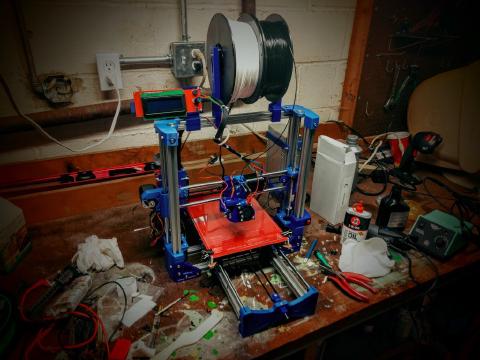
- Chris traded in his mill for a 3D printer. It is a Wilson II 3d printer, a reprap variant designed by his friend Marty.
- David2 built a super high end 3D printer for his senior project and won contests with it.
- The unwritten part of 3D printing is needing to get better at 3D modeling software.
- Dave uses the simple eMachineshop as it fits how he thinks about mechanical assemblies.
- CadJunkie (run by Adam who was also on Engineer v Designer) is a program for learning about how to model stuff in 3D.
- Chris uses Sketchup, which can get you somewhat far. He is also investigating AutoDesk Fusion 360.
- Dave asks Chris whether he is giving away all of his content. Not yet!
- David Bowie (RIP) wrote about the future of the music industry in the NYTimes...in 2002. He was spot on.
- One of the main ways to still make money is on tour. Adam and Jamie of Mythbusters tour around the world, including Australia (which Dave missed).
- Chris had a list of life goals that he was reviewing at the beginning of the year. Dave has never had a list. What should Dave do?
- Michael who was recently on Embedded.fm talked all about FIRST Robotics.
- The introductory FIRST video this year is based on Monty Python and the holy grail.
- Former guest Fran has started a kickstarter for her reboot of the peachfuzz pedal. A couple days left!
- Zano went bust to the tune of 2.3M pounds. Kickstarter is doing an investigation.
- Chris quoted Hans Gruber from Die Hard with regard to flopped crowdfunding campaings. We learned today (the day after the recording) that Alan Rickman sadly passed away.
- A new article indicates that Atmel's board prefers Microchip buy them. Dave loves saying "fiduciary responsibility".
- Brian Benchoff tried to prank Chris with "something ominous from his past". It turned out to be a t-shirt of his lame band.
- Future product designers will be tempted by low cost platforms like the Pi Zero ($5). Dave and Chris went over why it would be a bad idea to think this is a long term plan (ie. a product vs a prototype).
- Form Factor -- It's not optimized for your design.
- Stock -- Recall when Octopart started their BBB tracker because it was so hard to get them.
- Price -- If they got good pricing on a chip, you probably can as well.
- Looking for a fun way to ride for 20 minutes and/or get chopped up by blades while riding to work? Check out the Ehang 184!
- Dave didn't know that LaVar Burton was the host of Reading Rainbow, which recently relaunched.
Transcript
Chris Gammell: This is The Amp Hour Podcast. Recorded January 13th, 2016. Episode 282. 3D Product Logistics.
Dave Jones: Welcome to The Amp Hour. I'm Dave Jones from the EEV Blog.
Chris Gammell: And I'm Chris Gammell of Contextual Electronics.
Dave Jones: I got it in first. You don't know how I'm going to edit this.
Chris Gammell: See, this is where editing comes in.
Dave Jones: I just had a mental block there doing the intro. I guess it's been so long since I've been on. It's been like a year, hasn't it?
Chris Gammell: Yeah, since last year at least, right? Well, welcome back. Happy New Year. Blah, blah, blah, blah, blah, blah.
Dave Jones: Yeah, even though it's the middle of January.
Chris Gammell: Well, you know, when you take long vacations, that's what happens. But in the meantime, I've had some great shows without you.
Dave Jones: Dude, I took a week. I took one week's holidays.
Chris Gammell: A week plus, yeah, you cross that on a recording date. It just doesn't work out.
Dave Jones: Yeah, exactly. It crosses dates.
Chris Gammell: Did you hear the deluge of Aussies calling in for the call-in show last time?
Dave Jones: No, I didn't. I have not listened to it. Oh, man.
Chris Gammell: Yeah, it was great. I mean, they were all great. Everybody was great. We had four Aussies and one American. One sift and ten. Yep. Yeah, right. Yank. Thank you. We need to push the recording up for those days somehow. So maybe next time, if it's a non-Dave-Collins show, we'll push it up so the Europeans can get in there too. I always feel bad about that, but yeah. Yeah. So it was good though.
Dave Jones: It's not very often a non-Dave recording show though.
Chris Gammell: Non-Dave-Collins show? Yeah, we've only had three and two-thirds of them have been Dave-Collins shows. So yeah, you're right. Statistics are on your side. Excellent.
Dave Jones: I hope I can do the next one. I am on another podcast today. Oh yeah? Which one? This is the first. I'll be on the Space Welders podcast. What is that? I don't know. I'll find out when I go on. Anyway, it's a bunch of Aussies. Well, I hadn't heard of it. But they talk about space, science, IT, computers, everything. Anyway, I think it's more of a software-y type thing. Don't quote me on that.
Chris Gammell: Wow. It sounds like all of the things that you are an expert in.
Speaker ?: Right.
Dave Jones: So anyway, it's called the Space Welders. I don't think it's about space, but the Space Welders podcast. We'll find out. Yeah, you'll find out. Yes. I'll be on that this afternoon.
Chris Gammell: Great. Awesome.
Dave Jones: I don't know when it comes to live, but you know.
Chris Gammell: We'll keep an eye out. Good. Good, good, good. New podcasts. So do you have to buy a new microphone or anything fancy like that?
Dave Jones: No. I think they're even going to accommodate me to our Mumble server. Oh, fancy. They normally use Skype, and I went, oh, don't use Skype. It's crap. You know.
Chris Gammell: Allow me to show you, yes.
Dave Jones: Now, have I got a deal for you? Mumble. We've got a Mumble server, and they said, yeah.
Chris Gammell: Which also means I can wake up later in the evening and crash your party. Now I know. Oh, right. Just sign on.
Dave Jones: You could secretly sign on, yes. Yank attack. USA. USA. USA.
Dave Jones: All right. I'll show myself out.
Dave Jones: Oh, boy. Anyway, I'm starting to sweat here. My air con has failed. Yeah. Yeah. Well, you. On a 41 degree day.
Chris Gammell: Yeah. That's, what is that? That's like pushing 100F, right? I mean, that's. Yeah. Yeah. Plus 32. No, it's over 105 or something. It's over 100. Yeah. That's crazy. That's really hot, man. Yeah. What are you doing there still?
Dave Jones: I don't know. Well, you know, it's not that bad in here. This lab gets up to about 27 if I let it, if I shut the door. Oh, gotcha. Gotcha. But I didn't want to leave the door open here because I'm quite loud and people will hear me out in the corridor. So, you know.
Dave Jones: Yep. Yep.
Dave Jones: Yeah. So I'm sort of, yep, paying the price here for the next hour. Yep. But after that, yeah. And last time it failed. This isn't the first time. Last time I believe I tweeted a photo of it. Maybe if we can find it. Although searching Twitter sucks. You ever tried to search Twitter for us?
Chris Gammell: Google's gotten a little better at indexing, but yeah.
Dave Jones: Oh, man. Anyway, I did. I'm pretty sure I tweeted a photo of the motor start capacitor that failed last time. It actually melted. Like, all the guts used out and like, you know. So, but the problem is I've got to go by a ladder. We're talking about this before. So that I can actually get up in the roof to at least have a look to see if the motor start capacitors failed again. But otherwise I'll just, it needs a service anyway. I might, because I don't get it service, which is apparently quite foolish for these industrial, you know, building type air cons. What are you going to do, right? Yeah. Yeah. No, exactly. So, yeah. You know, they've got to make sure the water pressure's set correctly and all that, you know, because it's tied into the building water system and, you know, all sorts of stuff. So, you know. Yeah. Yeah. So I might just take the easy road out and call in someone. Yeah. I know that's pretty pathetic, but, you know. I don't know.
Chris Gammell: It's not really yours though, is it? I mean, like, is it?
Dave Jones: Well, no, it's mine. Technically I own it. Yeah. Yeah. So, but it is tied into the building infrastructure. So, yep. It's kind of like a weird convoluted air con system, apparently. Definitely. Yes. It's, it's, it's not truly independent. It does, does rely on the rest of the building to do stuff.
Chris Gammell: It's going to be weird too, because you do own parts of it and yeah, whatever.
Dave Jones: All right.
Chris Gammell: So yeah, I was saying to you though, you should just, I was like, oh, well, Dave, why don't you just order a ladder on Amazon? Amazon? And then you told me.
Dave Jones: Like it was just a done thing, right?
Chris Gammell: Yeah. Right. Of course. Buy a ladder on a book site, right?
Speaker ?: Right.
Dave Jones: And then I said, no, it doesn't work like that. And you just assumed that, what are you talking about? Yeah. What are you talking about, Dave? Don't you, you surely, you have Amazon there.
Chris Gammell: Yeah.
Dave Jones: No, we don't.
Chris Gammell: Well, you do, but not like that. You don't have like the non-book stuff. Yeah.
Dave Jones: We, we do not have a warehouse here. Last, we checked anyway, we found an article in July. We went and researched this extensively before the show.
Dave Jones: One full Google search.
Dave Jones: Two seconds before pressing, yeah, record. And, you know, back in July, no, they were, you know, there was rumor they were looking for warehouse space in Australia, but even if they got it, you were saying that it's still not, they've got warehouses in Europe, but it's still not as good as the US system, Amazon. Yeah.
Chris Gammell: Well, it's just, and it's honestly, so what it was all coming down to is just how it changed your habits, right? So that's what it comes down to is I'm so used to just searching specifically by things that are available on Prime. And, and I, I guarantee some people are nodding their heads right now. They're like, yeah, of course I do that.
Dave Jones: So Google Prime is the, for non-Americans, Google Prime is what? But, sorry, Amazon.
Chris Gammell: So many bloody services. Google Prime's on the way, yeah.
Dave Jones: Is the same day service?
Chris Gammell: No, it's like you pay a flat rate and then you get everything two day, but you could pay a smaller upgrade, like four or five bucks for one day shipping then.
Dave Jones: Oh, okay. Right.
Chris Gammell: So, but like compare that to like a, like a DigiKey.
Dave Jones: Oh, that's cheap, right? That's, yeah.
Chris Gammell: I mean, I buy a resistor on DigiKey, it's 80 bucks shipping because that's how much it actually costs in an individual. 80 bucks? Versus. Yeah. For an overnight shipping, like 10 AM delivery? You never done that?
Dave Jones: 80 bucks. It costs, it's a, it's a flat rate, $30 to Australia.
Chris Gammell: And when does it show up?
Dave Jones: Oh, well, no, it comes pretty quickly. You know, three or four days, maybe. No, it's not too bad. Two, three days. It comes via DHL or FedEx. They have two, you know. That actually, no, that's not bad at all. But yeah. And they're both 30 bucks flat rate to Australia. Yeah. Well, that's probably how long.
Chris Gammell: I mean, they probably load it on the truck and then it gets out of there and yeah. But it's, this is like special delivery type.
Dave Jones: All right.
Chris Gammell: If it needs to be there by early. And maybe there's even 8 AM, I don't know. But I've definitely paid like 80 bucks before.
Dave Jones: Jeez, even in Australia, well, we used to have free same day service. You know? From in town though, right? If you bought from Farnell's, right? Yeah. Element 14, whatever they bloody well call themselves. Yeah. Yeah. Yeah. Oh, you know, if you ordered before 10 o'clock, they would ship at the same day and you'd often get it the same day and it was free. You know?
Chris Gammell: Yeah.
Dave Jones: That was cool.
Chris Gammell: But it wasn't getting on an airplane, I bet.
Dave Jones: Oh, no, no, no. If no, it's because there was a warehouse in Sydney. So if you're in Sydney, you got it the same day. It was straight off the truck. Yeah, it's a truck.
Dave Jones: Yeah. Yeah, right. Yeah, yeah.
Dave Jones: And, um... Yeah. But no, still... But when you have it, it influences your decisions, right? I do appreciate... Yes. I appreciate that decision. When I used to work, it was like, oh, I need a part. Oh, quick. It's 9 a.m. Order it and will have it on my desk this afternoon, you know? And it changed your ability to do things.
Chris Gammell: It changes your behavior, of course, especially if it's like, if it's kind of hidden from you as well. So, I mean, you know, you might have paid a little bit more on a part there. Maybe, maybe not. I don't know. But like, you know, it's free shipping, but nothing's ever free, actually. So it's just included in the price and that's fine. Yeah, of course. But it's hidden and you're like, oh, yeah, it's free. Why wouldn't I do this? Right. And then it becomes this differentiation point. So, yeah, I mean, that logistical stuff, it really does, really starts to make a difference. And, you know, it's relevant, I think, for us too. I mean, you're developing products. I've had thoughts of developing products and I've shipped stuff for my course and stuff. And it's just like, yeah. And, you know, people listening too, it's like, that is the crappy part, you know? Like, okay, yeah, you designed a thing. Cool. Now, are you going to get it to people? You know, like, it's like, oh, good luck with that. Because either you're going to pay for it in your time or you're going to pay someone else to do it and then you pay out the nose. Exactly.
Dave Jones: Or it goes horribly wrong like I've done before, you know? Yeah. I tried to ship my micro rulers. So I went to professional shipping company. Oh, yeah. Completely screwed it up, right? Right, right. It was the biggest balls up in history, you know? So I'm doing it myself now. I actually have a new product, which if I had the time today, I would be shooting the crowdfunding video for it. So I am ready, you know.
Chris Gammell: Thanks a lot, space worlders. Right. You ruined the timetable. I'm never listening to that podcast now, Dave. Jeez. Come on.
Dave Jones: Space worlders. Everything sucks my time away. I don't have time to do anything. Scratch my bum. No time. You know, it'll have to stay itchy. Yes. Yeah. So I'm ready to go on that. So, well, actually, I could have done it before Christmas, actually. But, you know, meh.
Dave Jones: Right. Yep.
Dave Jones: Yeah. So, yes, I'm ready to go on that product. And I've got another product, which I finally got my prototype, my first real prototype for, which is awesome. Yes, you don't know about this. You have not seen the photo. I have to take some photos and send it to you after the, nobody has seen it. Okay. Send it to you after the show. If I've got time.
Chris Gammell: If you've got time, right.
Dave Jones: Because I have to go out and buy a ladder.
Chris Gammell: Unlike the hour we spend chatting before the show. Oh, right. Yes, we do. But, yes, if we have time. Yes, of course.
Dave Jones: Yeah, I tend to get carried away. Yeah. I say I don't have time and then I get carried away with stuff when I shouldn't. You know. Very inefficient. It happens to us all. It happens to us all. Anyway. Maybe we can talk about efficiencies later, which we were talking about before the show. Anyway. Yes, I got the new product. And, oh, it's pretty slick.
Chris Gammell: Is there a circuit board in it? We have to play 20 questions since you're not going to say what it is.
Dave Jones: Yes, there is a circuit board in it.
Chris Gammell: Did you design it?
Dave Jones: No, I didn't lay out the board or design the circuit. No.
Chris Gammell: You specked out the product, but you did not.
Dave Jones: I specked out the product and then I went.
Chris Gammell: Dave is a product marketer.
Dave Jones: And then when they came back, and then they came back with their first, you know, I want these specs. They came back with their first proposal and it was nothing like what I wanted, really. It was massive. It was double the price that I wanted. And, you know, it had features that I didn't ask for, you know. Oh, man. It was over-engineered. So I had to re-engineer it for them and go, you're going to use this chip. Trust me. Oh, yeah. This chip is the go, right? You know.
Chris Gammell: So you were doing the product definition type stuff. Yeah, yeah.
Dave Jones: So I was down to the chip level, you know, doing stuff. So even though I didn't design the schematic layout of the board, yeah, I had a pretty decent hand in it.
Chris Gammell: Dave has gotten promoted. Dave's promoted himself. That's what it really is here.
Dave Jones: Yeah, yeah. I have. I have promoted myself to product architect.
Chris Gammell: There you go. That's the word. That's the word.
Dave Jones: Yeah. So anyway, so I got the first, like, and it's silly. I don't know why, but they're so secretive, even though, you know, we have an NDA and everything else, right? And they're developing the product for me. And, like, they're so secretive. Like, we're shipping you something. The item. Like, oh, we're shipping you the item. And they'll tell me nothing more except read.
Chris Gammell: The bird flies at midnight.
Speaker ?: Yeah.
Dave Jones: Read. Read the letter that comes with it. It explains everything, you know? And it's like, I have no idea what I'm going to get. It's like, I don't know whether they do it deliberately to tease me or what. But, yeah. You know, and I thought, oh, I'm going to get an empty case or I'm going to get a, you know, like, it's not going to switch on or, you know.
Chris Gammell: I had no idea what I was shipping you. This is just an Altoids tin, guys. I don't get it. Yeah, yeah, yeah.
Dave Jones: It's an Altoids tin with a, you know. Right. Because I had actually released to my backers a few days before this, they sent me a 3D printed prototype case. I don't know if you may not have seen the video. I don't think so, no. But, anyway, it's a gorgeous, printed on one of the $100,000 SLA machines, you know. Oh, yeah. And it had a mock-up of the circuit board in 3D and it had, you know, everything. And the case is fitted together and it had the battery compartment, like the whole shebang, you know. It was in, like, five different parts. Gorgeous. And it fitted together like a glove. And so I had that to play with.
Chris Gammell: Well, 3D print wood, you know. Yeah. So this is the injection molded one that you have to care about. Come on.
Dave Jones: No, but I'm surprised that the 3D printed one fitted so superbly, you know. No.
Chris Gammell: That's just a function of how accurate the printer is.
Dave Jones: Yes, yeah. Yeah, exactly. Oh, so that's what you were impressed with. Oh, I see. Yeah, because I'm used to a MakerBot, right. Ah. Which, you know, nothing fits, right.
Chris Gammell: We can talk about 3D printers a little later, too.
Dave Jones: Oh, right. Okay. Anyway, so, yeah, I was impressed by that. But I had to send it back because apparently it's quite expensive or it's the only one they had. So I had to ship that back.
Chris Gammell: Or they were secretive about it.
Dave Jones: Oh, they were secretive about it. And I sent – so, anyway, I got my new product. And, yes, once again, it felt like the real thing. I thought, holy – like, the first time I looked at it, wow, they've done the real thing. They've injection molded the case. No. They're still 3D printed cases, but they've painted them to make it look like the real thing. And at first glance – you know, and the – I almost gave the game away. But – You can edit, Dave. I can edit. And it looked – and it just – like, I opened the box and I went, wow, that's the finished product. And, you know, I was very impressed. But, no, it's – you know, there were a few – there's been a few issues with it. Like, once again, they've completely goofed on something, a major aspect of the product. A gaffe. Yes. So I've had to explain it to them exactly how to engineer that. So they've gone away and said, oh, yeah, we can do that. It's like, okay. You know. So, yeah. It's – No, that makes a big difference.
Chris Gammell: You know, like, having that stuff actually – so the – I was telling you before the show, I actually was granted a patent finally. Yep. And I have a design patent now. And while we were getting that stuff made up, they ended up machining that thing out of ABS. So they machined it on, like, a bunch of CNC machines, glued it together, painted it. And so this thing was, like, drop-proof too. Right. And it was, like – and, you know, we manhandled that prototype. And it was beautiful because, you know, it had exact dimensions. It was – you know, it probably cost five grand, but who cares because –
Speaker ?: Right.
Chris Gammell: No, of course. Basically, when you're in a big corporation too, you're trying to, like, sell ideas up the ladder. And when you show someone a thing that looks done already –
Dave Jones: Yep.
Chris Gammell: I mean, that's honestly a risk at that point because they're like, well, it's done. When can we get this? Yeah, I know.
Dave Jones: Let's start selling it. Yeah, I've been there.
Chris Gammell: Hold up, guys. Yeah.
Dave Jones: Yeah, yeah. This is a prototype. You know how much engineering is required to get this into production? Right. Exactly. No, they had no idea. Yeah.
Dave Jones: They had no idea.
Dave Jones: And, yeah, and the other thing is, is like – and they were so secretive. Like, they wouldn't ship me the schematic and the PCB before they shipped me the product. And I'm going, why? I'm asking for the schematic so that I can double check it to make sure they've implemented everything correctly. You know, and as it turns out, they goofed something up. And, yeah, if they had given me the schematic first as I asked, then I would have picked it up. You know, and – but, yeah, it's – what was I going to say? Mental block. Something about –
Dave Jones: Something about – If you're not there, if you're not actually either physically there or driving it, you know, these sort of things can happen.
Chris Gammell: Right. You know? Yeah. When Akiba was on, he talked all about that. Oh, right. Okay. Yeah. I mean, we were talking about boots on the ground, especially like in Shenzhen. Oh, yeah, yeah. It's not that you can't get good quality. It's just that that's going to guarantee your quality because you're right there.
Chris Gammell: And you're – yeah, you're in the process.
Dave Jones: You guarantee that – you know, you're more guaranteed to get it right the first time if you've got boots on the ground. Exactly. Or you're checking every step. If I had checked that schematic first, then, you know, they wouldn't have had – they wouldn't have to have totally re-spinned the board. Yeah. You know? Right. As they will now. And, yeah.
Chris Gammell: It's interesting, too, about the secretive stuff because I've experienced that at a couple different companies, and it is totally just a culture thing, right? I mean, so – Yep. One company I was at, we wouldn't even tell, like, our – the FAEs, like, what we were doing with the circuit. Right. And they're like – they knew we were just following a lot of the app notes. You know? Like, a lot of times it's like, okay, yeah, we figure it. We know what you're doing. And, of course, they knew what we were doing because we were doing a lot of the same things that was in the app notes and stuff like that. And yet, it was just part of the culture. It was like, no, you don't really talk about it. And then other companies, it was, yeah, just show everything because you can get stuff done faster, and that was more important. And I personally – I like the second one better because you're being – someone's talking about your product either way, I think. Right. And in the second case, it's actually to your benefit, then. Yeah. So, it's reality. It's reality.
Dave Jones: I would love to have blogged this process as I went along. With this, you know? Because it's been like six months up until this point. Oh, yeah. You know? I went through several design iterations, you know? And, yeah, I'd love to be – but I can't. You know? It's like under-ending – you know? It's like, yeah, secret. The company doesn't want me to release, you know? So, I've sort of released things that I can, you know? Right, of course. Yeah. But I can't just release a video. Well, maybe the next time, you know?
Chris Gammell: Yeah. Like, that's something you can look for in the next – either go to them and say, next time I want it to be public or find someone new.
Dave Jones: Right. Anyway, one of the interesting aspects of my current product that I'm doing is that I'm dealing with – well, I'm dealing through one company, right? So, I'm dealing through the company who's technically overseeing it and they're not designed – but they're not designing it, right? They're the company who – they're the front company who actually, you know, I'm dealing with and doing everything, but they part-own another company who's actually doing the design and manufacturing, you know?
Chris Gammell: Where are both – where are these companies?
Dave Jones: One's in the US and one's in Taiwan. Gotcha. So, yeah. So, obviously, yes, it's been designed and manufactured in Taiwan by their, you know, a company that they part-own. Gotcha.
Dave Jones: Yep.
Dave Jones: Yeah. But they're sort of, you know, driving things from their end. So, it's like – sort of like – so, there's two people driving the ship, you know, and there's me and the US company and, you know –
Chris Gammell: Well, that's an interesting thing, too, because of just, like, the difference in cultures. Like that – I'm not sure about Taiwan, but, like, the – you know, that thing that Bunny wrote about the Shenzhen and the – what was it called? The sharing of schematics, all that stuff. Yes. The Gankai phone or whatever. Like, that kind of thing, where it's just, like, yeah, it's just – it's not that big a deal. We all know what you're making. It's like – it's just, like, come on, you know? Yep. Exactly.
Dave Jones: Yeah. So, I don't know. Does anyone know if Taiwan is like China in those respects or not? I don't know much about the Taiwanese – because everything used to – when I was a boy, before you were born, Chris, everything came from Taiwan, right? First, it was Japan, right? Japan made all the good stuff, and then Taiwan was the China of back then, right? You know, everything was coming out of Taiwan. Korea was in there, too, I think, right? Yes, yes, yes, Korea. Oh, sorry. No. What am I – no, sorry. It's Korean. It's Korean.
Chris Gammell: The company? Yes. That you're working with? Oh, okay.
Dave Jones: Well, no, no, the company's US, but no, their partner – Right, right, right. Their partner, their manufacturing partner is – He's Korean. Sorry. It's in Korea. Why am I thinking Taiwan? No, it's in Korea.
Chris Gammell: Dave's dealing directly with TSMC.
Dave Jones: Now we know. The Dave chip. Trademark. Patent pending. Yeah, right.
Chris Gammell: I don't want to use that chip, Dave. Sorry. Sorry.
Dave Jones: Sorry. Yes, it's in Korea. So does anyone – my question still stands. Does anyone know if – yes, if Korea is similar, sort of, you know, works similar way to Taiwan? Anyway, I was in the middle of a story –
Chris Gammell: Does anyone know, like, the guy that used to work for a Korean company who you're talking to?
Speaker ?: Right.
Dave Jones: But anyway, I'll finish that little story. Before you were born, yes, Taiwan actually was the China back then, you know. It was where, you know, everything –
Speaker ?: Right, right.
Chris Gammell: It was open and, yeah, there's a lot of new tech on there. Everything was made.
Dave Jones: It was the manufacturing hub. And then China took over. And then Taiwan sort of now is like – has a bit of a level rep above their sort of leveled up from China.
Chris Gammell: Yeah, the quality is high and I think it's just gotten more expensive. I mean, it's kind of limited land space as well, so –
Dave Jones: And, of course, South Korea has always been high – reasonably high quality, you know. Like, good stuff comes out of South Korea, you know, pretty much like Japan. No, well, no. But, like –
Chris Gammell: I mean, like, yeah, around the same time, you know, like that –
Dave Jones: Because they don't have necessarily a bad rep, you know.
Chris Gammell: So – They used to, Mr. Back to the Future guy. Japan, yeah. Japanese transistor radios when those came out. Oh, yeah, no, no.
Dave Jones: Japanese – no. And then they transitioned into Japanese make the best stuff. Yeah, of course.
Chris Gammell: This is the same – yeah, no, this is the same path that everyone takes. Yeah, exactly. You start with the low-cost stuff and then you – the quality keeps – I mean, this is exactly what's happening in China now too, like the qualities.
Dave Jones: Yes, exactly. So it happened to Japan, right? I don't know. You know, they went from bad rep to good rep. It happened in Taiwan. They went from low – you know, the – really low-class manufacturing to high-class manufacturing. China's going from low-class manufacturing to high-class manufacturing. And you're saying South Korea did the same thing? Yeah, I think around the same time as Japan. I don't know. I just don't have too much experience with South Korean products, that's all. Gotcha. Yeah. So, yeah, everyone goes through that. Who's next? India? South Africa?
Chris Gammell: Robots. That's who's next.
Dave Jones: Bro, bloody robots.
Chris Gammell: Seriously. That's – sorry, man. That's the answer. I don't think – I mean, like, there are other countries, I'm sure, that, like, are hoping for this. I mean, Vietnam's been coming up with a lot of manufacturing out of Eastern Europe as well. Like, there's a lot of great manufacturing in Eastern Europe that's been on the rise. I know NI does a bunch of stuff in –
Dave Jones: Malaysia as well. Yeah. There's stuff in Malaysia. A lot of stuff's coming out of there.
Speaker ?: Oh, yeah?
Dave Jones: Okay, okay.
Chris Gammell: You know? Yeah, and India's trying to do this kind of stuff. I just don't think they're –
Chris Gammell: They don't have the infrastructure for some of it. I mean, they've got some good industry there, but it's just like, I don't think they have the –
Dave Jones: They don't seem to be able to bootstrap it. Like, everyone's talking about that India will be the next China and stuff like that. They've been saying that for, like, maybe a decade or something, but they don't seem to be able to get a foothold, do they?
Chris Gammell: They're just doing it based on that there's just a mass of low-income – Of people there.
Dave Jones: Right, yes. Right, low-income people.
Chris Gammell: And it's like, that's a terrible thing to go on because the infrastructure isn't there. As far as I understand it, the infrastructure isn't there, whereas China's been – Focused on almost nothing else. Yes, that's right. They've just been building that out like crazy and really –
Dave Jones: China is the infrastructure capital of the world.
Chris Gammell: Yeah, they just build cities overnight and that kind of stuff gets nutty. And, you know, good for them. That's good. No, that's awesome. But I think robots. I think robots is the answer. Robots. Robots is the answer. Sorry, that's my terrible – What was that accent? That was supposed to be Zoidberg from Futurama. It was terrible. Oh, sorry. He says, robots. Right.
Dave Jones: Oh, goodness.
Dave Jones: Yeah.
Chris Gammell: Speaking of robots, I got a 3D printer.
Dave Jones: Ha-ha. I saw a photo of that. What is it?
Chris Gammell: Some Joe Bloggs brand? It's actually – no, it's my buddy in town, Marty. Oh, that's right. Yeah, so he's actually – he's still an engineer at one of my former companies. And super bright dude.
Dave Jones: He's still an engineer? Like, it's a given that he's not going to be one one day? It's like –
Chris Gammell: No, I just mean, like, this isn't his full-time gig. This is – so, anyways, it's a rep-rap variant. And it's based off the Prusa i3. It's called the Wilson 2. Previously was the Wilson TS. But it's actually a rep-rap. So, it's a – you know, it's got the 3D printed components to all of it. It's not off the shelf. So, it's actually a kit. It was like 500 bucks.
Dave Jones: Oh, okay. And you build it.
Chris Gammell: And actually, sadly – maybe sadly. Well – I don't know. It's – I ended up trading Marty for my mill. So, my mill is gone. I am no longer a hobbyist machine. It's for the time being. Yes. Yeah, I just didn't – I didn't – he could use it for his business. And I did not see an immediate need, so –
Dave Jones: Okay.
Chris Gammell: Yep. It's – ah, it's okay. It's – it was a good hobby. I know more about it now. But it's just – yeah, I wasn't using it for anything, so.
Dave Jones: But you can buy build-up 3D printers for 500 or less. Can't you? Yes, but – Why a kit?
Chris Gammell: Yes, that is totally true. And I was making that decision with that in mind. Because I wanted to understand all the pieces that went into it, including the build. Fair enough. Because I wanted to be able to extend and then build my own later. And I felt like even though I could have done the same thing if I would have just bought one off the shelf, I could have gone and printed another one. I know I wouldn't. Because it's just one of the things where, like, I know that's something where it's like I plan to learn that someday versus knowing that, like, this is a thing that I have to do anyways. And so I decided I was going to build one. Plus, I know Marty who designed it and shipped it to me. So I had him as a reference.
Dave Jones: Oh, by the way, keep an eye on my channel. David, too, will be bringing in his 3D printer. That was his uni thesis project. Oh, good, good. And, yeah, with the big bubble. Like, he got this $1,000 injection molded bubble, which we've showed photos of before. Yeah. And he really went to town. And this thing is lightning quick. Yeah. And he goes into it. And, yeah, so we'll probably be doing a video of him explaining all the physics behind, you know, motor whiplash and all that sort of jazz, hopefully. Oh, cool. Because this thing's like he's over-engineered it to be super fast. And he's even, you know, he's writing his own, you know, algorithms for doing the… Like PID type control. Yeah, his own engine and PID control and his own splicing algorithms and everything. Like, you know, it's not just…
Chris Gammell: Oh, you mean like slicing for the actual slicing of the…
Dave Jones: Yeah, yeah, yeah, for the 3D modeling because he's, you know, he's into that sort of thing. Oh, cool. Yeah, yeah. So there's, you know, it's not like he's… That's what I'm hearing. Yeah, yeah. He's seriously nerdy about this sort of stuff, you know. Yeah, that's cool. Yeah, so hopefully that'll be a really good technical video and all the… You know, so it's not like he just built, you know, got some motors and some, you know, eye beams and assembled a 3D printer. No, it's, you know… That's what I did. There's a lot of theory. Yeah, exactly. No, it's a lot of theory. And he won the university medal or something for his project. Oh, very cool.
Chris Gammell: Aren't you a proud mentor?
Dave Jones: Yes. So hopefully he'll bring that in soon. I have to remind him. But we'll do a video on that.
Chris Gammell: See, now, okay, so that's like a project. And mine was kind of a project, at least to get mine up and running. And now I'm realizing that I'm like, oh, crap, I have to remember how to 3D model stuff. Like, because I've been printing stuff, no problem. You know, you can find models like it's nothing.
Dave Jones: Of course, and then just load them in, yeah.
Chris Gammell: But the real reason I got it is for fixturing and for enclosures and that kind of thing. And it's like, oh, crap.
Dave Jones: Oh, crap. I have to actually do work to actually, these 3D models are actually not easy to create. Right, yeah. Right.
Chris Gammell: And I'm looking at like, so like even just like some of the crap I have in my desk, you know, like just like little toys and plastic things and stuff like that. You know, like there's some, anything that has a curve in it automatically becomes a much more, like I could do SketchUp in it. I could do it with my eyes closed, right? But like anything with curves, I am just, I am out of it, you know? And that's kind of the interesting stuff anyways, if you want to do interesting designs and, you know, ergonomic type stuff as well. Because otherwise, if I was just going to do square boxes, I could have just bought Hammond boxes. I totally understand that. It's not like I'm, you know, breaking any ground there, but, you know, for the custom stuff.
Dave Jones: There's a lot of skill that goes into 3D model creation, you know? Right, exactly. Anything that's remotely complex, you know, it's, you know, it's not something that you can learn overnight.
Chris Gammell: Right. Yeah, I think I'm going to go, and that's the other thing is like now it's a question of, well, what do I spend my time learning? Because it's not like I have an overabundance of time either, but, so just trying to find programs that could do that kind of stuff, it's just like, I don't know. Because I can, do I go cheap? You know, this basically becomes the same thing that we do with EDA type tools, right? It's just like, eh, I could buy the Altium, which I suppose would be like an inventor or SolidWorks or something like that. And that would be the smart professional move, but I'm not exactly in a professional capability here. Exactly. I'm just trying to become effectively KiCad proficient without the, you know, KiCad heartburn.
Dave Jones: In this case, someone like David too is spoiled, right? Because he comes in, you know, and he brings his laptop and he says, oh yeah, I'm using this tool and this tool and they're all like $10,000 tools, right? Oh, and they're school licenses, right? It's because they're school licenses, right? Yeah, for now. You know, and then, you know, I keep trying to impress upon him that, dude, when you leave university, like you have to pay for this shit. Party's over. And he goes, oh yeah, so that's why I'm thinking about just like accepting a part-time, you know, tutoring role or something so I get access to all these tools.
Chris Gammell: Right, grad student forever just to get to the software licenses.
Dave Jones: Exactly. And he's serious about it, you know, because that's like a huge advantage. Yeah. You know, you get all these tools.
Chris Gammell: Yeah, I guess so. I mean, I don't know. Like, I think there are more, the interesting thing is that they're, you know, everybody's moving to this kind of web model. There's Onshape and even like, you know, Autodesk has got their Fusion 360, which I'm considering.
Dave Jones: Yeah, don't you, but with the Adobe thing, you get the Adobe Cloud and you get all the apps or something.
Speaker ?: Yeah, the Cloud.
Dave Jones: It's not like a hundred bucks a month kind of thing. Right.
Chris Gammell: And I mean, like even in EDA, this is happening, right? Like you said, Altium's doing a little bit of that stuff and we're, you know, we're seeing this other places too. There's the Upwarders of the World, stuff like that, where it's, you know, there's advanced capabilities, but hopefully they want to try and just keep in a subscription plan and that's fine. That's a valid model. And, you know, it's nice for being able to, you know, turn that on and off as your cash flow comes in. But, you know, the overall cost is probably, you're going to pay the same over time anyway. So it's not like you're going to save money over time.
Dave Jones: Yeah. So, yeah, I've never really gotten into the 3D CAD side of things. Like I've done some of it, but I sort of like, I like download like a different tool every time. You know, it's like, it's stupid. You know, I've got to actually go, right, I'm going to learn how to do this. I'm going to pay, you know, I'm going to get like, you know, advice from people, which is the best tool to easiest to use, blah, blah, blah. And just stick by that and stick with it and learn it.
Chris Gammell: And yeah, right. Any new tool you had definitely have to, but I think there's other things there too, though. Like, like even just concepts with the mechanical stuff, like thinking about how certain things are made. There's like, you know, you rotate, like rotate a shape around an axis and it becomes like, you rotate a rectangle around an axis and it becomes a cylinder, right? Like that kind of like thinking of those, those kind of like, like mind scripts almost, you know, like they're like, how can I create this shape? And then you start to piece that stuff together. Right. So I'll probably.
Dave Jones: Yeah. I've got like one CAD package that I tend to go, but it's not really a CAD. It's like one of these online CAD packages. You download it. It's the eMachineShop software. I've never heard of that. eMachineShop. They're like an online thing where you can just submit your thing and they'll make it for you. They'll machine it out. Right. Oh, interesting. Yeah. But they've written their own software and it's like, seriously, I've downloaded like a dozen different CAD programs and that's the one that seems the most intuitive for the way I think, you know, for my archaic, you know, schematic background thinking, right?
Chris Gammell: Sketching 2D. Yeah. Yeah. Just make this a little taller.
Dave Jones: Yeah. Yeah. Exactly. Drag this taller. And it just, it works the way I think. E-MachineShop. I've tried others and they just. Yeah. That's how SketchUp is for me.
Chris Gammell: Yeah. SketchUp is the only thing that I've been able to. It's painful.
Dave Jones: I've tried SketchUp and I didn't find it as easy as you did, apparently. Oh, no.
Chris Gammell: Yeah. Yeah. That's actually what I, the patent I got. It was part of a design patent. So it was. Oh, okay. I helped the design with the 3D printing stuff. Oh, there you go. And SketchUp. There you go. Yes. There's a useful skill. Thank you. Yeah. I don't know. I think I'll probably end up doing something. Like, so there's a person, Adam, who does, it's called CAD Junkie. And it's basically a program that I've kind of modeled contextual electronics on, but it's for like learning, you know, project-based learning around building 3D stuff. And great video course. They actually, they're the ones, Adam and Josh used to do the engineer versus designer. That's no longer around, sadly. Oh, okay.
Dave Jones: Yes. We talked about that years ago. Yeah.
Chris Gammell: Remember them. So I'll probably do something like that just to, you know, stick with my brethren, of course.
Dave Jones: Which platform do they use to, you know, distribute their videos and sell them?
Chris Gammell: Uh, they use Vimeo. Is that what you mean? Oh, Vimeo. Okay. Yeah. Yeah. Right. Yeah. So, yeah.
Dave Jones: So you just buy a monthly subscription, do you, and you get access to all their videos? Is that how it works? No, no.
Chris Gammell: Now it's, you just buy a chunk of videos, basically. So you buy like the one. Oh, you buy a package. There's like a one-on-one course and you design, there was like a plasticized keypad, basically. That was like one of the courses I saw. But then there's different, they also do like Rhino and all of the different CAD packages that I don't, I don't even know any of them.
Dave Jones: I think we were, weren't we talking about this maybe pre-show before Christmas or something like that? You've come to the realization, as I have, that probably paid online courses are not the future. Did you? Was that me? Yeah. Oh, shit.
Chris Gammell: I got to rethink things, man.
Dave Jones: I thought you realized that ultimately, it's probably a losing bet.
Chris Gammell: Did I say that?
Dave Jones: Are you sure that was me? I'm sure it was you.
Chris Gammell: Give me some more background here, because maybe I'll agree with you eventually. I don't know.
Dave Jones: I'm pretty sure you, because you were going to release all your videos for free, weren't you? Or something? You were going to release them all? No. No, electronics. No? No? You're still going strong?
Chris Gammell: I was talking about doing some of them, not all of them. Oh, right. We were talking about just like the value of, you know, putting content out there too. Yeah. But, you know, I don't really want to try and get advertisers like you as well, so.
Dave Jones: All right. No, I could have sworn we talked about that. Because, you know, I've been thinking about it for years, you know, that I would shoot, you know, a reasonably high quality course, you know, like electronics 101 or whatever, or, you know, how to design a PCB or something, you know, some sort of like short course. And then actually sell that as a package of videos, you know, pre-done videos. Oh, right, right, right. And if you want it, you buy the, you know, you pay your, I don't know, 20 or 50 bucks or something and buy, you know, the 10 or 20 videos, you know. Yeah.
Chris Gammell: I think you're right about certain things there. So, like, so the things that we probably talked about were like having, selling the same thing forever is basically like the music business, right? So, it's like it loses value because there's not dynamic stuff to it. And eventually it just, you know, like, you know, if you're the Beatles, it's fine. But if you're, you know, if you're just some band on the street, then, yeah, you just become part of the noise because the whole thing gets, the whole market gets flooded. It gets flooded. Yeah. And that's fun.
Dave Jones: There's so much content out there.
Chris Gammell: Right.
Dave Jones: There's so much free content, you know, and you're trying to compete with paid content. Yeah, true, true.
Chris Gammell: And I think people will pay for quality as well. But over time, yeah, it's just the amount of stuff that's out there.
Dave Jones: It'd be an interesting experience. Like, even with, like, I've got the biggest engineering audience in the world, right? I'm the biggest channel. So, I've got the biggest, you know, market ready market for something like potential ready market for something like that. But I think, you know, it'd be like, like, I'd be surprised if 1% bought it. You know, it's like. Yeah. Well, yeah. Yeah. Right price and everything, too. Yeah. It'd be down in the, you know, the 0.05% category or something. Sure.
Chris Gammell: Yeah. I mean, that's just how the internet works, too. It's just the 1% of 1%.
Dave Jones: We were talking about on a previous show where they've done studies that even if you pay a cent or 5 cents or something, make something available for 5 cents or a dollar, the number of people instantly drops by, like, 95% or something.
Chris Gammell: Right. That's in that book that you've been reading, too. Chris Anderson's book, Free. Right? He talks about it. Oh, free, which I haven't finished yet. Yes, that's right. It's between $0 and 1 cent is the big hurdle. Yeah. That's right.
Chris Gammell: Yeah.
Dave Jones: Exactly. Yeah. Exactly.
Chris Gammell: No, it's interesting. And so, a little bit of topical news. There was actually an interesting article from 12 years ago, I think it was. Maybe 13 years ago.
Dave Jones: Was there an internet back then?
Chris Gammell: There was. There was the internet. And it was David Bowie talking about the end of music. And so, obviously, David Bowie just passed away. He did. And David Jones. David Jones, yes. David Jones passed away.
Dave Jones: For those who don't know, yes.
Chris Gammell: Right, right.
Dave Jones: But he changed it when the Monkees became popular. That's right. Yeah.
Chris Gammell: And so, there was a New York Times article, though. And it was about, basically, he's like, yeah, you know, that's, so in 2003, before iTunes came out, he started his own digital label. Really? And he talked about how he's, you know, he sees the end of music like that. And basically, he's like, yeah, you know, the only way you're going to make money is by touring and doing other stuff. And he's right. Well, he was 100% right.
Dave Jones: He was 100% right. Yeah. Yeah.
Chris Gammell: He saw it that far out in advance. And that's the way it's completely gone. So, I think it's, I think if we put that same analogy there, it's true. I think there's a little bit of difference just because this is, you know, even in Anderson's book, he talks about, like, the super narrow content, like just electronics or just 3D modeling, that kind of stuff. It's a little different than broad content. But even still, there's just so many people jumping in the market, too, that, yeah, eventually, I think you're right. It'll probably move towards that kind of model. Or it'll have to be very specialized.
Dave Jones: So, I'll be making my money through touring, huh? I'm making guest appearances.
Chris Gammell: Come and see Dave in concert. That's right. David Jones. Teardown Live. Not Bowie. Yeah. Well, I mean, even Mythbusters, they do a tour now. Yeah, I know.
Dave Jones: Oh, I'm pissed that I missed that. I hope they come back to Australia. Oh, I'm sure they will. Because apparently it's a really fun show.
Chris Gammell: Yeah. Yeah, exactly. I'm just totally bummed. Yep. That is how, and that's why comedians around the world are doing well as well. It's not because they're making money on even Netflix specials. It's all about just selling tickets for a tour.
Dave Jones: And selling DVDs and things like that. Yeah, no.
Chris Gammell: Yeah, right. So, yeah, it's a strange world we're living in here, buddy. Hmm?
Dave Jones: No?
Chris Gammell: Yeah.
Dave Jones: Some of those comedians actually get pissed off by, you know, people film their things, film their shows, and then they upload it to YouTube. And some of them actually get quite pissed off because, you know, they're trying to make, they're trying to survive on like DVD sales and stuff like that. And it's like, that's a losing proposition right there.
Chris Gammell: No, but the reason they really get pissed is because they're trying to work out material too. Like, they're trying to get the best stuff on camera at the end.
Dave Jones: Yes, yes, exactly. That's the other aspect. Yep.
Chris Gammell: Yeah, that would be like someone coming into your office on a Tuesday and being like, all right, Dave, I'm just going to watch you. I'm just going to film you, you know, work through a problem set.
Dave Jones: Do a really shit, yeah. And it ends up being a shit video that they, you know, doesn't present them in the best light.
Chris Gammell: Exactly, right. So, I think that's the closer thing. But, yeah, so, yep.
Dave Jones: Yep. Watch out for Dave's 2016 tour.
Chris Gammell: Tour, yeah. Well, we had talked about, you know, maybe it's still going to happen. You can come over here. The Winnebago.
Dave Jones: You were talking about this.
Chris Gammell: Yep. Dave and Chris hit the road. The Amp Hour. The Amp Hour on wheels.
Dave Jones: Although you are trying to get to Australia.
Chris Gammell: Yeah. Yeah, sometime in 2016, hopefully. We'll see. Yep. We'll see.
Dave Jones: And we were talking about life goals before the thing, weren't we?
Chris Gammell: We were, yeah. Just trying to...
Dave Jones: Now, you actually had a list. You pulled up a secret online list that you had from a few years back of life goals, and you'd already ticked off. Yeah, a couple of them. Like most of them. Yeah. Although it's so trivial to tick off these days that, you know, they're practically ticked off. What do you mean? So, well, like one of your ones was like a online, what was it? Start a business? Yeah, which you kind of sort of done. And another one was have a home with a recording studio.
Chris Gammell: Oh, with a recording studio. Yeah. That one's a little trivial because it's like, yeah, just the cost of recording studios has dropped. And, you know, it doesn't take much more than a mixer board and an input to a computer. So, yeah. Yep. Yep. That's right.
Dave Jones: So, yeah. Sure.
Chris Gammell: Sure. But the patent was on there. So, that's the reason I've mentioned that three times now. Otherwise, I wouldn't have. Right. Yes. Yeah.
Dave Jones: You're quite chuffed that you've got a patent. Yep.
Chris Gammell: Right. And you were saying that you don't know what your life goals are.
Dave Jones: I, yeah. I was saying that I've never really had life goals to tick off.
Chris Gammell: Hmm. Yeah. Maybe soon. We'll see. Yes.
Dave Jones: Maybe, you know. Although, I did, you know, one, I did manage to, did manage to remember that I have actually kind of sort of ticked off was that to fly my own plane. You know. That's true. I wanted to fly, you know. And I did that one day. I'm sure I've mentioned it before. I just woke up one day and I went, I'm going to fly a plane today. So, I went down to an airport and I hired a plane with a co-pilot, of course, you know. And, yeah. Which we know. Yeah.
Chris Gammell: Because you're alive.
Dave Jones: Yeah, I am alive. Barely. Because, yeah. There are things that happened on the flight where, yeah. Yeah. Anyway. Yeah. Barely alive. And, you know, tick almost, you know. Because to level up, you know, as I was saying before the show, to level up to where I get to the level where I'm capable of actually soloing, flying my own plane, right, that requires, you know.
Chris Gammell: The scale, right. The scale of difference.
Dave Jones: A thousand hours of, you know, or whatever, right. A hundred hours of, you know. And tens of thousands of hours.
Speaker ?: No, no.
Chris Gammell: A thousand's closer. Yeah. I think it's a lot. A lot.
Dave Jones: No, no. I think within a hundred hours or something. Apparently, it's easier by helicopter. Apparently, a lot of people go, oh, I want to fly. But, yeah. Apparently, there's less hours to learn how to fly a helicopter than a plane before you're allowed to go solo or something. I don't know. Nope.
Chris Gammell: Nope. Won't be doing that one either.
Speaker ?: Right.
Dave Jones: Anyway, so, yeah. So, I wimped out on the level. It was just too hard, you know. I'm like, no, I'm not going to commit to that. Oh, yeah. Like, it's a couple of years and it's very costly and you've got to put the hours in and, you know, like. Yeah. Yeah. So, to level up. So, but it was kind of sort of a tick, you know. Like, at least I got off my ass and, you know, went and hired the plane and did it, you know, kind of thing. So, I'm fairly happy with that partial tick.
Chris Gammell: I think that, you know, like, usually it's just the beginning, you know, end of the year, beginning of the year, you kind of start to reevaluate. Obviously, it's totally arbitrary. Thank you, Caesar. And, you know, it's just like, or whoever. And it's just, you know, you start to consider these things and that's why I was looking at it. Maybe, maybe you'll come up with something. Who knows?
Dave Jones: Well, I was, I was saying that, you know, you were pressing me. Come on, come on. Think of something. You know, I, you know, I was thinking that it's, if I was to come up with something, it's most likely to be business related or brand related, you know, like EV blog. Like, you know, get off my ass and actually get a bigger place, get more employees, get more efficient in doing things, be more professional, you know, like expand it somehow, you know, it probably has something to do with that rather than, oh, I want to, you know, I want to abseil into a volcano in, you know, somewhere, right? You know, like.
Chris Gammell: I think we can crowdsource this, man. What should Dave do for life goal? What should Dave's life goal be? I think we should just ask the audience. Why not? And then whatever it is in the comment section, Dave will try and tick the box. Please comment section down below.
Dave Jones: I'll actually read the comment section for once. Sorry, I don't visit the amp hour.com much. That's okay. I'm, you know, a bit of a slight ass. You're on a forum a lot. It's fine. Yeah. No, I've got my own forum where, you know, yeah, I waste my life on there. Right. Or you can leave the comments on the forum because we have an amp hour section on the forum. Of course, yeah. Yeah. You know. So, yes, please. If you do. Because, you know, I've got a lot of fans who I'm sure know me quite well, or at least they think they do. Let's, yeah. Come on. What should I have my life goal? Should I actually get off on my ass and travel and actually meet Chris? Chris. And, you know, should that be a life goal? Meeting Chris. Jeez. Yeah. Life goal. At least a five-year goal, you a-hole. Well, I don't see you making any effort to come here either. That's true. I'm not there either. That's true.
Chris Gammell: Hey, I said maybe this year. I've got a wife and two kids, dude. I didn't hear anything about you saying, maybe I'll come there at some point. You know? You've said expressly the opposite because of, oh, blah, blah, blah. Wife and two kids. Blah, blah, blah.
Dave Jones: And my distaste for air travel these days. Right. Of course. Yeah. Of course. Yeah. My old grumpy self.
Chris Gammell: I'm looking forward to sitting on a plane for 20 hours as well.
Dave Jones: Oh, yeah. It would be 20 from Cleveland.
Dave Jones: Oh, yeah. Yeah. Yeah, 22. Hmm.
Chris Gammell: So, I don't know if you've... So, you say you don't check the amp hour. Do you check other sites? Do you check other podcasts or anything like that?
Dave Jones: No, I'm on the other occasional forum here and there because I'm a bit of a forum nerd. But no, no. Generally, I sort of, you know... So, I was listening... I eat my own dog food, as they say. Yep. Right, right. I'm on the EV blog forum. Gotcha. And YouTube comments and, you know, and the blog website. Yep.
Chris Gammell: Right. I was listening to Embedded FM. They had someone on, Mike, Michael, talking about First. Do you guys have First down there or no? You probably do, right? Oh, yes.
Dave Jones: We have First Robotics. Before we get into that, before I want to... Can I finish the last thing? Sorry. Sure. We'll get back to First Robotics. I guarantee it. Yeah, I was saying this before the show, that I was actually ready. I was ready to sort of take that big step and actually rent a bigger place and do that. And there was this place very close that I really wanted. And it's been vacant for like nine months, but I've been, you know, scratching my ass, you know, on it. And I'm in an R-ing and I finally decided, right, I'm going to rent that place. I'm going to move out of here, rent this place and rent out this place and rent the other place and move in. And sure enough, after nine months of sitting there completely vacant, I call up the real estate guy and he says, sorry, the lease was just signed like a day or two ago. And it's like, dong.
Chris Gammell: Happens every time, man.
Dave Jones: Yep. Every time. You've got to make your move, you know. It's funny.
Dave Jones: Yeah.
Dave Jones: And, you know, and yeah, I might not get another place I like for another six or nine months or 12 months, you know. So I might be stuck here in quote marks, you know.
Chris Gammell: Yeah.
Dave Jones: Stuck in paradise.
Chris Gammell: It'll be tough.
Dave Jones: Yeah. Because it's not easy to move, you know. It's a huge decision. It's a huge, big upheaval. It's, you know. And to sort of expand to get more employees and more space to do stuff, including packing and shipping, which I'm going to be getting into very shortly with my new products, you know, I've got, I'm struggling with my spot here. So. Yeah. Anyway. Yeah, you'll figure it out. Don't wait, people. Do it.
Chris Gammell: Yes. Don't be like Dave. Carpe diem. Yes.
Dave Jones: Now, first robotics. You're going to talk about the video, aren't you? With Dean Cain.
Chris Gammell: Did you watch it all or no?
Dave Jones: I watched it and yeah, I.
Chris Gammell: It was so campy and silly, but I loved it still. I know.
Dave Jones: It was just silly. I almost couldn't continue to watch it. It was just so. Who were the other guys in it? I didn't, I'm going to be.
Chris Gammell: Yeah, I didn't know. I'm guessing they helped start first. I know Dean kind of kicked it off.
Dave Jones: Well, Dean came and I knew.
Chris Gammell: Yeah, he helped. Yeah, but I'm guessing that was a, he's more of a figurehead type because he's running the companies and stuff. Yeah, yeah, of course. I'm guessing the other guys are just. Yeah. Helped start it. I didn't really look. Sorry. No.
Dave Jones: Sorry, other people. I'm sure you're. What do you think? Famous in your own.
Chris Gammell: Yeah, right. Exactly. And that's the thing. Like I didn't, you know, so I listened, I've listened to that episode. I know people have done first. I mean, my buddy did first like 15, 20 years ago. Yeah. It's like more than 20 years old now, which is crazy. And. And it's just like this whole other world, you know, that's the thing.
Chris Gammell: Oh, it's huge. I never really stepped into it.
Chris Gammell: So.
Dave Jones: No, I helped judge part of it because Altium was a sponsor for first, first robotics. Oh, that's good. So when I was at Altium, I was involved in that. Yep.
Chris Gammell: Right. Right. And they list out all the sponsors too on the, on this video. And it's just like, whew, my God. It's just like, I mean, it's good. It's like all these schools want to get in on all these companies. They want to, you know, basically this is, you know, this is talent. This is talent. Pruning, you know, like. Oh yeah, totally. Recruiting.
Dave Jones: Well, yes. Absolutely.
Chris Gammell: Yeah. It's, it's really awesome. So anyways, the, the, the video this year, they did a spoof on Monty Python without any of the. Right. Well, they were going through the motion, some of it, but actually it was, it was pretty fun. I mean, like it was, it was good that they tried it. And the reason I really like it is because it's like, oh, so like at least 30,000 more kids will probably watch Monty Python now, you know, if they haven't watched Monty Python and the Holy Grail.
Dave Jones: Yeah, but they may not because they may not get the reference. Well, they definitely won't. Oh, come on.
Chris Gammell: But if you are, if, if someone is listening and you are a first volunteer or even anywhere near there, ask every kid if they understand the intro video. And if not, duck them, duck tape them to a chair until they watch the movie. You have to educate them. Yes.
Dave Jones: You've got to educate them. They're not going to instantly watch it and go, oh, okay. I'm going to, no, it wasn't, I don't think it's even linked in. You know? It should say, this is a spoof of Monty Python. Go, you know. Right. Go watch it, kids. Yeah.
Chris Gammell: Yeah. But just like, just looking at all of it. I mean, just the rules, like all of the rules of the competition are really interesting and how it all works. And like I said, when Michael was on Embedded, that was a really good episode. Just kind of hearing about how all that stuff works. And it's a whole other culture.
Chris Gammell: Yep. Good stuff. I like it. All right.
Dave Jones: Can we finish the show with all sorts of news and other things? Yeah, sure. Topical stuff. Yeah.
Chris Gammell: Any preferences?
Dave Jones: Well, I'll just, in no particular order. But we will put first because Fran has been on the show before. She's got a Kickstarter for her new Frantone peach fuzz pedal.
Dave Jones: That's right.
Dave Jones: Yeah. I think it hit its goal, but it's still going. It did hit its goal. It's currently six grand of a five grand goal. So if you're into the, if you're a muso and you like these, I don't know, they're used for guitar. Well, I watched a video of her playing, you know, some cool riff, you know, like with the peach fuzz and it was really cool. Yeah.
Chris Gammell: Yeah. No, it's really, it's quite interesting. And, you know, just like how it, you know, it's a lot of clipping off of, you know, basically you're amplifying signals, clipping signals, that kind of thing.
Dave Jones: But it's more than that. Cause she apparently came up with her own. Oh yeah. No, no. Did she mention it on the show? She came up with her own architecture. She spent years on that to come up with the architecture, the circuit architecture to give the tone that the peach fuzz is actually, actually known for.
Chris Gammell: Yeah. No, no. And it sounds amazing. If you listen to some of the, the, the demos that are on there, it's just really, really cool.
Dave Jones: And it's fairly simple. Like it's a board with some op amps and, you know, like that, you know, there's not a huge amount in there, but it's, you know, there's actually a lot of research. Yeah. There's a lot of stuff in there. Yeah. For sure.
Chris Gammell: Yep.
Dave Jones: So anyway, she's met her goal, but if you want one, definitely check out the Kickstarter. A couple days left, I think, right? Yeah. Help out Fran. Yeah. Five, five days left.
Chris Gammell: Cool.
Dave Jones: So there's that. There's a, what do we got? There's a, speaking of crowdfunding, the Europe's biggest crowdfunding campaign, the Zano. Zano, is that how you pronounce it? The Zano Nano drone. It's one of those, you know, little micro drone things. It crashed and burned.
Chris Gammell: Oh, that thing. Yeah.
Dave Jones: 2.3 million pounds. And it was the Kickstarter and it's, um, and it went down the toilet. Oh man. The company filed for bankruptcy.
Chris Gammell: And Indiegogo goes wild. It wasn't us. Yes.
Dave Jones: You know, no, but the interesting thing about this, right. is that Kickstarter have actually hired a, a, uh, a reporter, like an investigative journalist to actually research what went wrong. Huh. That's the, that's the fascinating part of this.
Chris Gammell: So you kind of have to, at a certain point, if that's a big, that's a big number, man.
Dave Jones: It's a, yeah, it is Europe's biggest Kickstarter project. And it, and it folded like, and it, nobody got anything, you know? So yeah. Kickstarter, like, you know, for Kickstarter to spend 50 grand or something higher and an investigative journalist to figure out what happened is nothing.
Chris Gammell: To quote, uh, to quote Hans Gruber. Hans Gruber.
Dave Jones: Yes.
Chris Gammell: If you steal $600, they might not, they might not come looking for you. If you steal 600 million, they will find you.
Dave Jones: They will find you.
Chris Gammell: Oh, life goal achieved right there. I just could take another one off the list. I just quoted Die Hard on a podcast.
Speaker ?: Awesome.
Chris Gammell: Well done. Oh God, that was lame. Oh dear. Yeah. No, seriously, it's just when you get this kind of numbers.
Dave Jones: You should have used a fake German accent too.
Chris Gammell: I couldn't have, if I tried. Come on. All right. No, no. You can't, you can't beat, uh, uh, whatever his name is. Snape. Alan, uh, whatever.
Dave Jones: Alan, Alan Rickman. Yeah.
Chris Gammell: Rickman, that's it. Yeah. Yes.
Dave Jones: Oh dear.
Dave Jones: Anyway. Yeah. So that, that's the interesting part of this. Not that it failed. Big deal. You know, they fail all the time. Whoop-dee-doo. Because they, um, you know, it's been going for a long time and they just, yeah, they couldn't meet it. They, you know, they couldn't deliver or whatever. They went bankrupt or whatever. And that, that happens to them. That happens all the time, you know?
Dave Jones: Yep.
Dave Jones: Because they, people get these monies, even professional companies get the money from the Kickstarter and go, either it's not enough as we've talked about to meet their goals, or it's too much and they go wild and then don't deliver and then they just implode. Right.
Chris Gammell: Or they, yeah, it's too big. It's bigger than they thought and they couldn't quite deliver on time. Yada, yada, yada.
Dave Jones: Yep. Et cetera. There's a million things that can go wrong. So, yep. But that's the, yeah, I think that's fascinating. And in other news, it sounds just coming out today, it looks like, which I predicted, I predicted in 2013 that, yes, microchip and it looks like microchip are going to, are the front runner to buy Atmel now. And because the Atmel board have come out and said, yes, we prefer microchip over the dialogue bid. So we prefer microchip's bid over dialogue's bid. In other words, we don't want to get bought by dialogue. We'd prefer to get bought by microchip. They will butt hurt us less. You know, maybe. Yeah, I doubt that. You know?
Chris Gammell: Changes are coming, folks. I don't want to say, I don't speak ill of any of the individual companies, but it's like, come on, like synergies. Yeah. Okay.
Dave Jones: But that's going to be interesting. Like these two were the two arch rivals. Yeah. At least in our little narrow, you know, hacker maker hobbyist world, right? Low end world, right? Not in like the automotive world where, you know, your renaissance and all those dominate, right? But in our sphere of world, you know, then they're the two biggies, you know, that were fighting tooth and nail for, you know, like a decade to, and now it looks like, yeah, it's not the first time microchip have tried to buy Atmel, but that was a hostile takeover and Atmel fiercely resisted it and they won. So yes, this one is not hostile.
Chris Gammell: Let's just talk about it real quick though. So the PR Newswire article is, microchip technology announces its proposal to acquire Atmel has been deemed, quote, a superior proposal by Atmel's board of directors.
Dave Jones: I love that terminology.
Chris Gammell: Yeah. Well, here's the thing. Their board of directors don't give a crap about you. They're caring about, it's just the money. Of course. No, no, of course. Yeah, yeah. That's what it is. And it's like, nothing against anyone that works there, do not get mad at them. It's the money.
Dave Jones: No, it's the money and their future at the company, so to speak.
Chris Gammell: Maybe. I don't even think, I think it's just got to be money. Come on, man.
Dave Jones: Right.
Chris Gammell: I just, I don't think.
Dave Jones: Well, actually it has to be. Yeah. Because they have, as a publicly listed company, they have a fiduciary responsibility. That's the technical term.
Chris Gammell: You love that term. You love that term.
Dave Jones: I do love that term. I hate it. Yeah. I know. It's shit, right? But that's, you know, they actually, the sole goal of a publicly listed company is to make money for its shareholders. Nothing else matters. Legally, nothing else matters.
Dave Jones: Right?
Dave Jones: And they can actually be sued or go to jail if they don't do that. Right?
Chris Gammell: Hmm.
Dave Jones: If they don't.
Chris Gammell: I have no idea. I don't claim to know.
Dave Jones: Right. It's the sole responsibility of the board of directors of the public company.
Chris Gammell: I misspoke here. I'm looking at the Atmel board of directors here. I misspoke a little bit because I see a lot of engineering degrees, some law degrees, some CEOs. That's fine.
Dave Jones: So they might actually give a toss.
Chris Gammell: Well, I'm not saying they're boots on the ground kind of thing, but like, okay, former president of TSMC. The guy at least understands the chip company, but the chip business, but that might be a bad thing as well. You know? Right. Right. Yeah. I don't know, man. I just don't. Anyway. I don't think that they're not thinking about your project. If you're developing with one thing. Oh, no, no, no. Of course they're not. No, they don't.
Dave Jones: No, they have to, their job is to get the best money, the best, the biggest amount of money, the best terms for the company, for the shareholders. Yeah. And if, and if, and if, and if microchip are offering 750 or whatever a share at all, 815 a share and dialogues offering, I don't know, seven bucks or something, then, you know, like.
Chris Gammell: Yeah.
Dave Jones: You're going to go off the bigger one.
Chris Gammell: Well, we'll see how that all shakes out. That'll be ongoing. I'm sure for a long time.
Dave Jones: But, but not only do they have a fiduciary responsibility, they also have responsibility to ensure the viability of the business as a going concern. Sure. Yeah.
Chris Gammell: Because if one killed the other part of the business, it's like. Oh, yeah.
Dave Jones: No. Why even buy at that point? So if microchip were buying them just to get rid of competition and then they sack everyone and just suck it dry and, you know, I'm not saying they're going to do that, but let's say that they did that.
Chris Gammell: Yeah, of course. Of course.
Dave Jones: Then, you know, that might be, that's a bad choice for the shareholders, right? So, you know, so they've got to weigh up that sort of, the, the intentions of the company as well.
Chris Gammell: So. Due diligence and all that BS.
Dave Jones: But it looks like it's going to happen. One way or the other. I would prefer that they get bought by microchip just from a pure popcorn interest of what's going to happen. What's going to happen, you know, dialogue. Who cares about dialogue, right? That's just nothing. Like that's, there's no excitement. There's no, it gives us nothing to talk about on the show, you know?
Chris Gammell: We are going for mass carnage on the air power.
Dave Jones: Yeah, yeah, exactly. They've just discontinued all. Another one. Oh my God, I can't believe they did this. All AVR chips. Go on.
Chris Gammell: It's like watching wrestling, you know? It doesn't really affect you directly. You're just there to see the chair going over the person's head.
Dave Jones: It's pure entertainment. It's sports entertainment. This is tech entertainment, you know? Oh boy.
Chris Gammell: You know, I laugh at that idea, but I got to say I'm not a huge fan. Yeah.
Dave Jones: So you would prefer they get bought by dialogue?
Chris Gammell: I mean, I'd prefer there'd be less consolidation in general, but... Right. Yeah, of course.
Dave Jones: Of course.
Chris Gammell: I don't know. I just want to see competition. And I think if you've got two people that are already competing and one buys the other, it's like, eh.
Dave Jones: Yeah, I know. I know. Yeah. No, I just want it from an entertainment point of view. Yeah. It's just like I want Donald Trump to be president, just purely from an entertainment point of view. Don't even start.
Chris Gammell: Don't even start. Come on. Don't even start.
Dave Jones: I just think it'd be hilarious. That's my sole reason, you know?
Chris Gammell: We can start talking politics in December of 2017. December of 2016, rather. Right. When it's all over.
Dave Jones: That's until that point. No. All right. Cool. No. Okay. What else do we have on the list?
Dave Jones: We had our Tony Abbott, so I think you guys have to...
Chris Gammell: Yeah, we had someone before that.
Dave Jones: Yeah, I know.
Chris Gammell: But like I said, December. Let's go with December.
Dave Jones: Right. Okay.
Chris Gammell: Nice Christmas present. What else do we have on here?
Dave Jones: What is it with your bloody...
Chris Gammell: Oh, come on, Dave.
Dave Jones: What? It's like a year away. I don't want to talk about it. It's imminent or something.
Chris Gammell: No one wants to hear about it, too. That's the other thing. It's just me right now, but you got, you know, thousands of people groaning. Listeners.
Dave Jones: Yeah, groaning. All right. I'll drop it.
Chris Gammell: I want to talk about, real quick, because there was a couple of interesting announcements from CES, specifically the BeagleBone Blue. I don't know if you saw that.
Dave Jones: I have not heard of the BeagleBone Blue. This is news to me. But there's new dev boards coming out of everyone's backsides. I mean, you know, I'm almost sick of them. There's just so many of them.
Chris Gammell: Yeah, there's a lot of fragmentation, of course. We've known this for a long time. And yeah, it's like, yeah, this is going to keep happening.
Dave Jones: You remember when we started five years ago? Or has it been six?
Chris Gammell: Five years ago, yes.
Dave Jones: At least five, you're right. You know, like, it was big news when a board like this came out. And now it's like, oh, geez, there's one, you know, there's a dozen every month. It's just not even worth mentioning as news, you know?
Chris Gammell: Yeah. Well, okay, yeah. But that's kind of what I'm getting at, too, is like, okay, so now these things are everywhere. All right. Obviously, there's integrators that want you to buy these dev boards. So this actually isn't even done, I don't think, by, so it's like sanctioned by the BeagleBone, BeagleBoard.org, the group, but it's not made by the same people. It's not CircuitCo. It's not, so Seed makes the green. CircuitCo makes the black.
Dave Jones: Oh, God, it sounds like the Arduino.
Chris Gammell: I was going to say, it sounds like Johnny Walker at this point.
Dave Jones: What ever happened to that? I never followed up on the Arduino lawsuit thing.
Chris Gammell: I think it's still going, so. Yeah, okay. See that when it shakes out, yeah. I know Ben Choff was writing about it on Hackaday a bunch. Oh, is he? Okay. Yeah, he always, he loves, he loves seeing that stuff. Oh, right. It's his pet. It's his pet thing, isn't it? Yeah. Cool. Oh, man, that guy. Let me tell you, because I know the Hackaday people now, Brian comes up to me. This is just a small side story. He comes up to me at the super conference with this shit-eating grin on his face, and he's like, I've got something, and I'm going to get you. And I'm like, what are you talking about? He just keeps doing this over and over and over throughout the day. You're right. This is good. Do you have anything really embarrassing from your past?
Dave Jones: Oh, great.
Chris Gammell: And I'm like, Jesus, what did he find? Oh, no. You know, I was in a fraternity. Come on. Like, I have embarrassing pictures that were photo-doctored, you know? Like, and I'm just like, I'm Googling myself, and I'm worried.
Dave Jones: It involves you and his sheep. Chris Gammell plus sheep.
Speaker ?: Yeah, exactly.
Chris Gammell: Right, right, right. And then finally, I'm like, Brian, you got to tell me. This is killing me. And he unzips his hoodie, and he's wearing the T-shirt of my band from college, which is this really goofy-looking thing. Another person at the conference had brought him his T-shirt, and I'm like, oh, thank God, that's all it is. But, yes, he was fun to deal with. He's a good guy. Cool. Anyways, back to this thing. So these boards are everywhere. There's, yeah, there's every color under the rainbow now. There's the black. There's the white, the green, and red, and blue, and whatever. So the blue is the new one. And then also there's all these other things. There's that $9 chip. There's the $5 Raspberry Pi and stuff like that. And what I started thinking about is, well, you know, we've talked about this before on the show a little bit. But, like, I think more and more we're going to see people that are like, oh, $5 Raspberry Pi Zero. I should just design that into my product.
Dave Jones: Right.
Chris Gammell: You know? And it should be like, danger, danger. Because I think that, I think personally it's a terrible idea for a product. Maybe not for the early products, but eventually, you know, you have to plan for that other stuff. And so the question I came up with is just, like, what are the benefits of using smaller discrete micros versus designing these things in? Because I think we're going to see this more and more and more. Especially, I think the Pi Zero, especially because it's got such a big audience around it. So, David, what are some of the benefits that, why shouldn't someone just use a Raspberry Pi Zero?
Dave Jones: Well, one is the form factor. You've got to somehow integrate to it, right? So, like, yeah, you might buy your $5 bloody Raspberry Pi or whatever it is. But then you've got to, you know, you have to have additional circuitry. So then you've got to piss away your extra money on all the connectors and everything to plug all your boards into it. And you end up with some convoluted weird-ass form factor, right? Yeah, that's a good point. Like, you know, that's not easy to mount into your product. It's not integrated. It's like, you know, it's great for... It's not the tool for the job. That's what you're saying. No, it's not the tool for... That's the Dave catchphrase. It's the tool for, you know, horses for courses, right? It's the tool for, you know, a run of 100, right? A run of 100 because you want to control some jigs in production, right? Yeah, fine. You know, like, yeah, don't go to the effort to design your own board. That's dumb. Just use a Raspberry Pi and a hat or whatever it's bloody called to go on top, right?
Chris Gammell: Yeah, right.
Dave Jones: And you're fine. But no, not for a commercial product. There can be, like, yes, there can be viable cases where that's, you know, where it's actually going to be viable, but... Right.
Chris Gammell: If you're designing something where people can buy it separately, maybe, and just plug it in, or if it's likely to blow up and you need replacements, sure, yeah, I can see that. Maybe you should make your product not blow up as well, but, you know, whatever. It's up to you. Right.
Dave Jones: No, if you're designing a professional product, fine. If your architecture is based around the Raspberry Pi, then copy the circuit and get the processor that's on there and, you know...
Chris Gammell: Sign the NDAs and pay a lot more.
Dave Jones: And put that into your...
Chris Gammell: One other thing, too, is that, like, a lot of these platforms now, they kind of... They're not holding the price down. You know, they have the pricing power, right? So another one... Right. So I know Ryan from the Critical, which is a snickerdoodle. And so he gave a talk last time I was in San Francisco, and that's a sweet little board. I mean, it's got a zinc on there, and it's, like, 55 bucks. And they've got it all priced out for that thing. You can't buy a zinc for less than 70 bucks on a single-ship basis, right? Oh, really? Okay. Right. Yeah. So, like, there, it's the... I think the... All right. In that case, that's a pretty significant... Yeah, yeah. That's a big deal. ...driver to do that kind of thing. Right. However, then... So my big thing here in all of these is supply, right? It's, like, you can't... And we saw this with the BeagleBone Black when, I think it was Ninja Blocks. Oh, yeah.
Dave Jones: They were really... Even the Arduinos were, you know, you couldn't get stock or whatever.
Chris Gammell: When the shortages happened. It was, like, two, three years ago. There was a bunch of shortages. And, yeah, I remember BeagleBone Black was... There was, like, a... I think Octopart had, like, an index just for the BeagleBone Black. Right. Because people couldn't find them anywhere. And it was just really hard to get to. And people started designing them in products and that same kind of thing.
Dave Jones: They were paying ones and twosies from this store and ones and twosies of... Yeah, exactly. ...stock left over in this store. And, oh, yeah, it's, you know... And that's the other thing. I mean, who has... You know, if you're going to make 10,000, so who has a stock of 10,000 of these? Right? Nobody.
Chris Gammell: Right. Yeah, right.
Dave Jones: Can you buy directly from them? I don't think they do. I don't think you can. Maybe if you're ordering 10,000, maybe.
Chris Gammell: You'd have to set up a, you know, either a separate line or...
Dave Jones: Almost a distributor or something to actually get that sort of volume. You'd have to... Right.
Chris Gammell: And then you're still dependent on all... Yeah. And that's... I guess that's another thing to think about. So you look at something... The logistics of it. So maybe a Pi Zero isn't a great example here because, you know, it's pretty constrained in terms of numbered devices on board. It's getting down to almost just being that Broadcom chip.
Dave Jones: Yeah, yeah. Yeah, that's it.
Chris Gammell: But like a BeagleBone Black, like the version B or whatever it is, the full version, it's got, you know, it's got a bunch of chips on it. It's got like... Right. You know, there's some significant silicon on there and then all the passives and that has to be all right. It's probably a 200 line item bomb. I've looked at it once or twice.
Dave Jones: Oh, okay. Yeah. Yeah.
Chris Gammell: It's like... It's up there.
Speaker ?: All right.
Dave Jones: Serious. Yeah, yeah. Yeah.
Chris Gammell: No, it's a pro device. And each one of those represents a little bit of risk. You know, like it's not like you can't replace it, but it's also possible it'll be a little bit different and they have to, you know, just all of the hassle and any delay that goes into it. It's just the usual stuff with board assembly that each one represents a little bit of risk. And yeah, so and then that just could delay you and then you're behind. And so there's just this, it's just this long chain you have to kind of deal with and any anything in that could stop you up pretty, pretty easily.
Dave Jones: So, yeah, I can, I can see your point there because if you've got your product with a hundred line item bomb and, you know, like if a part, you can't get it, well, maybe you can get a substitute if you design, you know, did your proper engineering, right? You would have substitutes for everything, right? So you could possibly get around that. But if, yeah, if you're relying on that pi zero, which is then in turn relying on 200 other parts or whatever, or the beagle bone black or blue or whatever is relying on 200 other parts, that's a, that's a big bottleneck in the chain potential bottleneck. And you're going to come a gutzer eventually.
Chris Gammell: Murphy. Yeah, definitely. Well, and I think the last, the last thing I would think of is just like, I've already given examples where it wouldn't be the case, but price. I mean, like, uh, at least in theory, if you're using enough that you are buying a significant amount of boards from someone and you want it in the form factor you should, that you have, you should probably be doing it because you can probably get at least similar pricing, you know, but you might have to go and talk to the vendor directly, you know, like you said, talk to Broadcom or talk to TI or whoever. And then, yeah, maybe you can use the same software stacks, but yeah, you're going to, you're going to get that price, that price advantage probably just from being a bigger part of it. And, you know, you can always go, you know, that's when you have to start negotiating, honestly. And because that's what a lot of these dev boards do too. They're just like, yeah, we're going to sell.
Dave Jones: Oh yeah. Yeah. That's what they're all about. Yeah.
Chris Gammell: That's where, that's where a lot of margin comes from is just the getting better pricing on, on volume and, and then passing that on and taking the difference yourself. So, yeah, it's a, so you can get it. It's just a, I don't know. I just think I, I see these things and I've already seen a couple of projects and they're fun projects, but it looks like they're like, no, no, here's a product. And it's like, eh, careful. Don't, don't do it. It's just, it's tempting, you know? And especially like, like I said with that, that, uh, snickerdoodle board, especially like that, that one, especially where it's like that price looks like a price advantage as well. It probably would be, especially for low volume. But as soon as you get, you know, any kind of growing pain where you're like, oh, I just sold a hundred products. Oh, it's tough. It is.
Dave Jones: Why are we in this game? It's such a tough game, electronics.
Chris Gammell: Well, we're not really in it. Let's be honest, Dave.
Dave Jones: No, we're not.
Chris Gammell: We are, we are conscientious objectors.
Speaker ?: Yeah, right.
Dave Jones: Yeah, gone are the days when I had to deal with that stuff, you know, and oh, that was, you know.
Chris Gammell: I think that should be one of your goals. You should put yourself back into it willingly because you're designing something you believe in so heavily. Right. You're just, you're ready to deal with all the BS.
Dave Jones: Okay. Well, yeah. And I can hire people to deal with the BS, right? I'll be the product architect.
Chris Gammell: You can be the product architect and then the documentarian. Right.
Dave Jones: Yep. Yep. That's where my future lies.
Chris Gammell: You know what else you should put on your life goal list? What's that? Get a personal drone car.
Dave Jones: Personal drone car?
Chris Gammell: Number 13 on our list, Ehang 184. What? It's effectively a rideable quadcopter with a crappy plastic chair on it.
Dave Jones: Yeah, chair. Stuck on the top.
Chris Gammell: It just scares the crap out of me. I cannot imagine getting in one of these things ever.
Dave Jones: I know. It's like, yep. It's so scary.
Chris Gammell: Oh, you know what I should do? I should surround myself with really high powered, I should sit on top of some lithium ion batteries and then surround myself with high speed rotors and then, you know, have no, no sign of safety precautions like they have in the FAA. Right. And then sit in a plastic vacuum formed cockpit and then go up about 500 feet. Why not? Yeah, it'll be safe.
Dave Jones: Or you can just get a lawn chair and tie helium balloons to it.
Dave Jones: Holy crap. I didn't even see this.
Chris Gammell: It has, it has, it says, supposedly costing between 130 and 200,000 pounds, a price tag which includes air conditioning and in-flight Wi-Fi. Are you freaking kidding me? You're going to be flying a car and then you're going to be on your tablet?
Dave Jones: No, because it's automated, right?
Chris Gammell: It's supposed to be automated, but come on. Like, you wouldn't be like looking down like, oh, why?
Dave Jones: What am I doing?
Dave Jones: Oh, man. No.
Chris Gammell: The future is weird, man. It is really weird.
Dave Jones: One of the things I do want to do this year, it's not a life goal, but a probably like a New Year's resolution kind of thing is, um, get out more. Get out of the, like, go, you know.
Chris Gammell: Like meet people? Tours.
Dave Jones: Yeah, well, you know, like do more, more like interviews on site because I've got a list of places and people I want to visit.
Chris Gammell: You want to like turn up the LeVar Burton. You want to be like, don't take my word for it. Oh, you don't, oh, you didn't have it. Reading Rainbow? He played Geordie LaForge on Star Trek, Next Generation. No. He did this show called Reading Rainbow when I was a kid where he would do like, basically go on tours everywhere, do all these great, it's awesome. They just rebooted it too, so. Check it out. You can show it to Sagan, he'll love it.
Dave Jones: All right, so I'm like that, am I?
Chris Gammell: You could be, that's what I'm saying, you could go do these tours and stuff. Yeah, well that's. Hire a camera person, you know, you could buy one of these stupid new drones that follows you around with cameras, you know. All right, yeah, yeah. Yeah. It's the future, man. It's the future. 3D printers and drones and $5 boards and camera crews and internet of things and Amazon Prime and robots.
Dave Jones: Speaking of which, I'm going right now to go by my ladder and, yep.
Chris Gammell: Fix your AC, good. Yep. All right, man. Well, we will talk to you next week.
Dave Jones: Yeah, I'll be back next week, won't I?
Chris Gammell: You better be.
Dave Jones: What's next week? Is it another, is it an interview, is it a guest show or is it a?
Chris Gammell: Should be a guest show, yes.
Dave Jones: Okay. Sweet.
Chris Gammell: All right.
Dave Jones: Maybe you should get Steve Sangy, the CEO of Microchip, on to.
Chris Gammell: Yeah, yeah, you should finally email him like you said you would, like a year ago.
Dave Jones: Yeah.
Chris Gammell: I'm sure he would talk all about a merger on a podcast. Before the merger happens. Yeah, right before, yeah.
Dave Jones: Right, yeah, exactly.
Chris Gammell: I have no comments about that.
Dave Jones: No.
Chris Gammell: I have no comments about that.
Dave Jones: All right.
Dave Jones: I have no comments about that.
Dave Jones: All right.
Dave Jones: I have no comments about that. All right. I have no comments about that.
Dave Jones: All right.
Dave Jones: I have no comments about that.
Dave Jones: Fine. Welcome to the Amp Hour. Oh, what am I doing? It's been so long since I've done it. Hang on. Let me do that again. I got a mental block. How about I'll start? How about I'll start? No, I always start. It'll be different. It'll be different. I always start.
Chris Gammell: Damn it. Welcome to the Amp Hour. I'm Chris Gammell of Contextual Electronics.
Dave Jones: No, no, no. Welcome to the Amp Hour. I'm Dave Jones from the EEV blog.
Archived Discussion (9)
Comments are closed. Archived from the original site.
Show archived discussion (9)Hide discussion
3D printerChinaFIRSTFranFusion 360JapanKoreaRaspberry Pi ZeroSketchupTaiwan
Keep current
Every episode, plus the occasional job post, in your inbox.
Also, he had Ramit Sethi on his podcast where they talk about how to set prices... Some of the conclusions were a bit unusual!