
#269 – Be Tidy
Download episode · 61 MB
Also on Apple · Spotify · YouTube · RSS
Show Notes
- Dave is having more microphone troubles.
- Dave had to record earlier so he could go catch the first showing of The Martian
- Back to the Future is only licensed with one theater in Australia??
- Dave got a Fluke 8060, reminding him of our interview with Dave Taylor.
- OSHWA came up with a new license, which caused a stir
- Can online education work for EEs? AMU is trying (with $12K of 'home equipment' required)
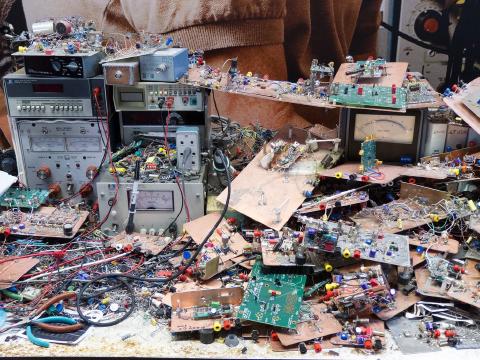
- Dave has been looking at a new space but decided against it. His wife told him to "Be tidy" upon leaving.
- Dialog is buying Atmel.
- Johngineer mentioned on twitter how chip companies seem to halve every 18 months. https://twitter.com/johngineer/status/645775176848797696
- Microchip has a much larger number of SKUs than Atmel, simply based upon the PIC16 family. Also, they used to be called "Arizona Microchip".
- The Volkswagon emissions scandalv is interesting because of how few engineers impacted so much. There was also a single engineer that discovered the mishap.
- The documentary (about electronics in Australia) we have been mentioning for a long time (by Karl) has finally started being released in parts.
- Seeed launched a new kickstarter for the RePhone.
- Quirky is bankrupt. Bolt wrote about why they failed.
- Chris is helping set up a conference for hardware along with Hackaday. If you'd like to apply to speak, use this link: http://bit.do/had_conf
Transcript
Chris Gammell: This is The Amp Hour Podcast. Recorded September 30th, 2015. Episode 269. Be tidy.
Dave Jones: Welcome to the Amp Hour. I'm Dave Jones from the EAV Blog. And I'm Chris Gammell of Contextual Electronics. Bloody microphones.
Chris Gammell: Yeah, you'd think you'd get that. Build your own, man.
Dave Jones: I hate technology.
Chris Gammell: You should get Doug to build your own. I hate technology.
Dave Jones: Yeah. Oh, man. This is so bad.
Chris Gammell: And for people that are wondering, why hasn't Doug been on the show yet? It's because Dave still hasn't asked him to be on. I'm a lazy ass. Yeah.
Dave Jones: He's also been on my blog a lot. People have seen a lot. But no, we should definitely get him on. Yes. Yep.
Chris Gammell: And as a reminder, we do have a list where people can recommend. We're not always great about it, but we do use that when we're trying to schedule new guests. So sometimes others come up. If we're sitting there going, who do we get? Yeah. And I do have a reminder to start scheduling guests further out than I have been. So that's been good. Anyway.
Dave Jones: God. Microphones. I had to bodge. I'm using the one we normally send to our guests now, the little Samson Go mic.
Chris Gammell: The one we used to send.
Dave Jones: Yeah. Oh, we used to send. What do we send now?
Chris Gammell: No, we send... Ooh, I forget who it's by, but it's a C37 on Amazon.
Dave Jones: Oh, okay. Right. Yeah.
Chris Gammell: Anyway, so I'm using that. And that's paid for by the Patreon people. So thank you for that. It is.
Dave Jones: Thank you very much, Patreon subscribers. Sorry, I am very lapsed in doing the Patreon release thing. But... He'll get there. Yeah. He'll get there. Yeah, we'll get there eventually. I'll get back on track.
Chris Gammell: Yeah.
Dave Jones: So.
Chris Gammell: So. Ha! You suck, man. Son of a bitch.
Dave Jones: I am. Are you jealous?
Chris Gammell: I'm so jealous. Is it an early release? How are you going to it? I thought it doesn't come out here till Friday.
Dave Jones: Because we're in Australia and we're ahead of the rest of the world.
Chris Gammell: Hello? Yeah. Sorry. That was just my shock and also I had a mute button on.
Speaker ?: Right.
Chris Gammell: Ahead in what way? Is it ahead in, you know?
Dave Jones: You should know this. We're ahead in time zones. I knew that. And also maybe, maybe because our traditional movie release date is Thursday.
Chris Gammell: Ah, okay. I didn't know that.
Dave Jones: I don't know what your one is over there, but ours is always, the movies always come out on Thursdays. So like Thursday. For some reason. I don't know.
Chris Gammell: So this is like the first matinee show on a Thursday, basically?
Dave Jones: It's the first, yeah. It's the first matinee show on a Thursday. It's the first, 12.30 p.m. I'm there. And it's on the big VMAX screen. None of that 3D bullshit either.
Chris Gammell: Did we say what the movie is? I mean, people might figure it out, but he's going to see The Martian. Yeah.
Dave Jones: I am going to see The Martian. Yes.
Chris Gammell: Yeah. Yes. Watching Dave's Twitter is like watching a little kid getting ready for Christmas or something.
Dave Jones: Okay. I can't blame you at all. I mean, I'm going to be the exact same. Right. You want to know what else pisses me off?
Chris Gammell: What's that, Dave?
Dave Jones: I've been trying to, I think people know, I've been trying to book this back to the future thing, right? For the 21st of October. You know, that's a date, everyone knows that's a date Marty McFly goes back to the future, right? And I've been trying to book and everything, you know, I wanted to get this huge, you know, huge traditional cinema, you know, massive one. And I've spoken, surely I've spoken about this. It's got like the organ that pops up out of the thing. Yeah. Yeah. Yeah. Yeah. And I was going to be, you know, I was going to have a whole production, right? It's going to be fantastic. And they said, no, no, Universal have given exclusive rights to Hoyts in Australia. That's like a cinema chain here. Right. And no, they can't do it. All of October, they've got the exclusive rights to it. You know.
Chris Gammell: Dude, what you should do, you should invite people to the car park in your building and just get a projector and just project on the wall. I mean, like seriously. And then just like have people bring some beers, you know, like that's, that's how you hack it. I mean.
Dave Jones: Yep. Yep. Life hack it. Yep. I hate that term, but yep. Yeah. But, but it's the right, it's the right idea though. Totally illegally, you know. Yeah. Maybe. If you announce it, then it's like public or something. I don't know.
Chris Gammell: I mean, you could just say that you're having a party and then, oh, what do you know? Whoa, this happened to be on. Who did that? You rascals.
Dave Jones: Oh boy. I'm thinking about like, you can buy those big like trucks. They're like trucks and they have like a huge cinema screen on the side or it pops out from the side or something. And, and they like, you can rent this truck and like to events and stuff. And like, they pull up the truck into a field or whatever, you know, instant outdoor cinema.
Chris Gammell: That's kind of cool. But again, that would probably be. Oh yeah. It's kind of. Yeah. Yeah.
Dave Jones: Anyway. So yeah, you got to get the rights or whatever. So it's all about the rights. So anyway, I, I contact Hoyts and you know, just this morning, actually just got the email. They're still checking for me and they go, oh yeah, we might be able to do that. And by the way, we are already running something official, you know, and you can book public tickets to the official thing. Fine. You know, I didn't know about it. I went to the website, finally found it. And they're only showing the first movie. Ew. I know. And they're only showing it at one cinema, one time. Like that's it. Fail.
Chris Gammell: Not even the second one? Geez.
Dave Jones: Not even the second one where he actually goes to the future. It's just, oh.
Chris Gammell: I think you got to do that off grid, man. You got to, you got to organize your own thing.
Dave Jones: I've got to, no, I've got to do it right.
Chris Gammell: That way the popcorn is not eight bucks. It's, you know, you just pop some popcorn. Yeah, yeah, right. It's fine. Yeah.
Dave Jones: Anyway, they're, yeah, they're bloody well checking on, you know. So you guys are really ahead of everyone else in the world.
Chris Gammell: That's what you're saying? That's what you were saying before? Yeah. That's what I'm saying. Australia's ahead of everyone else?
Dave Jones: Yep.
Chris Gammell: Yeah.
Dave Jones: Yes, we are. We will show it here on a Wednesday, Wednesday, 21st of October. Yeah.
Chris Gammell: Anyway. You just meant timelines. You didn't mean like progress rise. Shut up. Yeah. Shut up.
Dave Jones: All right. Well, America's no, not smelling like roses either, dude. I know. Yeah.
Chris Gammell: Okay. Yeah. All right.
Dave Jones: Anyway. We'll do that after the show. Yeah. The trade-off. All right. Yeah. Enough of that. Yes. I'm very excited. I'm going to the Martian after this.
Chris Gammell: Very cool. I am jealous.
Dave Jones: After I drop off a multimeter to a fan who's, you know. Oh, yeah. I'm stopping hoarding here now. Oh, good. I talked about this on the EEV blog forum. I was looking at getting a new space.
Chris Gammell: Yeah.
Dave Jones: You know, a bigger space. Yep. Three times bigger than what I've got now. 150 square meters. I've got a lousy 50 square meters here in the EEV blog lab. Why? Because, oh, you know, I wanted a change of pace. You know, I wanted like fresh air and a window, you know, because it's pretty depressing here. Right? Yeah. I just sit in this locker room. Like, I have no idea. Right? Like, my life is just, you know, can't even see outside, you know. It's pretty depressing.
Chris Gammell: Yeah. Anyway. I know how that goes. I work in a basement.
Speaker ?: Yeah.
Dave Jones: Is anyone else in that, you know, leave it in the comments. Are you in the same thing? You know, are you locked in the dungeon as engineers traditionally are? Yeah. And you don't see the light of day? You know, I've had a windowed office twice in my career. Really? And that's over 25 years, you know, twice.
Chris Gammell: Yeah. That's. Yeah. I mean, I think the trend is towards cubicles anyways, right? And it's usually in the. Right. Yeah. Right. I mean, even if you are in the center of a huge space, it's usually, you're not on the outside ring. You're not on the window side of things.
Dave Jones: Right. Yeah.
Chris Gammell: Yeah.
Dave Jones: No, I mean, you know, but the two window seats I did have were primo. I've got to admit. I don't know who I, I can't remember who I slept with at the Christmas party to get it.
Chris Gammell: But, you know, it was like, yeah, I had. See, the thing in Cleveland is sometimes it's a punishment here. Oh, right. Okay. You look out the window and you're like, oh, right. Still Cleveland. Yeah. Look at that great sky. Oh, my goodness. Yeah.
Dave Jones: Oh, boy. Have you ever actually been literally stuck in the dungeon? I have. Like the concrete wall dungeon under the ground, like, you know.
Chris Gammell: Not underground. Concrete walls. I've been in the fourth bay of a production facility. Like, so they had like multi-bays.
Speaker ?: Oh, okay.
Chris Gammell: Right. And I was in the very, very back working on a test fixture and I had a single desk lamp.
Dave Jones: That flickers, you know. Yeah. Right. Exactly.
Chris Gammell: And then like the glow of an old CRT and that was, that's all I had. Yeah.
Dave Jones: Nice.
Chris Gammell: Yeah.
Dave Jones: He's paid his dues, folks. Yep.
Chris Gammell: Yeah. Well, sometimes you got it. But yeah, so nothing like the, nothing like what you're talking about. They'll never like underground.
Dave Jones: Yeah. I have literally have the dungeon. Anyway, I was, you know, I got kind of, you know, I started looking around. I got excited by this place because it was double the size and I had like a balcony and, you know, an office that overlooked, you know, like trees. And, you know, like actually you see the sky. Yeah. It was like, you know, light and airy and, you know, you could open the door and get some fresh air. And, you know, that's kind of novel. Anyway, that one was taken, but I found this other bargain basement one. Dude, like it's like literally half price. Right. And it's, well, it's, it does actually have windows in one of the five rooms. It's got like five, you know, rooms plus a big open work area. It's huge. It's enormous. And it literally is literally half price in the, in the business park I'm currently in now. And that is unheard of like, like, and I'm like, what's, what's wrong with this place? And I go and inspect it. And, you know, it's, it's not bad. Sure. It's not a balcony with, you know, a fancy plush office. It's, you know, more of like a more industrial kind of feeling than real plush office feeling, which is common in my business park here. It's mostly plush office space, you know, grade A as they call it.
Chris Gammell: Right. Yeah.
Dave Jones: Grade A office space. And you pay a huge premium for it. Real estate is very expensive around here. And if people want to know how expensive it's about for, for a hundred square meters, if you wanted to buy it for a hundred square meters, double what I've got now is it starts at $400,000. Good Lord. Right. So yeah. Right. That's how expensive it is around here. It isn't just homes and stuff. Anyway. So I, um, yeah. And I, I don't know. The wife got the same feeling I got as that. The guy who's renting it is like dodgy brothers incorporated. Like he's, you know, he wants to do it himself. He's not going through a real estate agent. You know, it's all sort of, you know, under the table kind of, yeah. Dodgy. And I don't know. And then you've got to sign a two, three year lease, you know, like, I don't know. So yeah, I think we've decided just to stay put and get rid of crap. Between our legs and clean up the shit. Yeah. So yeah.
Chris Gammell: I think you can, so you're just kind of spreading your stuff right around the city. I mean, you're still saying it's a EEV blog meter. It's like a lending program or a giving program.
Dave Jones: Oh, right. Yes. Yes. Anyway, that's what I'm going to do after the show. I'm dropping the meter off. I'm dropping a meter off to a 14 year old. Oh, cool. Yeah. Yeah. I got in the mailbag and I thought, no, I've got to stop hoarding stuff.
Chris Gammell: Yeah.
Dave Jones: You know, so I'm going to, yeah. Is that the 8060 that you got?
Chris Gammell: I saw you go.
Dave Jones: That's the fluke. That's the fluke 8060. Yep. Yeah.
Chris Gammell: Because I was watching it and then I was like, hey, you didn't even remember. It was Dave Taylor. That's who you're talking about. Yeah.
Dave Jones: Yeah. Dave Taylor. Yeah. Sorry.
Chris Gammell: Dave Taylor was one of the architects on that product. Mental block at the time. Yeah. He was on there. So Dave Taylor.
Dave Jones: Yes. He's going to get himself a crusty old 8060A.
Chris Gammell: Nice. That's the way to start.
Dave Jones: All within spec. Absolutely.
Chris Gammell: I always say, I don't know if we've, I'm sure we've mentioned that here before, but I always kind of liken it to like, like guitars. Like if you start with like a Gibson Les Paul 69. You're right. You'll never, you'll never appreciate the really good, like something that good. Right. You have to start with the crusty old meter or the, you know, something where you have to do a little fix to get extra bandwidth on your scope or, you know, some kind of crazy triggering. You know, if you just start with like a, you know, a super high end scope too, like. Oh yeah. Yeah. Exactly.
Dave Jones: You know. Yeah. That's why I still recommend, you know, a 20 megahertz analog dual channel. Yep. Scope. You know. Yeah.
Chris Gammell: Does it just fine a lot of the times.
Dave Jones: Yeah. I've got one here. I've got a HP. I've got a HP 1740A, I think it is. Yeah. And it looks like it has a fault. So maybe a repair video.
Chris Gammell: Hmm. Cool. Cool. I totally wimped out on my, I ended up dumping my. Tech 425. I had that for a while. You dumped it. You physically dumped it. No, no. I mean, I gave it to someone else for them. But I just, I was like, I'm, I have no interest in fixing this. Yeah. Right. Yeah. I know. It's like, I know. It's like. Because that's the thing. Like, like, like, like, just like with the milling machine stuff too, right? It's like, do you want a project or do you want a piece of equipment? Yeah. And most of the time I want a piece of equipment. And once you do have that, then maybe you could start using that to troubleshoot new pieces of old broken tech. But yeah, I just, I just wanted the scope and be done with it. Hmm. Got it. Yeah.
Dave Jones: All right. So what's happening?
Chris Gammell: News. Uh.
Chris Gammell: Uh.
Dave Jones: Teletype.
Chris Gammell: Teletype. Well, what is happening? I don't know. We got a bunch of crap on the list. Uh. You wanted to talk about.
Dave Jones: Yeah, we should.
Chris Gammell: I don't. We shouldn't, but we will.
Dave Jones: Oh, well, yeah, I know. Get your bingo sheets out. Open source hardware. Here we go. No, we, we have to. It's kind of like a, oh, yeah, it's, it's mandatory. Sorry. Yeah. Well. And speaking of which, I'm pissed off. I can't go to the Weird Al Yankovic mandatory fun tour. I saw that.
Chris Gammell: I saw that. Damn it. It's totally unrelated. Damn it.
Dave Jones: Ah. See now, have you heard how good his new album is? I have not. Mandatory fun.
Chris Gammell: I don't usually listen to Weird Al.
Dave Jones: Oh, dude. I listen to regular music that he then makes fun of. Dude, where's your nerd cred?
Chris Gammell: Yeah, sorry.
Dave Jones: Unbelievable. It's okay.
Chris Gammell: Everybody's got to have non-nerdy things too, right? Right. Yeah. I listen to funk, man. Straight funk. Funk. Yeah. So the license. So this was, so the Open Harbor Summit was last weekend, two weekends ago? That's right. You didn't go, did you? You bailed on that. I did not go. No. I had stuff going on. Oh, and it was two weekends ago because last weekend was Maker Faire and the weekend before that was Open Harbor Summit. Right. And I skipped both. Even though they're both East Coast, I just, I had stuff going on. But so, yes. And there's more stuff about it. And so there's two articles that we posted. One was from Evil Mad Scientist and the other is from... I haven't finished reading that yet, but I read most of it.
Dave Jones: I mean, it's pretty much my feelings. I think it's pretty much exactly what I think. The Evil Mad Scientist article.
Chris Gammell: Yeah? Picking aside?
Dave Jones: Yeah. Yeah.
Chris Gammell: At first, I thought that the Evil Mad Scientist... Hang on.
Dave Jones: We haven't explained what's going on here.
Chris Gammell: Yeah. Go ahead. Sorry. Yeah.
Dave Jones: All right. Everyone knows about the open source hardware definition in quote marks, right? Right.
Chris Gammell: And that's from the association, which is the group that manages this.
Dave Jones: Open Source Hardware Associate and official in quote marks, open source hardware organization who wrote the definition and, you know, pretty much, you know, most people in the industry, including myself, signed off on that open source hardware definition, right?
Chris Gammell: I believe I did too, yeah. Yep.
Dave Jones: Yep. And now they're going, well, which I can understand totally, which we'll talk about. They're bringing out this new certification program, right? Where they will have a new logo, not just the, what is it? The open wheel or whatever. They open gear.
Dave Jones: It's like a gear with a keyhole. Yeah. The open gear keyhole logo.
Chris Gammell: Which mimics the open source software one, which is mostly just a keyhole.
Speaker ?: It does, yeah.
Dave Jones: But it adds hardware. Which is actually a really good logo. It's very simple and clever. It's right to the point. Yeah. Anyway, so new logo, new certification program where you sign up. Okay. You've literally got to say, like, and they're going to trademark it. They're going to trademark this logo, right? So they own, they legally own it as opposed to the open source hardware logo, which effectively nobody owns. And you can sign up for this certification program where you agree to all their official terms and conditions. And you're allowed to put the official logo, you know, and say certified stamp, you know, on the side of your product. This is an open hardware certified product. And one of the killer things in it is that if you don't abide by their terms and conditions, they will fine you, right? They'll start fighting you. And okay, that's it. Discuss.
Chris Gammell: Well, yeah. I mean, obviously, you know, a lot of the talks like, you know, people that put this on a product anyways aren't really, they don't give a crap. Either way.
Dave Jones: They don't give a crap about the definition. And that's as, you know, is it Ian? Evil mad scientist?
Chris Gammell: No, it's Wendell and Lenore.
Dave Jones: Oh, sorry. We know. Sorry. Yes. Yeah. He says like, he likens the open source hardware logo to the wild west. And it pretty much is, you know, it's what everyone, you know, every gunslinger in town is using the open source hardware logo. Right. And they don't really care about the official definition.
Chris Gammell: Yeah.
Dave Jones: Too much. They, they sort of, you know, take, you know, either they haven't even bothered to read it and they just go, Oh, it's open because I released a schematic. Bang. Whack on the open source hardware logo, you know. And so I can understand why the hardware group have done this because it, it, it sort of, you know, they can't keep control of that logo. They don't own it. Right. They can't keep control of the wild west. The only thing they control is something that they own themselves so they can get a new logo, trademark it. Nobody's allowed to use it. It's all legally locked up, you know, bam, terms and conditions. You know, I can sort of understand why they're doing this. Um, it sort of makes them relevant. It makes them relevant. Is that the correct term?
Chris Gammell: I, you're saying it makes the, the Oshawa relevant?
Dave Jones: The, the group, the, uh, open source hardware association relevant.
Chris Gammell: Yeah, I suppose so. I mean, yeah. They are, they are the centralized body that would police this stuff.
Dave Jones: They are the centralized body, but do most people, you know, as everyone, you know, as is plainly obvious, most people just don't care. They just use the logo and that's it. You know, they don't care about the association. They don't care about the definition too much. They just sort of, you know, meh. Uh, anyway, I can understand why they're using it. I can, you know. Okay. So that, so that's fine. So Dave's kind of gave some background here.
Chris Gammell: I'd like to just give some personal flavor because that's all I really have. I have nothing more than my opinion. We have nothing more than that, right?
Dave Jones: We have nothing more than our opinion. What are you talking about?
Chris Gammell: Uh, as soon as this stuff came out, my eyelid started to droop. I just, I can't. Yep. Yep. Same here. But I will preface that with I'm not selling anything, right? So people that are putting stuff out there that are making money on it and, and trying to also share at the same time, that's a hard frigging thing to do because you gotta, you gotta balance, well, will this get ripped off or not? And that, I am not in that boat.
Dave Jones: Yep.
Chris Gammell: If someone asked me to put a badge on something aside from, uh, you know, if, if, if I'm going to be asked to pay for it or anything like that, I'm not going to be selling the hardware. And if I have to pay to put a logo onto the hardware that I do put out in the world, I'm just not going to do it. I'm going to say, this is whatever the hell you want to call it. Here's my GitHub repo. Yep. That's got to be good enough for you because if I'm not allowed to call it and that's fine. Now I still want to support the Oshawa and stuff like that, but ah, man, my, my attention just gets strained with this stuff. Like, and you know, I support the conference. I think the, the, the summit's really great. I mean, I help sponsor through parts.io, stuff like that too. And like, I love the people that are there, but man, I just, I just don't. You don't like the politics of it. It's just, yeah. And it's like all at the end. It's like, ah, it just, it just makes my, I get the tinglys, you know, I just don't want to, maybe it's just too real, but maybe it's, maybe I'm being immature about this, but I don't, I don't care.
Dave Jones: No, that was my first like initial gut reaction. First time I saw this and it's like, I want to get off this train kind of, you know, like that's not the train I want to be on.
Chris Gammell: I want to support people that are doing this. That's the main thing. And.
Dave Jones: No, no, totally. I totally support their decision to do this and I will, I think I'll always support their, you know, you know, I'll, I'll say, yeah, no, it's a good thing. If people want to either pay money to put this certified logo on, that's, you know, that's, that's fine. You know, I fully support that, but it's probably something that I'm not going to do.
Chris Gammell: Yeah. Yeah. I mean, that's what it comes down to. And it's going to just start splintering. It already has started splintering. Like, oh, well, is it this logo or that logo and blah, blah, blah. And at the end, everyone's going to say, well, who the hell cares? Right. And.
Dave Jones: And every, the status quo will most likely prevail. I'm 95% sure of it. Everyone will just keep using the open source hardware logo as they have and nothing will change. And then, you know, yes, some people will use the new certified logo, but most won't. Right.
Chris Gammell: And I think, I think the ultimate, the ultimate pain in all of that would be like, okay, so now we're going forwards and someone makes a great new project and they're willing to make it open source, but they're like, ah, it's not worth a hassle. Like what then?
Dave Jones: Well, okay. Well then, well then they can't. I mean, you know, the choice is easy. If you meet all the terms and conditions, then there's probably no reason not to use this new logo. Cause I don't think it, I don't think they want to charge for it. I think that, you know, I think it's free. Don't quote me on that. Yeah. I think it is, but you've got to sign up. You've basically got to sign up and agree to their terms and conditions and the fine. If you don't meet all the, you know, if you fail to meet the terms and conditions and still keep, still continue to use the logo and that's fine. So I see no reason not to do it. If your product does meet all of the definition, right? Like there's no disadvantage to using this new certified logo. I don't think.
Chris Gammell: Okay. Maybe I got that wrong. Then that's the thing. Like maybe this is not even holding my attention enough for me to understand what's actually the case. Cause I thought that there was a charge involved, but maybe there's not.
Dave Jones: Oh, right. Well, I, yeah, I don't recall ever seeing mention in a charge.
Chris Gammell: What I will say is that I'm sure that I'm wrong on a lot of this stuff. I would love to see discussion in the comments or on Twitter or anything else like that. I just, yeah. And I will, and I will relay them here with me and Dave will relay that stuff, any kind of clarification that we can get, but I'm just, I'm sorry. I'm just not there. But I'm not selling open source hardware.
Dave Jones: I'm talking, you know, I am not in a big way, you know, and, and this is actually the thing for me, right? Cause I'm working on a product at the moment with a big manufacturer, right? And the current product shall remain nameless. But anyway, it's going to be open in quote marks, right? It's going to be open. There will be schematics. There will be, you know, protocols, every firmware hopefully will be open. Right. But I don't think I'm going to be able to talk the manufacturer into giving away the 3d case files for this thing. Right. And for this particular type of product that I'm making, there is no real reason to give the CAD files for the fancy, you know, real, you know, fancy case that this thing comes in to, to the community. There's no advantage. Nobody's going to go out there and get, you know, $50,000 molds made and, you know, and remake this thing and tweak it. You know, it's just not.
Chris Gammell: Yeah. That's your competitive advantage. It's just the money invested up front. Right.
Dave Jones: Yeah. Yeah. Yeah. There's just no reason to do it. You know, it's, I'm not holding it back, you know, like, you know, there's reasons to hold certain things back like that. Cause the only people who are going to use those files would be the direct cloners who want to churn out an exact clone on eBay. Right. That's the only reason somebody would need those files.
Chris Gammell: Yeah.
Dave Jones: Whereas in every other aspect, it'll be open hopefully. Right. You know, but, and so therefore it does not meet the definition. So therefore I cannot use this new certified logo, but I'd like to be able to use the open source hardware gear logo. Um, but I probably can't cause I've signed onto that definition. You know, I do know what the definition means and you know, so I might just call it open hardware instead of open source hardware, even though nobody owns that name. There's nothing stopping me from using either the name open source hardware or using the open gear logo.
Chris Gammell: Well, I feel like at the, at the extremes here, what it comes down to is you're selling hardware. I'm, I sell knowledge about hardware. I don't sell the actual, but if I ever did start selling the hardware, eventually what it comes down to is if you're not going to do some kind of centralized thing here, you're going to have a page in your website saying, I am committed to releasing all my design files, blah, blah, blah, which people have been doing forever anyways. Oh, of course. And I believe in this stuff and I want to support these other people, but I don't meet all of the stipulations and that's fine, but I still support them, that kind of thing. So yeah, I know.
Dave Jones: Maybe I, I just, I just had this thought, right? I just had this thought, maybe if we modify the gear logo, right? So that you add little icons around the outside showing what you're giving away. Like it'll have like a schematic icon. It'll have a PCB icon. It'll have a 3d case file icon. It'll have blah, blah, blah. You know, firmware icon. And, and you know, you can see at a glance of the logo. Hey, I should trademark this. I can see at a glance, you know, by looking at the logo, how much stuff they're giving away and how open it is.
Chris Gammell: Yeah. Like almost like a, like a dial indicator kind of, kind of.
Dave Jones: Well, it's kind of like the, uh, the creative commons thing, you know, you know, CC.
Chris Gammell: That stuff confuses the hell out of me too though.
Dave Jones: Oh, it's, it's very confusing. Yeah. But you know, make it simple with the logo. Like, you know, yeah, you give it like a little circuit symbol. Okay. I'm giving away the schematic, you know, or you give it away the design files, blah, blah. So you sort of know how open it is.
Chris Gammell: Right.
Dave Jones: I think when I get back from the movies, I might do a. A little mockup. Video, a little mockup on that and do a, uh, do a video or a blog post on that and see if, see if that takes off. I'll tell you, I'll, I'll ride this pony all the way into town.
Chris Gammell: Okay.
Dave Jones: It just popped in my head a minute ago. All right.
Chris Gammell: That's the best ideas. And what I'm really thinking about is, you know, we've talked about this a lot. Like you said, bingo sheets. We've talked about this a lot.
Dave Jones: All right.
Chris Gammell: And I don't remember how, I remember in the past, I should go listen to all the shows. I remember in the past, we've talked about the CAD files and all that other stuff too. Yeah. And then we came down the other side, we didn't care. And, and I'm just on that side now. I just don't care about this right now. So what I'm going to do is wait for this to shake out because there are people that care about this more than I do. Oh, of course. Yeah. Yeah. And I appreciate that. And I want to hear from all of you as long as it's kind. And I'm willing to change my position too. I don't care. I mean, like that's like, I, I don't know. So.
Dave Jones: Yeah. No, same here. I, anyway, there's a big evil mad scientist article. Right. And I think from what I've read so far, yeah. His thoughts pretty much parallel mine, I think in that. Yeah. I support them for doing it. And I think it's a good idea that they're trying to formalize everything and, and stuff like that, but they have the potential to rub people the wrong way. Um, you know, it has the big potential for fire cause nobody's going to bother. Um, but as I said, if you're, if you meet the definition, then why not use this new certified logo? It adds, it might add some cred, you know, it might add some extra cred, whether or not this logo ends up being credible, you know, remains to be seen. That's, you know, to be determined by us. It's by the community, you know, Dave and Chris say yes. I said we, yes. Um, it's to be determined by the community, you know, how many people take it up, you know, is it, is it valued if your product has this certified stamp on it, you know, certified stamp of approval. Um, yeah, it remains to be seen. But anyway, my, I, I say, um, I say well done to them for trying to take a step in this direction. Cause it, you know, it is the wild west and there's nothing wrong with the trial formalized. People that do care about this stuff more than me.
Chris Gammell: I, I appreciate that.
Dave Jones: Yep. Yep. Totally. It's interesting. Speaking of which, it's interesting. Somebody mentioned this on the forum. It was talked about and, um, uh, not meaning any disrespect at all here. It's just, I, uh, people were just pointing out a fact here that all the people on the board of the, all the people who are on the open source hardware committee. None of them are electronics engineers as such, which I found interesting. It's like, do we just not bother? Do us electronics engineers just like, eh, just like as your stance seems to be, it's like, meh, I couldn't be bothered. You know, like caring about this sort of stuff.
Chris Gammell: I don't know. I, I can't say I even looked at that. Yeah. I don't even know.
Dave Jones: People who care, you know? So anyway. Um, no, they, they, they all seem to be like, um, you know, more like the art type. There's a mechanical engineer on there and more of like your art type people. And once again, no disrespect whatsoever. I say fantastic. You know, good on you. I'm not, you know, I'm just saying there, there's a conspicuous lack of electronics engineers. And, and you thought that, you know, star, star is a double E. I didn't think so.
Chris Gammell: Yeah, no, she is. She worked on a couple of things that I know about. So.
Dave Jones: Oh, okay. Right. But not formally. I don't think.
Chris Gammell: Formally. What the hell? Formally. What does that mean? Formally. Oh, I don't know. Like as a degree.
Dave Jones: Yeah. As, as a degree. I don't think so. Who cares? When have we ever cared about that? I don't care either. I just know. I just, I don't care either. Right. But.
Chris Gammell: And I think Tony too. Tony's an E. She does, she does stuff at SparkFun. She's been on the show before. So. Yeah. I mean, I, so I don't think I really agree with that.
Dave Jones: All right. No. Sorry. If I've got the wrong, looking at the wrong people, but their bios on the thing. Anyway, it was pointed out on the forum. That's all I mentioned.
Chris Gammell: Gotcha.
Dave Jones: Okay.
Chris Gammell: I don't think, I don't think we care as much. I don't care. I don't care in the least.
Dave Jones: Yeah. You obviously don't care. Yeah. Well, it actually brings up the next interesting point. We'll never find Chris on a committee.
Chris Gammell: No. So. Well, yeah. I've done, I've done my time for that. So someone asked on Twitter today. I was asking kind of for topics for this stuff. And someone posted about an all online EE degree. Have you, did you see that link? Oh, right.
Dave Jones: Oh, yeah. Yeah. These are common. These have been around for a decade. These are common as mud. Really? Like who else? Well, there's quite a few here in Australia. I believe there's like a whole like online open course learning thing that's been around for at least a decade.
Chris Gammell: Yeah. I agree with that. I mean, there's lots of courses online, but like actually getting a bachelor's degree, like an accredited. Yeah. Yeah. Really? Okay.
Dave Jones: Yeah. Yeah. Well, I don't know about the US, but yes, here in Australia, that's been available for a long time. You do it via correspondence. Uh-huh. And I think it's mostly via correspondence. There are some courses where, you know, you might have to go in once a month or something to do a practical or, you know, or something like that.
Chris Gammell: Yeah, yeah, yeah.
Dave Jones: But yeah, it's mostly an online type course. Yes. And you're full on bachelors at the end of it.
Chris Gammell: That's actually the, yeah, I agree with you. I mean, like I've heard about that before too. I've had friends that done, you know, distance learning type stuff like that. But I mean like a completely, you could get, you could never leave your basement and you could get a bachelor's degree in EE. I'd never heard about that.
Dave Jones: Yeah, but who from? Like who from?
Chris Gammell: This one's American Military University, which I've never heard of.
Dave Jones: Exactly. Who the hell is American Military University?
Chris Gammell: Yeah.
Dave Jones: Sounds like Liberty University. Let's not go there. Go and look up Liberty University.
Chris Gammell: Oh God. All the for-profit. Like, I know they sound very-
Speaker ?: No, no, no.
Dave Jones: They like teach creationism.
Chris Gammell: Oh, like that. Oh, never mind. Yeah. No, no, no. I sound like a bit of a hypocrite because I'm very against for-profit schools and I run a for-profit educational online program, but like I'm also not charging 60 grand a year and then having completion rates of 9%, you know what I mean? Yeah, right. There is some difference. But that's, so this is what just interests me though. So, so looking at this BS in engineering, electrical engineering, all online, but then I looked at the material cost. I was wondering just like, how do they do the lab sections? Because obviously I'm challenged with that as well. Right, yeah, yeah. And they're like, the estimated total cost of at-home lab materials is approximately $12,000. Yeah, I read that.
Dave Jones: $12,000. All right. Is that for the whole course or is that like per year or something?
Chris Gammell: I think it's for the whole course, but I just wonder like, is this, is that like-
Dave Jones: That buys you a lot of hardware.
Chris Gammell: Yeah, right. Yeah. I mean, is it like they're sending you a full parts bin and like meters and everything else? Yeah, right. I don't, I would be very interested in that part about-
Dave Jones: Somebody mentioned on Twitter, are they saying like, is it Roden Schwartz gear or something? Yeah, right. Exactly.
Chris Gammell: Super high end scope and I don't know. Yeah.
Dave Jones: But it's, it's interesting for sure. Oh man. Nah.
Chris Gammell: So, I, I don't know. I, I don't, like, I, I think about-
Dave Jones: Are you sure it's like a hundred percent online? Like, you know, and it's not just like a regular distance learning thing?
Chris Gammell: Yeah.
Dave Jones: Where does it actually say that?
Chris Gammell: I don't know.
Dave Jones: Hmm. Yeah. Anyway, you know, it may not be. You might have to go in there to do a final exam or something, maybe.
Chris Gammell: I don't know. I just think the future of- I obviously have very strong opinions about the future of education. So, I don't need to get into that.
Dave Jones: But, but, but, but I thought you were all rah, rah, rah about the online, the future is online.
Chris Gammell: The future is online. I don't think it's accredited. Right? That's what I say is I, I say that there is no way, the only way to have a proven degree in hardware is to show the hardware. That's my thesis.
Dave Jones: Yeah, but aren't, but yeah, but aren't some of the biggies doing this? I thought like Harvard, MIT were doing stuff like this.
Chris Gammell: Some online, definitely. And like some of the flip in the classroom, stuff like that. But never, I've never heard about all online. And that's what really caught my eye because like you said, I mean, going in-
Dave Jones: Yeah, but I still, I can't see that this is all online. I can't see anything that says this is all online. You never have to come in. You could be, you know, somebody in the Amazon jungle. If you've got an internet connection and the money, you can get your degree. You know, like-
Chris Gammell: Yeah.
Dave Jones: I've never, I don't see anything here that says that.
Chris Gammell: But I just, that's what I'm curious about. Okay.
Dave Jones: Right. Okay. Well, let's assume it is. I mean, I'm just having a look at the course breakdown here. It seems to, you know, it seems to have all the requisite stuff, you know. And how long is the course typically?
Chris Gammell: You're asking me questions. Surely you can't do it all at once. Yeah. You have, I have, I have no idea.
Dave Jones: Right.
Chris Gammell: Yeah.
Dave Jones: So we're all talking out our ass, right? As we always do. Yeah, like usual.
Chris Gammell: Yep.
Dave Jones: Yep. Yep.
Chris Gammell: Hmm. Like this one too. Introduction to chemistry with lab. How the hell would you do that at home?
Dave Jones: Well, I, yeah, you'd most likely have to come in.
Chris Gammell: I mean- That's what I would think too. Also, why does a double D need to take chemistry?
Dave Jones: Oh.
Chris Gammell: Maybe. Eh, maybe. I don't know. Dude. I was going to say, then we go watch Ben Krasnop video for it.
Dave Jones: That's quite common out here. We had to do electrical engineering, civil engineering, and mechanical engineering, including some chemistry. Stuff. That was all part of, you know. Yeah. Just in case, after the second year, you wanted to change your course. You know, oh, I don't think I want to do electrical. I think I'll go over to civil engineering and build bridges instead. You know, like, it's bullshit.
Chris Gammell: I do not want that person building my bridges. Yeah. It's like, yeah. That's the thing. I mean, like this, I don't know. I get very frustrated thinking about a lot of this stuff too. Like, actually, there's a quote from, and I think I mentioned on the show before, but there's a quote from Sal Khan, the guy that started Khan Academy, and he goes, he goes, chemistry, philosophy, physics, English language, acting, all of them are four-year degrees. Why? Why are they four-year degrees? Because they are shoved into the institution, not the other way around, right? I mean, like, some things you could learn faster. Right. Okay.
Dave Jones: Hmm.
Chris Gammell: Anywho. Too much. Yeah. What are you building these days? What are you working on, man? Let's go to the old standard.
Dave Jones: Well, I can tell you, but I haven't released it yet. I'm still, I've just sent design files away.
Chris Gammell: Oh, yeah?
Dave Jones: Yesterday to get something made.
Chris Gammell: For PCBs or? You doing your assembly?
Dave Jones: It's not electronic. Let's put it that way. It's not electronic, but you can use it in your lab.
Chris Gammell: It's a chair.
Dave Jones: Close. I'll pay that. No.
Chris Gammell: Yeah.
Dave Jones: Anyway, so, yeah.
Chris Gammell: Okay.
Dave Jones: What am I working on? No, I'm going to clean up the lab. That's what I'm going to be working on. God, I left home this morning, and the wife, as I'm walking out the door, said, be tidy. That's it? That's it? Like, what? What? Not like- She said, be tidy. Not like, I love you. Have a great day. No, be tidy. You know, because we were, you know, we've been, like, talking about all the lab stuff, right? You know, moving the lab. Be tidy. Stay healthy. Stay safe. Be tidy. Jesus.
Chris Gammell: She's just, she's just, she's neuro-linguistic programming you to clean when you come home.
Dave Jones: Right. Yeah. That's it.
Chris Gammell: Unbelievable. I like that.
Dave Jones: I like that. I got to admit, I do work in a, effectively a, yeah.
Chris Gammell: A pigsty? Yeah. I've seen pictures. A pigsty. Yeah. Yeah. It's not pretty, folks. Yeah. I've been trying to compare between micros. Oh. Trying to-
Dave Jones: What, arm? Or you're talking AP?
Chris Gammell: Actually, within a family, even, and trying to figure out. So, I've been doing STM32 stuff. Mm-hmm. But, trying to, like, because, you know, like, there's all, like, the package types and the pinouts. You know, like, when you have to do that comparison of, like, well, if I pick this part, I don't know if you've ever done this where you, like, you find the one part, it's got all the features you need, and then you see, this happens with FPGAs, too. And then you see, there's no compatible parts within the family, so you only can buy that one part. Like, you buy the unicorn part, and you can never swap it in. So, if you don't have the right, you know, supply chain stuff, then you're screwed. Yeah. So, I don't know. Trying to figure that stuff out. Micros.
Dave Jones: It's not fun, is it? No, there's too much choice.
Chris Gammell: There is.
Dave Jones: Oh, did we talk- This didn't happen two weeks ago, did it? Um, Dialogue bought Atmel.
Chris Gammell: Oh, yeah. Right. Right. I think that happened, like, right after we recorded the last show, with just me and you, so.
Dave Jones: And somebody, sorry, I forget who it is, might have been on Twitter or somewhere, there's like a, like, quoted like an anti-Mor's law or something, where the number of semiconductor companies halves every 18 months.
Chris Gammell: Yeah, that was John Genere. Yeah, yeah.
Dave Jones: Oh, right, that's right. Yeah, sorry, John. Yeah, yeah, it was John Genere. Yeah. On Twitter. Yeah. Yeah, right. Every 18 months, yeah, the numbers. Every 18 months, the number of times. Which, it sounds about right.
Chris Gammell: I mean, there's so much consolidation happening.
Dave Jones: There is. It's just, you know, as, you know, many industry pundits are pointing out, it's the only way for them to actually survive, you know? And, yeah. Yeah.
Chris Gammell: Well, the interesting, I mean, we've, obviously, as I'm saying the fourth time on the showdown, we obviously have talked about some of this stuff before, but it's going to be really interesting as more of the Chinese fabs come up. Oh, we talked about that with the FPGAs, right? The Chinese FPGAs. Oh, right. Yeah. Yeah. Yeah. I mean, like, that's going to be the big thing. And so what we're going to see, I think, is more and more chips were like, who's making
Dave Jones: that?
Chris Gammell: And not just like, who the hell is Dialog Semiconductor? It's just like. Yeah.
Dave Jones: Like, most people don't know who Dialog Semiconductor is. I've got to admit, no, I like.
Chris Gammell: Yeah. Me too.
Dave Jones: I kind of went, no, who's that? And then I went, oh, yeah, maybe I've kind of sort of heard of them, but I couldn't tell you what they did. You know? Like, yeah.
Chris Gammell: Right. Well, and I think that anything, like, so they have a big chip. They have one of the chips in the iPhone as well. So that's, you know, so they do a lot of IP, I believe, like a lot of IP design where they're not doing necessarily all the fabbing. They might be integrating with other people, but they do more of the IP stuff. Right. But it doesn't mean they can't be big. And that's the thing. I mean, like, you can make a lot of money like that in the large consumer space, but yeah, it doesn't mean it's going to be a household name. Right. When you have two customers, you don't need a lot of support staff. Well, you don't need a lot of support staff for the public. So, yeah. It'll be interesting to see, you know, the usual, is that now going to change a name? Is the structure going to change? Right.
Dave Jones: All that's, what's the consolidation? Right, right, right. Well, there is no, you know, like, obviously, like, Dialog want them for, you know, secure stuff. They want them for their, you know, all their touch technology and all that sort of stuff. Um, because what they'll, what they'll probably want to do is like, if you don't know, Dialog make custom ASIC chips that are, you know, use, you know, they usually don't even brand them themselves. You know, um, you won't find like a Dialog branded chip, I believe in a product, but they make, you know, real high end custom, um, you know, power converters is one of their huge markets. Yeah. They do audio too, right?
Chris Gammell: Like analog and stuff like that.
Dave Jones: Yeah. Yeah. Stuff like that. And they're used in like, you know, the Apple iPhone and iPad and stuff like that. Right. They, you know, they generate, you know, they make this custom chip that generates, you know, the 20 different voltage rails required in a modern product, you know, and all that sort of stuff. And, you know, if they can integrate things like, uh, um, touch, you know, stuff into the same chip, you know, into the actual, you know, you don't have to wake up the processor, right? You don't have to wake up your main huge big gulping processor to, you know, to do all your touch sensing and things like that. You know, it's just like, if they can integrate all that sort of stuff, all the security and stuff like that, encryption, all that, if they can incorporate all that in their chipsets, you know, it's like the, you know, the apples of the world are going to get freak out and go, this is the greatest thing since sliced bread, you know? Right.
Chris Gammell: Cause then battery life goes through the roof stuff. Yeah. I saw that on the new Nexus phones too, they have actually the sensor hub. So like all the accelerometer, the accelerometer and the gyro and stuff like that, it's all self-contained, similar kind of thing where it only, it wakes up, does this thing, you go back to sleep.
Dave Jones: It does a thing on its own. Yeah. The processor doesn't have to be involved. Yeah. Yeah.
Chris Gammell: It's interesting for looking at it like, uh, you know, going forwards of like, how do you keep saving battery life, stuff like that? Cause batteries obviously, you know, I don't see many batteries that are bigger than like 3,500 milliamp hours and phones or anything like that. That's kind of the high end I've seen. Some of them are bigger. You can get bigger, but it's not like the mainstream stuff. So it's got to, you either got to have less heat generated. So you can do that with like better process, lower technology nodes, you know, smaller and smaller, uh, or you can turn more stuff off or write better software too. That's another thing you can target. Yeah. That's another thing. Yeah. That's better software. Yeah.
Dave Jones: So no, cause cause battery life is everything, you know, everything's going portable. Everything's, you know, battery life is like, yeah, key. It's killer. Yeah. So, yeah, it's yeah. Whether or not they'll keep the name, I don't know.
Chris Gammell: I mean, there's a lot of goodwill, I think, right? With Atmel. So that's, that's good.
Dave Jones: Well, yeah, I don't, you know, if you're concerned about, you know, Atmel, you know, and the not being able to get your, you know, your, um, your AT mega eight or something, you know, in two years time, I think you're, you know, being a bit, uh, being a bit silly. I think I'm sure they, you know, they're not going to trash that business, right? They're, they're, they're going to keep it going.
Chris Gammell: Right.
Dave Jones: Um, and it's not like, you know, Atmel have like 500 different micros like, uh, pick, you know, like there's, you know, 500 different variants, you know, imagine if someone bought, um, sorry, I keep using, I keep calling the company pick, but then.
Chris Gammell: Microchip.
Dave Jones: Arizona microchip. Yeah. Right. Yeah.
Dave Jones: Yeah. Back to old timers like me, it's Arizona microchip. Right. So I didn't know that. It isn't just microchip. Yeah. Yeah. They came from, yeah. They call themselves Arizona microchip. That was plastered all over the data books, you know, Arizona microchip. Yeah. Yeah. And then they just, yeah. Well, we don't want the Arizona rubbish. So, you know. Right. Yeah. They dropped that anyway. So imagine if somebody bought them and they look at, we menu, how many micros do we manufacture? We manufacture 500 variants of the pick 18 family, you know, like, you know, consolidation. Right. You know, we're going to chop out, you know, two thirds of them. You know, you can see something like that. There's a lot of parts out there, man. Yeah. Well, anyway. I, well, Atmel don't have nearly as many. So, but still, yeah, they could drop some that aren't selling. So, you know, could be left high and dry. Because anytime this happens, right, new management come in and they go, right, you know, how can we trim costs, you know? I mean, I think Atmel's making a profit, are they? No. Is Atmel actually profitable? They were hurting for a while.
Chris Gammell: Oh, they were hurting for a while. Okay. So I hate to tell you that, buddy, but. I haven't caught up with the latest. Well, never mind.
Dave Jones: Oh, right. They were shopping at, please buy us, please buy us. No, no. We're going to go under. I don't know.
Chris Gammell: I don't know about that. I was just looking at, I was looking at how many parts are actually active from both. So it looks like on parts.io, 4,300 active parts for Atmel. And let's see. Microchip is pretty high up there, too. Microchip has more, I believe. Oh, yeah. You're right. 23,400. Right. Yeah. Okay. There was a bunch of old transferred ones. That's why. That's crazy.
Dave Jones: Nuts. Hmm.
Chris Gammell: Cool. Well, yeah. So we'll see how that shakes out. Who knows? What else have we got? What was the thing I wanted to mention about chips as well? Oh, software, actually. Should we talk about Volkswagen? I don't really know how much.
Dave Jones: Oh, the Volkswagen thing. I haven't read a huge amount about it, but yeah, Volkswagen, yeah, they got busted. They flat out busted for cheating the standards.
Chris Gammell: Right.
Dave Jones: If people don't know, yes, they have to meet all these tough exhaust emission requirements, right? You know, like how much smog and pollution. Yeah, this is on the diesels that they have. Oh, it's only on the diesels, is it? Okay.
Chris Gammell: I believe that's the last. I could be wrong about that, but yeah, I saw it was like 500,000 of them.
Dave Jones: So they've got these very strict, you know, the governments in various countries set these very strict standards and requirements to meet. And Volkswagen went, how do we do that? I know. So let's just hack our firmware, put in a secret bit of firmware that detects when-
Chris Gammell: Yeah, detects when the test mode's on.
Dave Jones: When the test mode's on and then just cheat and then just give falsified figure or, you know, I don't know, work the engine in some way that, you know, it passes the standards. And then when you drive it as a normal car, it just spews it all out, you know. So they got busted. It had this secret mode in there.
Chris Gammell: Yeah.
Dave Jones: Yeah.
Chris Gammell: Pretty crazy. You know, I think the interesting thing about that, though, is actually about the, so like kind of imagining if you knew this was happening, like, would you report it yourself? I mean, there's a pretty significant environmental impact on this.
Dave Jones: We talked about this on the, yeah, yeah, we talked about it. Yeah, this was discussed on the forum. Yeah. Like, it's an ethical thing. You know, if you were told, you know, if you can, they'd come down from the, you know, management came down and said, we want you to, you know, put this thing in. You know, it didn't go down that way. It's not like management came down and said, keep this quiet. Otherwise, you're going to lose your job. We have to cheat and we have to, no, it's, you know, a requirement came down that, you know, we must pass this emission standard.
Chris Gammell: Right. And probably within a certain amount of time period too, right? That's like the.
Dave Jones: Right. And it was, went, well, you know, and the engineers, you know, went, well, how can we pass the emission standard? But there's so many people involved in all of the processes of doing this. You know, it's not just one engineer, you know, wrote some code and went, yeah, I can pass this test. We can, you know, no, it was a whole bunch of people. It was, you know, meeting after meeting. It was, you know, and actually technically you could, there could be an argument made that they, that what they did was not illegal. Right. The, the government says you must pass this test. Okay. You must pass this emission test. And there's probably, I, you know, you'd have to read all the standards and everything. There's probably nothing that said that you have to pass that test while you are actually, while the customers drive in the car. You know, if they just said you have to pass this test and then the engineers are clever enough to go, well, we can detect when we're in test mode and we'll pass the test. You know, like, you know.
Chris Gammell: What's the definition of is?
Dave Jones: Yeah. Right. You know, it's one of those. Yeah.
Chris Gammell: Yeah. I think it's, it's a spirit of law versus letter of the law kind of thing. Right. Yeah. Yeah. Yeah.
Dave Jones: Anyway, anyway, they, they, have they recalled them all? Did they recall all their?
Chris Gammell: They got fined, but I don't know.
Dave Jones: Oh, they got fined, did they? Yeah. But they didn't recall them?
Chris Gammell: Well, they were talking about it was like three engineers, but just imagine like.
Dave Jones: Oh, really? So there was a number, three, three engineers.
Chris Gammell: That's the last I saw. Okay. Again, this kind of makes.
Speaker ?: Okay.
Chris Gammell: I hadn't read a number. Okay. Okay. Makes my, uh. That's interesting. My eyelids droop a little bit, but. Oh, it says, yeah, the manufacturer agreed to pay, uh, 8.3 million or 83 million civil penalties after they, uh, they had the defeat devices in them. Hmm. Yeah. Yep.
Dave Jones: Hmm.
Chris Gammell: I don't know. It's, it's. Yeah. It's amazing. I. That we just drive these things around, you know?
Dave Jones: I have a friend. Yeah. I have a, uh, friend and colleague of mine who I used to work with and he always had a, you know, you know, we had worked at various military, uh, companies together. Right. We had worked at various military and other companies and he, he always had this rule that he would not work on weapons. Right.
Chris Gammell: Yep.
Dave Jones: You know, like, yeah, that was his moral stand. I would not work on weapons. I'll work on radars and things like that, you know, to defend ships and things like that. Right. But I won't work on weapons. I won't work on torpedoes. I won't work on, you know, blah, blah, blah. Right. And, you know, that was his sort of sand, you know? Yeah. Yeah.
Chris Gammell: That makes sense.
Dave Jones: Yeah.
Chris Gammell: Hmm. Yeah.
Dave Jones: What do you think, people? What say you?
Chris Gammell: I, like, about weapons?
Dave Jones: What would you do in this situation? Like, yeah. Like.
Chris Gammell: Oh, in this situation? I don't know, man. Like, there's a lot of stuff like this. In this situation.
Dave Jones: Well, see, I've never been a big person about protecting my job. Like, I don't care. Like, you know, I've always kept that screw you money, as I've said. Right. It's like, this would be a use of my screw you money. I would probably be the person who leaked this, you know? Like, if I was inside the company. This was found by an engineer. Oh, it was found. That's right. It was found. But I'm saying, if it was a leak, I would be, you know, like.
Chris Gammell: You'd be the leaker? You'd be the.
Dave Jones: I'd probably be the leaker. Yeah. I would be the Edward Snowden of the engineering world. Oh, yeah. Yeah.
Chris Gammell: There's an easy one to put on yourself and with no backup. Right. Yeah. I would.
Dave Jones: No. I would totally be, if I see something really wrong like that, and I know that, you know, like, this is just wrong, you know? Like, yeah, I would. Yeah. I'd either speak up, quit, or leak it, or all three. Yeah. Right, right, right. Probably, yeah. But that's just me. Because I've never had a fear of losing my job. Nobody could ever threaten me with my job. It was like, go ahead.
Chris Gammell: Yeah. Threaten me with my job. Well, that's the way to do it. I mean, I think you're. Watch me give you the finger, you know? Yeah, right, right. Yep. Let me draw you a diagram of where you can put this job.
Dave Jones: Oh, dear. Anyway. Interesting.
Chris Gammell: I wanted to call out, is this, I saw a YouTube video that you were in, not yours, State of Electronics. Is this the long sought after documentary?
Dave Jones: This is the long sought after, well, yes and no. If you remember, like, this was back when I was in my garage lab. So this was four, more than four years ago when Carl von Moller, who's a documentary film, he's a really high end, you know, he's a real professional filmmaker. He does commercials and documentary films and all sorts of stuff. Yeah. He decided to make this documentary about the Australian electronics industry. And yeah, he came and interviewed me in my old lab. So that's how long ago it was. I thought it looked familiar. Yeah.
Chris Gammell: I was like, look at those cabinets and why does Dave look so cramped?
Dave Jones: All four square meters of it. Yeah. Those were the days. And I complained about 50 here, you know, this is luxury. All right. Yeah. And, um, yeah. And, um, I've done a few interviews with him since talking to him, you know, updates, where's it at, you know, why haven't you released it? It's because he wanted to release something really professional. You know, he can't ruin his professional reputation by releasing something that's shoddy. Right. Or, you know, slap together. Ah, here it is. You know, I couldn't be bothered.
Chris Gammell: So why'd he put you in it then? Yeah, I know.
Dave Jones: And Doug. Right over the plate. Yeah. Other crusty people like that. Yeah. And, uh, so anyway, so yeah, um, but it's, you know, so he wanted to do it right, which means every photo you put in there, every shot you put in there, you have to get the rights to that image. Right. So you've got to go to the company to get, to buy the rights, you know, so you've got to have the money to buy the rights for that. But this is how the real movie documentary industry works. Right. You've got to, you know, you can't just whack it up on YouTube. You know, eh, she'll be right. You know, you've got to sort of, you know, do it right. And, um, if you're going to release it as a proper film documentary and stuff like that. So, um, that's why it's always, it's always sort of like fallen through, um, you know, and he just keeps finding as, you know, it's a feature creep too. You know, he keeps finding more material, more people to interview, you know, and that's what's going on.
Chris Gammell: On any project, right? Anyhow.
Dave Jones: So, but yeah, but he basically had a hard time finding people to A, fund it, uh, fund all the work, you know, it needs to be professionally edited and graded and, you know, and all sorts of technical whiz-bang things I don't know much about. But, and, um, you know, so he needed money and time to do that. Um, you know, he's got a family to feed. He can't, you know, um, spend six months on it full time. Right. Which is what it would take apparently. Um, and yeah, it just, you know, never happened. Couldn't find the, you know, the right distributor for it. And, you know, somebody who would distribute it and blah, blah, blah, you know, screen it and, you know, some TV. Yeah. Next time just tell him to put it on Kickstarter, huh? I mean, something like that. Anyway, I, I, I did that and he thought about it and there was still some of the logistical issues and, you know, um, anyway, so now he's decided to, he's went bugger it. I'm going to release it on YouTube, but in little tiny parts that sort of tells like a whole story.
Chris Gammell: Yeah.
Dave Jones: So it's not one big feature movie length documentary as it was going to be. Um, it, it, it may still do that. He may still do that, but yeah, he's releasing lots of these little five minute, you know, 10 minute snippets. Cool. YouTube. So sign up for his YouTube channel. Yes. Check it out. Subscribe. I think it's state of electronics, YouTube channel. Is it?
Chris Gammell: Yep. Yep. That's right.
Dave Jones: So we'll link that in. So check it out. And yes, I'm in it. Dougie's in it. If you're a fan of Dougie, um, and, um, all sorts of various, uh, famous electronic people, Dick Smith, tricky Dick Smith. Yeah. Um, you know, and all and sundry. So, um, yes, watch it. It's awesome. Cool. It's going to be, I think he's released two or three official ones so far. And I think every week he's going to release one or something like that. It's going to be a weekly thing. So, yep. Check it out.
Chris Gammell: Uh, so let's see. We're kind of running out of time here. Dave has a movie to catch. Lucky bastard. Yes. Sucked in. Uh, one thing that's interesting is the, uh, the re-phone kit, which I think.
Dave Jones: What's a re-phone kit?
Chris Gammell: We haven't talked about it, but Seed Studios putting out a, a phone kit. So basically, I'm guessing it's a media tech and controller.
Dave Jones: I thought a few people were already doing that.
Chris Gammell: I don't know. I mean, I, I have seen some of the, that stuff, but this is kind of to make anything a kit.
Dave Jones: I thought Jonathan Oxler from Freetronics had a, uh, had a phone kit.
Chris Gammell: You know, that's the thing. A lot of these have like, like the GSM modules on them, stuff like that. So this is a little bit, I think this has other stuff. Maybe not. Maybe I'm wrong, but, uh, interesting idea. Right. Kind of matches the stuff that Bunny wrote about a couple months ago in the, in the, uh, the gunk iPhones that we've talked about on here. So I thought that was interesting. Uh, what else? Quirky's gone. We've talked about Quirky a couple of times before.
Dave Jones: Yes. Why did they go? What happened?
Chris Gammell: Uh, well, a lot of things. Um, but they raised like a buttload of money, like 120, 150 million. I don't know how much it was in total, but you know, they, they started making a lot of, they were doing consumer level stuff, right? So some of the stuff they did, if people don't know, Quirky was a socially, a social design firm, basically where, you know, the community would submit an idea and then the community would vote on the idea. And then the top ideas then got taken up by the company and then they kind of finalized it. Right. So then, uh, but then you could also get people that were sourcing logos and names and stuff like that. And everybody who sourced something into the design process got some chunk of the revenue kickback idea. Right. So they made some.
Dave Jones: And the numbers are huge here. I'm looking at the numbers. They, they had 1.1 million, uh, members in their design community.
Chris Gammell: Yep. Yep.
Dave Jones: They started 285,000 inventions started, whatever that means.
Chris Gammell: Um, and they paid 285,000. Okay. So I assume that's like ideas submitted.
Dave Jones: I do. Well, inventions started. Well, yeah, I don't know. It's just crazy. Right. Yeah. It's gotta be. And they paid out over 10 million bucks in community payments. Right. Yeah. They went, yeah, but they went bankrupt. They filed for chapter 11.
Chris Gammell: Right. So, well, and part of that problem is that then they started, they started getting in, at least as far as I understand it, they started basically doing these large agreements with, you know, big box retailers, stuff like that. And people that know about that business, a lot of times you have to front the product with no guarantee. Like they don't buy the product. You basically give them the product and then they pay you for what you sell, what they sell. Right. So I go to sell stuff at EEV blog stores Australia and Dave's got a thousand stores and I source, you know, a hundred thousand widgets to Dave and Dave only sells 5,000. I have to eat the 95,000. I have to take those actually back and I only get paid for the 5,000. So that can get real ugly, real fast. And then people also might have, we've talked about that show in the past, their Wink, they were doing kind of like IOT for the home type of thing with like a Wink controller it was called. And then a while back they had a firmware update that bricked a bunch of this stuff too. So then that hurt the brand. So, I mean, it was just kind of, it seemed like it was just.
Dave Jones: Although Wink is still going. And that's on their main page. We're going to sell that to Flextronics probably.
Chris Gammell: Oh, I like that. And yeah, I mean, so that stuff will still be out there, but like the company behind it is pretty much gone. So, yeah. So there you go. That was a huge flop, wasn't it? No, I mean, I think there was a lot of really successful things there. I think it was the scale. So like a lot of the successful products, like the one that they always talked about was like a flexible snake, like electrical outlet thing. I see a photo of that. Yeah. And like that is not a super intricate, I mean, it's a well-designed product, right? And it's got interesting pieces from like a product perspective, but. Right. I mean, it's not, there's no electronics in there and there's no way to brick. No, no. It's an electronics patch panel, basically. So, or electrical patch panel. So, yeah. And they did plastics and stuff like that too. But I think ultimately a lot of the complexities and the speed with which they had to go and then turn this stuff out and add the volume. They were doing it with the agreements they had. It's just like, I don't envy that for anyone, you know? So, I think they did some really cool things though, honestly. Like they did some very different things. Like just even being able to wrangle that many people into actually, like, you know, we talk about like hardware and designing hardware.
Dave Jones: They got lots of take up on this, I think. A lot of people, you know. Yeah.
Chris Gammell: But what I mean, like designing by committee, right? This is like the definition of designing by committee. And yet for some things they did really well with. And that's really impressive. So, I think that's to be applauded. I mean, it didn't work out in the end, but hopefully some of those ideas will be kind of carried forward on other companies, stuff like that. So, they failed.
Dave Jones: It was a flop.
Chris Gammell: You and I have different definitions of flop. Financially, it was a flop. Yes, financially, yes. Well, they don't exist anymore. If you put in $150 million, you probably are not too happy with the outcome of this. Yeah, exactly. A flop. Yeah. Last thing that I will say on this list is that conference I've been talking about is real. And we're looking for speakers. There's a call for proposals that I will post. So, people that...
Speaker ?: Huh?
Dave Jones: Yes, I judged. The Hackaday prize things. I judged.
Chris Gammell: No spoilers. No spoilers, Dave.
Dave Jones: No.
Speaker ?: No.
Chris Gammell: Yeah.
Dave Jones: Well, all the projects are up there. The ones that are in the semifinals. Anyway, it wasn't the final judging. It was only the semifinals, right? Oh, okay. Like, how many go through the final round? Is it just 10 again?
Chris Gammell: I don't know.
Dave Jones: Or whatever? I don't know.
Chris Gammell: Yeah.
Dave Jones: Come on. You work for them. You're supposed to know this stuff.
Chris Gammell: I have been much more hands-off on the contest this year, but I am working on the conference.
Dave Jones: Anyway, they're going to announce the winners at this conference, are they not? Yeah. With the $100,000 Hackaday prize.
Chris Gammell: Right. November 14th and 15th in San Francisco. Cool. There'll be a bunch of workshops and talks, and people can submit those. And then we'll also have, there'll be attendee stuff soon, too, if you just want to go versus wanting to actually speak there. But if you speak there, you're guaranteed a ticket. So that's a good thing. And plus, you can, you know, meet a lot of cool people. Like Chris. No, I meant like all the judges that are there. Although one judge won't be there, but you don't want to meet him anyways. He's a nerd.
Dave Jones: No, I'm a crusty old bastard. Yeah. Yeah. So, yeah. But yeah, so like all the other judges. I'm a crusty old bastard who's going to go see the Martian.
Chris Gammell: Yeah. That's okay. I haven't been doing that early movie thing either. I just say don't, I don't go the first day anymore.
Dave Jones: Yeah, no, I don't go. I just had to see the first one. So, yeah. Yeah. I'm going to leave now. So, bye.
Chris Gammell: Okay. See ya. See ya. That was abrupt. x x
Speaker ?: x
Archived Discussion (10)
Comments are closed. Archived from the original site.
Show archived discussion (10)Hide discussion
AMUAtmelBTTFDialogFluke 8060OSHWARePhoneSeeedThe MartianTidy
Keep current
Every episode, plus the occasional job post, in your inbox.
That looks very interesting.
I wrote a script that grabs an image from a local webcam and updates my desktop wallpaper. It makes a huge difference!
The script isn't anything fancy, but I'd be happy to post it to github if anyone is interested.
Or have there been firmware updates to improve the shortcomings of the other (better spec'd) <$400 scopes?
ex. Siglent SDS1102CML, GW Instek GDS-1072A / 1102A, Owon SDS7102E
About the online EE programs. I am about to be in one at Arizona State University. I am currently in their Engineering Management program due to one poor, but very fun, semester of college right out of High School back in 1998. After I pass my physics final this Friday I will meet all the requirements to transfer into the EE program.
Anyway this isn't about me. ASU's online EE program is ABET accredited. That should make you feel a little better about the curriculum, I would think. When I applied this past December ASU was the only 100% online EE program that was ABET accredited according to ABETs own website: http://www.abet.org/accreditation/new-to-accreditation/online-programs/#what
That is why I chose ASU.
If your interested here is the link for the major map for ASUs online EE program:
https://webapp4.asu.edu/programs/t5/roadmaps/ASU00/ESEEEBSE/null/ONLINE/2015
Most of the courses I have taken, 29 hours when this term is over, have not been easy. Most of the professors specifically state that there is "NO" material removed for the short 7.5 week courses that are standard.
And you mentioned the labs in the last podcast, my General Chemistry for Engineers had an online lab through late nite labs website. It was a simulated chem lab, I was even able to make a simulated beaker explode from adding too much accelerant. :) The Intro to Engineering course had us making circuits on breadboards and adding their photos into lab reports among many other things. My Physics Lab is also using an online simulation lab through KET Virtual Physics Labs. It is actually not too bad. It provides more than enough data for 16+ page lab reports.
Just thought I'd share.
Jason
The labs seem a little shaky in that they are a lot of simulations... But think back on some of my labs, it had similar components. If it's abet accredited though... That's OK I suppose. I would view the program as a way to get the paper and the projects I do on the side to prove myself.