
#255 – Inspirations and Aspirations - Recanting Rocket Rationale
Download episode · 34 MB
Also on Apple · Spotify · YouTube · RSS
Show Notes
- Chris is back in California, after getting a tour of SpaceX and Northrup Grumman two weeks ago.
- Way late to the party, but Chris is currently reading The Martian. It's awesome. A movie is coming out soon: https://www.youtube.com/watch?v=Ue4PCI0NamI
- The New Horizons probe is about to reach Pluto.
- Most space photos are not in the visible spectrum. An example is the picture of the Pillars of Creation.
- The James Webb telescope will be launching in a few years. The Hubble is now 20+ years old.
- Dave has a work experience student shadowing him...for video production!
- It's interesting what kids are looking at for careers today. There is more exposure to engineering than there used to be (in popular media). In the past, it was Bill Nye and maybe a few others.
- In the age of cable, there are more programs that touch on science and engineering.
- YouTube enables this effect times 1000. Ben Krasnow's Applied Science channel is an example that could draw people into engineering and expose them to new things. His recent video about showing a record needle surely caught the eye of new people. https://www.youtube.com/watch?v=GuCdsyCWmt8
- Dave is still working with his manufacturer and has taken more of the reins.
- Caleb Chung talks about Pleo the Dinosaur. He also worked on the Furby.
- Seeed recently announced a 3 day PCBA turn (which Chris mistakenly thought you needed to use the open parts library).
Transcript
Dave Jones: This is The Amp Hour Podcast. Recorded June 24th, 2015. Episode 255. Recanting. Rocket. Rationale.
Dave Jones: Welcome to the Amp Hour. I'm Dave Jones from the EEV blog.
Chris Gammell: And I'm Chris Gammell of Contextual Electronics.
Dave Jones: He's on the road again. Can't wait to get on the road again.
Chris Gammell: Yeah, man.
Dave Jones: Where are you today?
Chris Gammell: Pasadena.
Dave Jones: Downtown Pasadena.
Chris Gammell: Old town Pasadena, but yeah.
Dave Jones: Old town, right. Okay.
Chris Gammell: Yeah. I was here two weeks ago. This is unusual for me.
Dave Jones: Right.
Chris Gammell: Yeah. Our last show when it was just me and you, I was also in Pasadena. Oh, you're also. That's right. Oh, geez. Right, right.
Dave Jones: Like I remember every show. Yeah.
Chris Gammell: But after that, this is what I wanted to talk about a little bit today. After that, I got very lucky in that I got a tour of SpaceX and then I got a tour of North of Grumman.
Dave Jones: I didn't know they were in Pasadena.
Chris Gammell: I thought SpaceX was in California somewhere. Yeah, they're in Hawthorne. So they're like over by LAX, like the airport.
Dave Jones: Oh, sorry. I'm thinking Pasadena's on the bloody east coast somewhere. Right. No. Okay. No. Silly me.
Chris Gammell: Oh, you thought it was like inland? Like Pasadena? Right. Yeah. Yeah.
Dave Jones: I thought there Pasadena was like. No.
Chris Gammell: Pasadena's like. Like. Kind of.
Dave Jones: Like in X Central or something.
Chris Gammell: No. No.
Dave Jones: No, it's not. All right. It's like. Okay.
Chris Gammell: It's like a little bit east of Hollywood. East. Northeast of Hollywood. Right. Okay. So. Yeah.
Dave Jones: Right. Oh, I've probably driven through there. Yeah. Yeah. Yeah. It's really nice.
Chris Gammell: It's where like the Rose Bowl parade is. If people know the Rose Bowl. So it's beautiful up here. Right. I like it. But yeah. So I got to. Basically, I kind of synced it up so that it was the end of my trip. So I was going to the airport and got to go tour SpaceX. And then also. Northrop. And they were both. Oh. Space. Space. Space. Pigs in space.
Dave Jones: Engineers in space. Yeah. Oh, goodness. Yeah. So what did you see? Lots of. Lots of rockets and in parts. Yeah. Or was it just people in sitting in. No, no. So this is like.
Chris Gammell: This is like a standard tour they do. And so it's actually production floor. Right. Okay. They don't let you around the. You know, the computers. The sensitive stuff. The actual bits and bobs. Yeah. Right. Right. And, you know, it's all roped off too. So it's just for safety sake. Right. But yeah. I mean, you get to see like they have one of the old capsules like up with all the burn marks on it. Like up above. Nice. Yeah. The entranceway. And then like you can peer in like. And there was just, you know, like I think they have shifts going around the clock. But like, you know, they had people wiring up these crazy ass radios. Oh, harnesses too. Yeah. And harnesses. Crazy stuff. Yeah. And so it was. And so Brent, one of the engineers there was walking me around as well. And I was introduced by one of our. I think Brent listens. But one of the other listeners of the show introduced me and got a tour from him. And that was great. And yeah. And so we get to hear a little bit more about like kind of like the. Yeah. I was asking about the electronics and stuff like that. And he couldn't tell me a ton of stuff. But just kind of like what the rigors are. And it's just like, I can't even imagine that stuff. And that's what I told him. I'm like. I'm like. I couldn't. I don't think I could do it. You know, like it's just there's so many mission critical things. And there's specifically them. Are they're moving so fast on their stuff?
Dave Jones: Oh, yeah. I know. It's incredible.
Chris Gammell: It sounds like, you know, it's crazy hours. But it's super rewarding. I'm sure. But man, it's just like. I can only imagine how high pressure it is. And so my hat's off to all the folks there, regardless of what they're working on.
Dave Jones: You do not work at any Elon Musk company unless you're. Yeah.
Chris Gammell: Into the mission, right?
Dave Jones: Yeah. Probably. It helps if you're young and single. Let's put it that way.
Chris Gammell: Yeah. Right. Right. And I mean, like it's space and you can learn a ton. Right. But like, man, just like the constraints you have. And, you know, like redundancies, all that kind of stuff. Really interesting, too.
Dave Jones: Well, it depends on what sort of stuff you're working on. You know, if you're just an electronics engineer working on some little bloody system, you know, some module somewhere, you're not going to get involved in the whole system design of how all the rockets work and everything else. You know, it's sort of you'd have to talk to people in the, you know, during your lunch hour. You know, you'd have to go sit down with the rocket guy. Oh, there's a rocket table over there in the cafeteria. Let's go sit down with those rocket guys. Right. Right. And talk shop. Get out of here, nerd.
Chris Gammell: You don't work on rockets.
Dave Jones: You lowly electronics engineer. We're rocket scientists. Yeah, right.
Chris Gammell: No, I don't know. I think all that stuff still, I mean, like it's also, it's everything's mission critical. And, right. You can't, it's not like you're just carrying extra electronics. Exactly. And so, you know, you got to reduce weight and all that stuff, too. And there's, there's a lot of temperature variation and stuff like that. Everything about it. I mean, I'm sure that's just very interesting design challenges. It's incredible.
Dave Jones: I've read a lot of books on like the Apollo era and stuff like that. And one of the things that sticks out to me is, you know, like, how did they do it? How did they, you know, it's got millions of different things that could have gone wrong.
Chris Gammell: Yeah.
Dave Jones: Right. And one of the astronauts wrote the book and he, you know, he was just at night one time, he was just, you know, climbing up the tower, you know, to go inspect the rocket, you know, give it a bit of a kick, you know, to make sure it's okay as, you know, pilots do.
Chris Gammell: Uh-huh.
Dave Jones: Right. And, and he was, you know, and he met an engineer there. He's working at, you know, 2 a.m. in the morning. He said, hey, what are you working for? Oh, I want to make sure this is right. I'm just double checking. And he goes, you know, that's it. Like, and, and the engineer or the tech, it was just a tech or something. And he said, if this thing fails, it won't be because of me.
Chris Gammell: That's right.
Dave Jones: You know, and like, and, and the, and the astronaut said everyone he met had the same attitude. Yeah. You know, if this thing fails, it's not because of me. I didn't cut corners. I didn't assume stuff. I tested it, double checked it, triple checked it, you know, like, and that's why we got to the moon, you know. Right.
Chris Gammell: Exactly. Of course. Of course.
Dave Jones: Otherwise, yeah, there's just so much crap to go wrong.
Chris Gammell: I feel like I, uh, I would be remiss if I didn't mention my past, uh, my past confession about space, right? Where I said, like, it's kind of boring. I don't understand it. Rockets, all that stuff. Coming around, are you? No. I mean, I, that was kind of hasty anyways, but like, I just didn't understand what goes into this stuff. Like, but like, it's like the subsystems have subsystems, that kind of thing. Like, I didn't understand where the interesting challenges would be. And I think that this is good because it, you know, like just thinking about like all the radios you need, like that alone is a huge task, right? And then the telemetry, the sensors, like all of that stuff that, that, you know, I think about.
Dave Jones: They, they, they have their own groups. They have their own design groups. Each subgroup has a subgroup of a sub working on some sub module, you know? Right. Exactly.
Chris Gammell: And, and I didn't quite understand, I mean, obviously I didn't understand that. So, you know, like I look at a rocket, I'm like, well, it's just like propellant, but it's like, it's like, come on, Chris, that's stupid. It's like propellant, but it's exploding and it's sending something into the atmosphere. Like that's, that's the, you know, that's so.
Dave Jones: Yeah. And it's got to have a live guidance computer as, you know, I like, um, did, you know, from France sent me part of the Apollo guidance computer. That was like one of the world's most advanced computers in its own right. Just to work for 50 seconds to get the rocket stable and up in the air. Right. They had to develop one of the, you know, a leading edge real time computer to take all the sensor inputs and, and keep that rocket, you know, pointed up.
Chris Gammell: Yeah. It's unbelievable. Yeah. Yeah. Yeah. Yeah. Yeah. And like, of course, I'm like that, that I was just kind of ignorant on that stuff. And now that I've seen it, it's, it's, it's amazing. Right. And, and, you know, so it's kind of triggered some new things. I'm not going to go work at SpaceX because, well, I can't. Right. Uh, but yeah, I mean, it's, uh, it was, it was amazing. And also I think the other thing is like, kind of like, there's a couple of things around space right now. So like, I am not alone in this, but I will add my voice to the choir of people that love the Martian. I've been reading that book. Have you read it yet?
Dave Jones: The Martian.
Chris Gammell: You know, it's a, so it's a book about like, basically it's like, it's like a love note to engineering and like swearing about engineering. And it's about this guy that gets stranded on Mars, like on a Mars mission in the future. Oh, right. Okay. And it's just, I mean, it's so well written as a book too. And like, yeah, it's like the concept.
Dave Jones: It's a, it's a novel. It's a fictional. It's a, it's a novel. Yeah. Right.
Chris Gammell: And so they're, but they're just, they're, they've got it. They just put a trail out for the movie that's coming out too. So it's going to get even more, uh, you'll hear about more and more. Okay. They go.
Dave Jones: Oh, cool. I love Mars movies. I'm all, you know, like, yeah.
Chris Gammell: And this one, like, and I'm like, I'm like halfway through it and, and already I can, you know, you can just kind of read about how you can tell from like the writing style how awesome, you know, like the guys like flipping off the ground control from, from space kind of thing. You know what I mean? Like, it's like that kind of thing. So I love it already. I'm laughing my ass off most of the time. Um, so yeah, I mean, that's, that's too. And you know, there's just, I think there's a lot of, there are things that keep coming up about this stuff.
Dave Jones: So I'm not above saying I'm wrong. Speaking of coming up. Yeah. Yeah. Go ahead. Speaking of coming up. Um, the new horizons probe is, is approaching Pluto. I'm very excited. I've been tweeting, um, uh, some photos that they've been getting of, uh, Pluto and, uh, Charon, um, Pluto's, well, moon in quote marks. Right. Right. Because it's more of a, like a binary dwarf planet or something. Right. Right. You know?
Chris Gammell: The rock. I think. Circling the other rock. Right. Yeah.
Dave Jones: Yeah. I think Charon's almost as big as Pluto, you know?
Chris Gammell: Yeah. Yeah.
Dave Jones: Anyway. Um, yeah, it's like the first time we've ever seen Pluto. Like it's the last planet in quote marks that we haven't really, you know, got, we, we haven't got close up photos. All it's been is a couple of pixels on the Hubble space telescope. That's the best we've gotten. Yeah. And now we're actually starting to get detail and there's this dark spot on it, on, uh, Charon, the moon and, oh, it's all. Anyway. Um, yeah, I think like end of June or, yeah, we're almost there. I think it's like a week away or something from actually, uh, uh, getting very close and entering orbit and all that sort of jazz. So.
Chris Gammell: That's awesome. Yeah.
Dave Jones: Yeah. It's great.
Chris Gammell: So it's actually going to go like, it's going to go into orbit around the planet.
Dave Jones: Oh, I believe it's going to go into orbit. I've got to check out the details and everything, but yeah, it's going to, yeah, I'm not sure what sort of, uh, science stuff they're going to be doing, probably measuring the magnetic field and, you know, all your basic stuff. And of course, getting your, uh, getting your photos. So yeah, man, I, I always find it amazing how that, like, you know, they, we always put all the emphasis, not only the scientists, but the engineers, you know, like we've got to have those photos. Like you can, like you can get the same science data by not having photos, right? You can get like the, like the data in some other way. But it's not real then, right? It's like, I know it's not real. It's not real unless we, you know, cause we're visual creatures.
Chris Gammell: I think, well, no, I think, I think any, any, any ladies that are listening out there, like no men are visual creatures, right? I mean, that's the, right. It's the, it's the dudes.
Dave Jones: It's the, no, it's a human trait. I know.
Chris Gammell: I know.
Dave Jones: We're visual creatures and yeah, we just love those photos and yeah, we're going to, we're going to get some cool photos back. I don't think it has a land. I don't, you know, it's not going to land, but. No, of course not. It's going to be.
Chris Gammell: Is that what it went for though? Is that the idea? I, I, again, I, I don't pay attention to this stuff close enough. So.
Dave Jones: Oh, sorry. No, like I read it like years, when it first launched like 10 years ago or something. I read the, I can't remember when it launched. It was a long time ago. So I read up on the details when it launched.
Chris Gammell: Yeah.
Dave Jones: All that time ago. But yeah, I don't, uh, haven't followed it since. And now it's coming back. Yeah. I've got to go, got to go check it all out again.
Chris Gammell: Yeah. That's awesome.
Dave Jones: Anyway. Yeah. I mean, and that's another thing.
Chris Gammell: Pluto. Yeah. I mean, like the scale of this stuff too, is the other thing that's, I mean, like it's always long game stuff, right? Another thing that I don't think I could do just because it's, you know, like people that are doing this are very patient, right? You know, there's tons of testing involved. There's the mission type stuff that you mentioned, right? Of like, it's not going to be the makes it fail, that kind of stuff. And just like the scale of time, right? It's like, oh, well this will get there in 10 years.
Dave Jones: And in 10 years. Yeah, exactly. Yeah.
Chris Gammell: Yeah. It's like.
Dave Jones: But it's not like you come back in 10 years, but you know, a good, you know, probably the majority of employees that worked on it are probably now redundant. So you've got, you know, missions engineers and things like that now coming to play to, you know, they're always talking to the probe, you know, every week or whatever. And, you know, plotting things, making sure it's on course, plotting trajectories and all that sort of, you know, monitoring data, analyzing data, all that sort of jazz. So I'm sure it's a full-time job, even for those 10 years, it's, you know, just floating through space for a few people. But yeah, all the excitement happens at the beginning and the end.
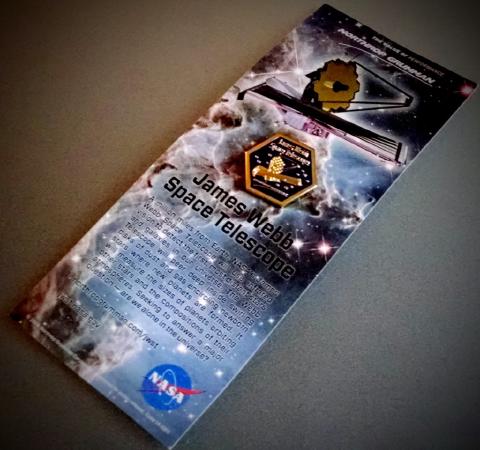
Chris Gammell: Yeah, right, right. Yeah. Yeah. So another thing with scale and like just that timeline kind of stuff. So when I was at Northrop, I got to see the James Webb Space Telescope, or at least the parts of it that were, you know, put together. Right, being assembled. That kind of thing. And actually that was with Tony Long, former guest of the show. He was nice enough to give me a tour. And I got a little pin with some, you know, a little mission pin thingy, but not a mission pin, but. Right. And just like the scale, like that one gave me the kind of the, the weight. Like, so they have like a sample you can pick up of like the carbon fiber or whatever the material is.
Dave Jones: Right.
Chris Gammell: The actual structural thing this is mounted on. And then they show you like the size of the mirrors that they're using. And apparently the mirrors are made in, I think, Ohio. I think they were made in Ohio.
Dave Jones: Right. Right. Yeah. Well, let's hope they ground them down, grind them down correctly this time.
Chris Gammell: Oh, that's right. Because that's the Hubble, the Hubble had it wrong, right?
Dave Jones: The Hubble, yep.
Chris Gammell: No, that was, wasn't it the lens or something? Was it the mirrors or the lens?
Dave Jones: It was the mirrors. They put a lens on it to correct it, I believe.
Chris Gammell: Ah, okay. Cool.
Dave Jones: So anyway, so I, yeah. Yeah. Anyway, that was a long time ago. The Hubble's been disconnected. It's like 20 years old. I know, right? Yeah. That's the other thing.
Chris Gammell: And like, yeah, and that's, and that's main thing is to take pictures, right?
Dave Jones: Well, no, it's not. It's only one of like seven scientific. But that's all we care about. Because most of it, no. Yeah, that's all we care about. But most of the universe is actually quite boring in visual space. Right, yeah. Even the pictures they sent back. And that stuff happens in x-ray and infrared and everything else, right? Because that can penetrate all the dust and everything, you know, out in interstellar space, you know? So that's all the, that's where you get all those fantastic photos from, from the Hubble Space Telescope. And they color them all up. And, you know, like the pillars of creation, you know, the famous photo of the pillars of the, right? That's all like infrared and all these other wavelengths. And then they just convert them into photos, you know, colorized photos for us. Right, right. You know, but like.
Chris Gammell: If it's red, it's got gamma rays. If it's blue, it's got, yeah. Right, yeah, something like that. Yeah, exactly.
Dave Jones: And, yeah. Yeah. So, yeah, you've got to, you know, you've got to down convert it for us poor humans.
Chris Gammell: Right. Humans. Yeah, we can't see anything else. Visible spectrum weaklings.
Dave Jones: Yeah, yeah. Yes, us narrow spectrum weaklings.
Chris Gammell: My body can see x-rays, but it needs paper behind it in order to actually.
Speaker ?: Right.
Dave Jones: And your body can feel infrared, you know. Oh, true. I mean, that's not bad. True, true.
Chris Gammell: Yeah, yeah.
Dave Jones: It's doing all right, but, you know, but too much of it gives you cancer, you know.
Chris Gammell: Right, of course. Of infrared. Yeah. Sorry.
Dave Jones: Ultraviolet. Too much ultraviolet. Right, right. It'll give you, yep. Yeah, yeah. Us weak, feeble humans. Not suited for outer space.
Chris Gammell: Yep.
Dave Jones: Anyway, awesome.
Chris Gammell: Yeah, man. Awesome stuff. I'm very thankful for everyone that helped me. Yep. Helped me realize the error of my ways by showing me awesome space stuff. That I will happily, like I said before, if there's any tours that people think I should go on, I'd love to hear about them. So, yeah.
Dave Jones: Well, they're the tours I'd be going on if I did another US road trip. It'd be, yep.
Chris Gammell: Yeah. Space, space, space. We'll do it eventually. We'll get there eventually.
Dave Jones: Absolutely.
Chris Gammell: Yeah, man. So, what else is new? How are you? I saw some-
Dave Jones: What else is new? I've got a work experience student here, Ryan.
Chris Gammell: So, what is- You- I said hi to him, yeah. Yeah.
Dave Jones: But you said, like, what's work experience? Yeah, yeah. Like, you guys don't have that there in high school? I don't think so. Like, in high school, do you, like, go out to companies and, like, you know?
Chris Gammell: No? Not as, like, a formalized thing.
Dave Jones: Oh, okay. Right.
Chris Gammell: I mean, like, yeah, I guess there's, like, summer internships. Like, I knew some people that were doing, like, summer internships over the summer. I mean, personally, my- Oh, right. No, that's different. My job was stupid simple when I was in high school. I was teaching tennis and scooping ice cream, you know? Like, not at the same time. Right, okay.
Dave Jones: And, yeah, no, it's a thing here. Like, in year 10, which is, I don't know what equivalent, it's, they're about 14, 15. Okay. Sorry, they're about- That sounds right. Like, sophomore year. I mean, like, 10 years? Right, yeah. Okay. Year 10. Like, we do an extra two years before you go to university on top of that. So, it's two years before you go to university, pretty much.
Chris Gammell: Yeah, that's how we do it, too.
Dave Jones: Yeah. Okay. Right, yeah. So, anyway, yeah, work experience, they generally, for those kids, I don't know if it's compulsory. I think if you don't want to do it, you don't have to, but you can, because it's like a week off school. So, you go, yay. Oh, nice.
Chris Gammell: Yeah.
Dave Jones: Yeah. You know, a week off school. And, yeah, so, yeah, they try and, you know, you tell them what you're interested in, and then they try and find a company that will, you know, actually take you on for a week.
Chris Gammell: Yeah, that's great. I mean, like, yeah, that kind of stuff is great because it's like who, I think actually, when I was at Keithley, I remember some kids coming in for that kind of thing, but I never did that myself. Right.
Dave Jones: Yeah.
Chris Gammell: And it's great, though. I mean, like, even if it's just getting a flavor, like, you know.
Dave Jones: That's the whole idea. Yeah. You know, it's a week. You spend a week, you know, and they just, you know, sit there and watch you and, you know.
Chris Gammell: Well, the only downside is, like, what if you guess wrong? You know, like, I mean, not like it's, it's like you're choosing your future there, but it's almost like you want, like, a smorgasbord of, like, you know, like, I want to follow an accountant and I want to follow an engineer.
Dave Jones: I know, but unfortunately you only get the one choice. So, you know, yeah, no, it'd be nice if everyone could, like, you know, have 10 weeks at 10 different, in 10 different careers, but, you know, like, you know, it's just, yeah. Right.
Chris Gammell: And the other thing, too, is, like, someone following you would be like, oh, engineering is, you know, like, about video and doing, like, teardowns and, you know, like, and someone that goes and it follows a, you know, like, a component engineer at, like, Northrup or, you know, like, you know, some huge company is like, ugh.
Dave Jones: See, well, that's the thing. Ryan doesn't care about engineering. He wants, like, the video content creation side of things. Oh, okay. So, that's why he's interested. So, yeah, yeah, no, he doesn't give a toss about engineering. So, no, he's here, yeah, he's here because I'm a full-time YouTuber and, yeah, he wants to get into the content creation. That's cool. Side of things. So, yeah, yeah, video stuff. And it was quite weird. Yeah, he was one of the few I met who actually seemed remotely interested in content creation. Like, I actually went to their school careers day. Actually, this is where, you know, like, they got in a whole bunch of people from all these different careers, right? You know, so there's one from the military. There's one from, you know, there's scientists. There's engineers like me. There's content creators like me, you know. So, and you get like five minutes to talk to each group of students, you know. So, you go around a different table and, you know, so you'd meet them all. And, unfortunately, you only had five minutes. And, of course, I can't say hello in five minutes. But I got, you know.
Chris Gammell: Yes, we all know that. Anyway.
Dave Jones: So, yeah, so I'm trying to convince them, you know, you need to create content. It's, you know, it's wonderful. You can go do it and you can make your career out of it. And, you know, all that, you know, and they're sitting there like, yeah, like, you know, like. Yeah, but that's high school in general. Yeah, exactly. Right. But there are a few like Orion and, you know, a couple of girls I met who were interested in, you know, content creation and stuff like that and videos and media. That's crazy.
Chris Gammell: I wouldn't even have thought of that. Like, I mean, obviously, you know, like when you and I were in school, that, like, it would have been like, oh, well, video production more on like, you know, like a local news station would be like that. Right. That kind of level. But, yeah, I wouldn't even. They wouldn't have that.
Dave Jones: It'd be journalist, right? Yeah. It'd be journalist. Yeah.
Chris Gammell: I think I met one kid who was interested. Dave Jones, journalist. Journalist.
Dave Jones: Well, I kind of sort of am. Yeah. Like, you know, some of the time I try to be journalistic, you know. Yeah.
Chris Gammell: Yeah.
Dave Jones: So. Sure. Okay.
Chris Gammell: I'll give you that. Yeah. We're not like current events kind of stuff. But, yeah. Sure.
Dave Jones: No, I've occasionally done current events and things like that. You know, like the Mars lander and stuff like that. Curiosity rover.
Chris Gammell: That was all current events. That wasn't very current, Dave. You did that two days after the fact.
Dave Jones: Why? No, I didn't. I did a video before the, before it landed.
Chris Gammell: Oh, you did it before it landed. Right, right. I was just mad because you missed the landing and I saw it when you didn't. Yeah. That's it.
Dave Jones: Blow it out your ass. All right. Stop it. He always keeps reminding me of that bastard. And, yeah. So, anyway, I'm, yeah. So, went around the tables for all these, you know, kids. And some were hard to, you know. I think I'm a pretty motivating guy. You know, I'm excited. Like, watching some of the other. She said, hello, I'm a scientist. Please ask me about science. Does anyone have any questions? Yeah. That's like, oh, God. That's not the way to engage kids, you know.
Chris Gammell: I wouldn't. I don't know how to engage adults, let alone kids. Oh, right. Okay.
Dave Jones: Well, I'm, you know, I'm the Steve Irwin of engineering. Right, of course. So, I get in there. I'm like, I come in super excited, you know.
Chris Gammell: They're probably scared you.
Dave Jones: Yeah. Like, I scare a few. Like, holy shit. You know, like, some of them wake up from their sleep, you know. They're like, they're like drugged out at the table. And they wake up because there's this energetic guy who's just sat down with them and starts yapping on.
Chris Gammell: So, did you talk about the engineering side of it at all? I mean, like, was that?
Dave Jones: There were some that were interested in the engineering side. So, I said up front, you can ask me about media, YouTube, content creation, or engineering, or, you know. Yeah, yeah. Anything like that. So, yep. Okay.
Chris Gammell: Okay. And there were, I mean, that's honestly what I was wondering about because I don't know, like, what the state of, like, what the feeling is about engineering in Australia just because, you know, there's fewer companies there. So, maybe there's, I don't know what the focus is there.
Dave Jones: Oh, yeah. No. It's not a, you know. Were they interested in, like, software or hardware? It's still a popular career. Yeah, there were lots of software. Surprisingly, there were lots of lawyers.
Chris Gammell: Ugh.
Dave Jones: And it's like, ugh. Yeah, I'm going, ugh. Like, you know, like, I go around the table and ask them, you know, look, do you have any clue what you want to do? And there were quite a few, but I want to be a lawyer. It's like, ugh, you know. But then one of them said, I want to be a human rights lawyer. And I went, eh, that's all right. Yeah. Oh, yeah. I mean, of course. Yeah, pass for that.
Chris Gammell: But I think so much of that, like, I wonder, too, like, you know, so we've talked about this before on the show. But, like, you know, for a long time, there was really no popular culture engineering stuff, right? I mean.
Dave Jones: Right. Well.
Chris Gammell: Well, go ahead. Yeah, yeah, true. What was it? I mean, like.
Dave Jones: True.
Chris Gammell: No, there was a myth busters, maybe, but not really engineering. Oh, come on.
Dave Jones: That's recent, right? That's, like, the last 10 years. Yeah, 10 years. Sure, yeah. Yeah, okay.
Chris Gammell: So, 20 years ago, maybe what, like, or, you know, whenever, what it was, $6 million man, maybe. I don't know. Like, I don't know. Yeah. Right. Yeah. I don't know what the popular culture references would have been. Right. They don't.
Dave Jones: Yeah, yeah. Right. I don't know. You know, here on Australian TV, for example, yeah, we had a science show, you know, like you probably had, you know, Bill Nye, the science guy. Oh, yeah. Yeah. Which is now on Netflix. And things like that. Yeah, right. Okay. But that's, like, science, right? It's not so much, you know, engineering as such. But now, you know, we sort of do have engineering with the myth busters and. You get myth busters. You get. You get. You get. You get. Junkyard Wars.
Chris Gammell: Yeah, right. Shows like that. And my favorite example these days is Iron Man, to be honest. I mean, like. Right. Yeah, yeah. Yeah. That is the one, you know. Yeah, totally. Yeah. So. And now the Martian will be another one for sure. I mean, like he's a mechanical engineer. That's going to be.
Dave Jones: So what I. Are we saying that reality TV shows have been good? Some good has come from reality TV shows like Mythbusters and Junkyard Wars and everything else? Maybe. I mean. That they're showing a lot more varied content, you know. Because here there's so many cooking reality shows and everyone wants to be a cook now. Yeah. You know. And like a chef, right? And there's so many, you know, home improvement, you know, renovation shows. So everyone wants to be a home renovator. Yeah, a contractor or something. Or, you know, something like that. Yeah. You know. And. But these things weren't on television 20 years ago. That's what I'm saying. There was no reality TV. Right. There was no such thing as this variety of content. Yeah. It just didn't exist.
Chris Gammell: And that has its own effects though too, right? Because it's so much more diverse now, right? You know, there's the cable channels that are just like super wide and broad. And so that allows that other content to happen. But then it also means there's fewer people watching it. You know, it's like, it's not the same as if, you know, if 30, 40 years ago, if there was an engineering show on ABC or something like that. Or ABC here. Sorry. Yep. ABC there. You know, like a network channel, that kind of thing. So, yeah, I mean, I think, I think no matter what, like even just getting the name out there, just like the engineer, like some people know they want to like make stuff. Right. But a lot of times they don't know what the name of it is. Right. And they might know they like science, but they want to actually, they want to do the application of it versus, you know, more the calculation, the research kind of stuff. So.
Dave Jones: Well, because herein lies the problem with engineering is that engineering is hard. Right. Engineering takes time.
Chris Gammell: Uh-huh. Sure.
Dave Jones: Right. You know, it takes us, you know, it can take us weeks to lay out a board, you know, let alone design the thing and do everything else. Right. Yeah. Like engineering takes time and that doesn't make for good reality television. So you've got to blow shit up like the Mythbusters. You have to like not show them building stuff. Right. Right. You show like a two second clip of them welding something, but they don't realize, oh, yeah, it took them a week to build that thing. Yeah. You know, like. Well, that's like when Joe was on the show. Joe Grant, he talked about this stuff. Yeah, that's right. And the challenges. He did talk about that. Yeah. Yeah. And there's the camera crew coming in, watching them going, when are you going to do something interesting? And he's there soldering. And he's going, but this is interesting. Soldering. Come on, film it. And they're going, no, that's boring as batshit. You know, we're not filming that.
Chris Gammell: I think honestly, one of the big enablers of the future is going to be like future interest in the space and that kind of thing is going to be YouTube, to be honest. Right. Yep. You may have more influence than you think, Dave. It's dangerous. I don't know. No, totally. Yeah. Yeah, I know. And so it's going to be like the related content engine from Google. Well, you know, that'll be interesting kind of stuff. And it's just a matter of trying to just cast a broad net there. And I think that a lot of the stuff that already exists like that, like, you know, like your channel, but also like Ben and all the other people like Jerry, everybody we've had on that from the YouTube side of things. Right. Alan, right. Alan just put out this bucking Bronco diode video. You know, just anything where it's, but especially the stuff that reaches out with like other references. Right. So like, or like, like Ben's video. Do you see Ben's video about the record?
Dave Jones: The needle? Yeah, the record needle.
Dave Jones: Yeah. Yeah, great.
Chris Gammell: Like that was perfect. Right. I mean, like that got spread all over the web and like, you never know who that's going to hit. And then they'll be like, I want to do what he's doing. You know, like, because I think that every time I see Ben's videos. I know. Yeah.
Dave Jones: They're awesome. Yeah. It's like science sort of has that effect. Engineering. Unfortunately, it's not nearly as exciting to Joe Average. Unfortunately, like a lot. Look, I made these lights flash and it's like, you know, so what? Yeah.
Chris Gammell: But I mean, people like, you know, like, but like you and like, you know, like Ada Fruits and the Spark Funds of the world and everything like that too. Like that stuff's out there. Yeah.
Dave Jones: I know it's out there, but you know, it's just, yeah, it's not as exciting as, you know, some of that sciencey stuff. It's not as well.
Chris Gammell: But I know Ben calls his channel Applied Science, but it is engineering. Come on, Ben. He's just very experimental. It is engineering. Yeah. Yeah.
Dave Jones: No, it's experiment. It's experimental science and engineering. Yeah.
Chris Gammell: It's like applied science. It's more science. It's applied science.
Dave Jones: Yeah. It's applied. Exactly. Yeah. It's using, you know. Yeah. But it's not so much engineering. Like the, yeah, he uses engineering solutions to demonstrate the science that's, you know, like if you, if you watch this video on that needle groove thing, all the effort he went to, to actually design a jig to actually get the correct shot he wanted and all that sort of stuff, you know, that's where all the effort was. Yeah. So, you know, and it was interesting what you mentioned before about, you know, how people, you know, YouTube and all that sort of thing, like I constantly get this, right? I tell, you know, people ask me, what do I do for a living now? And I go, I make YouTube videos and their eyes light up and they go, oh, wow. You know, like they're really interested in it. And they know somebody. They always had a guy here in the lab just installing a new intercom system, right? And he looked around, what do you do? You know, like, oh, I make engineering YouTube videos. Oh, you know, fantastic. You know, I want to check out channel. I know this other guy. I know these two other people who are making YouTube videos and I kind of want to do it myself. I mean, I'm into music and stuff like that, but, you know, I, you know, don't have the, you know, I'm not, I don't have the, I don't put all the effort into it to be successful enough and, you know, all that sort of stuff. People are really interested in this sort of thing. So, you know, whereas before I said, I'm an electronics design engineer, like their eyes just roll back in the head. Right. Okay. Right. Next. Right. Like that's why I did a video on that. I drive time rant. You know, what, what do you say to people when you're an engineer? What do you say? Do you say you're an engineer? And I just, I ended up in the end, I just said, I design computers. Like I said, no, I know I'm a, I'm an electronics design engineer and the ones that don't roll their eyes or do roll their eyes, but at least ask, well, what does that mean? I go, I design computers, you know, like that's like, and then they, and then they go, oh, okay. Right. I understand that. Right. Right. Right. Next subject. Right. End of conversation. Right. Yep. End of conversation. Yeah. Yeah. Exactly. So you've got to have something like that, but you know, see, but I think that a lot of when you say I make YouTube videos, people have questions.
Chris Gammell: Oh yeah.
Dave Jones: You know, I have never met anyone where I've said I make YouTube videos. Right. And like, I don't even say like, I'm an engineer who makes videos. Right. I, cause that means nothing to them. I just say, I make YouTube videos and every single person without fail starts hitting me up with questions. Yeah.
Chris Gammell: I think because there's that inherent, like, oh, well I understand YouTube. And I, I see there's must be money involved. Yep. I like to make money.
Dave Jones: That's almost always the first question. They go, I've always wondered, how do you make money from that? That's all, like 90% of the time that's the first question. You know, and. Yeah.
Chris Gammell: Ads off site. Yeah. Yeah. Ads off site. Yeah.
Dave Jones: Yeah. I keep saying, yep, I wouldn't be full time if I was just relied on the YouTube.
Chris Gammell: The next time you say this, cause this is actually somewhat accurate. Right. You should say, instead of saying I make YouTube videos, you should, you should do A, B testing here. Right. You can hear my. Right. My exposure to web people coming through. You should say to one group, you should say I make YouTube videos. And the other group, you should say, I'm a community manager and a video and a content producer. And see if they do the same thing. Cause I'm guessing it. Yeah. I mean, it's probably be like you said. It is. Yeah. It's the recognition, the name recognition stuff.
Dave Jones: Yeah. It's, it's the YouTube thing. Yeah. Like, you know, yeah. Like if I said, I make videos, I just make videos. They'll assume that I make wedding videos. I'm a videographer. Right. And I film people's weddings and shit. Yeah, man. Well, you got the gear for it.
Chris Gammell: You can totally do it now.
Dave Jones: Oh God. Only thing worse than filming a wedding is trying to film children. Yeah. Right. Right. Being a child photographer. Right. Right. Yeah. Anyway. Yeah. No, it wouldn't be met with the same, same reaction. It's totally that brand thing. You know, people know YouTube. So, you know.
Chris Gammell: Yeah.
Dave Jones: Yeah. And they've always got questions. I love it. It's just totally, totally changed my life. I swear. It used to be boring before. I used to dread people asking me, what do you do for a living? Now it's like, ask me, ask me, go on, ask me, go on, go on. Please.
Chris Gammell: Yeah.
Dave Jones: Yep. It's good.
Chris Gammell: Cool, man.
Dave Jones: One of the perks. So, there you go.
Speaker ?: Hmm.
Chris Gammell: What else is new? You building any electronics these days?
Dave Jones: I'm still working on my side project.
Chris Gammell: Oh, side project. Okay. Okay.
Dave Jones: Yep. Yep. It's getting to the point where, yeah, like in the next day or two, yeah, manufacturer's coming back.
Chris Gammell: Hey, hey. That's great. That's great. Yep. Yep.
Dave Jones: Yep.
Chris Gammell: Any issues with the build and stuff like that? Any?
Dave Jones: Oh, I, as I, I think we mentioned this the other week, I had to take it by the horns. You know, I had to take the bull by the horns because it was going in a direction that, you know, was just, it was, was kind of expected if you let them run it.
Chris Gammell: Yeah.
Dave Jones: You know, like, cause they're used to producing this product and they're just going to produce the same stuff they've always produced. Right. And where, yeah. So I, I, I had to take the bull by the horns. Right.
Chris Gammell: Well, then there's added cost from, from doing a custom effectively. Right. Did they, they thought they're going to quote you a, a, you know, a standard issue.
Dave Jones: They came back with a Rolls Royce product and a Rolls Royce price. Right. Yep. Yep. And, uh, and I had to go, well, let's take a step back and see where the costs are being added in. And well, I had to prune it back and I had to go to the data and I had to go to the chipset data sheets and do all sorts of things and yep.
Chris Gammell: Yeah.
Dave Jones: And figure out the, you know, Hey, I think we can do this for free if we do it this way. You know, it doesn't really add any extra costs, you know, to add this feature. And, uh, and they go, well, yeah. Yeah. Okay. Yeah. It probably doesn't fancy that never thought of that.
Chris Gammell: And this is a, this is like a CM.
Dave Jones: This is a, uh, effectively. Yes. Oh, well, no, no, no. This is a manufacturer of a name brand products who shall remain nameless.
Chris Gammell: Yeah, no, that's fine. I just mean though, like, do they, do they give design services as well? Like would they?
Dave Jones: Oh, well, they, well, they do for me. Um, no, but they, you can go to them and you can get a, yes, you can, you know, if you're a, if you're a manufacturer, you can, of these products, you can go to them and say, Hey, I want you to make this for us. Yeah. And slap our brand on it. And yeah. Yeah. No, they'll, they'll certainly do that. But they also make their own stuff. They, they design to make their own stuff, but they also design to make for others as well. I see.
Chris Gammell: I see. Yeah. No, I was, I had, I had lunch with a former coworker the other day and I was, you know, I was just asking him about, you know, manufacturing stuff like that. And, and, you know, he mentioned to me, and this guy's a veteran in the industry, like one of the best engineers I know. And, but like, but like as engineers and you know, his situation similar to where it's just like, you know, everybody's team is shrinking, right? It's not like, it's not like we have a 20 person team with integrated, like, you know, depending on the size of your company, of course, you know, someone's going to be, Oh, I work here and blah, blah, blah, blah, blah, you know, like, but like, you know, teams are generally shrinking and not just for startups, you know, there's just people are doing more with less kind of thing. And, and, and, and this engineer is talking to, he's just like, he didn't even like, he's I don't even realize all of the different models that are out there, you know, like, and, and I'm the same way. Like, I think if not from my current experience, like, you know, in the past I had worked at a place where the manufacturer was integrated and that was fine. And, and, you know, that's a great experience too. But like, once you move outside of that, it's like, how, how do you get things made? And like, and then just the different levels of like, well, you could go out and you can, you could buy full assemblies from like, like a, from a design shop that'll manufacture like OEM for you. And then you can do integration later. You can, you can go to a CM who will do, you know, various levels of manufacturing or integration. You can go to a full, full EDS, like design services. I think that's called it right. The EDS, like a, like a big one, like Flextronics or something like that. Like, you know, like, you know, and like, basically they'll, they'll not only make your board, do your assemblies, but they'll also design it for you, do all the, the, the different levels of stuff. And like, I mean, I didn't really know that either. Like, like, where do you learn this stuff? You know, it's like, when you're like, when you're like, I need to make something, like, I don't know how you found your company, but like, I guess you said you're out there.
Dave Jones: It was a, it was a chance encounter. Like, it was like, I thought nobody would want to do this for me. Like I wasn't, you know, I wouldn't have the numbers. I wouldn't be, you know, like, sure. My, my, everyone knows me, right. All these manufacturers know me, but I thought, oh, they're not going to want to, you know, work with me to design one of these things. And, but no, it was a chance encounter by way of, you know, just generally chatting with them. And then I asked them, oh, by any chance, would you be able to make me one? And they went, yeah, of course, you know, and it was like, yeah. So I did, you know, I had sort of given up a bit of, you know, right.
Chris Gammell: And that's a very legit method, I think too, because like, you know, you'll go out like, like you hear people talking about like, oh, I went to go, you know, I went to Shenzhen or even I just went on Alibaba and stuff like that. And, you know, they'll find something similar and then they'll go find the manufacturer and be like, can you make something similar to, for me? And that's how people find stuff as well. But if you really want to differentiate or if you need to start from scratch, if you're making something where no one else is making it, it's like, oh, a lot of people don't know, you know, like how do you, where you go to. And, and, and it can be, that kind of stuff can be scary. So, yeah.
Dave Jones: That's it. I mean, like, you know, if I was really driven, if I went, I really want to design and manufacture my own one of these, but I need a big player to do it, you know, otherwise it's just, you know, it's just too hard. Yeah. Right. It's, you know, I, I, I need the people who've done this before. Right. So, you know, if I really was driven to do it, I could have found, you know, somebody to do it. Right. Yeah.
Chris Gammell: Right. Right.
Dave Jones: Right. You know.
Chris Gammell: But you were, you at least started it with the, with the assumption that you wouldn't have to start from scratch. Right.
Dave Jones: Yes. Yeah. That's right.
Chris Gammell: Because if you were starting from scratch, then it's like, okay, well, I'm going to design the electronics first and get that cost down. Cause then, you know, that there's some kind of huge cost adder from, you know, assemblies and mechanical and all the other stuff that goes along.
Dave Jones: And then I want to try to do it all myself. And then I need the tooling and then I need an industrial designer to design the case and the, you know, like, and everything else custom, you know, it's like, oh, you know, like, it's
Chris Gammell: horrible. Right. Yeah.
Dave Jones: No, it's a, it's a huge, huge task.
Chris Gammell: Yeah.
Dave Jones: Right. To do all this yourself. So yeah, you just go to somebody who already does it on a daily basis, you know. Right. Right.
Chris Gammell: And you might end up giving up some of the control in terms of like what your constraints are, but then you also know the constraints and it's a better characterized problem. So that, that part's actually really nice. Cause I think, well, yeah, go ahead.
Dave Jones: And, and, and the interesting thing is that, you know, I, I fuss around, you know, if you've ever watched my, uh, you know, micro supply videos, it's like, oh, you know, I'll fuss around or change direction all the time. Or what if I do this? What if I do, you know, like I have to sort of try and bite my tongue and sort of accept that, oh yeah, okay. That's okay. That's an okay compromise. We'll go with that. Cause I can't keep going back to this manufacturer who's, you know, bending over backwards to help me out and go, oh, what if we change this? What if we change this? You know, you just have to run with something.
Chris Gammell: Right.
Dave Jones: Well, and ultimately, you know, you can't just be trying to, you know, you could spend the next six months dicking around going, oh, but we can shave two cents off if we do this feature. Oh, what if we change this chip again? You know? And like, yeah, it's, it's tempting, but I know I've just got to shut my mouth and go, no, that's, it's good enough. Right. You know, let's just run with this.
Chris Gammell: And I mean, I mean, and then also think is experience. So like me and this former coworker, like we both, you know, we were both working at like industrial places with like high volume or not high volume, but high, uh, high value products. Right. So like, right. That's, that's something where you don't necessarily think about every single piece costs where, whereas you, if you go into like a consumer or, you know, high volume thing, you need to start considering that stuff. And like you, you, you came from Altium where you had a bunch of freedom, right? And then your military stuff before that.
Dave Jones: Oh, the military stuff, it was, you know, you didn't care about component cost.
Chris Gammell: Right. It's about performance only.
Dave Jones: Well, there were a few cases where we made a couple of hundred thousand boards and then we tried to save a few cents here and there, but you know, no, it's not, it's not consumer. Right.
Chris Gammell: But it wasn't, it wasn't like super, uh, it wasn't time limited. Like, like a lot of, a lot of designs are right. Like a lot. Oh yeah.
Dave Jones: No, we have, we have project dates, you know, we, we have a, we're a contractor, you know, we're a military contractor and we've got, you know, a contract from the Navy and we've got to, you know, we promise this date we have to produce, you know, we have to show this milestone by this date, you know.
Chris Gammell: Oh, you're saying that was the case. Oh, okay. I was thinking more.
Dave Jones: Oh yeah, no. Yeah, it was.
Chris Gammell: Okay. It was. Yeah. I see. Well, that's, that's a nice forcing function. I mean, like oftentimes, like I find myself, especially for like contextual electronic stuff, like, like when you don't have hard deadlines, it's actually, it's tough, you know, like you need, I think you and I have talked about this before where it's like, we have, you almost need like a, like an outside manager, you know, like you need like an authority figure without
Dave Jones: a person to whip you. Right.
Chris Gammell: Without like wanting to have to listen to them all the time, you know, like you need some kind of, like a Kickstarter date that works. Right. Uh, right. Yeah, of course. Right. Like peer pressure that works. But yeah, I mean, totally.
Dave Jones: I think, you know, that's why I never get my own projects finished because there's nobody pushing me.
Chris Gammell: Yeah.
Dave Jones: You know, and it just, it just never happens. Whereas it, whereas this company I'm dealing with, right. They upfront, they gave me a, like a, uh, Gantt chart pretty quick. Like here's what we're going to do. Yeah. Here are the months. Oh shit. You know, we're already behind, you know, so Dave, don't, you know, I better not dick around, you know, don't dick around, you know, fussing over details. Let's just get this done. And then, you know, yeah.
Chris Gammell: That's, that's another interesting thing about like that finding, find the going from internal manufacturing to external manufacturing. That was another thing that I, I really struggled with where it's like, you know, like it used to be if there was small details that needed to be clarified, then it was like, okay, you go out to the floor, you talk to the manufacturing engineer and you're like, okay, and we're cool now. And then I would go, you know, write the change order, whatever that was needed. It's like, you, you don't do that. Like that's just like another reason that I don't go to space actually never worked for me among others. It's just like, they're there. It's done. Like you hand it off and it's done and you have to do that. Right. And even if it's not, you know, if it, even if you're doing just a prototype, you just need to make sure that you're handing off something that is some semblance of, you know, part availability and, and maybe you'll have to do some, some, you know, component ninjitsu to, you know, get, get the right part that you actually need. Right. Maybe, you know, working in a equivalent or something like that, but, but like it needs to work perfectly, not perfectly, but you need to be, you need to be very confident when you send it out to a CM because anything else, that's how they're making their margins is like, oh, well you need that changed. Oh, that's going to cost you, you know?
Dave Jones: Like, yeah. So I watched an interesting video the other day, which I will send you. Okay. Here we go. It was in mailbag. Somebody sent in this baby animatronic dinosaur.
Chris Gammell: Oh, I saw that thing.
Dave Jones: Yeah. It's called the Pleo. It's the cutest thing you've ever seen in your life. Right. But it's got like 40 sensors in it. It's got seven processors. Really? It's got like, you know, 12 motors or something. How much does it cost? Yeah. It was like, it was 350 US was what it was, was released at, but, but the company went out of business. Anyway, Caleb Chung is the guy who developed it and he's the guy behind the Furby. Right? So he's, he's like a toy. Yeah. He's the Furby guy.
Chris Gammell: My wife pulled that out of our storage the other day. It creeped the hell out of me. Oh, really?
Dave Jones: So anyway, there's some backstory in this video of how he designed the Furby and things like that. But ultimately what he was getting to is how he, you know, started this new company to do this, uh, Pleo, the animatronic dinosaur. Right. And all the stuff and how it, you know, investors and the pressure and he showed all these prototypes and everything. And how he, you know, back in the day they didn't have like, you know, 3D printers. So they had to, you know, all do it by hand or something. And, you know, like.
Chris Gammell: Oh yeah. They would do like a clay models or foam models.
Dave Jones: Clay models and things like that. And they do all that sort of thing and how it costs $10 million to develop this animatronic dinosaur, you know. Seriously?
Speaker ?: Yeah.
Dave Jones: $10 million bucks. Anyway, it's an interesting TED talk. So, uh, yeah. Whoa. Yeah. The guy is, yeah, he goes through the whole history of it. Anyway, we'll, we'll link it in for people to watch. It's, uh, it's rather, it's rather fascinating. So, yeah, and he talks about, you know, the pressures of, you know, finding contractors to do things and stuff like that.
Chris Gammell: Wow. Yep. That's kind of nuts.
Dave Jones: Good stuff. Yeah. But ultimately they went bust and then they filed for bankruptcy and then somebody else came in and bought them out and restarted it and, you know, there's some new version out or something.
Chris Gammell: So, anyway. Cool. Fascinating. That's good. Yeah. Yeah. Cause that stuff, I mean, that'll bite you every time, right?
Dave Jones: Oh, right.
Chris Gammell: Yeah. Just like that. I mean, like when you're designing without like any constraints in mind, I mean, again, another thing. Oh, yeah. Especially from contextual electronics where it's like, sometimes I'm like, well, we don't have constraints here. And then I'm like, no, no, we're going to make constraints, right? Cause like sometimes. We're going to make artificial constraints. You have to, right?
Dave Jones: Otherwise we end up down the rabbit hole, right?
Chris Gammell: Exactly. Exactly. Like, well, I have about. And you'll never come out. 16 potential op amps that could go into this thing. Right. Uh, now what?
Dave Jones: Nope. LM324. Damn it.
Chris Gammell: Yeah. Right. Right. Right.
Dave Jones: Right.
Chris Gammell: Well, that's, you know, that's another thing I learned. So when I went, uh, from the, the smaller, from the onsite manufacturing to my first job with a CM, my boss at the time was, was awesome about that. You know, I'd be like in his office and, and I probably mentioned that here before, but like, you know, I'd be like, well, you know, I want to test this and this and this and this. He's like, look, we have time for prototypes. We're, we're planning on multiple prototypes. Just pull the trigger. And like, sometimes you just need that, right? You just need, you just need to do it. You know, like, it's not like we're breadboarding stuff. You know, this, this is the first version and, and, you know, the first version matters a lot because a lot of that stuff carries through to the end of a design. But, um, you know, so like if, you know, you need to pick the right, you know, if you're doing a micro, you need to make sure you're picking the right, uh, you know, the software package and all the things that you want there. But, uh, you know, a lot of the other stuff, you can change it, you know, it's especially, you know, even multiple revs in. So it's sometimes you just got to go, you know, which is, ah, engineering. Yeah.
Dave Jones: Brings back so many memories.
Chris Gammell: Yeah, man. Oh, I still do it.
Dave Jones: Yeah, I know. You say, well, no, you're, well, yeah, you still do it. Yeah. Through your course. I still do kind of, sort of, you know, in a roundabout way. Oh, yeah.
Chris Gammell: By the way, thank you to everyone that, uh, so I had people submit videos. Yes, that's right. That, uh, that's, that process is, is ongoing. And, uh.
Dave Jones: Was that a compulsory thing or did people just decide, oh, I was. No, it was.
Chris Gammell: That was, that was my sneaky way of, uh, you know, I've had.
Dave Jones: Weeding out the tire, that's weeding out the tire kickers.
Chris Gammell: Yeah, yeah, yeah. And I wouldn't call them that. I mean, I, I appreciate people even saying, saying that they'd be interested in it. But, um, yeah, you know, like that's kind of, that's the best way to do it. Right. It's like, okay, well, are you interested in it? Are you actually interested by doing it? Right. It's like, you know, if you want to hire someone to do layout, you have them do a layout. Right. It's like, that's the best way you can hire. If you want someone to manage something for you, give them something to manage. And they're like, okay, how are you really going to do? Because I don't know. I, I, I interviewing people, I, I, I don't like doing, but, uh, you know, it's just, and it's like, if you're spending so much time on it too, it's like, you need some kind of, again, forcing function to, to get to that point. So. Yep. I do appreciate everyone who did that. So that was nice. And, uh, yeah.
Dave Jones: And you found somebody.
Chris Gammell: I found, uh, I'm still, I'm to the point where enough people have said it that I'm going to actually be interviewing people. So that's the point. So, yeah, it was good.
Dave Jones: And you're not paying real money, are you? You're like playing with IOUs, aren't you?
Chris Gammell: Uh, yeah. Like revenue share kind of stuff.
Dave Jones: Yeah. Right.
Chris Gammell: Right. Yep. If I grow, they go.
Dave Jones: No, it's cool. That's a way to do it. Yeah. There's nothing wrong with that. Yeah.
Chris Gammell: Right. Right. I'm not, I'm not in the role to give anyone a job. So. Right. Yeah.
Dave Jones: Yep.
Chris Gammell: So, yeah.
Dave Jones: I am now. Yes.
Chris Gammell: Again? I have an employee. Oh, you have one. Oh, another one? I have one. Getting another one?
Dave Jones: I do. I'm, I'm contemplating having another one. Yes. I am contemplating having another one. Nice. So, um, yeah. Cause the idea is, um, cause I'm getting a new web, um, a new website. But the idea is to go away from my Shopify shop. I'm actually going to take, um, I'm actually going to sell some more stuff. You know, that's the plan.
Chris Gammell: Yeah.
Dave Jones: You know, and, um, not only my own custom design stuff, but you know, like some niche, um, stuff as well, you know, not like I'll carry like, you know, like half a dozen products or something, you know, but anyway, yeah, I want to expand things that way. And I figure if I do that, then I'm going to need somebody, um, dedicated to that side of things, you know, packing, shipping. So I'm going to, we can't do it. Like we're already out of space. Like we're still packing and shipping stuff on the floor of the lab here. It's just ridiculous. Yeah. Right. And there's just no room to do it. So yeah, I'm like actually going to have to rent a, another place to, you know, just do packing and shipping and things like that. And, uh, and a lot of people are probably screaming at her, ah, why don't you just, you know, set up a shop and then just, you know, outsource everything, you know? And it's like, eh, let's not go down that channel. Right. Yeah. No, it's because then you're not creating a business. You're just capitalizing on your audience, you know, like you're not actually building, you know, you're not creating anything, you know, you're not, you know, you're not hiring people. You're not creating jobs. You're not, you know, doing something. You're just a, you're just a reshipper, you know, like you just do like, oh no, that's not the term, but you know, you're using a, you know, you're not doing anything yourself. All you did is set up a website and it just runs itself. And, you know, like that's, yeah.
Chris Gammell: Yeah. It might be good for, for a revenue generation, but that's not really what you're in it for.
Dave Jones: No, no, it's not really what, you know, I'm, I'm in it cause I want to, yeah, I want to, you know, expand my revenue income. So I'm not just getting it all from ads. Of course I've meant, you know, I've talked about that a couple of times in the past and, uh, things like that. Um, so I don't have all my eggs in one basket and yeah. And the way to do that is I think to actually really do some real packing and shipping here. And of course the profit margins are higher, you know, so, um, yeah, you know, yep.
Chris Gammell: Cool, man. Well, that's, that's good.
Dave Jones: That's, that's part of the plan. So yeah. Good. Yeah.
Chris Gammell: I mean, that decision to, I mean, like, so we were talking about the, the manufacturing side of the things like, you know, decision of, you know, where do you really go? When, like, do you go fully vertical? Like, cause like, okay. So like SpaceX, right? I was at, like I mentioned at the beginning of the show, like I was at SpaceX and they talk about it. They talk about, they're proud of how vertically integrated they are.
Dave Jones: Right. Yeah. Uh, but there's, they, they make their own parts in, in house, don't they?
Chris Gammell: There was a carbon fiber area. Yeah. They were.
Dave Jones: Yeah. Right. They make their own CNC, CNC, their own actual production parts and carbon fiber and mold and everything else.
Chris Gammell: And it's a Tesla too. They're very vertically integrated as well. And it's like, that works great until it doesn't. Right. So if you're, if you're flawless, you're good. Right. But, um, you know, that also takes a huge amount of upfront investment as well. Right. So if you, you know, say, say you wanted to pack and ship today, that's one thing. Right. But if you wanted to, you know, we've talked to, uh, uh, the salier guys about that. Right. They wanted to pull the, the assembly stuff in house.
Dave Jones: They wanted the pick and place. Yeah. Right.
Chris Gammell: And then, and that can, well, and, but that can go on ad nauseum, right? You can, you could pull in machining in house, right? You could pull injection molding in house. You could pull. Yeah. Like if you want to go really nuts, you can go.
Dave Jones: Who are the guys who are talking about doing their own in-house board manufacture? Actually bare board manufacture in house.
Chris Gammell: Oh, that was a macro fab. Wasn't it? Right. Yes. Yes. Yeah. Yeah. Yeah.
Dave Jones: Yeah. Right. Yeah. Yeah. They're talking about actually making their own boards and our heads almost exploded.
Chris Gammell: Right. Well, but you have to do that for certain things, right? Right. That's when you encounter the, the constraints of an external system. When you say, okay, I need something faster than anyone else can give it to me or more than it will cost to get them to give it to me. I need a greater profit margin. Yeah.
Dave Jones: I, you know, I need to make a couple of more dollars. And yeah, as you said, it works great when you're running, you know, smelling like roses, right? But if there's a downturn and you're left holding the bag with all these vertically integrated employees, right? Oh, it's not even just that.
Chris Gammell: I mean, like think about like, okay, so say, you know, say it worked out well for Salier, right? I mean, and I wish it had, but okay, imagine the other people who do assembly and stuff like that. Just like the level of, of stock you have to hold, right? Just for. Oh yeah, of course. For on-time assembly of boards, you need to have stock on hand, right? You need to have reels there. And like, you can tie up a ton of capital in frigging resistors, you know? It's like, damn, you know, that's a, you know, that's a big piece. And like, and you know, and then I've been other, other assembly houses too, right? I mean, even not even if you move outside of components, just like having unutilized equipment or having, having additional feeders, right? So that you don't have to have waiting periods between stuff. Like all of these things are just like the cost that you have to assume that when you, when you, when you bring all that stuff in house and it's, yeah, it's dangerous, but the benefits are also nice. It can work. Yeah.
Dave Jones: The benefits are large if you can pull it off. Yeah. And you know, and some of the large, a lot of large companies do, they certainly pull it off.
Chris Gammell: Yeah. Well.
Dave Jones: And, and, and, and the problem is everyone sees that and goes, oh geez, I can do that. You know? And it's like, no, you probably can't. Maybe. But you just have to understand it. Yeah. You have to understand it.
Chris Gammell: Right. Right.
Dave Jones: Yeah. Yeah. You've got to understand the pros and cons and a lot of people don't, you know, that's why, you know, so much fuss over these bloody pick and place machines, right? Oh, I can do my own pick and place in house. And look, yeah, maybe, maybe if you've got the niche set of requirements where it's going to be beneficial to you. Great. You know, yeah, it can work for you. Yes.
Chris Gammell: Right.
Dave Jones: But otherwise, you know, it's like odds are it's probably not. Right. You know, you're, you're, you're probably better off getting somebody else to assemble
Chris Gammell: And what you see is you see people optimize. So we see that actually this is on the list this week. Seed Studios just announced a three day turn PCBA, but you have to be using the open parts library, which is their, that set of components that they publish, which is, you know, it's a great thing, the open parts library. Yeah. And, and so, but that's the constraint. And that's also because they're holding that stock as well, right? There's, there's no chance for outside parts delays.
Dave Jones: And they can't goof it up. And then they're all, you know, programmed into their feeders properly. Right. Exactly. Like it's all set up and they know it's going to work.
Chris Gammell: Right. And, and that's, and that's, that is, that is a miniaturized version of vertically integrated in that those parts will definitely be on hand. Those machines are definitely set up for this process. Right. They, the, the boards are, I'm sure.
Dave Jones: It's all, all the processes are proven. Yeah. And everything's, yep.
Chris Gammell: Right. Exactly. And, and that's what you need to get, to get that speed. Right. But there's also trade-offs that you can't do the custom stuff. And if you want the custom stuff, well, you have to thrash. Tricky business. Okay. Yeah. Yeah.
Dave Jones: If, if, if you ever hear me utter the words, I'm contemplating getting a pick and place machine, just, you know, slap me. Because then, you know, I've gone too far with this whole, you know, expansion thing.
Chris Gammell: I'm sure that you'll try one out first. Yeah.
Dave Jones: Well, I've got one sitting here in kid form. I don't think it's going to be hugely productive. Yeah. I don't think so. It'll be fun. Yeah.
Chris Gammell: Well, and you know, maybe I think that, yeah, that's another thing that you see a lot of people that start out that way where it's like, okay, this is a project. And then it's like, well, this could maybe do it, but then there's all the economics behind that as well. So, yeah.
Dave Jones: And it's not just a, yeah. And it's not just that. I don't, I can't do it here. I've, I'm in an office space, even if I physically had the room here, I wouldn't. I don't have the ventilation. I don't have the, you know, the, the, you know, it's just too messy to do an environment like this. Yeah. I just can't do it.
Chris Gammell: Yeah.
Dave Jones: You know?
Chris Gammell: Did I tell you?
Dave Jones: No, you need some concrete dirty factory somewhere.
Chris Gammell: Did I tell you two weeks ago, I finally started, you know, I really don't do reflow ever. I know that you've, you've done some videos of reflow. Yeah.
Dave Jones: That's right. You, you did your first reflow.
Chris Gammell: Yeah. Yeah. Finally got some stencils and stuff like that. And it's just going good. I mean, like, but it's like, but it's still a super micro level, right? I mean, these are the capton stencils. These are, you know, hot play style reflow kind of thing. It's nothing. Right. And, you know, if I tried to scale up, then yeah. Okay. That changes things real quick. Right. But then I might go to a, you know, a small batch or a macro fab or circuit hub or something like that. And, and I think, I think one of the things that I'm learning as I get older is paying for things, like, I think for a long time I was like, oh, I don't want to pay for stuff.
Dave Jones: Right.
Chris Gammell: And now like, I know that I, I'm in a better position financially to do so, but like, man, sometimes it's like, nope, I will happily pay for certain things, you know?
Dave Jones: Oh yeah, totally.
Chris Gammell: That's just, there's, you're paying for accountability from other people, but also you're paying for the experience.
Dave Jones: Well, you're paying for expertise in terms of a PCB assembly. Like, you know, I'm happy to pay my PCB assembler.
Chris Gammell: Right.
Dave Jones: I love it. Cause they know what they're doing. You know, they know how to do it.
Chris Gammell: Yeah.
Dave Jones: And they've got the gear and, you know, I, yeah, it's just, yep.
Chris Gammell: Yeah, man.
Dave Jones: Hmm.
Chris Gammell: So, uh, we need to wrap up the show soon. I am actually.
Dave Jones: We do. You've got to bugger off.
Chris Gammell: I am heading onto a plane. I'm going up to San Francisco for this talk or for this, uh, conference. I will be giving a talk.
Dave Jones: Uh, you're getting a plane from, oh, from LA to, oh, it's not a bad, hey, why don't you just go for a drive up, uh, highway one there?
Chris Gammell: Yeah. Yeah. Actually. I know some people that do that.
Dave Jones: You can go through Carmel and, you know. Yeah.
Chris Gammell: That's kind of a longer drive. I don't like car trips. So, um. Right.
Dave Jones: Oh yeah, you're right. You're not a road trip person. Right. So, no. So our dream of doing a road trip is like, no. And maybe I do it for a little while. Virtual Chris.
Chris Gammell: But yeah, we, yeah. Yeah. I might send a robot. Um, cool. Yeah. But yeah, so I'm giving a talk, uh, tomorrow. I don't know. I'm going to try and, I know I can't share the video, but I might be able to share the slides afterwards. So I'll try and do that. Okay, cool. It's just about, you know, data. Yep. Finding parts.
Dave Jones: Data. Right.
Chris Gammell: Risk.
Dave Jones: Because you work at FindChips.
Chris Gammell: I, uh, FindChips, Parts.io. Yep. Yep. Yeah. There you go. Yeah, man. All right. Cool. Have fun. Uh, yeah. I'll let you know. There's some other good talks scheduled too. So, um, hopefully I'll be able to see some, some good stuff.
Dave Jones: And, oh, I'm speaking of that. We've got another Sydney maker fair coming up in September or something. Yep. Yep. They announced it a couple of weeks. Okay, cool. Cool. Well, they haven't formally asked for people's to get stands and things yet, but it's going to be, yeah, it's going to be very shortly. So looking forward to that. Yeah. That'd be good. It's happening again. Excellent.
Chris Gammell: Cool.
Dave Jones: Yeah.
Chris Gammell: All right, man. All right. Well, uh, yeah. Oh, by the way, this is 255. We should, we should at least say that, right?
Dave Jones: Oh, is this episode 255?
Chris Gammell: This is 255, but as people pointed out, we started on one. We are not, we did not, uh, start at zero.
Dave Jones: Yeah, but, yeah, but, yeah, but, yeah, but.
Chris Gammell: But the guests will next week, so.
Dave Jones: Yeah. Hopefully. Anyway. Yeah. Yeah. No, sorry. Yeah. Like we wanted to do something special. We thought we'd do something special with 255, but it's like, meh. This was special. In the end.
Chris Gammell: Come on, man.
Dave Jones: It was.
Chris Gammell: It's how we started, right?
Dave Jones: I love you, Chris. I love you too, Dave.
Chris Gammell: See you next week. Bye. Bye.
Chris Gammell: Bye.
Archived Discussion (9)
Comments are closed. Archived from the original site.
Show archived discussion (9)Hide discussion
Applied ScienceBill NyeJames Webb Space TelescopeManufacturingNew HorizonsNorthrup GrummanRocketSpaceXTelescopeThe Martian
Keep current
Every episode, plus the occasional job post, in your inbox.
FYI - I'd take a long road trip over a commercial flight anyday, as long as I had the time to spare (and if you've got a fun car to drive).
https://www.youtube.com/watch?v=PvgDeZgRfFI (Quick tour)
https://www.youtube.com/watch?v=D-_KSf0K2Jw (Prototype to Production)
https://www.youtube.com/watch?v=q4uyj8qVcSo (Winner Announced!)
http://kk.org/cooltools/archives/24262
Right off the bat, Mythbusters is no reality show. Unless Adam starts crying while the others scream at him, calling him names and other such odd sadistic crap people like to watch. It's one of a handful of reasons I still own a TV and a cable subscription. They have recently created another cool show now What Could Possibly Go Wrong. Hope it doesn't go to shit.
When it comes to science, there is almost 0 science on TV. Try learning something, I dare you. I'm not saying to turn it into courses but at least they should give you something. Like explain how we detect particles in LHC or something, how a "camera" works. How science works in general and how we know what we know.
About engineering, it's kinda the same. Say for instance they want to explain how to save the planet. They would outline the following detailed procedude. 1 Have a plan. 2 Implement the plan. 3 Don't fail. If that's not meticulous explaining, I don't know what is.
About NG, Discovery and all that crap, I remember when I was little, they used to show you tons and tons of landscapes, closeups etc with a voice in the background. Then an Aussie bloke's back showed up on the screen. The narrator was present. After a few years, he turned around and started making faces. Now it's all about him and how he does sexual stuff to wild fauna. Nature has become a pretext for what I can only call obscene exhibitionism. Next they'll be showing full frontal nudity. I for one was not surprised or shocked at all when Steve Irwin died. He was nothing but an attention grabbing narcissist. Anal probing wild fauna may be a hazard to your health. Leave the animals be.
You see this in science / engineering too. Discovery went from Mythbusters to Shitfuckers. They mostly blow shit up.