
#251 – Shifting Away From DIY - Pedetentious PnP Progress
Download episode · 58 MB
Also on Apple · Spotify · YouTube · RSS
Show Notes
- Dave wants The Amp Hour to have a Loony Toons intro. Old Bugs Bunny cartoons used to have an entire orchestra.
- YouTube is giving $100K to develop a new series. Dave wants feedback on what he should develop. Chris suggested "dancing" + "soldering" and calling it "dancing with the scars".
- Chris has a new t-shirt design that represents a "solder jockey". You can get one on Teespring.

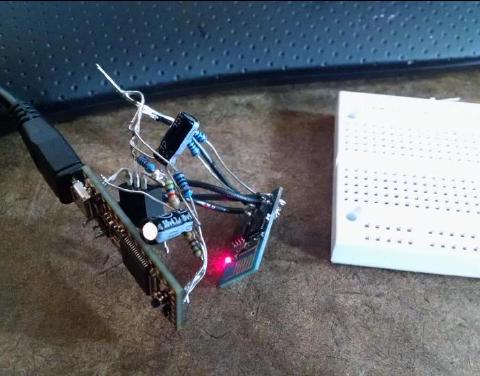
- Chris has ben trying out the ESP8266 with a Teensy 3.1.
- At Maker Faire there were a wide range of tools that were interesting:
- Shaper (formerly Taktia) was even more impressive this year. Chris things it will change woodworking for novices.
- Circuit printers by Cartesian Co and Voltera
- Carbide3D CNC machine was there, which has a great software tool flow (similar to other milling machine Othermill). The Nomad (by Carbide3D) also had a recent piece about milling boards beautifully.
- Pick and Place machines from OpenPNP, Firepick delta and the LitePlacer (which Dave now has)
- Chris also saw a TM-245 at a Seeed Studio event (they just opened an office in the bay area).
- Dave is getting an Inventibles X-carve (the smaller one).
- Radio Shack was noticeably absent from Maker Faire, and from paying back their small suppliers. This year at Maker Faire, Google took over the "Learn to Solder" tent.
- Chris Anderson gave a great talk about the Next Maker Movement (now at 2.0): https://www.youtube.com/watch?v=TKDv37fHZu0
- As Chris mentioned, computing is basically free. New platforms like the CHiP and the Onion Omega make super powerful hardware ubiquitous.
- Chris thinks there should be silly connected stuff everywhere. The Internet of ________
- Hammers
- Toilet paper
- Whatever
- Dave backed the Lily quadcopter, recently announced.
- Vicash asked on our subreddit about the point of learning basic electronics. There are some great discussions on that thread. Chris stressed top down learning.
- After recording, Dave did and extended blab also about this topic.
- Chris got to go on a tour of the Tesla factory (under NDA, no pictures). The robots were amazing. You can see some of them featured here: https://www.youtube.com/watch?v=8_lfxPI5ObM
- Dave has been trying out the Beta version of CircuitMaker, now mostly available to people. Dave also found that not committing projects allows them to stay "private".
- Chris saw a talk by Adam and Matthew of Wayne and Layne about the future of KiCad at Maker Faire.
- Chris is looking for an embedded engineer to help out with Contextual Electronics (pay will be revenue sharing from member fees). Email chris at theamphour.com with the title "Contextual Electronics Embedded" if interested.
Transcript
Chris Gammell: This is The Amp Hour Podcast. Recorded May 26th, 2015. Episode 251. Petitentious PNP Progress.
Dave Jones: Welcome to the Amp Hour. I'm Dave Jones from the EEV Blog.
Chris Gammell: And I'm Chris Gammell of Contextual Electronics.
Dave Jones: What's up, nerd?
Chris Gammell: Hey, nerd. Welcome back to another Dave and Chris show. Just us. It is.
Chris Gammell: Da-da-da-da. Ba-ba-ba.
Dave Jones: The usual crap. Can we have one of those cartoon intro tunes?
Chris Gammell: Like the Benny Hill theme or what? No, like cartoons.
Dave Jones: No, I'm talking, you know, the Bugs Bunny show.
Chris Gammell: Oh, they always had like orchestral music, didn't they? Yeah, yeah, yeah. Yeah, that was nice. Yeah, I know that maybe we've talked around the show before, but I know that they actually had an entire orchestra to like, because it used to be such big money, they used to have a whole orchestra that would actually play intro themes and that whole like Bugs Bunny is like the opera and all that. Yeah, yeah. Maybe we've discussed it here. I don't know. I don't know. Anyway. Usual recycling. Yeah.
Dave Jones: Apologies in advance for any weirdness in my voice, because I'm trying to speak on one side of my mouth. Yeah, he's talking on the side of his mouth. Yeah, I've got a mouth issue at the moment, and if I'm not careful, I can hurt himself.
Chris Gammell: He'll hurt himself.
Dave Jones: I'm going to hurt myself. Yeah. Yep.
Chris Gammell: His livelihood's at risk, folks. He's risking it all to be here. Yeah.
Dave Jones: I need to ensure my mouth, don't I?
Chris Gammell: That would be interesting. Yeah.
Dave Jones: Yeah. Yeah. All of a sudden you find all my videos are just text overlays or computer generated, those computer generated voice ones.
Chris Gammell: Or those videos where they don't talk at all in videos. Talk in your videos, folks. Come on. Let's do this right.
Dave Jones: I think I said that on Twitter like a couple of months back or something, probably quite some time ago. Yeah. One of the things that really annoys me is people who switch on their camera, do a YouTube video, they're going over some product, and they don't say a word.
Chris Gammell: I know.
Dave Jones: They don't say a word. I know.
Chris Gammell: Usually, well, this came up a lot during the Hackaday Prize last year, too, because a lot of people did that. They did. That's right. That's right. I don't speak English. It doesn't matter. The one guy did the computer voice overlay.
Dave Jones: The computer voice. That's right. Yep.
Chris Gammell: Yeah. Yep. I'd rather have a super thick accent that I have trouble and strain to hear than not talking or hearing computer stuff anytime. Especially because you get a lot of software intros where people are just clicking different areas. It doesn't do it. Why even have a screencast at that point? I don't know. Oh, that's dumb. I guess that's insider baseball, huh? Yeah.
Dave Jones: Yeah, like, I don't care if you speak a different language. That's fine. Just talk.
Chris Gammell: Yeah.
Dave Jones: At least have something to listen to.
Chris Gammell: Or talk your native language, and we'll turn on Google Translate, and, you know. Yeah, right. It's starting to get better, too. Well, yeah. Yeah. But it's better than nothing. Right.
Dave Jones: Yeah. Oh, goodness. So, yes, people. Speak.
Chris Gammell: Speak.
Dave Jones: But not like with a lisp like I am at the moment.
Chris Gammell: Lisp. What's new other than the lisp? Any news in the world of the e-blog?
Dave Jones: Possibly. I put this on the forum the other night, and I need feedback from Amp Hour viewers, too. So, link will be down below for this. Or listeners.
Chris Gammell: One or the other. Viewers or listeners. One of the two. Right.
Dave Jones: Yeah. There you go. You can tell where my priorities lie. That's right. The show that makes money, as opposed to the show that doesn't. Yes, of course.
Chris Gammell: Of course. This gives you social capital, Dave. No.
Dave Jones: Thank you for those who are donating via our Patreon account.
Chris Gammell: Oh, yeah. Yeah.
Dave Jones: Yes. Yes, we do. If you want to support the Amp Hour financially, you can do so via Patreon. Links down below.
Chris Gammell: Or somewhere. Or somewhere. Yeah.
Dave Jones: Anyway, there's... Feedback. Yes. Google have a... What is it? A program thingamabob. Is it a contest? No, it's not really a contest. It's a grant. It's a grant for popular channels. You have to be a popular channel. You've got to have more than 50,000 subscribers. So, it's only for popular channels. Sorry, folks. But for them to up their game, so to speak, and produce a web series. And they'll give you up to $100,000 to do it. So, they're going to, you know, pick five channels, and they're going to give them up to $100,000 to produce a web series. On, well, not quite anything. There are rules you must follow. But, yeah. So, I'm... So, I'm... You know, I thought, oh, maybe I could come up with some sort of engineering web series. Because, you know, like these things, like last year, it was like, you know, Pimp My Car, right? You know, one of those car channels they went on. You know, it's good. I like it. They went on a series where they rode their cars around Australia and all that sort of stuff. Somebody else did some zombie series, you know, with actors and everything else. And, well, I'm sure they never had an application for engineering or something to do with engineering or science or something like that. So, I thought that would be interesting.
Chris Gammell: It would be to you and probably your audience, but...
Dave Jones: Yeah, I know. Well, see, that...
Chris Gammell: This is time for a cynical Chris to come out. I think... I mean, honestly, I think that the majority of people that are going to, you know, like web denizens are mostly like, I love video games and things that blow up. Yeah, I know. Like, that's why Mythbusters wasn't, you know, like it was mostly explosions towards, you know, the middle, right? Yeah, yeah, yeah. That's all that you can do. You have to kind of appeal to this really broad beast, so...
Dave Jones: That is why they have rules. And one of the rules is that you must do something that appeals to a broader audience than your current channel, right? So, you have to sort of, you know... And then, yeah, that's the idea is to try and get people to expand to a more broader audience. And so, that's what I'm after. I'm after ideas for a web series that would...
Chris Gammell: Dave's going to be doing Dancing with the Soldering Star.
Dave Jones: Dancing with the Nerds, yeah.
Chris Gammell: Dancing with the Scars. That's what it would be called. Right. Soldering and dancing. Dancing with the Scars.
Dave Jones: Oh, goodness. Is that your best idea?
Chris Gammell: Well, I just don't... I don't think it's... I don't think it's going to work, to be honest. Just to... Not to take on the role of the negative Nelly, you know, our usual... Right.
Dave Jones: Well, that's why I'm after ideas, right? Why can't... Like, my first idea was that I could do something on, say, renewable energy, for example. Yeah, okay. That's a little broader. That's got broad appeal.
Chris Gammell: Yeah.
Dave Jones: Right? That's got broad appeal. And anyway... So, yeah, I need people's opinions. I haven't had too many at the moment, so I need more. And one will suddenly maybe jump out and go, oh, yeah, that's brilliant, you know?
Chris Gammell: Yeah, yeah.
Dave Jones: So, yeah. Whether or not I've got the chops to pull it off is another thing. But, you know, with that sort of money, like, you do it properly, right? You know, I don't just do my off-the-cuff thing. You know, you'd spend months planning it. And then you'd, you know, hire a filmmaker... You know, you'd hire a, you know, a filmmaker and editor and everything. Yeah, you'd actually, yeah, put some money into the production side of things. And, yeah. And I can't think of really all the ideas that I came up with involve travel. It's like nothing I came up with involved, like, something I can just do here. You know? It's like, I don't know why that is. Maybe I'm not smart enough to come up with an idea. Because travel is not easy for a family guy like me.
Chris Gammell: No, no, definitely not. Yeah. Right. What do you mean by travel, though? Like, you'd need to travel to see other things and, like...
Dave Jones: I'd need to travel to see other things go on location. You know, if I was doing renewable energy, for example, I'd have to go to where all the renewable energy projects are and go, here it is! You know? Yeah.
Chris Gammell: Kind of thing. Wind turbine behind you kind of thing. Yeah.
Dave Jones: Oh, yeah. So, I'd have to do one of those, you know, David Attenborough type things if you ever watched his stuff. He, like... Or, more importantly, the making of the David Attenborough things. Like, he travels all over the world to, you know, like, 50 different locations for, like, one 30-minute thing. And they shoot, like, one minute. Like, they go to a different country, set up all the production spin. They shoot, like, three hours worth. Yeah. And then they edit it to one minute. Yeah. And they edit it down to one minute of footage. You know? That's kind of... That's nuts.
Chris Gammell: Yeah.
Dave Jones: Yeah, yeah. Yeah. So, these... Another thing is they say, you know, five to seven minute, you know, episodes for this web series and maybe five things. It can be longer, but it depends on your subject material.
Chris Gammell: Yeah. I may be on TV soon, I found out.
Dave Jones: Oh, really?
Chris Gammell: Why? Yeah, it was really dumb. So, I was at the... There's a hardware startup meetup in San Francisco. I forgot. I didn't mention this to you before the show, but yeah, I was at this... You know, it was this meetup that I knew about because I'm a moderator on the hardware startups subreddit. And so, I always see about these things and stuff like that, but I've never been in San Francisco when it was happening. And finally, this past time, I was there. And so, they had people line up. Do you know, like, how these meetups... Have you ever been to, like, these meetups before?
Dave Jones: No. But...
Chris Gammell: So, like, a lot of the meetups, they're, you know, like... So, I actually run a meetup as well in San Francisco when I'm out there, where it's mostly, like, I get former guests of the Amp Hour to give talks at our office. Right, yeah. But this one was more like lightning talk. So, it's like everybody gets, like, two minutes to kind of, like, pitch. Right. And, you know, like those silly pitch competitions. Yeah. And so, I was talking about parts I-O and other people were talking about their startups, stuff like that. But at the beginning, they all had to sign releases about being on this startup you or I think... And I'm like, oh, well, what channel is this on? They're like, oh, ABC Family.
Speaker ?: Oh, what?
Chris Gammell: Oh, okay. Cool. Yeah. Right. So, I may be on ABC Family in six months. You know, it's like that, where it's like... Right. If I didn't look stupid and if they decided to use the footage of me, it's just like, ugh, I don't know. Yeah. I don't think I'm... I don't have a face for TV, Dave. I think...
Dave Jones: Neither do I.
Chris Gammell: Yeah.
Dave Jones: I said as much in my Ignite talk that time.
Chris Gammell: Oh, right, right, right. Yeah.
Dave Jones: I've got a head for radio and a voice for cartoons. There you go. That's what I said.
Chris Gammell: Yep. Yeah. So, yeah, it's... But the thing that might, if I do make it in there, if I do get on that TV thing, I will have my new T-shirt design in there. I was wearing the T-shirt at the time of recording.
Dave Jones: Are you going to tell everyone what it was?
Chris Gammell: I finally will. So, I... For the second year in a row, I took a new design to... I took a new design to Maker Faire. Last year was Don't Trust the... Never Trust the Autorouter. This year... Well, Dave, why don't you explain what you thought of it when you first saw it?
Dave Jones: Well, it's... Well, explain what it looks like.
Chris Gammell: So, it's a... It's a guy riding an animal. And the animal looks like a soldering iron.
Dave Jones: And then he's... It's kind of like a horse, right? It's kind of like a horse with, like, the tail... It's like a... The tail is, like, the cable of the soldering iron. Right. And the head is, like, the soldering iron tip. Right. And you're riding this soldering iron, basically. Right.
Chris Gammell: And he's got... Yeah, yeah. He also has a whip that's actually made... It's actually... It's meant to look like a whip, but it's actually a spool of solder that's being dragged behind him. So, it kind of looks like a whip.
Speaker ?: Yeah.
Chris Gammell: And the whole idea... The whole idea that it came from was this. He's a solder jockey, which is what a, you know, a diminutive name that one gives to oneself.
Dave Jones: Right. That's the first term that came to my mind. I went, oh, solder jockey. I get it. Yeah, there you go. Yeah, right. Why? Because...
Speaker ?: Right.
Dave Jones: Yeah, that's the thing. Solder jockey here in Australia means like...
Chris Gammell: Like a grunt.
Dave Jones: Like a grunt. The dumbest tech possible, you know, the dumbest, noobest tech, you know, sort of like incompetent type tech is like a solder jockey.
Chris Gammell: Right, right, right, right.
Dave Jones: So, yeah. Right. So, it just didn't make sense for, you know, why you would have some... Why you would advertise yourself as something like that.
Chris Gammell: Because it's like, you know, like when people call themselves like grease monkeys. You know what I mean? It's like that's our version of grease monkey. It's a diminutive term, but it's also how you'd refer to yourself, you know, like, oh, I'm a grease monkey. Right.
Dave Jones: It's a self-deprecating kind of thing. It's self-deprecating. Right, exactly.
Chris Gammell: Oh, I was a solder jockey today. You know, I was just soldering boards all day. I was a solder. Right. Yeah, yeah, right. That's the idea. And most of the people that came up to me, they like stare at my shirt and they're like, oh, I get it. And every time I'm like, so what do you think it is? And they're like, well, it's a solder guy. And I'm like, yeah.
Dave Jones: Right. No, no. So they didn't get the jockey part.
Chris Gammell: No, they didn't. Most people didn't. Right. Okay. Okay.
Dave Jones: Well, that was obvious to me. The first, like within half a second of glancing at it. You're Dave Jones. Come on, man. All right.
Chris Gammell: What does that mean? I'm a solder jockey? No, it means that, you know, you've been around long enough that you would get that.
Speaker ?: Right.
Chris Gammell: Yeah, right. Right. Anyways, it's all about the, you know, the insider knowledge. So I'm actually wearing it again right now. I like it. I think it's, I think it's a great design, but obviously I made it. So it will be on Teespring shortly. So if people are interested, they can get one.
Dave Jones: But yeah, it was at Maker Faire. You can be a solder jockey.
Chris Gammell: Yeah. Yeah. You can be a solder jockey whenever you want to. Maybe you can only wear your t-shirt when you're doing soldering all day. Right. Yeah. So yeah, I was at Maker Faire last, or I guess that's two weeks ago now. Because last week we had a guest. We did.
Dave Jones: So we didn't really talk about it, did we?
Chris Gammell: Right. Right. So yeah, Maker Faire, you know, pretty standard.
Dave Jones: Is it getting boring? Different? How many 3D printers did you see? Not too many. Right. Because last year I thought, wasn't it flooded with 3D printers? That was just like all year olds.
Chris Gammell: I mean, they're always kind of are. I mean, this year, I mean, I'm very interested in, you know, resins is still interesting, I think. And like even the FDM stuff, I mean, it's all getting better. Right. There was AIO, is there. I've actually seen them. They're out of LA, so I saw them. Who's AIO? I mean, I think that's the name of the printer or the other thing. But basically, it's actually really gimmicky and kind of fun because they have like a rotating scanner internal to their machine. And then it can also print on the same surface. And so they have like a scan, copy, print, and then fax.
Dave Jones: Oh, so you can put an object in and then it copies it.
Chris Gammell: Right. But the whole thing I like about it is that they have the term fax because it's like you scan it and then you send it to someone else's printer and then they just print it immediately. And it's so dumb, but it's like the gimmick is really fun. Right. Exactly. Because people that still know what a fax machine is. Right. It's these days. But I had seen that before. And, you know, it's just, you know, it's the usual, you know, companies growing up. Tactia, who I saw last year, who I was very, very impressed with. And who actually, Nadia, who we've had on the show before, it was actually her friend who, I forget his name, but he was one of the founders of it. But it's like a handheld router with like a beagle bone running, or it was a beagle bone, I'm not sure if it still is. It was like a vision script basically where they had stickers on a sheet of four-byte plywood. And then you can basically move this router around and it'll, you can like do designs basically. It'll tell you where to put the router and it'll just go and cut. And so they renamed a shaper and they're, they're very, they're still very awesome. So I'm, I'm very excited about that. I think that'll make, that'll actually significantly impact hobby, hobby woodworking. Because it's like so much of like what, so much of the difficult stuff in woodworking is kind of getting to the center of those huge sheets of plywood. Yeah. At least in my opinion. And, and basically you can, you can kind of program in like different types of joints now and just like all this, all this crazy stuff that you really couldn't do before. And, and so it's kind of opening that up. So I thought that was very interesting. Uh, got it. And that, yeah, you know, there's other stuff. I don't know what else. Uh, I'm always, I'm always a sucker for CNC stuff. Uh, I did talk to, uh, the Aussies, Cartesian Co.
Dave Jones: Ah, Cartesian Co, yes.
Chris Gammell: I hope to have them on the show at some point. They're another, uh, so I actually met all of the, the, uh, circuit printing folks. So Cartesian, I met, uh, at that meetup I went to, I, I met, um, who's the ones who won the TechCrunch thing? Volterra.
Dave Jones: Ah, right. Yeah. Yes. Volterra, Volterra. Yes. Yeah.
Chris Gammell: And they were the ones who had that, that cool overlay thing. So like basically they, you know, had the circuit printer and then, uh, and then they have the little, the dielectric material, like the insulating material. So you can jump over. Yes. I think it's very cool.
Dave Jones: Volterra, I believe was on like, uh, popular science. I, whether or not it was like on the front cover or something. Anyway, there was some big article I saw the other day on popular science about the Volterra. This machine will change everything. Blah, blah, blah. Yeah. No, this machine will change do it yourself at electronics or whatever. And so what's your opinion after seeing them? My opinion is still meh.
Chris Gammell: So, uh, yeah, you know, I'm still pretty, uh, skeptical, but not necessarily. I mean, I'm, the thing that was interesting is I talked to Ariel from, from Cartesian who I hope to have on the show at some point. And he mentioned that he has a switching circuit. Now, like I've said in the past, I think that ultimately you have to have, I think the switching circuit is the, like a, you know, a buck regulator is a perfect version of a test circuit for that. Because it can be high current, it can be high frequency, you know, you need thicker traces. Basically you need, you need, it kind of puts your circuit to the test. Right. And, and then you could start to test, you know, emissions and stuff like that around it. And so he said that he, he didn't have any with him, but he said that they, they've done that a couple of times. So I.
Dave Jones: I have no reason to believe they wouldn't work just fine. But I believe that's missing the whole point of why these machines are meh.
Chris Gammell: Yeah. I agree with that as well because, and I, this wasn't me that thought of this as someone else where they're like, well, yeah, but it's only one layer. You know, it's like, oh shit. Yeah. Yeah. Of course. Like.
Dave Jones: It's a one layer board. Yeah.
Chris Gammell: Yeah.
Dave Jones: See, that's the thing. Like these things, they can't drill holes. They can't do through. Well, no, the Volterra one can do through hole plating because of its dielectric layers.
Dave Jones: No, no, no, no, no. It does.
Chris Gammell: It does crossover. So that's really what that does.
Dave Jones: Sorry. Sorry. It does crossover. Yeah. It removes the dielectric layer at that point. So it joins the two together. But when you can buy a proper FR4 double-sided board for almost, they're practically good for like for five bucks. Like the only reason you'd want one of these machines is if you need something now for a quick and dirty prototype.
Chris Gammell: Well, and I think that that, but I think that maybe the point that we're missing here, Dave, is that more people do than we think. And maybe not, but I think that, you know, if you see it succeed, that does at least point towards that.
Dave Jones: Ah, but we've got to be careful when we say succeed, right? Right. By succeed, we don't mean, okay, they sold a couple of thousand units, right? It's like how much the industry grows. Are people actually using them as a part of just buying them, thinking they're cool, and then it goes, sits in a cupboard somewhere. True. True. True.
Chris Gammell: It has to be sustained kind of growth.
Dave Jones: It has to be sustained before you can claim that. Right, right. Of course.
Chris Gammell: Well, and I think that that's also going to depend on, you know, how much the, like, I think there's still limits on a lot of that stuff too, just like anything else. You know, you're not going to do BGAs and stuff like that. So as packages continue to shrink in that case, you know, you're still going to need to, you're still going to need some kind of breakout in order to use those boards or use those printers.
Dave Jones: Yeah. And the other thing is everyone is going to ultimately go to an FR4 anyway, unless you're happy with your one-off little prototype. Even if you're going to do like a run of 10, you're probably not going to use this. You're going to send them away for a proper board. Right.
Chris Gammell: Yeah.
Dave Jones: Yeah. You know, I mean, it's because you've got more time, right? Typically you'd have more time. It's not like, oh, I've got to produce 10 in a day right now.
Chris Gammell: Oh, right, right, right. Yeah. I think, yeah, this is still squirly.
Dave Jones: The market for that is so limited. I don't want to be a Debbie Downer on this. I don't. But just from all my experience, it just shows that it's so niche that it's almost not worth, you know, hyping up in any way. It's like, yeah, okay. So you can print a board. Okay. I can go etch my own board too. Well, I can go make a board in an hour if I want.
Chris Gammell: Right.
Dave Jones: And it'll be double-sided. And it'll have, it won't have plated through holes, but it'll have proper drilled holes. It'll be on proper FR4. I can make the damn thing in an hour.
Chris Gammell: Sounds like we need to have like a, uh. A. A. A. A board off.
Dave Jones: Face off. Yeah, exactly. A board off. Right. An etch off. Etch off.
Chris Gammell: An etch off. Etch off slash add on. Or print on. Yeah, yeah, yeah. But yeah, no, I think, yeah, I think totally. And I think if we, you know, if we have those guys on, we should definitely talk to them about that. Because I think there's other.
Dave Jones: It's just that my way of doing it isn't as sexy and it's messier. But the fact that it's been done for like 50 years and it works, like, you know, I mean, that's how all hobbyists used to make their boards.
Chris Gammell: Yeah, but also, I mean, there's something to be said about, you know, an easier tool flow. I think in all of this stuff, it becomes a tool flow thing as well. And so that's another one that I would point to is that. So another one that I liked and actually that I had a link on the subreddit about as well and I've talked about in the past is the Carbide 3D, who, again, they were there last year, but basically kind of closer to shipping. And I know they are shipping now and then they have, you know, some new features and stuff like that. Right. And, you know, and so there's a link in the, what do they call it? The, I can't even think of it now. The Nomad 883. So Dangerous Prototypes posted this earlier this week. But basically it's just like another milling platform. But like, honestly, in all this stuff, what it comes down to between Volterra, Cartesian, everybody else who's doing that, the printing stuff and then Carbide and like Other Mill, basically all of these things. I think what it comes down to is software tool flows, right? Because even if you're etching with, you know, with the acid, you still need to make sure your tool flows are good and your printing is good and stuff like that.
Dave Jones: Yeah, yeah, no. Yeah, it's messy and fussy. And, you know, I'd love to be able to print a button for it to come out. Right, right.
Chris Gammell: And it's worth, like even like a high-end LPKF, right? It's like if the tool flow is, you know, if that is dominating your time, it's still not worth it, right? Right. There's still a balance point where it's like, well, hire a tech or, you know, send it out for one day service kind of thing. So all of these things have these balance points. I think what's getting better though is that software, like the Nomad, I know the guy that did the software for that mesh cam. And like, so like from a milling perspective too, it's getting better, you know? It's like, so from a lot of these things, I think it's just that more software is better. And that's good. That's really good. I mean, like, because I'm sick of messing with it, you know? And even like, so another thing I saw there was, there's three different pick and places I saw, I think.
Dave Jones: Right.
Chris Gammell: And so-
Dave Jones: I have one. I've got a pick and place kit.
Chris Gammell: That's right. That's right. I saw your video.
Dave Jones: And I've got a, I'm also getting a CNC kit as well.
Chris Gammell: Oh, really? Which CNC kit?
Dave Jones: For the life of me, I cannot remember. I'm trying to find it now.
Chris Gammell: What's the name of your pick and place? It's the Light Placer? Is that right?
Dave Jones: The Light Placer. Yes.
Chris Gammell: Light Placer. Yes. The Light Placer. I don't remember if they were there. I saw DIY PNP was there. And then Firepick Delta was there as well. Firepick Delta. Yeah. And the Delta thing, Delta Robots, I'm kind of over. Right. Just in terms of, they're kind of fussy, it seems like. But the DIY PNP, the software was actually really nice for that. And it was, you know, it was a bigger build platform as well. That's another problem with it. It seems like with the Deltas is that they're, you know, like all of these things, like you look at them, you walk up to them and they're doing placements and the placements and they, you know, you ask, oh, well, how tight of a tolerance can you do? And they say, oh, well, you know, 603, we're trying 0402. A lot of them said that kind of thing. Mm-hmm. Because 0402 is kind of the balance point. And, but even still, you walk up and like all of them have cut tape taped to the platform.
Dave Jones: Tape to the baseboard. That's what my ones. Yeah. It does not have feeders. Right. And that's the kicker, you know. Right.
Chris Gammell: So, yeah. I mean, I was at another event. I was at another event for Seed Studio because Seed Studio is opening a facility in the States in Oakland. So I went to an event for them and they actually brought a TM245.
Dave Jones: Yes. Is that the one with the new Vision? They've just released one with Vision, haven't they? Yeah, exactly. That's the one.
Chris Gammell: Actually, I'm not sure if that one specifically. So I don't know the different models and stuff like that, but basically that one does have some kind of feeder. It's like a, you know, a re-spooled component kind of thing, you know, like a, like a Digi reel kind of how they do that or like, you know, basically re-rewinding them around a tinier reel and then they have advancement and stuff like that. But the TM245. Go ahead. Sorry.
Dave Jones: Hold the press. My SANS, my milling machine I'm getting is the Inventables X-Carve.
Chris Gammell: Oh, that's a good one. I like that new platform. That's the, yeah. That was just released a little bit, a little while ago.
Dave Jones: Yes. Yeah. They're taking pre-orders. Well, they're shipping pre-orders. I think they're currently shipping. Yeah. And I've got a pre-order. Cool. In for one of those. Okay. Well, I didn't order it. They offered me one. That's cool. And said, which one do you want? Like, I could have got like the real big one, like the one meter by one meter or something. But I thought, that's just stupid. I can't even fit that on the bench. Like, why? Right, right, right. You know, like it was, yeah, just way too big. Yeah.
Chris Gammell: And all this stuff, I mean, like that one is kind of, they call that 2.5D for that one. And that one has, I forget what the software is called for that, but they have a new browser-based software for making that. I think it's that one. So, they have X-Carve, which is like an extensible platform, I believe. And then they also have their Carvey, which is like a more, that's the enclosed platform.
Dave Jones: And that's a commercial one, I think. Yeah. Is it that commercial software? Yeah. And they can give you a cheap license or cheap-ish. Yeah, something like that. Yeah.
Chris Gammell: Honestly, in all this stuff, it's going to come down to what are you using it for? Oh, of course. Yep. So, if you're going to be using it for milling, you know, larger, large-ish boards, yeah, you might be okay for that kind of stuff. I think the Inventable stuff, they don't seem quite as rigid. Honestly, what it comes down to for CNC is this rigidity and then flatness of your bed. Yep. So, it'll be interesting to see your perspective on that. But, yeah, for all this stuff, they're all, so that's the thing, like, you know, like walking around Maker Faire was like, oh, look, 3D gantry, 3D gantry, 3D gantry. You know, they had a 3D gantry of, like, they had a plasma cutter there. Like, I mean, like, they had huge laser cutters. They had huge CNC, or sorry, huge 3D printers, you know, like all of these things. And basically, they're all running the, like, it's all the same. That's what's crazy about it.
Dave Jones: Right. Right.
Chris Gammell: And so, that's good. I think it, you know, it definitely is opening up a lot of new avenues for stuff like that.
Dave Jones: There are, like, some tools that are just getting better and better. Right. Like, the pick and place machines are getting better and better. But you really need to spend X amount. You know, you're not going to get one for 300 bucks. Right. You're never, that's like never going to happen.
Chris Gammell: Right.
Dave Jones: Like, there are some levels of things that are never going to happen unless you spend, like, never going to be really practical unless you spend a lot of money on them. Like, a decent amount of money on them. So. Yeah.
Chris Gammell: Right, right, right.
Dave Jones: It's, regardless of how much the technology improves, I suspect.
Chris Gammell: I mean, yeah. I mean, you're paying for higher precision. You're paying for that kind of stuff. But I think that those lower cost entry points, I don't know if I've said it on the show before, but I always talk about with, like, instruments. Like, you should start at the lower level. Because if you start with, like, a Haas VF2, you know, like, you're going to, like, it's like, oh, well, I can't get one mil resolution on, you know, this.
Dave Jones: Well, see, that's the thing. Is it worth, but is it worth it? Like, is it worth you spending your money on, like, one of these 3D, one of these circuit board printer machines, for example, and then print out, well, you know, dicky little single-sided boards. Or you just spend your money getting real boards made, real professional boards made, you know?
Chris Gammell: I don't know. I don't know.
Dave Jones: It's, how much learning do you get out of, like, you know, making your own boards? That's, see, that's the thing why I don't etch my own boards anymore, right, is because it's just, it's pointless.
Chris Gammell: Right. Well, you've already gotten the learning out of it.
Dave Jones: Yeah, you know, well, there never has been any learning out of it, right? It's like building a kit, right? You don't learn anything. You learn how to solder, okay? You learn how to, you know, wire up a few things, but that's it, right?
Chris Gammell: Yeah, troubleshooting, though, too, right? I mean, if it doesn't work.
Dave Jones: Well, that's the thing, right? That's where you learn. You don't learn electronics by making your own boards. Like, it, you know, it's, like, it is a nothing skill. Like, you're not going to go into the industry, oh, I can make my own boards. Oh. You know, like, everyone's going to go, well, so what? Like, you know?
Chris Gammell: Eh, maybe. I don't know, Dave.
Dave Jones: It shows enthusiasm, but it's not a realistic, you know, industry skill.
Chris Gammell: Yeah, I'll give you that.
Dave Jones: Whereas designing and laying out proper boards that can be manufactured for production, that is a real skill.
Chris Gammell: That, I agree with that as well.
Dave Jones: That is a valuable skill.
Chris Gammell: I do teach that, so. Yep. Yeah, yeah. So, yeah, I don't know where the balance point is. I think that if people have a disposable income, though, you know, there's nothing. Oh, people have big disposable income. I think what ends up happening there is that people that buy some of the smaller, the lower-cost platforms end up contributing to them. And that that is a skill in itself as well, because then you end up, you know, working on the software flow, getting deep into the, you know, how the steppers are working and stuff like that.
Dave Jones: Oh, but how many people do it? Come on, you're talking 0.1% of people who buy these things actually contribute. Yes, that's true. Yes, yes. I agree with that. It's incredibly small. Yep.
Chris Gammell: Yeah. I don't know. I don't know.
Dave Jones: Right. So, Maker Faire was all right.
Chris Gammell: It was, yes, noticeably absent. The Learn to Solder booth was no longer.
Dave Jones: Who ran that? Was that like an element? Was that an element 14 thing? No, this year was Google.
Chris Gammell: It was Google this year. But in the past years.
Dave Jones: Google had a Learn to Solder?
Chris Gammell: Yes. Really? Yeah, I mean, it's just the, you know, how much money they pay. But in the past years, it has been Radio Shack, which is obviously no longer allowed to monetarily contribute because they have no money.
Dave Jones: No money news. Yes. Recent news. They have no money to pay makers. Yes. Who they bought. I presume they sent them stock and they went bankrupt. And well, yeah. Oops.
Chris Gammell: Right. And the thing about that article is not actually that they're not getting paid. That's not too surprising about.
Dave Jones: Yep. Exactly.
Chris Gammell: Bankruptcy. It's the, it's that the, the big boys got paid first. You know, that's.
Dave Jones: They did. The, well, let's go through a list of who was owed money. Seed, Seed Studio owed 800,000. Maker Media, i.e. Make Magazine, they were owed 106,000. Who's, who's Magic, with a Y? In brackets, Arduino. I've never heard of them. Anyway.
Chris Gammell: I think that they might've been the, that might be the, the former name of the Arduino SRL in Italy.
Dave Jones: Oh, was it? Okay. I think it might've been. And then Parallax, Vellum, and Little Bits. And yeah. And Apple were owed a buttload of money first. Guess who got paid first?
Chris Gammell: The guy with the lawyers.
Dave Jones: No.
Chris Gammell: Yeah.
Dave Jones: So yeah. Apple and Maker Media got basically paid the big money first. Because yeah. As you said, they've got lawyers. And the, yeah. The, the small players, they don't have lawyers. Look at that.
Chris Gammell: Reality smacking people in the face. Yeah. Yeah. Yeah. Exactly. Lawyers are still a thing. Of course, that's conjecture on our parts. Like most of this show. But yeah.
Dave Jones: But that's a buttload of money. Seed Studio, for example. $800,000. Yeah. Wow.
Chris Gammell: Yeah. Yeah.
Dave Jones: That's, you know.
Chris Gammell: That is significant. Yeah.
Dave Jones: Yeah. And they didn't get paid a red cent.
Chris Gammell: Like I said, seeds move into the States too. So it'll be interesting seeing, you know, they've obviously been growing for a long time.
Dave Jones: Then they'll get lawyers as soon as they move to the States. Yeah. Yeah. Right.
Chris Gammell: Right. Welcome. Here's your appointed lawyer.
Dave Jones: Lawyer. Yeah. As soon as you come into the country.
Chris Gammell: Yeah.
Dave Jones: Yep. Sad, but true.
Chris Gammell: And your cholesterol test. Right. And here's a gun. Yeah. Right. Of course. Of course. Oh, man.
Dave Jones: Going to Texas?
Chris Gammell: Not even Texas, man.
Dave Jones: No, I know. Anyway.
Chris Gammell: I was going to post a picture of it, but, you know, it's a holiday. It was just a holiday weekend here. And like, I got a gun ad in the mail. And I was just like, oh, Dave would lose his shit over this.
Speaker ?: Like.
Chris Gammell: Jesus. It was. Yeah. I mean, I live in, you know, somewhat. I live close to rural Ohio. It's not that surprising, but. Right.
Dave Jones: Right.
Chris Gammell: Ah, cultural differences.
Dave Jones: You have to go hunting those deer, you know.
Chris Gammell: Yes.
Dave Jones: Or something. Ah, boy. Yeah. Yeah. Ah, hilarious. Yeah. Anyway. Yeah. Oops. They didn't get paid. Yeah. But Apple got paid their 3.3 million. Thank you very much.
Chris Gammell: Yeah.
Dave Jones: Don't want to piss off Apple.
Chris Gammell: Right. Yeah.
Speaker ?: Yeah.
Chris Gammell: So. I don't know. Maker movement. Obviously, people that are doing stuff like that are, you know, maybe still struggling with the business aspects. But, you know, things are changing, right? Maker movement side of things. There was actually a talk. Last thing from Maker Faire. Chris Anderson did a talk. Yes. I actually get to see Chris and talk to him for a little bit as well. But he gave a talk about kind of the next step. And you said you watched this as well, right?
Dave Jones: Oh, well. I watched a couple of minutes here and there. I sort of skipped through it just before the show. And he reckons that Maker Movement is dead. Welcome Maker Movement 2.0.
Chris Gammell: Long live the Maker Movement. Yeah. Yeah. Yeah. Yeah. Yeah.
Dave Jones: And if my takeaway is correct, because I haven't watched it all, I think you're in agreement here that his takeaway is that the reason the Maker Movement is dead, well, the do-it-yourself Maker Movement is sort of dead. Because to be successful, you have to be professional now. And he shows a graph curve of where basically it tails off after the pebble. So pebble is the first, he touts as the first example of a professional Maker Movement product that's competing with Apple and it's really polished and professional. And he said, yeah, that's the future. You have to be like that. And I think in certain circumstances he's right. And in others, no. You can be a massive success and do something that still has wires hanging out of it.
Chris Gammell: Right? Ah, maybe. I mean, I think that eventually over time things are going to move towards that polished model. Again, if you're going, like we talked about at the top of the show, like the broad mass market type stuff, right? People expect- Right. People expect-
Dave Jones: If you want a $5 million Kickstarter, you've got to have a polished looking product.
Chris Gammell: Right. Or at least a polished looking render.
Dave Jones: Right. Yeah, yeah, yeah.
Chris Gammell: I mean, yeah. I think it's just reality these days. It's, I think, you know, Chris was spot on with a lot of that stuff. And he was talking about a lot of that software stuff as well, like, you know, tool flows and stuff like that. But I think for this stuff, yeah, he's right. I mean, like there's, obviously there's a ton of people that are going to Shenzhen to get their stuff made. You know, there's bigger volumes and it's just the growing up part of the maker movement. Like, you know, we've seen companies that are doing this already. Chris's company included, 3D Robotics. You know, it's just, it's just as you get bigger, you know, there's bigger demands on it and more people are going to be asking for that polish and there's more room in the software realm. So-
Dave Jones: Yeah, totally. But that shouldn't put people off. I mean, I don't want this talk to put people off from doing their Kickstarter or whatever, you know, because you can, you know, you don't have to be that polished. Okay, sure. If you want to become a pebble and, you know, get massive venture capital funding, right? You know, you probably can't dick around with, you know, a couple of, you know, homemade boards, right? Well, so the way I- But still, it doesn't mean you can't get hundreds of thousands of dollars and start a successful business.
Chris Gammell: True. But what, the thing, the honesty, my takeaway from it, like we've talked about this, we talked about this about three, four years ago now, right? As hardware started to pick up, we're like, oh, well, this is going to be a cycle. And this is just, you know, Chris is pointing it out. And I think that it's, you know, it's easy for other people to see too. It's just the cycle is kind of moving past where people, like people are still going to be interested in hardware, but it's not going to be interested in hardware as much from a business perspective and a, oh, you can make millions kind of perspective. It's just that, you know, now it's back to people that were always interested in electronics. You know, like they've been here the whole time. There are listeners. There's, you know, like your viewers.
Dave Jones: The return of the real electronics hobbyist.
Chris Gammell: Ah, I think, no, it's a bigger crowd now though. But I think it's just, there'll be less focus on it because there will be more money to be made other places, you know? And I think that that's not a bad thing at all, right? I mean, like it's, there's tons of things that still, we still benefit from it, right? I mean, like we still have more platforms that are disposable, disposable, disposal to work on, but it's just, yeah, there's less of a chance that you're going to break out and make, you know, a million dollars and, you know, or raise a million dollars, not make a million dollars. Hmm. You can make a million bucks.
Dave Jones: The jump to conclusions, Matt. A million bucks doesn't go far.
Chris Gammell: I know it doesn't. Yeah.
Dave Jones: Like, you know. Yeah. But I mean, they start hiring people and, you know, doing everything else and, you know,
Chris Gammell: it just gets pissed away. I mean, like, look at the chip, that thing that just came out. I mean, like.
Dave Jones: Oh, that $9, is that that $9 arm?
Chris Gammell: Yes. Board? Yep. Right. I don't know if, is it arm? I think it's arm.
Dave Jones: Yeah. Yeah. It's one. It's Linux based. Yeah.
Chris Gammell: I mean, like it's Linux, it's Debian on board and it's got hardware peripherals and all these wireless.
Dave Jones: How much is that? How much is that getting these days? Yeah.
Chris Gammell: It's definitely still active, but I know it's it's $9 for the board. It's 24 if you actually want to have like a video output.
Dave Jones: If you want to actually have something usable. Yeah. They're up to 1.75 million of a 50 grand goal.
Speaker ?: Wow.
Chris Gammell: Yeah. So, yeah. I mean, you can do that kind of stuff, but, you know, and there's other there's been other ones recently that we didn't even talk about, like the onion pie just came out and like what one hits on and other one does like, you know, like, I don't know why one's not onion pie. It was what was it? It was something onion, uh, onion.
Dave Jones: How are they making money on this? Nine bucks. I mean, like as if you think you can make a business out of that.
Chris Gammell: Uh, you make money on the. On the accessories and plugging boards. You make it up on the accessories. Yeah, exactly. Right. People also say that the shipping as well. And it was the onion Omega. That's the one that I was thinking of. Okay. So the onion Omega was a, uh, you know, another 4,500 people backing it and stuff like that. So.
Dave Jones: And that was part of Chris's talk as well. He was saying, just assume that hardware is free because you can buy this $9 super powerful Arduino Linux computer, right? Yeah. Assume that a Linux computer is free. Assume that Wi-Fi is free. Assume that Bluetooth is free. You can buy a $3 Wi-Fi adapter, you know, and. I just, I just did. You know, you just did. And you're using it. Yeah. Sort of. Yeah, it's crazy. Yeah. Right.
Chris Gammell: Quite dumb. I posted the ESP8266. That's everywhere now. I finally got a couple and, uh. Yep. Uh, I posted a picture.
Dave Jones: Yeah, I think I need to buy a couple just to have in the, just to have in the junk bin here.
Chris Gammell: Yeah, exactly. That's, that's kind of the idea. And, but yeah, I mean, all of these things, you know, like, like, you know, we've been, we've been bashing the term internet of things for a long time. But when internet's free and when Wi-Fi is free, like all those things Chris was saying, uh, you know. Yeah. That's when it really happens. It's when you stop thinking about it and stop talking about it. It's just everything's connected because it's easy. You know, that's. Right. That's when these, that's when, that's when things actually change. And then, and then when that starts taking off and everything has internet and everything's pushing packets on the internet and broadcasting, then there's a software there on top of that. And then eventually all these things ad hoc kind of start talking to one another. And then it's like, oh, well, crap, we have a networked home. We didn't even think about it. I just bought some, you know, network curtains and I just, you know, it was because I didn't have a choice. You know, it's like almost like that, you know. Oh, goodness. I was actually looking at my, I think it was, I think it was because I was playing with this thing today and I was, I was, I was chuckling to myself about all of the stupid things that like you could do a dumb Kickstarter video for. Like, hey, Kickstarter, you know, the janky, the janky guitar in the background. Hey, Kickstarter, we're here today to bring you the newest internet connected technology, the internet of hammer. Every time you strike a nail, it'll tweet, bang, bang, bang. And then I was like, oh, internet of toilet paper. Your toilet paper's out. If you didn't realize this already, the rest of the world already does. Yeah.
Dave Jones: It's just, yeah, it's so sad. Yeah.
Chris Gammell: No, it's so sad. But that's the thing, like, it's just, all of these things, you know, like, you stop noticing it. That's, that's when it becomes a thing. When it's, when it's easy and it's, you know, like, even the tool, the tool stuff, right? It's, you know, CNC stuff becomes easy when the software makes it not hard, you know, not like a huge deal to switch between one another. You know, like 3D printing used to be really hard too. And now it's like, I learned it in three hours, you know, like how to slice something up and print something.
Dave Jones: Right.
Chris Gammell: That's, that's not, that's not a thing anymore.
Dave Jones: Ultimately, for most things these days, I'm going to say that it's the software, the software that makes things easy these days.
Chris Gammell: Yeah, it's always been that day. I mean, like, the hardware makes it accessible, but yeah, the software makes it easy.
Dave Jones: It's, yeah. Like, like a 3D printer is freaking useless without software that just makes it work like
Chris Gammell: that. Yeah. Yeah. Can you imagine? Like, it's like, folks, it still runs on G-code. Like, have you ever seen G-code? Like, it is terrible.
Dave Jones: You can hand program your own G-code. Yeah, exactly. Yeah. God, it's terrible. Like, doing websites used to be hard, for example, until, you know, when you hand code in HTML. Right.
Chris Gammell: And now it's by, you download WordPress, install it in one click. Boom. Bam. Buy a theme or download a theme and you're like, and you have a website. Right. There's, that's not an issue anymore. You have a professional looking website. Yeah, yeah. Exactly. And there's still professionals that are making it, right? I mean, there's still people that are making, that are doing cutting edge websites and doing interesting things there.
Dave Jones: Yeah.
Chris Gammell: But it's not the edge anymore. You know, like, the edge is now, I don't know if I know, like, design, right? You know, like, there's other stuff now that, like, people care about. And, you know, electronic, like, like, analog electronics, hey, that was left in the dust 40 years ago. You know, like, it's just not a, it's not a thing anymore. I mean, there's still, there's still pockets of interesting things and there's still experts around it, right? And I used to work with a bunch and, and, but like, there's not, not everybody, not every leading edge person in the industry is doing that now. You know, that's just, there's no need. There's no money in it. And so they can't support itself. Same thing with websites. There's not, there's not people like hand coding HTML. You're not going to be making, you know, the money you require to live in the Bay Area. Exactly. So, yeah.
Dave Jones: And, and things like, like, Chris Anderson's drones, for example, they're nothing without software. Right? Yeah. Right. I, I've, I've backed this new, uh, throw and go. Oh, you did? Throw and track drone. Oh, yeah? Yes, I did. Yeah, I, I. I got sucked in.
Chris Gammell: It was, uh, it was named after a lady?
Dave Jones: Um, yes. Um, Lily. The Lily. That's right. Lily. Yeah, that was a beautifully done video at least. Yes, yes. I've got to wait forever for it to be delivered like next year or something. And if they even deliver, you know? Yeah. But yeah, it's, it's the promise of it just working, you know? Yeah.
Chris Gammell: And you said that before about like, that's why you use Windows, right? And. Right.
Dave Jones: Yes. Yes. It just works. I don't want to have to dick it. That's why I've been using Windows since 1990, 1990 or whatever, you know, it is. You know?
Chris Gammell: I'm guessing through that 25 year span, Dave, it hasn't just worked.
Dave Jones: I know, but it's.
Chris Gammell: But it's just worked more than Unix. Yeah. And then Linux.
Dave Jones: Well, I enjoy it a lot more now because it works a lot better. I plug something in and it just works. Yeah. You know? Yeah. Pretty much.
Chris Gammell: And that's what a lot of people say about Macs as well, right? I mean, like that's. Right. For a lot of things, it's just, you know, nice design and just, you know, a lot of integrated environment, stuff like that. Yeah. Yeah. Yeah. I've been. Absolutely. I've been dealing with this with. So, like, you know, I've been deciding on. Obviously, I've talked about it on the show before, but, you know, deciding on a platform, like a micro platform, and I want to build my own board. And, you know, again, just for the learning for contextual electronics, just for the learning of, you know, going through a board design, speccing on a chip, reading, reading the actual data sheets and making sure that everything's right. Like, there are skills in there that are very necessary, but not a lot of people are going to need them these days. But, you know, some people are. And, but, you know, like I'm just at the software piece right now and, you know, trying all these dev boards and man, it's still not there. You know, like Arduino is, right? I mean, that's what's actually so jarring.
Dave Jones: Arduino, that's what made it so successful. Yeah. It kind of, sort of just worked. It still does. Like, it's, the Arduino is no different to the same, exact same development board from 20 years ago. Exactly the same. Oh, yeah, yeah, yeah. The thing that made a difference is the, you know, it's like.
Chris Gammell: Yeah. But yeah, who cares?
Dave Jones: 30 years ago, it's exactly the same, right? Yes. It's the, it's the ecosystem around it and the ease of use. Yeah. You know? Yeah.
Chris Gammell: And I'm sure that we've, you know, we've changed our tune around here, but like, you know, like we've seen enough of it that, like, come on, like, it's so easy. Like, like, so I, like, I've been, I was playing with this ESP, but I've actually been interfacing. I don't have a serial, just a serial programmer in my house. So I was like, oh, I'll just use a Teensy, right? So I've been using a Teensy from PJRC.com and, you know, cause, you know, again, it was just easy. And, and then all the Arduino stuff just, just worked. It was, I mean, it's just like, it's nuts. It's just nuts. And libraries everywhere. And so I think the interesting thing going forward is actually will be the people that dive down further, right? Those are the people, they'll be very, they'll be very niche, like you say, but, but they'll be extremely sought after, right? You'll have, you know, you'll have the Paul Stafford gens of the world. That's the guy who does the Teensy, you know, like he's, he's in the weeds doing, you know, translating this free scale data sheet and then writing the code of, you know, he's got a team as well, I think. But, you know, like, you know, there's that. And then they're the service providers for the, everybody else making it easy, right? That there's a business opportunity in the making it easy, but, you know, most people won't dive into these, these smaller pigeonholes where, you know, it's just doing that one thing. Most people are going to do the broader stuff. And then, and then some people will do, you know, the smaller, you know, very targeted things like, you know, developing a Teensy and stuff like that. And so.
Dave Jones: You want to know what I like?
Chris Gammell: What's that?
Dave Jones: Is that regardless of all this newfangled ease of use stuff.
Chris Gammell: Uh-huh.
Dave Jones: It is still, if you want a successful product, cannot get away from doing proper electronics. You have to customize your product. You can't go to the market. Look, I've got this new $9 chipboard and I'm plugging all these shields or whatever they bloody call them on top of them and here's my finished product and I've just got some smart software to go with it. Mwah. Fail. Right. Right? You're not going to have a successful product doing that. A successful product has to go back to the bare metal and lay out the board for, you know, optimize your bomb. Do everything else. Right. Design for manufacture. Design for test. Blah, blah, blah, blah, blah. Right? Yep. Yeah, definitely.
Dave Jones: It's not going away.
Chris Gammell: Right. Right.
Dave Jones: It's not going away.
Chris Gammell: Right. And it'll still be that, like I mentioned before with analog electronics, you know, like there's still pockets of people that are doing that stuff, but it's not huge, but then those are the providers for other people. Right? Right. Yeah. Yeah. So, I mean, don't despair. If people are listening and they're like, oh, what am I going to do? It's like, well, don't worry about it. Nice.
Dave Jones: Somebody asked that. What is the point of learning basic electronics as a hobbyist? That was a good question, I thought. This is from Vikash, Vikash? Vikash, I think. Ask this. Yeah. Yeah. He's genuinely confused. What is the point of learning basic electronics? There are already cheap modules. You know, he's talking about exactly this. That makes it super easy to do a variety of things. It's all plug and play. And well, that's great. Yes, you can design your own farting gnome. Right? Go ahead and do it. It's trivial, right? You don't need to know electronics. It's plug and play. You plug them together. You write some simple code. And bingo, you've got a farting gnome that tweets every time you, you know, every time it farts. Like, great. Okay. You can, you know, you can make a robot super easy. You know, everything else. Make a drone and everything else.
Chris Gammell: Yeah.
Dave Jones: But if you want to actually make a real product, you have to know, basically, you have to know real electronics.
Chris Gammell: Yeah.
Dave Jones: You have to be able to lay out boards. You have to be able to know bill of materials. You have to be able to read data sheets. You have to cost optimize. You have to be able to choose alternative parts. You have to do all the real stuff involved in real electronics.
Chris Gammell: Yeah. Definitely. Yeah. Yeah. And I think that, I think that actually the benefit, I think this is actually an even better time though, because it seems like, I think one of the problems is that like you look on, you know, you go on Reddit, you go on Twitter, you go on, you know, Hackaday projects, anywhere like that. And you see all these people doing this amazing work and you're like, well, everything's been done. You know, like that, I think that's what Vakash is talking about here. It's so, it's very frustrating. And first off, I think that there's, there's a huge benefit in doing it anyways. Right. And just going and learning it because you're going to get something out of it. You know, you're going to do what Dave talks about. And like when your project doesn't work, you're going to learn that troubleshooting stuff. But the big difference is, you know, I think about my experience, you know, I didn't, I wasn't a hobbyist when I was younger. I, you know, started in school and, and the way that universities do it, you know, they start bottom up, you know, they start, okay.
Dave Jones: Oh, they, they start here.
Chris Gammell: Here is physics. Here is an electron.
Dave Jones: Here's physics, I know. Yeah.
Chris Gammell: Here is a cow, you know, expanding milk in all directions. Right. That is a terrible way to learn. I personally, I, this is.
Dave Jones: It is awful.
Chris Gammell: And, and, and now has never been easier to blink a light, be interested in enough, get that endorphin hit, be interested enough in it. And then be like, well, I wonder what made that LED turn on. And then it's like, oh, it was code. And then what does this code do? Oh, well, there's assembler. And what does assembler do? That goes on a machine code. And then eventually a transistor turns on. What's a transistor made of? And like, it takes longer to get down from the top down. But, but I'll be damned if you don't keep more people interested along the way. You know, like, and that's the best part. Like some people are, you're going to get people that stop at different levels. But when you go bottom up, like, look at the dropout rates in EE programs. You know, it's just nuts. It's like. Oh, is it?
Dave Jones: Is it really high? I haven't looked.
Chris Gammell: I mean, just general, I mean, just general engineering, like, you know, so you go in engineering programs and they stick you in calculus, they stick you in physics. You get. Oh, yeah. That's. You get 50% fallout.
Dave Jones: That's your first two years, folks. Yeah.
Chris Gammell: You get 50% fallout just from, just from the math, you know? And like, and you're missing people that could be really good electronics designers who, who would be willing, you know, like, you know, it's all about the promise of the future. Oh, well, in the future, you know, you work on this stuff. You know, screw that. Like, why not be interested in the electronics first? This is where the hobbyists benefit because they understand people that were hobbyists come in and say, okay, well, I'm still interested in the material. I'm willing to learn the math and struggle through it. Whereas other people say, well, I don't even know what's on the other side of this. This math sucks. I'm going to go do something better or easier. And, and, and that's a disservice, I think, I think to students in, in university settings. So, and I think the big change now as well is that, you know, over time we've seen, you know, like you started looking at programs over time. University programs haven't changed in 50, you know, 100 years, whatever, you know? And the big difference is that you had ham radio people, people that were doing this stuff before they came to school. And then there was that big Darth of, of.
Dave Jones: Not just ham radio stuff. Thank you very much. You had electronics hobbyists like me.
Chris Gammell: Right. Of course. When I was a boy. Right. But Dave, I mean, ham used to be really big. You know what I mean? Like it was a huge thing.
Dave Jones: So was electronics.
Chris Gammell: Okay. Sure. Yeah.
Dave Jones: So was solid state electronics hobbyists and just, yeah. Yeah. So all that stuff. Even in pissant Australia here, right? We had like, I think four electronics magazines you could go buy on the newsstand at one point. Right. For a tiny country like this, we had four local magazines.
Chris Gammell: That's true. Yeah.
Dave Jones: Right. The hobby market was huge.
Chris Gammell: And then it, and then it went away. Right. And then. Yeah. Yeah. Yeah. And, and, and you think about that ripple effect through time. Right. I mean, like all of those students do now come in and, you know, especially when they're getting, you know, I think about when I, when I went into school, you know, it was all around the, it was right after the crash of 2001. Right. And so there's all these people that were interested in, in software and, you know, even hardware just from the money aspect. Yeah. And that's not right. You know, like, and, and there was, and there was that big gap in, in hobbyist stuff as well. Not saying it didn't happen, but it was just less prevalent than it was when, when Dave was growing up. And yeah. I mean, that affects a lot of things. So top down, you're gonna, you're gonna, you're gonna capture more people that way, I think. And that's really, that's the best part about right now, I think. So.
Dave Jones: Right.
Chris Gammell: Top down for the win.
Dave Jones: Absolutely. You'll get no argument from me. Yeah. So we hope we answered your question, Vikash.
Chris Gammell: There was actually a really good conversation over on the subreddit too, so people should definitely, I'll, I'll link it in. It's definitely.
Dave Jones: Excellent. I actually, I am very tempted right after this show, I think I might go and do an EEV blab answering his question. Because I think it's. That'd be good. Yeah. Yeah. Relevant. Yeah. I think it's a really good question. I think so too. Why should I?
Chris Gammell: Because it's common, right? It's especially like, there's so much stuff these days. It's like, I'll never, you know, it's like, how do you start eating an elephant? One bite at a time. I mean, that's what it is, right? And you just, it's just about keeping interested as you're doing it, you know? Oh, this, this ear is, is very textured, you know? Goodness. Yeah. Sorry. That was, that was gross. Anyway. Yeah.
Dave Jones: So that's, yes. Excellent question. Thank you very much.
Chris Gammell: Now, I think another thing that helps people stay interested is being inspired. And holy crap, did I get a dose of inspiration when I was out.
Dave Jones: Oh God, we don't need Chris getting another bloody dose of inspiration, folks.
Chris Gammell: This was amazing though. So, Alicia and Chris.
Dave Jones: He's going to go form another company. He's going to change direction.
Chris Gammell: Well, maybe, yeah. It reaffirmed my interest in robotics. But, so, Alicia and Chris from Embedded, they invited me to go on a tour with a Tesla factory with them. Oh, yes, right. Yeah, yeah, yeah. And with Sophie Kravitz-Russ from Hackaday as well, who I work with. Yeah. And, oh, oh my God. It was, so, we went on this tour. You know, it's just, you know, it's a standard factory tour.
Dave Jones: It's a standard factory tour. Yeah. Yeah.
Chris Gammell: And, and I should preempt this with, I don't, I've never been to another auto factory and it could be.
Dave Jones: Which, I was going to say, it's going to be the same at another auto factory. So, don't think that Tesla's magical. Tesla is a bit, it's going to be a bit funkier, but basically, it, you know.
Chris Gammell: I'm not sure in terms of automation. I think that there's a higher level of automation, but I could be wrong about that.
Dave Jones: I'm sure it's higher, but not, you know, I think if you went to the local Toyota plant, you'd be very impressed. I'm sure.
Chris Gammell: Yes. I totally agree with that. I think you're totally right about that. But I, I've just never been around this many robots before. And, I mean, this is obviously, it was a huge plant. And, you know, just like, like driving through there, I turned, I turned to Alicia and I was like, I was like, this is like, this is like Jurassic Park for robots. You know, we were driving around in a car. Right. Spared, no expense. Yeah. And, like, honestly, like, they, and like, I don't know why they decided to do this, but like, you know, you have your standard, like, like, you know, welding robots and those were amazing. You know, they, and, and, and we've showed the video, I'm pretty sure I had to sign an NDA and I'm pretty sure that I'm allowed to talk about this because everything I'm talking about was in the video that we've shared in the past.
Dave Jones: Then that's fine. Yeah. Yeah.
Chris Gammell: The only thing I, I'm not sure about, they had these huge, huge robots at the end of the line that basically picked up the cars and then like carried them over to the next line. That's the crazy part that I don't understand. And maybe, again, maybe this is a standard thing at other, other automotive facilities and stuff like that. But, uh, that was so non-intuitive to me, you know, like, why wouldn't you just like turn the whole thing? Why wouldn't you just have the car go on a curve and like turn around and go on the next line? Yeah. I'm sure it's because like, so you could drive underneath it and stuff like that. But like, just these robots were so big and beautiful and shiny and like, uh, and like, you know, like anytime you see this kind of precision, it's just, you know, there's just robots are frigging awesome. Uh, so yeah, uh, I, I guess I don't have too much to say other than that. I mean, like the factory is very clean and, you know, very automated and stuff like that. Um, so I, I'm, I've always been a fan though. And I think that the, the battery stuff is very interesting as well. Uh, got to see the guts of a couple of cars. Yeah. Oh yeah. Powerwall is coming out. So, uh, you know, obviously we're, we're no, uh, we're not very shy when we talk about Tesla around here. We're, we're both very big fans of that.
Dave Jones: So we're pretty big fan boys. Yeah. Yeah.
Chris Gammell: Uh, so I'm excited to see what comes next from them. You know, we didn't see any of the new stuff either. So that's again, why I don't feel like there's any big problem with talking about it. So, uh, yeah. Right. Yeah.
Dave Jones: Uh, they aren't going to show a pleb like you or the crown jewels.
Chris Gammell: I, I, I wouldn't, uh, I, it's not like I was there on like, uh, you know, special secret
Dave Jones: to it. Yeah.
Chris Gammell: It wasn't like Chris, Chris, the, the, the guy, you know, who's not, who's got a podcast. Ooh. No, this was like Chris who has friends who have a Tesla and they, you know, they do this for all the Tesla owners who, because they support the cause. Yeah. Yeah. Yeah.
Dave Jones: If you're a Tesla owner, you're allowed to take a couple of people on it. Yeah.
Chris Gammell: Which is so nice of them. So, uh, yeah, it was, it was great. Uh, and if, and if anyone gets the chance to go on any automotive tour, I, I was surprised. I, I just, I, I guess I thought I knew what was in there. I expected, you know, a bunch of like, you know, sweaty people using screwdrivers and turning one screw. And that's now there's a robot to do that. And the robot doesn't sweat. Uh, yeah. Oh, goodness. Yeah. Speaking of robots. I. Oh, God.
Dave Jones: What? No, I was just going to change tack completely and, um, say I'm, uh, go back to, uh, PCBs. Okay. I am looking at you. I downloaded the new circuit maker. Oh, you did? Oh yeah. That just came out. Yes. Uh, well, it could, yeah, it's a beta. It's a beta release, but it's an open beta. Yeah. So anyone can go. Or beta. Get it. And download. Yep. Beta.
Chris Gammell: Yep. Anyways. Uh, so what do you think? Not beta. Beta.
Dave Jones: Um, I haven't had a huge amount of time to use it yet, but the thing, I, I was actually wrong because everyone told me that you couldn't, like you couldn't make your projects private. Right?
Chris Gammell: Uh huh.
Dave Jones: And so I actually went and tested this and it's actually not true. Huh. Okay. You can. Yeah. Um, see the thing with a circuit maker, when we talked about it, it's not true. We've talked about it before in the past, right? Altium, their original plan, when I spoke to them and got a special, I was the only one to ever get a, you know, a special pre-release look at what they were doing. Um, they, their, their whole model was going to be, okay, it's going to be a basic free package. And then you buy all these add-ons. Ah, right, right, right. And, you know, and you're like, it'll be like a shopping cart. If, if, if you need eight layers for a month, you can go buy it. You know, you can pay like 50 bucks and buy that capability. And I thought that was great. Right. I thought that was a winning.
Chris Gammell: Yeah.
Dave Jones: I still agree with that. If you, if you can make it work. Yeah. Yeah. Yeah. I totally agree. That was a winning strategy. You know, you have a little bit for free, you know, just, just, just like the Eagle kind of thing. And then you, if you want more, well, you know, Eagle's ridiculous. Cause you want to pay a thousand dollars if you want to do a, you know, a bigger board, but yeah, out here, we're going to go, okay, you want to do a bigger board? 50 bucks. Thank you very much. Yeah. People will just hand over that. Like there's no tomorrow, you know? And anyway, they, they, in the end, they decided, no, we're not going to go with that solution. Everything's going to be free. Here's the whole circuit maker program, no limits whatsoever. Interesting. So that's what they've gone with. Yeah. That's what they, so if you download this, there are no limits. But the catch was, is that you had to make everything public.
Chris Gammell: Oh, right. Which is what they first talked about. Right. Yep. Yep. Yep.
Dave Jones: Yeah. Yeah. Yeah. Yeah. Exactly. And, and I thought, oh, you know, like, no, fail.
Chris Gammell: And they missed it by that much.
Dave Jones: Missed it by that much. And they, and, and they weren't going to have a private, like a paid private option.
Chris Gammell: Right. Right. Like a GitHub or something. Right.
Dave Jones: Like a, yeah. Yeah. It's well, yeah. Like you couldn't work on your files locally and keep them private, you know, and, and everyone just went up in arms about this and said, that's just stupid. Right. So our team said, oh yeah, we'll think about looking, making them private. But as it turns out, I actually went and tried it. I created a project and the project becomes public. Right. So everyone can see that I've started my new micro supply project. Right. Okay. But they can't actually see the individual PCB and schematic files until I actually commit them. So I can actually work on, so I can, yeah. So, so you can make them private. Right. So I can just work on my schematics and PCBs. I can generate the Gerbers. I can do everything else and just never release it. And, and bingo. So I've got this circuit maker package with no limitations for free that I can keep all my projects private. But it's like, it's like, what's the catch? It's the Holy Grail. And they went, well, we never really thought about that. And it's like, well, yeah.
Chris Gammell: Dave's also going to come back in about a month, be like, also don't update from the beta to change the, they've changed things.
Dave Jones: Because they've changed it. They've changed the strategy because they've basically, because they've given you everything. Right. It's not, there are no limits to it, but the tool I haven't used as much, but apparently the tool isn't as automated as what their proper Altium Designer tool is, you know? So, yeah. So if you want real professional productivity, you've got to go for Altium Designer. Oh. Right. Or, you know, use something else, right? But, yeah. Anyway, but yeah, I'm impressed that they gave everything away. And, and every, and I went and actually tried it and I went, hey, I can keep everything private. So.
Chris Gammell: Yeah. You know, I got an invite.
Dave Jones: I think it's a win. So I'm, I actually think I'm going to do my new Microsoft apply project in circuit maker as a test. Oh, cool. That'll be good. So, yeah. Yeah. And it may be public at some point.
Chris Gammell: Maybe.
Dave Jones: Make it public. Yeah. Yeah. So, yeah, that was my fear. Like the reason I wanted to test these is because my fear was if you had to make everything public, then every, because all the files are stored on the cloud and everything else. Right. So that's another thing I'll talk about the second quickly. But I thought like every time you make an edit, it's going to be public. So I'd, I'd have all the public watching every edit I do. And then that's just stupid. Right. So.
Chris Gammell: Well, especially because you get a lot of comments about it. Right.
Dave Jones: I would get a lot of comments and people would go and use a circuit that doesn't work. And then I'd, they'd come back and no, your circuit doesn't work well. Cause I haven't finished it. You dickhead. You know, like. Release numbers folks. Not commits. Right. Don't go by commits.
Chris Gammell: Go by release numbers.
Dave Jones: And yes. So yeah. As long as you don't commit the project, it stays private and a local copy is actually stored on your hard drive.
Chris Gammell: See, but Dave, that means you're not going to be using, you're not going to be using a get a revision control then. It's, that's not healthy.
Dave Jones: Yeah. No. Yeah. It's not healthy Dave. Blah. Yeah. Shut up. I've been doing it for 20 years. I know. Before you were a boy.
Chris Gammell: I know. No, seriously. I, I, I talked about that on Twitter the other day. It was like, I, I don't realize, I didn't realize how much I've probably been at risk before doing that. Like, yeah. Like, yeah, you could do it. I've done it. I did it for my whole career until like a couple of years ago as well. And, but it's just, you know, I just, I didn't realize, you know, now it's kind of just part of my workflow. So it's different. I know.
Dave Jones: That's fine.
Chris Gammell: Yeah.
Dave Jones: Anyway, anyway, and we can have like two people work on the thing at the same time. And, and if you, and if you don't have the local copy on machine, it automatically pulls it from the cloud. If somebody else has edited it and your one's out of date, it'll, it'll tell you, do you wish to update to the other persons and blah, blah, you know? So, um, considering that, uh, David too, and me are going to be working on this thing. It, you know, um, yeah, we need that sort of capability. It seems to have that. So yeah, I'm actually rather excited about it again. Wait, you're saying. Because I went cold on the whole idea for a long time.
Chris Gammell: You're saying co-working on it though? Or just being able to sync it?
Dave Jones: Oh, co-working. You know, he'll work on something one day and he'll, you know, not at the same time.
Chris Gammell: Not concurrent. Okay. Right, right.
Dave Jones: Not, not, not concurrently.
Chris Gammell: Because we've said conclusively that no one really needs to do that. Like you might need to split out pages and, but yeah, anything with a merge in a.
Dave Jones: Yeah. Altium thought that was the future of design where everyone would be working on a PCB layout at the same time. It was like, and they added capability to do that and it sucked and it didn't work. Right.
Chris Gammell: And I think actually like Upverter allows you to do that kind of thing, but.
Dave Jones: Right.
Chris Gammell: Because it, because it's web-based and you could see it. But again, it's like, unless you're, you know, because of the decision-making stuff, it's the syncing becomes the problem, I think, you know?
Dave Jones: Yeah.
Chris Gammell: So, yeah.
Dave Jones: But no, no, but we'll certainly go back and forth to each other, you know? Like he'll work on it one day and then he's off, you know? And then I'll work on it for a day and, you know? Right. And then it sinks across both machines.
Chris Gammell: I've been an advocate of, you know, splitting out by pages. And if you're not going to, if you are going to have multiple people in design, you know, at least assign people, you know, make it hierarchical and assign people pages, stuff like that. So, just, you know.
Dave Jones: Well, this project's not big enough to warrant that really, you know? You can do hierarchy on the.
Chris Gammell: On Circuit Maker?
Dave Jones: I don't know. I don't know yet. I won't speak on that. Okay. Yep. Okay. But anyway, yeah. So, I think I'm going to give it a try. So, I hope it doesn't come back to bite me. People can, if you can freely say, I told you so in six months' time when Altium have changed direction again or they've abandoned it or whatever, you know? And, yeah. Anyway. Yeah.
Chris Gammell: That's encouraging. You know, if anything, you know, they should be, if that is the case, that they should be, you know, praised for that. That's good.
Dave Jones: But we'll finish up with this. A lot of people's fear, though, is that if Altium have no way to make money from Circuit Maker, what's to stop them just cancel, you know? What's to stop the board of directors just going, no, let's just scrap this in, you know, a year's time, two years' time. Right. So, people get invested in it. And then all of a sudden, no, we're just going to abandon this. And because it's a cloud-based kind of thing, you know, it's like, eh, what the hell happens? Right. I agree.
Chris Gammell: I agree.
Dave Jones: Yeah. So, yeah, people may be able to say, I told you so in a couple of years. But anyway, I'm quite excited by it because, like, I still like Altium. And it looks and works like Altium. It is different to Altium Designer, but it's, you know, it's similar enough for me to be totally familiar with it. So, you know, I'm sort of happy in that aspect. That's good. Yeah. Yeah. Yeah.
Chris Gammell: Yeah. I did get the email about it. I went to go install it, and then I saw it's Windows only. So, I was a little put off by that. Yes, it's Windows only.
Dave Jones: Yeah. See, I'm not. It makes no difference.
Chris Gammell: Right. To me. Right. Exactly. No, it's true. I mean, that's very common these days, even for a lot of these embedded tools I've been using.
Dave Jones: Anyway, so we were going to do the new micro supply, which, yes, we are working on, by the way. Oh, cool. Yeah, we were going to do it in Altium Designer, right? Because that's what we both use. Yeah. Right. But now, hey, we've got CircuitMaker's available, so why not give it a bill?
Chris Gammell: I think even if you, you know, you have a minion now, so even if you had to switch it over, you could pretty easily move it into another CAD package if you needed to. Yeah.
Dave Jones: We could, but we'd both be starting from scratch, whereas with CircuitMaker, where it's so, it's pretty familiar.
Chris Gammell: Oh, no, no, I mean, it's moving it back into Designer, that's what I mean. Oh, right. Okay. You could always do that pretty easily.
Dave Jones: Well, at the moment, then, no. At the moment, there's no way to do what I don't think. No, no, that's what I'm saying, Dave. There's no way to actually.
Chris Gammell: I'm saying that David could go and just click, click, click. Oh, look, page one is in the Designer now. Like, I mean, like, manually, like, re-enter it into.
Dave Jones: Oh, right. That's what minions are for, Dave.
Chris Gammell: Come on.
Dave Jones: Because the project is so small, yeah. Right. Just sit there for a day, and you can recreate the thing. Yeah. Yeah.
Chris Gammell: Which is usually the best way to do it anyways. I mean, like, so.
Dave Jones: Usually, yeah. Importing stuff, you know, it's nasty, you know. Yeah, yeah. I did find out. Just bite the bullet, sit there for a couple of days, and just redo it, you know.
Chris Gammell: I did find out that, I didn't realize that KiCad can now pull in Eagle files natively, because they switched over that XML thing. You don't even have to, like.
Dave Jones: Oh, yeah, yeah, right. Libraries.
Chris Gammell: A lot of people are doing that now. So, basically, Eagle files are now portable for a lot of these things.
Dave Jones: Yes, because they're in an open XML format, yeah. Yeah.
Chris Gammell: So, that's good. I think that's, you know, that's something to be encouraged in general.
Dave Jones: CircuitMaker. CircuitMaker can load Eagle files with no issue at all, apparently. Cool. Yeah.
Chris Gammell: So, I mean, that we should be pushing other, you know, other programs to be able to make these open formats as well. I think that, you know, that's great that CatSoft did that, so. Yep. Totally. Yeah, I saw a talk on, so Adam and Matthew from Wayne and Lane. So, Adam's been on the show before, and they gave an update on KiCad at Maker Faire as well. So, they're in feature freeze. Yes. So, stable release will be here in July, if people are interested. If not, you know, if you're CircuitMaker folks, that's okay too.
Dave Jones: Right. Yep. Only took them 15 years to do it. Yeah. Yeah. Right.
Chris Gammell: 11, Dave. 11. All right, 11. Sorry. Yeah. Last thing I wanted to bring up. So, if people are still listening, I figure they're at least like the show a little bit, and maybe they like hearing me talk and want to work with me a little bit. I'm actually looking for people to help me with contextual electronics. So, like I mentioned, you know, we've been doing this embedded stuff. I'm interested in kind of getting someone with embedded background kind of just for doing it the right way. So, if there's people out there that are interested in joining in and helping out with contextual electronics, and you've got an embedded background, especially if you're doing like bare metal type stuff, shoot me an email. Chris at theampower.com.
Dave Jones: And this is a paid gig?
Chris Gammell: Yeah. It wouldn't be like full-time paid kind of thing. It'd be like a revenue share kind of thing.
Dave Jones: Oh, revenue share. Right. Right.
Chris Gammell: Which would be, you know, the other thing about that is if, you know, if the program grows, then, you know, I am looking for eventual partners, that kind of thing. So, yeah. I'm interested in talking to people about that and might as well use my soapbox for it.
Dave Jones: Why not?
Chris Gammell: Yeah.
Dave Jones: The Amp Hour is our soapbox.
Chris Gammell: And nothing else.
Dave Jones: Yeah, pretty much.
Chris Gammell: Awesome. Anything else that we should mention? I don't think there's anything else.
Dave Jones: We're over time.
Chris Gammell: I liked your project this week. Go watch Dave's video about his old Logic Analyzer project.
Dave Jones: Oh, the old Logic Analyzer.
Chris Gammell: That was fun to see that. And we've talked about that on the show before.
Dave Jones: It was lengthy. It was like 50 minutes long. I was so disappointed how long it turned into.
Chris Gammell: People don't care, Dave. People don't care.
Dave Jones: No. Right. Okay. You didn't watch the whole thing, did you?
Chris Gammell: I'm kind of working through it.
Dave Jones: Right.
Chris Gammell: All right. All right. Talk to you next week.
Dave Jones: Bye.
Chris Gammell: did you see my did you see my video about or the the post i did about uh the ways to stop the robot uprising uh check it out it's essentially i am it was a joke the picture cracks me up every time it's like i know it's really healthy is it it's it's designed i i'm gonna look at the photo i
Dave Jones: assume it's designed as a medical teaching yeah like for how to give prostate exams yeah prostate
Chris Gammell: exams stuff like that your butt has a name and his name is patrick patrick yeah definitely worth checking out you know that's yeah that's great
Archived Discussion (11)
Comments are closed. Archived from the original site.
Show archived discussion (11)Hide discussion
AltiumCircuitCoCircuitMakerCNCESP8266KiCadMaker FaireMilling MachinePick and PlaceRobotTeensyTeslaVoltera
Keep current
Every episode, plus the occasional job post, in your inbox.
It can be like the ultimate guide for crowd funding, and he doesn't have to travel outside to make it happen. With the money he can hire someone to film the progress in the other guy's place or if it's a local Dave can visit regularly.
I just think it would be great to see the tips and advice he gives all the time in his videos applied to a real life scenario, and of course all the publicity around it wouldn't hurt either.
its too political & a Religion! too much political Controversy. not true Science ? very odd ball :-(
My idea for Dave’s web series is
how it works, or how stuff works as in "everything engineering", not just all electronics, or all renewable stuff ((can be too political)). how & Why of "everything engineering". from driver-less cars or can robots ever be made to do house work?. or Artificial eyes that can let u see. ..6 mill dollar man .
In regards to a series of videos for the Google contest, how about a high level look on the open hardware, open software, DIY, and Small Manufacturing/ Hacker Space movement.
Visit facilities, and interview the principles...Have an episode on each major category.
#1. A segment on online vendors...Adafruit, Sparkfun, Polulu. Each year Sparkfun has a gathering where they race autonomous vehicles.
#2. A segment on Drones: 3D-Robotics(Chris Anderson). Touch on the FPV and aerial photography craze.. Also, Australia has the OutBack Challenge. It's a search and rescue competition every year using auto-piloted or remotely controlled camera equipped aircraft.
#3. A segment on Computer Numeric Controlled Machines(CNC): 3-D printers, 3-D mills, PNP: Endless list....
#4. A segment on Components, Assembly, and Fab: Tour the Digikey Warehouse. Include OSHPark and interview Lane, and tour one of the FAB houses he uses to see the PCB manufacturing process up close. Adafruit Pick and Place.
#5. Hardware Startups: All those little board manufactures that have sprung up from the Arduino, Wearables, Wireless, Watches, IOT. Those little educational magnetic systems that chain together etc.
#7. Sensors: How the proliferation of cheap sensors is changing everything. How the Wii' Numchuck Controller was turned into today's flight control board. GPS, Proximity Control, Sonar, Touch screens.... Wearables and athletic equipment monitors, etc.
#7. Hacker Spaces: Visit some of the larger hacker spaces and see interesting projects.
Some of these spaces actually rent space to small private startups...see what's going on there.
#8. STEM. In light of these developments in the private sector, what's happening in our public schools? Why are we not seeing STEM initiatives, that will bring these types of new courses, workshops/lab spaces into our high schools...just as we did with metal and woodshops in the past? Google Mesa Foam fighters. It's a middle school where they are designing and building 3d foam airplanes with modern tools like CNC laser cutters. See the FliteTest YouTube channel for some videos on the Foam Fighters as well as the Foam Fighters YouTube Channel.
On to a totally different topic...
Specifically with the EEVBlog and TheAmpHour...I'd like to see more segments on crowd-funding topics. Concentrate on the new offerings on Kickstarter and Indiegogo...like the IOT boards...3D printers...CNC mills...PNP machines. Look at the BOM, special moldings, and assembly costs each would require...and the likelihood of success.
Actually, I could see a completely separate YouTube channel and forum that's devoted to tracking technology projects on KickStarter and Indegogo. It would be the "Rotten Tomatoes" of tech crowdfunding. You could even have a cadre of your own reviewers...giving the project an initial thumbs-up or thumbs-down. And if the channel (through an intermediary) became a backer of specific projects, it could start a forum sticky-post...and over time, divulge the gist and trends of backer comments. In fact the actual backers could come over to vent on the forums.
Then, a final end-product teardown/evaluation video could be performed, to look at the build quality, or lack thereof. Also, if software is part of the mix...what is the quality of the software? How easy is it to set up, flash, program, and run the entire product. What about maintainability? Are spare parts available?...or is this just a throwaway item.
Just like solar roads...there's just not enough policing of the crowd funding area. For example...this new TICO 3D printer at $170 in my estimation, has failure written all over it. Not even counting the electronics...there's just too much involved, from custom molding, protective corrugated shipping cartons, shipping these bulky items from China...all for $170 a pop???
These are the kind of things that need to be examined with a jaundiced eye.
Also you could start special topics. An example would be these new hot chips like the hot new ESP8266 WIFI chip...or...the worlds first $9 computer using something called the Allwinner A13 Compatible SOC Mali400GPU.
Both these chips look pretty dodgy. The data sheets of both look like they were created of the back of a napkin.
The datasheet for the Allwinner A13 Compatible SOC Mali400GPU...is all of 59 pages!!!
Are you kidding me!!!
https://linux-sunxi.org/images/e/eb/A13_Datasheet.pdf
The datasheet for the ESP8266 WIFI chip...is 23 pages of crap.
http://www.adafruit.com/datasheets/ESP8266_Specifications_English.pdf
The channel could explore how these chips are being made so cheaply, and what are the tradeoffs with using something like this.
My take is that these chips maybe just fine for DIY experimenting, or learning to program... But to put them in any sort of product that requires a modicum reliability is foolish at best.
People would eat up a Crowd Funding Oversite Website/YouTubeChannel/Forum.
... WTF, /smashes Chris with a dead fish
it didnt, you can preorder _one_(cant order more) with $15-20 shipping and $10-20 expander modules and MAAYBE get it in a year. Allwinner is EVIL, they routinely F GPL in the A, I wouldnt count on this thing ever having open firmware.
http://kenwestgaard.com/the-gurus-got-5-questions-set-rate/
https://www.screenaustralia.gov.au/news_and_events/2015/mr_150513_skipahead.aspx
http://www.screenaustralia.gov.au/funding/tvdrama/special_initiative_SkipAhead.aspx
Dave could pick an Australian company with an engineering team working on some new killer hardware development project that will save the day and follow the team through a real world pressure cooker development schedule. The series could also take time to focus on interesting members of the team, their triumphs and disappointments.
This has been done before with the most notable example of the U.S. Public Broadcasting Service series Nova doing an excellent show on Battle of the X-planes. In this show the film crew followed competing teams developing the next generation Jet fighter. A docu-drama of a real world engineering project would be fascinating for a broad spectrum of viewers--especially if well researched and crafted.