
#247 – An Interview with Voja Antonic - Gerontogenous Galaksija Genesis
Download episode · 28 MB
Also on Apple · Spotify · YouTube · RSS
Show Notes
Welcome, Voja Antonic!
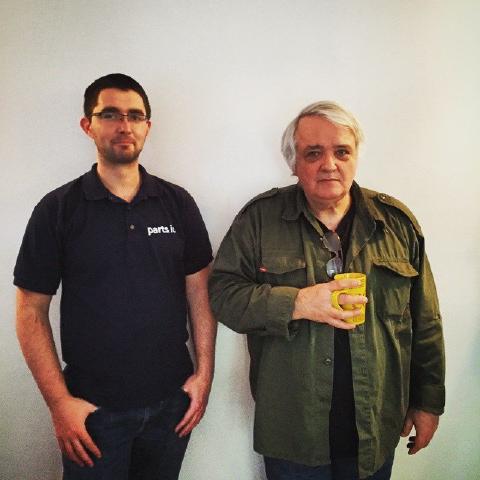
- Chris had the opportunity to interview Voja while in Belgrade for work.
- Voja is the inventor of the Galaksija computer, which was the first (legally available) computer in Yugoslavia in 1984. It was based on the Z80 processor.
- There is also a more in depth discussion of the Galaksija in Serbian that can be translated with Google Translate.
- It was illegal to import other computers that were available at the time because of the cost of the finished goods.
- Over 8,000 DIY builders wrote in to the magazine published by Dejan Ristanovic (computers in your home) to mention the article inspired them.
- The cost of components was 230 Deutschmarks, which this site coverts at 2.871 / 1$. That means it cost roughly $80 in 1984 which would cost roughly $185 in today's dollars (if this is wrong, please correct in the comments)
- They used to broadcast games over the radio station, which people could record onto tapes and then play on their computers.
- Voja will be demoing and running a workshop based around his DIY Single-chip 2D Retro Game Console at Choas Communication Congress (CCC) this year. Be sure to download and check out the (assembler) source code! https://www.youtube.com/watch?v=VbTwWFwbsE4
- In the late 90s, Voja wrote in about the Engineer's Assistant, a multitool that could do logic and protocol analysis. This became Microchip's AN689 but was later pulled because of sanctions against Yugoslavia at the time.
- Voja also wrote books such as The Guide To Critical Thinking and Patents That Won't Change The World (Wayback Machine version).
- He also talked about the Vampire Detector (also only available on the Wayback Machine), a machine with switched mirrors that allowed you to see if someone in a crowd is a vampire. This was a send up of the patent system.
- Chris didn't know about Voja's site until after the interview, unfortunately. Check out this other awesome project with an OCR system for Bingo Balls.
Transcript
Voya Antinich: This is The Amp Hour Podcast, recorded April 29th, 2015. Episode 247, with Voya Antinich, Gerontogenes, Galaxia, Genesis.
Chris Gammell: Welcome to the Amp Hour. I'm Chris Gammell of Contextual Electronics. And this week, I am by myself. Well, not quite by myself, but I am doing an intro by myself because Dave couldn't make it, but I am in Serbia, where I may have mentioned a couple times in the past episodes, here for work and doing some fun things around town. But I actually got lucky. I wasn't going to record this this week, but one of my coworkers mentioned there was someone here in Serbia who was basically invented the only computer that was affordable and available in town. Not in town, but in Yugoslavia back in the early 80s. And so we got in contact with him, and he was able to come by, and I was able to interview him. His name is Voya. Voya, and just awesome. And he's, you know, just the tinkerer, that archetype of someone who's just making because he has to. And ended up being a really great interview, and then, of course, my audio equipment crapped out on me. So not the best sound quality, unfortunately. I apologize about that, but this was kind of last minute on the road. So hopefully you enjoy it. Some great history here, and I'll talk to you after I'm done talking to Voya. Okay. So welcome, Voya. Thank you. Thank you for being here. So my coworkers helped contact you, and I'm very excited. And there's lots of history about Serbia and former Yugoslavia and the computing. And so where did you get started in electronics?
Dave Jones: Oh, it was long ago. It was maybe about 50 years ago. 50 years? Yes, yes. Very long ago. I'm almost 63 now, and I began it very, very early. I didn't know anything about digital electronics then. There was no internet, of course. Of course. I had no books, no magazines, but I started somehow. Yeah. So I had to invent some circuits. I invented Flip-Flop before I heard about it. Yeah, yeah. Also, Gertz Bridge. I invented a lot of circuits.
Chris Gammell: Yeah. So what was the first motivation, though? Was it seeing other devices?
Dave Jones: No. No. I didn't know a lot about electronics, but when you deal with digital electronics, you don't have to know too much. I don't know. Yeah. Yeah. I heard someone said, each idiot can count to one. It's very easy to start.
Chris Gammell: Right, right, right. Yeah. We have a poster, actually. We made a poster with that same phrase. Yeah. That's good. So you got started in electronics. Did you then self-taught all the way or any university education?
Dave Jones: No. No. No. So I tried, but somehow I couldn't pass the exam. So I never studied it. Yeah. Okay. So everything I learned, I learned it myself. The hard way. Yeah, but that... I'm sorry. Oh, it's okay. It's okay. Hello. Hey. Hey. Da, kaži brzo. Yes. Yes. Yes. Stremite sad. Izvini, nemogu da priče. Thank you. Sorry.
Chris Gammell: That's okay. No, it's... Our listeners now hear what I... I've been trying to learn Serbian all week. It's a nice language, actually. It's very flowing, I think. Yeah, I think so. Yeah. It was my son. He's preparing lunch and he... That's good. No, that's okay. That's okay. I switched it off. So, okay. So self-taught. So self-taught. Actually, some other people in the 8-bit computer realm, it seems like they were also very self-taught.
Dave Jones: A lot of them, yes. Yeah, yeah. I think so.
Chris Gammell: I think it's really interesting because I wouldn't have expected that. But then again, even schools didn't have... There was no school for learning about early computers anyways. At that time, there was no school. Right. So... Yes, sure. You have to make it up either way. You have to just learn and try. Maybe it was my advantage to... Maybe. Right. Right. Yeah. Because if you're in school and they want you to learn tubes or single transistor analog theory, then that can be more difficult.
Dave Jones: Yes. And you think that that's the whole electronic world. But when you do it with yourself, then you have unlimited sites.
Chris Gammell: Yeah. Right. Exactly. Exactly. So could you tell me more about former Yugoslavia? I heard there was a lot of component manufacturing here and there was a larger electronics industry in the past, right?
Dave Jones: Yes. But even at that time, it was obsolete somehow. Oh, really? Okay. Yes. It was. And when first 8-bit computers appeared on the market, you couldn't buy the computer here. It was simply forbidden. Yeah. I read online it was... The imports were restricted. Yes. Yes. It was restricted and no one cared about it. No one even knew what are the computers. Right. So you have to become the smuggler. Oh, really? Yes. And I was not only me, but all my friends had to be smugglers. Right. Right.
Chris Gammell: There was no legal way to buy the computer. Right. Exactly. That's crazy. So people were doing that. Because I also read the costs were much higher than was normal here. So like the salaries, one computer was maybe a month's salary or very expensive.
Dave Jones: Yes. It was quite expensive at that time. The salaries were pretty long here. Yeah. But of course, we bought those computers. We had them and...
Chris Gammell: So you had heard about them externally though. So that's why you wanted to...
Dave Jones: Yes. I bought the magazine in Byte. Byte. Oh, yeah.
Chris Gammell: It was a great magazine. Yeah. Yeah. Yeah. Yeah. I'm sorry that there was... Right. Well, many magazines are gone these days. I think only very few are left like Silicon Chip and a few other... What's the one? Elektor, I think, is still around.
Dave Jones: Elektor. Yes. It was German magazine.
Chris Gammell: Yeah. Right. Right. Right. Yes.
Dave Jones: It was very, very good.
Chris Gammell: Yeah. Yeah. So I mean, the whole industry is kind of changing for that, but I think that maybe all the online stuff helps supplement. So that's good.
Dave Jones: At the time, computers were computers. Now they are something... I don't know. You had to know about something about the computing to use those computers at that time. But now they are something other. They are just simply brands.
Chris Gammell: Right. Exactly. Tap to buy. Tap for buying an app. And yeah. Yeah. And now, you know, you have to... Back then you had to build it yourself and then also program yourself. And when something went wrong, it wasn't just buy something new. So that's... So let's talk about... So I'm not sure I'm going to say it right. Is it Galaxia for the computer? So this is the computer that you invented because of the restrictions.
Dave Jones: It was not my first computer. I made a few of my computers before that. And those computers were my project, original project. But when I made Galaxia, I just wanted to see how simple it can be. How simple I can make the computer and how cheap it can be if you make it yourself with your hands. And I was just once on my vacation. It was year 83. Okay. And I was on the Adriatic Sea. Okay. And it was... It's always... All my vacations are lousy vacations. I don't like losing time. I don't know what to do there. Yeah. Idle hands, right? Yeah. Yes. And I can't use my hands. So I took some notebook and pencil and just used my brain. Ah, yeah. And I made the conception for the microcomputer, which can be pretty simple.
Chris Gammell: Yeah. I saw it was mostly off-the-shelf components. Is that right? Yes. Yeah, sure.
Dave Jones: And when it came home, I saw that it works. Yeah. It just had a few chips. I used some advantages which Z80 microprocessor offers, thanks to its refresh register. I used it in some very convenient way to generate the signal, video signal.
Chris Gammell: Right, right. And that's... I read... Again, I don't know much about Z80s or even generating VGA, but I read that it took a lot of the processing just to do... Just for the video output.
Dave Jones: Sure. It took about 80% of time generating video, but you still have your 30% and it's still computer. Yeah, right. Exactly, exactly. It was slow, but it was computer.
Chris Gammell: Right. It's just a more constrained system to play with then, you know? You need to program better.
Dave Jones: I just wanted to offer it. Maybe someone else would like to build it. I didn't know. Yeah, yeah. I just put it in papers, in magazines. It was a new magazine, the first magazine which was about computers here in Yugoslavia. And that Do It Yourself project was published in the first issue of that. Oh, really? The first? Yes. Wow, wow, wow, wow. So we started. And I just didn't expect too much about it. You just thought, publish and tell people about it. Yes. And when we finished that job about... That job for that first issue of that magazine, the editor, the editor, the editor, the editor of that magazine, and Dan Ristanovic, he wrote a lot of articles in that magazine. And I said, yeah. And I said, yeah. And I said, I don't know, maybe 50 of them.
Chris Gammell: 50, yeah, right.
Dave Jones: And Dan said, well, I think that it will be at least 100. And Jova said, he said, oh, don't be crazy. There will be at least 500. And I said, no. No, I don't like it. But only a few... Let's go higher. After a few months, he took me to the same room and showed me 8,000 letters from people who made it. 8,000 letters? 8,000 letters. Yes, it's just a crazy big stack of letters. Yeah, yeah, yeah. Oh, my God. That's like a full room. Yes, yes. It was maybe one quarter of the room. Wow. They didn't know what...
Chris Gammell: But that's just people that wrote in as well. So there may have been... They made it with the reference. Yeah, yeah. Wow. So you said there wasn't as much interest, but did that spark interest? Did that make the interest? Yes, yes. So it's like one person built it, told his friend...
Dave Jones: It was just the right moment to launch such a project.
Chris Gammell: Okay. And this was 83, 1983?
Dave Jones: It was at the beginning of 84.
Chris Gammell: 84, okay. Yeah. Wow, yeah. Yeah. So, and similar computers at this time, a lot of other Z80-based computers as well? Yes, so a lot of computers. Mm-hmm. Z80A or Motorola's 65.2. Okay. So you said there was restrictions on components. Is that... Was that...
Dave Jones: Not components, but computers. You couldn't import... Not just computers, but everything that was more expensive than $500. Ah, okay. $500 was the limit that you can import everything. Okay. If it costs more than $500, then you have to be smuggler.
Chris Gammell: Really? Wow. So what was the cost of building yourself then? Like if someone read the magazine and then went and bought components?
Dave Jones: I think that we made some calculations. It was about 230 Deutschmarks.
Chris Gammell: I don't know how many dollars. Okay. Yeah, right. We'll go type on Google and find what that was then. Yeah, I think it is. Yeah, yeah. Okay, okay. So the relative though, much cheaper though, than the import limit. Okay. And so in that 20% remaining, what were people building with it? What kind of... Was it building games or word processors or everything? I'm sorry. I didn't understand. So the remaining memory, the processing and stuff like that, what kind of applications were people building at the beginning?
Dave Jones: Mostly games. Mostly games. Okay. Mostly games. Yeah, okay. Makes sense. And I made a lot of games for that computer and... Well, you couldn't do word processing at that time because you had no printers. Oh, right, right, right. Well, you could write something but you also didn't have hard disks, floppy disks. Right, right. We used Cassidy. Cassidy, yeah, yeah, yeah, yeah. And when you switch it off, then the text just vanishes. And then... Yeah. So there is no sense to use it for word processing.
Chris Gammell: My co-workers were telling me there used to be a radio station where they would play video games over the air and then you would record to...
Dave Jones: It was a great idea for my friends. Yeah. As Aaron Modley. Yes. I think that it's just beginning of a wireless. Yeah, right.
Dave Jones: Right. Yes. All those programs were kept in cassettes. Uh-huh. And it was in the audio range. Yeah, right. Certain bandwidth available. Yes. So we published those games through radio. That is so great. Yes. And so... So everybody could take the cassette recorder and record the game and use it on the computer. That is brilliant.
Chris Gammell: And so was it like... How did you know when to start recording? Was it like there was like a beep?
Dave Jones: No, there was some header. Uh-huh. There was some header which about one second of permanent tone, one kilohertz. Ah. And after that, the program starts.
Chris Gammell: I see. I see. So basically, someone would listen to the radio, hear the tones.
Dave Jones: Yes. And Zorban Modley said, now we shall have some game. We were talking about the game. Uh-huh. And the program starts. And you had some awful noise for one or two minutes. Yeah, right. And people turned on the radio when they didn't want it. Yes. But they just... Wow. They used those programs and it worked.
Chris Gammell: And I would think that would make even more people want to build computers then as well because they hear it. What is this? Oh, this is a game. And...
Dave Jones: It was the beginning of a computer revolution. Yeah.
Chris Gammell: And so, and so the... Galaxia hooked into just standard televisions as well? Yes. Okay. And the TV set. Okay. And so black and white at first or multi-color? Only black and white. Okay, black and white. There were no colors. Okay, okay. Because memory was expensive at first. Right. Of course, of course. Yeah. Yeah, that's... I mean, that is still early. What... And so we said that, not the C64 era, that was like the... Is that like Altair? Z81. Ah, okay. And after that, Spectrum. Ah, Spectrum. Yeah. Right, right. Okay. That's cool. And so you actually brought a piece of hardware here where your friend helped you emulate.
Dave Jones: Yes, my friend, Dusan Grujic made the Galaxia computer in single chip in FPGA chip. Yeah. And so he gave me... It's very small. Yeah, yeah. I'll try and post a picture. Yeah, yeah. Just like one Matchbox.
Chris Gammell: Yeah, right. Exactly. And it's got a... What is the... Is this the computer?
Dave Jones: The PS2? You can connect PS2. PS2, right. A keyboard. Mm-hmm. And VGA monitor.
Chris Gammell: Yeah. And then it's just powered by USB and...
Dave Jones: Powered through USB, probably, yes.
Chris Gammell: Yeah. Brilliant, brilliant.
Dave Jones: Very simple, but it works. It's just like original. Yeah.
Chris Gammell: And so are people still writing programs and playing with the computer? You mean now? Yeah, yeah.
Dave Jones: Well, there's a big... I saw a lot of software which stimulates. Oh, yeah. Emulators.
Chris Gammell: Yeah, right, right, right.
Dave Jones: But I don't think that anyone else...
Chris Gammell: Yes. There's a very large... I'm very surprised, actually. Like, there's a very large vintage computing community and people love it. Yes.
Dave Jones: And I am surprised and I'm very much surprised about it. You know, after some time, people were making those computers, they were interested in computers, but when PC computers began to evolve, of course, I couldn't follow the multi-billion... Right, right, right, right. Bill Gates and... Yes. Yes. Yes. Sure. Yeah. So, simply everybody forgot about my computer. They also told me, wow, what is your computer? I have a computer which can go everything much more and much faster than your galaxy. Right. So, it's a piece of shit. Right. But I think that they just didn't see the difference between having a computer and making your own project.
Chris Gammell: Right, exactly.
Dave Jones: I can go and buy a car now, but I cannot make my own. Right.
Chris Gammell: And even repairing these days, everything is so finished assemblies that you can't open. You know, like, they don't allow you to open or there's so many computers inside it, they're unable to... You can't program it, that kind of stuff.
Dave Jones: I had about five or six prototypes for the galaxy because we had to describe somehow that do-it-yourself process. We took a lot of photos and I just produced a lot of prototypes for the galaxy. And I had those prototypes, I kept them somewhere, but in year 95 I simply throwed them.
Chris Gammell: Oh, they threw them away? Yeah.
Dave Jones: Yeah, I threw them away and I didn't have them anymore. But after some time, the community began to evolve, the community which were interested in those obsolete communities. Yeah, right. Retro computers. Yeah. And they asked me, what happened with your computer? I threw them away and someone said to me, oh, that's a pity because the museum asks you for one computer.
Chris Gammell: Yeah, the Computer History Museum? Yes, yes.
Dave Jones: The History Museum here in Belgrade, they asked me for one computer. Luckily, I found one of them in my cellar. Oh, you did? Oh, good, good. Yes, I did. It was still operational. I gave it to them and now they have it in the museum. It's still working? Yes, it's still working. Oh, wow. So it's a great honor for me to be in the museum. That's amazing. Yes, it's a really great honor for me. Yeah. And I'm happy that I didn't find that one.
Chris Gammell: Right, right, exactly. The cleaning was only in certain parts of the house, right? Yeah. So what were some of the other chips? So the Z80 was the main processor. Yes. Was there other peripheral chips that were required? No. So just Z80? No.
Dave Jones: A chip Z80A, some RAM memory, some EEPROM memory.
Chris Gammell: Okay, okay.
Dave Jones: And just a few, maybe five or six chips more, which some buffers. Right, right, right.
Chris Gammell: Simple.
Dave Jones: A lot of jobs were done in the software of Z80. That's all.
Chris Gammell: Okay, okay, that's good. So, and then when people were assembling these, were they able to buy a circuit board to solder to?
Dave Jones: Yes. There was one factory which produced those circuit boards, PCBs. Yeah, right. Printed circuit boards and then sold them. Okay. And they also sold, later they sold the components for Galaxy Computer. Ah, yeah. And I think that they earned a lot of money. A lot of people, except me.
Chris Gammell: You earned the pride and the, yeah, yeah. Yeah, yeah, yeah. It's quite enough for me. Yeah, right. Well, that's good though. I talked to a coworker. He said that he also used your EEPROM programmer or emulator or something at some point, a different project. Maybe not for the Galaxy yet. I made my EEPROM programmer.
Chris Gammell: I think it was maybe a later one. He said he used to use...
Chris Gammell: Ah, yeah, yeah, yeah, yeah. Okay. Maybe EEPROM emulator. Ah, yeah, yeah, yeah, yeah. Maybe. I made a lot of EEPROM emulators at that time.
Dave Jones: Yeah. Because you had no flash memories then. Right. We had to burn EEPROMs and to erase them by ultraviolet. Right. It was a very slow process. So I made some EEPROM simulator. So that project which is under development process sees that emulator write EEPROM. Ah. Ah. had to burn EEPROMs and to erase them by ultraviolet. It was a very slow process. So I made some EEPROM simulator. So that project, which is under development process, sees that the emulator write EEPROM. The computer with assembler, which serves for that development process, sees it as RAM.
Chris Gammell: Yeah. So basically, it was like feeding opcodes from one computer to another. And so it looked like an EEPROM. Yes. Ah, that's good, though, so that you don't have to turn the EEPROM many times.
Dave Jones: Yes. I still have that emulator, but of course, I don't use it anymore, because no one uses EEPROMs anymore.
Chris Gammell: I hear a lot of... Actually, my old job, we were still using the light for supporting older projects, especially. Is it? Yeah. So, I mean, yeah, they still exist, especially industrial equipment. Their stuff is 30, 40, 50 years old. I mean, it's crazy. It's early, early stuff. So that's great. So what are some of the other projects you've been working on since then? I mean, so Galaxia started to change and...
Dave Jones: Yes, but I made a lot of projects. I published them in all computer magazines, which began to appear at that time. Yeah, yeah. I think that I have more than 50 projects. Maybe between 50 and 100 projects. Wow.
Chris Gammell: Which were published at that time. Was this still when you... Did they pay for publishing as well? Did they pay you for...
Dave Jones: Just...
Dave Jones: Just... Just... As... I don't know how to say it. Just as if I wrote...
Chris Gammell: Yeah, right. If you... An article for the magazine. Right, right. It's not like they paid for the hardware. It's just... No, no. Just one article. Yeah.
Dave Jones: Just for the...
Chris Gammell: 10 bucks, 20 bucks. If you wrote about your project or you wrote about the book you read and that idea. Yes, that's true. Okay. Wow. So what are some of the older magazines? Because maybe we could find some of the...
Dave Jones: There were... Racunario Vashoi Kuchi computers at that home. Computers in your home. It was the first magazine here. Then The World of Computers, Mind Micro. I think there were five or six different computer magazines.
Chris Gammell: Okay. Wow. Wow. Yeah. That's good. So what are some of the... And these are all based around microcontrollers, the projects themselves, just for different tasks?
Dave Jones: I think that I was the only one who published the projects with microprocessors. Really? Yes. Oh. And then... Maybe still I am here in Serbia. Yeah. Why is that? I don't know. No? No. Yeah. I don't know. I think that a lot of people who can do that just simply went away, went somewhere to the West, America. Oh, maybe. And there's not a lot of people here.
Chris Gammell: It seems like there's a lot of higher level software here. There's many people that are very good at higher level software. But I know that universities especially, I'm talking to someone from the university tomorrow, I think, and they have some microcontrollers, but maybe not publishing about it. So maybe that's the big difference, is they don't want to share it. But you've always been very open to sharing. You've written books about patents and other... So you've always shared your projects. Why did you do that? I don't know. Why not? Why not? Yeah, sure, sure. Yeah. And so then people wrote to you and told you... Yes, a lot of people.
Dave Jones: I had a lot of contacts with people. That's good, yeah. Which I was grateful. Even a lot of people called me from USA or from Western Europe and they say, thanks to you I became engineer, programmer, and so on. Because at that time no one knew anything about computers and they just learned through my articles and through my projects.
Chris Gammell: That's awesome. That's amazing. And actually, so one of my co-workers was the one who asked about the EEPROM program or emulator. He was one as well. And yeah, he's very successful because of you. Wow.
Dave Jones: I'm glad to hear it. Yeah. I'm always glad to hear it.
Chris Gammell: Yeah, that's great though. And I think it was very uncommon then as well, right? Because there was a lot of industry based on electronics and there was money in it. So the fact that you weren't doing it just for money was different.
Dave Jones: Well, I still don't do it for money. Yes, I do it for money. I do projects which are ordered just and they are paid for money. But I'm not rich. I'm not rich. I just earn for a living and it's quite enough for me. I have my four walls. I can sit there and work just for my pleasure. Yeah. Not because someone ordered it but just for my pleasure. And when you work for your pleasure, then you have pleasure. Yeah. Yeah. And someone else works for money and he has money. But...
Chris Gammell: Right. And there's less of the good feelings around that than the building. And that's... I think that our audience is... We have 10,000 listeners right now so far. And I think many of them will identify with that feeling because there's lots of people that are similar. They have their four walls or in my case, I'm in a basement, my basement walls. And it's just about building and learning and that need to keep going. You know, like when you said with the vacation. Yeah. Keep building. Keep it. It's a part of identity. You know? So...
Dave Jones: I'm sorry that there is not a lot of people here which feel it in the same way.
Chris Gammell: Yeah. Maybe there are though and they're just... That's, I think, one of the things the internet helps is it helps point people out. You know? There's no social center for it. So that changes things. So what about the other... So I know you don't like your Wikipedia article but I am interested in some of these things. So like the Conway's Game of Life, a lot of people use those as... That is as an early programming project. But it said on here that it was going for like 20 plus years or something like that or...
Dave Jones: What...
Chris Gammell: It's... Sorry, I'm reading, like I said, Wikipedia. So it was...
Dave Jones: The Conway's Game of Life was my first project with microprocessors. Oh, it was? Oh, wow. Which I ever made with Z80. Ah, okay, okay. I bought through... I ordered two Z80 microprocessors from USA. I remember they were $20 each. Whoa. And one of them was fault. Yeah. Oh, really? Wow. But with the other one I made my first Game of Life project with 16 times 16 with 256 LEDs. Yeah. And it worked. Nice.
Chris Gammell: And I still have it. You do? And it's still operational? It still works. Wow, nice. That's awesome. Yes. That's awesome. And so then also you were involved with the sports, with the winter sports and doing the timing system?
Dave Jones: Yes. It was for... I made five different timing systems for winter sports. For...
Chris Gammell: Like racing?
Dave Jones: Yes, for ski racing. And they were official timing machines for some... For some racing, I don't know. Like skiing maybe? For skiing, yes. No. But for... For contests. No, I'm sorry.
Chris Gammell: Was it like the Olympics or not? Not Olympics. Like the... Was it around the Olympics? Championships. Ah, okay. So like the professional league. I see. I see. Okay. So... And like when you were doing that, I know today I can go and buy a real-time clock for... You know, that's accurate to a couple, you know, nanoseconds, microseconds, that kind of thing for very cheap. How did you actually maintain the time with the older...
Dave Jones: I made just oscillators by quartz crystals? Yeah. Nothing more than that. Okay. You didn't need high accuracy for those.
Chris Gammell: Ah, okay. Okay.
Dave Jones: Because you had only one or two minutes. Oh. With one hundredth of a second resolution. Ah, I see. So you have enough accuracy in one quartz crystal.
Chris Gammell: To divide it down, that kind of thing. Yes.
Dave Jones: About 10 ppm accuracy is quite enough for that application.
Chris Gammell: I see. I see. I see. That's good. No, that's good. So, how have you been seeing things change over time? I mean, obviously, the industry has changed in Yugoslavia. No. So, what has changed?
Dave Jones: I was very disappointed.
Chris Gammell: Yeah.
Dave Jones: About the computer industry and the way it changes. I was very disappointed. At first, I was disappointed when the first Windows operating systems appeared.
Chris Gammell: Yeah.
Dave Jones: They were, well, normally, they wanted a market and they knew that they had to make the simple enough graphical user interface just to get that market. Yeah. To appear on that market and we succeeded. It's normal. But I don't like it. I just want the computer to be computer and not to be, so.
Chris Gammell: Yeah. You want the actual, you want the electronics part of the computer, not the tool that is, right? Yeah. No, no. I understand that. And so, did the change in Serbia, Yugoslavia to Serbia, did the availability of local components change over time as well?
Dave Jones: Yes. You can buy those components here. At that time, I had to travel to Munich 1,000 kilometers. Really? Wow. To buy those components because I couldn't find them here. Now you can buy everything here. Yeah.
Chris Gammell: That's good. That's good. Yeah. Crossing borders to get components. That's dedication. No need anymore. Yeah. Yeah. That's good. That's good. So, that's good. And so, you still develop with a lot of microchip parts. I saw the app note that you wrote. Can you tell us about the app note? What's it called? The engineer's assistant? Yes.
Dave Jones: Engineer's. Well, this is a project for some combined. It was also the single chip project for some instruments which includes logic probe, logic analyzer, serial protocol, RS-232 protocol analyzer, and a few more instruments, just single instrument which you can hold in your hand. It was very small. It was just like logic probe, but it had a lot of functions built in. And at that time, those microcontrollers were very poor with the program memory. They had only one kilobyte.
Chris Gammell: Yeah. Right. Right.
Dave Jones: And I managed somehow to build all those functions in one kilobyte. Yeah. Wow. That's...
Chris Gammell: Yeah.
Dave Jones: And I just wrote a letter to microchip, and they said, whoa, we don't believe this. I believe that one kilobyte can have so much functions, so many functions built in. They asked me to build one and to send them my post. Uh-huh. And I did it. They said, everyone was fascinated about it. And please, can you make us five more samples? Uh-huh. Yes, and send us. Okay. And I did it. And I sent them. They used it on their conferences just to show how...
Chris Gammell: Yeah. How much you can fit in one.
Dave Jones: How much, yes. Yeah. Compress in one kilobyte of program. And as the compensation for that project, they had to send me some development system for microchip controllers. Uh-huh. It was a deal. So, I did everything. I made the description. I made it as an application note. And when the time came for them to send me that conversation, then they just said, we are sorry, but you are under embargo and we cannot conduct you. Oh. And the next year... Because this is late 90s. Yes, yes. There was late 90s. Yeah. Next year, we had the bombing here. Right, right.
Chris Gammell: Yes, yes, yep.
Dave Jones: And maybe eight or nine years after that, they sent me something. Oh, really? Yeah. A lot of times. Okay. I had to protest a few times. Yeah, yeah, yeah. And at last, they sent me that, which I was not interested in. Yeah.
Chris Gammell: Yeah, that's unfortunate. Yeah. Oh, man. So, how did you fit that much into one, I mean, that one case? I mean, I'm guessing it's all hand-coated assembly. Yes, assembly. Yeah. All my projects are in assembly. Okay, okay. And so, I mean, I see that there's still a lot of assembly that's done for small, low-power type of projects. But do you hear about people still doing a lot of assembly and writing to you about it?
Dave Jones: No, no. They are confused when they hear that I work in assembly. Yeah. They are pretty confused. They say, but why? But I just, I'm a hardware guy. And when I use assembler, I'm pretty close to that hardware. And I feel better. I have a lot of freedom to do anything I want. Right, right. So, I can make the programs which execute in high speed. I can generate VGA signals. Yeah, yeah. Some audio signals also and all that in real time. Mm-hmm. So, I don't see why would I use higher language. I know. I see people. It's something which someone else made, not me. Right. It's just, if you are sculptor, if you are the artist sculptor, is it the correct word? Yeah, yes, yes. If you are sculptor, you can make some of your sculptures just from a stone. You know how Michelangelo works.
Chris Gammell: Yeah.
Dave Jones: Yeah, marble and the chisels. Yeah. Yes. He has some hammer and it was not easy for him, but he made valuable sculptures in that way. Mm-hmm. But now you can take Lego cubes and make the same thing. That's a higher programming language for me. I like that analogy. It works. You can make it. It's very easy. Right. But it's something that someone else made. Right. And David would look really blocky. I'm sorry for my English. No, no. That was a great description.
Chris Gammell: That was a beautiful description. I'm imagining a Lego David now. Yeah, yeah. That's good. No, and I think, so what do you think is a good, I think there's people interested in it. Personally, I only do see, I've never done Assembler and, or maybe very little. And it's always kind of scary for me now. So what do you suggest as a good, a good project to start with? If you're just, maybe you're using a pick, like you use many pick parts. What's a good project to get started with that you like as a simple project?
Dave Jones: Project, do you mean for Assembler or for anything?
Chris Gammell: Either is good, but I think for, yeah, for learning Assembler or something that's, okay.
Dave Jones: Well, if you want to do your projects with microcontrollers now, then you should start with Blinkled project. Blinkled, okay. Blinkled is something like Hello World.
Chris Gammell: Yeah, exactly. I have a thing.
Dave Jones: When you make that project and when you make it work, when it starts to blink that light, then you make the great step, great leap. Yeah, yeah.
Chris Gammell: It's like you're changing your environment, right? Yes, yes.
Dave Jones: It started to work. Each other step will be just quantitative, not qualified. It's not, it brings you no, no, you made the new quality when it started to blink.
Chris Gammell: Yeah, right.
Dave Jones: But each new project will just be not, not, not, not so.
Chris Gammell: It's like a derivative of the blink, right? That blink is the first thing and then everything else is.
Dave Jones: It's the first thing. Yeah. You can, you can, you, soon you will get new ideas.
Chris Gammell: Ah.
Dave Jones: What you can make. You'll see, you'll see ideas. First you have to make the first.
Chris Gammell: Ah, yes. Okay. Yeah, so start simple, get the blinking and then, and then see where other things need to start. Like a light switch now, you can make the light switch go on, you can turn a relay on. Yeah. Okay, that's good. That's very good advice. Yeah. And so you're still developing with, with microchip parts, so pick parts, even after, some of the messiness that happened.
Dave Jones: Well, it doesn't matter. Yeah.
Chris Gammell: Yeah.
Dave Jones: Yeah. I still use them and I, I love using them. Yeah.
Chris Gammell: How did you get started with them? Because you were at Z80. What made you move over?
Dave Jones: After Z80, I first started with Intels. Ah. Uh-huh. Uh-huh. Uh-huh.
Dave Jones: Uh-huh. Uh-huh.
Chris Gammell: Uh-huh.
Dave Jones: microcontrollers. So it's much, much easier to use microcontroller than microprocessor. Right, yeah. And it's much easier to become the development engineer now than it was maybe 30 years ago.
Chris Gammell: Yeah, right, because you don't need to buy full systems or build full systems. You just buy one chip and then just the proof.
Dave Jones: And you have everything.
Chris Gammell: Yeah, yeah, that's very nice. So speaking of, if you don't mind, tell me, what is the name of this project on the table?
Dave Jones: I still don't have name. It's the retro game. I planned to use it on CCC at Hamburg, CCC 32 this year at Hamburg as the workshop, do it yourself project.
Chris Gammell: Right, so you will have the PCBs ready to go, people start?
Dave Jones: Yes, yes. It's a small PCB, single chip project with one microchips, microcontroller, BIC.
Chris Gammell: 24?
Dave Jones: Oh, 24, okay. Yes, 24, it's 16-bit processor. It was not supposed to generate VGA signal, DEC signal or audio signal, but I simulate it by software. So now it generates 16-color video signal. Mm-hmm. It even supports sprites. Oh, really? Yes. Wow. Just like old games. Yeah. Some 8-bit computers. Now you can build it yourself. It's only in one chip. I made one game at that moment. I hope that I will make some more before CCC. Yes. Maybe. I don't know. Right. Time-wise.
Chris Gammell: Yes, yes. Yeah. It's amazing how soon December feels already, which is when CCC is. Yeah. And so you've designed the PCB as well?
Dave Jones: Yes. I designed my PCB. I will take my PCBs there and offer them for a workshop. Yeah. And
Chris Gammell: you'll be working with Mitch Altman as well? Yes.
Dave Jones: Right. It was Mitch Altman's idea to ask me to make some project for that workshop. That's great. Then I got the idea to make this. This is a retro game. It's a two-dimensional game. This game is the old Spectrums game, which name is Jumping Jack. Yes. And I saw a version of
Chris Gammell: it and it's very difficult to play, but it's beautiful colors and good music. You've added music to it. It's very, very impressive. So when you are generating the VGA signal, is it using DAC output? Is that how you do it? Or is it using just like bit flipping on single
Dave Jones: channels? No, there is no DAC output. There's no DAC. Okay. No. It's just binary output. And I just made some tricks with resistor letters to generate some shades of those. Yeah. Yeah. Yeah. You just need the full intensity and half intensity
Chris Gammell: on the back. And that's enough to generate a bunch of them. Right. Right. Right. That's enough. That's sure. That's great. That's great. And so, yeah, like I said, the CCC is in December. I think there would be many people that would be interested in this workshop.
Dave Jones: I hope so. I think it'll be very popular. I hope so. Yeah. It's very simple game. It's small. It's not bigger than one cigarette box. Yeah. Right. Right. Yeah. Yes. It's on single PCB with single chip. You just have some keys for cursors. Yeah. A nice laser cut
Chris Gammell: cover on it as well. Yeah. It's very simple. Yeah. I think, yeah, I think that'll be very good. That's good. So, I also wanted to ask about, I was looking at some of your, you write books as well. Yes. So, can you tell us some of your books and what they're about? Because... But they are not technical books. No, no. That's okay, actually. So, unfortunately, my co-host couldn't be here. But I saw that some of these books are about critical thinking and being skeptic. Yes. And this is also a very interesting thing for us. I mean, obviously, this is closer
Dave Jones: to the end of the show. Yeah. You see, you have to know the situation here during 90s. Ah, right. Right. Right. Yes. There was, there were a lot of astrologers here. Ah, yeah. And Halei Royans. Ah, yeah, yeah, yeah. And, uh... It's frustrating, huh? Yes, yes. And prophets in the air in the air in the air in the air in the air in air in air in air in air in air
Dave Jones: in air in air in air in air in air in air in air in air in air in air in air in air in air
Dave Jones: No one... Each time when you switch on the TV, you could see a radio. You could hear everyone speaking about those dark things, about prophecies, about astrology, and so on. But you couldn't hear anyone speaking from the position of...
Chris Gammell: Science and reason. Science, yes.
Dave Jones: Logic. And I just wanted to make some move. I thought that maybe someone will think, well, if that guy thinks just... Like, I think maybe I'm not crazy. Yeah, yeah, yeah. Find other people, right? Yeah, yeah, yeah. It was very successful. Yeah? Oh, good.
Chris Gammell: Time, yes. I read about attaching the divining rug to the binding of the book. Yes, yes, yes. That's very interesting.
Dave Jones: But you just have to demonstrate that there is some psychological mechanism which works, which moves that rug or that pendulum.
Chris Gammell: Yeah, yeah, yeah. And so, then also about patents, you wrote about patents as well. So...
Dave Jones: I wrote about them, but I don't have my patents. I never patent anything in my life. Everything that I... Each of my projects is in public domain.
Chris Gammell: Ah, right, right. Just from publishing and releasing in the world. Yes. So you wrote about other ones that are silly patents as well? Yes, yes. Any particular ones that we should look at in there?
Dave Jones: Oh, I don't know. I had one my patent. Uh-huh. My patent is the detector for vampires. And how does that work? Yes. Just a little... You see, people believe that you cannot see a vampire in the mirror. Yeah. You know about that. Yes, yes. So, if you take one box and if you see the scene in front of you, which is reflected by two mirrors in the box.
Chris Gammell: Uh-huh.
Dave Jones: Okay, yeah. You can see the normal picture. Okay. But you cannot see a vampire because there are mirrors inside. But when you press one button, you shall remove one mirror and see the normal scene. Ah. So, if you periodically press and release that button, and you look at a group of people, then the vampire will blink. It will blink.
Chris Gammell: Right. It will come in and out of the picture, right?
Dave Jones: It will blink. All people will appear normal, but the vampires will blink. So you can detect vampires in the group of people. Of course, it was a joke. Yeah, of course.
Chris Gammell: Did you ever build the box or no? No. Just the patent. But that's the important thing is that patents don't need to be built, which is ridiculous, right? It's like…
Dave Jones: Well, it was not built. It was just the conceptual idea. Yeah.
Chris Gammell: And I'm not afraid of the vampires.
Dave Jones: Ah, that's great.
Chris Gammell: So, what is in the future for you? I mean, you have your kit. Are you building other projects that you're very excited about right now? Yes.
Dave Jones: I just… I don't know. I don't think about the future. Yeah. Are you interested in any of the…
Chris Gammell: I mean, right now, with microcontrollers, there's a lot of internet connected type stuff. Is that interesting at all, or is that more just not your style?
Dave Jones: No, I use the internet just like each normal person. Ah, yeah. The only thing which I don't want to do is to get back to Facebook, to Twitter. Oh, yeah, yeah, yeah. I don't like that.
Chris Gammell: Right, right. No, no, I meant getting your projects communicating to the internet, so like broadcasting from sensors, or… Have you looked at that at all? No, no. No, no. More localized.
Dave Jones: I made my site now, and I began… I just began to publish some… to describe my patents in detail. Not patents, my projects in detail, and just to offer them also as do-it-yourself projects.
Chris Gammell: Oh, good, good, good, good. Yeah, so hopefully people can go and read about other good projects and stuff. Yeah. Awesome. Well, thank you so much for being on the show. I'm so lucky that you were available, and that you said yes, and I very much appreciate it. Yeah, I see. I think that it's good history, and I'm very, very excited for this project. I think people would very much enjoy it. Oh, thank you. Great. It was a pleasure. Okay. Thanks. Thank you very much. Thank you. I know that I don't usually do intros and outros for the show, but I felt like I had to. One, because it was a little bit shorter than normal, because he had to go, and we had to discuss some other things around the office, but I also wanted to call out the fact that I didn't actually know what his personal site was before the show, so I was looking at the wiki pages of the Galaxia and his site and stuff like that. And the wiki pages, like he said, is not his favorite. Anyways, voya.rs, that's the site. If you're just listening, I'll have links in the show notes as well. And he publishes everything. Like, this guy is one of the, you know, Dave talks about all the time about people have been doing this for a long time of publishing their projects. If you talk to people in the Balkans or even in Europe or US or anywhere else, you know, he is the guy. Like, this is someone who is extremely influential and a lot of people getting into electronics, so definitely a great story. And definitely, he's still doing amazing projects. Like I mentioned, you know, I'll upload the video of this thing that he made as well. And it's just killer. I mean, it's just like this beautiful single chip computer and just the fact that he's doing all these things in assembly and generating these images and you can go download the code and look at it and learn from it. So highly recommend doing that and highly recommend checking out his other stuff. His books and everything are really fun too. He's kind of the skeptic style. So I'm really appreciative of my coworkers for helping me get me set up with this. I definitely would have never, I don't know how I ever would have talked to Voya otherwise. And so it's just, I got lucky for this. And yeah, we'll be back next week with a, you know, another set of interviews and another fun show. So thanks for listening to the Amp Hour. See you then.
Speaker ?: Bye.
Archived Discussion (8)
Comments are closed. Archived from the original site.
Show archived discussion (8)Hide discussion
Keep current
Every episode, plus the occasional job post, in your inbox.
Interview Slobodan Ćuk, next!
Also, there was not a 'ban on importing computers' in former Yugoslavia - it was a by-product of a (stupid) government policy of trying to stop the drain of foreign currency. The customs law prevented a legal import of any goods that cost more than 100 DM (German marks, about 50 Euros in todays money). Since the cheapest computer at the time cost more then 100 DM, you couldn't legally import a computer.
Galaksija the computer may sound primitive, but one also has to realize that for the time period it was actually pretty good. I personally purchased a smuggled ZX Spectrum 48k, which was my first computer.
The recent global rebirth of the maker movement is starting to feel very similar to how those years were in ex-Yugoslavia.
http://media.ccc.de/browse/congress/2012/29c3-5178-en-the_ultimate_galaksija_talk_h264.html#video
surprisingly Voja did NOT mention it - which is close to a scandal.
Right at the beginning Tomaz Solc lays out his motivation for the Galaksija talk. It was Michael Steil's "the ultimate commodore 64" talk:
https://www.youtube.com/watch?v=fe1-VVXIEh4
As well worth every minute.
Grüße aus Deutschland