
#217 – 3D Printed Shark Jumps - Edifying Edison's Energy
Download episode · 38 MB
Also on Apple · Spotify · YouTube · RSS
Show Notes
- Dave has been dealing with people saying he has changed. He proved them wrong by doing a simple calculation.
- Chris just returned from Maker Faire NY. He decided to go after the discussion last week.
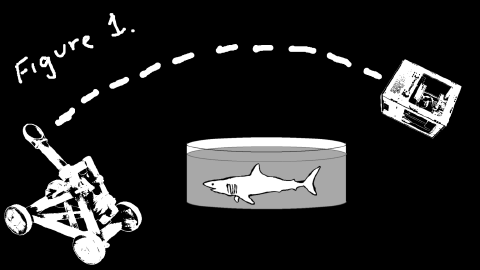
- Former guest of the show Ryan O'Hara and Chris discussed the multitude of 3D printers and how they may have jumped the shark (see above)
- GE paired with FirstBuild to let users "hack their fridge".
- FirstBuild will be launching the Green Bean on IndieGoGo in the coming months. Chris encouraged them to do a self starter instead and it got awkward.
- Dave is now a government adviser! (sort of). They were asking about crowdfunding and will be publishing a report about how that can affect the economy there.
- There is a often-cited report on the main EEVblog site.
- Dave also got to try out a Tesla! Check out his footage on his secondary channel (EEVblog2). http://www.youtube.com/watch?v=6RRKWORDPxM
- The Intel Edison has some very impressive specs (dual core Atom, Quark microcontroller, wifi, bluetooth, runs linux). However, it consumes 20-30 mA in it's "off" state (though we didn't have exact numbers on what that state is and what it involves).
- Sparkfun is working with Intel on helping get the development boards and education into the hands of hobbyists and engineers. Former guest (along with the rest of the Sparkfun Engineering team) Mike Hord was there showing some of the new features.
- Chris also got to try the new tool from Altium, CircuitMaker. He was told that once the design is downloaded, it will be cached locally (allowing you to work on layout). However, if you need a new part, it seems that the libraries will all be in the cloud.
- Lots of devices and device makers are moving upmarket with more sophisticated offerings. People that are just trying to sell electronic assemblies (with no case, firmware, software, marketing, etc) may find themselves outmatched by an increasingly crowded and sophisticated set of veterans.
- EMSL showed off an impressing version of this with their new machined EggBot.
- The SeeMe CNC Part Daddy was an impressive feat though it was "just" an open frame 3D printer...because it was 15 feet tall! Wowsa! http://www.youtube.com/watch?v=MRL5IVQdcw4
- Dave thinks the eventual move towards increasing levels of sophistication means melted plastic is out...printing with LEGO blocks is in!
- Former guest Adam Wolf and Matthew Beckler (of Wayne and Layne) showed off a cool new script for KiCad that allows the .POS files to be pushed directly to the low(ish) cost Pick'n'Place machine. They also showed a pretty zippy version of assembly: https://www.youtube.com/watch?v=ughvx2P5CW8
- Solderpaste stencil squeegying is fast, but there are solderpaste printing machines out there that are amazing. http://www.youtube.com/watch?v=gK_AdDDQ1SI
- Another small run assembly shop is coming online soon called MacroFab.
- There were other former Amp Hour guests there this weekend: Jason Kridner, Ian Daniher, Trey German.
- There is a new SMU kickstarter in the works called Xtralien
- Chris was interviewed by former guest Martin Lorton on his show. They talked about the voltage feedback in a power supply. https://www.youtube.com/watch?v=VlZIcD2WX5c
- Have any listeners ever signed up for classes or a university program at a tradeshow? How did it work out? Please let us know in the comments.
Transcript
Dave Jones: This is The Amp Hour Podcast. Recorded September 22nd, 2014. Episode 217. Edifying Edison's Energy.
Dave Jones: Welcome to the Amp Hour. I'm Dave Jones from the EEV blog.
Chris Gammell: And I'm Chris Gammell of Contextual Electronics.
Dave Jones: Just us again. You're bringing that up, aren't you?
Chris Gammell: Yeah, yeah.
Dave Jones: Yeah, yeah, we're scaring them away.
Chris Gammell: Mm-hmm.
Dave Jones: We'll get back to it eventually. We're being busy and lazy and, you know.
Chris Gammell: I think the latter is the real one, yeah. Right, okay.
Dave Jones: Oh, goodness. Yep. Speaking of which.
Chris Gammell: Speaking of lazy.
Dave Jones: Speaking of lazy, there's been a whole bunch of comments recently. I just copped it again on Twitter just before the show about, yes, I'm going to have a rant, about people who complain that I'm lazy, which I am, fair enough, you know.
Chris Gammell: All good engineers are, right?
Dave Jones: Exactly. Exactly. That the, you know, the blog has changed and, oh, blah, blah, blah, it's not as good as it used to be. And I've turned my back on, you know, what it used to be. Yeah, exactly.
Chris Gammell: I was there before it was cool.
Dave Jones: It's just, you know, come on, people. It's just a broken record, really. I mean, it's just ridiculous. It's totally unwarranted.
Chris Gammell: And I have proof. And you proved it with a graph, as an engineer would do, right?
Dave Jones: Well, I got some data because somebody asked this on, it came up, there was a big thread on one of my previous recent YouTube videos. And somebody just out of the blue, you know, commented that, oh, you know, I can't remember. But, yeah, glory days are gone. And, you know, I'm just doing mailbag and tear down. And, you know, I don't do educational tutorial videos anymore. And I went, okay, you know, fair question. Let's go look at the task.
Chris Gammell: Yeah.
Dave Jones: You know, let's go actually look. Is it just in your imagination or has, you know, are things really changed? So I went and actually looked through my first 50 episodes, which many people regard as the glory days, you know, the golden years of the blog when it was the best, you know, in quote marks. Right, right, the best. The worst. Video quality. Yeah, exactly. And video, audio, yeah, it was pretty awful. Anyway, so I went through the first 50 videos and I listed through, you know, what topics that I talked about and stuff, you know, and I marked them off in all different categories. And I went through my last 50 videos. And as it turns out, you know, all the talk about, you know, I don't do tutorials and technical videos anymore is pretty much not true. I do. Yeah, it's kind of true. They have dropped in the number of them. But that's to be expected, given that I've now got regular segments like Teardown and Mailbag, which is incredibly popular. And if you don't like Mailbag, well, sorry, too bad. Don't watch them. There's a lot of people who do. So, you know, I'm going to continue to do them. So anyway, so naturally, given that I now do a larger range of videos, it's natural that, you know, the technical stuff is going to drop a little bit, but it hasn't dropped by a huge amount, which people seem to think. So anyway, there. No, no. So. That was your rant, huh? Come on, guys.
Chris Gammell: That's it. You know, the rants aren't quite like they used to be, folks, I have to say.
Chris Gammell: They're not. They used to be so much more impassioned. Yeah. I remember a time when the EV blog rants were something to behold.
Dave Jones: Well, that's true. I have stopped the rants. The rants have stopped. There's a lot of reason why I can't do the shouty, angry ones anymore, because I've got neighbors now, you know. They can even hear me doing this show, almost certainly. You know, it's not like I can shout and scream and go red in the face like I used to in my garage. Well, there you go. So, yeah, yeah. Sorry about that. But, yeah, not too many things have changed at all. And it comes down to psychology. You know, people always remember, you know, a couple of really good episodes that they particularly liked and thought that I did them all the time. And the longer the time period goes, you know, they just remember with fonder times. You know, it's like I once caught a fish this big, you know. Yeah. And the fish just gets bigger and bigger with time. And so does my supposed, you know, glory days and, you know, what my blog was really about. Because people seem to think that they know what my blog was always about, you know. And you're wrong there, too. It was never an educational channel. It was never, you know, a tutorial channel. You're just wrong. I'm sorry.
Chris Gammell: It was whatever Dave wanted it to be.
Dave Jones: Exactly. It was designed as just a weekly kind of show where I just talked about anything. You know, random stuff that I happened to be working on or something that popped into my head or whatever. It was never a tutorial or educational channel. So, you know, yeah. These people are just wrong. And anyway, it's not many people are complaining. But when somebody starts, then everybody jumps. And by everybody, I mean, you know, the few other dozen who are ticked off, you know. Yeah. Or sort of a bit. Yeah. And it's the same old thing. You know, you can't please everyone. It's impossible. And, yep. Anyway. There were some interesting stats, though. Somebody pulled all the stats of all the technical engineering channels, right, on YouTube. They pulled the stats down. Oh, that's interesting. You know, the likes, dislikes and stuff like that. I'm not sure if you saw that. It's in the forum. No, I don't think so. Oh, I have to link to it. And, yeah. And it turns out that I've got a three-point, I think. I don't have it in front of me. But it's like, so from memory, 3.3% thumbs down to thumbs up, you know, like to dislike ratio. And I went, holy crap, that's actually pretty good. Yeah. I expected a lot more, you know. But, no, you know, somebody ran a script which pulled all the numbers. And it turns out the blog that does the best is Alan. Alan Walkie's.
Chris Gammell: Oh, yeah. Right.
Dave Jones: Which is not surprising because he does very niche, you know. So, it turns out, you know, the results aren't really surprising. There is one surprise, which I'll talk about. The ones that stick to their niche, you know, that sort of start out in a very, you know, narrow field just doing like sort of, you know, technical, short technical educational videos like Alan kind of does. And, really, he hasn't changed the formula. So, you know, when you subscribe, you know that every video is going to be exactly what you subscribed for kind of thing or almost, you know. Well, yeah. And they're always good too, yeah. And, yeah. And that's not surprising. Whereas my channel's never been like that. It's always been. I've got like, you know, like 10, I think it's at least 10 different segments that I do kind of, you know, or topics that I might kind of touch on. You know, I do reviews, tutorials, technical stuff. I do rants, myth-busting advice, stories, show visits. I do interviews. I do off-topic stuff. I do miscellaneous stuff. I do retro stuff. I do teardown stuff. I do repair stuff. I do dumpster diving. Oh, you know. And so, yeah. So, naturally, my channel is going to be the worst in that respect of trying to, you know, please everyone. Because, you know, somebody might subscribe just for my tutorials. Or they might subscribe just for my product reviews. Or they might subscribe, you know, just for my retro teardowns. And, yeah. So, sorry. You just got to accept the fact that it's a general channel. And I can't always make videos that you like.
Chris Gammell: You never do, man. No, exactly. No, actually, I did like your video on the Piazza stuff. Or not Piazza, the Peltia stuff. Thank you very much. Yeah, that was cool. Yeah, that was fun. What was the prompt thing? Just for getting, was it because you got that kit?
Dave Jones: Yeah, that was just like my blog always has been. Yeah, spontaneous thing. I'm kind of sort of working on a project. Oh, cool. That requires something like this. I can't talk about it.
Chris Gammell: Well, obviously, it's not a beer cooler. No, no.
Dave Jones: It's not a beer cooler. No, it's a fun little side project that, yeah, I'm working on with someone else. Oh, cool. Anyway, yeah. Yeah, we just wanted to know how much, just as ballpark, what we could get out of these little Peltia coolers for a given temperature differential, for an amount of heat pumped through. And yeah, it's not much is the answer.
Chris Gammell: Well, yeah, that's always the key is moving down the amount you need to use then, right? I mean, it's storing it efficiently and then using less of it, just kind of sipping off that cap or the battery that you store it in, in order to. Yep. I mean, it's just energy harvesting in general, right?
Dave Jones: Yeah, yeah, yeah. Yeah, exactly. But, you know, it turns out you can get like milliwatt or two, you know? Oh, really?
Chris Gammell: That low?
Dave Jones: You know, it's milliwatts, right? It's not hundreds of milliwatts, it's milliwatts, you know, for like a 40 millimetre by 40 millimetre size Peltia device, which a lot of people, a lot of blogs get this wrong. A lot of people who talk about these get them wrong. If you're using it to generate power, it's no longer a Peltia device. Yeah. It's a Sebeck device. It's a Sebeck module. So, yeah, they're just too entire. So, you're using the term incorrectly. If you say, oh, my Peltia, I've got a Peltia generator, then no, Peltia is, it takes power. Yeah, exactly. It's just totally wrong, you know? But it's the, so, but people know what you're talking about, you know? It is the common term. So, that's why I put it in my title, you know, because I'm a search, you know, a search word whore. Oh, right. So, a search term whore. So, I have to put Peltia in the title, even though it's, yeah, I'm using it to generate power. Anyway, yeah, fascinating stuff.
Chris Gammell: Yeah, definitely. This is, I'm surprised at the circuit, too. Like, I mean, it seems like it's pretty low part count, too, like the 3108, the LTC. Is it easy?
Dave Jones: Yeah, well, not as low as it can be, because it needs an external transformer, of course, to, you know.
Chris Gammell: Well, yeah, I just mean, like, but it's not like there's a lot of setting, I mean, like, you probably set the caps, right? But you're not, like, setting resistors. Yeah, no, no, no, no. And it seems like over time, it's going towards that, right?
Dave Jones: Yeah. Oh, yeah, totally. All, you know, there's a specialized chip for everything. And these, you know, that's just one of the specialized chips that Linear Tech make. They've got another one that, you know, has got maximum power point circuitry inside of it. Oh, yeah. That does, you know, the maximum power point tracking. So that if people don't know how that works, it's how that it doesn't allow your input voltage to fall when you draw too much current. It'll scale back the output current. And just sort of, you know, if your circuitry's allowed, if your circuitry can do that, then the load that you're powering can handle that. Then, yeah, it can actually scale back the amount of power it can deliver so that you're always drawing, operating the maximum power point of your solar cell or your Peltier device or your, you know, other energy harvesting.
Chris Gammell: The maximum power you're delivering and the maximum voltage you're delivering?
Dave Jones: The maximum power point. There's that, like, where you get maximum efficiency out of your device.
Chris Gammell: Oh, okay, okay.
Dave Jones: Because if you draw too much current, the voltage is going to drop and your efficiency drops. Right, I'm thinking of the curve right now.
Chris Gammell: I've always seen that for solar cells where it's like they draw the curve and it looks like a square with, like, the upper right-hand corner kind of got rounded off, right? That's usually what it looks like. And you want to always operate on, like, the curvy part, right? That's usually the max power point.
Dave Jones: Yep.
Chris Gammell: But I don't understand why they would scale back power.
Dave Jones: Yeah, all of your home solar, you know, all of your good home solar inverters have, like, a maximum power point tracker. Yeah, right, right. So, you know, it tries to keep the circuit operating where the solar cells have their maximum efficiency. So, yeah. Okay.
Chris Gammell: Interesting.
Dave Jones: Anyway, you can get, yeah, energy harvesting chips that do the same and, you know, it's fantastic what you can get these days. But, yeah, that thing operates with 20 millivolts, dude.
Chris Gammell: I know, that's crazy.
Dave Jones: 20 millivolts input voltage and then it bootstraps itself and then with the little flyback transformer and then boom, you know. Yeah. That's great. 20 millivolts.
Speaker ?: It's bonkers.
Dave Jones: That's magic. That's black magic, you know.
Chris Gammell: Well, yeah, that comes down to the diode, right? That's usually what the big deal is there, like, to have a low drop in a diode or something like that?
Dave Jones: Well, no. It's the topology of the switching. Like, it's got an internal MOSFET which switches the external transformer, the step-up transformer, and then it can bootstrap from that. But in terms of diodes, yes, internally, like, it's got a synchronous rectifier. So, it's got a regular diode internally. So, when it starts up, it uses that. But they're pretty inefficient, you know. Right, right, yep. You've got a certain amount of loss, right? So, yeah. So, once it starts up and you've got enough voltage to bootstrap it and then power the internal circuitry, then the internal circuitry can then power a synchronous rectifier that's in parallel with the internal diode, which then increases the efficiency of the circuit. It's really great. Yeah. I love that sort of stuff. Nice, you know, tricks inside these chips to make them more efficient. But even then, the efficiency of these energy harvesting chips can be, you know, for the Peldia device, can be anywhere from 5% to 60%. So, it can be as low as 5%.
Chris Gammell: Oh, right, right, yeah.
Dave Jones: Yeah. And, curiously, it drops, the efficiency drops the higher the input voltage you have. As I said, like, there is that maximum efficiency point, you know, of the curve. And it's, like, right down at the low voltage end. So, if you've got a fantastic Peldia or Seabec device that generates a higher voltage, that can actually be worse because the chip's not actually designed for that. It's optimized for the low end.
Chris Gammell: Yeah, well, because you're scaling it up by so much, too, right? The 100 turn things here. Yeah. Probably got some big spikes then you have to clip.
Dave Jones: And the efficiency is going to change with your turns ratio. Yeah, right. So, they've got different graphs in the data sheet that, you know. Yeah. Show the various efficiency. Yeah. And, but even then, like, there's, you know, not enough graphs in there to really get, you know, decent data from. So, you have to just build it up, suck it, and see.
Chris Gammell: Yep.
Dave Jones: What you get. And this was only a first stage test. I've got to do more testing in the actual real environment that I want to use this thing in. Because that, you know, tells you everything. I can, you can kind of sort of extrapolate. So, this is ballpark, just sort of, you know, is it really feasible? It turns out, yeah, it might be feasible. So, you know, real test to follow.
Chris Gammell: Cool, man. That's great.
Dave Jones: Yep. Unfortunately, they won't be on video because that would give the game away.
Chris Gammell: Right. Yeah. I'm sure your product is differentiated and so different and just no one's ever seen it before, right?
Dave Jones: That's right. It's not my idea. It's a friend's idea. I know.
Chris Gammell: Yeah. So, yeah, I was thinking of the 30 different 3D printers I saw at Maker Faire this weekend.
Dave Jones: You went to Maker Faire. See, I convinced you to go. You did, yeah. You were going to sit home and do nothing.
Chris Gammell: Well, no, I was going to sit home and do work.
Dave Jones: You were going to sit on your nerdy white ass and, you know.
Chris Gammell: No, I was going to sit home and do work and then I found out my wife was actually going to be out of town. And I was like, well, I could go there and, you know, see people and I could stay with a friend. So, that made it cheaper and, yeah.
Dave Jones: And the company was paying for it anyway. Yeah.
Chris Gammell: Yeah. Great. Awesome. Yeah. So, yeah, you convinced me. Way to go, man. Way to go. And I'm sorry if anyone was there. You're welcome. And listening last week and didn't catch the tweet saying that I would be going. But, yeah, I was there. So, it was good. It was good. It was a lot of fun. And a lot of, like I said, a lot of...
Dave Jones: 3D printers.
Chris Gammell: A lot of 3D printers. Yeah. I was telling people this weekend. So, Ryan O'Hara came up from Virginia, right? O'Hara RP.
Chris Gammell: O'Hara RP. Former guest of the show. And so, we were hanging out and we came up with a new concept for a 3D printer. Right.
Dave Jones: Put it on Kickstarter. Try and make it for 300 bucks and get you at 500,000 and then fail.
Chris Gammell: No. This is actually a bit more expensive, but it actually involves dynamics as well. What you do is you build a 3D printer and then you load it onto a trebuchet and then you launch it over a shark. Oh, yes.
Dave Jones: It'd be awesome if it could catch it, bring it back, and then shoot it over the shark again.
Chris Gammell: There you go. Yeah.
Dave Jones: And then it can become a perpetual motion machine.
Chris Gammell: Oh, perpetual motion machine too. Yeah. Yeah.
Dave Jones: Which, of course, all the... Oh, when I did the Peldia video there, all the, you know, all the free energy nuts come out and go, Oh, yeah. We can... What if you put 20 in series? Can you, you know?
Chris Gammell: Yeah. The laws of thermodynamics, dude.
Chris Gammell: Well, and of course, we put on Indiegogo, not Kickstarter, right?
Chris Gammell: Oh, yeah, of course. And you'd use the flexible funding, yeah.
Chris Gammell: So, I got kind of some odd looks. I talked to these folks from firstbuild.com. You ever heard of First Build? It's like the ones... I don't know what they're affiliated... I think they're affiliated with GE Appliances, but not like part of it officially. But like GE Appliances, you know, as big as down in Louisville, Kentucky. Yep. Or Lexington or whatever's down there. And basically, they... So, this group, First Build, put out this thing, this new thing called the Green Bean, right? So, it's a... What was the one side? It might have been serial? Ethernet, maybe? I don't remember what the... I don't remember what the one side interface is. I should probably look this up. But basically, then, it's like an isolated interface to some kind of protocol that GE set up. It's like a serial protocol. So, you can basically talk to a fridge or other types of appliances. The closest one...
Speaker ?: Hi!
Chris Gammell: What? If you wanted to...
Dave Jones: Yeah, I really want to talk to my fridge.
Chris Gammell: Hey, fridge. How are you?
Dave Jones: His name is Bruce, and I talk to everyone. I'm like, how you going, Bruce? Got a beer for me?
Chris Gammell: All right. Right? All right.
Dave Jones: Unbelievable.
Chris Gammell: I think there are some legitimate uses, though, for that. And, you know, it's interesting, because basically, it's like an OBD2 port, right? So, that's like the car port you can plug into. Right. And kind of get, like, diagnostic type stuff. And, you know, it's the same kind of thing. So, okay, that's interesting. That's what they're doing. That's a cool thing. But then, I saw, they're like, oh, we're launching on Indiegogo later this year. And I'm like, can you guys not do that? And if anyone's from Indiegogo, you should know why I'm saying that. I don't know if anybody else knows it already. And I was just like, you know, it's a cool little project, right? And I think people will be interested in it. But, like, until people stop putting crap on Indiegogo, it's not going to get any better. And that automatically disqualifies them in my mind. Now, Kickstarter is not much better. Not worse, necessarily. But I told them, like, you know, like, you're, they're going to get a lot of press for it. Why not just put it on your own site? Do, like, a self-starter or any other kind of, you know, there's so many types of crowdfunding these days. Yeah.
Chris Gammell: But, who knows?
Chris Gammell: I got a lot of awkward looks, though. Apparently, that kind of feedback is not welcome at Maker Faire. All right. Okay. I like your product, but your way of making money is terrible. Oh, yeah. Yeah. Yeah, that hurts some feelings, apparently. And I was a little off that day.
Dave Jones: This is what I told the Australian government when I met up with them last Wednesday. Yeah? How'd that go? Yeah, they wanted my opinion on, wanted my professional opinion on crowdfunding and all that sort of stuff. And, yep, yeah, I talked to them for, like, an hour and a half and told them everything. And they were very surprised at a lot of stuff I had to say. And, yep. They're taking it away. And they're going to write a report. And they're going to... Oh, a report.
Chris Gammell: Oh, yes. We have top men looking at it, Dave.
Dave Jones: Yeah.
Dave Jones: Who?
Chris Gammell: Top men. Top men.
Dave Jones: If people don't know the movie, well, then, sorry, but we're not going to tell you if they don't know the movie.
Chris Gammell: Oh, yeah. Yep.
Dave Jones: Speaking of which...
Chris Gammell: That's nice that they listen. That's cool. And that they asked you in. Yeah, yeah.
Dave Jones: Yep.
Chris Gammell: So, Dave is now an ambassador for the technology side of Australia.
Dave Jones: That's right. What group are you talking to?
Chris Gammell: Who are you talking to, though?
Dave Jones: Oh, the Department of Industry, blah, blah.
Chris Gammell: Okay. Okay. So, like, just more economic group, not like a technology group, necessarily?
Dave Jones: Oh, they... Yeah. Yep. It's all to do with the business economic side of things. I don't know. Yep. Okay. Cool. Anyway, it turns out that the government's been a bit proactive on this. And they apparently, well, somebody left a comment here that one of the world, where one of the world leaders on, well, they've generated a report on Australian crowdfunding, crowdsource equity funding. The Australian government commissioned this report, and it's lengthy. It's like 244 pages. It's listed on my blog just yesterday, if you want to go have a read of that. Okay. I'm sure it's a great bedtime reading. I haven't read it yet. Yeah, right. But apparently, yeah, it's really in-depth. It's got proposals of how to, you know, put, you know, government framework in place to actually promote crowdfunding and et cetera, et cetera. And apparently, it's a world-leading report in this respect. So, I don't know. I have to say, I don't have a lot of- That's what somebody on Twitter said.
Chris Gammell: Yeah, I don't have a lot of faith in just reports. Like, I mean, it's nice that they're thinking about it, but it's like reports get filed.
Dave Jones: Yeah, but the governments need that, right? That's how the government do things, based on research reports, right? Yeah, I guess so, yeah. The government want to do something on crowdfunding. They commission a report. The report, you know, an impartial report. They make recommendations, and the government either goes, yeah, that sounds good, we'll do it, or we won't.
Chris Gammell: Is that how the government works? Is that how our government works? Well, okay. Right, yeah.
Chris Gammell: No, your government works on money.
Chris Gammell: There's a report, and then someone pays for that report to go away quietly, and then they do whatever they want to anyways. That's just my take on it. I don't know. I don't want to get into that.
Chris Gammell: Oh, goodness.
Chris Gammell: Yeah, no, we'll link people into that. Anyway. Oh, that's interesting.
Dave Jones: Yeah. So, that's fascinating. So, yeah, that was all good. And then straight after that.
Chris Gammell: Oh, yeah. How did that go?
Dave Jones: I had a Tesla test drive.
Chris Gammell: Yeah, and?
Dave Jones: The video is up on my second channel. If people want to watch it, 35 minutes of me driving around in a Tesla. And? And it's pretty awesome.
Chris Gammell: And?
Dave Jones: It's as good as you think. And no, I'm not buying one.
Chris Gammell: Oh, everybody said that right there.
Dave Jones: It's over $100,000.
Chris Gammell: Ah, you're making good money now. Come on, man. It's an investment. It's a business expense, because you get to tear it down. Carefully. Carefully, Dave.
Dave Jones: Well, see, that's the interesting thing, right? Because normally, right, a car is not a write-off as a business expense. Like, you can deduct, you know, devalue over time. Yeah, like miles you drive. Yeah, and all that sort of crap, right? And there's various government, you know, tax laws regarding, you know, the depreciation of business cars and all that sort of thing. Right? But, yeah, I was thinking of going to my accountant and saying, hey, what if I spent, you know, $50,000 on this thing and I used it in a video? Is that tax deductible? And he'd probably say yes.
Chris Gammell: I can tell you the answer, though. The answer is it's deductible, at least in the States. It's deductible for what you use it for, for business purposes. So if you take it out of joy writing on the weekends and you're not doing a review in it.
Dave Jones: No. Yeah, no, totally. But if I said I'm buying a $50,000 instrument that I'm going to review on my blog, is that tax deductible? And he'd say yes, absolutely. Of course it is. There's no limit to your stupidity in how much you pay to get one video's worth of material. That's true. And then I'm thinking about asking him that. And then, by the way, it's a car. Yeah, right. And watch him just, like, the eyes roll back in his head.
Chris Gammell: Well, you should make sure you say it's a piece of electronic equipment, right? You have to say something that's, like, even more... I know, yeah.
Dave Jones: Like, you do at work when you want to order those foreign order parts, you know, on the purchase order, that farting toy that you want to get, you know, is a transducer.
Chris Gammell: Yeah.
Dave Jones: Right. And, like, because I'd probably be the only one in the country who would want to or had a valid reason for buying a car and then just expensing it off in one video.
Chris Gammell: Like... Maybe.
Dave Jones: You know, like the tax department, you would have to get a ruling.
Chris Gammell: In the United States, you got to make sure it's all the same now, but it's down under, right? When it's on the right side drive.
Dave Jones: Yeah. So... Anyway, maybe I'd have to do continuous videos of, I'm driving to work today.
Chris Gammell: Yeah.
Dave Jones: Drive type rants are back.
Chris Gammell: Yeah, right. Yes. By mandate of the tax department.
Chris Gammell: Yeah, that's it. Anyway.
Chris Gammell: If you had any list you put together at the beginning of the show, you would... That would change, huh? 365 videos a year. Oh, right. Yes, yes, yes. Drive time. Yeah. Yeah.
Dave Jones: Oh, boy. Anyway. Ah, yes. Fascinating. Bloody business, taxes, all that crap.
Chris Gammell: Yeah.
Dave Jones: Spend a lot of time on that.
Chris Gammell: I saw the Intel Edison in person. Have you ever... Have you looked at the specs on that thing?
Dave Jones: Right. I've looked at it. It's the new... They've just released a new one, haven't they?
Chris Gammell: Yeah, so it's like a Rev 2. And I didn't... So I got to talk to the guys a little bit about this. All right. But it's got... So I didn't remember this from the first time around, right? So the first time around, they did it like an SD card form factor, kind of like the electric amp.
Dave Jones: But they didn't release that, did they? They said they were going to, but did they ever actually release it as an SD card?
Chris Gammell: That's a good question. Form factor? I don't know. I don't know.
Dave Jones: I don't think they did. I think that was some of the... You know, people were sort of up in arms about that.
Chris Gammell: Oh, okay. Well, and so this one, I didn't... So really, I didn't pay attention prior to this. You know, I didn't really know the spec difference and stuff like that. So they said it has two Atom processors. And I don't really know what the difference is here, too. Two Atom processors and a Quark on it. So the Atoms are like the ones that are in like netbooks and stuff like that, kind of like the low power. But pretty decent processing power, it seems like, for an embedded type solution. And then the Quark's like a microcontroller. But that's not going to be... They don't have any of the firmware written for that yet, so you can't actually write code for it yet. Right. But yeah, this thing like runs Linux and has Wi-Fi and Bluetooth and blah, blah, blah, blah, blah, blah. And you can interface it to... You know, they had the requisite Arduino breakout board and stuff like that. And, you know, interesting little kit. I mean, like it... Yeah, but... You know, SparkFun is doing a bunch of the two. Like I saw Mike Horde was there, former guest of the show as well. A lot of former guests of the show there. So, yeah, so SparkFun is doing stuff with them as well. And so, yeah, I don't know. I don't know because I asked what... So, my first question was, what's the sleep current in this thing, right? Right. What would you guess it is, Dave?
Dave Jones: Oh, I don't know. How many sleep modes does it have? It probably has more than one.
Chris Gammell: This was the lowest sleep mode. How about that?
Dave Jones: Oh, I don't know. It's probably awful, right?
Chris Gammell: It was 20 milliamps, yeah. Yeah, right.
Dave Jones: Milliamps, yeah. I was going to say like a few hundred microamps.
Chris Gammell: Right, yeah. And maybe there are lower ones or maybe they'll be able to go into different sleep modes later. But I was like, I started to think about that. I'm like, how big does a battery have to be? You know, and that's the main thing. Like this thing is like really tiny and powerful and like awesome. But, you know, the example they were showing was like a portable application. And that's the only thing I didn't understand. Like that seems like you'd have to carry around like a huge battery for that or recharge in a bunch.
Dave Jones: Yeah, 20 milliamps. What voltage? What core voltage does it operate at?
Chris Gammell: I'm guessing 3.3, but I didn't ask. So, but that's, you know, if it's at 3.3, that's still... I'm sure it's not.
Dave Jones: I'm sure it's lower than that. I'd be surprised if it's 3.3. I think it'd be lower.
Chris Gammell: Oh, really? What about like I.O. stuff? I mean, I.O. is still 3.3 pretty standard, right? Yeah, yeah.
Dave Jones: But still the core is so well, whether or not it has its own internal, you know, voltage reg to power the core. Oh, yeah. Because just due to the process geometry of these things they're manufacturing, they're just lower voltage.
Chris Gammell: I know, like 0.9 volts cores these days and stuff like that.
Dave Jones: You know, and so I'd, you know, I'd, it'd be, you know, it probably wouldn't be 0.9. It'd be 1.2 or something like that. You know, it'd be...
Chris Gammell: Oh, gotcha.
Dave Jones: Yeah. Anyway, I'd be surprised if the core is actually 3.3.
Chris Gammell: Right, but I mean, usually you spec out the quiescent current based on the input voltage, right? You don't do it based on the core voltage. Oh, yeah, no, of course.
Dave Jones: Yeah, no, it's... Unless they've got a switch in reg to power the core. But if it's a linear internal, you know, LDO reg, then, yeah, you're going to have the same current from your source as you're going to have in your core. So...
Chris Gammell: No, no, I just mean that, like, don't you... I mean, don't you usually see specs, though, for quiescent current, like, at the input to the board? So, you know, if you have a switcher that's going from 3.3 down to, you know, six different core voltage, like one of those crazy six output chips, it's usually still spec'd at the input 3.3, right? That's what I'm thinking.
Dave Jones: Oh, right. Well, no, the data sheets will always actually break that down. If the data sheet for... If a chip's got six different voltage cores in it, then it's going to spec the current for each one.
Chris Gammell: Yeah, right, right, right. But then, like, the top-level spec, I would think, would be at the input voltage. That's why this is all...
Dave Jones: Oh, well, ultimately, it has to be if you're calculating battery current and all that sort of stuff. Yeah. But I don't think that would spec it. I don't think they'd spec it. I think that's up to you.
Speaker ?: Hmm.
Chris Gammell: So... Well, we'll see what that is when people start using these projects. But, yeah, fancy little chip. I mean, it runs Yocto and... I don't know.
Dave Jones: Yeah, yeah. Yeah, I've been thinking about possibly using it for a project.
Chris Gammell: Okay, cool. Well, that'd be good to test out.
Dave Jones: Which is another one I can't talk about, so...
Chris Gammell: You and your... Man, open-source hardware, huh, Dave? Yeah.
Dave Jones: Me and my can't talk about projects, you know?
Chris Gammell: Yeah.
Dave Jones: Yep. Oh, no, it'd be open-source hardware in the end, but I'm not going to tell you about it now.
Chris Gammell: No? Screw you.
Dave Jones: Yeah.
Dave Jones: First time for free, next time you pay. Right.
Chris Gammell: Speaking about being free and then paying, let's talk about Altium.
Dave Jones: Ah, right. You actually saw it. Well, you're ahead of the curve on me, because I haven't actually played with it myself. I've had a demo via Skype, but that was a week ago, and a lot's changed a week, apparently.
Chris Gammell: Yeah, yeah. Well, I talked to Ben and Max. Ben Jordan. Yeah, right. Ben's an Aussie, right? He sounded Australian. Yep. He is. Both great guys. Got to see it. They showed me the website. Let me try it out. Or not the website, the software. And I quickly realized that I've only used Altium like two or three times now, and I'm really bad at it. Yeah, right. But it wasn't as bad as when I used Designer, because then it was a lot harder.
Chris Gammell: So, you know, it's nice.
Chris Gammell: It was nice. I mean, it would really...
Dave Jones: Yeah, yeah. It certainly looks nice.
Chris Gammell: Yeah, you weren't lying. I mean, it's pretty full-featured, all that stuff.
Dave Jones: Yep. The devil is in the detail.
Chris Gammell: The devil's in the detail.
Dave Jones: The devil is in one or two showstoppers, you know? Well, and so the only thing... Can it save locally, you know?
Chris Gammell: Right. Well, and so the only thing... I talked to them about this a little bit, too. And the thing that they didn't talk about very well is that, like, basically, it's kind of like the GitHub model, right? So it's like... And maybe you mentioned this, and I just didn't pick it up either. But it's like default to community, everything's open source, right?
Dave Jones: Everything's open. Yes. Right. Yes. And that also means footprints. And if you want to keep it private... Yeah. Yes. And if you want to keep it private, I think the original intention was you can have one private project for free. And then if you want more private projects, you have to pay.
Chris Gammell: Pay for... See, that's the other thing I didn't understand, is if you have to go up to a regular ultimate designer, if it's like the rent feature, like you mentioned.
Dave Jones: No, no. It's a feature. Like, everything in this is a paid app model. So if you need a couple of more private projects, you can just pay an extra $10, $20 for that. If you need four layers, you can pay $40 or, you know... Right. Well, and that wasn't put together very well then either.
Chris Gammell: Because... So like, that is the way I would expect it, right? That's kind of like the... That's like the GitHub model, right? And so that's great. And so I asked about caching too, right? Because that's another thing that I was curious about with caching, if that was possible, right? So if I pull a project right off the community, and I start using it, and then I go on a plane, can I keep working on it, right? And you can. Yeah, yeah. That was the answer. And that's something...
Dave Jones: Yes, you can. You can work locally, which is good. Right. Well, that... So I've heard. No one has said that. That was part of the whole contention. Well, somebody on the forum got a demo as well, and they mentioned the same thing. Yeah. Okay, so... That you can... Yeah. So it is cached locally, but you can't save it locally, which is kind of, you know...
Chris Gammell: Oh, so if your computer crashed while you're on a plane, you'd be... You'd lose all your work?
Dave Jones: Oh, no. It'd still be... It'd be in a file, but it's not like you can go, you know, save as, and save it to your C drive. You know, you can't... It's cached in there somewhere in some... Who knows what format.
Chris Gammell: Yeah, some obscure file format. Yeah, that's fine.
Dave Jones: Yeah, yeah, yeah. And the file's hidden away, and it's named something weird, you know. Yeah, right. And, yeah, so it's... But you can still work locally, so that does ease people's concerns a bit.
Chris Gammell: Yeah, no, I think so. And, yeah, that's what mine was, too. And so I was, like, trying to figure it out, too, like, with, you know, seeing what the response time was to open up a project.
Dave Jones: But can you do the libraries? Can you do the libraries cached locally as well?
Chris Gammell: Well, that's another question, yeah.
Dave Jones: Like, if you're still working on the schematic, can you see? Yeah. You can't, because it's all built around... You know, you can probably lay out your board locally, right? Yeah. Because once you've designed your schematic, and you've downloaded all your footprints, everything's there, you've done your board, then you can hop on your plane on your 15-hour trip, and you can, you know...
Chris Gammell: Yeah. Yeah, so...
Dave Jones: Lay out your board. But circuits are different, because circuits, by their very nature, when you're designing the schematic, you have to look up data sheets. You have to go and get footprints. You have to, you know, get 3D models from the, you know, from the internet, all that sort of stuff. So you're really tied to the internet. So...
Chris Gammell: Yeah.
Dave Jones: You know, a lot of people's complaints, oh, I want to use everything locally, I don't want to connect to the internet at all, but come on, if you're designing something, if you're not connected to the internet, you're not designing, basically. Unless you're designing, like, little LED flashes. What if you have data books, Dave?
Chris Gammell: I mean, come on, man, you might have data books. Yeah, okay.
Dave Jones: Yeah, you might have 1980 printed data books.
Chris Gammell: That's right, yeah.
Dave Jones: Yeah, no, it's kind of tough to tell that, too. And all your projects are based on 7.4 series TTL, you know. That's right, right.
Chris Gammell: Well, at that point, you just, you do everything by memory, right? I mean, you're just going to remember all the numbers and the specs of the different chips.
Dave Jones: It's just, so that concern is not warranted on the schematic side of things, I don't think. But once you get to the PCB, yeah, you want to sit there for a week, laying out your board, you know, and you don't want to have to be tied to the net when you're doing your board layout. That's just painful. Right, right.
Chris Gammell: And it was tough to see, too, because you know how, you know, you had to trade shows and the internet slammed, all the towers are slammed. Oh, yeah. The provided Wi-Fi is crap, and it's just like, it's just because there's so many people in an area, so that was tough, too. But overall, I mean, I really did like it. It was nice. I mean, it seems really good. So, power to them. Uh, what else did I see? Altium.
Dave Jones: So, what were all these 3D printers, by the way? Were they like new companies developing new 3D printers, or just everyone had one on their
Chris Gammell: stand just for fun? That was the interesting thing about this. So, like, so it was kind of a different dynamic. Like, first off, it was much more spread out. I'd never been to New York before. Much more spread out just because they have more area. Right. And it seemed like less personal projects, more people kind of selling stuff or talking about their companies. Yeah, right. Yeah.
Dave Jones: Well, this is the world Maker Faire, right? So, it's designed to showcase your product to the world kind of thing. Sure. So, it's kind of by its nature is kind of more geared towards, yeah, companies are going to turn up. You know? Yeah. Right, right. Or, you know, startup companies are going to turn up kind of thing. Yeah. So, anyway.
Chris Gammell: But, yeah, the printers were, there was tons of companies. I don't know why. I'm sure that there's a reason to, but I have no idea who in 2014 is like, you know what? This is a good time to enter the 3D printing market. I know. But.
Dave Jones: It wasn't good two years ago, let alone now.
Chris Gammell: I don't, yeah, I don't know.
Dave Jones: Like, oh, man.
Chris Gammell: But I never understood that. Like, some people do that, right? Some people are like, no, we really found something. You know, this is just as true in the electronics industry. There are companies that will, you know, enter the oscilloscope market at some point in the future and take on Agilent, sorry, Keysight and Tektronix. Exactly. And someone called him Keyhole this weekend and I just lost it. Keyhole. I don't know why that was funnier to me. Oh, that's great. It sounded like a derogatory remark, you know?
Dave Jones: A common term going around is Keysight.
Chris Gammell: Keysight.
Dave Jones: Keysight. A few people have started calling it. Yeah.
Chris Gammell: Anyways, we still like the scopes, guys. They're great scopes.
Chris Gammell: Yeah, but they're, yeah, you were just begging for it with the name change.
Chris Gammell: We just don't like your logo through your branding, people.
Chris Gammell: Yeah.
Chris Gammell: Oh. Anyways. Anyway. Yeah, but people will come into the market, right? I mean, that is just the nature of competition. But, I don't know. Like, it's like, oh, so what does yours do? Well, it squirts a little bit. It's a plastic out. And we are...
Dave Jones: And it's 300 bucks instead of 350.
Chris Gammell: Yeah. Well, there's always that direction. And then, you know, like, there's the, you know, do you move, make it cheaper? Do you make it have more features? Do you have blah, blah, blah, blah, blah? Is it a better user experience? Yeah, exactly. Who cares? I still don't have one. I know. No, no.
Dave Jones: Just give up. You know? Like, there's just... No. There's no... There's basically... Going out on the... There's no room left for a do-it-yourself 3D printer market. No, there is. It's just...
Speaker ?: Ah.
Dave Jones: Dude, there's already players there who are established. It's very little chance you're able to come in and do something, you know, good there. I mean, the commercial ones are getting cheaper. And there's companies out there making kit ones. And...
Chris Gammell: I really don't agree with that. There's always room for people. But what I'm saying is there's room in lots of other industries, too. Why would you bother? You know? You know, because the thing is that people keep...
Speaker ?: Well, no.
Dave Jones: You can't have it both ways there. You can't have it... You can't say, oh, you know, go ahead. There's plenty of room in there. You know? No, there's plenty of room because... There's either plenty of room or there's not.
Chris Gammell: No, there's plenty of room because the projected market size is growing, right? They're like, oh, well, more people want 3D printers for God knows what reason, right? Oh, people are going to print, you know, shower curtain hangers and, you know, parts for their dishwasher clip.
Dave Jones: So you can eke out your 0.01% of the market.
Chris Gammell: Right. And that market keeps getting bigger and bigger, right? I mean, this is the same thing. Like, why are there more Arduino clones? Why are there more, you know, shields for... Or capes for a beagle pump? Like, you know, the market is generally growing, but you still need to stand out. And I don't think anything... You know, it's really, really... It's becoming increasingly hard to stand out.
Dave Jones: Yeah. Do you agree that it's basically a complete mugs game? It's a mugs game. Yes. If you enter that... Or if you enter the, you know, Arduino shield market, you know, it's a mugs game.
Chris Gammell: Right. You might make it. You might not. But it's not a gold rush.
Dave Jones: You might make a few bucks out of it, but yeah, it's not, you know...
Chris Gammell: But some people thrive on that, right? I'm not... Oh, yeah.
Dave Jones: No, sure. And if you want to do it because you're enthusiastic about it, hey, that's great. I'll fully support you. But, you know, if you're looking to make a real business out of it, it's got to be a mugs game. It has to be.
Speaker ?: Yeah.
Chris Gammell: Well, I think eventually, you know, it's like the Arduino shield people, right? And like there is use for that, but I think generally, and kind of this whole group is kind of moving along together, right? You see more and more people moving from kits to finish goods types things. Like Lenore and Wendell from Evil Mad Science, right? They had the Eggbot kit, but now they also offer this beautifully machined and constructed Eggbot, right? Like it's really cool. It's a two-dimensional CNC.
Dave Jones: As in a fully built up one. Yeah.
Chris Gammell: And it's like metal and it's really accurate and nice. Yeah. And but that's to serve new markets. And I think that's kind of the direction it's going to go. So, you know, as things go in that direction towards the more finished goods, sell stuff to consumers versus sell stuff to makers. You know, if you're like then, okay, I'm going to start a kit business, then you're going to kind of, you're coming in behind the crowd at that point. You know what I mean?
Dave Jones: Yep. Yep.
Chris Gammell: I don't know. What do I know? I'm just a dumb, dumb.
Dave Jones: No, but that's a real thing. I mean, you know, what is the future of kits? I mean, it's...
Chris Gammell: Well, you've seen this. You've seen this happen once, right? I mean, you've seen this happen with the computer stuff, right? It started as kits and then no one wants kits anymore because why would you build a kit? You could just buy one and do cool stuff on it. So there's always going to be exit flows.
Dave Jones: The problem is in the last 10 years, it is now so cheap and easy for anyone to get a board assembled. Like, it is actually cheaper and easier for me to sell a finished board, a finished fully assembled board than it is to sell the kit. Right. So why, you know, that is just a fact.
Chris Gammell: Yeah. Right. Because of the labor component to it.
Dave Jones: Even when I get it assembled locally here in Sydney, right, with our, you know, high standard living, our high wages, it's still cheaper for me to sell a finished product than it is to sell a kit. Yeah. So why, you know? I mean, yeah. It's just that that's an unfortunate fact of the, you know, assembly business these days. It's become so cheap to assemble stuff. Whereas before... That's awesome. Oh, no. You want to get something. That's awesome. Yeah. No, exactly. It's awesome, right? It's what's made this whole huge boom in, you know, all this, you know, every part of the industry you can name. It's because it's cheap and easy.
Chris Gammell: Yeah. The thing that's going to happen is that it's the same thing that happened in computers and everywhere else, right? It's going to move up market. It's going to be, you have to solve the harder problem now, which is, you know, you're not just developing just a assembled board now, right? You're just developing a board plus an enclosure and then a board plus enclosure plus, you know, nice packaging material. And a nice user interface. User interface.
Chris Gammell: And a nice experience. And a, yeah.
Dave Jones: Yeah. Yeah, exactly. Right.
Chris Gammell: And that's just natural. And, yeah. And then eventually it'll reset and there'll be some other thing in the future, right? Right. Cool.
Dave Jones: So the worst possible thing anyone can do is go into a business selling a kit 3D printer that's built on kit Arduinos. Is that what you're saying? That's like the double whammy.
Chris Gammell: It's not the worst thing they can do, but it's the worst thing they can do if they think they're going to get, you know, loaded. You know, if they think they're going to be the next maker bot doing that, you're going to be in a tough, you know, it's just, I think that there's different demands on the market now, right? Right. Cool. I've talked about 3D printers enough, except for one, because there was one that was frigging awesome. I don't know if you saw a picture of this thing. It was a CMC. It was a 15-foot Delta bot that was printing, like, garbage cans.
Dave Jones: I've seen one of those large ones at the Sydney Haikafair a few months back. Yeah. That was awesome. I don't think it was that big. Yeah, this one was like, I don't know, six foot tall or something. It wasn't 15 foot. But yeah, there's a market for these large ones now. It's just cool stuff. I mean, like, the mechanical stuff on it's really neat.
Chris Gammell: I mean, it's just nicely put together machine. That's the cool part of it.
Dave Jones: Yeah, it's great. I know. Yeah. There's a, once again, yeah. There's a, if you're going to get into a 3D printer niche market, get into that. You stick out, right. Build ones that are 30 foot high. Oh, yeah.
Chris Gammell: The building ones. That's actually, that's going to be a big one, I think. You know, if people figure out the 3D printed houses, that'll be really interesting. You know? Yeah. But.
Dave Jones: So at this point, they're not extreme. Once you get to a certain scale, they're not actually extruding plastic. What you'll do is you'll have a feeder full of Lego blocks. And then it will just place Lego. Because, you know, once you get down to that sort of, you know. Yeah, you can build it with Lego blocks and then it fuses them together, you know, or something like that. I don't know. Because the item's so big, why, you know, why do you need, you know, 100 microns?
Chris Gammell: Oh, you don't. No, that would take forever, right? Resolution, right?
Dave Jones: Yeah, yeah. Exactly.
Chris Gammell: Yeah, this was using like, this was like, I don't know. It was bigger than toothpaste. I know that. Like the stream of stuff coming out. Yeah, yeah, yeah.
Dave Jones: This huge extruder. You know, the extruder nozzles just get bigger and bigger until it's spitting out bloody Lego bricks. Right? So, yeah. That'd be great.
Chris Gammell: So I want to talk about. I should pattern that.
Dave Jones: Or I should put that on Indiegogo. Yes. A 3D printer that actually spits out Lego bricks and builds Lego for you.
Chris Gammell: Yeah.
Dave Jones: It's a Lego building robot.
Chris Gammell: I'm sure something.
Dave Jones: That's Indiegogo flexible funding gold.
Chris Gammell: Lego people are crazy. I bet that already exists. They're crazy.
Dave Jones: Yeah, probably. Probably. Someone's done. Yeah, I'm sure if you Google Lego pick and place machine or something. Oh, yeah, yeah. Lego robot. It's, you know. Yeah.
Chris Gammell: Yeah. So I want to talk about one last thing about Maker Faire. And then I'll cut it off. And no, it was not the penis wall. That was ridiculous. But no. Penis wall? You just look it up. I'm not even going to link it. It was a PR stunt in my eyes. It was... Anyways. No, it was Wayne and Lane. So we had Adam on the show in the past. So Wayne and Lane gave a demonstration of their pick and place machine. Remember the pick and place? The Chinese one.
Dave Jones: The Chinese one. Yep. The Chinese one. It cost like four grand or something like that.
Chris Gammell: Yeah, right. And so Ian got one of those. And I think... Well, did Mike Harrison get one as well? So Dangerous Prototypes got one. I know someone else got one. But now Wayne and Lane got one as well. And so they did an explanation about this. They did a talk about it. And just, you know, small run builds. But then the exciting thing was that there was already an existing script for... Exciting thing for me. Maybe not everyone. There was an existing script for... Nerd. I know. Of Eagle already. There was a ULP. But now there's also a KiCad thing that takes the output dot position file, the dot POS. And... Top piece of shit. And it works now for this... Manufactures. Sorry. Yeah, right. And yeah, so it works.
Dave Jones: Stop being childish, Dave.
Chris Gammell: So say we all. No, don't stop being childish, Dave. It's fun. But yeah, this is a great... I mean, so they showed video of it too, and I think they have the video on their website. I'll post it through. But I mean, that thing is like really kicking. I didn't realize how fast it could go.
Dave Jones: Yeah, but hang on. Couldn't KiCad output pick and place files to begin with? What's the...
Chris Gammell: Yeah, right. So this is taking a plug in now.
Dave Jones: So what's the deal?
Chris Gammell: So now KiCad has a Python scripting engine. And so basically now this is building on top of the scripting engine. This is a Python script that does it specifically for this machine because it's becoming more popular among people. And it seems like a pretty good low-cost option. Lower cost. Maybe not low cost.
Dave Jones: Well, lower... No, it's still expensive. To get one here in Australia, it's like five grand.
Chris Gammell: Well, that's what they paid. Yeah.
Dave Jones: Landed. Yeah, yeah. And that's a lot of money. You know, once it comes down to one or maybe two, if it's sort of like under two grand, that puts it in a better ballpark. So here's the thing. Yeah.
Chris Gammell: The thing I didn't realize about this is that it doesn't have feeders on it. So it's... I mean, it has feeders, but they're built in. You don't have to buy separate feeders. Right? And that's a big cost. So we had Ryan... Ryan, obviously I talked to him when I saw him. But when we had him on the show, he talked about the cost of feeders, right? That's a big cost, especially if you're talking about keeping stuff on feeders. That's a big, big investment. It's like 500 bucks to feed her because they're really fancy looking things.
Dave Jones: No, this thing just uses the needle to pull it along, doesn't it? Pulls the tape along.
Chris Gammell: No, no, no. Or something? There was one that was like Red Frog. Was that the one?
Dave Jones: Oh, okay. All right. There was a different one that was like something frog.
Chris Gammell: But that one pulled along with the needle. No, this one actually pulls it based on tape and it actually undoes the... You know, it pulls the plastic off the tape and then it advances the tape.
Dave Jones: Oh, okay. So it has a motor for each... But it's got to have a separate spot for each reel. And then what? A separate motor for each reel that pulls the tape for each reel?
Chris Gammell: I wish I knew more about that. I really don't. But they showed an action and it seemed to work, so...
Dave Jones: Okay. Yeah, I know. I've heard it works well if that fits your niche little requirement, you know.
Chris Gammell: Yeah.
Dave Jones: Then, you know, I've heard it's not a bad little pick and place machine. Right. So they've just done a script that makes it easier rather than use the software that comes with the machine and you have to read in the pick and place file and then convert it and blah, blah, blah.
Chris Gammell: Yeah, right, right, right. So basically, though, it's kind of creating workflows for machines that are likely for, you know, small business, hobbyist level. Small business, yeah, of course. Yeah.
Dave Jones: And that's a perfect one to target, of course. Yeah.
Chris Gammell: So, yeah, I was very impressed. It seemed like placement was pretty decent and, you know, there's some hacks. But I think that... You know, that's the other thing, too. It's like you see this kind of stuff and you see people coalescing around like a certain platform or a certain type of thing that's available. And, you know, like a certain type of 3D printer as well or whatever. Oh, yeah, of course. Or Eagle, right, is a good example, right? That was people coalesced around that. Yeah. And you start to see that and you can kind of see how things are going because then people, you know, another person buys them, they put some work into it, you know, and basically these small sub-communities build up around a certain type of tool or software or something. So, yeah, I just thought that was really cool. Yeah. So, another feather in the cap for KiCat. Obviously, I'm biased, but...
Dave Jones: Somebody, I can name them, Alexander Hyam just asked on Twitter during the show here. So, we've got live tweets coming through. Your questions are coming through live with a 50-minute delay before we actually answer them. But, anyway, 50 minutes ago, he tweeted, did you see the pick-and-paste machine at the Maker Faire?
Chris Gammell: Well, so I was wondering about that. I think he might be talking about the... Oh, crud. I forget the name of it. There was the one that had the printed ink, the 3-in-1, you know, it printed the circuit and then it... Squinked. Right, yeah. That's it. Yeah, squinked.
Dave Jones: Right.
Chris Gammell: So, I saw that in person and that was actually really... The resolution on the print head stuff, like, you know, the silver nitride ink or whatever it was or silver ink. Yep. Yeah, that was quite impressive, actually. And then that uses the conductive paste. But I'm not sure about the desktop pick-and-place. Paste.
Dave Jones: Paste. Paste. Pick-and-paste. Not place. Paste. I've done a video on these as well. We actually had one of these at Altium. You know, yeah, like a high-end one that cost, like, 20 grand or something, you know. Okay. Did it? Yeah, and...
Chris Gammell: It had, like, a syringe where it does the actual, like, sweet...
Dave Jones: Yeah, exactly what the name says, yeah. Okay. You put a syringe in it and it, you know, it's got a vacuum pump and it dispenses a set amount of paste. Okay. You know? Yeah.
Chris Gammell: That's interesting. You know, so I have seen... I had never seen this before and I'm sure you have, right? Because you've been to a lot of boardhouses too. Have you ever seen the ones that actually do that but it's not like a syringe? It's like a printer. It's like a legit printer and it just flies. It's like... They're like 500 grand or something crazy like that but... Oh, right.
Dave Jones: No, I haven't seen those in action. Yeah.
Chris Gammell: Oh, my God. I saw when we were in Detroit. We went to a manufacturing facility up there and I was like... My jaw was literally dropped. Yeah. I mean like... Yeah. This thing... Because, you know, like... So, the benefits of like a stencil system is you just drop this one stencil and then you squeegee and then you're done, right? There's obviously issues with that. That's right. But the difference is like if the squeegee method is like in photolithography where you take one shot and it's done, it would be like the paste printer is like doing like a rastered type of thing where you have to... Yeah, yeah. Yeah. ...drop each one. Straight along. Yeah. But man, they did a whole panel in like a minute and they could do like, you know, they could do 0.4 millimeter BGA.
Dave Jones: That's still slower than a squeegee machine. I've got some video on my channel of a squeegee machine actually working. The board comes along, pops up, you know, the thing comes down, the squeegee goes across and it takes like 10 seconds of board or something. No, yeah, yeah.
Chris Gammell: And that's true. I mean, I don't know the exact time, but it's definitely longer, but the difference is you never have to wait for stencils, right? That's the difference.
Dave Jones: Yeah, yeah. No, no, no. Of course. Bang. Go. Yeah. It's just the file. I know.
Chris Gammell: I mean, I'm sure there's a lot of nuance there, but it's just the file. Yep. And then you program it in. Like that's the crazy thing.
Dave Jones: And then if you want to change it, you know, if somebody comes along, oh no, we goofed. I want to change it. I don't want any paste there. You know, I changed my revision board. Bang. Exactly.
Chris Gammell: Or if you're having like tombstone and you've got too much in an area. Yeah. It's now like you just turned down that parameter. Yep. Yep.
Dave Jones: You can dial it back. That's right. Yeah. Yeah. Magic.
Speaker ?: Hmm.
Dave Jones: I still haven't done the- And that's why they cost half a million bucks. Right. Of course. Yeah, exactly.
Chris Gammell: I mean, you're basically, and that allows you to be a C, like thinking about a CM, right? They have lots of clients and lots of different boards. A CM being a contract manufacturer. Contract manufacturer. Sorry. For those who don't know. Yeah. Thank you.
Dave Jones: There's a lot of people who complain that we don't explain our acronyms and stuff. Yeah.
Chris Gammell: Sorry. But, you know, you think about, so maybe one client like Dave might send you, you know, four different revisions of three different boards, right? And you start to get towards like 20, 30, you know, stencils. And then you have 100 clients. And then you have a stencil room.
Dave Jones: And you have to store all these, you know? And they can have tens of thousands of stencils that they have to store.
Chris Gammell: Yeah. Right. And then I was talking to, so I talked to the guys from Macrofab, which is kind of a new, like low run service that's starting up. And they were talking about that too, like storing on the stencil frame or off the frame. I didn't quite understand that. I think it's because of the structure that you need to actually support like a stainless steel one, right? Like a stainless stencil. Yep. So.
Dave Jones: Hmm.
Chris Gammell: So, yeah. Lots of manufacturing goodness, right? So, I think that's all I've got.
Dave Jones: Homemade pick and paste. I, as, as regards to the pick and paste, I don't know. It's like stencils are so easy and you can get them cheap. They're a mile out of you. But once again, it's a turnaround time thing, you know? So, if you really want to have, you know, oh, I've got my own PCB router, you know, it routes out my boards and then I've got the, you know, the pick and paste stuff. And then I've got the pick and place and I can make a board from go to woe in a day. And it's like, well, okay. You know. Yep.
Chris Gammell: Yeah. Right, right. That's fine.
Dave Jones: Yeah.
Chris Gammell: I don't know. It's, it's all about.
Dave Jones: Are you that desperate, like, to get a board today? Right.
Chris Gammell: Right. If you, if you are, you're probably doing something wrong, right? You're doing something wrong. You're doing it in such low volume that you probably should be doing, you know, the. The.
Dave Jones: Or you can just hand solder the thing.
Chris Gammell: Yeah. That's the other one too. Just, you know.
Dave Jones: Yeah. Exactly. Right.
Chris Gammell: Well, maybe not for the smallest stuff, but I don't know. Like, maybe in that case, then you buy a laser cutter and cut your own stencils or something, you know? Because then you also have a laser cutter and that's sweet. I don't know.
Dave Jones: Nah. Yep. Hmm.
Chris Gammell: Hmm.
Dave Jones: What else have we got? We got, no, we're almost out of time.
Chris Gammell: We are almost out of time. Ben Heck wanted us to talk about modular cell phones. I thought, so I did ask on Twitter and about what we should talk about this week. And I usually do that before we start the show. Ben, I, I, I, I haven't seen a working one yet, but I think they're, they're going to be. I think modular.
Dave Jones: Isn't this old news? Didn't this come up like a year or two back? The modular cell phone?
Chris Gammell: Well, we talked about the Aura, you know, like that's a, that's a thing, but it's getting closer to. I'm sure we've done it on here before. No, we've talked about it a little bit, like just like the cost of the, you have to pay for the overhead of, of the fanciest lines and stuff like that. So, I don't know. Just going through the Twitter thing. What about the rest of the, the rest of the subreddit though? We only have so many lists here, right? So. Right.
Chris Gammell: Oh, I do.
Dave Jones: People want to know how they can rank the, their favorite Amp Hour episodes.
Chris Gammell: That was a good question, actually. I don't know.
Dave Jones: Yeah, I know. It's interesting. Our podcast provider doesn't have a ranking thing, do they?
Chris Gammell: No. Well, and it's like, there's so many different places it goes. I was thinking we could try and post them like all to a different subreddit and then, you know, people got up or down vote them there just because that's kind of built in. But then someone's got to do that. Right. I don't know.
Dave Jones: Right. Yeah. Somebody.
Chris Gammell: Yeah. Right. Somebody. Copy and paste all the time.
Dave Jones: Well, it's only 200 copy and paste, isn't it? 200 and. 216. Something copy and paste. Yeah.
Chris Gammell: I'm sure we probably wouldn't get marked as spammers or anything. Right.
Dave Jones: 216. Coming up to our 250. 55th. Fifth episode. We're going to flip to that. The next text bit. Ninth bit. Yeah. Yeah. Yeah. That's a big deal. We're going to have to get someone special. Speaking of which, I'm coming up to my, like, in like one or two videos, coming up to my 666 episode.
Chris Gammell: You do like numerology now, I do.
Dave Jones: Yeah. Well, people wanted me to do something, you know, number of the beast and all that sort of rubbish. You know, they wanted me to do something special. And I do actually have a good idea for it. But I'm not sure if I'm, well, I'm definitely not going to be able to tee it up in time. So, but if I can tee it up, I want it to be the 666 episode just because. You'll see if it, if I, if it comes off. And, and yeah, anyway, I, yeah, so I don't know. Do I skip that number?
Chris Gammell: Or do I, you know, what, if there's a chance I might be able to, I don't know. Anyway. I really don't care. I'm sorry. I know.
Dave Jones: Nobody cares but me. I'm just, you know. Yeah. So I'm not sure what's going to happen there. Anyway, it's, if it is going to happen, it's not going to happen in time. So like, cause I'm, I'm doing my 665th video today. So it's a teardown. So, you know, um, yeah. So unless I can shoot this by the end of the week, um, yeah, I'm going to have to either skip it or just do a nothing video for 666.
Chris Gammell: I've got one more thing about Maker Faire. I'm sorry. Uh, because it's actually not, uh, uh, exclusive to Maker Faire, but I've seen this in kind of a lot of tech, tech type thing. Like they were at DEF CON too. It was basically like, um, obviously I have a lot of opinions about this too, but like, uh, engineering education. Uh, basically there was a college there that was, um, talking about their programs, but it was like a, like a small, uh, engineering college. And it's like these kind of, it seems like generic degrees, but I could be wrong about that. I'm not going to say their name just cause I don't want to be totally wrong about that. But I wonder about that. Like, so, so what that kind of educational situation is like, because it could be much better, right? I mean, it could be like, these are actually hands-on types of programs. But then I also think about, uh, you know, how much the, the educational aspect, like, or the, the name aspect of, of, uh, education sometimes matters as well.
Dave Jones: Oh God, it's a huge can of worms and it varies from country to country and state to state and school to school. And like, it's hard to talk about it generically. Well, no.
Chris Gammell: And what I'd really be wondering about is like, if, if there's people in the audience that have, have an experience with like, so like the exact experience I'd be interested in is, you know, they were at a trade show, they wanted to make a career change or something else. They went through a program. It was a positive or, you know, and basically what the experience is positive or negative. Basically. Right. That's kind of like, kind of trying to crowdsource an idea there. I just don't know. Like, I think about these kinds of things. Like, I'm guessing they were trying to go for like, like high school students that might be thinking about it.
Dave Jones: Um, but, you know, it's no different to having the Navy, they're recruiting, you know, like join the Navy. Well, that's a little different though, you know, is it?
Chris Gammell: Yeah. That's, that's pretty different.
Dave Jones: No, I've, no, I've, I've heard of that happening actually, because. No, I mean, they do that. Yeah. I mean, be an engineer in the Navy, you know, or the, or the army or the air force or whatever. And they will turn up to engineering. Yeah. No, yeah, yeah. And they will have a booth.
Chris Gammell: Every time I go to a, every time I go to a job fair, they're always there because that's, you know, a post-secondary type of thing, you know? Um.
Dave Jones: Yeah, yeah, yeah. They're, they're targeting those people who are interested yet sort of, you know, don't know how to get in the field. And they might think, yeah, hey, I'll go join the Navy. That's a good option. It worked for the village people.
Chris Gammell: Really? That's what, that's what you're going with. You're going with the village people, Dave? I don't know. I don't know.
Chris Gammell: Oh, goodness. Anyway. Well, they said it's a good thing, right?
Chris Gammell: Yeah. Well, I, yeah, Dave.
Chris Gammell: Sorry to anyone who has a good career in the Navy. Yeah, right, right. Sorry.
Chris Gammell: Or village people fans, of course, right? Or village people fans. Yeah, right, of course. You don't want to.
Dave Jones: I like the, I don't mind the village people. I've seen them live. Oh, yeah? I've seen the village people live in concert. Yeah. Hello.
Chris Gammell: That's good. That's good. Yep. Anyway.
Chris Gammell: Well, so I would be interested in hearing people if they, if they went through, if they, you know, heard about a program like that, went through the program, and then what their experiences were. So please do hit us up in the comment section. I am talking to you guys specifically. You, you, you, people who have been through those programs. So. Cool. Uh, yeah. I also, uh, I hung out with another. So there was, so like I said, there was a lot of former guests there. It was, it was great.
Dave Jones: Keep, keep name dropping. Come on.
Chris Gammell: Yeah. Well, Jason Kreidner was there. Uh, he's at a lot of the, the events with BeagleBone type stuff. Uh, yep. Uh, Ian Danaher, the Nonalith Labs. Yep. Uh, Trey German.
Dave Jones: Oh, by the way, there's Yule like this. There's a new, um, crowdsource funded, uh, Shmoo.
Chris Gammell: Oh, another, another one. Coming out. Yeah? Where?
Dave Jones: Yes, there, it's not, it's not released yet, but their website is up. And, um.
Chris Gammell: What's the website?
Dave Jones: Uh, I tweeted it. I tweeted it, I think. Or where, where, where, where, no, it's on my forum. So I will, uh, get it up. Okay. They, um, yes. It's there somewhere.
Chris Gammell: You know, people have to go to the website. We do have a website still, people. Did you know this? Yeah. It's still a thing.
Dave Jones: Yeah, you'll have to go to the, yeah, yeah.
Chris Gammell: If people are confused, if, if you're just on the front page, it's not just that there's a play button now. You click on the title and you go to the show notes. Right.
Speaker ?: Yeah.
Dave Jones: Uh, where is it? I, I, I. I'll keep listing people.
Chris Gammell: Uh, Trey German was there and, uh.
Dave Jones: Right. So you keep on name dropping while I, uh.
Chris Gammell: Yeah. I'm trying to remember who else I saw. So Ryan was there. Um. Crap. That might be it? I don't know. It was a good crowd though. I don't know. It was always, it's always a good crowd. That's, that's the reason to go, right? So, um. All right. I think the only problem is that I forgot to, I didn't tell people where I was going beforehand. So, you know, we didn't have like an amp hour meetup or anything like that, but maybe, maybe next time. I haven't done one of those in a while.
Dave Jones: Yep.
Chris Gammell: Uh, I just, uh, did a video with Martin. I was gonna, that's kind of what brought this up.
Dave Jones: I, I've, I've seen that. Yeah.
Chris Gammell: Someone was, uh, surprised, or I forget who it was online. They said I actually was talking about electronics, which is different. Uh, but Martin's been going over his, uh, his, uh, his power supply project and we went over the, the voltage feedback section.
Chris Gammell: I saw that. Yeah. You know, a little, little control theory. Not really theory so much as control hand waviness, but, uh. Right. It was fun. It was fun doing that kind of thing.
Dave Jones: I've got it.
Chris Gammell: Yep. What is it?
Dave Jones: Um. You don't have it, do you? It's called the Extralin. Extralin. I don't even know how to pronounce it. Hang on. Here we go.
Chris Gammell: Extralin.
Dave Jones: Here we go, dude. Extralin. I'll give it to you.
Chris Gammell: X-T-R-A.
Dave Jones: X-T-R-A-L-I-E-N. So, Extralian.
Chris Gammell: Oh, I hate it already.
Dave Jones: So, it's like extra alien or it's like rhymes with Australia. I, you know.
Chris Gammell: Yeah.
Dave Jones: Extrali. Extralian.
Chris Gammell: Cool. Look at that.
Dave Jones: Anyway, it's coming in October or something. Yeah. It's a source measure. You know, I thought you'd be interested in that.
Chris Gammell: I am interested in that.
Dave Jones: And it hooks up to Ethernet and goes down to 100 picoamp resolution or something. 200 nanovolts. 100 picoamps. Oh, there's a good one. Plus minus 10 volts. Yeah.
Chris Gammell: That Atmel on board looks like. They have a real picture too.
Dave Jones: Yeah. That's cool. Yeah. It's going to be. Well, that looks like an older prototype, I think.
Chris Gammell: Yeah. Right. Yeah. You know, I was talking to someone about test equipment and why, you know, the ever-present question of why is in their open source DMM. Right.
Dave Jones: Yeah. Yeah. Yeah. That comes up on the forum a couple of times a year.
Chris Gammell: I can solve that pretty much in a couple of words. It's supply chain. Like, that is it. You know, like, you need, for DC stuff, you need high quality components. Like, there's nothing. There's no tricks you can do. There's no balancing you can do. I mean, there is stuff you can do, but that's just to make, you know, that's just averaging and stuff like that. There's still going to be.
Dave Jones: Yeah. It's not just that. It's the fact that there's already so much choice out there in commercial products.
Chris Gammell: Yeah, that too.
Dave Jones: And if you're talking about DMM, you're talking about safety, rugged reliability, all that sort of stuff you find in my reviews, you know, that I'm, you know, fussing over, sort of, and you're going to have, oh, it's open source. It's in a generic plastic case, which clips together and it's got, you know, like, ah, you know? Well, I think. Yeah, it's fun. It's just an educational exercise.
Chris Gammell: No, because that's a good point because then when people, when it comes down to it, right, you can tell, you can ask someone, do you want to buy an open source DMM? And they say, yes. And then you say, do you want to pay $800 for an equivalent to a $100 DMM off the shelf? And they say, no. Right.
Dave Jones: Which isn't as rugged and isn't safety rated and isn't, you know, doesn't have the type approvals, blah, blah, blah. Yeah. So that's, I think, yeah.
Chris Gammell: That's still a supply chain thing, I think, in a little slip-up. Yeah, basically. Okay. Yeah. But this looks, I mean, this looks interesting. I mean, there is stuff you can do with source meter units that's interesting, especially like digital control stuff.
Dave Jones: Anyway, in the end, it's basically all about the user interface and the software that comes with it. You know, fairly much, like if it doesn't come with anything, then it's like, oh, you've got to script it and, you know, do all that. You know, my enthusiasm has just dropped to zero, you know? Yeah, I'll probably get one. But if it's, you know, if it doesn't come with good software, it's like, you know, it just ruins the experience. You want to be able to take it out of the box, you know, push a button and get a response of your lead, you know, or your transistor or whatever, you know? You just, yeah. Yeah.
Chris Gammell: You're saying this about the source? Yeah. The smooth? And any. I guess, yeah, it doesn't have any other interface on it, so you kind of have to, right?
Dave Jones: Even your Keithleys and your Agilents, right? If they don't come with easy-to-use software, well, yeah, the tool's great for your advanced use and you've got a month where you can write a custom program to do what you want. But no, if you just want to characterize a transistor, then, well, I expect it to do that. Yeah. Yeah. Sort of like, you know.
Chris Gammell: You want to just click a button and characterize it. You want to just do a sweep.
Dave Jones: I want to click a button and sweep. And there comes a proper, you know, there comes, you know, it's all scaled for you. Everything's fine and everything's done and, you know. Yeah. Yeah.
Chris Gammell: I guess that is a point of differentiation for sure, right? But that's entering a market that's not.
Dave Jones: When I use, well, yeah, like I use the Agilent one, right? And it was pretty non-obvious how to do that. It did it in the end. And like, as you saw in my Apollo video where I did the, you know, I got some curves from my Agilent, you know, source measure unit. Yeah. You know, it wasn't obvious. It did do it. But yeah, sort of like extracting teeth.
Chris Gammell: Yeah. Well, and that's the thing. It's built for features. It's not built for usability. And that's a big difference.
Dave Jones: It's not built for consumer usability. It's built for people who know what they want to do and they want to do some custom job with it.
Chris Gammell: Right.
Dave Jones: You know. And that's what I'm afraid this one might be, you know. Maybe.
Chris Gammell: Maybe. We'll see. I mean, we'll see.
Dave Jones: Yeah. No. Totally.
Chris Gammell: Cool.
Dave Jones: I don't know how much it's going to be. Well, yeah, that'll be interesting. Hmm. There you go. All right. We're way over time.
Chris Gammell: We are. We are.
Dave Jones: Unless you want to name drop some more.
Chris Gammell: No, I'm good on that. I'm just looking at this. I got a little caught up here. I'm already dicing this up with my eyeballs, wondering about how they're doing.
Speaker ?: Right.
Chris Gammell: If they're listening, you should call us. Cool.
Dave Jones: And there goes your day.
Chris Gammell: Yeah, right.
Dave Jones: You're just going to be pouring over this, aren't you?
Chris Gammell: Yeah. My day starting at 9.20 p.m. Oh, shmoo. Oh, it's a shmoo. Yeah.
Chris Gammell: Oh. Shmoo. I'm going to print this out.
Chris Gammell: Shmoo.
Chris Gammell: And go have some quiet time. Shmoo.
Chris Gammell: I like how you add the S-C-H at the beginning.
Dave Jones: Shmoo.
Dave Jones: We're a bunch of sad nerds, aren't we?
Chris Gammell: We are. Yeah. You know, okay, so that's the last thing I'll say. Being in New York City is weird and kind of nice, right? Like, the nice thing. Do tell. The weird thing is obviously seeing people beyond my wife and dogs.
Dave Jones: Right.
Chris Gammell: And, yeah.
Dave Jones: And you're seeing 10 million of them.
Chris Gammell: Right, yeah. And just being around that mass of people. And then the other nice thing about that is like, you know, I talk to you. I talk to people that know me all the time now. Like, I've really constrained my world to people that know me and people on Twitter that talk to me and stuff like that. And it's like, you go to a city then, it's like, no one knows anyone. You know, that's weird and it's different and it's a little frightening, but it's also kind of cool. I don't know. It's just a good reset on the old ego. You know what I mean? Right. No one cares about me and no one needs to. Bloody. Cool, man. So, yeah. We'll try and dig up a guest for next week. Yeah?
Chris Gammell: Literally dig him up out of the grave. That's right.
Chris Gammell: Yes. On the show next week, Claude Shannon talking about information theory. Catch you next time. See ya. I really hope his name is Claude Shannon. Claude Shannon out of there. We want to pull him out of there. I was going to say like, **** or ****. Yeah, yeah, so was I. And then I was going to say, don't say that. Don't, don't, don't. Don't say that. Yeah. It'd be worse than saying penis wall. No, right.
Archived Discussion (6)
Comments are closed. Archived from the original site.
Show archived discussion (6)Hide discussion
3D printingAltiumCircuitMakerEdisonFirstBuildGEIndieGoGoIntelKiCadMaker FaireSMUSparkFun
Keep current
Every episode, plus the occasional job post, in your inbox.
The 3D printer market was always going to turn into a commodity market. Now it's just a race to the bottom on pricing and the winners will be separated by ease of use and print quality. I have to say I'm curious to see the Autodesk Spark printer and how it compares to the Formlabs printer. It would also be great if they could also develop some SLA resins that would be suitable for investment casting for the hobbyist market.
And for the people that don't get the "top men" comment- I'm sorry you haven't seen the greatest movie ever made.
What's the link to the squidgy (?) pick and place machine?