
#215 – Wrong Hardware, Wrong Software - Fugacious Fan Funding
Download episode · 38 MB
Also on Apple · Spotify · YouTube · RSS
Show Notes
- Both Chris and Dave have trouble shutting off when on vacation.
- Dave will be at the Electronex trade show this week with a booth. He has gone in years past: https://www.youtube.com/watch?v=8fQiQF9-hBE
- Different jobs have different amounts of strain associated with them. From anecdotal evidence, design houses (places that contract design for others) tend to be grind houses.
- What is your experience with different levels of stress/strain between different jobs you have worked?
- YouTube recently enabled fan funding. This allows people to support content creators without watching advertising (and for more niche creators). You can support Dave on his YouTube page.
- Another popular option for content creators is Patreon, which allows you to pledge money for each new video made.
- One of our favorite video makers, Afrotechmods, recently enabled Patreon. He mentioned that it takes hours for each minute of content produced. Bonkers. He has a great new set of videos out about switchmode power supplies. https://www.youtube.com/watch?v=CEhBN5_fO5o
- The triboelectric effect induces noise on cables from movement. Dave had to deal with this in his job building seismology equipment.
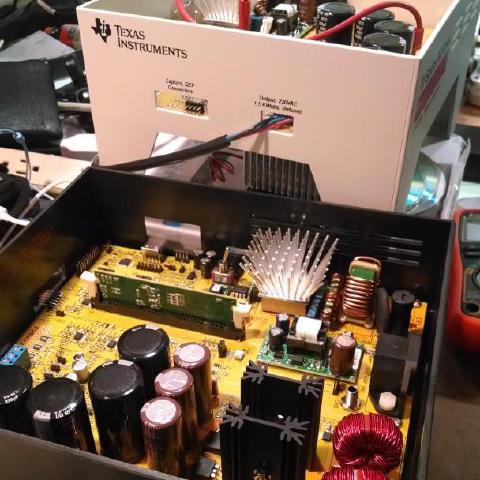
- Chris recently got a new version of a dev kit...after buying the wrong one! He needed the TMDSHVMTRPFCKIT and instead bought the TMDXHVMTRKIT5X (which isn't compatible)
- This is a kit made by the same group that Trey German works in; Trey was our guest in episode 213. Chris was introduced to Trey by a friend when trying to figure out the kit conundrum.
- Power factor is the difference between real power and apparent power. The power factor correction circuit on the dev board is a boost converter (and controller).
- TI also released a wireless reference design that has just about every wireless standard on board (and a Sitara processor).
- Marcus and the Sparkfun team have been taking some lumps on a programming error for the Microview. It has been great to see how open they are with the details of how they are fixing it.
- Marcus has been on the show before. So has the Sparkfun Engineering team.
- Chris has been working on a new website for his day job. It is amazing how the mentality differs between hardware and software (especially web software). There is so much more license to change later (a big benefit, to be sure).
- Chris also thought about how software people must feel when getting into hardware: they want it to be a one-click solution, just like how Chris wants Wordpress (which we use on The Amp Hour) to "just work".
- Dave says this is the promise of modular hardware, which never really lives up to the hype. Chris thinks LittleBits is a good example of this: you can try lots of different things, but you would never differentiate in the marketplace without going custom (and losing the swappability)
- Dave thinks that Altium is gearing up to make a purchase. Chris doesn't think they have enough cash on hand, but Dave rightly points out that EAGLE was bought by Newark/Farnell/element14 for only 12 million euros (not dollars like stated on the show).
- Dave has been reading "The Decline and Fall of IBM" on Kindle.
- Infineon recently announced they are buying International Rectifier. Infineon was a spinoff of Siemens.
- Ken Sherriff did a great teardown, analysis and writeup of a suspected counterfeit 7805.
- Chris says the best way to learn about silicon is to construct 3D models using programs like Sketchup (no longer owned by Google).
- Luke Beno wrote a project that graphs user data off of data.sparkfun.com, a free cloud solution for IoT.
- There is a post about the absolute minimum funding you need to be able to deliver a 3D printer for a kickstarter project. The "viability line" shows this clearly.
- Dave talked about how lots of people are using Tindie these days to sell their electronics. People should remember to price properly on there as well (BOM * 3 to be safe). https://www.youtube.com/watch?v=E9lYHIAZeTc
- Chris is heading back out to LA and SF this week. He will be at the Hardware Didactic Galactic meetup on Thursday and attending the Hardware Workshop later in the week.
- Dave may get to test drive a Tesla later this week. He is dreaming about doing a full review (and a teardown?).
Transcript
Chris Gammell: This is the Amp Hour Podcast. Recorded September 7th, 2014. Episode 215. Fugacious Fan Funding.
Dave Jones: Welcome to the Amp Hour. I'm Dave Jones from the EEVBlog.
Chris Gammell: And I'm Chris Gammell of Contextual Electronics.
Dave Jones: On a Monday. My time anyway.
Chris Gammell: Yeah, yeah.
Dave Jones: Which is unusual. Usually we're a day ahead.
Chris Gammell: We used to do this, yeah, yeah. Welcome back from vacation.
Dave Jones: Oh, thank you very much, yes. Slacker. Slacker. Yeah, I only released a couple of videos, three videos while I was gone. Slacker. Yeah, that's not bad for you. That's not bad. Yeah. Keeping up that solid average, you know, three a week for the last five years. Got to keep it up. There you go. Yep.
Chris Gammell: How was the vacation? Nice and relaxing? Hanging out with fam?
Dave Jones: It was, but I had to do, I still had to work, you know. You just never escape it. You know, you just don't. I mean, I've got so many things coming up and I had to do things and like, you know, stuff for the trade, had to organize stuff for the trade show and, you know. Things, which is, I've got to go set that up tomorrow, hence why we're recording today. Yep. And yeah, I'll be there Wednesday, Thursday. So, oh goodness. Yeah, I'm just flat out. Been flat out. Yeah, yeah.
Chris Gammell: That's weird too. When you go on vacation, like you, I mean, you think it's going to be not a big deal, right? It's like, oh, well, I'll just check some emails.
Dave Jones: But yeah, yeah.
Chris Gammell: I don't know. Like when I was, I think we recorded one show when I was down in San Diego, right? Yeah, that's right. And like, that really did affect things. Like I didn't think it would be, but I have so much trouble shutting off, you know?
Dave Jones: Yep. Same here. Same here. Can't do it. Can't do it. And also it's not easy to schedule release stuff. It's easy on YouTube, right? I uploaded it to YouTube, but YouTube's got sort of like a bug in it where you can't get the URL address to embed into your blog website before you've actually publicly released it. If you've set it to schedule, you can't get the code and then, well, you can set it to unlisted, but then if you set it to unlisted so that you can get the embed code to put in your WordPress site so you can schedule that one, then it won't let you go back into schedule mode. So you're like, ah, it's like just really annoying. And then try to cut and paste stuff and do all your regular stuff you're familiar with. Do it on a tablet or a phone. It's, ah. Right.
Chris Gammell: It's like you have to kind of bring your whole thing with you, right?
Dave Jones: So you've got to bring the notebook and, yeah, so I had to bring the notebook and all that sort of jazz and, yep.
Chris Gammell: I got in a bit of trouble back up in the living room area. I'm in the basement, obviously. But I got in some trouble for, you know, being kind of distant. And I now have a sign right above my chair in the living room saying it's a no laptop zone.
Dave Jones: Oh. Oh. I put the sign there. I stole this. No, I put the sign there. Oh, you did.
Chris Gammell: But it was mostly to maintain marital harmony. Right. Even still, like, I mean, like, it's so easy to kind of, you know, okay, well, I'm done for the day. Kind of go upstairs. And then, oh, another email. You know, it's not like it's just you and me. It's everyone like that, right? And it's, there's always that pressure these days to just kind of keep doing that stuff.
Dave Jones: Yep.
Chris Gammell: And I've allowed myself to have a tablet up there, but that's not much better.
Dave Jones: No, no laptop. No, I'm not breaking my rule. I've got a tablet. Yeah. You know?
Chris Gammell: Yeah.
Dave Jones: Oh, goodness. I know.
Chris Gammell: Kind of a cheat.
Dave Jones: Can anyone else switch off? I mean, they're probably not in the same, you know, public eye as we are, you know, with so many, like, you know, public things going on. Yeah, but I think that's even worse, man.
Chris Gammell: I mean, you and I don't really have bosses anymore, right? I mean, like, and if you have a boss.
Dave Jones: No, we don't. You know, like, you have someone that's demanding stuff. But it's worse. We have the public demanding stuff.
Chris Gammell: Ah, come on. We've got it easy. We've got it easy and you know it. But, and-
Dave Jones: Yeah, well, yeah, I know. You remember having bosses, right? I mean, like- Yeah, it's a dream job, right? I still have a boss sometimes. I wouldn't give it up, right? I wouldn't give it up. But, you know, it's not all, you know, it's not all roses.
Chris Gammell: I find it's interesting, too. Like, even just seeing between the jobs that I've had, you know, like, just the difference in how strenuous each one is. You know, like, some places- Right, yeah, yeah. I was talking to a friend about this because we were talking about someone who went to a new company, a new engineering company. And, you know, you kind of hear the company name. You're like, oh, you know, I said this. I was like, oh, that's a grindhouse. You know, like, they just grind their people down. Like, and there's just these expectations that are there. And it's interesting because even seeing that in my own career, like, in my short career, I suppose, of, you know, what's expected from one place to the next, it can be pretty drastic. I mean, just in terms of hours worked and, you know, not necessarily output.
Dave Jones: And it's different when you first start, of course, because you want to, oh, you know, prove yourself. And it's all new and fresh and you're excited. And, you know, it's all, you know, a change is as good as a holiday. I always say that, you know, in terms of jobs. And, you know, so you do that. But then once, you know, the six month mark kicks in or the nine month or whatever, that gestation period, you know, where you want to stay at least that long in a job so it looks decent on your resume, right? You want to stay for at least that, you know, a year kind of thing, right? So once that point hits in, you start going into cruise control and, you know, that sort of stuff, then, yeah, it's, you know, well, I do anyway. I tend to start taking it sort of less, not less seriously, but, you know, it just ends up being more casual, you know?
Chris Gammell: Right, you don't necessarily jump as much each time, right? Yeah, exactly. Every time there's a thing.
Dave Jones: Yeah, you're not trying to prove yourself and you're not absolutely working your ass off. You sort of, you know, get into the swing of the company and how other, you know, if other people are working their ass off, then you might be working your ass off too. But, you know, if it's like a really laid back company, you know, and especially if management's not that terrific in terms of, you know, organizing your, you know, stuff to do, then, yeah, you know, it's easy to start slacking off after that point.
Chris Gammell: Right.
Dave Jones: And then you get into that cushy job trap, which I've had, you know, oh, this is a real cushy job. Why would I leave, you know? Like, it's no stress, you know, it's great. And you get lazy and, yeah. Yeah.
Chris Gammell: Yeah. And so it's that balance, right? I mean, like there's the ebbs and flows of normal. Like, I think, I think at a good, a good engineering job is like, you know, steady state, you might be working 40 to 50 hours a week, normal kind of hours, whatever, no big deal. Right. But then, you know, if you do have a big project coming up or you have a big deadline, you could push for two to three weeks and it's not a big deal, but then it should calm back down. The bad jobs I've had, it's like, it's all push. It's always push. Yeah, yeah, yeah. You know, anything that's done is that you get yelled at even more and it's just, that is, that's what my, that's a grindhouse to me. You know, it's always that edge of your seat, you know, you got that sick feeling in your stomach and everybody's upset.
Dave Jones: For me, what I've heard, because I've never worked at a company like this, but I know many people that do and I've interviewed at companies like this, those design houses, right? Yeah. If you work at one of those, we've mentioned, yeah, we've mentioned this before, right? That is the old, probably the ultimate grindhouse. Yeah. Right? Because they've taken on, they take on as many jobs as they can, otherwise they can't, you know, get income and grow, right? And then they've got X amount of resources to do this task and they've promised a certain date to their customer. And, you know, that date is everything. It's decoupled from reality sometimes. Yeah, it is. Yeah, it's got a huge bypass cap on there. It's decoupled. Oh boy. And yeah, sometimes it's not the correct voltage bypass cap and it pops. Everything pops. That's it. And yeah, those can be a stressful job, but also very challenging if you like, you know, a lot of different stuff and lots of different challenges all the time from project to project. That's probably an ideal place to kind of work. Yeah, for a while.
Chris Gammell: Right. I mean, that's what it comes down to.
Dave Jones: Yeah, for a while. But yeah, it's high stress, high burnout kind of thing. Right. But some people, you know, love that. Some people thrive on it.
Chris Gammell: They do. Yeah, yeah. No, that's true. And I mean, I mean, I guess it depends on, you know, life situations and stress tolerance, like you said.
Dave Jones: Oh yeah, if you're young, yeah, if you're a graduate out there and you just want to work on, you know, different projects and get lots of different skills, go work for some sort of design house, you know, and do it for, you know, a couple of years and yeah.
Chris Gammell: Or consumer. Oh man, I have friends at Large Fruit Company.
Dave Jones: Large Fruit Company, yeah, yeah. I now have one of their products. That's right.
Chris Gammell: That's right. The banana laptop I have. And, you know, hearing about that stuff too, it's just, you know, like the, just, it's all about culture, right? I mean, it's just like talking about, you know, getting PCBs in on Friday nights and yep, it's time to test the PCBs, you know? Yep.
Dave Jones: So let's hand assemble it. Let's work till midnight under that, you know, Mantis microscope assembly. It's hand soldering all the 0402s and the, yep.
Chris Gammell: Yeah. And it's weird too, because it's like, you know, I'm a, I'm a, I'm a late worker, you know, I, I, I stay up late doing work and, but it always felt different, you know, when I was at my last job, I would, I would leave, you know, at normal-ish times unless there's something big going on. Yep. But then I come home and work on stuff until midnight, 2 a.m. And it's, you know, it's just a different feeling, right? If you're, if you're in an office or a lab until 2 a.m., it's just a different, it feels different, right? Yeah, yeah, of course. Even if I was coming home and doing regular work. Totally. Yeah. Work work then. It's, I don't know. It's something about freedom and choice, I guess. I, I don't really know. Right.
Dave Jones: Boy. Well, both of us are free.
Chris Gammell: Yeah, sort of.
Dave Jones: And how, how, how, how long has it been for you since you left now?
Chris Gammell: Uh, it's now been. In that. Seven months.
Dave Jones: Oh, I was going to say, if it's a year, I'm, I'm just packing up and going bush. Time's just flying.
Chris Gammell: I know, yeah.
Dave Jones: And I, I did tell you it was the best thing ever, right? And you're not regretting it one bit?
Chris Gammell: No, I don't regret it yet. I mean, obviously I've kind of picked up another gig and, uh. Ah, you will, of course. Yeah. Yeah. That, I mean, that changes things.
Dave Jones: I suppose if you didn't pick up that, then yeah, the wife might've been, you know, whipping you a bit to bring home more bacon.
Chris Gammell: You know, the air power's not bringing in any dough, so, you know.
Dave Jones: But it could do if, uh, if we put it on YouTube.
Chris Gammell: Oh, maybe.
Dave Jones: Because they now offer fan funding. They do. They do. As somebody pointed out. And, um, this is interesting. I've been, actually, um, it's an interesting topic. Uh, you know, funding. How do you fund your blog? Right. And stuff like that. Because I just tweeted last night that every second blog I, like video blog I watch on YouTube seems to use this, uh, Patreon, uh, thing.
Chris Gammell: Right. Where it's like one person. I saw that, uh, who was it? Um, Afro Tech mods. Oh, yes. Yes. He's, he's just got it. I think.
Dave Jones: Yeah. Yeah. Yeah. He's just got, he's just asking for, uh, you know, I think he, what's his goal? You know, his goal is like X amount per video. And if he does that, then he can, you know, make it a full-time living and he can produce videos. He's, he's been producing a few more, uh, recently. Yeah. So, you know, he has these big, you know, hiatuses where he's, I don't know, he's got to work or maybe he loses interest. I'm not sure. I think it's most likely work, you know, kind of stuff.
Chris Gammell: Oh, probably. Yeah. So, yeah. Uh, I love, I love, he's, he's got great videos. Very, very, you know, nicely put together. Him and Scott, uh, Scott's a curious inventors. Right. Yep. Good ones too.
Dave Jones: And it was interesting. I read his, uh, Patreon thing for that, how long it takes him to make a video. And he says it takes him, I think it's 15 or 17 hours per minute of video per minute.
Chris Gammell: Yeah. Right.
Dave Jones: So, you know, his videos are only five minutes long, right? You know, typically either five or 10, right? They're certainly not, you know, I don't think they're going to be breaking any of my records anytime soon. Um, but yeah, that is a staggering amount of work. Yeah.
Chris Gammell: Yeah.
Dave Jones: And ask any YouTuber who produces polished videos and they'll tell you the same thing. It's actually much, much harder and takes much, much longer to produce a shorter video than it does for my style of videos. Uh, the reason I do my style of videos that all just long and off the cuff and sort of just, you know, slap together is because they're easier. You know, I don't want to be spending 15 hours per minute. I would spend like in terms of, you know, I, I would spend what, not even an hour per minute. I'd spend, you know, tens of minutes per minute shooting a video. You know? Right. Um, yeah. Right. Well, some are longer than others, of course, but you know, I mean, certainly not in the same, um, you know, scheme as, uh, Afrotech or some of the other polished, uh, you know, some of those science YouTube channels out there that really produce. Right.
Chris Gammell: And anything with like, or like, uh, animation especially. Yeah.
Dave Jones: Special effects and, you know, all that sort of jazz. Yeah. That, that, that takes a lot of time.
Chris Gammell: You have to love editing. Yeah. Exactly. Yeah. We have a patron and is a, it's an interesting model cause it's, it's, it's actually, it's not like a pay per month. It's like a pay per video. Right. So it's like, I pledge.
Dave Jones: You can choose. You can choose as the. Oh, I didn't know that. Yeah. Yeah. Yeah. As the, uh, as the, uh, the, the, the content producer, you can, you can choose whether it's per video or per month. So if people don't know how it works is you sign, you know, you sign up and you ask people to contribute. As soon as you release a new video, your credit card is automatically charged a set amount. So that's.
Chris Gammell: Usually like a dollar or two kind of thing. Yeah. Yeah. Could be small. Could be big, but.
Dave Jones: Yeah. You can choose how much you want to contribute per video if the content producer signs up for that. But I personally wouldn't do that. I don't like that model. I prefer like the monthly kind of thing. Right, right. So, and then there's a set limit per month that you can also put a limit. So the, so the, uh, content producer can't just get all these people and then suddenly go, Oh, I'm going to release 20 shit videos a month.
Chris Gammell: 10 second videos.
Dave Jones: Yeah, exactly. And get paid four grand per video, you know? Right. Yeah. Yeah. So there's, you know, it really is an interesting technique. So. Great.
Chris Gammell: I mean, and it, and it kind of benefits everyone. It's kind of people with, with more money being able to benefit people that are just coming up and learning and might not have money yet. And I think that's a, that's a great system.
Dave Jones: So, but as, um, Sandy Neal, uh, wrote on Twitter, she says, um, uh, some get stuck in the loop of making exclusive content for the Patreon feed, you know?
Chris Gammell: Yeah.
Dave Jones: And then that's, you know, like you're like the, then, then you have the haves and the have nots, you know? Right. And the people who pay get that exclusive content. And that's sort of a real danger area, something I wouldn't go into as we've talked about before. And, uh.
Chris Gammell: So is this, is this YouTube thing different then? I mean, are we going to see a lot more, uh, electronics channels doing YouTube based?
Dave Jones: I, I don't know. I don't know anyone who uses the YouTube, uh, you know, tip system. I'm not even sure exactly how it, well, I signed up for it and they've got bugs in this system. They finally fixed it anyway.
Chris Gammell: Um. Well, I clicked on yours to look at like what the thing was. And it says like, you know, donate like $1 or $5 or $10. I think. Oh, okay.
Dave Jones: I haven't, I haven't actually looked yet. Is it there? Okay. Right. Yeah. It's there. Because I've enabled and you've got to have a Google wallet account. I'm not sure how the Google wallet works and how you extract money. So, so before I actually, actually go. I use that.
Chris Gammell: So, Oshmark used to only take Google wallet. So I had that set up. Oh, right. And so Google play as well, like the Android market also uses that. So people that have Android play have that too. Right.
Dave Jones: Well, yeah. I just need to like, can they transfer it to my PayPal account or, or straight into my bank account or what? Right. Yeah, exactly. Um. Yeah. But anyway. Yeah. So I, you know, I don't want the money to be stuck in there. And I'm having that problem at the moment. Actually, my Amazon account, um, is I stopped getting checks, right? You know, for the Amazon affiliate program. And I've got a buttload of money, um, stored up in my Amazon account from all these, you know, referral things.
Chris Gammell: That's right, folks. David L. Jones knows how to relate to the people. I've got so much money, but I don't know how to get it out.
Dave Jones: It's a buttload. I don't know how to get it out. And I'm trying to contact them and they're not replying because all, you know, I, I didn't change anything. And all of a sudden they stopped sending the checks and I can see the money's piling up in there. And I, I don't know, something happened and yeah. Yeah. Well, I wish you the best, Dave. Yeah, I know. I may never get my money. Um, so that's, yeah. Hmm. Anyway, yes. The, yeah, the, all this fan funding thing, you know, YouTube's doing it now and the Patreon seems to, you know, every man, his dog seems to be using that. So I, I, I don't know. I'm still sitting on the fence of that one. I'm probably just being a bit paranoid and I'm probably doing myself out of a lot of money, but, you know.
Chris Gammell: I always wonder about this stuff, you know, like Kickstarter as well, like what the, uh, you know, what are the practical limits of this kind of thing? Because obviously the, the, the, you know, the fan funded or, or not even fan funded, but just crowdfunded model, right? It seems like it runs out of juice eventually. Eventually if, you know, if there's 7 billion people in the world and 7 billion projects on Kickstarter, right? It's like, okay, well, eventually there is a fine, there is literally a fine. It's like a finite supply of money. It's probably, uh, it won't, it won't get that big because eventually it fragments and stuff, but, you know, it's always a question with that kind of stuff, you know, like.
Dave Jones: Well, it's always going to come down to who produces, you know, the best content is going to get the money. If you're producing crap content, no one's going to pay for it. I think it's true. You know, I think that's, that's what it comes down to. Um, so it's, I kind of think it's kind of self-balancing there because, you know, there's a lot of crap content out there, right? And if everyone with a, you know, a crap YouTube channel and really poor quality videos tries to, you know, enable this thing, they're probably going to find that they're not going to make a cent because, you know, there's so many other good ones to compete with. So it probably raises the bar for everyone, you know? Oh, look, I can't make money unless I produce good quality content. So, you know, I have to, have to raise my game and start producing, you know, good stuff instead of crap.
Speaker ?: Yeah.
Chris Gammell: Yeah. Yeah.
Dave Jones: Yeah. Like mine. Maybe I have to raise the bar. Yeah. Hey, the people want it. Yeah. The people want mailbag.
Chris Gammell: Well, that's another problem, right? I mean, you get kind of the, uh, the tragedy of the commons at that point, right? You get people wanting the, the simpler stuff, but the, the more in-depth stuff kind of falls, falls to the wayside, unfortunately.
Dave Jones: Well, yeah, well, I've, I've, I've said that my mailbag is at least twice as popular as any other technical video I do mostly, you know? Um, yeah. And, and I got complaints last, last week, I released a mailbag and it was only 19 minutes long and I had a whole bunch of complaints. Oh, it's not long enough. It's only 19 minutes long. This is ridiculous. You only open four packages. Okay. So anyway, I just released one that's 52 minutes long or something. So hope you enjoy it.
Chris Gammell: I like that knife you have on there. I didn't, I didn't see when you got that thing, but that thing.
Dave Jones: Ah, right. Yes.
Chris Gammell: Very. The knife.
Dave Jones: It's great. Yeah.
Chris Gammell: The knife. Knife. Knife. I see you've played knife as Spoonie before.
Dave Jones: Oh, goodness. I didn't get that joke because I hadn't have seen, I hadn't seen that Simpsons episode. So.
Chris Gammell: Missing out, man.
Dave Jones: Yep. I know.
Chris Gammell: So let's talk some electronics here, man. What, uh, what have you been doing electronics wise lately? Huh? Huh? Huh? Mr. Content Producer? Huh? Mr. Content Producer? I'm doing a little dance here, yeah.
Dave Jones: Haven't, I haven't had time. I've been doing bloody mailbag. Oh, you've been on vacation. Yeah. Mailbag tears down and getting stuff ready for the show and tear down. And I went to the Maker Faire and it's all, uh, you know. Yeah. Like there's so many sort of more technical videos I want to do, but. You know, it's, it's just finding the time. Yeah. Um, to do it. Cause I've got to clear my backlog of mailbag. I've got to clear my backlog of tear downs and. You know. Poof. Doesn't leave much else. So. It's tough. I did design my new micro ruler. Oh yeah. That's right. You're used it for the conference, right? Yeah. Yeah. So, and there it's like, I think it's like on the truck. So hopefully it'll turn up, um, just in time.
Chris Gammell: Yeah. Well, that's the only way it should turn up for a, for a conference.
Dave Jones: Oh yeah. Yeah. Of course. Right. At the last minute. So, you know, I'll be, I'll be probably going to my, uh, storage thing where I get stuff delivered and I'll, um, you know, have that Wednesday morning on the way to the, you know, I'll pick it up and then I'll find, oh no, it's totally ruined or something. You know, it's totally wrong. And I don't know. I'm sure I've goosed something on it. Cause like I did it at, you know, I just threw it together in a couple of hours and just bugger it. There it goes. I need it. Cause I had to order it that day. Otherwise I wouldn't have gotten it in time and it was a real rush job, you know? So I've, I've screwed something up. No doubt.
Chris Gammell: I reverse millimeters and inches, but I'm sure they'll figure it out. Yeah. Yeah.
Dave Jones: Or I actually got the scale wrong, you know, and I put them every 1.02 inches instead of one inch or something.
Chris Gammell: Right. But then, you know, what happens then though, is, uh, they, they make up a new measurement system. Right. Named after you.
Dave Jones: Like the, uh, Smoot.
Chris Gammell: Like the Smoot, right. Yeah. Right. There you go. Automatically, uh, automatic wiki page.
Dave Jones: Yep. Awesome.
Chris Gammell: So I got a new, uh, I got a new toy here. What'd you get? It's actually very similar to my last, to the last toy I got. So I don't know if you remember me talking about the, uh, the AC induction motor kit.
Dave Jones: Oh yes. Yes. You got the kit, right?
Chris Gammell: Right.
Dave Jones: You got this high voltage kit that can like kill you or something.
Chris Gammell: Well, about that. Uh, so.
Dave Jones: So. Well, you're still alive, obviously, unless you've pre-recorded this. Right, right.
Chris Gammell: Uh, yeah. Yeah. For now. Uh, no. So that was like back in, uh, probably like January or so of this, of this year I got this kit. It's, it's the, uh, I don't even remember what it is. The, some, it's a Texas instruments kit, but basically. It's a motor control kit. It's a motor control kit. It's HVM for high voltage motor control. Um, and, and it's something, something 5X, right? And so I got this kit and it's this beautiful, I mean, honestly, it's a beautiful kit. I don't know if I actually posted videos or pictures of when I was doing it, but you know, nice kit, kind of pricey, it was like 700 bucks, but it's got like a plug-in control card with like isolators on it and everything. It's got like a, uh, uh, 5X family, uh, Piccolo, uh, like the C2000, like Trey German was on talking about. So I, I mean, that's part of the reason that I, I got introduced as Trey is that, uh, I asked some friends if they knew anyone there and that was him. And then I was like, Hey, you should come on the show. Uh, uh, and so I had been working on this thing and I got all the way through to the point of like, you know, I was, I was very nervous doing this kind of thing, like getting started up. I had a friend, I had my friend with me here and he was, you know, we were making sure we weren't like using two hands to touch anything. Right. I mean, all the careful stuff for high voltage. Right. Uh, and then we get all the way through to the end and, and we, we, we're just doing the demo stuff. Mind you, we're just doing the demo stuff. We're plugging it into this AC induction motor we have. It's like a quarter watt, uh, AC induction motor, which is like 180 horsepower. And we turn it all the way up and we turn it up to like a thousand RPMs and it works fine. And then I turn it up to like 3000 RPMs. Cause that's like, there's like a peak or like a, there's like a optimum, uh, speed of the motor. Yeah. And I turn it up to that and it's like, no, I'm not going to go past 1100. And I'm like, what is going on here? You know? So I'm going through all the troubleshooting sequences, everything else, everything else. And I get to the end and basically it's that, uh, the high voltage rail wasn't high voltage enough. Basically I had bought the kit that didn't have a power factor correction on it. And you know, because basically I bought this thing blind, right? I mean, this is the, this is the downside of buying a kit blind. A 700 buck kit. A 700 buck kit blind. Right. And a $300 motor. And, and basically what it was is, uh, so it brings in, it brings in AC, which around here is about 120 and it rectifies it. And so like 120 RMS is like, you know, 170 peak or so. Right. So if you start to rectify it, it's about 170, 180. Uh, and basically, so you, you know, you just put it through diodes and then you store it in capacitors and you get this high voltage bus, right? Well, I expected a 350 volt bus because that's what it says in the kit. It says, you know, can handle up to 350 volt DC bus or 400 volt.
Dave Jones: Right.
Chris Gammell: Yeah. Well, there's this whole section missing, which is the power factor correction section. Now, I don't know about you, but I always thought a power factor, I mean, do you, first off, you know what power factor correction is?
Dave Jones: Yeah, but what's power factor correction got to do with the value of the voltage rail?
Chris Gammell: Aha. So power factor correction. So for people that don't know, power factor correction is basically, it's like a power factor correction, power factor is basically the measure of how sinusoidal it is, how much you affect the AC mains that you're on, right? So the, the, the big case being that, uh, if you have a big motor that you throw into your AC mains, it starts to really, uh, get out of phase and.
Dave Jones: And that leading lagging stuff and. Leading lagging stuff, right? And your power factor correction is not one. If your power factor correction is one. Yes. 1.0, then you are, you know, everything's in phase and you're driving a pure resistive load.
Chris Gammell: Correct. And if you're not.
Dave Jones: But if you're driving a capacitive load, like a switch way power supply or an inductive load, like a motor, then it can lead or lag, uh, depending on the type of load.
Chris Gammell: And what the practical thing is, is basically your sinusoid that's coming in stops looking like a sinusoid. You start to kind of, you get to harmonics on there and it starts to look really ugly. And what ultimately is happening is that.
Dave Jones: Not necessarily. It's not necessarily distorted. Power factor correction is just the phase angle.
Chris Gammell: You mean.
Dave Jones: It can, it can just be the phase angle and it's just not necessarily your waveform is distorted. It can still be a pure sine wave, but it can be out of phase.
Chris Gammell: Okay. Uh, and so basically what happens though. Yeah. No. Yeah. It's basically what happens though, is that, uh, it puts more strain on the, the, the grid and everything else. And that starts to hurt, uh, upstream basically. So, you know, you're, the power plant has to work harder. And then if you're an industrial customer, oftentimes they, they meter you differently. If your power factor is not one because you're, you're real power versus your reactive power. I forget what the terms are. Yep. Are different. Right.
Dave Jones: Correct. And they'll charge you for that in an industrial scenario. That's why in industry they will, you know, if you've got huge motors everywhere, then they'll have huge banks of capacitors as well to try and correct for that power factor. Um, so that they don't pay excess, you know, money for all this, uh, apparent power. So anyway, it's a, yeah. Um, but some like in, in a residential situation, you don't pay for, uh, that power. They don't measure power factor. So. Correct.
Chris Gammell: Right. Yep. But they probably can't supply you with all the, all the juice you'd need to really do any damage to the grid anyway. So, um, right. So, uh, okay. So what's the practical implications here? Well, the practical implications are when you have a power factor circuit, and this is the thing that I did not realize at all, a power factor circuit is nothing more, not nothing more, but is a boost converter.
Dave Jones: Right. Well, there's, there's several different ways to do a power factor correction.
Chris Gammell: Okay. But this power factor circuit is a boost converter. Right. So it takes it from 180 up to 360, basically.
Dave Jones: 360, got it, got it.
Chris Gammell: And so that DC bus that I thought was there was not there. And, and, and as a bit of, as a bit of a tinge, I'm not sure why it happened like this. I think it probably was like different groups within TI. And I probably should have asked Trey when he was on the show, but, but basically, uh, the kit I got was like this black hole of like only, it only works by itself. There's like maybe a, a family of like eight products total and like, and like this kit I got is like, you can't use anything else with this kit. And so what ended up happening was I had to go out and buy an all new kit and, uh, and, uh, yeah. So that's my, that's my, that's my current status is now I have this new kit and it actually gets up to 350 volts.
Dave Jones: And, uh, but now it also works with 3000 RPM.
Chris Gammell: Yeah. Right. And, and it also has this, um, I think we talked about it when Trey was on the show, but InstaSpin, yeah, we did because I posted the vote, the video of it. So two shows ago now, or three shows ago, I suppose, uh, when Trey was on the show, um, we talked about the, uh, the motor control and that beer, that video of the beer moving back and forth on a conveyor belt. That's called InstaSpin and InstaSpin FOC and motion stuff. And now I'm actually able to get that as well, which is interesting stuff. So, so yeah, that's been my, that's been my, uh, purchasing adventure lately. I guess that's not really nice as much of an electronics adventure, but, uh, no, that's,
Dave Jones: that's fun.
Chris Gammell: It'll, it'll burn you. You gotta, gotta read the date sheet, I suppose.
Dave Jones: Oops. That's, that, that, that sucks. I mean, you buy a 700 bar kit and it doesn't, you know, and it's missing a, you know, a pretty essential kind of thing.
Chris Gammell: Well, and you know, it's, I was thinking about it, but yeah, right, right, right. Well, and I was thinking about it and it's like, really, it's, I mean, it's not priced for people that are doing this in their basement. Right. And I mean, to be fair, it's like, I'm a company, right. I mean, I have my own company and stuff, but that $700 is mostly a barrier to entry, right. The cost of the kit is probably, you know, a quarter or a half of that. Um, yep. And it's, you know, it's just a barrier to entry so that people that are actually interested in it are using it, but I don't know. Yeah. It's, yeah, it's, it stings.
Dave Jones: Right. So it's not a cheap ass Raspberry Pi or a $4.30, you know, launch pad, right. Right. You know, yeah. Like serious people buy these things.
Chris Gammell: Right. Yeah. Yeah. Have you, uh, have you seen this? I posted one about the, uh, another TI product, I suppose, but this is a different, uh, a different, uh, reference. It's a reference design. The, uh, smart home and energy gateway. Smart home?
Dave Jones: Yeah. What are, what are, what are they doing these days?
Chris Gammell: Well, it sounds kind of wanky, right? But it's actually, um, so it's all open source, which is, that's, I really like that about TI. The motor kit I use is open source as well. Uh, but basically this is like, they wanted to throw every single radio they could onto a board.
Dave Jones: Oh, right. So they've got Wi-Fi, Bluetooth, Zigbee, BLE.
Chris Gammell: Yep. Uh, NFC and a couple others. And basically all the different protocols and stuff. And so that's the reason it's kind of cool is that that's, uh, for people that are kind of getting started, it might be good to have, have something like that and, and be able to build on it. It's got a couple of expansion headers. Um, right.
Dave Jones: So it's just like a wireless interface, is it? It doesn't do anything else. It's just sort of like a, it's got five different wireless interfaces on it that hook up to the internet of things.
Chris Gammell: Well, and it's got a, it's got a A8 on board so that, uh, I think that's similar. Okay. I don't know. The AM3352. I'm not sure which chip that is. It might be like the Buglebone black chip or something, but, uh, but yeah, you know, it's basically hanging a bunch of stuff off there. So that's, that's good though.
Dave Jones: It's called the Sintara processor.
Chris Gammell: Sintara.
Dave Jones: Oh, sorry. Not Sintara. Sintara. Yeah.
Chris Gammell: Sintara is the one that's on the Buglebone black, I think. Okay.
Dave Jones: Right. It is. Okay. Yeah. It's the AM3352. Okay. Um, Cortex A8.
Speaker ?: Hmm.
Chris Gammell: Yeah. It's outside of our wheelhouse around here. What isn't these days?
Dave Jones: Nah.
Chris Gammell: There's a lot of good ones.
Dave Jones: You added something on, uh, triboelectric noise in cables.
Chris Gammell: Yeah.
Dave Jones: Why was that? Did you have to deal with? Oh, yeah.
Chris Gammell: I had to deal with that. Yeah. I figured, I figured this was kind of in your, uh, uh, your, your wheelhouse. So what, what is this and, and, and why should people care about it?
Dave Jones: The triboelectric effect is, um, uh, noise induced in a cable through movement, through movement of the insulation against the, uh, against the conductor and all that sort of jazz. It can actually generate a charge in your cable when, when you move it. So if you're, if you've got a test jig or something like that, that's constantly moving, you know, like an automated test jig and you have to run your cables through those, you know, snaky, uh, you know, cable gland kind of things. If you know what I'm talking about, uh, then yeah, yeah. When those cables move, uh, you can get a charge generated on that cable and that can be a real pain in the ass. It can ruin the day, especially if you've got like, you know, accelerometers and other charge sensors at the other end of the cable. So you've got a sensor that's like an, an accelerometer will typically be a charge based thing. It'll be giving out, you know, a certain amount of charge. And then, well, if you've got cables also generating charge on them, oops, you know? So yeah. And it, uh, it happens. And I think I did a video on micro, on probe shock, oscilloscope probe shock, where I did the, um, it wasn't the triboelectric effect, but I think I may have tried to demonstrate the triboelectric effect in that. Anyway, I think I mentioned it on a blog or two back in the day.
Chris Gammell: I mean, and this is something that people can practically do. Like, I mean, anytime you move a, uh, uh, oscilloscope probe, right, you're going to see some kind of blip on the screen probably.
Dave Jones: But you probably can. And that could be due to triboelectric noise being generated.
Chris Gammell: I always, I always think about it. So, and maybe this is the wrong way to think about, but I always think about it as like the insulation has charge pockets in there basically. But when you start moving stuff around, it creates like rubbing as well. And that kind of frees up some electrons.
Dave Jones: Like, you know, those old experiments you did in high school, you know, physics of, you know, rubbing the, you know, the amber rod on the cloth and all that sort of, you know, generating your static charge and all that sort of, you know, it's a similar sort of thing. When you've got, when you've got materials that rub together, you can generate charge. And that's what happens in that cable. So any humble coax cable is going to have a triboelectric effect in it. Other, you know, regular hookup wire, stuff like that.
Chris Gammell: Yeah. Yeah.
Dave Jones: So you've just got to be aware of it if your system is moving. I mean, if it's not moving, it doesn't generate a charge. So if your wiring's all fixed, then it's all fine. But yeah, if you're moving that, moving the cable around, coax cable or other types of cables, yeah, it can ruin your day. And that was a big business. And that was a big problem in my industry.
Chris Gammell: Is it possible to remove the signal dynamically? Or is it just like zip tie stuff down so it doesn't move? Like, can you filter on it or?
Dave Jones: Well, you can.
Chris Gammell: Or is it all based at the actual physical level?
Dave Jones: But no, it's at the physical level. It's at the physical level. So it depends on what kind of frequency content you're feeding through. You might be able to filter it out. But when I was working in the seismic stuff, no, we were dealing with low frequency stuff anyway, which is where the triboelectric noise would come in. And yeah, it was a big pain in the ass. And you can buy special cables that are designed to not totally eliminate triboelectric noise, but get pretty close to it. Really low noise triboelectric cables. So often, you know, you'll read a data sheet and it might say, you know, this is a low noise cable. That's what they might be talking about. You might have to check the, you know, the fine print on that. But often that's what they might be talking about. During movement, it doesn't generate a large triboelectric effect. Yeah.
Chris Gammell: So fix it with money. That's the answer. Right.
Dave Jones: Fix it with money or just don't make your cables move. Yeah, exactly.
Chris Gammell: Yeah.
Dave Jones: But it's hard. Even just bending them, right? Even just bending them back and forth. It can generate a little, you know, you know, just on one point of the cable that can generate some triboelectric noise. So, yeah. Yeah, it's a real problem that, you know, if you aren't aware of it, can bite you one day if you're doing very, you know, low level sensor type stuff. Usually, you know, we're talking down in the hyco volt range. You know, we're not talking, you know, volts of triboelectric noise or anything like that. Right. Although you probably, I don't know, you might be able to get that high. I can't remember the actual figures off the top of my head now for typical, you know, like a typical coax cable or something like that. But, yeah. Big problem. Beware, folks. Trap for young players.
Chris Gammell: Yep.
Dave Jones: Why are you laughing at me?
Chris Gammell: Oh, just always doling out the wisdom, man. That's good.
Dave Jones: Right, yeah. Yeah, I've usually been there and done that. What about this?
Chris Gammell: So, our buddy Marcus, he's had some hard-fought wisdom. I guess also our buddy's over at SparkFun. Oh, right, yes. I've had both on the show now.
Dave Jones: Where is this one again? I forget. Yeah, but, you know, he made the little micro-view display, right? Yeah. That's what it's called, isn't it? Yeah, the micro-view display. Yeah, the micro-view. And, yeah, and he got SparkFun to make it and ship it for him. Yeah, we talked about this. We had him on there and we...
Chris Gammell: Yeah, we had him on the show. That's right.
Dave Jones: Yeah, and we talked about that when it was on the show, right? Because then he was just about to release it, right? Yep. Or something. Or he had just released it. And, yeah, oops. Tell the story. What happened? Because I don't have it open here.
Chris Gammell: Basically, it was a revision to the firmware.
Dave Jones: The bootloader, right?
Chris Gammell: Yeah, they left out the bootloader in the image. So once they loaded it, they couldn't reload it.
Dave Jones: Yep.
Chris Gammell: And there's been a couple mods out there. So basically, there's ways that people can go and fix. I haven't actually followed up on the fixing side of things. But ultimately, what Nathan from SparkFun wrote about is that they're going to replace everybody's microview. So it was something like 2,300 microviews or something like that. And that was a $58,000...
Dave Jones: Oopsie.
Chris Gammell: Loss. Yeah, oopsie, right.
Dave Jones: And it comes out of his pocket, not SparkFun's, I think.
Dave Jones: Because I didn't quite know who was actually responsible in the end. But, yeah, I'm not sure who... I'm not sure who's paying up. Yeah, well, that's the business-y side of things.
Chris Gammell: I'm sure that there's lots of ways to figure that kind of thing out.
Dave Jones: Anyway, if you're wondering, why the hell didn't they do testing to pick this thing up? It would have been trivial. Well, they did. They had extensive... He's got, like, photos of his custom test jigs and stuff like that. And all the details. Go and read it. It's an excellent story of how, you know, Murphy can just come and bite your ass. And, you know, big time.
Chris Gammell: Well, I think it's actually a really interesting... I mean, it's common because basically, as people know, people with Windows systems especially, you know, if you plug in a USB device, basically it assigns it a COM port, like a new serial USB device, right? Right. And it takes... Sometimes it can take a while to do so. And also, I think that cycles over at 256 or something like that. Basically, I know... I used to use serial stuff like that. And it would always increment. And then there was always issues with it, though. Anytime you plugged in something new, especially if you're using, like, lots of devices, like you're in a manufacturing setting. And so you skip that part of it, right? So you just kind of bypass that. But that's the way to catch that kind of thing. And it's like, well, why would you... You wouldn't normally do that in a manufacturing environment. So it's just... I thought it was a pretty legit oversight. I mean, it's not like someone was asleep on the job or anything. It was just like... No, no, no.
Dave Jones: It's just something that they didn't... Yeah. Yeah. Didn't... Yeah. The testing procedure just, you know, it thought of everything but that kind of thing, you know? And they were doing everything right, you know, pretty much. And they still got bit. So, yep. It's tricky business. That does hurt.
Chris Gammell: You know, so... Okay. So I've been working on this website. I've been working on a website for my new job and I could talk about that later. But I work with web people now and I've wanted to talk about this because we're pushing stuff out early. Not early, but, you know, like not done-ish. Not like done-done. You know, like...
Dave Jones: Right. Yeah, yeah. It's a beta, I think.
Chris Gammell: It has been the hardest thing for me ever where, you know, you talk to software people, like especially web people, right? And, you know, like... Okay. So, like, great example. We've had Eric Ries on the show, right? Eric Ries, lean startup, get something out there as soon as possible, right? And, you know, Eric was very careful to say, you know, it needs to be a shippable, finished, but not necessarily a huge product and I agree with that and everything else, but I have had such a struggle with this where we're like, yeah, well, we're just going to release it and then we'll see what happens, right? Right. And it's not bad. I mean, like the stuff we're doing is not bad, but just like... Like, I'm like, well, we got to put like 20 more things into this, right? And like the difference between hardware, especially like hardware and like web software is so drastically different that my brain is lit on fire, like constantly.
Dave Jones: Different in what way?
Chris Gammell: Because, oh my God, so on the web, you just frigging click a button and you're... I mean, you got to like update your server, okay? That's not trivial, but it's not like hard. Right. In hardware, if you want to do it, you got to change a rev, you got to redo your bomb, you got to change all your directions, you got to change your manufacturing, you know, you have to stage it so you need to test when it's going out. Like all of the things that suck in hardware manufacturing, software just doesn't have to... I mean, like they have to do other things, right? I get it. I don't... I know I'm going to piss people off saying that kind of thing, but like there's just the differences, like, and especially for me because I've only done hardware in the past. It's so striking that it's like, it's really, really hard for me, you know? Because I want to put... What's that?
Dave Jones: Are you saying that it's easier for software... Well, it's more enticing for software people just to push out rubbish than it is hardware people? Like, oh, unfinished, oh, we'll just add that later kind of thing to push out an unfinished product?
Chris Gammell: Yeah, not unfinished, but like hooks, right? So like... And we do this in hardware too, right? So, you know, you talk about hooks a lot in software and stuff like that. So like, basically, you kind of, you're ready to go for later. And like, and I would do that in hardware too, right? You know, you put in a, you know, whereas you might have connected point A to... A little expansion bar saw you... Yeah, exactly. You might put in a... Right. A little door to board connector or something. You stick a zero ohm in there, right? So that you just, you're good to go. You know that it's not going to affect anything and you want a place to solder later, right? And I do that all the time. But...
Dave Jones: But it isn't to the same scale, you're saying.
Chris Gammell: It's not to the same scale, yeah. Right. Because you're able to iterate so much more and like, you know, you can read about it all day long. But until you're like in the middle of it, like I just, I never, I never got it, you know? And yeah. So it's been a struggle. And you know, I've got another analogy. I've been thinking about this a lot lately. So in my non-work capacity, you know, I run WordPress sites, right? Obviously, we run WordPress for the amp hour and stuff like that. And WordPress is this, you know, it's a blogging platform. It's super simple. It updates itself. And you know, lots of people make stuff for it. You can buy, you know, we bought like the skin for the amp hour site and stuff like that. And I was doing that the other day and I did like the click to update it. And I had bought another theme recently or a skin. And I'm like, this is what hardware or software people want for hardware, right? They want... People want to be able to buy a Raspberry Pi and buy a plugin, buy a board, board, board, right? Whatever, whatever. And like, and you can do that.
Dave Jones: The reality is a bit... Yeah.
Chris Gammell: Well, you can do that, but only to so far, right? It's the same thing on the web, right? So like, if I really, really need something custom or different or, you know, different from the crowd, then I need to build it myself. I need to dig into the code. I need to write a plugin. I need to do all these other things. And it's the same thing in hardware, right? It's like if we want to do... You know, if a software person comes in and wants to use a Raspberry Pi, they can do that, right? But if they want to build a sensor that talks to a Raspberry Pi that isn't out there already or that's on a custom board, you want to redo a BeagleBone Black with like a, you know, a board or an Arduino clone or something like that. Like, it's just... It was striking to me as I clicked this button. I was like, this is what they want. And it's disappointing when you don't get what you want.
Dave Jones: It all comes back to that thing, you know, that holy grail of hardware, the modular based thing and Altium tried it and, you know, like, you know, oh, the future's modular. You'll just drop in like a schematic module of a DC to DC converter and ADC and, you know, you'll never have to design anything from scratch ever again, you know. Right. It's just, you know, slap you on the face, come back to reality, you know. But software, they can do that. Kind of. Well, they think they can.
Chris Gammell: Well, I think what it ultimately comes down to, I mean, it's the same in both, right? I mean, it's like you can do a lot of interesting things with the stuff that's off the shelf or modular. Right, yeah, of course. Okay, so a good example for hardware, right? So like LittleBits is a good example of modular hardware, right? They can plug stuff together and everything else.
Dave Jones: Well, we're talking about systems engineering versus custom engineering.
Chris Gammell: Yeah, right.
Dave Jones: You know, build a system with off-the-shelf parts. Right, exactly. Off-the-shelf modules.
Chris Gammell: At a certain point, if you want to differentiate yourself in a marketplace, you need to be different. You have to go custom, yeah. Yeah, that's right. Anyone can take a modular component and then build the same thing you did, right? Yeah, exactly.
Dave Jones: Anyone can go to National Instruments and buy a whole bunch of off-the-shelf boards that do this, this, this, and this and put it together. And, you know, that doesn't make a product, though.
Chris Gammell: Right, yeah, exactly.
Dave Jones: It solves a problem. It might solve a problem for you, but it doesn't, you know, give you a product you can sell, really.
Chris Gammell: Yeah, and I guess it's all about that balance point of like, you know, because we've talked about LittleBits and National Instruments stuff in the past, right? Like, even last week, we were talking about National Instruments. It's good for prototyping. It's good for getting up and getting started. And that's the point of it, right? And same kind of thing for like a WordPress site, like to take it back to the software side, right? WordPress site is great for beginners like me that don't know crap, right? But eventually, someone's going to have to, if I want to be different, I have to probably hire a coder and...
Dave Jones: Yeah, and make it look more and do some custom stuff and make it, you know, more custom-y.
Chris Gammell: Yeah, exactly.
Dave Jones: Even though it's still maybe running WordPress under there, but, you know... Maybe. But it looks like a custom site, you know?
Chris Gammell: Yeah. So, hmm. Well, I guess the thing that struck me about it was like, I was like, well... I didn't quite understand the reason that people don't want to get into hardware, right? You know, obviously, that sounds stupid, right? Of course, there's lots of reasons not to want to get into hardware, but even just kind of dip in a tone. Like, well, why don't you just dig into KiCad, right? KiCad's great. I love KiCad, right? But it's like, no, people want the WordPress. They want the WordPress for hardware, right? That's what they want. Right. And that's what really struck me about it is like the, you know, that package solution, the one click, I don't want to worry about it. I just want to do what I want to do. Yeah. So, I had to get that out. That wouldn't have fit into a tweet. Yeah. Breathe in, breathe out, deep breaths. Oh. And here's the other thing. It's not bad, right? Here it goes. It's not... I know. It's not bad. It's just... It's different. That's how everybody gets started, right? Yeah. It's not even different. It's just that's how people get started. That's how, you know, everybody starts with a development kit or a test board or stuff like that. Like, that's okay. Not necessarily.
Dave Jones: I wouldn't go that far. But yeah, a lot of people do.
Chris Gammell: I think going forward, a lot of people start that way. How about that? Maybe not always in the past because there wasn't that option.
Dave Jones: Because some... Yeah. Some things are just not doable with off-the-shelf stuff. Something, you know, some projects are just like... It has to be custom from day one. True. You know? True. True. And yeah. Hmm. Next.
Chris Gammell: Yeah.
Dave Jones: People will hate me, but I'm going to bring it up. Who is Altium buying?
Chris Gammell: Oh, you're going to talk about this? You don't even know.
Dave Jones: I feel like it'd be... No, I have no idea. That's not a good subject. I know.
Chris Gammell: I guess that's all we do. That's all we do is... So Dave, who is Altium buying?
Dave Jones: Bloody hell, I don't know, but it's got to be someone big or multiple companies. Why? Anyway, go and read my blog if you want to hear about it.
Chris Gammell: No, yeah, I did read it. It was good. I mean, it was a good analysis. I mean, but they only have $22 million in the bank. Like, I mean, that's... That's not a...
Dave Jones: Yeah, you can't blow it all, you know, but... Yeah, no, they buy... That's nothing, though.
Chris Gammell: That's what I'm saying. You can't buy anyone for $22 million.
Dave Jones: Oh, you want to bet?
Chris Gammell: No one good.
Dave Jones: Farnell bought... Well, Element 14 bought Eagle for $12 million.
Chris Gammell: Is that all it was?
Dave Jones: Yeah. Yeah. That's all the bloody world was.
Chris Gammell: I didn't know that. Yeah, I know.
Dave Jones: Not everyone is just nest stupid, you know? Right? Seriously. I'm, you know... I'm reading a book at the moment, The Downfall of IBM or whatever it's called by Robert Cringely. Robert X. Okay. And, yeah, and he's talking about IBM sold off their PC business, right? To Lenovo, right? The Chinese company. They sold it for like $2 billion, right? It was nothing. It was nothing, right? This is a company that turned over $30 billion a year or something, and they sold it for like $2 billion. Oh, yeah. It was dirt cheap, right, when you compare it to, you know, a Nest or anything else, right? It was ridiculously dirt cheap. You know, some things go dirt cheap is what I'm saying. You know, companies don't have to get caught up in the craziness that we have these days.
Chris Gammell: No, I mean, I agree with what you're saying that some things do go dirt cheap, but it's all for different reasons. Nest was bought for super expensive because they extrapolated, you know, what it could be worth.
Dave Jones: No, because it was a boys club and that's when they'll make an estate. No, I'm making a statement.
Chris Gammell: No, no, Dave. It's because of growth. It's always growth, blah, blah, blah. The reason Lenovo stuff goes so cheap is because they were probably hemorrhaging money and they wanted to...
Dave Jones: No, no, no. The reason was IBM got a lot out of it, incidental stuff out of it. They bought into a Chinese... The reason was that they bought into a business with a Chinese manufacturer. So they put some... Anyway, I won't go into details. Read the book. If you want to...
Chris Gammell: I will have... I'm going to read that book, I think.
Dave Jones: Yeah. Yeah. It's called The Downfall of Idea. It's only two bucks on Amazon Kindle. Yeah. Well, I can't remember what it's called, but I'll have to link it into the show notes. It's anyway, it's like a buck fifty on Amazon Kindle, you know. It's good. Yep. Anyway. Okay. Yeah. I don't know who they're buying. I don't know why they're buying. But anyway, there's a trading halt and they're, you know, going to announce investment capital, you know, external capital into the company. And the only reason you take capital is to buy something. You don't raise capital just to hire more people or something like that.
Chris Gammell: They're buying Dave Jones.
Dave Jones: Yeah, they're buying Dave Cad. It's a scoop here on the Amp Hour. Yes.
Chris Gammell: That'd be expensive, man. That'd be really expensive. Yep. You'd be buying 3M, right? Yep.
Dave Jones: I'll be recording this next show from my own private island in the Bahamas, you know. Oh, goodness. Yep. Anyway, speaking of buyouts, Infineon are buying International Rectifier for $3 billion. Yeah, that's kind of big. So I don't know the financials. Yeah, that's kind of big. But International Rectifier aren't small and they've got, I don't know their financial status, but they'd have probably, you know, a billion dollars in, you know, revenue a year or something, probably.
Chris Gammell: Yeah. Yeah, Infineon's weird because they're actually a really big company that you don't hear about much because they're doing a lot of auto stuff. So they're real...
Dave Jones: And they're a spinoff from HP. Oh, I didn't know that. I didn't know that. Yeah. Yes. They started out as the optical division, I think, of HP. I think.
Chris Gammell: No, that's someone else. Who is that?
Dave Jones: Twiki. Not Osram.
Chris Gammell: Osram's the German one. It's something with an A. All right. Something with an A. Anyway. But yeah, so, but Infineon is, a lot of people don't know about them just because they're really tailored to the, a lot of their stuff goes to the auto market. Yeah, exactly. And so it's got the special temp ranges and all that other stuff. And, but they make good parts. I mean, I've used a couple of other parts in the past. I'm like, especially like the, you know, because they kind of crossed over industrial when I was doing industrial stuff. So they kind of had the high reliability type of things. And it's weird too.
Dave Jones: Sorry, it was Siemens. It was Siemens, not HP.
Chris Gammell: Oh, okay.
Dave Jones: Spun off from Siemens.
Chris Gammell: Were they the optical division though? Was that?
Dave Jones: No, I don't know.
Chris Gammell: Okay.
Dave Jones: Now I'm second guessing myself. Yep. Oh, there you go. Their revenue is $3.8 billion a year. So they bought them for basically the cost of one year's sales. So that's relatively cheap in the scheme of things. Yeah.
Chris Gammell: That's a lot of money still, man.
Dave Jones: Yeah, it is. But for a company that turns over $3 billion, so maybe they're in debt. I don't know. No, their profit was $272 million last year. That's not a bad buy actually in the scheme of things. Hmm. Interesting.
Chris Gammell: I think that's really weird though too because like, I mean like they make a lot of like trench fets and stuff like that, like the big heavy duty stuff for switching, but.
Dave Jones: Yep.
Chris Gammell: Oh, sorry.
Dave Jones: No, no, sorry. I'm talking about Infineon. Those figures were for Infineon. No, no, I got that.
Chris Gammell: I got that.
Dave Jones: Right.
Chris Gammell: But I'm just saying an international rectifier in general, like, I mean like, so they make like big fets and stuff like that, like power switching. Yep. Do you know anything else they make? I don't really, I've only used them for that ever.
Dave Jones: Yeah, I've only, I think I've only used them for that sort of stuff. You know, the, you know, the optocouplers, the diodes, the, you know, the MOSFETs and the.
Chris Gammell: Yeah.
Dave Jones: Everything else. Um, no, that's pretty, they do power bricks and, um. Oh, like modules? All sorts of stuff. Yeah, I think, I think they do that. Yeah. Yep. I mean like these kind of takeovers, they really don't, they don't. Sorry, have to get, get the, we're a radio, we're a.
Chris Gammell: Yeah, wiki, yeah, come on man. A new show, right? Definitely, people can't look this up on their own. I mean.
Dave Jones: No, they can't. One billion dollars. Whether they want to, they listen to us in their car or whatever or at the bench and they don't have access. Anyway, International Rectifier have a billion dollars in sales, um, and they were bought for three billion. So that's still not bad.
Chris Gammell: Yeah. That's a lot of silicon.
Dave Jones: That is a lot of silicon. A billion bucks worth of silicon. Yeah. Yep. Hmm. I assume, I assume they have their own fabs, do they? International Rectifier have a.
Chris Gammell: I don't know. I don't know.
Dave Jones: I don't know either. So much for our in-depth.
Chris Gammell: There goes our, yeah, our investigatory journalism degree. Yeah, exactly. Speaking of silicon though, did you see, uh, Ken Sheriff's blog about, uh, the 7805?
Dave Jones: That made me want to go out and buy a bloody proper real microscope, you know?
Chris Gammell: I know. So, so people don't know, uh, so people haven't seen this yet. Basically it's, uh, so he did a teardown of a 7805 in a T03 package, like one of those metal cans that you see usually kind of just sitting there. One of those old school. Yep. He, heating up the inside.
Dave Jones: The reason he did that is because they're easy to chop the case off. You just get a hacksaw out and you just, you know, you don't have to dick around with chemicals and actually dissolve the, all the, uh, encapsulate and stuff like that. So it's an easy way to get to a die.
Chris Gammell: I just wanted to call out this article. It's, uh, it is a very well done article.
Dave Jones: Um, so basically explains how the, uh, PN substrate, you know, and the substrates work compared to the photograph of the die and he's got them lined up and it's just, yeah.
Chris Gammell: And this is, this is something I always had a lot of trouble with when I was learning about, uh, learning about like just transistors in general, like doing that translation of like the top down view, even when you see it, you know, like it's, it's hard to actually visualize that stuff doing 2d versus 3d view.
Dave Jones: Oh, totally. I don't, you know, I don't know. I know, I know Jack all about semiconductor physics. I've just never been, I've never had to be involved in that part of the industry you have, cause you've worked in a fab, I guess. But you know, for your average electronics engineer like me, we, you know, probably unless you actually did a specific course on it, um, you, you probably have no idea about, you know, uh, semiconductor manufacturing stuff.
Chris Gammell: Well, so, I mean, I didn't, I mean, I had taken classes on it, but you know, you never really learn it until you're into it. Right. And so we did like, we did like a couple months of training when I got to Samsung too, but I'll tell you the, the thing that actually did it for me and the rest of the class and stuff like that. Cause I started with a bunch of people there. If people are interested in Silicon and like learning about the structures, everything like that, throw away your picture, your top down pictures, your side pictures, go. So this is what we did. We put together Google SketchUp of the different layers in Silicon where we were able to label everything, hide everything. You will never, if you get a 3D model of that stuff, oh man, like there, that is the way to do it because then you have, you have that, that somewhere between, you know, above the, you know, straight down shot and the side shot. And you can really start to put stuff together. Totally. Totally. I don't understand why there isn't that stuff elsewhere though. Like, you know, like these stupid textbook companies, why aren't you guys doing it? Right. I mean like, it's like, you know, I, I hate that, that, that, uh, mentality of like, well, I learned it this way. So you should learn it this way. It's like, screw you. I should learn it the way that makes me learn it. You know, like that is the, and, and those 3D models, they did everything for me. So highly, highly recommend that. Uh, I, I, I haven't ever seen any on the web, but if you go work at Samsung, there might be some floating around or people want to learn it. You know, the best way to do it is do it yourself and start piecing this stuff together.
Dave Jones: So we, yeah, we, we just did the real basic, you know, the textbook stuff of the, you know, the doping and the, you know, and, and the PN substrate and all that. But yeah, it never, you know, it never really translated to how it was physically manufactured and actually printed on the, you know, on the die and stuff like that. It was just, here's how it works. Here's how your transistor works in theory, you know, with the, with all your, you know, substrates and your doping and your layers and all that. Right. And yeah, it just never.
Chris Gammell: That's actually a really good example too, because the, the doping side of things, right? People say doping and you're like, oh, okay, well, what does that mean? But then when someone shows you a drawing of like the doping area, but everything else is covered by a really thick photo resist, right? And then you basically do it, like thrown into an ion implanter and you're throwing ions at it. It's like, oh, the ions only get through where it's open. Right. I mean, like it sounds really simple. If anyone's done so before, it sounds totally obvious, right? But like, yeah, that was such a big deal for me, you know? And then, oh, then you throw it into an oven and those ions kind of spread out a bit and that's great. And then you kind of etch stuff and then you put down more photo resist and all this other crap. And it's like, it sounds so dumb, but it really, really, really helps. So, yeah.
Dave Jones: And then on top of that, you've always got the fundamental physics, the deep fundamental physics of how a transistor works and how barriers work and, you know, quantum theory. Yeah.
Chris Gammell: You know, I've been thinking about this stuff more recently too. So, I actually, I was over at Martin Lorton's house, so former guest of the show and his video should be coming out soon. He's been doing a power supply project and kind of going over the high level, how does the power supply do voltage control, right? Stuff like that. We were talking about that. And, you know, and then I actually got a book based on a friend's recommendation. It was the Tab Electronics book, which is really actually well-written, but it's still dug into the math and everything else so quickly. And, you know, I feel like so much of it's just like, why do I care at all? You know, like that's all you have to answer and no one ever really answers that stuff. And it's really, really, really frustrating. And so, like, you know, I feel like the high level stuff is so much more important to start with. Oh, yeah, totally. You know.
Dave Jones: Because it keeps your enthusiasm and it gets you understanding. You can learn the detail, you know, the real details later if you need to. I mean.
Chris Gammell: Right. And people are self-selecting then too, right? It's not like you're forcing. It's not like you're starting with. If you start with a group of 100 people, right, and you immediately go to transistors, you're probably down to five people that might be stick with it, right? Yeah. But if you go with 100 people and you talk about, oh, well, here's how you power a project, right? Yeah, yeah. You might stick around 40, 50 people. And then, oh, well, let's talk about some of the blocks in here. Oh, yeah, maybe down to 20 people, you know. But maybe the net is that when you get down to transistors, you actually stick with more people. And if not, you kind of, you leave people a different path along the way. Yeah. Yeah.
Dave Jones: And then you start out with fundamental physics, you've lost everyone from the get-go. And so many classes I've done have done that. Yeah. You know, they start, here's the, you know, here's the bloody, you know, let's derive this from first principles.
Chris Gammell: A sheet of charge going that's uniform in all directions, right?
Dave Jones: Oh, bloody hell. Who gives a toss? You know, I want to be an electronics design engineer. I don't want to be, you know, designing, you know, new. Yeah. I don't want to, you know, work at bloody Samsung designing, you know, new fabrication technology. You know? Right.
Chris Gammell: No, I agree. I totally agree. Right. And I feel like the people that do continue on then are in a much better place because they have the context and everything else. The context, the context, Dave. Contextual electronics. Yeah. You've got it nailed, dude. You're going to be rich. I doubt that. My site's not working right now. I don't know if you've seen.
Dave Jones: So, which one of us is going to have that private island in the Bahamas first? Oh, definitely you, dude.
Chris Gammell: Yeah. Oh, you think? All right. Yeah.
Dave Jones: Yeah. I just have to keep that whip gun, produce more content, and sign up to the Patreon feed, and yeah, look at that cow. Moo.
Chris Gammell: Going back to this article real quick, the thing that I did like about it, if people do choose to go into the actual operation of the circuit and everything, and I think this is a very good explanation of it, he actually calls out the difference between how the counterfeit chip he's talking about works, and the traditional 7805 from NXP, and that is extremely impressive to me. So, definitely, definitely worth reading, and nice work, Ken. So, very good stuff.
Dave Jones: Yeah, fantastic. I don't know how long he spent on this article, but yeah, he put a lot of work into it, and it shows. It's awesome.
Chris Gammell: Yep. So, we're kind of over an hour, man. Do we want to keep going?
Dave Jones: Well, you linked in a Dilbert card, and we can't leave out Dilbert. Did I link that? I didn't link that, did I? Oh, somebody linked it. Somebody linked in a Dilbert card.
Chris Gammell: Yeah, Dan. Dan linked that in.
Dave Jones: Oh, there you go. Good on you, Dan.
Chris Gammell: Yeah.
Dave Jones: Anyway, it's all about venture capital, and actually trying to bluff your boss, you know.
Chris Gammell: Right, right.
Dave Jones: Yeah. It's funny, as a Dilbert cardoons are. It's great.
Chris Gammell: I saw the Mythbusters guys are in Australia. Are you going to be going to that, or no?
Dave Jones: No, no. Didn't get tickets? No, it's all over Red Rover now, and I'm kicking myself. I should have gone.
Chris Gammell: Oh, let's do that.
Dave Jones: I should have bought tickets when it was first, but I go, oh, I'll get them later. You know? Yeah. And it's, yep. Slip my mind, and yep, I don't think there's any shows left in Sydney.
Chris Gammell: Yeah, because they were there. They were going all over the country, I think, so. Yeah, yeah.
Dave Jones: Yep.
Chris Gammell: Let's see. Other things I wanted to mention in the list. Actually, this is from Luke, our friend over at Triad. So, Triad was a former sponsor of the show, but Luke is one of their applications engineers who I know, and he did this cool thing. I didn't realize that SparkFun had, like, a data store for, like, IoT devices, but basically, Luke built a graphing tool over top of that. I have to excuse my lack of understanding of this web stuff, but basically, you can start logging data to this data.SparkFun and maybe this Fant.io. Fant.io. Ah, right. Yeah. But Luke built this great graphing utility over top of it, and you can actually see, you know, as they're spitting out stuff, as the sensors are spitting out data, it does graph over time as well. And you mentioned you have something similar to this, but this is, I think, based on Electric Imp or something like that, so. Yes. Or Imp Cooler.
Dave Jones: Yeah, it's something to do with Imp. I don't know. Something Imp. I'm not sure if it's Electric. I'm not sure what's going on there.
Chris Gammell: Yeah, it's Electric Imp. Yeah. So, pretty cool. So, nice job, Luke.
Dave Jones: And, of course, we can't, no show is complete without the bingo wank words of 3D printers and crowdfunding suicide.
Chris Gammell: I didn't get to this one. Did you read this one?
Dave Jones: This is a great article about, we'll definitely link it in, check it out. It's a real in-depth article of the cost-benefit analysis of actually doing a 3D printer crowdfunding campaign. You know there have been so many, right? Oh, right, yeah. Like countless, right? We're talking double digits, right? Yeah.
Chris Gammell: Lots of scams, too.
Dave Jones: Well, they're not, probably not deliberate scams, but that's what this guy's saying, right? Yeah, it is actually impossible, almost practically impossible to do a $300 3D printer Kickstarter project. Unless you sell like $3,000. He's got the math and the graphs to back it up and all the data and everything else, and it's fantastic. And there's this viability curve, and if you're under the viability curve, you are guaranteed to go bankrupt before you can produce your 3D printers. That's pretty good. Guaranteed, right? Yeah. Even if you pay yourself nothing, no wages at all, right? Working on this thing, and all your employees you need to help out, you know, even if you pay yourself nothing, there's still this viability line where you can't do it. And he's saying, you know, there's no value whatsoever. In fact, it's suicide to add all these stretch goals and stuff like that. And he goes into the math explaining why, you know, stretch goals are really, really bad. And we'll, you know, send you under.
Chris Gammell: I think it's taken at a higher level, too, because I was watching your mailbox video about how everybody's putting stuff on Tindy these days and stuff like that. Oh, yeah.
Dave Jones: Right. Yeah.
Chris Gammell: I think in general, it's just, you know, you're not doing anyone any favors by pricing your stuff too low. No. Yeah, totally. You know, like, you're not even just like, oh, well, just be for now. It's like, nope, you're just, you're going to disappoint people, you're going to make people angry at you and just charge what you should charge, which at the very least is bomb times 2.4 or safely bomb times 3. Exactly.
Dave Jones: If you're just a one-man band. If you're not, well, this guy goes into all the math on, you know, salary and all that other stuff and all sorts of, yeah, it's really in-depth and, yep, it's great. The viability curve of death.
Chris Gammell: I will have to check that out.
Dave Jones: Where your project is, yeah, you're guaranteed to go out of business and Andy's not wrong, I'm telling you, he's bang on.
Chris Gammell: Yeah.
Dave Jones: He's bang on, you know, like the numbers, you know, you can fudge a little bit up or down either way, but geez, nah. Hmm. Oh, Andy's an Aussie too.
Chris Gammell: Yay.
Dave Jones: Yay. 3D prototypes and models.com.au. Anyway, there you go. Fantastic. Don't know if he listens to the show or not. Don't even know his name. Sorry.
Chris Gammell: So Dave, you are going to be at the electronic show next week?
Dave Jones: Yes, I will. No, this week. Wednesday and Thursday. This week. Sorry, sorry, sorry, sorry.
Chris Gammell: Probably when the show comes out, so. Yes.
Dave Jones: Yes. I've got to set it up tomorrow. So I've got to go there and set it up. Set up my stand. Yeah. I'll just have the usual stuff. Hopefully I'm going to sell t-shirts, but they haven't shown up. Hopefully. But I will be giving away micro rulers. They will almost certainly be here. And I'll be selling some micro currents, hopefully, if you need one and want to pick one up. I've got new stock and, yep. Oh, damn. I forgot to test. Oh, no. Anyway, there goes the rest of my day. Too many things to do. Yeah. All right. Yeah. No. I will be. No. Sorry if I don't release any videos, folks. It's just hectic at the moment.
Chris Gammell: I will be out in San Francisco at the, there's a hardware meetup again on Thursday at the supply frame office. I think there might be waiting list room, but there will be talk about switch mode power supplies and FPGAs and a couple other things.
Dave Jones: Right. So they actually allow Joe public into these things? Yeah. We have public events. So, yeah. Okay. Right.
Chris Gammell: And then I will be at the hardware workshop on Friday and Saturday, which is kind of interesting. It's, it's meant for hardware startups. It's, and it's like 75 bucks, but they only like, they only let the actual hardware startups in so they don't let other people in. Right. And then. Yep. But basically, like this talks on how to, you know, get your stuff made and build companies, blah, blah, blah. So. Right. Interesting. Yeah. I'll be at that.
Dave Jones: Oh, oh. Next week. Not this week. Next week. I'm test driving to Tesla.
Chris Gammell: Oh.
Dave Jones: Yeah. Yeah. Yeah. And hopefully, and I'm in talks. You're in your video, right? Oh, yeah. Yep. My, yeah. Phil, Phil will be in the backseat with the video camera and I'll. Nice. Yeah. It'll, like it's a short, it's a 10, 15 minute, totally scheduled drive. Right. Yeah. I'll be, you know, in the line with a whole bunch of other people. But yeah, I'll get a Tesla test drive. But I am in talks with possibly, potentially getting one for review at some stage. Yeah, right. But they're very rare in this country. Yeah. They're very rare.
Chris Gammell: You should just buy a ticket and come over here, man.
Dave Jones: Yeah, that'd be fun. Right.
Chris Gammell: There's one leg down the street from me. Like literally, there's one that lives, the guy that lives down the street has one. So.
Dave Jones: Yep. Yeah. I know. It's crazy. It's crazy. Anyway. Anyway, I'll be doing that. And other news, which I can't talk about, but the Australian government, the government.
Chris Gammell: Government.
Dave Jones: Government. Government. Government. They have asked for my opinion on crowdfunding. So there you go.
Chris Gammell: They already have crowdfunding. It's called taxes.
Dave Jones: Yeah, I know. It's called taxes. Anyway, so I'm going to give it to them.
Chris Gammell: Dave's going to give it to the government. That's right. Yep.
Dave Jones: Yep. Exactly. Anyway. Cool, man. That's all. That's all. We're 15 minutes over.
Chris Gammell: Okay. Cool. I'll talk to you next week.
Dave Jones: If I don't die from being worn out from all the shit I got to do.
Chris Gammell: Yeah.
Speaker ?: Yeah.
Chris Gammell: Bye. Your life is so hard.
Archived Discussion (10)
Comments are closed. Archived from the original site.
Show archived discussion (10)Hide discussion
Keep current
Every episode, plus the occasional job post, in your inbox.
ok but seriously, its only 750W. You can do it with a choke, diode, 2 transistors and 8dip $1 chip (L6562N).
Or you can connect ass end of any ATX power supply
or you can buy dedicated module:
http://www.ebay.com/itm/ASTEC-Power-Factor-Correction-Module-PFC-APA100-102-750W-1200W-/281084798508
or autotransformer (added bonus grid isolation)
http://www.amazon.com/Power-Transformer-Voltage-3000W-Step/dp/B002DRG9VC
Your kit probably works fine at full power in europe (240v).
Sounds like you were super lazy just ordering second kit :P
2/ IBM is trying hard to sell off their fabs right now. Last offer they got was rumoured to be "pay us $2Bil and we will take those fabs off your hands" by GlobalFoundries, IBM was willing to only go as high as $1B. IBM cant even pay other people to take their fabs :o.
3/teaching approaches - Mike Ossman gets it right. I highly recommend his SDR course at
http://greatscottgadgets.com/sdr
First lesson is about how easy it is to build something cool and working outright (instant gratification). I showed it to two kits (12 and 14) and they immediately went crazy for SDR. Starting with math would never work (and is standard in school, lets talk about sinus and cosinus for 3 weeks guys ...been there), but they both know dB scale right now :o and cant wait for another lesson. At this point even some math wont be a problem, because they saw bigger picture (working radio), now they want to learn what makes it tick. This is such a game changer compared to my time in school (~15y ago), we used to do math in fundamental electronics class (book had 550 pages, walls of text and equations) it was simply retarded :/
It sounds (from a few episodes) like you're not very experienced with medium-sized power electronics. I hope you have a lot of fun learning about it.
I'm now going to be a concerned citizen / patronizing ass (delete whichever is inappropriate). The important things to remember are:
0) you don't have to work on these higher voltages if you don't want to!
1) like a gun is always loaded, an electrolytic cap is always charged. Hopefully TI put some bleed resistors in. If not, add some!
2) semi-permanently attach some kind of voltage indicator to the DC bus so you can check it's dead before sticking your fingers in. An AC mains powered bench meter is my favorite.
3) if at all possible, discharge the DC link before moving your probes. Yes, it takes longer, but it's easy to get shocked when you're staring at the probe tip rather than your fingers. (I did this in February, quite embarrassing.)
4) if and when you shock yourself, do go to hospital. You can a) have a little heart attack or b) mess up your normal heart rhythms, go to bed and not wake up in the morning.
5) isolation is good. I suggest isolated programmers, comms leads and current probes. Differential scope voltage probes are also good.
6) as my old university lecturer says, 'burning is learning.'
7) everybody loves novel-length comments!
I have worked on a 1200V DC bus before and scared myself with some bad . I'm just generally jittery around stuff that can kill me until I normalize to it. I'd say from a survival perspective, this is pretty smart! :-)
In general, the TI kit is well thought out. Isolation on all the computer side stuff and some practical safety features. I could still kill myself with it, and they are sure to let me know as much, but I feel a little safer with this starting out than hacking an ATX power supply (plus the benefits of being able to borrow their OSHW design later).
Anyhow, 1200 V can give you some good bang! And there's always that feeling of danger when you get to the hard-power-on test. In June I had a particularly good one which actually blew the silicone gel out of the module :-), and that was only 800 V. How much bus capacitance did you have?
Maybe you and Dave should do a segment at some point on 'best bangs.' Err, actually, I just re-read that and it is perhaps not in keeping with the type content you and Dave normally provide ;-). Perhaps 'best explosions?'
It was the power bus for the 6517B power supply. Pretty low power, but needed lots of caps for the voltage octupler. Could supply about 10 mA. One time I shorted +1200 to ground by accident, that is the time I really started respecting high voltage (though I thought I did prior to that).
They didn't do everything right. They made a code change and didn't run a full regression test. They just relied on production testings. No one ever plugged hardware with this new code on it in to a computer, yet they released it to production.
As Dave said, the regular residential customer does not pay for apparent power, we pay for real power.