
#206 – An Interview with Martin Lorton - Variegated Video Vagility
Download episode · 52 MB
Also on Apple · Spotify · YouTube · RSS
Show Notes
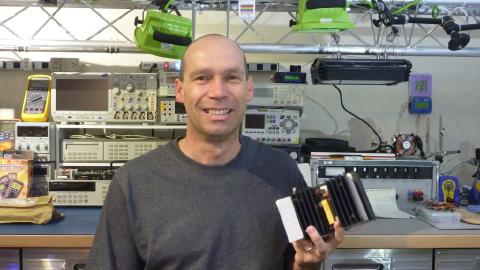
Welcome, Martin Lorton! Video blogger and fellow Clevelander!
- Fresh off replacing his basement, he stopped by Chris's basement https://www.youtube.com/watch?v=mprDdGp6rWI
- Martin got started in IT, working for the large company EDS in his home South Africa. That was bought out by HP and they managed BP's accounts.
- Once Martin moved to the states in 2008, he had extra time to begin video blogging.
- Fluke got ahold of his early videos and started sponsoring him. At one point, Martin was making a video per day. (!)
- The reason Martin got into video was to explore solar, which he did extensively and eventually he put onto his house back in South Africa. https://www.youtube.com/watch?v=agSfgsH97PE
- The test equipment was another market that he got interested in exploring, especially because it was related to solar.
- Martin says up front that his videos are from a novice perspective. Chris mentions a book about teaching adults that says this is necessary to be an effective teacher.
- Another important aspect is to maintain the community, much like Dave does on his forum.
- The support that Martin and Dave both get seems to stem from the idea of 1000 true fans.
- At the beginning, Martin did not appear in front of the camera. In fact, he hired a female actress to be in front of the camera (without much success).
- One part of solar that the mjlorton channel focuses on is the data. Chris mentioned a book by Astro Teller that does the same for marriage called Sacred Cows.
- You wouldn't think of Cleveland for renewables, but wind turbines are popping up everywhere. Lincoln Electric has a HUGE one that can output 5 MW.
- Dave's solar data from his house is available online (but not updated regularly).
- Another project that is approached from the "beginner" perspective is Martin's power supply project. Much like other modern problems, sometimes it's simply knowing what terms to Google for. https://www.youtube.com/watch?v=70dsAWBkXIM
- Sometime you need to find ways to filter the audience to get to the core of folks who really care. Money is one way to do that.
- Long form videos come naturally to Martin (and Dave), they realize how much is left out from DMM tutorials like the one from Afrotech. Same thing for Curious Inventor's 5 min videos (who told us he spent 6 months learning more about soldering before making his popular video).
- Other engineering video blogs:
- Martin acts as a stimulus for audience talking to one another on various medium.
- Both Dave and Martin are in the midst of trying out KiCad. Martin used Design Spark for the early part of his power supply project.
- Recently Jack Ganssle started putting out videos on YouTube.
- Dave lets us know that 74 series logic is celebrating its 50th video (really 5400 series)
Transcript
Martin Lorton: This is The Amp Hour Podcast, recorded July 7th, 2014. Episode 206, with guest Martin Lorton. Variegated Video Vagility.
Dave Jones: Welcome to The Amp Hour. I'm Dave Jones from the EEV blog. And I'm Chris Gammell of Contextual Electronics.
Martin Lorton: And this is Martin Lorton from Solapan Electronic Measurement Equipment.
Martin Lorton: I did not know that's the name of your blog.
Dave Jones: In that quaint South African accent.
Martin Lorton: Yes, Transplant to Cleveland. He's stuck here, folks, and I have him in my basement now. But he's not tied up or anything, so it's cool. Thanks to Dave Jones.
Dave Jones: We're actually talking for the first time. We haven't spoken before. We've emailed.
Martin Lorton: We have emailed. And this is the first time. It's hard to believe, actually.
Dave Jones: Yeah.
Martin Lorton: And the first time I made contact with you, I think, was at the end of 2000. It was literally as you were starting to go full-time.
Chris Gammell: Oh, was it?
Martin Lorton: Yeah. I don't remember. Yeah. It was one of those millions of emails you got, Dave.
Dave Jones: Yeah, right. Yeah.
Martin Lorton: You sent me a very curt, short response.
Dave Jones: Oh, I did?
Martin Lorton: Sorry about that. You almost killed my career in video. Oh, man. Oh, no, no.
Dave Jones: Did I? What did? I killed your enthusiasm, did I?
Martin Lorton: No, you didn't.
Dave Jones: Dave, give me some advice.
Martin Lorton: Good luck.
Dave Jones: I hate doing that. You know, it's like people email me with all this enthusiasm and I've got to either, well, these days I usually send a form email back, you know, saying sorry. Yeah. I can't, you know. Or I just have to do a short, terse reply because, well, you know.
Chris Gammell: Yep. Because you're so busy doing so many important things.
Dave Jones: I can't spend an hour replying enthusiastically to an email and I will. Like, you know, that's the thing. I will. I'll get carried away and reply enthusiastically and spend an hour writing an email reply. So, yeah.
Martin Lorton: I have to say we need to get more in-studio guests because right now I've been able to be rolling my eyes to Martin as you've been saying all this stuff about how important you are. This is great. It's great. Dave, next year, you can be invited to the basement too. Yeah, exactly. Dave, we have a spider web with your name on it ready to hit you in the face when you least expect it. Terrific. So, Martin, we should probably get a little bit of background knowledge for all of the listeners who might not know you yet. We have mentioned you a couple of times on the Amp Hour, but. Who am I? Yeah. Who are you? Who am I?
Martin Lorton: Yes. Right. So, basically, my day- I was born in South Africa. I wasn't actually. No, he was a UK guy. My parents were. No, well, I was born in the UK because obviously being here in the States, that's the one thing people pick up on very quickly. And I keep the one problem with my accent here in Cleveland in particular. I don't know whether it's because Cleveland's a little closed off from the rest of the world. But I have old, when I go into shops, I have old ladies grabbing my hand and say, please, just say something more. That's great. But, yeah. So, basically, born in the UK, parents immigrated to South Africa and I are six months old. So, brought up in South Africa, but I've been back and worked in the UK and traveled around Europe. So, the accent is a bit of a mixed-up hybrid. And I do get mistaken for being Australian from time to time.
Martin Lorton: Oh, no.
Chris Gammell: Oh, no. Oh, no.
Chris Gammell: Yes.
Dave Jones: Scary stuff. That's almost as bad as a Canadian being mistaken for a game. Yes. Yes. They find it so offensive.
Martin Lorton: I was going to say in an Aussie, getting confused for a Kiwi or a place to say. Yeah, Kiwi. Yeah, same thing. Or a Pom worse. Oh, boy.
Martin Lorton: But, yeah. Basically, so, I started my career. I did study electronics when I left school. But I didn't finish my electronics at college because I realized it was in the early 90s and there was a bit of a recession. So, I decided at that point in time I wanted to go into computers and IT.
Dave Jones: Oh, like everyone else. Yeah. Like everyone else at the time. Yeah.
Martin Lorton: And so, I've literally, I did that for 20 years. So, 20 years contracting in IT. Basically, ended up working for EDS, Electronic Data Systems. Hang on. Ross Perot's company.
Dave Jones: 1990, yeah. 93, 94 is 20 years ago. Holy crap.
Martin Lorton: I started in 91, yeah? Yeah. Wow. No, I mean, I also, I sit back and go, what?
Martin Lorton: 20 years, yeah. Yeah, I watched Wainfield the other night and it was like, oh, shit, that was made 23 years ago.
Dave Jones: Like, oh, no way. Yeah. Party time. Party time. Yeah.
Martin Lorton: Arthritis time. Excellent.
Martin Lorton: Sorry. Yeah, Matt. Right. So, basically, I dropped out of college from electronics, started doing IT, did that for 20 years. EDS were bought out by HP literally when I was here in the States for the first time. So, we ended up here in the States because my wife works for an accounting company. And so, they brought her over here on the comment. I came along, but I telecommuted. I continued my job for EDS slash HP. Oh, okay. Yeah. While I was here the first time. So, we arrived here in 2008. And we stayed until the end of 2010.
Dave Jones: And your company allowed you to do that? Was that common in the company or was that a special thing they allowed for you?
Martin Lorton: Well, basically, I worked supporting BP's server infrastructure initially as technical and then worked on bringing a new business into EDS from BP. So, BP, for instance, said they needed a new server farm in Europe or the States because we looked after basically because the bean counters were saving money. South Africa was a cheap point for labor. Oh, interesting. Yeah. So, we were supporting basically Southern Africa, Europe, and the States for BP, their Windows AD infrastructure. So, I was doing technical support and then I moved into kind of supporting the salespeople and helping with contracts and scoping deals and what have you. That's what I ended off doing. And that's what I was doing when we ended up here. And we also had a lot of – because we were doing that work, we had a lot of staff who used to work remotely anyway from home or what have you. So, when I said I was going to leave, they said, okay, well, are you willing to telecommute? And I said, yep. And, of course, it made it easy for me because I didn't have to come find a job here in the U.S. Of course. And I just continued. But the really cool thing about that move was that the South African day ended at lunchtime in the States. So, I mean, I would get up at maybe 7 o'clock in the morning, sign on, do work. But my day ended at about midday. And if I didn't have any projects to do – yeah, classic. So, if I didn't have any projects to do, that was it. I had the rest of the day. And that's what got me to start doing the YouTube channel that I run. So, basically, I started messing around with solar power. I'd always been intrigued by solar power. And I started playing around with small projects. I thought, let me just share what I'm doing on YouTube. And that's how I started off because I had the time while we're here initially.
Martin Lorton: And you didn't know me yet, so I was – And I didn't know. Yeah, I didn't. I was actually back here then. I went back in 2008 too. So, we could have crossed paths at some point unknowingly.
Martin Lorton: There you go. But then – so, we went back to South Africa. The secondment ended. And literally four months after being back, so in about April 2011, I, along with at least 100 others, were laid off because our jobs were sent off to India. Love it.
Dave Jones: Right. Cheaper yet again than South Africa.
Dave Jones: Yes, exactly.
Martin Lorton: MBA playbook keeps repeating history, huh? Exactly. Yeah. And I was without work. And to be in my position, without going into real politics or what have you, but my position in South Africa at that time, my age, and what have you, to find a job was difficult. So, I tried – Right. We're doing project kind of solar power work for people, and I tried – I did a bit of consulting. I did a little bit of IT consulting, and then I consulted a bit of consulting job for a guy, an inventor who is inventing a gas – Uh-oh. Uh-oh.
Dave Jones: Uh-oh. Inventor. Be afraid when they call themselves an inventor. Yes.
Martin Lorton: Oh, my goodness. Yeah. You seem naive. No experience in that arena. Totally naive. Thinking, cool. It was all exciting. They paid me for the first bit of work, and I did a whole lot of work just before Christmas in 2011, and they didn't pay me for the final bit of work.
Dave Jones: Oh, of course not. Yeah. Same here.
Martin Lorton: And I was just like, no way. I'm just not going to go through this. Working for – you know, billing, invoicing, and not being paid. I wasn't used to that. 20 years of contracting, you got paid on site. You're always being paid.
Speaker ?: Yeah.
Martin Lorton: So, literally, that's when I heard about people making money doing YouTube stuff. And I was like, I kind of – because I was unemployed at the time and doing only this odd work, up until then, I kind of increased the number of videos I did and saw it growing.
Chris Gammell: Mm-hmm.
Martin Lorton: And that's what got me into it. Eventually, what happened was the agents for Fluke Southern Africa approached me. They had either – they had seen – I think they had seen my video. The video with the Fluke 287 where the light entering the IR port in the top makes it switch off when it's in data logging mode. And I posted a video on that. And they had somehow obviously picked up on that in a few other videos. And that literally brought them to my front door. And that's when I decided after I hadn't been paid and they came to my front door and said, hey, we'll give you equipment. Because obviously, up until that point in time, I was pulling money out of my own pocket to buy a kit.
Dave Jones: Of course. Yeah.
Martin Lorton: And they said, no, we'll loan you a kit to produce videos. And that's when it took off basically. And I started my channel full time in December of 2011.
Dave Jones: So you're getting paid in gear.
Martin Lorton: I was – well, I wasn't actually. So I was being loaned gear. And I mean, this is where, you know, after the fact, you kind of realize how naive you are in those beginning days. And you realize –
Dave Jones: Oh, yeah, yeah.
Martin Lorton: You know, when a sponsor – you kind of – over time, you learn when a sponsor is like buttering you up and when they're not and what have you. And I did – but anyway, I didn't have a choice. I was small. I was doing videos. I was very happy to have loan – expensive loan equipment, which I could use to produce videos. They eventually did give me a piece of kit, which I appreciated. But I really had to go to the ends of the world to get that piece of kit. But that's what got me going basically. And I started doing what I said to them. And it's – I mean, at that point in time of their marketing people, I said to them, look, if you can give me this multimeter, I'm going to start a series on multimeter tutorials. And I almost had to talk them into it. And you'd think they'd be –
Dave Jones: See, that's crazy.
Martin Lorton: Yeah, that's just madness. I know. I don't know whether you've bumped your head against that as well. But, I mean, I had to talk them into it. And that video, which I produce now, has gained so many hits for them. And, of course, there are names in it. I mean, they're laughing. Oh, of course. But we live and learn. We live and learn. And it's basically just progressed.
Dave Jones: And that sort of embedded advertising is worth a fortune.
Martin Lorton: Yes.
Dave Jones: If they actually went to the commercial players and had to get those sort of views embedded in a video, it would cost – you'd be shocked. It would be a year's salary. Right? It didn't.
Martin Lorton: Yeah. And that's what Chris and I were literally discussing before we started recording is, you know, trying to understand your value to a company. And, you know, when you just talk about them, what have you, you don't realize the value, how much it actually costs to go outside of what we're doing.
Martin Lorton: Well, especially when you're genuine and you give a crap, right? That's the other thing. I think that – I don't think you can really buy that, right? I mean, you know, Dave, you said a full-year salary. But even still, it's got to be pretty top-notch for it to be someone who's, you know, actually cares about it and is interested in it, you know? And it has to be good gear for, you know, people like you both to care about it as well. So that – Yeah. Yeah.
Dave Jones: But the thing is how much money these companies will traditionally give to all the big players, you know, the big on – let's not name names, but all the big online – oh, we can. People can use their imaginations, I'm sure. All those kind of – yeah, right. All the big online – all your traditional magazines and – which are now transitioned to the web and all those online places, you – like I've – we've posted figures on this before and it is shocking. It is obscene how much money they spend for so little hits in the end. Yes. So channels like us are a bargain even at inflator prices.
Martin Lorton: Yes. I mean, I realize that – Yeah, now. Yes, now I realize that. Now we realize that, right? But, I mean, even a few – literally a month ago – and I won't mention the brand, but, I mean, they sent me some equipment. I did a review on it. It was a new release of some equipment. And, I mean, I'm still relatively – in terms of the ratio of active subscribers that I've got, my channel is still – is not that big. But when I look at – you know, I will get at the moment – and we're obviously in a bit of a dip because we're in summer. The States is on holiday, so the views dip off during this time. But, you know, in a week I'll get, let's say, between 3,000 to 5,000 hits on the video. And, obviously, that's what they got for the little review that I did on their equipment. But yet on their own YouTube-branded channel where, you know, in a week I have, like, let's say, 5,000 to 6,000 hits, they had, like, 300 hits.
Dave Jones: That's a lot for some of those channels too.
Martin Lorton: Yeah.
Dave Jones: Some of them get, like, 50. Yeah. You know, 10, 20. It's been there for a month and it's got 50 views, you know. Yeah.
Martin Lorton: Right.
Dave Jones: Well, and they publish a lot of stuff too.
Martin Lorton: I mean, I look at it from more of the – I keep an eye on, like, the TI channel, right? And there's some – you know, I've seen some videos where it seems like they spend a lot of money. Like, and good money, you know, like, it's good content too. But it's just – yeah, it's just – it doesn't necessarily resonate. Yes. And it doesn't – people don't necessarily want to watch it because it's very, very targeted versus more broad appeal type stuff where you guys, you know, Martin and Dave, you both have – you have an audience that's kind of subsisting with you, right? I mean, it's kind of always there. So – but that's valuable, right? I mean, that's – it's a weird time.
Dave Jones: The difference is nobody is going to subscribe – nobody is going to watch a TV channel just full of ads.
Martin Lorton: Right.
Dave Jones: Or sort of – that's just not going to happen. It's not compelling viewing, you know. And that's kind of what the manufacturer's sites are. Their web channels are. Their infomercials, right? Their YouTube channels. Yeah, they're pretty much infomercials. Right.
Martin Lorton: Yeah.
Dave Jones: I mean, you know, there's lots of great technical content on there as well, but people don't – you know. Then that's what they're not going to – they're not going to subscribe because all that's buried in all the other hundreds of promo videos, you know, products.
Martin Lorton: And it's also focused. I mean, if you're watching one of their brand channels, you're only looking at their brand. Where if you're looking at, you know, the few of us who are making kind of technical videos, we're talking about across the range. And we're doing comparisons. And that's the big thing, I think, is being comparative. Yeah. I mean, when I started off, I mean, I know you've probably – you're far more hard-nosed about this, Dave, than certainly when I started off. But the one – we were talking about, you know, the challenges of having sponsors on channels and how hard it is to deal with them. I'm very fortunate at this point in time that my interaction with my sponsor is minimal. I've been very fortunate. But I – literally, when they came on, I realized that I'd had enough of the way sponsors were treating me. So I literally held my hat up and said, actually, no, I don't want you on board. I don't want any sponsors.
Dave Jones: Right.
Martin Lorton: And they pled. So I literally laid down the law, and it's been hands-off. But I know with my first sponsor, they literally said they did not want their equipment, any other equipment in sight of their equipment when I did the review.
Dave Jones: That's not surprising. Yeah.
Martin Lorton: Yeah.
Dave Jones: And – And you've got to tell them, yeah, bugger off.
Martin Lorton: But obviously, when I was starting out, I kind of didn't – Oh, of course. Yeah. I didn't – I mean, I was looking at, like, 10s, 50, 100 views, you know, if I was lucky when I was starting out. And I literally – when I wanted to do a comparative review, I literally emailed them and said, do you mind if I – and, of course, now it's like, forget it. You're not getting that. In fact, you know, it's like when people approach – and, I mean, you obviously realize as well that when people approach and say, oh, we're going to send you this equipment, and almost there's an expectation that it's going to come back. I'm like, no. You know, it's too much hassle for me to go back down to the post office to post it back to you. It's not happening. If it's a one-way trip or don't send it.
Martin Lorton: Yeah.
Martin Lorton: Basically.
Dave Jones: I mean, I get loan gear. I mean, I still – like, I'm about to ship back, you know, that source measure unit, that schmoo.
Martin Lorton: Oh, you are? Oh, no.
Dave Jones: Yeah, yeah.
Martin Lorton: Every lab should have a source measure unit.
Dave Jones: Yeah, I know.
Chris Gammell: I was holding over my arm here.
Martin Lorton: No, I can appreciate – I mean, there's obviously some bits of kit, which is expensive. Oh, that is very expensive. People want it back. Yeah. But, yeah.
Martin Lorton: It's not that expensive for them. Come on. I know. I've seen prices. You know, these equipment makers, they're making 60% margin. It's no surprise. You know, like, they can afford it. But whatever. I'm just surprised that you guys continue to do this stuff. That's what I'm always amazed at. But, like, so, like, you know, Dave, you've always done those – and I think, Martin, you're stood in a lot of DMM type stuff as well. But, like, I don't know. I just, like – I – you guys are almost like card collectors, right? You're like – you have this – and it seems like – you know, it seems like both of your forums as well. You know, like, they're like – you know, like, oh, well, we've got to check out the specs. You've got to compare this one to that one. Oh, what's the RBI? What's the RBI percentage? What's the ERA? It's like, I don't give a shit, guys. I mean, that's me personally. Like, I just want it to work. And I want it – like, I don't care. You're not a test equipment freak. I'm not. And I don't care about specs until I run into the wall of another one. Or I'm like, it's got to be the accuracy spec that I'm running into.
Martin Lorton: That's the difference.
Martin Lorton: Yeah. And so, Martin, where did this come from for you? How did this sickness start?
Martin Lorton: Probably by sheer accident. Because when I started off doing videos on solar, I realized the audience for solar was so small that my channel would grow at a very slow rate or just – I would struggle in the early days when solar wasn't taking off that big. And I happened to – because I was playing around with some solar equipment, I went and bought the Fluke 287. And I realized what a – I was like, bloody hell, this is a nice piece of kit. And it does all these weird and wonderful things. It can data log and graph and what have you. And that's when I realized, hey, I dig this. And that's when I wanted more. And I wanted to see more. And that's when the bug – that's when it – but what I also realized – and this is where kind of Dave comes into the picture as well. And this is probably how I found Dave's channel. I started watching Dave's videos. Right, right, right.
Martin Lorton: Recommended views and stuff, yeah.
Martin Lorton: But he was – you were obviously doing oscilloscope and multimeter reviews early on. And I realized obviously that the audience range you're going to capture if you're doing test equipment reviews versus solar power is far larger than you are purely solar power. So this is the business move on your part. Oh, no, definitely. I realized if I was going to make this work that solar power wasn't going to cut it then. It's a different story now.
Martin Lorton: Definitely.
Martin Lorton: But at that point in time, that was the way to broaden my audience. But it's a double-edged sword because basically what I ended up doing was then doing a whole range of things, which were my interests. For instance, there's obviously a bit of ham radio. There's multimeters. There's oscilloscopes. There's tutorials. Graphic calculators. That was the interesting one to me. Okay, but that's on another channel. So that's another kind of worms. But I mean, I know Dave's got a second channel, and I treated mine as an experimentation because if I really had free will, I know there are other topics which I could grab a far broader range if I was just purely after viewing numbers and what have you. But yes, but that's how the test equipment came on board.
Dave Jones: See, that's totally opposite for me. I've always had the test equipment fetish. So I don't chase views there. I do it because I love test gear.
Martin Lorton: Yeah, well, you were buying. You were arbitraging stuff anyways for profit as well, right? You were buying stuff on eBay and finding stuff.
Dave Jones: Oh, I was buying and selling test gear on eBay just as a hobby because I just enjoyed getting new test gear, even restoring it or whatever, having to play around with it, opening it up, and then reselling it. That was one of my hobbies for a long time. And all this stems from before the internet when I was a boy. All of the electronics magazines, which was the only place that you got your info, right? Yes. There'd be, you know, all the ads were all test gear, so you'd lust after all this test gear. And that was your entire world, you know? Right.
Martin Lorton: It's like the Ferrari of our world, right? It's the... Right.
Dave Jones: Yes, exactly.
Martin Lorton: So you're like a muscle car kind of guy, right? That's what you are. And I'm like a Toyota Camry kind of guy, right? And I'm just... As long as it gets me from here to there.
Dave Jones: You buy a tool to do the job and that's it. Whereas... See, the other thing... For you, it's a means to an end. For me, test gear can be an end unto itself, you know? Yes. It's both. It can be both.
Martin Lorton: I don't know, man. So, like, sitting around... So, you know, obviously I've worked at a test equipment manufacturer and, like, I had the shittiest gear there. I mean, I bought stuff from China. I... You know, because we didn't have budget and I used stuff that was never calibrated. I had seven and a half digit meters that were probably operating on three and a half digits. Because you do what you need to do. That's why I don't get it. And it's like, Martin, Martin, you've gotten into this too. So you have... What's the... Oh, yeah. 74...
Martin Lorton: 34. 34. 34.
Martin Lorton: So Martin has a frigging eight and a half digit meter. Why did you buy that?
Martin Lorton: Because it's just... It's beautiful. If you want...
Chris Gammell: It is beautiful. I know. It is beautiful.
Martin Lorton: And the beauty is that technology... That's the other thing. Is that that technology came back from when? That is from, like... 80s. 80s, 90s. Yeah. Late 80s, yeah. So to have a piece of test equipment which still stands as a kind of benchmark piece of kit today, I had to have it. And I mean... Oh, yes. It will be mine. I had to have it. I had to have it. I mean... I mean, you can imagine. I was... I mean, it wasn't cheap. It wasn't cheap. I know. I know. It cost... It cost a lot of money. So I was literally sweating when I was over that kind of eBay buy now button. I was going to purchase it.
Chris Gammell: Yeah.
Martin Lorton: Yeah. Looking over your shoulder.
Martin Lorton: Is the wife there? Is she watching? Is she watching? Yeah. And the irony of that, of course, is that one of the main engineers for that actually lives in Cleveland now and works at Keithley. And so maybe we'll have to have him on at some point as well. Yeah. If we can get him. Absolutely. Yeah. Yeah. I don't get it, though. I still...
Martin Lorton: I've been around this stuff all the time. Maybe... See, that's probably your problem. You see, you've been around it. You've got the knowledge. See, for me, I don't. I love an opportunity to learn something new. I mean, I wouldn't be doing... If I was going to do my channel on something that I actually knew something about, because my knowledge in what I'm doing is very minimal. I'd be doing it on something like cycling or what have you. But literally, I do it because I'm just intrigued. So I'm intrigued to know, so what happens if I want to monitor the shelf life of a 9-volt battery? And then that opens up a can of worms, because when you've got something that precise and is measuring down to that many digits, well... Yeah. You see, you've lost... I know. You've stuck there working with it.
Martin Lorton: There's so many better things to do. No. I don't know. It's just beautiful and fascinating. Yeah. It really is. I mean, it is fascinating, but it's a... I feel like I'm losing the nerd test here, right? I mean, I'm... You are. I'm... You are. You are. Totally. My nerd credit is just slipping down the drain. And, well, Martin rules Cleveland for that. That's for sure. He outdoes me. But actually, that's a really interesting point, too. So from that beginner perspective, and that's another thing we want to talk to you about as well. You know, like the whole... The fact that you're not necessarily like... You know, you haven't been doing electronics straight for 20 years like Dave has, but how does that end up affecting, you know, your videos and how you approach this stuff? My goodness.
Martin Lorton: It's a challenge. I basically...
Dave Jones: Well, you advertise that fact, right? That's sort of like your slogan. I do. Is that, you know... I do. We learn with you. Is that kind of your slogan?
Martin Lorton: Basically, I state that I'm a kind of a novice and a hobbyist. So therein lies a challenge. And that's... And the problem is... And the big challenge of doing this for... I mean, literally. So I had jumped into this for the sake of to keep a roof over the head and to put food on the table. I mean, that's literally why I needed to find something because I couldn't find work and how I got into it. I did out of interest because I saw a gap in terms of the videos on YouTube for like, let's say, how to use a multimeter. I saw a gap and thought the videos which are out there don't really explain it really well, especially for someone who's a real novice. And I think what the problem in technology, IT and electronics is that there's a lot of people who have a lot of knowledge and know it all. And they either have big heads and an ego and don't know how to put it across.
Martin Lorton: You're talking to one of them.
Dave Jones: Well, see, I would have a real... I'd probably have a real problem doing such an ultra basic video like this is a multimeter. You turn the switch to this ohm. This symbol is called the ohm symbol. Correct. Like, I just... I don't know. No, that's not for you, Dave. You fail dismally at that.
Chris Gammell: Yeah, I... You know. So that's why you won't see it.
Martin Lorton: But I mean... So I mean, that's obviously where I step in and pick up. And it's probably also from my industry experience, IT. People love, in IT especially, kind of keeping the knowledge to themselves and keeping secrets and hiding it away.
Martin Lorton: What is that? The super... Not super users. What do they call them? The admin. That's like the admin. Yeah. Yeah. Yeah.
Martin Lorton: And so basically, I mean, that's where I came from was a point realizing that but there are people out there who have very little or no knowledge. And they find the kind of highfalutin other videos and people, the way they speak, very intimidating. And they get switched off. And that's where I thought, no, I can explain this so that they see, they can understand it and it's in a friendly way. And that's kind of what I do. And at the end of the day, you don't need a huge amount of knowledge to do that, which is where I come from as a kind of novice. But basically, I'm there because I'm just intrigued and want to learn myself. But therein lies a challenge with me and my channel and what I'm doing. And that there's an expectation from the viewership. Because a lot of people obviously don't read the blurb on the front page about who I am and what I am. And they're just like, why haven't you got this microcontroller controlling this and that? And I don't have the time that even a normal hobbyist would have to kind of learn their trade and play and enjoy what they're doing. Because as you know, Dave, and I mean, you obviously plow a lot of time into this. It takes a lot to produce a video, to run a forum. My forum is nothing like yours.
Dave Jones: Oh, yeah, forums and dealing with advertisers and emails.
Martin Lorton: It just consumes the day. The day is gone. Absolutely gone. Yeah. So for me, and then the problem is that for me to produce the videos which I know are going to help people, I need to learn it myself. And you need time to do that. And you need undivided attention to do that, which is there's not much of that, especially when there's a family.
Dave Jones: Yeah, I don't know how you do it. Yeah. Because I know from the video production and running a full-time channel. But on top of that, you've got to learn the stuff as well. That is super difficult.
Martin Lorton: Yeah. Now, that's the challenge for me is obviously the time to learn and try hopefully get it across as best I can and as correctly as I can. And fortunately, I'd say, you know, 85%, 90% of my audience totally respect that and understand that. But of course, you've got that small percent you just know. They're not happy with that and they want something else. And as I say to them, if you're not happy, quite happily unsubscribe and go somewhere else. You know, you're not going to hurt my feelings.
Dave Jones: Even if you make a mistake.
Martin Lorton: I know.
Dave Jones: You know, ooh.
Martin Lorton: Yeah.
Dave Jones: Get something wrong in a video. Ooh.
Martin Lorton: But yeah, that's the challenge. But I mean, it's funny because, I mean, the other challenge is obviously moving to a new country. You're trying to set up home. You're initially renting. Then you break down your lab. You buy a home. All the challenges that go with migrating to the States. The States is not an easy place to come to because there's a lot of admin and paperwork. So, I mean, basically, we just got on top of that, I'd say, just before the spring storm started and I had the issues in my basement. Oh, yeah. And so, for the last three weeks, I've been literally head down trying to sort out my basement. So, yeah. Such is life.
Dave Jones: Now, you were full-time when you made this move to the U.S., right? Yeah. This sort of permanent. Is it permanent? It's a permanent move, isn't it?
Martin Lorton: It is, yeah. Green card in process is in the works. Right, okay.
Dave Jones: So, permanent move. But you decided. America! Yeah. America! You've got to do it, yeah. Land of the free. Home of the free.
Martin Lorton: Come on, do it again. Do it at the end of the... If people hadn't here at the end of last week's video, or audio, rather.
Chris Gammell: United States of America!
Martin Lorton: That's what it was, yeah.
Chris Gammell: United States of America! America! USA! USA! USA! USA!
Dave Jones: Anyway, my question was, yeah, you were full-time when you made this move, and you decided to go to the basement. You decided to build your lab into a basement instead of, like, what I'm doing in an office business part, you know, actually getting a separate space. Why?
Martin Lorton: Why?
Dave Jones: Why, and what are the pros and cons?
Martin Lorton: Um, look, obviously coming to a new country, finances are a challenge. Right. For me to go out and even rent, forget about buying a space, renting a space.
Dave Jones: Right, are rentings expensive there in Cleveland? I thought they were a dime a dime.
Martin Lorton: Not price of a VCR. Yeah, it depends.
Martin Lorton: But that's it. I think it's more hassle factor. I mean, that's one part of it.
Martin Lorton: Yeah, look, I can write it off to, obviously, finances and whatever. That certainly is one part of it. Right. But hassle factor, I mean, literally, what a laugh. I slide down the banister to, like, make sure my daughter is dressed and ready to go off to school. A school bus comes and collects her, so I'm very fortunate. I walk out the door and I walk down the sidewalk a little bit and off she goes. And then I slide down another set of stairs and I'm in my workspace. And the beauty is that if there's anything that needs doing around the home, because my wife works, she puts, she's, yeah, I mean, she's out in the office and she works fairly long hours. So at least I'm there. It's very convenient. I mean, I wouldn't, if I was traveling, I mean, I laugh. Someone, I'm in the middle of this power supply project and someone tongue in cheek said to me, oh, you need to be manageable. You need to be told when you can have lunch and get in the work and just get it done. And I'm like, lunch, lunch. I don't have wasted time commuting. I don't, if I take a lunch, it's a very quick lunch. So it's that convenience of being right there in the home. And literally, so when the daughter comes home, I know by like literally 4.30, that's it. I've got to be done, dusted, because then there's homework to be done. And my wife and I alternate. There's a couple of days a week I do the homework and then otherwise I'll go cycling to keep my sanity. But yes, no, bloody convenience being down in the basement. Convenience, yeah. Yeah.
Martin Lorton: Well, I think the other thing too is that in Australia, it seems like you don't have as much room there, Dave, just because the real estate's so expensive. I mean, obviously you bought a space, but, you know, buying a larger space for your house then probably wouldn't be worth the cost. Whereas around here.
Dave Jones: Oh, a larger space for a house. No, no. It's not like we can go buy a bigger, well, we could go buy a bigger house, but yeah, like financially it would be, yeah, a huge move. And that is one, Martin's right, that's one of the things I miss about having my lab out in the garage there. It's probably the only thing I miss, is the convenience. You know, because if I'm editing a video and I goof something up or I forgot something, I can just dash like two seconds back out of the door, even if it's in my pajamas, I can go out back in the lab and just actually record another 10 second clip and then insert it into the video. I can't do that. Yes. Now, you know, although, no, it's different now, but most of the, for the last two years I've been here, I would shoot the video here and then I'd take my SD card home. I'd literally pull the SD card out, take it home and edit there. And, you know, I didn't, I really had the luxury to come back and reshoot something or add an extra clip. So the video was, you know, it's turned out how it turned out. Yeah. Kind of thing. Yeah. The only downside. But now I flip that on the head.
Martin Lorton: The only downside is if you have to go, if you have to go back to the garage is if you, if you happen to have changed throughout the day. I have run to that where it's like, oh crap, what shirt was I wearing when I recorded? You have to throw that back on. Continuity. Yeah. Continuity. Yeah, exactly. Like there's people that do that in movies where they're like, oh crap, was someone holding that coffee cup when they had that shot ended? Yeah. You have to do that kind of stuff at that point.
Dave Jones: I have floated the idea of moving back, you know, like, like talking to the wife, okay, let's, you know, we can, let's get a bigger house and I can build a purpose designed, you know, lab slash workshop out the back. Right. Recorded studio. And then she'd make, she, you know, I thought this would be well received, right? Because I'd be home more often. She complains that I'd spend enough time with her. Right. And so I thought this would be received well. Right. And it turns out, no. What is said to get out? Because then she would never see me because I'd always be out in my man cave, you know.
Martin Lorton: Yeah, I get that one now too. Yeah. Yeah.
Dave Jones: Right. No, can't win. So no, you can't win either way. It's, so basically the take home to all the viewers out there, don't get married.
Chris Gammell: If you want to, if you want to be productive.
Martin Lorton: I'm so sending this to Mrs. E.E.V. blog. Yeah.
Martin Lorton: Oh man, that's funny.
Chris Gammell: Oh dear. But yeah.
Dave Jones: So I can't win.
Martin Lorton: No, you can't. Oh, you're not supposed to, mate. So Dave, you've crossed an interesting one there. And I have to ask you, so at this point in time, how long do you see yourself doing, is this, how long do you do E.E.V. blog for? Do you see an end to it? Or is there something after E.E.V. blog? What's in your mind space?
Dave Jones: That's a common question. And it's not, I don't really think about it, to be honest. It's not one of those things. I just, as long as I'm enjoying what I'm doing.
Martin Lorton: You'll continue.
Dave Jones: You know, I'm going to continue to do it. Yeah. And it's, even though I do work my ass off, you know, as long hours, as you know, doing stuff like this and maintaining the whole, you know, channel and thing, and everything that goes with it. Um, it's a lot of hours, but like, ultimately it's incredibly flexible. I enjoy it. You know, now it's, you know, it's quite frankly, it's paying quite well. And I wouldn't go back to, you know, I'm making a decent living out of it. Why would I?
Martin Lorton: I want to ask Martin the same thing now, because I have to know when I'm going to have to go to his house and knock on his door and be like, what the hell? What the hell, man? What are you, what are you doing? Switching over to cycling full time? So, so what, Martin, same question back at you. I mean, are you going to do this for the longterm or? I mean, you're, you're progressing. I mean, I think you're progressing into the, from, you know, novice to intermediate as well. You know, you're moving up in that space as well. So it's interesting. Yeah.
Martin Lorton: I mean, there's, there's obviously a, a good potential growth path in terms of me growing my knowledge and doing more and more and more for what viewers want to see. Um, I've kind of set there's, I've got a couple of projects, which I'd also like to do, which would potentially consume me full time. Um, and so it's also a case of while this is enjoyable and is working, what have you, I'll go along with it. These potential projects, which could, could come along could potentially wind up being video material as well. Right. Yeah. But yeah, I play it by ear again, as long as I'm enjoying it. But the challenge for me, I just also want to get to a point where I've got no, I've had district since I've started the channel, I've only had distraction, whether it's like just starting out and trying to get the channel off the ground, changing continents and moving to new place, buying a house, a bit of a distraction.
Martin Lorton: Basement.
Martin Lorton: So I'm hoping like in the next year I can actually just settle down and get into a normal role and routine and go, cool, this is working because you pick up a lot of flack along the way from people when, when, cause people don't respect that you've got a life and things happen in life, but, but yeah, as long as it's good, I'll stick at it. But I do have some other challenges and goals in life, which need to be, I need to get to. Well, that's good too. It's good to have stuff to work towards.
Dave Jones: Like, like I, like, because this is essentially my hobby, like even if I won, you know, 10 million bucks tomorrow, right? You'd probably still, still see me doing this. Yes. Probably not as, you know, probably not as frequently.
Martin Lorton: Dave would be flying us out, Dave, Dave would be flying Martin and me back out to Australia to hang out for a little while at least, right? First class all the way. Uh, but yeah, past that, what else is there to do?
Dave Jones: But I would still do it because it's my hobby. See, that's the thing. I started this as a hobby. It's still my hobby. So I, I, I can't see myself ever stopping it from a hobby point of view. Um, so, you know, it's, I think it's always going to be there because I've been publishing because this is, I still see this as publishing stuff, right? It's publishing material, just like I published my magazine projects back when I was a teenager, you know, it's, and I've been doing for 20 plus years. It's something I'm going to continue to do just because I find it enjoyable. Whether or not I'm doing it as a career, um, in, you know, 10 years time, I don't know. But, uh, what I do know is that, um, I do know the power of a brand. Well, I do know now the power of a brand and the power of having a name and a large audience. It, it, it, it gives you flexibility to, you know, and, uh, to do, you know, to move out into many different things. Yes. Yes. So to, to throw that away, I don't understand anyone who would build up an audience and then throw it away.
Martin Lorton: Yes. Yeah.
Dave Jones: You know, that is just, wow. I can't picture myself ever doing that. So I'm always going to keep my hand in, you know, and keep that audience sort of viable.
Martin Lorton: Yep. I'm with you.
Martin Lorton: Yeah. Well, there's the, how the whole thousand truth fans type idea, right? So people don't know that it's basically, it's an idea that if an artist, you know, not calling Dave an artist, of course, but, uh, oh man, he can spin a yarn with the best of them. Uh, no, but basically the idea, I forget who posted it originally, but the idea was basically if you have a thousand fans and, you know, basically you could crap in a bucket and, uh, you know, enough of them would pay for it. That's probably a really bad way to say it, but basically whatever you're going to put out into the world, you know, assuming it's good, not crapping in a bucket, you know, basically, uh, you know, you have fans that are there that are going to help support you. And that's what Dave's talking about with like, you know, having people that are interested in your life. And that's, I think that's what both Martin, you and Dave have, you know, you have people that are interested in what you're doing and, and, you know, the projects you're working on and stuff.
Dave Jones: Well, that's the thing. People like us as personalities because we're in front of the camera. There are other YouTubers out there who are, you know, you, you never know them. You, you wouldn't, if you bumped into them on the street, you, you just wouldn't know them. Well, that's the corporate problem too, right? In fact, you might not even know their real name. Yeah. Right. So, so they don't have, you know, they can't go off and do something else and go, Hey, this is me. You know, they, a lot of people just won't follow you. But if people know you as a person, then they will follow you. Yeah. So, or, or a decent percentage will. So, you know, if I went and formed another channel doing something entirely different, then, you know, at least a percentage are going to follow me.
Martin Lorton: Yeah. Now, it's an interesting point because when I, when I started out doing my videos, I was always behind the camera. I never put myself in front of the camera. And I probably, and what I, what I, again, perhaps a little naive or just trying, trying to understand audience or what have you, because I was literally at that point in time, desperate just to make a career and earn money. I mean, that was a desperation at that point in time was I realized obviously a large percentage of my audience was male. And I'd also been following some good techie IT female video bloggers. And obviously you've got the combination of a nice pretty face that you're looking at who, as long as they know what they're talking about is a really good, powerful combination. And because they create a personality and everything, and it's something nice to look at, and they talk about something you're interested in. So I thought, and that's what I looked for and thought I'd bring in a female. Hey, I'm a handsome guy. I'll be in front of the camera. No, no, no. I'm going to be. No, no, no. Okay, well. I advertised for. Ms. Lorton. I advertised for a female presenter. Oh, I think you're talking about that actually. Yeah, I mean, the videos are still on my channel where I literally have, I introduced this lass to who I was going to have kind of present the videos and what have you, because I thought that would be a good draw card. But I soon realized.
Dave Jones: So you're going to what, hire someone or what? No, I did. I did.
Martin Lorton: Oh, really? You're like an actress, right? I literally, I advertised.
Dave Jones: Oh, she was an actress, was she?
Martin Lorton: She was a veterinarian, she reped veterinarian products and what have you.
Martin Lorton: Oh, okay. Like a sales rep.
Martin Lorton: Yeah. So she was a sales rep, but she had been, she'd been on TV a couple of times and so she knew how to put herself across and she looked good in front of the camera. So it was a fluke that I found her and she was really, really good. But the challenge was with, when I tried to do the first video, you kind of, I wrote out a script. Of course, that's the worst thing you could do.
Chris Gammell: Yeah, yeah.
Martin Lorton: It's becoming like all those things we talked about, right?
Martin Lorton: Correct, yeah.
Martin Lorton: Just making these videos that no one wants to watch, yeah.
Martin Lorton: Yeah. So you try, this is a girl who, technology is not her arena. Now you're trying to give the poor girl a script and she's trying to go through it and talk about what's going to happen over the next year on the channel. My goodness, failure. And when I actually put myself in front of the camera and asked my audience, I said, look, there's this good lash. She's going to, what would you prefer? Shall I have her on another channel doing other stuff? And the resounding response was, no, Martin, we want you in front of the camera because we want to watch you. And I was quite shocked by that.
Martin Lorton: See, I think part of this is that us as technically minded people as well, we forget the whole human aspect. And it's like human beings want stories, right? That's one big thing. And human beings want to relate to other human beings. Those are the two big things. And yeah, you were trying to, you were trying to go around that.
Martin Lorton: Yes. I see. I didn't want to put myself in front of the camera at that point in time. I was trying to find a clever way around it, which I thought was a clever way around it. Obviously it wasn't. And probably that's where I started to see my channel grow actually was when I put myself in the camera and started doing tutorials and that kind of thing. And that's when it took off. Yeah.
Dave Jones: That doesn't surprise me because you've got a very pleasant on screen personality, whereas I'm sort of, you know, quite harsh.
Martin Lorton: I can listen to Martin talk all day long. I mean, Dave gets annoying after like five minutes. It's the Aussie squeak. It's no good. I'm kidding, Dave.
Martin Lorton: He makes up for it in personality. He does. He does. And rage.
Dave Jones: I make up for it in enthusiasm. I lack all talent. And the only thing I've got going for me is enthusiasm. That's what I always say. So you.
Martin Lorton: Go ahead, Dave. Go on, Chris. Oh, I was going to ask about solar because this crazy, this crazy South African decided to move to Cleveland and then he's also deciding to do solar experiments, which we didn't mention last week. So I didn't want to bring that up because what the hell are you thinking? What? Now, believe it or no. Also, I watched your solar video from back in South Africa and that setup you had back there was frigging awesome.
Martin Lorton: Now, we see the interesting thing is that South Africa, because of that, we've only got one energy supply creates its own challenges. And you kind of learn a lot if you try and install a household solar system in South Africa, because there's so many challenges you have to get around. But so to answer your question about the weather in Cleveland and solar, Germany just recently 50 percent, 50 over 50 percent of their power at one point was supplied by solar. Right. In a country where their solar irradiation is remarkably low.
Martin Lorton: Right. Right. Sunny days is less than norm.
Martin Lorton: So you can't go on the fact because actually your peak power is going to be put out here in Cleveland in the middle of winter on a nice clear day where it's like zero degrees and you've got a bit of haze in the air because it disperses the light. So you get dispersed light, cooling of the panels. That's when you're going to get your... Cooling of the panels makes it more efficient.
Chris Gammell: Yeah.
Martin Lorton: Yeah. So I was watching your video and that I did not realize that. I've never looked at like the equations or anything like that. I didn't realize that the cooler stuff actually did help the output. That's huge. And so you said in your 22... So you said a 2.2 kilowatt setup, you said you on a cool day with cloud cover to disperse or haze to disperse the light, you said you'd get 2.6 kilowatts versus 2.1 on a sunny day. Yeah. Which was really confusing to me. Yes.
Martin Lorton: No, I mean... And that's what kind of got me into blogging about this on YouTube because I was taken aback when I started playing. I started doing that here in Cleveland initially before I started...
Martin Lorton: Cleveland! Cleveland!
Chris Gammell: I started it. At least we're not Detroit.
Martin Lorton: But yeah, no. It's amazing. So you don't have to... And I mean, the next thing is obviously people worry about shading and if you've got shade and that kind of thing. So the next thing I'm doing is going to obviously install solar power on the house there in Cleveland. I know that it'll perform well in winter as long as snow isn't... Okay. Ain't coming to panels. Yeah, yeah, yeah. But shading. We have trees as a lot of neighborhoods... Right here, yeah. It's a Martin toward my house as well. Yeah. There are trees all around the place and that up until now has been a challenge. But the technologies which are being released right now allow you to get around that. And so that's the next... And again, I just... See, that's what blows my mind about sharing things on YouTube is that no one else really is divulging that to a lot of people. The companies even trying to sell this equipment don't really put it across that well. Right. You think you'd want to open up other markets, right? And it's just to make people aware who are into this or being deluded by there's some really bump marketing about what solar panels can and can't do. And there is a lot of BS out there.
Martin Lorton: You know, I saw a thing the other day, just kind of like the database type of stuff, like data-based decision making. It was actually from the guy that runs the Google X lab, the astroteller. He wrote a book about marriage, right? Marriage and divorce, which is weird, right? It's very non-sequitur here. But it was all based on the idea that like him and his wife wrote it. And they wrote it based on not on like these stories, like the stories that it's based on actual hard data about what works and what doesn't. So it's the same kind of thing where like with solar panels, what works and what doesn't actually having that stuff out there and actually explaining it based on the data versus, oh, well, I heard that, blah, blah, blah, blah, blah. Yeah. And then the book's called Sacred Cows instead of Sacred Vows. I'm not sure why, but. I thought it was interesting. Oh, that's correct. Since Dave says to never get married. So you are going to install stuff here, though. Yes. Yeah. So what does that mean for Cleveland? Like, is that like, are there even installers in Cleveland?
Martin Lorton: Good question. I actually haven't looked to see, but I mean, there are. I mean, you go down to the Science Center down on the lakefront. They've got a big wind turbine and a whole lot of solar panels providing a fair amount of their power.
Martin Lorton: Yeah. Yeah.
Martin Lorton: There's another wind turbine along the high. So, I mean, it's happening.
Martin Lorton: Oh, my God. There's one. Yeah. Lincoln Electric. So people, this is actually up where I used to work at ABB. There's Lincoln Electrics, which is the welding company. They installed a five or six megawatt turbine, I think it was. It is absolutely massive. And I almost crashed my car every time I drive by it because it is the coolest thing. It's just, it's like, it's like three frigging, I don't even know how big they are. They're probably like 170 feet or something like that. I mean, they're really, really big. Yeah.
Martin Lorton: It's awesome. It's probably one of my frustrations in life is that we, and I'm going to pick here in the States in particular. I mean, energy is a huge issue here in the States and it is just consumed. I always use the example. When we're in a condo, we have this, you have this, you call it a vanity, I just say, bathroom mirror. Yeah. With like the lights above. Right. And the lights above and we, and they're literally 11 incandescent 60 watt globes above this mirror. Yeah. Yeah. And I, you know, I used to think perhaps I'm living in like an ex showbiz condo or something, but it's not. You go to other people's homes and it was almost a norm. So it's the one, it's the efficiency and just radical use of power and energy here in the States. And the lack of using alternatives or being realizing your own home. I mean, and Dave, you obviously, um, that's my next, I'll throw a kicker back to you afterwards because I mean, you've got solar, but I mean, each of us have got, we've mostly got enough roof space and property to generate a large part, if not all of our energy requirements. If you, if you're energy efficient. So, I mean, how's your system working out? Do you monitor it?
Dave Jones: My system, I've, yes, I've, yeah, the data's up on, uh, up on a, a website. It's not live, like I upload it every couple of weeks, but yeah, you can see all of my daily output graphs and all that sort of stuff. If I remember to upload it. Um, but yeah, all, all the data's up there. Anyway, it's been up there for a year and, uh, roughly we have, uh, exported more to the grid than we've used.
Martin Lorton: Brilliant.
Dave Jones: And that's after, and that's after we've actually consumed it during the day because any, because we've got what's called a, uh, net meter. So, uh, yeah. So that if we use energy during the day, then we use it and we don't extract anything from the grid and then any excess goes back out to the grid. And it turns out, yeah, we've almost exported as much as we've used from the grid over a year. That's brilliant. So yeah, we're essentially, as far as the, you know, as far as doing our bit goes, we basically generate all our own power.
Martin Lorton: Brilliant. Yeah.
Dave Jones: That's pretty much how it works. Yep. So it's great.
Martin Lorton: Yeah. You know, and that's basically, I mean, for, and I've been talking about projects after YouTube and what I'm doing, I mean, but that's, that's what I've been intrigued to do is do a really big project experiment showing that basically you can, you can account for a lot of your needs, whether it's water, your sewage, your power generation, whatever, you can do a lot of that within your own space. Oh, totally. I mean, when you see what we waste, it's scary. I mean, it's funny. I'm not there. I mean, I'm split in two halves. I'm drawn to solar because I'm a geek about it. I just, to me, I'm fascinated and thinking that light can produce electricity.
Dave Jones: It's very efficient. It's very efficient and just, yeah, you know, it's like, why not? Why aren't we harnessing this? Yeah.
Martin Lorton: So I'm not, so in that regard, I'm not a tree hugger. I just, I'm just geeked out by that, that the fact that you can do that. But then the other half is also there saying, bloody hell, you know, we, we are chewing away energy, especially here in the States. And I just see the viability of it. So it's nice. It's a nice balance because I'm not gravitating towards solar because I think, oh my goodness, the end of the planet. Planet and all that, yeah. I'm geeked out by it, but I also see that we could be far more efficient and there's a good side to it.
Dave Jones: Got it. Did you know that here in Australia, 10% of homes now have solar panels? Heavens. Yes, 10%. We, we have 10 million homes, roughly 10 million homes here in this country and over a million of them now have solar panels.
Martin Lorton: That is incredible. So obviously there's some backing to get, make that happen.
Dave Jones: There was a huge government backing about five years ago and, and it just went gangbusters. It went crazy.
Martin Lorton: So what freaked me out there was use the word was.
Martin Lorton: Yeah.
Martin Lorton: Was. They basically canceled it. Yeah. And that's happening everywhere. It's always a was.
Dave Jones: Well, granted it was a ridiculous feeding tariff. It was 60 cents.
Martin Lorton: And Germany was 70 cents per feeding tariff as well. Okay. Yes. It was, it was, it was a gold rush.
Dave Jones: They couldn't afford it. Yeah. Yeah. It was a gold rush. The government put it in and they just had to shut it down because so many people were signing up. It was basically free. It's tough. Get a free solar system.
Martin Lorton: It's when you, it's when you, it's when you combine policy and technology, right? There's always a problem, right? Anytime that happens. The balance is quite right. Broadband is another big one, right? I mean, that's always the same problem.
Martin Lorton: You see, that's the sad, you see, that's the sad thing that you kind of need to strike the healthy balance because new people are not going to opt in. It's great. You've got 10%, but then does it stagnate at 10%? Yeah. Right.
Martin Lorton: We'll make it to 20.
Martin Lorton: That's right. You know, is it going to grow? And that's a challenge here as well. I'm setting my system up not to feed into the grid because at the moment, as far as I can tell, the electric company here isn't going to buy it back. And there's a lot of, and there's a whole lot of red tape. Right. Yeah. If you want to do it. Right. So they don't make it, they don't make it easy at the moment. Right.
Dave Jones: Yeah. That's a problem. Here, it's easy. You know, here, every energy company will buy your energy back. It won't, like they, like I'm getting eight cents, right? I'm selling it back at eight cents. So it, you know, so it really doesn't pay for itself if we're not home. If we're using no energy during the day, then it's not a very cost. It's not a big, it's very long payback period. Right. But because we're both often home during the day, we do use a lot of, and we changed our habits to use a lot of energy during the day. We can really make use of it.
Martin Lorton: But if you had an EV as well, you'd also store in those, right? That's another thing.
Dave Jones: If I had an EV, it'd be charging at home during the day. Right.
Martin Lorton: And because gas prices are going up so much, and petrol prices are going up so much, that would also offset it. Yeah.
Dave Jones: And as you said, the popularity dies off, but now solar panels are so cheap. Yeah. Right. Whereas five years, five, six, seven years ago when they started this scheme, right? Solar panels were ridiculously expensive. So you needed to have it subsidized for people to, you know, take it up kind of thing. But now, solar panels are so dirt cheap from China. It's just crazy. I paid a lot. I paid a real premium for my system. I bought, like, top brand panels, a top brand inverter, and it probably cost double what I could buy a similar size system for using all, you know, cheap Chinese components kind of thing. But yeah, systems are cheap here.
Martin Lorton: Well, Martin, you said you're going to compare a lot of those, right? You said you're going to buy a couple different types of panels.
Martin Lorton: That's what I'm going to do. I mean, I'm saying to Dave, I mean, don't ding the point, the fact that you've actually paid good money for a good system because I... Oh, no. No. Because you soon realize there is a difference. There is a difference.
Dave Jones: Oh, yes. I knew that. I knew that. So especially on the, like, inverter side of things, I don't want to buy a cheap... You know, if there's a $1,000 inverter and there's a $200 inverter, there's a reason why it costs $200, right? It's because the power transistors in there are, you know, they got them from the, you know, rejects from the shop floor and their capacitors are crap and the, you know, like, yeah. No. Don't want to go there.
Martin Lorton: Well, no. I mean, leading to what you're asking, I mean, what I'm hoping to do is, for one, and it's what I said in the last video, is just don't buy cheap because these things are... If you're going to get your return on investment, it needs to last 10 to 20 years, depending on what's on you.
Dave Jones: 10 to 20 years. Yeah, of course.
Martin Lorton: That's right.
Dave Jones: And they probably can, right? Yes. You can probably get 20 years out of decent brand solar panels.
Martin Lorton: Yep.
Dave Jones: Maybe not 20 years out of your inverter. That might be asking a bit.
Martin Lorton: Well, so that's a fascinating thing. See, that's what I want to prove. Okay. Because the moment the guys who are producing the microinverters and the big name brands who have only been on the market for, let's say, three max five years are giving 20, 25 year...
Chris Gammell: They are, aren't they? Wow.
Martin Lorton: Like warranties? Okay. Really? Yes. Wow. Now, how do you do that?
Martin Lorton: Well, that's if they're still in business. You hope no one files that a claim or if they do, you're no longer around.
Martin Lorton: Yeah. So that's one of the things I want to do is to bring in the, like, cheapy stuff. The more expensive stuff. You can do some arraignment sequitions. You're going to be like, put them in an oven and bake them out or what? That would be... No, that's exactly the thing to do because that's the biggest enemy, obviously, is heat. Yeah.
Dave Jones: That's a lot of work to do a video like that.
Martin Lorton: That's a lot of work, man. That's a full-time job. That's being a test lab, you know? Yeah, that's a full-time job. Yeah. Yeah. That's fun. Totally. That's fun.
Martin Lorton: That's fun.
Dave Jones: You would want to get channel value out of that, video value. You would want to get a dozen videos out of that. Yeah. There's nothing worse than working on something for a month than getting one video out at the end of it.
Martin Lorton: I can just see Martin posting now, hello, chaps, another video of my inverter in the oven. Enjoy. Bye. Yeah. Um. It's like...
Martin Lorton: It ain't going to happen over a month, that's for sure. Yeah. Right.
Martin Lorton: Yep. Wow. So, Martin, speaking of power, I wanted to ask you about this because... So, another thing we... You know, we talked about the beginner side of things. You know, you are jumping back into a lot of these projects as well. And I thought that our audience as well. You know, our audience is pretty diverse as well. We have people that are software that are getting back into hardware. A lot of IT people are getting back into hardware as well. You know, and many experienced hardware people. But, you know, you're going back into this power supply project. Our friend across the pond here is also working on a power supply project, allegedly. Yeah. Allegedly. But I'm interested from your perspective of, excuse me, of, you know, kind of getting back into the electronic side of things. Just how that process has been for you and how you find, you know, the available resources and how you've been dealing with building a power supply project.
Dave Jones: Especially publicly. Yeah. Especially publicly.
Martin Lorton: Dave, Chuck, I mean, I've watched... I remember watching your two-hour... Was it two or three-hour video that you did answering questions or what have you?
Dave Jones: Oh, right. Questions, yeah.
Martin Lorton: Where people in particular go and ask about your USB power supply project. And you talk about the challenges of doing it with a camera and the public watching you. And that, yeah, that is the biggest challenge.
Martin Lorton: Excuse me. I'd like to say I've done this. I've done this many... I've done this for frigging six months now. So, it can be done, folks. Sometimes you need to get paid for it. But, you know, I have many great members.
Dave Jones: Yeah, but yours is a paying private audience.
Martin Lorton: I'm just saying that it's got done. It got done. It's got a difference. There's a difference. It's six months worth. So, it can be done, folks. Of the one thing I have done around here. And I love my CE members.
Dave Jones: So, you had the same experiences, mate. So, you had the same experiences, mate.
Martin Lorton: It's a challenge. I mean, I'm doing it again. I'm coming from very little experience in electronics. And I'm trying to learn along the way. But, I mean, that's... For me, that's the beauty and the challenge of it. I'm keen. I mean, when I was... It's like when you're in school and you have to do geography and you have to do science. Do you really want to sit there in the geography class and do it? No, you don't. When I was at tech studying electronics, we did this project. The design was handed to us. You had to... Okay. You had to do the PCB and all that kind of... And get the routing done. And at that point in time, I think XTs had just come out and you had just had the auto routing and that kind of thing happening. But you had... There wasn't the kind of real lust and intrigue to understand exactly how it all worked and hung together. And now, I am intrigued to see how it all hangs together. Because I can see the options that go beyond this power supply project as well. So, I mean... But there are the challenges. Again, it comes down to time and what people want delivered in a certain space of time. And I've kind of now committed myself... To me, this is the monkey on the back. Is this... I mean, there's some... It seriously is the monkey on the back. And I have to get it done. And I have to get it out there. So, again, I'm fortunate. I've got people who... When they see the video and they see the challenges, they email me. They go, Martin, here we go. Here are the stages. And so, I've got a lot of help from the audience, which I really appreciate. I obviously just need to bang my head on the bench and just see my way through it. But once I do, I'll be really chuffed. I mean, it's like when I did the electronic DC load. And that, of course, Dave Jones is...
Martin Lorton: Yes, of course. Of course.
Martin Lorton: There's more trouble.
Dave Jones: But I mean... That quick little video. And I like... That's... World's simplest circuit with a transistor and a bloody op-amp. And people think it's...
Martin Lorton: But you know, Dave, isn't that the weirdest thing?
Chris Gammell: It's not on the whole cottage industry. Correct.
Martin Lorton: But I mean, I just did... Because I was struggling for time and I had to get some videos out. But I was doing my basement and I sat in our dining room, at our dining room table, and I did a video on connecting electrical wires. And I did it because I was really... I'm building... I've got a secret project that I'm building for my own entertainment and sanity offline of doing it on YouTube. But I needed to extend a PowerPoint, an outlet, I should say. I keep on tripping over the American terms and realizing I have to kind of relate more people talk about them here. Yeah, you need the electric code book. But I needed... But all I needed to do was join, you know, join two electrical cables together. And here in the States, they use these wire nuts that you...
Martin Lorton: Oh, they suck. Yeah. And they do. They totally suck. It boggles my mind. We can buy our own stuff here, Dave, because it's 120. It is scary. Right. Okay. Oh, it's fine. 120 tickles.
Martin Lorton: But they're supposed to stay together. And these little wires wrapped together with a wire nut around it. And I found a product on Amazon, which I... Which, again, because I'm not an electrician, I thought it was quite cool and unique. And I tried it. It was a push-in wire connector by... Was it Wago? I think it was a company. And I just did a simple video demonstrating... My goodness. People like the comments and the discussion. It's suddenly... And I'm thinking, this is just joining electrical wiring. But it's important to a lot of people, obviously.
Martin Lorton: And you just don't realize at the time. It's bike shedding. That's bike shedding, right? Exactly. Yeah. What's that? Bike shedding. We've talked about that on the show before. A lot of people have stuff to say about stuff. You don't care about... So when you have a nuclear reactor, you don't care about the... You bring up the technical specifications of the reactor. Nobody has any comments. But you bring up the color of the bike shed out back.
Dave Jones: Oh, the color. Right. And everybody has an opinion. Yeah, yeah. Right?
Martin Lorton: I think that's the difference there. Yeah. But there is a lot of use of that particular technique as well. Not to be... I mean, I don't mean to say that the bike shedding phenomenon means that it's not useful to people.
Martin Lorton: But that's where a simple little concept where you don't even think it's going to go anywhere. You just... It was a self... I was interested. I thought it might appeal to a few people. Yeah. And like Dave's little electronic DC load. I mean, hello. Yeah. Bang. Yeah. It suddenly spawns a whole lot of use.
Speaker ?: I know.
Martin Lorton: A whole lot of... I mean, heavens. So I mean, that was... So my power supply is like that. I did a whole series of videos trying to build an electronic DC load and understand. Because although Dave did try to explain it, he's talking up here at a certain level. He's holding his hand up by his head. You can't see Dave. I can see this.
Martin Lorton: But no one else can.
Martin Lorton: Yeah, of course.
Martin Lorton: This is radio, man. I'm turning the pitch a little bit, Dave. He's used to video.
Martin Lorton: But from watching that video, I thought, I'm sure there's a lot of people. And I didn't fully understand how every single piece worked. And I wanted to understand it. So I went through the process of banging my head, making mistakes. And I think a lot of people appreciated that. And it's going to be the same with a power supply.
Martin Lorton: Yeah.
Martin Lorton: Except there are some impatient people who just want it now. But yeah.
Martin Lorton: Well, you just point it over to Dave, though. I mean, you're totally right about that. And I think the other thing about a lot of this stuff, too. Actually, there was this book that I got. When I started Contextual Electronics, there was this book called Teaching Adults. And actually, the guy wrote in there. And maybe I've mentioned it on the show before. But basically, the guy wrote. He said, if you are an expert and you're trying to teach beginners, you are already at a disadvantage. Yeah. Because you cannot empathize. You cannot understand why it's such a problem to understand these concepts that you've internalized. Not only that, I think about it. And I think about how many times that it's gotten to the point where as soon as you know what the term is, the terminology, right? You need to know what the term is so that you can Google for it. Until you have that term, you can't even frigging Google for it. And then you're totally out in the woods. And you have no way to possibly find what you need. But once you have it, oh, okay. Now there's all of these resources. I can go and read them. I don't need to be told what to do. I can go and do this research myself and make those connections myself. Because one of the things that I've learned throughout my learning and also through teaching, it's like no matter what you try and do, people need to make that connection for themselves. It's just about the perspective that you give them as you're doing it that really can help them along. Yeah.
Martin Lorton: And that's why I also, I mean, in particular with my Arduino videos and a lot of my videos, I actually, the value comes from not that I'm actually trying to teach you something. I'm showing you hopefully a concept. Not everything is there for you to put it all together. You have to go away and do something yourself. And that's where the viewer ends up learning. Right. And I didn't actually realize that up front when I do my videos. But when I started doing the Arduino, I started realizing I couldn't show everyone every single bit and piece. But I could show them how to get into it and the concepts and what potentially you could do. And it was a case of see the potential. Here are some tools. Now go away yourself and grow. And that is where people learn. Yep. Giving it to them on a spoon doesn't work. Right. Exactly. And guess what? I can't do that anyway because I don't have the knowledge. So I'm at an advantage. So, yeah.
Martin Lorton: Surprise. I'm clueless right now. I'll figure it out. I'll come back.
Dave Jones: My problem with that power supply, my power supply project was that I wasn't trying to teach people how to design a power supply. I was just sort of documenting my little hobby project, which I was, you know, which I was working on. Yeah. And that was the problem because with these hobby projects, anyone who's ever worked on their own project knows, well, you're just going to suddenly change your mind and change direction. And that was the confusing part. You know, I'd suddenly go, oh, I don't want to do that. No, I don't want that anymore. I'm going to make it battery powered. I'm going to do this. I'm going to do this. And it would just chop and change all the time. And people thought I was, you know. I need step by step.
Martin Lorton: I need to see everything. Right. Teach me. Teach me. And I think.
Dave Jones: Yeah, teach me. And then.
Martin Lorton: Yeah, that wasn't the point. I think a lot of that is based on the education system as well. You know, I was talking to my wife about this the other day. You know, we were talking about just like how engineering and learning happens and stuff like that. And how do you encourage people to be engineers? And it's like, you know, so much of the educational process is follow step one, step two, step three.
Martin Lorton: Route learning. Yeah. Yeah, exactly. And the hard part is getting people to say, there are no steps. Just go be curious and go figure it out. And you got to teach that somehow. And I told her, I was like, you know, you figure out how to teach someone to love that and to be curious and to want to go and learn it for themselves. And man, you not only will become rich and famous yourself, you will also fix, you will fix the world, right? I mean, because it's not just engineering, really. It's any educational thing. You need to be curious. And I think that, you know, like Martin and Dave, you guys are both, you know, you're both genuinely curious, you know, and that's what draws people to you. I think that's because why else do people watch, right? I mean, it's not like. Because you're not pretty. Yeah, certainly not like charming personality. You guys are pretty ugly. You know, you got these weird ass accents. You don't sound like Americans. And I don't know. But no, I think that's really good. I think the tough part, and I'm sure Martin sees this as one. Dave, maybe you less so. But, you know, like it's tough to kind of put yourself out there and be like, well, this didn't work, but I'm going to post it anyways, right? Showing the failure steps is a really, it's kind of critical and it's annoying and you get complaints about it. But man, like I don't know how else to show people. It's like, shit, this didn't work. What are we going to do now, right? Failure is okay. Let's backtrack. Let's learn from it. Let's learn again. And like that is the essence of engineering is failure and regrouping. And I mean, like what do you do when you, do you tape the failure?
Martin Lorton: Do you show the failure? Well, yes. Often that happens. But also what happens is I don't realize I'm doing something wrong. Okay. That's good. Yeah. Yeah. Because I'm a novice and I'm learning and I do it on camera. And that's the, the big sometimes challenge of what I'm doing. So there are a lot of people who appreciate that and they'll, and they, and over, over time people come in and helpfully go, oh, Martin, watch out. Perhaps this is the right way of doing it. And I'm always open to the people who will steer me in the right direction. It's just the way they do it. Yeah. But you obviously get the people out there who just jump off the deep end and go totally berserk. But I mean, I still, I mean, I, you could go, oh my goodness, that is a total atrocity. Pull the video, what have you. And I don't. I say sod it. No, it'll stay up there.
Dave Jones: Yeah. I rarely do that. Yeah.
Martin Lorton: It has to, as I've said, it has to be a total, I'm leading people down to basically totally kill themselves or something totally atrocious. Right. But I'll follow up with it like I've done before. I'll follow up with the video and go, no, look what I did. I even in the video, I either do annotations or I say, look at the comments. Yep. And then I'll do follow up and say, look, this is where I went wrong and why. And I've had people who've been in the industry for 20, 30 years and they'll email me and go, Martin, you know what? I used to do exactly what you were doing all my career. And now I know. So if you pull the video.
Martin Lorton: That's awesome.
Martin Lorton: Yeah. But because they realize that was the wrong way of doing it. And there's obviously people who've got a far better, wiser way or the way it should be done. Yeah. And just people take it. I don't know. It's worked all this time. I've never had a mishap. It's worked. So it must be fine.
Martin Lorton: Can you give an example? Like what are you talking about specifically?
Martin Lorton: One in particular was literally soldering or splicing two electrical mains wires together. Interesting. Okay. Okay. So I was doing it where typically I wanted to have a plug extended or something, cut the wires straight next to each other, solder right next to each other. You can obviously wrap insulation or heat shrink them. So in theory, they're going to be isolated. But you've still got the joints right next to each other. And if you happen to have, let's say, a sharp piece of solder or something like that, you could have it short. So you should set them apart. You should have them adjacent. Stagger them. Stagger them. Yeah. Right. You know? Something simple like that. But all my life when I've. Me? Yeah. Before the journey. Yeah. Yeah. Of course. And a lot of people have done that. Yeah. And then through that, people learn. Yeah. Yeah.
Martin Lorton: Yep. Right. And I don't know how to like. So like I think what it ultimately brings up is like a discussion of like, you know, video is an imperfect medium, but it's kind of the best we have. You know, it's just, it's trying to replicate, but you know, there's still a fixed frame. And it's like, we're trying to basically replicate like an apprenticeship, right? Or even, even as, as you're learning, right? People are, people, there's people in front of you, there's people in behind you, right? And how do you capture, how do you capture the essence of this, right? And actually make it viable? Because the best case scenario is, you know, if, if I was an absolute beginner and you were, you were teaching me, I'd be sitting right next to you, right? I would be seeing all this stuff and I'd be sitting there and there'd be a grind to it, right? That's another problem is that I'd be sitting there not for a 20 minute video or 40 minute video. It would be, I'd be sitting there eight hours a day, five days a week, right? And I'd be sitting there as you struggle and I would be struggling as well. And no one wants to do that, right? And how do you try and compress that? And also, everyone wants a spoon fed. Exactly, right. And so how do you kind of trip that balance between, you know, this, this, the need for backtracking and, and lessons learned through, you know, just grinding it out. And then also, you know, trying to dilute it and get some, some lessons. So you keep people interested. And man, again, if you figure that out.
Martin Lorton: Do you know, I think in a way you have kind of got that figured out in what you're doing. I don't think I do. I had a two hour video. I had a two hour layout video. It was terrible. No, but you see what you've got. You've got to focus, you, you talking about, there's sometimes a very specific audience or group who are open to, to that in the way you're teaching. Yeah. Okay. Yeah. And I, I, I often, you know, I used to have these kind of goals and challenges of, of reaching a certain number of subscribers on my channel and what have you. And I've gone way past that. And right now I'd almost say the opposite. I would almost prefer to have a smaller audience who are, you know, I, I, I get tired of the people who just there, who just throw the stupid comments and who try to chop things down and what have you. There are a core group of people who appreciate the way you teach. Yeah. They are open to that way of learning. Not everyone is open to the way I teach or what have you. Right. So why not focus on those core people who it's adding value and what have you? How do you do that? How do you filter that? Right. Well, I think it's paying.
Martin Lorton: Yeah. Yeah. I think honestly, that's what it comes down to. And it's, it's kind of shitty, right? Because you don't want to exclude people based on that. No, correct. You don't.
Dave Jones: But pay is a filter. It is a filter. It's a filter that filters out the people who just, you know, the, the idiots, so to speak.
Martin Lorton: Right. And I tried application stuff too, right? For my beta program, I tried applications, right? So I, I had people, you know, apply and fill out forms and I tried that. And out of the 30 that I chose out of about two or 300 out of the 30, maybe five showed up. Right. So even that's not good either. And it's, yeah. So it's always a numbers game.
Martin Lorton: Yes. No, it is. It is a numbers game and it's always a challenge, but yeah. I, you know, cause I shouldn't think, you know, if someone, let's say I, you reduce your audience to 10%, 1% of your audience. Yeah. And then if someone wants to hurl abuse at you while they're paying for it, well then fine. You're paying to hurl abuse at you. Right. Yeah. Yeah. Because fine. I'll happily listen to that. Just give me your money. Yeah. I mean, I, I was obviously quoting a few things people have said to me in the past. The one about me when I was taking, when I dared take a vacation and kind of not notify my audience. But how dare I? But the one, the one was someone said that I, they got upset about some, either a video or something. I said, well, I'm canceling my subscription. And I went canceling your subscription. I'm like, are you paying? Is this person paying to you? I know. I know. Please. Please do. And, you know, I hate to come across that way because the majority of my audience are brilliant.
Martin Lorton: Oh, I know. Yeah, exactly.
Martin Lorton: You know, they, they are understanding, they know where I am and what I'm doing, but you do get that small percentage. The problem is a small percentage of a reasonably large number of people can just be a pain, just can just be a pain in the ass. Yeah. Yeah.
Dave Jones: Right. If you've got a hundred thousand subscribers and one percent bitch all the time, that's a lot of people. Correct.
Martin Lorton: A lot of people. Yeah. Yeah.
Dave Jones: You know.
Martin Lorton: So that's when you do start thinking about filters and about exactly the way you've done it, Chris, which is, yeah, hats off to you and what you've done.
Martin Lorton: Well, we'll see if it keeps working.
Dave Jones: What do you, I mean, your videos are very much like mine. You're probably the closest blogger to me in terms of doing long form videos like I do.
Martin Lorton: So now Dave's going to try and kill you like Highlander and take your power.
Dave Jones: Is that, was that a conscious, because you came into this more of a conscious decision unlike me, who sort of just, you know, did it for fun. Yeah. Always did it for fun kind of thing. Did that, did you deliberately make the choice to do long form videos? Did you consider like, oh, I've got to do, I've got to do the YouTube playbook, which is the five minute, seven minute attention span.
Martin Lorton: No.
Dave Jones: You know.
Martin Lorton: So initially when I started and when you started, Dave, we were limited to 10 minutes.
Dave Jones: We were limited to 10 minutes. Okay.
Martin Lorton: So basically, okay. So then it didn't come into, I mean, at that point in time, I wasn't monetized. I wasn't even thinking that I'd ever go into, you know, I had a full-time job. So it was literally a side thing. When I started doing it full-time, I had no inkling or idea in terms of attention span or how to hold the audience, what have you. That was just the length of the videos because I wanted to explain things properly. I didn't want, but probably, you know what, consciously I've watched other people do tutorials and I'll give an example. There's a tutorial on how to use a multimeter and you'll have seen it. It's like, it says the best multimeter tutorial ever. And it's probably top of the Google. Oh, that's Afrotech. Correct. Isn't it? Correct. Yeah, yeah. Afrotech. It's like five minutes long. Five minutes long. Yeah, yeah. And I just realized that, you know, when you watch that, you're just not getting the whole picture. You know, sometimes you can, some people can be very effective or it's just a topic or what you're talking about, you can put across effectively in five, seven, ten minutes. But sometimes you need to talk through it and create a picture and tell a story. Tell a story. Yeah. And that's how you gain people and lead people through a path and they go, wow. Because, I mean, that's what I've done with a lot of the long ones. And, of course, they're going to be the people that bitch. But, no, I've just naturally tended towards. With that, I kind of haven't set a time limit. I do it and I go, shit, it's 45 minutes long. Yeah, yeah, shit. That's a 50-minute video.
Martin Lorton: I would highly recommend that people hang out in a pub with Martin and you'll find that you're sitting there two hours later, you're like, oh, wow, what have we been talking about? So, it's pretty natural, I've got to say. Yeah, yeah. Same here. Yeah. No, it's good. It's good. It's endearing, you know.
Dave Jones: And it's less work. Ultimately, it's less work to do a real polished five or ten-minute video.
Martin Lorton: It's less work to do.
Dave Jones: It can be a lot more work. Oh, I see. Yes.
Martin Lorton: Yes. No, we're lazy. Yes. We're lazy. I tell you what. I started doing five to seven-minute videos for a sponsor. And I thought. And it wasn't for YouTube. It was for their own website.
Dave Jones: It was, yeah.
Martin Lorton: And I thought this was going to be easy money. I was being paid relatively well for them. That five, seven-minute video took the same time, if not longer, than one of my tutorials. It was a whole day to produce a five-minute video.
Dave Jones: That's not much. If you have to. I've had companies like that come to me. Hey, can you produce a video for our channel? And now I just flatly refuse. But back then, I was sort of struggling. And I thought, okay, yeah, I should do this. It's probably a good way to make income. And then I would actually quote them. And they'd look at their quote. And they'd go, oh, this is ridiculous. Why does it cost so much? Well, it's probably going to take me three days to shoot this video at least. Three or four days. You want me to set up tests and scenarios. And you want me to build things. Like, you know.
Martin Lorton: Right. And that's why when we talked to Scott from Curious Adventure, he said the same thing. He said he took that frigging soldering course. Right. He took an entire six-month soldering course to start doing these five-minute soldering videos, which are more popular than today, as I'm just saying. Yeah, yeah.
Dave Jones: Yes, yes, I am. Yeah, because they're five minutes. Yeah. And mine are 40 minutes. Yeah. Yeah. Yeah.
Martin Lorton: Now, it's a lot of work. To do a polished five, ten-minute video that delivers what it should do is a huge amount of work.
Dave Jones: Yeah. Because you have to think about stuff. Not necessarily script it, but you'll have to reshoot it. You have to actually, after you've shot something, you have to review your material. How long did that take? Whereas me, and you're probably similar, Martin, you probably just, like, hit record, talk, and then go on to the next segment. Don't even bother reviewing it most of the time.
Martin Lorton: Oh, yes. I mean, I shoot the whole thing. And, I mean, that's why, I mean, oh, I would never call myself a professional because I literally, it's a case of… Oh, no, me, me neither. You know, shoot, I shoot it to try and get it done. And then in editing, I just, I've learned how, and you probably as well, Dave, you know, when you start flapping words or you kind of have, suddenly you have a mind blank, I stop and I know how to back myself up so that in editing I can pick it up.
Chris Gammell: Yes, exactly.
Martin Lorton: And that's what I do. If I had to sit and review video and go, oh, well, I was looking the wrong way or there's a shine in my eye, forget it. Yeah.
Dave Jones: Yeah, no, exactly. And ultimately, as you mentioned the word lazy before, and ultimately, yeah, we're probably not lazy, but it's just more efficient to make a video this way. They're not as polished, but it's more efficient. And you don't understand unless you're doing this full time and you have to continually produce hundreds of videos every year. How much it takes. You know, it's, yeah, you can't spend a… And that also, and then that brings up probably the final question because we've been going for an hour and a half. What in terms of frequency of videos, is it better? This is a question for all YouTubers who want to do like a full time content creation thing. Is it better to do, you know, less frequent polished videos and make them really good or do more frequent sort of just slap together? Kind of, you know, videos.
Martin Lorton: Interesting question.
Dave Jones: And it totally depends. I've come to the conclusion it totally depends on your target market.
Martin Lorton: Yes.
Dave Jones: Like if you're doing those science videos that are very popular now on YouTube, you know, and they're such high quality. You know, if you've ever watched them, they're like five, seven minutes long. And they're such high quality videos with so much animation and everything. They spend like two weeks shooting this one video, you know, and they've set a bar for themselves in terms of the quality of their content. So, whereas I've personally set more of a bar for myself in frequency of content. There is a bit of bar there for quality, but, you know, frequency sort of, yeah.
Martin Lorton: For me, I mean, I started off when I, again, and this came down to numbers game in terms of realizing I had to have an income and get numbers. It was a case of just for the first two months when I started, it was a video per day. Because I realized, you know.
Dave Jones: Yeah, that was tough. I don't know how you did that. That was. So, a video per day. I was in awe of that.
Martin Lorton: A video per day. And then, you know, it probably dropped off just before I came into like anywhere between 15 to 20 videos per month. Which is still crazy. Which is totally crazy. Which is still a lot, yeah. And I have now got down to, fortunately, where I need to only produce six videos per month. Much to the chagrin of your audience. They send you notes. Yes. Some people winch because they want more. But, you know, I've realized I thought to deliver the content that my audience want. It's not a case of trying to produce a polished video. I think people are quite happy to put up with whatever I managed to throw together. It's, I need learning time because I don't have 20 years of industry experience. I have to go and learn and discover myself to put these videos together. I mean, like silly thing like the triple five timer or even that my first oscilloscope review. It took me an immense amount of time to do the research. And because I've got no, I can't go to a colleague, tap a colleague. Am I doing this right? What?
Martin Lorton: I'm right here, man. Come on. I'm flying all over the country, man. I can't tap you on the shoulder. But yeah. We are 40 minutes apart, too. It's about 40 minutes drive between me and Martin. Exactly.
Martin Lorton: But that's where, so that's, yeah, I'm quite happy. I had an opportunity to do more videos for more income. And that fell away. And I thought, oh, that's a pity. And then I went, no, no, no. I'm quite happy to do less, have the time and build my own knowledge. But I will, so to come back to the frequency, the one I was thinking about the other day, the one person who can get away with posting a video once every six months or three months, you know, when you do a really good video, is someone like the gent who's doing the signal path.
Martin Lorton: Oh, yeah.
Martin Lorton: Sure.
Martin Lorton: Oh, right. Yeah.
Martin Lorton: Sorry. When he produces a video, it's because he's got, he's obviously got good academic background and he just, you know. He's got a full-time job. He's a teacher. Yeah, yeah.
Dave Jones: That's, well, he was a former teacher. That's what he does.
Martin Lorton: So when he does produce one, people stand up and go, oh, brilliant. Can't wait till the next one.
Martin Lorton: The engineer guy, right? That's another one. The engineer guy's back now, too. He started doing videos again. That one.
Martin Lorton: There's another one where it's like, yeah, he was only doing a video a month. Right.
Dave Jones: Yeah.
Martin Lorton: So, yeah, it's a challenge. But I'm very, yeah, I'm very happy not to be kind of on the line having to do, feel I have to produce that number. Because I.
Dave Jones: If I see the future, you asked about the future of how I see it. If anything, it's going to tend, trend towards that. Yeah. Less videos, but possibly better. Yeah. Videos. Yeah. You know, rather than, like, I, you know, from the business side of things, just managing and maintaining a channel and everything that goes along with it. You know, we can't really produce a video a day. No. You know, we can't make seven videos a week. It's just. That's. And the problem. What I've. You just don't have the time. No.
Martin Lorton: Because what I've realized is, well, the problem is you ultimately, you also want to try and keep up some kind of rapport with your viewers, which I really want to do as much as I mean. I've spoken this. You, you know, if you're producing 20 videos a month, it's going to generate that much more conversation.
Martin Lorton: Yeah. And things you have to come back to. And that's what I've realized. So if I can get by with producing fewer videos, because I'm growing my own knowledge in between time and hopefully coming back with the stuff that my viewers want to see. And there's also less commentary. I mean, it's great having comments. You don't want to stop that. But fortunately, I've realized that a lot of my videos are just, they're a stimulus for people to talk to each other. That's interesting. And I can jump in every now and then where need be. Yep. But if you're producing that many more videos, you need to be in there. And of course, that's when things go awry. You kind of split your attention.
Martin Lorton: I think it's going to be really interesting too. I've talked to Mr. Jones over here about, he said he might start, he might try KiCad. I might have convinced him. And then we'll have Mr. Beginner.
Dave Jones: No, I was always going to give it a go.
Martin Lorton: Back to square one. It's going to be, it's going to be.
Dave Jones: Mr. Beginner. Yeah.
Martin Lorton: Yeah. It's going to be awesome. That'll be.
Dave Jones: Except I'm not a beginner because I expect a CAD program to work a certain way. If it doesn't, I'm going to get really key shows.
Martin Lorton: It will be fascinating because I've said, and I've already committed, I will try KiCad for my power supply project. Yeah. From a total novice.
Dave Jones: I think I will try it for my power supply project as well.
Martin Lorton: So from a novice. So you who've got, Dave, you've obviously got experience and what have you. So it'll be a different end from your side. And for me, because I've like done, what's RS? I keep on forgetting. What's RS? Oh, the Design Spark? Design Spark. Yeah. I haven't used Eagle, but I thought what I want to do is I've done the first part in Design Spark. I'm going to try Eagle. And from a novice point of view, because I want to relay this to my viewers, is to go, guess what? This one is so easy to get into, but it's going to cut you short because it doesn't have this functionality. Whereas this one, if you put a little more effort into, you're going to be able to do this. And that's where I want to.
Martin Lorton: That's great. And those kinds of comparisons are really, really popular because I've actually heard that exact thing is that a lot of people say, you know, usually you see it on, I see it on like Reddit, you know, people like, oh, I tried KiCad. I hate it. And then someone says, well, why don't you try Design Spark? They come back. Oh yeah, I like that. It's free, but it's locked in or try Upverter, try Eagle. You know, there's always these trade-offs, but you know, having that beginner trade-off is just as important as Dave comparing it to Altium, right? I mean, there's, there's really is a lot of, a lot of spread there. Yeah. That's good. That's really good. You guys compliment each other well. It's a, hey, and I am the great connector. I have brought us all together. I have. There's bandwidth enough for the two of us. That's right. Yeah. No, no Highlander scenario here. Yeah.
Dave Jones: Are there any other, there's no other full-time engineering bloggers, are there? I think we're it.
Martin Lorton: Do you?
Dave Jones: As far as I know. In any form of engineering.
Martin Lorton: No, I guess, I guess I was going to say Bill Hammock, the engineer guy, guy, but no, he's still a professor. He teaches, doesn't he?
Dave Jones: He's a professor. Yeah. He's at University of Illinois.
Martin Lorton: I think, what about photonic guy, photonic, whatever his name is.
Dave Jones: Photonic induction. No, Andy. No.
Martin Lorton: He's still a power engineer. He's a power engineer. He's a power engineer?
Dave Jones: Yeah, yeah. He's a power engineer at some company. I'm sure he is still that.
Martin Lorton: There's a lot more space. Yeah. Because that's the other thing I've realized is that, you know, you kind of realize, I think in a lot of these spaces, people think, oh, heavens, Dave is going to be my competition. He's going to take views. I mean, I can't say. No. I've only received views from Dave, but there is people who are looking for, whether it's reviews on multimeters or how not to blow up my oscilloscope. They're not just going to watch one video. Right. They want to get several points of view.
Chris Gammell: Exactly.
Martin Lorton: So it doesn't matter. There's a lot of space for a lot of people to come in and give their point of view. And that's the beauty of where we are. Right.
Martin Lorton: The only thing worse in a marketplace is not having competition. The worst thing is having no competition.
Speaker ?: Yeah.
Martin Lorton: Because then you have to convince people that they should come into that marketplace. Right. Yeah. There's nothing worse than that. And actually.
Dave Jones: And people like different things. Yes. Like some people are not going to like my approach. They're going to like Martin's approach or vice versa. Or they're going to like Mike. Or they're going to like, you know. Yeah. Yeah. Shahira. Or they're going to like, you know. And there's countless little niches. Not even little niches. But big niches there for your particular style of video.
Martin Lorton: You know, I saw today. I posted on our subreddit as well. Jack Gansel started getting into oscilloscope reviews. The one and only. Really? Yeah. It's actually really good too. I mean, Jack's. I mean, obviously. Excellent. We are a huge fan of Jack. And so, yeah. He started posting videos. And he has a channel now. And it's highly recommended. Oh, really? Yeah.
Dave Jones: He has a YouTube channel.
Martin Lorton: He just started it a month ago. And it's already. Oh, I guess. It's top notch. Classic. You know, he's got 20 years of speaking under his belt. Right? Yeah. So, translating to. That's the thing that I had trouble with when I was getting on camera. It's like, if you're not used to speaking even to people versus a camera, that's really difficult. So, you know. Hats off to you guys for being good at that stuff. It takes a while, right? I mean, it takes. It's a skill. Oh, yeah.
Dave Jones: I had no idea. I turned on the camera and went, how am I supposed to act? Right. I don't know. You know? And, yeah. And that pretty much lasted for the first episode. And then I went, ah, who cares? It's going to be me. So that's it. Yeah. Yeah. Exactly. Oh, I see his channel. Yes, Jack. It's very creatively titled Jack Gansel. Yeah. Yeah. Episode five. He's numbering them too. He's doing the numbering thing.
Martin Lorton: Good man. Well, hopefully people keep it up. Because, I mean, I've seen people, I've seen some, I've kind of tried to entice some of my viewers to get into it. And, like, some people have produced one or two videos. And I tell you, the videos they've produced, brilliant quality in what they're doing. Yeah. Because they're technical now and video production. But they obviously just don't have the time to keep it up. And that's it. It ends. Consistency is the only thing that keeps the show going. You need to keep it going out there.
Dave Jones: Interestingly, he's getting more views than he has subscribers. So he's only got 360 subscribers. He's got his newsletter. So, yeah, they're all watching from that. Yep. Yep. Interesting. And as you said before, you mate, does photonic induction, Andy, do it full time? I can pretty much tell you no, based on the views. Because he just doesn't have the numbers. Even though he's got very big numbers, he still doesn't have enough numbers to make a full-time living just from the ads from YouTube. So, as Martin no doubt knows, you have to make money outside of the YouTube. YouTube revenue as well. Yes. That's where the majority of it's going to come. Unless you've got one of these popular science channels and every video gets a million views
Martin Lorton: every week. Or your teenage girl can put a puppy up the top.
Dave Jones: Yes. Or you're a gamer. Or you're one of those gamers who can just scream.
Martin Lorton: Yeah.
Dave Jones: PewDiePie.
Martin Lorton: Hey, guy.
Dave Jones: What is he? Yeah. He's the world's biggest YouTuber. He is. Yeah.
Martin Lorton: They said $4 million a year. PewDiePie. PewDiePie.
Dave Jones: Oh, yeah. Yeah. Something like that. And he just screams and shouts as he's playing games and laughs and giggles and that's it. And people watch him play games.
Martin Lorton: You guys are doing it all wrong. You're doing it all wrong. Yeah. Totally. Totally.
Dave Jones: Yeah. I know. We're just dumbasses. Yeah.
Speaker ?: I know.
Dave Jones: Trying to eke out a living to a niche audience. Yeah. We need to. Yep. I know. Fail.
Martin Lorton: So, Martin, what is it? So, we mentioned, you know, long, long term. What's in the near term, though? So, you're working on your power supply. You have a wonderful meetup with a nice co-host on the meetup. Oh, yes.
Martin Lorton: The meetup. So, we do meetups. But in terms of the medium term. So, there's obviously our meetups when you can make it.
Martin Lorton: Yep. Good, Chris. Yeah. Right. We rescheduled this week because I'm going to Detroit next week for the event.
Martin Lorton: Yeah. Or this week. See, there's a couple of monkeys I want to get off my back so I can get into kind of really exploring fun stuff. So, the power supply project. I know people want to see the end, the kind of end of the electronics tutorial. So, there's like inductors and transistors. I'm going to do after the power supply project is off my back. And then jump into my home installation of solar power. Oh, nice. And then get into the interesting stuff. So, the tutorials will go into kind of then like digital electronics. So, counters and registers and all that kind of stuff. Seven, four series larger, that kind of stuff. Yeah. Yeah. Oh, that'd be great. But that's when I...
Dave Jones: I was about to do a video on seven, four series stuff maybe today or tomorrow. Did you know it's the 50th anniversary? No. Of TTL? That's interesting. Yeah. So, I was going to look through my old magazines like 50 years ago. I've got them right here beside me. I was going to look through them and see where I can find the first mention of TTL in these hobbyist magazines. That's awesome. I thought that'd be a nice side, you know, like a nice historical kind of thing. It's crazy. Yeah. 50 years ago.
Martin Lorton: So, was that 64? 64 is the first time?
Dave Jones: It's about 64 apparently, according to Wiki. The 5.4 series, so the 5.400 series Logic came out in 64.
Speaker ?: Wow.
Dave Jones: Yeah. Followed a couple of years later by the 7.4 series Logic, which is the same, but it's at lower temperature range. Yeah, right, right. So, yeah. Yeah, 50 years. Fantastic. Happy birthday, TTL.
Martin Lorton: Right. That's great. Can't wait. Oh, goodness. Well, Martin, you are welcome to my basement anytime. Thank you. Hopefully, I'm around. That'd be creepy otherwise. And as we mentioned, we do have a meetup here in Cleveland. If people are coming through Cleveland or if they live in Cleveland, they are, of course, always welcome to come and hang out.
Martin Lorton: And it's a good meetup because, I must say, interesting folks come along. I really enjoy the people who come along and actually just chat.
Dave Jones: I'm going to have to start doing a meetup. Says Dave for the fourth time.
Martin Lorton: Yeah.
Dave Jones: I know. For the fourth time. Here's what we really need.
Martin Lorton: We need someone in Australia to really pick up on this and to set it up for Dave. And then Dave will show up as a celebrity. Exactly. Yeah.
Dave Jones: Right. Okay. No, no. I just need one other person to show up. Right. Exactly.
Martin Lorton: Well, you know, the difference is to me and Martin, we talked about this. So when Martin moved to Cleveland, we hung out and we're like, oh, we should hang out again. And he said, well, why don't we hang out and also invite other people? And then worst case scenario, you and me are drinking beers and we're just hanging out with each other. Right. And that's the way to really view it. Like you said, Dave, find one other person, hang out with them. And then if anyone else comes, it's a bonus. Yeah. And in our case, we drink beer as well. Exactly. Dave, it'll work. Right. For you, it'll work. But yeah. Dave, you should go to a chocolate bar so that you can enjoy the chocolate. You know, you don't enjoy the beer, so you should enjoy the chocolate or something. Got it. Yeah. And I highly recommend other people do this in other cities too. So we call our charge conversation. You can call it charge conversation anywhere. I don't care if that name is copied. That was actually a name that we had come up with for the Amp Hour in terms of stay current, which was our kind of tagline. It was going to be charge conversation. So we stole that for our meetup. So I recommend people steal it.
Dave Jones: And it's a tax deduction.
Martin Lorton: And it's beer on a tax deduction. That's right. Yes. It's got to be. It is. It's got to be. Yeah. So. Awesome.
Martin Lorton: Martin, once again.
Dave Jones: Thank you very much for joining us, Martin. It's been awesome.
Martin Lorton: My pleasure. It's good to, yes, finally good to catch up with you, Dave. Good few emails back and forth and certainly an inspiration for me getting into this and realizing it is durable. So thank you.
Dave Jones: Except for my first email when apparently I killed all your enthusiasm.
Martin Lorton: You were brutally, frankly honest. And I appreciate it. Oh, was it? Yes, you were.
Chris Gammell: Are you going to have to forward me this if you still have it?
Martin Lorton: I still have it. I'll forward it to you for history. Yeah. Awesome. Yes.
Chris Gammell: What a bastard I am. I can see what a bastard I am.
Martin Lorton: No, you bet. Yeah. I would literally, it went to rounds of, I said, congratulations, I'm actually going full time and hats off to you. Quite a brave thing to do. And I kind of said, well, I've lost my job and I'm going to start doing this full time. And you said, and you literally, it was two lines. You said basically, well, sorry, mate, to hear you've lost your job or got laid off. It's a very, just wish you good luck, but it's a hard job.
Chris Gammell: Oh, right. Oh, that's not too bad. That's not very prickish.
Martin Lorton: No, you're honest. And it's true. It was all true. So, no, hats off to you. Cool. Well, terrific.
Chris Gammell: Done.
Martin Lorton: Thank you, James. Yeah.
Martin Lorton: We look forward to talking to you again.
Chris Gammell: Thanks, mate. See ya.
Speaker ?: Outro Music
Archived Discussion (6)
Comments are closed. Archived from the original site.
Show archived discussion (6)Hide discussion
DMMEDSFlukeITMartin LortonmjlortonRenewable EnergysolarTest EquipmentYoutube
Keep current
Every episode, plus the occasional job post, in your inbox.
BTW, an interesting site to see what youtube personalities are making is 'socialblade'. I've always wondered what that Chang body builder guy is making, since his ads to watch his channel always seem to pop.. turns out over $500k a year!! And I bet that number reported is much lower than the actual!
http://www.kfiam640.com/media/podcast-handel-on-demand-BillHandel/success-from-scratch-8a-0710-25010217/
http://www.kfiam640.com/onair/success-from-scratch-33496/success-from-youtube-12550063/
But I'd like to know what kind of youtube (view or subscriber) numbers do you need in order to consider making it a full-time job?
What's the revenue model outside of youtube ads? Are we talking ads on a blog?
http://www.youtube.com/w2aew
https://www.youtube.com/user/msadaghd
Some of these are hilarious.