
#204 – An Interview with Noah Feehan - Biloquistic Blinking Blush
Download episode · 31 MB
Also on Apple · Spotify · YouTube · RSS
Show Notes
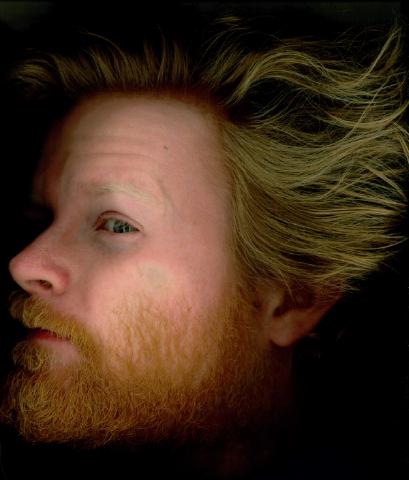
Welcome, Noah Feehan (@AKAMediaSystem)!
- Noah is one of the hardware (and more!) engineers in the New York Times R&D Lab. Their charter is to look 3-5 years out, especially how media will change.
- He found out about the group from a post on PSFK, an aggregator blog similar to Kottke.org.
- Prior to the New York Times, he did his master's at the MIT media lab.
- The New York Times Idea Lab is separate, they work more on the future of display on the web.
- One of Noah's latest projects (which he talked about at Solid) was Blush, a wearable that listens to conversations and lights up when it hears common topics between those talking.
- It interfaces with Curriculum, a Chrome browser plugin that captures and infers high level topics of interest. Privacy is maintained for the pages it scrapes by anonymizing data.
- The device is built upon the RFduino, tiny cortex with a built in bluetooth module.
- The Blush is a single bit output. In the future, the "Clip-E" project will have a small display.
- They want to be informative without being overbearing and interrupting the conversation.
- More Monty Python conversation card
- Than the PeeWee Herman secret word https://www.youtube.com/watch?v=gxMZgeBlqzQ
- Kate Hartmen of the Social Body Lab in Toronto works on Nudgeables, 1 bit haptic interactions.
- Noah has experimented with this as well, mapping and applying heat via heating pads from adafruit.
- REVEL is a haptic interaction designed by Disney, it changes as you move your finger over it.
- The NYT R&D lab has a nice setup of equipment, Noah is excited to get the ex1 to start printing flexible electronics.
- Noah really wants to build a time lapse moveable setup. This reminded Chris of a Tech Shop video https://www.youtube.com/watch?v=88vTsKdysoo&t=14m00s
- Chris got started with the guerilla guide to CNC machining.
- The members of the R&D lab try to give back to open source communities, as many of them came from them.
- While working in the hyper instruments group at the MIT Media Lab, Noah was introduced and consulted for Bjork on her Biophillia album.
- A favorite (weird) video of ours: Bjork explains a TV: https://www.youtube.com/watch?v=75WFTHpOw8Y
- Collaborating on projects can be really hard with hardware, Noah was impressed by the work that Mathieu Stephan (limpkin) has done for the Mooltipass as part of Hackaday.
- Another project that Noah has worked on recently is the GridEye, a tiny 8x8 pixel thermal camera. It uses a a $40, export controlled sensor from Panasonic.
- Noah really wants to see more of the spectrum...like a Mantis Shrimp!
- Another interaction piece, Noah installed the "Fixture" project in his wife's office. It tracks the orientation of his smartphone throughout the day and displays it on the wall. This reminded Chris of the Weasley family clock in Harry Potter.
Transcript
Noah Fian: This is The Amp Hour Podcast, recorded June 23rd, 2014, episode 204, with guest Noah Fian. Philoquistic, blinking, blush.
Dave Jones: Welcome to The Amp Hour. I'm Dave Jones from the EEV blog. And I'm Chris Gammell of Contextual Electronics.
Noah Fian: And I'm Noah Fian with the New York Times R&D Lab. Hey Noah, thanks for joining us. Are you like a member of the media? Do you consider yourself a member of the media?
Kotki: I don't. I don't. I feel like it sometimes. Having that email address with the mytimes.com.
Dave Jones: Ah, yes. That can get you free entry into pretty much any trade show or anything like that. I'm covering this event.
Kotki: I've been tempted to try that. I have yet to actually find a place where that would get me more than I could usually get.
Noah Fian: A free sandwich or something.
Kotki: Yeah, exactly. I'll use that as soon as it's worthwhile.
Noah Fian: Yeah, you can always. I'm doing an expose on burritos.
Kotki: Yeah, it's customer service stuff, right? You really want to reply to Amazon.
Noah Fian: I'm an unlisted, unnamed food critic, so bring out your best, please. Well, that's great. So tell us about this, because I was so interested in this. So I follow you on Twitter. Your handle is akamediasystem. Other people might follow you on there as well. But the New York Times stuff, that's just so interesting to me and the crossover. So why don't you tell us about that a little bit?
Kotki: Sure, yeah. It really interested me as well. I applied for this job because it was an R&D lab whose work I had seen in a sort of art context. I'd seen a couple of their installations written up in PSFK or other designy places.
Dave Jones: What's PSFK?
Kotki: PSFK is just like a sort of an everything blog, like Kotki, but a little more design focused. Are you familiar with Kotki, Jason Kotki's blog? Yeah, everything goes through there, basically. Exactly. It's truly a light filter on the internet. Yeah. So I had seen some interesting work, and then they had this job application for Maker as the job title, and I really couldn't resist that. Yeah, yeah. So that was in, what was that? 2012, I think. I think it's been two full years that I've been there now. But a colleague of mine from the MIT Media Lab was currently working there, and she had also had only good things to say. So it was a really interesting gig to come into.
Noah Fian: Yeah. Well, we know the Media Lab is obviously, you know, a lot of people know that one from, you know, just kind of the widely varied and kind of wacky sometimes work, but always good stuff. So, yeah, that's a good sign.
Kotki: It is. The Media Lab really runs the gamut from the sort of silly to the quite serene.
Dave Jones: Right. So this isn't a – this is not really a for-profit commercial arm of the New York Times, is it? It's sort of like a research-y kind of –
Kotki: Yeah, it's quite research-focused. So it's set aside from other R&D departments that different corporations would have because our mandate quite awesomely is not explicitly to fill the product pipeline with stuff. Right. Really, we're supposed to – we've been asked to think three to five years out and, you know, think about quite broadly different ways that, you know, emerging social and cultural and technological sort of movements can come together and how that might make new experiences. So there's very – there's a really wide berth that it sort of casts, and that lets us come back with really interesting stuff that, you know, one day it'll be quite CNC-heavy mechanical installation, and the next it'll be a big machine learning or deep belief pool or whatnot.
Dave Jones: So who drives the projects there, and or are you free to just work on your whatever whim you like?
Kotki: It's pretty open. There's – we drive the projects by talking about them all the time, both within our own group, which is only eight people or so. And so we'll constantly be discussing, you know, new technologies that have come out or things we think we can do that people haven't done yet. But at the same time, there is this nice sort of – there's a management layer above me that keeps the rest of the company in the loop in a really useful way. So I've never been told stop working on this because it's not relevant to the times. But at the same time, when eight of us sort of think about the problems of the world today, we generally come up with something that rhymes with what the times is doing.
Dave Jones: Right.
Kotki: Huh.
Dave Jones: So is it all about solving problems or you just – or are there projects you just do for the sake of it because you can?
Kotki: We do a lot of things because we really are interested in seeing what happens. Yeah, right. If we did make it, is it something, you know, we could live with? Or is it something – no, really, you know, does it have a result that it's easiest to make a joke about and, you know, this was a terrible idea? We really get to live out those sort of ideas or those thought experiments. One really nice thing that I appreciate, particularly after doing my master's thesis at the Media Lab, is that the scope of project can be really variable. So we have some things where maybe three weeks we'll spend investigating a new IC and come up with, you know, not too much can be done here. Or we'll have, you know, eight, 12-month projects that are really – really gather momentum and involve everybody in the group. So it's like our – you know, I have never been bored on the job, which is quite something.
Noah Fian: Yeah, yeah. Is it hard to kind of get your arms around? Like do you ever – so obviously, you know, you have a lot of stuff where other people are presenting you with things. But sometimes when presented with the vast openness of like, well, I can do anything, well, crap, what do I do now?
Kotki: Paralysis, yeah. All right. So we're rarely presented with a thing and then say, make something out of this. I think in general as a design direction, you know, take this thing and do something with it is usually a warning sign that there's maybe not a real problem at issue or that maybe we're doing something just for sort of novelty's sake. And I don't mean to disparage that because as soon as I get home, I start doing all the novelty stuff. That's right. You know, that I really just, you know, want to spend an evening seeing how it works or whatnot. But in general, we really don't encounter a lot of direction from outside the department. We're really in charge of coming up with the research directions and then finding, you know, affinities between different crazy ideas and seeing what threads are going to endure. Right.
Noah Fian: I imagine like an editor coming down to your group and being like, or rather I can't imagine them coming down and being like, well, I really want you to build me a new CNC machine. Yeah.
Kotki: Or I need three holograms stacked, you know. I sort of dream of those situations, but they never happen, thankfully. Yeah.
Dave Jones: This is not something that I picture the New York Times doing. I mean, all these labs popping up everywhere and at a newspaper, effectively. I mean, or are New York Times bigger and more all-encompassing than I imagine from the other side of the world here?
Kotki: No, I think it's certainly unusual for a publisher to have an R&D department set up the way we're set up. Usually a lot of R&D departments in publishing are a little bit more focused on integrating with partners, with sponsors, with advertisers, with customers themselves. And that's, you know, that's actually we have a separate department at the Times called the Idea Lab that is tasked with – they'll develop, you know, experiments that go live that will be with an advertising partner or, you know. So they're a little bit more web-heavy. They're not necessarily critical or theoretically sort of writing white papers about sort of what the near future might hold. But it's a nice division of labor because we'll work very closely with them if we have, you know, some tech that's ready for prime time or whatnot. It's a great place to find an intervention or an opportunity to let an advertiser, you know, curate a pretty unique experience. Yeah.
Noah Fian: Yeah, like kind of like what Dave's saying. You never think, oh, you know, who has a lot of money to spend on R&D? A lot of money just sitting in the bank. What industry is doing so well right now? Newspapers. Yeah. Yeah.
Kotki: You know, it's important to not be surprised by upcoming technology, right? Particularly in an industry where, you know, the main delivery format is probably going to change, you know. Yeah.
Dave Jones: That's scary, isn't it? Well, but it's also a new horizon, isn't it? I mean, it's…
Kotki: Exactly. Yeah. It's a pretty exciting opportunity. One of the things that we're kicking around conceptually is, you know, with a lot of interactions becoming in the form where information comes out to find me. So rather than, you know, dialing up a web page or, you know, executing a query, maybe the right contextual information will come out and find me when I need it. And that leads to this question of if the news article has been the atomic unit of news for a century now, I wonder if there are ways, you know, given, let's say, a system that knows all the semantic connections between entities you mentioned in an article, are there ways for the article to sort of explode and occupy different, you know, maybe a wearable sort of interface, you know, a screen-based summary or even a haptic, you know, what would it be like to get haptic updates from the Times? There are a bunch of interesting opportunities that are just now happening now that we're finally kind of moving away from the black rectangle of the smartphone being the be-all and end-all of human technology. Right.
Speaker ?: Right.
Noah Fian: And even that only had, what, like a, you know, a 10-year life cycle of the only run, you know?
Kotki: Yeah, it's, you know, I feel like it's been on its throne for a long time now. Usually things last less, you know.
Dave Jones: Jeez, when I was a boy.
Speaker ?: Hello.
Noah Fian: I can take you shorter than that. I was re-watching a Bond movie yesterday. It was, what was the first one with, what's his name, the new guy, Daniel Craig. It was 2006 and he didn't have like an iPhone. It was like some like non-smartphone-based thing. Yeah, non-smartphone, yeah.
Dave Jones: With a keyboard on it. With one of those keyboards. Yeah. Yeah. Yeah. Exactly.
Noah Fian: It's totally weird, right? That's 2006. Right? Everything expired.
Kotki: Yeah. It's just, you know, laughable at this point. Although I do miss the keyboard. Man, do I miss. Well, who doesn't? Yeah, I know.
Dave Jones: Although I have been getting big into the swipey keyboard thing, you know? What's the name for it? You know the-
Kotki: I think it's called Swipe.
Dave Jones: Oh, Swipe. Yeah, I'm loving that. That is, like, that works.
Kotki: You must be a better typer than I am. A swiper, you mean? Yeah, or swiper. So, I mean, like, just know I'm not a great touch typer, to be totally honest. And so often I'll find new words I didn't know existed by just trying to swipe, you know, interrogatory in a text message.
Kotki: Awesome. Yeah, yeah. Yeah.
Dave Jones: It's not perfect, but it's, you know, and being, you know, because I tweet so many, like, you know, technical type things, because that's the feeling I'm in. Like, you know, half the time the word is not there that I actually want. Exactly. You know, so, but still, I find that a huge time saving over that hunt and peck, you know, one finger thing. It's just so much better.
Kotki: Although it enforced a nice poetic brevity sometimes. If you couldn't be bothered to just hunt and peck the whole message out. Yeah. There was an excuse to have, you know, BRB. Right. You know, LOL. Oh, no, I see. There was an excuse to sort of debrief.
Dave Jones: I hate the shortening. I will only shorten a tweet if I absolutely have to, and I can't fit everything in. Much respect. You know, I'll spend, like, several minutes just thinking of a way I can shorten this sentence rather than use, you know, BRB or some bloody acronyms that kids use these days. Yep.
Kotki: I agree. I admit that I will often search for a non-standard way to shorten a tweet. So I won't do really into RLY. You know, I'll take letters out of Arduino or something instead.
Dave Jones: Oh, goodness. Or I'll just do a multi-part tweet.
Kotki: Yes. Although those are kind of their own joke, right? Because the whole system is against you there.
Dave Jones: Yeah, yeah.
Noah Fian: That's it. So you mentioned wearables. So one of the things you've worked on and the thing you talked about at SolidCon where I met you was about Blush, right? Yeah. This wearable. Can you tell us about that project?
Kotki: Sure, yeah. So Blush is a little wearable based on the RFduino platform. And I'm kind of surprised more people have not heard of this hardware. It had a pretty successful Kickstarter. It's a little tiny ARM Cortex-M0 with integrated BLE. So it's about 15 by 15 millimeters, super small. And basically, Blush takes one of those units and just establishes a pretty simple correspondence with a smartphone. And the thing it does is when you and I are talking about something in real life, if we mention a topic that me or anyone from my research group has browsed in the recent past, Blush will light up, actually. It's a little pendant. So it'll flash just to indicate, just to punctuate that there's this semantic overlap between my online and my offline behaviors. Oh, wow. Okay. Yeah, it's pretty involved. It's a lot of the talk at Solid was kind of laying the background to talk about this one-bit interaction, quite ironically. Because the real sort of the newest part of Blush is actually the stream that informs it, which is called curriculum. And curriculum is basically a thing that everyone in my group, in the R&D labs, put on their browser. It's a Chrome extension. And it basically semantically analyzes the topics, the content in all the web pages that you browse. And I'll mention here that it's all of the non-encrypted web pages you browse. So no Gmail, no Twitter, just Wikipedia stuff and things like that. And so it makes this real-time stream of all of the topics that my group is encountering. So it's our information diet. And it's been a really weird sort of process, getting to learning to live with this new type of information about my colleagues. And so Blush was just one way for that stream of our information diet to sort of erupt into the real world.
Dave Jones: Oh, and I just think it's a really fascinating idea. And I'm just wondering where it's going to go. Because there's obviously the huge elephant in the room here is privacy. Right? I mean, what if you're taking your lunch break at work and you've still got this plugin installed and you're searching for, you know, a present for your wife or something, you know, or other jobs or something like that. I mean...
Kotki: Well, so that's one of the parts of the experiment that has actually been most interesting is really, really interrogating that privacy and that level of intimacy, right? That we sort of conceive of the flip side of privacy is that you get this intimacy, this higher bandwidth insight into what your colleagues are thinking. And there were a number of things that made us okay with having this thing look at our browser activity. You know, of course, one of them is knowing that it's HTTP only and no HTTPS. The other is if we actually read the stream, it's fairly noisy. We're using a pretty noisy algorithm to do topic inference. And so it's admittedly kind of a weird noise that's uncannily familiar. But there's not too much you could derive from it. In particular because it's...
Dave Jones: Right. So it's not like just a login tool and you look through people's logs. Exactly. It sort of... It higher level extrapolates that to a higher blurry kind of level.
Kotki: And that's what the semantic inference... That's what extracting the topics lets us do is we abstract from a list of URLs, which is also not very human readable.
Dave Jones: Okay.
Kotki: We go from this machine sort of readable list of URLs. And instead, we choose to look at it semantically, to look at what topics are there rather than what pages.
Dave Jones: And can you see who looked on what? No. No.
Kotki: It's specifically designed against that.
Dave Jones: Yes. I would picture that so that you can't actually see somebody's URLs. You can't see exactly what they looked at. But you can see in general what the group is thinking and looking at.
Kotki: And it's a real balance between anonymity and intimacy, really. And so the other sort of side of that is everybody who is using curriculum right now, all of my seven colleagues, they all have write access to the code as well. So they've all looked at the code. And that was a big part of this for me was if I'm setting up this database that's going to keep a temporary... There's also, by the way, the database expires every three weeks. So no piece of information can be retained longer than three weeks. It does.
Dave Jones: Is it a roll-in cache? Or does it three weeks? It is. It just flushes right. So it's sort of...
Kotki: Everything has a TTL of three weeks. Got it.
Noah Fian: Yep. Excellent. How does it do the actual detection of the... So you said that the curriculum kind of sits there and pulls these topics out, however noisy they may be. But then it also listens to the person in real time?
Kotki: That's just straight up a little hack on the Android speech recognition API. So that's the phone component of Blush, which is right now kind of the least plausible part to me. I'm looking forward to Android Wear, which promises the ability to do voice input. But it's actually quite a simple little hack just to get it continuously to recognize speech. And I found it to be quite accurate, or at least accurate enough for this type of one bit sort of aspecific notification. The other thing is that the first thing that people want to know when Blush actuates, when it does its little flash because we talked about something in my curriculum, the first thing they want to know is what made it go off. And for now, experimentally, I'm not interested in disclosing that. I don't want to, for example, pull out the phone and distract us and get us. I don't want this thing to dominate the conversation or derail it the way when I used to wear Google Glass. Often, you know, conversations inevitably become about Google Glass, which is the wrong thing for a wearable to be doing.
Dave Jones: Instead of flashing an LED, a color, can't you at least have a little, maybe a little e-ink display that just displays a word? You know, that just, you know.
Kotki: So rather than sort of change the Blush project, which is a little bit more focused on this idea of a one-bit notification or a punctuative sort of thing. Yeah, they're totally different things. Yeah. Yeah. So I have a second thing that's actually not on the internet anywhere, but we'll put it up on the blog soon called Clippy. And that is truly, it's a... Oh, I'm good.
Noah Fian: Wait, like named after the Microsoft Word thing?
Kotki: I know what you're talking about or you're writing a letter. Exactly. So Clippy is just a really tiny little OLED screen. These have been flooding the market recently. You know, it's a, what is it, 64 by 128 pixel. So it's that. And luckily, this RF, we know, fits right on the back. So there's no, it's just a screen. And it's magnetic. So it clips on places. And all that does is show the latest batch of pinboard tags that I've assigned online. So I thought that was a nice way to make explicit, to be a little more, a little more like ask me about these things than the way Blush would derail a conversation by saying, ah, we did it. We said the magic word. So Clippy is a little more performative. It's a little more like disclosing my browsing activity if we wanted to talk about it. And that's, you know, obviously doesn't involve anyone else. That's just the tags I assigned on pinboard, which makes it makes the privacy question a lot more personal, a lot more easy to sort of say yes or no to is, you know, do you use Clippy or not?
Noah Fian: So it's more Monty Python conversation cards and less. Yes. Less Pee Wee Herman. You said the magic word. You said the secret word today.
Kotki: I almost put that in my solid talk. I almost put the chair in my. Right. Because that's kind of the, that's the last thing you want is to, you know, derail a conversation when someone says internet, which is inevitably in my curriculum. Yeah, right. Right. People did try to troll me when I was wearing Blush, though, by, you know, sort of exploratorily doing impulse response and saying like, oh, Lindsay Lohan to see if it goes off.
Dave Jones: Trolling people's wearables. I love it. Exactly. Yeah.
Noah Fian: Shoe shopping.
Dave Jones: Exactly. Yeah. Yeah. Social hacky. Yeah. Big and tall men's clothes. Yeah. You know.
Noah Fian: Oh, man. That's great.
Dave Jones: Oh, dear.
Noah Fian: So this is, this is a really interesting space, actually, because, I mean, how much does it end up affecting, like, like you said, you live with the glass. I've noticed the same thing you said with glass, you know, it does kind of get in the way. But even still, I have to imagine if I'm talking to someone wearing Blush and it lights up, I'm going to be like, I'm going to have this pause in the conversation. Yeah. And then I'll, you know, eventually you get used to it. Right. But there's still that kind of just baked into wearables in general.
Kotki: Yeah. Is why am I blinking? Yeah. We've sort of learned not to ask about Fitbits. Right. We're kind of used to these wearables doing a thing just for their for their owner. And Blush was a little bit to sort of provoke, you know, to say, yeah, I'm wearing a heart shaped blinking pendant. You know, what? What do you make of that? Um, exactly. And that's, you know, that's what's nice about Blush. Uh, you know, it's not my hardware startup. It's a, it's an experiment and that's wonderful luxury is that's right. You know, I'm also a dude who generally does not wear many other brooches. Right. Except unless I'm wearing Blush, you know, so there's a bit of artifice to it that, that, um, that comes with the territory that comes with the experimentation. You're right that that's, that's truly a distracting part of it is the first time it goes off. I'm, I'm out 15 minutes explaining curriculum. Yeah, yeah, exactly. And then, yeah. And then that, yes, I've been sort of, I had my Android on and we're describing this conversation, but no, it doesn't go anywhere. I don't keep this information.
Noah Fian: Maybe you could give them a card from now on that points them to this episode.
Dave Jones: So do these social, so do these social outward wearables for want of a better term need to be self-explanatory to be successful?
Kotki: Ah, I really wonder about that. I think that's a huge factor in their long-term plausibility. Yeah. So I think that you're right. Legibility at a distance is a, is a huge part of how we, how I size you up. Right. When I see you across the room, I'm, I'm doing the things all humans do. I look at, you know, how you're put together, what clothes you're wearing, what your affect is. And I'm, are you a threat? Are you a threat? How, how engaged is my endocrine system? Is this fight or flight? Right. Exactly. But at the same, you know, and I'm, and yet we've already learned to figure out how busy someone is by, if they're idly toying with their phone or if they're really, you know, swiping out a furious message. We're already, we're already active on this band a little bit. I think we'll grow into it a lot more. But you're right that legibility, I mean, blush is both legible and inscrutable.
Dave Jones: Well, cause it's only a one, it's only, it's a one bit interface. I mean, that's the nature of the beast, right? I mean, I'm a technical, I'm an electronics design guy, right? And if I saw you wearing this, I'd go, and I saw it flash, I would have no clue whatsoever what it's, and I would have to, I would need the 15 minute explanation. And I'm a technical guy, let alone some muggle. No, totally. Exactly.
Kotki: No, I hear you. And that's, you know, that's one of the real design challenges of social wearables is how to make this legible at all distances, how to, how to have this go deeper when you need it to go deeper, but also maybe even remain concealed, maybe even remain, you know, what if this was an LED embedded in my lapel rather than clipped onto it? That blinking still needs a social structure around which I'm going to explain it. Mm-hmm. So there's, so this, Kate Hartman, who runs the Social Body Lab in Toronto, or outside of Toronto, has these, this hardware kit called Nudgeables. Have you guys come across that? Nudgeables? Nudgeables. No, but it's a cool name. It's a pretty cool name. So it's one bit haptic interactions between partners at a distance. So it's a little board with a XB radio on it.
Dave Jones: Oh, so you can vibrate your partner. Is that the... Exactly. From a distance to board. Easy, Dave.
Kotki: Easy, Dave. Hey, that's the first thing they've ever had. They went there. But it's, you know, they've, they've filled out... They went there, didn't they? They did. They did. They filled out this whole vocabulary of secret, you know, messages inscribed on this one bit that a partner, two partners, they come to, they come to an agreement about what that thing will mean.
Dave Jones: Well, you would need more than one bit, though. Well, you'd need at least...
Dave Jones: To say, just get me out of here? Get me out of this conversation? Oh, well, if you prearranged that, I would think that at least another bit would make it a bit more useful.
Kotki: Really useful. Sure. Well, we love all the bits. I mean, the more bits... Exactly.
Dave Jones: The more bits the better. It gets back to the old PC paradigm, right?
Kotki: Yeah. So I think there's a really interesting use case for the nudgeables, though, because they're designed to be concealable and they're private. They're one way or one... Oh, okay. Right. They're between two people.
Dave Jones: I'm getting it. So if you're at a party... Exactly. So if you're at a party and you go, like, this is boring as batshit, let's get the hell out of here. Right.
Kotki: You just cross the scarf around your neck and it turns out the scarf has two conductive strips and crossing it closes the circuit and suddenly your partner's pocket vibrates.
Dave Jones: So it is the modern equivalent to the nudge under the table, the little sidekick to your partner, right?
Kotki: And there's such a rich territory there that we have yet to... We've just started to be able to address that sort of... That almost ambient, one-bit sort of notification layer that can live on the body. That, for me, was the most wonderful thing about Google Glass, which I really dedicated. I tried for three and a half months to wear it absolutely as much as possible. And the real benefit, which Chris can attest, is quite something. Yeah. I liked it.
Noah Fian: Yeah. I haven't worn it much lately.
Kotki: No, yeah. But the thing that it really did for me was enable this gestural layer of notification that I think is really promising. So just being able to swipe and dismiss a text message rather than dig out a phone, unlock the phone, and do all that stuff, that's kind of the nice... The sort of affordance that it grants that is durably enjoyable to me.
Noah Fian: Yeah. So with the haptic type stuff, I've actually talked to a friend about this before. And you think about it with a multi-bit, higher bandwidth kind of interaction between people, I think the brain has enough plasticity that eventually you could start to have a secondary language, right?
Kotki: Oh, I'm so into that. Yes.
Noah Fian: Yeah? Nice. All right, cool. So go make that, and we'll have you back on again. All right. But I mean, that's the idea. It's like thinking now, like extending curriculum and blush kind of out, right? So now what if you started to get, you know, multiple buzzes for a certain topic, you'd actually start to develop a new vocabulary based on, you know, this sixth sense of sorts. Yeah. You know, it's very interesting.
Dave Jones: And through need of the low bit interface as well.
Noah Fian: Mm-hmm. Yeah, true.
Kotki: Right, right. So, you know. Particularly, you know, a concealable wearable, a wearable that I wear, you know, to have this superpower of invisible extra information. And there's a bunch there that's really interesting. We were, I ordered some heating pads from Adafruit, some thermal pads. Oh, yeah. And made a version of the blush hardware that can handle a bunch of current. And we've been experimenting with this actuator that it cuffs to the back of your neck and it gets quite hot when an actuation occurs. Just to feel what it's like to map heat to different parts of the body. Like, how finely can I resolve it? Can I perceive a difference between, you know, 50% PWM and full on?
Dave Jones: Well, you're in analog world now. Yay. Right? Yeah. Yeah, this is not digital anymore. It's analog.
Kotki: No, there's nothing more analog than heat to skin. That's right. And so far. Yeah, exactly. But so far, that's been a little difficult to train myself as well as I can train myself for vibration patterns, for example. Right. But, you know, Disney has made this really cool thing, Revell. Have you seen that? Reverse electro-tactile vibration? It's a surface. When you draw your finger across the surface, you feel a pattern like, you know, like herringbone pattern. Like a braille. Like braille. Yeah. But if you put your finger and it's still, you don't feel anything. And so it's this very strange way to map different textures only to fingers moving. And I'm really interested in figuring out a way to put that on the body somewhere that you wouldn't notice reading braille, basically. Like at the bottom of my pocket. Like on your leg, basically. Yeah, exactly. So that'd be really interesting. I think there's so much in this space where, you know, we're writing these steganographic signals to each other, hidden in other bands.
Dave Jones: But are you just skirting around the edges here with all this haptic, you know, heat and touch and all that sort of stuff? Why not just go directly into the brain? You know, is that the ultimate, you know, like you have a head-mounted wearable, you know, like a thing which, you know, ultimately can, you know, feed information straight into the brain rather than through the senses?
Kotki: I would purchase that. That's a little outside my comfort area in terms of things I think I can learn without killing myself.
Dave Jones: Well, yeah. But they are researching these sort of, I mean, there are groups out there, university groups out there researching this sort of stuff. And it works. You know, you can... Really? You know, especially for disabled people who, you know, don't, who can, you know, feed information directly in and all that sort of, you know, blind people. And yeah.
Kotki: Yeah. There's, so there is a bunch of, there's a bunch of interesting technology there. That's, that is probably a good definition of where I would read someone else's research paper and then implement things rather than, than forge my own path.
Dave Jones: I'll just strap this coil on my head and see what happens.
Kotki: When I was at the Media Lab, I was obsessed with this idea at the Media Lab of making a, a secret party finder. So a wearable that would basically guide you to a party. Um, and it was based on this guy's research, this, this man, Professor Inami from, from Japan. Uh, he had determined that differential high voltage on either side of your head, basically around both temples dynamically affected your balance. And so you could cause, you could remote control somebody and have them lurch, you know, pitch left because they think they're off balance. And it was this really rough means. Yeah.
Dave Jones: You know, I wasn't able to find the research paper. I was able to apply voltage either side of my temple and see what happens.
Kotki: So after, so after I purchased some EL wire and took apart the inverter and then shocked myself, I determined that I probably was not going to pursue this line of research any further. It's all about the current limits. Yeah, exactly. And you know, I tested it on my hand first, but, uh, it was.
Dave Jones: But you could be such a great Darwin award winner.
Kotki: Oh man. Yeah.
Dave Jones: Researcher kills himself.
Kotki: Remote controlling himself into, you know, the East River or whatnot. Yeah. And debugging that is crazy. We have an Oculus Rift in the lab and debugging that is really interesting because you vomit if you did it wrong. Oh, right. Okay, right. You're replacing so many senses at once that you can really make yourself sick very quickly.
Noah Fian: A digital response.
Speaker ?: Exactly.
Noah Fian: With a food. Yeah. Food projectile. Yes.
Dave Jones: Yeah.
Kotki: Prognosis negative.
Dave Jones: That's a bitery output right there. Exactly.
Kotki: You either puke or you don't. Yeah. And if you don't, then, you know, ship it or whatever. Wow. Oh, goodness.
Noah Fian: So how much, like, tell us about this lab more too. So you must have some pretty sick toys. I mean, what do you have there?
Kotki: Well, um, we have. Bragg. Go on, Bragg. We have a pretty full kit of, uh, of fabrication equipment. We're actually, I'm super psyched we're getting the EX1, that circuit printer. Um, I'm pretty excited to experiment with, uh, printable, printable trace antennas for that. That seems like a pretty cool application. Foldable electronics is kind of neat as well. Um, we have a maker bot. Uh, we have, uh, you know, really nice soldering setup, a bunch of, uh, a bunch of mechanical components ordered from old projects before I showed up that I can just sort of pick from and, and cannibalize, which is really nice. Uh, what else? We've got the Oculus Rift. We've, we did some stuff with the Leap Motion. We have a million connects. I kind of love the connects still in any time you need durable, you know, 3d positioning. Um, but I think, you know, the kind of awesome thing for, for me as the hardware guy at the lab is seven other people are really into, you know, doing hardware and collaborating and they have ideas I'd never come up with. So it's kind of an awesome, you know, I'm the guy who gets to make the stuff and there's no shortage of stuff to, to get made. Yeah.
Noah Fian: So you'd also mentioned in your, uh, in your, uh, list of stuff, you said you're, you're working on some other stuff in the future, like CNC stuff you'd mentioned. Is it, is it, is that just kind of yet to be published or?
Kotki: Uh, I'm not sure that would even be publish worthy. I'm, I'm, you know, I'm, uh, I built a, a Zen tool work CNC mill from a kit a while ago and have, you know, crazy customized it, um, with a new spindle and end stops. I couldn't believe it didn't come with end stops. Um, and, uh, yeah, so I'm looking, I'm looking to add, uh, to put the BeagleBone black in charge of that rather than a garble setup that I have right now. And I figured that'll be a good way to learn the programmable real time unit on BeagleBone. Um, but then some other CNC projects that are way far out. Um, I'm, I've been trying and failing for more than a year now to come up with a really good motion control system to do time lapses. Like they have on blue planet, you know, the BBC show blue planet where it's, it's Richard Attenborough and they'll have this pan over the forest floor over the course of like six months, you know, the snow melts. Yeah. Ah, so I would like to do that. Yeah. So that's, I would, I have a hydroponic garden at home, um, where I grow peppers and basil and lettuce and stuff. And, uh, time lapses of that. I never get tired of time lapses of, of, you know, plants, uh, transpiring. Oh yeah. So being able to, you know, circle around the stem of something or whatnot would be really cool.
Noah Fian: Uh, you see, there actually was a controller. Who was I saw working on that? There was one. Open Moco is one of them. Yeah. I think that might've been the one that was like out of, out of the, I saw it during a video for, it was not the make space. What's the one out in the tech shop. There was a tech shop video. Oh, okay. And it, and it was someone like doing the actual manufacturing of that. It might've been Open Moco or something else. Yeah.
Kotki: So far the thing I'm terrible at is designing mechanically sound carriages and components. Uh, I never had any, any Mechie training and I, I worked with these great undergrads at the media lab, but never really got a sense of what their process was, how they throw out a terrible idea. So, so I've been 3d printing a lot of things that like, I'll get home, I'll put them on the carriage and then I'll turn the motor on and I'll have snapped it right in half or so yeah, I've, I've, you know, at this point bought a bunch of 8020 and a bunch of different aluminum extrusions, but no, no working prototypes so far. Yeah. You'll get there. Yeah. I'm sure. I mean, it's, it's a, it's an inevitable Brownian motion type thing. If there are things in my apartment that, that just get jiggled around enough, they'll fit into some cool, cool form.
Dave Jones: Yeah. Well, with wearables, I mean, it's almost as if all of a lot of the art goes into the physical form factor. I mean, how you actually package and manufacture the things and, you know.
Kotki: Yeah. And that's kind of a weird barrier to entry right now. Don't you think? I think, you know. Totally. My miniaturizing electronics has always been quite difficult for me because I'm, you know, a pretty nervous SMD solderer and, uh, and, uh, and you know, just miniaturizing anything is fairly daunting. I think that's a real, a real gate right now between having an idea that isn't just, you know, have a sensor record its values and send it off to the cloud. Anything beyond that is somehow, it's quite difficult. You know, silicone molding a band or man, let's get away from silicone bands, but, you know, molding any type of, of, uh, of wearable interfaces usually fairly. It takes a lot to get it to look good. Totally.
Noah Fian: I mean, it's almost always machining of some type if you want it to be super durable, right? Yeah. Have you ever seen the, uh, the gorilla guide to CNC machining? You ever read that one? I haven't.
Speaker ?: No.
Noah Fian: It's, it's the Bible that got me started in CNC machining. Oh, cool.
Kotki: Okay.
Noah Fian: Yeah. It's, and it's, and it talks about that too with like the, all of the, the, the micro scale, the actual like forming stuff and stuff like that. It's just, it's a, it's a crazy document, but it's, it's awesome. Cool. One of my favorites.
Kotki: Yeah, that's mostly I've been using the CNC machine to mill silicone molds, um, and, and using it for that and chocolate molds. Actually, my wife gave me these two huge tubs of food safe silicone. So I've been feverishly trying to learn how to temper chocolate so I don't make disgusting chocolate bars, but, uh.
Noah Fian: Like in funny shapes or what? Yeah. Yeah.
Kotki: I mean, so far I've done, you know, a line art portrait of my dog and some geometric shapes kind of as proof of concept, but, uh. Yeah. Yeah. But it's super fun. I love casting stuff cause it's goopy and, and, you know, wet, wet wear. And you get to eat at the end. And you get to eat at the end after you've washed your hands. Awesome. The platinum cure. Yeah. Yeah. Right.
Noah Fian: Yeah. That is, that is an interesting barrier. I mean, I think your job especially shows how much crossover there can be these days. I mean, do you guys split out into disciplines in, in, in your lab at all? Or is it mostly, um, everybody does everything?
Kotki: We, we all do different weird things. Uh, so we, we, we sort of try to fill in each other's weak spots. Um, uh, I don't think there's even coverage across, you know, we're all, we're all coders. We can all, you know, write a tornado server or whatnot. Um, but, uh, in terms of what our specialties are, we, we generally keep, keep fairly distinct so that, so that, you know, if we were to add a new employee, that person would bring something new to, to fill out our skillset. Right.
Noah Fian: So you find yourself like adding on to other projects a lot as well?
Kotki: Yeah. Often, you know, I'll insert a provocation near the end and say, you know, the control for this could be something really cool or, you know, the, the interface that people use to get into this system could be hardware. It could be, you know, something, something, something interesting. And, you know, some projects start from the tech. They start from, we have these amazing, you know, small BLE things and we've been talking wearables for a year. Let's, let's, you know, do something.
Dave Jones: So do you guys have like a mandate to open source all this stuff and publish it, do white papers, things like that? Is that part of your mandate?
Kotki: It's definitely, it's, it's one of our values. We, we all individually came from different open source communities, pretty, pretty much to a one of us. We've, you know, we've, we have longstanding communities that we owe a lot of debt to. So we, we very much try, particularly since, you know, often we'll build a thing off of an open source project and, and give that back and add to it. I'm not, I truly don't know if one of our actual mandates is to open source stuff, but it's certainly encouraged and well-received when we, when we do do that. Right. I think there's, I think there are a couple of things that maybe were, were something that, you know, the, the times needed to retain the intellectual property on that, but I actually can't remember any. Oh, sure. Yeah. Yeah. Yeah. But generally, you know, the, because we're working three to five years out, there's no immediate application. And so it's really just a useful thing to throw back to the community and, and see what gets made.
Dave Jones: How do you, do you mainly do like internal white papers and stuff like that to document, you know, if you've just experimented with something and, you know, like you can't just keep it in your head, you've got to document in some way. So everyone else in the group can sort of access it.
Kotki: Yeah. That's, that's one of the big challenges of, of any R and D lab with as much freedom as we have. Yeah, absolutely. Making sure that, you know, if I spent four weeks getting BeagleBone to boot something else, let's write that down. So, you know, when it's something that I, that we think is generally interesting, we'll, we'll try and write it up on our blog and, and make it available, but that's a fairly new effort. I think we've only been doing that for a half year or so in the past. Yeah. We've, we've published white papers. We'll do technical talks or critical talks. Yep. Part of the times is R and D department existing is it existing in the world, in the community we deal with. So, so it's important and, and actually a really useful, personally, a really useful thing to be, you know, to write up what you do a day is, is not a habit I developed on my own.
Dave Jones: No. Yep.
Kotki: Yeah. My personal blog used to be just like a series of angry notes to myself after finally figuring something out.
Dave Jones: Yeah. So you're into lots of art installations and things like that. Totally. Tell us about those.
Kotki: Well, so my, my background, um, I was, I was an undergrad in the, in the, um, art department at Harvard. And at the time that I went to actually the four year stretch that I went was the only time that they had a new media track. So I actually got into after, uh, actually failing the ham radio exam five different times when I was, when I was 12, my whole family was a ham and I kept taking and failing the exam. Um, but I got back into electronics when I realized that the really interesting installation experiences were becoming interactive. Um, and I thought that was a really interesting way to, I had started at college thinking I was going to be a math and poetry major, you know, and be a super Renaissance man.
Kotki: It turns out you have to write one thesis that addresses both of those things, which wasn't going to be feasible. Um, so I got into video art video art was this really nice way to wield live analog hardware and create, you know, I got really into analog feedback for a while, which is kind of a space I could still, I could go there forever. It's a wonderful, practical, gorgeous. Um, but so I began constructing interactive video environments that had a, a sort of, you know, tech component to them. Um, man, one of the things that I think I'm probably most famous for online, maybe, maybe to my chagrin is this thing called, it's called steak filter where, um, I just ran analog video through a steak while I was cooking and it changes the video signal in this really interesting way because as it dries out, you know, the, the quality of conductance gets lower.
Dave Jones: And yeah, yeah, of course. So this was in, you can, you can, you can do that with any, almost anything, any.
Kotki: Yeah, of course, but that's, the blog coverage was pretty, pretty, pretty chuffed that it was a steak because steak filter sounds interesting. And of course, yeah, it's great. I'm just watching the video. So, so the end installation for that was in the Harvard Museum of Natural History, which is one of the oldest, oldest collections of stuffed taxidermy animals. And I had to go through a bunch of different tests to prove that I wasn't going to permanently imbue these animals with the smell of steak. Um, so I had to actually, before getting approval, I had to, you know, cook a steak next to this, uh, fur coat, uh, that I got at the thrift store just to show like, see, you know, the smell goes away.
Dave Jones: That's hilarious. Yeah. Oh, goodness.
Kotki: In general, I think, I think that, you know, tech influenced art has really come a long way in the last decade. It's gone. It's gone. Totally. It's kept this really wonderful engagement with the state of the art, with this, with the recently possible. Um, and it's such a nice way to make people consider, uh, you know, interactions with a smartphone don't have to be heads down, not looking at anyone, you know, Googling myself. They can be these exploratory, you know, they can afford all these new interactions. We can share a joke about wifi that wouldn't have made any sense 10 years ago. Yep. And so, you know, engaging socially and critically with all those, all those sort of different influences, the thing that art can do best, I think is, you know, put you in the safe space where you can have an experience unlike, you know, going to work and, uh, and, and really take something out of it that, that might influence your sort of everyday, uh, everyday outlook on things.
Dave Jones: Yeah. Cause it's like exploded in the last decade or so. All I'm now seeing is these massively complex and hideously expensive technical art installations. I mean, we've got one here in Sydney, the vivid, uh, festival, which I didn't, you know, and it's all about, you know, massive projection mapping and do it and interactive light shows.
Kotki: Get all the lumens on there. Yeah. Yeah. Yeah. And it's just mad. Yeah. I mean, you know, I would never begrudge supporting an artist. I mean, it's great. Yeah. It's crazy. And, you know, there's, I, I, I tend to be a little, a little, uh, more amenable to the smaller interactions, you know, the tiny little things or the little, the little idiosyncratic behaviors that might emerge from, from using somebody's, uh, somebody's artistic, uh, art piece. Um, but, uh, like nudgeables are a nice example. They're, they're, you know, designed to be social provocations more than any particular product or, or a good business idea. Uh, but what they do is they let you play with this tech that's all around us that we're used to being sold and, and, you know, being, being sold a relationship that's consumer only do not open. Uh, it's so nice to, to let people open that stuff up.
Dave Jones: And I find it's remarkable that companies are willing to pay, willing to put so much money into these sorts of art installations. I mean, there's some companies are putting millions of dollars into developing just some fancy sculpture that, you know, lights up and interacts and does all sorts of weird and wonderful stuff.
Kotki: Yeah. Yeah. I think that, you know, to, to an extent, there's also just sort of the tastes of the art world are, are leaning towards, uh, interactive or augmented creations these days. Um, it'll be interesting in, you know, 30 years when, when we say, oh, that thing it's interactive and, you know, we share a joke about the connect or something like, ah, don't, don't wear your dazzle camouflage to this one, you know, that would, that was so 2010s.
Dave Jones: Exactly. Yeah. Oh, let me guess. When I wave my arms, does it make music?
Kotki: Yeah.
Dave Jones: That was such an embarrassing decade.
Noah Fian: So what about your, uh, your, I mean, so I'm also on your site and looking at a lot of this stuff and, uh, you, you've done some, some pretty high, high name, uh, consulting as well.
Kotki: Yeah. Yeah. That was a great time.
Noah Fian: Image and heap. And where does all this come from?
Kotki: That came from the media lab. That's really a, a, a charmed place. Um, I was fixing, uh, so I was in the, the hyper instruments group at the media lab, which is like, you know, new music composition interfaces and things like that. Oh yeah. Yeah. And I was fixing a device that had, uh, caught fire because we, uh, didn't do the electromagnets right. And there was a short. So I was sort of busily, um, turning off the power and fixing, fixing a thing. And I turned around and Bjork was standing there dressed head to toe in a velvet little Lord faunterloy suit that was sort of bright purple. Um, and she, you know, she said, hi, you know, I make music. Can you show me your stuff? And so I showed her a couple of things we were working on. And, and from that, she and Michelle Gondry asked, uh, me and a colleague to, to participate in the, the biophilia project. Um, so that was super cool. That was probably the, the fanciest thing I've ever worked on. Um, but image.
Noah Fian: Biophilia, what is that?
Kotki: Biophilia was an album that Bjork put out a couple of years ago. And the idea was, it was, its central theme was the sort of physical process, the natural world processes that lead to sound. So cyclic things being tied to phases of, of planetary interactions, you know, resonance, clotting plates, um, all the, all the sort of cool demos you can do with physics and sound.
Dave Jones: Um, so I collaborated on, you know, yeah, let's do an album full of feedback. Yeah, that's not been done before.
Kotki: Right. Um, but that was a crazy experience. Uh, that was, you know, I was right after graduation. I was moving down to New York to be with my wife and, uh, and also trying to set up lab to fabricate massive, you know, 18 foot pendulums to, to play Bjork's music. Um, that was, uh, that was a, that was a good one. Bjork is like the nicest lady. She, we, we Skyped all the time and, uh, and she's a real, uh, she understands how weird people make stuff. Uh, she, she's, she's right on it. I think we would have guessed that.
Noah Fian: Yeah.
Dave Jones: There was this thing where she, um, and maybe it stemmed from this. She did some video of how a TV were taken apart. Oh, I've got to imagine that. Did this went viral or something?
Kotki: That one is from when she was into sugar cubes. That one is from the eighties. Sugar cubes? What? Yeah. That was the band she used to play with before she was just Bjork. It was Bjork and the sugar cubes and they were like weird acid jazz. Um, no, that's from forever ago. Yeah. But I do like that video. At one point she says like, don't trust a poet or something, something kind of wonderful.
Noah Fian: There's always, so I wonder about this. So we had Todd, Todd Bailey on the show too, and he did a lot of artwork and I think I've asked him this before too. And like, I'm just like, well, doesn't it just get too weird sometimes? That's what I always wonder about, like working with artists and that kind of stuff. Like, don't you ever just stop and go, really?
Kotki: Well, I think there's a difference between a collaboration and working for another artist. Yeah. And that's kind of a thing I learned freelancing for other people is that, you know, freelancing and implementing someone else's idea that you don't maybe think is amazing is really hard to do if it's not working at two in the morning and it has to work. So it might as well be like a soup you cooked. It might as well be your own hole that you are buried in. So collaborating is really, I think, a really critical part, like understanding at the beginning that what we're going to do is trade ideas and then I'll make it rather than give me the spec, let me fabricate this in time. Yeah. Right.
Dave Jones: Although I would have thought, I would have imagined that artists wouldn't be like that. No, this is my vision. And how dare you tell me? That's important. I respect that too.
Kotki: No, as an artist, when I have commissioned other things to be fabricated, I'm not interested in a collaboration. What I'd like is for someone to wield their expertise to get it as much as I would like it as possible. Yeah. So I totally understand both sides of those, but I've learned that, you know, the way I'm either going to be on the supply side of a fabrication contract or we're going to collaborate and come to a compromise about what the best thing to make is.
Dave Jones: And to me, there's no difference there between art, like we're talking about, and me designing a little pet project. I don't want anyone telling me how to do it. You know, this is my idea and I'm going to do it the way I like. I don't care what you think.
Kotki: And that's why you're doing it. And not... Yeah, exactly. Yeah, I really like that. That's one of the things that I really like about, you know, the maker community is there's no right way to wire up an Arduino and, you know, make the project you want to make today. It's what you bring to it and what you want to get from it. Super empowering.
Dave Jones: That's why I think all these collaborative projects... I'm not going to say they're doomed to failure, but, you know, people are always talking about the holy grail of, like, some open source hardware project where everyone contributes to it and this magic project pops out the other end, right? I'm always of the opinion that that's just not possible. It has to be one person's vision, I think. I think I agree. One person driving it.
Kotki: Well, I'm getting a huge amount out of... Do you agree, Chris?
Noah Fian: I agree as well. I mean, like, you could try it. You could split things up. You could segment, but you can't... Yeah, opinions are...
Kotki: That talent of wrangling different creative folks to make, to get all of those cats to manage to, you know, form a shape visible from space. One corral. That's an incredible, incredible talent that I do not possess. I've been enjoying Limpkin, and I don't know this man's real name, but...
Noah Fian: Oh, that's Mathieu. That's Mathieu Stéphane.
Kotki: So his write-up of Multipass has been really, really illuminating simply because that's a cool project that a lot of people appear to have feedback on. I'm impressed with that.
Noah Fian: Yeah, I have been, too. So obviously, I see that because of my new gig, but... Yeah. Yeah, I mean, he told me about it. I'm like, no, no, that doesn't work. Exactly.
Kotki: But you're like, good luck, my friend, you know.
Noah Fian: Right. Well, you know, and there's varying levels. I think the one model that I've always been really, really impressed with has been quirky. You know, basically, they have these processes built in of, like, you know, there's different levels of how people can participate, right? It's different of, like, let's all choose a chip together, or what color should this be? Let's all vote and not talk about it.
Kotki: Yeah, I haven't checked out Quirky. I've seen a couple things from them at different in-person events where I've, you know, seen some of their interesting products. I didn't realize that there were different levels to participation.
Noah Fian: Oh, yeah, yeah, yeah. So, yeah, they have, like, people submit ideas, and then basically there's payouts based on each one as well, which is an interesting social experiment.
Kotki: So it's freelance project management.
Noah Fian: Yeah, sort of, yeah. Or labor of love project management. I think so, but there is an economic incentive there, too, which is kind of weird. Yeah.
Kotki: Huh. That's interesting. There's a little bit of that aspect of Kickstarters where, you know, certainly the product being sold is often this feeling of participation or co-creation. Right.
Noah Fian: All right. Yeah. And, yeah, and people have to believe in the person as much as the project, right? More so. Yeah.
Kotki: Because often the project is not there yet. Yeah. Right, right.
Noah Fian: Yeah.
Speaker ?: Yeah.
Noah Fian: Speaking of other projects, I wanted to talk a little bit about GridEye because we had actually mentioned this, I think, on the show, and I got to see this when I met you in person. Can you tell us about kind of, like, the tech specs on this thing? Totally.
Kotki: Yeah. I'm so jazzed about it, and I don't have anywhere to put it. So I'd love to talk about it. It's basically, I found this Panasonic thermal camera. It's an 8x8 pixel thermal camera. Yeah. The thermal resolution per pixel is, I think, 0.025 degrees Celsius, so way more accurate than I would ever need. And I basically just have the RF Duino, that ARM Cortex M0 Bluetooth 4 chip, talks to that and addresses a little OLED screen. And the end result is this little tiny thermal camera that has a screen right on it and that can also send frames off to an Android to be recorded. And really, that project came because I have wanted a thermal camera ever since I was really ever since there's a Red Dwarf episode where a shape-shifting alien, the polymorph, comes. And I just wanted it ever since I've seen, you know, seeing other spectra is like a main theme of my life. I would love to see all the spectra. And this is slowly building out my vision of being able to...
Noah Fian: You want to be a mantis shrimp, huh?
Kotki: Yeah. Yeah. I want to see polarized light, you know? I want to see Wi-Fi. I want Hertzian space to come to me.
Noah Fian: The 0.025, is that real? 0.025 degrees C is the resolution? That's the reported resolution.
Dave Jones: Yeah, that's not uncommon for these thermal camera modules.
Kotki: Yeah. And there's a lot of hedging in the data sheet about emissivity and distance. And so I've, you know, shone it at the oven and it's certainly decimal accurate. It's certainly, you know, able to do that. And I kind of don't care beyond decimal accuracy, to be honest. You know, for the sake of BLE, I might even chop off the integer or the integer card and just preserve that. I mean, you know, it's just going to turn into colored squares.
Noah Fian: Well, what's like the dynamic range of that then, too? I mean, can you scale it up or down pretty well?
Kotki: It's huge. Yeah. I'm doing a really naive auto gain on mine, but I believe it's down to minus 40 Celsius and really high up. I think 300 or 400 degrees Celsius.
Noah Fian: Okay. So like type K almost, right? Yeah.
Kotki: Almost. Yeah. I think K goes higher than that, but it's non-contact. So it's, you know, it has to do with distance as well. Um, and there's actually a whole family. So there's high gain, low gain and 3v3 and 5v. Um, and I'm currently using the 3v3 high gain. So I'm not sure what the other specs are, but it's a $40 component. It's kind of, it blows my mind. It's a, you know, it's a weird package. And one of the things I hoped to do with GridEye was just share the Eagle part that I made for it that works. And, you know, the other, the other sort of working I2C interface code. But, um, you know, the, the weird thing that I've never encountered with a component before, and that I sort of think of you guys when I do this, cause you're, uh, you're kind of where I go to hear about cool, weird components or EV blog always has weird, you know, analog video boards from the eighties or whatnot. Um, I can't, I couldn't, I failed twice at getting this chip because you have to sign an export control agreement. Oh, and so, so when I, when I first applied to get it from DigiKey. I kind of, maybe I was a little bit of a jerk and in the application I, for, you know, what are you going to do with it? I just wrote U.S. Citizen. Cause I was a little put out about, you know, what do you, what do you mean? I can't just order this.
Dave Jones: Patriot.
Kotki: Exactly. Exactly. Yeah. I didn't draw the don't tread on me snake, but I was almost there. And instantly rejected. So I had to be honest about my application. Yeah. Wow. They read those forms. It turns out.
Dave Jones: No way.
Kotki: Yeah. And so that's actually the, I really want GridEye to, I want someone else in the world to build it, but I really don't feel cool putting it on Tindy, for example, because I don't want to, I don't, I don't have the time or professional inclination to deal with export control for my end users.
Noah Fian: You made 36 sales and I ran. Exactly. Right. Enjoy the paperwork.
Kotki: No, part of the agreement is no targeting systems, which is, yeah. I mean, I understand that they mean fatal targeting, but what if I meant like water balloon targeting, you know, there's, you know, and I certainly don't want to go down that territory of having lied about my application. So, you know, I'm a little, I'm a little, there's a bit of a chilling effect to that form, which is sad because it's a, you know, 64 pixel thermal camera. Yeah. Super cool.
Noah Fian: Yeah. And you're paying 40 bucks for it. So, you know, that's.
Kotki: Well, 40 bucks is the, there's a, there's one with a less stringent export requirement. That's 90 bucks. And it is bonkers to work with. I, I, this is my most recent enormous failure is I still can't get a repeated start condition on I2C working with RF2. We know. And it's like, I've learned way more than I want to know about ARM cortex registers.
Dave Jones: Yep.
Kotki: That's good to know though.
Dave Jones: Why is this even export restricted? That's ridiculous. I mean, is it even an American made component?
Kotki: No, it's Japanese, but I think.
Dave Jones: Exactly. Panasonic.
Kotki: Japan labors under some pretty strict treaties about weaponry. Yeah.
Noah Fian: Well, and also, it's also sometimes it's the digi keys and the element 14s that are, they're the ones enforcing that stuff. Dave, I've lectured you this on this before. We've had arguments.
Dave Jones: Hey, I'm on a bloody watch list, dude. Are you? I know you are. Yeah.
Noah Fian: I think that was the episode where we talked about it. It's not the, it's the, it's the people who are doing compliance so they don't get, they don't get, uh, lawyered.
Kotki: It's a bit of a CYA sort of a thing. Yeah. Exactly.
Noah Fian: Yeah. It's stupid. But. Yeah.
Kotki: Well, that'll change. That's a really cool project though. Thanks. Yeah. I, I meant, I purposely sought you out to, to, uh, meet you and to show you that thing.
Noah Fian: Yeah. I'm glad you did. And what's this other one, the fixture thing? So the fixture.
Kotki: Fixture is the latest art, art, like thing that I've made. Um, fixture is, uh, it's powered by SparkCore, the little, uh, CC3300 wifi board, uh, that was on Kickstarter a while ago. Um, and it's, you know, it's a real simple hardware setup that, that, that SparkCore drives, um, drives a 60 pixel Neo pixel array. Um, and it's really a spin on, um, remote presence. So I have an Android app that every minute that the Android is on samples, the exact orientation of the phone. So is it, you know, facing the ground? Is it flat because I'm sitting down? Is it flat on the other side? Cause I'm charging it. So, and it linearly just maps the XYZ accelerometer values to RGB color values. And that ends up showing you these sort of stints of activity. And so it does it every minute. So I get this pretty full portrait of what my position, what the phone's position is during the day. So you can tell, you know, when I got up, when I was walking around the subway, when I sat down and watched TV for a long time, all those things sort of show up as an activity bar. Uh, and there's a time lapse on my website that sort of shows how it, how it develops. But the idea was to sort of, um, figure out this again with blush. Also, it's this balance of specificity and ambiguity that lets us write our own meanings into what we see there. Um, and so I've just been living with fixture. It's kind of a nice, um, I put it in, in my wife's office so she can sort of see where, you know, if I'm on the move or if I'm headed home.
Noah Fian: She doesn't, you should be doing chores and you're on your butt.
Kotki: Not the first, uh, dumb tech I've put in, put in her office that, but she hasn't turned this off. So, you know, um, uh, yeah, it's, it's, um, I'm, I'm interested in it just as like a, a sort of sculpture about something remote that's happening. Um, yeah.
Noah Fian: And it's almost like the, uh, the Weasley's family clock in Harry Potter.
Kotki: There's a little bit of a Harry Potter vibe. There's no danger indicator. Uh, but, uh, but if you started shaking violently, I'm sure that you could display that as red or running from police or whatever. Um, but the, the, the other sort of part of it that's interesting to me is that we're so, we're so ready to use the phone as a surrogate for my presence somewhere. It's such, it's become such a thing that I'm known, you know, you'd, you'd think I was in trouble, right? If I, if my phone turned up somewhere and I wasn't there. So a little bit of the, the theoretical interest for me for fixture is being really specific about what we're measuring, not making any generalizations or saying, oh, it's my, I want to be very clear about the sort of linearity of the mapping that I'm doing. Um, and the attempt at continuity is in the same way, trying to, a lot of, a lot of, um, sort of digital or web art projects now will often, you know, tell a story about themselves that fudges the truth just a little bit about, you know, this is a continuous thing or, or, you know, this is exactly my heartbeat or my emotional affect. When in fact, there are a bunch of algorithms behind this, right? There are a bunch of mappings and translations and normalizations we do that we just, we just easily let those things surrogate the meaning we want them to mean. And so fixture for me was sort of an attempt to be very, very, to, to fix in place exactly what mapping, exactly what, what feat is being accomplished.
Noah Fian: Okay. So I have a task for you, uh, going forward. I want you at the New York Times, uh, research lab to, to implement smell as a, uh, as a new, yeah, new way of delivering information. I can do that. Yeah. When someone talks about something, it releases the smell of cookies. And when, you know, someone mentions the amp hour, it releases the smell of solder smoke and yada, yada, yada.
Kotki: I will take that mission. That's a, that's an achievable and fascinating mission. I can do that. Yeah. Smell of vision. Exactly. Exactly. Patent pending. Patent pending. That's right. No, no, no, no. Please, no. That was a Simpsons joke. Yeah.
Noah Fian: Oh boy. We're in good, we're in good company here, Dave.
Dave Jones: Absolutely. Absolutely. I love it.
Noah Fian: So, uh, where can people find all your work and everything? I mean, this is, this has been awesome.
Kotki: Thanks. Yeah. They should go to NYT labs.com. Uh, and that's, that's our main sort of presence. And then the blog is linkable from there. And then my personal site, which I've started updating again is, uh, AKA media system.com. Right. And that's also how people can find you on
Noah Fian: Twitter often. Yeah. That's, that's my back and forth with me. Exactly. Yeah. Yeah. Wouldn't pay
Kotki: too much attention to what I say on Twitter, but, uh, yeah, yeah. Yeah. That's good stuff.
Noah Fian: Yeah. I was very confused when you came up to me at solid. I took me a while to put together who
Kotki: you are. I have to remember to do the mapping first to be, I'm the person, you know, who has a
Noah Fian: different name. Yeah. Yeah. All right. Well, Dave, any final questions? No. Thank you very
Dave Jones: much for joining us, Noah. Thank you guys so much. This has been such a pleasure. Yeah. I love hearing about this sort of stuff. It's fascinating. Well, check in, check in regularly.
Kotki: All right. We will. All right. Thanks again. Thank you guys. Take care. Thanks, mate. See ya.
Dave Jones: Bye.
Speaker ?: Bye.
Archived Discussion (2)
Comments are closed. Archived from the original site.
Show archived discussion (2)Hide discussion
BjorkBlushChromeCNC MachiningCurriculumMIT Media LabNudgeablesNYTimesR&D LabREVELRFduinoTechShopTime Lapse
Keep current
Every episode, plus the occasional job post, in your inbox.
Could you note what point to jump to?