
#198 – Mike Ossmann Returns! - Planetic Portalab Packaging
Download episode · 37 MB
Also on Apple · Spotify · YouTube · RSS
Show Notes
Welcome again to Mike Ossmann of Great Scott Gadgets!
- Mike will be attending Hamvention in Dayton OH this year. He'll be at the TAPR booth and giving a talk about the HackRF.
- Chris will be at Maker Faire and SolidCon in San Francisco.
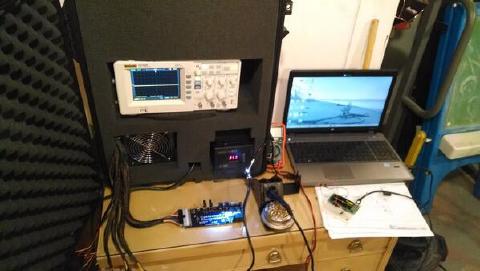
- Because of travel during Contextual Electronics, Chris has been working on the portalab concept discussed on previous shows (see picture above).
- Have you ever participated in a hardware hackathon? Did the winner have the most gear?
- Hackaday ran the hackathon at the Freescale Tech Forum in Dallas this year. The entries' subject matter were a testament to the time crunch; the technical piece was well done for many of them.
- Mike continues development on the Daisho. It is an open source (HW & SW) USB 3.0 analyzer. It uses a custom core.
- The team bought a USB 3.0 analyzer from Lecroy. The chips and the tools still aren't fully mature, so it's not uncommon to find bugs. They have to compare across multiple platforms.
- Once again we discussed Rent's Law (same as on the show with Dave Vandenbout); there is a correlation with pin count and logic size. Dave and Mike want the opposite ends of the spectrum.
- When asked about putting together an OSHW team, Mike said that he finds people at conferences and due to their contributions to the project before being hired. Many of the main contributors are now paid contractors.
- The funding for this project came from the DARPA cyber fast track program.
- Bunnie announced that the Novena project will also have a modular oscilloscope add-on possible for the extension header. You can still participate in their crowdfunding campaign!
- Mike also recently attended the Colorado OSHWA meeting in Boulder. He got to meet one of the few science savvy US House Reps (Congressman Polis), who also was interested in the trend of open source. The remainder of the US congress still is pretty clueless.
- Mike and Chris both use GitHub to capture changes in hardware. Chris is reminded of the XKCD where the commit comments get more and more ridiculous over time.
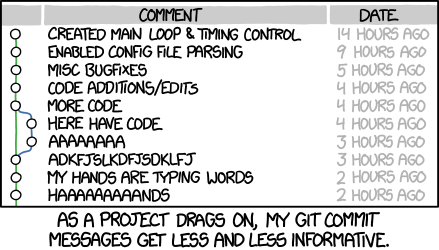 Image courtesy XKCD.com
 - You can tag official builds on GitHub with tags (example); Alternately, you can place your finished builds on a separate server, like KiCad.
- Dave still isn't sold on KiCad, but we'll wear him down.
- If you're at Hamvention, keep an eye on Mike's Twitter feed for a possible meet up.
- If you're at Maker Faire, be sure to stop out to the annual #BringAHack dinner, this year at BJ's restaurant in Foster City starting at 6 pm.
Transcript
Chris Gammell: This is the Amp Hour Podcast, recorded May 12th, 2014. Episode 198, with returning guest Michael Ossman. Planetic, Portalab, Packaging.
Dave Jones: Welcome to the Amp Hour. I'm Dave Jones from the EEV blog.
Chris Gammell: And I'm Chris Gammell of Contextual Electronics.
Michael Ossman: And I'm Michael Ossman of Great Scott Gadgets. Hey, Mike. Back again.
Chris Gammell: We got an RF expert in the house, man.
Michael Ossman: Thanks for having me. I don't know if I'd call myself an RF expert. I do a lot of it, but that doesn't mean I'm particularly good at it.
Dave Jones: Well, that's more than us. This show could turn into a complete mess, because I've got my IT dude coming in, like, less than an hour, probably. So I might have to bail early. I'm getting my new internet connection. Woo-hoo! I'm stepping into the 1990s, and I'm going to have 8 megabit upload.
Michael Ossman: Yes. And maybe you'll leave and then come back and then be at higher speed. Right. And all our listeners can hear what it sounds like.
Chris Gammell: You can talk twice as fast or something.
Speaker ?: Yeah!
Chris Gammell: Gage voice goes to ludicrous speed.
Dave Jones: Even higher pitch than it always is.
Chris Gammell: And, of course, I might get washed away. I don't know if people heard that in the background, but there is a massive thunderstorm going on here right now. So I might either get washed away or blacked out or something like that. So we'll see.
Dave Jones: So you get this automatic notification from the government, warning Will Robinson. They push it to your phone because, well, you know, the NSA is tracking you everywhere you go anyway.
Chris Gammell: Sure, sure, Dave, yeah. No, I don't know. It's an Android thing, I think. I don't know, Mike. Oh, really? Okay. Do you run, like, Android or iPhone in the States?
Michael Ossman: I run Android, but I don't have any emergency service on it that I know of. I don't know. Maybe it's built here. There's the emergency alert service. Yeah. That may have a built-in feature that I don't know about.
Dave Jones: Right. Okay. Well, yeah. That's tracking you everywhere you go.
Chris Gammell: Hopefully, if you do need it, it does turn on. Right. Wow. I imagine up in the mountains of Colorado, too, they're like, so it's going to snow, but it, like, always snows, so you're probably used to it. And it's like, what's that beep beep?
Dave Jones: Oh, here comes a tornado, and there's sharks in it. Oh, whoo! Sharknado.
Chris Gammell: Sharknado. Yeah, yep. There you go.
Michael Ossman: We haven't had one of those in Colorado yet. Yeah, well.
Dave Jones: Right.
Michael Ossman: You got to watch out, man. There's always room for a sequel. I think we had that storm, though, that you're getting now. Oh, yeah. Because we got dumped. We got about two feet of snow at my house yesterday.
Chris Gammell: Whoa.
Michael Ossman: Dude. That's crazy.
Dave Jones: Snow. What's that?
Chris Gammell: Yeah.
Dave Jones: I don't know.
Chris Gammell: It's white and fluffy, and it sucks. It's a foreign concept, too. Yeah. So, Mike, you're going to be out in this neck of the woods. Is that right? You're going to be this way? Yeah.
Michael Ossman: I'm going to be out for Hamvention in Dayton.
Chris Gammell: That's awesome. So what are you talking about there?
Michael Ossman: I have a little talk on HackRF and how you can use it to kind of explore your digital world. I try to encourage people who maybe have been an amateur radio operator for a while and know a lot about that kind of stuff and voice and maybe some digital modes in the amateur radio community who maybe haven't had a chance to explore things around them, like their garage door openers and Bluetooth devices and home automation systems and all these kinds of crazy things that are around us and wireless these days. And, you know, that's one of the things I hope that the HackRF project can enable is more people exploring those kinds of things.
Chris Gammell: Yeah. That's great. That's great. So is this your first Hamvention? It is. You're in for it.
Dave Jones: Don't take your gun. Yeah. Yeah.
SPEAKER_02: I hear that that is frowned upon. It is not allowed anymore. Oh, sorry.
Dave Jones: That's just so hilarious. That's so hilarious to a non-yank. Sometimes you got to say, you know, I think, well, whatever.
Chris Gammell: I'm not getting into that. I'm not getting into that. Don't feed the troll, right? Right.
SPEAKER_02: No, I wasn't planning on bringing a gun.
Chris Gammell: You're not planning on it? What about if you... No. Pack year. So your first time in Dayton, though, is that right? Ever? Ever?
Michael Ossman: No. I have been to Dayton before. I went a couple of years ago for a very small information security event. But I haven't been to Hamvention before. And this is only my second amateur radio event that I've ever been to. And the first one was pretty small, like 100 people. Yeah. Oh, that's pretty small. This will be...
Dave Jones: I thought ours was small, you know. But no, there's more...
Michael Ossman: I don't even know how many go to Hamvention, but isn't it like upwards of 10,000?
Chris Gammell: They always list... So they always list ticket sales and that's up at 25,000, actually. 25, yeah. Okay.
Dave Jones: Is that only on a single day or is it spread over a weekend?
Chris Gammell: Yeah, it's a three-day weekend. And really a lot of that's front-loaded as well. Because the first day, you'll get a lot of people coming in just for the flea market. And like five in the morning, like six in the morning type of stuff.
Dave Jones: The flea market is the big thing. That's the big attraction at these Hamvention. And they do turn up at 5 a.m. Like I went and sold stuff out of my boot. Mike, if you haven't seen the other video I did at Hamvention here. And yeah, and I turned up at like... I thought I was turning up earlier at like 8 a.m. And like I knew it started at 6 a.m. or whatever, you know, the car boot sales. But I thought, oh, no one will turn up. I turned up and everyone said, oh, yeah, you're late. Like I was the last person there to turn up at the car boot sale. And like, holy crap.
Chris Gammell: Wow.
Dave Jones: Half the people were gone.
Chris Gammell: Yeah, if you look at the cross-section of the demographics, it lines up pretty well with the early crowd, right? I mean, it's like these are the... This is the moon over Miami crowd, right? I mean, they are getting their weird specials.
Michael Ossman: Yeah. So, Chris, I guess you're not going to Hamvention this year, huh?
Chris Gammell: No, no. So I was there last year. And as it goes, it seems like I think we're going to continue to see Maker Faire and Hamvention scheduled on the same weekend for... Yes. For the foreseeable future. So I will be out at Maker Faire and at SolidCon after that. So I'm actually going to be out in the Bay Area for about nine days. Wow. Long trip. And yeah, we'll see how that all goes.
Dave Jones: Are you taking your portable lab?
Chris Gammell: Of course. Why do you think I jumped on it so much? I mean... Yeah, I know. You can't be away from your lab for nine days. Well, yeah. I mean, that's the real problem. So the real problem is we just finished the fourth week of Context Electronics. We're about halfway into the build. We were buying parts and stuff like that. But we're getting into the difficult parts of this right now with the SSOP soldering. We're doing drag soldering now and stuff like that. And it's getting kind of intense. And of course, that lines up right with Maker Faire. So what I'd really like to do is get it to the point where I'm almost just starting to talk to it with an Arduino, doing the programming stuff. But I don't know. Yeah, it'll be interesting being on the road with my lab. Did you guys see the pictures? You saw pictures? Yeah. Any thoughts?
Michael Ossman: So I may have missed a little bit of the development process. But I think the last I heard, you were talking about doing a cosmetic case. And then I saw photos and looked like a pelican case.
Dave Jones: Yes, it was a pelican. Yeah, I can't believe Chris hadn't heard of these. No, I had heard of them. Pelican cases. No, I had heard of them. But the thing was... But you don't worship them.
Chris Gammell: Well, I had thought... I didn't quite understand the ruggedness of other types of cases, right? So the makeup cases and even the case... I ended up buying a case before the pelican. And it showed up. And it's just like... And then I went back and read more of the reviews. And some of the reviews buried in there were like, yeah, I put this thing through a single flight and it actually fell apart. Like the entire case fell apart. Wow. So that's... And that's when, of course, you know, the only option kind of went down to the ruggedized plastic. So...
Michael Ossman: Yeah.
Chris Gammell: You know, it's just like any project, right? Until you know all the information, you can't get it... You can't get it right. So...
Michael Ossman: Yeah. There aren't a whole lot of options when you want to put things in that are both fragile and heavy.
Chris Gammell: Yeah. Yeah, exactly. Right.
Dave Jones: There's only a couple of things on the market. And those pelican cases are like the industry standard for moving test gear and stuff around. And guns for you yanks. Of course. And they're big in the gun culture. And, you know, other, you know, other sorts of sensitive gear. And, of course, the roadies have their own sort of brands, I think, they like. But they also use the pelicans. What was the one you found? You found SKB. Yeah, I found the pelican. Yeah. S-A-B. Yeah. Yeah. Right.
Chris Gammell: Yeah. And so I started looking at this stuff. And I actually bought a different one first. And then quickly did the math and went back and realized that it was too heavy and too big as well. You know, there's just so much conflicting information online about trying to get it through airports and stuff like that. I didn't realize, at least in American Airlines or the U.S. carriers, you're only allowed to have 62 total inches of dimensions. So length plus width times height or plus height.
Dave Jones: It's called girth. Yeah. So they actually measure the girth. So you can have a long, thin thing and it's, you know, or something like that and it's still okay. Yeah. So, yeah, it's not just the maximum dimensions. It's like shipping stuff with the post office. The post office do that here. They measure the length, the width, and so you, you know, do it on a girth basis. So if it's over a certain girth, sorry, can't send it. It's like, but it only weighs a kilo. Right, yeah.
Chris Gammell: It's just a canoe. It's really light. Yeah. So I don't know. We'll see how it works. I mean, I started cutting out foam and stuff like that too. And I actually took it home. I was at home for Mother's Day this past weekend. So I just threw it in the car and tried it out. And, you know, I built in like a back channel to actually put in the wiring and stuff like that. And I cut out vents for all the, you know, because that's another thing you have to worry about with like foam is making sure it doesn't overheat and that there's air intake and stuff like that. But the thing I have realized is actually that, so the BenchBuddy is kind of designed around an ATX power supply. And it's kind of just using the standard rails, you know, plus or minus 12, 5 volt, 3, 3. I think the thing I'd like to do next is actually keep spinning out different tools based on that. So doing like a boost converter off the 5 volt because the 5 volt rail has like, you know, it's 5 volts, but you can get like 35 amps out of it, you know. Yeah, crazy. And putting that through a couple transformers, getting, you know, plus or minus 30 volt rail with, you know, a couple amps and see what I can do with power wise and actually, you know, put some interesting switching stuff in there. And then actually build that into the case because the ATX is already in there.
Michael Ossman: Yeah, that'd be nice. Yeah.
Chris Gammell: So I'm trying to make, I'm trying to go big, man. I really want to make this a full thing. I don't know. So we'll see. It's going to be a work in progress for a while. Excellent. Do you ever transport stuff, Mike? I mean, I guess you probably travel pretty light, right?
Michael Ossman: I travel pretty light. Depends on where I'm going. But I usually, you know, probably 50 to 75% of the time, I don't really take any gear other than what fits in my laptop backpack. Yeah. But then sometimes if I'm going to a conference where I expect to do some hardware hacking, I'll just like throw a soldering iron and a heat gun into my suitcase. And maybe like a handheld oscilloscope. Yeah. Yeah. That's about it.
Chris Gammell: Do you ever do any of those hacking or hackathons, the hardware hackathons? You ever see any of those?
Michael Ossman: Not a hardware one. No.
Chris Gammell: Those are starting to pop up more. It's interesting because I always wonder about that. Like, it feels like the person that would show up with the most gear would win, right? I mean, like, not necessarily like test gear, but just, you know, variety of subcircuits that are already built. You could basically bolt together. If you had that, you'd basically be in a really good spot. But I don't know. Yeah. I've never done it personally.
Dave Jones: Even had a hackathon. Well, they use the term hackathon at the CBIT event I went to. And this is like an IT, business IT conference. And they had this hackathon thing upstairs. I didn't actually see what they were doing. But I think it's like the startups just, you know, actually showing their stuff and pitching and things like that. I don't think there's actually any soldering or anything going on up there. But, yeah, they're using the term. It's certainly a buzz term going around. Hackathon. Yeah.
Michael Ossman: I know. Personally, I'm not a big fan of the hackathons, software hackathons. I mean, I think they might be great for some people. But just for me personally, that kind of environment is the worst environment for me to write code in. Oh, yeah. I'd have to agree. I cannot write code in any quantity times quality except like late at night on my living room couch alone. You know, that's like just me personally. That's where I'm productive on software. Yeah.
Chris Gammell: Yeah, there is kind of this expectation that it's like, oh, we'll just put on headphones, right? I mean, you'll be able to do whatever you need to with headphones on. Everybody works in an open floor plan, right? It's like, well, no, not everybody works the same way. No. No. Yeah.
Michael Ossman: I haven't worked in an open floor plan for years. And I also have a hard time working with music on. Oh, yeah. It depends on what I'm doing. If I'm like doing a PCB assembly and it's kind of mindless. Yeah. Then I'll turn some music on. But if I'm trying to do something that's complicated, like writing code or designing a circuit, then, yeah, I find music very distracting.
Chris Gammell: I find that if there's lyrics for me, then it's, yeah. But I'll put on like, you ever heard Tuvan throat singing before?
Dave Jones: Oh, no.
Chris Gammell: I have a playlist.
Dave Jones: It'll be yodeling next. Yeah.
Chris Gammell: It's basically, yeah, like, you know, different type of yodeling. It's weird. Yeah. Yeah. Yeah. But yeah.
Dave Jones: No, I can't have, yeah. I don't do the music while I'm working thing.
Chris Gammell: Yeah. I feel kind of guilty these days. It's like, now that I don't drive anywhere either, that it's like, oh, well, podcasts, huh? I don't really listen to those much anymore. So, I guess.
Michael Ossman: I have just enough of a drive that I can, like, listen to the Amp Hour every week. Oh. That's about it. Nice.
Chris Gammell: We're sorry it's just us.
Michael Ossman: I'm behind, though. I've only listened to, like, the first half hour of last week's show because I was out of town.
Chris Gammell: You're not missing much. So, back to hackathons. Actually, I was going to say about that, too. It seems like there's always, like, the thing I didn't actually realize, and I was corrected on this, I was always like, well, it seems like the ideas are always so trite as well. You know, it seems like the ones that come out of it, like, I've seen one where it's like, oh, ours is a site that helps you find an ice cream truck in the area, right? It'll alert your phone where the closest one is. Or with that one I keep going back to that I make fun of where it's, we sell cereal milk, right? It's milk in a jug with cereal already floating in it, so it tastes like cereal, like Froot Loops. And it's like, that sounds like something someone would come up with in a, you know, energy drink-fueled haze of 48 hours, right? Yeah, totally. So, but apparently that's not the purpose. The purpose is actually just to kind of see if you kind of click with your teammates. I always, you know, because they always promote it as like, oh, well, you can start a company out of here. It's like, well, yeah, you can. It'll just be a crappy company. Yeah.
Dave Jones: And they'll point to one success story, you know, that just happens to work and, you know. Right, right. They'll think, oh, yeah, you can do it too. And, eh, you know, 99% are just not going to work.
Michael Ossman: Right. Sure. Although that may be true of, you know, all business ideas.
Dave Jones: Oh, yeah, of course. Okay. Might. Certainly is.
Chris Gammell: Yeah, so it'll be interesting to see. I mean, because I think, you know, we're going to see more and more hardware ones coming out as well, and it'll be interesting. Like, I know that, so obviously I work for Supply Frame now, part-time, and the Hackaday guys were out at the big Freescale event. They were doing a thing out there. They were doing a build out there, and they were talking about, like, some of the stuff that they saw, and it was like cat feeder type stuff, and, you know, like a lot of the little more ditzy Internet of Things type stuff. Yeah, right. But it's just because you're limited, right? You have a development board, and it's like, well, what are you going to do with this thing? Well, you drive some motors. A couple outputs, right, yeah. Yeah, that's it. Yeah, and so I guess it's the same kind of thing. It's just, it'll be interesting to see how much people continue to want to do that stuff, because it is kind of tough to get going quickly. I don't know. And plus, people build, I mean, like, people build on so much with, like, embedded projects, too. People build so much on their existing stuff. Like, Mike, you probably see this all the time, right? Where you're building on libraries you already have set up, and you're building on prior versions, and they're kind of different flavors. So, and I'm sure that that really affects things as well. If you're starting from scratch, it kind of hurts things.
Michael Ossman: Oh, definitely. I think the most common microcontroller that people use for a new project is the one they used for their last project. Yeah, right.
Dave Jones: Exactly.
Chris Gammell: Speaking of, how goes the new jam, the Daisho?
Michael Ossman: Oh, Daisho's going pretty well. We are trying to assemble, hand assemble some more main boards to further development. And so far, the design seems sound. And the USB 3.0 core is basically done at this point. And so that's super exciting, because that's been a long haul. And Marshall, the developer who's been working on that, you know, the amount of effort put into that was pretty phenomenal. So now we have an open source USB 3.0 super speed core that anyone can use with an FPGA and a transceiver. And it's just about passing all of the compliance tests.
Chris Gammell: Wow.
Michael Ossman: Wow. Which is pretty exciting, which is actually an achievement that it seems most of the commercial super speed USB products haven't accomplished. Because we're finding a lot of problems with the existing chipsets that are out and their implementations. How so? Well, they're just buggy in various ways. And I know people who have USB 3.0 products that are having difficulty with compatibility with certain host controllers. Oh, okay. In PCs, for example.
Dave Jones: So stuff that stops them working? Like actually stops them connecting?
Michael Ossman: It'll either stop them working or it'll get the power saving modes wrong. Or it'll have various glitches that cause a pretty dramatic reduction in the maximum throughput that you can get through. Yeah.
Dave Jones: Which is, of course, the reason why people want it. Go to USB 3.0. I mean, so this technology is not really mature yet from a technical point of view.
Michael Ossman: I wouldn't say so, no. But it's becoming that way quickly. The newer chipsets are definitely better than the very first chipset that was popular, it seems. And so anyway, that's kind of a side benefit that we weren't expecting from just building our own core from scratch is that it's a way to work around or avoid a lot of the implementation bugs that are already out there.
Dave Jones: And hopefully not introduce your own.
Michael Ossman: Yeah, exactly. But it gives us the flexibility where if we do have bugs, we can just fix them in the future without having to get new silicon.
Dave Jones: How easy is it to debug something like that? It's terrible. I can imagine. That's why I asked. Are you debugging at the physical layer? Yeah. Or, you know, because to do that, you need a high-speed, you know, probably high-speed USB 3.0. Yeah, like a BERT type of thing or what? Right. Yeah.
Michael Ossman: No, we're primarily relying on USB 3.0 test instruments. Right. And that are already on the market. And there aren't very many. We started with one that was kind of the lowest cost option that would do super speed. And it was pretty good to a point. But, like, if you were developing your own USB 3.0 product using one of the existing chipsets, it would probably be sufficient. But since we were developing our own core, we kind of started to find out that it wasn't showing us what was going on or some of the low-level events were maybe being reported in incorrect order. Ouch. There were a number of things that were frustrating that Marshall had to deal with. And finally, we just bit the bullet and bought a big, expensive, you know, top-of-the-line USB 3.0 test instrument from LaCroix.
Dave Jones: Oh, okay. Right. Jeez. Yeah, that ain't come shape.
Michael Ossman: No, no. It was expensive. It was like, okay, do we really need this? And is it worth owing all the rest of the budget for the project on this one piece of equipment? And as it turned out, I think it was worth it because not only did it give us a second platform to verify the first against, but it also has the compliance test suite, which the first product didn't. And so the further we got into it, the more we realized, you know, it really makes a lot of sense for us to be doing compliance tests on our core. And I think that has proved to be fruitful because those compliance tests, you know, uncovered a lot of things that we could fix. So it turned out that, you know, we're able to sometimes find bugs in one tool, you know, with tool A, we could find a bug in tool B. And sometimes with tool B, we could find a bug in tool A. You know, it's all just a sign that the whole thing is just not very mature yet. But, and so Marshall was like daisy chaining multiple USB sniffers in a row and, you know, which introduces all kinds of integrity questions. Oh, it was, I think he's glad to be about done with the project. I'll say that. But it was pretty exciting.
Dave Jones: Did you do this to avoid using a buggy off the shelf chipset or did you have some other motive for doing your own core?
Michael Ossman: Well, we did have another motive for using our own core or several motives. One was just to say, try to save cost. Of course. We knew we would have an FPGA on our board anyway. Yeah. And so we looked at the options.
Dave Jones: Was cost that critical? I mean, how expensive are these USB 3 chipsets?
Michael Ossman: So the, the, the, they're basically, there are two options available, or at least there were when I was looking around for that, that are available in, in low quantities. And those are a bare bones transceiver from Texas Instruments. And that's the one we're using. And that's like five or six dollars in quantity, something like that. Yeah. And then the other is a, is a part from Cypress that has an ARM core. I've seen that one. And a USB 3.0, right.
Dave Jones: And that's like 20. I have a dead ball for that, yeah. That's like $20. Yep. So it's. That's an expensive part.
Michael Ossman: It is. You know, $20 is a big, expensive part when you're hoping to make something that's as hobbyist friendly as possible. Yeah, yeah. For sure. So, so we started looking at the transceiver option just because, you know, we, we thought, well, we could save like $15.
Dave Jones: Yeah, yeah, buy it.
Michael Ossman: And also use this, you know, use the FPGA that we're going to have anyway. And since we had funding for the project or we were, we were trying to get funding for the project, we said, well, why don't we just pitch it that we'll, we'll design our own USB 3.0 core and do it that way. And it'll cost a little bit more in development.
Dave Jones: I was going to say, did you do the math on the return on investment in terms of time and money spent developing the core versus actually amortized over how many units you expect to sell versus the 15 versus the extra $15 per chip?
Michael Ossman: Well, thankfully, due to the, due to being, due to the, the funding source that we had from the cyber fast track program, we were able to kind of ignore that trade off. Someone else's money.
SPEAKER_02: Yes.
Michael Ossman: And just say, if we have the opportunity to spend someone else's money upfront on development. Right. Of course. And that, and that makes our, our end design, you know, less expensive and also provides the community an open source core. Yep. Uh, that they wouldn't otherwise have. Uh, we figured that that was worth a shot. So that's what we pitched. And, uh, and that's what we're doing.
Dave Jones: Oh, you actually pitched that and they went for it and gave you the money. Oh, okay. Right. So it's not like you got the money and went, oh, we'll go and develop our own core. Okay. Right. Interesting.
Michael Ossman: So I'm, I'm really hoping that, uh, someone other than us will use this core because.
Dave Jones: Yeah.
Michael Ossman: Well, you spent all that time and effort. Yeah. It's a lot of time and effort into it. And, uh, I think, I think it's a really valuable thing to, to be contributing.
Dave Jones: Well, it certainly is. If the chips, if the only other chipset out there to do it is 20 bucks a pop, then well, you know, uh, what sort of FPGA resources, can you put this into like one of those $1 FPGAs? No.
Michael Ossman: Uh, I don't know off the top of my head, but it's something on the order of like, uh, 10,000 logic elements for the USB core. Yep. Uh, so you're not, so you're looking at like a, a mid range FPGA, definitely not a tiny one.
Dave Jones: So you're looking at like a five or a $10 one or something like that.
Michael Ossman: At least. Yeah. I think the one we have on, on Dyshow on the main board is like a $25 FPGA, something like that. Yep. Uh, but we, we want to use that FPGA for FPGA for other things in addition to the USB core.
Speaker ?: Yeah.
Chris Gammell: Right. That's pretty cool. I think, I think people will pick, I mean, especially because it's open source, because you're giving, you know, the reference design and everything else. I mean, basically you guys are doing what a lot of companies do with reference designs, right? That's, you know, it's, it's all there, right? It's sure. I think, I think that that, that's a very compelling case, especially. So I'm, if I recall correctly on the Dyshow as well, uh, there's a bunch of headers on the side, so it's pretty flexible that people could just develop plugin boards. Is that right? Yeah.
Michael Ossman: So basically the main board is an FPGA, the USB 3.0 interface, a big mezzanine connector, uh, and, uh, you know, for whatever front end boards you want and a stick of RAM, uh, and, uh, which is, uh, you know, a SODIM DDR2 slot. So you can put however much RAM you want in that one slot. Other than that, the only thing on there are power supplies and one little like supervisor microcontroller and a clock generator. So it's just a, it's pretty much just a USB 3.0 FPGA board that you can do whatever you want with and, and build your own boards to plug into that mezzanine connector.
Dave Jones: Oh, cool.
Chris Gammell: And what's, what's the speed, speed on that thing? That's like one of those, is it like one of those Samtech, like fancy pants? Yeah. Yeah. Yeah. It's a high speed connector.
Michael Ossman: And the main, the main goal, uh, for the main board design was just to get a whole lot of pins, uh, out to that mezzanine connector. Um, we're not using, um, we're not using an FPGA with like a high speed SIRDES, but we're instead trying to do a support more parallel, uh, IO. Um, and so, uh, that, that's maybe the one thing that, that could change. Like if there's ever a Daisho 2, um, would be to have some high speed serial stuff.
Dave Jones: Um, but, but being an FPGA, you already have the serial lines hooked up, right? You can either use them as serial SIRDES type stuff or parallel, or have you not routed them as a serial differential pairs?
Michael Ossman: Uh, well, we, we do have quite a few differential pairs routed, but the FPGA that we selected just doesn't have a real high, high speed, uh, interface. So we're just going for, um, like the, the lowest cost FPGA we can, that gives us a whole lot of pins and, and gives us the, the capability to, to do the USB 3.0 and have some RAM. Got it. Which of course, you know, USB 3.0 is also a whole lot of pins and RAM is a whole lot of pins. Uh, so.
Dave Jones: Why do you need a lot of pins for USB 3?
Michael Ossman: You'd be surprised how many pins there are in that interface.
Speaker ?: Uh.
Michael Ossman: It's like a memory bus or something? Yeah. Or what is it? Well, it's, so it's basically, partly the reason it has a lot of pins is for backwards compatibility with the, the ULPI interface for USB 2.0. Um.
Dave Jones: Yeah. But you wouldn't have to use that if you don't want to, I would suspect.
Michael Ossman: Well, I, I, I think it is possible to do USB 3.0 super speed stuff without that, but we wanted to be able to support, uh, a USB, you know, you, we wanted to be able to be able to plug this thing into a USB 2.0 host and do something with it. Uh, so we wanted that backwards compatibility. And then there's like a 32 pin data bus and a whole bunch of other stuff. I mean, all together, it's like 70 or 80 pins or something like that. Jeez. Yeah, it's pretty crazy.
SPEAKER_02: That's insane. And so we have one. It's a bloody serial bus. I know, I know.
Michael Ossman: Well, it's a parallel interface to a transceiver that is, that's a, that gives you a serial bus. So the, okay.
Dave Jones: So the transceiver has a parallel interface. Okay. Right. So that's where all your pins are being driven. Exactly.
Michael Ossman: So, and one of our front end boards is, that's being designed right now, uh, by Jared Boone is, uh, um, a dual, uh, dual USB 3.0. So we have to hang two of those interfaces off of that one mezzanine connector. Yeah. Uh, so there's a lot of pins there and then there are all the pins for the onboard USB 3.0 transceiver and then all the pins for the DDR2 interface. And basically it all adds up to a whole lot of pins. And, uh, it's interesting shopping for FPGAs. Like the, the newer FPGAs, uh, mostly it's hard to find a lower cost FPGA with a very large number of pins. Uh, like if, if you go with a lot of pins, you have to, uh, in most families, you have to also go with a lot of logic.
Chris Gammell: Oh yeah. They'll scale up. Right. When there's some law that they talk, who was they talking about that, Dave? Was it Phillip or someone else talking about that? Yeah.
SPEAKER_02: Yeah.
Michael Ossman: I can't remember who it was, but somebody who was on the show recently was, was expressing, expressing, I think the opposite frustration.
SPEAKER_02: They were like, I want to have, I want to have a whole lot of logic and no pins. I've done that. Yeah.
Chris Gammell: Yeah.
SPEAKER_02: I know.
Chris Gammell: I've been on it. So, you know, he's right. Someone else was on here at least agreeing with Dave. So yeah. Yeah. Yeah. Yeah. Exactly.
Dave Jones: Yeah. I, I want five pins, but I want a hundred, I want a million logic elements. Thank you. Right. Right. Because I want serial in, serial out and a buttload of, you know, logic to do stuff. Yeah.
Michael Ossman: Yeah. In our case, we wanted several hundred pins, but we didn't want to spend a lot on logic. Yep.
SPEAKER_02: Yeah.
Michael Ossman: So we ended up going with the, uh, uh, Altera Cyclone 4, which is like one generation back from what's current. Right. Uh, partly because, well, at the time we selected it, Cyclone 5 wasn't shipping yet, but, uh, but there's no part in the Cyclone 5 family that has this many pins for that lower cost. And we couldn't find any Xilinx parts that had that many pins for that lower cost either.
Dave Jones: Right. So all you did is went on the parametric search engine and went number of pins and sort by price. Pretty much. At least 400 pins and then lowest price first.
SPEAKER_02: Damn. That was basically the process.
Dave Jones: Yeah. Oh, been there, done that. And you can never get it. It's always some bastard compromise, isn't it?
Michael Ossman: Yeah. Yeah. Yeah. Like it would have been nice to go with a Cyclone 5 or one of the other newer families just, uh, because they have some other benefits, you know, but, uh, but Cyclone 4 meta needs best.
Chris Gammell: What about, uh, you worried about like long-term buying capabilities, stuff like that? Not too much. You'll migrate eventually.
Dave Jones: I wouldn't be for those. No, they're still manufacturing ones that are 10 years old.
Chris Gammell: Yeah, they really are. Well, isn't it usually, I think I've talked to, oh, that's who it was, there's a former coworker talking about this. It's like, yeah, you can still buy the parts and especially like the secondary market, but then it was a Xilinx part. And I think it was the original, you know, obviously I was working on old stuff.
Dave Jones: The original XC 3000 or something.
Chris Gammell: Yeah. No, I don't know if it was that one, but basically they start pulling it off the things that the place and route will actually compile for or whatever you place. Oh. Oh, right.
Dave Jones: Sometimes you've got to use the old tools. Yeah. Yeah.
Chris Gammell: So you have to basically archive the tools and your computer and everything else because it's like, you can't get that. You can't get the new, the new tools won't work with the old stuff. I mean, and I get why that is, you know, you're, you can't drag that stuff along forever, but at the same time it, it could hurt you eventually. I don't know. Maybe that's a thinking about it too much, but.
Michael Ossman: It could, but I think that's, that's something that's quite a few years out. Yeah. Yeah. Right. Right.
Dave Jones: Right. Now you're going to stop doing this. It's only Cyclone 4 for goodness sake. Yeah.
Chris Gammell: Right. Yeah. Just kick back and rake in the bucks from your open source project. Right, Mike?
Dave Jones: That's right. I can remember when they first came out with the, we were under non-disclosure agreement at the time when the original Cyclone, well, you know, the, the original Cyclone came out. It wasn't called Cyclone 1, it was just Cyclone, you know, but it was actually called the Tornado. Oh, really? They actually gave it. Yeah. That was the original guy. And they were going to have different names for different markets because, you know, Cyclone, here in Australia, it's called a Cyclone. In the US, it's called a Tornado. Right. You know? And yeah, they were actually used, they actually had that name. And, but they eventually dropped that before it actually came out, I think. So, I don't know if there were any Tornado branded parts out there. I'm not sure if they ever made it to market, but yeah, that was, that was the name they were going to go with. It's collector's edition now. Until the branding people came in. Exactly. If you can find one. Yeah. If you can find a sample chip that's branded Tornado. Anyone? Anyone got one?
Chris Gammell: So, I was looking back through the episodes and it was, it was Dave Vandenbot when he was on. Obviously, he's a, he's a FPGA person as well. And it's called Rent's Rule. And that's, that's what that gate versus IO thing is. Right. Right. Okay. My OCD person. Internal OCD had to find it.
Dave Jones: It's, it's a bullshit rule. Of course. Right. It's, it's a, it's a pure marketing driven rule. Yeah. I'm sure it's a distribution type of thing. Or a perceived, perceived marketing driven rule. Well, you got to make choices somewhere.
Chris Gammell: So, that's why.
Dave Jones: Yeah. Yeah.
Michael Ossman: Yeah. I mean, that, that rule cuts down their, their catalog by, you know, by, I don't know, 80% or something like that.
Dave Jones: But the catalog already has so many parts. There's already so many bloody varieties. Yeah. And they're already like little subtle differences. I'd rather see lots of big differences rather than 10 million little pissant subtle differences.
Michael Ossman: That's true.
Dave Jones: You know? Oh. Yep. Yeah. I'd rather see at least one part is available that has a million logic elements and it's in a 44 pin PLCC package. Right? Mm-hmm. Thank you very much. You know? And, oh, just at least one. No, but there's a hundred varieties of, of ones that, oh, this one's got four SIRDs instead of two. You know, whoop-dee-doo.
Chris Gammell: Yeah.
Dave Jones: Ah. Sorry, I'll stop bringing you.
Chris Gammell: Mike, I'm not sure if we asked you about this in the couple times you've been on, but was your team self-assembling? Like, did you find these people? Did they find you? How did this all, this come together?
Michael Ossman: Um, yeah, I, that's a good question. Basically, everybody who is currently working for me now is, well, they're, they're all working for me on a contract basis. And they are all people that I've met at conferences. Um, and in, in many cases, they're people who, um, were interested in my projects and maybe even made some contributions to my project, uh, just on a voluntary basis, uh, before, uh, before I offered them a job, you know? Um, because that's.
Chris Gammell: So there's money involved too. That's, that was going to be another question too, is that. I was wondering. For some of them. This was. Yeah. Yeah. Yeah. Yeah.
Michael Ossman: Uh, for people who are, who are doing huge amounts of work like Marshall and his FPG and his, uh, you know, USB three core. Yeah. Uh, yeah. I, I, I'm paying him as a contractor, uh, and, uh, I'm able to afford that because of the, the cyber fast track funding. I have that project. And, uh, and he's somebody I met at, uh, at, uh, at tour. Last time around. And I've seen him at some other conferences and he was introduced to me by, uh, another friend of mine who's, who has done a lot of, um, volunteer work on my Uber tooth project. And, and so anyway, he just came highly recommended as a sharp FPGA guy. And we, we started talking and, uh, at the, you know, at a conference and, and he seemed like he really knew what he was doing and he was, uh, going to be out of school and looking for work. And I said, Hey, I need somebody to take on this big, huge part of my project.
Chris Gammell: You look like you don't know what you're in for yet. Let's see if you can do it.
Dave Jones: And it pays peanuts. Come on monkey. Let's go.
Chris Gammell: Something like that. Yeah. That's great. No, that's, those are the best people too. When you don't know going in, that is the best way to do it because it's like, then it's just, it's not, there's no psychological, there's not as much of a psychological component. It's just like, okay, I'm just going to kind of work at it and get it done. Right.
Michael Ossman: Yeah. Yeah. And, and most of my, most of my contracts that I have out there are, are for specific milestones. So, you know, you're, I'll pay you X amount for accomplishing Y and, uh, and I'll, uh, so there's some risk involved if you take on a work like that, that, you know, it may end up being a lot more work than you expected. Um, but when you're done, you get paid for it. And when you, and if it, if it is more work than you expected, at least, uh, at least hopefully it's, it's rewarding work. And, uh, I think every, everybody that, that does work for me, whether it's paid or not, uh, is contributing in part because they like to contribute to open source project. Yeah.
Chris Gammell: Yeah. Yeah. I guess that was, I mean, that was my main question was kind of like thinking about it in terms of getting, you know, setting up an open source project seems like it would be easy to start with, right? It's like, Oh, well I'll just say it's open and people will come. But then, you know, there is, you know, there's constraints on people's time, but it's interesting to see that dichotomy of like, even though they are getting paid, it's still, it's still important that you want it, that you give a crap, right? Because either there's tough guidelines or, you know, it's, it might not be as much as an industry job or something like that. So exactly. Yeah. That's, that's cool. That's real cool. So how many more are you going to start, man? I mean, how many, you got what, how many you got on your belt? I have too many projects going. Well, you're like, you're like a funnel for this, this funding. It seems like, it seems like you kind of got in there and you got, you, you know the process. And I hear that's important for like that kind of stuff, like the, that, that early stage funding from, from, uh, Is that how it works?
Dave Jones: Like you get one, like if you get it once, then you're almost a shooing to get it again and again and again. Is that how it works or?
Michael Ossman: Um, that, that may be true for, for some types of programs. Uh, the, the, the, the most funding that I've had, well, to be honest, the most funding that I've had is from Kickstarter. Uh, but the, but the second most funding I've had is from, uh, the cyber fast track program from DARPA. And that was kind of a unique program that is, is no more actually in, in just, uh, just to, uh, about a week and a half, I'm going to be in DC for the, the final event of the cyber fast track program. Uh, you know, where everybody's getting together and showing off their projects and, and, uh, and so that, that program is no more. And while it was going, yeah, I think I had, uh, I had a good run of, you know, once, once I had one project approved, I, I kind of knew what, what, what it took to, to get another one approved. Yeah. Right.
Chris Gammell: The application process, all that other stuff.
Michael Ossman: Right. Yeah. Yeah. But now that it's over, uh, I, I, I don't know that that experience helps me all that much with, uh, any other funding sources, um, that are out there. Uh, you know, government contracts in particular for this kind of thing for, you know, R and D stuff
Chris Gammell: are, uh, they're all bureaucratic in their own snowflake unique way, right? Yes, they are.
Michael Ossman: And a lot of them are really big, like, you know, 10, 10 million plus dollar contracts that, that take, it's a big investment just to bid on something like that.
Dave Jones: Yes. And, and they aren't going to give it to a one or even five person business. It's going to go to a, you know, it's going to go to a decent sized company with a proven rep.
Michael Ossman: Yeah. So it's, so it's kind of rare to find those smaller, uh, programs that are, uh, willing and able to fund projects that are appropriately sized for a small business, a hobbyist. Hacker spaces, et cetera.
Chris Gammell: Well, cool. Yeah. That's, uh, that's good to know. I mean, I don't know. I wonder how many people are taking on this kind of stuff as well. It's, it's good to be in that position, I think, to be kind of defining stuff and, and, and finding people. So that's, sounds like you're doing the right thing.
Dave Jones: I'm curious to know how much competition is there. Like if you're the only one who turns up and puts in a thing, do you automatically get it? I mean, is it, oh, well, we have to spend the money. This is the only guy that applied. Well, congratulations.
Michael Ossman: And in some cases that may be the case.
Dave Jones: Uh, I think, I think it might be. Yeah.
Michael Ossman: Yeah. Although the, the bigger, uh, I think that's one of the motivations to having bigger reward, bigger projects, uh, is that you're, it, if it's a big enough dollar amount, uh, you're going to be assured, like, uh, the, if you're, if you're running the government program, you're going to be assured that you're going to attract some attention and people are going to apply to that program.
Chris Gammell: Definitely. Yeah. So what about the, so, uh, I, I'm looking at, I'm looking through your Twitter stream, of course, from the back, the back pages, since we've talked to you last as well. Uh, what was this, this, uh, open, open source hardware, uh, thing you went to out in, out in Denver?
Michael Ossman: Oh, oh, in Boulder, actually. Yeah. Oh, Boulder. Okay.
SPEAKER_02: This was really cool.
Michael Ossman: Um, so this was a little event put on a couple of weeks ago by, uh, the opens, uh, open source hardware, uh, association. Uh, and, um, and, uh, so, uh, um, it was in Boulder and basically what they did was they invited all the Colorado open source hardware companies. And how many of them are they? Not just, well, you'd be surprised. Uh, really? Oh yeah. There were more than a, I think there were about a dozen that showed up. Uh, and, and, and we all had like a little, um, a little sort of trade show, mini trade show floor where, where people, it was open to the public. So people could just come and, you know, find out about what we're doing, what all these people are doing with open source hardware. And most of us were, um, companies that were doing commercial open source hardware, but there were a couple of folks there who were, uh, like nonprofit organizations doing interesting stuff. And, and our, our congressman, our U S congressman, um, uh, Jared Polis came. Um, and so part of the reason for this event was kind of a meet and greet with him so that he could learn more about open source hardware, uh, and you know, what it means to our community. And, and, and it was really cool. We, we, we had like this little mini, uh, trade show sort of a setup for a little, for like a half an hour. And then we had, uh, a panel discussion where it was like one, one of each, you know, one person from each organization that showed up plus congressman Polis. Uh, and we all just kind of had a conversation about, um, open source hardware and, and what, uh, what the government can do to support open source hardware better. Um, and it was, it was really cool. Uh, I was there.
Chris Gammell: That was because Alicia's out there. Is that right? Alicia?
Michael Ossman: Yeah. Alicia's out here. And so she set the whole thing up. Um, uh, Nate was there from spark fun. Um, helps that they're married, right?
SPEAKER_02: It does. Probably. Yeah. The, uh, the, the, uh, uh, PC Duino guys were there.
Michael Ossman: Um, there's a, there, there was a group from a hacker space that was there. There was, um, um, just a, a, a bunch of different companies like that. I didn't even know existed, you know, uh, it was really cool to, to meet everybody else who's doing open source hardware in Colorado. And, you know, the, I just found out about it because I happened to see a tweet like a couple of days before. And I was like, well, that sounds cool. I should go. And, and so just people like me finding out about it through Twitter or through whatever, we ended up with like, we ended up with like, uh, you know, a dozen companies there. And, and some of these companies are, are pretty big. I think I was, I think my great, great Scott gadgets was like the fourth or fifth biggest one in terms of revenue. Uh, and it's pretty cool to see all that stuff happening and really cool to, to get the involvement of our congressman, uh, that he was, he's probably one of, he may be the most technologically clueful person in the U S Congress right now. Yeah. Yeah.
Dave Jones: Oh, that's probably would have to be the only one. Right. That's a low bar to jump over. And I'm joking. Like it's that bad.
Michael Ossman: It is a low bar, but, um, it's really, uh, um, exciting that, that we have somebody who's willing to listen and, and kind of participate in the discussion. Totally.
Dave Jones: Yeah. I'm very surprised at that.
Chris Gammell: So what is the, what were some of the things you guys discussed? I mean, cause I wonder about that too. Like what, is it like funding type of stuff or like tax benefits, that kind of stuff? Or what, what would it be?
Michael Ossman: So there was a little bit of mention of funding and, and tax benefits, but what most of the discussion was about was, um, patents and, uh, open access for scientific research. Um, like, uh, I think everybody there expressed some degree of frustration with the fact that our tax dollars go to research that almost all of which is, uh, is then published behind paywalls. Uh, you know, even if you get access to an article, uh, uh, it'll often be something that like you, you can't produce, reproduce the experiment because they use some special software or some hardware design that for their experiment that they haven't released. Um, uh, along these lines, like the day before this event, I got an email from somebody who, uh, whose email signature said, uh, researcher slash entrepreneur, uh, from a university, you know, and, and that's, that's the norm these days is that, is that universities are, you know, publicly funded universities are getting, uh, government grants to do research and that research is going into closed source commercial ventures.
Dave Jones: Yeah. That's, that shouldn't be, that shouldn't be the case. Right.
Chris Gammell: And it seems like that's the only way that there is these days too, to get any, any kind of research done at all. Right. I mean, there's no, we've talked about that on the show before. There's no Bell Labs anymore. There's no commercial 10 year research platforms, maybe at Google or something like that, but not for, not for this super, you know, that's more still commercial, uh, bent at the end, you know, it's fixing world problems, but it's.
Michael Ossman: Yeah, definitely nothing like Bell Labs.
Chris Gammell: It's not the transistor, right? Yeah.
Michael Ossman: So. Yeah.
Dave Jones: Is, is there anything that one congressman can do?
Michael Ossman: Well, not really. Uh, but, um, but. But it helps every, it helps a lot that we have, you know, I think we're lucky that locally, uh, we, we have the ear of one, one person. Uh, and if in the long run, if we can get more people, more elected officials who, who understand our concerns and, and I think, I think Congressman Polis was, was kind of blown away by how many people showed up and, and how big, how much big business there is in, in open source hardware. Uh, I mean, it's not, it's not. Did I clash with constituency? Is that what it was?
Dave Jones: Because SparkFun are a hundred million dollar company. Yeah.
Michael Ossman: No. Are they? They're a $30 million company at least. Yeah.
Chris Gammell: Wow. That's great. I didn't, I didn't know that. Last I heard they were 10.
Dave Jones: No, I, I'm sure I thought I, uh, saw, um, a 10 talk where they said it was, oh, 30. Yeah. Right.
Michael Ossman: And, uh, and, and so, you know, we're not big business compared to things like oil and gas, right. But we're, we're big enough to, to, uh, be worth looking at and saying, wow, this, this entire industry didn't exist a few years ago. Yeah. And look how it's growing. Uh, that's true. Yeah.
Chris Gammell: Growth potential is always a thing. Yeah, exactly.
Michael Ossman: Exactly.
Chris Gammell: And that means there's venture money behind it eventually then too. Right. And that's usually the kind of people that they're interested in. I mean, I hate to sound so cynical about, uh, you know, politicians, but you know, there is a significant part of their lifetime that's worried about funding, you know, it's like that's part of what they're doing.
Michael Ossman: Definitely. It was cool. It was my first chance to meet Nate too. Uh, I got to thank him because like the first time I programmed a microcontroller was, was going through his beginning embedded electronics tutorial on SparkFun. Cool. You know, so it's pretty cool. That's crazy, man. It's pretty cool to go up to him and say, Hey man, you know, this is, he's like looking at HackRF and I'm like, yeah, you know, a few years ago I was making an LED blink with
Chris Gammell: your tutorial, you know, he was, uh, he got a kick out of that. That must be what teachers feel like all the time, right? It's like, Oh, Hey, thanks for teaching me. Now I work at Google or now I work for the, you know, you know, this big other tech company.
Dave Jones: I get emails like that daily. Yeah. It's great. It's awesome.
Chris Gammell: Yeah. Good job, Dave.
Dave Jones: And yet I, you know, I said the same thing to, you know, guys who taught me. Of course. Right. So it's, yeah. Yeah. It goes on and on.
Chris Gammell: Yep.
Dave Jones: Well, that's cool, man. In another 10 years time, they'll be teaching other people, you know, and it's great. I love it.
Chris Gammell: The, uh, speaking of, uh, open source hardware. So last week, you know, we've been talking a lot about portable labs and stuff like that as well. Uh, did you see the news from Bunny et al, uh, all of the Novena folks? Oh yeah. They're doing exciting stuff. Yeah. I, I am very curious. Yeah. Yeah. So a solar scope add on and basically they're making, you know, modular tools. And this basically answered the question we had on the show of, well, what's, what's the Novena good for? And like, this is it, right? It's like, it's not like you're starting from a front end, you know, basically it's like you tack a front end under this thing and it's basically whatever test equipment you need it to be now, you know, effectively. Right. That's of course isn't effectively, but having a standardized interface like this and a standardized platform, it could really be a big jumping point for a lot of people so that, you know, analog folks like me could try and build, design something for it and go find some software smarties.
Michael Ossman: And what do you guys think about the, uh, the active probe design that they're going for? Have you looked at that?
Dave Jones: I haven't looked at it thoroughly. I've, I've had a quick, uh, glance over it and there it's a modular based thing, right? So they've got like a digital, uh, probe. They've got a, a near field probe. They've got a 900 megahertz analog active probe. Don't they?
Chris Gammell: Right. Well, they were using like a PGA or something on the front, like actually at the probe, right? That was the idea. So it had like a variable, variable impedance, you know, drive it to the whatever log it needs
Dave Jones: to be, that kind of thing. It's one of those national. Yeah. Yeah.
Michael Ossman: The ADC is on the, on the main board and then they have a, uh, SATA cable, uh, carrying the amplified analog signal to it. That's cool.
Chris Gammell: Yeah, definitely. I mean, like I have, yeah, I haven't studied it. Is, is like the whole schematic out there too? I didn't see that. Is there? I didn't see that. I haven't looked for it. Yeah. I'm sure that that's kind of, you know, they're probably keeping that in for now. You don't want to, but you know, maybe not.
Michael Ossman: Maybe. I don't know. They're pretty good about opening things up. Right. I've learned the hard way that not to believe people when they say that they will open source something in the future. Oh yeah. But you get burned or what? Yeah. You know, you just, uh, you just end up waiting around and waiting around and sometimes it happens and sometimes it doesn't. Uh, it's as far as I'm concerned, if somebody says something will be open source in the future, that's the same as saying it's closed source.
Dave Jones: Uh, that's the, that's the trend because the company, cause people want to, either they're doing a startup or they're doing a Kickstarter or something and they don't want to give away the crown jewels before they've shipped. Right. Cause that gives a potential competitors a, a, you know, heads up. It does. Right. They can, you know, and they can beat them to market. And I can understand that.
Michael Ossman: Bunny is one of a, a few people, rare people who can, who could actually make that claim and I would trust them. Yeah. Right. You know, but if I hear it from a complete stranger, I just, I don't believe it at all. Right.
Chris Gammell: Well, it's, it's interesting with the, you know, saying, saying that kind of thing. A lot of people do that because it might be something that's not sufficiently advanced. I feel like something like this, it's like, you know, you could open it from the beginning and be like, well, what do you, okay, here's all the info. Go ahead, do whatever you want with it because.
Dave Jones: See, I get people asking me for my source code for projects I haven't finished that aren't even near complete. I don't go, I just, no, I just don't like giving out unfinished work like that. Or, you know, like it's not even half done. It's only 20%. I don't want to give that out. It just, you know, doesn't feel right to me to give out some half-assed, half-baked thing with filled with bloody debug code and all sorts of other crap, you know? Yeah.
Chris Gammell: It's almost like a pride thing. And then also kind of an embarrassment. Yeah, yeah. It's like, I didn't do my, I didn't release the BenchBuddy stuff until the course is, you know, ready and everything. And it's. It's also a support thing. Yeah.
Michael Ossman: Oh, of course. Totally.
Dave Jones: Yeah.
Michael Ossman: Yeah. Although personally, I have gone kind of all the way the other direction and I just publish everything from the moment of conception. But I could definitely see that burning me at some point.
Chris Gammell: Like someone being like, oh, Mike, I need help with this. And you're like, sorry, I wrote that on my toilet. Yeah. Exactly.
Dave Jones: And it probably gives ultimately might give the whole open source hardware industry a bad name. You know, if all this crap code and, you know, crap half-assed hardware comes out, you know, just because people demand, you know, because one person demanded that they release it, you know, early, then, well, you know, how does that help? Really? I think it's probably better to hold off until you've got something that's, you know, at least reasonably polished and you're reasonably confident in it and all that sort of stuff. So, yeah, I just say no to anyone who asks, you know, no, no, you can't have my, you know, my code that I'm not even close to finishing. Sorry.
Chris Gammell: You could set a date, right? I mean, that's always the thing that's nice is accountability. You know, any project is having a time when you're like, okay, it's going to be out by January 20th, whatever it is. And it's like, okay, at least you know that it's out there then, but then it's still up to you.
Dave Jones: But if it's still half-assed, then, well, you know, it's the same problem.
Chris Gammell: True. Yeah, but you're going to have someone bugging you on January 20th then in order to, hey, where is it? This is actually one of the reasons.
Dave Jones: Never promise anything. Oh, never. Oh, I know. Oh, I'll release it next month. Oh, no. Right. No, no. No, that's the worst thing you can do.
Michael Ossman: That's true.
Dave Jones: Because they'll hold you to it. How dare they? Yeah.
Michael Ossman: This is one of the reasons that I am still a believer in release packages of both hardware designs and software in this day of GitHub. Right. Totally. You know, there are some people who just manage their projects on a rolling basis and you get it from the repo. And I'm not totally on board with that. I like to have a public repo. I like the fact that all my, you know, all my design decisions and stupid mistakes and everything else is out there for people to look through the logs. But if I haven't put out a release package yet, then, you know, you use it at your own risk. You build your own risk. Exactly. Yeah.
Chris Gammell: Yeah. Right. So how much, so this is interesting because Dave, you still don't, you're not using GitHub, right?
Dave Jones: No, I've got an account, but I don't use it.
Chris Gammell: Okay. So Mike, how much of the, how much incremental step do you put on GitHub? A lot. Yeah. So like hardware too, or just software?
Michael Ossman: Oh yeah. Hardware. I mean, I'll, I'll have a commit. If you look through my commit logs for a, for a hardware project in Git, you'll, you'll see like, uh, in the log, you'll see change this resistor to 10 K or, uh, didn't like placement.
SPEAKER_02: That was crap. Right.
Michael Ossman: Yeah, exactly. So I will do multiple commits in a single session of, of development.
Chris Gammell: I would be remiss if I didn't bring up the XKCD comic where the, the shows the degradation of comments, uh, it keeps getting worse and worse. Yeah. Yeah. Yeah. I mean, it's, it's tough. So, so when you say release package, are you mean you'll actually like tag something that will show up as a, as an official release?
Michael Ossman: And yeah, yeah. Either tagged on GitHub or actually, uh, available for download as a, like a tar file or a zip file somewhere outside of GitHub. Oh, interesting. That's a good idea.
Dave Jones: So, so you've got like a public and a private GitHub. Is that how it works or? No.
Michael Ossman: Uh, but like in GitHub itself, now they've changed this over the years, but, um, but they have a feature that lets you, uh, tag or release. Uh, now tags are a feature of Git. Um, right. Or yes, you know, you can make as many tags as you want that describe whatever you want, but there's a particular feature in, of GitHub that lets you specify a particular tag as a release. And then people looking at your project on the web interface, we'll see, you know, this is the latest tagged release and, and it provides them with like, they can download a zip file instead of having to do a Git checkout, uh, a Git clone. Um, and so you can either do it that way or you can, you can just, I mean, you can download
Chris Gammell: zip files just from the website, from the latest commit even, but, but again, at your own risk.
Michael Ossman: Yeah. Right. Right. But even if you don't use that particular feature of GitHub or your, or your repo service of choice doesn't have a feature like that, you can always just, you know, make your, make your release archive manually and just put it up somewhere for download. Right.
Chris Gammell: Yeah. That's like what actually KyCAD does that. Uh, they have like their, their latest good build, well, good quote unquote builds. And, uh, sorry, KyCAD. Uh, it's still a little buggy, uh, but yeah, I mean, that's the thing.
Dave Jones: Put me off that. Oh, you'll get there. Don't worry.
Chris Gammell: Two on one. Mike, let's get up. That's right. Yeah.
Michael Ossman: It's, I mean, I, for me, well, I'll, I'll be honest. The first time I switched from Eagle was simply because I wanted to do a four layer board.
Dave Jones: Uh, you didn't want to pay the 500 bucks. Right.
Michael Ossman: And at the time I was like, well, it might be worth the 500 bucks for me, but is it worth the 500 bucks from every single person who comes after me, who wants to potentially tweak this project? You know, if I, if I want it to be as open as possible and encourage act, you know, contributions from others, uh, then it behooves me to explore options other than this. So that's, that's when I made the switch.
Chris Gammell: Mike, I need you to help me write my speech. Cause it's supposed to be about that.
SPEAKER_02: I'll get there.
Michael Ossman: But, uh, yeah, I mean, now I, I, I stick with it, even though I know sometimes bugs are frustrating and I'm, I'm, I'm people who do work for me for my projects. I, I make them use it because, uh, and you know, in some cases that that's maybe not the easiest tool to use for the job, but I really believe in using open source software to support my open source hardware. And I believe in, in making my project as open and accessible as possible. Pay it forward. Yeah, exactly.
Dave Jones: Yeah. Oh, I'll probably make the switch, but being like, I'm a, well, I was a full-time professional PCB designer, right? And, and, you know, there's nothing worse than buggy tools. You know, that is just unacceptable in, in my world of professional PCB design. That is an unacceptable, you know, thing that you're not willing to, you know, I think the
Chris Gammell: tough thing is that, uh, you know, the, the quick, it's quick, it's a quick trigger to say, you know, when you're switching tools anytime that it's like, oh, that's a bug, right? It must be a bug when it could just be, I don't know where that menu is. Because I mean, that was what happened to me when I switched to Altium. I did Altium for a couple of projects and I'm like, I don't know what the hell I'm doing here.
Michael Ossman: You know, like, and it's also easy to overlook the bugs in the tools that you're used to, uh, because you've, you know, you've been used to the workarounds for years or whatever. Right. Yep. Yep. That's right. That's, that's true. And that's true of both closed source and open source software, you know? Yeah. Uh, and I, um, you know, I, I find that, that, uh, coming for, you know, I came to hardware from a software background and I was really a big time user and developer of open source software. So for me, it, it, it made the transition a little easier because I'm accustomed to, uh, assuming that if there are any showstopper bugs in the software that I, I can fix them or, or I can at least be, you know, play an active role in, in getting them fixed.
Chris Gammell: And so you know how to, how to bug people on mailing lists. I know how to bug people on mailing lists. Exactly.
Michael Ossman: I know how to run some debugging tools and I know how to look at the code. And, uh, uh, now in the case of key cat, I haven't made any significant contributions, but, uh, but I at least have the confidence that if there's anything I, I truly need, uh, to be fixed or added to it, uh, I could, you know, I could dive in and, and work on it. And that, that's an option. And just having that option available and knowing it's there is, is, is a, is a safety blanket for me.
Dave Jones: Fair call.
Michael Ossman: Yeah.
Chris Gammell: It's warm and snuggly. Yeah.
Dave Jones: I just want somebody to take the bloody thing by the horns and go, right, this is the official release version. And we're only going to release it once a month or something like that, or every major, you know, once we build up the new features and they're being debugged and tested, then here's the release. And that's what most people in the community use, you know, from, from a, just from a support point of view, that's just needed to take key cat to the next level, I think. Yeah. There's going to be fragmentation. I'm always going to be concerned. Right.
Chris Gammell: I mean, there's, there's, there's Ubuntu, right. But yet there's still however many flavors of, and, and, you know, before that Red Hat and, you know, Gen 2 and all those other flavors, but then there's, you know, there's what, a thousand flavors of Linux, 600 flavors? I don't remember.
Dave Jones: Yeah. But at least they're packaged and released as, you know, so most people are using, okay, you're, you're using version 10.1. Okay. So everyone knows that, you know, whereas you're using building, you know, using build, you know, 5,252, you know, that I built myself with God knows what configured, you know, like it's just, no, no, just asking for trouble.
Chris Gammell: Yeah. Yeah. I won't argue against you.
Dave Jones: Thank you.
Chris Gammell: I will forever and ever, Nate.
Dave Jones: With my every breath. No, you'll lose just like every other argument. Tum-ass argument you try and make. When are you going to learn?
Chris Gammell: Ah, never. Oh, goodness.
Dave Jones: Never give up. Never give up.
Chris Gammell: Speaking of, well, no, that's not even going to be a good segue. The Novena has six days left, five when this episode's released, so people still can get in on it, especially with this new, this new kicker in here. So it should be interesting. And there's, I think they added up a couple other stretch goals and stuff as well. So, oh yeah, they have the Myriad RF thing as well.
Michael Ossman: Yeah, that's cool. Yeah.
Chris Gammell: Yeah.
Michael Ossman: I'm really excited about Novena. You got one on order now? I don't yet. Actually, it's on my to-do list. I keep forgetting to pull the trigger, but I plan to. Five days left. I know. Five days left. I got to do that. Business expense. Right. I found it the other day, the oscilloscope thing. Like, I was on vacation and I decided to start designing a circuit board on vacation, as you do. Of course. Yeah. And so I was thinking about making a little add-on board for HackRF that's an oscilloscope front end. Oh, cool. Yeah. You know, it wouldn't be a terrific oscilloscope because it's only 20 mega samples per second, but it streams those samples to, you know, over USB continuously. So it's good for, like, data acquisition stuff. Yeah. Right. Yeah. And I guess that's as fast as some of the USB oscilloscopes that are out there. Yeah. That's one of the limiting factors, I think, right? Yeah. Yeah. But, you know, you can do something with a much higher sample rate and do triggering and storage and stuff and then, you know, slowly stream the samples over USB in relation to the ADC speed, of course. But, so in my case, I'm not really trying to make a great oscilloscope. I just want to kind of take advantage of the fact that I have these ADCs on a high-speed USB bus and it performs well. And in particular, I want to be able to support people attaching kind of arbitrary RF front ends to it and doing quadrature sampling radio transceiver stuff. Yeah.
Chris Gammell: You RF guys love quadrature samples.
Michael Ossman: Oh, yeah. Absolutely.
Dave Jones: So, like. Because it sounds impressive.
Michael Ossman: So, like, that's my goal is, like, using it as an oscilloscope is, like, a side benefit. The main benefit is providing a baseband RF interface. But, so anyway, I started just kind of searching around to see, well, how does everybody else design their oscilloscope front ends? And it happened to be on the same day that Bunny announced. Ah, right. So, I'm just, like, searching and I find, oh, there's something for Novena. And I start reading about it and I'm like, wow, why haven't I heard about this yet? Oh, it's because it was just released today. Stole my idea! Well, not exactly. They're doing a very different thing. Yeah. Which I'm pretty excited about.
Chris Gammell: Yeah. Yeah, it's going to be good stuff. So, if people are going to be out at Maker Faire, Bunny will be out there as well. So, you can pick his brain, hopefully. And I am also honor-bound to announce the Bring a Hack Dinner, which is on Sunday night after Maker Faire. Arguably one of the best parts of Maker Faire. Which is 6 to 12 p.m. on the 18th at BJ's Restaurant in Foster City. So, be there or be square. That will be, it'll be big. It's always big.
Michael Ossman: Be there or be at Hamvention. Are you guys doing any meetups at Hamvention? Pick one or the other. Unfortunately, you can't do both. I don't have any meetups scheduled. But, you know, if anyone's listening and wants to meet up, look for me at the Tapper booth. And or look for me on Twitter. And maybe we can try to meet up.
Chris Gammell: We did a meetup at this rundown looking bowling alley. I thought it was a bar, but it was the bar attached to bowling. The bar is actually quite nice. So, if you want that location, I can give that to you again. Ah. So, yeah. Keep an eye on Mike's Twitter feed. And that can be a good place to do that. It's pretty close. It's pretty close to the place.
Michael Ossman: It's fun. Maybe we'll continue the bowling tradition. There you go.
Chris Gammell: I think some people went bowling afterwards. Near bowling. If it's Ohio, you have to, right? I mean. Yep, do you? What else is there to do?
Dave Jones: And meanwhile, I'll just sit here in Sydney, Australia. Hop on a plane, man. In my lab alone.
Chris Gammell: You should start working on your telepresence bot. We can, you know, with your super fancy internet connection you're getting today, you'll be able to get a faster, higher bitrate stream and everything.
Michael Ossman: You could be the one person at both Maker Faire and Hamvention.
Chris Gammell: Oh, yes. Oh, my God. That'd be awesome. Can you imagine? Oh, my God. That's a great idea for a project. To have just, like, a robot at each one. And then, like, they're just walking around talking to each other.
Dave Jones: Somebody wanted to do that at the, what's the German hacker camp? You know?
Michael Ossman: Oh, 30, CCC. CCC camp and.
Dave Jones: Yeah, yeah, yeah. The CCC. Gas communications. Somebody, one of my viewers wanted me to stream live and he would carry a tablet around his neck. And then I would, like, I'd be, like, walking around this thing. And unfortunately, it was, like, you know, like, like, 3 a.m. in the morning. In my time or something. So, I couldn't do it. But, yeah, that would have been great.
Speaker ?: You know?
Chris Gammell: Yeah. Yeah. I love the idea of the telepresence stuff. But it's always, like, you need, like, a frigging Segway. You know, they've got those Segway bots where you put an iPad on the top of a Segway or something like that.
Dave Jones: Yeah, yeah.
Chris Gammell: It's like, oh, come on. I was looking at balloons at one point, but then those can't carry a big enough payload either. So, it's like, ugh. Got to figure something out.
Dave Jones: I'll have to build my own and then I'll stick the cardboard cutout Dave. I've been, you know, I've got that big, you know, 5 foot 9 inch, you know, tall cardboard cutout Dave. And I was thinking about sticking that on a robot platform and just doing that, making that telepresence robot. And I can ship that around the world to all the, it'd be cheaper than me going. There you go.
Chris Gammell: The eyes could flash with, like, red LEDs. Yeah, yeah.
Dave Jones: That'd be great.
Chris Gammell: Yeah. Yeah, so we should probably wrap up here so Dave can go get super schmancy internet. Yep, on getting internet. Yep. And I make sure I can go deflood my house. Well, you're still there. But, Mike, thanks for being on again. I mean, it's always good to have you on and have a good time in Ohio. Go to the, have you been to the Air Force Museum yet?
Michael Ossman: No, I haven't.
Chris Gammell: Dude, you gotta go. I've heard it's cool. It is so cool. I drove by and Chris did a one hour video of it or something.
Dave Jones: Oh, did you? You did a one hour walk around. Yeah.
Chris Gammell: I don't think I've seen that one. Dude, just go. Don't, you watch the video. Just make sure you go to that. And anyone else listening, go on to Handvention. If you've never been, skip the last day if you have to. So, yeah. All right. Cool, man. Good stuff. Well, we'll talk to you. I'm sure we'll have you back on again soon.
SPEAKER_02: All right. Thanks, guys.
Chris Gammell: All right. Talk to you later.
Dave Jones: Catch you next time.
Chris Gammell: Highgore. Throw the switch. It's alive! It's alive! It's alive!
Archived Discussion (4)
Comments are closed. Archived from the original site.
Show archived discussion (4)Hide discussion
BunnieDaishoDARPAFPGAGitHubHamventionMaker FaireNovenaOSHWPortalabSolidConUSB 3.0
Keep current
Every episode, plus the occasional job post, in your inbox.
Always great to hear Mike as a guest. Very excited about receiving my HackRF.
Thanks guys!
The fact that it's bipolar on the output makes it even better. Could use that for an AB output stage or adjustable as the article above mentions. Might need some current limiting but this is a great start. Thanks!