
#193 – We're Sorry! But Apple Ain't! - Remorseless RAM Racketeering
Download episode · 34 MB
Also on Apple · Spotify · YouTube · RSS
Show Notes
- Yes, it's true, episode 192 (last week) was a lame attempt at an April Fool's joke. This could have been caught if you noticed the mention of Touchstone starting up. Dave also did an April Fool's video, but released it early in order to increase trickery! https://www.youtube.com/watch?v=iFyEqcVpKLI
- Adam Carolla is taking the fight to the patent trolls! You can support the fight too by participating in their fundraising campaign.
- Chris got a Sparkfun meter (contraband!) at his local Microcenter.
- Bunnie gave a talk at EELive about OSHW and the slowing of Moore's law.
- He also showed the newest prototype of his open source laptop. You can join in and buy your own through the crowdfunding campaign.
- Dave doesn't think he'd ever buy one because he could get low cost hardware for a PC, but Chris pointed out the software ecosystem you're really buying.
- All of the software is available on GitHub under Xobs (Bunnie's co founder) account.
- The laptop has a built in Spartan 6 FPGA
- The newly announced Saleae logic analyzer and scope family was just announced! They have 4 different flavors, the lowest being $99. Too late for Contextual Electronics, they'll be using the Gabotronics Xminilab instead.
- Chris didn't like that they are crowdfunding a product that very obviously will be released regardless.
- Sometimes you don't get a large variety of component choice when you're inside a niche industry. Dave used to find and report silicon bugs to manufacturers when he was working with leading edge analog to digital converters (explained on our episode about buoys!).
- Advertising at tradeshows is extreme, Chris questions if this is why he has to pay more for products.
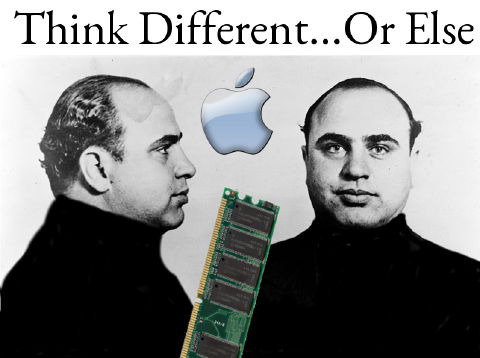
- Apple is working to buy a dominant stake in Renesas. Their supply chain needs and excess cash has them taking risks like buying companies with huge losses ($6B+ in the past few years) in order to have first shot at the silicon.
- Buying lots of chips at once basically allows cash-heavy companies to act like mafias ("leaning" on their suppliers).
- The Raspberry Pi foundation just released a new "Compute" module based on a SO-DIMM form factor. Dave mentions that these were used in the past and had a standard associated with them, the embedded open modular architecture.
- Yet another BS indiegogo, this one creeping past $1million dollars (and still going) that can claim to track your calories through skin resistance. NOPE.
- A high-flying crowdfund campaign that isn't BS is the MicroView, which crossed the $500K threshold. Marcus was on the show a few weeks back talking about the device.
- Chris did a booth mini Maker Faire. It's amazing that some people do this for conferences as large as Bay Area Maker Faire (which Chris will be attending as a participant, not a presenter).
- This year there will be a "Gauntlet" that runs for 1.5 weeks: MakerCon -> Maker Faire -> SolidCon.
Transcript
SPEAKER_00: This is The Amp Hour Podcast. Recorded April 7th, 2014. Episode 193. Remorseless. Ram. Racketeering.
Dave Jones: Welcome to The Amp Hour. I'm Dave Jones from the AEV blog.
Chris Gammell: And I'm Chris Gammell of Contextual Electronics.
Dave Jones: Daylight saving again.
Chris Gammell: That time again.
Dave Jones: It's ended here. Now I'm depressed.
Chris Gammell: It's like we're on a repeat. It's almost like we had a repeat show in the past.
Dave Jones: That was not my idea, folks. That was not my idea. Last week's episode was...
Chris Gammell: That was my idea, yeah. Some people were angry.
Dave Jones: Well, it was either that or do nothing. Because we were actually going to take a week... Well, we did take a week off. Because you were in the ESC conference, right? Or whatever it is they call it this week.
Chris Gammell: Yep, I was on California on travel. Dave's always busy.
Dave Jones: And I'm always flat out, yeah.
Chris Gammell: So it seemed like a good way to do it. Now, there were some hints in there, though. And I'm surprised some people made it... So I put in a thing at the end. I kept the old music in at the end. And I put like a little, really? You didn't get at this yet? But there were some telling signs early on. One was me mentioning my fiance. And I've been married for about two and a half years now. Two, three years. I don't know.
Dave Jones: Yeah, like people follow and remember your private life.
Chris Gammell: Well, right. Of course. The other one was... There was actually an interesting happenstance. I just tried to find the oldest one that would make sense. But it so happened that that was the show where we announced a new startup on the scene, which was Touchstone Semiconductor, which people may remember. A couple weeks ago, we announced closed. We don't know the whole story there. But, you know, we were sad about it. Obviously, we knew the people there. We've interviewed... In the meantime, we actually interviewed the people on the team and everything. But, yeah, so that was another indication. And then, you know, just sounding different in general. It was... But, yeah.
Dave Jones: I think the general consensus was that, no, that was a fail.
Chris Gammell: Well, at least I didn't post it on March 30th or whenever the hell you posted yours, man.
Dave Jones: I got a few complaints out, but I had to. People don't realize that I had to.
Chris Gammell: No, you don't. Come on, man. I do. You're still going to get people.
Dave Jones: No, no, no. No, no. Well, not the same amount. You know, I want it to work. That's the whole idea of it. I hate April Fool's jokes. And, you know, you watch the video and it's so obvious. And then they get to the end and they go, oh, April Fool's.
Speaker ?: You know, why?
Dave Jones: It's stupid. If you're going to do it, make it real. Right? Yeah. Anyway, there was deliberate reason why I did that. Time zone thing was one. Right? I did... If I waited until American time, which everyone wants, right? Oh, it's not April 1st. Well, tough tits for living in another country. Right.
Chris Gammell: I could forgive that if it was actually March 31st here when you posted it.
Dave Jones: Yeah, it was. Well, unfortunately, I... It was not. Unfortunately, it was... It was... Well, it had to be early because I was very busy that day. I think it was the Tuesday, wasn't it?
Chris Gammell: Yeah, I don't...
Dave Jones: Was it the... Anyway... Yeah, it must have been. Anyway, I was super busy. So I wouldn't have been able to be there to, you know, delete all the stupid comments that spoil it. You know, the first comment, oh, April Fool's. And it spoils it for everyone. Right? Come on, people. If you know it's an April Fool's, just have a laugh and wait a day or two before you comment. You know, I know you want to prove how smart you are by picking up my April Fool's joke. But it just... It just ruins it for everyone else, I think.
Chris Gammell: Yeah, it's... Anyway. Oh, well.
Dave Jones: So, yeah, sorry. So it had to go. And then I couldn't release it on midnight because then I'd be sleeping, you know.
Chris Gammell: Dave's next April Fool's joke will be delivered on Christmas Eve of 2014.
Dave Jones: Anyway, I can't believe it. It actually worked. Practically everyone fell for it.
Chris Gammell: Did Fluke fall for it too?
Dave Jones: They did for a little bit. They had people wondering, well, what the hell is this about? Did we actually... Who... What? Is this a product I haven't heard of? You know? And they... Yeah, it fooled them for a little bit.
SPEAKER_00: Well, okay. It worked. Solid.
Dave Jones: Yeah. But yeah, I thought it was so obvious. I was like... Because this was a last minute thing. Like I literally went and bought the meter. Well, I sent She Who Must Be Obeyed and Sagan off to pick up the meter on the Friday afternoon. And I shot the video, you know, Saturday morning or whatever and uploaded it. And then I had to get some parts, you know, to make it look authentic. And they weren't even the right parts. And I was going, oh, this is not going to work. Look, it's obvious these aren't varistas, right? I was using mobs instead of varistas. And everyone would know it. It's not the correct resistor type. Of course. Oh, everyone's going to know it. Right.
Chris Gammell: Who couldn't spot an MOV from a thousand yards, right?
Dave Jones: Oh, and I thought, oh, they got to see that, you know. And on top of that, I just thought as if anyone's going to think that Fluke, the company that are synonymous with safety, are going to release a kit where people have to solder their own protection devices. I just thought it was so wacky, no one's going to believe it. But it... I guess people wanted to believe as Fox Mulder says, you know, I want to believe. Yeah. Shit, it worked.
Chris Gammell: Well, to continue the line of the SparkFun Fluke thing, I actually, when I was in a computer store a couple days back or a week or two ago. I found one. I don't know. Did I talk about that last week or last time we were on? No, but it was on Twitter. Yeah, it was on Twitter. So I found one and I'm holding it in my hand. It's a collector's item now. So the bidding starts at $15, which is the list price.
Dave Jones: You fool.
Chris Gammell: Oh, sorry. The bidding starts at $100,000, which is the Chris price. So, yes, that'll have a new in packaging place on my bench.
Dave Jones: I'll tell you what you should do. List it on eBay, right, with a price of like $2 million or something and say, this is the price that it would cost the legal defense to actually compete with Fluke legally to get this stupid, you know, trademark beat. Yeah. You know? Oh, man.
Chris Gammell: Frigging lawyers. So in that same vein of lawyers. So we are still in the midst of a fight. We being the podcasting community and listeners being the podcast listening community. So I actually met someone involved with the Adam Carolla show out in L.A. last time when I was out there a couple months back. And so he's been kind of talking to me a lot of this stuff and they've been having fundraising and everything. But basically, Adam Carolla is fighting the patent trolls.
Dave Jones: And who is he? I've heard of him, but I don't know the show. What does he do?
Chris Gammell: Well, the show is actually, that's the number one podcast in the world, actually, in terms of downloads and everything. Yeah, and what does he talk about? Well, so he was a comedian. People in the States, at least, there was a show called The Man Show. It was him and Jimmy Kimmel. Kimmel now has a late night television show. Yep. And, I mean, basically, it's kind of like, it's kind of Seinfeldian. It's a show about nothing. I mean, they talk about comedy and everything else. Yeah, yeah. Sports and, you know, just stuff, right? But people like his show for the personality. But basically, because he's the number one in the world, there's patent trolls going after him and they're going after him. Who else? They say it's only for-profit shows. So, like, they left, like, This American Life and a bunch of the NPR shows alone.
Dave Jones: But, yeah, because why go after somebody who doesn't have any money? It's pointless.
Chris Gammell: Right, exactly. And so, they're taking the fight to him. And there is a funding campaign, like a crowdfund campaign. You can, you know, get the usual swag. But this is, you know, this is actually a really good cause for the fight. And there's a bunch of clips about it. Actually, This American Life did a thing about it a while back. But definitely check it out if people are interested. You know, this could really impact a lot of podcasting. And, you know, as this friend said, he's like, well, it doesn't seem like a big deal to us, right? Because we're small compared to everybody else. But eventually, you know, patent trolls don't stop when they, you know, they basically need litigation.
Speaker ?: Oh, no, no, no.
Chris Gammell: Once they smell blood. Exactly. And so, you need to basically strike down the patent somehow. And if people don't remember, it's a ridiculous patent. Basically, they got a patent for magazines delivered on cassette tapes. And that is their claim that they invented podcasting.
Dave Jones: They own media. Yeah. And they, yeah, exactly. It's just ridiculous.
Chris Gammell: And nothing they did ever worked. This is where I get confused, though, too. So, like, I was listening to all this stuff again today. And what is the, there is some kind of provision for prototypes, like working, right? For patents. Is that not a thing? Am I mistaken about that?
Dave Jones: What do you mean exactly?
Chris Gammell: So, like, when you go to patent something, don't you need, do you need a prototype? Do you need to show a working prototype or no?
Dave Jones: No. Oh. I don't think so.
Chris Gammell: Well, that's stupid. Because, I mean, it seems like these guys never even had a working prototype, let alone anything that was commercially successful.
Dave Jones: Yeah, no, that's how these guys make a living, these trolls.
Chris Gammell: Terrible. Terrible, terrible.
Dave Jones: Yeah. No, no, they've just got an idea. That's what they've bought. They've bought the idea that's been patented.
Chris Gammell: Yeah.
Dave Jones: Yeah, I'm not sure where. I think they used to have a clause, like, way back in the, you know, the 19th century or something. But, yeah, I'm not sure of the exact details of that. But, anyway, no, I don't believe that's the case. But, yeah, bastards, really. But this impacts so much. It really does. It's not just his show or our show. It's, you know. Oh, goodness. It's the future of media delivery on the internet almost.
Chris Gammell: Right, exactly. Yeah. Why would they stop with just audio delivery of podcasts, right? Well, I'm sure someone at some point has patented other types of delivery, YouTube and everything. I mean, like, obviously, like, with YouTube, you know, you have Google that could help fight with that kind of thing. But when they're going at the individuals, you know, like, how do you?
Dave Jones: Yep.
Chris Gammell: It's really tough. And I think that in the more recent stuff, Adam talks about the actual amount they're going for, like, for a licensing fee, quote, unquote. It's like $3 million.
Dave Jones: To license from this company.
Chris Gammell: Right. Yeah.
Dave Jones: Oh, man. Unbelievable.
Chris Gammell: Bunch of bastard-coated bastards with bastard filling.
Dave Jones: We need to dip into the Amp Hour coffers, I think, and donate to this thing.
Chris Gammell: Definitely.
Dave Jones: Yep. Yep. So bad. If other people are interested, if you like podcasts. It's all sold out, though. Like, all the higher-end, like, you know, options are sold out to actually.
Chris Gammell: Oh, yeah. They'll keep adding stuff.
Dave Jones: Right. Digital studio tour. That'd be cool.
Chris Gammell: Yeah. Yeah.
Dave Jones: But as always, they've picked the right target. Right? They're not going to pick on someone small, because they don't matter a rat's ass. Right? They're not going to pick on somebody who's owned by Google or Disney or something. You're right? Because, no, they've got endlessly deep pockets. They won't win. So they pick on someone like this who's, you know, like, number one in the industry, but still small enough to not be able to fund a defense for it.
Chris Gammell: Right. They make money. Yeah. But it's also paying the people that work on the show and everything, too. Right? It's not like they're- Exactly.
Dave Jones: So they're not putting in 10 million bucks a year or something.
Chris Gammell: Yeah. I have no idea.
Dave Jones: Maybe they are. But, yeah. No, they've got overhead, right? Yeah. Yeah. Yeah. They certainly wouldn't have a war chest of tens of millions of dollars cash just sitting around to fund a defense for this thing. That's why they have to do the crowdfunded campaign. But, yeah, man. Yep. Bastards. All right.
Chris Gammell: On to happier things. All right. And this is why we like open source hardware, right? Here's my segue. This is why we like open source hardware. And I got to see- So Bunny gave the talk at EE Live, which is the show that I went to out in California. And he had his prototype there. It was the first time it was showed off in public. And it was pretty. I don't know if you've seen this.
Dave Jones: I've seen photos of it. Yeah.
Chris Gammell: Yeah. The laptop. I was actually a little confused at first. You know, because I have this idea in my head about laptops, right? Like what a laptop should be. Right. And they've kind of spun it around where it's more like a, I don't know, like a book, you know? It's just a book that kind of flips open. And the idea is you have access to all the hardware in the back so you can actually, you know, probe and hack at it and stuff like that. And the screen basically pops up by itself. And then you have a separate keyboard, either plug in or wireless, whatever. And I asked the dumb question, too. I walked up to Bunny and I'm like, well, so it's not attached? You know, like it was just this idea in my head. Laptop means clamshell. But I guess, no, it doesn't need to.
Dave Jones: Well, it is a clamshell when you prop it up. It's got a little lever arm that holds the display up. But it's kind of like opening the bonnet of a car.
Chris Gammell: Right. Yeah. It's like pneumatic, though. Yeah.
Dave Jones: Right. Yeah. I don't know.
Chris Gammell: You don't like it?
Dave Jones: Yeah. Well, look, you know, obviously it's cool, right? I love the idea of them doing this. But the other half of me says, well, why? What use is it? You know? I think the board alone is like $500. Right. And I'm thinking, well, you can go and buy a mini, you know, one of those micro ITX boards for $100 at your local computer store.
Chris Gammell: But if you're comparing this to commoditized PC hardware. I know.
Dave Jones: But unfortunately, that's what it is these days. I mean, how many people want to hack it enough to want to pay five times the price, if you know what I mean?
Chris Gammell: Well, I think the comparison would be like, so what about, what if you compared like the TI, the launch pad, MSP430 launch pad to an Arduino, right?
Dave Jones: Which costs $4.30. Yeah.
Chris Gammell: Exactly. Versus an Arduino, which costs $20 to $30, right? I mean, like that would be the comparison, I guess. I mean, the difference in processing power is virtually nothing. Right. But you're buying into an ecosystem and you're buying into openness.
Dave Jones: Well, yeah, but you can also buy a clone Arduino for $8, $10 on eBay.
Chris Gammell: Right. Of course. And eventually you'll be able to buy a clone board here for the same thing. But that's not the point, Dave.
Dave Jones: Which is fine. And that's why I support it, right? I support the project. I just...
Chris Gammell: You're just saying you wouldn't buy one for yourself, right? I mean, that's what...
Dave Jones: I wouldn't buy one for myself. I don't see a need to actually do it. If people do, then, oh, great.
Chris Gammell: I think about this a little bit. Yeah, because I mean, it's tough because it's called a laptop, right? And it is. Right. It's a display. It's got the processing power. It's the hooks up to the internet, all this other stuff. But really, it's an ecosystem. You're buying into an ecosystem. The thing that I think about when I look at this thing, especially because you can just buy the board, right? Yeah. This is going to be... You know, this is like a supercharged Raspberry Pi or anything else like that. Well, exactly. Well, why can't you just... It's a starting point and it could be integrated.
Dave Jones: Why can't you just get the... It didn't Intel release. What's the name of the Intel open source board?
Chris Gammell: The new one, the Galileo.
Dave Jones: The Galileo. Why can't you just whack that in a box and put an LCD on it?
Chris Gammell: You could. It would be not even close in processing power. That thing was like... That uses an Intel Atom. I think it's an Atom.
Dave Jones: Oh, okay. Right. I thought it was quite significant.
Chris Gammell: So, this thing's like quad core, you know, like 1.2 gig. I didn't look at all the specs. You have four gigs of RAM, though. Yeah. So, this... Yeah.
Dave Jones: Quad core, 1.2 gig. And you run... I assume you run a flavor of Linux on it. You just... Yep. Yeah. Right. Yeah. That's the idea.
Chris Gammell: Yeah. You're not going to be running Windows on here. So, I mean, that's always... Of course. That's the difference, right? But that exists in all types of PC hardware, at least, you know, having the premium you usually pay for that hands-off experience.
Dave Jones: Yeah. See, yeah. It's in one of those interesting niches where they're trying to make it appeal as a laptop, right? But it obviously can't compete with a low-cost laptop, right? In terms of, you know, bang per buck kind of thing. And then it's also trying to be accessible like a bareboard, Galileo, Raspberry Pi type thing, right? Maybe. But then you're paying too much because you're paying for all the form factor and the screen and the case. And I... Well, you can just buy the board on its own, right? But as I said, the board on its own is 500 bucks.
Chris Gammell: Yeah. I don't know, man. I think that the... I think this is a good in-between, though, too, because...
Dave Jones: Well, it could be.
Chris Gammell: A lot of the difficult stuff is the drivers to set up the display and stuff like that, right? I mean, that is oftentimes a big piece of it. And the board support package is already done for Linux. Like, all of that stuff's already there now. You know, it's all the open-source stuff that Zobs and Bunny are working on. And I don't know. I think...
Dave Jones: Well, it's all software. I mean...
Chris Gammell: It's just... Yeah.
Dave Jones: As always, it comes... You know, these open-source hardware projects, they come down to software. Just like the Arduino, right?
Chris Gammell: Allow me to restate that, though, because this is full-blown Linux now. Dave, it's all software. Holy crap. You know, that's the difference, right? I mean, that's what you're buying into the ecosystem. That's what's cool about it. Exactly.
Dave Jones: I know.
Chris Gammell: Okay. So, we're the same... Two sides of the same coin. Is that the idea here? I think so. Saying the same thing. You're not going to buy this for... You're not going to buy this for running, you know, video processing, right? You're not going to do crunching video on this. Or we're not going to do this for... Maybe for CAD. I mean, I'm sure Bunny's running CAD on here. Maybe through a virtual... You know, you can run a virtual machine on Linux. Yeah, we could.
Dave Jones: But if you're just doing that, why not just buy a normal laptop?
Chris Gammell: You know, one of the things that Bunny brought up in this talk, which was interesting, was the swappable battery. Because I tell you, that's the thing that... Man, that's killer. Like, you know, basically, they're using these high-capacity battery packs. You know, for RC and stuff like that. And it's just... This form factor really lends itself to it. I mean, you could pack the entire... Like, if you look at the second picture there... Oh, sure. Yeah, because it's an... That could be all battery. Like, that's killer. You know? That's really killer.
Dave Jones: It could be, yeah. If you want to trade off weight for battery, sure.
Chris Gammell: Yeah. Oh, any day. Any day. And swappable batteries like that. I mean, like, I know that this stuff is all possible with laptops. But now you're buying commodity battery packs, right? Instead of, like, you know, paying Lenovo $100 for another battery pack, you pay $30 for... You know, you could have... Right. You could have 10 battery packs in your bag, right? Assuming you could get it through airport security. But, you know, I just... I think... I don't know. I think it's cool. It's just... I had to personally get past the form factor. Right. Boy, talk about a discussion piece, too, when you pop your laptop open. That'd be cool. Oh, no. Yeah, of course. Totally awesome. Yeah.
Dave Jones: Yeah. I just... Yeah. I think it's... Yeah. It's a real high-end niche. Very high-end, yes. It's certainly not... You know, it's not the sub-hundred-dollar, you know, thing that everyone's used to with, you know, the Raspberry Pi and just being, you know, barely able to run Linux kind of thing. Right.
Chris Gammell: Well, I think we'll see this kind of thing, though. It'll get worked into... Like, again, this is always about bringing more people into the community as well, right? So, you think about having full-blown Linux with this kind of accessible hardware. And, you know, Bunny talked about in his talk about they initially planned for this to be in a quadcopter, which would be a damn heavy quadcopter, if you ask me. But you think about that, right? Say you wanted, like... Say you had, not a quad, but maybe, like, an actual drone plane, right? With, you know, a gas motor on it and stuff like that. And it's actually up there crunching data and, you know, taking images and stuff like that.
Dave Jones: Yeah, and it'd be doing image processing in real time or something.
Chris Gammell: Right. High-end, high-end stuff, right? That's, like, military-style tech. But you could throw something like this in there now and actually interact with the hardware. And I think it was what we talked about in the past, too. I mean, this thing has an FPGA on a board as well, so you could do... I mean, you talk about expensive...
Dave Jones: Oh, it's got an FPGA on the board, does it?
Chris Gammell: Yeah, it's got, like, a huge Spartan 6 on there. Right. Okay. Yep. Which are great chips. Those are really great chips. And I've seen it more and more places, and I really do like them. So...
Dave Jones: Well, one place where I've seen it is in the new SaleyLogic device. Yeah, that's right. I did. I saw that, too. Yeah, yeah.
Chris Gammell: Did you get one of these, or what's the deal?
Dave Jones: I don't have one, no. I have not been approached to get one. They're running their own crowdfunding campaign on their own website. They're not doing it through anything else. Well, you know, it's like a pre-order kind of thing. I think you can, yeah, pre-order this thing.
Chris Gammell: Yeah. I was a little upset about this. Not upset. That's the wrong word. Why do this? I mean, like, why not just say we're taking pre-orders? Like, they have this target. Okay, here's the real question. Do we really think that they're not going to release this thing now? They have four different flavors of product. If they don't reach their target, then what?
Dave Jones: No, they're a reasonable-sized company. They've already, you know.
Chris Gammell: Yeah, I mean, they're already there. So, it's just like, well, why? I mean, I guess I understand it, but, like, there's no real need for crowdfunding here. It's like, pre-order, sure, but this is not crowdfunding. That's all I'm saying.
Dave Jones: No, it's not. It's sort of, you know, doing the hype kind of thing. That's what a lot of people use crowdfunding for these days is hype. I mean, I did. I said, hey, I'll admittedly do it because I, well, I wanted to test it, right? I wanted to see what it was like, but it was also partly for the hype reason and partly for the, you know, the nice ability to get everyone's addresses and all that sort of stuff. You know, it handles all that sort of stuff. That's true. Yeah, okay.
Chris Gammell: I get that. I mean, that's fine. Whatever. Whatever. I just, the first, you know, we're here to complain, right? So, the first impression was, yeah, why are they doing this? And then what happened is I looked at the thing and I realized that this is exactly what I was asking for about two weeks ago. I was complaining about low-cost scopes. And, oh, hey, by the way, this isn't just a digital logic analyzer. This is a analog as well. And basically, this was, so the low end, the Logic 4 is 99 bucks. Yep. And I'm not sure about, this page is tough to see. This is a very web 3.0 page.
Dave Jones: It has a 12 mic sample per second converter, eight channels at 10 bits.
Chris Gammell: Yeah. So, 600 kilohertz bandwidth. That's what I really care. That's the number I really care about is 600 kilohertz, which isn't, you know, great, but it's probably good enough for contextual electronic stuff that I'll be doing. The one I'm suggesting is actually the, I'm probably going to be using the mini lab, the Gabotronics mini lab. Yeah.
Dave Jones: Well, that's not even 600 kilohertz, is it?
Chris Gammell: No, it's 200 kilohertz. Right. Yeah. So, that'll be fine too. Right. So, this is basically on par with the same kind of thing, except this Logic 4 is based on, you have to be plugged in, you have to have a display and stuff.
Dave Jones: And the high end one is the Lite Pro 16, and that's five, what is it, 500 bucks? Yeah. And that's USB 3, and that is a 12-bit converter at 50 meg samples per second. So, that's, you know, really.
Chris Gammell: And five megahertz. That's the one. Yeah. Who cares about the samples, right? You're going to be 10x the bandwidth, but yeah. Yeah. So, that's nice. I mean, the 12 bits is nice if you actually get all 12, if there's not noise in there.
Dave Jones: And of course, to get all of that data out, they need a USB 3 connection. Because what do they say? It's like, if you add it up, eight channels or 16 channels at 500 meg samples per second at 12 bits, well, you're probably going to stuff it into two bytes worth of, you know, RAM, right? Well, two packets. No, because this doesn't have RAM built in, right? It's a streaming thing. I don't know. Yeah. The Saly Logic has always been a streaming device.
Chris Gammell: Is it really? So, what is it?
Dave Jones: It just streams it directly through your USB port. Oh, yeah, yeah. Yeah, yeah, yeah. That's why these things are so cheap, is because they've got no memory. Yeah, you're right. There's no memory. And they don't have the architecture to handle it and all that sort of stuff, you know.
Chris Gammell: And that's why. So, what is this other part on here? I can't see what it is. I see the FPGA, which is the Spartan 6, like you said.
Dave Jones: They've got a Spartan 6.
Chris Gammell: Oh, some Cypress part on there. Some Cypress.
Dave Jones: Yeah, it'd be the USB chip set. Yeah. So, they've got to have a USB chip set. They've got to have a Spartan 6 to do all the processing and stuff. And then some nameless chip here. And then the ADC and the Logic Analyzer on the other side. The big one on the bottom side is the ADC.
Chris Gammell: Yeah, yeah, yeah. Okay. And then a bunch of op-amps in front, yeah.
Dave Jones: Cool. And the thing is, the PCB on this sucker, they claim that it's more than eight layers, i.e. it's 10 or 12 layer board. I'm going, holy shit.
Chris Gammell: At least it's small. That helps. Yeah, I know. It's tiny. Yeah.
Dave Jones: But that, you know, that might be all the different stupid voltage rails they need for the Spartan 6, I guess.
Chris Gammell: Oh, you think? Yeah, I guess they're pretty space-constrained. Yeah. It doesn't look like they have much of power conditioning on here.
Dave Jones: Well, yeah, I don't know why they needed that many. I guess they're alternating grounds everywhere. You know, they're just having, they're really just going to town on grounds. Well, you're more of a high-speed guy than I am.
Chris Gammell: I mean, isn't that a lot of impedance matching stuff, though? You need, like, paired-up ground for controlled impedance stuff?
Dave Jones: Not at, only for the USB 3 part of it. Apart from that, no, you've got, you know, it doesn't matter. The runs are so shorty that it wouldn't matter. You know, it's 500 meg samples per second. Okay. You know, but we're only talking a few millimeters of trace, you know, 10 millimeters of trace, something like that. And so, yeah, you're going to do some basic controlled impedance stuff, but it's not going to be anything. You know, it's all about, it's more about your termination and stuff like that.
Chris Gammell: Right, yeah, yeah, yeah.
Dave Jones: But because they're so short, once again, they're probably not even, you know, terminating and stuff like that. I think they're just running them straight chip to chip, and they're doing that. Oh, someone's at the door.
Chris Gammell: Oh, no.
Dave Jones: Take it over, Chris. Go for it.
Chris Gammell: This is interesting. So this kind of ran into the same problems that I had. I've had in the past with, like, designing chips as well, because I had actually heard whispers about this. You know, someone whispered to me, oh, well, you know, Salier might, Salier, or how do you say their name, they might be coming out with something soon. You should hold off for the class, right? And so I started thinking about it. I'm like, ah, you know, so class starts next week. I can't wait that long, though, right? And that's often the same kind of problem with, you know, you'll have a vendor come in, and they'll tell you, oh, well, we got this great new chip, and they get you all excited about it. You know, it's got all the features that you need. It's got everything you need. It's custom designed for your application. And you say, well, when does it come out? Of course, it comes out two quarters from now, you know. We're in very, very early stages of silicon testing, and we can't commit it on a date, they say. And at least in this case, I mean, I think they said, I think the crowdfunding thing said that it'll be 90 days from ordering or pre-ordering, which, again, is the same kind of thing where why are they doing pre-orders if it's 90 days from then? But, yeah, I mean, it's the same kind of thing with chips, though. You know, you have someone comes in, they say, we have this awesome solution for you, but we can't promise a date. And so this is the same thing, and I couldn't end up using this one, unfortunately. But it does look like a nice chip on here, or a nice solution. I'll definitely try it out once it is out in the marketplace. I don't know if I'll pre-order, but...
Dave Jones: And a back.
Chris Gammell: You and your front door.
Dave Jones: I know. Jeez. Trying to run a business here. How dare me?
Chris Gammell: How dare you, sir?
Dave Jones: There were another... That was another three boxes of microcurrents just turned up.
Chris Gammell: Oh, good lord. Yep. I was just talking about how this thing coming out after the... Or too late for me, basically. It's kind of like how that happens for chips. You know? Like how someone would come in, we've got the perfect solution for you, and it would be four months before it actually comes out. Right. It's the same kind of thing.
Dave Jones: You can't buy it. So you've got to make a design decision now, because you can't...
Chris Gammell: Right. Exactly. And then people ask you, like, when your product's in the marketplace two years later, they're like, well, why didn't you use this perfect chip that isn't available now? Well, it wasn't available when I was designing the damn thing, you know? So, it's just the...
Dave Jones: If you're lucky, you might be able to get some pre-production prototypes on the chip, but only if you're important enough, you know?
Chris Gammell: Yeah, I'm not in the business of finding chip companies errata. Right.
Dave Jones: Yeah, I've been there, done that. It's not pleasant.
Chris Gammell: You know, you only do that when you need the bleeding edge, right? I mean, like... Yeah. And that's the price you pay. Sometimes you're going to run into bugs in silicon or bugs in the code. I don't want to do that. No, but... My life has enough stress.
Dave Jones: As you said, sometimes you have to. Like, when I was in the seismic industry, you know, there's only, like, two chips on the market and two companies that make chips for the specific seismic industry. You know, these world-leading 24-bit analog-to-digital Delta Sigma converters, right? Yeah. Right, right, right. They're such low power, optimized for such low power and for such low noise and distortion and everything else that, you know, they're specifically designed for that market for, like, four customers, five customers in the entire world who make these systems, right? Right. But there's enough business there.
Chris Gammell: And those two are duping it out over the customers. Yeah. It's either A or B. Take your pick. That's it, man. Line in the sand. Time to choose.
Dave Jones: And didn't company B go aggro when I had to tell them, sorry, we're choosing company A's chip? Right, right. Did they, uh... We put so much time and effort into supporting you and, oh, we're out. Yeah, they went feral. Yeah. Yeah, it wasn't pleasant.
Chris Gammell: Did they, uh... It's always fun to see, uh, see what, you know, when people take a hard line to, like, you know, this is the whole supply chain thing, you know, dealing with, you know, vendors. Oh, we can't go any lower than a dollar. Okay, well, I'm with company B over there. Oh, did I tell you we couldn't go under a dollar? I meant we couldn't go less than 50 cents. And it's amazing. You know, I think a lot of sales revenue is based on the idea that you don't have time to do that, right? Or that you don't have the pricing power to do that. Or that you don't have the options to compare against. And it's like, but when you do, man, talk about price flexibility. You never realize how much, how little you can pay for stuff. When, uh... Yeah. Yeah.
Dave Jones: Oh, man. I know. You know, that was another thing.
Chris Gammell: I was talking to a friend at the show, too, because the same thing came up. Remember when we were talking about that zombie video that TI did? That ridiculous waste of money? It was the same kind of thing. Every time I go to a trade show, it's the same kind of thing. I look at these gigundous stands.
Dave Jones: Any booth babes?
Chris Gammell: Some booth babes. It's getting a little better. It's not as intense. But, like, Tektronix, like, just plastered the whole place of the MDO 3000. Like, you know, good scope, right? Cool. And they're trying to push it out. But, like, honestly, like, they had things like you were stepping on, on the floor. Advertising on the floor.
Dave Jones: Oh, no, right.
Chris Gammell: It's like, what am I paying for here? Just, you know? Like, damn it. Every time. I just, you know, like, I know that advertising's a thing. I get it. I get it. Marketing is a thing.
Dave Jones: They bought the premium package. The organizers will offer you anything. I know, yeah.
Chris Gammell: Putting stuff in the urinals.
Dave Jones: Yeah, yeah, exactly.
Chris Gammell: What is it? MDO 3000 toilet paper? Why? We clean up the competition. I'll pay that. Yeah. But, I mean, it's the same kind of thing. You know, why am I paying? And, you know, it's all in that price flexibility, right? You know, like, it's that when you don't push for that hardest price, that best price, all that extra money, it goes into the kitty. And then everybody gets a slice. Marketing gets a slice. Advertising gets a slice. You know, R&D gets a slice, which I'm okay with. You know, that's fine. Absolutely. I want them to get a slice. But it's just part of business. And it's tough for me to swallow sometimes.
Dave Jones: And you were talking about, you know, you don't want the silicon bugs and stuff like that.
Chris Gammell: Oh, yeah, yeah, yeah.
Dave Jones: You know, when I got, you know, I got alpha chips, right? Oh, yeah. Right, the absolute first spin silicon that they got, they had barely tested it themselves, you know, and they shipped it to us, right? Because we needed these things, right? They had designed this new chip. Oh, it's fantastic. But we've never gotten silicon back before, you know? But here, we'll ship you. We'll take some ourselves. They drop shipped it to you from the fab. They drop shipped, I think, from the fab, you know? And, of course, the data sheet didn't exist. It would be the existing data sheet for the previous part and then just some handwritten notes about, you know, a post-it note with the extra registers on it, you know, that this one would have, you know? And I found all sorts of bugs in there and I was documenting everything for them and, yep.
Chris Gammell: And then they come out and you're like, you're yelling at them at the meeting and they come out and you're pointing at the data sheet with the post-it note on it and you're like, you are totally wrong here! And they go, oh, oh! And then they pull the post-it note off, they flip it over and they post it back on there, right? Now it's okay.
Dave Jones: That's it. They turned upside down. Now this is what we meant.
Chris Gammell: Yeah. Everything's fine now.
Dave Jones: It reminds me of that scene in Independence Day when Will Smith is flying the ship out and trying to fly the ship out of the thing and he goes backwards, tries to go forwards, he goes backwards and his post-it notes upside down.
Chris Gammell: Exactly.
Dave Jones: His instructions, yep. And that's what it's like. But, hey, if that's the industry you're in, you've got to pay that price. Yeah.
Chris Gammell: And, you know, the whole chip industry is just, it's, I mean, like, it's so insane, right? I mean, like, you talk about price for buying components, but now we see companies buying entire parts of other chip companies, right? So the news this week is that Apple is going to buy parts of Renesas, basically. Oh, are they? I didn't hear about that. Yeah, yeah.
Dave Jones: They were in trouble. They were in trouble, weren't they? Renesas?
Chris Gammell: What for? Oh, yes, yes, they were.
Dave Jones: I thought they were in, like, financial trouble. They were laying off people or something like that, I heard. Yeah, right, right. They were laying off divisions.
Chris Gammell: So Renesas is the combination of, like, NEC, Fujitsu, maybe? It's a bunch of Japanese companies, former Japanese companies. Well, they are the...
Dave Jones: Big names. They were the number one microcontroller manufacturer in the world, staged a few years back.
Chris Gammell: They were number one. And then they had you at their conference, and I think they nosedived, right? They, once you...
Dave Jones: After the conference I went to, yeah, they were... Yeah, the... Yeah, I don't know whether or not... Causation or correlation? No, causation... Causation does not necessarily equal correlation. Sorry. Correlation does not equal causation, yeah. Yeah, right. You know, well, good. Anyway, yeah, they are huge. I mean, like, hardly anyone that, you know, in the... Our sort of level audience, like, use them. But unless you work at an automotive company or something like that, you're probably never going to touch them.
Chris Gammell: Right. I always think white goods, actually. That's what I usually think of for Renesas. Like, huge volumes. White goods and automotive. Yeah. Yeah, but, like, you know, every fridge has, you know, one of their 8-bitters in it, or it has the 32-bit, or the low-cost 32-bit. And, I mean, they're cool parts. Like, they had that design... Oh, yeah.
Dave Jones: Were you part of that design contest? Yes. Yes, I was. I was a judge of that.
Chris Gammell: Yeah. Yeah, that was a cool design. I mean, they're cool boards. I mean, like, they're good parts and everything. Yeah, they're awesome chips, yeah. And, you know, it's an alternative to ARM, right? Oh, yeah. That's another one for me. They have a different core in there. Yep. And, but that could be hurting them just as much. Hmm.
Dave Jones: So, what aspects are Apple buying, do we know?
Chris Gammell: You know, I didn't focus on that so much as the price, because I was very intrigued. I don't care about the price.
Dave Jones: I want to know what they're buying.
Chris Gammell: I do care about the price. No, here's the thing. They're going to buy a shitload of fabs and a bunch of IP, right? And they're going to pay about $450 million, I think the number was. Is that all? $450 million. Yeah, exactly. And now look at, what are we comparing it to, Dave? What is our new benchmark?
Dave Jones: Nest, right?
Chris Gammell: Nest, Google paid $3.2 billion for less than 50,000 devices sold and no manufacturing capabilities.
Dave Jones: Which then stopped shipping.
Chris Gammell: And, like, that's the difference, though. Yeah, I know. How can you make that comparison now? It's like, this is just funny money at this point, right? I mean, like, Renesas has fabs, man. They can make silicon. I know. They can process silicon. Exactly. That's a real business. It is hardware.
Dave Jones: They've got it for $450 million? That's bargain.
Chris Gammell: Yeah, I know. Exactly.
Dave Jones: Apple just got themselves a bargain. And Nest.
Chris Gammell: Well, there's nothing closed yet, so it's not closed yet. Right. Okay.
Dave Jones: Right. But that, yeah. No, yeah. Apple needs fabs. Apple want their own, you know, and it's not like they're going to buy part of Intel. No. They're going to, yeah. Nor Samsung. Yeah, exactly. So, Renesas is a great fit. That's a. Yeah. Yeah. Yeah. Yeah.
Chris Gammell: So, I mean, and we're going to see more of this, but it's just, I mean, man, it's just a supply chain issue out the wall. I mean, so we've heard about this before, right? Where Samsung or Toshiba or Micron, they'd say, here's our lot for the month, right? We have, you know, 100,000 million, 2 million wafers. I don't even know what the numbers were. And Apple swoops in. They say, oh, we'll take all of them. Right? Yeah.
Dave Jones: That's how Apple make their money, believe it or not. But instead of Apple invest, like Apple have got like $50 billion cash in the bank or something ridiculous.
Chris Gammell: Right, right.
Dave Jones: Right? Yes. And they, and instead of like investing that money in something, what they do is they buy parts. And they come along to these companies and they go, we're going to buy 10 bazillion parts. And that company says, you know, because that's gold to a company, right? When you. Right.
Chris Gammell: It's guaranteed money on the books from a really money.
Dave Jones: Money. Cash heavy company. Bang, bang. Exactly. So they will give them the absolute rock bottom price that absolutely no one else can get because they, they're not going to buy that sort of volume. So Apple will buy the next five years worth of volume in processes, right? And I'll buy it up front. And these companies bend over backwards and sell it to them for pennies on the dollar. And then nobody else can compete in terms of buying memory for that price. For example, you know, Apple are probably getting the cheapest memory. Oh, probably.
Chris Gammell: Yeah. Right.
Dave Jones: Yeah. Because the sheer volume, they said that's where they put their money. They have no problem with signing a $2 billion purchase order to buy five years worth of flash memory.
Chris Gammell: Right. You know? Right. Assuming not just all the same node either. No.
Dave Jones: And you can't compete with that. But they get more return on the investment. I think somebody calculated once in the industry, it was like a 15 to 20% return on your investment. And trying to get that, that return anywhere else is, you know, is crazy. So it, yeah. Oh yeah.
Chris Gammell: Right. So buying inventories. There's supply chain rivals out of like Walmart. You know, Walmart will do the same thing. They'll come in and they'll say. Of course. They throw their weight around. That's the same thing. Right. That's it. And I mean, companies are, I mean like Cirrus Logic, right? They actually are hurt because they had Apple come in and do that and say, I think it was Cirrus. Are they the audio company? Maybe it was Sierra. I don't remember.
Dave Jones: Yeah. Yeah. Cirrus Logic do audio devices.
Chris Gammell: And so basically Apple came in and said, you know, we want to buy all your audio drivers. You're going to go into every iPhone. Right. And basically they're 80% of Cirrus's revenue. Right. Yeah. And then what happens is basically you're so dependent on one company that when Apple says, Ooh, we need a place for cost reductions. Let's go to the people that are completely dependent on us. Right. And they start, they start turning that knob. Yeah. Yeah. Yeah. Exactly. And. Yep. Oh, and it turns in, it turns into like a mafia thing, right? It's like, Oh yeah. Damn shame for us to break your revenue sheet here, buddy.
Dave Jones: You want us to break both?
Speaker ?: Yeah.
Dave Jones: I mean, it's crazy, right? Yeah.
Chris Gammell: And this is not a new thing either, right? I don't want to sound like, you know, I'm naive here, right?
Dave Jones: It's been going on since day dot.
Chris Gammell: Exactly. I had a friend who told me about this happened in, and maybe I mentioned on here before, this would happen with capacitor vendors in the car industry. Like GM would come in and say, well, we really like what you're doing here, but we want you to build up a, you know, we need more capacity. And so the company would go build capacity for it, right? And they'd say, Oh, that's great. Thank you. We'll buy all your parts, but we need a 20% reduction or else we're going to go over next door. And like, that's what you do, right? I mean, that's the supply chain thing. Yep. It's crazy money. And so this is, you know, this is another, so like people say, Oh, I'm sure there's people listening, right? And they're like, Oh, well, supply chain stuff doesn't, doesn't really affect me. Right. But it affects all of us because so thinking now as a consultant, not a supply chain thing, you now have, you know, people all over the world, right? You have consult embedded consultants. As I was just talking to tons of embedded consultants, they walk into an office, right? And they, they talk to an embedded consultant.
Dave Jones: Sounds like a joke coming up. A bunch of consultants walking.
Chris Gammell: I know, no, it's not gonna be a joke. It's actually not a joke at all. And, and they walk in, so you walk into a room with the company walks into a room with embedded consultants, right? And they say, I want a device that can, you know, an internet of things device and I want it, you know, and I want it and blah, blah, blah, blah, blah. And I want it to touch screen and yada, yada, yada. And the consultant says, that's great. Your device is going to cost $1,200 and it's going to take me three years to build, right? Because of all the stuff I needed to do in it. And I can't use, you know, certain open source stuff because of whatever, whatever. And then they turn around and here's what they all say, but my iPhone can do it. And it's like, well, well, screw you, man. Like, look what Apple's doing. They buy $5 billion worth of parts, you know, like, I can't do that. You know, I'm buying single quantities on DigiKey for your prototypes.
Dave Jones: That's a tad different, yeah.
Chris Gammell: Yeah, exactly. And, but like, there's that expectation built in and that, that ends up affecting a lot of consultants, right? You know, you, now we have these ubiquitous devices that people think, oh, well, I can just, everything should be like that. You know, there's, it's only, it's $600, right? But why don't just integrate that? Well, talk about a supply chain issue. You want to integrate an iPhone into your, your end user device? Good luck with that. So, I don't know.
Dave Jones: I thought you were all for that. Tablet devices controlling everything.
Chris Gammell: I'm, I'm, I'm in the, the, the mindset of integrating with, with, you know, existing devices. But if you, you know, if a customer comes in and says, I need it to have its own screen, right? That, that throws everything out, right? You're right. You know, that, that you, you're in a whole, you're into a whole other supply chain game. It sucks. I mean, that's, that's the reason to, to integrate that stuff, but it's still a supply chain nightmare. Do we have... Yeah, I guess I'm kind of playing both sides of that issue.
Dave Jones: You are. I won't wrap it in any further. I like it, but I hate it.
Chris Gammell: Yeah.
Dave Jones: Can we come up with a term for these, you know, are they Silicon Mafia?
Speaker ?: Oh, man.
Chris Gammell: I don't know.
Dave Jones: The Silicon Mafia. Yeah, there's probably a good, there's a blog post right there. A good name for it.
Chris Gammell: What is it called? It's called, not bribery, but whatever it's called. Yeah, there's, there's all these, oh, is it racketeering? Is that the one? Coercion? Yeah. Yeah. Corporate coercion. I mean, there's, there's all these, these, these different terms when people get arrested in the mafia.
Dave Jones: There's today's, there's this episode's headline, corporate chip coercion.
Chris Gammell: Yeah. Coercion or racketeering or something. Yep. All right. Yeah. He's typing it down. I'm typing. Yeah, I'm typing it down. I won't forget it. So speaking of other things that can be integrated though, so we're talking about integrating iPhones and all the crappy situation with that. Do you see the new Raspberry Pi announcement thingy?
Dave Jones: Oh, no. I get so many. I just tune out every time Raspberry Pi is mentioned.
Chris Gammell: Dave has no idea what's going on in the electronics industry right now, folks.
Dave Jones: No, I don't. I don't care. I'm just so over it. Microcurrents.
Chris Gammell: He definitely knows about those. So basically the idea is that the Raspberry Pi Foundation took what is the Raspberry Pi and basically put it onto a SODIMM module. And now same kind of thing, kind of like the, you know, like the, the Novena. Back to the future.
Dave Jones: That was, the SODIMM form factor was all the bloody rage 15 years ago.
Chris Gammell: Yeah.
Dave Jones: And now it's back.
Chris Gammell: Well, I mean, it's not like it's gone, it's not gone away.
Dave Jones: No, no, it hasn't gone away.
Chris Gammell: I mean, it's just a standard low-cost header, man.
Dave Jones: Yeah, yeah.
Chris Gammell: It's a...
Dave Jones: I think it doesn't even have a standard de facto pinout as well or something. I don't know.
Chris Gammell: I think, I mean, for the memory side, it does, but I don't, I don't know about this.
Dave Jones: I think there was, I've got a recollection that there was an SODIMM form factor, like SODIMM processor form factor and a few of the embedded companies, you know, I'm talking, oh, what are the big, I used to be into this industry, the big name, you know, traditional embedded processor companies before the Raspberry Pi and the bloody Arduino came out.
Chris Gammell: Right, the ones doing PC 104 and stuff like that as well. Yeah, yeah, the PC 104.
Dave Jones: Yeah, there was a, there was a SODIMM form factor, sort of de facto standard that a few companies got behind and they were offering these processor modules, you know, on an SODIMM.
Chris Gammell: Well, yeah, I mean, you know, standard pinouts are nothing different, right? I mean, I saw, I was hanging out with Microchip at eLive, they have that pigtail, I'd never seen that, but it's the same kind of thing. I think it, that uses some kind of standard card edge as well. I mean, there's always so many ways you can hook things together and card edges are still pretty cheap relative to a, you know, a mated pair of connectors, right? Yep.
Dave Jones: So, yeah. And it's, it's nice, you know, it's a very compact little, uh, form. Yeah, definitely. Yeah, definitely.
Chris Gammell: You know?
Dave Jones: Definitely. There you go. The embedded, the embedded open modular architecture. I think that's it. Hang on, I haven't opened it yet. Wow, that really rolls off the tongue, doesn't it? Yeah. Uh, no. Uh, no. SO dim form factor. Yeah, is suitable for, yeah. Looks like there is a, something behind that. Yep.
Chris Gammell: Okay. So, maybe this, well, who knows if this actually does that, but, um, I don't know. It's, it seems to fit well with what they're going for, right? There's, you get more breakouts this way. Yeah, sure. You know, they have this separate IO board and stuff like that. It's, uh, it's, it's a, it could be good. I mean, you could design your own boards for this to integrate into if you have a standard pinout now. I don't know. Great. I've got to fire up my Raspberry Pi. I'm going to be completely honest here, Dave. Yeah, same here.
Dave Jones: I've got one sitting here.
Chris Gammell: Exactly. First it was the SD card, then it was the goddamn HDMI header.
Dave Jones: Uh-huh.
Chris Gammell: Oh, I'm such a hypocrite. Oh, dear, I do. Yep. Uh, so many things out there. So little time. Yes. So little time.
Dave Jones: Hmm.
Chris Gammell: So, yeah, uh, but this is, you know, another, another form factor. So that's good.
Dave Jones: Can we have a scam product of the week? Sure. We haven't had one for a long time. Right, right.
Chris Gammell: Now, I wasn't sure about this one, though. Did... Oh, yeah. I thought we had talked about this on the sh... Oh, no, I know it is, but I thought we had talked about it on the show, though.
Dave Jones: Did we? No, I couldn't not.
Chris Gammell: Maybe it'll start to sound familiar.
Dave Jones: It's not... It's too new, isn't it?
Chris Gammell: No, I thought this thing was out for a while. It's too new for us to have in... No, uh, March 20th, this article came out.
Dave Jones: Unless it existed before the crowdfunding campaign started.
Chris Gammell: So this article was written on the 20th, so, yeah, it's been out for a while. Uh, it's just... Okay. I thought we did mention it. So basically, though, the idea is this is a thing on Indiegogo, and it's a watch that's supposed to, you know...
Dave Jones: Warning bells right there, folks. The scamming website of choice.
Speaker ?: Right.
Chris Gammell: And basically, the idea was they could... The idea was they could track your caloric intake through your skin. And okay, done. Skin resistance, right?
Dave Jones: Yeah. Right, right. We've got some magical special algorithm that was developed in...
Chris Gammell: See, and that's why I thought we were talking about this here. No.
Dave Jones: I thought...
Chris Gammell: Maybe it wasn't us, though.
Dave Jones: I don't know. We'd have to do a search of our website. I don't know. We've done too many episodes. But yeah, it's bullshit. Yeah. So anyways... It's bullshit. Totally. Yeah. Look, they can make it work and give out numbers, right? Your skin resistance is going to change, so you can whack some magic algorithm in there, and it's going to spit something out, but it's just going to be a bullshit number, right? Right. You're not going to have any relationship to your true calorie intake and number of calories burned. It's just... It's bullshit.
Chris Gammell: That's right, folks. We are talking to an original wearables health tracker entrepreneur here, right? What was that thing you made, Dave?
Dave Jones: Right, yeah. I do have a patent pending. Well, I did have a... Pod sweat? Is that what it was? Yeah, Pod sweat. I did have a patent pending. It wasn't a wearable device, though. It used your... Oh, it wasn't wearable. It used your phone before smartphones came along. It used your phone to... Yep. ...track your exercise routines and stuff, but anyway, like, you know, I know a bit about skin... I know it's bullshit, but it's just skin resistance equals calorie intake. There's so many researchers working in this field. You don't think that they've tried to get a correlation between skin resistance, which has so many noise factors involved. I know, right? It's not... It's ridiculous. I can change my skin resistance by just getting worked up talking about this shit.
Chris Gammell: Right.
Dave Jones: Yep. Oh, nah. It's just garbage. Everyone knows.
Chris Gammell: Yeah, I think the thing is that it raised so much money. I mean, it raised $730,000, right?
Dave Jones: So that's the real thing. It's approaching a million bucks, and it's still got seven days left. It's $977,000 now.
Chris Gammell: Oh, wow.
Dave Jones: So it's going to hit a million bucks. It's got eight days left. There you go.
Chris Gammell: You could make a million bucks.
Dave Jones: And the thing is, it was supposed to be an American company, right? But it's not. It's actually a Russian company. Right, right. All they've got is some lawyer in America and some shelf company that exists in California or something. That's it. And that's... Yeah.
Chris Gammell: Well, we shouldn't argue against that too much. I mean, former guest, Marcus. Right. That's basically how we operate it too. Yeah, yeah. We just like him and his products actually work. Yeah, exactly.
Dave Jones: Yeah, that's it. And he got his half million bucks. He got his...
Chris Gammell: I know. I saw that. Yeah. That's great, man. Yeah.
Dave Jones: So I'm guessing that's probably the amp hour bump, right?
Chris Gammell: Right. Of course, totally. Probably not the merits of the awesome little device that he's designed. No, no, no, no.
Dave Jones: It's the fact that he appeared on the show. Shear marketability of the amp hour, yeah.
Chris Gammell: It's really... It's tough to beat our reach and our power.
Dave Jones: And anyway, the thing with this is, right, where Pando Daily, apparently Pando Daily's big. You know, I don't know.
Chris Gammell: Yeah, they interviewed me at one point. Oh, right. Okay. Did you know that?
Dave Jones: Well, that's obviously, well, they're right up there with the New York Times.
Chris Gammell: Especially once I emailed them and asked them to interview me. But yeah, Pando's pretty big. So a bunch of former TechCrunch writers went over there.
Dave Jones: Oh, right. Yeah. Apparently TechCrunch is big too. You know.
Dave Jones: I don't follow any of these websites. And they, yeah, they exposed this thing, right? As basically being a complete scam. You know, they got all these experts to give their opinion. You know, and every expert said, no, it's bullshit. It's a scam. Pretty much. Yeah. And... Or it's just not going to work. Like it might not be a scam as such. might actually go through and produce the device and actually deliver it they could even do it on time but right the thing is it's not going to work right it'll yeah it'll spit out a number but it's not going to do what it claims that's what everyone's saying by a scam right yeah this
Chris Gammell: is kind of the downside of the whole crowdfunding movement right before we could say well uh you know proof is in the pudding show us when you're done buddy right and now we don't get that anymore like i i remember i still remember ee storage you remember those guys i think i complained many times and nothing heard from them still i still called that one that was before crowdfunding wasn't it ee store uh yeah and then you know that that company would have if if it would have crowdfunding would have been available i guarantee they would have taken people through the wall the ringer you know they would have just because it was such an appealing you know there's these these visceral i want it to be true kind of thing the point where people throw money at it of course you know fitness devices right you get rich quick schemes totally free energy all the usual hitters right
Dave Jones: yeah and it's just it's always the same you're always gonna get people keep falling you always get someone and uh and you get enough because the world is full of idiots you know and that just yeah there's a sucker born every minute exactly full of fresh meat every time you know yep it never goes stale and but the thing is right pando daily exposed this right and they went to indiegogo they even had conference calls or something with indiegogo right because they were so important that indiegogo responded to them officially and all this sort of stuff and they go oh no we have fraud to order this magical fraud detection system in place that would have caught this you know and it went through and it passed with shot with flying colors you know this is not a fraud it's not a scam yeah and and so what indiegogo did is actually removed a clause from their terms and conditions that say we vet every product that comes through for fraud right for you know so much easier and they actually removed that from their terms and conditions so they no longer like oh you gotta be shitting me
Chris Gammell: well it's i mean they're still in the business to make money right they make money in volume so it's a scam until they get in trouble about it right it's kind of like patents until you get in real trouble about it uh you're gonna keep trying it so uh that's it's that's why it's the scammer's
Dave Jones: haven of choice because not only do they don't care they don't they've i don't think they've ever canceled a project or shut it down because of you know some complaint or in this case you know i don't know that but yeah well i've yeah i haven't heard of an instance there could be but anyway there's been so many projects out there that people have complained about and they haven't shut them down and right uh the uh and now they're but they've got the flexible funding campaign as well where
Chris Gammell: people get the money regardless right we had someone write in about this and you know he made a good point he's like well i had a you know a valid indiegogo campaign because i wasn't in the states and i couldn't get um you know i couldn't get it through there on kickstarter right like you had the same thing before kickstarter came to australia exactly and that's true right he made a good point you know okay i i was not i had flexible funding i was not a scam but it's kind of like what is the it's like
Dave Jones: union or you know no no on indiegogo you have a choice you don't have to use flexible funding
Chris Gammell: right so that was his choice right exactly and and yeah and and but the idea is that it's not that every flexible funding campaign is a scam it's that every scam uses flexible funding exactly that's basically what it is pretty much yeah and you you said that i didn't say that dave dave said
Dave Jones: that for you know there will be exceptions right there there will be exceptions though not all scam you know a good and intelligent scammer won't use flexible funding because they'll know that people think it's a scam if they use flexible funding so oh that's not flexible funding it can't be a scam oh must be real i'm gonna buy one of these bego bloody whatever it's bloody called anyway this one does use flexible funding but they've smashed their target i mean they were you know oh they're only asking like 100 000 and they've gotten them basically they've reached a million so yeah right right no the hebel goby oh goby oh hang on
Chris Gammell: another headbutt oh it was a headbutt i thought you were going back to the door i can't tell with
Dave Jones: you anymore man sorry man no i just got a headbutt the delivery man showed up to punch dave in the
Chris Gammell: face because he was so frustrated that i never hear pow right in the kisser apparently came the other
Dave Jones: day and i wasn't here and i like he came early you know i don't get in the office before at night 9 30 absolute minimum you know earliest right yeah earliest life lead is so difficult didn't didn't leave a card dude you know i could have you know if you left a card under the door i could have phoned you up and yeah but no anyway oh well ah yep yep yep yep yep yep so what is going on
Chris Gammell: i saw your uh your op-amp video that was a good video man very uh thank you very much very thorough um well not as good as my post about op-amps from way back when but of course but uh but you know
Dave Jones: what can i expect from not being like that right as you as usual i didn't put a lot of thought into it was just oh i want to do i just thought oh do an op-amp video everyone's been asking for that press record say something and go and and go yeah and uh yeah you know i'm probably might be too hard on everyone loved it but yeah to me it wasn't the best you know i could have done better if i
Chris Gammell: thought about and did retakes and yeah well good enough man good enough that's how i worthy
Dave Jones: exactly youtube approved stamp that's right right upload that's it yep and uh yeah and as usual it was supposed to be half that length you know i thought oh 20 minutes tops come on how hard is it to be if you're just teaching the basics of op-amp i mean 10 minutes worth of theory 10 minutes of practical uh 20 minutes you know 48 minutes later you know yeah always disappointed with myself
Chris Gammell: can't help it ah don't worry about it man don't worry about it i'll leave it's all right
Dave Jones: so another link no you've got you've got you wanted to talk about something that's happening in your
Chris Gammell: life didn't you i'm pregnant i don't know what are you talking about i don't know before the show you said oh we'll talk about it on the show like you asked how i'm doing yeah i said yeah yeah yeah
Dave Jones: well i asked about how you doing and yeah like i figured we'd talk about the show so i got to hang
Chris Gammell: out with jack i got to see tons of people at the show it was great right uh so i had breakfast with jack gansell he's doing well he says hi cool uh i got to hang out with alicia and uh so i saw her talk and we hung up we were we were we were rolling around the uh the show floor and literally we're like yeah we're the only two podcasts out here and then she would ask people to do an interview and i'd be like yeah we'll figure it out later so she's gonna have lots of great guests soon um and then her and chris uh her husband they graciously gave me a ride to the train station in their tesla model s yeah oh my god that was so cool oh so that was that was awesome too um so yeah it was great i mean the usual um you know the usual uh folks at the show got to hang out with jason kreidner and uh hillary from la croix as well i mean like it was just like you know a lot of the people that are at these trade shows i'm getting to know over time and it's yeah it's great to hang out with everybody and see everybody and um so you know it's good it's like it's what i always talk about you know so i did i did this talk a while back uh at that out in iowa yeah i triple e ate a capa new student leadership conference which has asked to go to but the talk was called engineers are human beings right and uh right i kind of bombed the talk but i think the actual content was good but basically talking about all the different the the things that you know we can't just be engineers stuck in our basements you know why not over our oscilloscopes right why not at a certain
Dave Jones: at a certain point that's how the best stuff gets done that's how the best stuff gets done but it's not
Chris Gammell: how the best stuff gets out in the world right and so if you if you want to maintain some control
Dave Jones: which i know you do shipping is highly overrated shipping stuff actually delivering stuff highly
Chris Gammell: overrated i'm not talking about the delivering i'm talking about like making like so we talked about supply chain stuff right yeah and and that's that's a tough thing right you know you have to go out and you have to talk to people and make deals and deal with distributors and all that crap out
Dave Jones: there right it's just a realistic digi key i never talk to a human
Chris Gammell: okay dude you're doing it uh dave if you i mean how many are you selling you can stay in your
Dave Jones: basement dude it doesn't matter as long as you're margin in if you're in a niche product field you
Chris Gammell: can you can you can pad that in you first off you were telling me before the show how much business crap you've been doing late me so don't don't you try and trick our listening audience into thinking that you're some kind of uh bench only engineer because you're not and i know it mr forum posting i you interact with people more than i do on the forum yeah but i do it from my windowless cubicle all right i'll give you that one but still you still have to even it's even the other stuff right even understanding uh you know how people interact on forums and and email and all this other stuff right there's always this human aspect in there and i you know you don't have to do it but you are going to be more successful if you understand this stuff and that was kind of the whole idea with the talk right and and one of the things i talked about is that you know even even the best the best forums and the best online interactions you know those connections are made stronger when you in person shake someone's hand and talk to them right yeah yeah you know i'm not saying that i can be an extrovert all the time but what i'm saying is like i can do it for a day or two days and then i go back into my cave and i regroup and everything else right that's just how introverts work they can get out of their shell but then they have to go back in and and but then what i said my the point of this is is that it's really valuable i mean you make these stronger connections oh of course and and and the whole the thing i talked about in the talk was it's kind of the the give a crap model right i mean i know a lot of people online and when someone comes to me and says chris do you know anyone who does x right and i just say oh yeah i know a bunch of people who know who work on x all the time right and x being whatever and but the ones that i give a crap about i'm going to call first i'm going to suggest first right that's the give a crap factor and that's that's what's forged in person shaking hands and you know having dinner together and drinking beers together that kind of thing that's that's the reason that you know i think oftentimes local local connections are often stronger than than remote connections you know like oh yeah i know over the airwaves because it's just you know like i i've interacted with them personally you know i know more about their their family life and their you know their their what's going on with them you know it's just that's just the human aspect of it all you won't get any argument conferences are important yeah that's what conferences are important for and so it's it's it's nice to do that once in a while i don't know
Dave Jones: if i want to do it a lot but right um see i would i would do it all the time if there were opportunities here like you know i i was invited to esc you know expenses paid right but well no i'm sorry it's 15 000 kilometers away you know right yeah it is a long haul for you yeah so yeah but all local stuff i'll be all over it right well the backwaters of electronics world i'm sure
Chris Gammell: there's yep they're getting better right they're not as backwatery as they used to be no exactly yeah yeah let's see what else i gave a uh i gave a talk no i didn't give a talk i did a booth i did my first time i've ever done a booth before you've done a booth you've done that before you were dressed
Dave Jones: up in hot pants and it was dressed up like a like a like a six foot tall hot dog
Chris Gammell: let's all go to the movies you guys used to have that the dancing hot dog no no no i'm sure sure let's go to the movies no it was it was like a it's like something that used to play it before the movie started it wasn't oh yeah let's all go to the lobby yeah yeah let's all
Dave Jones: go to the lobby yeah we used to get those at the drive at the drive-in you know yeah exactly right
Chris Gammell: right right trying to get you to go buy coca-cola yeah yeah that's it hot dogs yeah so no i was not dressed up like a hot dog as much as i would have liked to be uh now i was doing uh uh basically i just had like a big panel of the pcbs or a bunch of boards yeah yeah yeah so i just you know threw a bunch of boards that i had in my basement together and labeled them and uh and then i was doing like live kai cad demos and stuff like that when people were interested otherwise this is a maker fair cleveland mini maker okay so and i think how'd it go how'd you enjoy your booth it was good you know you get to meet a lot of people there was i was a little worried about you know i'm not around kids very often so i was worried i was gonna get sick just because you know like i hear from you all the time oh i got sick again because sagan's at daycare you know it's like yeah they're doesn't go to daycare he goes to preschool yeah whatever man and he's only just started so he doesn't know but like you you always tell me he's getting you sick so i'm just worried you know like i just and i hear friends and they're like oh yeah my kid sneezed in my mouth again you know it's like oh god you know it's just you know kids are they're germ factories it's fine um there's like a whole bunch of louis ck bits about that yeah right um but yeah so i was worried about getting sick right before traveling uh but yeah it's fine it was you know kids are kids are interested you know there's a bunch you know it's just like you know and i got to see some trends too which is cool because i usually you know i'm i usually interact with kids that often but you know a lot of them are into minecraft and stuff like that lego robot first lego robotics league and you know i didn't even know a lot of this stuff happened in cleveland you know because there's some underfunded schools in the area and stuff too but there was a lot of kids there that were doing this stuff and it was just really encouraging you know that's these are the gateway drugs to engineering you know yeah totally yeah so it's gonna be i mean it just it always makes me feel better about the future so that's good um so did
Dave Jones: you end up seeing the show or did you just spend all all day on your booth uh all day in my booth
Chris Gammell: i didn't have anyone to help me out so right uh next time i have to yeah someone take over that's
Dave Jones: the only downside isn't it is that you don't actually get to see the show like i enjoyed my but like i i did my booth you know i had a booth for two days at the uh at the local electronic show and you know i really enjoyed it was novel you know um it wasn't the first time i've manned a booth of course i've done it for companies that i've worked for but uh right yeah it's first time it was your first time it was my booth you know people coming to the booth to meet me you know and or walking up what the hell do you do i don't know i can't figure it out i don't do it what the hell are you selling oh i'm not selling it yeah it's free what don't understand and then you've got to spend 10 minutes explaining it to them right right yeah it's fun would i do it again you know yeah yeah it was a lot of right right and stand around all day and you don't get to see the show
Chris Gammell: right well i've talked to people about that too for like so like the big maker fair which actually i just booked my tickets today i'm gonna be out in maker fair bay area and then solid con which is two days later uh cool so i'll be out in san francisco for like a week as well but like so i've talked to people about maker fair before and it's like you have to decide do you want to meet a lot of people and help your business right because that's it's good for like you know leads and stuff like that for businesses or do you want to and sleep right that's exhausting for these people you know like i mean you've experienced it obviously yeah totally people haven't done it before it's like imagine it's not just that you have to explain something it's like you have to explain the same thing over and over and over again yeah yeah and it's just exhausting it is
Dave Jones: totally and just standing up all day you know like and yeah and you usually don't have time to go for lunch so you usually skip you know you often skip lunch or you just have a chocolate bar that you stuffed in your bag or you know something like that it's yeah yeah yeah i got lucky i found a
Chris Gammell: protein bar at the bottom of my backpack nice it was gross so yeah uh yeah so it was i mean it was interesting i'd probably do it again just you know help the local community and stuff right right yep but yeah i would i don't think i'd ever do a booth at big maker fair i mean that would be insane like it would
Dave Jones: unless you really had something to sell and you were and that was your bread and butter and you
Chris Gammell: really had to you know right really yeah so like jeff kaiser he would he would do like so last time when i was out there two years ago he was he was actually working in maker shed and so he was like demonstrating the kit and then standing around answering questions about the kit and then like people would actually grab the kit and take it to the register and he would get a commission on that yeah like yeah that's a very direct thing you know same thing with like adam wolf and and uh matthew beckler right the wayne lane guys they were they were right behind jeff for that thing so yeah very direct connection it's it's worth it to do that but you don't get to see anything else you know yes that kind of stinks all right so yeah i'll be there and uh when's that we'll be having meetups uh you know usually there's a sunday night meetup and uh saturday night meetup so i'll try and
Dave Jones: get those planned and stuff like that wednesday make a fair the big one it is the same weekend
Chris Gammell: as hamvention unfortunately so i will not be at hamvention right that's what i went to last year but it is uh the 17th and 18th of may may you gonna fly over you want to come over man yeah no i'll pass you can go to solid con too wow see that would have been a good one you could have done that
Dave Jones: whole week there when i called the gauntlet today make a fair it'd be good yeah so like there's uh
Chris Gammell: yeah maybe next year you should do it so this year there's a there's a gauntlet of maker con which was formerly the hardware innovation workshop they changed the name to maker con and that's on the 13th and 14th and so then there's that's a tuesday wednesday and then there's two days break and then saturday sunday is maker fair and then there's two days break and then 21st 22nd is solid con all of this stuff run by o'reilly or former o'reilly uh employees so i don't know what they were thinking there other than money uh but yeah so i'm guessing some people will do all that stuff i will not be doing all of that but i'll be doing this second two or three but you know you always say that if you come back to the states you gotta i gotta make a reason that might be oh yeah i'd be if i'm coming
Dave Jones: back i'm gonna take i'm gonna plan it it's gonna be a big trip and i'm i'm going on tour that's it
Chris Gammell: you know we're gonna crowdfund dave coming to the states yeah that'd be awesome it's gonna happen anyways but you know we'll crowdfund it right right because yeah just to build the hype you know
Dave Jones: yeah right all right well our ant power is well and truly up people have had enough of us yapping on together now people are gonna be wondering was this all a repeat
Chris Gammell: that's another thing that i liked about last week is because people always say oh or we always say oh we're repeating ourselves last week we actually were so uh
Dave Jones: yeah sorry if we talk about the same shit every week but we can't help it the same shit there's only so much there is only so much you know right that's what you get yeah we're like an old married
Chris Gammell: couple we don't we don't have anything else we we've told each other's story you know we all we know all the stories we gotta wait for the new stuff to pop up right right all right catch you next time all right man we'll talk about the new yogurt at the supermarket you
Speaker ?: you
Archived Discussion (15)
Comments are closed. Archived from the original site.
Show archived discussion (15)Hide discussion
AdvertisingAppleBunnieCrowdfundingIndieGoGoMaker FaireMicroViewNovenaraspberry piRenesasSaleae
Keep current
Every episode, plus the occasional job post, in your inbox.
Don't quote me exactly, although I think I'm right...............
Back in the "old days", meanng about the mid to late 1970's, I am pretty sure that in order to file a patent application, the item being patented had to actually exist and "work", as you say. This was called "reduced to practice". That was the technical term meaning the device actually existed and functioned as described in the patent.
HOWEVER, I am pretty sure that this requirement changed at some point. I think that by the mid 1990's, but maybe before that, the requirement to "reduce to practice" was no longer in existence.
Everything I am mentioning above refers to the United States Patent Office. European and other countries might be different.
I remember that over the past 15 years or so, there has been a lot of international activity to bring the European and U.S. patent laws into some degree of harmony, or similarity. I don't really know how much that has been accomplished.
By the way, Good On to Adam Corolla for fighting the trolls. Also, and again don't quote me, but I think one of the Microsoft bigshots is running a Troll company---might be Nathan Myrvold (or somebody else, I don't remember).
Carry On
Douglas in Minnesota USA
The US patent system uses two concepts to describe how an invention happens. The first is conception. Roughly, this is having the idea in your mind. The second concept is reduction to practice. This is creating a representation of the idea. This can be building it. Or simulating it. Or writing it down in detail. If no earlier date can be established then latest the filing of the patent application counts as the reduction to practice date.
Previously in the US the date of conception was important to claim your invention had priority over the same invention from someone else. Proving the actual date of conception is a bit difficult. Who can read your mind? So you had to show you did some serious work to reduce it to practice. If you did that your claimed date of conception did get more credibility.
The US moved to another system not too long ago. It is a mixture of the international system, where the one who first delivers the paperwork to the patent office gets priority, and the old US system. Because of this mixture the reduction to practice date can still be important to establish priority.
Great job guys. Thanks for the humility and a good laugh :) Stay Fluxy!
And while I think that Dave's aprils fools joke was much funnier (and I fell for it), I think it is stretching it a bit. "I couldn't post it on april 1st, then nobody would by it" is not a very good argument. When it is not April 1st, it is simply lying :-). I actually looked down at my taskbar clock, checking for april 1st, then calculated the time difference and then said "Yes! This is not a prank! I am getting a cheap Fluke!".
A problem is that too many patents are granted for things that are obvious to those skilled in the art. Most people don't have the gall to attempt patents on those things and the others are patent trolls.
Gotta love that attitude.. hey he's got money, screw him!
Just imagine, you go to bed only to find a broken PCB when you wake up.
The horror!