
#191 – Chairs, Sparks and Devices - Optional Olent Obreption
Also on Apple · Spotify · YouTube · RSS
Show Notes
This week focused more on electronics! Think we talk about something too much or too little? Let us know in the comments!
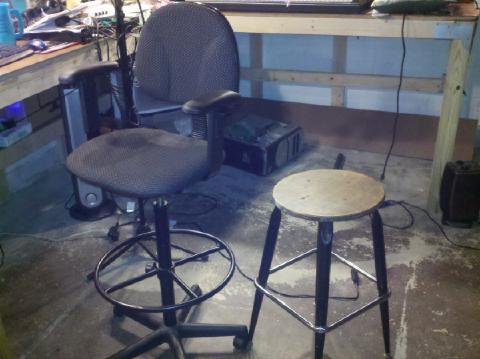
- Chris finally got a chair and wowsa does it make a difference!
- Finding parts online can be tough with distractions, apparently extended internet use can affect the brain. What's a datasheet hunter to do?
- If you're still a USENET junkie, Dave is on the sci.electronics.design (accessible through Google Groups).
- Shoutout to Junko Yoshida for some of the great articles she writes. Really enjoyed the piece on "The Land of the Rising Silence" when she visited Japan.
- Students in the US can get Amazon Prime for a year (Chris got 1-night shipped his chair for $4). Dave dislikes how they won't ship anything but books to Oz.
- Dave has been looking for the lowest power 16+ bit A/D converter he could find. All told he found 2412 from over 24 different companies. Crazy!
- COTW: The AD7691 from Analog Devices. 18 bits and only 108uW @ 8kHz. Wowsa!
- Speaking of low power, our friends from Touchstone Semi have been getting some press from their initial announcements. They're 2nd sourcing components from Maxim IC...hopefully without any issues.
- Design Spark has a new plugin for their free CAD software that allows 3D models (incorporated in version 2) to be exported to Google Sketchup. Cool!
- With the CADspan plugin for Google Sketchup and 3D printing, it's conceivably possible to make an entire prototype for <$100.
- Dave looking for preferences on CAD packages for future OSHW projects. Your opinion?
- Have there been any large-scale open source hardware projects? Chris and Dave can't think of any.
- Obama announces robot initiative. Only $70 million but the idea is great. Won't be creating jobs anytime soon though!
- This Day in Nerd History:
- June 26th (oops!) -- Maurice Wilkes was born. Founding father of many microcomputing principles and techniques (in the '40s, no less!)
- June 27th -- The inaugural run of the first U.S. passenger train to use electric locomotives. June 28th -- Milan, Italy inaugurated the first central European electricity power station.
- Lightning Round:
- Company gets approval to store your Facebook data for future employers to look at. Yipes!
- The patent system in the US gets approval in the house. If signed into law, it'd be "First to file" instead of "First to invent'.
Transcript
Chris Gammell: This is The Amp Hour Podcast. Recorded March 31st, 2014. Episode 191. Optional. Polant. Abruption.
Dave Jones: Welcome to the Amp Hour. I'm Dave Jones from the EEV Blog.
Chris Gammell: And I'm Chris Gammell of Contextual Electronics.
Dave Jones: Hey Chris, what's happening there in Cleveland, Ohio?
Chris Gammell: Not much. I finally got a new chair for my workbench that I built oh so many moons ago. Excellent. Is it on wheels or is it a... It's on wheels. I got the little... It's a drafting chair. I had this realization. I was looking for tall chairs and all these different search terms online and everything else. That's the search word you have to look for is drafting chair.
Dave Jones: Oh, okay. Drafting chair, right. Yeah. Okay, mine's just like a cocktail. Mine's just like a bar chair. Like, you know, one of those swivel... Oh, like a stool? Yeah, a stool. Yeah, a bar stool kind of thing.
Chris Gammell: Yeah. There's a whole range of them and it's got like a little footrest and it's actually padded so I can sit here for more than an hour without having to get up and do a little dance.
Dave Jones: Nice. Yeah. How many hours do you actually spend at the bench?
Chris Gammell: Well, when I'm doing like work or, you know, consulting or anything like that, then it can get, you know, up into the many hours. Yep. You know, like on a show night, like when we record, you know, I'm sitting here for the hour and a half that we usually talk and then another two hours.
Dave Jones: Yeah, that's right. Because you're actually in your lab, aren't you? Not... Which is different to me. I'm not in... My recording studio isn't the lab. Oh, yeah. It's my study. It's my recording studio. Right, right. So, I spend most of the day in here because it's where the computer is and it's where the internet is and, yep. And that is the bringer of knowledge. That's right. Yeah.
Chris Gammell: Or the biggest time waster ever invented, whichever way you want to look at it. Well, yeah, that's... Yeah. Yeah, it's been... It gets tough sometimes. I mean, how have you been handling that? You've been able to... Working from home.
Dave Jones: Yeah, it's a time sink. You know, because I've got to have the internet open in front of me because I'm researching stuff. So, I've got to have, you know, 20 different tabs open with all the data sheets and whatnot there. And it's like, oh, I'll just go check forum for five minutes and I'll just go check this or I'll just search for this or do... You know, and yeah, an hour later, you've just pissed away because, oh, well, you just get carried away.
Chris Gammell: Yeah, you know, my fiance sent me this article about how the internet, like, messes with your brain or something like that. Oh, it's cool. There's an article. Yeah, it says, does online life give you popcorn brain? I didn't...
Dave Jones: Oh, okay. As in jumping from one thing to the other. That makes sense.
Chris Gammell: I mean, basically, the idea is the internet gives you all this instant gratification. Like, you know, we talk about Twitter, right? So, I say something like, oh, I need help finding, you know, a new CAD package. And within maybe 20 minutes, I'll have 10 people saying, oh, I'd try this, try that. Yeah, try that. Or I did that with, like, revision control. I asked about that last week. You know, what people's...
Dave Jones: So, you've got to go check out each one, right?
Chris Gammell: Right, exactly. But it's like this instant response and your brain just goes crazy. It's just so much dopamine. Like, yeah, get another hit. Get another hit. Post something else. Another hit, you know? Like, it's like, that's... I mean, it makes sense from, like, a biological perspective. Like, it's addictive, right? So, there... And there's an actual... Absolutely. ...internet addiction. But at the same time...
Speaker ?: Oh, yeah, yeah.
Dave Jones: Yeah, it's real, you know?
Chris Gammell: When she sent this to me in a very accusatory manner, I said, what am I supposed to do? That's where they keep all the data sheets. That's where, you know, I communicate with people about...
Dave Jones: I know, that's the problem. Yeah. You have to be in there to do your work, and yet, that's the... That's the thing that sucks all your time. Like... Yeah. Well, it's... I don't know. You've got to be... I try to be, you know? I try not to go search wiki or something like that. Oh, well, no. Even if you are researching something, and you end up in wiki, all those seductive hyperlinks, you know?
Chris Gammell: Oh, yeah. You just go, like, link after link after link. Yep. Yeah, that's the worst.
Dave Jones: That's the thing that made the internet, isn't it? Hyperlinks was the... Yeah. You know, it was the big thing. Well, that actually... The web. That actually made the web. It made it so easy to jump from one thing to the other, and that's its downfall, too. Yep. When it's sucking your life away. Yeah.
Chris Gammell: So, I mean, I always wonder about that, too, because, you know, you read these studies about, like, oh, well... At least with, like, double E's, right? So, all the old double E's aren't online at all. It's like, okay, I get that. But, like, they're not online in the same capacity that other people are, but I guarantee they're on there getting data sheets.
Dave Jones: Oh, of course.
Chris Gammell: You know, checking e-times or EDN or anything like that. You know, that's just how people commute, or that's how they get information these days. It's kind of hard to avoid, unless you're still getting data books, which I don't think a lot of people are.
Dave Jones: Oh, no. No. But, yeah, we're more of the social nerd, aren't we? Yes. Because we participate in forums and whatnot. I mean, I've been on forums since, you know, 12, 13, 14 years or something. I don't know. Yeah. Like BB forums and everything. Yeah, I've been on them for a long time. Oh, that's right. You were telling me about... I just like the social aspect.
Chris Gammell: You told me about the Usenet groups. You were... Because when Bob Peace died, you said, oh, I'll post this to Usenet.
Dave Jones: Yeah. And there's a lot of old-timers still on Usenet. So...
Chris Gammell: What was the actual board it was that you...
Dave Jones: Psy Electronics Design News Group. Okay. So, Psy.electronics.design. So...
Chris Gammell: Yeah. And there's a whole bunch of them. I really... I mean, I've never... I mean, Google Groups, you can do with that kind of thing. I've never really done that before.
Dave Jones: You can do it using Google Groups, but if you use Google Groups, most of the old-timers will just block anyone from Google Groups. So, they won't even see your messages. Which is weird. Because that's where all the spam comes from. Oh, because you can write scripts. If you're a Google Grouper, you get no respect whatsoever. So... Yeah. And I switched over to using Google Groups. But if you've been on there a long time, they will put you on their whitelist so that they can read your messages because you're well-respected and, you know, you're not just a dumb Google Grouper.
Chris Gammell: Yeah. You know? So, yeah. Many of them. Is it like because people come in and just ask like these new questions? Yeah.
Dave Jones: These idiots. They don't understand what actual Usenet is. So, you get all these young snot-nosed idiots coming on thinking that, oh, it's Google Groups. And, oh, you know, and it really riles up all the old-timers. It's not Google Groups. It's Usenet. You know? And they get angry and they say, piss off. Yeah, exactly. I've been on here for 20 years. Yeah. Piss off. You know? It's Google Groups. And, oh, yeah. That changed the entire Google Groups changed the landscape of Usenet. So...
Chris Gammell: That's interesting. Oh, you know, that's how you said you've talked to Wynn Hill before, right? Yes. Yes, I've talked to him via... I think you were mentioning that two episodes ago. Yeah, yeah.
Dave Jones: Wynn Hill's a regular on the side. That's cool. I mean, it's kind of like the back-end channel of the EU world. Yeah, yes, it is. It's kind of like a back-end channel.
Chris Gammell: That's cool. I like it. And, of course, now we're going to have, you know, all the Amp Hour people go through there, hopefully. For sure. There will be the Google Groupers that get ostracized and then the Amp Hour listeners that all come in at once. Guys, trickle in. You know, we'll start giving out numbers.
Dave Jones: But most of the people left on there are just all the old-timers, you know? Yeah. So, there's very few new people coming through to... And actually stay around on those sort of groups. It's pretty much just the old-timers, really.
Chris Gammell: You know, I used that when I was at one of my former co-ops. I was doing FPGA work and I was... I had the same kind of interaction with, like, you know, more experienced engineers. Yeah. But the thing I don't like about all those, like, username boards and everything, it seemed like anytime I search for my email address on Google, that's always the thing that comes up. You know, that's always the thing that's, like, causing spam for me. So, I don't know. I just thought I'd throw that in there.
Dave Jones: But the ironic part of it is, is that if you use Google Groups, you don't get any of that spam. It's brilliant. Oh. So, yeah. Google Groups is actually a great way to use Usenet, except nobody listens to you because you're blocked. But, no, apart from that, it's actually a nice interface. That's why I started to use it before all the spam started, before the spammers discovered that you can spam Usenet via Google Groups. And, yeah, then it just went downhill. Spammers. But, ah, well. Yeah. Speaking of, yeah, pissing away time, we've just pissed away 10 minutes on something. Something that wasn't even on the list. Yeah. As we tend to do each week. That's okay. That's a given every week, isn't it? That's organic, man. When you start out the show, it's organic, right, is the wank word. Right.
Chris Gammell: It's organic, man.
Dave Jones: Yeah. We don't just jump into the list, do we? Well, what's on the list?
Chris Gammell: And sometimes, you know, we have guests call in unexpectedly, and we just got to talk to them for a while.
Dave Jones: Yeah, Randy, last week, that just came out of nowhere.
Chris Gammell: That guy was crazy.
Dave Jones: Literally.
Chris Gammell: He's freaky. Hope he doesn't call back.
Dave Jones: I hope he doesn't call back. I think he's had his five minutes of fame.
Chris Gammell: Okay. That's good.
Dave Jones: All right. All right. What have we got?
Chris Gammell: We got any shout-outs? We had one shout-out. Maybe two. I wanted to give a shout-out personally. So, I wrote over the weekend, you know, about Bob P. Stine. Obviously, we talked about that last week. And, you know, I really hadn't thought about it until I was writing about it, but I kind of lost, like, two writers, two, like, electrical engineer writer heroes of mine, you know, Jim and Bob both were writers and engineers. Yep. And so, kind of, like, looking at the ones that kind of brought up the third spot was actually Junko Yoshida from E! Times. She's actually the editor-in-chief. I don't know. But I just wanted to give a shout-out to her because she wrote this piece about Japan. She went to visit her mom over in Japan. And this thing read, like, a New York Times article. It was just, like, brilliantly written and, like, really. Yeah, yeah. Touching and kind of creepy, even, just because of how she wrote it. So, I'll link it in there. But, I mean, she's basically my number one must-read column these days. I don't know if you have anyone like that other than reading my stuff.
Dave Jones: Yeah, probably not really because I'm not, you know, I'm not into writing and that sort of stuff. I suck at it. You know, I've written a bunch of articles over the years, but I think I suck at it. My English skills are absolutely terrible. My wordsmith skill. I don't know. What's the word? You know, wordsmith? Literary? Literary skills. Literary skills. Yes. Thank you. See, I even suck at that, even knowing the term. So, that's how bad I am. So, yeah, I don't... I'm always jealous of people who can write really well like that. Write eloquently and, yeah. Are you talking about me? Are you talking about me now? No, I'm afraid not. No, I know. I don't read your column. Sorry. No, it's all right, buddy. It's all right. No, you write pretty well. So, that's good. It's a very good skill to have. I found, though, it's a skill that doesn't help in your report writing or something like that. No, not at all. It makes it different, you know, engineering reports. If anything, it makes you ramble.
Chris Gammell: It makes you... Yeah.
Dave Jones: Yeah, I'm actually quite good at doing reports and stuff like that. But, yeah, when I have to write one of those really wordy, feely, you know, New York Times style articles, yeah, I just wouldn't be able to do it. So, pretty envious, as usual.
Chris Gammell: Junko writes a lot of good stuff, too. Her article caught my eye today because she was writing about Freescale. And, you know, they just had this forum, the Freescale tech forum, where they always have like this monster... It's kind of like the Renesas one you went to. Real similar. You know, like very specific to the vendor. Right. Okay. They'll bring in third-party vendors, but they're really just there supporting the main vendor. And, I don't know. I mean, she always just writes great stuff about that one. So, I like that one, too, because she... Reading about Freescale is its own thing, because Freescale is kind of like watching a plane crash.
Dave Jones: Oh, right. Because they're a massive company, Freescale. Are they still number one? Well, no. No, no. They're number two in microcontrollers, Freescale. So, they are still massive, right? They are huge.
Chris Gammell: They're huge. But, yeah, I mean, they've just been... They're a sink and shit, basically. Right. Okay. Anyway.
Dave Jones: In terms of losing money, I don't know. I haven't followed it for quite a long time. Well, we talked about that on here. Are they just losing the shit? They're just bleeding cash, are they? Well, yeah.
Chris Gammell: I mean, they're a monster fan. They have their own fans. They're hemorrhaging cash, you know? Hemorrhaging cash. There you go. You know, they're a monster company. But they just have... Because they got bought out and now they went public again. We talked about that a couple weeks ago.
Chris Gammell: They went public even though... And they lost all this money. They got bought for $17 billion and now they just went public for a billion. So, it's like, hey, where did that $16 billion go? Oops. So, it's all... You know, they're just a... They're a train wreck. I've used three different, you know, analogies of transportation crashing. But they are... Yeah. They're a mess. So, anyways. Good on your phrase, Kyle. And that's what... That's why I was talking about Junko, so...
Dave Jones: Sweet.
Chris Gammell: Yeah. All right. The other quick shout-out was for Amazon. If people don't know... I don't know if you knew about this, Dave. Amazon? Why are we shouting out to Amazon? It's not really a shout-out so much as like a life hack. I found out about this and I used it to get this chair I'm on. So, if you're a student or if you just have a student email address, as I might possibly have... Right. They give you Amazon Prime for a year. So, I got like $4 shipping. It was awesome. So, if people don't know about that, I thought that was sweet.
Dave Jones: Amazon Prime. What's that? I have never heard of it. No.
Chris Gammell: You get like free two-day shipping on everything and you get like $4 one-day shipping from Amazon. Oh, right.
Dave Jones: Okay. Right. See, that means nothing to us because Amazon won't ship shit here. They'll only ship books and CDs. That's it. Oh, that sucks. You know, they won't actually ship products here. So, it's... Yeah. It's just dumb. Yeah. I know. It's stupid.
Chris Gammell: Well, never mind then. I guess, shout out withdrawn. Right.
Dave Jones: Not that it was one of the first ones. Because it's not Australian compatible. It's not world... Right. I don't know if it's just... I think it's other countries. I'm sure it's other countries as well. Yeah. They won't ship any electronic items at all. You know, you can't go and buy a camera or, you know, something like that from Amazon or a multimeter or something. You just can't. Yeah. Can't do it. They will not ship.
Chris Gammell: So, when you put those links on your site, you put those links, you just... That's just for people in the US that can buy electronic stuff? Yeah.
Dave Jones: That's pretty... Yeah. That's pretty much it. And other countries who they will... Well, it also depends on the third party. If it's... I think if it goes through a third party, they might be able to sometimes ship to other countries. But, yeah, definitely anything by Amazon themselves, they won't ship overseas.
Chris Gammell: That's weird. Yeah.
Dave Jones: Except for niche stuff like the Amazon Kindle, which has, you know, a market here and stuff like that.
Chris Gammell: Right, right, right.
Dave Jones: But, yeah, I don't know. It's annoying.
Chris Gammell: Yeah, that is annoying.
Dave Jones: Anyway, I haven't tried for a long time. But maybe they do now. I don't know. Anyway, I think they send some items, but not others. It's just crazy. Hate it. Yeah. Yeah, thumbs down to Amazon.
Chris Gammell: Oof. Sorry. Shout out with Drone. Excellent.
Dave Jones: Yes.
Chris Gammell: So, what else we got here?
Dave Jones: I don't know. We're not very coordinated today, are we?
Chris Gammell: No. Not really.
Dave Jones: Yeah. I don't know. We just sort of cobbled this together at the last second.
Chris Gammell: Don't you mean we've been preparing for weeks? Of course. Yep.
Dave Jones: Well, I've been researching components again. Yeah. And I searched for a low-power ADC. Low-power 16-bit ADC.
Chris Gammell: So, this is for your secret consulting gig that no one knows about?
Dave Jones: No comment. Okay. And there are – here's a stat of the week. There are approximately – I'm not going to claim this figure is actually totally accurate, but there are 2,000.
Chris Gammell: I guess this is a DigiKey figure right here.
Dave Jones: No, no. This isn't – no. This is where DigiKey is useless. You've got to go direct to the manufacturer's website. Oh, okay. Yeah, they just don't have the right parametric search you need. So, oh, yeah. No, you can't. You just use DigiKey and cheat here. Yeah. There's 2,412 ADC devices on the market from 24 different manufacturers. There you go.
Chris Gammell: Wow. So, roughly 100 ADCs average per manufacturer.
Dave Jones: Yeah, roughly. Some have 500 plus ADCs.
Chris Gammell: Yeah, I'm sure the big ones.
Dave Jones: Yeah, the big TIs and those sort of ones. Analog and everybody else. Maximum. Yeah, analog. And, yes, and that brings us to chip of the week.
Chris Gammell: Ooh, doing it early this week, huh?
Dave Jones: Doing it early. Who cares if we put it at the end? Does it matter? Or do you want to leave it until the end? No, it doesn't matter to me.
Chris Gammell: That's perfect to talk about.
Dave Jones: Right. Well, and it came down to there really is not much. Well, there's a few. No, there's a few. There's like half a dozen choices in the ultra-low-power 16-bit analog-to-digital converter. And by ultra-low-power, I'm talking 100 microwatts, right?
Chris Gammell: Okay, 100 microwatts at a certain sample rate?
Dave Jones: At 8 kilohertz sample rate. Okay. So, yeah. Which is reasonably quick for a 16-bit converter. You can get lots of low-power 16-bit converters, but they all run at like 300 samples per second maximum or something like that. Yeah, yeah. To get a faster one than that is, you know, is not easy. It comes down to, yeah, there's maybe, you know, eight or ten different devices on the market out of those 2,412. And the chip of the week is, ta-da, the analog devices AD7691. Because I found that to be the best 16-bit low-power ADC on the market. And it just so happens to be not 16 bits, it's 18 bits. So you get an extra 2 bits for free. Woo! Great. And, yeah. And it takes 108 microwatts at 8 kilohertz sample rate. Which is bleeding-edge stuff. It really is. I mean, you know. As somebody on Twitter, I think, pointed out, it's like 0.1 picajoules per sample or something. Yeah, I was just going to look at that. They converted it to energy per sample.
Chris Gammell: So that's about, so at a 2.5-volt rail, at 100 microwatts, that's what, like 40 microamps?
Dave Jones: Uh.
Chris Gammell: Does that sound about right?
Dave Jones: Calculator time? Yeah.
Chris Gammell: Okay, so 40 microamps. So on a AA battery, what would that be? Or two AA's, rather. So 40. Because I'm on Wolfram Alpha. I think we did this before, where if you type it in, they actually...
Dave Jones: Using calculators on air is, like, pretty much a big fail.
Chris Gammell: Oh, I thought they put this in here. So, sometimes they do that, but... Oh, well. Uh. Man, what is the current of a AA battery? Or the amp hour rating of a AA battery? It's like 2,500.
Dave Jones: A AA battery is 2,800 milliamp hour.
Chris Gammell: Hmm. 2,800 milliamp hour.
Dave Jones: And we're talking 40-odd microamps, because it's 108 microwatts divided by 2.5. So... Right.
Chris Gammell: So 2,800 divided by 0.04.
Dave Jones: So, what's 108 divided by 2.5? That's 40-odd microamps or something.
Chris Gammell: Yeah. That's 70,000 hours on two AA's.
Dave Jones: 70,000 hours.
Chris Gammell: 70,000 hours, if that's right. So, 40 microamps. How many days does that convert to? Divided by... This makes for good radio. I know, right?
Dave Jones: Nerds on radio. Nerds on radio. It's calculated.
Chris Gammell: It would have been easier if Wolfram Alpha would have just told me. That's supposed to just tell me the answer. That's 2,900 days or 365 equals eight years.
Dave Jones: Eight years is basically the shelf life of the battery.
Chris Gammell: Yeah. So, that sounds about right. Yeah. Not bad. All right. Way to go. Analog devices. That's pretty cool. And so...
Dave Jones: Except, of course, sorry. This is a nerd electronics radio show. But you can't, unless you had a DC to DC converter in there to keep a constant voltage, you wouldn't use up all the usable capacity in the battery because its lowest voltage is 2.5 volts. So, yeah, you'd probably only get like three months or something out of it before the battery voltage dropped to a level where the chip couldn't operate or operate within spec. Sorry.
Chris Gammell: Three months out of eight years? Really?
Dave Jones: Oh, I don't know. Probably. It's going to be small because, you know, the terminal voltage, right, of that battery is three volts. Yeah. Chip only works down to 2.5. It's not much margin there. Oh, okay. Maybe you might get a year or six months or something out of it. But, yeah, you certainly... I don't know. Switchers.
Chris Gammell: Switchers aren't bad. I mean, they're getting switchers up to, what, 95% now? I mean, like...
Dave Jones: Oh, yeah. But then they have extra quiescent current and stuff like that. Yeah. I don't know.
Chris Gammell: Yeah. I'm sure... Well, and also, this wouldn't be the only thing in the system either. You're not just going to pump a signal directly into A to D. I mean, is there, like, a front end on this thing, or what is it? No, no.
Dave Jones: It's just a differential input. Okay. Yeah. Standard differential input, zero to two and a half volts. It doesn't... Ah, that's the catch, too. It doesn't have an internal reference. Okay. So, you've got to piss away some more current with your external reference.
Chris Gammell: Huh. Yeah. Bugger. And so, the app note on this thing, or the diagram, they show the single-ended differential op amp. And I've seen this circuit before. And why have I seen this circuit before, Dave?
Dave Jones: Because you're apparently an analog guy.
Chris Gammell: Huh. No. No. Or did you claim... How much specific to this situation?
Dave Jones: You claim that you found this chip for me.
Chris Gammell: I suggested you look at the Pulsar family. Yeah, I did.
Dave Jones: Unbelievable. Unbelievable. I did a systematic search of 24 manufacturers. That's right. Thank you very much.
Chris Gammell: 2400, and Chris picked this one out of the lot. Yep.
Dave Jones: Well, you only picked the family.
Chris Gammell: There you go.
Dave Jones: Yeah. And it's by sheer luck that it happens to be... Well, I don't know. The LT ones get very close in terms of power consumption. In fact, I think technically one of the LT parts might be slightly lower consumption. But, yeah, there's...
Chris Gammell: I mean, yeah, they're both scraping the bottom of the barrel in terms of how much they're actually using. So, and I mean... Oh, yeah.
Dave Jones: It's insanely low.
Chris Gammell: It's crazy. It's... I mean, the interesting thing about that is, like, I can't tell you the number of times where it's... With all this... Excuse me. With all this choice, I mean, that's almost the best way to do it, you know, where you at least have a starting point, you know, like, or at least a reference point. Hey, I've used blank chip before. Why don't you check around that and say, oh, no, that's not going to work for me. Then you can just throw out an entire... Like, if you had looked at that family I suggested, and then you said, no, I can't use this. This is too much, you know, too much quiescent current or too much, you know, uses too much current or it doesn't go... You can't scale back the sample rate or something like that, you know? Yep. If that was the case, then you could just throw out that whole family right away instead
Chris Gammell: Oh, of course. Yeah. ...creating some monster spreadsheet like I'm sure you probably had to do anyways. But...
Dave Jones: Well, I... No, I created a smallish spreadsheet. Oh, okay. Two of them. That, you know, had parts of interest. Yeah, I could just rule out manufacturers. You know, of those 24 manufacturers, they might have had... Well, some of them only had one device, you know? It wasn't that hard to look through. Yeah. So, you know, yeah, but you can sort of rule out entire families and stuff like that. Yeah. Well, tell me about that.
Chris Gammell: So, what are some of the smaller ones? Because, I mean, I know the big ones like Analog, LT, TI, they all make really great analog digital converters. All those guys do, right? What are some of the ones that maybe only make one that I might not have heard of before? Okay.
Dave Jones: I've got a list here. Okay. I have a list. Here we go. One's that... Well, there's advanced linear devices. They make six ADCs. Okay. But you want one that makes one. Okay. Let me look down. Oh, no, there's one that makes two. Okay. Oh. InterCell. You remember? InterCell. Yeah. Yep. They still make ADCs. That's crazy. And they make two of them. Freescale have one ADC. There you go. We talked about Freescale. They've got one audio codec, you know? Huh. Go figure. What have we got? NGR has got three. Silicon Labs have one ADC. Okay. Yep. Two ADCs from ST Micro. Mm-hmm. Wavefront is another manufacturer which have one ADC. Yeah. I bet you've never heard of Wavefront.
Chris Gammell: No.
Dave Jones: Yeah. They make our audio... They make professional audio ADC converters. So, they're like real niche companies. Really niche companies. Niche.
Chris Gammell: Yeah. Niche.
Dave Jones: Niche. I love it how you say niche. Yeah. There you go. And some of those only make one ADC or two or three.
Chris Gammell: Right. So... And so, some of them might even be like the... What did we talk about last week? We talked about that with the Android chip. The fabulous semiconductor companies. The ones that are just... Yep. Guys sitting in an office block where they're doing simulations.
Dave Jones: Do a bit cuticle and they simulate and they... Yeah. Hand it over to a fab. Send it to a fab and that's it. Yeah. Bingo. So, you're now a chip company.
Chris Gammell: Yeah. Which is cool. I mean, if you got the money... Oh, that's awesome. You need a lot of money. Right? Oh, yeah.
Dave Jones: Yeah. You need money to do it. But... Yeah. Yeah. Yeah. You can. You can be one guy in a garage, rich, but you can still form your own semiconductor company.
Chris Gammell: Yeah.
Dave Jones: It's great.
Chris Gammell: Speaking of... Touchstone. Those guys. They've got... How many times have we mentioned Touchstone? Oh, I know. But now they're like official. That's the thing. So, we've talked about... We talked about it at the beginning before... I don't know. I don't know how we... I think we found out about them on Twitter. And...
Dave Jones: I don't know. You dug them up from somewhere, I think.
Chris Gammell: Yeah. Well, I found them on Twitter the first time. So... And then they just had some announcement in the e-Times. They had all this press release stuff. And... Yeah. So, they're like one of those fabulous companies. Same thing. And so, now they're... Now they're second sourcing. I don't know.
Dave Jones: They're second sourcing maximum parts. It's not that exciting news.
Chris Gammell: I'm sorry. It's... It's not exciting. It's... It's interesting, though, because all their people... Came from Maxim. So, I would just think this is a lawsuit waiting to happen. You know, I talked... Okay. I talked to one of their guys there and, you know, really nice guy. He told me all about, like, what they're doing and stuff. And, you know, they're obviously targeting their... They're very... They're very targeted market or whatever. But... Yeah. You know, if you're coming from Maxim, you'd think you'd shoot for someone else's knees. You know?
Speaker ?: Right.
Chris Gammell: Maybe they've got a grudge. Maybe they've got a grudge. I don't know. So, that's...
Dave Jones: No, I can certainly understand that. If you come from a company and you didn't think that they did it right in some way and... Yeah. Yeah. I could... You know, your goal would be to take them on. Yeah.
Chris Gammell: Yeah. That's interesting. And, I mean... And I'm not saying this is the way it is. But, you know, we've talked about it on here before. You know, Maxim parts have been historically hard to get. Maybe not anymore. I'm not speaking about that.
Dave Jones: No, because they changed their slogan and everything's fixed now. Right.
Chris Gammell: Yeah. Innovation delivered, right? But if that is the case and if that's the... Those are the knees you're shooting for, maybe they are shooting for the right knees. But, I don't know. First time I read that...
Dave Jones: It would be ironic if you can't buy the Touchstone semi parts. Please tell me you can actually buy the Touchstone semi parts. Right.
Chris Gammell: They're just like these poison parts that...
Speaker ?: Right.
Chris Gammell: Yeah.
Dave Jones: Oh, that would be hilarious. Anyway, I won't say you can't get Touchstone parts. I'm sure you can.
Chris Gammell: Yeah. So, they're grown up and they... I mean, they got funding too. That's another thing they wrote about when there was a big press release. They got Series A funding, whatever the hell that means. Out the Silicon Valley. Sure, it's important. Yep. Sounds serious. Money. Money rocks. So... Right. Yeah. I don't know. It's cool. But I don't...
Dave Jones: Yeah. It's a tough gig though. It's a tough gig trying to start up a...
Chris Gammell: I can't imagine starting a company like that. You know, I can't imagine starting a company in the first place. So, starting a chip company is...
Dave Jones: Oh, I know. It's just...
Chris Gammell: A whole game.
Dave Jones: You know, because it's so important when you work in the industry to pick established parts from a big brain... A big name manufacturer. Yeah. You know? Like, you'll get almost, you know, almost fired if you buy some little one hung low brand... Right. So, if you actually spec in a one hung low brand part into your design. It's just so risky. Right. Exactly. Yeah.
Chris Gammell: If you went and designed this, whatever this thing you're working on, right? So, if you went and went with one of those manufacturers that... Say you picked the freescale part. You said freescale's making an A to D, right? One, yeah. Yeah, they make one A to D. If they turn around tomorrow because they're doing all these internal changes and they say, oh, we're not making that anymore. Yeah. You're up a creek without a paddle, right? Exactly. I mean, like, you're screwed. So, yeah, that's the same risk that any new company takes, right? It's like, well... Yeah. That's right. Yeah, we can deliver. Okay. Have you always done that?
Dave Jones: Well, this is what we talked about. When we first talked about Touchstone, we said that they have to differentiate themselves by having a part that absolutely is so unique nobody else has that you've got no choice but to design that part in. Yeah. And then it's fine. You know, if you come down, well, your specs to get your product to the market need this chip. There's no other chip on the market that does it. Well, fine. You know? Yeah. Spec it in. Yeah. But, yeah, I don't know. But just doing second source Maxim parts, well, that can't hurt. So... Yeah. Especially when Maxim probably still don't deliver their innovation. I don't know. I'm not going to claim that.
Chris Gammell: Yeah. I mean, to be honest, I haven't bought Maxim parts in a while, so...
Dave Jones: Yeah. Same here. Or if I have, they've just been in prototype quantities and, you know, I haven't cared about it. Because you could always get prototype. That was the thing with Maxim. They would do the best prototype service in the industry. You could always get their parts. Yep. But then when you tried to buy, you know, 100,000 of them, you're screwed.
Chris Gammell: Anyway. We'll have to try and talk to a Maxim person sometime to let them settle the score. We could duke it out on air or something.
Dave Jones: Oh, but then we'd end up with just all the spin that they'd tell you. And, oh, and I'd be throwing up on air and it wouldn't be pretty. Sorry, people, if you're eating.
Chris Gammell: Yeah. Yeah. Oh, well. Oh, well.
Dave Jones: Let's get onto CAD, shall we?
Chris Gammell: Yeah. Yeah, definitely. So, there's a new announcement from DesignSpark, who we've mentioned on here before. And I think it's kind of cool, actually. Yeah.
Dave Jones: I haven't tried it yet, but I think it's a good idea.
Chris Gammell: Yeah. They just released a new converter tool. And I don't think it's built in, but it basically...
Speaker ?: Right.
Dave Jones: No, a separate tool. Right. Yeah.
Chris Gammell: And so, when they rolled out version 2, we talked about version 2 when they rolled that out. That's right. But they are now having it so that you can take the 3D viewer that they rolled in in version 2, and now you can export that to Google Doc... Or, sorry, Google SketchUp format. So, now you can go throw it in your Google SketchUp drawing. And then I searched around a little bit.
Dave Jones: What advantage does that give you? It allows you to rotate it and do... I don't know. Can the 3D tool... How powerful is the 3D tool in the new DesignSpark 2? Is it?
Chris Gammell: I don't know. I've used it. I've used it. I tried out there... You know, I got it installed and I tried it out and everything. And, you know, you can do 3D viewing and everything. I don't think there was any kind of...
Dave Jones: So, what's the advantage of exporting to SketchUp?
Chris Gammell: Well, before you couldn't export it all. So, before it was just view it. And now you can actually export to any kind of form. Now you can actually export it. I believe you couldn't actually export the 3D view before. So, that alone is a good thing. And then also it's into SketchUp format, which, you know, if people are using free DesignSpark software, they probably also want to use free SketchUp software. Right. And so, by my estimate, with that and, you know, now if you have a SketchUp mechanical drawing, you can actually use a different plugin for the SketchUp now and you can actually export to a 3D printing format. Awesome. So, you could, in theory, you know, if you got your boards printed by, like, the Dorkbot PDX guys, you know, for, you know, a cheap board with cheap parts on it and then you 3D printed your actual mechanical segment, I'm guessing you could probably make an entire prototype for less than 100 bucks. Right. It might take a lot of work and it might not be the prettiest thing in the world.
Dave Jones: Oh, okay. Right. I'm getting the thing with this, right? You can export your board in 3D and then I guess the idea, once you've got that in Google SketchUp, then you can use Google SketchUp as a CAD tool to design your case around that board. Yes. And then export it. Right. Okay. Because there's no point actually importing the board. You can't do anything extra in it in SketchUp.
Chris Gammell: No. Yeah.
Dave Jones: To the actual board itself, because you've already got to have the 3D parts in the Design Spark software in the first place for your components. So, you know, it's a bit of a chicken and egg thing there. So, you've got to have those 3D things first. Right. Yeah. There's no backwards compatibility. But then you'll finish board and then you can use SketchUp to actually design a case or something. Yeah. Right. Okay.
Chris Gammell: And that's all assuming, I mean, like the SketchUp itself, I think you have to have a pro license to actually export to the really useful formats, like things that-
Dave Jones: That's what I heard, yeah.
Chris Gammell: Design houses will allow you to use. Yeah. But in terms of 3D printing, there's a plugin called CADSPAN and you can use that in order to 3D print. So, if you had like a MakerBot or something like that, I think that that format, you know, there's a lot of dot three letters, right? Yeah. So, dot XXX, whatever it would be. You can actually then export that to something that a 3D printer can use. And then you could, in theory, print out an enclosure for your circuit board, which you could also do that at home, too. I mean, if you're doing chemical etching, you can do that at home, too, which has got its own bit of coolness. Or if you're doing, not chemical etching, but, you know, like copper routing, which is what I've done before. You ever done routing? You ever done that kind of stuff?
Dave Jones: Not, no, not routing with the actual machines, like the LPKF machines, if I've said that I guess it's milling.
Chris Gammell: Yeah.
Dave Jones: Yeah, well, that's, yeah, that's actually milling. Yeah.
Chris Gammell: Yeah, it's, I like doing that because it's, there's no chemicals.
Dave Jones: Yeah, I know, it's not, but it makes a hell of a, yeah, but all the fiber, like you wouldn't want to breathe it in, all that fiberglass. You kidding me? Shit in the air. I love it. All right.
Chris Gammell: Gets me messed up.
Dave Jones: Down in old Cleveland, Ohio, we love that stuff.
Chris Gammell: Then I go take a dip in the Cuyahoga, light myself on fire, yeah, I'm good for the day.
Dave Jones: And I spray myself with DDT.
Chris Gammell: Yep. We run on pollution here.
Dave Jones: I'm chewing on my grass.
Chris Gammell: Yes. Oh, boy. Let's get more, let's get more accents coming out of you, Dave.
Dave Jones: Right. No, sorry. That's about all I do.
Chris Gammell: Yeah. It's pretty bad. Yeah. So, but it's a, it's a good step forward. I mean, I don't know if this is actually officially from, I mean, DesignSpark announced it. I'm not sure if it's actually through them. That's them and Allied who actually owns DesignSpark, at least in the US. So RS. Right.
Dave Jones: Yeah. Allied. Yeah. RS. Yeah. Who knows how all that corporate stuff works. Everyone owns everyone else. Yeah. It's crazy. But how much, I don't know what their market penetration is with this DesignSpark. Like it, to me, it appears to be almost zip. That's hard to say. I don't know. I just don't see anyone out there using it. I don't know why. The Eagle's too entrenched.
Chris Gammell: Yeah. It's pretty new though, too. I mean, like. Yeah. It is pretty new. If they keep developing it.
Dave Jones: And they sort of came in a bit, a bit late, you know, sort of.
Chris Gammell: Yeah. I mean, Eagle's been around, what, 15 years? I mean, like. Yeah. Maybe 15 years from now. I mean, the, like we've said before on here, the DesignSpark stuff's free. So that's a pretty good starter, you know.
Dave Jones: Yep. And it's free for any size board. Right. And here's the kick. Because I've got to choose a new, well, I want to choose a new PCB package soon. Yes. I want to move away from Altium for my open source stuff. Because, I don't know, I just get the impression that I'm going to be laughed at if I release an open source hardware product and, oh, here's the design files, they're in Altium.
Speaker ?: Yeah.
Dave Jones: You know.
Chris Gammell: Well, I guess we'll, see you later, Dave.
Dave Jones: Right. Yeah, I don't think it actually matters. Because there's very few people, you know, everyone talks about, oh, yeah, open source hardware and everyone goes out and uses the files. And we've talked about this before. And that's just bullshit, right? There's only like a couple of percent of people who actually will go out there and want to recompile their own source code and design their own board and all that sort of stuff, you know. Right. Whereas the vast majority of people will just want to buy a kit or something like that. And it's open source because it's cool. And they just know it's open source. And, well, maybe one day they might want to tweak it or something. Yeah. So when it comes down to the actual practicality of it, does it actually matter if the files are in Altium format? Probably not. You know? I mean, and we're not talking big designs here, big complicated designs. You know, 20, 30 parts. If you want to lay it out in your own package, it only takes you a few hours.
Chris Gammell: Right.
Dave Jones: You know, it's not a big deal.
Chris Gammell: Well, schematics are all there. And I mean, eventually.
Speaker ?: Yeah.
Dave Jones: Well, yeah, exactly.
Chris Gammell: And you crank out the Gerbers too. So if people actually want to just manufacture themselves. Oh, yeah, yeah, exactly.
Dave Jones: If people want to just make their own board, well, the Gerbers are there. Right. Yeah, that's right. So.
Chris Gammell: Evolutionary design stuff where if you're, if you want to, if someone wanted to add on to your design because it is open source, then.
Dave Jones: Exactly. So, yeah. And I don't know. So please leave in the comments, which package do you think I should use? Eagle? Design Spark? Or one of the open source ones? KeyCad? KeyCad. Jita? Probably not. Yeah. Yeah. It's actually called KeyCad. I believe that's how you pronounce it. And Jita? Probably not because it's apparently quite hard. Yeah. It doesn't have a nice GUI interface. I want a nice, simple, dumbass interface. And I don't care about Linux. Please don't. Give me the Linux line. Oh, but you can use Eagle on Linux and Windows. I don't give a shit.
Chris Gammell: Really.
Dave Jones: I don't care. I'm sorry.
Chris Gammell: At least you're upfront about it. That's good.
Dave Jones: Yeah. It really doesn't matter to me. Yeah. But, yeah, Eagle, I don't know. I'm just hesitant because there's those limitations. We've had the Free Eagle campaign, the Freeagle campaign here on the Amp Hour before, which worked a treat, didn't it, Chris?
Chris Gammell: That frizzled.
Dave Jones: Right. Well, I started again. Free Eagle. Free Eagle. Free Eagle. I just hate their options for doing the thing. Like, I would have to go in and spend, if my board's bigger than, what, 80 by 100 millimeters, which isn't that big, right? Or more than two layers. I've got to spend 500 bucks. Yeah. Which is quite a reasonable chunk of money. And then, I'm still limited in size. Are you shitting me?
Chris Gammell: Yeah.
Dave Jones: You know, so if I want to make one long, thin, tiny board, which is less surface area than one big 100 millimeters by 80 millimeters, I've got to pay for the thousand buck package. You know, and that's... Yeah.
Dave Jones: That's... Yeah. I just... I don't know. I know everyone loves Eagle because it's the tool of choice in the open source hardware industry. But, oh, it's... No, I just don't like their options. So, I don't know. Yeah. Which one should I choose?
Chris Gammell: Please. Tell me. Yeah, let them know. So, I was having an interesting conversation on Twitter the other day talking about... So, Robert Davidson... You live your life on Twitter, don't you? I don't live my life on Twitter. Stop. You do too. Please. Please. I get into it sometimes, but I don't live my life on there. Come on now. So, me and Robert Davidson, though, we're talking about open source projects. And he was asking if... He asked me directly, like, if there's any, like, really big ones. And I couldn't think of any. Like, any, like, large scale on the same scale as, like, a Linux, where it's collaborative over time and it just kind of keeps building on itself like that. And it doesn't seem like... I told him, I don't think that hardware's as capable of doing something that big because if it's a single board, you get more than three or four designers on it and it's just going to splinter.
Dave Jones: Oh, it just falls to shit. Yeah.
Chris Gammell: So, if anything, it would need to be really big, right? It would have to be, like, you know, like an open source telescope.
Dave Jones: Well, it would have to be a subsystem-based, modular-based thing. Yeah, because that's... And they don't work either because they end up being too clunky and expensive and big and just not optimized.
Chris Gammell: Yeah, and that's another thing that I talked about, too, is, like, the fact that if you have to pay... I mean, like, with, like, software developers, right? There's time. Obviously, there's time involved in it and that's expensive. But then on top of that, if you have to have a material thing in front of you, right? So, if every developer then has to pay $500 to buy and build up some boards, then that becomes prohibitive pretty quick, too. So, I don't know. I would be cool, though. I mean, like, if there was, like, an open source MRI or... I mean, because, like you said, it would have to be something with a lot of subsystems where people could...
Dave Jones: The holy grail is, well, the open source hardware industry is an open source hardware pick-and-place machine. Everyone's talking about it, but nobody does it because they realize, oh, shit, it's just too hard. It's too many mechanical things and it's big and complex and massive and expensive and, you know.
Chris Gammell: Well, yeah, a lot of pick-and-place and those kind of three-dimensional moving things is usually stepper motors, right? Isn't that kind of the crux of it, too? So, it's not necessarily... Yeah, yeah, that's right.
Dave Jones: Well, and then the pick-and-place is something. You know, you always see on Hackaday or something, there's always somebody's done their little pick-and-place thing and they get, like, a vacuum pump from a, you know, a little fish pond or something and they can pick up one part and they can move it. But, you know, that's next to useless. You know, you've got to have something that handles the reels, you know, that feeds in the... All that stuff is complicated to feed in the components from reels. There's a reason why these machines cost upwards of $10,000 is because they're complicated. Yeah. In their feeding mechanisms and stuff like that, you know. Yeah. It's just... It's not trivial. And then you've got to have vision to do it, you know. You've got to have the vision camera and it's got to... Right. ...do all that sort of stuff and, oh... When you, you know, you get down to the fine detail of it and it ain't easy.
Chris Gammell: Yeah.
Dave Jones: So, that's why you don't see it. Well, that's not a reason not to do something, but it's... Oh, no. Of course not. But, you know, it's not something that somebody's going to magically solve overnight. Right. Because, you know, you have to get the components off those reels. Right? There's no point you having to sort all your components onto some little tray yourself manually or onto the bench or individually pick up each one yourself and align it. Yeah. Yeah. You know, the whole idea of a pick and place is that you load in the reels, you program your machine, you push the button. End of story. Yep. That's it, you know. A couple other steps. Anything else is just a toy, really. It's just a time waster. Yeah. So, you may as well hand solder.
Chris Gammell: Yeah.
Dave Jones: Or hand pick and place, sorry. So, you know, you do your paste stencil and then you just... Right, and just pop them on there and throw them in the oven. ...individually place your... Yeah.
Chris Gammell: Yeah.
Dave Jones: So, I don't know.
Speaker ?: Hmm.
Dave Jones: Somebody prove me wrong, please, but once, like the 3D printer thing, I don't think I'm wrong.
Chris Gammell: Well, and also, too, if people... There's just so many complexities involved. If people know about any large-scale open-source projects, I mean, open-source hardware projects, that would be interesting to me. I mean, I quoted, like, Arduino, but even that, that was defined at once and it's more of the...
Dave Jones: Oh, that's a trivial project. Arduino is a little tiny board with a bunch of software.
Chris Gammell: Right, but it's been the software that's been the collaborative kind of open-source side of things. Yes, that's right. I couldn't think of any hardware, large-scale hardware stuff that's been open-source and collaborative like that, but maybe there is stuff out there.
Dave Jones: Yeah, somebody might pull Chumbie out of their ass or something like that, but... Yeah, but even that, that's mostly... I mean, there was people working on that. ...a small group of a couple of guys. That's done by... What's his name? Bunny. Bunny Wang. Chung, Chung, Bunny. Bunny Wang. Bunny Wang. Bunny Wang. Yeah. Yeah. Whatever his name is. Sorry.
Chris Gammell: Yeah.
Dave Jones: Yeah, that's basically done by him and maybe, you know, a couple of core people.
Chris Gammell: His support staff and everything else, yeah.
Dave Jones: Yeah, and that's pretty much it. And they had venture funding for that, I think, or some sort of funding.
Chris Gammell: Yeah. I don't know. I don't know what it did.
Dave Jones: Yeah, anyway. Yeah, I don't know. It's just, yeah, stuff costs... Software's easy because it doesn't cost anything but your time. You know, when people have to actually fork out a thousand bucks for, you know, some prototype bits, then, yeah, they really think twice.
Chris Gammell: Yep. So, I don't know.
Dave Jones: Is open-source hardware, large-scale open-source hardware projects doomed in that respect? They're just not really possible because no one is going to pony up the money.
Chris Gammell: Right. Well, I mean, or what you do is just...
Dave Jones: I'm sure it would have happened by now. Maybe there is a good example. I don't know.
Chris Gammell: Yeah, I would love to hear it. I think maybe more so you have, like, the Arduino and the open-standard kind of open-source projects, right? And then you leave it up to people that actually do the integration. So, if...
Dave Jones: Well, maybe in the quadcopter scene or something like that, you know, the RCE. I know there's lots of stuff going on there.
Chris Gammell: But usually those are single-board, too, because when you start getting into... When you get more than two or three boards in a system, too, it gets expensive quick. You know, like...
Dave Jones: Yep. Well, what would be our definition of a big open-source... An open-source benchtop oscilloscope? How's that?
Chris Gammell: I don't know. Yeah, but those are usually single-board... When they're, you know, at the hobbyist price level.
Dave Jones: Yeah, they're probably... When it comes down to it, yeah, you could do it all on a single board. Because that's how you save costs. So, you're talking a big, complex...
Chris Gammell: Yeah.
Dave Jones: ...system. Well, I don't know. What's a good example? If you've got a good example, let us know.
Chris Gammell: I do not know.
Dave Jones: Or if you've got a real example where it's actually happened... Yeah.
Chris Gammell: I hope that would be all of them. Not just, like, potential.
Dave Jones: And we would want it done by more than just one or two people with a lot of money on their hands. You know, I want it done by... And a non-commercial venture. Well, not necessarily non-commercial. And a non-commercial venture where they're, you know, just done for the sheer joy of it. You know?
Chris Gammell: Yeah.
Dave Jones: Yeah.
Chris Gammell: Hmm.
Dave Jones: I don't know. I doubt it. But I'm willing to be proven wrong.
Chris Gammell: Robots? You were talking about pick and place. That's like a robot, right?
Dave Jones: Yeah. Well, yeah. Of course it's a robot.
Chris Gammell: Yeah. So, there's a new... There's a Spectrum article about this. There was a... A new robot initiative, at least in the U.S. And there's this press conference. It's kind of funny, actually. Obama was talking about one of his jobs is to keep an eye on robots. And he said... You might not know this, but one of my responsibilities as commander-in-chief is to keep an eye on robots. And I'm pleased to report that robots here at least seem peaceful, at least for now.
Dave Jones: Cool. All right. That's pretty cool.
Chris Gammell: That was funny. Yeah. Yeah. Yeah. That's funny. Kudos to that speechwriter, because you know that was a speechwriter. Okay. Yeah.
Dave Jones: It's good. Yeah. Of course. Yeah. He doesn't write his own shit, I'm sure.
Chris Gammell: So, I like the initiative. It wasn't a lot of dough. It's only $70 million, which I know that's a lot of money. Chump change. Yeah. But in the grand scheme of things, even with robots, I mean, you could have robots that cost $70 million. So... Yeah.
Dave Jones: Easy.
Chris Gammell: It's good to start there, but I don't know. The focus is good, but I don't know if it'll actually be... This isn't going to be the last thing they have to do with it. They need to keep pushing money towards the robot sector.
Dave Jones: Right.
Chris Gammell: But, man...
Dave Jones: Well, isn't... You know, that's a tough push, because, you know, all these robots have, you know, killed the car industry for workers and stuff like that. You know, it's a pretty tough sell to say, well... I know. I know. It's like, hey, we need jobs, but... Let's support robots, you know? They take our jobs. Yeah. Yeah.
Chris Gammell: Well, and especially, too, because when you say that, and then there's this uptake of robots, right? So, like, the car manufacturers say, okay, well, we're going to start using robots, because it's a good idea, and we'll have, like, maintenance techs that need to work on the robots and everything, and we'll be able to produce X amount more dollars, whatever. But the problem is, then, that you get, like, these low-cost manufacturers that come in and build decent robots, and those get put in, and apparently... And then, at the end, it's just robots in a U.S. manufacturing plant that have been built in China, and now they're just building cars locally. So, that's the only downside, but I don't know if that's... That's not really the... A reason to stand in the way of robots, because I think there's a lot of promise there, and it drives a lot of good technology.
Dave Jones: Did he mention specifics of what kind of... Are we talking, you know, personal home assistant robots, or...
Chris Gammell: They were talking a lot about, like...
Dave Jones: Or just more military shit. Surely, it's not military shit. 70 million bucks wouldn't even buy you a spanner in the military world.
Chris Gammell: Yeah. No, they're talking about manufacturing operations, I believe, because they were talking about, like, a line worker in a manufacturing plant, then actually teaching a robot, like, a learning robot, which then learns this...
Dave Jones: That learns the person's skill and then makes them redundant.
Chris Gammell: Well, and then... Well, then the idea would be that the person is then, you know, would watch over many robots, and you can up productivity and everything, but yeah.
Dave Jones: Oh, I'm sorry. This has got fail written all over it.
Chris Gammell: Yeah, well...
Dave Jones: I think this campaign has just... Yeah. Yeah. It's tough.
Chris Gammell: I mean, even in the best-case scenario, right, where, okay, maybe you add robots in it, you don't kill anyone's jobs or anything else like that, you just increase productivity, but even still, like, there's only...
Dave Jones: It's kind of like a pyramid effect. But even when you increase productivity, headcount drops. Exactly. Because the company might... There is no way out of it.
Chris Gammell: Right.
Dave Jones: Anytime you introduce robots into any form of... Technology into any form of job...
Chris Gammell: Yeah.
Dave Jones: ...jobs will go. That's just...
Chris Gammell: Yeah. I mean, think about, like, a garbage collection, right?
Dave Jones: You just use the technology to make it more complex so you need more people to operate.
Chris Gammell: Right, right.
Dave Jones: No, that's not the goal of any company that makes money.
Chris Gammell: Yeah.
Dave Jones: So, I... I can't see a winning move in this game.
Chris Gammell: Well, I mean, I think they keep pushing the fact that, okay, well, you can, you know, have people that are working on robots and everything else like that.
Dave Jones: And it creates jobs and, yeah, somebody's got to design and build the robots and, right.
Chris Gammell: But I think the realistic way to look at that is that, you know, I don't think the robots would be designed here, like, in the end, you know, like, even... Maybe they'd be designed here, but the robots themselves wouldn't be manufactured here at that point. Yeah. I don't know what the end game is, but I like robots. I think they're cool. So, I applaud it. Right.
Dave Jones: Fair enough. Yeah. All right. Robots are cool. We will admit that here on the Amp Hour. Yeah. Anything robot-based will get mentioned.
Chris Gammell: Yeah. So, they're talking about, here's the list, advanced manufacturing, logistics, services, transportation, homeland security, defense, medicine, healthcare, space exploration, environmental monitoring, and agriculture. And so, basically, that's every job that people in the U.S. have right now. McDonald's workers, farmers, highway workers, construction workers, yep. But we're not there yet, so don't worry about it, folks.
Dave Jones: We're fine.
Chris Gammell: Yeah. Eat your TV dinners.
Dave Jones: Do the rules of robotics still apply?
Chris Gammell: Oh, the three rules.
Dave Jones: The three rules. The three rules. As a Moz three rules. Yeah. Still apply? It's been confirmed by Obama, has it? I don't know. Yeah. Well, I... We have a new... Oh, go ahead. We have a new... Let's get away from that.
Chris Gammell: Yeah. Let's run away. We've only got like eight minutes left.
Dave Jones: Seven minutes left.
Chris Gammell: Yeah.
Dave Jones: We have a new segment here on The Amp Hour.
Chris Gammell: We do. We do. I'm excited about this one. So, what is it?
Dave Jones: I don't know. You put it on here. Oh, come on. I'll be able to announce it, though. It's the history of what on this day in... This day in nerd history. Well, in nerd... Is it just nerd history, or is it electronics specific?
Chris Gammell: It'll practically be electronics history, but we'll say nerd history in case there's something really cool.
Dave Jones: I'll say, yeah, there's something cool, like the first robot or something. Right.
Chris Gammell: Exactly. Exactly.
Dave Jones: Yeah.
Chris Gammell: Because that would be like mechatronic kind of... Not necessarily just electronics, right?
Dave Jones: Yeah. Okay.
Chris Gammell: Just cool, nerdy shit. Exactly. Yeah. Well, yeah. And electronics bent to it. So, the...
Dave Jones: So, this day in nerd. Is that the official title of the segment? This nerd history. This day in nerd. There you go.
Chris Gammell: Yeah. And we get the benefit. The thing that I like about it is we get the benefit that it is simultaneously June 26th here and June 27th there.
Speaker ?: So...
Dave Jones: Sorry, dude. It's actually June 28th here. Oh, no. Oh, crap. I got my days wrong.
Chris Gammell: Oh, no. The good one was on the 26th. Well, you know what?
Dave Jones: He screwed up the segment. He can't... Not only can he not get his time zones right, but he's out by... He's now out by complete days. He's lost a lot of people.
Chris Gammell: Oh, damn it. It's... It's the 28th here in Sydney. Oh, well, I'm going to see if I can find one now. Oh, man.
Dave Jones: Watch Chris pull a...
Chris Gammell: Yeah. A wiki article on my butt.
Dave Jones: And historical fact out of his ass. Yeah.
Chris Gammell: Here we go. Okay. In real time. All right. So I'm still going to talk about the 26th one because this one was cool. I had started looking at, like, you know, people. Like, definitely one of the coolest things you could do on wiki is kind of look through the... There's a whole section on, like, electrical engineers and, like, where they're from and all this other stuff. And so I was looking at that at first. And one of the coolest ones that popped up was actually this guy who's not an electrical engineer, but he's a computer scientist. And his name is Maurice Wilkes. And so, obviously, one of the things that's going to happen is that people will pop up when it's their birthday. Or, in this case... Oh, I guess it was their birthday. They also list, like, deaths. So they pop up like that, too. Which I guess is just as relevant. But, you know, not necessarily. But this guy, Maurice Wilkes, he's a UK computer scientist. And he's from back in the days when computers were actually, you know, like, electronics that you pieced together. And, like, you know, we're talking, like, 1945. That's, like, when he started... I guess it was 50... 40s and 50s. You know, really, really early stuff. So, he's...
Dave Jones: And he's the winner of the Turing Award, the Faraday Medal.
Chris Gammell: Oh, yeah. Wow. Yeah, tons of stuff. And, you know, like, just people that you'd never... I've never heard of this guy before, right?
Dave Jones: Oh, I've heard of him.
Chris Gammell: Oh, you have? Sorry. That's okay. I'm not too well read up on this stuff. But, basically, he's credited with tons of, like, microcontroller-type stuff. So, he's credited with ideas of symbolic labels, macros, subroutines. He's looking... There's a picture of him on this wiki page, and I'll link it in there. But, you know, like, Mercury delay lines, which I'm guessing was used as a memory element in, like, early computers. And that's just... I mean, that's really cool, you know?
Dave Jones: And he worked on one of the first computers, the EDSAC. Yeah. And... Which is an acronym for...
Chris Gammell: What is it? Uh...
Dave Jones: The Electronic Delay Storage Automatic Calculator. There you go.
Chris Gammell: Yeah. So, yeah, I mean, that's a big deal. Yeah, it's famous. When you start having memory, I mean, I'm sure people remember from their early digital design days of... Or, like, if you're, you know, learning that stuff in school, one of the biggest parts of any computer is just having any kind of memory element, right? Yeah. So, being able to store value is really, really important. And this guy had to figure this stuff out.
Dave Jones: Architecture, like the Von Neumann architecture and stuff like that. Yeah. Yeah. Yeah.
Chris Gammell: So, yeah, this guy's... It's all a big deal. There you go. Definitely cool.
Dave Jones: So, that's the...
Chris Gammell: That was June 26th, but I'm going to let it slide.
Dave Jones: That was June 26th, so you were completely out. Oh, man. I can't believe I got the day wrong. Compared to Australia, you're two days out, dude.
Chris Gammell: Yeah, sorry.
Dave Jones: That's massive.
Chris Gammell: The one I had for the 27th. And, of course, in the future, this would just be two days and only one if there's nothing good, but...
Dave Jones: Now, Ed, you have to visualize me here just doing the face palm, you know?
Chris Gammell: Yeah.
Dave Jones: Just going, oh, shaking my, slapping my forehead and, yeah.
Chris Gammell: Anyway, go. When I do this? What? Whatever, man.
Dave Jones: At least I put it on there. All right. Granted. Yeah. If you're going to put it on there, get it right.
Chris Gammell: Wow, yeah. Come on. Yeah. 27th, though. This is a cool one, too. So, June 27th, and back in 1895, one of the first electronic or electric locomotives went from Washington to New York. So, that's a big deal, too, because that was, like, the precursor for a lot of, like, railway systems and everything else. So, not necessarily the first one, but definitely one of the first big ones. And we'll post, you know, an article to electric locomotives. Obviously, there's a lot of cool stuff with those, but that's a more mechanical kind of thing. So, I don't know. I thought that was cool. And if you want to hear the one I was going to pull out of my butt... Go for it. Yeah. Let's see. In 1883, on June 28th, was the first central electricity power station in Europe. So, that was in Milan. That's pretty awesome. Yeah. That's a long time ago. 1883.
Dave Jones: Are there any stats on that? Like, how much power it was, you know?
Chris Gammell: No. No? I don't think so.
Dave Jones: Or it was just a guy there with two bits of wire and he shorted it together. Yeah. That was the power substation.
Chris Gammell: Yeah. Yeah.
Dave Jones: Or there was just a big knife switch, you know? One of those. Yeah. Yeah.
Chris Gammell: Like in the old Frankenstein movies and everything like that. Yeah. Just thrump that down. Yep. Man, 1883 though. That's pretty crazy. And so, that was probably... That is.
Dave Jones: That is way old.
Chris Gammell: That must have been like a battery-based... Like a chemical battery-based substation or something because... You know, Tesla had... That was like where they had...
Dave Jones: I don't know. Did they have generators? You know? Did they have... You know? Generating motors back then? Yeah.
Chris Gammell: I'm trying to think of when...
Dave Jones: Generating power from motors. I don't know. I don't know my timeline on that.
Chris Gammell: Yeah. When Tesla started doing like the AC motor stuff.
Dave Jones: Hmm.
Chris Gammell: Hmm. Didn't... Didn't get that far back. Yeah.
Dave Jones: This... I think this segment needs more research.
Chris Gammell: Yeah. Let's see. 82. He started working for the... On his... On his... His generator stuff. So... Hmm. I don't know if that...
Speaker ?: Very cool.
Chris Gammell: That might have been then. So, 86. He formed his company. Tesla Electric Lighting and Manufacturing. So, that could have been... That could have been one of the first installations out there. So... That's pretty cool. Anyway. Well done. That last one was not fair. Because I totally pulled that one out of my butt. So... But you had to. Because you goofed it up. Because I got the days wrong. You screwed it up. You gotta fix it. We all know that my... My... My deal with time is not very good. I always get the time wrong. Whatever you and I tried to... Whenever there's a time change. Yeah. I always mess it up. So... Bloody daylight saving.
Dave Jones: I know. I know, right? Yeah. Bloody different countries. It's that American thing. You know, outside the US doesn't exist. Outside the US.
Chris Gammell: Outside my head doesn't really exist most of the days for me. That's just... That's just ego. And clueless. And lack of attention. So, yeah. How... Speaking of...
Dave Jones: Sounds familiar.
Chris Gammell: Speaking of time, how are we doing on our... How are we doing on our amp hour?
Dave Jones: Are we... Capacity's up. One hour. Is it? 21 seconds. Yep. Damn. We're up. But then again, we always go over. Do we have anything extra to put in?
Chris Gammell: That last tidbit. Yeah.
Dave Jones: Because we always throw... We go all the hours up, but... We'll just throw this in.
Chris Gammell: Here's one crappy one. So, there's... This is not electronics.
Dave Jones: Yeah, let's throw on a shit one.
Chris Gammell: Yeah, this is not electronics related. But I saw this article this week on... On... This company is saving Facebook data from everybody in order to... For future companies looking at your... Like... So, say, Dave, you post something on Facebook. Like... Yeah. Oh, I... You know, Chris is the biggest asshole in the world. And... And, you know, like... And it comes back to buy it. And then I go to a company... Or I start hiring for a job. And I'm like, oh, Dave Jones seems like a good candidate. Can you do... You know, I go to a firm and say, can you do some background research? This company's saving everybody's data, apparently. I don't know how.
Dave Jones: Right, so they just suck it off. This is a third-party company, right?
Chris Gammell: Yeah, yeah. So they receive FTC approval, basically, in order to screen these posts.
Dave Jones: And, of course, the government gave it to them, yeah.
Chris Gammell: Yeah.
Dave Jones: Fantastic. Because Facebook is not Google indexable, is it?
Chris Gammell: I don't... I think top-level, like, public stuff is, like... Like pages.
Dave Jones: Public stuff, but no, yeah, obviously. Well, they can't suck the private stuff, surely.
Chris Gammell: Right.
Dave Jones: Surely they cannot... Please tell me they're not sucking the private stuff.
Chris Gammell: I don't think so, but either way...
Dave Jones: It's only between you and your friends.
Chris Gammell: Yeah, either way, that sucks. Although, so, real quick, because I think this... We should talk about this before it becomes passe, but I'm sure we'll be able to talk about it next week more, too. But... And this is totally different than the Facebook thing. U.S. is switching patent systems, so it just got passed in the house. So, basically, though, it's just switching...
Dave Jones: One train wreck to another. Yeah, right? All right. Shuffling the deck chairs on the Titanic. Yeah, right? Name your... Yeah. Cliché, yeah.
Chris Gammell: Yeah. The... I think we'll probably hear more about it next week, because it's not actually signed into the law yet, but basically, the U.S. is talking about going from first to invent to first to file, like the rest of the world does. So...
Dave Jones: Right.
Chris Gammell: There's that.
Dave Jones: Which means we don't need any more lab books.
Chris Gammell: Yes. That is nice.
Dave Jones: And if you're not aware, if you've ever worked in a big company or something like that, you're probably familiar with the engineering lab book. Everything you do... Yeah, you have to notate it. ...you have to carry around this lab book, and you have to write everything in it. It proves that you did it, and you have to date each page.
Chris Gammell: And you have to have it, like, someone understands it, and they note it, and whatever, sign it.
Dave Jones: Yeah. So, just to prove that, oh, sign in, we didn't sign ours, but, yeah, we just... Oh, no. Sometimes you would sign it yourself, but you wouldn't have to have a witness or anything like that to...
Speaker ?: Okay.
Dave Jones: Maybe if it was something really super-duper important, wow, I just came up with the next world-changing widget, you know? Yeah, yeah. You would get 20 people to authorize that it was done on this date, and, yep.
Chris Gammell: And then it never goes through. Stuff like that.
Dave Jones: Yeah, the engineering lab book. I can remember that the company I used to work for, they used to fly halfway across the country for a day and then come back, you know, to our other facility over there. Uh-huh. And so they used to, like, grab their engineering, their red engineering notebook, jump in a cab, hop on the plane, go fly halfway across the country, go to a meeting, come back, and all they'd carry around is their red engineering lab book, you know? That's crazy. I know.
Chris Gammell: Yeah.
Dave Jones: So that's... Insane. Anyway, yes.
Chris Gammell: So I'm sure we'll hear more about that, but I thought that was interesting. I don't know if it'll... It still has to pass and everything else, and it's still just the US, but...
Dave Jones: Okay, it's still going to be a shit system. Yeah, that's exactly right. Does it matter? Yeah. Really? Still patents.
Chris Gammell: Yep. Yep. Still got to defend them in court and everything.
Dave Jones: Yep.
Chris Gammell: All right. And that involves lawyers. Yeah. Yep. And we needn't say any more. Nope. But we will say more next week on The Amp Hour. As we always do. Yeah. We're here every week. Yeah. We'll be back then. For twice the fun. Yeah. We'll talk to you guys then. See ya.
Chris Gammell: See ya.
Speaker ?: Thank you.
Chris Gammell: Thank you.
Speaker ?: Thank you.
Archived Discussion (18)
Comments are closed. Archived from the original site.
Show archived discussion (18)Hide discussion
Keep current
Every episode, plus the occasional job post, in your inbox.
I have seen many OSHW EAGLE projects with unrouted PCB files. Since those PCBs are 4 layers or big, they can not be easily modified and hacked by average user.
KiCAD or gEDA would be preferred if either could up their UX game.
Even Eagle needs UX work. For example, Eagle has the standard "Group" function but no standard "UnGroup". I had to poke at the UI for five minutes and ultimately Google for name of the function, which turned out to be "Smash". There is a number of things like that just slows the UI way down and are evidence that they haven't paid attention to UX.
It did make me think I could go back and listen to all the old ones and I'd probably pick up on the things I missed when I wasn't paying attention..
2/10, more effort next time Chris!
I realized that you guys talked more about electronics early on compared to recent episodes, but it's still a great show no matter what. Keeps my bay area commute tolerable, once a week.
Keep up the good work
I found it strange that you were talking about amazon prime student though lol
I just started listening to the show around October of last year, but I have a 94 mile round trip work commute so I have had time to listen to some older episodes. I do not remember which episode I started with but at first I was going backwards from there until I reached episode 146 where I decided that was not the best idea as I could not get a lot of the references. I then went to episode 1 and just today finished episode 71. ( I have been listening to new ones within days of them coming out.)
It has just been within the last few weeks that I listened to this episode so I recognized it right away, I just could not figure out what was going on, bad link, lost my mind with the file names, etc. Bad joke just never crossed my mind. I would suggest you put up a notice for others late to the party, especially when the intro says March 31. Anyhow your show, do as you like.
I do enjoy your show and appreciate the time and effort put into it and I want to say thanks.