
#189 – An Interview with Marcus Schappi - Kit Ketch Kenophobia
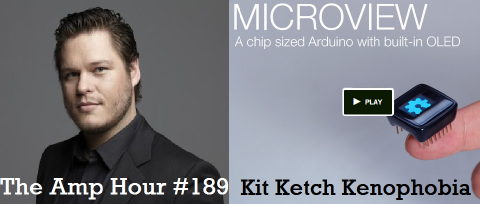
Download episode · 36 MB
Also on Apple · Spotify · YouTube · RSS
Show Notes
Welcome, Marcus Schappi!
- Marcus and Maddy Schappi started Geek Ammo and are producing the MicroView as a Kickstarter (but only 5000 of them).
- They also own and run Little Bird Electronics, the largest Australian distributor of Open Source Hardware.
- Marcus does customer support and is tempted by "Let Me Google That For You" -- http://lmgtfy.com
- They run the business out of their house! Which is even crazier when you realize they carry more than 10,000 SKUs (Stock keeping units)
- Prior to the latest Kickstarter venture, they started Ninja Blocks. It's based upon the BeagleBone (original) and raised more than $100K.
- The idea behind NB was to act similar to IFTTT.com ("If this, then that"), but for hardware/real world interactions.
- They were able to run this campaign on Kickstarter before it came to Australia by incorporating in Delaware as a US company.
- They were assisted and supported by StartMate, a resource for Aussie companies.
- At first, the idea of an Arduino with a built in display was an off-hand joke. However, they wanted it to be real (like Chris wanted with the Tacocopter).
- Early protos were done with the $4K pick and place from Shenzhen.
- The MicroView will also have an interactive course for iPad. There are 11 modules to get people started.
- When submitting the project to Kickstarter, they didn't believe the picture was a prototype because it was so shiny. In fact it was a machined and polished CNC.
- Cases are a difficult problem to solve; with the Ninja blocks, they 3D printed each and every case (more than 1000!). They did this inside the Little Bird house and Marcus's child may be as much as 10% ABS plastic because of it.
- Marcus is no longer involved in the day-to-day operations of Ninja Blocks. They did a $1m investment round and recently launched the very shiny Ninja Sphere on Kickstarter.
- The MicroView will be manufactured by Sparkfun. The engineering team was our guest a few months back and it's easy to see why such a talented team is growing into such a powerhouse company!
- Sparkfun also produced the Makey Makey, a popular MIDI interface tool based on the Arduino.
- Marcus was able to convince Nate by making an analogy to the AMG/Mercedes Benz relationship.
- Arduino is now incorporated in Switzerland (the Delaware of Europe!)
- The MicroView is participating in the "Arduino at Heart" program, a quasi-licensing/approval that alerts users that the guts of a device are hackable.
- It's about creating products that "just work". Marcus likes the Electric Imp, which gives users wifi inside an SD card.
- What did Marcus learn from the online game Clicking Bad? Distributor networks really matter! And Sparkfun has a LARGE network.
- Apparently 30% of Kickstarter backers are outside the US. At least for Marcus and Dave's campaign.
- Sparkfun are outpacing their competitors. Marcus and Dave wonder if anyone would/could buy them?
Transcript
Marcus Schaffe: This is The Amp Hour Podcast, recorded March 17th, 2014. Episode 189, with guest Marcus Schaffe. Kit, catch, kinophobia.
Dave Jones: Welcome to the Amp Hour. I'm Dave Jones from the EEV blog.
Chris Gammell: And I'm Chris Gammell of Contextual Electronics.
Marcus Schaffe: And I'm Marcus Schaffe from Micreview.
Chris Gammell: Welcome, Marcus.
Dave Jones: And Little Bird Electronics. And how many companies you got these days, Marcus?
Marcus Schaffe: Too many. And soon to be one more, right? And soon to be one more. So we have Geek Ammo, which is doing the Micreview, of course. I am a partner of Ninja Blocks, which did the Ninja Block, of course. And Little Bird Electronics, which sells open source hardware in Australia.
Dave Jones: Fellow Aussie here in Sydney.
Marcus Schaffe: Yes.
Dave Jones: Yes, all right. Very rare.
Chris Gammell: Is this the first collocated... It's not collocated, it's not in your office or anything. No, it's the first one who's actually from Australia.
Dave Jones: Is it the first one from Australia? It could be.
Chris Gammell: No, not from Australia. No, because Philip's from Australia, but he's been living in Silicon Valley for a long time. But I think the first one actually recording from Australia. There you go. I think you guys are the only two people in Australia that actually do electronics, right?
Dave Jones: Right, yeah, because there's nothing here, right? It all died out in the 70s.
Marcus Schaffe: I just sell entirely to Dave.
Dave Jones: So, Marcus, tell us all about your latest product, which hasn't actually come out yet.
Chris Gammell: Wait, can we start from the back or should we start at the front?
Dave Jones: I don't know.
Chris Gammell: Yeah, start...
Dave Jones: All right, start at the back. Go back. Go back in time. All right.
Marcus Schaffe: Okay. How did... So, Marcus, how did you get started? Good question, I asked myself.
Chris Gammell: Oh, I like this. This is easy. I'm going to go get another beer. I know.
Dave Jones: I'm out of here. Let's go.
Chris Gammell: I should have got a beer. Okay.
Marcus Schaffe: Okay. How did I get started? So, it all started with my lecturer at Sydney University. I was doing a design course at the time and he said, Marcus, we're using the Arduino this semester. They're very hard to buy in Australia. In fact, nobody was selling them in Australia. You're entrepreneurial. You should sell them online. And just wanting to make the lecturer happy and hopefully get good grades, I called up these Italians who said, oh, wow, that's amazing. We've been trying to break into Australia. I think back in, what, 2004, 2005. And, you know, they were ever so happy to have somebody import Adunos into Australia. So, that one product went from one and snowballed to 2,000 different products on Little Bird Electronics. 2,000. And I, 10,000.
Dave Jones: 10,000. And you stocked them all.
Marcus Schaffe: 10,000 products? Like SKUs? Like SKUs? 10,000 SKUs. Wow. So, it was all rather an accident.
Dave Jones: Can you explain SKU for those who don't run shopping carts and big monolithic mail-order houses?
Marcus Schaffe: Yeah. SKU is just a stock-keeping unit and they're part numbers or manufacturer part numbers more often than not. And, you know, one by one we approached, you know, SparkFun, Polaloo, DFRobots, E-Studio, IT'd, Freetronics, a mob in Australia called Jcar and Electors. And slowly added their products to our site. I actually must give most of the credit to my wife. When I was running the business by myself, we were only doing a few hundred dollars a day and now, you know, she's really driving the business forward into, you know, a real business.
Chris Gammell: Awesome. That's awesome. Also, I want to pause real quick. And we have had John from Freetronics on and I think he was in Australia at the time.
Dave Jones: Ah, he could have been. Yes, that's right.
Chris Gammell: Yeah. He'll beat us up if we don't say as much. Yeah, I know. Sorry, John. That's a ton of, so 10,000 SKUs in your store. So why is it that someone would buy it from Little Bird than just go to like SparkFun.com and buy it there? Is it shipping or what's the reason there?
Marcus Schaffe: Shipping in Australia sucks. It does. So if you order, you know, a cable from SparkFun or, you know, one of the vendors in the US, it's going to cost you at least $20 in shipping to get good shipping with tracking.
Dave Jones: For a $2 cable.
Marcus Schaffe: For a $2 cable. It doesn't work out. So, you know, sometimes I don't, I look at my business and I think, you know, we're not really providing value on the electronics front. We're providing value in consolidating shipping for people. So if I want to buy a part, say I've got a project and I want to buy a part that is coming from Seed Studio in China, maybe an Arduino part from Italy and then another part from the US with one order, I can get that all in one order instead of paying shipping from all these different supplies and, you know, crossing my fingers that the parts will actually arrive in Australia.
Chris Gammell: Huh. So does that mean that you have all this stuff in stock at your business?
Marcus Schaffe: I like to think that we keep a local cache in Australia. So I think on programming terms. So we try to do everything just in time where possible. We have, you know, worked out how to really get the shipping gods to do what we want them doing. And pretty much if you place an order on a Friday, you will get the parts in from overseas on the Monday, which is pretty cool. And then my wife, she used to run logistics for all the different, well, it's a company called Gate Gourmet that supplies all the food for Qantas and Delta. And she would have to work out how to get the food in the right location for all the different plans on the various routes. Yeah.
Dave Jones: And it has to be just in time as well because they cook, you know, well, cook, you know, in quote marks, that food. And it's got to, you know, it can't sit around for a week.
Marcus Schaffe: Yeah. At least what we sell isn't that perishable.
Speaker ?: Yeah, exactly.
Chris Gammell: So if I lick one of the boards that I buy from Little Birds, it won't taste like two-week-old chicken.
Marcus Schaffe: Yeah, pretty much. Yeah. I guess to summarize Little Bird, it's all my wife. I just do customer support, which is just Googling for people and reading data sheets.
Dave Jones: Yeah, right. Because they, yeah. So you sent that link to, here's how you Google it. What is that website? You know?
Chris Gammell: Oh, let me Google that for you.
Dave Jones: Let me Google that for you. Yeah.
Marcus Schaffe: Do you reckon I can get away with that? It's sort of like, it's just on the edge of acceptable.
Dave Jones: Yeah, I know.
Chris Gammell: You know, some people would be impressed by like the little scripting where it actually fills it in, you know, with the search term for you. But then, yeah.
Dave Jones: It's a bit insulting, isn't it?
Marcus Schaffe: It's just shy of giving somebody the finger. It's, you know, here's what you wanted and yeah, here's the bird.
Dave Jones: A free little bird with every order.
Marcus Schaffe: Yeah, pretty much.
Dave Jones: Ka-ching. And the amazing thing, Chris may not know this, is you still run up from your house.
Marcus Schaffe: Yes. Wow. So we've gone through different incarnations.
Dave Jones: A mail order company. I've run my mail order company from my house for 20 years, but hey, I'm not shipping, I don't have 10,000 bloody line items.
Marcus Schaffe: Yeah. Well, we have a whole level of a house. We have one of these houses that are on a slope and a whole level is devoted to Little Bird. Wow. You just, yeah. It's insane. We started like changing our basement so we could actually keep stock in there. We have laid down plastic and done all this crazy stuff just to find more storage in the storage space. We're going to have to get a proper warehouse one day.
Dave Jones: One day when you get 20,000 lot of us.
Chris Gammell: Couldn't you charge like 10 cents more per person and then be like, okay, well, if everybody buys one product, then we're probably good on the rent for the month.
Marcus Schaffe: It's tough because right now we're selling what I would consider commodity products. And we're doing a business where anybody can just go and start. Listeners, don't do this. Anybody can just start this in their underwear with a laptop and say, hey, I can sell your stuff and then start selling it on eBay. And so we're competing against that. And of course, price becomes a consideration. That's why I'm so keen about making our own products because you're not beholden to suppliers' prices. You're not beholden to the economics of selling commodity products.
Dave Jones: I've always thought it's a – I've always said it's a mugs game really being in the mail order business just – It's not very nice when the mug is on the show, Dave. But, you know, because you have to operate with low margins, right, as he said. It's a low margin industry. And, well, you have to differentiate yourself somehow in order to compete and survive really. And it's tough in today's market.
Chris Gammell: Service brand name.
Marcus Schaffe: I kind of got into it by mistake. We're digging our way out of things by making products. So, you know, I'm extremely proud about that.
Chris Gammell: Yeah. It's like a fire under your ass, right? I mean, the faster I get this project done, the faster I can stop selling other people's stuff.
Dave Jones: I'm trying to help Marcus here, you see, by saying, telling everyone it's a mugs game. Don't get into it. Oh, I gotcha. Oh, I gotcha. There's no margin in it.
Chris Gammell: Touching nose, touching nose.
Dave Jones: You work your ass off.
Marcus Schaffe: You don't want to do this. You get stuck at home. You can't take holidays. It's terrible. You don't want to do this. You should go out and make products that can be sold on Little Bird and other resellers like that.
Speaker ?: Right.
Chris Gammell: We need more SKUs. We do. All the time. So, how the hell did you have time to do all this other stuff then? I mean, so you helped found Ninja Blocks, right?
Marcus Schaffe: Yep. So, yeah. Out of Little Bird, we did Ninja Blocks and that came about from me Googling on the internet one day, you know, doing my Google AdWords. And they have this tool which shows you the number of local queries for a search term. And I remember checking AVR, which is, you know, the chip used. You guys know what AVR is. Of course. Everybody on the podcast knows what an AVR is. And the amount of queries were just, you know, so dismal in Australia that I thought, oh, man, this is crap. Why am I doing this? I need to build, you know, an Arduino or something like that for, you know, the rest of us. You know, all my friends who are, oh, Marcus, you sell electronics. I've got this idea. I want to do blah, blah, blah. It's like, hmm. If I can do something where I can make ordinary consumers be able to do electronics, I think I'll be onto a winner. And that's where NinjaBlocks came out of.
Dave Jones: Because you didn't think Arduino was for ordinary humans?
Marcus Schaffe: Well, Arduino always had the impediments of needing to know, you know, a little bit of embedded programming, electronics. And if you wanted to connect anything to the web, you need to know networking and web services as well. So I wanted to build an entire top-to-bottom system that would, you know, remove all these impediments. And the model that I sort of latched onto was If This Then That, but for hardware. So If This Then That is a website, ifttt.com.
Dave Jones: Yeah.
Marcus Schaffe: And it allows you to automate web services. So you can set it up so it automatically looks at your tweets and then cross-posts those to your, say, Facebook account.
Chris Gammell: That's how we post our Reddit links, actually. When someone posts a link to Reddit, our subreddit, it automatically tweets it out after a little while.
Marcus Schaffe: Yep. And it just is so easy to use. And I thought, wouldn't that be great for hardware? You know, if motion is detected, take a photo, send a tweet. But in there sort of lies the problem. Ifttt is, you know, very simplistic because it's, you know, really just piping one thing to, you know, another web service. But if you're doing a more complex or even just a simple thing, like if motion is detected, take a photo and send a tweet, or actually a better example would be at night, if motion is detected, turn on the lights. Well, you have to make the rule a little bit more complex than that. You need to say, well, is it at night? Turn on the lights. How long do you want me to turn the lights on when you want me to turn them off? So that model didn't really work. And we sort of turned into a buzzwordy Internet of Things platform.
Marcus Schaffe: Right.
Marcus Schaffe: Oh, no. And, yeah, that's cool. And there's a place for this kind of thing. But what I was really interested in was actually building Internet of Things products rather than running a software platform for the Internet of Things.
Dave Jones: Right.
Chris Gammell: So you're saying that NinjaBlocks is basically just kind of like a router for people interaction? Yeah.
Marcus Schaffe: So it really shifted away from helping hobbyists that didn't have the electronics and programming skills to becoming more the center of your home automation and your connected things life. And, you know, it's cool. And hopefully it will become a billion-dollar company and do all the things that you're meant to do in Silicon Valley. But, yeah, it just wasn't the core concept anymore. Right.
Chris Gammell: Well, and it was built on the BeagleBone, right?
Marcus Schaffe: So, yeah, we actually put inside the NinjaBlock a white BeagleBone back in the days where that was the unacceptable...
Chris Gammell: The $90 BeagleBone you made?
Marcus Schaffe: Yeah. Right. And because I was lazy and because I wanted to be safe, I wanted to be safe, I used a Arduino on top of that to do all our IO. Yeah. I just didn't think that the BeagleBone, its IO back then was stable. It was fairly new for the BeagleBone back then. Of course, we didn't have anything like the Raspberry Pi. I've since come to learn that the BeagleBone is a thousand times more stable than a Raspberry Pi.
Chris Gammell: Oh, okay. That's right. Yes.
Marcus Schaffe: So, you know, I've got one of those Apple aluminum keyboards, aluminium for the Australians, and whenever you plug that into a Raspberry Pi, the thing browns out and resets itself.
Dave Jones: Oh, brilliant.
Marcus Schaffe: So, you know, Raspberry Pi, they won the marketing war, the hardware's pretty crap, but, you know, everybody loves them. Whereas I don't think we give BeagleBone enough props.
Dave Jones: VHS versus beta, is it?
Chris Gammell: Yeah, I would say so. That's interesting. Yeah, that's a good comparison, Dave.
Dave Jones: Right. So, you ended up doing a Kickstarter for this.
Marcus Schaffe: Yeah. So, the original Ninja Block was...
Dave Jones: Back before you could run... Before Australians could run Kickstarters.
Marcus Schaffe: Yes.
Dave Jones: So... Tell us.
Marcus Schaffe: Sneaky. Sneaky. I'm going through that process again. Ha ha. So, yeah, back in the day, we couldn't do Kickstarters in Australia. And we were actually part of a program called Startmate, which is a business incubator. And, you know, I said to my wife when doing the Ninja Block, hey, I want to become part of this thing called Startmate. I think if we just get this tiny little bit of investment that they give us, because it's not just me doing the project, it will force me to actually finish the project. Because I'm just looking at my desk now and I can see all these different projects that I've started and not actually finished. So, that was the motivation for going into Startmate. They helped us become a U.S. Delaware company so we could raise investment in the U.S. And as part of that...
Dave Jones: So, this is an American company, is it? This is an American... Yep.
Marcus Schaffe: Ninja Block is an American Inc. with an Australian subsidiary.
Dave Jones: No, but this Startmate you're talking about.
Marcus Schaffe: Startmate is Australian.
Dave Jones: Oh, it is.
Marcus Schaffe: So, it's all about saying we can build great technology companies in Australia. Right. The internet is...
Chris Gammell: By incorporating in the U.S. Yeah, exactly.
Marcus Schaffe: Yeah, there's a bit of irony there. But the general thesis is that the internet has made, you know, geography or issues that were associated with that geography less. And now it's more of a level playing field and the...
Dave Jones: Except when you want to ship stuff.
Marcus Schaffe: Except for when you want to ship stuff.
Chris Gammell: Well, I mean, to be fair, everybody in the States puts stuff in Delaware too. So, it's just kind of solidifying the fact that, you know, Delaware is the place to go to to incorporate worldwide. They're in Ireland, I think.
Marcus Schaffe: The biggest investor in the U.S. said to me, you know, once we're going through the investment docs, Oh, you're an Australian company. I would have invested in that. I was like, great. What? After all the pain of trying to pretend to be American. Oh, no. You know, jumping through all the hoops, getting friends to lend their social security numbers, becoming treasures of the company, you know, Silent Park, you know, everything that you needed to do. It's like, right, you would have invested in us.
Chris Gammell: Are you allowed to be saying that? Am I going to have to come back and edit this kind of crap? Because if you want to... I don't want to have to edit, man.
Marcus Schaffe: No, it's all good. You know, we're legal. Oh, Interbox is legal.
Dave Jones: How many listeners? Legal in one state, yeah. Yeah.
Chris Gammell: Something like that. I don't think we have any listeners that could, you know, sue you, so it's fine.
Marcus Schaffe: I doubt there are that many Iris people that are... Yeah, right. ...listening. So, yeah. Ninja Blocks is great. And now we're working on our... I really, you know, took the core team who did all the hardware behind the Ninja Blocks and got them behind the micro-view. So, what's the micro-view, Marcus? I'm glad you asked. Dude, this is so easy. I love this. I know.
Dave Jones: This is like the curiosity show. Sorry. Only Australian audiences will get that reference.
Marcus Schaffe: That's okay. I'll have to pimp the show more out in Australia. Don't worry.
Chris Gammell: We'll bring it to the States and pretend that we came up with it, like we do with a lot of UK shows. The Office.
Marcus Schaffe: Try House of Cards. I just went back and watched the UK version, like the 1970s or late 1960s version of House of Cards.
Chris Gammell: I didn't even know it was.
Marcus Schaffe: Maybe 1980s even. But it was a long time ago. I'm only a young person. And it's like, they just copied half the lines from the UK version to the US version. I was like, you know, watching. Yeah. Don't ask me how I actually watch House of Cards in Australia. That's a whole other story. We don't want to go down. But yeah.
Chris Gammell: Anyway. Talk about things you get in trouble for. Yes.
Marcus Schaffe: So, yeah. Micro-view. That started as... Sorry. Go on.
Chris Gammell: Micro-view is like... Is that like how Dave does like a little mu symbol or... No. It says micro.
Marcus Schaffe: Micro. As in Microsoft.
Dave Jones: Yeah. Mu is overused nowadays. Yep.
Marcus Schaffe: We use that internally. Tell me about it. But, you know, everything used to be UV, but we changed that. And so that started as a joke or a practical joke on me. My electrical engineer, JP, sent me this Photoshopped image of a chip with an embedded display. And on this Photoshop document, it said, you know, world's smallest Arduino with built-in OLED display, chip form factor. And I had assumed that he was just trolling Alibaba again and that he found this cool new product for us to sell on Little Bird. And I was like, that's awesome. You know, where can we buy it from? You know, we'll order 50 in and, you know, we'll put them up on Little Bird. And, you know, he was a bit coy about it for a little while and then said, well, you know, I actually Photoshopped this up. I got you. Ha ha. And I'm like, that's actually not such a bad idea. But I want one. I want one.
Chris Gammell: It's like the Taco Copter when that thing came out. Everyone's like, oh, I want that. And then, no, it's not real. Sorry.
Marcus Schaffe: Yeah. So we actually made it real. Cool. So we took an Arduino Uno, shrunk it down to the size of a chip.
Dave Jones: Which is not hard because it basically is just a chip, pretty much.
Marcus Schaffe: It is just a chip.
Dave Jones: Yeah.
Marcus Schaffe: There's a few things you need to get in there. And then we wrapped.
Dave Jones: But the Arduino ultimately comes down to a chip. It is. Yeah. That's essentially what it is. The rest is just like a serial interface kind of, you know, URD or power supply kind of thing. You know, it's. Yeah.
Marcus Schaffe: So you need to get, you know, all your passives in there. And, you know, we had to decide whether we wanted to put USB on board or not. And then we had to do all the passives for the OLED stuff. But, you know, he got it down to a chip. I guess our big limiting factor was that we also wanted to be able to build this ourselves. Right. And so we had to squeeze all that down and be able to do it on our cheap and cheerful Chinese pick and place machine.
Dave Jones: Yeah. You've got one of those. How are they? You're talking the, what, the $2,000 one or $4,000? Yeah.
Marcus Schaffe: The TMA, I should know this by now. Pick and place. Yeah. It's about $2,000.
Dave Jones: But when you, by the time you import it to Australia, it's like another $1,000, isn't it? Or something.
Marcus Schaffe: So we'll call it $4,000.
Chris Gammell: Is this the same one that Dangerous Prototype has? Yes. Yes, it is. Yeah, same one. Okay.
Marcus Schaffe: It's a desktop pick and place. It's all mechanical. No optics or any fancy stuff like that. It works a treat. So we built the simplest thing that we could, which was logic level converters on it. And they came out well. We can't really complain. And it was after that that we really realized that perhaps we shouldn't be building commodity hardware that the Chinese can do really cheaply. Yeah. Exactly. We should be doing something special. And let's do that with the micro view. So yeah, he designed it down. We got some, the designers of the Ninja Block enclosures to do a beautiful chip enclosure. That was after going to every, I guess, chip vendor we could find and asking them, how do you encapsulate your ICs? And, you know, we got some contacts and we spoke to these contacts and they all said, no, it's not going to work if you put an OLED display in there. There's no way that we can sort of mask out a space for your OLED to shine through. So what we ended up doing is designing a injection molded enclosure that goes over our tiny little Arduino. So in the end, it does look like this tiny little gem of a chip. Yeah. So I think we achieved our goal there. So beyond the hardware, JP, and I have to give all the credit to JP here. He designed an amazing library that makes it super trivial to show widgets and graphs and text and render sprites on the OLED display. So he's got...
Dave Jones: Well, that's the same thing with any project like this. It has nothing to do with the hardware. The hardware is just an OLED hooked onto an AVR microcontroller, right, in a novel form factor. It's all about the, you know, the educational material that actually goes with that. All of the tutorials, the libraries, making sure they're easy to use so you can drive the OLED display with one line of code, all that sort of stuff. And yeah, that's the secret sauce behind it. Otherwise, it's just, well, it's just a chip with an OLED display.
Marcus Schaffe: Yeah. But, you know, if you're a marketer like me, it's the Arduino shrunk down to the size of a chip. So, yeah, we did a lot of work on the libraries. And what we've also done is we've built a course that guides people on either their iPad or their Microsoft Surface or even in Chrome how to build 11 different circuits. And it's a step-by-step. Plug your microview into your breadboard. Plug in your LDR, your photo sensor into these pins. And, you know, this is how you get a nice live reading on your display. And then we do more complex things like servos and relays and transistors.
Chris Gammell: I think the thing that always, yeah, I mean, like, so like this kind of stuff with like the intro course type stuff. You know, we see other stuff like that. You know, there's books about the same kind of thing. But it's like it's so easy for me to forget, like, every single day there's new people showing up and wanting to learn this stuff. Right. So it's never ending. It'll never end. Right. And the market will never end for that kind of thing because it's an accessible platform and people are interested in that kind of thing. And I think I can kind of hear people saying, you know, I can hear our listeners already saying, well, this already exists. Right. But it doesn't matter. It's the fact that it exists in this form factor with this even more accessible interactive component to it. And I think that's actually really what the power is there. Yeah.
Marcus Schaffe: We showed it to university lecturers, school teachers, and they went nuts for it. They like the fact that it's breadboard compatible. You can just whack it in there. Yeah. All the tutorials guide their students step by step. They can just sit back and have a coffee and watch the kids do their stuff.
Dave Jones: Teachers love it if you write the material for them. Mm-hmm. They will buy anything that has the material already pre-written for them so you can just give it to the students. Seriously, that's why Agilent sell their oscilloscopes to the education market, right? Because they have, you know, these course books that go with it that explain how oscilloscopes work. You know, so they just give those to the students and bam, most of their work's done for them.
Chris Gammell: So, you know, I've always heard that it's tough to sell into like – I guess it depends on the level too. But I've heard that it's tough to sell into the educational market. Is that true?
Marcus Schaffe: The educational market is a huge proportion of Little Bird's customer base. It just depends how far back you want to bend for them. So you have to do things like accept purchase orders and do things like that. But what I've found is that if you're providing products that they can't get elsewhere, they come to you. So my game plan for MicroView is just, you know, showing this to as many teachers and university professors as possible. And just saying, and here's the materials, go at it. And I think they'll just order it. You know, just being able to see what their Arduino is thinking, you know, just totally changes the ballgame. Cool.
Dave Jones: Now, the case, can we talk about the case? Because the one that's shown on the Kickstarter campaign, which goes live when? Have they actually approved it yet?
Marcus Schaffe: Any second. Any second. Any second. Hopefully by the time this has aired.
Dave Jones: Yep. It should have just started. The case in that is a hand-polished CNC prototype.
Marcus Schaffe: Yeah. So I got this email from Kickstarter this morning. And they're like, you know, we want to see your prototypes. And, you know, a bit of back and forth. That is our prototype. And our industrial designers, you know, did such a great job seeing and seeing down this, you know, enclosure from a solid piece of plastic and then polishing the buggery out of it. So it looks like this beautiful. They didn't believe it. Yeah.
Dave Jones: They didn't believe it. This is photoshopped. Yeah.
Chris Gammell: This is a render. Yeah. Yeah.
Marcus Schaffe: Pretty much. And so I had to go back and add more photos of the Ninja Block without it. Not the Ninja Block. The micro view without its case. Keep it straight. Keep it straight. And, you know. Oh, yeah. And here's our original whiteboard drawings of it. But, yeah, they just didn't believe that it was a prototype.
Dave Jones: Because that – we can't blame them, right? Because that is so prevalent these days. Yeah. Everyone just does the render and tries to get away with it.
Marcus Schaffe: So we have done – we didn't do any renders. It's, you know, the real thing. It's on my finger. Funny story is that we –
Chris Gammell: How do we know that's your finger? We can't tell.
Marcus Schaffe: I was actually looking for somebody with bigger fingers. How do you know that's my finger? Yeah. Yeah, so we powered it in that photo that you'll see by visiting microview.io, of course, by running two tiny little wires up and underneath the micro view itself and taping this wire to the back of my finger and running it all down my arm to a battery pack. And this thing took all day just to get the right angle where we could –
Dave Jones: To get that one photo.
Marcus Schaffe: To get that one photo. It is the money shot.
Dave Jones: So much so that they didn't believe it. I love it.
Marcus Schaffe: No. All that effort. It just looks like – Yeah. Again, that goes to JP. I'm working with a team of perfectionists here and it sometimes takes a long while to do things, but, you know, the product of the efforts is insane.
Dave Jones: And I've physically seen it, by the way. Folks, I've physically handled it. Yes, it is real. And I feature –
Chris Gammell: Yeah, we can see Dave's ugly mug in the videos.
Dave Jones: Yeah, I'm in the video down the bottom of the page there somewhere. And – Mm-hmm. Goodness. Now, this isn't your first battle with cases. Can we go back to the Ninja blocks for a minute? Because can you explain to people why 3D printing your cases in production volume is not a good idea? Yeah.
Chris Gammell: It's a good idea if no one buys it. Or if one person buys it. Or if 10 people buy it. Yeah.
Dave Jones: Tell us a story.
Marcus Schaffe: Yeah. Marcus learned a lot of things during the Ninja blocks. And one of them is don't assume anything. And so, Little Bird has a lot of smart customers and they tend to be at the forefront of things. And one of – you know, back then, the forefront was, you know, 3D printing. It's like, hmm. So, I went over and I looked at one of our customers doing 3D printing and I was thinking, okay, that's not too bad. Everything he did seemed to turn out okay. And I looked at all the photos on his blog. I was like, actually, the quality is not that bad. We could probably run with this. And there'd be sort of a – you know, a bit of geek cred in –
Dave Jones: In 3D printing your own case, right? Yeah.
Marcus Schaffe: Yeah. And, you know, we can make the case open source and, you know, everybody will be happy and there'll be rainbows. No. No. No. So, we got – I shouldn't laugh. So, I was speaking to this guy and it was like, you know, back then it was don't buy the MakerBot. It's made out of wood and, you know, wood flexes. And if you want accuracy, you should go and buy the UP printer.
Marcus Schaffe: Yep.
Marcus Schaffe: And, you know, we bought three or four of them and we started injection – not injection. Oh, I wish. We started 3D printing all these cases. And, you know, we didn't have to just – How many cases did you have to print? It was hundreds. Because it wasn't like in the hundreds, if not just under a thousand. Because not only did we promise to 3D prep the NinjaBlocks case, but also all the accessories. So, there was a light sensor, a temperature and humidity sensor, a distance sensor, a motion sensor. And then we did these RF433 additions and, oh, it was just nuts. Never again. I never want to see a 3D printer. No.
Chris Gammell: I think I recall us making fun of you on the show when that was happening. Yeah, I think so. I can't say for sure, but I think we did. I do recall that. Yep. If not, it was me and Dave before we started to hit the record button for sure. You're right. Yeah.
Marcus Schaffe: As any good leader, I delegated this to my wife.
Speaker ?: Fuck.
Marcus Schaffe: And, you know, Australia is a pretty dry place. And, you know, we started off 3D printing, you know, all the enclosures on our balcony because my wife was several months pregnant and couldn't stand the smell of the 3D printer. Oh, my God. And then it was, you know, as if the drought broke. It was raining for three or four weeks, just solidly heavy rain. Not just spitting, but, you know, solid rain. Our gutters were overflowing. It was insane. And, you know, she had all the windows open. 3D printing. She doesn't want me to talk about 3D printers anymore.
Chris Gammell: I'm surprised you're still married.
Marcus Schaffe: It's a push. And she now thinks that she's the perfect candidate for a study on the effects that 3D printing or ABS plastic vapors have on children.
Dave Jones: Children, right.
Marcus Schaffe: I'm pretty sure 10% of my son is, you know, probably ABS now. Yeah. Not good. Wow.
Dave Jones: Oh, goodness.
Marcus Schaffe: So, yeah, we moved along. And for the second version of the Ninja Block, we did injection molding. And, you know, that has its own issues, but, man, it beats 3D printing pads down.
Chris Gammell: Oh, of course. Oh, yeah. Cost alone. I mean. Yeah.
Marcus Schaffe: Like, the spools of the... I'm not going to go on about it anymore. It's just...
Chris Gammell: He's getting upset, Dave. We should stop. This is like PTSD. He's, like, having flashbacks. He's getting the sweats. He's... He's going to... Yeah.
Dave Jones: He's going to go postal any minute.
Chris Gammell: I was going to say he's going to start shooting out the place, but it's Australia, so I figured...
Speaker ?: It's Australia.
Chris Gammell: Yeah, cut. Yeah.
Dave Jones: Can't really get hold of a gun. He'll 3D print a gun. Start throwing wallabies at people.
Chris Gammell: Yeah.
Dave Jones: 3D print one. With my one shot.
Chris Gammell: Yeah. Before it blows up in your face.
Marcus Schaffe: And then wait an hour to print out another. Yeah.
Chris Gammell: So, Ninja Blocks is still going on, though. Are you still part of it?
Marcus Schaffe: So, I'm not working on Ninja Blocks on a day-to-day basis. I still have a huge vested interest that they do well. I hear from the media... Translation stock.
Dave Jones: Stock. Yes. Which may or may or may not amount to anything.
Marcus Schaffe: So, yes. It's... I view it as my ticket in a raffle and, you know, either blow up and become, you know, a huge company and, you know, I'll be inviting you guys over to my yacht. Awesome. All right. Yep. And, you know, multiple helipads and all that. Or, you know, nothing will come from it. It's just one of these big bet things.
Dave Jones: Who is they? Is it like a venture capital firm that's got their mitts into it now or what?
Marcus Schaffe: So, who's behind Ninja these days? Right. So, right now, Ninja Blocks has only done one proper round. Yeah. That's what they call it.
Dave Jones: Round of funding. Yep.
Marcus Schaffe: Round of funding. And that was for a million dollars. And pretty much after that, they've been self-sufficient to selling Ninja Blocks. So, which has been pretty good.
Dave Jones: That's not how it's supposed to work. You're supposed to get more money, more money until you're employed or you're sold to Google. And then it's okay. Then they've made their money. So, it's not to actually make product and add a profit and be self-sustaining and have negative debt and no debt. That's not how it's done in Silicon Valley.
Marcus Schaffe: No. In Silicon Valley, it's all about growth and exponential crazy rocket growth. And I'm sure that's something that they want to do. They're just getting all their ducks in a row before they go and do another round. Right. I hear from reading the internets that their technology is being put into internet ISPs, modems, to allow them to be able to do home automation and providing a nice platform for hackers to go and do stuff with. So, I expect that in the near future.
Chris Gammell: So, when you sell to Google for $3.4 billion, because I can only assume they'll pay more than Nest, are you going to also store your 10,000 SKUs on your yacht then? Or how's that going to work? Are you going to finally move those out of the basement? I think we might.
Marcus Schaffe: We might be able to afford a warehouse by then. Fingers crossed.
Chris Gammell: Well, you could just buy a barge and drag it behind the yacht. Yeah.
Dave Jones: Well, that's what Google does, right? That's right. Yeah, exactly. Yeah, yeah. They've got the Google barges. Fits out one. Yeah.
Chris Gammell: So, I clicked over to NinjaBlocks.com and there's a new one on there. And so, there's like a sphere or something. That's the modem you're talking about? Like the fancy looking.
Marcus Schaffe: So, that's actually just another, like I would say that's the third iteration of the NinjaBlock instead of it's less blocky and more sphery. Actually, I've got to give it more credit than that. They've redesigned the thing from the ground up. They're doing lots of techie things on the back end to make how the whole system works a whole lot better. They're putting in better radios. They're doing BLA. They're doing Zigbee. They're, what's the word, collaborating with some really great people to make the NinjaSphere a reality. And they did a Kickstarter. So, all this happened after I left NinjaBlocks. So, you know, I'm really happy about that. Yeah. That's great. That's great. No longer just a place of self-employment but a real business. That's what you want. Yeah. Yeah. My whole life I've been, you know, I'm doing a business. But then I, you know, really come to the sad fact that no, it's 11 p.m. and I'm packing orders. Yeah. It's self-employment.
Dave Jones: Oh, goodness. And now, look, you've limited, you're limiting your success here with the micro view to 5,000 units. Explain.
Marcus Schaffe: So, it's not about creating false scarcity. It's about lowering risk. So, we want to be able to do, I want to say the first Kickstarter that ships on time.
Dave Jones: Right. Yeah, because they're pretty rare.
Marcus Schaffe: Yeah. Like, we didn't do a good job with the first go at the Ninja Blocks in terms of shipping on time. And I think by putting a constraint on 5,000 units, it will help us and our manufacturer. And who's our manufacturer? Oh, that's another good question. You asked.
Chris Gammell: I was just about to ask that, yes.
Marcus Schaffe: That's SparkFun Electronics. And, you know, that will really help them be able to get everything out on time.
Chris Gammell: So, walk us through that product. How did you hook that up then? I mean, was it just because of your previous relationship with them? Yep. I mean, SparkFun has the new, we talked to the SparkFun team, obviously, in an episode whatever, whatever. And they were telling us about their new facility. And they're growing like gangbusters as well.
Marcus Schaffe: But SparkFun is insane. It's what they do from, you know. I can't believe this can be done inside America in 2014. No offense. It's just, it's amazing. Like, you know, I would imagine a company like Apple, you know, doing something like this. But, you know, to do all this manufacturing in the US, to do all the shipping from the US and, you know, growing the business at the rate that they have. It's almost as if they were a venture funded business. But no, it's just a bootstruck business. It's just insanely amazing. And, you know, what's more is they're not just doing it in a market by themselves. There's other people like Adafruit doing the exact same thing. They're both going to get pissed off with me for saying that. But they're both doing complementary things in a finite market. It's quite amazing. I think they've heard of one another.
Chris Gammell: I don't think you have to worry about that.
Marcus Schaffe: Yeah. And at the same time, you know, all these other companies are just knocking off what they do. So, you know, from different regions. And so I was like, wow, you guys are doing a great job. So how did the SparkFun relationship sort of start? Well, you know, through Little Bird Electronics, we've always sold Arduino. We saw them work on the Makey Makey, which is another Kickstarter. And that project was essentially an Arduino with capacitive pads. And that allows beginners to do Arduino-like projects. So this little device would act like a HID device, human interface device. You'd plug it into your USB port. And as soon as you started touching the different pads, and it came with a set of alligator clips, as soon as you started connecting those to things and started touching stuff, it would do, you know, key presses on your computer. And if you were feeling game and wanted to get more advanced, you could go and flip the thing around and use it in Arduino mode and use it as a fully-fledged Arduino. And they shipped SparkFun on behalf of Makey Makey, made this product and shipped 11,000 units. And so I was like, hmm, they can probably do it. I've been through the process of fabricating my own hardware before. I've been through the process of, you know, picking and packing and shipping orders. Why don't we get some other bastard to do this? And we approached SparkFun and we said, look, here's our idea. We know you did the Makey Makey. I know that you guys can do this. So what do you think? I've seen you do it. I've seen you do it. You're lying, Nate. Yeah, pretty much. It's like, Nate on Skype, you know, we love what you do. You know, we think your products are pretty awesome. But, you know, we sort of think of you guys like Mercedes-Benz. And we want to be the AMG to your Mercedes-Benz. That was literally my pitch to him. And, you know, so you guys know about AMG. Okay, we're electronics guys. No, I have no idea. Okay. Okay. So AMG was sort of like this aftermarket super uppers of Mercedes-Benz. So they would go and, you know, take a stock Mercedes-Benz back in the day and they would soup it all up. They would, you know, change the brakes, make it turbocharged. If it wasn't turbocharged, I know nothing about cars. I should also say. So I'm making up stuff as I go along here. You know, they would add fenders and, you know, all crazy stuff to make the car go faster. And, you know, ultimately Mercedes bought AMG. And now pretty much all the top of the line Mercedes-Benz can come with this AMG badge, which is, you know, this specially calibrated Mercedes-Benz with all this extra super cool stuff. I don't own a Mercedes-Benz. It's something that I hope to have one day.
Dave Jones: Because your stock hasn't invested yet. Sorry.
Marcus Schaffe: No, I drive a shitty Mazda. But, you know.
Chris Gammell: So say we all, man. Yeah.
Marcus Schaffe: I think that sort of resonated with SparkFun. And, you know, we really love what you do, but I think we can take this up a notch. You guys build Arduinos. You build the Arduino Pro Mini. You know, imagine if it had an OLED display and we wrapped it up in a, you know, in a beautiful gem-like enclosure. Yeah.
Chris Gammell: He is a marketer, huh, Dave? He is. He is. How did he speak on here? I don't know. It's a good thing you know electronics, Marcus, or else I tell you.
Marcus Schaffe: I'm actually stealing that line from, I used to work for like an Apple reseller. And the Apple BDM used to come around and describe all the different Apple products and show us how we could sell them. And I remember he took out the first iPod Nano. And, you know, it was a tiny little thing. And he kept on describing it. Look at this thing. It's like a gem. Hold it in your hand. It's like holding jewelry. I was like, oh, Jesus Christ.
Chris Gammell: So you're inspired to that. Okay, yeah. So let's move on. Let's wait for him to ask himself more questions, Dave. This is good.
Marcus Schaffe: This will work for Apple. You know, we should try this. That company works okay.
Chris Gammell: I suppose.
Dave Jones: Anyway, SparkFun said yes.
Marcus Schaffe: SparkFun said yes. They said that they can ship X amount a day after X period of time. And that's sort of reflected in our Kickstarter tiers. And, yeah, we're super excited to be working with them.
Dave Jones: But not more than 5,000.
Marcus Schaffe: But not more than 5,000. So we want you guys to buy it.
Dave Jones: Did they say that? Did they say that? Or is that just your own number? Look, well, we don't want this to go to gangbusters because we won't be able to ship more and everyone will have a sad face.
Marcus Schaffe: Well, you've got to think. What is a Kickstarter for? It's for getting a project off the ground. And if we're selling more than 5,000, we're definitely getting the project off the ground and a position where we can do more. But it just reduces risk. It makes it a nice, simple number that everybody can work around. And it's really just for the kits. I don't want to have such a, he says, I don't want to have such a successful project that I'm affecting SparkFun's ability to build all their other cool products.
Dave Jones: Right. Well, I'm sure they wouldn't let you affect them either. So that would mean that, well, there's all the big delays and everything else. And you've got to explain to your backers why.
Chris Gammell: Yeah, you're second in line. Yeah, exactly.
Marcus Schaffe: Yeah, it just, it feels right. It reduces risk. And I think everybody's going to be happy.
Dave Jones: Except for those who missed out on the 5,000. I get emails every day. I missed out on your Kickstarter. Where can I buy it? Why can't I buy it now? It's like, oh, man.
Chris Gammell: Well, that seems like the difference, though, is that, so Marcus, you'll be able to continue. Are you going to continue this relationship, you think, then? I mean, like, so that they'll be able to fill stock after the fact? Absolutely.
Marcus Schaffe: So we will get SparkFun to continue manufacturing the microview after the Kickstarter. Yeah. You know, should we prove successful? And we'll go from there. They've got some.
Chris Gammell: Okay. So now a logistical question. This is open source hardware? Absolutely.
Marcus Schaffe: There's no reason not to.
Chris Gammell: So obviously you have a relationship with SparkFun, but there's really no reason they couldn't just make a macro view, right? And, you know, just change to one letter. You know, it's. I mean, like, that is totally true, right?
Marcus Schaffe: Yeah, they could, but they're not dicks.
Dave Jones: Well, they could, but then their name is mud. Right. That's how the open source hardware industry works. It works on your reputation.
Chris Gammell: Yeah, but this is. I totally agree with you, Dave. You're totally right. But this is, this is a weird, this is a weird difference, I think, because. Why? Because it's not. In the past, it's been like, oh, well, you know, we're manufacturing over here. You manufacture over there. You know, you can't call it what we call it, but in the case that it's like someone who's capable of manufacturing it on their own, having them manufacture. That's just, it's not good or bad. It's just different. That's what, that's what.
Dave Jones: Well, someone else could do, but it's not like SparkFun are going to go and do an about face and say, ha, see ya, we're not going to pay your commission anymore. We're just going to make our own.
Marcus Schaffe: That's not going to happen. The thing to say is that we are doing other things to add value. So, you know, sure, we're giving away the designs, but look, if you want to go and get some dude to make your injection molds and, you know, build molds for your cloned micro view, go nuts. You know, there's, you know, four to $8,000 in setting up those molds. They're going to take, you know, three to four iterations to get right. Yep. Yeah. Unfortunately, these molds are a little bit more difficult than the micro view because we've got optics involved. So, and we've got such a nice, clean, shiny surface.
Chris Gammell: So yeah, extra polish.
Marcus Schaffe: It's going to take them time. We're also, we've just become a do I know at heart certified. So that's a program run by the Italians. Well, I should say they're now Swiss because they're, I guess, incorporated and running businesses. The Delaware of Europe. The Delaware of Europe. Yeah.
Chris Gammell: Yeah. If we could start referring to Switzerland as that, that would make me infinitely happy.
Marcus Schaffe: I don't know. I'm half Swiss. I might get my passport revoked.
Chris Gammell: You mean half Delawarean. Half Delawarean.
Marcus Schaffe: Yes.
Chris Gammell: Let's go to Delaware. Yes.
Marcus Schaffe: Don't you hate a man that's neutral. The Delaware. Yes.
Dave Jones: At least we're not Switzerland. Yeah.
Marcus Schaffe: Without the banks and the cheese and the cooker clocks and the good skin and the chocolate. Yeah.
Dave Jones: Now, what is this thing? What is it? So it's not run by the Arduino people. It's run by someone else.
Marcus Schaffe: It is. Arduino at heart is a program by Arduino for products that have Arduino technologies at their core. I'm just quoting them now. So we first went out to them and, hey guys, we got this new Arduino. We really would like you guys to sell it as an Arduino, like an official Arduino, like you did with the Arduino Pro Mini, like you did with the Arduino Nano, like you did with the Arduino LilyPad. And we went so far as to actually printing Arduino logo on the underside of the micro view. That's why if you go to our Kickstarter page, you'll never see the underside. Yes.
Dave Jones: I've seen the underside. I've physically seen the underside and there is an Arduino logo there.
Marcus Schaffe: Yeah. And, you know, things just become more real to people when they can see it. And so I just, you know, did this nice video, sent it across to Arduino and they were like, yeah, no, we're simplifying our line. We're actually going to get rid of some of our own products over time. And, you know, we've got a very clear view of our roadmap, you know, but we've got this great program called. Yeah. Well, you know, I did my best, you know, marketing impression and it didn't work. And so we're now part of the Arduino at heart program, which sort of suits us because we're a little bit more polished, like a finished product. And the Arduino at home program is for that as well. So the idea is that you can have a rice cooker, but it can have an Arduino inside and you can stamp this Arduino at heart logo on the side of it and say, hey, all you hackers, you can go and hack your rice cooker now.
Dave Jones: Is this Arduino's way of tidying up the market, so to speak, in the use of their brand name? Because, you know, like because they've got very strong trademarks on that thing and they will, you know, slap anyone's face who tries to use their logo. But they use the word Arduino in it's everywhere. Is this their way of sort of tidying up that to say, hey, look, it's, you know, it's based on our technology, but it's not ours.
Marcus Schaffe: You know, it's not an official one. I think they just don't want to become a Xerox or a Hoover. They don't want their name genericized, which is, I would argue, it's stupid right now.
Dave Jones: I don't know.
Chris Gammell: I don't know. If you're successful, I don't think you can do it at all, to be honest. I mean, like if you have something that people associate with something, it's just, I don't care how many people, how many cease and desist letters you send out. If someone says, oh, that's, you know, that's like an Arduino, right? Or that's like whatever. It's going to be, you know, people are just going to use it in everyday conversation because it's easy. We're lazy linguists.
Marcus Schaffe: I can totally grok it, like on one side of the coin, they don't want their, you know, their boards to be cloned by, you know, a chip factory in the deepest, darkest depths of China and then be called Arduino. And then, you know, they've had in the past problems with, you know, people building fake Adunos, even, you know, putting in the little stenciled Italy, the map of Italy on the side of the Arduino. And, you know, totally passing themselves off as, you know, these beautiful Italian made products. And, you know, I totally grok them, grok, understand that they don't want that stuff to happen. But at the same time, they should be trying to get their name out there in any possible way.
Dave Jones: Yep.
Marcus Schaffe: And, you know, let people embrace it. It's open hardware.
Chris Gammell: Yeah. Well, I mean, I think this is, I mean, I think this is a good, good idea, though, what they're doing. Yeah.
Marcus Schaffe: So they've done the Arduino at heart. They've also made a special community logo that you can use if you ever want to use the Arduino logo. So, you know, at least they're doing positive stuff like that.
Marcus Schaffe: Yeah.
Marcus Schaffe: You know, they could just be dicks about it and send everybody cease and desist. Right.
Dave Jones: That's good that they're being proactive about it anyway and realizing that, yeah, it's a lost cause trying to do that. Trying to be a dick is always a lost cause, pretty much, you know, especially in the open source hardware industry. You know, your reputation can be, you know, ruined in an instant if you start being a dick. I mean, that's just.
Chris Gammell: I think, too, it's, you know, something that's built on community, right? So a lot of, you know, they always talk about that. It's very strong on community. And anything that's built on community, you have to kind of give up some part of it at some point. And it's like, yeah, I think they're doing well to kind of still maintain control and maintain loyalty and everything. And that's good. I think they're doing everything right.
Marcus Schaffe: It would be very interesting to see how the whole Arduino ecosystem pans out over the next few years as the focus is really shifting away from Arduino to embedded Linux. So we're finding that a lot of people are, you know, really far more interested in, you know, doing Raspberry Pi and Internet of Things rather than the Arduino right now. Like, I get people calling me up all the time. And, yeah, unfortunately, my phone has sort of become, my mobile number has gotten out there. And it's a bit of a helpline right now. Oh, no.
Chris Gammell: By the way, Dave's number is 987. You want a 1-900 number?
Marcus Schaffe: You know, the paid one?
Dave Jones: You went far off.
Marcus Schaffe: And, you know, they'll describe a project that they want to do with the Raspberry Pi. And they'll be like, no, you don't want to use any embedded Linux to pull off this project. Do you not understand? Look, I've been through the Ninja blocks and I've learned my lessons when it comes to SD cards that die, having projects where you actually have to manage an operating system and a software stack. No, just give me a micro and give me a Wi-Fi module any day. So, yeah, it'll be interesting to see how they go. Actually, I should give a little bit of props to the Electronic Imp people. Do you know about those guys?
Chris Gammell: That's the one with the Wi-Fi. Is it Wi-Fi module? Yeah. Or a Zigbee module? It's like a layer built on top of a wireless layer, right?
Marcus Schaffe: So, the big thing is that they are a Wi-Fi module inside an SD card. It's like, okay, interesting. But they've actually gone out and made proper modules as well. And, you know, because I was at Ninja Blocks, I was like, no, I can't possibly use somebody else's Internet of Things platform. And so, really, I've been really late to the game and just playing with their gear and it actually rocks quite awesomely. It's extremely simple to get the Wi-Fi modules online. And then they have this nice thing where you can just hit up a URL. Like, every one of their Wi-Fi modules has a web-based URL that you can hit up. And then you can actuate code on its little microcontroller. So, it's, yeah, very cool. Cool.
Chris Gammell: That is cool. Yeah, I've never used one, but I've obviously seen a lot of their stuff online. I've just never had one in hand before.
Marcus Schaffe: Yeah, so all the stuff that you would have had to, you know, that, you know, Simple Marcus would have done with embedded Linux, I just use this thing now. So, yeah, I've been pretty happy.
Chris Gammell: Well, it seems like that's, I mean, that's where a lot of the market opportunity is, right? It's like making things so you don't have to think about it, right? I mean, like, people will pay for that to just, like Dave says with Windows, right? Like, Dave talks about Linux and Windows and he says, I just want something that just works. And then people complain about, you know, not using Windows. But I feel the same way, you know, often as well. Sometimes you just want stuff that works. And because you want to get to the other stuff that's more interesting, you want to get down into the analog stuff or the, you know, the FPGA stuff that's more interesting to you.
Dave Jones: Why do you think people buy my microcurrent? It's just an op amp and a resistor, for goodness sake, right? But they buy it because it's a finished product and it works.
Marcus Schaffe: Because it just works.
Dave Jones: I mean, yeah, exactly.
Chris Gammell: That's good guidance for our listeners too, I think, you know, like that's opportunity for stuff that just works, you know. People want to, it's like the, give a man a fish and, how does the saying go? It's like, teach a man to fish and you lose a wonderful capitalist opportunity or something like that. Right. It is like that.
Marcus Schaffe: I've got a friend who runs a, like an electronics consultancy and they're just going from strength to strength in Sydney because everybody just wants their widget online. Yeah. All right.
Chris Gammell: Well, it's like how websites were for a long time too, right? It's not like people in the early days of HTML were struggling with doing head tags and body tags. But, you know, they just, there was lots of people that wanted that kind of thing. It's probably, we might be moving into the same kind of realm with the hardware side of things.
Marcus Schaffe: Yeah. Look, the time to get into it is right now. Like, if I were to recommend the type of business that somebody should do right now, I would say an internet of things business because there's so much learning fruit that hasn't been, you know, barely touched. It's barely scratched the surface.
Chris Gammell: Yeah. So, when do you jump into the next project then, man? What are we going to hear about?
Marcus Schaffe: Look, I wanted to do four Kickstarter projects, and I'm saying this quite seriously, a year. And I think I'm going to be lucky to do two. I haven't got much buy-in from my team to do another internet of things platform.
Chris Gammell: I was going to ask you about your wife, actually.
Marcus Schaffe: I would say she's a big vocal opponent to that because what you don't understand is that, or what you guys do understand is it's just insane software in the cloud and, you know, software on the hardware. And, you know, guys, electronics is easy. Yeah. It's like, JP, our EE, you know, first go, got everything right, like, both with the NinjaBlocks and the MicroView. And then we're just stuffing around with software ever since. Yep. So, yeah, props to the EEs out there.
Chris Gammell: So, maybe the right field for people to go into is firmware, which I would actually hardly endorse, is that there is always need for good firmware engineers.
Marcus Schaffe: I'm being asked all the time about firmware engineers. Marcus, do you know one?
Dave Jones: Yep.
Marcus Schaffe: And, you know, what defines somebody as a firmware engineer versus somebody that just knows C and C++? I can toggle a few pins.
Dave Jones: No, they have to understand trade-offs in terms of, you know, putting things into sleep mode. They have to be able to read data sheets to understand how the various modes of the micros work and how to, you know, trade-off power versus frequency and all that sort of jazz and measure that sort of stuff. I mean, if you're hired as a firmware engineer, you might need hardware skills as well. Yeah. Because you might be, you know, you might be the guy who has to test it.
Chris Gammell: The best firmware engineers I've worked with have been very strong in hardware, too. Either they used to be hardware people themselves and they just jumped over or they, you know, throughout time they've just gathered skills. I mean, like Alicia was on the show two weeks ago. I mean, she's very strong in hardware in addition to being very strong in firmware.
Dave Jones: You at least need that hobby background where you know how to use a scope, you know how to read data sheets, you know how to solder, you know, to build up another, to hack your prototype. You need to do that sort of stuff.
Chris Gammell: So how does someone... You're willing to bang your head on the desk when you're debugging.
Marcus Schaffe: How does somebody become a firmware engineer?
Dave Jones: Well, yeah. Well, there's two ways. One is to start out as an electronics engineer and then, well, you've got that electronics engineering background. Then you get into firmware because almost everyone who studies electrical engineer does, you know, C and C plus. They learn coding, right? So they're all at least semi-capable, which might be more dangerous than not. Not, but that's one way to do it. That's probably the traditional way it's always been done. The other way...
Chris Gammell: I agree with that, yeah.
Dave Jones: ...is to be, you know, now we're seeing all these computer science graduates, right? They're just learning programming. They come over and they go, oh, an Arduino, I can write code for that, you know, because it's C. And, you know, and well, yeah, they can. And they're fantastic at all the .NET bloody internet of things. I'm flapping my arms around, like, you know. It's getting worked up, folks.
Marcus Schaffe: It's going to take off soon.
Dave Jones: And they're great at that. But then, you know, yeah, where do they learn the hardware skills? Where do they learn how to use an oscilloscope and measure... Contextual electronics. ...get timing?
Marcus Schaffe: Do you actually have an answer for that? Like, I do actually have a whole... I would say the bulk of the stuff that we sell on Little Bird is to guys with a software background. So 60% to 70% software dudes. I know Arduino. I know Linux. I can do this stuff. And, you know, I just want to make my weather sensors, you know, tweet me and stuff like that. Right. And then the 30% are hardcore guys asking me, you know, stuff that I can't even repeat. Because they know a thousand times more than I. So how would these software guys, you know, get into the electronic side of things? Like, you know, really become... You know, I've been working in software for 5, 10 years. But I want to become like a former engineer.
Dave Jones: Okay. Two-word answer. Build stuff.
Chris Gammell: Try it. Yeah. Okay.
Dave Jones: That's it. You work on hobby projects. You build stuff.
Chris Gammell: That's a tough question, though. It's a valid question. I mean, like... You know, it's to the point where they can get hired. Not just, you know, I'm doing stuff in my show.
Dave Jones: That's the thing. You can... When you're in the industry, what you've done, what you can demonstrate you've done, that's what gets you hired. So if you can demonstrate that you've laid out your own boards and you can actually bring along the hardware to the interview and go, look, I designed and built this. You know, it doesn't matter what your educational background is. It doesn't matter who you are. They're going to hire you.
Speaker ?: Yeah.
Chris Gammell: That's... Not to plug my program again, but that's the idea. Well, that's the idea. It's like people ask, are you going to give a certificate? It's like, no, I'm not going to give a certificate. You're going to have one item on your portfolio. And then you build another one. And then you build another one. And by the time you get to five or ten, you have enough so that you get hired. And that's the whole point, is that you've got to get to the point of five or ten so that by the time you get to five projects, you have enough solder burns on your hands for you to be legit, I think.
Marcus Schaffe: So where can we get this? Because I'm on chrisgammell.com and there's not a link.
Dave Jones: You need to be on contextualelectronics.com.
Marcus Schaffe: Oh, there you go. It's on the slider thing. JQuery. Okay. Contextualelectronics.com. I'm reading. I shouldn't be reading. I should be listening to you.
Chris Gammell: This is great, man. He's like plugging my program. He's asking some questions. Next up, he's going to start shipping microcurrents for you. I know.
Dave Jones: We don't even need to be here.
Chris Gammell: Well, Marcus, you know what? We leave all of our business ventures in your capable hands. Uh-huh. Or, you know, more likely your wife's capable hands once you get sick of it, you know.
Marcus Schaffe: That is more true than I care to admit.
Chris Gammell: Oh, that's good, man. It means you found a good one. Yeah, she's good. She can't complain. She sees something in you. That's the important part.
Dave Jones: One last thing that we haven't really touched on, and I'd like to, is, you know, how do you make the call of whether or not, if you're a project, you know, you've got this idea for your new Kickstarter project or whatever it is, how do you decide whether or not to do everything yourself, sell it yourself, and keep all the profit, or shop it out to someone like Sparkfront, someone like Art of Fruit, Seed Studios, or whoever who might give you, you know, 15%, 10% of the thing instead of making 80% profit? How do you weigh it up?
Marcus Schaffe: Firstly, if you're making 15% to 20%.
Chris Gammell: I was going to focus on the 80%. I don't know where the hell Dave's getting 80%.
Marcus Schaffe: Yeah, you need to be a better negotiator, Dave.
Dave Jones: No, but no, seriously, if you go to, you know, Seed Studios, they've got all their terms and conditions there, even Art of Fruit do or something. We will take care of everything for you. We will manufacture it. We'll test it. We'll ship it. We'll do everything. And you get it. Last time I looked, it was like a 10%, 15% cut.
Chris Gammell: I think the difference is the passive versus active, right? I think the 10% to 15%, if I remember correctly, was projects are already out there. But then as an afterthought, it was, oh, let's push it to these manufacturers, whereas Marcus is going to them directly. Hey, I'm ready to go.
Marcus Schaffe: Yeah. It is, we already had a product. But the question that you need to ask yourself is, where is your value? Is your value in picking and packing orders? Probably not. Is your value in picking up a PCB, whacking a stencil on it, putting some solder down and then picking and placing components on it? Probably not. There's lots of other people that can do it. But if your value is probably in designing, building community, that kind of thing. And you really shouldn't be doing this yourself. Well, hard to say.
Dave Jones: And I guess in the end, it also comes down to marketability of your product. If it's on SparkFun or it's on Art of Fruit, then it gets that high visibility. Okay. People are going to buy it because people are clicking through that shopping cart. You know, a thousand people a day are going through there or something.
Marcus Schaffe: Okay. There is a website called Clicking Meth. I just got to find it. And...
Chris Gammell: You say meth or math? Meth. Meth.
Marcus Schaffe: Meth. Meth. Like Breaking Bad style. And it is a stupid little text game. I'm not sure where it is. But, you know, Google Clicking Meth and I'm sure you'll find it. Clicking Meth. Clicking Meth.
Chris Gammell: This is great because now that he's asking questions, I'll be able to hang out on this site all the rest of the time. Yeah.
Marcus Schaffe: So, basically, there's this submit button. And every time you click submit button on this form in... On this website, it's a game. You get a little bit more meth, which you can then sell to people. Virtually.
Chris Gammell: Is it Clicking Bad? Is that what it is? Oh, Clicking Bad. Yep. That's it.
Dave Jones: Right.
Chris Gammell: Clicking Bad. Yeah. Here it is. And so... Welcome to Clicking Bad, bitch. Yeah. Yeah.
Marcus Schaffe: Pretty much.
Chris Gammell: Say my name. That's what Jesse says.
Marcus Schaffe: So, you click cook, cook, cook, cook, cook, cook, cook. And you cook some meth and then you click sell, sell, sell. And... What? This is so dumb. Yeah, it is. I love it. I love it. Totally. And you can buy tweaks, you know, online, you know, with your virtual currency. It's all free. And, you know... Is there a point to this? Yeah. And so, you can pimp up your manufacturing. You can do various upgrades. You can launder your money. You get achievements and all that cool stuff. But the biggest thing that Clicking Math has taught me is that distribution is everything. And...
Chris Gammell: Ah, right. Yes. Yes. See? This is what happens when you steal Netflix from the States and then you learn about Breaking Bad and Clicking Bad and... Yeah.
Marcus Schaffe: Do we have any legal ways we can watch this? I'm sure. Yeah. Anyway.
Chris Gammell: Oh, yeah.
Marcus Schaffe: So, yeah. Distribution is everything. Get up on a... Like a SparkFun or an Adafruit. And, you know, I... Just went and trolled the distributor's page. And it's insane how many distributors they have.
Chris Gammell: Yeah. What does that prove, though? I don't understand what the number of distributors prove. I mean, like, I understand that, like, that does help their business model.
Dave Jones: People can buy it locally in their own country. People can buy it... Do they? As we were talking... Yeah. As we were talking about, Marcus's Little Bird Electronics is all the fact that you can buy
Speaker ?: it locally.
Marcus Schaffe: My house is paid for the fact that people don't want to import stuff. That is how I pay my mortgage.
Chris Gammell: Right, right, right. No, I don't disagree with that at all. What I'm saying is... What it ultimately comes down to is percentage of the business, though, like, coming from overseas versus the states, right? I mean, like, that's what I ultimately wonder, right? You could have, you know, a thousand distributors in Afghanistan, but if no one's buying stuff there, who gives a crap?
Marcus Schaffe: So, how many percentage do you think a Kickstarter project... What percentage of a Kickstarter project back a group do you think are actually US people?
Chris Gammell: Take a guess. This is probably a trick question, isn't it? I know the answer.
Dave Jones: I know the answer, so I won't answer. Let's ask the American.
Chris Gammell: 60%.
Marcus Schaffe: 30%. 35% sometimes.
Chris Gammell: No.
Marcus Schaffe: Yeah.
Dave Jones: Exactly like my Ampower audience. Exactly like our Ampower audience. Exactly like my AEV blog audience. No. People think it's a big... No.
Chris Gammell: The Amp Hour is more than 35%. Do I have to go click over to our stats page? Go for it.
Marcus Schaffe: Yeah, go for it. But the point is that SparkFun, Adafruit, Polo Lu, SageStudio, all these guys have spent a very long time building up a distributor network. And if you're going to build product, hell, I want it on that distribution network.
Marcus Schaffe: Yeah.
Marcus Schaffe: It's like YouTube for you guys and iTunes for you. Like, I don't know about you, but I think customer acquisition would be, or subscriber acquisition would be pretty hard without distribution. So, distribution is everything. That would be my two cents.
Chris Gammell: Well, that's... If those numbers are true, I guess I didn't know those numbers. That's pretty crazy. 30% of Kickstarters is... Is that like a cross Kickstarter or is that your Kickstarter?
Marcus Schaffe: I'm just saying that's my Kickstarter experience. No, that's mine.
Dave Jones: Well, everything... Yeah, but both of you guys are Aussies.
Chris Gammell: There's no control there, right? I mean, we'd have to get it across. No, no.
Marcus Schaffe: My Australians only attributed for less than 5% of total sales.
Chris Gammell: Yeah, but I'm just saying, like, there's no control in that experiment. That's what I'm trying to say. Well, I guess we could... No, there is. Give me this one, guys.
Dave Jones: No, no. No. Sorry.
Chris Gammell: What if Americans just don't like Aussies? Did you ever think of that? Maybe it's not one-sided like you think it is. Maybe it's not... No, sorry.
Dave Jones: You Americans just over-inflate your importance every time. I can tell you. Every damn time. Yep.
Marcus Schaffe: All right, let me see here. I have one show stat.
Dave Jones: He's right. It's only 30%. It's just insane.
Marcus Schaffe: And I've got to thank all these hard-working distributors, and I'm very biased here, putting out, like, weekly emails and saying how good your products are for nothing.
Chris Gammell: That's true. Yeah, you can't buy that. I do agree with that.
Dave Jones: So, you know, I look at all the stuff that it gives. Well, you can buy that, and you are. As a designer of a product, that's what you're buying. That's what you're giving up, you know, a large percentage of your profit for, is the ability for, you know, for just that. It doesn't come free. It's not magic. Trust me. Oh, because... If you sell it yourself, then, and you have the marketability behind it.
Chris Gammell: Yeah, that's a good point, I guess. You know? Yeah, because I guess this happens in component distribution, too, right? You have FAEs from different distributors, you know, like the Avnets and the Arrows of the world. They're also going out and talking about products for... And there's also marketing reps and everything else. So, yeah, I guess you're right about that. And they all get a slice. So, the Amp Hour audience is 47% American.
Dave Jones: 47%?
Chris Gammell: 10% UK, 5% Germany, 6% Canada, 8% Australia, 22% other. That's across all of our shows.
Dave Jones: It's still less than half.
Chris Gammell: Still less than half, yeah. Yeah. You didn't say that.
Marcus Schaffe: Less than half. No. It's all good.
Chris Gammell: That's great, though. So, you're saying, though, that your product being manufactured through someone like SparkFun also gets distributed through someone like SparkFun?
Marcus Schaffe: Yeah, but not just SparkFun, but also their 500 distributors who distribute for SparkFun. Right. And I ran the numbers. I looked at Seed Studio. I looked at Adafruit. And it's like, I really want SparkFun to distribute our product. I can say all this now that all the negotiations have finished. And they don't know how badly I was pining for them to sell our product.
Chris Gammell: Well, now it's just a measure of respect, right? Yes. They rock.
Marcus Schaffe: Yep. So, there were other options for us. But they just, you know, we're not as good as I would say SparkFun is over time.
Chris Gammell: Well, that's cool. And that's probably why they're growing so much, you know? Yeah. If people want to work with them like you do and distributors want to work with them, that's a good sign. Yes. We like them too.
Marcus Schaffe: They just are awesome. They've gotten to a scale where they can just be more awesome. Like, it's insane what they do in terms of, you know, building up all the learning sites. And Adafruit's doing the same thing. Like, learn.adafruit.com and learn.sparkfun.com. It's just, they're employing, like, not just one person, but teams of people building free content. And... Yeah. It's great. It's just in... It's great. And it's insane. Insanely great. Like, what sort of crazy world...
Dave Jones: To quote Steve Jobs. Yeah.
Marcus Schaffe: Rest in peace. But, yeah, it's just... It's crazy. Like, they're getting themselves in such a good position that other companies cannot compete. So, you've got to think...
Dave Jones: Or other companies are going to buy them.
Marcus Schaffe: Who would buy SparkFun?
Speaker ?: Ha!
Dave Jones: Who would buy Nest?
Chris Gammell: Now, don't go there, Dave. Come on, man.
Marcus Schaffe: No. But, look, it's very different. Nest is a consumer product. They've got a little bit of an Internet of Things platform play there going as well. And they basically bought Tony Fidel for a billion and the rest for whatever. It's... And they've got a whole heap of ex-Apple people. So, you know, I can totally grok or understand the reason for buying Nest. But who would buy a SparkFun? And would SparkFun even sell? It's a private company owned by 99.99% by one guy.
Chris Gammell: Right.
Dave Jones: Which means all the more reason why they might sell.
Chris Gammell: Maybe.
Dave Jones: Everyone has a price. No, seriously. If Google come along and said, I'll give you a billion dollars...
Chris Gammell: Google would not buy SparkFun. That's ridiculous.
Dave Jones: I'm just saying, right? But, no, what do they want? I see what Marcus is getting at. It's a platform.
Chris Gammell: It's not a business that... Yeah. No, it's not. I see what you're saying.
Marcus Schaffe: Like, would an Atmel buy them? And just say, bugger off all your TI chips, use Atmel. Or would TI buy them? No, they seem to be going the other direction. Yeah.
Dave Jones: I think you'd be surprised. I think you'd be surprised.
Chris Gammell: I think... No. Yeah. Okay. Well, this is... Okay. This is interesting conjecture. But... Speculation.
Dave Jones: I'm just saying there's reasons that we haven't even thought of yet. Right? Three years ago... Three or four years ago, would you have said Google would buy Nest? No, of course not. Or any of the other stupid acquisitions... I don't think they existed then, Dave. ...that are happening. Right? If we're in conjecture land... No, see, the market's changing so quickly.
Marcus Schaffe: If we're in conjecture land, I would say that Adafruit would be the most... more interesting people to buy. Like, you've got to think of their relationship with Google. A lot of the Google examples for the ADK, the Android hardware development kit, is all done with Google stuff. So, yeah. So, yeah. The point that I was trying to make before I sidetracked myself is that these American companies are building out all this massive content. And I don't think, like, even the powers of, like, SID Studio or DFRobot and IT can replicate that just because they've got that hindrance from a communications perspective.
Dave Jones: Yep. Yep. Totally agree.
Chris Gammell: So, that's like... You're saying that's a competitive advantage. Is there... That's a huge competitive advantage. Yep. Totally agree. Yeah. And it's a service to all... I mean, it's a service to everyone, right? I mean, it's great. All those educational stuff. I mean, it's awesome.
Marcus Schaffe: You just got to look how these bastards are ranking in Google. They've got the lock in already. Yeah. Yeah. It would be so... I reckon it'd be so hard to bootstrap from the get-go and try to compete with them.
Dave Jones: I type microcurrent into Google, right? My microcurrent... I used to be number one, right? Because my content's been up there for, like, five, six years, right? You know, downloaded, you know, 100,000 times my article or something. No, Art of Fruit just shot the number one, you know, because they're a distributor. For my microcurrent, you know. They've got the Google tools. Yeah. Totally.
Chris Gammell: Actually, I get microcurrent facelift when I don't spell it correctly. What? When I spell out micro, you get microcurrent facelift on.
Speaker ?: Oh, right.
Dave Jones: No, no. No, you can't spell micro. You can't use the word micro like Marcus says. Yeah. Oh, boy. Anyway.
Chris Gammell: I'm going to go watch that video after this. Why'd you have to get FDA approval for that? The lunchtime facelift.
Dave Jones: Any last questions, Chris? Because we are way over time. And we've been getting a lot of hate mail recently about going too far.
Marcus Schaffe: For all the subscribers that are doing those long commutes to work, we're thinking about you.
Chris Gammell: Right. Not everybody can work out of their extremely cluttered basement with tons and tons of SKUs of electronic products. Hey, I used to- Do you even live in your house anymore? That's what I want to know. Where do you sleep now? I used to drive to the city every day and there'd be an hour.
Marcus Schaffe: We have tiny little bedrooms because the big bedrooms are used for storage. Dude.
Chris Gammell: Yeah. Not even Australia can make that worthwhile. Come on. Just get a cheap space. Go store stuff in Dave's space. You don't use half the space.
Marcus Schaffe: We're not in Cleveland.
Dave Jones: You have no- That's true. You can't buy a house for a thousand bucks. Pretty much.
Marcus Schaffe: You have no idea how crazy our real estate market is. It's just insane.
Dave Jones: It's insane. It is crazy.
Chris Gammell: Oh, well. Just start stacking upwards. I hear that'll help. Just throw a tarp over it. You have no idea.
Dave Jones: Oh, boy. Anyway, thank you very much, Marcus, for- No worries, guys.
Chris Gammell: Yeah. Joining us. So people should go over to Kickstarter and we'll link it in, but it's the microcurrent spelled out. I'm sorry, microview, not microview.
Marcus Schaffe: You don't want to buy that microcurrent thing. No. You want to go to microview.io.
Dave Jones: Already can't ship enough. Yeah.
Marcus Schaffe: The microview website is microview.io. M-I-R-C. Oh, no. I can't even do it. So M-I-C-R-O-V-I-E-W dot I-O for input output. And we'll be hopefully redirecting from there to our Kickstarter page. Just easier than a big one.
Dave Jones: Which should be online anytime soon. We're special. We're staring at a secret version.
Marcus Schaffe: I'm clicking my Gmail refresh button like a lab rat on crack.
Chris Gammell: It's better than the clicking bad, right? Yeah. Yeah. Wow.
Dave Jones: I love it. Well, I hope the campaign goes well for you. I'm sure you'll sell your 5,000. I'm sure you'll cap your limit.
Chris Gammell: I'm sure you'll get bugged by lots of people over email. Oh, look. Yep. No doubt. Totally.
Marcus Schaffe: Well, thanks, guys. Thanks for your time.
Chris Gammell: Yeah, man. Thanks for being on.
Dave Jones: Thanks, Marcus. No worries. See you. Catch you next time. Bye.
Speaker ?: Bye. x x x x x x x x x x x x x x x x x x x x x x x x x x x x x x x x x x x x x x x x x x x x x x x x x x x x x x x x x x x x x x x x x x x x x x x x x x x x x x x x x x x x x x x x x x x x x x x x x x x x x x x x x x x x x x x x x x x x x x x x x x x x x x x x x x x x x x x x x x x x x x x x x x x x x x x x x x x x x x x x x x x x x x x x x x x x x x x x x x x x x x x x x x x x x x x x x x x x x x x x x x x x x x x x x x x x x x x x x x x x x x x
Archived Discussion (3)
Comments are closed. Archived from the original site.
Show archived discussion (3)Hide discussion
arduinoArduino At HeartGeek AmmoIFTTTLittle Bird ElectronicsMarcus SchappiMicroViewNinja BlocksOLEDStartMateSydney
Keep current
Every episode, plus the occasional job post, in your inbox.
Ex.
https://community.spark.io/t/core-should-keep-running-or-be-able-to-start-even-w-o-cloud-access/1167
As a gui, It would be nice if a webserver could be easily implemented on a micro without relying on the net/infrastructure. For example , as a simple means to monitor and control your embedded device as you stand in front of it, not across the world!
http://www.digilentinc.com/classroom/realanalog/