
#183 – An Interview with Scott Driscoll - Impacable Interdisciplinary Inventor
Download episode · 41 MB
Also on Apple · Spotify · YouTube · RSS
Show Notes
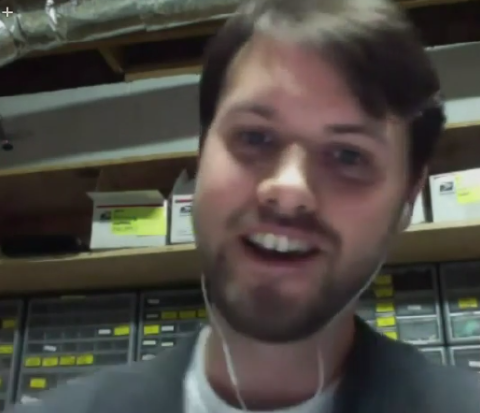
Welcome Scott Driscoll, the man behind the Curious Inventor videos on YouTube!
- Scott's popular soldering videos (which out rank Dave's) took 100s of hours to learn about (Scott was a novice when he started), make and perfect (Scott continues to be a perfectionist). http://www.youtube.com/watch?v=I_NU2ruzyc4
- He often teaches himself electrical concepts and even went to IPC soldering training. He studied as a mechanical engineer and now works on software.
- The Curious Inventor site also has a wonderful KiCad tutorial (written) that helped Chris back when he was learning.
- Scott used KiCad to design the Vmeter, a capacitive touch device that acts as a MIDI controller.
- The device went through FCC testing, with the help of a friendly FCC engineer. All it took were some strategically placed ferrites.
- This is not uncommon for products to get in trouble; a few years back there was an FCC court case with Behringer, an audio device manufacturer.
- Scott works out of Atlanta and now works full time after deciding not to run the Curious Inventor store/distributorship anymore.
- He now works at Equipcodes, which makes interactive manuals for field training.
- There is an awesome video on the Curious Inventor channel showing an Augmented Reality overlay of a circuit. http://www.youtube.com/watch?v=AfVQ4N-u0sk
- Scott is impressed by 123D Catch and how they can make 3D images from photos.
- Much of the coding they do at work uses a Google apk, which stitches things together using go, python.
- The program used to make the overlay video used the Unity engine which is mostly C# and Javascript
- Back in college as a grad student Scott designed and interacted with a drum robot! Awesome!
- The future of computing will be dependent on MIPS/watt. This could be dependent on battery tech or have alternate on-demand generators.There is a cool triboelectric generator that could do this on your handheld device.
Transcript
Chris Gammell: This is The Amp Hour Podcast, recorded February 3rd, 2014. Episode 183, with guest Scott Driscoll, impeccable, interdisciplinary inventor.
Dave Jones: Welcome to the Amp Hour. I'm Dave Jones from the AEV blog.
Chris Gammell: And I'm Chris Gammell of Contextual Electronics.
Scott Driscoll: And I'm Scott Driscoll from the Curious Inventor YouTube channel.
Dave Jones: Hey, Scott. Woo-hoo! Thanks for joining us. Scott?
Scott Driscoll: Thanks for having me.
Dave Jones: You're that guy who always beat me in the soldering tutorial thing. Search results, yeah. You always got more view in the search results.
Scott Driscoll: It was a sad day when I saw your video starting to come out. Oh, no. Some more competition, and he's serious. And he's actually an electrical engineer.
Dave Jones: But my video is like 45 minutes or something, you know, and the average YouTube attention span is like 5, you know. So I think you've got it covered.
Scott Driscoll: Yeah, I don't know. But, you know, a while ago I was trying to look at my return on investment of time for these videos. Oh, okay. And I wasn't making a lot of good business decisions when I was making these videos. I was just trying to maximize the number of hours I could put into it. Right. And so I'm thinking, looking back, a part-time job at McDonald's probably would have been a better investment. That sounds about right, yeah.
Dave Jones: So you're talking about your channel overall, not just your soldering videos, your Curious Inventor channel.
Scott Driscoll: For some of them, I mean, I put like hundreds of hours into some of these. Really?
Dave Jones: Into a single video?
Scott Driscoll: You've got to count the research. Like a lot of times I wasn't making a video about something I knew anything about.
Dave Jones: Oh, right. Okay.
Scott Driscoll: There's quite a bit of learning. Yeah. Yeah. And then I just, I didn't have the ability to say when. I just kept digging and digging and digging and editing and editing.
Speaker ?: Engineer.
Scott Driscoll: Engineer. Okay. Yeah. Yeah. I mean, the good thing is that people keep, they're like how-to videos, which have a long lifespan on YouTube. So I keep getting views over and over again. So eventually it'll be worth the effort. Internet bucks.
Chris Gammell: They just keep accumulating.
Scott Driscoll: Yeah. I'm just afraid YouTube's going to change their model someday. Like my 10-year plan is going to be trashed.
Dave Jones: You're afraid? It's my full-time job. My wife will be pissed.
Chris Gammell: You guys will be fine.
Dave Jones: I'll have to go back and get a real job. No.
Chris Gammell: Yeah. Find one person who hasn't heard your squeaky voice and watched this hire you for some reason.
Dave Jones: That's it because I'm pretty much unemployable now. Yeah.
Chris Gammell: Yeah. Now, Dave. Now.
Dave Jones: Oh, goodness.
Chris Gammell: Well, Scott, I have to say I love a lot of your videos. I mean, I think your QFN video, I think, because you have a video about showing how to do QFNs with just a hot air gun and stuff. I think that's yours, right? And yeah. That was actually really helpful for me when I was learning how to do that because prior to that, I had had technicians do it or I had a reflow oven. But then one day I was just sitting there and I'm like, oh, crap, I designed this. I have no way to make this now. And looked it up on YouTube and there it was. So thanks, man. Yeah.
Scott Driscoll: I'm trying to remember who told me that you could get away with that because it's one of those things. You look at it and you're like, okay, this is impossible. I'm going to make something else now. Yeah.
Chris Gammell: I'll just go to get a break in a board or something.
Scott Driscoll: Yeah. And the crazy thing about a lot of those surface mount parts, and I'm guessing a little bit here because I don't have almost any experience at all with BAGAs, but with a lot of these no-lead parts and even fine-pitch SMTs, just the surface tension of the solder and because the dimensions are so small and the parts are so light, it's actually fairly easy. You just heat everything up and shake it around. Yeah. It sounds easy, but I mean... It sounds easy. Well, you know...
Scott Driscoll: There's a limit to that.
Chris Gammell: Get it down there. But making sure it's down there, that's the hard part, I think.
Scott Driscoll: I mean, you see these like split vision microscope machines and x-ray things and you're like, gosh, how would I ever line this up because the pads are underneath the chip. How could I possibly line this up? Yeah. It was just magical to me to see that the first time the chip just go... Yeah.
Chris Gammell: Yep. Yeah. Suck in the middle. Yay. I love watching reflow like underneath a microscope or something like that, you know? Even if you're just doing it with the soldering iron, it's like... It's like what... You know like that scene in The Matrix where the... You know, they pull that goop off the mirror. It's like that, you know? It's like watching solder melt is very pleasant. I am the master of melting stuff.
Scott Driscoll: And then it turns black and starts to smoke. Yeah. Well, you know.
Dave Jones: There's a lot of variables involved which people don't realize. You know, pad dimensions, you know, type of flux you're using, the temperature, you know, profile and all sorts of stuff that you're doing. And you can bake your chips if you're not careful. You know, you can actually, you know, do some serious damage and roast them. But generally, chips are more tolerant than, you know, what the spec sheets would lead you to believe. But hey, one day, it's not going to work. And oh.
Scott Driscoll: Yeah. Yeah. I guess that that was one of the problems or something I was trying to deal with with my videos. I was definitely not targeting like professional engineers that want to make something that lasts 10 years in a missile. Right. Yeah. 150 degrees.
Dave Jones: It's not exactly military quality, is it? You know. Nor is it high volume.
Chris Gammell: You wouldn't do this more than 10 times in a row before you tear your hair out. Right. I mean. But.
Dave Jones: And you get a proper reflow oven with a thermal profile. You know. Like, yeah.
Chris Gammell: Yeah. But when in a pinch, I think a lot of engineers are in that group of like. Yeah. They just need to make a prototype. Yeah. Yeah.
Dave Jones: I've got one chip here and I don't want to put the whole thing in a, I don't have a thermal oven. What the hell do I do? Yeah. You know.
Scott Driscoll: And a lot of these spec sheets have all these profiles in them that like, I'm a big proponent of getting just a $20 toaster oven and throwing your board in there and just watching it until it smokes, counting the 10 and opening the door. There's all these people selling these reflow controllers. And if you actually plot out the temperature, half the time the ovens can't cool, heat up or cool down fast enough to even meet the rates that are in the spec sheets. So the only thing the controller can do is.
Speaker ?: Cool down mostly.
Dave Jones: Yeah.
Scott Driscoll: I mean, when I open the door completely, the cool down rate is slower than the fastest rate they specify or whatever that threshold is. So it's like the controller, the only thing it's going to do is keep you farther away from the curve if you have a cheap oven and if you aren't doing production stuff and don't really care.
Dave Jones: Well, it stops you getting distracted and going over temperature. I mean, I've got one of those. I've reviewed one of those kits and actually measured, verified its performance. And you're right. Yeah. Like the temperature ramp down is awful. Like, you know, you've got to open the door to, you know, to make it cool down fast enough to sort of even attempt to meet the profile spec. But the good thing, good thing about it is it won't allow you to go over temperature regardless of, you know, how distracted you can get. Oh, shit, I got an email. And you go over and check. Wouldn't an egg timer work? Well, an egg timer, yeah, it would. But, you know, it's, I think it's still important to vary. If you don't have one of those controls, I think it's important to at least stick a temperature probe in there and measure the profile and, you know, to see that it doesn't actually go over. Yeah.
Scott Driscoll: I mean, depending on your board, there's just massive differences in temperature.
Dave Jones: Oh, yeah, yeah.
Scott Driscoll: Thermal mass. Yeah. I have gotten in trouble when I've been doing small batches and I try and fill up the whole toaster oven with boards. And I'm trying to batch them. The capacity, yeah. The one in the back is just black. Right. It's not like grilling where you just eat it anyway. Right. It's like, yeah, you just put extra cream cheese over your bagel, right? You're like, oh, whatever, no big deal. Extra cream cheese. All those carcinogens. Oh, man, when you're doing this in an apartment, the smell just is.
Dave Jones: Yeah, it's pretty bad.
Chris Gammell: That's not healthy. Just tell the neighbors you're no good at cooking and you should be good to go. Yeah. I moved out of that apartment, so whatever.
SPEAKER_01: Oh, goodness.
Chris Gammell: So, you were not, you trained as a mechanical engineer originally, though, as well, right? I mean, so all these videos that you made are all electronics and music and all this other stuff, but you started out as a mechanical engineer?
Scott Driscoll: Yeah. I got to say, I was pretty nervous getting on this podcast. I mean, I was listening to some of the other episodes and you've got these famous electrical engineers talking about matching impedance and RF. Oh, we had no idea what they were talking about. Don't worry about that. But I was always interested in robotics, which kind of covers a mix of fields, you know, mechanical, electrical, and software. And I've actually spent most of my time out of school doing electrical stuff and software. But I was kind of, robotics is what got me into it because I was making my own boards back in, I don't know, the 2000s. And then I kind of had this epiphany, which is going to sound really silly because I'm, you have to put yourself in the minds. It's like, wouldn't it be great if we had cars one day? Like, this is going to sound really obvious when I say it now.
Chris Gammell: What if we had books and we like shared them with each other and we like stored them in a local, like the central location? Like that? Is that true?
Scott Driscoll: Because I've done that once before. Yeah. So, I had this epiphany, which was basically to make SparkFun. Oh, okay. Back in like 2006, I was like, man, you know, I spent all this time making this. I was working on a robot at the time at school. And I was like, I spent all this time figuring out this stuff, but not a single bit of it had anything to do with math or calculus or signals. It was just like, you just have to learn how you get this programmer attached to this chip and make sure you pull up this pin because it doesn't work. You know, it's just so much work just to get the stupid thing to blink an LED. And I was like, oh, okay, I'm going to make a company where I'm going to help people just with these like simple building blocks to get them going. Because once you get up to that level, then it's easy. I mean, what I'm basically describing right now is I wanted to make Arduino or something like that. You know, just something to get people from ground zero to a blinky LED without a month of work and frustration. And then, and also like, I mean, we talked about these spec sheets that have these thermal profiles. I mean, one thing I was going to say about that is that those thermal profiles, I mean, a lot of questions I got were like, well, my soldering iron is 800 degrees. Sorry, I'm in Fahrenheit here. But the profile says don't only go to 450. No, we're two on one. Don't worry about that. Okay. So that's probably like three or four centigrade. I have no idea. It's about 350. Yeah. So people are like, well, the solder melts at this low temperature. Why are we using this 800 degrees or 750 degrees soldering iron? And it's like everything, all those spec sheets are designed for masking. They have nothing to do with the tools you have on your, on your workshop bench, which have to compensate for all the heat running away from the part. So anyway, there's a lot of stuff out there of like, and then DigiKey, there's like 8,000 different pliers to buy. I was like, man, the hobbyist or the engineering student just needs to know something that works that's cheap and they don't want to spend a thousand years.
Chris Gammell: Yeah.
Scott Driscoll: So all that kind of stuff was just like, there was a lot of room to help people get started and get up and going.
Chris Gammell: And there still is. And there's lots of people that do it, right?
Scott Driscoll: I mean, like it's a big field now. Yeah. I mean, yeah, your classes. Yeah. There's demand. So that's great. And something you guys have talked about before is like, oh, now there's, everyone's just putting together these black boxes and there's not a lot of true people that don't know engineering. But I mean, it's great. You have all these people that are software guys that can make hardware stuff. Yeah. Yeah.
Dave Jones: And they might eventually get into, you know, the finer details of the field. So that's the whole idea. We're not really fussy how people get into it as long as they get into it.
Scott Driscoll: Yeah. So as a way to promote the business, I decided to make some, just answer some basic questions like, well, what kind of solder should I use? What kind of soldering iron? How do I do this stuff? Uh, and I, I went way, way overboard and I flew out to take one of these IPC soldering specialist classes. Nice. Right. Excellent. Cause I didn't know anything about it. You know, I was just, there weren't a lot of videos out there. Um, so I spent a week getting that thing, which was like, I mean, maybe one out of the five days was worthwhile. Cause I'm putting the filter of what would a hobbyist need to know? Not what is a military designer that's going to thermal cycle this thing. So, but that, that's where I got a lot of my knowledge. And then I, I don't know, I probably spent a month reading like every article I could find from NASA and every video that was already out there on how to solder. And there, there were a lot of videos that were put out by that IPC organization also that I had access to cause I took that class.
Chris Gammell: So. So did you like memorize a standard as well? Do you like, could you, could you cite us IPC standards and specs? Um, uh, well, this is what, uh, pushing seven years ago. I'm just saying. I probably forgot that the week after the class. We could fill up the rest of the show. It's such an exciting and awesome, uh, reading, right?
Scott Driscoll: I mean, the, the one thing that I remember that out of that class, it was interesting was just how sloppy some things can be and still be robust. Like you can have a resistor, like, I don't know, a third of the way off the pads and it's not going to come off ever. Yeah. Uh, so that was, that was kind of. Yeah. There's. Well, it might.
Dave Jones: I get a ton of complaints like that. Oh, you are. This is the worst soldering tutorial I've ever seen. You didn't do blah, blah, blah, you know? And no matter how good your tutorial is, there will be always somebody who said you don't do it right because, well, you know, if you want to do proper soldering, you have to clean each. Lead before you do it thoroughly, you know? And, well, you know, yeah. If you're sending a satellite to, you know, bloody Jupiter, yeah. Okay. You know, there's standards for those sort of things. But, hey, you know, if you're just a hobbyist putting together a kit. Well, the standard is, does it work? Right. Exactly. It turns on. I need this to work for one day. Yeah. So that's how mine was targeted around, like, you know, like using just everyday tools and just not going overboard on, you know, yeah, you need this specific type of flux that costs, you know, 50 bucks a tube, you know? Like, no, that's just, you know.
Scott Driscoll: Well, one interesting thing I did learn from one of the experts at that class was that if you go back to retouch a joint because it looks ugly or something, they said the majority of the time, you're going to end up degrading. You're going to end up degrading the long-term reliability of that joint.
Dave Jones: Yes, you can.
Scott Driscoll: Just by mucking with it again because, you know, after the flux is gone and you're in there heating it up again, it's more likely to be kind of a dry joint, I guess.
Dave Jones: Yeah, it's all part of the crystalline structure and the metallurgy of the whole thing, you know? But in the real world, right, that works, you know? I mean, so, well.
Chris Gammell: It might be cosmetic too, right? It's like, okay, well.
SPEAKER_01: Oh, goodness.
Scott Driscoll: Yeah, a lot of that stuff was fascinating, but I was like, yeah, hobbyist. They're never going to care about this, but I still went down that path of like, what are all these different kinds of solder? And, I mean, there's just, there's like hundreds of different kinds of flux and I still have no idea what the difference between all these things is. I have like some idea.
Dave Jones: No, and it's almost impossible to convey it to people in any usable form, I think, you know, because it's, you know, it's horses for courses.
Chris Gammell: The silver kind, the kind that like looks silver.
Dave Jones: Yeah, there's always. Yeah, the field of soldering is almost infinite in its scope, really. And for such a basic thing.
Scott Driscoll: Yeah. Yeah. But, I mean, I guess making a million of something that it pays to have somebody go out and do chemistry research on the long-term reliability of it for a year or something. You know, when I was researching this stuff, there were all these audiophile guys that were talking about silver solder, conducting better. Uh-oh. Yeah. Uh-oh. Oh, man. Yeah. And it's just like, you know, from A to B, the solder is like 0.1% of your whole connection. Like, I don't know. Yeah.
Chris Gammell: I think they're just looking for stuff to be wackos on, I think.
Scott Driscoll: To have a wank over, yeah. It's important to spend the most money on your thing, I guess. Yeah. I don't know.
Dave Jones: It becomes, it's one of those diminishing returns things in the end. Yeah. There's a point where you get to where, you know, if you just spend extra money and effort, you're not going to get a proportional increase in quality of your solder joint. You know, it's...
Scott Driscoll: Yeah. Yeah.
Dave Jones: Eh.
Scott Driscoll: So... So what I'm trying to say is don't watch my videos if you're actually a military engineer.
Chris Gammell: Or on the airspace. Yeah. I probably don't watch YouTube in general. Yeah. Solid gold.
Scott Driscoll: That's the only thing I started with. Yeah.
Dave Jones: But then you'll get the crowd who go, no, soldering is the most unreliable method to, you know, you'll get all of these guys who do all the, you know, wiring for the telephone systems, right? They'll tell you that soldering is the worst possible thing you could ever do, right? You should know. They're right. Everything should be crimped or wire wrapped. They're right, aren't they? They're technically right.
Scott Driscoll: The curiosity was full of all this wire wrapping.
Dave Jones: Yep. Oh, yeah. They're technically right. That blew my mind. Really? That's why in your house with all your wiring, you're not allowed to solder anything. You know, it's all part of the wiring standards. You know? Huh. Soldering is totally forbidden, you know, because it isn't reliable enough. You've got to screw, clamp, you know, wires together. It's, yeah.
Chris Gammell: I didn't know that about the curiosity. That's interesting.
Scott Driscoll: Yeah, you can find some pictures of that thing. It's like all hand, like they use twine to tie the bundles together because just the hand touch is like the only thing that is reliable enough for that kind of like high vibration. Like this has to, has to, has to work situation. Hopefully they didn't watch any of my videos also. Do you have any wire wrap videos?
Chris Gammell: No. One other thing that you have a bunch of that I came across your site again, of course, is KiCad. And a bunch of your stuff was how I think back in the day I got started with KiCad reading some of your stuff on KiCad as well. So, thanks. Oh, that's cool. Thanks for that too, man.
Scott Driscoll: Yeah, I think, yeah, I was really excited about it. I mean, SparkFun and a lot of the other guys were really into Eagle, which isn't open and isn't free and has this, you know, four layer restriction on the cheap stuff. And so, I was on the, I always called it KiCad. Yeah. So, that's good to learn.
Chris Gammell: I still haven't gotten an answer on that. I've just been calling it KiCad, so I don't know if I'm wrong. I'm sure that they said it. Some French guy that I don't, I have no idea. K-I-Cad. How about I'll say it like this? I'm going to keep saying it the way I'm saying it, just like you guys are. Yeah, exactly. Yep.
Scott Driscoll: Yeah, I'm super happy it's still being developed because I did my, I made this music controller, a capacitive sensing touch strip that's a MIDI device and I did that all in KiCad KiCad. It's okay, man.
SPEAKER_01: It's okay. You can just say KiCad. It's all right. I don't know what you're talking about. Yeah. What are you talking about? Yeah.
Dave Jones: And I think that looks really funky, by the way, the V meter it's called, and we'll link it into the show notes. Oh, thanks. And it just looks really funky. Is that like a Perspex front? How is that done? Is it?
Scott Driscoll: So, it's LEDs that are reverse mounted through holes drilled in the PCB. So, they're pointing like, well, they're facing up, but the PCB is facing down. And I've got like a gray acrylic that it looks, yeah, it looks great, I think.
Dave Jones: And there's white sort of things on the top. Is that like silk screened on the top, is it?
Scott Driscoll: Yep. Just silk screen. Yeah. But it's like a thicker kind, so you can kind of feel it.
Chris Gammell: So, is the cap touch, is it directly on the PCB? Is that how it's working?
Scott Driscoll: Yeah, yeah. So, I was really trying to optimize the cost on this guy.
Chris Gammell: Yeah.
Scott Driscoll: So, it's just, it's like an 8-bit ATmega with a USB built in and LEDs. The LEDs are half the cost. Yeah. And passives. That's it. And traces. And they blue.
Dave Jones: Oh, and they blue. Ooh.
Scott Driscoll: Yeah. Oh, those blue ones, they're expensive.
Chris Gammell: Fancy. Yeah, I was going to say, if you ever update that, you need to switch over to TriColor. You can start driving those different colors and stuff, too. Oh, man.
Scott Driscoll: There is not a single millimeter of space left on that PCB. All right. Fine. I would have to get somebody who knows what they're doing or go more than four layers. It's, yeah.
Chris Gammell: What is the relative size of this thing? Because it looks, I mean, it looks decently sized. It's like six inches or something? It's about the length of your hand. Yeah, it's about the length. Yeah. Yeah. Palm. And then like half an inch wide, maybe?
Dave Jones: Yeah. Oh, an inch.
Speaker ?: Yep.
Scott Driscoll: So that thing was a great, like, learning experience for me, just trying to bootstrap, like, a commercial product. It's just, it is so hard to compete with the perception that people have when they buy stuff from Apple that you get the world for so little money. And I'm like, these LEDs are so expensive.
Dave Jones: Well, I wouldn't say for so little money from Apple. I mean, if you buy something on eBay from one hung low, you know. Yeah. Yeah.
Scott Driscoll: But it's like, man, you just have to have such a big bankroll to really drop that price to do a lot of these. Oh, of course. Yeah. A lot of stuff.
Dave Jones: Yeah. Yeah.
Scott Driscoll: Uh, I tried to do it on Kickstarter. Because of it.
Scott Driscoll: Uh...
Scott Driscoll: so I just went it alone. Oh, really? Yeah. You know, I might, maybe it's because it's too commercial of a product, but that, I mean, if you look at other stuff they've had, I don't think there's any rhyme or reason. I think maybe the video didn't have a good enough soundtrack. I don't know. Looking bad, I'm glad, because there were all kinds of bugs that I didn't hash out until I sold 100 of them. So that would have been terrifying. You would have eaten that cost
Chris Gammell: when you sent them all replacements and everything, yeah. Yeah. Yeah, yeah. Or a thousand of them.
Dave Jones: Well, I can imagine you're not making much margin for your $60 retail price there.
Scott Driscoll: Oh, no, yeah. I'm only losing a little money, which I'm happy about.
Speaker ?: Right.
Scott Driscoll: It's a great learning experience, and I took that thing through the FCC process, which was like so eye-opening. Oh, you did, okay.
Dave Jones: And how much did that cost? That didn't cost much at all.
Scott Driscoll: And how much pain was it? Really? So it was like $2,000 or something to do the initial test, and then it's just like you're just crossing your fingers, because if anything goes wrong, it's like, oh, yeah, of course. I'm just going to have to redesign this board and pay that $2,000 again. Spend another $2,000.
Dave Jones: Yeah.
Scott Driscoll: So I was freaking out because it didn't pass the first time at all. And I'm like, oh, am I just going to have to pay $2,000 every three weeks plus the cost of the board and my time until I just shake this black box until it works? Like, you know, there's so many factors. It wouldn't make any sense for anyone to actually analyze. And I don't know what I'm doing, really. So mechanical engineer and all. But, yeah, the guys called me up and they're like, no, no, no. Don't worry at all. I'm just going to have one of our technicians look at it and see if he can fix it for you. And this guy doesn't have it. I might have sent him my schematic or something. And I'm like, this is not going to work. Is he going to bleed me dry at like $200 an hour or whatever they're going to charge me? And he calls me up and he's like, hey, I got it. I put two ferrites on it. I just, he took his like spectrum analyzer or whatever and found some long traces that seemed a little noisy, cut them, threw some ferrites on there and it passed. Now this is even more of a black art. The magic of EMC compliance.
Chris Gammell: Yeah, I was going to say, that is not a common story, folks. Do not try and replicate.
Dave Jones: Well, it's also not uncommon either. I mean, you know, like a fix like that is not uncommon.
Scott Driscoll: But this guy has, this is what he does day in and day out is he looks at circuits and he knows the things that cause problems, like long traces that are right in loops or something like that.
Dave Jones: Yeah, it's all about the loop area. Yep, EMI is all about the loop area.
Scott Driscoll: And he also told me with these USB things that it's oftentimes not like the cable that's the problem. It's just that very end termination. So you might have an expensive cable, but if you're plugging in it into a jack that's bad, that could kill your whole product too. So it was like a lot of like surprising learnings. Like the problems weren't where I thought they would be.
Dave Jones: Right.
Chris Gammell: What was your motivation to go through testing in the first place? I mean, just for commercial sale?
Scott Driscoll: Oh, yeah, yeah. I mean, I think you can sell a couple hundred or something, but they'll eventually come for you. That's true. You're selling an antenna, I think.
Dave Jones: Well, only if, see, the thing is people think, oh, no, they're, you know, the FCC's going around, you know, checking everyone's product. No, they basically will not do it unless somebody complains that this product is, you know, unless they get a formal complaint that this product has interfered with their space shuttle or something. No, it's, you know, that's how most people get away with it. Like most, you know, all these hobbyist kits out there and everything else, all their things, everything Arduino and Spark, Artifruit and Sparkfun, selling everything and everything you buy on eBay, you know, it would never pass compliance, you know, or doesn't even have compliance.
Scott Driscoll: They're selling that as like a, like it's your responsibility to use it kind of kit because you're putting a sticker on it or, I don't know.
Chris Gammell: Yeah, I think development kits have their own classification and stuff.
Dave Jones: Well, in certain countries they do or used to and their laws are changing now to eliminate that as well. But anyway, it's, yeah, it doesn't stop people from selling products that aren't FCC compliant.
Scott Driscoll: I ran across a FCC court case for a product. I think it was made by Behringer, you know, not a small dude in his basement making something. And they had been selling something for a year or two and FCC went after them for like a million bucks or something. Right. Only a million bucks? I mean, I would be like, come take whatever you want. Yeah, right. But it was just like, oh, this is the same product that I have. Okay, maybe I'll do this.
Dave Jones: Right.
Chris Gammell: Yeah, no, it's not a bad idea. It's just that that can be a significant expense. So it's, I'm glad it worked out. That's good. Yeah, but now I'm like, I'm never changing the design ever. Oh, of course, yeah. Right. You've done a lot of audio stuff in the past as well. So like, I mean, like do you have any big musicians using this kind of thing? I saw a lot of your test videos and stuff, but I don't know if they, I was wondering about these kind of products if they make it in the hands of like pro musician kind of things.
Scott Driscoll: I don't think I have any, I don't have anyone like too famous using it. I've got a fair amount of composers that I think are using it in their studios that, you know, you would never see them out live.
Chris Gammell: Yeah.
Scott Driscoll: I'm trying to get this into DJ's hands because I think they would really appreciate some blinky blue lights. Yeah, definitely. On the stage. Yeah. So yeah, we'll see. It, it, it's, it's kind of a nightmare to support because every single music application has its own little quirks. So when, when somebody buys it, they, I immediately get an email like, Hey, it's not doing this exact thing or wouldn't it be great if I could split it into three segments and it plays an F sharp when I hit here. And I mean, you really, you guys had Ryan O'Hara on your show a while ago and he just came out with this engineering notebook thing.
SPEAKER_01: Mm-hmm.
Scott Driscoll: I think he's selling an amp hour one. Yes, version of it. Yep. Well, he hasn't,
Dave Jones: it hasn't gotten off his backside yet. It's not for sale yet. Okay.
Scott Driscoll: But he and I were talking that like, yeah, you know, you need a product that just, like nothing can go wrong. Like you write in it, the rock.
Dave Jones: Yeah, it's a rock. Yeah, it's a pit rock.
Scott Driscoll: I mean, I've known guys that even,
Dave Jones: but even then it's the wrong color and the wrong texture. Oh yeah. Someone's going to complain. Right. I dropped it on my toe.
SPEAKER_01: Yeah. Yeah. I cut my eye with this. And I had a friend that was selling t-shirts
Scott Driscoll: and even for him, it was like the amount of support and wrong size and all that kind of stuff. Oh yeah.
Dave Jones: Yeah.
Chris Gammell: Yeah. The problem with customers is that they're people.
Dave Jones: Yeah. We want to sell to robots. Yeah.
Chris Gammell: That's the best and the worst part of it. Yeah.
Scott Driscoll: My bosses always say, if it wasn't for these damn customers. Yeah. Of course.
Dave Jones: Now you got, well, maybe you didn't get fed up, but you decided to make the choice to go back to having a real job. Yeah. You actually have a real job.
Scott Driscoll: Yeah.
Dave Jones: What was the story there? Did you, were you working on this full time, this sort of stuff?
Scott Driscoll: I was. I got out of grad school and I was doing it full time for a while. And I picked up consulting like, you know, 20 hours a week or something to actually pay for food.
Dave Jones: To actually, yeah, real money. Yeah.
Scott Driscoll: Yeah. And I had a couple people working for me so that like, it wasn't making money, but it was paying enough so that people could help me do the shipping, which was glorious, glorious thing. Oh yeah. It's fun, isn't it? Yeah. Nope. But I don't know. It wasn't really skyrocketing. I think I, I put an insane amount of time into these videos rather than actually making, uh, which is, there, there was a lot of horrible business decisions, um, going on. I, the, one of the business models I had was I'm going to partner with people that have a cool idea and I'm going to take care of all the grunt work, like all the shipping, all the manufacturing, inventory. Dude,
Dave Jones: that's a wrong end of the stick. You want to be holding.
Scott Driscoll: And then I'm going to split the profits 50, 50. It's just, uh, if anyone with any business sense would have just shaken me, you're doing 99.9% of the work.
SPEAKER_01: Thank you for your idea. Here's the money. Yeah.
Scott Driscoll: So, uh, an opportunity came up to do some kind of cool projects with another company and I started working part-time with them and then I, then I switched the full time and, and it was just like after doing my own thing for a while and just, um, it was, it was really great to, to switch to working with a team of other engineers. Um, I mean, when I was just working home alone, I, oh, like, good luck to you. I guess, Dave, you got your, your family, but I, I was like, I was single at the moment and just out of school and, uh, oh man, I would go to Costco and just like talk to the sales people there selling cell phones. Like, hey.
Dave Jones: Get some human interaction.
Chris Gammell: Oh man, I was just dying. I talked to a co-worker about that. He said, he said, he, he said his wife would come to at the end of the day and he said, and she would say, you know, you were on the phone like all day today and he's like, oh crap. Cause he would just, you know, he'd be the same thing, you know, that craving human interaction. At least in some way, you know? Yeah. Yeah.
Scott Driscoll: So,
Chris Gammell: yeah.
SPEAKER_01: We should laugh. It's not, I mean, it's, it's funny though too. I just, the sight of Scott, you know, sitting at Costco, that's, that is funny.
Scott Driscoll: It was, it was some sad times. Yeah. People at coffee shops just don't care about soldering as much as you think.
Chris Gammell: So now, like, what about like, like hackerspace or anything like that? I mean, Atlanta, you're in Atlanta. Do we say that already? I mean, there are hackerspaces there or no? Yes.
Scott Driscoll: Yeah. We have a place called Freeside, which has a huge space. But this is like, I'm back in 2009. So that, that, yeah, before maker movement had only had a few maker fairs at that time. There, there were some growing groups, but it wasn't like that big at all.
Chris Gammell: Yeah.
Scott Driscoll: So,
Chris Gammell: so the hackerspace thing wasn't really a thing then. No, I mean,
Scott Driscoll: yeah, I don't think it existed. So,
Chris Gammell: yeah, that is tough. I mean, that is, that is a tough side of self-employment for sure. So, so what, what happened to the site then? I mean, did you just kind of close shop? I mean, I, obviously your site's still there, which is great, but, and you're still selling these V meters, but you kind of stepped down everything else.
Scott Driscoll: Yeah, I still have, you know, a pile of flush cutters. I'm slowly getting rid of the last of the inventory over years and years. And, you know, like 10,000 through hole resistors.
Dave Jones: And does it get to the point where it's kind of like annoying now? Like, yeah, oh, somebody ordered one thing and now I've got to go, you know, it's more annoying than anything and you think, oh, no, I've got to pack, ship and take that to the post office. How annoying. One order.
Scott Driscoll: I mean, yeah, there's no difference between shipping one thing and 10 things. Yeah. Yeah. So, but, yeah, I mean, I'm pretty automated, so it's not too bad, but yeah, it's still, you're, you're in this like, it's really bad to be in that middle zone where you're shipping not quite enough to have everything automated, but not so little that you just give up on it.
Chris Gammell: So, I, so you also did kind of like distribution type stuff, right? I mean, obviously with these flush cutters, you didn't manufacture those. So, yeah,
Scott Driscoll: I was trying to find like, whatever, the ideal pair of pliers for hobbyists and basically what SparkFun and Adaphrue have now, just the, you know, a selection of useful parts and tools.
Chris Gammell: Yeah. Well, I'm always interested by, when I, you know, I see sometimes, I see lists of like people who are distributors and stuff like that and, and I'm always amazed at that kind of thing because it does seem like it's mostly done just the logistics, like you mentioned. Oh,
Dave Jones: it's 100% logistics.
Chris Gammell: Yeah.
Dave Jones: That, that seems, 99%, yeah. That seems terrible. I mean,
Scott Driscoll: I was trying to like, have a full catalog of stuff, so I was willing to undergo a certain amount of pain just to have, like, it looked like there was a full store there, but really, you do not want to be in the distribution game unless you have, you're the biggest buyer in the room, I guess. Oh, yeah, right. Yeah, because I'm not.
Dave Jones: And it's just a monotonous business. Like, for me, I, you know, people always say, oh, why don't I, you know, set up a shop and sell all sorts of stuff and I'm going, well, you know, there's already a million places out there where you can buy these things from. What value am I adding? Yeah. What, what meaningful significance am I adding to my life by setting up a bloody shop, especially based out of Australia, you know, where most, 95% of your orders are going to be international, you know, and it's just, you just can't compete. It's just,
Scott Driscoll: I don't know.
Speaker ?: I mean,
Scott Driscoll: yeah, SparkFun and Adafruit are fantastic.
Dave Jones: And margins are small.
Scott Driscoll: Yeah, yeah.
Dave Jones: Yeah. Margins are tiny. I mean, you know, you're selling a pair of flush cutters there for four bucks, I see, $3.99 on your website. I mean, jeez, like, I won't even blink an eyelid for $3.99.
Chris Gammell: Yeah, yeah. Dave, you are spectacularly lazy though. I mean, let's, let's, I agree with your statement here, but like, come on, let's put that in context. Yeah, I know.
Scott Driscoll: Well, I'm trying to learn that attitude. Look at there. It's, it's, it's a, it's a learned skill.
Dave Jones: Well, just for me, it's not a meaningful, it's not a business that I would get satisfaction out of, you know, running a distribution business. For me, that's not satisfying. For other people, it may certainly well be, you know, they might, might enjoy that and all power to them. Yeah. It's, it's just not me. So. Well, like back in 2007,
Scott Driscoll: I mean, it was kind of more of a, there was more value there. I mean, I was, I was looking for the little diamonds in the rough. I was distilling the giant DigiKey catalog and useful things, but now there's, yeah, there's a thousand stores doing that. So.
Dave Jones: Yep. No, yeah. Wouldn't even try and compete. Really?
Chris Gammell: Yeah. Yeah. Yeah. Good time to jump out, I suppose. So let's talk about what you did jump to because this is, so when we, when you posted this video, which we'll talk about in a little bit here, I was fricking blown away and I, I can't wait for this to be a wider technology, but I want to hear about the other stuff that's there as well.
Scott Driscoll: Okay. So the company also has kind of a convoluted past. They started off with a patented sensor that they put in these really high vibration pumps to, to control them. They were controlling these pneumatic pumps. So air powered pump, it kind of works like a jackhammer. Okay. And these things are just horribly efficient. I mean, from electricity to work done on the fluid, you're getting like 1% out after you go through the compressor and through these pumps. So by, by putting a little bit of controls on these things, they were able to cut the energy cost in half sometimes. Wow. Basically just.
Chris Gammell: Sure. Like vibration feedback and all that kind of thing to try and have a control system.
Scott Driscoll: Not, not anything that complicated. Just like, basically, you turn it off. Yeah. Yeah. No, I mean, in a sense you turn, you fill up this air chamber to move something and then you exhaust the air. And a lot of times you're exhausting super high pressure air.
Chris Gammell: Yeah.
Scott Driscoll: So, um, all the, what they did was just limit the air to just supply what was needed.
Chris Gammell: Oh,
Scott Driscoll: all right. So, yeah, it was like a simple idea. And in that industry, uh, it's, I mean, it's, it's like 10 or 20 years behind. I mean, they're just now starting to put electronics in a lot of these pumps because, Hey, it worked. Why change it?
Chris Gammell: Right. Exactly. Yeah.
Scott Driscoll: And now that people are caring a little bit more about efficiency, it's, it's, it's, you know, it's starting to rise up on people's radar screens. So, um, and so that, the, the, the manufacturer we were working for started asking, say, Hey, we want some more fancy stuff. And we're like, Hey, well we could make some, um, you know, control your pump from your phone, put some Bluetooth on there and put a word on it. Make some lights play. Make it pump with the music. Um, so we ended up getting into mobile app development and then, uh, from there, uh, going into some cloud-based stuff actually. Uh, so that, uh, yeah, it's, it's kind of all over the place, but we, we gave them a solution that you can walk up with your phone and scan the, the barcode on it. And, oh, this is the exact part I need rather than, I mean, a lot of these companies are still like, you have to call them up and well, it's about three feet tall and it looks blue. Yep. Uh, and the model numbers half scraped off. So anyway, that, that's how we kind of got into, um, mobile app development. Um, and then augmented reality was another cool thing we, we thought we could do for them. Um, there's a lot of, I mean, we're not doing the, the low level stuff here. We're, we're kind of putting the pieces together. Um, but it's pretty amazing what your phones can do now with the camera, um, with just like a small, say like two inch by two inch picture. It's able to, based on like angle that the camera sees it and how big it is, you can figure out pretty precisely where the camera focal point is. And once you know that you can start overlaying things on the equipment, um, so that, you know, as you move around it, you're showing like, you could have an x-ray view of it. Like, um, the simple example would be like, if you're at your house and wanted to see where the electrical wires were in your wall, um, hold up your phone. And if there's a marker there, as long as the camera knows what it's looking at, it can overlay where those, those wires are.
SPEAKER_01: Yeah.
Scott Driscoll: So,
SPEAKER_01: um,
Scott Driscoll: that, that's kind of the promise. It's, I think it's still a year or two out before that becomes a commonplace thing in your, in your phone. But, um, yeah, that was the, that was, so I, I was thinking, oh, this might be a, I ran into a guy who said that, oh, this might be cool for a breadboard to show you where to put the wires. And so that, that's what that video is, is I, we have a small tracker sticker on the breadboard and you hold your phone up to it and it basically overlays it two to be graphic showing you where the, the lines are.
Chris Gammell: Yeah. Which is awesome. And so, so it's very cool. So you do, I didn't realize it was based on the depth. You said depth of field, right? That's what it calculates and then aligns with.
Scott Driscoll: It's figuring out, um, where the camera is in space and what, what angle it's at.
Chris Gammell: So just from image recognition then in that case, like based on,
Scott Driscoll: it's, it's surprisingly effective. Like from several feet away, a small little picture can, can be enough to tell you pretty precisely where that, where that camera is. Yeah.
Dave Jones: And you've got to have that marker, that marker template on there.
Scott Driscoll: For now, um, yeah, the, the software development kits we're using, um, still require that, but, um, people in the research labs have gone past that already, um, doing sort of real time analysis of the, the, the scene to figure out what, to try and construct a 3d model based on what it's seen in real time.
Dave Jones: So it,
Scott Driscoll: it's not going to be more than a year, I think before you, you don't need that, that marker anymore.
Chris Gammell: Huh. So, you know, so we talked to Jerry about this when she was on talking about the cast AR. Oh yeah. Yeah. Yeah. Cause, cause that's like a similar, I mean, so they use these modulated LEDs, but they lock onto it then. And then they figure out where they are in space, the same kind of idea, I think with multiple LEDs versus an image. And so I think it is the same kind of idea there. Um, but I'm, I'm really curious about this one where you don't need a reference point anymore because do you know what kind of technologies it's using? Is it using like LIDAR or something like that? I mean, what's actually, how it is actually creating these? Just, just with the camera. Really?
Scott Driscoll: Wow. Yeah. It's, um, have you heard of slam simultaneous location and mapping? No, it's kind of a robotics thing, uh, where you're looking around the scene and you're, it's what your, your brain does. When you walk around a room, you, you look at stuff and as you move around, you're like, Oh, okay, this is probably a cylinder. And you confirm that hypothesis as you get more and more angles. Um, so that, that's what it's doing. It's making a 3d map and in real time of what it's seen based on these 2d things, which I don't, I'll, I have no way claiming to fully understand how that works, but that, that's the idea. Give them a hundred hours and a video and,
Chris Gammell: uh, we'll all understand it too. I'd love to be paid to figure that out.
Dave Jones: But it does actually require a moving image. Like you can't just give it one still image and it can't, yeah, there's a really,
Scott Driscoll: um, Autodesk has a really cool app called something like one, two, three D. Yeah.
Chris Gammell: Catch one,
Chris Gammell: three D catch. Yeah.
Scott Driscoll: You can put an object and just take a bunch of pictures around the circumference of it and it constructs a 3d model complete with like the color mapping and everything.
Dave Jones: Yeah. Very cool.
Scott Driscoll: It's really, I mean, it's, it's still a crappy, but it's, it's not more than like, it's like a chunky thing. It's not a very precise model,
Dave Jones: but it works.
Scott Driscoll: It's like two years away from being able to just kind of like wave your phone around something and push print on a 3d printer. I mean, it's, it's pretty cool. It's coming.
Chris Gammell: I wonder about that, that same one too, because I always, I always wondered if that was based on like GPS data or how you actually get the, like how you stitch images together then is another interesting thing because you need something to key off of, but then as you, at least in the case of one, two, three D catch, you need to be able to take the edge of your first image and then, you know, push the edge of your next image into it. So you can actually can create these things and pull it out of the, um, out of the environment as well.
Scott Driscoll: I suspect they're doing some sort of image stitching on the processing side, but when they're just collecting data and telling you where to stand, I think they're just using the compass.
Chris Gammell: Oh, okay. Yep. That's interesting. So you're, I saw this video and I started freaking out a little bit because I was thinking about it. So this is interesting because you did it as a breadboard and showing it for like tutorial type things. That actually wasn't the interesting thing for me. I was thinking you put a silk screen on your PCB and then you could have real time, uh, population options showing, you know, as you're assembling, I mean, like in terms, in terms of just troubleshooting, like it's, it would be like, like, uh, uh, not an OCR, what would it be like vision inspection system almost? But you, you as, as the human would be the system, it would just be showing you the reference points.
Scott Driscoll: Like showing you when you made a mistake or something.
Chris Gammell: Yeah. Like when a resistor is out of place or, you know, like, like you should have a capacitor somewhere and you don't just by doing an overlay or, you know, like that kind of thing.
Dave Jones: Well, they already have those on the SMT, uh, lines. They already have a vision inspection system. They, you can know if that, if your chips in back to front, you can know if you're, uh, if there's a resistor missing or it's the wrong one or, you know, you can actually read the part values and the color and the shape and the size and all that sort of jazz.
Chris Gammell: But I'm not holding it in my hand with a tablet. That's the difference. No. Accessibility is the difference, which is what's really interesting about this. I think.
Dave Jones: Yeah. But you've got to program it with all the info. I mean, it's not like, you know, just magically pointed at any board and it does, you know,
Scott Driscoll: yeah,
Dave Jones: some black magic, you know, I mean, there's a lot of work which goes into putting that, that program, the data into the system to ensure to give you a usable result.
Scott Driscoll: In that first demo, there was a ton of work making it look as pretty as it was, but, but the work had to do with, um, not like the, not like the schematic overlay or the, the net list overlay. But, um, when you put a lead into that, into a breadboard hole, I was modeling a little cylinder in the board to hide it, put it in. Right. It makes sure it looks like it's going where it is actually, but I think what we're trying to develop at the, at the day job is a new system where, um, it's just going to support 2d graphics. So you just like take your Gerbers, run them out to a PNG and upload it. And then you align that with the tracker just manually. And I think that'll be good enough. I think that'll get 90% of the value. It should. Yeah. So that, and then that takes a lot of the effort out. Like anyone, I'm, I'm hoping anyone can just throw a, PNG at it or whatever card system you're using, just whatever you want to see, you just make a picture. And, but,
Dave Jones: because as, as cool as this, uh, awesomely cool as this video was with the 3d augmented reality breadboard. I mean, I, I saw nothing achieved in there that couldn't be achieved with a printout of the schematic and the overlay. Oh, you know, you're so boring. I know I'm so boring, but I'm practical from that point of view. Like a, yeah, I'll go, yeah, that is brilliant. That is awesome technology. But at the end of the day, it, you know, it, you could just simpler to print out a schematic and an overlay. You know, you could,
Scott Driscoll: you could print out a sticker. I mean, a lot of people make stickers that have the pinouts and the names on top of the chip. Yeah. And that's a great idea. Um, I think the main thing here is that it's, it's, but if it all gets automated, uh, it's potentially just a little bit easier. Just like, Oh, Oh, that's what that pin is. Nope. You know, no printing,
Dave Jones: but it's only a little bit easier, you see, and you've got to weigh up, well, how much effort is this tech? Is it taking me to drive all this technology? I don't know, Dan,
Scott Driscoll: my printer is never working for me,
Chris Gammell: but maybe the real problem here is you don't have the right tools, Dave. Maybe you need to get some Google glass and then do, some overlay in that. Oh man.
Dave Jones: Dude, even you admitted Google glass, you don't use it anymore.
Chris Gammell: Can I rant about Google glass a little? You're allowed to rant as much as you'd like. Yes.
Scott Driscoll: All right. This thing is not meant for augmented reality. It's, that's the idea that everybody thinks they like, that was the first thing you said a lot of, not you, but somebody else on the video was like, Oh man, I can't wait till Google glass comes out or cast AR or, and like those things are not for that for augmented reality. Like, as a,
Dave Jones: but by that you're talking about, you know, information is overlaid. Yeah. In your vision. Right. So you move your head around and, and you can, and you see that restaurant over there and it automatically pops up some reviews of that restaurant.
Scott Driscoll: Maybe that application, but not a direct line of sight. Like there's a app that's in the glass store or whatever it is. Yeah. The lens. Yeah. Word lens.
Chris Gammell: And that thing is so,
Scott Driscoll: it's so stupid. You have to look down to look at the, like, because the display is not in your direct line of sight, it's up into the right. Oh, it's up to look at something. Yeah. You have to look down to look at it. No. And then it takes forever to figure out what it's going to be.
Chris Gammell: So it does, no, it does. It has like a little lineup box and then it zooms in and then it says something in Spanish or whatever you have it set for. And it does an English overlay over the Spanish. What? I don't see the problem there. I mean, it's not perfect, but it's cool.
Scott Driscoll: Yeah. It's a cool concept, but I think the usefulness of it would just be to take a picture of the sign and tell you what the translation is. What I think will be really cool is when the, well,
Dave Jones: you can get phone apps that do that, right? You can get phone apps that take a picture of the words and they'll automatically translate. It does optical character recognition and bang.
Scott Driscoll: Yeah. I'm not saying that's not a cool effect. I just don't think Google glass is the right platform for it. I think some of these other new things coming out, specifically the meta one and maybe Oculus Rift with a pair of cameras slapped on it. That'll be where it's really interesting.
Dave Jones: Everyone's got to wear around a big helmet.
Chris Gammell: Daft Punk is in style right now, I guess. You wear a Pharrell hat too.
Dave Jones: That's the bottom line, right? Everyone's carrying around a phone, right? That is the platform, right? Everyone's happy to carry a phone. Everyone's got one. So that's pretty much the limit of where it stops. When people have to start carrying other tech with them to, you know, it just doesn't happen. People go, Oh no, I don't want to carry my Google glass around. It's too much hassle today. I'm not going to take it with me. And when you don't take it, then you end up like Chris and go, Oh, I don't want to use it anymore because, you know, it's just too much hassle.
Chris Gammell: I'm not a good test case here, Dave. Of course you are. What? You're a nerd. A nerd. Right?
Dave Jones: You're into these gadgets and how they work. And well, why not?
Scott Driscoll: I mean, it's designed.
Dave Jones: Why aren't you a good test case? I think you are a good test case and it failed. Maybe.
Chris Gammell: Is it because of the battery? Battery is one thing, but no, it's mostly situational, right? It's a social, the social side of things. So like wearing it with my coworkers around and like having them be like, what are you doing?
Dave Jones: Are you recording me? Yeah,
Chris Gammell: exactly. Having a conversation in the urinal next to you. Right. It's off. It's off. It's still, it's still, it's still the human characteristics. That's the part that's still, that sucks about it. The rest of the stuff. Yeah. I mean, it's, maybe not optimized for, for AR type applications, but yeah. Well, Scott, you were saying something though. Sorry, I cut you off.
Scott Driscoll: No, I, I actually, I would disagree with, I think the majority of people in saying that I think it looks pretty cool for what it is. I mean, you've got a screen that's mostly see-through and it's about as minimal as you could possibly get the battery and all the electronics. And as soon as that gets on a pair, like if you wear it with the sunglasses they ship with it, it's, yes, from 10 feet away, it's, you wouldn't really notice it. Um, I, I think the design is actually great. Um, Oh yeah, totally. And I'm happy that they're pushing the acceptance of that. I mean, I, if you compare it to just a pair of glasses, like if nobody had glasses on and then all of a sudden somebody showed up with a pair of glasses, like, is it really that fresh? Yeah. I don't know. Like, so I, I think that's one thing they, I mean, I know everyone's saying that that's the social hurdle and that that's the main problem, but I think that's something that they pushed the right direction at least.
Dave Jones: Right. Oh, I, I totally agree. What I'm saying is that for those who don't need glasses, right. Or sunglasses or whatever, then you're, you've already got all that technology in your phone. So why would you want an extra pair, you know, to, you had to put it on your face and you've got another thing to bloody charge and take care of it and, and, and handle and keep safe and not lose and all that sort of jazz. And yeah. Why? I mean, when your phone, you know, when, yeah, if you want to stare at a, you know, a, some text, you know, a sign, you're in another country and you want to translate into English. Well, get your phone out. There it is. Right. There's an app for that.
Scott Driscoll: I like the, I think the killer app, I think that this, that Scoble guy said this, that the killer app is just, is being able to take a picture like right when you need to, without taking your phone out. Like, I don't know. I just got a puppy. Yeah,
Dave Jones: but how often do you do that as opposed to wearing it? Right. It's once again, it's that investment, right? You've got, you've got to have those glasses on all the time. That's true. Everywhere you go to get that convenience. Yeah. So in, in the one, in the one time a week that you might want to randomly do something like that spontaneous. Well, how much different is it from, you know, just whipping your phone out, taking the extra couple of seconds? I don't know.
Chris Gammell: I feel like the guy that takes pictures of his wife at the beach,
Scott Driscoll: right?
Chris Gammell: Yeah,
Dave Jones: well, you know,
Scott Driscoll: I don't know. In Georgia, which is where I live, there's a lot of weird shit that drives by on the highway. That is true, yeah. There's a lot of times I just can't get my phone out fast enough to capture the giant rooster.
Dave Jones: That's why, hey, par for course, right? Hortings for courses, that's why everyone's fitting all these cameras to their phone, right? To their car. Oh, yeah, the dash cams. I've got one sitting actually right on the desk in front of me. Someone sent me one. It's a, you know, one of these little cameras that you mount on your dashboard, and it permanently sits there and just records all the time. So you basically forget about it.
Chris Gammell: Until you need it, right?
Dave Jones: It's one, until something happens, then you go, oh, yeah, I had that recording. It was recording all the time. It didn't require any extra effort.
Scott Driscoll: So if I can take this just a little bit, or maybe a few years in the future, when we've got, this is just something crazy to think about. When we've got drones in the skies going everywhere, I mean, it's not going to be whether you have a Google Glass on. Maybe there's going to be video of everything everywhere, and if you want to look at something, you just somehow search for that time and location and angle. Yeah, I guess. Right. I mean, it's coming. Like, everyone has dash cams and security cams.
Dave Jones: 1984 is here, folks. Yeah. The year is 1984.
Chris Gammell: It only took us 30 years, right? All right. Oh, boy. Yeah, that's big brother stuff. So, so, so you're working on this augmented reality stuff, and this is, this is really cool. I mean, so are you guys doing this as part, is there actually like the circuit application? Is that going to be a part of the, the, the software you guys are working on now? Well,
Scott Driscoll: we're pushing out right, like right now. I'll send you a link to another demo video, a system that'll let people like upload graphics and make instructions.
Chris Gammell: Oh, yeah. Yeah. So like, so like if you were out in the field training, right, you could look at something and know how to open the service door or something like that, right?
Scott Driscoll: Just like more, we're trying to make a system that makes it easier to make instructions, like with wizards and stuff. And, and, and also this augmented reality overlays. So you have to be seen whether this is, we can really make it that easy, but, but that's the idea is that why, why are we using these paper manuals when everyone has a mobile device?
Chris Gammell: Yeah.
Dave Jones: Because it's always there, right? There is a huge advantage to like printing out and pasting a schematic on the inside cover of a bit of a equipment, right? It's always there. That is true. Which is what companies used to do back in the old days, you know?
Scott Driscoll: It, it fades and gets torn off though. Yeah. I, I don't agree with that.
Dave Jones: But it's still there. No, it's not though. It's still there. Because these days, no, they just,
Chris Gammell: no, I mean, I agree that like having a physical copy is, can be helpful because it doesn't need batteries, but, but your argument is invalid because they don't publish schematics at all these days. You know what I mean? Like, Oh,
Dave Jones: come on.
Chris Gammell: You know the point I'm trying to make. Well,
Dave Jones: you know the point. Don't, no, don't get anal on the point. Come on.
Chris Gammell: I think, I mean, I, I think that for training purposes though, it's practical for more in-depth information to have that kind of stuff there. And I, I, so I, I think this is a very useful application. It could be,
Dave Jones: but it's neat. I, I think it's niche. I think it's niche.
Chris Gammell: I mean, this is something that I thought about for, you know, thinking through Google Glass applications for real. I thought about, you know, field technicians, that kind of thing, having some kind of, you know, even if you're not storing it all on the, the flashcard, even though you could, I mean, having that kind of accessible information, you're, if you're out in the field anyways, you're going to be Googling stuff. So why not have something to key off of and, and just look up the permission.
Dave Jones: But once again, it's a niche application. It's a niche requirement.
Chris Gammell: I agree with that. Yeah.
Dave Jones: Yeah. Yeah.
Scott Driscoll: We have no idea. I mean, what markets this will be good or if any, or great for, but it, it seems like it could be really helpful. So.
Dave Jones: Oh, I have no doubt. Training's a big deal. I will make, I will look into the future and make a bold claim that all this, stuff will remain niche.
Chris Gammell: Yes. I, that, I don't, I don't disagree with that, Dave. I just think it's, you know, there's, there's still a lot of money to be made in niche applications. Oh, of course. No,
Dave Jones: yeah, no, don't get me wrong. It's cool technology and we should follow it and it'll, you know, you could make zillions of dollars out of it. Hey, Google will buy you.
Scott Driscoll: Yeah. Yeah. But we're moving on to hardware. We're moving in the software. They only buy hardware now.
SPEAKER_01: Wrong direction. Turn around.
Speaker ?: Quick.
SPEAKER_01: Every week it changes. So how did,
Chris Gammell: I guess we didn't ask that either. So, I mean, you said mechanical guy, you know, you did electric, electrical stuff here as well. Electronics. So what kind of software are you actually doing? I mean, are you doing like, like Python or what, what languages are you coding in?
Scott Driscoll: We do a lot of stuff with Google's cloud app engine, which is the job. Really? Uh, you can do it in Java, some language called go and we do Python. Um, and we do a lot of this augmented reality stuff in, uh, a game development engine called unity, which is awesome. Yeah. And that they have, it's very exposed to developers who want to code. So it's,
Speaker ?: it's,
Scott Driscoll: it's, that's in C sharp or JavaScript. Um, so yeah, a little bit, a little bit here, a little bit there. Um, we're not doing any like super compiler optimization, you know, search, anything, anything crazy, but.
Chris Gammell: No, but it's like high level application code. I mean, that that's a lot of the, you guys are gluing to get all together. Right. I mean, like, and that's what a lot of people don't realize is that you can have, you can have people that dive down into the technology, but at the user level, like this would be right. This is user level making manuals, that kind of thing. It is, it's a lot of stitching things together with, with, you know, higher level code. And that's important too.
Scott Driscoll: Yeah. I mean, there's a part of me that would, would wants to dive down into the research papers on this stuff, but like that's for the, person getting the PhD. And you like making money versus being a grad student.
SPEAKER_01: I did the ramen noodle thing.
Chris Gammell: It was fun. Exactly. Right. Time for a change. Well, speaking of ramen noodles, so you did a lot of music stuff yourself. So what, so you, I've looked at all the rest of your videos on your, on your YouTube channel and you were like a synth guy as well. So like what, what, whatever happened in that stuff?
Scott Driscoll: So that was one of the first products, people I partnered with, this guy that was doing all these like open source synths and sequencers. So that, that was kind of one of our, our first products. So that was, that was kind of a fun excuse to sort of learn how some very, very simple synths work. But I've been involved with music in one way or another for a while. Um, so when I was at school, I was at school for, um, mechanical engineering and I took this class called computer music, just kind of fun on the side. And it was like my last semester and the professor said, Hey, we're starting this new program called music technology. We need somebody to make a robot drummer that can play collaboratively with other humans. And I was like, uh, yes,
Chris Gammell: signed up here in the next three years of my life. Are there videos of this? Cause I didn't, I couldn't find any videos of the robot. Um, I think there was stuff offline. Um, I, yes, there are somewhere. I will find them. Okay.
Dave Jones: Upload it. You're a YouTuber. Yeah. Yeah.
Scott Driscoll: I don't know. Georgia tech might own those videos.
Dave Jones: It doesn't matter. Yeah. It's easier to seek forgiveness than it is to seek permission. Yeah.
Chris Gammell: So, uh, so what we're, so where, where does the, where do you, what do you do with a robot drummer that is just like sitting there in music shows then, or you like tore this thing around like, and it didn't have more drum, more arms than a, than a, the deaf leopard drummer. Uh, it only had two arms.
Scott Driscoll: Okay. Might've been a little faster. I'm not sure. Yeah. Um, but the, the research question wasn't like how fast can we drum, which might've been a cool question to go after. But, uh, it was more like you've got humans that are very creative, um, but maybe not as mathematically fast as a computer. And then on the other hand, you've got this computer, they can run all these algorithms super fast, but it doesn't always make the best aesthetic decisions. So let's try and mix these together so that it wasn't, the goal wasn't to make a robot that could put on a show and play a MIDI file. It was to see what happens when we could put algorithms in the robot and have the human kind of playing back and tossing ideas back and forth.
Speaker ?: Oh,
Chris Gammell: wow.
Scott Driscoll: I mean, that was the high level thing. I'm not saying we came up with anything that was at all listenable, but it wasn't,
Chris Gammell: it wasn't a robot that was going to play drums and then go and kill everyone in the room or anything like that.
Scott Driscoll: It was, it was some, uh, it was like a really, it was, it was some good, uh, engineering, some real engineering, uh, experience. Um, you know, we, we, we, this thing would play the song a thousand times, uh, and work fine. And then we'd cut it off to some conference overseas. And during the show, the wire that was bending back and forth a hundred thousand times decided to break on that one time. Oh yeah. Yep.
Chris Gammell: And the symbols go crashing down. Uh, poetic. Yeah. And we're like, well, that's it.
Scott Driscoll: It just plays, it plays three notes.
SPEAKER_01: Time to go home guys.
Scott Driscoll: Uh, yeah, that was, that was a pretty sweet gig. Uh, they, um, and I mean, it was weird. We had this kind of higher level. I, I mean, I thought it was worth doing because of this higher level research goal, but I think everyone we showed it to, it was just like, Oh, a robot.
Chris Gammell: Where technology runs into humans. It's always that you can, you can amaze them with, you know, blinkies, right? Blinkies are still like, it never ceases to amaze me how much blink like, like, but, but then you could get really intricate systems, right? Like, so the Superbowl just happened and they had those crazy, I don't know if you guys saw the halftime show, but they were, I didn't say it. They synced up the entire stadium, these people's wristbands. And it was awesome. It was like, they, I think they did it with like, blasting the crowd with like IR, with like IR cannons effectively to help sync it. Oh, is that how it was done? I think so.
SPEAKER_01: And it was just so cool to watch. I mean, like, but like, even me, right? I know how it was done and it was still amazing. Like, it's just something about photons hitting your eyes from LEDs. It's fun, you know? Like, so,
Speaker ?: like,
SPEAKER_01: so, yeah,
Chris Gammell: technology hitting humans is always, technology hitting humans is even more fun, but technology mixed with humans.
Scott Driscoll: I think there's a little bit of that with glass too. Like, everyone has this idea in their mind of what it is and what it means. Like, oh, they're, they're looking up there. it's doing real time facial recognition and maybe it'll get there in a year, but it's more like the idea of what it could be than what it actually is, which is kind of a thing with a half an hour battery life that at least it's constantly overheating on, I don't know. Like, you guys have one, you guys have one you're developing on. Yeah. Um, we're trying to do some industrial like assembly applications. So, um, for jobs that might, uh, well, they have a lot of turnover and workers or they're doing a lot of, different jobs to a faster way to learn the, the, the task. And I mean, they have paper instructions that work, but we're, we're kind of seeing what's, what's possible.
SPEAKER_01: And yeah.
Dave Jones: So, so in theory, you could like hire a new employee and on their first hour on the job, you can give them a pair of Google glass and say, walk up and fix that. And that it would guide them. Yeah. I mean, they wouldn't actually have to.
Scott Driscoll: And I think that's a legitimate use of Google glass. It's a hands-free video. And voice activated interface. That's, that's kind of great when you've got your hands dirty. So yeah, definitely.
Chris Gammell: Yeah.
Scott Driscoll: I don't know if the, like the delicate $1,500 glass in its current form will be the end solution. Right.
Chris Gammell: I think the really interesting thing there is like, okay, so you have this, you're obviously optimizing and, and, uh, and for this repetitive task, obviously, because if you have someone who's, you know, high turnover job, they're doing something repetitive. And it's like, it's kind of like using the human as the, as the robot before there's a robot available for it. Right. Because if it's a repetitive task like that, where it's, you can recognize it and do some kind of command to, even this case is just pulling up directions. Eventually you could say, change out that muffler or something. Right. Eventually a robot could do that then. Yeah.
Scott Driscoll: So that's crazy. Yeah. You're like, you're, you're taking, you're basically like hardwiring on a brain to the unskilled human. And it has, it has dexterity that we can't match at least cost effectively with robots currently.
Chris Gammell: Exactly. Yeah. I always think about, I always, that's cool. I always love the term meat controller. So it's actually in the other direction though. So I think of meat controller where like, you know, like turning, I think of control systems turning on hot water. And then, you know, you feel like when you turn the shower on, you feel warm, you get warmer, cooler. And you, you know, to turn a knob. Right. In that case, you are the meat controller, right? You, and you are the PID loop. Yeah, exactly. You are the PID loop. That's how I explain PID loops to people. And, but in this case, it's the other direction. So I don't have a term for it yet, but meat controller also sounds funny, but I mean,
Scott Driscoll: it's an exciting thing because there's always this push that, Oh, we got to educate more people. We got to teach them more. That's the only way to, that we're going to solve the job problem. And it's like, maybe this is a way to go the other way. Like that.
Chris Gammell: Yeah. You strap an expert on their face, right? I mean, that's effectively what you're doing here.
Scott Driscoll: Here, follow these instructions. And suddenly your per hour output is a lot more valuable.
Dave Jones: It is. But then people may not learn the, people may not learn the, uh, the why. Well, that's the point.
SPEAKER_01: Yeah.
Dave Jones: Well,
SPEAKER_01: yeah.
Dave Jones: Yeah. It's the point, but sometimes it's not the point.
Scott Driscoll: It's creepy. Yeah, it is creepy for sure. I mean, you're, you're, you're basically, Oh, we need a piece of meat to do this job that we can replace at a moment's notice because there's no training involved. Yeah. So yeah. Oh yeah. True. It's scary, but yeah.
Chris Gammell: Yeah. That is, that starts again. And so there's, there's like a full field of bioethics. And I guess that'd be robo ethics at that point. But, uh, you know, like there, there are, there are some ethical questions in there for sure, uh, that we probably won't touch around here too often other than coming up with terms like meat controller, making terrible statements.
Dave Jones: You're at the hospital. Oh, our brain surgeon didn't turn up today. It's okay. We'll get the Janet Edwards. Just whack some Google glass on him. Hey, Donnie.
SPEAKER_01: And we'll be fine. Get your scalpel.
Scott Driscoll: I mean, it's, you know, if you want to take it a step further, there's some crazy shit with them controlling animals and insects by putting electrodes in the brain.
SPEAKER_01: Oh yeah.
Scott Driscoll: Driving around the mouse with a controller.
SPEAKER_01: Yeah. That's, that is,
Chris Gammell: that is crazy. Yeah. Right. Because, you know, obviously we've all seen a lot of sci-fi films where this always goes bad. Right. And that's kind of the backdrop for it. It's like, you have to, you have to worry about the worst case scenario then. In reality, it's probably just going to be pretty generic, but you have to worry about, you know, yeah, the robot hordes of, of zombie people with, I think we should just start deleting the internet here.
Scott Driscoll: It's getting out of control.
Dave Jones: Do you want to know why it's never going to happen?
Chris Gammell: Why is that Dave?
Dave Jones: Management and procedure is why it's never going to happen. Right. Paperwork. Right. It's never going to happen.
Chris Gammell: Arse covering. Right. You'd have, you'd have a, you'd have a whole robot, you know, humanoid army ready to go. And then. And it's not possible. The boss would say, oh, but, but we don't have, we don't have insurance coverage for this. And there's not a standard operating procedure.
Dave Jones: And there's not a, yep. There's no standard operating. There's no paperwork trial. There's no, yep. It's not going to happen.
Chris Gammell: And, and, and we decided to have a corporate deal. So we have a IBM running these Google glass and they're running internet Explorer and they need to be upgraded.
Dave Jones: What happens if you were doing the brain surgery and update happened halfway through?
Chris Gammell: Ma'am, we're sorry about your father, but, yeah,
SPEAKER_01: the Google glass battery didn't last long enough.
Dave Jones: Or it had one of those cheap ass Chinese batteries in it. Yeah, there you go. Sorry, we sourced them from the wrong supply. Oh, goodness.
Scott Driscoll: If, if I can just throw one more ethical thing on top of this, I think we're getting to the point where the health insurance cost of an employee is going to outpace their salary. Yeah. So I, I don't know if this meat controller scheme is going to work out.
Dave Jones: Only for those countries that don't have a proper healthcare system. I will, I will, I will let that go. I have to. Yeah,
Chris Gammell: we're going to, we're going to let that one lie. But, yes, how about a different healthcare system, Dave? Different. We're differently abled around here and it's not our fault. Yeah, but no, I think that is a valid point. I mean, you think about, you think about just the cost. I mean, just the cost of labor in general, right? I mean, Dave, you talked about managers, but you know, you, you get a bunch of, you get a bunch of MBAs in the room looking at their MBA playbook and wondering about how do, how do we keep reducing costs, reducing costs? And you keep squeezing labor until it, you know, until eventually a robot makes sense. Right. I mean, that's going to be that, that, that's what makes it interesting. I think so that, that, I think that is what will drive us towards robots in general is just the economics of it. But until a really dexterous robot is available instead of a human.
Dave Jones: See, everyone likes to take all this new whiz bang technology and think it's going to take over the world. And, you know, it doesn't. It always, always goes out with a whimper and just, you'll find a niche application somewhere.
Chris Gammell: Yeah. Those cell phones are never taken off, man.
Scott Driscoll: I think there's an argument that the pace of acceleration of technology improvement is like, yeah, you can always say, well, when new tech, new technology comes out, there's now we need robot designers. So there's new jobs created. But yeah, I think a lot of people have argued that it's going faster now and there aren't as many replacement jobs popping up as there were. Um, so I'm not entirely convinced that it's, Oh, it's all just going to work out like it did in the past.
Chris Gammell: No, I don't. I agree with that. And I, there's actually a innovation hub, which is one of my favorite podcasts. They talk about that a lot as well about like, you know, is this really, you know, because people have been saying this since the men, uh, not the men and nights, uh, what are they called? The Luddites. Luddites. Thank you. Um, yeah. So since the loom started, right? I mean, they've been saying this and it's always been replacement. So it's just a question of where does it really turn into? And, and if there are jobs at the back end of it. So it's a, it's a, it's a quite interesting question, but someone's going to make the software. So you're doing that. I mean, that's good. I have a job for now. Yeah, exactly. I'm destroying my own job of the future.
Scott Driscoll: Right. Yeah.
SPEAKER_01: Why am I making a manual about how to make manuals?
Scott Driscoll: I'll see you guys on the meat line in 2045.
SPEAKER_01: Right.
Dave Jones: Yeah. Yeah. When YouTube's folded. Oh, goodness. So one, one, one final thing. So you moved from being self-employed, you know, to back to a day job. Ultimately, how do you rate it?
Scott Driscoll: I think there's some value in change. I mean, I did that for a while and stumbled around in the dark.
Dave Jones: Right.
Scott Driscoll: You know, if I was, if I had made millions of dollars, maybe that would. Right.
Dave Jones: And it might be different. Yeah.
Scott Driscoll: I just didn't know where to put all the money. So I went back to a regular job.
SPEAKER_01: I'm here for the 401k plan. Can someone help me?
Scott Driscoll: It's great to work with, with other engineers and commiserated over horrible customers. And, uh, you know, and just,
Dave Jones: you'll end up old, broken and bitter and wanting to go back to being self-employed. Yeah. That's,
Scott Driscoll: that's, that's my prediction. But I mean, you guys have this, all these like podcast outlets and, and meetups. Um, Georgia must have that or Atlanta must have that. Yeah. Yeah. I don't have meetups. I don't, I don't think, I don't think working alone is any excuse not to, not to have a community of people that you can, and mentors or, you know, whatever.
Chris Gammell: Oh yeah. Well, Dave doesn't drink, but I say drink beer with your, with other engineers as often as possible. You know, even if you're just going to have, you know, have a, a cup of Joe or something, you know, you're just going to shoot the shit with people. That, that's what's important. And yeah. However you can do it. Dave, Dave is a cave shawl. We know that we talked about that last week. Yeah.
Dave Jones: I'm a cave dweller. Yeah. Yep. That's okay.
Chris Gammell: He's going to change. He's, he's softening up. He's, he's an old softie. Don't believe the hype people.
Dave Jones: Hey, I, I, I went to that ham radio. You did.
Chris Gammell: That's right. Yeah. Last week. That was good pictures. I,
Dave Jones: yeah, I actually got out. Yeah.
Chris Gammell: So, and, and I'm interested in that as well though, about the, you know, going back to work and stuff. I mean, is it, I guess, I guess you were, you were working so many hours on your own anyways, that that's probably another thing that's, that's interesting that I've heard, I've heard other people that have gone back and like, I just want the structure of it for now. And then because it's different, you know, that's nice as well.
Dave Jones: Change is always as good as a holiday, you know, regardless of which direction you go.
Scott Driscoll: Yeah. I mean, there's something about being able to say, I've agreed to give these guys 40 hours. And after that, I'm going to go home. It,
Speaker ?: I,
Scott Driscoll: I don't think, I mean, I wouldn't, I don't think I would personally leave a project hanging to do that, but it's, that's a really nice feeling to have in the back of your head. Like, well, if shit doesn't work out, see you on Monday. I mean, obviously the job won't last if I did that long term. I mean, that's, that's a nice thing. And you don't,
Dave Jones: well, that's very common in the industry, in the engineering industry. Engineers are probably too, um, yeah, what's the word? Uh, you know, they care too much when they shouldn't, right? If a project's going to shit and, you know, if you're working for a company and that project's going to shit, well, it's, you know, it's not your responsibility. That's what managers are paid more than you for. You know, I mean, it's,
Scott Driscoll: I, I worked at a, when I was consulting, I worked at a place that was very much like that. All the engineers quit because it, at first, the, for the first year or two, they killed themselves. They, they were doing 80 hour weeks, traveling all over and everything. And then they're like, it doesn't matter how hard I work if the wrong decisions keep being made.
Dave Jones: Exactly. Yeah. Yeah.
Scott Driscoll: You know, if, if, if they're not going to develop this product enough and going to sell it anyway, and then we have to go fix it in the field, like that, that's not my problem. Yeah,
Dave Jones: that is definitely my takeaway for view. If, for the listeners out there is don't work more hours than what you paid for. Are you ultimately, you know, it's not worth it. It's not worth it. That's what I'm saying.
Scott Driscoll: And maybe it's different in a small, like I'm working in a small company. So there's like a, maybe that's more dangerous. Cause I, I have a,
Dave Jones: that is more dangerous. I feel like it's a family. Yes. Like you get, yeah, yeah. You get that emotional attachment.
Scott Driscoll: Like if somebody else stays late, it's like, Oh man. All right.
Dave Jones: And I don't think you should, because in almost every case I know of working in the industry for 20 years, you always get screwed over in the end. So, you know, I mean,
Chris Gammell: I think keeping perspective in general is good. I mean, that's that at the end of the day, yeah, it's a job, but you know, you don't want to let people down either. So it's just a balance.
Dave Jones: You don't want to let the down, but you know, but there's people working 80 hour weeks when they're only, paid 40, right? That's stupid. Yeah. I don't mind working back, you know, you know, I don't mind coming in on Saturday or working back late on a Friday night or something, but then, Hey, I'll come late on Monday. Yeah. Right. Or I'll take Monday off or something. And, you know, it all sort of, you know, I try and balance it out. You know, it's not like, Oh, you know, everything's gone to shit. It's Friday afternoon. The, the, the whole production lines failed and see ya, I'm going home. Cause it's five o'clock on a Friday night. You know, I don't do that, but you know, I stay back and help them out. But on average, yeah, don't put more hours in what you paid or much more. Anyway, that's my advice for you youngsters out there. Because it, it ultimately doesn't get you ahead. It doesn't get you much ahead. No, I agree with that. you know, yeah. Don't be a suck ass.
Scott Driscoll: Well, I'm getting depressed sitting here.
SPEAKER_01: You're doing fine, man. You're doing fine. I made the right decision.
Chris Gammell: You did. No, seriously, you did. And if you've, you know, that's cool. I think the real thing too is like, it, the thing that I keep finding more, more and more than anything else is like, it's all about the people you're working with too. Right. I mean, like if you find a group of people you're working with and you do want to work late with them just because they're good people and you want to help them out. I think that's actually even better, a better reason just because it's people you want to be working with. I think that pays a lot more dividends than, you know,
Dave Jones: that's why I stayed for so long at so many shit companies. Yeah. You know, is because, yeah, I enjoyed the people I was working with and, you know, it was good. That's why I stayed.
Chris Gammell: He is human. He's not a meat controller.
Speaker ?: I am.
Chris Gammell: I am. I am. No. Oh boy. Well, Scott, please, please continue posting videos about this as, as you know, I'd love to see more of this AR stuff is especially, I mean, obviously more soldering videos are good too, but, uh, well, go to Dave for that. Okay. Pass. Uh, yeah. Uh, so okay. AR videos, I'll settle for those then. Uh, they're really cool. I, I really, I'm looking forward to that technology a lot. I think that's going to be great.
Scott Driscoll: Yeah, it's pretty, I mean, it's, you know, it's not the, it's not the lens that is what's enabling this. Like, I think a lot of people look at the Google glass and they see that fancy looking lens, like, you know, fighter pilots have had lenses for 20 years.
Chris Gammell: Right.
Scott Driscoll: That do this kind of stuff. What, what the limitation is that battery and the computer and the size of that computing thing. And so that, that's, what's getting exciting for me is that we're, we're getting these really small packages and, and hopefully better battery life. I like,
Dave Jones: it's all about MIPS per watt. Yeah. It's all about MIPS per watt. How much processing power can you get for X amount of power consumption?
Scott Driscoll: Yeah. There's this, I saw this talk just to throw more thing in here, um, of this researcher at tech. Um, he was doing tribal electric generators, like really miniature static electricity generators, like rather than trying to pull a parasitic energy out of vibrations, he's trying to do it out of little static electricity. And it's, his whole point is that like, um, you know, processors are getting faster, but that's not what, that's not what's enabling more, uh, functionality. It's, it's the change in, it's the changing the size in them and getting that. Yeah. Like you said, the power down,
Dave Jones: you can do useful processing in, you know, sub micro watt levels, you know, it's crazy. As you know, when I'm talking about useful process, you know, it's like, it's operating at 32 kilohertz or something, but you know, it's like, you know, you can still do, you know, push some registers around stuff down at that level. Yeah.
Scott Driscoll: So it's great. I don't know if it's going to be batteries or just like a way to get more generators feeding these, all these things, electricity, but I, I think that's going to start to mix things up a lot here pretty soon.
Dave Jones: Ultimately, it comes down to battery technology, comes down to your energy storage. Yeah. Really does.
Chris Gammell: Yeah. Who knows, man? Uh, Scott, well, thank you for being on the show. Uh, it was great to talk to you about all your, you got a wide, you're quite a Renaissance man here. You're all over the place. He is. Indecisive maybe? No, no. I also, I also wanted to call out your, uh, I definitely looked at your, uh, kitchen counter invisible fence video too. Cause I have dogs as well. And, uh, yeah,
Scott Driscoll: I haven't gotten a call from Peter about that yet. That's good. That's all that matters. Yeah. Yeah. Glad you think.
Dave Jones: Rick, can people find you on, on, uh, Twitter? Can they stalk you?
Scott Driscoll: Uh, I haven't done much with the tweet, the, the tweeting, the tweeters.
Dave Jones: See, we're huge fans of Twitter here on the amp hour. Yeah.
Scott Driscoll: I should get into that. We'll get you on there.
Chris Gammell: Yeah. Yeah. We'll get you on there.
Scott Driscoll: You have an account. Um, I have a personal one. Um, so my, uh, basically my, um, curious inventor YouTube channel and website. And then my, I have a personal blog where I talk about things. I have no business talking about, uh, is imponderable things.com. Um, and I've got a pretty popular explanation of Bitcoin on that.
Chris Gammell: Yeah, that was, that was good. I like that. Imponderable. Is that thing? Yes.
Scott Driscoll: Okay.
Chris Gammell: I'll, I'll find the link and post it. All right, man. Well, thanks. Thanks again. It was great talking to you.
Scott Driscoll: Yeah. Thanks for having me.
Chris Gammell: Excellent. Thanks, Scott.
Scott Driscoll: All right.
Chris Gammell: Catch you later.
Scott Driscoll: Bye.
Speaker ?: Bye. Bye. Bye. administered administered administered
Archived Discussion (5)
Comments are closed. Archived from the original site.
Show archived discussion (5)Hide discussion
Augemented RealityBitcoinCurious InventorDrummingIPCKiCadRobotsolderingVmeterYoutube
Keep current
Every episode, plus the occasional job post, in your inbox.
Didn't see any mention of Ryan O'Hara 's engineering notebook at his website (rgb-123.com).. anyone know what the book covers? Project based? FPGAs? Hardware? Hacking?
BTW: SLAM (Simultanous Localization and Mapping) names the chicken and egg problem of navigating/creating a model from measurement without a global reference model/position: To get a Scanners position using its measurement a global model (map) is nedded to try to fit it into. To insert new local data into a global model you need its viewpoint (position of the scanner). Usually the solution is iterative and uses in each step the overlap between new data an exiting model.
http://en.wikipedia.org/wiki/Photogrammetry
key words VisualSFM, CMVS, Meshlab
http://ccwu.me/vsfm/
http://nghiaho.com/?page_id=253
https://www.youtube.com/watch?v=5QLutxstkw4
tutorial
https://www.youtube.com/watch?v=wBKidr0e-XA&list=PLmtUVJ6R6EoVZGTGq_lPqZvImD1gU8Bfp
implemented on smallish FPGA and integrated into a tiny drone - mapping own position in real time
http://hackaday.com/2014/01/12/autonomous-quadcopter-fits-in-the-palm-of-your-hand/