
#179 – Greg Charvat Returns With A Book! - Laboratory Literature Laureate
Download episode · 40 MB
Also on Apple · Spotify · YouTube · RSS
Show Notes
Welcome back, Dr Greg Charvat! Greg was on the show about a year ago, talking about his startup, Butterfly Network and his MIT short course on the RADAR.
- Greg has a new book that is about to be released! It's called "Small and Short-Range Radar Systems". You can pre-order a copy for 20% off the coupon code AJM33.
- The book has practical approaches and example data sets.
- Greg has been celebrating MSU winning the Rose Bowl...even though most nerds don't know much about sports.
- The popular MIT short course is also offered to professionals in June
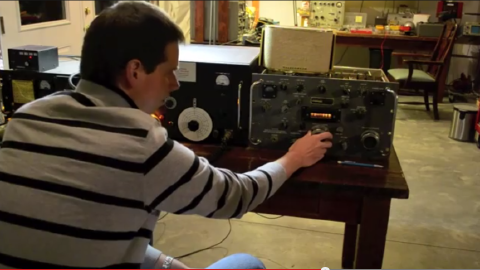
- Greg and Chris visited Hamvention 2013 together where Greg bought his R390 http://www.youtube.com/watch?v=MVKLEGzQdNk
- Greg's experiments and hacking of the R390 will be featured in QST magazine in March.
- Jack Ganssle did a review of a 1946 Oscilloscope
- CRT tubes enabled RADAR. Something something thermionic rf current.
- Greg enjoyed the Antique Wireless Association's coverage of The Titanic's Radio Transmitter.
- Another history item, Greg has been reading The Power Makers which is all about early grid setup and power delivery.
- While most people think of Tesla for AC, his biggest contribution was inductive motors. Now it's swinging back to DC delivery of power with DC transmission.
- Even white goods are moving back to DC power, with some fridges using a DC power bus and an inverter going to an AC induction motor to drive a compressor.
- Greg's book started at the IEEE Phased Array symposium when he met someone from CRC Press.
- Instead of working on antique watches at night, his wife encouraged him to work on the book. The entire start-to-finish was 3 years.
- When writing a book...write for yourself.
- The Coffee Can (Successive Approximation) Radar project covered in the MIT short course is now a kit! Made by Quonset microwave. A little pricey but easier than sourcing everything yourself, including some soon obsolete components.
- Automotive radar is an entire chapter in the book and are a large area of interest in the next few years. Some of these operate at 24GHz, 77GHz (!)
- Sensors too! RADAR is a great way to bounce low energy signals back to a network.
- Greg has been advising a startup called Fybr (c'mon people, use your e's!). They make networked sensors for city wide parking space detection (and charging for parking).
- The NSA leak included a hardware catalog with tons of interesting gadgets. The ANGRYNEIGHBOR used RADAR to bounce some of these signals back to a base station for collection/networking. Crazy stuff!
- The Space Fence shut down as part of the sequester, but was an awesome way to detect space objects. You could listen on the ham bands.
- While at Lincoln Lab, Greg got to work on the huge Millstone Hill RADAR array. 2.5MW of output power
- Much smaller, cheaper and available to the public, there is a push to use RTL-SDR dongles to do RADAR.
- Greg is editing a book series about practical electronics. Have an idea for one? Email charvatg@gmail.com. Greg is particularly looking for books about:
- Legacy equipment.
- Practical FPGAs (or you could watch the FPGAs 101 talk from CCC)
- There are some awesome QSL cards from the 50s, linked by Alexis Madrigal's 5 Intriguing Things newsletter.
- What do you think? Should we pay to get on shortwave radio in Maine?
Transcript
Chris Gammell: This is The Amp Hour Podcast, recorded January 6th, 2014. Episode 179, with guest Dr. Greg Charvat, Laboratory Literature Laureate. Welcome to The Amp Hour. I'm Chris Gammell of Contextual Electronics.
Greg Charvat: And I'm Greg Charvat of Butterfly Network, and I write things.
Chris Gammell: And he writes things, and he breaks things, and he builds things, and he takes over for Aussies when they lazy asses and they go on vacation.
Greg Charvat: Well, isn't he just sleeping in? Isn't it like 3 in the morning over there right now?
Chris Gammell: No, no, this is when we usually record. It's like noon. He's sitting on a beach somewhere. He's a lazy butthole.
Greg Charvat: Yeah, but don't they have to go north to go to the warm weather, not south?
Chris Gammell: That is true, yes. That is true. And when you flush the toilet down there, it goes the other way, right? I learned that from the Simpsons, yeah.
Greg Charvat: Yeah, me too. Is it true? I don't know. We need a fact check on this flushing the toilet thing.
Chris Gammell: How you doing, Greg? It's been a while, so if people don't remember, you want to watch show like 118 or something like that?
Greg Charvat: Yeah, we had a good time then. We were talking about all kinds of fun things. And then we went to Ham Mansion together.
Chris Gammell: Yeah, and that's been a while ago now. That's almost like a year and a half. So we're on like one, I think this is 179 or 180. I forget what episode this is. Oh my gosh. So that's like almost a little more than a year ago, I guess.
Greg Charvat: Oh, wow. It was, yeah. In fact, oh man, so much has happened in the past year. It's been crazy. It's been crazy.
Chris Gammell: How about a little refresher on who the heck you are and what the heck you do?
Greg Charvat: Okay, so I co-founded this startup in Connecticut called Butterfly Network, but I cannot talk about it. Boo. I know.
Chris Gammell: Well, that's all. That's the show, folks. So we'll see you next week. Let's cut it. Yeah, all right.
Greg Charvat: Well, I also wrote, just recently completed the book, Small and Short Range Radar Systems.
Chris Gammell: Which we will talk about extensively.
Greg Charvat: That'll be fun. And I am editor of a book series on practical approaches to electrical engineering, which, by the way, I need to talk to your listeners about. We should bring that up later. Okay. I will need the help of your listeners on this one.
Chris Gammell: Okay.
Greg Charvat: I'm also the advisor to MIT Media Lab, the camera culture group. We're working on some unusual radar stuff there. I won, I don't know, I won some best, I won best paper at the Tri-Services Radar Sensing Sposium for my work on through all radar, which is now, I found out recently, on the MIT Provost's list of top university achievements for 2011, even though I never went there.
Chris Gammell: That's right, because you were an MSU grad, right?
Greg Charvat: Yeah, and we just won the Rose Bowl.
Chris Gammell: I was going to mention that, yes. So I saw you and our mutual friend Scott, also another MSU grad, gloating about it on Facebook. That's fun.
Greg Charvat: Oh, man, we have to. It may be our last chance to do it anytime soon, so we got to talk about it.
Chris Gammell: You're talking about 5,000 electronics nerds right now. I'd say maybe 500 care about football. That might be a stretch.
Greg Charvat: Well, don't get me wrong. Usually, I don't care about it either, but then with the Rose Bowl, it's a big deal.
Chris Gammell: Yeah, it kind of is a big deal.
Greg Charvat: Some of us do tune in for that.
Chris Gammell: Yeah. Well, it's got the parade and everything, right? I mean...
Greg Charvat: Well, you know, the thing was, it was that last home run of the game that really sunk Stanford. Home run? Yeah, isn't that how it works?
Dave Jones: So then in the third period, the touchdown goalie...
Greg Charvat: No, no, when they scored that free throw. I thought that was the end. Yeah, that's right, yeah. You know, right off the bat.
Chris Gammell: Yeah, I think that's the sports game thing. Yeah, the thing is they got an offsides and then scored the free throw. The wicket. Yeah. Yeah. All right, we should probably step away from sports.
Greg Charvat: Okay, enough of that for now. We'll talk more later about sports.
Chris Gammell: Yeah, so you've been doing a lot of stuff, though. So last time we were talking about the startup a little bit, you couldn't say much about that, but also your course, your radar course, the short course in January, right?
Greg Charvat: Yeah, you know what? It's coming up again, actually. That course is going to happen again this June, so anyone is welcome to sign up. Go to MIT Professional Ed, and we're having it again. Oh, cool. It was the top-rated MIT Professional Ed course in 2011.
Chris Gammell: Huh. So that didn't happen in January this time? Because usually you said MIT has that month-long break, right?
Greg Charvat: Well, that's a good question. It happens twice a year, so it happens in January for the students. It's free for the students, and then it happens again in the summer for professionals like you or – well, really, it's your employer should pay for it, but any professional who wants to take it can take it.
Chris Gammell: That expensive, huh?
Greg Charvat: It's $3,700 a head. It's not cheap, but they usually fill it with a waiting list.
Chris Gammell: There's no contextual electronics-type prices. That's much more.
Greg Charvat: Oh, I don't think you'd charge more than that, Chris. I mean, come on. Don't sell yourself short.
Chris Gammell: I'm not. I'm selling myself access to wonderful people that should sign up now.
Greg Charvat: That's true. I want to sign up. I've been blogging about that as well. Sign up now for Chris's course.
Chris Gammell: Yeah, you were very nice to write a blog. That's probably what you got you on the show today. I'm just saying. I'm just saying.
Greg Charvat: Do you think that might have something to do with it?
Chris Gammell: Yeah, probably not. We should talk about Hamvention. So me and you, we were hanging out at Hamvention. That was great. I think me and Dave actually talked about it after the fact because...
Greg Charvat: I heard. I heard that episode. It was awesome.
Chris Gammell: Yeah, it was a lot of fun. I mean, so it was me, you, Scott. Who else was there? We met...
Greg Charvat: Oh, that one guy who builds... Brad builds radio telescopes.
Chris Gammell: That's right, yeah. Yeah.
Greg Charvat: We were buying tonnage, man.
Chris Gammell: That's right. Yeah, so, yes. Greg was walking around the fair talking about tonnage. That's all we cared about was big, heavy 1940s, 1950s radios that... You said glow in the dark, right? That was the other thing?
Greg Charvat: Yeah, yeah. Real radios glow in the dark and they have big knobs and meters on them and stuff. Yeah. I mean, they shouldn't look like a pocket calculator. Let's just put it that way. Seriously, yeah. Yeah. HTs, who needs those? I don't even have one anymore. No? You got radios? No way. Well, it really... Spike it on the ground? You don't get real HTs, you lose them in one of your rooms. They're just so small and they're gone. But the big radios, it's hard to lose them. They're too big and heavy.
Chris Gammell: Right. You basically, you tie your boat to them and your boat stays there too. And then you come back and get the radio and then you take it to your next location.
Greg Charvat: Yeah, the military ones, the waterproof ones, they do work like that. They are waterproof. In fact, that's one tactic they use to hide them from the enemy is they dump them in the water. No, really? And no one ever finds them again.
Chris Gammell: Is that for real though? I can't tell.
Greg Charvat: No, I'm just making that up.
Chris Gammell: Oh, okay. That would have been sweet though, right? It would have been cool. Yeah. Maybe like a bathtub, you know?
Greg Charvat: No, seriously. For real, this time, I actually bought a military radio once and had directions in it about how to destroy it in case the enemy... Yeah.
Chris Gammell: Because they were worth that much or what?
Greg Charvat: Not so much value. I think it's... My guess is it's the enemy being able to tune into what you're doing and listen. I think that's probably the issue.
Chris Gammell: Oh, like if you're using a cipher or something like that and it's got an encoder in there or something like that.
Greg Charvat: Oh, yeah. This one didn't have an encoder. It's just, I think, just made it easier to listen to, be my guess. It was a receiver and had these instructions about what to do and I'm like, it was crazy. That's true, yeah.
Chris Gammell: Yeah, I guess if the equipment's scarce, then any kind of... If it's security by obscurity because no one has the tubes necessary to listen to a certain frequency, then you're...
Greg Charvat: Or the money, you know? You can imagine how much these things cost back in the day. They're probably very expensive. Yeah, lugging them around. And now you pick them up for five bucks at the handvention. Yeah. Or they pay you to take them away, like that old scope we found. Did the guy pay someone? Well, he really wanted us to take... Remember the scope without a screen and we offered zero dollars? Because we figured he wouldn't take it. Because he was at 30. Yeah. And we were at zero. So we were pretty far apart. I figured there's no way he would take our offer, but he did.
Chris Gammell: Right, right. And people should know Greg is a very shrewd negotiator. He got... So I think we talked about this after we went to handvention as well, but that the video you made with the R390, which is that piece of gear. Why don't you tell everybody about that? What's been going on with that thing?
Greg Charvat: Well, for one thing, Chris helped me drag it back to... And I think we put it in the trunk of your car or Scott's car, somebody's car. Yeah, Scott's car, yeah. Well, Scott had like a nice Audi A4 or something, and we scratched the hell out of the trunk probably. Don't tell his wife though.
Chris Gammell: No. Well, no.
Greg Charvat: Hopefully, do you think she listens?
Chris Gammell: I'm going to go out on a limb here and say probably not, you know. It's a big, big world. There's other podcasts to listen to.
Greg Charvat: Well, so we got this thing and we threw in Scott's truck and then we... Or his car, rather. He used to have a truck. We all had trucks back in the day, but now we have nice... He's got a nice expensive sports car. So we threw in his car, scratched the trunk up, and we drove to the Staples and we had them UPS it back to my house.
Dave Jones: Yeah.
Greg Charvat: And what I did was I scheduled it so that my wife would be out of town when the radio arrived.
Chris Gammell: Life lessons here, everyone. Yeah. It's not just wives. It's partners in general. If you have a different hobby than them, you need to schedule accordingly.
Greg Charvat: You need to make sure they don't see it and they don't know how much it costs. Those two things are important.
Chris Gammell: Yeah, right.
Greg Charvat: You know, like your milling machine equipment, Chris. What is that you tell your wife? It costs, what, 50 bucks?
Chris Gammell: It was $49.99, actually. It was on sale. Yeah.
Greg Charvat: That's right. That's what you say. So anyway, this thing shows up at my house and it weighs over 70 pounds. And I drag it in the house and I unpack it, you know, in the doorway. And then all these peanuts go all over the floor. You know those little packing peanuts? That's it. It's evidence. You have to be careful. Those are, yeah, yeah. It's like cleaning up blood after a murder or something. At least as close as I'll ever get to that.
Chris Gammell: Static blood, right? Static. Sticks to your sweater.
Greg Charvat: Sticks to everything. You can't clean it up. You know you're dead when she comes home. You know, and the best you could hope for is picking up little pieces. But sometimes there are so many, there are different size pieces. There are big ones, there's little ones.
Dave Jones: And then she holds it up. She's like, did you get into the peanuts again? Who taught you this? I learned it from you. I learned it from you.
Greg Charvat: Yeah. Another thing you have to be careful for are cats, you know, because the cats might eat one of those peanuts and barf it up later.
Chris Gammell: I don't have a lot of love for cats, so, you know.
Greg Charvat: Why is the cat coughing up a peanut?
Chris Gammell: He probably ordered some catnip, you know. He's learned it.
Greg Charvat: It's that new Chinese-made catnip. They make it out of plastic now.
Chris Gammell: But great, great deal on that catnip, though.
Greg Charvat: It was cheap. Came with a bag of cat food at the store. They gave us this free Chinese catnip. Didn't work. I tried that, too. Didn't work. He's too smart for that.
Chris Gammell: That's good. So, you got this thing in. I think people might have seen it, but it's just a receiver. Is that right?
Greg Charvat: Well, that's the problem, is it's just a receiver. But we fixed that, though.
Chris Gammell: We fixed that, or you fixed that? I fixed that, yeah. Yeah. You, what? Oh, that's right. You did all this finagling. You, like, output the local oscillator or something like that through something, something. I don't know what you were doing.
Greg Charvat: Well, the thing is, like, so, I spent a day, got it fixed up and running. And it's such a cool receiver. I mean, you kind of, you've just tuned it for hours and hours and hours. But then, after about three hours of this, I thought to myself, wouldn't it be great if I could transmit back to any, to the people I'm hearing on this thing, you know? Wouldn't that be great? I mean, that's what's missing, is to be able to transmit with that radio. So, that's what I did, was I made it transmit. And how I did it was, I took the LO coming out of that thing. It's very strong. It's like a half watt. It's really powerful.
Chris Gammell: Yeah. It glows in the dark, right?
Greg Charvat: So, there's plenty of power. Yeah. You could probably, just that alone, you could transmit with just the LO alone.
Chris Gammell: Yeah. This is all you need. Yeah, you could transmit to your, send a wife, send a message to your wife across the house.
Greg Charvat: Oh, man, you could probably do some QRP DXing with that LO power. I mean, it was super powerful. Yeah. So, I took that, I split it. I have all these mini circuits parts, you know, the coaxial parts. So, I bolted together a little signal chain. I split the LO in two. But I mixed it with 8.455 MHz, amplified, filtered it, and fed it into the 5 MHz VFO input to another radio I built, a 20-meter sideband radio, which has the same frequency plan as any solid-state radio from the 70s, any solid-state ham transceiver. So, it basically made the R390 act like a VFO, standard VFO. Yeah. So, you could actually plug it into any radio from the 70s and have a R390 transceiver. That's crazy. And it works. It's unbelievably cool. It's like, the first time I made a contact with it, I was just, I'm like, wow, this is unbelievable. This is just, it's like walking on the moon for classic radio guys. I mean, it's huge.
Chris Gammell: So, anyway. Walking on the moon? You mean dark side of the moon?
Greg Charvat: Oh, on both sides. That's how great it was. Anyway, it'll be in QST magazine in March. A small article on that. Oh, that's right.
Chris Gammell: You mentioned that. So, what's, so, okay. So, I should mention that some of our listeners are not ham people, and it's pretty apparent that I'm not very much of a ham person these days. Anyways. So, so, QST. Yeah, I know. But QST is the magazine. You're speaking on behalf of all the geezers out there.
Greg Charvat: I'm one of them.
Chris Gammell: Yeah.
Greg Charvat: I'm just too young. That's my problem right now.
Chris Gammell: So, QST is the magazine.
Greg Charvat: Yeah.
Chris Gammell: So, you got a little write-up in there. What else is usually in that magazine? Is it worth, is it worth our listeners picking that up? And is it like subscription-based, or what is it?
Greg Charvat: Oh, yeah. It's subscription. But if you, if there's, if there's an electronic shop near you, there aren't many these days. But if there's one, they probably have it on the shelf.
Chris Gammell: Okay. Okay.
Greg Charvat: So, there's an electronics place in Boston called You Do It. And it's like an old electronics type shop, but it's huge. And there's another one in Lansing, Michigan called Fultons. Yeah. So, every, every, you have those places every, in Detroit, there's one called Bell Electronics. Every now and then you find one of these little shops. Yeah. They'll have, they'll have like vacuum tubes, transistors. They'll have those gym pack components.
Chris Gammell: One of our former sponsors, Electronic Surplus, is in Cleveland. That's, that's how I found them to sponsor the show. But yeah, they got a, they got a shop too. But I'm not sure if I've ever seen any QSTs there. Oh, yeah. But those are huge. There's actually a huge ham radio store in, a little bit north of here actually. Really? Wickliffe, Ohio. Yeah. It's in Euclid. I think it's actually Euclid proper. But yeah, if you ever come through Cleveland, we'll have to go hang out there.
Greg Charvat: I was, in fact, I just drove, I just drove through Cleveland last week.
Chris Gammell: I didn't call. You didn't even call, man. No.
Greg Charvat: We were trying to haul ass and get home. That was the problem.
Chris Gammell: Oh, you went to Michigan for holidays?
Greg Charvat: Yeah, yeah, yeah. We drove. I don't know what we were thinking, but we drove.
Chris Gammell: Yeah. I mean, Midwest and winter, it's not like it's cold or snowy or dangerous or anything.
Greg Charvat: Yeah. No, nothing like that. I mean, there's nothing like Snowmageddon. Yeah. Right. Aren't you guys on Snowmageddon part two right now?
Chris Gammell: We're in cold. It's like minus 10 Fahrenheit outside right now.
Greg Charvat: Wow.
Chris Gammell: So that's not very pleasant. I'm actually in my non-standard recording location because of that, because the heat kicks on so much that I can't, you wouldn't be able to hear me right now because the heat would be on so high. Yeah.
Greg Charvat: Wait, wait. Didn't you mention earlier you're at your mother-in-law's house?
Chris Gammell: No, I'm borrowing her computer, actually. Oh, okay. The laptop I have, my laptop's in the shop, so I'm borrowing her laptop and that's why I had to install our usual setup onto this thing. So, yeah, it's, yeah, it's cold outside. Yeah, it is. Luckily, I have a Christmas ale right next to me to keep me warm, so I'm in good shape.
Greg Charvat: Actually, I'm looking around here. I don't see one next to me right now. I should get one. Maybe I should go get one.
Chris Gammell: We could take a break if you need to. I can always edit out a break.
Greg Charvat: I'll send a text message, see if my wife might get it for me. Ooh, that would be great.
Chris Gammell: You should turn on that oscillator thing and, you know, send a message across the house.
Greg Charvat: By the way, if I did that, she wouldn't. She would slap me in the face or something. I'd get in trouble.
Chris Gammell: Tell her you're, like, live on radio and you need, you know, that actually, so when Jack Gansel was on the show, he was our first guest. When he was on the show, he says, oh, hold on a second, guys. His wife walked into the room and handed him a martini. How awesome is that? Wow.
Greg Charvat: That's, like, right out of the 60s, man.
Chris Gammell: Dude, Jack Gansel. Actually, Jack, I had a post on their subreddit this week. So Jack's newsletter came out today, one of my favorite newsletters. It's called The Embedded Muse. And so he was talking about, he just got a 1946 Philco oscilloscope. Whoa. Yeah. It is early. Let's see if I can find it here.
Greg Charvat: Did he get to work? Yeah.
Chris Gammell: Yeah. I think he bought it working. There it is. Yeah. It was, it's, like, super, it's, like, in one of those little two-inch CRT screens. You know, it's got, it's got, it's all tube-based. There's nothing to it. Yeah. Yeah. But 100 kilocycle, nothing more than that. There's actually no, there's no, like, vertical readout on it. So it's, like, it's definitely just for show. You know, not for go.
Greg Charvat: It's 100 kilocycles going downhill with the wind.
Chris Gammell: Yeah. Yeah. Exactly. You know, right? Yeah. That's what it's doing. On a good day with the wind at your back. That's right.
Greg Charvat: You know, you got to, like, whistle pretty loud to see your audio in that thing.
Chris Gammell: Yep. Yeah. So he did a nice little write-up of that thing. He actually got that, I think, just on eBay or something. But, you know, we were, you know, like you said with the radios before, too, with, like, thinking about how expensive those were back in the day, you know, for, same thing with, I can't even imagine buying a scope back in 1946. It's a little tiny thing.
Greg Charvat: Oh, man, that CRT tube alone would be very pricey.
Chris Gammell: Yeah, exactly. It's, like, all the phosphor processing and everything.
Greg Charvat: I mean, the CRT tube is, is the, was the key to radar technology initially. That, that was, that was the, the key piece.
Chris Gammell: Because of, because of the readout, basically?
Greg Charvat: There's no other way to measure the speed of light otherwise. It was, it was, well, there are ways, but it was difficult before then.
Chris Gammell: Could you explain that a little more?
Greg Charvat: Yeah. Yeah. See, the issue was you, you want to see amplitude versus time. And there was no easy way to do that prior to the CRT. So it was, it was a key enabler for radar technology in general. And shortly after they came out, that's when you, that's when you could see the Chainholm radar defense system being set up in England in 1936. And there are other examples like that. They're all enabled by the CRT. Huh.
Chris Gammell: That's really, that's a really cool piece of history. I didn't realize that's what was one of the key pieces. I always figured it would have been like the, you know, like the actual, you know, the, the tubes doing the, the oscillating and stuff like that.
Greg Charvat: Oh, no, no. They had those. I mean, in the 30s, they had, they had, you know, half a million watt AM broadcast stations, all kinds of high power radio stuff. Yeah.
Chris Gammell: So what they were just, they were just kind of assuming, assuming frequencies and assuming amplitudes and stuff like that. How did they actually, I guess they, or they're doing with like power meters and stuff like that. Is that, is that how they're measuring it before then?
Greg Charvat: There are a few ways. So you'd measure wavelength with a wave meter. So it'd be some, a resonant circuit that was calibrated at a lab somewhere and you tune in, you know, this is the wavelength for this, this is the wavelength for that, so on and so forth. So you can measure power by light bulbs and you can measure power by heat going through low value resistors as well. Oh, interesting.
Chris Gammell: But never.
Greg Charvat: So that's how it was done.
Chris Gammell: But never the actual amplitude, like a calibrated amplitude kind of thing.
Greg Charvat: You wouldn't see the time domain signal. No, you don't need to. Huh.
Chris Gammell: Oh yeah, that's true. Yeah. So it's like with a, it's like an average over time then, right? With a, with a power meter measuring heat, that kind of thing.
Greg Charvat: Like a light bulb or, or some sort of resistor and serious, like they call it RF current. They have a, I forget what that's, thermionic RF current meter, I believe is the term, or it's like, it's like a thermistor or it's, or it's just a resistor and serious gets hot and you, you measure the temperature. It's one way of doing it. Another way was the light bulb across the output. So you could take, you know, if you have a transformer coupled transmitter, the only way that light bulb is going to light up is if, is if you have a high frequency AC signal going across that, those coils. And that's how they knew. That's how, that's how they would tune up the Titanic's transmitter was with a light bulb. Really? And a wave meter. Wow. I read all about it. In fact, the Antique Wireless Association had a big spread on the Titanic's transmitter in last year's, their, their like annual journal that they issue. It's, it's in color.
Chris Gammell: Uh-huh.
Greg Charvat: It's really amazing. This guy, this professor, you know, he, I forget what university he's at, he actually backwards engineered the whole setup and verified it with photos from the ROVs that would dive on the site. It's really fascinating.
Chris Gammell: That's really cool. So, you know, okay. So I hear about this stuff, right? Like I, I'm, this is the first I'm hearing of all this stuff, honestly. Um, but like how the hell did Tesla do his stuff then? That's, that's what I want to know. Like all of this advanced, you know, advanced transmitters and, or maybe they weren't that advanced. Maybe that's my, my misperception, but like how the, how the hell did like Tesla do all his work then?
Greg Charvat: They weren't that advanced for one thing. Okay. Um, he, he spent a lot of time, you know, like a lot of those. So my, I read a book recently called the power makers I bought at the Smithsonian in Washington, DC about a year and a half ago. And it's, it's a book on, on how electricity was, uh, started, it was, was spread throughout this country and the world and, and just the technological innovations and, and what happened to the stories, blah, blah. So they talk a lot about Tesla. His biggest contribution was actually the inductive motor. It wasn't AC. AC was around before him. So it's his biggest contribution was the induction motor. And the reason why DC lasted so long is because the thing is to get motive power, they could make DC motors. They couldn't make induction motors until Tesla came along with his induction motor. So that was his major contribution. And then once you could make motor motive power with AC, then the, the, then it was, it was done. Everything's going to AC sooner or later. Yeah. But up until around 1920, there are still DC power substations because a lot of factories were still running on DC motors.
Chris Gammell: Which is interesting. So, you know, there's always talk about war occurrence, DC, AC stuff. That's, you know, that's, that is whatever it is, right? I mean, that's, that's a lot of politics as much as it is, as it is technology. Yeah, of course it did. But, but what was interesting to me, I was looking at a block diagram today of a refrigerator. And the interesting thing to me was today they, they're showing, they were showing a DC bus and then an inverter in there to drive the compressor, which is kind of like the, I've been working on AC induction motors a little bit as well, but I didn't realize that that was moving into the consumer space as well. You know, and it's like, you think about, you know, home appliances, stuff like that, right? So washing machines, you know, dryers, white goods type stuff, refrigerators, that kind of thing. And you think, okay, it's just an AC motor. It's on or it's off kind of thing. But now it's actually shifting back in the other direction because then you can have power factor correction. You have all this other stuff based on these DC, these high voltage DC buses. And then you can have DC grids, DC storage inside of devices, that kind of thing. And so that's actually the interesting swing back to DC that I'm interested in. I mean, the AC stuff has been around a long time for those white goods things, but I've seen it swing back to DC and that is actually what's really interesting to me.
Greg Charvat: Yeah. Now that we have the efficient, high efficiency power conversion technology, you know, enabled by high performance MOSFETs and so on and so forth. Right. The DC transmission is suddenly an interesting option. We can send a extremely high voltage DC, you know, as far as you want. And you'd probably, you'd only have to worry about ohmic losses and not so much, you know, transmission line issues and things like that anymore. So I don't know. I don't know too much about that stuff in this day and age. I just, I'm very familiar with it around the turn of the century from reading that book. Right. All the important stuff, right?
Chris Gammell: Right when I got started, not when it's a, yeah. So that sounds like a cool book though. I'll have to check that out.
Greg Charvat: Yeah, The Power Makers. Look it up. It's fascinating to read. Well, I'll tell you what, it's great. Because that's the kind of read where it puts you to sleep after half a page. Okay. And you soldier through it. It might take you 16 months to read that book.
Chris Gammell: But you're going to sleep like a baby.
Greg Charvat: You're going to have the best sleeps of your life.
Chris Gammell: You know, I don't know what you're expecting. Buying a book at the Smithsonian, I think you basically signed up for that as soon as the credit card transaction went through.
Greg Charvat: All the books I read are like that. I love books. I love history. I don't read fiction anymore. And I just, but they all put me to sleep after half a page. It's like the best thing. But then you keep going because it's cool. Like, like reading about the Titanic's radio room, which I know way too much about that now. That is cool. I mean, it's really cool. But it puts you to sleep and then you wake back up and put you to sleep. You know, it's the best thing. It's fascinating and good sleeps. That's good. Just like when people read my book someday, they'll be put to sleep.
Chris Gammell: So let's talk about your book. So this has been, what, 18 months in the making? When did you finish this thing?
Greg Charvat: Well, for those of you who need a good night's sleep, buy my book.
Chris Gammell: Oh, and we should mention the code too. So your publisher was nice enough to give a code for the book. What was the code? We should give that now.
Greg Charvat: It's AJM33. And for all of you hams up there, Alpha Juliet Motel 33. Nice. And this is the code for the book and you'll get 20% off.
Chris Gammell: Nice.
Greg Charvat: And we'll repeat that again at the end as well. Go to the CRD website and search for it or just Google small and short range radar systems.
Chris Gammell: So how long did this book take? So first off, as the background, ever since I've been starting Contextual Electronics, Greg has been telling me, no, no, no, give up this online video crap and go write a book for 12 months. And I'm like, Greg, get out of my face. I got videos to make.
Greg Charvat: I think I told you you could bang this out in 12 months. No problem.
Chris Gammell: 12 months. Yeah. It only took me six. So whatever.
Greg Charvat: You have all the content there. You have it all. I'm not writing a book.
Chris Gammell: I'm not writing a book about a software program, Greg. Oh my gosh.
Dave Jones: Yeah.
Chris Gammell: How do you use Ky- Oh, it changed. How much?
Greg Charvat: Three years? Three years. Three years. Oh, good Lord, man. Well, here's how it went down. So I was serving on the PHASE-DRAE, the IEEE PHASE-DRAE Symposium Committee. They have this large international conference every seven years or so in Boston, Massachusetts, on PHASE-DRAE radar systems and so on and so forth. So I was there on the committee, got to know a few people on the committee. One of them told me that his niece is looking for authors. She works at CRC Press. So I told them, well, I've got this idea for a book I've wanted to write for years. And so they put me in touch and I got a book contract in a matter of months. And so I started at Lincoln Laboratory and I wrote a little bit of it there. And then I kind of got busy with other things like that course at MIT and the through wall radar stuff and all that stuff. And finally, we moved down to Connecticut from Boston, so I'll bet I could focus on the startup. I got into these antique shops. They have these antique shops around here. We're in a coastal, southern coastal town. It's a vacation town.
Chris Gammell: A lot of wasps. I guess that's true. And wasps love antiquing. That's right.
Greg Charvat: And I'm into clocks and watches, so do I. I love antiquing for clocks and watches. So I'm driving around every single store asking for watches and wristwatches and buying them all up and then fixing them and having a great time spending like an hour or so every day after work working therapeutic watch restoration time. My wife goes, she tells me, you know, all that time you're spending on these watches, you could finish that book.
Chris Gammell: Translation, get off your ass, Greg. Your hobby is dumb. It's kind of hard to argue with that. Oh, that's, you know, there is something called leisure time, Greg's wife.
Greg Charvat: Well, that's done. I'm not doing that. There's no more leisure time for me. No? I'm past that, unfortunately. So I started working on the book, and the problem with the book is, as you know, is that it's very difficult to get the motivation to write a book, which you need to do is write it for yourself.
Chris Gammell: That's right. And you have to have a habit, too. You have to be in like a groove where you have a regular time every day. You're going to go write a page or two.
Greg Charvat: But it's not hard to get in the groove. I think what you want to do is you write for yourself. You outline it for yourself. It's your telling. It's your story you're telling about how you've learned to do things. That's why the publisher wants you to write it because you're the expert. So you got to look at it through that lens, and then you need to have a vision, okay? And so I came up with this idea because I do like having things on YouTube. I do like podcasts. I like what I've done online and what you're doing online and what others like you are doing online. So I wanted sort of a holistic book where here we show people their goal is here's how you do it. Okay? Here's how you do it. Here's the application. Here's some basic theory. Here's an example with that theory. And here's five case studies, you know, where each case study has a bill material, shows you exactly how to put the radar together. And then here's from each case study.
Chris Gammell: I didn't realize you were doing like BLMs too. That's great, man. Yeah.
Greg Charvat: Full bombs. For every radar in that book, there's a full bomb. Schematics, block diagrams, software, everything.
Chris Gammell: So now what is the likelihood that someone can afford the mini circuits that you're designing into these BLMs? Yeah.
Greg Charvat: Easy. I mean, if you're at any company or you're at a lab or you're a grad student, grad students can pay for the stuff out of their own pocket. I mean, I did. So it's easy. It doesn't cost much. And the thing is, really, the other thing I wanted to mention was each experiment, I show data in the book. But then you can go to the website and you can watch the YouTube where I pulled the data. You can watch me do the experiment for which you have data now.
Chris Gammell: See, now you didn't tell me this when you were like, oh, go write a book. You're talking, this is like some mixed media stuff here now. That's actually, that's really cool. That's. It gets better.
Greg Charvat: So you, you can go to what you watch that YouTube.
Chris Gammell: Is there a hologram, Greg? Are you going to be on my screen? Like you pop out like Tupac or whatever his name was. Oh, no, there is.
Greg Charvat: You know, there's synthetic apps and radar data. That's technically a hologram. Really? Is that technically a hologram? Yes. Are you good? Yes, it is.
Chris Gammell: Are you good? It wasn't Tupac. Who was it? Who was it? It was, uh, maybe it was Tupac. Whoever that hologram was, the rapper. Oh, really?
Greg Charvat: Well, I'm a pretty, I don't really know my 1990s hip hop artists that well, quite honestly.
Chris Gammell: Yeah, I'm obviously pretty, pretty behind the times too. I should, I should remember this, but. I don't. Okay, so you get all this data, then what? So then you've, do I have to throw it in MATLAB then, or what?
Greg Charvat: You download the, a little zip file associated with every YouTube video with every example in the book. You download the zip, and the zip file has the MATLAB in it, and has the raw data.
Chris Gammell: So I need MATLAB, right? So I need, I need, I need to have a $2,000 license.
Greg Charvat: No, it's a hundred, it's a hundred bucks student version. It's cheap.
Chris Gammell: Oh, okay, student version. That's good. Okay.
Greg Charvat: So you get that, and, you know, you, or you can use Octave. The stuff will run Octave. Okay. I do. I think with, I think the only difference is the plotting. But people tell me that my, my MATLAB spaghetti code's running at Octave these days. I don't know. I've never tried it, but. So my, my code's pretty, you know, I'm, I'm an electrical engineer. I'm not really. Right. Exactly.
Greg Charvat: You build hardware. Yeah. That's what you tell them. That's right. And you run away. I run away and let them deal with it.
Chris Gammell: That's right. Yeah.
Greg Charvat: But anyway, so that's, it is mixed media. So you get all that with the book.
Chris Gammell: That's very cool. I like that. I like that model a lot. As long. The key there is always, how did you do the links in the book? Because that's almost always the problem.
Greg Charvat: Yes. I totally. So, so what I did was I tried to make it simple as possible because if I don't get it, no one's going to get it. So how I did it was I had, I made a WordPress website for the book. That's very simple. It's off of my main webpage. And then in the book, I cite the link. So each, at the end of every chapter, there's a bibliography. And then I cite the webpage and where to click. So you just have to look up at the end of the chapter. Or the thing you need to watch. So it'll say, you know, as shown in this video in Citation 5. And then you go to the end and look it up. So I could think of a more elegant way to do it because I just, I really think it's, I don't want to put like, blah, blah, blah, blah, blah, blah, blah, blah, blah, blah, blah, blah, in the text of a beautiful book that's written.
Chris Gammell: Right, exactly. It looks like a blemish, right?
Greg Charvat: It looks ghetto. It's just, oh, it looks too cheap, you know? Yep. So I put it in the bibliography. But you could just go to the website for the book and each chapter is labeled. You click on that chapter. Then you can click on the different YouTube demos and download the zip files. Anyone can do it without even buying the book. Nice.
Chris Gammell: So, okay. So I grabbed this data off of there and I put it in the MATLAB and it shows. So this is the synthetic aperture? Is that right?
Greg Charvat: It could be the SAR image. There are some range time plots. There are Doppler intensity plots. There's a whole, there's a plurality of data. Different types of data. Different types of data products from radar sensors of all types.
Chris Gammell: Well, that's great. That's really great because then it's kind of like you can, it's like a choose your own adventure. You know, if you don't want to actually build the hardware, you can just go play with the data or do all of it.
Greg Charvat: Well, that's it because a lot of people who are working on this may, you know, they might be a signal processing people who will never build the radar.
Chris Gammell: Right. Exactly.
Greg Charvat: And some people want to test the feasibility of something too and they want to say, hey, well, what's this data look like?
Chris Gammell: Hey, I want to find a mistake in Greg's setup.
Greg Charvat: Well, that's the thing is it's part of the theme of the book is that real data is ugly. And you will find when you do collect your own data that it has issues. Every system has their own issues. You have to deal with it. And you'll see issues in my stuff and that's just the way these things are.
Chris Gammell: Just from like, just like small variations in the transmitter or what do you mean by that?
Greg Charvat: I would say, you know, depending on what system is, let's say, let's say, for example, it's one of the FMCW systems. You'll see transmit to receive coupling. So the, you always hear your own transmitter all the time.
Chris Gammell: Right. Even before, you mean before it actually goes out and bounces off something, you're saying it just kind of like couples around. It's just kind of the signal bleed over.
Greg Charvat: It's persistently there.
Chris Gammell: Yeah.
Greg Charvat: Because most of my radar devices discussed in the book are transmit and receive simultaneously. Right. And sometimes they're built with coffee cans too, right? Yes. Exactly. They are. We discuss all the coffee can stuff there because it's such a great example. You know, you've got everything in the coffee can radar. You've got your RF. You've got your antennas. You've got your analog. You have your signal processing and you have your systems integration. Right. So it's all there.
Chris Gammell: Which is another thing that's come up recently is that you had the kit builder finally released the coffee can kit, right?
Greg Charvat: Quonset Microwave. If you Google them, they have, you could buy a coffee can radar kit. It's not cheap, but it's. Yeah.
Chris Gammell: It's like 600 bucks, right?
Greg Charvat: Yeah. But they're selling them all over the world now. Yeah. Because there's a demand for the kit in a nice little form. It plugs into your computer with USB or uses Bluetooth. So we have, I was receiving a lot of inquiry from people who just wanted to buy the kit, you know, pre-made.
Chris Gammell: Right, right. Versus sourcing all the parts and the.
Greg Charvat: Yeah.
Chris Gammell: A lot of the different subcircuits and stuff like that, right?
Greg Charvat: The parts go out, you know, obsolete so fast these days. It's ridiculous. Like the waveform generator, the little that I used is gone now. The XR2206, I think it's, it's no longer made. Huh. Pretty soon we're going to stop making the 741 op amp if we're not careful.
Chris Gammell: I highly doubt that. I really, I really highly doubt that. So why does that, so, so that does seem really fast. Is that just because process technologies are changing quicker for RF stuff?
Greg Charvat: Uh, well this, this isn't our part. It's just a, um, a little analog part. It's been around since the seventies. It's like a little analog, um, you know, uh, multi, it's a function generator. It does, you know, square waves, uh, triangular waves and sine waves.
Chris Gammell: Yeah. Those things seem to disappear. Cause especially cause the ones, I don't, I don't know why it's like all the ones that people want that end up like Dave talks about that, that, uh, he has like a signal generator project he created that, that, uh, ended up going obsolete, same kind of thing. So yeah.
Greg Charvat: I wonder if he used the same part.
Chris Gammell: I couldn't tell you if I tried. Yeah.
Greg Charvat: Well, I mean, it's understandable. I mean, what, you know, I don't know what that thing's going to go into unless it's one of those Korg synthesizers or something.
Chris Gammell: Right. Well, yeah, exactly. Yeah. Whereas it had all these uses back in the seventies, it was going into a speaking spell or something like that.
Greg Charvat: And now I'm pretty sure the side of the moon was recorded with that thing.
Chris Gammell: There we go. Yeah. Yeah. So that's great though. I mean like, so, so people buy this book, they get the discount, they can go build the circuits themselves. How, what is the level of it though? Like, is it, uh, is it like grad student level or is it like, uh, idiot Chris level?
Greg Charvat: Oh yeah. Chris, you can handle it. No problem.
Chris Gammell: Yeah. What about like beginner, beginner? How, how, how, how much do you need to really get started?
Greg Charvat: I would say it's beginner to grad student level. So it's, it's, it's got a pretty wide spectrum. Some, some of the topics a little theoretical, especially the through all chapter. Um, but, uh, it's got everything for everybody. Basically the goal is to take, is, is to be able to show anyone, including yourself or any of your listeners. Um, hint, hint. Yeah. Yeah. If you want, if you, if you're considering radar technology as a solution to some problem you're working on that, you could do it with this. You could do it. No problem. It's very feasible.
Chris Gammell: So I've been seeing all these references to radar lately. Um, and radars are pretty broad term, right? I mean, it's, it's basically bounce a signal off something and collect the signal. Right. Uh, so one thing that's interesting to me is the application. And I, and I think, um, you know, we, we've had, uh, I'm blanking on his name now. I'm really sorry. Uh, talking about, uh, but like car systems having like radar built into cars now. And maybe even when you were on, we were talking about that kind of thing. I mean, that seems like a really big upcoming consumer level radar thing. Have you seen any of that, that kind of stuff going on or what's, what's the deal with that?
Greg Charvat: The largest chapter in my book is on automotive radar. Oh really?
Chris Gammell: Wow.
Greg Charvat: 80, it's 80, over 80 pages. It's actually, I didn't write it, uh, to the authors who wrote it. The only two chapter authors in my book, they're both from general motors. Huh? These guys, I don't know if you know this or not, but you heard, you remember the DARPA urban challenge?
Chris Gammell: Yeah. The, the autonomous car that has to go to the desert or something like that. No, it had to go. Right.
Greg Charvat: The first one was through the desert. The second one was through a city.
Chris Gammell: Right. Right. That's right.
Greg Charvat: With other cars and all kinds of stuff running around. Right. Yeah. So, so the team that won that was general motors and Carnegie Mellon general motors funded the team that won it.
Chris Gammell: Wow.
Greg Charvat: And so the, the, these two guys are from that team who wrote that chapter.
Chris Gammell: Yeah. That's, that's crazy.
Greg Charvat: So they know, they know, they know, they know their shit. Right.
Chris Gammell: And so that's, so that's kind of the same kind of, so I have seen a lot of this with the Google self-driving car just because I think that's better publicized stuff. Yeah. Yeah. But a lot of it, you know, having that huge radar array on the top where it's all spinning around and stuff like that, doing detection of other, other objects around it, that kind of thing. Yeah.
Greg Charvat: You don't need that. You don't need that.
Chris Gammell: Well, I'm, yeah, I'm sure. But I mean, that's how I've seen it. Right. I mean, that's like I said, it's mostly about the publicized stuff. Uh, what are, what are we going to see in the next 10 years for that? For it's like, because, you know, you say, okay, get into radar, right? That, that good claim by itself. But I think radar, I think airplanes, I think military. Yeah. I think automotive is really interesting because it is such a huge sector and it's going to be so important. So tell, tell all the listeners in the audience who are younger and thinking about getting into radar, why they should, because of automotive.
Greg Charvat: Well, automotive, not just automotive, but anything, any sensor, anything that has a sensor that needs a sensor that can see through all weather, that can provide range in three dimensions, that can characterize targets through Doppler signature. That's what radar does.
Chris Gammell: Yeah.
Greg Charvat: And so it's perfect for automotive applications because you could put these things behind the plastic fascia on the bumper and they shoot right through it. Yeah. If you have a line, if you have some, some salt on there from Snowmageddon 2014.
Dave Jones: That's right. Yeah.
Greg Charvat: For those of you in the Midwest, Snowmageddon 2. What's it? Back for blood or whatever they call it now. Whatever. Yeah.
Chris Gammell: You know, stupid weather channel. You know, I've been saying to my wife, I said, I said, the weather channel is like the popular girl trying to be like, look at me, I'm naming storms. Isn't this so great? Oh, this one's called Ion. This one's called that one. I'm like, shut up weather channel. You're stupid. Anyways. Just an aside there. Yeah. Yeah. Yeah.
Greg Charvat: It's, it's more, you know, but here's the thing. This rate, these little radars are meant for Snowmageddon because they can see.
Chris Gammell: Because they can just blast through everything.
Greg Charvat: Right through all the snowflakes. They can see through all the dirt crap on your bumper, all the salt. No problem. And that's why they're interesting.
Chris Gammell: Is it because it's really high frequency too? Like what, what's the frequency range? Is this the two to five gig kind of thing?
Greg Charvat: Some stuff is at 24 gig. Other stuff is at 77 gig Hertz. Oh, really? That high? Jesus. Yeah. That's crazy. But the thing is, you can, you can rate, you can gate out that obstruction that might be in front of you. And what manifests itself is an attenuative loss, if anything.
Chris Gammell: See, basically it's because it's always there. You can just say, yo, this doesn't matter anymore. That kind of thing. When you're looking at the data. Yeah.
Greg Charvat: You can process out. They call that a persistent return. And we cover that in the book. When something is persistently there, it's easy to coherently subtract it out from the data.
Chris Gammell: Huh.
Greg Charvat: And show the real targets. And you could play all those tricks with radar. It's a coherent, it's a phase coherent sensor.
Chris Gammell: Hmm. That's fancy. You could do anything. But here's the issue. I'm still not sure I completely grasp all this, Greg, but it's okay. I'm not going into radar anytime soon.
Greg Charvat: I would say you don't have to go into radar, but I would say, think of it, remember it as an option. But if you're trying to solve a problem at the highest level and you need a sensor to do a certain task and you're thinking about IR, you're thinking about LIDAR, you're thinking about acoustic, consider radar. Radar's doable. It's very doable.
Chris Gammell: Yeah. So let's talk sensors because this is another thing that you mentioned before the show. This is one of those startups you're working with. Let's hear about this startup.
Greg Charvat: Sure. So I advise startups for fun on occasion if it's a cool enough project. And there's a startup that I have been advising recently called Fiber. And what they do is they build a...
Chris Gammell: Fiber spelled silly, by the way. Yes. F-Y-B-R, right?
Greg Charvat: F-Y-B-R. Stupid startups. I know.
Chris Gammell: Sorry, guys. If you're listening, I think every startup is this dumb. I mean, it's just like, come on, use your consonants. Use your words. Well, it's a cool name. It's a cool name. No, it's terrible. It's not a... No. It's just like every time I look at like a demo day or something like that, it's like, where are all the E's? Something B-R, something G-R. It's like, just put an E in between the B and the R, right? I mean, like... Rans over. That's what I'm saying. Yeah, they're so last year. Any marketing executive will tell you that.
Greg Charvat: E's are better. They're so last year. They're so 1995. Exactly.
Chris Gammell: They're so 2000 and late.
Greg Charvat: Do you remember the company E-Machines? Remember what happened to them? That's right. You don't want that E in your title. That's right. It's a death knell. It's a death letter. Yeah. Oh, you remember what happened to Enron? That's right. That's another E. Yeah. This is a coincidence. It's a pattern. This is a real problem. That's right. Right. That's why no one has the E anymore.
Chris Gammell: Anyways, Fiber. Fiber.
Greg Charvat: What does Fiber do? So these guys, they... I helped them to... They're having some trouble with a pretty advanced technology that detects parked cars. So you may...
Chris Gammell: So it stays in one place, huh? It does.
Greg Charvat: And it may sound... Believe me, when I looked into it, it's not easy to detect parked cars accurately to the point where you can navigate someone to an open spot. You can enforce parking rules. You can do all those things. It's extremely... It's tricky. And so they had a problem.
Chris Gammell: What's tricky about it, though? So I think about detecting a car. I think about those big inductive sensors they have at stoplights where you pull up and it senses some huge metal objects above and it's like, okay, a car's here. I'll switch the light. So this is different, though.
Greg Charvat: Well, the problem with that is you can't put one of those under every parking spot. It's too expensive.
Chris Gammell: Right. You have to chop up the asphalt everywhere and be screwed.
Greg Charvat: Yeah. And then the sensor itself is pretty expensive. Then you have wires going back to something else. And this system they developed is standalone. It's all battery and solar power. You fire and forget. You deploy and it goes for five years before it needs any maintenance. It's a really cool system.
Chris Gammell: So these little sensors, they go actually into the concrete? Is that right?
Greg Charvat: They're like the size of a hockey puck. And they glue it and they just leave it there. And it goes for five years or more.
Chris Gammell: So my main complaint about this is am I never going to be able to park free anywhere in any city ever again? Is that going to be the problem?
Greg Charvat: Well, you know, it depends on what city you're in. You know, it really does.
Chris Gammell: I guess if I'm driving to San Francisco, I'm asking for it anyways, right?
Greg Charvat: Yeah, yeah. And that's where their stuff's deployed right now, San Francisco. And that's a high end. And everything's high end in San Francisco, including parking. So it's worth putting sensors in there like that.
Chris Gammell: Right. Yeah, I was looking at that app you sent me. It said like, it's like, and this space is $3 an hour. And I'm doing the math.
Greg Charvat: I'm like, holy crap. Actually, that's cheaper than Boston. Ouch.
Chris Gammell: I don't know. I parked for like $30 near the convention center in Boston last time I was there. Was it a weekday or weekend? It might have been a weekday. Yeah, there you go. Yeah, Boston. Boston's insane too. Yeah. Public transportation, people. That is a reason to go green right there. That's right. For money.
Greg Charvat: For money purposes. Go green to keep the green in your pocket. That's right. There you go. That's what you do. But yeah, this thing is, this is a really cool technology where they will show you where the spots are. It's part of the Internet of Things. And it's. Ooh. Yeah. You like that buzzword drop? He dared.
Chris Gammell: He dared to say that term. That's my job. I say that term jokingly. And Dave gets mad at me. The Internet of Things.
Dave Jones: Yeah.
Greg Charvat: But it's real. And there's a lot of investors interested in making the Internet of Things happen.
Chris Gammell: See, I think this is a really compelling thing. I was. When you sent me this link today and he was talking about parking stuff, I started talking to my coworker about it. And we were kind of commiserating like any kind of system where this is like automatically tied to money. Right. So say you walk into like a municipal building. Right. You say, I want to sell you the system for a million dollars, but you're going to make two million dollars in three years. It's like you just. It just sold itself. Right. That's why these kind of systems are easy. Not easy to sell, but much easier to sell than it's like, well, your payback period is about 20 years and you might make your money back. You might not. It's like, no, you're going to make this money on all those cars you already have a problem with and you're going to look good in the process. So that's why these kind of systems are really, really cool for that kind of thing.
Chris Gammell: It's an easy sell.
Greg Charvat: Yeah, that's true. There's a lot. There's a huge demand for this. And the other part is it also helps the citizens because they'll tell you exactly where the spots are. You can pull it up on your phone and just you can navigate to a parking spot that's open, which is huge. I wish I had that living in Boston because we it was like it was always super stressful trying to find a place in Boston. My wife. This is like I'm surprised we ended up getting married after all the times we tried to find a parking spot in Boston. Let's just put it that way.
Chris Gammell: It's like a Seinfeld episode or something. It's worse than that. Actually, there was a Seinfeld episode where he just kept circling the block or something like that or he had to move the car every two hours or something like that, but it was worth it.
Greg Charvat: That's what it's like. It's exactly like that. It's in Boston, if not worse, especially when it's Snowmageddon.
Chris Gammell: Of course. You're going to keep saying that word, aren't you? Snowmageddon. All right. That's right. If we get to 20 saves, folks, everybody gets another 20% off the book. Every time he says it, chug a beer.
Greg Charvat: That's right. Yeah.
Chris Gammell: Yeah. Well, that's a cool thing. What are the technical challenges there? Is it power? Is that the real thing? Because that's what I always think about with these remote sensors is being able to transmit back. Obviously, it's not passive.
Greg Charvat: It was basically a... The technical challenge was the sensor itself. Okay. That was the big one that I contributed technically on. And the sort of overriding technical challenge that's very well under control is the power consumption. So you have these pucks, and they have their own batteries, and they have to last for five years. They have to last as long as a wristwatch. Yeah.
Chris Gammell: They're like hermetically sealed and everything for the elements, right? Yeah.
Greg Charvat: And these things are built really well. I mean, you could drive trucks over them. They've done it, and they do last. That's fun. The other thing is that you can't send wires to the pavement and all that. These things are... It's all wireless.
Chris Gammell: Right. And so that's the other thing I was going to say is that it's got these big... Not solar... Well, I guess they are solar-powered, but they're like up on the light post, and that's actually like the hub, right?
Greg Charvat: That's right. And that's solar-powered. It has a little cell phone in it, and it's got a little tiny Linux box in there that draws very little current. And it has a special radio that talks to the pucks. They developed their own proprietary radio comm system.
Chris Gammell: Yeah. It's all... So is that tough to do? Because that's still being like the open spectrum then, right? I mean, it has to be within the commercial spectrum.
Greg Charvat: It is. I would say it's similar to a lot of military radios where it's impossible to track where it is. But they don't... Security isn't really a problem, but it's...
Chris Gammell: I was going to say, is that a problem? Like someone's going to go hack and save three bucks an hour or something?
Greg Charvat: Not exactly spend 10 grand just to hack it. No, no. That's not the concern. It's more of getting interfered with by other stations that might share the spectrum. So you want to spread yourself out. And they developed a very innovative way to do that. And they have ways of... And you don't want the pucks talking all the time because it draws the battery down. So they're all on a schedule together, and they sync up, and it's... It's a really amazing system.
Chris Gammell: See, now that's a business within itself. I went to this presentation on dust networks from the Linear Tech just bought, and it's the same... It's all heart-based, which is like an industrial standard. But it's the same kind of thing where it has like these scheduled frequency hopping... You know, like... So it's like... It sends out like a heartbeat. Yeah. And it knows within certain time frames where... Which transmitters and...
Greg Charvat: Well, I'll tell you, that standard was too power-hungry for what these guys had to do. Wow. So they created their own from scratch. Which...
Chris Gammell: But... That's a big undertaking. It was.
Greg Charvat: It was amazing that they... I can't believe they did it so fast. They have a very strong team.
Chris Gammell: Yeah.
Greg Charvat: Well, that's great. It's an incredible technology. The beauty of it is you can not only do the parking sensors, you can also hang off... Hang other sensors off the network too. So you can have like environmental sensors to tell you the air quality in the city, a different... By block.
Chris Gammell: Nice. You think they're going to open up the standard at all, or is this going to be...
Greg Charvat: The plan is, at least in the near term, is to provide open access to different data, different rates. So like the city might get the fast real-time access. But then, you know, everyone else might get the sort of lower bandwidth, which is cheaper for them to provide. Yeah. You know, it might be something like that initially, and then we're going to reach out to certain research partners at different universities who are interested in the Internet of Things to provide free data, high bandwidth data feeds. So if anyone's interested in that, they can contact me and I'll put them in touch with the right people. Yeah. We'll hang all kinds of sensors off those. You know, we're planning on trying whatever we can, whatever's interesting. You know, like the Fukushima thing, for example. Yeah. So what if you had Geiger-Müller tubes on those things? You could track where the radiation is. I mean, you know, what if for...
Chris Gammell: Well, they are doing that a little bit with the SafeCast network, but that's not low power by any standards. I think it's like you have to be on regular power. You know, that's kind of like distributed sensors and stuff.
Greg Charvat: Well, this network, you can... Let's say you make a... Like you have an environmental catastrophe that just happened, you know, like Fukushima, and you have a bunch of pucks that you've made specially for such an occasion with Geiger-Müller Geiger counters on board. But you can deploy them all over the city and they'll provide you real-time updates of what's going on. And these things are cheap. They're throwaways. So you just throw them out there and leave them.
Chris Gammell: See, that's the killer thing, too. I mean, like, that's what I always wonder about is these low-power transmitters. That's always the difficult thing. So, like, what's the range on something like that, then? Because that's the other killer thing is, like, how many hubs you need in there and then if they have to be meshed and all the interface stuff?
Greg Charvat: Bubs don't have to be mesh. There's no mesh networking. That's why the network... It's a very robust network. You know, their accuracy on messages is, you know, in the 95 to 99 percentile, depending on where they are. Right. Not a mesh... Because a mesh is kludgy. You kind of have to rely on everyone working. And meshes are not as reliable. Right.
Chris Gammell: And they're not as low-power either because then you have to talk to your neighbors as well as talking back to the base station.
Greg Charvat: There's this thing called KISS in engineering. Yes, that's right. Yes. And if you adhere to that... Something stupid. Adhere to that and you come up with something simple and amazing like this. And basically, it's a two-way communication. The pucks listen and transmit. They only go to the gateway. And then the gateway is a little higher power. It's a big solar panel. It's got a higher power battery on it. And it goes right to the 4G cell phone network.
Chris Gammell: Right. It's the same as a cell phone network, right? I mean, that's basically the same kind of idea. You know, cell phones are not super high power, but the towers are super high power.
Greg Charvat: Right.
Chris Gammell: And it's just scaled down from that then.
Greg Charvat: And you only need, I think, one gateway every block or two or something like that. Huh. That's interesting. I've heard that many of them.
Chris Gammell: Yeah.
Greg Charvat: Yeah, it's cool.
Chris Gammell: Well, that's good.
Greg Charvat: Yeah, so that's a neat thing. It's neat. It's, you know, every now and then, you know, like because of the book, because the book's coming out, a lot of startups reach out to me about things. And every now and then, I like to help them out with some advice. And this is one of them. And these guys really pulled it off. It's a great company, great team. So hopefully watch out for them this year.
Chris Gammell: Well, that's awesome. Yeah. I kind of wanted to talk about this. So I had asked Mike Osman to be on at like last minute as well, but he couldn't make it since I figured that I couldn't really talk RF, but he could. Sure. But he mentioned this NSA thing. And I'm not sure, I don't know what your clearance is if you're allowed to talk about this stuff, but all of this stuff got leaked with all of the NSA stuff. And there's some like insane, insane stuff in here. I don't know if you've read any of this stuff at all.
Greg Charvat: No, no. Shoot. I have to tell you, I've sort of ignored it a little bit.
Chris Gammell: Well, I had to. And because it's like, it's a lot of drama on top of it. But like this, this was the really interesting thing to me was like, this is like, this is hardware. So what it basically is, is the NSA has, you know, basically like any company, right? You have an internal, you have an internal part list of things that are available to you, an internal system, right? In this case, it's like bugs. And, and there's something called angry neighbor, which is, which is a radar based way of bouncing signals back from, I guess, you know, you're going to put in some kind of sensor to intercept communications, and then you're going to bounce it back to a central post, like you're talking about with this, this fiber thing, obviously, different applications, but, you know, a central hub. And then that bounces the, the, the strengthening signal back to some central processing location.
Greg Charvat: Okay.
Chris Gammell: And so, but it's crazy though, because like, okay, so first off, I should mention that these are all in the public, right? I mean, so it says top secret on all these things, but basically I asked on Twitter and they said, yeah, if you don't have clearance and then you can look at top secret stuff and because you're not restricted from looking at it, which sounds counterintuitive, but I was a little worried. Like, but the crazy thing is like, these are tiny, tiny little devices. Like, so one goes on the, uh, the ferrite in your monitor cable and it harvests the red signal from your VGA and then it bounces that to some central unit and then that bounces it and you can like, they can like watch, I mean, like aside from all the political stuff, because I really don't care about that either. Like this is just cool technology. I don't know if you, so let me send you this link real quick through the mumble. Um, yeah.
Greg Charvat: Yeah. So that's, that's interesting. So they probably needed the, I don't know anything about that stuff either, but they probably needed the intermediate link. So you have a super low power thing on your monitor cable.
Chris Gammell: Yeah. Right. Exactly. It's built into the cable. Right.
Greg Charvat: And it squeaks out a little teeny signal. It probably doesn't even last too long. And then it squeaks out the little signal over and then you've got something sitting in the bushes outside that pulls it up and then blasts it onto whoever. Whoever knows what else.
Chris Gammell: So that makes sense. I mean. Yeah. And I mean, these transmitters are like super time. I think they're showing, they're showing like, I think it's like 20 mils or something. I mean, like it, it looks like a, a SOT 23-6 kind of part. And like that takes up most of the board here. What is it?
Greg Charvat: What wavelength is it? Do you know what frequency it is?
Chris Gammell: I can't really tell, but it's, so it's, it says the angry neighbor is a family of radar retro reflectors. What does that mean?
Greg Charvat: Well, that just means that it, it's a radar reflector that reflect, you know, you bounce a signal off of it and it reflects the same direct, it reflects back at you no matter where you are, no matter what the angle of instance is. Oh, really? So retro means it goes right back at you.
Chris Gammell: Okay. So basically it's like a catch all for all these little tiny signals.
Greg Charvat: It's like a, it's like a bike reflector, you know, as a retro reflector on your bike.
Chris Gammell: Oh yeah. Yeah. Oh, and like that's, oh, that's the, where I know the term from. It's what Jerry always talks about with her, uh, cast star thing. The, the screen is a retro reflector she talks about.
Greg Charvat: Yeah. I don't know what it is in context of this. This doesn't sound like a retro reflector to me, but I don't know. Yeah.
Chris Gammell: Well, but yeah. So, so basically, yeah. And so like, I mean, like, like I said, the politics is, it is what it is, but like the technology, I mean, this is a lot of money and interesting research that went into this.
Greg Charvat: I bet that chip might even be an ASIC probably or something.
Chris Gammell: Something. I mean, so, okay, here's one that's called the Rage Master. It's an RF retro reflector that produces an enhanced radar cross section for vagrant collection. Vagrant being some, uh, uh, acronym. I don't know what that is. It's concealed inside a standard computer video, a VGA cable between the video card and monitor. It typically installed in a ferrite on the cable. It provides a target for RF flooding and, uh, easier collection of the vagrant video signal. Yada, yada, yada. It was found that, man. And it's just like, it's just like there's this catalog of all these things you can go and buy them and they have prices. That's the crazy thing about it. Like, it's like, it's like, Hey, I need like two Rage Masters and one Gotham. How much is it? It's 30 bucks. That's it? Yeah, exactly. Some of it's like 30 grand, but that little thing is like 30 bucks for a little tiny.
Greg Charvat: Oh, that's throwaway. That's cool. Man.
Chris Gammell: Yeah. So there's like, there's like a whole, yeah, there's a whole mess here. But so basically when I talked to Mike, he said, yeah, ask, ask Greg what he knows about this thing. Obviously you hadn't heard about it, so that's okay. But, uh. No, no. But there's like just tons of stuff here. I mean, like tons of like interesting RF and, and, and, you know, it's basically, it's going back to base station and it's encoded and then it goes back to their super secret servers, yada, yada, yada. Um, and I'm sure if Dave was here, he'd be raging about that stuff, but luckily he is, he is on vacation. Uh, so it's called, it's called Angry Neighbor though. That is, that is the program. And there's like a whole, so this is, I sent, I sent you a link to a, a WordPress page that one of our listeners posted. I, I, but there's a zip file where you can download the actual PDF catalog.
Greg Charvat: Oh my gosh.
Chris Gammell: It's just so crazy to me.
Greg Charvat: That stuff like, it's too bad that, I mean, that's, uh, there's, that's important equipment. It's too bad it, uh, got leaked like that. I mean, I can understand the political things, but that, you know, man, geez.
Chris Gammell: Yeah. Yeah. I mean, yeah, it is what it is, right? It's both, both, you know, the people who don't like privacy and the people who do like privacy are both mad about it. Right. But, uh, at the same time, like if you're just looking at it from the technical perspective, it's crazy. Oh my gosh.
Speaker ?: Oh, here's another one.
Chris Gammell: Surly spawn. It has the capability to gather keystrokes without requiring any software running in the targeting system. Basically you plug this thing. I don't think you even have to plug it. I think it just harvests the PS2 signals. Wow. The keyboard line. And then basically it sends that back.
Greg Charvat: Yeah, but who has a PS2 keyboard anymore?
Chris Gammell: I was thinking that, oh, it says USB and PS2.
Greg Charvat: It's got a USB one. It's wireless now. They wouldn't even need that.
Chris Gammell: That's even easier, right? I mean, you just intercept that. They're using like unencrypted 900 megahertz signals. Like I know my keyboard is, is super crappy, you know, it's just using some 900 megahertz radio in there. And that's really easy. And so basically it just has a little square wave of oscillator and it, it just detects what the character is and it modulates the frequency and then some other bigger system picks it up and takes it and runs with it.
Greg Charvat: Man, that's crazy. That's kind of cool. Actually, I almost think like it'd be interesting working on that stuff, wouldn't it though? Man.
Chris Gammell: It would. Yeah. And so, you know, I've talked to some people in the past who talked about that, you know, that like had tried out for the NSA, you know, they had, cause they have huge recruiting too. Yes. And, and I always wondered when they talked about, you know, all they went through all these tribulation trials and tribulations for the NSA jobs. And I'm like, well, what the hell do they work on? And now I know that we all know, right? I mean, this is, this is it. They're spending a lot of money on this kind of thing. Cause this stuff is small. I mean, they have their own chip fabs and everything like that.
Greg Charvat: That's like right out of a James Bond, man.
Chris Gammell: Exactly. You need like Q to pop out and like give you like an exploding pen.
Greg Charvat: Do they have any like exploding pens?
Chris Gammell: Yeah, exactly. That's the, that's the key thing. Yeah. You gotta have the exploding pen.
Greg Charvat: Do you see that in the catalog? It's not there. It's not there.
Chris Gammell: This must be the, this is the American version. You have to get the British version for the exploding pen.
Greg Charvat: Oh man. That's awesome. No, I don't really, I'm not familiar with that stuff at all. It's fascinating to hear about it though. Wow, man.
Chris Gammell: So another question. So I had mentioned on Twitter that you were, you were coming on here and, um, uh, who was it asked about it? It was Scott Harris. He asked about the nav spacer shutdown. Uh, did you ever use that thing? Oh yeah, yeah, yeah. So that's, that's a space, uh, looking radar. That's the space fence as it's called that I learned from Wikipedia.
Greg Charvat: It's not though. They're, they're making a new one.
Chris Gammell: Um, ah, I was going to ask you that. Okay. Yeah.
Greg Charvat: So the, the, this one is, um, it's a 220, I think it's 17 megahertz and you could, um, you could actually point, uh, uh, ham radio Yagi at 220 at, in the direction of this thing. And it's in Texas somewhere like Lake. I'm going to, I will screw up the name. I think Lake Hiccupoo or something like that in Texas. Texas. I'm not kidding. That's the name was something on that order. Let's just put it that way. And it was in Texas and the transmitter was there and there, there are sites, a couple other sites nearby and there are sites in a couple other locations.
Chris Gammell: And Kickapoo. Yeah, you're right. Lake Kickapoo. I was right. Gilla, Gilla River, Arizona, Jordan Lake, Alabama. Yep. Tattano.
Greg Charvat: The transmitter is in Lake Kickapoo and it's, it's huge. It's CW. What is, what does it say for the power in that? You know?
Chris Gammell: Uh, power. Let's see.
Greg Charvat: It's, it's a megawatt or a couple of megawatts continuous.
Chris Gammell: Six, 768 kilowatts.
Greg Charvat: Okay. It's almost a megawatt and it's on. It's just on all the time. And if you point your hand at it, you could hear it. You could hear satellites zipping by.
Chris Gammell: So basically this thing just spews signal into space. Is that the idea? And then whatever bounces off comes back.
Greg Charvat: In a fan beam. And then anything that crosses the fan beam scatters back to earth. And then the receive stations would geolocate the scatterers.
Chris Gammell: Because there's more than one that could say, I'm here. That's what I got here. I'm here. That's what I got. Yeah.
Greg Charvat: Because you know where your receive stations are. And the receive stations are larger rays of antennas that give you angle, angle. Yeah. So each one gives you angle, angle. Then you got the time. And then you know, if it went across the fan beam, you know geographically where the fan beam is and how it projects into space. So you could, and you also know Newtonian physics, you could back out the orbit. That's right. That's crazy. And that's why they have that thing there. It's a nice. Science. It works folks. It's run by the Navy. It was run by the Navy.
Chris Gammell: It was an Air Force. It was an Air Force.
Greg Charvat: Oh yeah. Well, initially it was the Navy. They must have handed over, you know,
Chris Gammell: I'm just reading off Wikipedia. So don't, don't listen to anything I say.
Greg Charvat: So I think it was a Navy at first. And then it was first built a long time ago, what the sixties or fifties or.
Chris Gammell: Well, the thing that was interesting to me about this was the, the resolution it has is something like four feet. Yeah. No. Was it four feet? It was something very, very small.
Greg Charvat: Well, you know, it's probably target dependent. If the target's really big, it's four feet. If it's smaller, it's probably not as good because they're, they're doing angle, angle, you know, angle estimation with received beams. And, you know, that depends on the target strength. So, right. And then we had a good day going.
Chris Gammell: The jitter of your oscillator or something like that too.
Greg Charvat: they'll have, they probably had top of best oscillators in the world on that thing. Yeah. So that wasn't a problem. It was probably more like, um, target RC at radar cross section of the target, how big it is for the radar.
Chris Gammell: Huh?
Greg Charvat: So the bigger it is, the more precise you'll have, you know, right? The more precise information you'll have on a positional information with a system like that.
Chris Gammell: Huh? Just cause it's more stuff to bounce signal off. Yeah. More stuff bounces back. It's a,
Greg Charvat: you know, depending on what the receive site is, I'm not familiar with what they, what they look like, but let's assume that they're a monopulse sort of configuration where you effectively have four sub arrays. And then you, what you do is you look at the amplitude and phase difference between the four arrays up, down, left, right, and you can resolve the target to high precision. So the higher, but the higher the SNR is, the more you can split the beam. So if it's got a really good SNR, like 20 dB SNR, you can split the beam of one of those arrays by a factor of a hundred. So let's say the beam width is, you know, one of your sub arrays on your receive site is, you know, 10 degrees. Well, you can get one degree beam width, uh, or you can get 0.1, a hundred mil degree resolution if you have a high enough SNR target. So that'd be my guess as to the generally how it worked, but there's probably some people out there who worked on it, probably no more than I do.
Chris Gammell: So then like the angle that you can calculate, basically then that's just about how, how high up it is. Like if it was further away, it, it, uh, you don't have as much resolution then because of like the, was that the arc length or something like that?
Greg Charvat: Well, no, your resolution should be good, but then the amplitude would be lower and you, you're always something like that. You're balancing the scattered amplitude with the, uh, resolution you're able to achieve off of the system.
Chris Gammell: Okay. Oh, here it is. Okay. I finally found it. It says it can detect objects as small as 10 centimeters or four inches. It heights up to 30 kilometers or 15,000 nautical miles.
Greg Charvat: Cool.
Chris Gammell: So that's just detection. It's not positional. It's just, it's there. Yeah. Yeah. Basically.
Greg Charvat: And then positions a different thing altogether. Yeah. I see. But they could position it too. You know, it's, I really liked that system because it was so simple and elegant and, you know, um,
Chris Gammell: it's just spewing energy into space. Yeah. That helps.
Greg Charvat: Well, I mean, I, I, my thought on that was, you know, maybe you, you consider, uh, an upgrade, perhaps you, you modulate it and then you improve the receive sites. I think with digital, uh, radio receivers these days, you can do like sweep through frequencies or something like that. Maybe you change it to chirps. And then maybe you make, you put D Rex's on all the, uh, receive sites. They may already have that, but you know, I really like legacy equipment like that. You could do a lot with old legacy gear that we have in our country. So I love working on legacy stuff.
Chris Gammell: Yeah.
Greg Charvat: At Lincoln Lab, we did a lot of work with legacy equipment. It was fun.
Chris Gammell: That is cool. Yeah. Do you like retrofitted though? Or is it just, do you like the power of it? What do you like about it?
Greg Charvat: You retrofit it because the thing is a big giant vacuum tube transmitter doesn't change.
Chris Gammell: Right. I mean, yeah, there's still AM, AM and FM towers that are using big vacuum tubes,
Greg Charvat: right? Yeah. But you know, like radar microwave, a million watt radar transmitter is going to be the same. Oh my God. If in the 1950s as it is today, there's no change.
Chris Gammell: So hopefully there's better safety regulations.
Greg Charvat: Yeah. So like, you know, you get the wind.
Chris Gammell: You got melted chocolate in your pockets, right?
Greg Charvat: You know what they used to say back then? What was that? You touched the B plus line, you got the wind knocked out of them.
Chris Gammell: Shake it off. Shake it off. Back then they were men. They were men.
Greg Charvat: That's right. Men were men. Women were glad of it. No, like when I was at Lincoln Laboratory, we had this Millstone Hill radar that I worked on that several times. And it was, it's a key piece of equipment. It was built in the fifties because we were expecting satellites, orbital satellites in the mid fifties. They started building the thing that Sputnik was launched and they had to accelerate the job and finish it in a week. So they still use that radar. Yeah. It's what's it called? Millstone Hill.
Chris Gammell: So Lincoln Lab Millstone Hill radar.
Greg Charvat: Look it up. It's L band. It's a 1200 megahertz. It's a couple, you know, it's massive power. The transmitter is the same. Yeah. It's crazy. But you, you know, you, you, you give it upgrades, you know, the antennas the same, but then, you know, that thing's got vacuum tubes in it. It's got, you know, digital receivers, got everything.
Chris Gammell: So do they have to switch out the tubes often or no? I mean, like do those things start to degrade or? Yeah. Yeah.
Greg Charvat: Tube, you know, tubes, tubes do degrade after a while or something or, I'm not sure what the failure mode is usually on them, but there were a lot of tubes in the modulator circuitry because it modulated, they modulated a big, um, uh, Klystron, uh, amplifier. Right. Right. And so you had to, you had to gate those things on and off and the bias voltages were really high, but you had to swing them in microseconds. So you need these giant, you need those huge tubes like the four dash 400 a's or something like that, that you have in a ham, you know,
Chris Gammell: it looks like a bell jar, right? Yeah.
Greg Charvat: It looks like a bell jar. So we had those and then we had to, then you have to have some other thing tube that drives that. And so you're stuck using tubes all over the place, which is fine. You know?
Chris Gammell: Right. Well, you, you like that anyways, right? It still works, but not too. Your moniker online is Mr. Vacuum tube, of course.
Greg Charvat: Oh yeah. Well, you know, why not? Got to,
Chris Gammell: got to do it. It wasn't taken. I was wondering, I was wondering about that. Why didn't you choose Dr. Vacuum tube? Were you, were you still Mr. Vacuum tube at that point? No, no. Why did you upgrade to Dr. Vacuum tube?
Greg Charvat: I thought it, I thought I could have been Dr. Vacuum tube, but I thought it sounded too presumptuous.
Chris Gammell: What if there was another? That's right. Yeah. But, and then, and then you got to fight to be the one, right? I mean, you gotta, there, there can only be one. I figured Mr.
Greg Charvat: Vacuum tube was better. You know, it's a little lower key, a little nicer.
Chris Gammell: Dr. Vacuum tube is my father. That's right.
Greg Charvat: Yeah. Dr. Vacuum tube drives a Buick, comes by, does house calls. Just chill.
Chris Gammell: Yeah. Yeah. Yeah. Yeah.
Greg Charvat: I'd prefer Dr. Vacuum tube to be like that, the father from that movie, American Pie. Oh yeah.
Chris Gammell: Eugene Levy. Yeah. With the, the huge eyebrows. With the eyebrows. The funny voice. Yeah.
Speaker ?: Well,
Chris Gammell: son,
Greg Charvat: I want to talk to you about something. That's right. That'd be Dr. Vacuum tube. Yeah. Okay. Okay.
Chris Gammell: Dr. Vacuum tube played by Eugene Levy.
Greg Charvat: You know, that guy drives a Buick.
Chris Gammell: He's got one. Oh, definitely. Yeah. But you know what? He's probably like rich or something. Yeah. Yeah. You know, that's because he's an actor. He's not actually Dr. Vacuum tube. We just like to make things up here. That's right. Yeah. We do. So what else have you got going on? You've got a, you've got a lot of crap going on. When it was, how about this? You're not allowed to say anything about butterfly. Well, how close are we to here? How, when are we actually going to have you back on to talk about butterfly?
Greg Charvat: Oh my gosh. Hopefully. Hopefully. Uh, well, you know, you're not going to believe me if I say a year from now, because that's what I said last time.
Chris Gammell: That is true. You did say that last time you liar.
Greg Charvat: So I don't know. Hopefully, um, in a year or so, what we're doing is taking a lot of time and, uh, must mean it's good. It's good. It's good. It's very complicated, extremely challenging, but a lot of fun. And, uh, we're learning a lot. And, uh, good, good. You know, it's, I'm starting, I'm at year three now, butterflies, my third year there.
Chris Gammell: Wow.
Greg Charvat: That's a long haul for a startup.
Chris Gammell: You know, that's a lot of ramen. I gotta say, that's a lot of ramen. It is. No,
Greg Charvat: actually they feed us quite well there. So that's good.
Chris Gammell: I love ramen, by the way, I had ramen for lunch today. You did. I dressed that stuff up. It's, it's not a, I don't know what these startup guys are talking about. Oh, dude, I put like, I put a egg. I put a spinach, mushrooms, scallion, scallions, sesame oil, Sri Racha. So that's awesome. I got, I got all the good stuff. I, I throw out the little packet. I, I put in my own chicken base for like chicken. I put in, I put in real meat.
Greg Charvat: Wow. So you spend like an hour making ramen.
Chris Gammell: I, yeah, I spend, quite a while. It's, it's worth it. It's delicious. Man, it's, it's good. Oh man. Goes down easy. It does. All that for 10 cent noodles. I know, right?
Greg Charvat: Put like $10 in groceries into your 10 cent noodle broth.
Chris Gammell: That's right. Yeah, I do basically.
Greg Charvat: That's awesome.
Chris Gammell: So one of the, one of the things, uh, so Andrew back, or is it back or back on Twitter? Uh, 9, 600 on Twitter. Um, he was asking about this RTL SDR, these little, the dongles. Um, yeah. Apparently someone has turned them into a, I don't think it was phased array. What? Clicking, clicking, clicking. It is, uh, passive radar, dual coherent channel RTL SDRs. Was it you ever see?
Greg Charvat: Vernon?
Chris Gammell: I don't, I don't know what you're talking about.
Greg Charvat: Find out who did it. Who, who's the name on that?
Chris Gammell: It was a Finnish guy. Cause I remember I said.
Greg Charvat: Yes. He's writing the first book in my book series. You are. Yes, that's right. Yeah. You are Vernon. Yes.
Chris Gammell: Oh yeah. Now try and say the, the, the imaging receiver away where he works. The kill, his Jarvi, kill, his Jarvi atmospheric imaging receiver array.
Greg Charvat: Yeah, that's him.
Chris Gammell: Yeah. That's cool. So, so what, what is this awesome?
Greg Charvat: He's a friend of mine and, uh, he, he's really into software to find, um, radar and very few people have actually done this. Actually, I have never seen a software to find radar done right yet until I've seen his work. So I saw his work.
Chris Gammell: What's difficult about it? Cause I would think that would be, I mean like there's so much DSP going on radars these days in there.
Greg Charvat: I mean like it's timing, it's synchronization. It's how do you synchronize your transmitter with the software to find, uh, radio. They're meant for streaming applications. Oh,
Chris Gammell: because they're not, because they have to actually crunch on them. And this is what we always talk about, like using processors, using, using FPGAs and FPGAs, you're streaming the data through. Right. Versus an SSF software thing. You have to crunch on it. Right. So it's not deterministic.
Greg Charvat: We want, we need, we need something deterministic. We need the timing to be exactly right.
Chris Gammell: Right. Exactly. Okay.
Greg Charvat: He's figured out how to do it.
Chris Gammell: What about it? Is it just, is it, is it slow it down? Is that the answer? Well,
Greg Charvat: in his case, what he does use multiple radios and one of them is a reference receiver. So he actually doesn't even need to be plugged into the transmitter. He has one antenna point at the transmitter, then one point up into space where he's listening. And then he gets a direct path to the transmitter. Then he records it and cross correlates it with what he receives from his scatter antenna.
Chris Gammell: So he's using a metronome. That's basically, that's basically the answer. Yeah, I guess that's one way of putting it.
Greg Charvat: It's a pretty, very sophisticated metronome, but it costs nothing because he uses these, these, these little thumbsticks. Yeah,
Chris Gammell: these $16 dongles. Yeah. These things, have you ever used one of those? They're, they're pretty fun.
Chris Gammell: no,
Greg Charvat: but he showed me these at the phased array symposium in Boston this past fall. I was there and, you'd love them, man. I spent some time together.
Chris Gammell: They're, they're 20 bucks on Amazon. They're super cheap. You should get one. And you could just, you could just point, I mean, obviously my antenna is crap because I don't do much of the antenna stuff, but yeah, you just plug it in. It's got a little tiny, tiny, actually when I was at Hamvention, I was looking for the, that crazy connectors. Scott was helping me find some, I forget what it was even called, but it was some tiny little,
Greg Charvat: it's like a reverse SMA that they put on it or something.
Chris Gammell: It was an SMA. It was some other smaller thing, like a, not an N, but something small. SMB? No, not SMB. It was like a, something with an M, like a multi-letter. I don't remember, but okay. Anywho, uh, yeah, so you can, or I could be completely wrong. It might just be SMA, uh, but yeah, these little radios, I mean, they're amazing. I mean, what they're, what they're putting on there, you know, it's, there's nothing to them. So, well, there's material.
Greg Charvat: Read his book. It's coming out. How do you say it? You are. You are.
Chris Gammell: With a G though. You are.
Greg Charvat: Yeah.
Chris Gammell: Okay. And it's his book or it's your, it's his book, but you said he's writing something for your book as well.
Greg Charvat: Well, no, no, I, I'm an, I'm the editor of a book series now. Oh, so what, what the heck is that? What's the book series? Oh, this is great. So I, I developed a pretty good relationship with CRC press and they've offered a book series to me where I, basically I look for talent for authors to write books on practical up to electrical engineering. And so we were talking at the phase race symposium, uh, this, this past fall. And he was telling me, I've got this idea. I want to write this book, blah, blah, blah.
Chris Gammell: So this is why you've been bugging me, huh? This is like editor.
Greg Charvat: I want you to join. Okay. My job is to find talent and you've got talent.
Chris Gammell: I've got, I've got a, a cadre of 5,000 listeners who might, might be interested. So maybe we should set up a special email address or, uh,
Greg Charvat: let's, let's throw that out there right now. A form or something.
Chris Gammell: What do you, what do you, how should we do this?
Greg Charvat: They can just email me. So if any of your listeners have an interesting book like you was, or, uh, would want to write Chris's book for him.
Chris Gammell: Yeah, that'd be great. Actually,
Greg Charvat: you know, just email me directly. And I'm looking for people who are passionate and want to write something. It's, it's, it's, it's a, it's a fun time. It's a great experience. It's not, uh, it's, it's, it's like, it's like learning to drink Guinness for the first time. See,
Chris Gammell: you said this before. I think you're full of crap though, because Guinness is delicious and you're, you're, I don't understand what you're saying.
Greg Charvat: Well, okay. So when I tried Guinness for the first time, the first one went down rough.
Chris Gammell: Yeah, you're doing it wrong.
Greg Charvat: The second one was a little rough in the, and after that, they're great.
Chris Gammell: And I love every beer goes, Greg. I mean, you can be drinking high beer in Korea like I did. And yeah, the first two stink. The third one is smooth.
Greg Charvat: And the, and the, and the eighth one is just wonderful. That's right. Exactly. The eighth one, you probably should have stopped at six. You probably should have stopped at six. But that's, what's like writing a book. You probably should have stopped at chapter six. And so, but you know, it is a fun experience. And really, you know, if, if you have an interesting, unique idea, you want to share your knowledge with the world, let me know and send me an email. It's a, charvatg at gmail.com. And I don't know, it's probably the show notes or something. Do we have show notes? Oh yeah. Good. Yeah.
Chris Gammell: On our new beautiful site that no one likes.
Greg Charvat: I love it. I think the site's cool, man.
Chris Gammell: There we go. We got one. You hear that folks? We got one person who likes our site.
Greg Charvat: One A.
Chris Gammell: That's right.
Greg Charvat: Those who disagree, say nay. Oh, I don't hear anything either.
Chris Gammell: That's, it's weird. It's almost like, it's almost like it's just us in here. Oh,
Greg Charvat: but seriously, email. Okay. If you're interested in writing a book and let's just talk, you know, if you have an interesting idea, you want to bounce it off, you want to just talk about it. It's okay. And there's no rush on these things. Books take years to write. And it could be something you follow up with, with me five years from now. That's fine too. These things take their longterm.
Chris Gammell: So you're not doing sales for a butterfly networks. Are you, you're not like, eh, it might take like five years or something.
Dave Jones: You know what?
Chris Gammell: You get it when you get it.
Greg Charvat: No, but the butterfly, we've got to work really, really fast. That's what we do. It's good. Breakneck speed. Anyone who's, you know, done the startup thing can tell me it's just breakneck speed all the time. That's why going on year three is, is an achievement. If you make it,
Chris Gammell: that means people really believe in what you're doing. That's, that's a good sign. Yes. That's good investors. People aren't right.
Greg Charvat: Good investors who are, are, uh, work with you. It's great. It's really great.
Chris Gammell: So I'm going to send you one link. So we should close out here with this. Uh, this is, I found this through, uh, Alexis magical. who's like an editor at the Atlantic. He sends out this thing called five intriguing things. It's like an email that comes out daily. And I poached a lot of links for, for the amp hour. So I'm sharing my secret here folks, but, uh, he, he, he posted, and I think he found it from someone else. It's a bunch of QSL cards from 1956. And they are just from all over the world. And if people don't know what QSL cards are, basically you make a contact and ham radio, and then you send you, someone sends you a card, you send them a card. And I think I got that right, right, Greg? Yeah. And yeah,
Greg Charvat: that's right. It's like, uh, you're, you're, you're like a pen pal except over the,
Chris Gammell: right. Yeah. It's like, it's like a marker that you've made these contacts too, because then you collect them. You can show them off to your friends. Exactly. And then, so they're actually collectibles. And so these are, some guy took pictures of all of them and he's got them from just all over the world. They're all really old and awesome. There's one from radio Australia. You know, they're, they're like pieces of art basically. And, uh, just really cool. I highly recommend looking through these. I don't, I, do you still do QSL cards? You have your own QSL card?
Greg Charvat: I, um, probably should, but basically what I do is I fix old radios and build old radios and put them on there, make a few contacts and then build another one.
Chris Gammell: Ah, right, right, right. So it's not just about the, the contacts. It's also about the,
Greg Charvat: yeah. But then in the meantime, you make some pretty bad-ass contacts. Like I'm, for whatever reason, when I repair, when I made that R390 trans with the R390 thing video, I was getting into, into Russia, like really Russia, Eastern Europe, just consistently every single day.
Chris Gammell: See, now that matters that that's, that's also like the, uh, not stratosphere. What is it? The ionosphere? Is that right?
Greg Charvat: Ionsphere. Yeah.
Chris Gammell: Yeah. Someone took the ham test a couple months ago. Oh man, it's fun, isn't it? I guess. I don't know. I don't have time for that, man. But the, the repairing seems like the fun part, if anything, I think that would be the fun part. I mean, I know there's hams listening, so don't get me wrong.
Greg Charvat: There's a big, uh, radio community out there for, for glow in the dark radios. You know, the real ones that don't look like pocket calculators. That's right.
Chris Gammell: Yeah.
Greg Charvat: There's a community out there. It revolves around this magazine, electric radio magazine.
Chris Gammell: Okay.
Greg Charvat: And it's just, it's this guy, this guy Ray, and he like, he writes, he puts together in his house and they, you know, just people send in articles. It's my favorite magazine. So.
Chris Gammell: Okay. I'll check that out. That's cool. A lot of like rebuilds and stuff like that. All your,
Greg Charvat: all it is is rebuilds all antique. It's all vacuum tubes stuff and military stuff. And people write about what they did and how things blew up in their face. And it's like, some people are really good at right. They write a wrap, a pretty good story together. It's, it's a lot of fun.
Chris Gammell: So that's awesome.
Greg Charvat: I don't know. That's where they are. That's where all the, uh, the vintage radio guys are kind of around that magazine.
Chris Gammell: That's awesome. So since you're a radio guy, I'll ask you to send your ham guy, isn't there a thing like guys and gals, that's right. Guys and gals. Uh, um, isn't there a thing with like, uh, people sometimes use like test music or something like that? Like, like license free test music or something to test out. Or is it always just voice?
Greg Charvat: That's always, you can't send music. It's always voice. Well, that's what I mean.
Chris Gammell: Cause it's not licensed, right? I mean like I wanted to know like if there's some way to get the amp hour on as like test, as test signal, me and Dave yapping as test signal.
Greg Charvat: You know what? Yes. Here's how you can do it. Okay. I got a plan. There's this, there's this shortwave station in Maine. Um, and I forget the name of it, they basically will let anyone buy airtime on their station.
Chris Gammell: Oh, I don't want to buy airtime.
Greg Charvat: But it'd be so cool if you guys run shortwave, you'd be, you know, it'd be awesome.
Chris Gammell: That would be kind of fun. I bet, I bet there's some whacked out stuff on that station too. I bet there's some, some very strong opinions on that. I bet that makes me and Dave look like kittens compared to, uh, the tigers that are on that station. Well, you'd be surprised.
Greg Charvat: There are more than just tigers. This one was cool. So, so I, I restored old radio shortwave radio and I was tuning around. I heard the twilight zone theme song. Really? Coming through the shortwave. That's perfect. Right? And I thought this is going to be good. You know, I can't wait to hear the political bloviation that is sure to ensue. So I kept listening. And instead, this guy comes on and says, you're in the, you know, vintage music zone for the next two hours. I'm going to be playing nothing but surfer music uninterrupted. Oh, and that's all he did was like Dick Dale and the Delphins and surfer music.
Chris Gammell: It was so awesome, man. That's awesome.
Greg Charvat: It was great. And that's the station. I forget what their callers are, but they're in Maine and you can, uh, submit your, uh, files and they'll broadcast them. It can't be that expensive.
Chris Gammell: It can't be.
Greg Charvat: Maybe we can set up a collection. We'll throw a couple of bucks. Yeah. Yeah. They get you on shortwave for the first time ever. Amp hour premiere on shortwave. That's right. Exactly. We can get a launch party. Imagine the flyers for that. You can tell your friends. Okay. Attention. Amp hour fans. Warm up your bombshell.
Dave Jones: Get out your can of beans. Hide under your desk. Fire up those guy or counters. That's right.
Chris Gammell: You know, just download the podcast and you'll be fine.
Greg Charvat: Or yeah, but that's no fun.
Chris Gammell: Yeah.
Greg Charvat: Yeah. You don't have to throw up, you don't have to, you don't have to throw up a big antenna in the tree to, to download a podcast. You know, that's not fun. What's the, what's the fun in that?
Chris Gammell: It's not about fun. It's about convenience and sharing.
Greg Charvat: That's right. And you can also say, you can, you, you, you clean your guns too. That's not a part of it. Oh,
Chris Gammell: but that's, that's a definitely, that's a thing to do. We stay side, right?
Greg Charvat: That's right. Because amp hour is coming over shortwave. Yeah. You know, keep your neighbors out of your bomb shelter. Cause they're going to want to come in there and listen to. That's right. Yeah. You got to protect it. That's right. Oh man.
Chris Gammell: All right. Well, we should probably, you know, cut off this laugh fest, but it's been, it's been good to have you back on, man. I look forward to having you back on in a year and hearing your excuse about butterfly networks.
Greg Charvat: Well, I look forward to seeing the draft table of contents for your book.
Chris Gammell: Oh, well, yeah, of course. That'll be as soon as we, as soon as we get a volunteer submitted by potentially one of your listeners. Ghostwriters. Yep. Exactly.
Greg Charvat: But, uh, yeah. Oh wait, you know what? I want to throw one more thing out there. Okay. So a couple ideas I'm throwing out there to your listeners on interesting books that'd be good for a series. Okay. One, a book on how to maintain, repair, and run legacy equipment, including vacuum tubes, old transistor stuff. Okay. kind of like the old radar stuff we were talking about today, like the NAV spur. So if anyone has experience in, in, in that field, email me if they're interested in writing a book, because I think that'd be a very valuable book. Uh,
Chris Gammell: that's basically like trying to capture the gray beard wisdom, right?
Greg Charvat: Yes. The gray beard wisdom, you know, how do you, how do you maintain?
Dave Jones: Are you a gray beard? Yeah. You should call Greg, please.
Greg Charvat: Tell us how you, you know, have a few stories about some, some stuff you've maintained. And that, I think that'd be very valuable because I tell you, while I was at Lincoln Lab, you know, we would actually bring back the gray beards from retirement to tell us how they designed some circuit or some assembly. right. And that's common. It's very common. And so a book on this sort of thing, this sort of equipment would be extremely valuable. I'm trying to find author to do that. Okay. We're looking for a book on a modern approaches to FPGA design, you know, everything from tons of that stuff, but I want, I want a special one. I want a very practical approach. I want the kind of book that I would pick up and read.
Chris Gammell: So on FPGAs. Yeah. I mean, that's the problem. Which is not one yet. That's tough. That is, I would, I would look for that too, but, uh, there actually, there was a talk, there was a talk at, uh, chaos, uh, communication Congress, which just happened out in Europe. There was a, I wanted to call that out too. There was a FPGA one-on-one and granted that's beginner stuff, but it was a good talk. So people should check that out too.
Greg Charvat: Yeah. Well, if anyone, a beginner sort of book, just throw it out there. If anyone's interested, that'd be a really good one for the series. So, you know, stuff like, you know, things like that, uh, or anything you think of as listeners, shoot, shoot me a note.
Chris Gammell: No others. Do you know any others?
Greg Charvat: Um, there's a few coming, uh, down the pike. I can't really mention them right now, but, uh, there's some good ones coming. So, okay. Well,
Chris Gammell: we'll definitely keep people updated on those. We'll be the, uh, and of course Chris,
Greg Charvat: Chris, Chris needs to do his. So send emails to Chris directly. Tell him to do it.
Chris Gammell: What's my book going to be, Greg? I don't think I have one in mind.
Greg Charvat: There'll be something you could, you could, you're a good, you're a very good communicator. You can communicate the basic principles of electronics. You know, show people how to really do it.
Chris Gammell: As soon as I look them up on Wikipedia, of course I can.
Speaker ?: Right.
Greg Charvat: You can say Chris's, uh, guide to Wikipedia.
Chris Gammell: That's right. Yeah. How to turn Wikipedia into semi-knowledge for fun and profit. There's like a forward that,
Greg Charvat: that says fun and profit. Wikipedia semi-knowledge. And the next is, I think my wife for putting up with me for all these years. That's right. The third page is www.wikipedia.org.
Chris Gammell: It's en.wikipedia.org. Oh yeah, yeah.
Greg Charvat: Yeah. Okay.
Chris Gammell: All right, man. Well, it was good to have you on. We'll talk to you again. Yeah. We'll talk to you soon.
Greg Charvat: All right. See you at Dayton this year.
Chris Gammell: All right.
Greg Charvat: Bye. Take care. Bye. Bye.
Greg Charvat: Bye.
Speaker ?: Bye.
Greg Charvat: All right, man. Let's do this. Okay. My name is Greg Charvat.
Chris Gammell: Whoa, whoa, whoa, whoa. I start, I start, I start. Oh, you start. Oh, I forgot. Okay. Okay. Talk show host.
Greg Charvat: So, Chris, I heard you had a difficult childhood. All right, here we go, here we go. All right. Uh-huh.
Archived Discussion (18)
Comments are closed. Archived from the original site.
Show archived discussion (18)Hide discussion
Butterfly NetworkCathode Ray TubesDC TransmissionFybrHamIEEEmicrowaveNSAQSLR390RADARRF
Keep current
Every episode, plus the occasional job post, in your inbox.
GOLD!
When the devices is flooded with a remote RF CW carrier, at say 2 GHz, the RF carrier will become modulated (AM) with the room audio, which is received and mixed with part of the TX signal to leave the baseband signals.
The video monitor device acts the same way, only it directly taps the red video line. You need to add the horizontal and vertical sync signals externally.
Interesting episode. I enjoyed the radar talk.
fyi the spinning thing that is on top of the Google car (and was on our Urban challenge vehicle) is a Velodyne LIDAR ( http://velodynelidar.com/lidar/hdlproducts/hdl64e.aspx ) and not a radar. It has 64 lasers that returns over a million point per second for full 360degree coverage and very detailed point clouds (not as high as a Faro, but still pretty detailed).
Coincidentally my blog post of the day was all about sensors http://kohanbash.com/sensor-modalities/
Engineers also watch football (btw the last Steelers vs Browns game was pretty nice (Sorry Chris))
Butterfly Network is a cover for NSA TOC R&D operation. 3 years running and no official product, yeah right :)
http://en.wikipedia.org/wiki/Chaff_(countermeasure)
It would be pretty sweet to actually hear you guys on the air (almost in my backyard!) and I'm hopeful they're nerds enough to work out a deal. I guess it's time to rehab at least one of my stack of half-working shortwave receivers...