
#174 – Motors And Upgrading Sinclairs - Adapting Apraxiated Automobiles
Download episode · 36 MB
Also on Apple · Spotify · YouTube · RSS
Show Notes
- Links discussed sourced from the /r/TheAmpHour subreddit:
- Analog TV ends in Australia
- What should Dave do with his Sinclair C5?
- New seminar, the "Hardware Workshop" will teach you how to start a hwstartup.
- Pinocc.io Discusses Testing Before Shipping
- How do you track your revisions for hardware builds?
- Adding test functionality to your PCB Panel
- CotW: A resistor. A very expensive resistor.
- C'mon Digikey, You're Falling Behind (Amazon is developing drones for fast delivery)
- Stratasys sues 3D printer maker Afinia
- Dave hit 100,000 Youtube subscribers!
- Links talked about in the course of the show:
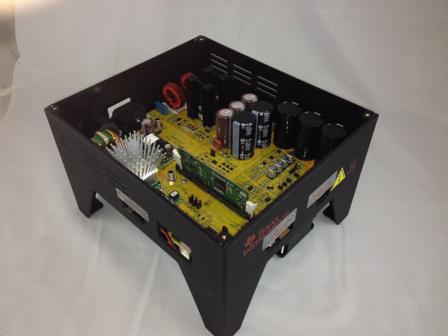
- The TI TMS320C2000 Development Kit for high voltage motor applications (shown above). More about the motor application and all the math here.
- Amazon's factories run with robots that bring shelves to the people that pack and pick items at the warehouse.
Photo courtesy of TI
Transcript
Chris Gammell: This is The Amp Hour Podcast, recorded December 2nd, 2013. Episode 174, Adapting Appraxated Automobiles.
Dave Jones: Welcome to the Amp Hour. I'm Dave Jones from the EEV blog.
Chris Gammell: And I'm Chris Gammell of Contextual Electronics. What's up, nerd? Hello, David. Welcome back to another exciting episode of... Just us. The Amp Hour. Duo. The duo. The duo talk that much about electronics.
Dave Jones: Might not be much electronics today. I don't know what to say.
Chris Gammell: We got some. We got some.
Dave Jones: Yeah, we got some. We always got some. We always slip in a token amount in there.
Chris Gammell: Yeah.
Dave Jones: Dude, it's all happening here for me.
Chris Gammell: Yeah, you got tons of stuff going on. Let's hear it.
Dave Jones: Well, the first thing this morning, this is a big thing. Analogue TV in Australia switched off. That's a big deal. For some old pensioners who's still watching analogue television.
Chris Gammell: Yeah, it's a long time coming. Yeah.
Dave Jones: Well, they reckon that some news report said there were 100,000 people in Sydney who still hadn't switched. So I guess there's a lot of pissed off people at 9am this morning.
Speaker ?: Yeah.
Chris Gammell: Oh, the set's out again. Or however you Aussie say it.
Dave Jones: Thump. Thump on the side. Yeah, exactly. The idiot box has gone on the blink, you know. Yeah. So I can picture it.
Chris Gammell: I guess you said that, how many people that affects. But that doesn't affect you though, right?
Dave Jones: No, I've been digital TV since it started in 2001.
Chris Gammell: Yeah. Yeah.
Dave Jones: You know, I think I started like, you know, a month after it, you know, I went out and bought a digital set top box and never looked back really, you know. I had a lot of fight with it though. Yeah, this was all pre the blog. I used to put all this stuff on the news groups and, you know, other forums that I was on at the time bitching about, along with everyone else. Because the early digital TV receivers were pretty flaky. Yeah. Like in terms of firmware and stuff like, oh yeah. Yeah. You know, you had to buy the right type of, you know, the right brand of box and you had to have the right version of firmware in there and then it might stay up and running for a couple of days. You know, it was, it was all pretty dodgy back then. And yeah, my, my main fear was back then of, you know, buying a TV, which was a premium at the time that had a built-in digital tuner. You know, I, I, I still don't own a TV with a built-in digital tuner. So mine are analog TVs and I've got external digital set-top boxes. Really? Yeah. Yeah. Because that, you, you paid a premium, you know, up until.
Speaker ?: Like still?
Dave Jones: You do? Well, no, not anymore, of course. But, you know, I bought my last TV maybe five years ago, you know. Oh, gotcha. It was still a very premium price back then, you know, for a built-in digital set-top box. And my fear was, oh no, it's built in, you know, you can't upgrade the firmware. It's all just shit and it's, you know, and of course they've ironed out those issues now. And yeah, I don't think there's too many complaints these days, but yeah, no, digital was, um, it was really an issue. If you had like an old, um, uh, analog antenna, analog antenna, right? In quote marks. Okay. You know, well, designed for the analog frequencies because the digital frequencies changed, of course. And the, um, of course the modern type of antenna is the log periodic, uh, type of antenna, which, uh, the log periodic arrangement of the elements. Um, that's what it's called for all you antenna RF freaks out there will know what I'm talking about. And, uh, and of course the coax, um, you know, the loss in the coax and stuff like that was a big deal. So if you had, you know, your old analog TV, you ran through, you know, crappy, you know, barely shielded, you know, 10% shielded coax or something. Um, yeah, over a long run, it didn't really work. So a lot of people like me had to upgrade our, uh, coax to, you know, quad shielded, you know, RG, you know, nine or whatever it was. I can't, I can't remember the exact type, but yeah, it was a big deal. And you get lots of interference, you know, I still get interference. If our roller door goes down on our, in our, uh, up or down in our garage, the digital TV cuts out.
Chris Gammell: Really? Wow. That's not, uh, that's not very good design.
Dave Jones: No. Well, that's, you know, that's, that's how it works. That's the nature of it. It's sort of, you know, that all or nothing thing. Whereas analog TV, you know, yeah, you can get some lines on the screen or you'd get some, you know, static or interference, but you know, it'd still come through the audio would still come through, but digital when it loses it, you know, X number of frames, it just cuts out.
Chris Gammell: Yeah. Mine does that too. It says like a two week of signal or something like that.
Dave Jones: And then it takes a couple of frames to recover itself for the algorithm to recover and start again. And, you know, it's, and you get these large audio pop noises. So when the, you know, badly designed firmware again, so when they roll with all goes up, it's like coming from the bloody TV. It's really annoying. And as Murphy has it, it's right at the critical point, you're trying to listen to something important, you know.
Chris Gammell: Yep. What do you mean the Empire's on a TV yet? Sorry, that was terrible.
Dave Jones: Anyway, yeah, I've uploaded the video and it did switch off. Sure enough, somebody somewhere flicked a switch or more likely didn't flick a switch. They more likely, you know, put a command in your computer. Yeah, big old knife switch with like, turn off a huge power plant. Yeah, that's right.
Chris Gammell: Powering the entire thing, right? And that power down noise, you know. Right, right.
Dave Jones: And, yeah, and sure enough, it went to static, you know. They had a little dancey broadcast animated thing and then counting down, bye-bye, and then, and then static.
Speaker ?: Yeah.
Chris Gammell: You know, it's interesting. I was reading about, I think they said they're going to try and rep, they might repurpose some of that, that what's now white space, I guess. Right. And I think they.
Dave Jones: The spectrum you're talking about.
Chris Gammell: Yeah, like auction it off because it's now, you know, there's a significant portion of section. Or of spectrum that's, that's now available. So, that's, that'll be interesting too.
Dave Jones: I'm not sure what they're doing with the Australian spectrum there. I'm not sure.
Chris Gammell: There's a lot of politics involved with that stuff. A lot of money in politics with spectrum. Especially if it's usable for like, you know, cell phone commercial type stuff. They can really, yeah.
Dave Jones: Yeah, but it's suddenly a big, big smack of spectrum available in various parts. Yeah, I think ours are around, you know, the 170 megahertz or something like that. I don't know about you guys, but, well, you know, there's, there's a spread. And, and it just occurred to me after I recorded the thing, oh, I should have had my spectrum analyzer hooked up and I could have actually seen the carrier disappear. You know, that, that would have been cool. Yeah, that would have been cool, yeah. It just didn't occur to me.
Chris Gammell: Yeah. Oh, well. Yeah, well. You'll get it next time, don't worry.
Dave Jones: So do you, Yanks, still have analog TV?
Chris Gammell: No, I was actually just looking at the wiki page about the, the, the shutoff, but at least in my area, it's all gone and I'm pretty sure it's gone everywhere. I think I remember it because I think, uh, Paul Rako wrote about it when he was still at EDN. He was writing about the switch over. And, uh, I think he might've been writing about the spectrum as well. Um, but yeah, it's, it's definitely gone here. So, uh, yeah, it says February or Friday, June 22nd. 26th, 2009. So.
Dave Jones: Oh, okay.
Chris Gammell: No, that's Night Lane. I don't know.
Dave Jones: Yeah. So we're one of the few hangar honors, are we?
Chris Gammell: Yeah. No, there's a bunch more. Um, right. Uh, it looks like, oh, it says 2015 is the absolute shutdown for LP TV local, local station. So there might be some hangars honors here too, but whatever. It's not like people like running out and buying old sets. It is kind of a weird, you know, it's an end of an era though, because it's like, you know, you could still, you could have still fixed up your old tube TV. You could have still, you know, built kits that could have done it without DSP and all that kind of stuff. But I don't know if that, I don't think that's really possible with digital TV now. So it's, it's kind of a.
Dave Jones: Well, you can feed shit in via the HDMI input.
Chris Gammell: Yeah. But that's a little less, uh, to be tinkery kind of, you know, it's not quite the same,
Dave Jones: is it?
Chris Gammell: Yeah. Right.
Dave Jones: But Hey, you can get a full high definition, digital clarity.
Chris Gammell: Yeah. Whatever. So what else is going on other than TV? We don't watch TV anyways, right? We're, we're building circuit boards and stuff like that, or. Well, we know. Crazy stuff on eBay. eBay.
Dave Jones: Anyway, I am now, well, I will be once I pick it up, the proud owner of a Sinclair C5.
Chris Gammell: Also known to the layman as a nerd mobile.
Dave Jones: A nerd mobile. I'll have one of the few in the country. It's a bit of a fixer upper, you know, but apparently it runs. I need to get a battery for it and needs a good clean by the looks of the eBay photos. But yeah, I scored one. I was the only bidder. I was shocked.
Chris Gammell: Now you need to pimp it out with like a, well, you said maybe you could put reverse into it, right?
Dave Jones: Well, yeah, because it doesn't reverse. Yeah. I'd love to be able to like drive it into the lift of my building here and then go up, but then I can't get out of the lift because there's no reverse gear on the bloody thing, you know?
Chris Gammell: Yeah, man. Well, maybe you could start doing mechanical stuff as well. I don't know.
Dave Jones: Yeah. Yeah. Although the wife doesn't let me, won't let me keep it at home. So, you know, I'll bring it up to eat the shit home. Not a surprising decision there. Yeah, not a surprising decision. Yeah, so I'm going to have to put it up on blocks here in the lab. Yep.
Chris Gammell: Yeah. Very tidy, wimpy blocks. I know. No, that's a good fine. I mean, if you're into that kind of thing, I'm sure you could find, I mean, you said Malcolm already has that, right? Was it Malcolm or someone else?
Dave Jones: Mal. Mal's got one. No, two. Yeah. Yeah. Yeah, he's got two. Well, technically, one's his. One is someone else's that he knows, but. Right. Yeah, I mean, you know, I don't think there's too many of these in the country. So, you know, just from a historical point of view, these things are, you know, they're so cult following.
Chris Gammell: You know, if you park it on the street, you're not technically keeping it at home, you're just using it as a transportation device to and from work.
Dave Jones: Right. Although I live in the Hills District and, well, it doesn't go up hills, you know. Lots of pedal assistance required.
Chris Gammell: If you soup it up, you might be able to. You never know, man.
Dave Jones: Yeah, right.
Chris Gammell: There's a project. Put some actual tires on it, you know, soup it up. Right. Pimp my nerd ride. Yep.
Dave Jones: No, I'll be, yeah, I'll be getting into the whole thing. I'll probably be joining the, you know, the Sinclair Users Forum, you know. Sinclair Enthusiasts Forum, yeah. Goodness.
Chris Gammell: That's the important step, right? Exactly. Couldn't have done that before. Hanging out with the other nerds, you know. Yeah.
Dave Jones: Well, that's what it's all about, you know. You're a, you know, there's not many people who own one of these suckers. I imagine you guys like. You laugh if you may.
Chris Gammell: I imagine if you guys like rolling into like a classic car show and one of those things and be like, what?
Dave Jones: It's a classic. Well, see, that's what I can do. I can turn up to the, you know, electric car shows and things, you know. Woohoo. Drive it in and, yep. It'll be fantastic.
Chris Gammell: Oh, man. Pull into like a Tesla supercharger station and be like. All right. Fill her up, please. Endless nerd jokes.
Dave Jones: Yeah. Well, you know, you said about upgrading. I'm kind of torn. It's like, you know, do you keep the original thing or do you soup it up, you know, and actually make it usable to go up hills and make it go in reverse and, you know, practical stuff, you know. Or do you sort of keep that, you know, that the original retro thing? I don't know.
Chris Gammell: What's the original thing? Why would you want to do that?
Dave Jones: Well, the original motor, you know, everything's original, you know, it's original condition kind of thing.
Chris Gammell: For like resale though? I mean, I never understood that mindset.
Dave Jones: Just for, you know, the sake of it being an original unit, you know. I am not a collector, obviously. It's kind of like buying a, no, it's like buying an old tech scope and ripping out the guts and replacing it with modern stuff or getting, you know, or restoring vintage valve radios and replacing them with transistors, you know.
Chris Gammell: No, I wouldn't think it's like that. I would think it'd be more like replacing, well, maybe, I guess it's not really repair, but, you know, you can do small upgrades here and there.
Dave Jones: Well, you can, yeah. It's like, you know, like a lot of the vintage tube radio enthusiasts, they replace, you know, caps are a major thing. So they will replace, you know, the old paper capacitors with, you know, modern caps and stuff like that, but they'll still use the valves. Yeah. Well, a lot of them, there's a whole, you know, there's a section of the enthusiast industry that, you know, they rip out all the guts, but they keep the look and feel of it. It's fine, but you can do whatever you want inside. Anything goes. And that could be the case here, you know, to make it more practical, I could, you know, rip out the motor and replace it all and put decent wheels on it. And, you know, but as long as it still looks the same on the outside, I guess that's what counts.
Chris Gammell: Yeah, man. Well, I think the upgrades are more fun personally. So plus we could talk motors.
Dave Jones: Well, yeah, no, totally. Yeah, exactly. Are we able to put a poll? Can we put a poll on the...
Chris Gammell: A poll? Yeah. Like to ask what you should do?
Dave Jones: And to ask what people, yeah. What do you think? Should I keep it in original? Is original condition more important or should I make it practical underneath in terms of upgrading the motor?
Chris Gammell: Well, how about we put that over on the EEV blog forum? Because then there's the poll thing there and then people can discuss it as well. Okay. Yeah.
Dave Jones: I'll do that. All right. Poll coming up, folks.
Chris Gammell: We can put it on the amp hour section or if you want, you put it where... I don't care where you put it, but... I have. Yeah. Yeah, but we could talk motors then too. I'm getting into motors.
Dave Jones: Why are you getting into motors?
Chris Gammell: Well, this probably... So I talked about it in the past, the AC induction stuff. Oh, yeah. But I finally got a kit for it. I got like a dev kit and this thing is a monster. It's the...
Dave Jones: Well, as a dev kit, you actually get a motor.
Chris Gammell: Yeah. Yeah, exactly. So, well, there's two parts to it. There's the actual... There's the board and then there's a separate motor that they suggest, but it's a NEMA 48, I think. NEMA 48 bracket.
Dave Jones: Oh, they're used in the quadcopters, I think, aren't they?
Speaker ?: No.
Chris Gammell: No. No. No? No. The NEMA 48 is about the size of a football. Oh, okay. American football. It's like... It's big. I mean, it's like big. Right. It's much bigger than I thought it would be, actually. It's only a quarter horsepower, but that's like...
Dave Jones: And Chris is feeling very manly right about now, folks. I'm scared of it.
Chris Gammell: Everything in this is very scary, actually. You're scared of it. Right. Yeah. So a quarter horsepower is 180 watts, which isn't much, but the... Right. I think the bracket, the NEMA... The NEMA, actually, I never realized, because I have NEMA 23 brackets on my stepper motors from my mill. Right. And those are stepper motors, so they basically send out pulses, and basically one pulse is one little crank onto the gear, basically, and that's how much it moves. So the NEMA refers to the size of the bracket, and a lot of... Like, the MakerBot uses, I think, NEMA 17s. I'm not sure. Right. Yeah. Like, those kind of stepper motors. Yeah. So this is a 48. So it's bigger, but this is not stepper motor. This is AC induction, but then there's also, you know, brushes DC and everything else. Right. So that's one part of the kit. There's, like, motor. It's not really part of the kit itself, but it's the motor that we bought. And then the kit, though, so I got a kit from TI, a TMS. I'm looking at it right now. It's a huge box. TMS...
Dave Jones: But it's not really a kit, is it? It's a build-up board.
Chris Gammell: Yeah. Sorry. Yeah. It's a development. It's a development platform, really. Right. The TMS 320 C2000.
Dave Jones: Oh, so it's actually got a DSP on it. Is that...
Chris Gammell: C2000 is a micro. It's not a DSP, I think.
Dave Jones: Oh, well, you said TMS 320, which is a DSP. Is it? See, that's how I've done it so far. Yeah, which is a Texas Instruments DSP, yeah.
Chris Gammell: Yeah. Okay, yeah.
Dave Jones: It's still getting into it. But it's got some powerful computing on it, right? And what's all this computing for?
Chris Gammell: That's not the scariest... Well, because that's the thing. Like, so I talked about... I marveled at it in the past, because I didn't really say much about it. And like I said, I'm still learning a lot about it. But the... All of this stuff, it's like, there's so many, like, algorithms and stuff like that, because it can basically... You know, you measure the different... It's a three-phase, so it measures the different voltages and currents and stuff like that. And then basically, it can infer position from that. And there's like all this crazy-ass vector math in there. And all these translation algorithms, like the... I think it's a Park transform, and there's like a bunch of different transforms in there. Mm-hmm. And so it can actually intuit, or calculate, rather, the position of how far it's turned and stuff like that, and how fast it's moving and torque and yada, yada, yada. And then eventually, what it does...
Dave Jones: Oh, does it read back the signal as well, so that it can actually read the position and stuff like that, or infer the position from the EMF feedback or something like that? Yeah, there's two things. I think some of them do that, don't they?
Chris Gammell: You can actually stick an encoder on there. An encoder will actually tell you the absolute position, right? Of course, right. Yeah, that's how much it spins. But then, yeah, there's these other algorithms that tell you position based on calculation. But that's not even the coolest part about this kit. This kit is actually... It's an offline... So, basically, it takes wall power, right, in this case, 120, around here, single phase.
Dave Jones: Well, you said it's three-phase, though.
Chris Gammell: Well, that's the crazy thing. It takes wall power, and it does power factor correction on that, 120 volts to 350-volt DC bus.
Dave Jones: DC, and then converts it to three-phase ACET.
Chris Gammell: Yeah, and then it has an inverter, a three-phase inverter. And, like, looking at this thing, you've got to look at it. I've got to see if I can find a picture of it. But it is, like... I mean, it's probably... It's about...
Dave Jones: Yeah, I've got to say, this has got to be a big board, right? Like, say, the size of an A4 sheet or something.
Chris Gammell: It's, like, a foot and a half across.
Dave Jones: I was going to say, yeah.
Chris Gammell: It's, like, half a meter across, and then probably about a third of a meter deep.
Dave Jones: Oh, half a meter?
Chris Gammell: Half a meter? Dude, what are you talking about?
Dave Jones: Half a meter is 500 millimeters.
Chris Gammell: That's a foot and a half, isn't it? Half a meter?
Dave Jones: No, well, a foot is only 300 millimeters. A foot and a half would be 450. Okay, it'd be almost, yeah.
Chris Gammell: Yeah, it's almost 18 inches across. Yeah, it's huge. I'm telling you, it's huge. Anyway, so this is just one of the platforms out there. I got the TI... It's a TI one, but there's, you know, a bunch of people have this stuff. And the thing I didn't realize is it's such big money in this. I mean, like... So, basically, what this does is it, you know, it basically creates a... It's... You know, you can just plug any of these AC induction motors into the wall with three-phase power, and it'll just... Of course. It'll just spin, right? Yeah, but now you can basically control those different phases and change the speed, change the torque, all this other stuff, do dynamic... Dynamic calculation.
Dave Jones: And what would these things be? What would they be the typical end application for these three-phase induction motors powered from all this wizardry?
Chris Gammell: Ah, so, like... Robots? So, like, a lot of them are, like, industrial drives are the big ones. Uh-huh. So, you might be running, like, a big pump or, you know...
Dave Jones: Yeah, but a pump just goes on-off, right? On.
Chris Gammell: Right, but a lot of this is power saving as well. So, basically, you can... Ah, right. Instead of, like, having... So, this is, like, a variable frequency drive is what the entire units really call a VFD. Yep. And, basically, by changing the frequency, you change the overall power usage, and you can change the torque and all these other things that I don't understand yet. But, basically, the idea is you can save a lot of power over just having a big switch that you ka-chunk on, ka-chunk off. Right. And then the other really cool thing is that, you know, you can... Because it's dynamic, right? Like, if you look at, like, how a Tesla Model S works or something like that, you know, they're doing a very similar kind of thing where they don't have an offline power factor corrected circuit that powers the DC bus, but they have a big battery bank that sits there and does the same kind of thing. And so, they, you know, they charge the bank, they discharge the bank through this inverter back and forth, back and forth, back and forth.
Dave Jones: And they're using three-phase induction motors, are they, on the Tesla?
Chris Gammell: I'm pretty sure. I could be wrong about that. Right. But I think so just because I remember being shocked when I heard that at first. Right. That's basically what I'm going off of here. Yeah. But that's... I know for, like, regenerative braking, that's a lot of the stuff, so...
Dave Jones: Okay.
Chris Gammell: Yeah. So, exciting stuff. But I am terrified. I mean, so... Why did you get this thing? For a project I'm working on with a friend. Oh, right. Okay. Yeah. It's...
Dave Jones: Because you don't have enough stuff on your plate.
Chris Gammell: No, definitely not. This is a really good one, though. I'll tell you after the show. It's a very good cause. Ha, ha.
Dave Jones: I know, and you don't, guys.
Chris Gammell: Yeah, and I know secrets about Dave, too.
Dave Jones: Right, yeah.
Chris Gammell: Yeah. But anyways, the kit itself is beautiful. I mean, it was like 700 bucks. It was insane. I was going to say, yeah.
Dave Jones: It sounds like it wouldn't have been cheap. Does that include the motor, or is that just the board?
Chris Gammell: No, the motor's another 300. So that's like... Oh, wow. A thousand bucks for just to play around. I did not pay for it. It's serious, right?
Dave Jones: No, this is not hobbyist stuff, right? This is not hobbyist.
Chris Gammell: No, no, this is not. And if you look at the... I mean, like, these are some big IGBTs on the board. I mean, this is like a lot of...
Speaker ?: Oh, yeah, yeah.
Chris Gammell: They're very expensive. This is some high-end stuff. It's very nice. Yep. And like you said, actually, the thing I really like about it is that the board, the control board is, you know, it's a C2000, Piccolo, whatever, and then might have a DSP, like I said. But it's all on like a so dim, like the memory style slots. So they repurpose those, and basically, they're replaceable for when I blow them up. Right.
Dave Jones: When, not if, yeah.
Chris Gammell: Yeah, right. Well, that's what I'm really worried about is like I haven't had... I've done high-voltage stuff before, but it's always been in a work context. I've never had this high a voltage at home before. And so I'm a little trepidatious about it, but...
Dave Jones: Right.
Chris Gammell: I'll get over it. Yeah. Yeah. Sounds like fun. Enjoy. But I don't know. But I mean, yeah, I think about this stuff, too. I mean, this is not the purpose of it, but I think about it from like a... Say like I had... Say, you know, you have solar panels in your house, right? Right. So say you had like a storage grid then, right? You had a storage... Mm-hmm. Maybe you had a 350-volt stack in your house, right? Well, this kind of kit or this kind of application is the first time I've ever been like, oh, you can actually take that and make it something useful again. Like you could run a compressor on a fridge, right? I mean, that's... Yep. In fact, the compressor is just a motor, I mean, on the back. And so you could run a fridge off of this kind of thing. You could make smaller versions of this kind of kit and make a whole bunch of DC accessible equipment for a DC-powered home. I mean, like it's kind of the first time it all snapped together in my head and I knew it was possible somehow. I just didn't know what. And this is... But like a lot of this inverter technology and stuff like that makes it more possible. Obviously, there's commercial inverters as well because you, you know, feed back to the grid with that kind of thing. But yeah, I don't know. It just never really clicked for me.
Dave Jones: Brilliant. Can we expect to see some videos on this?
Chris Gammell: I hope so. Yeah, I have a video. We were cutting a mounting bracket on my mill for the motor. I still need to edit that, but that might be up eventually. And yeah, obviously the electronics as well.
Dave Jones: Well, obviously.
Chris Gammell: Obviously.
Dave Jones: That's what people are interested in.
Chris Gammell: Not all they're interested in.
Dave Jones: We were in an electronics podcast.
Chris Gammell: Hey, you know what? You have to be an everyman these days in order to... You do. You need to be able to do everything. You can't just do electronics. You can't just do hardware. You have to do software as well. You have to be a purchasing agent these days. Yeah. You have to be a mechanical engineer, right? I mean, like...
Dave Jones: Yep.
Chris Gammell: It's everything.
Dave Jones: Do all those 3D CAD models for your 3D printer.
Chris Gammell: Exactly. You've been doing that.
Dave Jones: Well, which you can probably... Yeah. Which you can probably only buy from MakerBot in the near future.
Chris Gammell: Oh, yes. Stupid lawsuits. And you have to be a lawyer these days because you have to deal with... Uh-huh. If you haven't... Yeah. Go ahead.
Dave Jones: What do you have to deal with before I start my rant?
Chris Gammell: I was going to say licensing. I mean, whatever comes out of this crap. I mean, it's going to be something soon. But I don't know. It's just... This is all lawyer-y.
Dave Jones: Yeah. This is just bullshit, folks. If you haven't heard, Stratasys, who bought MakerBot, right? They're a huge industrial 3D printer company. And they've decided to sue Affinia, which is a small American company, I believe, who sell the Up 3D printer. Right? And I think, you know, it's not their printer. It's Up's printer. But they've decided to sue them based on some patents for various software algorithms or something like that that they've had for, like, 20 years. And so, yeah. Stratasys, bunch of dickheads, have sat by for 20 years, you know, let the whole 3D desktop printer industry build up. Not saying a word, you know. Not threatening anyone. And then all of a sudden, we buy MakerBot, and as soon as the deal is signed and gone through, boom, we're going to sue everyone. Well, they've only sued Affinia, first of all. Right.
Chris Gammell: The ones with viable products, right? Yeah. They're not going after, like, an Ultimaker, like, the smaller hobbyist stuff right now.
Dave Jones: Not yet. But see, that's the thing. This is a strategic play. And it's obviously a strategic play to dominate the desktop 3D market. That's why they overpaid for freaking, you know, they got paid a ridiculous amount for MakerBot. And everyone knows it. And this is the way that they're going to justify it by either shutting down the rest of the industry or scaring them into licensing fees.
Chris Gammell: Yep.
Dave Jones: And it's a strategic move because they haven't gone after the biggest competitor to MakerBot. They've gone after, like, a mid-level player, right, but still a decent name. You know, that Up printer is one of the most popular printers out there. But in terms of, you know, competition, they're not the biggest. And they've deliberately gone after them. Why? Because it's, you know, it's obvious. They don't have the money to defend a patent lawsuit. Right? Right. So what's going to happen? They'll have to either, well, find a, you know, a company that would take on a couple of million dollar case for, you know, gratis, which doesn't happen very often. Or they would just have to fold the company. Or they'd have to settle and pay a licensing fee if that's what stratuses want to happen, which, you know, is likely. And then once that happens, that's why they targeted this mid-level player. Because they know they can't defend this lawsuit. So they're going to have to cave in one way or another. And then that sets a precedent for everyone else in the industry. And, oh, look, if Finia got sued, oh, shit, we're next, you know. And everyone runs scared shitless of the, you know, of the big bully in the industry now. Stratus is a bunch of assholes. Yeah. End rant.
Chris Gammell: Yeah. Well, this is, so the, Finia is the, so that's different than the, the other big company is 3D Systems, right? That would be the other big player.
Dave Jones: Yeah, yeah, 3D, another big player.
Chris Gammell: But if, I think I saw it's the infill, which is what they actually patented, right?
Dave Jones: There's a couple of things, yeah. There's the infill, like, you know, the 10% infill plus the sort of an algorithm, I think, of rounding the corners or rounding overlaps or something like that. But, you know, I don't think anyone's really gone in and analysed to see if these patents are even valid or whether or not it's a valid claim yet. But as everyone knows in the patent world, that doesn't matter. Whether or not it's a valid patent lawsuit makes absolutely no difference whatsoever. If Finia still have to defend it. And to defend it will cost millions of dollars, which they most likely don't have.
Chris Gammell: Yeah. Yeah, it's so dumb. I mean, like. Yeah, I know. It's like you have to stay a certain size, right? Like, that's the ultimate thing is you can't get too big or else everybody comes gunning for you.
Dave Jones: You'll be on the grid, right? Yeah.
Chris Gammell: Yep.
Dave Jones: And if you, yeah.
Chris Gammell: And then all the lawyers come out.
Dave Jones: Yeah. It's just, I know. It's bullshit. Yeah. So, oh, man, this is just, yeah, this is bad for the desktop 3D printing industry, which is just, you know, hitting mainstream now. And bloody hell.
Chris Gammell: Yeah. Well, and I think it was Stratasys that went after, I think they're still going after, what's their name, the Form 1 for the SLA printing as well.
Dave Jones: Oh, no, that was, no, that was 3D Systems, actually.
Chris Gammell: Oh, that was 3D Systems going after.
Dave Jones: That was 3D Systems, I believe, who, yeah, got the licensing fee out of, which that patent's now expired, apparently. So they were like a year too early. So I think now anyone can do the, yeah, the laser sintering thing without violating 3D Systems patent or something like that. Don't quote me on that, but I think that's the case. So there you go.
Chris Gammell: Boss, stupid, stupid lawyers. I know. Stupid executives. That's why we stay small, right, Dave? That's it. Yeah. That's the one. Off the grid. That's the one. Yeah. Speaking of small companies and ones that probably are using 3D printers too, there's actually a new seminar series, which is actually kind of interesting. I don't know if you saw this thing, the hardware workshop. Did you hear about that?
Dave Jones: No, I haven't seen it.
Chris Gammell: Yeah, so it was started by, oh, shoot, where is he? Mark Barros, who started Contour Cameras. But basically, it's an application process, but it's actually this coming weekend in New York, the 6th and 7th. And there's actually some familiar faces there too. So Scott Miller, who's been on the show here. Scott Miller's there, yeah. Yeah, he's going to give some talks. Some of the guys from Lemnos Labs. I mean, a lot of the hardware startup companies, Dropcam, Siftio, a lot of the ones we've heard of in the past, but also, you know, the ones who have some good experience too. And obviously, Scott having a lot of experience over in China with high volume production. There's a guy from Flextronics, which is a huge, that's a huge CM over there too. So, yeah. Yeah, and it looks like a cool program. It looks like it's not going to be stopping anytime soon. There's already one in San Francisco. There's another coming up in Seattle.
Dave Jones: Well, these programs seem to be jumping up everywhere. I'm always hearing about, you know, these, you know, Kickstarter hardware startup workshops or, you know. Yeah, meetups, there's a lot of meetups. You know, funding meetups and there's, yeah, there's tons of them.
Chris Gammell: There's a lot of interest, yeah. It's crazy. I don't know where it's all going to go.
Dave Jones: Every man and his dog. Well, every man and his dog's doing a hardware startup these days. It used to be software. Now it's bloody hardware.
Chris Gammell: Yeah. Well, I think we talked about that a while back too. And like, you know, I was worried about it becoming a little, what's the word? Shammy? Saturated? Yeah. Saturated is a better word. Market. I guess the thing that kind of starts to bug me about it too is like all this stuff is really tiny, you know. And so I think that's why I'm getting more interested in the bigger stuff as well. Like not to be a contrarian. Tiny in what way? Well, like this little thing talks to a cell phone. Oh, this other little thing talks to a cell phone. Oh, this little thing talks to a cell phone. No, you're talking about it. It's just accessible stuff.
Dave Jones: Everyone's doing a startup based on one little gadget. Right. Right.
Chris Gammell: It's a, well, and it's, it's basically, I mean, we should say for what it is, right? I mean, it's really a, it's a, hardware is just a way for, for these kinds of companies. A lot of it is hardware is a, is a peak into a marketplace. Right. So, you know, you might have something that outputs data to an app.
Dave Jones: Or it's a business building thing.
Chris Gammell: Yeah, exactly. And then you can have, you can sell the data to people.
Dave Jones: Well, that's the problem, isn't it? People are, well, yeah. But, you know, people think, oh, it's a way to get rich to build up a business. You know, to me, like I, I never think like that. I don't want to build up a business. I just, oh, I got an idea. Okay. I'll, you know, I might put it on Kickstarter or something. But, you know, my, my idea is to produce the product rather than build up a business.
Chris Gammell: Yeah.
Dave Jones: You know, it's sort of like a one-off kind of thing.
Chris Gammell: Yeah. And I, it's.
Dave Jones: But there's so many people out there who go in with the mentality of, oh, we're going to do, we're a startup to build a company rather than to just focus on the product. You know, the product's just almost, you know, it doesn't matter. Inconsequential. Just a way. Yeah, it's inconsequential. It's just a way to start up the company.
Chris Gammell: Huh. That's an interesting way to think about it too, because, you know, it's good to have that focus on the product as well, because that, that's probably what's most important, especially with hardware, right? There's nothing else really there. You don't, you might have a community behind it, but it's like, if the product's crap, then who cares? Um, yeah, that's interesting. I mean, I keep seeing these articles about it though too, you know, like, oh, we didn't, we didn't understand everything that went into it. And I don't think I know everything that goes into manufacturing because I am continually in shock and awe. There's always something to learn about manufacturing. Yeah, there's always like, oh, crap. But there's, there's a post about that, uh, that actually kind of fits in with your recent video about, about testing. There was one from Pinocchio, if, uh, people remember that one. It was, uh, uh, basically a mesh network, um, kind of like a, a dongle that kind of, you could hook anything to it for mesh networking. It's kind of like an Arduino plus a, plus a wire, uh, uh, I don't know if it's Wi-Fi or if it's, uh, Bluetooth or something like that. I don't know if it's Wi-Fi. But then basically it, uh, you know, it creates mesh networks through a software layer as well. Um, and so that's the idea there.
Dave Jones: I've written this down. They've had to build up a team of 11 people.
Chris Gammell: Right, exactly. I mean, like.
Dave Jones: Wow. Right.
Chris Gammell: You're not going to just be doing a three-person coding team, right? It's going to be manufacturing and quality and, you know, like, yeah, it's, there's a lot of stuff there. And so they're talking about testing and, you know, setting up jigs and, and the realities of having it. And it's, and it's a good, very good post about, about all of the things you have to work through. And, and, you know, it's, it strikes me both from the, of, you know, of course you need to do this, but then also feeling bad for them, for them having to do all this stuff. You know what I mean? But, and this, and this is a relatively, I mean, it's not a simple product because there's RF involved and everything else, but it is an Arduino based platform. So it's not like, you know, it's not like there's an FPGA on board and like, you know, a high end free scale or Intel or anything like that. So there is still, you know, some level of comprehension there. Right. But it's like, that's not, it's still, there's still a lot involved there. You know, a lot of programming and testing and Pogo pins and stuff like that.
Dave Jones: Yeah. Yeah. I know. There's tons of it. They've got some good photos on there of their jigs and stuff like that.
Chris Gammell: Yeah.
Dave Jones: Yeah.
Chris Gammell: You just made that video about, uh, testing on, on, uh, panelized boards, which is very, that was a very good video.
Dave Jones: That's just one aspect to do it. Yeah. You know, Pogo pins is the other, which I've done a video on, uh, before as well. Yeah. And yeah, there's many different ways to skin that, uh, test in cat. But that's for sure.
Chris Gammell: Yeah. Yeah. Choose your poison. No joke. I have ever, you were, I mean, like, I guess that, that, uh, board you were doing, the, the microcurrent doesn't have any programmable parts on there. No, there's no programmable parts.
Dave Jones: So that's one good thing in its favor, you know?
Chris Gammell: Right. Right. But then you could do it. I mean, if it did, you could do like J tag chain, that kind of stuff. And actually.
Dave Jones: I could do a J tag chain all the way through the board. That's one of the, uh, things, which I actually forgot to mention in the video, but yeah, you can do programming through the breakout of the board so you don't have to, you know, plug in. And, you know, pogo pins can be a pain in the ass because if you've got a big panel, right, and you've got, you know, 10 or 20 boards on there and you've got, you know, you could have hundreds of pogo pins. And if one of them doesn't make contact.
Chris Gammell: Yeah. One spring sticks, right? Yeah.
Dave Jones: One spring sticks or, you know, and you've got to have multiple clamp points to clamp them down. So you spend more time clamping the bloody thing down and getting reliable pogo pins and well, you know, it's, that's where the advantage of, uh, the video I just did where you can route signals off your board if that's, um, you know, possible. Uh, and then you can just plug in a single test connector on the side and bang. But you know, it, it was for the, something like the microcurrent, it comes down to, well, how much effort do I put into it? You know, I could fully automate the thing, but then I've got to have, you know, I've got to design a separate automated test jig that has, you know, switching of, you know, low level currents for 10 different channels and all that sort of stuff. Well, that'd be cheap, right? Yeah. But the time and effort to program, yeah, to make the board.
Chris Gammell: No, I'm saying that's not cheap for doing low level switching. That's not cheap. It's like.
Dave Jones: Oh, no, it's not necessarily cheap. You've got relays on board.
Chris Gammell: You've got to make sure you're, you know.
Dave Jones: Yep. All your leakage currents. Exactly.
Chris Gammell: Yeah. You've got guard traces everywhere. Yeah.
Dave Jones: It's not easy. So how much effort do I put in versus how many I'm going to make? You know, I don't know how many I'm going to make. So, you know, you sort of do a compromise. Oh, yeah, I can, you know, save a few minutes testing here by just doing this simple thing. But, you know, it's that diminishing returns thing sometimes. Definitely. How much effort do you put in versus the reward at the end of it? Yeah. Well, you know, I'd rather be working on my product and packing and shipping it than designing a test jig to test it.
Chris Gammell: Yeah. You know. You can always go back and add in like a, you know, programmable readback or something like that, you know. Yeah. Really, really throw a wrench in the works. Oh, boy.
Dave Jones: And then, you know, you can go to town and have, you know, read individual serial numbers from boards and print out automated test reports. I've done that before for commercial stuff. You know, yeah. Well, you've had like an ID chip, you know. You'd use one of those Dallas Maxim ID. Yeah. One of those unique, you know, laser ID chips. So, each board has its own ID and you have automated software which reads that and then you can associate a test report with that individual board and, you know. Woo.
Chris Gammell: Yeah. Serious business. Which is great for troubleshooting too, by the way. Oh, yeah. Yeah, but you don't have that.
Dave Jones: And after sales support, you know. Yeah. Yeah. Yeah. Your board doesn't work. Well, look, here's the report that says it worked when it left the factory. So, you blew it up, asshole. Yeah.
Chris Gammell: You blew it up or call UPS, one of the two. Yeah. Right. Yeah. Yeah, that's a lot. There's a lot of stuff in there. I mean, and so like that. I mean, that's why it's good that there are these workshops here. I mean, for working on a lot of this kind of stuff. And it's not just testing either, right? I mean, it's also just like getting the damn things built. Yeah. I know. I've been thinking about this lately because I've been dealing with some manufacturing stuff and going from, you know, like there's a lot of stuff that people know about, right? With like the, you know, you have schematic, you have a board that you usually translate into Gerber's that you send off to the Fab House, right? And those two things exist in time, right? So, you're at rev A of your schematic, rev A of your layout, right? And sometimes they get decoupled where your layout might change, but your schematic might not. But then there's other layers there too where you have population options. You have different parts that you could populate, right? If you have pin compatible parts in there. And so, I asked a question on Reddit today about that because, you know, it just seems so messy that all of this stuff, at least in the experience I've always had, it's always gone down to like spreadsheets. You know, it's always like the lowest common denominator of information is, you know, spreadsheets of, you know, if you have an at mega 328 and I need two of them on my board and here's the reference designators, you one and you two, right? And it's like the lowest common denominator of information there is a spreadsheet, but probably not the best way of doing it because you can have, you know, just different levels of assembly versus, you know.
Speaker ?: Yeah.
Dave Jones: There's different types. I'm still doing my stuff with spreadsheets, right? So, I'm manually entering all the spreadsheets, finding the codes on DigiKey, cutting them, pasting them into spreadsheets, but then I have different types of spreadsheets. One will be a production BOM spreadsheet and another one will be, you know, one that's designed for, you know, hand assembly short runs and stuff like that because there'll be different parts. I'll be buying on real, you know, cut tape instead of reels and, you know. Yeah, right.
Chris Gammell: Because then there's different part numbers too, right? And that's just annoying. Mm-hmm.
Dave Jones: And then how do you get the pricing for all that, you know? You know, oh, shit, you know, there's one part I need to buy a thousand of minimum quantity and, you know, how does that factor into? Right. But I only want to do a run of a hundred.
Chris Gammell: Well, you know, how do you amortize the cost? And the other thing I was saying in there too is that, like, so my perfect world, I think, and I asked this on Reddit and there's some good responses here as well, you know, about how people say this stuff. At least the way I've been doing it for Contextual Electronics, which I actually really like is, first off, I really am liking GitHub. I think it's a great way to track stuff because it's very trackable from version to version. You know, it's not version one, version two. It's like, you know, save date one, save date two, and here's the difference between the two. But I think what I've come down on is actually using your schematic as a control document, which a lot of people don't like because you think about, like, okay, so I have a zero ohm resistor that I do or don't want to populate that, you know, enables different parts of the circuit, right? Well, yep. I have to go in and then change the schematic or an attribute in the schematic that then propagates through to the final assembly, right? Well, that doesn't work in most situations because your purchasing department or, you know, your CM is not going to go and open up a schematic. They want, does it get populated or not? Well, who knows? But my assertion is if you have it in the schematic, if you have a attribute in your schematic that says populate or don't populate, you can then programmatically generate a spreadsheet afterwards and use that.
Dave Jones: Well, that's how the more advanced tools like Altium work, you know. Right. Ideally, how they want you to do it is, you know, everything goes into the schematic, you know. You've got all the part number information, supplier information. Right. Huge libraries, right. Whether or not it's populated, yeah, into these massive schematic libraries. And it's all in there. And then you push that forward to your, you know, to generate your bomb, you know, all your, you know, various bombs and different templates and all sorts of stuff from that. Yeah. So, you know, but there's just, you know. It's messy though, right? Commit. Well, unless you commit 100% to do it that way, it doesn't work.
Chris Gammell: Right. Well, and so that's part of the reason I have to think about it too is because, you know, I've thought, okay, that is probably, that's probably the best way to do it in terms of like logistics and stuff like that until you have a purchasing department or something like that because then you have, you know, a purchasing person who has to either go into the program or have, you know, a separate license to that program and have some way of, you know, editing the library and updating on-hand quantities and all that other crap, right? Right. Now, granted, KiCad fixes that because you don't have to pay for another seat then, but it's still a mess, right? But that's kind of why I was thinking about it like that. And it's, I don't know, man, it's still a tough problem to solve. I don't know if it's been solved yet.
Dave Jones: No, and there's just so many variables involved. Everyone, you know, there's no one right way to do it. In fact, it's just more important to be consistent in what you do than to do it a right way. Yeah. You know, in quote marks, right?
Chris Gammell: And to check your work. That's the other one. Yeah, yeah, exactly. Checking your own work is impossible. It's like, yeah. Well, I have a good friend to check your work. How about that, right?
Dave Jones: Yeah, well, that, you know. Nah, Murphy will get you every time. Yeah. I'm convinced of it.
Chris Gammell: Well, I do like that. So some of the people in here were talking about, you know, making copies of the entire project and then, you know, saving Rev1, Rev2, like entire zipped up folders. That's one way of doing it. Yep, I do that. Yeah. Yeah. And that's kind of like, that's kind of like what GitHub does, except it, you know, it doesn't save everything because it just shows what's different. Right. Yeah, and versioning, you know, having different, but man, it's just, it's a tough problem. And so this kind of stuff, it ends up biting people like the Pinocchio guys or, you know, really anyone in a hardware startup dealing with that, not only dealing with that in terms of how do you keep track of that across revisions and, you know, different hardware versions or software versions, everything else like that. But then also, you know, they're trying to save money. So they go to China and it's just like, oof. What a mess.
Dave Jones: And then they try and think they can hand it off to someone. Yeah, we've talked endlessly about that.
Chris Gammell: Yeah.
Dave Jones: Doesn't work. Yep. Well, it can work, but, you know, you only hear the success stories, you know. Oh, yeah, I just gave it to China and everything happened, you know. Right, right. Yeah. Yeah, what about the hundred that didn't, you know, and just fail miserably.
Chris Gammell: Or the buckets of money you had to hand over that actually fixed it, right? Yeah, right, yeah. That's usually what it comes down to is the buckets of money.
Dave Jones: Yes. And you had to hire people on the ground over there, you know.
Chris Gammell: Yeah.
Speaker ?: Yeah.
Chris Gammell: I wanted to ask you about your video real quick. So Dave made a video that was really good about running traces, like he mentioned, off the panel.
Dave Jones: Off the panel, yep. Through the little breakout tabs.
Chris Gammell: Yeah, the breakout tabs. So would those signals be exposed then, or how are you going to deal with that? I don't know if you talked about that in your video.
Dave Jones: Well, yeah, they're exposed. I mean, they've physically got to run across that breakout tab, and then you cut the breakout tab with your, you know, your cutters. Diagonals. Or whatever tool you're using, you know, as a proper depanelization tool, like a little nibbler thing to, you know, cut these tabs out. But yeah, you're shearing through that trace, you know. And, you know, that's just the way it is. There's no way to avoid that, really.
Chris Gammell: So do you think you'd like seal that up or something, though? Or like, you know, like a dab of like clear acrylic? No, no, no.
Dave Jones: You generally wouldn't sell it. No, you would just leave it. You'd just leave it. But that's the thing. Like, because you've got a mechanical shearing process, you can't have traces right next to each other. You can't always guarantee that they're not going to be shorted together, you know, because the nibbler tool might, you know, jam those two traces together. And oops, they're shorted out.
Chris Gammell: So, you know.
Dave Jones: And then we haven't even got into the electrical signal integrity aspects of routing signals off the board either. You've got to be careful there as well. You know, if you've got any critical signals, you can't have these just antennas just hanging off the side of your board somewhere, you know.
Chris Gammell: Huh, yeah.
Dave Jones: So that can be a big deal. And yeah.
Chris Gammell: So limited situations or else you have to go to a more complicated, like flying probe setup or anything like that.
Dave Jones: Well, a flying probe or pogo pins or something like that. You know, when you're talking signal integrity, you know, pogo pins can be better, but they can be a pain in the ass too, because then they've got to go, the signal's got to go through the long pin. You know, if you're trying to probe a USB 3.0. Socket, for example, well, you know, good luck, you know, getting full data rate on that. You know, you're better off, you might be better off just plugging the cable in, you know, taking that man hour hit, you know. In terms of testing, you know, physically plugging the cable, because you just can't pogo pin a, you know, a three gig signal or something, you know. Well, you can. There are technologies to do that. But, you know, yeah, expensive. Buckets of money, yes. You can't afford it. Yeah, exactly. Buckets of money. And there's lots of revisions to get it right and all that sort of stuff. So, you know, yeah. But no, this technique of routing the signals through your breakout tabs and stuff like that off your board, it can be very handy. Because as we mentioned before, you know, getting a whole bed of pogo pins is not easy. And those things are expensive. And they're not very reliable. They're expensive little things.
Speaker ?: Oh, yeah, yeah.
Dave Jones: They're quite expensive. You know, a couple of bucks each.
Chris Gammell: Oh, yeah. Oof. Yeah.
Dave Jones: No, if you've got, you know, if you've got hundreds of them, you jig and then you've got to replace them. There are, you know, they do wear out and stuff like that. Whereas if you've got a... But, you know, off the end, it might be more sensible to have your pogo... Still use pogo pins, but having them on, you know, on one side of your panel instead of under your board. Because if your board's a very dense board, you may not have room for test pads, for example. You know, you've got a really tight layout on your board and shit, I can't afford room for test pads. Right.
Chris Gammell: And you never plan for them up front. You're always at the end, you're like, oh, we should have put in test pads.
Dave Jones: It's pads. And then you try and get the pogo pins on the end of your 0402 resistor. You know, they just fall off. If you've got to use the right head, you know, like a crown one to sort of catch and they just fall off and it's just ugly and they short out the component next to it because you've got such a dense board, you just can't, you know, do it. It's just, oh, yeah. Yeah. It's a world of hurt. It really is. But that works if, as you said, if you forgot to include test functionality, like, you know, this mob we're talking about who, you know, found that, oh, shit, we have to test our boards. Um, and you didn't plan that into your design, then, yeah, you know, it's a good fallback position. Just build a test jig with pogo pins on the bottom and hopefully you can get it working reliably enough to test your run of, you know, 10,000 boards.
Chris Gammell: Only 10,000. There's no big deal. You'll get through it.
Dave Jones: And then there's, you know, the stuff about, yeah, you know, uh, bad contacts and things, not only on pogo pins, but on test connectors. Because I mentioned in the video that you have to design into your test jig to make it easy to replace your test connector. Because it's only going to have a finite number of cycles. You know, the PCI connector I use, for example, in one design, that's only, you know, 500 cycles or something. Right. Yeah.
Chris Gammell: Depending on how much gold you get and everything like that. Yeah.
Dave Jones: Yeah. Yeah. You could pay, you know, five times the price for the connector because it's got double the amount of gold on it. Yeah. 30 micro inches. Triple the amount of gold. Yeah.
Chris Gammell: 2,000 insertions. Yeah. That's right. Yeah. But you don't. Place the price.
Dave Jones: But then you, you know, the data sheet might say 2,000. Right. But in my experience, no, because you're forcing the board in at different angles and stuff like that. Yeah. That's just a theoretical, you know, limit. But when you've got jigs that, you know, slide boards in or people are inserting them by hand, which is even worse, you know, they don't always go in vertically. They go in angles and that can rule in the connector. And they don't always go in gently. No. Slam. You know, you've seen these production operators. Shit, it's, you know, 10 to 5 on a Friday afternoon. Wham. There's beer to be drank. And all the night shift, even worse, you know. Oh, yeah. I used to be on the night shift. Oh, yeah. Yeah, yeah. We were terrible. I know. You bastards. Yep. The guys like me who had to come in the next day and fix all the shit that the night shift ruined. Gamma. You know. Worst is night shift on a weekend, you know. You come in Monday morning and all the test jigs are just broken. You know. Just have to spend all the Monday fixing the bloody test jigs.
Chris Gammell: I think a good rule of thumb, too. I remember reading about, like, startups and stuff like that. And some good advice I read was it was for software startups where they're like, you know, get used to being like, you know, you can prove out ideas by being like the human machine, like the man behind the curtain and like operating stuff and faking it like that. And I think the parallel for hardware is get ready to just be sitting there and doing your own testing. You know, if you're the designer, you might be in for some drudgery, you know, like testing and plugging and unplugging and soldering single resistors on 100 different boards and stuff like that. And just find a good podcast.
Dave Jones: And be prepared to do that right when it comes off the end of the line, too. You know. Oh, yeah. Because, you know, big thing is you don't want to push that button running, you know, 500 or 1,000 panels through the SMD machine. You want to, you know, once they've got that machine set up, you want, okay, run one panel through, please. And you stand at the end of the line and you take it off. Ouch, ouch. It's hot. You know, and then you start testing it. Is it okay? And then you've got to give the nervous thumbs up for, okay, run the 1,000 panels through. Okay enough. You know. Yeah. Yeah, exactly. And then you cross your fingers and hope, well, you know.
Chris Gammell: Hope you're not there until kingdom come for soldering single resistors.
Dave Jones: Oh, is that diode backwards? Oh, I forgot. Because, you know, if they load the wrong part in backwards on the loader, you know, on the feeder of the machine and you push the button on 1,000, well, you know, yeah, it might be their fault, but, you know, when you've got to ship boards to your customers, well, it's ultimately your problem, you know. Yeah.
Chris Gammell: So, yeah. Yeah, that's where manufacturing is very unforgiving for personal lives sometimes. There is no, yeah.
Dave Jones: Have you ever tried to extract a penalty out of a contract manufacturer? Like, oh, you screwed this up, you know, you owe us money and like, oh, it's just. Have you? No. Have you tried to do it? Yeah, it's not, it's not nice, you know. Downhill battle. You know, at best, you know, trying to extract money back out of them is next to impossible. At best, they'll go, look, we'll fix it. And then they'll go, yeah, we'll fix it in our own time. And, you know, we'll take a week to, you know, to rip off all that part and re-sold them back on. Right. Poorly. Bingo. Your schedule's just blown out by a week or two.
Chris Gammell: Yeah.
Dave Jones: You know, and, and, yeah. And you can't charge them penalties for, you know, loss of business because, you know, your customers are waiting, you know, lose loss of reputation and all that sort of stuff. You know, it's just. Right. Ah.
Chris Gammell: Yeah. That's always a problem with people you got to keep working with too, you know, like, it's like you want them still to build the next 10,000 boards. So you can't be like, oh, you're fired. Yeah. It's like, oh, we're angry.
Dave Jones: Rawr, rawr, rawr. Exactly. That's the best we can do. It's all words in the end.
Chris Gammell: Yeah.
Dave Jones: Well, yeah, because in the end, the only thing you've got over them is the fact that you won't give them any more business. But often you're locked into them and you've invested so much money and time in getting them. You can't just switch contract manufacturers like that.
Chris Gammell: And if you're doing anything right, you're probably squeezing them for price anyways. And it's like, well.
Dave Jones: Yeah, that's right.
Chris Gammell: Yeah. That's a bad business to be in.
Dave Jones: It's a dirty dance that you've got to do back and forth. And it's just, you know. Oh.
Chris Gammell: Yeah. Yep. For some reason, we keep doing it. Yeah. Well, we have to. We have to. But that's where benefits of automation go both ways, right? I mean, like, if you have more automation, then you can try and reduce it. Basically, with more automation, it's just more likely that I'm going to be the one with the mistakes instead of them. Right. Okay. Which I luckily do all the time anyways. So, yeah. Uh-huh. Yeah. Thank God for second reps.
Dave Jones: Oh, boy. And even on simple designs, you know, like my microcar, it's the simplest thing you can get. I'm going to goof something up on this board. There's probably going to be something goofed at the contract manufacturer, even though there's only 10 parts on the board. You know what I mean?
Chris Gammell: Yeah. Man. It's just, you know. It's tough. Yeah. Just neat. That's why you got to have friends check over your stuff and hope for the best.
Dave Jones: Oh, boy. No. I, you know, you just have to assume that there's going to be an issue and you're going to have to re-spin that board. Yeah. Yeah. You're going to have to pay another couple hundred bucks, get a new panel made and, you know, scrap those and- Yeah. Tooling costs. Build up a new one. Yep. Exactly. It's a, you know, you've got to amortize that cost into your project.
Chris Gammell: That's the cost of stupidity. Exactly. Or carelessness is probably a nicer way to say it. Speaking of your-
Dave Jones: Oh, we can't do it.
Chris Gammell: Oh, good.
Dave Jones: No, no, no. Go.
Chris Gammell: Speaking of your microcurrent, though, did you see this chip of the week I put on the list today? No.
Dave Jones: No?
Chris Gammell: What have you put on chip of the week? It's not a chip. It's a resistor.
Dave Jones: Oh, the resistor. Yes, I have seen this.
Chris Gammell: So these actually aren't like super new, but they're, I think they're for the through-hole side of things, actually. I think that's actually the, because I know I've seen these on Surface Mop before, but they're Z-foil resistors from Vachey, and they're awesome.
Dave Jones: Well, they're the world leader in high precision resistors. I know. Yeah. These are, well, yeah, the killer here is not the tolerance, right? Like the stability, you know, 0.01%, whoop-de-doo. You know, I've got a box here with 0.05%, 0.005% in them. Right. And they only cost 20 bucks. It's the TCR. It's the TCR, the temperature coefficient, right? And it's 0.05 ppm per degree C. Yeah. Holy shit.
Chris Gammell: Up to 60, but that's insane. That's, yeah.
Dave Jones: Yeah. And that's what it's all about here. It's all about the Temco. You know, it's not necessarily about the absolute accuracy. As I said, you can have a 2%. Well, yeah. Drift in time and temperature. Yeah. Right. Yep. That's it. That's the big. Well, the thing is, I haven't read all of this, but they're claiming it's a noise-free design. How are they claiming that? Like, it's, you know what? There's no Johnson noise in it? What the hell are they on about?
Chris Gammell: Well, this, we are reading. What are they farting? They're talking about audio, folks.
Dave Jones: We are reading marketing copy. Yeah, that's a lot. It's written specifically for the audio market these things are designed for, right? Right, yes. So we're automatically getting into the wank area here. And they've got low microphonic noise. Generally, microphonic noise isn't a huge deal in resistors. It's more a big deal in multi-layer ceramic capacitors, as we've mentioned before, and other types of caps. But it does happen in the resistors as well. But, jeez, there's a very narrow part of it. Yeah, I just see the prices on these things.
Chris Gammell: That's going to worry in that. I've looked at the price on the surface mount ones before.
Dave Jones: I haven't seen the prices.
Chris Gammell: How much are these? They're like, oh, I haven't seen on these. But on the surface mount ones before, they're like, you know, 10 plus kind of bucks, I think. I mean, like, they're...
Dave Jones: Oh, well, that's not... Yeah, no, it's nothing. You know, you're buying one off DigiKey, 20, 50 bucks for a precision resistor is nothing.
Chris Gammell: Well, I don't mean in one quantity, though, either. You know, like, these are... Oh, right. Yeah, these are...
Dave Jones: Well, my new microcurrent uses a $12 resistor on it.
Chris Gammell: $12, huh? Yeah. What's the spectrum that looks?
Speaker ?: $12.
Dave Jones: 10 milliohms, 0.1%. Oh. Because it's 10 milliohms. So when you get that low to get precision, like my previous one was half a percent, right? Whereas I'm getting, you know, five times better. I'm now going down to 0.1%. And the difference in price is, you know, 10 times. Right. Exactly.
Chris Gammell: And it's still low quantity, relatively, right?
Dave Jones: And it's still relatively low quantity. You know, but even you buy a reel of 1,000, they're six bucks each. You know, I mean...
Chris Gammell: Wow. That's insane.
Dave Jones: Oh, yeah.
Chris Gammell: That's not a reel you want to lose in your closet there, right? No, no. Exactly. You know exactly where that reel is.
Dave Jones: The most expensive part on the board is a resistor.
Chris Gammell: Yeah. Well, and you know what you're really paying for there, though, too? I mean, I'm telling you, the listeners, of course, not you. I know you know what you're paying for. You're paying for not calibrating at that point, right?
Dave Jones: So I'm paying for not calibrating, yeah. I could use a regular one and have a trim pot and eh, eh, eh, tweak it. But that eh, eh, eh costs money, you know, and effort and pain. And I just, you know, don't want that. And drift, because those little resistors drift like crazy. Yeah, exactly.
Chris Gammell: And that costs, yeah. That's silly.
Dave Jones: Although generally you don't have to worry too much about that, because you can buy a low drift resistor like this and then put in one of the trimmer caps, but generally the value of the trimmer cap is so small that it can have a much higher Temco, like, you know, by a couple of orders of magnitude, and it still doesn't affect the temperature coefficient of the main resistor, because it's a percentage of. So that's how it works. Right, right.
Chris Gammell: So it's just like a 100 ohm sensor resistor and like a 1 ohm trimmer kind of thing. Yeah, exactly. So you can have a 100, yeah.
Dave Jones: So you can have a 100 ppm 10 turn trimmer resistor on a 1 ppm 1k resistor, for example. And it's, you know. Yep.
Chris Gammell: Ah, yeah. You know, the.
Dave Jones: Yes, I am not paying for the calibration. That's what I'm paying. I'm paying for the absolute value. And that's nice. That is the best thing to have. Okay. Right. No, no, it's good. Yep. Yeah. I can't imagine anything worse than having to tweak the calibration of each microcurrent.
Chris Gammell: I can tell you what, it would be putting a DAC on board and doing it programmatically, or putting a programmable system. Yeah, exactly. And having to add all the backbone for that, you know. Yep.
Dave Jones: Yep. It probably would. Exactly. And then there's another world of hurt and expense and getting all that set up. So, yeah.
Chris Gammell: Yeah, that's the downside. I mean, I love, I love like precision applications, obviously. Yes, I don't have my past in it, but it ain't cheap. You want to know.
Dave Jones: Precision does not come cheap.
Chris Gammell: Right. That's why even, even the, the best, you know, if you look at the best low cost meters and stuff like that, it's still, there's always something in there. It's always.
Dave Jones: Just, and, and trimmers, I don't, you know, trimmers don't instill, well, they can instill confidence in you. Oh, cause look, you know, it's been tweaked to the value, but then you go, but then you start getting paranoid. Oh no, it's got a trimmer in it. What if that's drifted? You know, what if that's not set correctly anymore? You know, things drifted. Right. So it instills a sense of confidence and paranoia at the same time.
Chris Gammell: Well, I think it kind of shifts the burden too on your, like, so say you're selling the microcurrent to someone and you say, okay, this guy does, you know, it's a, do you some resistor, you got a trimmer in there, you know, you got to adjust it once it's on a one year cal cycle, you got to, you got to change it every year or you got to do it every year. Well, then now the burden's on your, your users to find a solid source that they can compare it against. Right. Cause that's all calibration is, is having everything referred back to a single really, really, really, really good reference. That's right. And that's, that's the expensive part. Right. I mean, that's even what these manufacturers are doing. They're, they're comparing it back to some NIST reference, you know, is it NIST? That's right. Yeah. Yeah. NIST. Yep. Yeah.
Dave Jones: So the CS, yeah. So that's why I choose to use a precision often. I've done many precision projects like this and yeah, I almost always choose to pay extra for the precision component. So then you just don't have to worry about the trimming.
Chris Gammell: Yep. You know, and then, and then the burden's on you not to mess it up by putting in a crappy op amp or something like that.
Dave Jones: Well, it's exactly. Or, but as I've done a video on before, one of my very, this is a couple of years back now and is making microcurrents. I got shipped the wrong parts from DigiKey. It was the exact same resistor. Mm. And then, but they, they goofed up the part number, but it was 1% tolerance instead of 0.1.
Chris Gammell: Oh, geez.
Dave Jones: You know? And, and I didn't know that until they were manufactured onto the board and I started testing them and like, I had a high percentage, you know, I had like 30% failure rate and I'm going, what's going on here?
Chris Gammell: Right.
Dave Jones: And I traced it down to, yeah, DigiKey had a real labeled wrong in there. That's insane.
Chris Gammell: Yeah, I know. You know what you should have done? You should have insisted that you buy something through Amazon instead and it could have been delivered, you know.
Dave Jones: By a quadcopter in 30 minutes. Yes. Yeah. Come on, DigiKey. Where are you? Come on, DigiKey. Where's the drone delivery? Watch your take on this. We'll, we'll, we'll have to close the show out with this. Uh, it's ridiculous. This is, this is a publicity stunt.
Chris Gammell: Yeah, this is, this is publicity stunt like crazy. This is, this is a sillier mode of transportation than the Sinclair C5. Right. As much as I wanted the taco copter to be a real thing, uh, I, you know, like, and as much as I think that it could be a possibility someday, it's like, you know, like, this is stupid. This is a, this is a, this is stupid.
Dave Jones: Well, that's the thing. That's what, it has that, you know, air of possibility. No pun intended. Yeah. Right. That, and, you know, and they've demonstrated at work and other people have demonstrated this. You know, I think there's an Australian company they want to deliver pizza by.
Chris Gammell: Yeah.
Dave Jones: Right. Uh, you know, quadcopter or something, you know, in theory, it's one of those, in theory, it's possible. And in controlled practices, it's possible, but in.
Chris Gammell: But it's the world and it's messy. Yeah. Yeah.
Dave Jones: But, you know, it's the world, you know, what are you going to, you know, I was just thinking, uh, before the show, looking at this, that they would have to have some sort of algorithm in the quadcopters that they all, you know, at a random height or something like that, because they can't all follow, you know, like in program to follow different paths. But then if you've got a hundred different companies all offering these quadcopter services, they're all got to stay below the, you know, what is it? The, you know, the aviation limit or whatever the 400 foot. So they've got to all do that. So they don't have to run at random heights so they don't run into each other. Yeah. And, and you've got the sky. And have you heard how loud these things are? I know. Yeah. You've got a whole sky full of these things. Right. Oh, come on. You know, it's just. Well, and that's the thing.
Chris Gammell: I mean, like all of this kind of technology stuff, when it hits the real world, it turns, it turns into a political issue. It turns into a, you know, a regulatory issue, that kind of stuff. And that's when it gets really messy. Right. Yeah. And it's like, uh, I was talking to, I was talking to my dad actually over Thanksgiving, which was the holiday here in the States recently. And we were talking about getting older and stuff like that. And, and basically, you know, I was joking with him like about when I'm going to pull his license. He's not that old, but I'm like, you know, we're just talking about retirement and stuff like that. And then I thought about it and I'm like, dad, we're not going to actually have to, you know, as long as regulation doesn't get in the way with like, or, you know, as long as the, as long as it goes well, as well as it can go, there's a very real possibility that old people, you know, in 20 years will not be driving themselves. Right. Just like, you know, going to the post office could potentially be removed with the drone delivery, that kind of thing. And it, and so it's basically technology hitting the reality of the real world and, and, you know, trying to make it reality, make it reality, you know, it's just.
Dave Jones: And there's technical issues in there as well. Like, you know, like cities are quite large, you know, I don't know about Cleveland there, but Sydney is like 50 kilometers wide. And you're only going to have one distribution point, right? Where all these quadcopters are swarming, flying out of, and then they've got to go at least, you know, possibly 25 kilometers and back. And well, in theory it's possible, but you know, like if you get a tail wind up, you know, if you get a head wind, sorry, you know, like your quadcopter is just going to fall from the sky. It's just going to be bullshit.
Chris Gammell: Right. Also, the weather in Cleveland can be a little nasty. So it's like, you're not going to just not deliver. It's like, like UPS guy and the FedEx guy still comes around when it's, you know, snowing, but can a quadcopter do that? And it's like, eh. I don't know.
Dave Jones: Have you seen how shit quadcopters are in the wind? They just get blown ass overhead. Yeah, yeah. Right? Yeah. Breath of the Wind. Yeah. Come on. Whatever.
Chris Gammell: It's, it's, it's, it's press. I think that's all it is right now. So.
Dave Jones: But I, I have no doubt Amazon are thinking about it, but that doesn't mean it's practical. Right. Just because it's Amazon and they've got a shitload of money.
Chris Gammell: Right.
Dave Jones: And, you know, they've probably got people working on this just because, well, you know, Jeff Bezos, whoever the bloody CEO is, you know, it's his pet little project and he wants to have a, have a bit of a wank.
Dave Jones: And he's super driven. Yeah, exactly.
Speaker ?: Exactly.
Dave Jones: And he can have a wank in any way he likes.
Chris Gammell: It's fun, it's fun to like blue sky these ideas like that. Again. Yeah, of course. No pun intended. But, you know, it's, it's also interesting, you know, because there are, there is some futuristic stuff at Amazon specifically going on already that I think is much more promising, like the Kiva system stuff where the robotics, that's the, the robotics that bring the shelves over to pick and, pick and pack people, pick and pack people.
Dave Jones: Oh, that's, that, that's been going on for 20, 30 years, automated factories that have pick and place stuff from the shelves, you know, that's, there's nothing new there.
Chris Gammell: Uh, what, do they bring the entire shelves over? That was what the, the Kiva system thing is. So they actually had these, these low profile robots to lift the shelves up.
Dave Jones: It's the same thing, whether or not you bring individual products and bring whole shelves, there's no difference, really.
Chris Gammell: Well, maybe. I think, but either way, but they, they, they have practical robotics in a, you know, a mixed human robotic environment. And I think that, that is very interesting right now. That's happening right now. You know, that's actually delivering stuff. And that's, that's an interesting thing for, for right now. And this stuff, yeah, maybe, maybe it's a possibility, but it's, it's had to be, it has just begun its life into the long hype cycle, uh, life, life curve, right? It's just done the ramp up and we'll hear about it for a couple more years and then maybe they'll do it. And then if it ever does, then it'll ramp back up in popularity or however the hype curve works or hype cycle.
Dave Jones: So was I the only one who had the stereotypical vision of a gun, tote and yanks sitting on their front porch, get out, get out of my airspace and shoot the things down with their shotgun, right? Yeah. Was I the only one thinking that when I saw this?
Chris Gammell: Uh, probably not the only one, but, uh, right. Yeah. I'm sure you, you laughed a little harder than most. Yeah. Yeah. Get off my lawn. Yeah. You know, in a Clint Eastwood accent. Yeah. Yeah. Yeah. Grand Torino. Yeah. Maybe.
Dave Jones: I don't know, but, oh, it's just, oh, there's so many issues here that, you know, may never be solvable. That's all right. Unless we get, you know, hoverboards, which are going to happen in 2015 anyway. So, you know.
Chris Gammell: Right. Well, we only got two more years for that. So we might as well focus on that now, folks.
Dave Jones: I know. I think, uh, I think it's a bad investment, these quadcopters. No, hoverboards.
Speaker ?: Right.
Dave Jones: Seriously. The action's going to be out.
Chris Gammell: Come on, Bezos. Uh. Yeah. Yeah. Uh, I guess there's only two more things to talk about. First off, congratulations to you. 100,000 subscribers.
Dave Jones: Oh, right. 100,000 subscribers. Very exciting. Thank you very much. YouTube. Absolute bullshit number, you know. Of course. It's just an arbitrary round number, you know. Whoop-dee-doo.
Chris Gammell: Right, right.
Dave Jones: Yeah.
Chris Gammell: Um. And then the other thing was, I was going to mention today that we should try and have a hiatus on saying Kickstarter. I think we said it a couple times. Uh.
Speaker ?: I.
Chris Gammell: So we didn't, we didn't succeed there. But the reason we should have said, I was going to say hiatus, because it was going to be really funny when I can, I, uh, announced our, our guest for next week. Uh. Um. Which is, uh, a, a bit, a bit of a Kickstarter success here. You, you might have heard of the project. It's, it's kind of, kind of a big thing. You, you know who it is, Dave? Tell him. It's Andrew Witte from Pebble. It is the CTO of Pebble will be on, I hope I'm saying his name right, is, uh, yep, Witte. Uh. But he will be on the Amp Hour next week. And so we'll talk to him. He, he, obviously he's worked with, uh, Dragon Innovations, Scott Miller, who we talked about, uh, and who's been on the show in the past. Mm-hmm. And, uh, and one of our listeners was nice enough to introduce us to him. So he's going to be on the show next week. And we'll be talking about the biggest Kickstarter in history and a very cool product and one that Dave had interest in because he's a watch enthusiast.
Dave Jones: I'm into do-it-yourself watches. Yeah. And, uh, and they were 12 months behind, you know, I think on their delivery, weren't they? Was it 12? Or something enormous. I don't know. They were, you know, it took a lot longer.
Chris Gammell: There was a lot of hurdles there and we will be able to talk about them.
Dave Jones: Yeah, there were a lot of hurdles and that's what we'll, so get your questions in.
Chris Gammell: Yeah.
Dave Jones: And we can't have a hiatus on Kickstarter because I'm going to do a Kickstarter for the microcurrent soon.
Chris Gammell: Well, that's another reason to not talk about it this show so we can talk about it in the future shows, you know. Right. And we talked about it all last week too, so, yeah. Oh, yeah. Yeah. Well, we talked about a lot of electronics this week. Crowdfunding. Even though we said we wouldn't, we talked about a lot of electronics, so. Yeah. Bonus.
Dave Jones: Just because you had a big boner for the, uh, TI. This kit? TI. Yeah. Yeah. Oh, man. Yeah.
Chris Gammell: Wait till you see pictures. Oh. Oh.
Dave Jones: Oh. Oh. Oh. Thanks.
Chris Gammell: Yeah. Yeah. All right. Well, get your questions in and we'll talk to you next week. See ya. Bye.
Speaker ?: x x x Thank you.
Archived Discussion (10)
Comments are closed. Archived from the original site.
Show archived discussion (10)Hide discussion
AmazonAnalog TVC2000DroneJTAG ChainMotorPogo PinsResistorSinclair C5SpectrumStratasysTexas InstrumentsVishay Precision Group
Keep current
Every episode, plus the occasional job post, in your inbox.
Here you are in fields I think are fascinating all the while I am working with equipment that fascinates and seems novel to you. Can we switch for a few days?
Major hardware releases (PCB revs) can be tied to releases on the master branch, the development branch (and feature branches) can be used to make changes etc. Maybe a folder for hardware, software and documentation, then everything related to the project is in version control and you have a snapshot for each revision of everything.