
#171 – An Interview with Forrest Mims - Snell Solisequious Scientist
Download episode · 43 MB
Also on Apple · Spotify · YouTube · RSS
Show Notes
"Life is a science fair project" - Forrest Mims
Welcome, Forrest Mims!- Forrest got started with his soapbox racer headlamp. He later moved on to crystal radios and a lafayette radio. He was never a fan of tubes though.
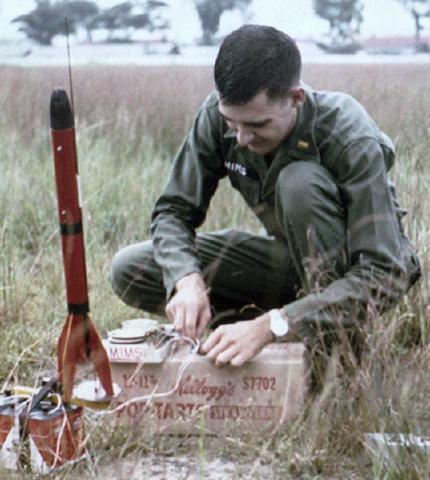
- He started building hobby electronics in late 60s early 70s, such as a rocket control system. These landed him in publications like Model Rocketry Magazine .
- Launching rockets from the racetrack and the top of his apartment in Vietnam, he got into a little bit of trouble (especially when the MP came looking for attackers!).
- After the war, he founded Micro Instrumentation and Telemetry Systems (MITS) with Ed Roberts. This would later be the company that debuted the Altair 8800.
- Early fans of those computers included Paul Allen and Bill Gates, the former donating a bunch of the history to the New Mexico Museum of Nat'l History. There is a picture there of Forrest's wife typing up the manual after Forrest wrote it.
- The reason the Altair got so much attention was because it was featured on the cover of Popular Electronics Magazine. This magazine had circulation of 400-600K people. It was edited by Les Solomon. Bill Yates wrote the article (note the 'Y', not a 'G').
- Forrest saw LEDs in Electronics magazine and contacted Dr Ed Bonnin at Texas Instruments. They cost $365 per LED!
- With the donated LEDs, Forrest built an infrared travel aid for the blind, which worked like sonor.
- In later projects, Forrest built a music box that had alien sounds and was featured on Johnny Carson.
- He left the air force and became a parking lot attendant at the airport. This is where he wrote his first book on LEDs.
- His second book was published by Howard Sams and Company and was about optoelectronics.
- When Forrest started writing for Radio Shack, Dave Gunzel encouraged him to model the books after his handlettered lab notebooks.
- Forrest tested circuits 4 times to make sure he didn't miss anything or have bad assumptions. This lead to very low numbers of errors in the books where he did the quadruple checking.
- In 1988 he decided to make a proposal to Scientific American to write for the Amateur Scientist column. He wrote for them for just 3 issues due to conflicts with the publisher.
- Forrest has been collecting 25 years of ozone data (or will hit 25 next year!)
- Each year he travels to Mauna Loa in Hawaii to calibrate his equipment.
- Forrest's research clashed with results from a NASA sattelite. Once NASA found and corrected their mistake, the research landed him a publication in Nature and the Rolex Prize.
- Later, NASA asked Forrest to give a talk entitled, "Doing Earth Science on a Shoestring Budget"
- After collaborating, Forrest and Brent Holbin (an atmospheric scientist with NASA) published a second paper in Nature, this one about UV monitoring.
- Amateur publications are not common in Nature or elsewhere but Forrest would like to see more citizen scientists. He co-founded the Citizens Scientist League
- These days, Forrest is interested in making music from data. He is also the inventor of the Atari Punk Console, a popular project for hobbyists.
- Past writings about music include a piece for MAKE magazine that show how to translate the data in tree rings into music http://www.youtube.com/watch?v=l2g3scrcg20
- Chris suggested a video that shows and plays data set sorting: http://www.youtube.com/watch?v=kPRA0W1kECg
- Chris also mentioned how Baba O'Riley by The Who was based off biometric data (for which the song was named) http://www.youtube.com/watch?v=x2KRpRMSu4g
- A listener wrote in about how hobbyists are making replicas of the Altairs. Forrest likes that there is still so much interest.
- Forrest wrote a book about his experience in the industry called Siliconections (1986).
- He also wrote a TON of other books!
- Radio Shack dropped the books and the electronics followed (2003ish). However, the electronics learning labs will be back in stores this year.
- The resurgence in hobbyist electronics really excites Forrest. He says, "The Maker Movement is phenomenal" and has a column in MAKE Magazine.
- He is also a fan of Nuts and Volts magazine.
- All of Forrests' kids were into science. Based upon his daughter's experience with the robotics club and associated competitions, he is proposing a new type of robotics competition, based on the idea of a Mars Rover type of simulation.
- The vote is in: Forrest says "Five Fifty Five". See what other listeners voted for on our survey many moons ago.
- Forrest thinks Hans Camenzind did a great service by inventing the 555 timer and is also a fan of Hans' book. Hans sadly passed away last year.
You can find Forrest online on Twitter at @fmims, on Facebook under Forrest Mims III and on his website about his science research, ForrestMims.org. Many thanks to this living legend for being on The Amp Hour!
Image courtesy of Wikipedia. Don’t forget to donate!
Transcript
Forrest Mims: This is The Amp Hour Podcast, recorded November 11, 2013. Episode 171, with guest Forrest Mims, Snell Solisiquius, Scientist.
Dave Jones: Welcome to The Amp Hour. I'm Dave Jones from the EEV blog. And I'm Chris Gammell of Contextual Electronics.
Forrest Mims: I'm Forrest Mims. I live in Texas. I write books and do science.
Dave Jones: Oh my goodness. Forrest Mims. Come on, Chris, we have to do it. We are not worthy. We are not worthy. We are not worthy. For you young whippersnappers out there, i.e. anyone post the internet era, Forrest Mims. But even still, it's not like people would know. No, you can still get his books. Right, yeah. We're talking the most prolific electronics author on the planet, I believe, with 7 million books sold, I believe. Absolutely crazy. Dating back to, well, the 70s, when I was doing electronics, when I was a boy. Everyone knows Forrest Mims, the electronics author, but he's so much more than that, as we'll get into. So thank you very much for joining us, Forrest.
Forrest Mims: Well, I'm glad to be here.
Dave Jones: And where are you from?
Forrest Mims: I live in Texas. I live near a small town called Sagin in a rural site. We live on some acreage here, lots of trees, a little creek, and a place to do my scientific measurements in a field.
Forrest Mims: That's awesome. So in emailing with Forrest, I realized that I met my wife probably, I think, less than 30 miles from where he lives, which is totally crazy. So, yes. Texas days, I miss Texas some days. Especially when it gets like today in Cleveland, it's gross.
Dave Jones: Have you always lived in Texas?
Forrest Mims: Well, I was born in Texas, but I've lived in many states and met my wife in New Mexico after coming back from Vietnam and then came back to Texas. Right.
Dave Jones: Oh, there's so many things we've got to talk about. I don't know how we're going to fit in one show.
Forrest Mims: How about this? Forrest, where would you like us to start? Do you want to go backwards in time or do you like to go forwards in time? Let's start at the beginning. Yeah.
Dave Jones: How did you get into electronics? Because this is an electronics show, so, you know, we don't necessarily care about your troubled childhood or something if you had one.
Chris Gammell: Sorry about that.
Forrest Mims: That's an assumption, Dave, yeah.
Forrest Mims: The beginning was when I was 11 years old building a soapbox racer, which had a headlight made from a PR-13 light, incandescent light, powered by a six-volt battery. And when I would turn the light off, it would run down the battery. I didn't realize that an on-off switch had to be in series with the light. I put it in parallel with the light. So I figured that out. When the nail I was using, a bent nail I was using for a switch became warm, I suddenly had the enlightenment that I had the switch hooked up incorrectly. That began my electronics career.
Forrest Mims: Oh, that's brilliant. That sounds like an epic journey, like the start of an epic journey.
Forrest Mims: It was. And then my father built a crystal radio set for my brother and me. It actually worked. So I began building small radios. I learned that the capacitor was not called a capacitator. It was called a capacitor. I learned that I didn't like vacuum tubes, and so I pretty well stuck with semiconductor diodes. And then in 1957, for Christmas that year, I was 13, and my dad was serving in Korea. My mother let me select for Christmas an order of parts from Lafayette Radio, and those were the parts to build my first one transistor radio. And I snuck in the closet and actually touched the transistor before Christmas Day.
Dave Jones: Nice. Now, this is rather bizarre. You're talking late 1950s here, and you didn't like tubes?
Forrest Mims: Oh, no, of course not. Right. Tubes were – well, when I went to college, the year was – in 1965, when I was a senior, everybody kept saying I should have majored in electronics because of all the work I was doing in my dorm room. And so I finally decided to walk over to the electrical engineering building one day, and I stood by the door and looked at some of my classmates in this class, and there were all these equations on the board which made absolutely no sense to me. And they were working with vacuum tube breadboard circuits on their lab bench. I went back to my dorm room where I was working with integrated circuits and ultra-sophisticated light-emitting diodes. Oh, man. That's brilliant. Why would I want to use vacuum tubes? Yeah.
Dave Jones: Even in the 50s, that's fantastic. I thought the electronics – Oh, 60s, right.
Forrest Mims: 65, 65.
Dave Jones: 65, that's right. Well, yeah, that's when in Australia, I think 1965, Electronics Australia, which I've had my projects published in, that's when they changed their name from radio, TV, and hobbies to Electronics Australia. So that's when the electronics revolution took off, maybe, mid-60s.
Forrest Mims: Well, yeah, that was at the very beginning of it. And hobby electronics really began to come to its full fruition in the late 60s, early 70s.
Dave Jones: Right. And when was your first article published?
Forrest Mims: Ah, good question. Okay. I was building light flashers, a small transistorized light flasher, two transistors, a capacitor resistor, a pot, and a small incandescent bulb. And I was putting those in small rockets. I designed a new kind of rocket control system back in high school. And I was building these in college, and I was even flying them in Vietnam. And I needed a way to track them so I could watch movements of the rocket at night.
Chris Gammell: Ah.
Forrest Mims: And one night I launched it 21 times and photographically recorded every flight and so on. Oh, wow. And I was asked to launch one of these at a model rocket meeting in Partalus, New Mexico, at New Mexico State University. And the editor of Model Rocketry Magazine, George Flynn, was there. And he said, could you write an article for my magazine on how to build one of these light flashers? And I said, sure. And I didn't realize he was going to pay me $93.50 for that article. That was a lot in those days. Well, it was not only a lot. It was my first freelance article. And I told my wife, I'm going to quit the Air Force when I finish my four years and become a freelance writer. So that's how it got started. Wow.
Forrest Mims: And I was reading on your wiki page as well about your exploits when you were overseas. What was it? It was in Vietnam. And you were launching a rocket at like a base or something. And you got in trouble for that. What was that story?
Forrest Mims: Oh, golly. I got in trouble a couple of times. That was at Tonsonut Air Force Base right next to Saigon. And I was, you know, sometimes we're very naive when we're younger. I would go riding through Saigon with rockets strapped to the back of my little motorbike. You know, assuming everybody knew that they were harmless. Of course. But people, they didn't know they weren't. It's a science experiment.
Chris Gammell: It's a science experiment.
Forrest Mims: So I would launch these out of the Cholon racetrack, which was an abandoned racetrack, abandoned during the war at least. And one day we were launching rockets. I say we because all these Vietnamese kids would come out and watch. And they would help me recover the rockets from inside the racetrack. And suddenly an Army helicopter, a Huey, zoomed in with .50 caliber machine guns pointed straight at us. And I'd take off my shirt, start waving my shirt to warn. I told the kids to get away. And I just assumed they were going to kill me on the spot. And finally they lifted up and then came right over me. Everything blew away. And then they looked at me and I kept waving and everything. And they left. But I heard more about that later from my bosses where I worked in the intelligence outfit. Wow.
Forrest Mims: That must have been a heart race.
Forrest Mims: Another time I was launching at night from the roof of my apartment. And I put a map of how to get to my apartment on this rocket offering a reward for its return. And I launched the rocket. And then all of a sudden military police show up at the bottom of where I lived right off the base gate. And the military police showed up as I was going downstairs to go look for my rocket. And they said, get back in your place. Get back in your place. The base is under attack. The base is under rocket attack. And so I thought, you know, I went back to my room. And then I remembered I put my map to my house on that rocket. So I snuck out anyway and went looking for it. I never did find it.
Forrest Mims: No one else did apparently either, right? Because you're here talking to us. I'm glad for that. Wow.
Chris Gammell: Oh, well. That's a story and a half. I don't think we'd have one like that, Chris. I'm sorry.
Forrest Mims: Oh, man.
Forrest Mims: But those rocket experiments led to something much bigger. Because my friend Ed Roberts, also at the Air Force Weapons Lab, he and I had been discussing organizing a company to sell things through Popular Electronics Magazine. And we never could hit on a formula that both of us agreed to. We talked about everything from an electronic abacus to an op-amp analog computer like I'd been building in high school. And like Ed was very interested in. But when I got that article published in Model Rocketry, he was really excited. He said, this is it. This is what we can do. And so we started a little company, Micro Instrumentation and Telemetry Systems, to build those light flashers as well as small rocket transmitters. And that company, MITS, went on to do much bigger and greater things five years later.
Dave Jones: And folks, if the name rings a bell, yes, it is the Altair. The Ed Roberts of Altair fame. So you are co-founder of MITS.
Forrest Mims: Ed and I founded the company with Stan Cagle and Bob Zeller in September of 1969 in Ed's kitchen.
Forrest Mims: And we're all good companies are founded, right? Yes, exactly. Garages, kitchens. Absolutely.
Forrest Mims: Well, the garage became where we built all the circuitry. And while those guys were watching Star Trek, I was writing the manuals and everything. Years later, Paul Allen and Bill Gates came to Albuquerque to write software for the Altair. And in 2006, Paul donated money to the New Mexico Museum of Natural History and Science for a new wing to the museum, celebrating the beginning of the personal computer era in Albuquerque. So there's really, really neat exhibits. Paul's personal collection of many rare computer artifacts. Oh, I had no idea. There's a picture of my wife typing the manual for the first MITS transmitter. And then the rocket I built to launch the transmitter is right next to the photograph of my wife in the museum. That's so cool. It's a kick to see that.
Forrest Mims: Yeah. Wow. Do you get back out to New Mexico much? I mean, are you out there at all?
Forrest Mims: We try to go once a year. My wife still has relatives there.
Forrest Mims: Oh, great. That's awesome. Wow.
Dave Jones: So Ed ended up buying you guys out before the Altair happened. How did that come about?
Forrest Mims: We were doing very poorly. We only sold a few hundred of these telemetry kits. And then we moved into building various other things. And then Ed wanted to get into building electronic calculators. And Stan and I thought that would just not work. It would fail. And meanwhile, I'd left the Air Force to be...
Speaker ?: Why is that?
Forrest Mims: Well, we just... We didn't think it would work because the Japanese were already beginning to bring out inexpensive calculators.
Dave Jones: Ah, right. And it didn't last long, did it? He was successful with the calculators, but I think it was very briefly.
Forrest Mims: He was very successful for about a year or so. I wrote the manuals for those first calculators, and he would pay me in equipment. So we sold out to Ed, but we were still all buddies. And I was doing my thing, becoming a writer, and Stan was doing his thing. He was still a consultant. And so I wrote the manuals for the early calculators. And then when he did the computer, he called me over to the office one night, and I was only four blocks away. So I got on the bicycle road over there, and went into the shop there at Mintz. And he said, what do you think? And he's pointing at this funny-looking blue box on a workbench with rows of switches and lights. And he said, how well do you think it'll sell? He told me what it was. How well do you think it will sell? And I said, Ed, based on Pat's experience, maybe a few hundred at most. And he looked sad. I felt bad later that I'd been so pessimistic. And, of course, they sold over 5,000.
Forrest Mims: See, now, what if that actually was what motivated even more to push it? Maybe that's what really pushed it over the edge. You never know.
Forrest Mims: What really motivated the whole thing was Popular Electronics Magazine. Yeah. Because I had three columns in Popular Electronics all at the same time every month, and that was really my full-time work. And so Les Solomon, the technical editor, they desperately wanted a computer project to keep up with Larry Steckler's magazine, Radio Electronics. They had published the Mark 8 in 1974. Right. And it was an 8-bit, wait a minute, a 4-bit computer, microcomputer. But it didn't take off. And so they wanted an 8-bit machine. And then when Ed came up with the Altair, it was only natural for Les to get really involved in that. But I then introduced him to Ed when he came out to Albuquerque to see the – I designed with Ed and Bob a light wave transmission system called the Opticom, transmitted your voice over an infrared beam of light. And we put that in Popular Electronics both as a cover story of two articles, a tutorial about light-emitting diodes and then the construction article for the project. So we had a strong connection with Popular Electronics, and that's really what made the Altair successful. In fact, Paul Allen saw that magazine at Harvard Square. He did. And took it to Bill Gates, and that's how it all began.
Dave Jones: Now, is there any truth to the – well, rumor probably that the actual box that was on the front cover is actually fake because the real prototype was lost in transit?
Forrest Mims: Yes, it was lost in transit.
Dave Jones: On a train or something. It went by train, didn't it?
Forrest Mims: I don't remember how – I had no idea how Ed shipped it. All I know is it never made it.
Dave Jones: The world's first – the world's first, you know, home computer basically was lost in transit.
Forrest Mims: Yeah.
Dave Jones: And so they agreed to publish a fake box with leads. Just –
Forrest Mims: It was kind of an emergency because the article was already prepared and edited, ready to go, and they needed a cover shot. So sometimes strange things happen.
Dave Jones: Had Les Solomon actually seen the working prototype, or did he just trust you that it worked?
Forrest Mims: No, I don't think he saw it. And I did not write the Popular Electronics article. Ed did with Bill Gates. Not Bill Gates. Bill Yates. Bill Yates was the double E guy who worked with Ed. And the names are the same except Bill's name starts with a Y and Gates starts with a G. So they wrote that article for Popular Electronics.
Dave Jones: Right. And it was never recovered, right?
Forrest Mims: The world's first – That first one, I talked to Ed about that a couple of times. No, it was never recovered.
Dave Jones: Wow. Gee, so it's still sitting out there, maybe. Or maybe it ended up in a landfill. Probably, yeah. I was going to say.
Forrest Mims: How valuable would that sucker be worth if it turned up? Well, it does sound – it sounds like a trade show mishap almost, you know, where it's like – Right, yeah, yeah. The last minute, right before, you know, the night before. Oh, well, let's just make it blink. Although I'm sure blinking back then was even, you know, more impressive then. So I'm actually interested in this. You know, your interest in LEDs to get started, I mean, I can only imagine that they must have been incredibly expensive to start with.
Forrest Mims: They were. And when I learned about LEDs the first time, I was walking – at Texas A&M, I was a junior. I was walking across a particular street. I remember it like it was yesterday. Walked over to the library. The electronics library was in the wing of one of the buildings. It was not in the main library. Picked up electronics magazine and read about infrared light-emitting diodes. And it just – that just captivated me. And Texas Instruments at the time – Texas Instruments was just north of Dallas, Richardson, Texas. They were making these high-power infrared LEDs, 900-nanometer LEDs out of gallium arsenide. And I just had to have one. So I contacted TI and contacted a scientist named Ed Bonin. He had a Ph.D. B-O-N-I-N. Ed Bonin. And I hitchhiked up to A&M to meet with him. By the way, you don't want to hitchhike your Dallas.
Speaker ?: Hitchhiked.
Forrest Mims: Right. I was going to say. That was way back then. You especially don't want to do it. It's not very safe. It's fine. I am sure it's safe. I go into Dr. Bonin's office and he shows me a little small – about the size of a lipstick tube flashlight with a red LED. And it just completely captured me. I've got to have one of those. I've got to build one of these. And then we talked about laser diodes. TI was in the process of trying to build those. GE had already built one. MIT had already built one. And then he showed me these infrared diodes. And the reason they were – they had an external quantum efficiency of 80% because they were built in a dome. The semiconductor was not a flat die like a sandwich. It was a dome ground into a dome. So the internal light always met the surface at the proper escape angle. It wasn't reflected back in.
Dave Jones: That's inexpensive. It does. And they haven't made them like that since, right? Have they?
Forrest Mims: Oh, no, no. Well, they try to simulate it with epoxy. Those diodes cost $365 back then. And, of course, I couldn't afford one. And that was in 1965 dollars, $66. And so I have to talk back – It's like 10 articles. But Dr. Bonham said – I wrote him a letter with a proposal. And he said, if you can send me the circuit you plan to use with this, and if it works, I will send you a sample. So I built a circuit. And I didn't know if it would work. I mailed it to him. He writes me back. He says, it works. I'm going to send you three infrared LEDs. And I was just ecstatic. That's like $1,000. But those are the LEDs I was working with when I went to that double E class and decided I didn't want to major in electronics. Right.
Forrest Mims: Yeah, you're like leaving you suckers behind. Yeah. I got some sweet ears. You and your damn vacuum tubes.
Forrest Mims: I was able to build an infrared travel aid for the blind using one of those. Yeah. And that's what kicked off my electronics career. Well, I built an analog computer in high school that translated 20 words of Russian into English. That's another project. But this – the miniaturization required to build this travel aid for the blind, that's what really kicked off my electronics career.
Forrest Mims: Could you explain that project a little bit? So I read a little bit about it, but maybe just for people listening to learn more about it. The travel aid or the computer? Well, both are good, but the travel aid to start with.
Forrest Mims: Yeah. The travel aid was installed in a 3-inch by 1-inch by 1-inch clear plastic box. The LED was mounted in a small incandescent light assembly, but instead of an incandescent light, it had the LED with a red glass lens. And then the box – the front of the box was a silicon solar cell with an aluminum corrugated collimator of about a quarter of an inch thick in front of it to help block sunlight. That went to a hearing aid amplifier, which I'd salvaged from a hearing aid that I got from a hearing aid dealer. And then that went to an earphone. And as you – and the LED was pulse-powered. So it set fairly high, you know, like 50-milliwatt pulses, and it could detect objects out to like 12 feet. And the closer you got, the louder the signal.
Forrest Mims: Oh, wow. So like sonar, but for light, obviously.
Forrest Mims: Right, right. Very primitive. But I tested this with several dozen blind people, adults and children at various blind schools. I tested it in Vietnam at two different schools, and it worked like a charm. But I could not get a manufacturer, and the key reason was liability. Hearing aid companies, for example, hearing aid company would say, nobody's going to sue us if our hearing aid wearer falls into a hole. But if he's also using your travel aid and happens to be blind, we're going to get sued. So I could not find a manufacturer.
Forrest Mims: See, now I thought lawyers had gotten worse over the years. That sounds like they were just as bad back then.
Forrest Mims: Well, yeah, it was pretty – very sad that that never was commercialized.
Forrest Mims: Yeah, that's a darn shame.
Forrest Mims: I eventually miniaturized that after I finished the Air Force. I miniaturized it in the two small 3-8-inch diameter brass tubes that fit on sunglasses. And there was no earphone cord. The earphone was a hearing aid earphone mounted inside a brass tube with a clear plastic tube that went down into your ear.
Dave Jones: Brilliant. And have you ever had your own company selling your own kits or anything like that, or have you always primarily just been an author?
Forrest Mims: Well, with mitts, we sold kits with mitts. Yeah, of course, but after mitts. Well, I linked up with a small company that sell the Marvelous Martian Music Machine, which is a metal box with potentiometers that made all sorts of strange sounds. And I got that on the Johnny Carson show, but it didn't help sales. I mean, it made my hometown famous, but it didn't sell any kits.
Forrest Mims: I didn't hear that story. It was on the Johnny Carson show. That's crazy. We'll have to add that story to the Wikipedia page. So were you on the show as well, or just the box?
Forrest Mims: No, I was doing a book tour in Los Angeles for my book, Silla Connections. And the promoters took me to meet the Johnny Carson producers, but I was too boring. They thought my little machine was really exciting. So that's what they told the book agent. And she said, you're not going to make it, but your machine will. Oh, man.
Forrest Mims: So PR people are saying this many years later too. We make it, we should show it.
Dave Jones: I was reading somewhere that, I'm not sure what date it was, but you were getting $400 an article for popular electronics. And that seems like an awful lot. Because I remember I was barely paid that in the late 80s and 90s for my articles in Electronics Australia. Were you earning good money being an author? Or a contributor to the books and magazines?
Forrest Mims: I was, I became full-time, well, I left the Air Force in 1970, June of 1970 as a captain. I went to work as a parking lot attendant at the local airport. And I told my wife, after one year, I'll be a full-time freelancer. Meanwhile, my buddies from the Air Force were in disbelief that I was in working at the Air Force Weapons Laboratory in the high-power laser division. They couldn't believe I'd quit the service to work in a parking lot for one-fourth the money.
Chris Gammell: Yeah.
Forrest Mims: And people would come through at night, some of them drunk. Sometimes they would throw their money at you. It was a pretty demeaning job. But I wrote my first book in that parking lot booth. Ah, great. But a year went by, and I wasn't making enough money. And one night, the security guard went berserk, pointed a .45 at me, and I quit the next morning. And they fired the fellow, but I was afraid he might drive by and shoot me. He was mentally off. So I had to depend on God and what little electronics knowledge I had, and we survived. And from then on, I've been a full-time freelance writer ever since.
Dave Jones: So you could actually make a full-time living out of the electronics magazines?
Forrest Mims: Yeah. Well, that and the books. I wasn't wealthy, but it paid the bills. And so, you know, many, many times we were at the edge. I mean, we'd sit there at the dinner table and pray for some income to pay the bills, and the next day, a check would arrive. I mean, that went on for about three years.
Forrest Mims: Many, many people know you from the Radio Shack books. Could you kind of take us from that tough point of making the leap to a full-time author to actually, you know, starting to work with Radio Shack and getting all these books published and everything like that? Or maybe even through just the first publication?
Forrest Mims: Good question. The first books I wrote were on laser diodes and light-emitting diodes. I wrote the first two books on LEDs, and the first book on diode lasers with a fellow named Campbell. And so those books were published by Howard Sams and Company. Then I wrote a book on optoelectronics. And somewhere in those series of books, the editors at Sams were doing books for Radio Shack, and they contacted me, and could you write one of these books? And I said, sure. So I wrote my first project book. Now, these were typeset books. These were not the hand-lettered series. And this went on. I wrote 16, I believe, of those books. And then at some point, Radio Shack calls me in, and they say, why do we need to deal with the publisher? You can make a lot more money just dealing directly with us, and you be the author and publisher. And so we came up with a formula of writing a book that would be hand-lettered. That's another story in itself. That was an experiment that succeeded. And so I then began writing Engineer's Notebook, which was a series, 128 pages, I believe, of projects, both analog and digital integrated circuits. And then we just went from there.
Dave Jones: I have it right here in front of me. That book sold… First print in 1979. I've got it.
Forrest Mims: That book, it sold several hundred thousand copies. And then I met with… My editor then was Dave Gunzel, G-U-N-Z-E-L, fantastic technical editor. And he's the one that had the idea for doing hand-lettered books. And he got the idea from my laboratory notebooks. I would keep detailed records of everything I did in science. And he was one of my witnesses. And one day he was looking at that, and he said, why can't you do a book like this? Because I would print kind of neatly and all that. And that's how that began. And so then it came time to do a generic book of introducing the customers to electronics. And I suggested we call it Getting Started in Electronics. They said, great. They wanted a hand-lettered book, 128 pages as usual. And I wrote that book in 58 days. Tested every circuit four times. I tested every circuit four times because when you build a circuit and you rebuild it, when you're looking at the drawing you made, you will make shortcuts. Because you're so used to building it over and over again, you don't follow the drawing you made. So I would make sure that I followed exactly what I made. So that book was published. I think it only had two very minor errors in it, whereas some of the earlier books had more errors than that. So that book went off. That book has sold 1.4 million copies legally. And it's all – I hate to say this on your program, but it's given away free by pirates all over the web. It's really eaten into our income. Oh, wow. But that's what the internet has become. It distributes all my books for free. And meanwhile, my income is going progressively lower and lower.
Forrest Mims: Right. Yeah, over time as the royalties drop, right? Yep. So what did you say, 4 million copies of that sold?
Forrest Mims: No, that sold 1.4 million copies. 1.4, wow. Legitimately sold 1.4. Right. There was a company – I won't tell you where – there was a company in another country that has sold like 40,000 copies of it illegally. The author just copied the whole book, translated into that language. I won't mention that language. And they sold all these books not realizing that the book was totally plagiarized. They had a very friendly attorney. He reached an agreement to pay me a 15% royalty. They did that. And there's one more check to come, and then they're going to stop using my plagiarized book.
Forrest Mims: Oh, man, that's crazy. So I was reading about the total number of books, though, and at least the wiki page, at least, was saying it was about 36 total books. So, I mean, there was that one big one then. What's the distribution of the other books? I mean, were there other top sellers beyond that one, the main one?
Forrest Mims: The small mini notebooks sold in many hundreds of thousands of copies each. And then those were bound into four books into one volume to make a four-volume set of 16 mini notebooks. And I really can't tell you how many they sold. The total of all the – I haven't kept up with the total sales. And that 7.1 or 7.2 million copies, that's just Radio Shack books. That's not all the other books.
Forrest Mims: Oh, wow. Okay.
Dave Jones: Oh, no.
Forrest Mims: That's crazy.
Dave Jones: So how long did you – how many mistakes would you make?
Forrest Mims: Most of them were very trivial. I don't want any errors in a book. And so the mini notebooks had hardly any errors because of that policy of rebuilding every circuit four times from scratch. But the point I'd like to add about these books is folks listening in and you guys, I'm just a government major. All right? I've never taken a course in electronics. I was doing these books as a hobby. I was having as much fun as you can imagine coming up with all these circuits and playing with them and then say, I'm going to put these into a book. And then to be able to earn a living from that was just – I was stunned by that. And then in recent years, not a week goes by that I don't get an email, sometimes several, from folks who were teenagers back in those days, maybe in their 20s, who made their career electronics because of reading those books. So that's been a very fulfilling aspect of the whole project.
Dave Jones: My hand is up, yes. I was at the ripe age of – well, I was like eight years old or something when I first got your books. And yeah, that definitely helped start me off. That's for sure. So thank you very much, Forrest.
Forrest Mims: Well, glad to hear it.
Forrest Mims: I'm sure we'll hear from many more. You know, like just everybody who was – when they heard that you were coming on the show too. I mean, I'm obviously a little bit younger, so I didn't start that way, but I got into them later. But yeah, that must be insane. And we were – I mean, we were talking – me and Dave were talking before the show just trying to figure out, you know, even just percentage of our audience. It's probably a large percentage that, you know, either started because of you or started – or had read a book at some point. So that's very impressive.
Forrest Mims: I must add that at some point, writing these books became rather tedious. I mean, I would sit there and hand letter these mini notebooks at the bar at our kitchen because it has a nice, bright fluorescent light. The books are written with a seven-tenths – a seven-millimeter mechanical pencil. And I have the same pencil I wrote every single one of those books. I still have that pencil. That's crazy. I still have the eraser. I still have the straight edge. And anyway, after a while, though, it's pretty tedious. The engineer's notebook that you have, that was with India ink on Mylar.
Dave Jones: I was going to say, it looks like, yeah, the contrast is phenomenal. Like the black text is – really stands out.
Forrest Mims: Well, and it made my index or my middle finger bleed. And so that was – you know, I decided never again, never again. And then not only that, if you made a mistake with India ink on Mylar, you had to redo the whole page.
Dave Jones: That's what I was going to ask about, yeah. That's just crazy.
Forrest Mims: But at some point – and the date was 1988 – I was walking back from the creek. I touched the fence. And I just had this extreme development occurred. Stop writing electronics books and start using your electronics to do science. Right. And so I prepared a big proposal to Scientific American magazine, and that's how the science got started.
Dave Jones: They would just accept proposals from anyone, or did you have a name that, you know, led some credence to that?
Forrest Mims: They had a – Scientific American magazine, the oldest magazine continuously published in the U.S., had a column called The Amateur Scientist. That was a very famous column. It began back in the late 1920s with astronomy columns. And all through my youth, that was the science column to read, all sorts of fascinating experiments. I just dreamed of one day contributing one project to that. I ended up doing that. Somebody plagiarized one of my laser circuits and put it in there, but they didn't put my name on it. And the editor didn't know that, so he apologized. But anyway, I knew one of the editors in 1988. He had interviewed me for a story he wrote. And so he told me that I should submit this proposal. I called him up, and I prepared a detailed proposal with like 36 column ideas. That would be three years' worth of columns. And sent that off to the magazine. They studied that for a year and a half. Invited me to go to New York to meet with the staff. I went with a suitcase full of all kinds of electronic gadgets, my radio control camera that you can fly from a kite, my sunlight measuring instruments, and so forth. And they were all excited, and I got the job. That's all I thought. Ended up that the editor wasn't too happy when he asked me some personal questions during the interview process. And so I only ended up being able to write three columns for the magazine before I got dumped.
Dave Jones: Ah, that's too bad.
Forrest Mims: Yeah. But you've been doing... He asked me... He said... He asked me if I believed in Darwinian evolution after I... He was asking what magazines you wrote for. And I said, well, I write for a bicycling magazine, popular photography. I've written for a couple of Christian magazines. And that really got him up. What have you written for Christian magazines? I said, a couple articles on long-distance bike trips. How to take teenage kids on long-distance bicycle trips. And then he said, do you believe in the Darwinian theory of evolution? I said, I knew my job was gone. I said, well, no, I don't, but neither does Stephen Jay Gould, a famous evolutionist who had problems with Darwin's theory. At any rate, a big adventure happened thereafter, and I only got to write the three columns. It became... When I got dumped, it became a worldwide publicity thing. I was on over 100 radio stations, a bunch of TV stations. New York Times came to my front door. Washington Post, the Wall Street Journal interviewed me, and it became a big public relations nightmare for Scientific American.
Forrest Mims: That's crazy.
Dave Jones: But you got published in other places, and you continued all your amateur science stuff. And that's pretty much... Are you more known for that now than the electronic stuff?
Forrest Mims: It's getting to be that way. Larry Steckler, who was the editor of Radio Electronics, he'd been discriminated against. He's Jewish. When he was a young guy, a young reporter, he was discriminated against by a major magazine. He took pity on me and started a magazine after I got bumped at Scientific American. The magazine was called Science Probe, and I was the founding editor, and Larry was the publisher. And we did that for about three years and published a first-class science magazine for amateur scientists. And we had like 40 authors, some of them quite famous, including an astronaut. Wow. And then after that, everything just started happening. I started writing scientific papers for journals. And let me assure your listeners, if you have a really, really good idea, don't worry if you don't have a really, really good education. It's the idea that counts, and if you can implement it. And so I was implementing all sorts of things without a science background. But you know what? I, in my entire career, not a single consulting client I've worked for, including NASA and NOAA and EPA and so on, not a single one has asked me what my degree is. All they care about is, what have you published in the scholarly literature? That's all they care. And they already know the answers to that.
Forrest Mims: Right.
Dave Jones: That is exactly the same in the electronics engineering industry, pretty much. Most companies don't care about your educational background. Can you do the job? Yes, no. You know, that's it. Exactly. It's a story. Exactly.
Forrest Mims: And not to discourage people from following that route, but unfortunately, a lot of folks are getting out of college these days and can't find a job. But, you know, Bill Gates doesn't have a degree. Paul Allen doesn't have a degree. Many other folks, very famous in the computer field, never got their degree. And yet, look what they've done.
Forrest Mims: Right. Definitely.
Dave Jones: Yep. It's all about execution.
Forrest Mims: Exactly.
Forrest Mims: Yep. I mean, what is your take on, I mean, obviously the publishing industry has hit some rough times lately. What about just your thoughts on the job market in general these days? I mean, you see this as a consultant. What do you see personally?
Forrest Mims: Well, I have a few friends who are out of work, but I don't really see that much in the industry. What I see is in the field of science, government money is drying up. It's very, very difficult for people to get grants these days. And so, in fact, that's affected some of my research. But, hey, you can do it on your own. And so, if I can live with what I'm making from my book royalties, I can still do my science. I will have 25 years of atmospheric data a year from February. That's fantastic. I measure the ozone layer every day the sun shines. You need sunlight to point the instrument at the sun. I measure the aerosol optical depth of the atmosphere. That's the haze. I measure the photosynthetic radiation. I measure the total column water vapor. That's the blanket of water over your head, not the relative humidity at the ground. It's the total amount of water vapor. That's the leading greenhouse gas. Very few people measure that. The weather balloons measure it. But because the temperature sensors on weather balloons don't always work properly, or the relative humidity sensors don't always work properly, that record is controversial. So, anyway, I can do my science for free. I built all the instruments. Right before we went on the air with your program here, I went outside and retrieved my – I'm holding it right here in my hand. It's a twilight photometer. It's an ultra-sensitive op amp with a 40 gig and 20 gig feedback resistor. You can choose one or the other. So, it's a huge amplification. I can measure the twilight glow of the sky when the sun is set 45 to 50 minutes ago. And using that – and I record that every second. And so, I can look – I'm looking at right now my data from this evening, and I can see the big dip at 20 to 30 kilometers caused by this permanent layer of dust in the stratosphere. And I can also see some junk down below caused by sulfate smog from power plants in the Ohio Valley that drifted over Texas. Sorry. Our bad.
Dave Jones: Now, 25 years – what is it? 25 years you've been doing that.
Forrest Mims: 24 now, but I'll have 25 in another year.
Dave Jones: Fantastic. How do you – obviously, you haven't been using the exact same sensor and logger for that entire period, right? How do you handle the switchover of instruments in terms of ensuring that your data is still – there's no bias caused by switching test gears?
Forrest Mims: Super important. Super question. That's the ultimate question. Yep. Actually, two of my instruments go – one of them goes back to February the 4th of 1990 when I began, and the other goes back to 1991. So, I do still have – Ah, so they do.
Chris Gammell: Right.
Forrest Mims: Yeah, and the reason they do that is I measure sunlight using light-emitting diodes instead of filters in front of photodiodes. Filters degrade over time. Light-emitting diodes – light-emitting diodes tend not to degrade over time. And so, the two original LEDs in my very first sun photometer are still there today. Wow. Those two LEDs, I measure the optical depth of the atmosphere at those two wavelengths, 880 and 940 nanometers. I also measure the total column water vapor. So, that's extremely important data to have with one instrument for 24 straight years. Yeah.
Forrest Mims: I thought that LEDs do degrade over time, though. Well, I'm thinking as an emitter.
Forrest Mims: You're using them as a detector? Is that right? Yeah. As an emitter under forward bias, yes, they do degrade. But as a passive sensor, there's a very slow degradation in some LEDs, just the atomic migration within the crystal. Yeah.
Forrest Mims: Right, the implantation stuff, right? Exactly. Yeah.
Forrest Mims: But I calibrate these at the Hawaii's Mauna Loa Observatory every year for the – well, I've been going since 1992. That must be a tough trip for you, Forrest. Well, everybody here by the coast thinks – Yeah, I'll go down it, yeah.
Forrest Mims: I have to go to Hawaii.
Forrest Mims: They all think it's a tourist trip. I promise you, the observatory is at 11,200 feet. I've been there, actually.
Dave Jones: I've been up there. So have I. I've been up there, too. Yeah, it's hard to breathe. You're talking about Mauna Kea. Oh, yeah. Oh, sorry.
Forrest Mims: That's okay. Everybody goes for the sunrise. That's where I've been. Right, right. Mauna Loa is the other big mountain.
Forrest Mims: Gotcha. And you wake up in the morning, and I'm usually there for 12 nights. I come down every two to three days to get a shower and buy groceries. And once per trip, I get to go swimming. Usually, not always. It's not an easy trip. You get up at 5 o'clock or 4.45, and you go to bed at around 11 o'clock. So it's an all-day job, and it's a lot of work calibrating instruments. So I can see the palm trees with binoculars, and then when I go down to get my shower, I can see them.
Forrest Mims: So can I ask you a bigger, broader question here?
Forrest Mims: Sure, sure.
Forrest Mims: Why do you do this stuff? It's fun, dude. It's fun. Hear me out, Dave. I mean, this is a basic question here. This is a lifelong pursuit for you. So what is driving you here?
Forrest Mims: Life is a science fair project. Oh, I like that. There's a t-shirt quote. Yes, it is. Yes. When I was a senior in high school, I was fascinated by analog computers. So when I was younger, I built some very simple multipliers and dividers using potentiometers, batteries, and a meter. Anybody can do that. And I wanted something more sophisticated. So I designed a machine. I call it machine on purpose. It would translate 20 words of one language into 20 words of another language. And it used an analog input panel of six dials, potentiometers with all the letters of the alphabet. And that went to a box. And inside that box was a memory board consisting of 20 small little trim pots. And you could adjust each one of those for unique resistance. So each one of those was the memory. And each one became a word that I wanted to translate. And then there was a wheatstone bridge circuit, just a couple resistors and a potentiometer. And then there was a meter. And the meter needle had a little piece of aluminum foil glued to it and a black cover over the whole panel of the meter except for a slot. There was a light looking down at the meter. And under the needle, I had glued a small piece of a silicon solar cell so I could detect when there was a null. When the meter nulled, I would get a signal. And the meter would null when the memory matched whatever I dialed into the six potentiometer panel. And then there was an electric music box that I had modified by putting paint on the little cylinder that rotates. And then I had some little wires that stuck out and dragged along that cylinder. And I had little openings in the paint where the wires dragging on the cylinder could contact the metal cylinder. So I could sample the memory that way. How brilliant. You dial in your word. You hit a switch that says on. And then everything starts cranking. The little music box is rotating. And then the meter needle is swinging back and forth. When the meter needle hits a null, that means the word matches. It stops. That turns off the motor. And then there's a light panel. And there's 20 lights and one red light lights up. And that's the translated word. Wow. So it's an analog digital machine. And the mathematics curator at the Smithsonian, when she came to visit us around 20 years ago to collect all my Altair stuff, she saw that. And they asked for that. So that's at the Smithsonian. I don't know what they're doing with it. But it's considered an early hobby computer project.
Forrest Mims: So that actually was a science fair project? Is that what the segue was there? Yeah.
Forrest Mims: Yeah, that was my senior science fair.
Forrest Mims: That is a life science fair project, I got to say. That's really interesting.
Forrest Mims: Built at 246 Wetumpka Street, Prattville, Alabama, when my dad was assigned to the Montgomery Air Force, Maxwell Air Force Base in Montgomery, Alabama.
Forrest Mims: Wow.
Forrest Mims: That's terrific.
Dave Jones: I would love to get – I've got a question back on the sensor data for long-term scientific experiment. I just love this sort of stuff. So it's more important to have a sensor that is absolutely the same sensor stable over time or the same test instrument stable over time than it is to calibrate – have a calibrated sensor that's always changing.
Forrest Mims: Under the assumption – the answer is yes if the sensor does not drift. So even with a lot of LEDs – Of course.
Dave Jones: I'm assuming it's got zero drift.
Forrest Mims: Right. And some of these LEDs do have zero drift. Right. I'm operating a – I've got the only light emitting diode shadow band solar radiometer. It's up on the roof at a university in my town here. I've managed these instruments for the Department of Agriculture through Colorado State University. And one of those instruments has got seven LEDs in it. A couple of them have drifted. But two or three of them are just as stable as a rock after 10 years.
Dave Jones: Ah. So you take seven individual readings and then monitor them over time and then throw out the ones that are drifting, I guess. More or less. Right.
Forrest Mims: If you go to my website, you can see some of this data on my main website, www.forcedmims.org. And if you click on scientific research or science data, you can see some plots of some of the data.
Dave Jones: Fantastic. Because that's something – that's very difficult to do is to devote 25 years to continuously actually not only collecting this data but monitoring them and throwing out bad data as it drifts and all that sort of stuff to be left with a good set of data. But that's a very good –
Forrest Mims: I like the way you think. We think, you know, we're kindred spirits. And you're thinking exactly what I was thinking at the time. And after five years of doing this – I mean, that was 20 years ago – I was about ready to quit doing – why am I doing this every day? Good grief. Yeah, yeah. I could be writing. Why am I fooling around doing this? And then what happened was all of a sudden I start making discoveries, you know? And, for example, Mount Pinatubo erupted in the Philippine Islands and the volcanic ash cloud came over Texas and I measured that. I measured smoke from Yellowstone fires over Texas. Really? I'm finding strange things happening in the ozone layer. At one point, NASA's ozone satellite went bad and I was finding an error in their satellite. So I knew all these guys. I contacted them. I said, you guys, there's a problem here. I'm getting – you know, you're not showing enough ozone. And they said, well, look, Forrest, our satellite, you know, there's $100 million tied up in that and you've just got this little –
Chris Gammell: You've just got a couple of LEDs down there.
Forrest Mims: Well, actually, those instruments did use filters. That's because they're ultraviolet detectors. But anyway, they were – that's another story. But anyway, I said, yeah, I've only got this instrument, but I've got two and they're both showing the same error. And then they still didn't take me seriously. So then I got to go to Hawaii for the first time in 1991 to give a talk about being dumped at Scientific American. This scientific group wanted me to give that talk. So I got to go to the observatory three times. And the woman operating the world standard ozone instrument told me she was also seeing a difference between her data and the satellite. Yes. Bingo. Vindication. Bingo. And it was of the same order of magnitude as what I was seeing. Wow. So I notified them and that became my first paper in the journal Nature. Ah.
Forrest Mims: Which, if people don't know, is a big – it's a big, big – it's the – Well, it's the – permanent.
Dave Jones: Some scientists spend their entire career wanting to get one article in – well, one paper in Nature.
Forrest Mims: Well, that built my career. NASA did not want me to find an error in their satellite. They ended up inviting me to go to Goddard Space Flight Center and give a talk about how I did that. They entitled the talk Doing Earth Science on a Shoestring Budget. Brilliant. And then I got a Rolex prize for that same project. And what was interesting about that is Rolex – some of your listeners, look, if you've got a really great idea, go look up Rolex on the web. Look up the Rolex prize, the Rolex award, and see if you can – maybe you have something worthy of that because they'll give you some good money to start – some good seed money. So anyway, Rolex does all these interviews and finally I get a phone call one day and they're going to give me this award. And there are two cool things about that. Number one, they advertised the award in Scientific American, which had dumped me. And that was – that ozone instrument was going to be one of my next projects. So I got in their magazine with the project, just not the details about how to build it. And then the other interesting thing was when they sent their movie crew out, they make a video of all their winners. And they ship that around the world for television. Well, the video crew comes out and I was telling them the story about finding the error in NASA's satellite. And I said, they're going to fax me today to let me know if they agree that I really have found an error. So we walk in my office and there's a fax laying on my desk. So I reach over – Yes. I reach over to get the fax and the producer – there's three guys, a sound guy, a camera guy, and a producer. And the producer yells at me and says, don't touch that fax. I said, why not? He said, I've been filming Nobel Prize winners and all sorts of famous things for years and years. I've never actually seen any real science. It's either fake or reenacted. I don't want you to read that until we've got our camera ready to go. And so I was kind of nervous. I didn't know what it was going to say.
Forrest Mims: I was going to say like drink more Ovaltine.
Forrest Mims: It took 10 minutes to get those guys ready. And so I finally – they said, okay, sit down. And then he tells the camera guy, you know, start, whatever they say, go, action. And then he tells me, you may read your fax. And so I turned it over and I started reading it. And NASA was admitting that I had found an error in their satellite. Oh, man. So it was really exciting. Then they actually called the scientist, Richard McPeters, and discussed it with him on the telephone. And a little bit of that conversation was included in the video. So –
Dave Jones: Is this video like on YouTube somewhere or has it just been lost in the archives?
Forrest Mims: I don't know. I've got a copy of it. I'd love to get that on YouTube if it's not.
Dave Jones: Yeah, absolutely. If you can somehow, you know, scan it. Oh, what format would you have in it?
Forrest Mims: If only we knew someone that was on YouTube that could help them out, Dave, right?
Forrest Mims: It's a VHS.
Dave Jones: VHS. Oh, that's not too hard to still copy.
Forrest Mims: Well, I've got a bunch of – type in F memes on YouTube. You can see a bunch of my video clips. But this would be great to put that on. I hadn't even thought about it. Maybe it is. It may be on the web. I don't know.
Dave Jones: Well, maybe. But I doubt it. Definitely put it on your channel. Do it yourself and scan it and upload it, please.
Forrest Mims: I found the page on the Rolex Awards. So there is a large site for Rolex Awards. So that's going to be – that's the rest of my evening. I'm going to be looking through all this stuff. Yeah, right. Yeah, there's photos and everything too. So that's great. Man, that's so cool. That's such a great story.
Chris Gammell: That is an awesome story.
Forrest Mims: So you've written also about something with Brazil. So is that the same project that you went down to Brazil for?
Forrest Mims: Actually, NASA took me – they brought me out to give that talk about the satellite error. And then after the talk, some of the individual scientists wanted to get together. And one group, Brent Holben, who's a really sharp atmospheric scientist, he and his buddies, they wanted me to go to Brazil because the satellite that I found the error in at that point had quit working. And so they needed somebody to measure the ozone layer for them through the smoke during the burning season. And they asked if I'd be willing to go. I said, sure. So they gave me a $5,000 purchase order. And with that, I hired a student. Actually, hiring a student consisted of paying his airfare and buying food, which we ran out of food. I lost seven pounds on that trip.
Chris Gammell: Oh, no.
Forrest Mims: But we went to Quiva, Brazil. We were there for three weeks. And that was my first really serious field science. Then the next year, they had me go to seven forest fires out west to do the same thing with their new ozone satellite. And then the following year, they had me go back to Brazil. NASA had been kicked out of Brazil at that point because of political reasons. I don't want to go into that, but these countries sometimes want money in exchange for allowing the U.S. to do science. And so that was a big thing. And so I've never told this story, and I won't tell it in detail, but I will put it in a book. Let's just say that NASA wanted me to pose as a tourist. You don't do that. You don't do that. It's their country. It's their country, not our country. So I did get a letter of permission after being warned, whatever you do, don't pose as a tourist because they will arrest you if you're doing science.
Forrest Mims: That sounds like a good title, too, like criminal scientist or something like that. Yeah, exactly.
Forrest Mims: There were some days the smoke was so thick that airplanes couldn't land at the little airfield. We were in a very remote region of Brazil, and my left lung hurt for three weeks after we got back. I mean, the smoke was awful. It was awful.
Dave Jones: Wow. So what's your take on the current state of the climate? Are we screwing this planet? No.
Forrest Mims: Are we? No? We're doing things wrong. For example, land use is the big problem. Oh, yeah. Carbon dioxide is not the primary greenhouse gas. Water vapor is. And the reason the modelers are so wrong and the reason the temperature of the Earth has not risen in the past 15 to 16 years in conformance with what the models were predicting is that the models predict positive feedback caused by carbon dioxide evaporating more water than usual. That excess water is where you get the warming, not the CO2. The CO2 causes a mild warming, and the water vapor amplifies that by several times. Well, that's just not happening. My 24-year water vapor record in Texas is showing a decline in total water vapor of about 1.1 or 1.2 millimeters per decade. Notice I can say decade, not year. The modelers are not using all of the available data. They're not using the latest NASA NVAP, N-V-A-P, results, which show no significant trend in water vapor around the entire globe since 1988. And hence, you've got all these 24 global climate models that are total failures in predicting what the temperature is supposed to be. We're nowhere near where they were predicting 12, 15 years ago because the Earth's temperature has not risen.
Dave Jones: Interesting. What about in terms of pollution, atmospheric pollution in terms of stuff we breathe?
Forrest Mims: In the United States, the air has never been cleaner. I just got back from Washington, D.C. I measured the optical depth on two different days right at the same exact location behind the Smithsonian Castle that Charles Abbott and his colleagues a century ago were doing the same work. They pioneered sun photometry for the whole world. I've done this two times this year and last year, and then I did it 10 years ago. In all cases, the air is cleaner today than it was when Charles Abbott was measuring it on the best days. Why is that? Well, paved streets, they did not have paved streets. Burning of coal, we don't burn coal in cities today. We burn coal in power plants.
Forrest Mims: You mean that would be the other?
Forrest Mims: They heated their homes with the burning of coal, and my trips were made in November when it was cool. And back in their October, November, they had much more air pollution than we do today.
Forrest Mims: So what is the effect of localized? So like you mentioned, because you're doing all this instrumentation on visualization and monitoring like that. What's the difference because of the satellite versus the localized measurements like you're taking? How do you rectify that data against one another?
Forrest Mims: Well, the satellites cannot measure the temperature at the surface. They measure the temperature at various layers of the atmosphere. And you can see those data have not shown a rise in temperature for the past 16 or 17 years. They're very subtle changes, but nowhere near what the models were predicting.
Forrest Mims: Well, what about the—so you were saying like the clarity of the air, though, as well. Okay. The pollution levels.
Forrest Mims: All right. That record does not go back very far. The best record is the MODIS instrument on the Terra and the Aqua satellites. And that data goes back around 10 years or so. And if you use a sun photometer with a red and a green LED as the detectors, and you compare that with the overpasses of the Terra and the Aqua, as I've done, if you do that within 30 seconds of the peak elevation of the satellite over your site, you will be very, very close agreement with that satellite. So they've got very good—NASA has a very good capability for measuring optical depth of the satellite.
Forrest Mims: How do you track the satellites, too?
Forrest Mims: You can go online, and you type in your coordinates, and you can find out the next overpass of the satellite and exactly where it's going to be.
Forrest Mims: That's cool. Because I know some ham guys, they point up at satellites they can track when they're passing over with like beacons and stuff, too.
Forrest Mims: Yes, that's right, yeah. Wow, that's really cool. And one—I've got to say this. All these years, I've been measuring the total optical depth of the atmosphere. So when I started trying to measure the elevation of these layers that cause these problems, that was a huge challenge. But it turned out people were doing that back in the 50s using the twilight glow. So that's why I built this new instrument. I've been using it since June. So now I can tell you that today I had sulfate in the sky. I knew that from the Navy research lab model and from the NASA model. I knew that. But I can tell you that it was at about six kilometers elevation because I can now look at that. I can tell you the altitude of the stratospheric aerosol layer that's always there, and that it's a little bit more today than it was six days ago or seven days ago, the last time I had a clear twilight.
Forrest Mims: How did you start learning about all these—like the basic measurements and stuff like that? Were you just kind of going through other publications? Because I think about—like, say I wanted to start measuring atmospheric conditions today. I'd be like, well, I guess I can measure temperature and a notebook if there's clouds. But I think about all these other things that you're measuring. I just—I wouldn't even know where to start.
Forrest Mims: Well, I started in libraries, but—and then I actually would contact some of the scientists who wrote the papers, and they were very friendly, very helpful, very cooperative. And as long as you approach them politely and don't bug them when they're busy, they'll help you. That's a great tip, yep. Like my ozone—my first ozone instruments, a couple of NASA guys were very helpful in getting me started. And then a manufacturer gave me some free filters that the Smithsonian—they were over just from a Smithsonian project. And those filters were worth $300 or $400 each, and they gave me like 10 of them. Wow. So that really got—that got me started.
Forrest Mims: Did you go back and—those first guys that helped you with ozone stuff, you're like, hey, sorry, I told you your satellite was broken. Well, when I—well, they knew that.
Forrest Mims: I mean, yeah, when it—it would be published in Nature. They knew that before it was published in Nature. I have another paper in Nature on ultraviolet. And, you know, people criticize the peer review process, and sometimes it is totally goofy. But generally, the peer reviewers really help you with your—they really help show you how you could strengthen your paper by fixing this or fixing that.
Dave Jones: Ah, right. So there's a feedback mechanism there. Oh, yeah. They don't just go, we accept or we reject.
Forrest Mims: Oh, yeah, yeah, definitely. Right. That doesn't happen with—when I would send a book to Radio Shack, there's no— Oh, of course, yeah, yeah. No feedback. But in popular electronics would—you had to submit an instrument. Oh, okay. For, you know, and they would check it that way to make sure it worked. Well, so when I would do these—at any rate, I made some measurements in Hawaii of ultraviolet. I had 16 ultraviolet data loggers using little onset hobo 8-bit data loggers. And I built UV sensors for those with cosine-corrected Teflon diffusers and everything. Planted those at 16 places around the island and then collected them after four days. And they all had interesting data. But the one at the Monolore Observatory itself showed these big spikes in ultraviolet. And I thought, where'd this come from? Well, it was obviously caused by clouds. I checked, and yes. On a clear day, you get like a bell-shaped curve, a Gaussian distribution. On a—when clouds are near the sun, you get these big spikes caused by scattering of sunlight from the side of the cloud. So I contacted John Frederick, University of Chicago—or Chicago—he's in Chicago, University of Chicago, I believe it is. He's a world-famous ultraviolet guy. I wrote a small paper for Nature. He added a paragraph about a technical thing that I asked him to do. We submitted that to Nature, and it was reviewed by two reviewers. But they'd conduct their own in-house review, and then they send it out to peer review. And the first reviewer said, we've known about this for years, but nobody's ever published it, that clouds can cause UV to increase by this much. And it was like 15 to 20 percent.
Forrest Mims: Wow. So definitely significant data. Yeah.
Forrest Mims: The second reviewer wrote essentially the same thing, that he was aware of it, but nobody had published it. And they both recommended publishing. No sweat. Wow. But the paper I wrote on the satellite error, that was rejected. And so Nature's response was, NASA should correct its own errors in our journal. And I wrote back, and I said, with all due respect, NASA is not going to correct their error on this satellite. And then the overall editor, John Maddox, he's a physicist who had great respect for amateur scientists. He's also an atheist. He also knew about my adventures with Scientific American. I'd never met the man. He overruled the staff, and they published my paper about that satellite error.
Forrest Mims: Wow. Nice. Nice. So what would be your estimation about amateur scientists, not just in nature? I mean, nature is mind-blowing. But what about in general, just in general publication? Because I think of publications like just academic publications like that, and I don't know anyone else that does amateur-type science like that. I mean, in general, you are maybe the first amateur scientist I know that this in-depth you're just so passionate about. It's crazy.
Forrest Mims: But there are some others also. There are some great amateur astronomers who've made major discoveries. Oh, yes. I mean, the fellow who – I've forgotten his name – the gentleman who found out that this comet was going to strike Jupiter. Shoemaker.
Dave Jones: Shoemaker. Shoemaker. He was an amateur. No, Shoemaker was –
Forrest Mims: Eugene Shoemaker. Yes, but he was not the amateur that was deeply involved with that that led Shoemaker to make that discovery. I thought Shoemaker was an amateur, though. Well, he may have been an amateur, too. I don't know. I thought he was a professor. But the bottom line is that was very much coordinated by an amateur scientist. I'm trying to remember his name. He's a great astronomy photographer. And then another gentleman who's actually – I believe he's an ophthalmologist. He discovered a large storm on Jupiter well before NASA did. And then there's some amateur paleontologists. There's a paleontologist who lived in New Mexico. He discovered dinosaur tracks, Jurassic-era dinosaur tracks, and a red sandstone near Las Cruces, New Mexico. And he tried to convince the various New Mexico museums that these were authentic, and he was rejected. He then drove all the way to Pittsburgh and to that museum and then to Washington. They accepted his work and made him a curator of the place where he was finding all these fossils. Wow. That's awesome. He was studying sociology, looking for a PhD in sociology. Wow. So there are a handful of guys doing this, but I wish there were more. I'm involved with the Citizen Scientist League and CSL, and you can go online and find that. And we have some guys who I think are going to be publishing. George Hebroski, for example, he's an amateur physicist who's co-authored a book with a very famous physicist that's doing quite well. And he's also a first-class mathematician. So there are some guys out there who do really good amateur science. There just aren't enough of them.
Forrest Mims: Yeah. Wow. That's really cool.
Dave Jones: So do you do more – do you do any hobby electronics anymore, or is it just as a spin-off to your science projects?
Forrest Mims: Well, like all the sunlight work I do is all based on my electronics. If I didn't know how to design an ultra-high-gain off-amp – and by the way, this photometer I'm holding in my hand, it's completely enclosed in an aluminum box because the gain is so high, you cannot have any electromagnetic interference. 40 gigahertz is pretty high. But some of your listeners, they may have interest in other areas, like, for example, music, and I've really gotten involved in that. I built a circuit many years ago, which I call a stepped tone generator. Published that in Popular Electronics and a couple of Radio Shack books. And if you go online and just type in Atari Punk Console, you'll be amazing.
Forrest Mims: A lot of people know that one.
Forrest Mims: Somebody mentioned that in the comments, I think. Yeah. Yeah. I've been invited to give a talk about that at a conference coming up. And then another thing is I have a column in Make Magazine, and I've described how to take, for example, tree rings and convert that into music by moving a fiber optic probe across the rings.
Chris Gammell: Oh, really?
Forrest Mims: And then there's a guy, a really cool college professor has come up with a program for converting data into music. I don't recall his name. He's in my article in Make Magazine. I wrote about him elsewhere. And you can convert any string of numbers, like cosmic rays, the ultraviolet for a year, into musical tones. And it's just fascinating. It's just created a whole new outlet for creativity. Anybody can do this.
Forrest Mims: That's a great example, too. Man, taking quasi-random data sets, right? But there's energy in different areas, right?
Forrest Mims: Well, the ultraviolet cycle is seasonal, so it's not random, but it's got spikes caused by clouds or dust or cloudy days where you couldn't get a good measurement. So it'll start with a really low frequency, and then it'll just get higher and higher frequency and then come back down again. And so you can actually hear and visualize a seasonal cycle. I think it'd be fun for blind folks to try some of this, help them better visualize what a graph would be showing.
Forrest Mims: There was a great video I saw the other day on YouTube about where people were auditorily visualizing, or not visualizing, but they were playing sorting algorithms. So like how computers sort data sets. And they were playing that into audio tones. They were actually sorting out the audio tones. And you got to watch it and hear it. And like, yeah, it was such like a visceral difference between just, if I was looking at it, it'd be boring, but actually hearing it, hearing how the computers kind of shuffle these things around was very, very interesting.
Forrest Mims: It's fascinating.
Forrest Mims: Yeah. Same with Baba O'Reilly, the Who song. That was actually based on biometric data that they input to their computer. And the song. There you go. Teenage Wasteland is a lot of what people know. No idea. Sorry. Come on, man. Zoom, Chris. No. You know the song. Believe me. Yeah, all right. Probably. Anyways, that's really neat.
Dave Jones: So you're working on any new books?
Forrest Mims: Yeah. Yeah, several. I'm starting a memoir. Several. The memoir. Oh, memoir. I wrote Silla Connections back in the 80s, and that book badly needs updating. So it'll be a memoir about all these adventures. And it's probably going to be called The Ways of Science. It's an outsider entering the world of science by simply having some electronics knowledge. Yeah. And that'll be – that's one book. And then I'm working on a novel, and then I'm working on another project book. And then I want to do a book about all these measurements I do.
Dave Jones: Are you self-publishing these, or are you going through a mainstream publisher, or what's the deal?
Forrest Mims: I told my wife last night that, you know, I'm a little concerned about the future of some of these books with the publishing industry in such a turmoil right now. Yeah. But you know what? It doesn't matter today, does it? No. You can put a book on Amazon – Kindle, yeah. In Kindle form and elsewhere for free. Yes. And so you don't – and who knows? By the time you make your royalty from them, you may actually be making as much or more than through a conventional publisher. I would rather use a conventional publisher, but if that doesn't happen, I will publish anyway.
Forrest Mims: Yeah, as long as you don't give your rights away up front. That's all that really matters there. Absolutely. Because then you can self-publish. And I think the trend these days, too, is to give some of that stuff away, and then, you know, you kind of make it up in speaker's fees and that kind of thing. Like, that's what Chris Anderson always talks about, you know, like the freemium-type models there. Yeah, yeah. That's great, but it's not like great books. I'm excited for those to come out. The Solar Connections book, that was – so that was – could you tell us about that book a little bit more?
Forrest Mims: That was a memoir I wrote in 1984. I think it was published in – or 1986. I've got a copy of it here. Let me see. 1986, yeah. Wow. This is by McGraw-Hill. And it's just a story about – it has a whole section about the PC, the Altair. It has a story about I got involved in a lawsuit with Bell Labs, and they used an invention that I sent them without permission. And that was a bit – that's the only time I've been involved with a lawsuit. But that was an adventure in itself. I mean, learning how lawyers act, it was amazing. Well, I'll just tell you one story. It's having a deposition in that lawsuit. I invented a way of communicating with LEDs two ways, where an LED that emits light with a modulated voice or signal is the same LED that detects the light. So you can have a fiber optic link with one fiber and one device at each end. And so I submitted that to Bell Labs. They said they didn't want it, but they would keep it in mind. And if they ever used it, they would get back to me. They never got back to me. But Dave Gunz, my Radio Shack editor, was reading Business Week magazine one day and saw an announcement that described exactly what I had sent Bell Labs.
Forrest Mims: Oh, nice.
Forrest Mims: So there began a lawsuit. It was quite complex, very interesting the way all that worked out. But I had to do a lot of depositions. And one was at the offices of a Texas criminal attorney that Bell Labs had hired to represent them. And I read a book on negotiations that says, always take the best seat in the house. So I went into this room before anybody got there, and the best seat in the house was looking at the Texas State Capitol. So I sat in that chair. Then the lawyer comes in, introduces himself, and then he says, now, you're actually seated where I sit. That's my chair. I said, he said, wouldn't you rather sit over here? And I said, no, sir, this will do just fine. So I sat there, the whole deposition in his chair. Not real. I mean, I'm just, that's just what I did. And so there are a lot of things that happened. When one day I had to bring boxes of material for them to look at. So I put them on a cart, pushed it in, and there was four boxes. And so they looked through all these boxes. And the last box held my son, who was in a sixth grader, and held his science fair project. Because they wanted everything I'd done that was related to or whatever that involved light emitting diodes. And his science project involved a light emitting diode. So they were looking at that. And then underneath that, I put my camera. So I reached in and got my camera to take a picture of them looking at my son's science project. Well, they just, there were three attorneys. And then the Texas trial attorney. The Texas trial attorney just stood there, didn't do anything. The two Bell Labs attorneys, one ran out the room and hid behind the door. The other went under the table. And then the third went somewhere else. And then they started shouting at me to put my camera away.
Forrest Mims: Man, people think there's privacy issues today, right?
Forrest Mims: Well, what had happened was when they had searched my house, I took pictures of them. And they didn't take me seriously. And I published those in my column in Popular Electronics. They decided they didn't want to get published again. And so the Texas trial lawyer said, look, guys, why don't you just put the camera away? And that way we can proceed. Otherwise, these guys aren't going to cooperate. So I agreed to do that.
Forrest Mims: That's hilarious. They're like cockroaches that are running away from the light, you know? Hey, that's a good description. That's exactly what it was like. They scurried, yeah.
Forrest Mims: Oh, man. Oh, boy. They showed up at my house. They're searching my house. I gave permission to search my house. I wasn't going to produce any documents. You can go anywhere you want in my house. And I had my lawyer there. Anyway, at the end of the day, they've taken two boxes out of our attic of book manuscripts, which are quite heavy, and they're wearing suits and ties. And I said, you can only take those out of there if you put them back. And they said, we'll put them back. At the end of the day, they had not put those back. And so I took them out there, and I said, now, you guys, you need to put those back in the attic. And the Western Electric lawyer, he was not very friendly. The boxes will not be put back. I looked at my lawyer, and I said, but I'm not going to produce any of the documents. All those documents that they've set aside for us to copy, they're not going to get to see them unless they put those back in my attic. So that went back and forth. But then finally, the Western Electric attorney, he ordered his two assistants to, with their suits and ties, climb up into my attic and put those back up there.
Forrest Mims: Wow. Can you sit outside, like, sipping a glass of lemonade and be like, ah, this is so refreshing.
Forrest Mims: Actually, I thought I took a few pictures of him doing that. I did. I took pictures of him doing that. Oh, man. Oh, boy.
Forrest Mims: That should definitely go in the next memoir, too, I think.
Forrest Mims: It's in Silicon Actions. Oh, it is.
Forrest Mims: Oh, it is in that one. Okay, good, good.
Chris Gammell: Oh, we have to link that one in. Yeah, definitely.
Forrest Mims: I haven't read that. I think that's going to be next on my list.
Forrest Mims: Oh, I'm looking at it. I'm looking at it. There's a picture right here of the Western Electric attorney himself. Western Electric attorney Patrick Leach removing box of documents from Mims' attic.
Forrest Mims: Oh, that's great.
Chris Gammell: That's just gold. Do we have Reddit questions? We do have some Reddit questions.
Forrest Mims: Yeah, so we can ask these and then...
Dave Jones: Sir Y has a question. What do you think of the Altair clones and the other things? All those retro clones are sort of making a little mini comeback, I guess.
Forrest Mims: There are some very serious hobbyists who are building replicas of the Altair. Several have contacted me. Original Altairs, some of them are worth money. Oh, yeah. Big money. I wrote the original Altair manual, and like I mentioned a while ago, Ed would give me equipment in return, and he gave me number five. Well, it was one of the first five prototypes that they built after they built the one for popular electronics. And I gave that to the Smithsonian Institution, which was a big mistake. I should have kept it. They displayed it for 18 years, but they would sometimes have it on the floor under the Apple. Oh, jeez. And it preceded the Apple by a year, you know. Not to take away from Steve Wozniak. Of course. The guy, Wozniak, is a genius. Okay. But he was inspired by that computer, and so it seemed to me that that computer, the Altair, should sit next to the Apple and not be underneath it on the floor. Whatever. But these hobby guys, I think that's fascinating what they're doing, and some of them have built working duplicates of the Altair.
Dave Jones: Was the Altair as horribly unreliable as people claim?
Forrest Mims: The big problem with the Altair was the memory. And that wasn't so much Ed's fault as it was the memory chip's fault. Okay. Do tell. The memory was a big problem. The actual motherboard of the computer, now some people may be listening who had a problem with the motherboard, but it was the memory board. And so the spinoff of that was competing companies began making better quality memory boards. So at the World Altair Computer Convention, WACC, held at the Airport Marina Hotel in Albuquerque, I went there with Les Solomon from Popular Electronics and Larry Steckler from Radio Electronics. Had both those guys in the same car at the same time, these big competitors. We went to that convention. And I remember going up the elevator to seven or eight floor, and it was a huge mob of people. And they were trying to get into the room of one of these manufacturers of these boards that would work in the Altair and work better than the Altair. And that's when Ed finally realized we got big competition. You know, that's –
Forrest Mims: That's how everybody realized that at that time.
Dave Jones: And after that, they didn't last that long, did they? Because then the S100, which is the Altair bus, it became the S100 standard, and then everyone made effectively clones, you know, or S100 compatible computers.
Forrest Mims: And that was all she wrote. Ed's big claim to fame in one sense would be the S100 bus, which became the IEEE standard. And so, yeah, MSci was the really big competitor. They built a really first-class machine. But they were learning from what Ed did with the Altair. And Ed was way ahead of everybody. Ed, for example, when he sold his company to Pertech after several years, he developed a laptop computer that Pertech didn't want to proceed with. Ed was – the Altair – everything that ever happened in the personal computer industry happened with the Altair first. The first computer magazine, newsletter, first computer stores, everything. First computer book, which you wrote, technically. So he really pioneered it. But he left it. He sold out to Pertech for – I don't remember exactly what it was. Yeah, it wasn't much. The low millions. And then, of course, Paul Allen and Bill Gates stayed at Microsoft, and you know what happened with them.
Dave Jones: Of course. Are there any of those old companies left? The only one I can think of is technically Apple. You know, Apple is still around, but I don't –
Forrest Mims: Well, Microsoft's a hardware company again, but that doesn't count.
Dave Jones: Well, Microsoft – well, let's not include Microsoft. We're talking hardware computer companies.
Forrest Mims: I think that – I really don't know if any of these other folks are around, but you're right. It's interesting that Apple is still around. I think that's fascinating. And by the way, look at the – the Altair did not have a video monitor and did not have a keyboard input. But it did eventually. But people had to use teletypes to communicate with it. Yeah. In fact, Ed did. He used a teletype to communicate with it. Les Solomon did in New York City and made the Ziff Davis bosses angry because the teletype made a lot of racket. They wanted him to get rid of it.
Speaker ?: Yeah.
Forrest Mims: And, of course, that became the founding of their company. ZDNet is a result of that. Ah, yes. But Steve Wozniak, the guy could design a keyboard interface. The guy could design the actual hardware. He wrote the code. He wrote the assembler. He did everything. Wozniak is a true genius. And design – I used to think he was a genius because he could design an analog power supply in a digital computer. He did a lot more than that.
Dave Jones: We're going to have to get him on the show. Yeah. How can we get him on the show?
Forrest Mims: You've got to get him. He's on Facebook. I've corresponded with him a few times. He'll have to – he really should be on your program.
Dave Jones: Yep.
Forrest Mims: Absolutely.
Forrest Mims: Okay. You've twisted it on me. Now that we've had Forrest Mims on, I mean, that's the important one. So kind of you're talking about the legacy of these companies. What about the legacy of like the hobbyist market and seeing that kind of cycle back around? I mean, you saw – I think it was 2003 when Radio Shack stopped publishing a bunch of books and Radio Shack kind of took a nosedive for a while there. But even their coming back and the maker movement and all that. What's your general feeling about all that stuff?
Forrest Mims: Well, that's fascinating. If my book sold less than 20,000 a year, they were dropped from the stores. Wow. 20,000. 20,000 is almost a bestseller anywhere else. I know. Absolutely. And so Radio Shack had 8,000 stores. And then they dropped all these books. Well, the books supported the electronics. And so that cut a big hole in the electronics business. They're now selling my books again. I was selling directly to Radio Shack, and my books were being sold for very low prices. Now they're having to buy them at the same price that I sell them to my publisher, to Amazon and so on. It's a lot more money.
Dave Jones: My one's got $1.99 on it.
Forrest Mims: Yeah.
Dave Jones: $19.79. $1.99. That's right.
Forrest Mims: And that's why that book started at that. Getting started in electronics was when I think when they dropped it was like $3.95. Now it's like $19.95. And it would probably be around $5 if I was selling it directly. But they got out of that, and I'm trapped into another situation. But there's another angle. They also dropped my lab kits, including my best-selling lab kit, Electronics Learning Lab, which is used by a lot of schools. That really hurt because school kids needed those. Well, they brought that back. It'll be in the stores this Christmas if all goes well. Fantastic. So hopefully they will survive. But Radio Shack is in trouble. I mean, hobby electronics is not like it once was. And you don't need to – I mean, I don't build data loggers. I buy data loggers. It's a lot cheaper to buy one than it is to go build one. But let's just write the code for it.
Dave Jones: Were you thinking the same as me before all this maker movement came along, probably the late 90s, early 2000s? Did you think the electronics hobbyist movement was dead or dying? I thought it was dying. I didn't think it would ever – it'll never be dead. No, it'll never be dead.
Forrest Mims: It was dying. When you go to a hardware store today, you buy the same screws and nails that were sold 100 years ago. Along with all the modern counterparts and so forth. So you'll always have that audience. It's just going to be harder and harder to find certain parts like TTL logic, for example, is much harder to find. So it's always going to be there. It's just I don't think it'll ever be at the level it once was because things are so cheaply manufactured. I've got a phone next to me that is my pocket radar and satellite and it's my world library. We can't – we hobbyists can't build that. But we can take what's in that telephone. It's not a phone really. It's a computer with a phone app. We can take that technology and do incredible things with it. I do science. The maker movement is phenomenal. I have a column in Make Magazine and I love writing that column because I'm trying to challenge these makers who can do fantastic mechanical things to do science with their mechanical talents. In other words, instead of building bicycles that ride upside down in a tank of water, why not build something that can collect data from a sounding rocket? I'm kind of hoping to build that kind of an audience at some point. Awesome.
Dave Jones: What's the circulation of Make Magazine? Because I read somewhere that Popular Electronics was like 400,000 subscribers.
Forrest Mims: Popular Electronics was – I thought it was higher than that. I thought it was 600,000. But it was a huge circulation. Make is nowhere near that. But I don't know what it is. I mean if it was 600,000, it would be world famous. But Make Magazine is – there's two magazines that are must-reading, Make Magazine and Nuts and Volts. Nuts and Volts is Popular Electronics today with first-class, state-of-the-art, up-to-date articles. Now they have a little bit of fluff, but some of that stuff is really, really good. Some of their articles are really, really good for some really creative writers. So I urge everybody to check out Nuts and Volts Magazine. The editor is a fabulous guy. He's got a PhD. He just wrote a book. In fact, I wrote the forward to his book. And it's a book on taking stuff apart, okay, dismantling stuff to see how it works. But Make Magazine is like a book itself. It's not really a magazine. It's like a little book. It's a quarterly, but I think they're going to bring it out more often. I don't know if I'm supposed to say that, but I believe that's how it works.
Forrest Mims: Oh, that'd be great, yeah.
Dave Jones: What do you think is the reason for this maker revolution? People are getting back into taking stuff apart. I mean, whereas I was talking about, you know, the early 90s. Nobody cared about, you know, they were buying all these gadgets.
Forrest Mims: Have you ever been to a robotics show of any kind, competition? I have been to a Robot Wars competition, yep. My daughter is very famous for discoveries that she made in high school. All three of you, if you want to be in my family, you had to do a science fair project every year. That's right. That's a high bar to go. You go to church on Sunday and a science fair project in March. And so my kids are famous. They're all over the world. My son's project won most number of awards in the Alamo Regional Science Fair. My oldest daughter, her science fair project about sunspots are detecting solar x-ray flares with a Geiger counter. That's a chapter in a book. And our youngest daughter, Sarah, her project, she detected living spores and bacteria, in other words, microbes, living microbes and smoke arriving in Texas from Yucatan. Wow. Wow. So that's fascinating. Wow. Unknown to me, she was also the president of her high school robotics club. I was deeply watching her. I was very fascinated by her.
Forrest Mims: Was this a different type of robot?
Forrest Mims: No, it was not first. It was a different one. They had a package of materials. I don't know who provided that. I don't remember. But when I found out about it, I was intrigued. I never went to any of her meetings or anything. But I did go to the competition. And they had this really clunky robot, okay? But it worked. It really, really worked. And I think the robotics movement is where it's at. I'm working on a column about a special kind of robotics competition right now. I'm going to do a column in Make Magazine proposing a new style of competition. Instead of throwing balls and catching hoops and all that, I've got an idea that would teach people science through robotics. And the kids operating the robots will not know what's happening. They're going to be behind the curtain. And their robot's going to go through this curtain. And then it's going to do all the things that I've planned for it or, you know, all the sensing it has to do. It's going to be a Mars lander type deal. You know, the robot operators, the kids operating the robots will be able to see what the robot is looking at. And then they steer it by following a particular protocol that they have to follow. They'll go a smooth surface, a rocky surface. And then they're going to be measuring the sunlight. It'll be a simulated sun in the form of a big light. They're going to go underneath a smoke screen, a smoky colored screen, which will simulate a Martian dust storm. They have to measure the change in sunlight. And then from that, calculate the optical depth. And they're going to have to sample some soil and sample some gravel. They bring all that stuff back through the curtain. And they're scored on how well they do all those tasks and then on the reduction of the scientific data.
Forrest Mims: Wow. And then everybody goes outside and launches a huge rocket together. There you go. Yeah, I like that. Exactly. That's great. And, you know, there's a very real possibility that those kids could just be the ones that are the next ones at JPL. And, you know, like the ones celebrating when the rover touches down, that kind of thing. That's great. Absolutely.
Dave Jones: Well, you see, a LED flasher, like a triple five LED flasher just doesn't cut it anymore. It's exciting for the kids, does it? I mean, that was exciting for us back in the day because we didn't have these gadgets. Come on.
Forrest Mims: I have to say one thing about that. It is a little odd that people will use a micro or an Arduino, for example, to build a little flasher when they could just use the 555. I know. To do the same thing. And another thing, when you take, for example, I give a lot of talks to schools and adult groups and service clubs, you know, all kinds of different organizations. And people, you take a silver coin and you pull that out of your pocket, a silver dime, and you put that next to a piece of magnesium and you put a piece of moist paper in between with a little lemon juice on it. And you light up an LED with that little homemade battery. I don't care who they are. They're just amazed. Yeah. Absolutely amazed. They see something like that and they never occur to them that you can make electricity with a silver dime. So there are things that people can be impressed by that are ultra simple. For example, the concept of using an LED to detect light still fascinates people. Yeah.
Forrest Mims: And it doesn't have to cost $365 in order to make people really excited about it.
Forrest Mims: My desk here is covered with LEDs. I'm testing for another new instrument I'm going to be making that will use a specific kind of LED to measure these twilight glows. And I'm also using this to measure skylight pollution or pollution caused by city lights that bothers telescope users. The same photometer will measure that.
Forrest Mims: Like light pollution, you said?
Forrest Mims: Light pollution, exactly.
Dave Jones: You'll notice that he called it 555 there, Chris. What did I say?
Forrest Mims: 555? You say? Well, I say 555. He says 555. I think we have to defer to Forrest. So Forrest, we did a survey on the show. Well, that was like 100 episodes ago now. Yeah. About how people say it and how it's different around the country and everything. We can link it in, too. And I think the least often used was triple nickel. That's ridiculous. Triple nickel. But yes, there was a wide range of how people say it and everything as well.
Dave Jones: So Forrest is in the 555 camp. Yeah. Well.
Forrest Mims: This has never occurred to me in all these years. Every time I talk to people about the 555, I guess they assume that's the way it's supposed to be said. I don't know. The inventor, is he not still around? Hans. Unfortunately, he's not. No, Hans. Okay. That's too bad.
Forrest Mims: There is an audio interview of him that's pretty good. I'm not sure if he actually mentions it anywhere in there. But there is like a one or two part interview with him that's worth a listen to. And yeah, it was sad to hear he passed this past year, I think.
Forrest Mims: He is really, we owe him a lot. I mean, the guy was a genius. He and Wozniak are in a class of their own.
Forrest Mims: Yeah. Right. Yeah. And he has a book online. A couple books, I think, online as well. Yes. Yes.
Forrest Mims: Excellent material. Yeah.
Forrest Mims: We are in his death and yours as well. I mean, for all of the people that you brought into the hobby and kept them around and how we wouldn't have an audience without you, I don't think. So we do appreciate it.
Forrest Mims: Well, I've enjoyed visiting with you guys.
Dave Jones: Thank you very much for...
Forrest Mims: Yeah.
Dave Jones: It's been fantastic. Hour and a half worth of...
Forrest Mims: Awesomeness.
Dave Jones: Awesomeness. Well, it's been fun. There we go.
Forrest Mims: All right, Forrest. Well, thanks again. And please do let us know when the next round of books, I can only assume the slew of books that hit the shelves. Yeah. Please do let us know. We'll let everyone know here and hopefully have you back on at some point.
Forrest Mims: I'll do that, Chris. I'll do that.
Dave Jones: And where can people follow you? On Twitter? I'm on Twitter.
Forrest Mims: You're a tweeting man? At FMims. And I'm on Facebook. And I'm on my website. I don't... On Facebook, you know, look. And same with Twitter. Facebook sucks, right? Well, I put a note the other day about some of the science I'm doing. And a whole bunch of people responded. I thought that was kind of cool. So I occasionally put notes about the science I'm doing. Or I have a weekly science column in the newspapers. And I'll sometimes post that. And so I do use Facebook for that. And a few family things. But I don't get overly wrapped up in it. My website has got a lot of information about what we've been talking about. ForrestMims.org. You know...
Forrest Mims: We'll link everything into the show notes. Oh, super. There's a lot of good stuff here. So a lot of links for people to click.
Forrest Mims: Well, you guys are doing a great service. And what I'm going to do is... I didn't even know about the Amp Hour until you contacted me. So I'm going to start going to your... Listening to your stuff when I'm driving down the highway.
Forrest Mims: All right.
Dave Jones: Fantastic. We've only got... You've only got like 150 episodes to catch up on. I saw that. It's going to be hard to pick which ones to pick.
Forrest Mims: 171, actually. God. This is number 7171. So...
Dave Jones: Although it's hardly 25 years worth of... No. Atmosphere.
Forrest Mims: Research, Chris. Once we get 25, we'll let you know. Yeah.
Dave Jones: We'll be rocking on our porch going, Welcome to the Amp Hour.
Forrest Mims: Oh, goodness. Yeah.
Dave Jones: Anyway, it's been awesome. Thank you very much, Forrest. Thank you, Dave. You're a legend. Thanks, Chris.
Forrest Mims: Thank you, Forrest. All right. We'll talk to you soon. Take care. Bye.
Dave Jones: See you, mate. Bye. Bye.
Dave Jones: Bye.
Speaker ?: Bye. Bye.
Archived Discussion (16)
Comments are closed. Archived from the original site.
Show archived discussion (16)Hide discussion
555 TimerAltair 8800Engineer's NotebookForrest MimsMITSOzone MeasurementPractical ElectronicsRadio ShackScientific AmericanSiliconnections
Keep current
Every episode, plus the occasional job post, in your inbox.
I very much enjoyed this episode of The Amp Hour. Sounds like Forrest and I are in a similar age range. My mom and dad got me my first multimeter (VOM) at age 11 in 1961. My dad felt compelled to get this so I would stop borrowing his. I also was not attracted to Engineering school. I wanted to touch components. I didn't want to go to 2 years of classes before I got into electronics and I didn't see a need for all that math. But I ended up working for >30 years in electronics, designing medical electronic products as an engineer. I learned some from school and some from reading magazines, starting out with Popular Electronics, Electronics World, Radio-Electronics and moving to trade magazines Electronics, EDN. I got my hands on every databook that I could and learned plenty from the Radio Amateur's Handbook.
I am glad that the hobby seems to be coming back.
You should try to get Don Lancaster on your show (www.tinaja.com) He wrote many books which I used extensively, such as The TTL Cookook, The CMOS Cookbook, The Active Filter Cookbook are among some that I remember. He also had articles in most of the hobbyist magazines and had many suggestions regarding what to become involved in regarding electronics.
+1 on trying to get the Woz on a future episode!
I read mims as a child and enjoy reading through his works today.
Please have Don Lancaster on if you can though.
Thanks to dave & chris for an excellent show!
As a software guy who which he learned electronics, could you ask your guests on how to learn electronics at this time and age, Arduino is great but it is too digital.
http://youtu.be/yrtw7AQ8zMQ
http://successworkhypnosis.blogspot.com/2013/11/get-inspired-life-is-science-fair.html