
#168 – Specialized and/or Open Source Test Gear and Dev Boards - Vacation Videography Vorboten
Download episode · 33 MB
Also on Apple · Spotify · YouTube · RSS
Show Notes
Chris and Dave talk about all manner of test instrument, both specialized and open source. Also interest in moving big heavy machines, friends starting Kickstarters and innovation continuing into mid-life and beyond!
- Dave is back from his vacation driving around Australia! He got to visit "The Dish" http://www.youtube.com/watch?v=VF3EnUzynhg
- Specialized equipment is often a mystery except to people in the field it was intended for.
- Chris listed a Source Measure Unit and a Network Analyzer
- Dave has been collecting Dynamic Signal Analyzers http://www.youtube.com/watch?v=YwiZROj3SSI
- What about you?
- Different geographic regions have different specialties.
- Chris has a new project using Variable Frequency Drives and AC Induction motors. They're amazing!
- Block diagrams show how much electronics are involved in modifying line level 3 phase signals (image courtesy TI.com)

- Even though it was discussed by Henry Ott when he was on the show and Bob Simpson when he was on the show, Chris didn't realize these are what powers a lot of the electric vehicles on the road.
- Chris will be giving a talk about all the open source tools and platforms that power his every day life. Check out this reddit thread for a listing of the tools.
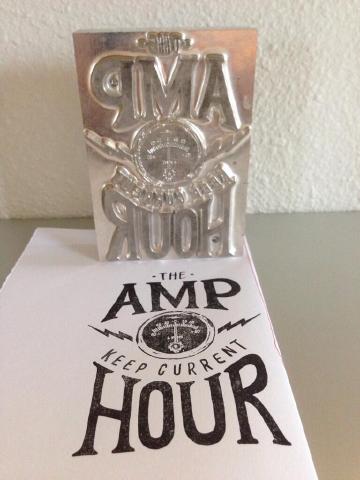
- Ryan O'Hara will be doing a new project and will be using the stamp with The Amp Hour logo shown at the top of the episode.
- Jeri has launched her Kickstarter for the CastAR! It has already hit the funding goal and will continue to try and raise money.
- We'll have Jeri on the show as she gets towards the DfM portion.
- Dev kits are important for getting a jump start on your design and providing proof to your boss that you can get something done.
- Google Glass and Segway aren't useful in their intended ways...but have great niche utilizations.
- The new Adafruit Bluefruit board sends keyboard commands by pulling down a single pin. Very cool!
- Bluetooth 4.0 is useful because it allows you to abstract out iPhone hardware (and their closed ecosystem).
- People don't do anything useful after 35? Tons of successful people respond on Quora.
- Is innovation still possible in regular electronics?
- Next week on the show we'll have Vincent Himpe of Silicon Valley Garage, ask your questions for him on our subreddit. He sent Dave a huge box of awesome fab stuff http://www.youtube.com/watch?v=y0WEx0Gwk1E
Transcript
SPEAKER_01: This is The Amp Hour Podcast, recorded October 21st, 2013. Episode 168, Vacation Videography for Boat.
Dave Jones: Welcome to the Amp Hour. I'm Dave Jones from the EEV Blog.
Chris Gammell: And I'm Chris Gammell of Contextual Electronics.
Dave Jones: And it's just us again.
Chris Gammell: It's just us. We're lonely.
Dave Jones: Yeah.
Chris Gammell: So lonely.
Dave Jones: But somebody complained that, oh, there was a week that I wasn't here and we need to get us two back together and do a show. I can't remember who it was. I think it was on Twitter somewhere.
Chris Gammell: Well, you're going on vacation. I went on vacation, dude. I don't rest, man. I'm just...
Dave Jones: Right. Yep. You're a 24-hour working machine.
Chris Gammell: Steadily working my way towards a psychotic breakdown.
Dave Jones: Then I'll take a break. Right. Okay. Yep. After your head's exploded.
SPEAKER_02: Yeah.
Chris Gammell: Either that or I'll hop on a plane to Australia and I'll show up at your door. Right. I don't know. Wearing an American flag and cowboy boots or something. Stereotypical. With a quick draw or six shooter. That's right. Yeah. Yeah.
Dave Jones: Big Texan hat.
Chris Gammell: No one knows how I got through security, but I did. But I did. Right.
Dave Jones: Oh, that's sad. Yeah. Anyway, it's just us again. Without a clue. Yes and yes, I went on holiday. I went to... Out to Dubbo.
Chris Gammell: Dubbo.
Speaker ?: What was that?
Dave Jones: What would I just say? Sorry, that accent just didn't sound right. No, it wasn't right. No. Dubbo. Mine was like, Dubbo. Dubbo. Dubbo. Dubbo.
Chris Gammell: Yeah, I don't want to sound like that. Ever. Right. Okay.
Dave Jones: Just so you don't want to sound like someone from Ohio, you know? Like, yeah. Right. Okay. Oh, boy. Anyway, yeah, it was three... It was two days driving for a three-day holiday, you know?
Chris Gammell: Oof.
Dave Jones: Yeah.
Chris Gammell: That's a lot of driving.
Dave Jones: Yeah, it's a fair bit, especially when you're a two-year-old, you know? Yeah. You can't sort of drive as efficiently as you do.
Chris Gammell: You know, I know some people who are, like, so into car trips, and, man, I just never got into it. I've done it quite a lot.
Dave Jones: I don't mind them, because you stop every two hours in a little town, and you have a snack, and I wander around, and then, you know, stretch, and you get back. I kind of like road trips.
Chris Gammell: I don't. See, that's the thing. I never stop and smell the roses there. I always just try and get there as fast as I can. Oh, right. Okay. And also, we have to talk about scale here, right? I mean, I've driven from Ohio to Denver, Colorado before, and that's, like, you know, 20-some hours in a car, so. Oh, okay.
Dave Jones: Right. That's serious. Yeah.
Chris Gammell: Yeah. Yeah. And I've also driven, obviously, Texas up to Cleveland when I moved, so. Right. That's another big one. Another 20-some hours, so. Yeah, I don't like that.
Dave Jones: Yeah, but you're from the land of the airplane, right? You guys fly everywhere. Oh, didn't we talk about this before, and, like, road trips are coming back? They're coming back. Yeah, I think so. Because, what, are people sick of the TSA getting a touchy-feely in there?
Chris Gammell: Well, I think just prices are going up, too. I mean, you look at airplane players. Yeah, well, it's seasonal, but it, yeah, in general, I mean. Right. I'm a pretty big cheap skater. I don't know about you, but. Oh, yeah. Yeah. Particularly. You know, some people are like, oh, yeah, I don't mind paying $500 to fly somewhere. It's like, okay. Well, enjoy. Yeah, exactly. I'll be on Google Hangouts talking to people there, I guess, or something. I don't know. Nerd. Yeah. Yeah, well, it's just priorities, right? That's what it comes down to.
Dave Jones: Anyway, yeah, I ended up at the Parkes Radio Telescope, which is freaking awesome.
Chris Gammell: I saw that. That was cool.
Dave Jones: Yeah. Yeah. Always wanted to go there. Never been there.
Chris Gammell: And so that was the one, that's the one they're building. They're building more of those out in the Square Kilometer Array eventually? Well, no, no.
Dave Jones: This has nothing to do with the Square Kilometer Array. That's the Merchinson Radio Telescope that they're building out in Western Australia. That's a hell of a drive.
Chris Gammell: Yeah. Right. All the way across the outback. That'd be fun. Exactly. That's flying. That's flight time. Yeah.
Dave Jones: Oh, yeah. Yeah. It's like six hours flight time. It's like from the East Coast to the West Coast of the US. Yeah. Right. That's huge. Yeah. Serious. Anyway, yeah, that's the Merchinson Radio Telescope, which was going to be the Square Kilometer Array until South Africa. Scooped it up. Stole it. Yep.
Chris Gammell: Yeah. Yeah.
Dave Jones: Although we're still doing, you know, we're still doing like a small scale thing out there. But no, this is the Parkes Radio Telescope that famously received the images from the Apollo moon landing. Yeah. Well, it did after like the actual first steps or something came from Honeysuckle Creek or somewhere else. But yeah.
Chris Gammell: Okay. Well, whatever.
Dave Jones: Yeah. Yeah. There is actual dispute over, you know, who got it. Who got it first. Yeah. Exactly. Who actually received the, you know, one small step for man signal.
Chris Gammell: Right.
Dave Jones: Yeah.
Chris Gammell: Well, it's good most, you know, having backup sources there too, right? You know, you don't want to just.
Dave Jones: Yeah. Exactly. Well, yeah. Did you know that it was actually one small step for a man? Not one small step for man?
Chris Gammell: So he's talking about himself?
Dave Jones: Yeah. Neil Armstrong said one small step for a man.
Chris Gammell: That's. Well, geez, man. That changes everything. Yeah, I know.
Dave Jones: It's ruined everything, right? It's just destroyed everyone, you know. No, not really.
Chris Gammell: It's fine.
Dave Jones: Vision of how remarkable that comment was, you know. But yeah, that's what he meant to say and that's what he did say. But apparently the transmission cut out the A.
Chris Gammell: Well, thank goodness for interference. Yeah. That's right.
Dave Jones: Because it turned it into a much better.
SPEAKER_02: That's a funny idea, actually.
Chris Gammell: Thinking about other like, you know, other famous speeches that got messed up because of like, you know, static or interference or something. I have a cream puff. What? Instead of I have a dream, I have a cream puff, you know. Let's see what else.
Dave Jones: Well, the famous first telephone conversation.
SPEAKER_02: Tear down this wall poster. I don't know.
Dave Jones: Right. Tear down this bagel or something. I don't know.
SPEAKER_02: It's always those audio engineers, you know. You got to watch those guys. They're tricky.
Dave Jones: Houston, we have a limb.
SPEAKER_02: Yeah.
Dave Jones: You know. What?
SPEAKER_02: Yeah. The limb, it's right over there. Yeah, it's over there. The lunar escape module, it's right over there.
Dave Jones: Oh, boy. Anyway. Yeah, so that was fun. Although, you know, because it was holiday and not work. I wasn't allowed to work. I wasn't allowed to take the vlogging camera. It was, yeah, I wasn't, you know, able to like tee up a technical tour or anything like that. So if I want to do that, I got to go back on my own accord. Yeah, that's too bad.
Chris Gammell: Yeah, it's good for you. I mean, you know, you got to get away sometimes. You got to take a break and it's tough, you know, like getting away and taking time off. Even when you're self-employed like you are, it's tough to get time away and kind of stay away from that. I've never done one of those like disconnect weeks where people like go to remote locations and leave their phones at home.
Dave Jones: Yep.
Chris Gammell: I should try that. It's good.
Dave Jones: Yeah, it's not bad. Although I did get in trouble on the last day when I dared to pick up my phone and surf the forum and answer emails, you know.
Chris Gammell: Busted.
Dave Jones: Yep. Got busted big time.
Chris Gammell: Yeah.
Dave Jones: Yep. Cop some verbal abuse for that one. Next time you know.
Chris Gammell: Next time you know. Yeah.
Dave Jones: Oh boy. Anyway, that was awesome. Just wanted to say that. I love that sort of thing.
Chris Gammell: Cool, man. Well. Yeah.
Dave Jones: Because I'm a big space buff. Yeah.
Chris Gammell: Well, you know. Now you should go back and get a tour. That'd be, you know, the tour we actually get to go.
Dave Jones: Well, I have been invited to the Canberra Deep Space Network for a technical tour. Yeah. Which is actually closer than where I went here to park. So, yeah, I'll have to go back. Because we talked about that when the Mars rover was. Yeah, when you went to that party. Yeah. Yeah.
Chris Gammell: You went to that party and you found out about everything like 12 hours after we did.
Dave Jones: Yeah, exactly.
SPEAKER_02: It was so dumb.
Dave Jones: Bastards. I'm still angry over that.
SPEAKER_02: I know. You should be.
Dave Jones: I do hold a grudge.
Chris Gammell: Yeah. That was fun.
Dave Jones: Oh boy. Oh boy. Well, I'm glad you can laugh at it.
Chris Gammell: Oh yeah, you totally can. Well, I had to, you know, schedule a guest without you. Yeah, I know. Just like last week.
Dave Jones: Yeah, I blew it off totally.
Chris Gammell: I don't know. I'm enjoying this. You know, sometimes it's good to not have to worry about, you know, taking turns asking questions. I get to just ask on my own, you know? Yep. It's like ordering your own pizza, you know? You don't have to worry about, oh, what kind of toppings do you want?
Dave Jones: Oh yeah, right. Yeah, you just get what you want, you know? Yeah. That's it. Anyway, we've just blown 10 minutes on just waffle.
Chris Gammell: Yeah, well. Yeah.
Dave Jones: So let's get on to it.
Chris Gammell: Nothing different there.
Dave Jones: I've been repairing a DSA.
Chris Gammell: Yeah, so now I asked you before, I actually did not know what a DSA was.
Dave Jones: That's all right, because it's a specialized bit of instrument. A lot of people will not know what a DSA is. So what is it and how would one use it? It's a dynamic signal analyzer, also known as an FFT analyzer. And it's specifically designed for low frequency signal measurement, DC to 100 kilohertz, usually. So I guess you consider it a network analyzer, if people have used network analyzers. Kind of, you know, not too dissimilar, I guess. You know, you can get phase and magnitude plots. But, you know, DSAs are specifically designed for acoustical noise and vibration measurement. Ah, okay. So you'll get specific, yeah, you'll get specific analysis tools like coherence and cross-spectrum and, you know, all sorts of fun, jazzy stuff, which you probably never even learned about. Yeah. No. You know, unless you're actually in the field. Right, exactly. So, yeah.
Chris Gammell: Yeah, I've used network analyzers before for doing, like, op-amp control loop kind of stuff. Right. But really, shockingly, actually, the low end of those usually aren't that great. I mean, the low end frequency response.
Dave Jones: Yeah, no, you were talking about, you know, kilohertz or something. Yeah, they're usually more for the megahertz range, right?
Chris Gammell: Yeah. Yeah, usually I was doing it. You can start at 10 hertz or so, but it doesn't do too much for you, you know. So, yeah, maybe kilohertz up to 10 megahertz kind of thing. You know, usual op-amp range, that kind of thing. Unless you're doing video op-amps, of course, but.
Dave Jones: Right. No, and a DSA is like, as I showed in the previous video I've done on the DSA, where I did a quick repair of, you know, the one that I've actually got working here, the previous one. And things like measuring the 1 on F noise of the op-amp, you know, that's what a DSA is good for, because it measures from DC up, you know. So, yeah.
Chris Gammell: Right, true DC up. That's the key thing there, is getting that low frequency stuff. Yeah. Yeah.
Dave Jones: You know. Getting those elbows. Technically, yeah. So, that's what they're good for. And, yeah, they're very niche. But the industry I come from, the seismic measurement industry, like, everyone had one of these on their desk, right? It was as useful as the general purpose of oscilloscope and meter. Yeah. Exactly. They were just, yeah, that often used. But outside of those sort of industries, no, nobody's ever heard of it.
Chris Gammell: Right. Yeah. Well, and we were talking about other ones before the show, like the ones that I like are, like, source measure units or source measure units. Schmoo.
Dave Jones: God, I hate that name.
Chris Gammell: I don't say with a S-C-H. Schmoo is something you eat, I think. Right. Yeah. Schmoo. Is that what you're saying? Schmoo. Schmoo, I say Schmoo, yeah.
Dave Jones: Right.
Chris Gammell: But, yeah, that's, well, that's like Agilent just came out with one as well. And Keefe had one. Oh, did they? Mm-hmm. Yeah, the B2900.
Dave Jones: Oh, right. I didn't know that. Just what? As in this week or what?
Chris Gammell: No, no, no, no. It was probably about a year ago or so. Oh. Dude, come on. That's a short time in this industry.
Speaker ?: Right.
Chris Gammell: How often do new DSAs come out, you know?
Dave Jones: Yeah, exactly. Yeah. They're, well, that's the thing, right? They're so uncommon. Yeah. Right. Like, yeah, Agilent still do. The calibrators, right? Yeah. How often does a flute calibrator come out? Exactly. Well, they have just come out with a new one, haven't they?
Chris Gammell: Did they? I thought they were.
Dave Jones: Yeah, but it took them 20 years.
Chris Gammell: Yeah. I knew some of the guys that were working on that. They were nice guys.
Dave Jones: Yeah, it's a new touchscreen. It's a new, you know, calibrator with touchscreen and everyone groaned and just did a face palm, you know? Right, yeah.
SPEAKER_02: Just give me a G-pop.
Dave Jones: Yeah. Well, it's just like Keith Lee just came out with the new touchscreen. Smooth.
Chris Gammell: Yeah.
Dave Jones: Right? You know?
Chris Gammell: What a wank. Oh, yeah. I guess we never did talk about that when that came out. I know a bunch of people that were working on that. That was. Right. I helped on that a little, little bit before I left, but not much.
Dave Jones: Yeah.
Chris Gammell: But yeah, smooths are, I mean, like, they're crazy useful, like, in semiconductor testing, right? You think about doing, like, IV curves and that kind of thing. Oh, for sure.
Dave Jones: You know, that's... There's nothing that replaces it, right? Right. Right. Same thing with the DSA. Yeah, exactly. Measuring low-frequency noise is nothing. Networking can't analyze that kind of stuff. Yeah. Yeah. There's nothing to replace these instruments.
Chris Gammell: The one thing I did work on before I left Keith Lee was the high-current smooth that they put out. Right. Because it does, like... High current. I think it's, like... 50 amps at, like... That's pretty high. A couple... Yeah. Like, 200 volts or something like that. I don't remember. Right. But it has, like, special modes. Huge power. Yeah. Yeah. Yeah. Yeah. That was cool. And then there's a high-voltage one that does three kilovolts. You know, it's, like, for testing FETs for cars. Yeah, yeah. Yeah, yeah. Of course. Yeah. So... Yeah. It's cool stuff, but very, very niche. So...
Dave Jones: And they sell, what? You know, a few hundred of them. You know? Yeah. Yeah.
Chris Gammell: Just like... And I guess that's why the old Agilent boys are spinning off their test and measurement division. Right. We won't go into that again. It'll cut too deep.
Dave Jones: Well, we still haven't got the name, have we?
Chris Gammell: No, we don't.
Dave Jones: But as soon as we do know the name, folks, you'll hear ranting about it first here on the Amp Hour.
Chris Gammell: That's right. Yes.
Dave Jones: We might even do an Agilent special episode. What do you think? No. No. The day Agilent... We did that.
Dave Jones: We could rant for an hour on the new Agilent name, I'm sure. I know we could.
Chris Gammell: We don't need to.
Speaker ?: Right.
Dave Jones: I'll see if I can find out beforehand.
Chris Gammell: Yeah. There you go. Get that press release ready. Yeah.
Dave Jones: Right. But I'm sure the employees will find out the exact time as, you know, after management make their decision. You know, I'm sure it'll be, you know, really tight-lipped. You know, management will come out of a big meeting. Ah, you know, pass the stone tablets down, you know, and here's the new name. Right.
Chris Gammell: Yeah. Take it up the arse. I know. Like, a lot of these, I mean, a lot of big companies that do that now, too. Like, I get, like, sometimes, not often, but, like, press releases with, like, embargoes and that kind of thing. It's like...
Dave Jones: Yeah, yeah.
Chris Gammell: You know, like, I know that there's, like, the school of thought for, like, a lot of press stuff where it's like, oh, you know, you need to have it synchronized and stuff like that. And they want to give writers the time to write about it before it's actually out. Right? That's why news articles show up on sites as soon as they're... They all show up at the exact same time. As soon as they're going, yeah.
Dave Jones: If people aren't aware, yeah, us media folk, we get, you know, pre-release announcements and stuff within what's called an embargo date. You know, if you release the info before this date, we'll sue you and never give you anything again, you know? Yeah.
Chris Gammell: More of the second than the first. Yeah. Yeah, exactly.
Dave Jones: We'll just shut you out of the market, you know? Yeah. Never get shit from us again.
Chris Gammell: Yeah. But, I mean, like, it's like these big companies and they're like, oh, well, there's a chip that needs to be an embargo. And it's like, well, not really. No. No, it doesn't. No, I'm sorry. Yeah, I know you don't want your competitors to know about it, but we don't really, you know. Until it's, like, as you say, right? It's until it's in the DigiKey catalog, no one hears the crap. Yeah, exactly.
Dave Jones: That's right. Boy. So, we want to know. No, we want to know. Do our listeners have any artwork in any specialized industries where you've got, you know, a niche bit of kit that nobody else knows about?
Chris Gammell: Yeah. Yeah. I bet the RF guys are, you know, they've got tons of crap like that.
Dave Jones: Probably.
Chris Gammell: You know.
Dave Jones: Yeah. The EMC guys, maybe, and I don't know. Oh, yeah. Yeah, definitely. You know, those sort of black magic type industries. Yeah, right. I can remember my first day at my job in the seismic industry, right? Mm-hmm. And, yeah, they, you know, came in. I was a contractor at the time. I came in and they said, right, you're going out to our site to repair. This charge amplifier's going, failed. And I went, what's a charge amplifier? And they went, you'll find out. And off I went. You know? Yeah. I've got to, yeah. That's the best way to learn. Yeah. Yeah, charge amplifier. Did you go by yourself?
Chris Gammell: Did you go by yourself? Yeah. Yeah. Oof. Wow. Yep.
Dave Jones: And, yeah, I, this is pre the internet, folks. It's not like you can just look up what a charge amplifier, right? You know, I knew it was an amplifier that amplifies charge. You know, I had some vague idea of. Right, yeah. But I had to sort of like troubleshoot this issue with this, you know, charge amplifier in a system and stuff. And it's like, you know, yeah, well, you learn pretty quick. So, you know. So does anyone, yeah, does anyone have any other similar stories? And, of course, then I learned what a DSA was. And I went, hey, that's pretty useful.
Chris Gammell: I'll take one of them. Yeah, exactly. Yeah. That would be interesting to hear about because I'm sure that that can be illuminating into like other parts of the work as well because, you know, if you know that there's a, you know, machine that, or a piece of test gear that outputs, you know, gigahertz signals and needs to figure out amplitude or something like that, you know, like it's like, okay, well, that kind of tells you the main testing you'll be doing in that industry too.
SPEAKER_01: Mm-hmm.
Dave Jones: Well, like in the cellular, you know, like cellular phones, you know, you find them on eBay, right? You get these magnificent looking communicate, you know, GSM mobile phone test sets, you know, Agilent make them and all sorts of other, your WaveTech and, yeah. Yeah. Yeah. Like if you've ever stumbled across these on eBay, it's like, oh, you know, it looks like a million dollar bit of equipment.
Chris Gammell: V&As and that kind of thing. Yeah.
Dave Jones: Yep. Yeah. And they're specific for, you know, it's got like a huge spectrum analyzer built in from, you know, blah to blah and, you know, it's a bit, it's useless because it's only designed for testing mobile phones or something, you know? Right. Exactly. Yeah. And Agilent make these and they probably sell, you know, 50 of them or 100 of them or something, you know?
Chris Gammell: Well, if it's cell towers, it's probably more than that, but.
Dave Jones: Well, you know, but yeah.
Chris Gammell: That's big money, man. So like. Oh, yeah. Yeah.
Dave Jones: These things cost, you know, huge amounts. And then they sell them for like 200 bucks on eBay or something, you know, because they're useless. Nobody wants them because you can't use them as a general purpose instrument.
Chris Gammell: Well, I get that kind of just as like the auxiliary, you know, being near Pittsburgh, there's a whole bunch of like network gear people that work in Pittsburgh. And so what I get basically is when you have people coming through town, like trying to, you know, sell you parts and stuff like that, you know, you'll have like an FPGA vendor come through town and be like, oh, so we got this new FPGA. It's like got all these crazy ass features and it's only like, you know, 2,500 bucks per, right? And you want this, right? And I'm like, what? Huh? Like, oh, well, people in Pittsburgh want it. You must want it, right?
SPEAKER_02: I'm like, no, I want like $25 or less, you know, and that's crazy for someone else, right?
Chris Gammell: You go out to California with a consumer. It's just like, it's so regional too. Like, what's the one? It's not Binghamton. There's some place in New York or no, it's Pennsylvania rather. It's like the connector capital of the world or something like that.
Dave Jones: Who knew?
Chris Gammell: What the hell is it? It's where like Phoenix and Samtech and all the, a lot of the big vendors are. Yeah, yeah. But the thing is, you see these ecosystems pop up, right? Because, you know, you'll have one person who works at a company and then they leave and then they go start their own thing, right? And then they, you know, someone leaves from there and they start their own thing. And there becomes a centralization, you know, like Detroit's the same thing for autos, right? And Cleveland's like that for industrial. And it's just like you have these specializations and it's like, well, you could try and start a consumer company in Cleveland. But why would you do that when you could go out to the Bay Area and find so many more people that are already doing that kind of thing and you'll be much more efficient. Yep. So it's tough when people come in and they don't know the area.
Dave Jones: But why do I have a picture of like the old fashioned, you know, traveling, you know, bandwagon kind of, you know, they roll into town with their wagon and they open it up and everyone rushes to it. Here comes the medicine man, you know. Local town.
SPEAKER_02: Come on up, folks, and buy your op amps here.
Chris Gammell: We got all your latest and greatest.
SPEAKER_02: Oh, boy. No, sorry. That's all right.
Chris Gammell: Yeah, that's, yeah, that's, sales sucks. I know we probably have some salespeople in our audience, but like it's a tough, it's tough industry. You know, like you got to travel so much. Even just like regional salespeople, I feel bad for, you know, they're like, oh, yeah, you know, I spent, or like, you know, former guests like Alan Wolke, right? He rolled through town and I grabbed a beer with him once. And I'm like, Alan, what the hell are you doing in Cleveland? You live in Jersey. He's like, ah, well, you know, it's just eight hours. I'm like, what?
Dave Jones: Man, that takes years of planning for someone like me, you know.
Chris Gammell: But yeah, I mean, you know, they're field apps guys and salespeople. They're all just, they're used to it. I remember Alan said he was, he had so much gear in his truck that he was just like, he was like, I'm not flying this stuff. So, yeah. Oh, goodness. Well, he doesn't get mad at me for telling how much is, well, saying he had a gear in his truck.
Dave Jones: Anyway, back onto the DSAs. There's a reason why they don't make them anymore, you know. Well, they still do. But because there's nothing in them, right? There's, but it's all software, pretty much. Like, there's like some op amp, you know, there's some preamp, there's a preamp front end. Yeah, front end stuff. But then it goes into an analog to digital converter and that's it. You know, it's not high speed. It's not, you know, it's, some of them are really, you know, quite high performance in terms of, you know, noise floor and, you know, stuff like that. You have to take all that stuff very seriously. But, you know, so they've been replaced by boxes that hook onto your USB port now, you know, because basically, you know, there's no point designing this huge instrument with front panel and processor and everything else just to, you know, when really your PC can do. So you're saying it's like a headless unit now, right? That's right. It's like a headless unit. Well, it's like a, it's like a USB scope, right?
Chris Gammell: So you like plug it into like a tablet or something like that, put the, make the front panel replaceable.
Dave Jones: No, see, no, you do it on a PC because you want all the, you know, you want to funnel the data directly into MATLAB. I know. You know. Yeah, yeah, yeah, yeah. Yeah, right, right. You want your stupid tablet ID? No.
Chris Gammell: I'm really right about that. You're going to see it eventually, but yeah, I'm totally right.
Dave Jones: Somebody just released a tablet oscilloscope.
Chris Gammell: Really? Yeah. Like not like Osseo? I have to link that in.
Dave Jones: It's this brand you've never heard of. They popped out of nowhere and they've got like this one gigahertz analog bandwidth tablet. Yeah. Wow. They contacted me and wanted to know if I wanted to review one.
Chris Gammell: Is it like a giga sample though? And then like the bandwidth is actually.
Dave Jones: No, no, it's, it's a couple of gig samples per second with a gigahertz bandwidth or something. Gigahertz bandwidth. That's impressive. I know. Yeah. It's like, and they say, we're a new company. It's like, well, where the hell did you just pull the one gigahertz bandwidth out of your ass? What did you? Yeah. Right. You know? I don't know. Anyway, I have to find it and link it in. And it is like a tablet thing. You know? I don't know if it actually uses a tablet stuck on top or I don't know. I haven't looked into the details, but yeah, it certainly looks like a tablet anyway with the B and Cs on the side, you know, it's just like one big touch interface and, huh. Yep.
Chris Gammell: Hmm.
SPEAKER_02: Anyway.
Chris Gammell: Interesting. Well, that's kind of crazy. But yeah, I think that, I mean, that stuff's going to keep happening as, as it gets easier and easier to kind of roll in, you know, like Wi-Fi or Bluetooth, that kind of thing. It's, uh, yeah, it's, why wouldn't you? Because it hasn't got real knobs. Nobs. You knob? Nob. Nob. Uh. Come on. Everyone likes real knobs. Maybe, but you know, you're going to have, it's, it's going to be the same thing where you're going to have people that grow up without it and you'd be like, all right, well, eventually they're going to just be like, well, I don't care about that anymore. It's not care about performance or cost or something else. So.
Dave Jones: No, but usability is still a big thing. And there is something to be said for grabbing a knob and turning it. It's incredibly intuitive. Yeah, I suppose. And inherently satisfying. I could just turn knobs all day.
Chris Gammell: Seriously. Yeah. Okay.
Dave Jones: Anyway, I've been repairing my DSA.
Chris Gammell: Yeah.
Dave Jones: Well, I was going to get to. You haven't seen it, right? No, I haven't. I'm going to, probably after this, I'm going to jump back into it and, uh, and repair it again, but, um, yeah, the power supply failed and it took out, um, you know, it just didn't work and took out the, uh, minus 12 volt regulator that powered the oscillator. So, you know, it was completely dead. It didn't even start up. Didn't even do anything. And I traced it down to the oscillator. And, uh, my next step is I suspect if, uh, one regulator has been taken out, well, what's the obvious conclusion?
Chris Gammell: Maybe another one is. More have been taken out on other boards.
Dave Jones: So I reckon, you know, anyway, I got it to the point where it boots up and, you know, but it's giving me all sorts of, you know, error messages and stuff like that. So I reckon I'm betting good money that there's more regulators dead in there. Um, well, that's an easy fix if that's it, but usually regulators don't do a bad job at actually protecting the circuitry that's behind there. So, you know, this thing's got like plus minus 18 volt rails, which then get regulated down to plus minus 15 volts for the op amps and all the other, the analog circuitry and, you know, um, eight volts gets regulated down to five for the digital and all that sort of jazz. So, and yeah, so these regulators are, you know, uh, yeah, they're fantastic because, you know, they do offer at least a level of a modicum of, of protection. Yeah, so it confuses. Yeah, yeah, exactly. And, uh, yeah, and it's great. And if that's the only problem, you know, that's what I'm hoping is that, you know, but will Murphy get me, you know, will I go and repair 20 regulators and then find, oh no,
Chris Gammell: you know, see now that alone is crazy too, that there are 20 regulators on board these days or back in those days. Right. I mean like.
Dave Jones: Well, even today, even more so, right. Have you ever tried to power an FPGA? Yeah, I know. Those rails are getting crazy.
Chris Gammell: Yeah. But I mean, like I think just moving away from bipolar in general, you know, like having single, single sided rails is, is, is a, is a pretty, pretty big jump, right. That cuts everything in half. Yeah.
Dave Jones: Well, this is a modular unit, like, so they've got like separate boards for everything. So each board has to have its own local regulation and stuff like that, you know, so they've got a main board which feeds in the raw power and then they regulate it down where they need to at the point of interest. Especially with analog stuff, especially with precision analog, of course, you'd know all about that, you know, sometimes, you know, it's so critical on that for the performance of that op amp, you've got to dedicate your own linear regulator directly to the low noise linear reg, not just a jelly bean one, but a low noise linear reg specifically just to power that op amp.
Chris Gammell: Yeah. You know, I'm surprised I was, so I've been looking through those things for contextual electronics, obviously. And I had never looked at the power supply rejection on a, on a LM317 before, but obviously it's low, low frequency stuff, but even still low frequency stuff's like 80 dB. Like that's pretty significant in my book. I mean like.
Dave Jones: Oh yeah, yeah, it is. But once you go up in frequency, it like becomes like a, it's like a straight wire, straight through. Yeah. You know, it's like. Yeah.
Chris Gammell: I know. But, you know, it's, it's. All the high frequency crap. Yeah. It's better than I thought it was. I always figured that it was kind of an average of 40 or something like that. So.
Dave Jones: Yeah. No, they're quite reasonable. But, but yeah, yeah. If you do, you know, doing serious analog work, you've got to look into stuff like that. And you've got to take it into account and you've got to take into account the bandwidth you're working over. You can't just get the single figure at the top of the data sheet.
Chris Gammell: No, no, no, no. No. If you're doing analog, you got to look at charts, man. Yeah. And infer things and.
Dave Jones: And if they don't have a chart for that particular regulator for that aspect, well, that one you don't even consider. Yeah.
Chris Gammell: Where you take your time and you go bug them for a chart. No, right.
Dave Jones: Yeah.
Chris Gammell: Right. Hang your head and tuck your tail and walk away when they say no.
Dave Jones: No, I see. I wouldn't even bother unless I was absolutely destitute and I had no other option. But no, I just look around until I find one. Because there are specific linear regulators that are designed for these low noise applications. And then you get half the data sheet filled with bloody, you know, charts of their noise performance and stuff and their ejection ratio and all that sort of jazz. Yeah. Over, you know, over voltage range for variable ones. All sorts of stuff. So, yeah. Tricky business.
Chris Gammell: It is a tricky business. I've been looking at a new business. Not a new business. Not again. For me. But just a new project, really. Right. You ever played with, like, induction motors, like AC induction motors?
Dave Jones: No, not really. I'm not into the big power motory kind of feel.
Chris Gammell: Yeah. Well, that's what I was. I always kind of, like, put them in that, you know, okay, it's huge. It's moving stuff around. It's using just straight up 60 hertz. Yeah. You know, who cares, right? But I started looking into it more for this project I'm working on. And I started looking into, like...
Dave Jones: Is this a work project or a home project?
Chris Gammell: It is a home project, but I'm not talking about what it is yet. No. But basically, it's for variable frequency drives. You ever, like, look at that kind of stuff?
Dave Jones: No. No, once again, that's power industrial, you know? I mean, you know, I'm not a power guy. I'm an electronics guy, low-level, low-signal electronics.
Chris Gammell: See, okay, so that's what my point was. So I posted a block diagram online. It's, like, it's from TI, but it's posted on some other weird site from India. But, like, what I didn't realize is that, like, because, you know, I've been benefiting, and probably everyone's been benefiting from, like, the dropping cost of, like, of, you know, instrumentation and just measurement, that kind of thing. And the thing that I didn't realize, though, is that, of course, you know, everybody else wants to put that into their products, too. And so what you have is, like, these significantly more complex systems with, like, all of the stuff I enjoy, you know, like measurement and, you know, like sensor monitoring, that kind of stuff, outputting voltages and PWM type of stuff. And then, oh, and it's also, you know, moving, you know, a couple horsepower motor, and it's, you know, moving the world around. I'm like, wow, this is, like, frigging cool.
Dave Jones: You only just discovered the joy of motors.
Chris Gammell: Well, that's the thing, and that's what amazes me, that is I'm like, wow, I ignored this field for as long as I've been working electronics, and I keep finding new things. That's a good sign, right? I don't know. Are you still finding new things?
Dave Jones: It is this electronics. It's not really. It's electrical, that word I don't like being associated with. See, I don't like, I hate being called an electrical engineer. I'm not. I know jack shit about electrical. You know, I'm an electronics engineer.
Chris Gammell: This does touch on some weird stuff, right? I mean, because it does get into, like, three phase and, you know, significant voltages and currents.
Dave Jones: Well, there's no electronics involved. Well, there can be. Yes, there is. We're talking about driving and stuff like that. Yeah, that's what I'm saying.
Chris Gammell: This is, like, this is the interface now. This is, like, the new thing. I mean, this is basically...
Dave Jones: If you're talking about the drivers for them, yes, that's different. But now we've got, you know... But if you're just talking about the motors themselves that are just working off the mains, and they're using three phase and they're, you know, the rotors and all the rest of it, right? That's electrical, right?
Chris Gammell: Right, right. Well, yeah, and that's what I think it intrigues me about it is, like, this is the interface between the two because, you know, there's all this instrumentation and feedback and all these control systems then, too, that then kind of allow you to control the electrical side of things, right? Where you're actually modifying off the mains and, you know...
Dave Jones: Yeah, exactly. Right, yeah, yeah. You're getting sneaky bastard now. I like it how the operation and the modelling of all these electrical motors and everything else comes back to electronics principles, you know? It comes back... Yeah. So they'll draw them as resistors and inductors with, you know, complex numbers and phase, you know, and all that sort of jazz.
Chris Gammell: Well, that's the other thing that's interesting about it. So, you know, I've been learning more about, you know, these induction motors and stuff like that. And the way that they model it, the simplified model is basically, like, having three transformers and basically you're sweeping something past a transformer and it's just coupling magnetic energy into the transformer as it goes past it. And so, basically, you're just, like, having this spinning transformer. At least as far as I understand it so far. Yeah, yeah. But it's, you know, and the other thing is, like, I didn't realize where this stuff is actually happening, right? So, you know, industrial stuff, this has been going for years and years and years. And a lot of times they are just powering... Hundreds of years, dude. Yeah, right? Since Tesla's time, right? But more modern is the Tesla's time, right? Different Tesla. But it's... The AC induction motors are used for, like, regenerative braking and stuff like that. Yeah, yeah. And so, you know, you'll actually output power like that and then you'll also capture power using these motors and all those crazy-ass VFDs, variable frequency drives, and all this instrumentation. So, I'm very, very excited about it. And then I start dreaming about robots and I'm going to be Iron Man and yada, yada, yada. Right, okay. I'll stop there. Got it. Well, yeah, instrumentation. It's cool.
Dave Jones: Disclaimer, folks. We know jack-all about motors. Yeah, let's start talking about camshafts and drive shafts. Yeah, exactly. Don't bother correcting us because we know we probably roll. Oh, God.
Chris Gammell: Flashbacks of terrible, terrible, terrible knowledge. But I'm going to be learning. Every time we... Hopefully. But the other thing I wanted to say about that was, I think this is kind of the new normal, right? I mean, I've been thinking about, you know, I enjoy instrumentation type stuff and obviously test and measurement stuff we talk about a lot as well. But it's just getting so easy to do some of that stuff. You know, I look at like these analog front-end chips that I use and, you know, and basically the consolidation of analog that I talk about and that kind of thing. And basically what it means is, you know, if I'm not going to do firmware and just go accept signals from the outside world, I need to also be doing something else with those signals and actually integrating them into larger systems. And that's honestly what a lot of these chip vendors allow, right? Having AFEs and having these fancy systems that allow, you know, motor control in this case, right? Mm-hmm. But that's kind of just the new normal is that you have to move to the next level of abstraction. And that's, I think, what interests me about this kind of thing. I could move up into software, but software, whatever.
Dave Jones: Then we'll shoot you. Yeah.
Chris Gammell: Yeah, exactly. I have to talk to a bunch of software people next week. Did you read, did you see that post I put up?
Dave Jones: I want to ask about that. What, what's the story? Where are you giving a talk and why are you giving it? And to who?
Chris Gammell: So it's at my alma mater, which is in town at Case Western Reserve. And so someone who's in charge of this conference for ACM, which is some IEEE section, I think, like America, I forgot if it is. Computing machines or something like that.
Dave Jones: They're always giving talks, the IEEE. Or they're always organizing them or something.
Chris Gammell: Yeah. Yeah. And so this is a, and so I was like.
Dave Jones: Some local chapter or something.
Chris Gammell: Yeah, exactly. Exactly. I'm not doing anything super fancy here, but, you know, I wanted to help out my alma mater and I don't get invited to speak very often. So, hey, I'll take any chance I can get. And free lunch, you know. Right. That doesn't hurt. He's cheap, folks.
Dave Jones: He works cheap.
Chris Gammell: He's so cheap.
Dave Jones: Packing peanuts also does the trick.
Chris Gammell: Yeah. I, but it'll be a bunch of software people I've figured out. Like, I looked at all the other speakers and that's kind of different. So I don't know if I'm going to be like.
Dave Jones: Holy crap, they've invited me into a software conference.
Chris Gammell: So first off, I hope someone shows up. But, yeah, it's going to be an interesting experience of talking to, I know a lot of our listeners are software people. So I don't want to, like, say that I never talk to software people. And same with contextual electronics. But, yeah, it's interesting. So I was trying to think. So this talk I'm doing is about open source tools. And I was trying to think of all the different open source tools that I use regularly. Hardware.
Dave Jones: For hardware. For developing hardware, you're talking about.
Chris Gammell: Well, yeah, not just hardware, though, too. I mean, I included, like, you know, the Ampar, right? We have a ton. Almost all of our tools that we're using are open source, right? Mumble's open source, which is how you and I are talking right now. Yep. Audacity, how we're recording locally. Audacity, yep. WordPress is how we do our site. That's open source. And then our web stack, like LAMP, Linux, Apache, MySQL, and PHP, those are all open source. And then I think about, like, video stuff. Handbrake, which you told me about, is an encoder. Yep. And then Cam Studio is how I capture video on my screen. Mm-hmm. And, like, that's, like, everything I use on my computer. These, oh, GIMP is another one I didn't even put on there. I need to put that on there.
Dave Jones: The Level 8 is not.
Chris Gammell: Are you sure about that? It might be.
Dave Jones: Oh, is it? I thought there was some black magic in there they didn't want to give away.
Chris Gammell: Maybe not, yeah. But, okay, so that's one. But still, that's a pretty significant amount of other things.
Dave Jones: Yeah, yeah, exactly.
Chris Gammell: But then, you know, moving into hardware, too, right? So Spice, that's a big one. Spice is open source. I don't think LTSpice, you know, on top of it is open source, but, you know, the actual engine. Yep. KiCad, my new favorite, is open source. Octave, which is a MATLAB clone.
Dave Jones: Oh, okay.
Chris Gammell: Yeah. Have you ever used that before?
Dave Jones: No. No, see, I'm not into that sort of stuff. Haven't been for a long time.
Chris Gammell: Yeah, it's pretty cool. I mean, it's definitely not as feature-rich, but it's, you know, if you're in a pinch, it's good for doing, like, matrix math. And then Python I listed, even though I'm late.
Dave Jones: Yay, matrix math.
Chris Gammell: Yeah, right?
Dave Jones: Yeah, doodle, just love it. It's crave.
Chris Gammell: You'd do it if you did AC induction motors, apparently. Right. A lot of scary-looking formulas there. Python was another one. Obviously, that's not hardware, but that's a new feature that's built into KiCad is scripting. They're rolling out scripting for KiCad. Yep. Yeah, so that's some stuff. I couldn't think, I was thinking, I was trying to think of other, like, design tools. Do you know of any others? I don't...
Dave Jones: Oh, offhand, no, you're putting me in a corner.
Chris Gammell: Let's see. And then there's, then the IP side of things, right? Obviously, open source hardware is a big one. Open cores, which I don't really, I have used in the past, but I don't use any more. And then just more generally, like, dev kits, you know, they're not listed as open source, but they almost always give you their Gerbers and their schematics and stuff like that.
Dave Jones: Well, the full schematics in there, and you can always redo it, you know, and there's no restrictions, really. It's just a... Right. They just want you to design their products. They don't license it under anything. It's just like, here it is. Yeah. Yeah. Didn't somebody talk about that recently on Twitter or something about, like, what's the rules of redistributing app notes? Like, you know, it's... They're just, like, considered open source, really. Like, here, have it. Yeah.
Chris Gammell: It's like, of course, right? It's just... Yeah. It's like published.
Dave Jones: Yeah, exactly. That's what we've been doing forever. Right. You know?
Chris Gammell: Yeah. They're just like, we don't need a name for it, that kind of thing.
Dave Jones: Hmm. So, yeah. We don't need to license our data sheet under a, you know, some license. It's just, here it is. You know? Do with it what you want. You reproduce it any way you want and make a fortune out of our app circuit we've got in there.
Chris Gammell: Yeah. You know? Yeah. Because if you make a fortune, they're going to make some portion of a fortune. Exactly.
Dave Jones: Because they're going to sell you the chip. Yeah. Yeah.
Chris Gammell: Exactly. Yeah. And so, I mean, and, you know, moving forward, someone suggested a bus pirate, right? That's a good tool. Right. And, you know, there's other tools that have, you know, been popping up in the woodwork. You know, the one that I'm designing for contextual electronics. It's going to be open source. There's, you know, your, what's that called?
Dave Jones: There's the open SMU that you were into at one stage.
Chris Gammell: Oh, Ian's, the Nautilus Labs thing? Yes. Is that open source? I think it was.
Dave Jones: Yeah, it was. Yeah, I think I took him to task because he used the license wrong or something. Yeah, I remember a lot of- He used the non-commercial clause in the license, I think, and then he went, ooh, okay.
Chris Gammell: Yeah, I remember a lot of unnecessary bickering on that particular episode. Yeah, but, yeah, I'm sure there's other ones out there, too. I mean, I'm sure eventually we're going to see an open source, you know, DMM and an open source oscilloscope and stuff like that because- No. No. I'm not saying from, like, Tektronix or something like that, but I'm saying just someone's going to put one out there because just like with the, you know, AFEs getting better, that kind of thing, right?
Dave Jones: Like the- No, look, this has been discussed ad nauseum on the forum. I know.
Chris Gammell: I see the DMM thread, yeah.
Dave Jones: Yeah, and, you know, and there's been similar ones for open, you know, sources. And it's just, you know, it's just pointless for an everyday use tool. There's just so many options on the market of brilliant tools at low cost. There's, it's just pointless, essentially, having an open source version of one. It's just-
Chris Gammell: Well, I don't think it's going to be like someone's going to be like, I'm going out and doing this, right? It's not going to be like, let's start a committee for this. It's going to be like, hey, I designed this thing. It's pretty low cost. Oh, and it's open. I think that's just how I think it's going to happen with that.
Dave Jones: Yeah, but nobody's just going to suddenly pop out with a usable oscilloscope from nowhere. It's just not going to happen.
Chris Gammell: I'm trying to find-
Dave Jones: And it's not going to happen for a multimeter because they're not going to bother.
Speaker ?: Oh, man.
Dave Jones: Although, maybe I underestimate the-
Chris Gammell: Ah, ha, ha, ha, ha. I got it already. Underestimate the- The Red Pitaya. Remember that thing? We talked about that. I was thinking about it and I'm like, oh, yeah, it's in the title of their Kickstarter. The Red Pitaya Open Instruments for Everyone.
SPEAKER_02: Oh, right. Yeah. There you go.
Dave Jones: Ha, ha, ha, ha.
Chris Gammell: Yeah.
Dave Jones: And who's using it?
Chris Gammell: Well, no one yet. The Kickstarter's not ready.
Dave Jones: Ah, right. Well.
Chris Gammell: Yeah. But I guess, you know, that could be a, you know, a selling point for it. Obviously, Michael Osman's Hack RF, right? That's another one. Right. I'm writing these down.
Dave Jones: Whatever you call it. Yeah. Is, is, I'm, I think it's fairly limited.
Chris Gammell: The Red Pitaya?
Dave Jones: In terms of like, it's front end stuff. You know, it tries to be all things to all people and it ends up being a master of none. You know, it tries to be an oscilloscope, tries to be a data logger, it tries to be a moldy logger, it tries to be this and that. And it just ends up sort of, you know.
Chris Gammell: Yeah, but it's open source, Dave. Who cares? Yeah. Right. Okay. I win the argument. I just, I win. Right. Okay.
Chris Gammell: I win the argument. It's over. Right. I mean, the thing that limits there is that it's based on, even that stuff that opened though. I mean, like FPGA stuff. So, yeah, I win. Sorry, buddy. But that's great. I mean, like, like we had Michael on. He's, you know, he's a great example. So, I'm going to have to, I completely forgot about that. Yeah.
Dave Jones: What were we talking about before we get sidetracked?
Chris Gammell: Sidetracked with open source?
Dave Jones: Yeah, I don't know. I'm sure we got sidetracked there somewhere.
Chris Gammell: Let's see. AC induction motors.
Dave Jones: I think you were trying to make a point. We were trying to get to a point somewhere and we.
Chris Gammell: No, no, I don't do that.
Dave Jones: I think we missed it. I got an inkling that we missed it. Totally.
Chris Gammell: Yeah.
Dave Jones: Where the highest paid engineers worked.
Chris Gammell: No.
Dave Jones: Work. Do we care?
Chris Gammell: No.
Dave Jones: No, we don't. See, that's the problem. So, there's tons.
Chris Gammell: This is not an amount of money, folks. This is a ton of stuff. Well, there's tons of stuff on our list, right? And it's like. Yeah, there is. By the end of the week, it's like neither of us have read it. And I feel bad. I know. I would say. So, if I was going to say. Maybe we should do this. We should talk about things that we would talk about if they were on the list. Because some of this stuff is interesting. Obviously, you know, like we talk about. Maybe people don't want to hear about it. But we talk about Kickstarter, right? Kickstarter is often. Yep. A topic. If it's hardware. You know, sometimes Dave likes to bring up magnificent failures and. Right. Face palm kind of moments. But we like dev boards. And we like, you know, new parts. That kind of thing. Yeah. We like recurring stories. So, when we see stories about people who have been on the show before. Like, we've already talked about a whole bunch of them. Like, Michael and Alan. And a whole bunch of people like that. And let's see. I got a thing on here from Ryan. Ryan O'Hara, who is on the show. He's making an amazing stamp for an upcoming project that we'll see. Yes. It's very cool. You can see that picture. Actually, I'll probably use that as the cover picture.
Chris Gammell: Yeah.
Dave Jones: The cover. Because it just looks awesome.
Chris Gammell: It's awesome. It's made out of magnesium. Did you know that?
Dave Jones: Yeah. It's a magnesium alloy. Right.
Chris Gammell: Of course. Not pure magnesium. Right. But it was etched to it, not machined. That was the main thing he figured out.
Dave Jones: Oh, okay.
Chris Gammell: Yeah.
Dave Jones: See, I've never been involved in something like that.
Chris Gammell: Machining? I haven't in a while either.
Dave Jones: No, like a mold for something like that.
Chris Gammell: Oh. I think they just take it. I think that's the thing. I think they just use an SVG. Like a graphics file. What's an SVG? It's like a scalar vector graphics file. Okay. Yeah, yeah. Got it. And then they can just map it to... I think in that case, it's just laying down kind of like in a photo resist type of way that you can do like a PCB and it's like that because it's an acid etch. Right. But if you were going to use an SVG in machining, you would just want to translate it to G-code using a cam program.
Dave Jones: Yep. But didn't I see... I haven't got the photo in front of me. Didn't I see like sort of like sharp points, like wedges etched away, not just like straight walls? Yeah. Kind of thing. It's sort of etched. Yeah. Is that... I don't know. I don't know how all that happened.
Dave Jones: I don't... Right. Eh.
Chris Gammell: It's very cool.
Dave Jones: But the whole idea is that it's a stamp, right?
Chris Gammell: Yes. For unknown purpose.
Dave Jones: Right.
Chris Gammell: Yes.
Dave Jones: That's very cool.
Chris Gammell: So yeah. You know, there's... Those are the kind of things we're looking for on the page. And the other problem is that we have, you know, probably... We usually get about 50 items now per week, so... Yeah, it's a lot. It is a lot. One thing we didn't mention here, Jerry's Kickstarter.
Dave Jones: Yes. Jerry's Kickstarter. It's, yeah, fantastic. She finally got around to it. Took a lot, you know. Yeah. Don't know how long she's been working on it, but it's a hell of... Yeah. It's a hell of a lot of work. Yeah. And fantastic. Unfortunately, I don't think it's going to be as popular as what I thought it would be. It's sort of stuttering to taper out. I've been watching the stats and, you know, yeah, she met the funding target. But seriously, I think I posted a thing on the forum estimating, you know, I'd be saying that I'd be surprised if they didn't get 10,000 backers, which equated to, you know, $3, $4 million or something. I don't know, at an average, no, $2.4 million, because the average backing is about $240, right? So you take the average backer and you multiply it by 10,000, you get $2.4 million. And so, yeah, I said I'd be surprised, but it doesn't look like it's going to reach that figure. So I sort of, maybe I overestimated the gaming.
Chris Gammell: I think $600,000 is pretty good. I mean, I don't know.
Dave Jones: It's pretty darn good. Yeah. But I expected it to be much bigger. I think a lot of other people did too. Maybe we're overestimating the gaming nerds. Yeah.
Chris Gammell: Well, it's... I don't know much about the gaming community.
Dave Jones: Neither do I. That's why I was just, yeah, pulling numbers out of my ass. But, yeah. I thought it would be massively oversubscribed. So it doesn't look to be massively overscribed. It looks like they might double their thing, which is awesome.
Chris Gammell: It's a tough thing to do because it's still a dev platform, right? Anytime it's a dev platform, you have to have... I think there's an upper limit.
Dave Jones: Yeah, that's the thing people forget. They don't... You know, I think the game is a more after...
Chris Gammell: Yeah. Get it, play it.
Dave Jones: ...like a finished game. You know? Yeah. Like, and whereas this is sort of like more for people like us, you know? Sort of like the hardware hackery type geek. Yeah, and game developers. Rather than the, yeah, rather than the, you know, just the snotty-nosed, you know, pimple-faced gamers out there.
SPEAKER_02: Yeah.
Chris Gammell: Well, yeah, so we were talking about maybe having Jerry on this week. It didn't work out timing-wise. So we said we'll have her on again towards the end of the campaign when she's actually starting to think about going off to China and talking about DFM type of stuff, which I think is...
Dave Jones: She's hiring. She's hiring a DFM team, apparently. Oh, really? I didn't know that. Yeah. Yeah. Somebody mentioned that to me. Where will they ever find it?
Chris Gammell: Where will they find the team, Dave? For Jerry's...
Dave Jones: I don't know. There could be a podcast that could have a lot of listeners that might be able to help out there. Anyway, I think it's jobs at technicalillusions.com.
Chris Gammell: Yeah. Don't quote me on that. So we'll have her on when they're starting to ramp that stuff up, too, to talk about it.
Dave Jones: Yeah, because that'll be fascinating to follow. And she'll post videos and, you know, all sorts of updates. And that's, you know, that's sort of gold to watch that sort of stuff. Right. Because then you can see how a product's taken from concept through to ultimate production. And it's going to take her a year. Oh, yeah. Yeah. That's what she's allowed for. And, you know, yeah. And she's not dumb. She has allowed... Right. She's done it before. Yeah. 11, 12 months. Yeah. Right. Yeah.
Chris Gammell: That's probably still pushing it. But, yeah, it's interesting. You know, it's kind of like she's making... She's kind of making the paintbrush instead. And most people want the painting, right? That's kind of the idea here.
Dave Jones: I think that's... Yeah. That's the very apt description.
Chris Gammell: I'm actually excited about that more so because...
Dave Jones: Oh, so am I. Totally.
Chris Gammell: I wanted to get it outside. I was mentioning to her and a couple other people on Twitter, like, I don't care about games, like, but the other stuff that they talk about, like the CAD visualization and, you know, like, that kind of stuff. Like, immersive technical experiences, like, for actual building other things. Like, that is really cool. I mean, and I remember her talking about that when she started at Valve, too, was, you know, that it would be able to be used outside of just gaming. Of course. So, yeah, that's... I mean, that's personally what I'm excited about because I don't give a crap about games anymore. Yeah, yeah. I used to play games, but... No, it's, you know... I can't do it anymore. So, it's... Yeah, it's... I'm glad they hit their target already, though. I'm... Yes. No, it's awesome.
Dave Jones: So, it's got to happen. No, we're not... Nobody is surprised that it hit its target. No. It was a foregone conclusion, I think. Yeah. But, yeah, um... Yeah, so I'm just surprised that the... Yeah, the... You know, the game... Because you see, like... It seems like every week there's a new video game on Kickstarter and it gets $10 million funding and, you know... Like, yeah, because this isn't that. It's a technology platform. Right. Really. So... Mm. It's different. So, maybe the gamers are a bit confused. They go, am I getting a game? I'm not quite sure. Yeah.
SPEAKER_02: I don't understand.
Chris Gammell: Well, I mean, that's important, too, with, like, test... I mean, I look at that, too, for, like... So, when I buy... Even when I buy, you know, dev platforms and stuff, because I'm not always gifted dev platforms as much as I want them to be. A lot of times, I look at them just as how close is the dev platform's built-ins, you know, like the started projects, to what I need. Because you can actually get a pretty good jump. You know, if you got something like... Like, uh... An Ethernet project, or a Wi-Fi project, right? Oh, yeah. Or a bootie project on your dev kit already. And maybe you need... Dang, there's half your development. Exactly, yeah. I mean, even just, you know, knowing where to start or having that skeleton outline, that can be so, so helpful. I mean, you can always optimize it and improve it, but having that as a... In a couple different levels, too. Not just from the momentum of the project, but, like, man, how about showing it to your boss and be like, yeah, I'm... You know, it might not be genuine, but, like... Hey, you know, we're making some progress here. That could be the difference between you, you know, being allowed to continue versus, you know, this boss saying, oh, well, you're not doing anything, really, because you're actually trying to figure out how the hell all the libraries compile and that kind of thing, right? Yeah. So, it can make a big difference in your projects. So, yeah. Dev platforms.
Dave Jones: I think I'm with you, though. I think the... I think probably Cast.AR's big future might be outside of gaming.
Chris Gammell: Yeah. Well, and... Yeah.
Dave Jones: I...
Chris Gammell: Same thing for, you know, I keep seeing all these articles about Google Glass, too. I don't obviously use mine very often, but, you know, they're talking about medical type stuff.
Dave Jones: Nobody's worn off, huh?
Chris Gammell: A little bit, yeah. The shimmer is gone. But, you know, it's still valuable as a platform, right? I mean, like... Yes, yeah, exactly. ...like medical, that kind of thing. Like, there are some very legitimate... Exactly. ...those niche applications. ...industrial uses that I can think of, you know? Yeah. And, like, how about a Segway, right? That's what it's already been compared to, a lot of the Google Glass stuff. Segways are stupid as a mode of transportation. However, they are useful for, you know, certain, you know, security type of applications and, you know...
Dave Jones: Right.
Chris Gammell: ...odd terrain applications, right? It's like, it's just... Yeah, yeah. ...it just becomes very niche.
Dave Jones: The technology behind it is incredibly useful for lots of niche applications. Yeah. That's what you're saying.
Chris Gammell: Yeah. Well, no, even the product itself can be useful in certain applications, just a matter of... Oh, it can be, yeah, yeah. It gets overblown, you know, the whole hype cycle thing, it gets overblown at the beginning, and then it kind of finds its sweet spot, and then... But really...
Dave Jones: Why am I picturing the movie Mall Cop?
Chris Gammell: Mall... Oh, God, did you watch that?
Dave Jones: It doesn't be right around the mall on the Segway. Yeah, yeah.
Chris Gammell: I never saw it, I just saw previews for it. Yeah, exactly. Terrible.
Dave Jones: Sorry, it just popped in there.
Chris Gammell: That's the movies they send to Australia, huh, Dave?
Dave Jones: Right, yeah, yeah, that's the drinks we get, that's right. Yeah, yeah. Oh, boy.
Chris Gammell: Yeah. So, speaking of dev platform, I mean, I guess it's sort of a dev platform, but... Come on, well... The new Adafruit, the Bluefruit thing, did you see that?
Dave Jones: No, I haven't seen Bluefruit... Fruit? Tell me about it. It's a blue... Add Bluetooth to anything, is it?
Chris Gammell: Yeah, but it's interesting because I really like what they did. You know, they made it into a module, but then they basically allowed single button triggering, and then you can... So, basically, you pull down a pin, and then it'll... Depending on which pin you pull down, it'll send back a bunch of different characters over Bluetooth. Right, so...
Dave Jones: Right, right.
Chris Gammell: Yeah, so that, I mean, that can be useful for, like, I think about, like, Google Glass, or talking maybe to the Cast AR, or, you know, a bunch of other Bluetooth devices. There really are just a few main things you want to map to it, and... Yeah, exactly. If you have these defaults... No, that's very useful. It's great.
Chris Gammell: So, very cool product. It looks like they... It looks like they had to get FCC testing. I'm not sure if they did that all themselves, or if they just rebranded some of the... I'm guessing there's a module underneath there.
Dave Jones: Oh, surely they would have... Yeah, I can see it. Yeah, there's a module on there, but it's got their own label on it.
Chris Gammell: Yeah, so I'm not sure how labeling rules go.
Dave Jones: Surely they just repackaged someone else's module.
Chris Gammell: Does that work? I don't know. Are you allowed to, like... Are you? Because, look, they even have Blue Fruit in the FCC code, so... Yeah, yeah. Maybe they got their own testing, and that's... Okay. I need to look more into that.
Dave Jones: That's no small task. No, not at all.
Chris Gammell: So, definitely a cool product, though, and I'm sure we're going to see that in a lot of people's projects coming up.
Dave Jones: No, they're coupled with their own Bluetooth module hardware. Yeah. Huh. That's... Yeah. I don't know. Someone's been busy... Yeah, FCC and CE certified. Certified. Yep. They went to the trouble to get them certified.
Chris Gammell: Hmm.
Dave Jones: There you go.
Chris Gammell: That's good. Yeah. Yeah. Awesome. I was talking to a friend about Bluetooth, so he's like a researcher, and, you know, and I was kind of... I haven't worked with it much, so I was kind of just, you know, doing the whole, you know, probing and making fun of them, and not making fun of them, but, you know, just like, you know, just banter back and forth. I'm like, yeah, what the hell is this useful for, right? And he called me out on it. He's like, listen, the people I work with, they are going to use Apple products. And I'm like, okay. And he's like, Bluetooth low energy, basically, you know, Bluetooth 4.0, you basically can abstract out Apple hardware at that point. And I'm like, whoa, okay, that's actually really significant, right? I mean, if you...
Dave Jones: Yep.
Chris Gammell: Whereas before, you had to go through that stupid... I don't know if you ever saw that chip you had to do for, like, identification if you wanted to become, like... Oh, yeah, yeah. That's ridiculous. ...official Apple hardware. But, you know, basically, Bluetooth allows you to go right past that and just kind of make something that can talk to it. And I mean, I know Bluetooth 4.0 is not, like, super high bandwidth, but even if it's just a serial link, that's a significant thing. Yeah. And, yeah. So...
Dave Jones: And a serial link doesn't have to be high speed. It can be 300 board, you know?
Chris Gammell: Yeah. Yeah, exactly. If you get the, you know, a couple words a minute, who cares?
Dave Jones: Well, yeah. Like, you can send, you know, real-time texts you can read, you know?
Chris Gammell: Yeah.
Dave Jones: Those were the days. Yeah, that's true. 300 boards. See, you wouldn't remember that, you young whippersnapper. Dialing up your modem. Well, I had dial up. Getting your board at 300...
Chris Gammell: Not 300. I started at... 300 board. I started at 96... Or 9,600.
Dave Jones: Oh, 9,600.
Chris Gammell: I know, right? Super... Youngster. Super fancy.
Dave Jones: Oh, boy. Yep. That was great, because you'd actually watch your data being downloaded, bite by bite. You know what?
Chris Gammell: Yeah, I'm sure the great's the right adjective there, Dave.
Dave Jones: Oh, boy. That's not too well on the past. Yeah. Because I certainly wouldn't want to go back there. But it's useful. Those, as I said, those low data rates are still useful for, you know, you just want to transfer a button press or a few hundred, you know, a few key presses or something. Bang, that's all you need. You don't need any more than that.
Chris Gammell: Dev kits all show, right? I mean, like, every dev kit is using, like, an FTDI chip, right? Where it's... Yeah.
Dave Jones: It's just getting some serial data out for text prompting and stuff, you know, and text commands.
Chris Gammell: Yeah. Fast as you're going there is 112 or something like that. Is that the upper limit of 192, maybe?
Dave Jones: Yeah. 100. Yeah. 100. 119 or something. Yeah. Right. Yeah. So nothing... Typical. 96 is... High rate. Yeah. But even 300. Do the business.
Chris Gammell: Yeah.
Dave Jones: I'm telling you. Yeah. It's coming. It's making a comeback. 300 board. Yeah. Standard. Retro. I think I'm going to deliberately include 300 board serial interfaces in my... Yeah. Oh, boy. I love it. Old school.
Chris Gammell: Any other things this week? Hmm. Hmm. It's looking a bit barren. I like this one just because it applies to you, but it's kind of a soft topic. Hmm. Why do people in Silicon Valley plan to do once they hit 35 and are officially over the hill? It was such a dumb question. Yeah, I know. It's just stupid. He's like, hey, can you guys rip me a new one on Quora? Is that... Do you have time to do that? Especially all you people over 35 in Silicon Valley who happen to be on Quora?
SPEAKER_02: Oh, dearie.
Chris Gammell: Yeah. Yeah. Yeah.
SPEAKER_02: That's pathetic.
Chris Gammell: Well, and I think we talked about this last... Or two weeks ago, rather. The, you know, like the... Maybe that's what... Oh, maybe that's why we brought it up two weeks ago. But, you know, like just the age of founders and stuff like that and how in hardware you don't see that kind of thing. But even... This shows in a lot of software projects, too. It's the same thing, you know? It's just... You need... You need experience. You gotta... Hmm? Gotta keep chugging along. You gotta keep finding new fields like AC induction motors and getting excited about them.
Dave Jones: Right.
Chris Gammell: I'm telling you, man. I'm excited.
Dave Jones: Right. You think there's a lot of innovation there to happen, huh?
Chris Gammell: No. I don't give a shit about innovation. That's the thing. That's the thing. I don't care about... I mean, like... I've kind of given up on that. Not on, like, the innovation side of things. Because there's a lot of different levels of it. But I'm not gonna be... You know, I'm not going out and I'm not doing PhD-level work on anything. I'm not even doing master's-level work. I'm not doing research on anything. I'm doing development and integration of things. But I'm doing it for me. Right? I mean, especially these kind of projects. I just want to make things move or I want to make things blink or talk or... You know, like, that's what electronics are these days. You know, there's... It's not like a lot of hobbyists or even pros, you know, like, developers. You're not, like, innovating a whole bunch. Right? Like...
Dave Jones: I think the problem is, you'll find, is that you're crippled by your knowledge.
Chris Gammell: What do you mean? Like...
Dave Jones: Like, as in, like a 10-year-old kid with no knowledge of... Or some software person with no knowledge of hardware whatsoever will come along and... They'll try anything. ...do something 10 times cooler than you because you're too knowledgeable.
Chris Gammell: I have too much convention built in, too.
Dave Jones: You have too much convention built in and everything else, you know. Whereas, you know, the new generation that don't know much, they're happy to use their Arduinos and all their high-level stuff and all their, you know...
Chris Gammell: Oh, I thought you meant, like, they'll just try anything and struggle with it until they figure out something that works and it might be a non-conventional path, but it's still a lot of trial and error, right? Like the... Right. The Edison method.
Dave Jones: Right, yes. A thousand different ways to make a light bulb, yeah. Yeah. Hmm. Which works. There's nothing wrong with that. It does, yeah. Yeah, it just takes a lot of time.
Chris Gammell: And it doesn't because you try, you know, you get to 100 and you get fired. Yeah, right, yeah, of course. You haven't output anything in about three years, so... See you later. Yeah.
Dave Jones: Yeah, but... No, the thing is, the thing I was trying to get to is those people don't know the pitfalls. Whereas me, every time I look at something, I can think of 10 ways it's not going to work. You know, whereas people without the knowledge don't know that. So they just go headlong into it, so I'll, you know, I might subconsciously eliminate that as a way to do it, because I can think of 10 ways it can fail. Whereas the, you know, the person who doesn't know that...
Chris Gammell: Right.
Dave Jones: You know, well, they don't know that, right? So they go in and think, you know, yeah, this will work, and they get lucky, and it works. Yeah. And bang, you know, and...
Chris Gammell: Yeah, that was another mental shift I had to make, too.
Dave Jones: You're all left doing the hard way.
Chris Gammell: Yeah. Well, and another one is like, you know, if you start out, especially when you're starting out of electronics, right, if you're saying like, oh, I don't want to do that, it's been done before, right? It's like, that doesn't matter if it's been done before. You haven't done it before. You have to go do it. Exactly. And you have to struggle with it, because that's how you learn, right? I mean, like, that's...
Chris Gammell: Right. Yeah, that was a tough one for me I had to figure out, because, yeah, we're all just remixers, you know? Right.
Dave Jones: Oh, boy.
Chris Gammell: Just like our show. We're just a bunch of... We're just...
Dave Jones: Yeah, we just regurgitate.
Chris Gammell: Yeah. Yeah, yeah.
Dave Jones: Yeah.
Chris Gammell: One of these days, we'll innovate. Yeah. So send in more articles about which we just gave you guidelines on ways that you can give us the old stuff that we're looking for. So I basically just proved myself wrong from about 20 minutes ago. So send in whatever the hell you want to.
Dave Jones: Hey, you can make a career out of rehashing old shit. That's true. Yeah. Yeah, we'll still be doing this when we're 80. Welcome to the Amp Hour. I'm Dave Jones from the Amp Hour.
Chris Gammell: Ah, yep. I'll still sound youthful then.
Dave Jones: Hang on, I'm going to put my teeth back in. Oh, sorry about that.
Chris Gammell: Yep. All right. Well, next week we will have someone who actually probably is doing innovation who sent Dave a whole box full of awesome stuff. Oh. We will have Vincent Himpey on next week.
Dave Jones: Awesome.
Chris Gammell: Yes. I'm excited. So we'll have a post up if you want to ask him questions about manufacturing silicon and all the crazy stuff associated. If you've seen Dave's video, if you haven't seen it, go watch Dave's video about all the stuff that Vincent sent to Dave. Vincent also does so much of his kits. And IC design. Yeah.
Dave Jones: He does IC design. Exactly. And all sorts of things. Silicon layout. Yeah, the whole works.
Chris Gammell: Yeah. Free electron on Dave's, on the EV blog forum as well. On the forum. Yep.
Dave Jones: And he works for a big company who shall remain namers.
Chris Gammell: Yes.
Speaker ?: Yep.
Chris Gammell: All right. Well, we'll have lots of things to lob at him next week. He did promise us a four hour show, so.
Dave Jones: Right.
Chris Gammell: Buckle up, folks. It's going to be a rough ride.
Dave Jones: Shall we hold him to that?
Chris Gammell: Maybe. We'll find out. Tune in next week. Bye. Bye.
Chris Gammell: Bye.
Speaker ?: Bye.
Chris Gammell: Outro.
SPEAKER_02: What was like an outro?
Chris Gammell: Tune in next week. Oh, right.
Dave Jones: Okay.
Chris Gammell: You need like the organ head. Yeah, yeah, yeah.
Dave Jones: It's like. Yeah.
SPEAKER_02: Will Dave and Chris come up with any questions to ask him? Will Vincent actually talk for four hours? Uh-huh. Find out next week. Same bat time, same bat channel. Same bat channel. Yep.
Archived Discussion (8)
Comments are closed. Archived from the original site.
Show archived discussion (8)Hide discussion
- Eric WasatonicHarrisburg! Connector Capital of PA. I know because I work at Penn State Harrisburg. Many of our EE graduates end up working at Phoenix Contact or TE Connectivity (formerly Tyco Electronics). We also have a Signal Integrity Center here at PSH where faculty and grad students experimentally investigate the integrity of RF signals through connectors and circuit board traces over various conditions.
- Chris GammellThank you! That was eating away at me! I need to visit there sometime, I hear there are some cool facilities out there.
- Alan W2AEWOf course, TE Connectivity used to be AMP. I worked for a small company that ultimately became a division of AMP.
- Yi YaoDave mentioned a GHz tablet oscilloscope on the show. Any links?
- Cesarlinks!
- Yi YaoHey Chris, did you machine the stamp? Good luck with your VFD conversion.
- Yi YaoNevermind, I should have listened to the episode first.
- PhilippDon't you guys mean "Verboten"? A "Vorbote" is a "harbinger".
Keep current
Every episode, plus the occasional job post, in your inbox.