
#166 – Prior Art, Wafer Fabs and Guns - Whimsical Wafer Waffling
Download episode · 44 MB
Also on Apple · Spotify · YouTube · RSS
Show Notes
- Dave is amused that the Dayton Hamvention mentions that guns aren't allowed
- We have a new t-shirt crowdfunding campaign! Get yours today!
- Dave got a great gift from Vincent Himpe (future guest of The Amp Hour!), including a bunny suit and a ton of fab equipment and wafers. http://www.youtube.com/watch?v=y0WEx0Gwk1E
- Chris used to work with that kind of stuff at a previous job, though he made memory stuff, not logic.
- The fab equipment world is getting a little smaller/less diverse now that Tokyo Electron and Applied Materials are merging.
- Are there many young hardware teams out there? Especially for large projects like new chip companies?
- Once example Chris thought of is the Tessel team, who were recently funded using the new Dragon Innovation crowdfunding program.
- Crowdfunding has another member in the "bamboozle" category, the Ice ID. Why do people think that their business needs will be funded by people?
- There is an awesome program at the Seattle area hackerspace (Metrixcreate) called Circuit Church. It's on a Sunday evening for $30 and you make a circuit board by the end using a LPKF rapid prototyping machine.
- Designs need a benevolent overlord (or as Dave says, a dictator). Toyota had a chief engineer, who makes all the final decisions on a particular model.
- What are the ethics of meeting with vendors and sharing your ideas? Are you bound to only tell those ideas to one vendor?
- Do podcasts count as prior art, to be used in patent cases?
- Johngineer took some beautiful up close photos of some decapped chips.
- Chris enjoys watching solder melt under high magnification. Dave informed him this is called the plastic region.
- The Arduino family and community just got a little bigger with Intel and TI now having co-developed boards. Would you pay an extra $30 for an Intel chip on board?
- Dave asks about the US shutdown. It does indeed affect science and technology companies. Closer to home, it affects getting your products approved for FCC testing.
- Chip of the Week: The LT2338-18 is an 18 bit, 1 MSPS, +/- 12.5V part needing only a 5V rail. At a bargain price of $30...
- Chris also likes the Maxim Beyond-the-rails™ parts because of the charge pump inside, even if their trademark is dumb. Well, most of them are.
- Popular Science is turning off their comment section. While their explanation of saying comments influence opinions was a bit brash, Chris enjoyed this piece linked to him by Steve Hoefer (@Grathio) about why another web denizen (@scalzi) turned off the comment section.
- There is a new Internet of Things podcast from GigaOm. The IoT field is starting to exit the realm of tinkerer and into the realm of gadgeteer.
- The FAA now allows electronics below 10,000 ft. It only took 25 years or so to get that one sorted out!
- Sparkfun recenly put all their OSHW designs onto Upverter. This is great to quickly be able to browse and clone their work for your own projects.
- Intel isn't just creating open source projects these days, they're also throwing their money around...to the tune of 50K boards for their new Intel Galileo
- Next week on the show, Dave will be gone but Chris will be talking to Adam and Matthew of Wayne and Layne! Get your questions in for them over on the subreddit!
Transcript
Chris Gammell: This is The Amp Hour Podcast, recorded October 7, 2013. Episode 166, Whimsical Wafer Waffling.
Dave Jones: Welcome to the Amp Hour. I'm Dave Jones from the EEV Blog.
Chris Gammell: And I'm Chris Gammell of Contextual Electronics.
Dave Jones: Dude, what's going wrong with America? Not only is your government shut down, but no guns are allowed into the Dayton Hamvention.
Chris Gammell: We start with that one, huh? That's where we're going to jump right in.
Dave Jones: I'm starting with that one. I'm jumping right in.
Chris Gammell: You love that.
SPEAKER_02: I love it.
Dave Jones: You know, safety first, Dave.
SPEAKER_02: What the?
Dave Jones: Big red letters for people who haven't seen it. On the Dayton, Ohio, where Chris is from. Well, you're not from Dayton. No. You're from Cleveland, Ohio, but same state.
Chris Gammell: Yeah, that's, you know, Dayton's not as cool as Cleveland, so. Oh, right.
Dave Jones: So, is Dayton somewhere between Detroit and Cleveland in terms of scale, is it? Actually, no, it's smaller than both.
Chris Gammell: Dayton.
Dave Jones: Detroit's pretty big. At least we're not Detroit.
Chris Gammell: Oh, right, yeah. Oh, yeah.
Dave Jones: Buy a house for the price of a VCR and all that sort of stuff. Anyway. Yeah, there's that Hamvention thing. It's pretty big. Is it the biggest one in the country?
Chris Gammell: Yeah. Biggest one in the world, actually, as far as I know. Oh, the world. There you go. That's the one I went to last year. Yeah, yeah.
Dave Jones: Yeah, of course. Right.
Chris Gammell: And they scheduled it on top of Maker Faire again this year, so. Oh. It's going to. I think it's. I think with both those, they choose like the second or third weekend in May, and it's. They do it routinely like that, so it's just always an overlap.
Dave Jones: Yep.
Chris Gammell: Which kind of sucks, but. Boy. Yeah.
Dave Jones: Is it a one day or a two day thing?
Chris Gammell: It's technically a three day, I think. I think it's Friday, Saturday, Sunday, but Sunday's kind of dull. Oh, yeah. Oh, yeah.
Dave Jones: There it is. Right.
Chris Gammell: And yeah. They recommend all the deals happen.
Dave Jones: 24,000. Right. Yeah. All the boot sales. Car boots. I'm sorry. Yeah, exactly.
Chris Gammell: Yep.
Dave Jones: Yep. 24,000 people attended, and no one is allowed to carry a firearm, because there's big red
Dave Jones: I'm sure some of them work. Check out the weather. Right. Well, maybe they had an incident last year. I don't know if it was on last year's one, but big red letters. Reminder.
Chris Gammell: I wonder what brought this up for you. Like, why did this come into your sphere of, you know.
Dave Jones: I think somebody tweeted it or something. I don't know. Somebody pointed it out to me or something. I mean, it's very realistic.
Chris Gammell: This could have been on the website all years. Like, all the buildings in the States now have that. They, you know, no. Oh, really? No firearms allowed. Yeah, because there's, like, permits for concealed carry.
Speaker ?: What buildings?
Dave Jones: Like, government? Government buildings and stuff?
Chris Gammell: And every government building, yeah, usually. Hmm. So. Right. You have to have, like, a specific, you know, permit or whatever. I don't know. I don't carry guns.
Dave Jones: So, you guys have concealed carry laws and then put up signs everywhere saying you aren't allowed to do that. Right. Yeah. Yeah. It's basically like the business can say not allowed. I get it. Because it's, like, private property.
Dave Jones: Right. Yes, it's a weird culture. So, the stories are true that I've heard about, you know, people having to check their guns in at the local Walmart. You know, they actually take them off, you know, the holsters and they check them in to the checkout chicks. They go in and get their groceries and come back out.
Chris Gammell: I don't live in Texas anymore, Dave. I used to live in Texas. That's, this is Ohio. It's a little, a little bit more tame and a little bit weirder in other ways. So. You know, it's just. You guys are crazy. It is crazy. Yeah. I don't. It's not me. You know. Whatever. Right. Guns have their place. Walmart's probably not one of them. Miss the last of the donuts or something and you get angry. Yeah. Yeah. Oh. You guys are sad, really. Ah, whatever. Like I said, it's not me. I mean, like, I look at all this stuff. Like, you know, like, I look at, like, guns, they're a hobby, right? Like, people have, you know, they shoot for a hobby. That's fine. Whatever. You know, but sports are a hobby and. Right. You know, other things are hobbies. And I just look at them and I'm like, well, yeah, they're hobbies. Right. I mean, like, for me, it's electronics. Exactly. It's like everybody's got their thing. So. Whatever. Right. I could electrocute someone. I'm just saying, you know, I could. Right. You could walk around for tasers. No tasers allowed. Yeah. They're sufficiently motivated, I suppose. But no, I'm not. I mean, I did. I mean, like, whatever.
Dave Jones: Right.
Chris Gammell: But yes, not at Hamvention. Apparently, you're not allowed to. So that seems like about the right crowd. There's a lot of crossovers.
Dave Jones: Yeah. A lot of big cowboy hats.
Chris Gammell: And I know. And I think more like, you know, like there's a lot of military radios there, actually. I think there's ex-military guys, that kind of thing. So.
Dave Jones: Right. Got it. Yeah. Got it. Sad. That's all I'm saying.
Chris Gammell: What? Australia has kangaroos.
Dave Jones: Oh, yeah. I don't know. What have I got here? They just hop down the main street. Yeah. Right. Yeah. There's big signs up. No kangaroos allowed at the electronics conference. You know. Right.
Chris Gammell: Yep.
Dave Jones: You aren't allowed to bring your pet koala. You know. Yeah.
Chris Gammell: Exactly. Ah, yes. Stereotypes abound. Oh, dearity. FlybyPC on Reddit actually made a funny pun about it, though. He said, what about gun diodes? Can we bring those? Nice. Yeah. So, what else is going on in the wonderful world of electronics and hardware other than, you know, guns?
Dave Jones: I don't know. There's a big, huge list of stuff on Reddit we should probably go through.
Chris Gammell: We have our usual list. I think the big one is...
Dave Jones: Let's just mention... Hang on. Let's just mention our Ampower t-shirt.
Chris Gammell: Oh, yes. Of course. The biggest news of all. Right up the front. Yeah.
Dave Jones: Because, you know, people may not listen all the way to the end because we're just talking about guns the whole show. Right. Yeah. We'll probably get back to that. Let's just get it over.
Chris Gammell: Yep. Yeah. We do seem to loop around. Oh, yeah. So, white. It's coming in white this time. Some people were disappointed that it's not in black. Sorry. We did black already. But the difference here is that we also are offering women's size t-shirts as well. They're like a different shape. And so, yeah. If you don't have a shirt, it's a good way to get one. I think they look pretty nice. I have a different vendor's white one. And I like the white one. It's kind of like an off-white shirt.
Dave Jones: I'll have to order one. Even though whites... I usually don't wear white t-shirts. Should you get one for the missus? Because I'm already pale as a ghost. Right. You think I should get one for them?
Chris Gammell: I got one for the missus. Yeah.
Dave Jones: Are they available in tiny sizes? Because there's another Yankee thing. You know, you guys are so damn big that everything... You know, even your small size doesn't fit me, you know? Because...
Chris Gammell: Well, yeah. Well, you can wear the lady shirt too if you'd like. Right. For your slim physique. Right. But if you look, actually, so on the Teespring site, they'll actually... It changes the shape of what the shirt is shaped like too. So, those are a size smaller and also, you know, more like form-fitted for women. So, yeah.
Dave Jones: So, you're saying I should buy one for the wife and...
Chris Gammell: Yeah, definitely. Make her wear it.
Dave Jones: For her birthday coming up. Yeah. That's how you should get her. Make her wear it.
Chris Gammell: You do great. Just make her wear it to the birthday party and yeah.
SPEAKER_02: And that was the last we saw Dave.
Dave Jones: And... But all of a sudden, I've got a lot of free time. Yeah. I've never built more projects in my life. Yeah. Exactly. And speaking of white outfits and... Oh, yeah. You've been... Embarrassing things. You've been dancing around like a crazy person. Dancing around in a... I've been doing hammer time in a bunny suit.
Chris Gammell: Yeah. I saw this today. I was like, oh, Dave's... Like, where would I use to... So, if you look at Dave's video, he puts on a... Just released this morning. That's right. Yep. I'll link it in too. He's wearing a bunny suit or a clean room suit. And... It looks ridiculous. It's way too big. Which is his joke about fat Americans.
Dave Jones: It is extra, extra, extra large. And that's American extra, extra, extra large.
Chris Gammell: American.
SPEAKER_02: American. Yeah.
Chris Gammell: Yeah. Yeah. You know, sometimes I would get stuck with those at the... So, I used to wear these every day at work. Right. Which is terrible, by the way. But... Yeah. Size? Does it come in lanky nude? It does. You know, there's a variety of sizes. You kind of find your sweet spot. But sometimes, you know, like, they were, like, shared... Basically, what they do is, like, once you wore them and threw them in the dirty bin, they would go take them out, clean them, and get all the particulates off, and then re-wrap them up. And then, but if there were certain sizes missing, you'd be stuck. And so... Yeah. You know, you'd be flopping around in those huge shoe covers. And it's... It's fun to try the first time. Maybe even the second time. You know, everything about a fab is fun the first time. You're right. But you know what? When you... When you gotta take your outfit off to go use the restroom, that's just... That sucks. Like, it's not just fabs, but that's a rough... That's a rough lifestyle, you know?
Dave Jones: Yep.
Chris Gammell: So, whatever. How many years did you spend in a fab? I spent a year and a half in a fab. Yeah. Yeah.
Dave Jones: This was in Korea, was it?
Chris Gammell: This was in Texas, but working for a Korean company. Oh, right. Yeah. Right. Yeah.
Dave Jones: So, the fab was in Texas.
Chris Gammell: That's right, yeah. Right. Yeah, now they make a bunch of... Samsung... Or Samsung makes a bunch of chips for Apple and stuff down there, too. Which I missed out on, which is unfortunate, but... Yeah. I was making memory down there.
Dave Jones: What's the difference? Chips are freaking chip. No way. It doesn't matter what's printed on there, does it?
Chris Gammell: No. No. No way, man. Like, so the difference is, like... God. Okay, so, like, memory is, like... What would be a good example here? I wish I would have thought of this beforehand. Making memory is, like, repetitive stuff, right? If you look at, like, a cell for, like, memories... I mean, like, you're trying to do the same thing perfectly over and over and over again. Oh, yeah, yeah. And, you know, everything's still measured by the gate width feature size, so, like... Of course. 51 nanometer, 16 nanometer, 22 nanometer, whatever node you're on for the process technology. But for memory, you're just trying to replicate stuff over and over and over again. Whereas logic, you have... You have, you know... You're going to have certain portions of your chip that might be logic-based, right? You might have... Yeah, of course. Or it might be memory-based for, like, cache and stuff like that, or cache, as you said. But then, really, the masks are different for everything, right? So, if you...
SPEAKER_02: Of course. What's your point?
Chris Gammell: Well, what I'm trying to say is, if you lose one cell in a memory, that's not as big a deal as if you lose one transistor in a micro or something. Oh, of course.
Dave Jones: So, it comes down to a yield thing, right?
Chris Gammell: Right, yeah, yeah.
Dave Jones: Well, no, but I thought even the memories have to be perfect, or are they... Can they... It's not like they can route around them or mark them as, oh, this one is one megabyte memory chip minus one bit.
Chris Gammell: I thought there might be logic in there. I mean, like, yeah, yield is still going to be measured in terms of 100%, right? You need... You want everything working perfectly, but I think... Yep. I think they might have been able to laser stuff out or something. It's been a while. It's been a while since I did that, so...
Dave Jones: Anyway. Anyway.
Chris Gammell: But, yeah, fab life's terrible. I would not go back. Right. You know, the tough thing, too, is like if you work...
Dave Jones: But it's fascinating. It's fascinating technology. Anyway, the tough thing is what? What is the tough thing?
Chris Gammell: That is... If you're working over by the photolithography, it's not as big a deal now, but it used to be all the photolithography areas, because, you know, everything's light sensitive, and because you would open up...
Speaker ?: Yellow.
Chris Gammell: These boxes, yeah, they'd be all the yellow light, and so that's just... And so I worked in etch, and since we had stuff that had photoresist on it, you know, and the older fab that I worked in, yeah. The yellow light, it was terrible.
Dave Jones: Does that drive you crazy? Does that make you want to pull your gun out? Are guns allowed in fabs? In Texas? Because do they let you carry around your concealed carry inside your bunny suit?
SPEAKER_02: They do not let you carry guns in Texas. No? Nice, Dave. That's good. That's really... You're hilarious. Yeah, it gets to you after a while.
Chris Gammell: I mean, I know people who have been doing it for 10 years, and they're awesome what they do. I just... It got to me, so... Right. Yeah. It's for some, not for others. I didn't make it. I... You know. I want to get back into electronics, so...
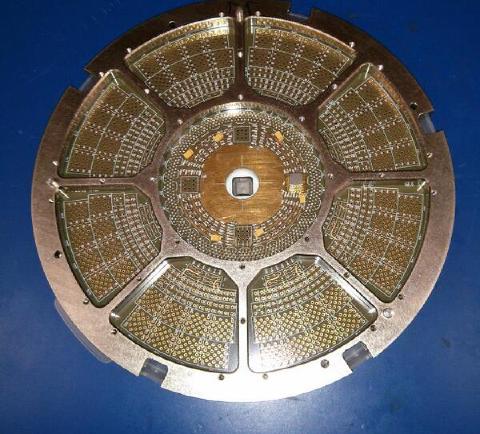
Dave Jones: And it's awesome technology, though. So, in the latest video, I've been playing with some stuff. I mean, our guest who's coming up in a couple of weeks, Vincent Himpey, sent me all this stuff. So, thank you very much, Vincent. He probably listens.
Chris Gammell: Hopefully. To the amp-el. Because he's going to be on soon.
Dave Jones: Well, he's going to be on it. So... Anyway, yeah, like, really cool stuff, like the FET, active FET probes that are used to probe individual points on the wafers. Yeah. You know, I mean, the tip is 100 nanometers. Yep.
SPEAKER_02: Yeah.
Dave Jones: That's crazy. And that's probably big, right? And that's probably a big one these days, right? That's... You know?
Chris Gammell: I don't know. I don't know how that changes. I mean, because... Depends where you're probing, right? If you're trying to probe on a pad, that's like... Oh, yeah. Oh, yeah. It's huge. Like a bond pad. Yeah. That's huge. Yeah, then. Yeah, then. But... No, if you're trying to probe... What are those FET probes used for? Are those used for, like... What is those called? Tegs or whatever? So, in, like, silicon, I know that they... So, they have the main area where the actual chip is. But then if you look at, like, the areas in between where all the different active chip areas are, they always put test circuits out there, either for... Right. I know analog fabs will actually run, like, early run prototype tests in that area. But then I know... Right. In production style, they actually put, like, you know, like, line width tests. Kind of like your little ruler thing, how you have, like, you know, you can tell...
Chris Gammell: Sure. You can kind of tell how the process went based on that kind of stuff. I forget what they call that, though. It's a...
Dave Jones: I want to say Teg, but it's not... It is a test coupon. It's like a test coupon on a PCB. Is that what you're talking about?
Chris Gammell: Yeah, there's another name for it, though, too. Yeah, I mean, yeah, it is. I mean, it is a test coupon. You're right about that.
Dave Jones: There's a chip equivalent to that.
Chris Gammell: Yeah, yeah, exactly. Yep. So, yeah, it's very fascinating. Yeah. Actually, my second to last company, we built stuff testing analog wafers, too. That was fun. Right. I mean, that's the thing. Like, I never realized any of that stuff. You know, like, when I was leaving school, like, who thinks about that? Like, oh, of course. Well, you're building wafers. You got to test them, right? You don't want to get all the way to the frigging package where you're dicing everything up and putting in packages and then test it then. You know, you could, but you'd end up wasting a bunch of money.
Dave Jones: That's what I said in the video. Yeah, it adds up because, you know, what does a typical wafer yield on a 300 millimeter thing? You know, what is it? 50%, 80% yield or something like that? No. No?
SPEAKER_02: No. Oh, I'm, I'm.
Chris Gammell: Yeah, if you do 50%, you're getting fired, buddy. No, I mean, that's like the whole, they all do, like, Six Sigma type stuff. They got to get to, like, 97, 98.
Dave Jones: Like, I mean, bonuses are based on that kind of stuff. Why? Why? If it's so high, why do they bother testing at the wafer level? Why don't they go through to full packaging and then, because if they're, oh, so wanky,
Chris Gammell: Think about the feedback time, man. I mean, like, so you got to send, you got to send wafers out, right? You have to send wafers out to China because almost, well, packaging is like China, Taiwan, a little bit, I think. But I think it's mostly China these days where they do, like, the wafer cutting and the die bonding and stuff like that. So you got to ship it over there. You got to cut it up. You got to put it into these packages. Then you got to test it. Like, that feedback cycle time.
Dave Jones: Yeah, but you're Six Sigma confident that you're going to get a good result.
Chris Gammell: Perhaps you don't understand the Six Sigma philosophy. I don't really either. Let's be honest here. I hated that stuff. I hated that stuff. But I mean, it doesn't work.
Dave Jones: It's important. And it does work. It does work, right?
Chris Gammell: But no, it's about feedback time. You think about, like... Yeah, of course. You know, getting through a fab. But once you...
Dave Jones: I can understand that at the, you know, at the initial level of when you start a production of a new chip. But once you've got to sort it out, once you've built up that confidence in the history, why wouldn't you then stop testing?
Chris Gammell: How fast do you think you could get a wafer from Austin, Texas to China and then make it into parts? Cut it up, put it into parts. But it doesn't matter. Yeah.
Dave Jones: If you understand. It doesn't... Because you don't need feedback, right? Because once your manufacturing process is good.
Chris Gammell: Just play along here for a second. How long do you think that takes? It's days, okay? You think it's days to get from Texas to China, cut up and put it into packages?
Dave Jones: Well, it could be as little as a few days and probably a week.
Chris Gammell: Okay, so five days even, right? So from the beginning of the line to the end of the line is like... The stuff I was doing, it was like 300 process... 300 different steps, right? Some of the logic stuff I think goes up to like 500 different steps.
Dave Jones: Oh, I know where you're coming from. Yeah, it's like a 30-day cycle.
Speaker ?: It's like a 30-day cycle.
Dave Jones: It's like a 30-day line you've manufactured. Yeah, yeah.
Chris Gammell: Exactly. You think about 30-day cycle, right? And then you have five days to go take it to package. That's 18% longer than you would find out if you tested it right in the fab. Got it. So that alone is a reason. I don't know if that's the reason, but I think that helps. I mean, you think about how long it takes for you and I to design a PCB, get it made, even if I cut it on my CNC or we etched it in our house, right?
Dave Jones: Yep.
Chris Gammell: Bringing that cycle time down is so critical sometimes because you need to know if it works, right? If you can't necessarily... If you can't put it on a breadboard and prototype something, if you have to use a QFN package and you need to get it on your board, the faster you get it on your board, the faster you know if it's broken or not, right? Exactly. And then you can actually feed that back and fix it. Yep. It's that same kind of thing. It's about cycle reduction. Reduction of cycle time, rather.
Dave Jones: Yep. And I'm sure I'm wrong in some way. Just in case something goes wrong because if nothing goes wrong, then you are, you know, wasting all that testing effort.
Chris Gammell: Yeah.
Dave Jones: Well, yeah. But it's essential, you know, because Murphy will get you. As soon as you go, oh, we're pretty confident, we'll just stop testing now and just let them all go through. And that's when Murphy will, you know, throw a spanner in the works.
Chris Gammell: And they start to scale it back, right? You go from like 100% testing at the beginning and then you scale it back. Of course. Like any production type of environment.
Dave Jones: Yeah, yeah. That's right.
Chris Gammell: But then you think about other things like on a, so like you think about like an 8-pin SOIC chip, right? You might have, so you have 8 pins you can access. Whereas if it's an analog chip, you might want to know how much current's actually flowing. Say it's an op amp, right? You want to know how much current's actually flowing out of your current source. And you want to know, you know, how, if you've got, say it's like an instrumentation app and you have like trimmed resistors in there. You want to actually know what the resistance value is exactly with a 4-wire measurement right on the chip versus all the inductance from the leads, the wire bonding, everything else. It gets intense, man. It's, so it's totally worth it. Because they wouldn't be doing it otherwise.
Dave Jones: Because those test heads, those automated test heads are absolutely amazing. Watch my video if you haven't seen it. And they have to hand make one of the, you know, they have to hand make these for each different chip variant that they do.
Chris Gammell: Yeah, yeah.
Dave Jones: I mean, it's just incredible. And so you take, you know, you take it for granted that there's 200,000 chips available on DigiKey all off the shelf. Oh, yeah, yeah. Right, but each one of those needs a bloody, you know, this complex test head and procedures and let alone the wafer manufacturing, just the testing systems alone. And if they're, you know, and if they're high spec analog chips, for example, they'll be thermally characterized. Oh, yeah, yeah. And they'll be performance characterized. And there'll be binning too.
Chris Gammell: Binning's another thing, right?
Dave Jones: Oh, yeah, yeah. Binning, of course.
Chris Gammell: I love the binning process because you can always tell when you like, when you talk to like a vendor, right? And they're like, oh, well, we have different speed grades. You're like, oh, really? How much more do you want?
Dave Jones: That means your process is all over the shop. Exactly, right?
Chris Gammell: Yeah, it's like, oh, we have, so we have like a 100 megahertz chip and a 60 megahertz chip and a 20 megahertz chip. And there's a $2 price difference between each one. It's like, oh, so they're all 100 megahertz chips. It's just some are better than others.
Dave Jones: Yeah, that's right.
Chris Gammell: Yeah. And it's crazy, too, when you think about the, if you look at like where these different things come from, like on the wafer, right? So there will be different regions. So like this, again, with these test heads, they'll be able to tell you that, oh, well, because of the processing, you think about, so people know how etching works like on a PCB, right? If you're doing like copper clad. And how if there's, you know, if you leave it in the etchant too long and actually eats away the lines and the lines get too thin, right? Well, the same kind of thing happens on a wafer where on the outs, you know, say your gas head on an etch machine, right? Because that's what I knew. If your gas head on an etch machine is older, right, you might have a different profile where the outside of the chip gets thinner line widths, whereas the inside of the chip gets thicker line widths or the reverse or whatever. And you don't even know that. You say, okay, well, it's thin with intolerance, but you don't know until the end when you're testing everything that the outside of the chip gets the 100 megahertz rating and the inside of the chip gets the 200 megahertz rating. That's some crazy data stuff.
Dave Jones: I know. It's fascinating stuff. I love it.
Chris Gammell: Yeah. Yeah, so that's the kind of stuff I miss. It's just the matter that I was on the floor doing that kind of stuff. It's, yeah, it is interesting.
Dave Jones: Knowing all this stuff, knowing all how complex it is to test and package these chips, you still think a chip printer machine is viable.
Chris Gammell: I didn't say it would be like a fast chip. I mean, I'm talking like a 555 timer or something. Let's start simple, Dave. Let's start with some old process technology. I saw that one coming from a mile away. Sad. Yeah. Well, it's crazy, too. So, like, so actually another thing on our, and we'll talk, we'll talk all about this with Vincent. I think Vincent said he would probably try and get a four-hour show going. Right. So, people can watch out for that. But there was a news item this week that tell Tokyo Electron and Advanced Materials, is AMAT? Yeah. They are merging. And, like, so you think about, like, this equipment, right? So, these are, like, $30 million machines, right, for one thing. And you only have, like, five customers around the world. And now there's even fewer companies that are doing it. And, like, so I don't know what that's going to end up happening. Like, I think about how that's actually going to affect us in the electronics side, I think. I think, I hope it won't have too much of an issue, but I think it'll actually raise prices on chips, if you ask me. Right. Because you think about, you know, if they have more control of the market and they can say, well, that $30 million machine is now a $40 million machine. And then the fab goes, oh, well, that's not cool. And they're like, oh, well, we're all the same company now. So, okay, it's a $40 million machine. So, hopefully that won't be the case. But, you know, that might happen. So, people should keep an eye out for that.
Dave Jones: Does it matter if a chip fab now, you know, does it matter if a chip fab costs $10 billion or $15 billion? I mean, once you're upping the stratosphere like that, does it matter?
Chris Gammell: You know, it just forces us towards that chip printer, Dave. Right. I mean, what it really does is, like, so there's no, you think about, like, starting a company, right? No one is going out, very few, rather, because there might be one or two. No one is going out and building new fab equipment, you know, without a history of doing it because it's such a complex system. You know, it'd be like someone being like, well, I want to build a Dreamliner, you know, like the 787. You know, like, I want to build planes like that big. How do you even jump into that market? You know, it's just so complex.
Dave Jones: Well, it's like building a car. It's like the new Tesla Roadster. There's a reason why there's been no new car manufacturers for the last, what, 80 years or something. You know, Tesla's the first because it's just such complex business.
Chris Gammell: Yeah, it makes you wonder how they did it, huh?
Dave Jones: Yeah, well, yeah. Well, they hired a lot of ex, you know, people from Toyota and all those sort of places.
Chris Gammell: That's true. Yeah, I guess that does happen. I mean, we saw that with Touchstone, too, right? I mean, those guys are all ex-Maxim and linear tech guys, I think. So, that is a good way to do it. Yeah, man, that's crazy. I was thinking about that today, right? So, like, startups and stuff like that. But have you seen any hardware startups with, like, young founders, or, like, successful hardware type things with, like, really young founders?
Dave Jones: Yeah, there probably are. But, no, most of them have some sort of industry experience. You know, it's not like they come, you know, straight out of graduate school and bam, into it.
Chris Gammell: Yeah. I don't know. Yeah, it's crazy. I mean, like, I think, well, I guess, like, I guess the closest one I would think of is, like, Michael Osman, who was on the show, right? I mean, like, he wasn't young, but he's, you know, he said he's been doing electronics for four years. So, he had the software side of it. But, you know, he got into hardware four years ago. And, I mean, four years is no short amount of time. But it's shorter than I would think, you know, like.
SPEAKER_02: Well.
Chris Gammell: Well, like the Touchstone guys, right? They were 30 years of experience, right? You know, like that. Yeah, yeah, that's right. So, I guess it depends on the industry. But, man, I was thinking about that today. Because I was, actually, I saw, so this TESOL board. Have you seen this one? It's another one of these. No. The rash of.
Dave Jones: Oh, yeah.
Chris Gammell: The JavaScript based. Oh, yeah, yeah. Yeah, I don't know where it came from. Yeah. But, and they're pretty, they're pretty young. But, I guess, you know, they're also working with Scott Miller at Dragon Innovation. Because they're doing, I guess we didn't talk about that on here. But, Scott and his team now have like a Kickstarter type of startup funding, crowdfunding platform as well. And so, TESOL was going through this crowdfunding platform. And I saw these. I mean, they were. They were like grad students, that kind of thing. And, you know, the project's funded. And, well, it remains to be seen if they're doing, if they'll, you know, be successful with the actual production of it and stuff. But I'm sure Dragon Innovation will help with that kind of thing. But I was just thinking, like, you know, you don't necessarily see younger people as much. But maybe it's just I'm not paying attention to that kind of thing. Possibly.
Dave Jones: Yeah. I'm sure that people give us tons of examples. Yeah. Speaking of which, what happens when you get a bunch of, what happens when you get a couple of business people forming a startup and doing a crowdsource funding campaign for a product? What do you end up with?
Chris Gammell: A really nice brochure.
Dave Jones: That's pretty much it. I will link in a possible, which is the Australian crowdfunding site.
Chris Gammell: Oh, this one.
Dave Jones: The ICE ID tag. Right. This is done. This project is done by a couple of business, you know, they're business people of some marketing, you know, some description. Right. They're not engineers. Trigatory term. Yeah. Yeah. And it's a wristband, right, with a unique number on the back. So, they just print a unique number on the back. And then, of course, they have an app for your phone that allows you to reference a database. Sorry.
Chris Gammell: Is this the... Which one is this? The ICE battery?
Dave Jones: No, no, no, no, no. Sorry. No. I'm confused. I've got two things with ICE in the title. No, this is the ICE emergency ID. I'll send you the link. Here we go. Here we go.
Chris Gammell: This is like our regular calling out. You know, it always seems to happen on Possible and... Yeah. What's the other one?
Dave Jones: Indiegogo.
Chris Gammell: Yeah, that's the one. We're like the open funding campaigns.
Dave Jones: Indiegogo, where all the dodgy ones are, you know. Exactly. And I might talk about the ICE one and the real ICE frozen ID. I don't know if we can take that much. I don't know if we can take that much. Anyway, this one. Right. Here's an example. I'll link it in. Check it out. An example of what happens when you get two business people doing a startup project. Anyway, it's a wristband, unique ID on the back. And, you know, and they've written an app for it as well, tied into a website, which just has a database of all your information. So, you know, like your emergency contact number and, you know, what you're allergic to. And, you know, I'm allergic to peanuts and blah, blah, blah. Right. And it's for active people. Right. So, when you, you know, you're riding your triathlon, you know, you're riding, biking your triathlon or whatever, and you get, you know, slammed by a car and they find your crumpled corpse on the ground. Yeah, right.
Chris Gammell: Separate from your body.
Dave Jones: Yes. Yeah. Oh, I found an arm. Yeah. It's got the, oh, look, it's got a wristband. It's got a number on the back. I'll whip out my smartphone and download the app and I'll type in the number and I, oh, fail. Fail.
Chris Gammell: You know, it'd be funny if you had like a chip person, like staring at like the bush where the arm fell into it. And they're like, man, everything's got an arm in it these days. But I'm...
Dave Jones: Ka-ching. I'll pay that one. All right. Yeah. Well done. Anyway, like it's like, it's just something that can be accomplished with a piece of paper. Yeah. Right. But no, they had to go through the process of, you know, oh, it's got to be an app because that's what we learned in business school makes money and great startups and all that sort of stuff. And the money goes towards, well, you know, they're looking for like seven grand or something or they need 15 all up or something. And five grand goes towards a new website. Five grand goes towards legal services and website terms and conditions and health compliance. And $5,000 goes towards marketing. It's like, you know, where's the manufacturing in? Oh, they've got a couple of grand for, you know, oh, we'll buy some stock of the wristbands. But, you know, all the money's going into legal marketing and we're like, just fail.
Chris Gammell: Yeah. Yeah, that is amazing to me that people... Face palm worthy. That they just want to, you know, have people pay their costs for them, really. I mean, like, I think I was thinking about this with... Actually, I was talking about Stompy with a friend the other day. Remember that Hexapod robot Kickstarter I backed?
Dave Jones: Oh, yeah, right. Yeah.
Chris Gammell: And I was saying that, that was surprising to me because it was, you know, it was big, right? It was 65 grand and it got backed. But it was big because it wasn't like you'd get anything for it, right? I mean, like, I got like a bumper sticker. They had t-shirts and, you know, wristbands. And like, I love the concept of it, but, you know, it wasn't like you got anything. Whereas, like...
Dave Jones: No, that's right.
Chris Gammell: A lot of the successful Kickstarters these days do have, you know, you're getting something for your money, right? Yes, you're getting something tangible. I think that's what's driving a lot of the growth of it, to be honest. Absolutely. So, yeah, it's surprising me when, especially business students, you'd think you'd be like, okay, well, come on, guys. This isn't just like free lunch, but... Well, you do get a wristband or something, I think. This is not going to be the last one of these. I mean, let's... Yeah. Dave, this is not the worst one you could have found.
Dave Jones: Oh, no, no, no, it's not. It just happened to be local Australian one and it happened to be just, you know, two business people. And they itemized where they were spending their money and it was all in, you know, marketing and legal and, you know, it's just, no. Oh.
Chris Gammell: Yeah, that's very good.
Dave Jones: And it's, you know, and it's that classic example of, you know, they got together in a meeting and they brainstormed the idea and they just brainstormed it so hard that all their brains just oozed out of their ears and they came up with just this shit idea, which could have been, you know, this overdone idea, which is easily accomplished with a little plastic card or, you know, a slip of paper. Like, no, but they had to go all high tech, you know. Yeah. Yeah. I, ah, no.
Chris Gammell: We'll talk about ideas we do like. I agree, this is stupid. Yep. So here's an idea I do like. This is from a hackerspace up in Seattle. You were looking at this one as well, right? The church? Circuit Church?
Dave Jones: I don't like the name.
Chris Gammell: That's just shit. Yeah. No. I think it's funny. So it's on, it's because it's on Sunday, so they call it Circuit Church.
Dave Jones: Once again, bloody Americans, guns and churches. That's all you guys give a shit about.
Chris Gammell: Yeah, I'm sure Seattle's really known for its churches, Dave. Right.
Dave Jones: And it's still America.
Chris Gammell: America. America. America. Yeah, you gotta work on that. America. Yep.
Dave Jones: I'm sure I've just had a whole bunch of people unsubscribe because, you know, I made fun of their country again.
Chris Gammell: Whatever. But yeah, this is a great idea. So it's a Sunday night at 6 p.m. You show up. You use Upverter, right? We have the Upverter guys on here. You either, you know, if you haven't used, if you haven't designed a lot of electronics before, you just kind of move into the layout side of things and kind of work alongside and kind of get to the manufacturing side of things. And then they actually have an LPKF, which is a, the laser-based. Circuit board. Yeah, circuit board cutter, which is awesome. And they actually cut it on site and then you actually manufacture it. And so, like, these are smaller designs, but, like, that's awesome. I mean, like, single night design iteration.
Dave Jones: Yeah, you go from go to woe. Yeah.
Chris Gammell: Yeah. Single night. For $30, that's like, this is a sweet deal. So anyone who's in Seattle.
Dave Jones: Dude, that's putting your contextual electronics out of business. You're just. Well, yeah, you know, that's tough, right? People have to watch 150 videos. Now they just jump straight in and in a couple of hours they can produce the book from go to woe. I think your whole concept's just falling apart.
Chris Gammell: Well, there's two things, right? I mean, like, this is Seattle, right? If this kind of thing happened everywhere, then I'd agree. Like, I'd go and do this kind of thing. Yeah. And, you know, I was talking to the guys online about this, you know, why they used Upverter, like, HiCAD, like I use. And they said, you know, Upverter's good at, like, smaller but, like, fast design iteration and you can do the collaborative stuff. So if you need to help someone out, you can jump onto theirs and actually move traces around. And I think this really is going to be a good proving ground for that kind of, like, social design process. So, you know, more power to them. I think that's going to be really cool.
Dave Jones: But you're never going to be able to do anything serious with it. I don't know. That's the problem.
Chris Gammell: I can't say I've used Upverter enough to, you mean the CAD stuff or the actual manufacturing of stuff?
Dave Jones: I'm talking about the CAD software and the whole process, you know. It's like when you get into real serious, you know, design, you've got to change your process, really.
Chris Gammell: That's tough just based on the beginner level, right? So this is, like, beginner level. I'm doing more kind of, like, intermediate level, you know, four-layer board, that kind of thing. Yeah, yeah. Of course. Yeah. But, yeah. I mean, like, this is a beginner level, but this is a good start, right? I mean, like... Oh, no. Of course.
Dave Jones: Totally.
Chris Gammell: And I think Upverter is definitely possible to do that kind of stuff, but it has to be more, you know, even in the social context, it's going to be more of the, you know, like, you would use it, right? And then other people would be able to watch it, you know, simultaneously. That kind of thing would be like, you know, like they even said, the Upverter guy said, it's like having the, I think Michael said this, too, about the KiCad thing, having the designer or having, you know, different portions of the design where one person is in charge of it. And I've seen that in other contexts as well of, you know, needing to have a final say, really. That's what's important for this kind of stuff. So... It has to be a dictatorship.
Dave Jones: I'm telling you, dictatorships work. It's the only way to do design.
Chris Gammell: Now the Americans are mad at you. Yeah, no, I agree. I totally agree with that. Thank you. I think you can apportion, I think you could portion out designs, but you can't. Yeah, you still... And, you know, I was thinking about this concept the other day, too. I forget who talked about it. There was a book that talked about it, but at Toyota, they have something called a chief engineer. Have you ever heard about that?
Dave Jones: I've heard of the title, yeah. Yeah. But it's like based... Exactly sure how it fits in.
Chris Gammell: Maybe it was someone on the show. I hate when I quote things that I don't know where it's from, because it could have been you saying, it could have been me saying, it could have been someone else on the show saying. Anyways, but it's about chief engineer is like... He's like the final say in all things, like all designs. And I think the example they were talking about was like reworking one of the minivans. That was the example they were talking about. Right. Like the town and country or something like that. Oh, yeah, right. I don't know what the Toyota ones are. But, yeah, it's a great idea. You know, even any kind of design like that where you have a team, you know, you have different modules feeding into it. You still need someone to say, you know, you need a system designer, right? That's the concept of system design. That's it. So, ooh, ooh, this is a good segue, actually. So, I get to meet with system designers sometime, actually, for Silicon. You ever used to do that?
Dave Jones: Oh, yes. Yeah, yeah, I used to do that.
Chris Gammell: Yeah, so they're called product definers or system designers or system architects.
Dave Jones: We used to have the actual, yeah, we used to have the guys who actually design and lay out the chip, you know, come and talk to us. Yeah.
Chris Gammell: Right. Yeah, exactly. And, yeah, and that's awesome. So, that's what happens a lot when, you know, usually when you're a bigger company, they want to be able to, like, try and tailor, like, you know, to, like, whatever market you're in. They're trying to basically do marketing up front where they say, okay, you know, Dave, you were in the, what was it, the vibration monitoring? Seismic industry. Seismic, thank you. Yeah. Yeah, so, like, they want to talk and find out what do seismic, you know, electronics designers care about. Yeah, exactly. And then they design that into a chip and then you can simplify your designs and that's where all these modules come from. So, I was meeting with one the other day and I, you know, we were talking back and forth and I'm not going to talk about what the actual chip we were talking about was. However, you know, we were talking about the, basically, things I'd like to see in it and I came up with this idea that I think is actually really good and I'd like to see in more chips.
Dave Jones: Of course you did. You think it was a killer idea. Well, yeah. Patent it quick.
Chris Gammell: I'm not saying that it's, it's like patentable or anything, anything else. Right. But it's, it's an idea that was like on the spot, but like I started thinking about it afterwards and I'm like, well, I'm not saying it's good. Well, no. I came up with a ripper. I was like, oh yeah. Pat myself on the back there. But no, what I was thinking about was I don't want to, you know, I, so I told this in a meeting, right? And they're all scribbling furiously. Right. And say it was a good enough idea. Well, what if then that company goes and patents it? It's like, we're, this, I think it really comes down to an ethical kind of thing of like, even if I don't talk about the chip itself.
Dave Jones: Companies aren't ethical, end of story.
Chris Gammell: Well, yeah. But I mean, people are ethical, right? And I'm trying to be ethical as an engineer, right? Right. And, and what I'm saying is that if I want to see this in more than one product, right? What are the ethics of if I'm in a meeting with someone and they prompt me with, you know, whatever they're working on and I come up with an idea that's generic enough that it could be in a bunch of different chips, but then they go and integrate it and patent it in their chip. What are the ethics of going and saying that to someone else? Right. And because it's not illegal, right? I mean, like there was no, I mean, I'm not going to talk about what they talked to me about, but this is something that just came out of my brain. It's not like they have final say over that. It's like, I'm not going to talk about what they talked to me about.
Dave Jones: I mean, the answer is, you know, it's ethically fine, but your problem is, I think what you're getting at is that they're the ones who prompted you to think of it. So you kind of think that maybe ethically they have some sort of, some sort of ownership over that perhaps.
Chris Gammell: Right. If Doc Brown showed up at the meeting, right? And he said, right.
SPEAKER_02: Don't, don't talk to them about that.
Chris Gammell: I can't do a Doc Brown voice, but you know, like, you know, if, if, if, if they, if, if I went back in time and that, you know, that prompting didn't happen, would that idea have ever come up? Right. Right.
Dave Jones: So it's, I guess, you know, you still came up with the idea then, you know, no, okay. Hell. Okay.
Chris Gammell: So that's, that's what I was thinking. Right. Okay. So I, I agree with that mostly. And I, I think that, you know, it's not specific to their chip. It's a generic idea. So then the, the question is, do I offer that to other vendors? Do I talk about it on the amp hour?
Dave Jones: Do I, you know, publish it?
Chris Gammell: Well, yes. To, so, so I got into this talking about it on the, on the subreddit about this. You know, yes. Okay. Yes. But the, the thing that was interesting then is like, okay, so how far do I want to take this? Right. So say I, I like this idea enough, which again, I'm not saying it's a good enough idea. Do I put it in the public domain? Do I take it? You know?
Dave Jones: As I said, yes, yes, yes. And yes. This is worthless. What do you think she's going to say? Yes. Do it all. Yeah. Because what it comes down to is something that ultimately you and me and every other engineer will hate in the end that if they, they pattern the damn thing and then they're a single source for that chip with that idea, then you're ultimately going to be screwed. screwed.
Chris Gammell: Hmm.
Dave Jones: So screw them first before they screw you.
Chris Gammell: Oh, Dave's figured out business. Yeah. Right. Dave's MBA classes will be back in a minute.
Dave Jones: Screwing 101. 101.
Chris Gammell: Yeah. Different class, Dave. That's a different class.
Dave Jones: How to screw without getting caught. Yeah. 102.
SPEAKER_02: Yeah.
Dave Jones: How to screw while making friends. 103. 103. I could go on all night.
Chris Gammell: I know you could. Yeah. So, yeah, basically the idea is though, like, so basically if I really wanted to take it to the point where I didn't, um, I didn't want anyone to patent it, basically it would need to be in literature somewhere as well. So that's the other thing. So it'd have to be a written idea because what I was talking to with Ken about on, uh, on, on Reddit was, you know, like no, no one cares about podcasts, you know, present company excluded. But they do.
Dave Jones: No, technically that is prior art. So if it went actually to a proper patent lawsuit.
Chris Gammell: You think the Empire is going to be the first, uh, you know, patent case?
Dave Jones: This is a, the industry's leading podcast. Absolutely. You could use this as if. Finally it has some use. No? Absolutely. Absolutely. Absolutely. Freaking lootly. It went out there. It was widely published, widely publicized in the leading industry podcast. Absolutely. If it, I'm sure that if this went, any patent lawyers in the house, any patent, you know, as in prosecuting. Well, your brother lies one, isn't you? Yeah, but he's a patent. He just writes patents. He doesn't prosecute them, you know? So you'd have to get a prosecution specialist, you know, like that guy who did the blue jeans cable, you know, against the monster cables thing. You'd have to.
SPEAKER_02: Yeah.
Dave Jones: Maybe we should, maybe we should try and get him on the show sometime. We could have a whole show on patents and geez, that'd really turn our audience off, wouldn't it?
Chris Gammell: Maybe that would be a special extras kind of thing.
Dave Jones: Like you, you, you have to show that was prior art and it was obvious to a practitioner in the field. That is another thing. Right. Right. If it was obvious to you, then it would have been obvious to others. Therefore, it's not patentable.
Chris Gammell: Yeah. Well, and that's what I really think about this in the first place is that, you know, this idea I came up with, I guarantee other people have come up with it before, or it's just a terrible idea in the first place. So. Right.
Dave Jones: That doesn't stop anyone patenting the damn thing though. Yeah. Yeah.
Chris Gammell: Yeah.
Dave Jones: Just like this ice cube project. No.
Chris Gammell: I don't want to talk about that. I don't want to talk about that. Carnot efficiencies. That's all I have to say about that. That's what I always have to say about energy products.
Dave Jones: Oh, you put one on the list of some energy orb or something.
Chris Gammell: No, that wasn't me. I don't think. I think that was someone else.
Dave Jones: Oh, right. Somebody. Yeah. Right. Let's. Yeah. Let's not go there. Yeah.
Chris Gammell: Right.
Dave Jones: Free. Well.
Chris Gammell: Yep. How about, do you see those pictures? We were talking about the dye bonding before. I wanted to call out John Janineer's pictures that he posted on Twitter today. Do you see those?
Dave Jones: Yeah. Yeah. I saw those. Yeah. Yeah.
Chris Gammell: They were gorgeous. Yeah. So, so we were talking about dye bonding and, and, you know, like testing on, on, on dye and stuff like that. Yep. But then the actual process of, you know, bonding from a silicon wafer over to, you know, a package pin or something like that. It's, you know, it's an awesome process. I think we talked to Tony Long about that when he was on the show. Mm-hmm. Um, but yeah, really cool process stuff. Uh, but yeah, John took these awesome pictures up close. He could see all the bond wires and everything like that for like LEDs. And, uh, I think, I think what else was on there. Some of the modules. Yeah.
Dave Jones: I, I, I, I love looking at that because you, you just know the, as an engineer, you just know the precision engineering that goes into it. And you just go, yeah, that's cool shit.
Chris Gammell: Yeah. Did I ever tell you the guy I met who was doing a, uh, his, his PhD thesis on solder?
Speaker ?: No.
Chris Gammell: Yeah.
SPEAKER_02: Yeah. What a fun stuff.
Chris Gammell: Oh God. I, I just like stared at him like, really? Like, I mean, he was like a materials guy. So like he actually.
Dave Jones: Oh yeah. No, there's a thousand different avenues you could do a PhD on soldering. I'm sure.
Chris Gammell: Yeah. It was intense, but it sounds boring as hell.
Dave Jones: Well, someone's got to do it, right? Someone's got to do the basic research on this shit.
Chris Gammell: And like, you think about these, these, so like these pictures John took of like these, these, uh, the CC 3000 module, right? From TI, which is that wifi module. Those are actually chips, like, you know, soldered under really tiny FR4. Like they're like that. You, you get really like chip scale packaging type stuff. That stuff gets insane. You know, they have recommendations and stuff and I'm not very good at the. Oh yeah.
Dave Jones: Recommendations are, it can be a world apart from what happens in your assembly house on that lie with that operator on that day. You know, I mean, yeah.
Chris Gammell: Yeah. And so, yeah, the, the, the, the physics of how that's, that solder flows at those small geometries. It's, I mean, I can't do anything without tons of flux these days anyways.
Dave Jones: Flux is the answer to everything.
Chris Gammell: Yeah, it is. I love, I love sitting under a microscope or sitting over a microscope, I guess. Yeah. And like watching, like, especially like on big heat sink components, right? Where you have to have like a hot air pencil on it for a while. Yeah. Yeah. And then like, as it slowly starts to melt and everything, like just seeing the, you know, it's like that scene in the matrix where Neo touches the mirror and then, you know, like that, like shiny shimmery type of look. It gets me every time, man. I love that.
Dave Jones: It goes through a little known name for that. The, in certain types of solder, only the plastic region.
Chris Gammell: Oh, really?
Dave Jones: Did you know that? Yeah. I did not know that. There you go. There you go. I do know my solder.
Chris Gammell: Oh, yes.
Dave Jones: There are certain, yeah. Some, some solders have a plastic region. Go and Google that.
Chris Gammell: So, does that mean like they're, what is it, what is the plasticity usually? Doesn't that refer to like.
Dave Jones: Google word for the day. Google word for the day. Plastic region. Yeah. I'm sure I've got that right. I better Google it myself. Hang on. Oh, no.
Chris Gammell: I'm thinking of plastic deformation. I'm thinking back to statics class. That's, that's definitely different. Right. Yeah. That's where it's like only deforms one way and it doesn't go back. I like it. Yeah. Huh. That's cool though. But yeah, I love that. If people ever get a chance to solder like with a microscope, I think, I think that's the best thing to do. You know, just watch, watch the solder flow and get like, then, then when you get like the reflections off the shimmering top of the solder too and you catch, you catch like the eyepiece of the microscope too. Yeah. It's like, man, that's crazy.
Dave Jones: It's pretty sweet.
SPEAKER_02: Yeah.
Dave Jones: Speaking of which, I'm contemplating, I don't know if I'll do it yet. I'm contemplating doing a live soldering demo at the Sydney Maker Faire.
Chris Gammell: Oh, that'd be cool.
Dave Jones: Like, as in like under a microscope, you know, it'll have a projector thing and there'll be an audience, you know, in one of the presentation rooms and, you know, do sort of like a live demo. Yeah. What would you cover there?
Chris Gammell: Like, like drag solder type techniques and stuff?
Dave Jones: Oh, it'd just be, yeah, pretty basic stuff. And it, you know, it wouldn't go into anything, you know, it might finish off with drag soldering SMD, for example, that, that might be as advanced as it would get, you know. Okay. Well, that's a good idea though. I wouldn't do, you know, preheaters and BGAs and everything, you know, no. This is for, you know, because it's for absolute beginners, right? Who, you know, how to solder, you know, or. I've heard of this soldering, I don't know what it is, you know. Yeah. This is a soldering iron, this is the hot end, you know. Do not grab.
Chris Gammell: Yeah, right. Well, usually most Maker Faire's have tents where they teach people how to solder, like they'll teach like, you know, through hole soldering and stuff like that. Yeah. And that would be good though.
Dave Jones: But this would be a, yeah, if they have that, then I think it could be a good tieing because this would be like a formal presentation. Here's how to solder properly the theory, now go out there to the tent and, you know, give it a go yourself. Try it yourself, yeah. Yeah, yeah, yeah. Exactly. Go burn some fingertips.
Chris Gammell: It's the only way you're going to learn.
Dave Jones: Suck up those rosin fumes. That's right.
Chris Gammell: Mmm, delicious.
Dave Jones: Oh boy. Hey.
Chris Gammell: Mm-hmm.
Dave Jones: Hey.
Chris Gammell: Hey.
Speaker ?: Hey.
Chris Gammell: Hey. Hey.
Chris Gammell: Hey.
Chris Gammell: Hey. Hey.
Chris Gammell: Hey.
Dave Jones: What's up? What's up? Popular science. Oh, it hasn't been a while. I've turned off comments on their websites.
Chris Gammell: Yeah.
Dave Jones: That was a while back.
Chris Gammell: That was a while ago.
Dave Jones: I don't know. Thoughts?
Chris Gammell: I think the rage has subsided. The rage has subsided? Yeah. I was a little. At first I was like, it was just how they wrote it. that's what it really got to me on that whole thing so so what they did is they said oh well you know we're turning off comments because it uh there's too many comments affects affects the actual perception of the article right and it's like right it affects the science it affects the right and it's like why you could just hide the comments i mean like this stuff has all been
Dave Jones: hashed over a hundred times but honestly moderate them if there's any shit ones you delete them you know if there's any links to crack you know anti-science websites you delete them boom yeah
Chris Gammell: you know you just yeah yeah have your hand in moderation is always the answer right dave
Dave Jones: that's never quite was it no i can understand why you would do it on a site on a proper on a proper science blog you know you don't want trolls in there linking to you know bloody alternative energy you know yeah right free energy devices and all that sort of shit you know yeah yeah but
Chris Gammell: yeah i mean uh i think someone linked in a uh someone linked me a post about comments i forget who it was who linked it to me but it was actually like so as much as like popular science was kind of sensationalistic and and like yo we're not doing this anymore don't bother don't bother yelling at us about it it's like this other one was like really a well thought out discussion about well what is what is the real benefit here and that's and like that's the one that i i i would also point people towards is like the discussion of comments especially these days i mean like it makes more sense i mean like the way the other guy said it i i'm much more behind it than when popular science wrote about it so got it whatever who reads popular science that's the other thing like i i don't i used
Dave Jones: to i do you read popular science i've not not on a regular basis you know i'm always searching for science articles if they pop up on the news websites or something i'll yeah go over there but i don't
Chris Gammell: subscribe right and i know that's not the point here but it's like yeah i don't really deal with them so once that was passed i was like whatever yeah um yeah whatever you know how youtube is right youtube's nasty right i'm sure if you turn off comments tomorrow you wouldn't be weeping too much
Dave Jones: right i mean like well you know other than you get more emails as i said in my uh ignite talk there is no more wretched hive of scum and villainy than the youtube comment section that's right yeah uh you know i've i've just banned a few people and you know yeah idiots and stuff like that so
Chris Gammell: yeah what are you gonna do yeah exactly you spend a lot of time on your forum though too that that's the that's the other side of it right it's like yep you gotta you gotta balance that yeah i've gotta be
Dave Jones: yeah i've gotta balance that you know because i'm all like i'm here i'm a huge free speech advocate you know and you know here i am having to you know um not moderate you know not moderate stuff on a post-by-post basis but you know really sort of you know keep try and keep things on topic yeah yeah how you have to keep the peace and you know i can't have people going around you know saying you're an effing so-and-so on my forum you know that's just not the yeah because then it just did you know it degenerates into right you know chaos and then it drives everyone away and you know
Chris Gammell: you need a right and then no one sends you crap anymore like that awesome stuff that vincent sent because he used on your forum right that's how you that's how you got to know him right yeah
Dave Jones: so that's awesome it's yeah so it's one of those balancing acts you know how do you balance your you know your right to free speech to you know but keeping the peace and keeping a you know a nice and a nice active community you know working properly it's it's tough it's almost impossible
Chris Gammell: yeah it's tough to do but you know good good communities usually prevail in that kind of way i mean like they keep their their self-sustaining i think and as long as self-moderating that's how i
Dave Jones: like to run it i like to think you know people lead by example and those who are real assholes just simply get booted yeah you know that's you know and and yeah well uh speaking of big communities speech for you like the no soup fit no soup for you right no free speech for you right go somewhere else and exercise your free speech it's a dictatorship right dave right yeah it's a dictatorship
Chris Gammell: the benevolent overlord dave jones speaking of uh communities though uh the arduino community just got a little bigger did you see uh
Dave Jones: all those big announcements from from rome there's a big announcement every bloody week every man these dogs doing you bloody arduino now these are interesting and now it's blah blah blah running
Chris Gammell: well okay so let's talk about this though it's it's interesting for different reasons and it's not like you know intel just said well we make a made a board with like the same headers as arduino this is like we co-developed the board with the arduino team and so did ti right i mean like so
Dave Jones: this is a you know this is them trying it's great for them you know it's yeah fantastic but i'm just saying from a someone who watches this sort of stuff point of view it's just getting boring there's just so many variants of so many boards and there's just a million you know when if i want to use one of these boards you know in a real project or something which one do i choose there's millions of them that is a
Chris Gammell: good question and i'm sure i'm sure our friends that make and everyone else would like to give you a top 10 list and you could read that and figure out if which one's good for you i think i mean personally i think like with the arduino this is basically like tacking a arduino on a beagle bone right so that's interesting from that perspective um but really just in general i think you know having it's just a bigger question of like the arduino platform is is very big right i mean and and for good reason right it's accessible it's uh you know it's a good team behind it all the good great community right all those things are very good uh but then it's like at what point is it no longer an arduino right it's like is it just the name on it or is it like just the headers or is it uh you know does it just have to be compatible because i mean it depends on what you're doing yeah right it doesn't have to be
Dave Jones: the headers that's just a prototyping thing it's the it's the environment it's the programming environment you use that's it end of story that's true yeah it does have to compile it down to that uh that same kind of simpler and it's yeah it's got to use the libraries it's got to execute without fail under the arduino ide that's it and that's all it comes down to is the ide everything else is optional yeah if it doesn't use the uh if it doesn't use the arduino ide then well it's just an atmel or a microchip or a whatever or an arm project right other even if it uses the arduino headers it's no longer a you know if you can't program it with the environment and of course if you're doing anything custom you generally won't be using the arduino headers because it's it's just for prototyping and stacking and yeah you just customize your board and well you don't bother with the
Chris Gammell: headers yeah you might drop down on avr before you know yeah now you can put a sitar or whatever's on there now and intel uh it's all about the ide yeah that's yeah that's a good point though yep which is which is interesting that that has maintained itself because like in the you know you think about in the programming world it's like i i always see people talking about like new programming languages and new this and new that and there's really no unifying feature there other than it's code right i mean like because i feel like people always just want to keep writing new new types of co or new new types of uh languages and new types of operating systems that kind of thing it's not necessarily that there's any like unifying element there maybe i'm wrong i don't know but well there's nothing new with the
Dave Jones: arduino of course we all know that it's you know it's just a a nicer ide environment you you know it's still c you know it's still basic c it just has you know a lot of pre-compiled uh libraries and sort of you know and auto downloads to the board a bit nicer but you know apart from that it's no different as i said it's nothing new people have been doing this for i don't know what 25 30 years since
Chris Gammell: micro yeah right exactly all that stuff yeah yeah and all of this choice business i'm complaining
Dave Jones: about i shouldn't be complaining about choice choice is good right but yeah it's just a pain in the ass when you've got to go choose so you know because then you get the anxiety you know the engineering anxiety that can be the name for today's episode what is it analysis by paralysis analysis paralysis anyway nothing new there as you said like pc pc 104 you know yeah for the internet before the communications revolution you know you'd flick through you know you'd have all these manufacturers all their catalogs of all their pc 104 boards holy shit which one do i choose there's 20 manufacturers and there's you know and each one is 20 different models aboard yeah you know it's it i think i think
Chris Gammell: what ends up happening usually is you have like certain communities uh coalescing around certain platforms right so you'll have you know you might have a robotics one around the you know the ti one or the you know like the higher level computing type stuff around the intel one i think the interesting
Dave Jones: thing with some of these same in companies yeah we've talked about that before right a company you'll use that chip because that's what your company uses even if it's not ideal for the task that's what
Chris Gammell: that's what you use yeah yeah the uh the activation energy is very high right to get something moving again right to get something different yep yeah well i think the other thing that's interesting with these boards i mean like these are like they're getting complex right and so it's like the arduino id is still there and you could still you know download and compile code for all that stuff and flash a lid and yeah right yeah and and you know that that's that's all similar still but then i think about the scaling out right and actually taking advantage of these intel chips you know the intel chip is beefy right so is the ti chip those these beefy beefy parts right and you and you want to like run linux on it and and actually do all that stuff it's like well then you are necessarily moving outside of the id because you you know you're compiling for that and downloading to that kind of thing so it's uh it's an interesting thing into the mix i think i think well i i haven't looked into
Dave Jones: the detail there are you saying that this new intel board really because it's running linux or any of these boards which are running linux you essentially abandon the arduino ide and only becomes a header
Chris Gammell: no no i think it's like a processor type of thing like the the wireless board that the arduino team right released the uh the yun or however you say that the y-u-n uh one of the newer boards that has the ti cc 3000 module and i think and it's running a linux uh real-time operating system because you need that stuff right you need real-time operating systems to handle stacks and all that other crap that you need even for usb you often need that stuff if you're not doing it as serial right and um and so yeah you're going to be outside of the you're not going to write that stuff i don't i don't think
Dave Jones: in the arduino ide maybe you are but i think it's like you know you can do ethernet you can do you know tcp ip internet stuff on there but it's you know it's yeah the way i understood it was like you you're
Chris Gammell: basically like you know writing and reading to a set of registers and this this kind of the co-processer is doing something talk to the internet that kind of thing and then you wouldn't really update that as much right at least for the yun i think that's what i was thinking it was is because you're you're talking to wi-fi but then basically you you have a standard interface you're talking to with the arduino basically and then you it's just a function call that's that's a wild guess but i think it's a pretty good guess because that's how i would i think you're pretty yeah yeah um yeah so i mean but it's interesting just from the you know more people jumping in that's that's a good sign you know that that means that all these big corporate partners see it as a a uh yeah lasting thing lasting legacy and intel giving away 50 000 of them that's that's kind of odd it's like hey we're still huge
Dave Jones: yeah exactly yeah we're still relevant you know yeah please remember us yeah yeah i don't know i
Chris Gammell: don't know like well it's like the middle boy they just had the middle board come out too which is really cool i mean like the fact that everybody's doing open source that's great i mean the fact that they're trying to build up communities that's great all these things are really good and at the same time you know part of my brain is saying well are they really gonna make it though like i mean like so unless you need these like these intel boards are like 60 bucks the galileo the the one with the arduino platform it's like okay well is it worth that extra 30 35 bucks to get all that other stuff and it might be but it might not i mean like i don't i don't know so i guess the market will tell with that kind of thing absolutely but if you're given one i mean i'm sure you'd go for it no yeah you'd
Dave Jones: use it exactly you're going to use what you have you have to hand yeah if i if i need to do something and i've got a arduino sitting next to me i'm going to use that if i've got a you know a raspberry pi sitting there i'll use that if i've just you know yeah something else i'll use that
Chris Gammell: yeah i agree it comes down to yeah i saw i think it was on uh yeah i think it was on jack ansell's newsletter actually maybe i mentioned it on here but there was a guy that was talking about it where before he would dig in his drawers for like a 74 series logic you know uh you know just to blink an led kind of thing he just needed that and it was just easier for him because he had an msp430 sitting around or the uh whatever it's called the discovery board or whatever that is yeah yeah or the launch pad he had one of those sitting around he just wrote a loop because he just that's all he had and it's like yeah i mean like yeah you know you can do that it's just i think it's it's only a problem when you don't like that guy obviously had the experience to be able to go and use the 74 series logic when you needed to i think a lot of the you know kids coming out of school where they're just handed these boards and it's like that's the answer it's like now you have these heavy-handed techniques for doing something very simple yeah and it's not always the best option because you know power and all the all the regular design constraints that come in you know you might want to just do it with a yeah 555 timer or something stupid and small but once again there's nothing
Dave Jones: new there engineers have always even before all this stuff came along and the internet came along people have always chosen the you know engineers gravitate towards well what is the easiest
Chris Gammell: quickest solution to solve my problem no that's true the difference is the availability of the of the other stuff right whereas 20 years ago you'd have you know you wouldn't be using you know a 68 000 series you know uh motorola controller development blink yeah you'd blink an led right you just wouldn't do that because it'd be 30 for the chip itself and then another thousand for the ide
Dave Jones: or the the circuit yeah yeah that's right and the board and the development board would be 500 bucks a pop and you wouldn't have them just lying around right now it's a launch pad it's four dollars and 30 cents when they were doing that promo it's like yeah that's right yeah it's easy you know yeah so
Chris Gammell: it's a games changed it's a it's a fun world we're living in i like it i like this a lot
Dave Jones: what uh you probably don't like which we should talk about because this affects this is serious business right your government is shut down oh are we gonna go into this yeah i mean i guess it's relevant right it's relevant yeah yeah it's relevant right because a lot of engineering dollars a lot of engineering right and if you want to get your fcc testing done can't do it yeah right because the fcc is shut down well the final filing right fcc shut down yeah right nasa shut down yeah that's a big one too yeah right every nerd's fantasy website nasa shut down yeah they can't even keep the things going like i can't i don't understand why they
Chris Gammell: don't even keep the website going i think it's crazy uh it's not a money thing i think it's just a it's a maintenance it's a regular yeah and it's also showing that they're shut down i'm sure that there's it's i'm sending a message yes yeah i would i'd be pissed if i was nasa of course dude we're in space right now you can't figure out a i don't even want to get i get very upset
Dave Jones: on freaking mars do you want us to just abandon them you know i know well yeah that guy's wrong with your country dude oh please does any other countries shut this their government shut down
Chris Gammell: i mean you're seriously you know other countries dissolve their government which would be you know
Dave Jones: right or a nice thing around here get a hostile take it you know overthrow the government or something right i don't know this is ridiculous so is this like affecting you on a daily
Chris Gammell: is this affecting you in any way um no i was listening to a thing today it's uh it's like 20 like 15 or 20 percent and there's a poll said it was directly affecting them it's like i don't know i don't know about polling stuff but right i i think from uh you know there was there was a couple articles about it though there you know it does have a big effect on science attack now i think phil plate the guy the bad astronomer guy posted it right but uh you know it does it think about like research grants like tons and tons of research grants come from government funding like nist and nih type stuff um a lot of drug trials that kind of thing and and uh it does you're right it does affect and it's not just the states either you know like if if i'm if i get funding from that kind of thing and then i need to buy a piece of test gear from australia as if you guys could make it uh but you know that would affect we can we choose not to right of course it's it's not uh
Dave Jones: it's not hip enough right um yeah but it does affect that or if china shuts down because of their public holiday you're screwed you know we talked about that yeah exactly oh yeah there there is no
Chris Gammell: doubt that you this this will have ripples in the global economy from electronics perspective i'm not sure from a you know like a a chip supply kind of thing i don't know if that actually drives anything but it definitely has people nervous so i don't know i hope it goes away soon um i will say they're all dumbasses is that uh is that sufficient is that that is sufficient thank you yeah yeah um but yeah
Dave Jones: i would have preferred it said with a bit more aggro right well of course right yeah um yeah i'll take anything i can get yeah that's about as aggro as you get you right of course right
Chris Gammell: yeah uh what else we're kind of running down here uh did you see this new lt part i love this thing i i i guess we could call it ship of the week is it yeah i think so uh but it's 40 bucks so you
Dave Jones: want to talk about expensive 40 bucks oh is this the five volt one this is the five volt 18 bit adc
Chris Gammell: plus minus 12 volt input adc uh oh right okay yeah it's it's beautiful it's like mega sample 18 bit plus minus 12 10 12 volt but it's the same kind of thing it's like so there's pictures that john was taking right that was like a module and that kind of thing a lot of the companies aren't doing this they're they're i'm not sure if this one's actually a module or if it's i think it is a module because of the size of the resistors that they put internally but they're just they're just doing a voltage divider internally with like laser trim resistors yeah of course but this is you know this is a growing trend where you you have you know laser trim resistors that are better than the ones you're going to want to buy and put outside then you don't have to worry about the parasitics of like packaging right so if you have an adc that has if you have discrete adcs for your discrete package rather for your adc and then your your buffer amp that drives the adc and then all the front end circuitry and instrumentation amps and all the other stuff it's like you know there's all the inductance of the each pin on each package right and then you have the tolerances which could all when they all stack up you know if the if the one resistor outside the package drifts the opposite direction of the other resistor it's like you know you have to account for that whole and then you've
Dave Jones: got an input capacitance you've got all sorts of stuff to take exactly right into account and so this
Chris Gammell: kind of system design it it's from a as i always say from an analog perspective it gets more boring right because i don't have to do as much but on the other hand it's like you know in terms of the actual specs you can get out of it right you could design in an 18 bit adc but if your your front end is crap then it doesn't matter and so you know these kind of parts are really cool and i like these parts because this is kind of like quote unquote above the rails where it's like a five volt input and it can do plus minus 12 although they're cheating with resistors but then maxim has a bunch of above the rails parts where they um they actually use like a charge pump internal and they above the rail is
Dave Jones: a trademark i believe oh really oh yeah i think somebody's trademarked that it could be maxim okay uh or is it beyond the rails somebody's trademarked above or beyond the rails or something like that
SPEAKER_02: yeah right wankers i know right um but those parts are really cool hang on hang on linear i'm on the
Dave Jones: website here linear have trademarked the term quick eval really yeah like a quick evaluation with no c it's q u i k because they probably couldn't trademark q u i c yeah that's the next that's the next step
Chris Gammell: when you can't when you can't get the patents or you don't want to give away all your face secrets yeah there you go that sounded solid man uh that was you're looking at the data sheet or what
Dave Jones: yeah i'm looking no just the blurb website the press release whatever it is wank you know yeah yeah and 30 bucks in thousand piece quantity woohoo that's what we're talking about right at the start of the show with the testing and everything else you know they're going to fully characterize and test this part right right you know it takes a lot of time and that translates into money right
Chris Gammell: exactly so yeah and as you know all of these companies are moving towards modules um and i'm i can't even tell if this is a module or not uh well it's in an msop yeah it's in a 16 lead msop but who knows what's actually physically in there yeah yeah that's i'd like to see a video i haven't seen any videos of that yet where they actually like i'd like to see it like pouring the polymide i you know
Dave Jones: like with the actual onto the lead frame yeah yeah that'd be yeah they they stick the die onto the lead frame then they do the bonding and then they ejection mold then i imagine like you know like when
Chris Gammell: you're like driving by the construction site there's like big gruff guys like pouring cement i imagine
SPEAKER_02: that like put on like a super micro scale hey you got this crap everywhere right and he's got his bum
Chris Gammell: crack hanging out and you know tiny tiny little cement truck with just pouring polymide you know
Dave Jones: all right and he's got a checkered shirt with a yeah exactly rolled up and yeah in the back of a fab somewhere you know that that's that's australian thongs flip-flops right yeah of
Chris Gammell: course yeah yeah right yeah yeah i think this i think this actually is a uh i think it is a module
Dave Jones: just from the that'd make a great spoof video someone like linear or something like that should do a video like that yeah like and actually yeah have a big construction guy with a bum crack hanging out and the you know they're like actually even pouring something you know making the chips and yeah it'd be it'd be hilarious sorry sidetracked that's okay man maybe they'll maybe they'll hire you to
Chris Gammell: start doing that right oh yeah you're right beyond the rails is trademarked by maxim it's but it's got the dashes between the words beyond the rails oh right well that's important yeah yeah right of course yeah yep wankers yep yeah you gotta have something for the lawyers to fight over
SPEAKER_02: no i wanted to call it beyond the rails yep uh what else we got on the list there were some other ones that i wanted to talk about real quick
Chris Gammell: uh uh what was it nope that's i can't find it now tell the story yeah it's a new internet of things podcast yeah that's what it was yeah uh that's that's not gonna be a tech i don't think it's gonna be super technical it'd be more like on the gadgety side you know as right these devices actually go into the home you know like those uh wemo switches and all those kind of things which are interesting i mean like there's a lot of interest in that kind of thing but i think eventually that becomes like that's like the divergence of like when you know homebrew computing went into like full-scale production type stuff right like that's that's like the full-scale production it suddenly goes outside
Dave Jones: of our world you know that's not our world anymore yeah right you get people that are interested in
Chris Gammell: integrating this kind of thing and like in an application environment type of thing where it's a package product you the most you're going to do is you know download new firmware to it right that kind of thing hardware is out of the picture at that point so but it's i mean it's still interesting you know it's a it's a space that we talk about on here a lot and that is going to be as as people migrate from you know the gadgety kickstarter type of internet of things to like the full-blown gone through dragon innovation or someone else and now they're selling millions of units type of thing you know seeing that transition will be interesting because uh it'll get more exposure to the general public and it'll become part of the you know other you know you'll start seeing ecosystems pop up around it too and then that will eventually push its way back down into what people develop for right so if you're building new hardware and there's some you know wemo ecosystem or like ifttt.com if this then that.com right people are developing to try and talk to that kind of thing because it's this you know basically it's the the most the least common denominator of where everybody wants to go to hook their things up you're going to design to that spec then
Dave Jones: or got it wi-fi whatever uh speaking we can we can now use more electronics gadgets on planes oh yeah that was fun too the faa of uh what what stuff have they changed exactly last i heard about it take our arduino on the plane and hack it and you know and i think this is more like you can use
Chris Gammell: your phone like and make i don't think you can make calls but you can use it like you can be listening
Dave Jones: to music and use your e-reader and stuff like that i thought you've always been able to do that not in the u.s at least um oh okay well what you have here you know like you you have to turn them off but as soon as the seatbelt light goes off and you've reached altitude you know yeah you're allowed to right and it's interesting does that mean that they're allowed you're allowed to use them during takeoff and landing or is it exactly yep all right so the old regulation was actually it
Chris Gammell: was it was the seatbelt sign because it was above 10 000 feet and the interesting thing with that was because of like uh back in the 70s it was actually terrestrial radios that those would that was the last time they actually found interference with with pilot uh instrumentation and it just carried through this entire time which is crazy yeah i mean that's just showing how slow regulations move right so uh now they're finally rectifying all that stuff and and and changing changing the regulations because i mean you think about like think about like an analog cell phone back in the day like 1970s that was 80s right those things were outputting watts i mean like you could actually you know like you could get burned from that kind of stuff right it's like and now it's like
Dave Jones: you know with all it's watts but it's peak you know that's yeah right yeah exactly average is
Chris Gammell: milliwatts right i mean like yeah those things turn on for fractions of seconds and turn back off
Dave Jones: but it's hard to get once you've put rules in place yeah you know government departments and other regulatory agencies just do not want to change them because no one wants to hang their balls up on the chopping block right and you know and right because if a plane crashes then they're screwed yeah yeah or you know it's the same thing with the you know oh you're not allowed to use your mobile phone at the petrol pump you know urban myths like that and uh it's just ah it's crazy i didn't know that or speed limits for example car speed limits right one you know road speed limits once they've set the limit to you know 60 kilometers an hour you know nobody wants to increase it right because as soon as they're a single single death you know oh bigger you're you're responsible because for that death because you know you raise the speed limits and you know it's just they've been up and around here i love it went from 60 to 70 miles per hour yeah awesome what is that just on regular roads
Chris Gammell: or is that like rural uh that's no it's like like uh interstate type stuff oh right all right actually a lot of the old stuff i think was based on the 70s of like emissions type stuff because of cars were were uh peak efficiency at 55 miles per hour type of thing i thought i thought that could be wrong i'm talking about my butt there right but yeah i just find you know that's
Dave Jones: change like this is always a big deal because it's bloody hard yeah yeah there's a lot of
Chris Gammell: distribution as well right i mean like i don't know uh i i guess that's it i don't know what else we got anything else spark fund put all their stuff on the upvorder catalog that was interesting yeah heard about that yeah haven't actually checked it
SPEAKER_02: out but yeah i don't think you've checked out upvorder yet have you you should do that dave i had
Dave Jones: i had a play with it but yeah okay yeah yeah we should you know maybe we should set up like a race
Chris Gammell: like have like a people who are best at certain you know because that was that's the only way you can really compare stuff you have the same design and you have someone who says i am the best at ki cat or i am the best at altium or i am the best at whatever and then because if you just throw them in a new cad package you're always going to be clicking around for whatever so it has to just be a race on your favorite whatever cad package you like anyways yeah maybe we can have a you know maybe you should do that at the maker fair you can have you could be like the
Dave Jones: yeah but when you're using different packs that's not that's not fair you know it's not fair because some packages you you you choose to use it because it's better at higher end tasks but it's not as efficient at something like you know simple like upvorder you know if you want to throw down a lead flasher you know yeah you're going to do it quicker in upvorder almost guarantee it yeah you know it's
Chris Gammell: it's just one of those yeah that's true and i guess i guess any any kind of uh you know the the smaller tasks as well it's often well any task really it's going to depend on how much of it you have to create from scratch right if you're building new libraries you're going to be screwed no matter
Dave Jones: what and it's a tool optimized for that sort of thing right you know yeah i mean yeah yeah there are flipping around and going well you know let's lay out an eight layer board with controlled impedance traces and let's try and do that in upvorder compared to altium you know right yeah this is just going to be no contest right yeah that's true yeah i yeah i think i think that's
Chris Gammell: what it's ultimately comes down to is a lot of these packages start to delineate themselves at different price points and different uh different tasks like you said i mean yep and interestingly that that uh that are that intel intel arduino galileo board that's a six layer board so i think that's
Dave Jones: right i think that's the first one that's probably minimum you have to do that to round out the bga i
Chris Gammell: assume it's a bga package right it is bga exactly yeah yeah but that's interesting from the standpoint of you know if you want to replicate that design it's a little bit less easy than it might be
Dave Jones: exactly if you want to do it yeah because basically the cheap ass boards stop at four layers you know if you want six layers or you know it's suddenly you know yeah you suddenly get uh shell shocked at the price of what pcbs actually cost to get proto'd oh yeah what they used to back in the old days you know yeah take it for granted that pcbs are cheap these days but hey you know they they they aren't if you still want six or eight or 12 layers 24 24 like was in that 80 in the board on the video i just did yeah yeah insane i love it i think the i think the highest i've done is 18 yeah oh that's intense not quite sure i've done a 20 i can't remember precisely but uh yeah we we embedded some coils in the oh nice there was one which is so simple right you actually look at the board and you go like you know why is you know it's got like a handful of parts on it just a little power supply and you go well why is that a 24 layer board it's because we actually put you know it had to be low profile so we put the windings inside the layers and then put the bobbin you know over through a hole in the board and yeah it made it i love that kind of stuff too yeah it's great you know but yeah it costs you a bloody shitload yep so you know yep yeah you know just a power supply board and you've got to you know get it yeah but those kind of boards can do like super crazy densities as
Chris Gammell: well they can do like oh yeah hundreds of watts in small small spaces you know like yeah it's great
Dave Jones: a couple square centimeters or something because there's so much copper in there you know it's basically a huge heat sink you know yeah it's fantastic good fun yep i think uh should we call it here those were the days should we uh yeah all right i i will not be here next week right so you
Chris Gammell: will not uh get to hear my dulcet tones but we will be it'll be me and adam and matthew from uh oh crud i forgot their name their company uh from the internet no oh come on i can remember that wayne and lane jesus oh man there you go yeah wayne and lane so they do uh they do a couple like arduino game shield and a bunch of other uh fun fun kid type stuff um and adam i'm not sure if matthew does as well but adam maintains a bunch of the ki cad repos and uh does the ki cad uh nightly or weekly or nightly built or something like that so we'll be able to talk about that stuff as well so uh if you have any questions we'll put up a post on the site so you can get them in for wayne and lane the company and adam and matt the people i'll be asking them about the name too i know i've seen it once but i'm very confused yeah oh boy uh yeah other than that i'd say buy t-shirts what do you think buy t-shirts do it
Dave Jones: buy t-shirts because we need money yeah and they're cool and they're cool because we don't have any advertisers at the moment no that's all right so we're getting paid squat for doing this that's okay
Chris Gammell: we're paid in friendship happy listeners paid in good vibes that's right
Dave Jones: awesome that's good enough for me all right man see you in two weeks talk to everyone else before then bye you
SPEAKER_02: i know you're out there listening to the amp hour
SPEAKER_00: i know that you're afraid you're afraid of us
SPEAKER_02: you're afraid of the show being over this week
SPEAKER_00: i don't know the future i didn't come here to tell you how this is going to end i came here to tell you how it's going to begin
SPEAKER_02: i'm going to hang up this phone and then i'm going to hope you give us itune reviews i'm going to show them a world how awesome my doom reviews are
SPEAKER_00: a world without rules and controls without borders or boundaries
SPEAKER_02: a world where everyone listens to the air power
SPEAKER_00: where we go from there is a choice i leave to you i'm going to show you how it's going to be
Speaker ?: in xd Thank you.
Archived Discussion (8)
Comments are closed. Archived from the original site.
Show archived discussion (8)Hide discussion
Keep current
Every episode, plus the occasional job post, in your inbox.
As for the gun topic, I don't think many parts of the US are much different than the Outback, or other parts of Australia in many ways.
Basically, it's the theoretical maximum based on temperature differential. Thermodynamics, FTW!