
#165 – An Interview with Henry Ott - Forced FCC Filtering
Download episode · 42 MB
Also on Apple · Spotify · YouTube · RSS
Show Notes
Welcome, Henry Ott!
- With a home base in NJ, Henry has been teaching classes about Electro Magnetic Compliance (EMC) for almost 30 years! It's a mix of private and public sessions, the most recent public one being in Dearborn, MI.
- It's a 3 day class. Henry is the only instructor and has an assistant who helps him set up and schedule classes.
- The primary topics revolve around cabling/grounding/shielding/mixed signal/noise. Interested? Check out his books!
- He start in analog design and got into EMC it by accident while working at Bell Labs in NJ.
- During the early part of his career, solid state devices were just coming into vogue, meaning Henry experienced the birth of silicon and its spread in the industry.
- The culture of Bell Labs was special in research and Henry also saw it while he was in development. He recommends "The Idea Factory" to learn more about the history there.
- As he dug deeper into EMC, he started a continuing education program after seeking out one about noise. He recognized the need for a course/class on noise/interference.
- This also was when he started his work on the first edition of Noise Reduction Techniques in Electronic Systems (1977). The second (and current) edition came out in 1989.
- He developed much of the content while at Bell Labs and later when he saw problems in consulting.
- There are lots of EMC books on the market but Henry recommends his "3 book mini library"
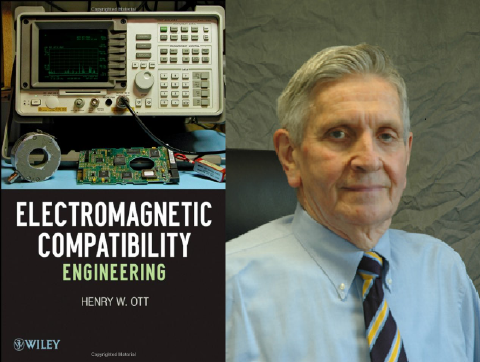
- His newest book (2009), Electromagnetic Compatibility Engineering
- A book by (former guest of the show) Dr Howard Johnson and Dr Martin Graham - High Speed Digital Design: A Handbook of Black Magic
- A book by Hall, Hall, McCall - High Speed Digital System Design
- Over on the subreddit, fews asked about resonant cavities.
- Hardware wise, Henry suggests a good set of loop probes to help determine where there might be emissions. He also likes the Rigol 815 spectrum analyzer.
- 10 ways to maximize the emissions from your product. Two examples are interrupting the return current and improper termination.
- Dr Clayton Paul, who recently passed away, used to teach students by having them create a digital project and then showing how they couldn't sell the product because of EMC.
- Lots of problems are coming from variable AC Motor drives. These are prevalent in electric vehicles.
- Cars don't come under FCC but they are 40 dB less than gov't requirements.
- Radiated vs conducted: Radiated is above 30 mhz, conducted is less than 30 Mhz.
- Designing a shielded box isn't easy, it's about the apertures. Cables still go in and out and are a source of errors. You need to limit the size of the seams. Additionally, the mains are a great antenna and need to be tested.
- Power line filtering can help reduce this problem but 90% of the time it's not a power line filter problem, it's mechanical.
- Henry is an IEEE Life member. The IEEE formed in 1963 when the AIEE (American Institute for EEs) and the IRE (Institute for radio engineers) combined.
- Are we reaching the upper boundary of electronics? Henry thinks we are for FR4 (based on operating frequency) but is hopeful for optical interconnects.
Transcript
Henry Ott: This is The Amp Hour Podcast, recorded September 30th, 2013. Episode 165, with guest Henry Ott. Forced FCC filtering.
Dave Jones: Welcome to the Amp Hour. I'm Dave Jones from the EEV blog. And I'm Chris Gammell of Contextual Electronics.
Henry Ott: And I'm Henry Ott of Henry Ott Consultants.
Dave Jones: And you nailed that intro, Henry. Well done. Most of our guests goofed up in some way. Thank you very much for coming on our show.
Henry Ott: One of the legendary consultants of the world of EMC and noise and everything else. I don't know about that, but I'm there. I've been around a while.
Dave Jones: So can you actually tell us where you're from and what you're doing these days? And then we'll go back into your deep, dark, mysterious past.
Henry Ott: Okay. Well, I'm located in New Jersey, but my business is pretty much all over the country. Mostly U.S. and a little bit in Canada. I limit myself. I kind of don't go overseas anymore. No sense in traveling all those distances. So I kind of limit myself to the U.S. and Canada, as I say. And, you know, we do a lot of EMC training and consulting. I do probably the biggest thing I do is training classes for individual companies at their location. And then about twice a year we try and do a public EMC class available to anybody. Usually one on the East Coast, one on the West Coast. As a matter of fact, just last week we had one in Detroit. And the rest of my time I spend consulting. And that kind of keeps me out of trouble and keeps me busy.
Dave Jones: You mentioned Detroit there. We've talked about a lot of the demise of the industry on this show. How is the Detroit electronics industry going?
Henry Ott: Well, out of curiosity. You know, yeah, that's a good point. We scheduled it in Detroit shortly before they announced the city went bankrupt. Well, actually it wasn't Detroit. But, yeah, good timing, right? Right. It wasn't Detroit. It's outside of Detroit, Dearborn, okay? Yeah. But, you know, I think the auto industry is coming back there pretty much in that area, in the Michigan area. Let's put it that way. And when we do the public classes, we need to get a third of the people from local areas. And the rest is from all over the country.
Dave Jones: Ah, right. They all fly in. Yeah.
Henry Ott: As a matter of fact, we had one fellow from Sweden even. Oh, wow. Quite often we had two from Canada, from Alberta, the west coast of Canada. Wow. So, you know, quite often we have two or three. We had about 50 people. Two or three, well, probably maybe three or four quite often from outside the U.S. And so it's not just local. But I think the things are a lot better in that area with the auto industry coming back. Probably two years ago, things were not very good.
Dave Jones: Right. And is it just you in this consultancy or do you have a small group of people?
Henry Ott: Well, right at the moment, it's myself. I have an assistant that kind of runs the office and takes care of things for me when I'm gone, answering the phone, making arrangements and doing things. Back a few years, I had another engineer working with me on it too. He worked for me for about five years on it. But he got tired of traveling and that makes it difficult in his business.
Henry Ott: Yeah, definitely. I can imagine. What does a public course kind of entail? So you said it's a week long, but is it just kind of running through the gamut of here's EMC, here's how you design around it, you prepare for it, that kind of thing? Or what does a course like that involve?
Henry Ott: Okay. It's actually a three-day class. I said it's a week, but I travel out the day before, come back the day after. It's a week of my time. Right. Yeah, right. Of course. It's a three-day class. It's pretty much a general overview of EMC. We cover such things as cabling, grounding, shielding, digital layout and grounding, high-speed digital decoupling, NIC signal PCB layout, common mode, differential mode emission, common mode filtering, conducted emission, RF and transient immunity. So we cover pretty much a gamut of different subjects, trying to make the broadest appeal. I also do a lot in-plant of one-day classes where we just spend all day on one subject. We might talk about shielding all day or mixing the layout all day, going into more depth. But usually the public courses I do as a general course with a bunch of different subjects.
Dave Jones: And how have the classes changed over the many decades you've been doing this? I mean, because we're getting insanely high-speed digital stuff these days, which wasn't around really, you know, 20, 30 years ago in terms of digital. It was all sort of, yeah, RF, but now we're getting digital operating at RF speeds. How has that changed the game?
Henry Ott: Well, you know, digital seems to be the big thing even today. And we're getting into more RF issues, okay. But I tend to emphasize digital in the class, although a lot of the grounding, cabling, shielding is applicable to pretty much analog.
Henry Ott: Yeah.
Henry Ott: Or pretty much anything, analog, digital, RF, you know, whatever you want to talk about. So, and pretty much I cover stuff in all industries. And even though, as I said, we held in the Detroit area, it really wasn't emphasizing automotive necessarily at all.
Dave Jones: Interesting.
Henry Ott: Well, and at those speeds too, I mean, it's all analog at that point anyways, right? I mean, it's a digital backdrop. But, I mean, my inner analog guy is shouting, no, it's all analog.
Henry Ott: Well, I, you know, my background is analog. I started, you know, when I started getting into industry, digital was what didn't even exist really in the light of what we know today. So, my background is really analog. In college, I kind of specialized in feedback control systems, which are low frequency analog circuits. And kind of got into business with analog interference problems. So, that suddenly got me knowing something about noise and interference.
Dave Jones: Yeah, that's great. And that's a great segue into how, when you got started. Because you were born in, if I may say, 1936, it says in your book.
Henry Ott: Oh, did I put that in a book or something? Yeah, it's in a book. It's in a second edition.
Dave Jones: Yes, it's part of the Library of Congress entry. We can bleep it. We can bleep it.
Henry Ott: I think you did some investigation there or something. Dave's a snoop, yeah. It's kind of interesting how I got into EMC. Pretty much, in a general sense, the way most people that have been in it a long time, it was an accident, okay? It wasn't planned or it wasn't any grandiose idea of doing this. But I was design engineer at AT&T Bell Labs, working on telecom stuff. Basically, you know, audio frequency analog type stuff. And what year was this? What year? Oh, this was... Well, let me go back a step further. Please do. Until I got out of undergraduate school, I went in the Air Force for three years. Okay. And then I went to work for Bell Labs. So, we're talking about 1960, when I started with Bell Labs. Right. Wow. And...
Henry Ott: Which is kind of the heyday, right? I mean, like, it's 50s, 60s, which is kind of the really big time.
Henry Ott: Well, you know, the 50s, 60s, 70s, yeah, you're absolutely right. And, you know, I look back and I say, because in the 60s was just when transistors and solid-state devices were coming into popular usage, you know, the late 50s into the early 60s. Matter of fact, my undergraduate school, we only studied vacuum tubes. We studied nothing about solid-state physics.
Dave Jones: Right. Right.
Henry Ott: Now, I went in the Air Force between undergraduate and graduate school. And in graduate school, we studied solid-state physics. But, so, I kind of feel that I've been in this business all through the solid-state, you know, industry. The birth of solid-state right after. From crude, discrete transistors to integrated circuits to large-scale integration, etc. And, you know, I agree with you, the 60s, 70s, and, well, actually, 50s, 60s, 70s, and maybe into the early 80s was kind of the heyday of that industry, I think.
Dave Jones: Mm-hmm. Is that because it was driven by the money from the Cold War? Is that the, I mean, Bell Labs did a lot of military stuff, right? Is that the, or that was a lot of the reason for the innovation?
Henry Ott: Well, I don't really know. I mean.
Dave Jones: And then there was the space program, of course. Well, that came along, yeah. What did that come in?
Henry Ott: The 60s, I guess? Yeah. 69. Early 60s, yep. No, mid-60s, yeah. No, they landed in 69, Chris. Come on. It was later than that, probably. Had to start earlier. Yeah. But, I don't know. It just seemed to be the heyday of learning things about technology and learning things about electronics. Well, I guess if I look back, I think it was the solid state age, okay? It was the development of solid state electronics that made space for all the developments that went on in those days.
Dave Jones: And would you go back to those days, or do you think technology these days is just so incredible that you'd never want to go back to the good old days?
Henry Ott: Well, you know, I guess we all look back and say they were the good old days.
Dave Jones: Right.
Henry Ott: The young people today will look back on their days and say they were the good old days. So, I think there's something in every generation that's the good old days. I can talk about mine, but that doesn't mean, I'm sure there were ones before that and there will be ones after that, you know? Yeah.
Henry Ott: I always think about it from the perspective of learning that kind of stuff as well. I mean, like, I think about the resources that are out there today with the internet and just being able to access a lot of the information. And I'm continually impressed with, you know, looking at older texts and even, like, from a perspective of accessibility to computing machines of, like, calculation and stuff like that. Like, that's what really blows my mind is just the basics have to be so much, or the fundamentals have to be so much stronger. Whereas today, I mean, I muddle through most of the time. I don't know about you, Dave, but...
Dave Jones: After 20, 30 years, I'm still muddling through. Yeah, right.
Henry Ott: So... Well, you know, I think that was also the age of a lot of these large industries like Bell Labs, IBM, RCA, had big research labs. And, you know, privately funded and really just were developing an awful lot of stuff. There's been a bunch of articles in some of the magazines, you know, where have all the big research labs gone, which are pretty much all gone today.
Dave Jones: Yeah.
Henry Ott: If it doesn't apply directly to a product, nobody wants to work on it today, you know?
Dave Jones: Ah, right. Yes.
Henry Ott: I mean, we... I mean, I feel like... Not in the area I was in, but we had, you know, large numbers of people working on something that had no product as an end product that was obvious. Yep. Right. Right. But, you know, sooner or later, something probably came out of it.
Dave Jones: And how did they decide to work on these things? Did you have the ability just to work on anything? Like, you woke up in the morning, you had this brilliant new idea. Were you allowed to work on it? Or how did the culture work there in Bell Labs?
Henry Ott: Yeah, I think... There was part of Bell Labs where that was true in the research. I was more in the development side of Bell Labs, okay? In the basic research, they pretty much could do somewhat what you were saying, okay? Mm-hmm. The culture there was just wonderful as far as driving innovation. And everybody talked to everybody, and you could go into anybody's office. And one culture that Bell Labs had developed that was different than most other companies at the time was other companies separated their electrical people and their mechanical people and these people. And Bell Labs intentionally mingled them all together. So you would talk over a cup of coffee. You would talk at lunch, and somebody doing something completely different would be down the hall from you. So this stuff would all get mixed up and come up with ideas that nobody thought of, you know?
Henry Ott: Yeah, that's great. That's one of my favorite things. I mean, obviously, it's later, but in the book Bill and Dave about HP culture, which is, you know, an outcropping of Bell Labs, I think, as well, you know, it's the same kind of thing of, like, the coffee break time, 10 a.m. every day, the bell goes off. There's beer bus at the end of the day on Friday, that kind of same thing, where, you know, these days, it's all cube-based, and it's like, all right, do your work, go home, whatever, no big deal. You know, not all companies are like that, but I feel like that's common these days.
Henry Ott: You know, there's a good book out there on the history of Bell Labs. I read it about a year or so. It's called The Idea Factory.
Dave Jones: Oh, okay.
Henry Ott: There's a cute title.
Dave Jones: We'll try and link that one in.
Henry Ott: Yeah, The Idea Factory. Yeah, that's a good one. It's sitting somewhere in my office, and there's something at the moment, but it's an interesting thing that goes through the development of Bell Labs. I enjoyed reading, because about half of it I knew being there, and about half of it I didn't know, because you never know everything that's going on, obviously. Right.
Henry Ott: Especially the size of Bell Labs, right? I mean...
Henry Ott: Yeah, yeah. Yeah. And, you know, multiplicity of locations, et cetera, so it was a big, big thing. But...
Dave Jones: How did you, at a big company like that, how did you keep in contact internally in the company? I mean, now, you know, there's company email and intranets and, you know, all sorts of things like that, but pre-internet, pre-communications revolution, how did you know what everyone else was doing internally? Did you publish internal documents and hand them around? I mean, you didn't even have photocopiers back then, right?
Henry Ott: Are you asking me if it was a life before email? Is that the...
Dave Jones: Yeah, that's the... Well, even life before photocopiers, even before email, you would, you know, pass things around in the company, you know, you'd photocopy it and go, oh, read this, you know?
Henry Ott: Well, obviously, not as well as things go today, but, you know, everybody wrote everything up, his memos and everything was available. But a lot of the interaction was, as I said, just personal by running into people. Right. Or talking with people over lunch and, you know, just informally. That sounds better. To some extent, maybe that's a better way than all these doggone emails and everything.
Dave Jones: All the newfangled. Yeah, I think it could be. Yeah. I think it could be. Maybe not as efficient. I was going to say, yeah. But certainly... Not as efficient.
Henry Ott: But if you really know what you want to communicate, no. But as far as not knowing what it is you want to communicate or talk about, maybe the answer is yes.
Henry Ott: Yeah.
Henry Ott: Over a cup of coffee, you'll just talk about who knows what and come up with something, whereas you're not going to normally write an email unless you've got something in your mind that's what you want to say. Yeah. Yeah. Very true. Sometimes just a discussion. But I still didn't answer the questions how I got into the EDC. No, that's right. Let's get back. We kind of got distracted a little bit. But so I was a design engineer back there, and I got involved in a couple projects involving low-level sensitive electronics in a noisy environment, a lot of electromechanical stuff going on, big motors and brakes, and hence, you know, a lot of noise. And first thing I learned is I knew how to design what I was supposed to do as an electrical engineer, but I had no idea how to control the noise because that was never taught in school and still seldom is, although there are a few universities that do. But so, you know, I looked in a library. There's a little bit of information, but not much. So I kind of had to figure out how to overcome these problems just to do my job. And suddenly I knew a little bit more about noise interference than anybody else. And that kind of makes you the expert, you know? So that was kind of the gist of it. And then suddenly everybody started coming to me because I, well, Henry knows a little bit about that, you know? Well, then you become the guy. Henry knows everything about it, but I knew a little bit about it.
Dave Jones: Right.
Henry Ott: So, and then I got to, everybody wanted to get into digital at that time, you know, because that was a new thing. And I was never one to follow the crowd. So I said, you know, I like this idea about noise interference stuff. So I kind of leaned more to getting more and more involved in that.
Dave Jones: That was with Inside Bell Labs?
Henry Ott: That's with Inside Bell Labs.
Dave Jones: And how long did you spend at Bell Labs all up?
Henry Ott: I spent 30 years there.
Dave Jones: Wow. And then after Bell Labs?
Henry Ott: Well, you know, in another couple of years, I'll be 30 years doing my own consulting. Wow.
Dave Jones: Wow.
Henry Ott: So I think I'll have two 30-year careers. And that's probably enough. But, you know, well, so, you know, what I did in Bell Labs, which I think is interesting, is I went to the people, Bell Labs was big on continuing education. They ran their own education programs. Awesome. And, you know, they thought it was good for everybody to learn as much as they could or wanted to. And almost in any subject, by the way. So I went to the fellow that was in charge of our in-house education program and said, you know, we need a course or a class on noise and interference, for lack of a better phrase. And because, you know, people, engineers know how to do what they're supposed to do, design amplifiers, oscillators in those days, things like that, even digitalized. But nobody's learned anything about noise and interference. So he said, yeah, that's a good idea. So he said, I'll look into it. Well, but six months went by and I never heard from him. I figured he forgot about it, you know. And about six months later, he called me up and says, remember you were down here in my office six months ago and you were talking about this noise and interference stuff? And I said, yeah, okay. He said, well, you know, I checked all our resources and nobody knows anything about it. So how could I do a class? How could I do a class? Well, you know, the resources were basically twofold. They would go to the universities and get professors to come in and talk about some subject. And then their own Bell Labs engineers, especially with telecom related. And of course, neither of those knew much about this subject. So being a kind of young, naive engineer, I said, well, I'll teach one.
Henry Ott: Nice.
Henry Ott: And that really got me into doing this stuff. And after about five years of teaching it, I had a big set of notes. And I said, well, maybe this would make a book. And I came out with my first book, Noise Reduction Techniques, Electronic Systems, back in 1976 as a result of that.
Henry Ott: Right.
Dave Jones: That is classic. Yeah, that was the first edition. And how did you write the book back then? Did you do it on typewriter? Because we're like, once again, we're free, right? I'm fascinated by how people did this in the old days, you know?
Henry Ott: I'll tell you. The first edition was 76 and the second edition came out in 88.
Dave Jones: Yep.
Henry Ott: Okay. The first edition was written by hand on paper. Right. And went to a typing pool and was typed up.
Dave Jones: A typing pool, yeah.
Henry Ott: Yeah. Well, that's a silly word today, right?
Dave Jones: Yeah, exactly. But yeah.
Henry Ott: And now the second edition was done on a computer, but not obviously personal. We had terminals on our desk with, you know, one main computer at the company. Yeah.
Dave Jones: Right. Mainframe business.
Henry Ott: So in the 88, you know, second edition that came out in 88 was done that way. But the first one was handwritten.
Dave Jones: And what about any diagrams in it? I don't have the first edition. Did the first edition have, I assume it had diagrams and schematics and they were hand drawn as well and then reproduced in the book, photo type set?
Henry Ott: Our art department did most of the drawings. Right. The Bell Labs art department. And it was virtually all analog. The first edition, I think, had about two paragraphs on digital.
Henry Ott: Oh, that's interesting. Yeah, just because of the timing of it, right?
Henry Ott: Yeah, yeah.
Henry Ott: Yeah.
Henry Ott: And then the second edition had about two chapters on digital. And now my present book is about half on digital.
Henry Ott: Yeah.
Henry Ott: So interesting how times have changed there. But, you know, some very fundamental things like shielding, grounding, and things are the same really for analog or digital. It's just the frequency components are different.
Henry Ott: Yeah.
Henry Ott: So one advantage I had is a lot of the things in the book were very basic and they last even if technology changes, even if maybe some, excuse me, some of the applications weren't very realistic at that point.
Henry Ott: And so that was actually published through Bell Labs. I mean, so there was like, that was another component of the learning program there? Or how does that work?
Henry Ott: It was published by Wiley, John Wiley and Sons.
Henry Ott: Oh, okay. So it was published in the journal.
Henry Ott: Bell Labs was very, very much encouraged their engineers. They wanted to write a book or something, go right ahead. I mean, they had to approve it, the manuscript, you know.
Dave Jones: Right.
Henry Ott: You weren't giving away any secrets or anything, but.
Dave Jones: And is, because this was, you know, this is 1988, right? This is a hell of a long time ago. Well, the second edition, right. Yeah. Is there any, you know, ideas about a third edition? Is it needed or is it just all?
Henry Ott: By the way, the second edition in 1988 came out right after I left Bell Labs.
Dave Jones: Right.
Henry Ott: But I wrote it while I was at Bell Labs.
Dave Jones: So it's copyright. That's why it's got copyright.
Henry Ott: The copyright says Bell Labs on it. Yeah. Well, I started a third edition. That turned out to be my new book, Electromagnetic Compatibility Engineering.
Dave Jones: Oh, okay. 2009. I don't have that one.
Henry Ott: Yeah.
Henry Ott: I had completely rewritten almost all but three of the original chapters and added six more chapters to the book. And it was a completely different book in my mind. So we renamed it. It's almost a 900 page book. Wow.
Dave Jones: Are they, are the two, so the two books are different? People should get both? They're actually complimentary?
Henry Ott: No, because you really don't need both.
Dave Jones: Right. Okay.
Henry Ott: Because the new one includes pretty much everything that's in the old one. Got it. Plus a lot more and plus an up to date, you know. So, you know, it's not, it started out as the third edition. Oh, okay. But then in the way things change and I look at it, the noise reduction techniques in electronic systems was my experiences at Bell Labs and Electromagnetic Compatibility Engineering is my experiences after Bell Labs, after I had left there.
Dave Jones: And you've got a quote in the second edition, everything should be made as simple as possible, but no simpler.
Henry Ott: That's from Albert Einstein.
Dave Jones: Yes. Why did you decide to put that in? In what?
Henry Ott: Okay. By the way, that's in all three books. That's in all three books. Well, you know, because I think, so the question is why did I put it in the first book really is a lot of people writing books on cabling or shielding and things were writing with a lot of field theory and very complicated. And my approach was to try and simplify it.
Henry Ott: We like that.
Henry Ott: And because I wanted to be able to understand it as a design engineer myself. So, you know, that's been part of my success. I think that I kind of wrote, I wrote all the books and this is the honest truth for me to understand and read. And most design engineers appreciate that. So, you know, I thought kind of what I did was try and make it a complicated subject simple. So I put that quote in.
Dave Jones: Got it. And so you don't really need all that complicated field theory to do practical EMC stuff. Are there any cases where you do need to get that deep into the theory of it?
Henry Ott: First of all, you're right. You're right. You don't need all of that. You need a little bit of theory if you want it to be more than a cookbook. Right. Right. And that's kind of what I tried to do. I don't think very much in EMC business you need much of that theory at all. It's good to know some of that because it may lead you in certain directions, etc. But, you know, the reason you got there, the way you got there might have been through some complicated field theory. But I think once you get there and understand it, you can simplify it.
Dave Jones: Well, that applies to most aspects of electronics engineering.
Henry Ott: I'm sure. Doesn't it?
Dave Jones: I mean, you know, not just. Yeah.
Henry Ott: Yeah. I mean, that's why. I did it in one. There's no reason. And other people have done it in others. Yes.
Dave Jones: No. That's why the art of electronics book is so popular because they deliberately don't include any of the heavy math. I don't think you'll find a single integral in the entire book. You know, I think that's the reason for their success. Otherwise, it's a book for teaching. It's not a book for the practical engineer.
Henry Ott: Well, you know, if you think about it, who writes most of the technical books? Often universities. Yeah. Yeah, exactly. And, you know, they're writing more of the theoretical. And you don't get as many practicing engineers, at least back in those days you didn't.
Dave Jones: Right.
Henry Ott: Actually, you know, writing the books. I think because they do the job and then they go off into something. They're too busy. You know, if I hadn't taught it, I probably never would have written a book. But I had a whole set of notes and I said, you know, this is useful for something and maybe we could turn it into a book.
Henry Ott: So as you were developing these notes, I mean, how did you go through and start digging into this stuff? Because, I mean, you know, some of your stuff in this book and some of your technical articles on your site and stuff, you know, they're awesome. Because, I mean, like this is like the practical stuff that I use all the time, like the mixed signal layout stuff. You know, like where do you connect ground planes underneath ADCs? You know, like doing that kind of stuff is just like... And there's so much conflicting information and there's so much like just information out there trying to figure it out. How did you develop that course?
Henry Ott: Well, you know, especially on that mixed signal one is a good example. And it's a whole chapter in the new book on mixed signal.
Henry Ott: Yeah.
Henry Ott: But mixed signal is a really good example that all of a sudden I seem to get a bunch of consulting jobs with people with mixed signal problems. You know, there was always some, but all of a sudden it seemed to come together all at once. I got three or four of them in a row. And I think my experience is it's often the problem of the year. You know, everybody seems to have this problem this year or at least a lot of people in that problem next year, you know. And I realized there was not a lot of good information out on it. So like in the mixed signal, I wrote a little write-up on my web page about it. And I got a call maybe six, seven months later, editor from Printer Circuit Design Magazine. And he says, I saw this thing on mixed signal on your web page. And would you be willing to expand that into an article for Printer Circuit Design? And that was a good excuse to, you know, work on it more. So I did that. And I wrote a little four-page article. I think it was July 2001 or June or July 2001, Printer Circuit Design Magazine. And from that, I developed a course on it. So it kind of just went on and on and on, you know. But I think a lot of the things were like that because of problems I ran across in my consulting business.
Henry Ott: Huh.
Henry Ott: And some of those problems I didn't know the answer to. And then I kind of worked on them, you know, or developed better answers to them.
Henry Ott: Yeah. Maybe your fourth book, you shouldn't quote Einstein. You should, whatever that quote is, nothing is as powerful as, what is it? Nothing is as powerful as an idea whose time has come or something like that. Yeah, something along those lines. You modified it. Nothing is as powerful as someone who wants to pay you to solve their problem, right?
Henry Ott: I wasn't smart enough to say that, though, or do that at that point.
Dave Jones: Do you have any idea how many copies of the book have been sold?
Henry Ott: Yeah. The, you know, a lot of technical books like this, especially if they're not standard university, Texas, like basic physics or something, you know, don't sell large quantities of book, at least like you read popular books, you know, fiction or something. But the first two editions, I've done very good with selling those books for the market they're in. The first two editions of Noise Reduction Techniques probably combined sold about 60,000, 70,000 copies.
Henry Ott: Wow.
Henry Ott: That's impressive. Yeah.
Dave Jones: That's good for a technical book like this. For that kind of book, right. Yep.
Henry Ott: And, of course, the new one, Electromagnetic Compatibility Engineering, just came out in 2009. I, that's probably five, 6,000 copies total at the moment, you know. Right. Something like that. I expect that's going to sell better in the long run.
Dave Jones: Got it.
Henry Ott: But, um...
Dave Jones: Because, yeah, as you said, it really needs to be integrated as part of a, you know, some basic course and things like that. Because that's how most people get these books, you know, it's the textbook they got during their course on that particular subject.
Henry Ott: We're good. There's a couple of universities and colleges that are beginning to teach it as part of a graduate or undergraduate. Usually it's a senior elective or something. And, for instance, the University of Michigan in Dearborn is one of them. And I'm going to start putting some stuff on my webpage about that for people that are, you know, what colleges, universities, or even other consultants as well as myself, by using the book for Teaching EMC as a resource if somebody's looking for education there. And so I hope to kind of, you know, that's something we're going to work on adding to the webpage. That's great.
Dave Jones: Got it.
Henry Ott: While I'm on the subject of books, I'd like to... You got a second here. I have, you know... Right now there's a lot of EMC books on the market. And I got this listed on my webpage too, but as long as we're talking here, I got what I call my three-book mini EMC library. Right. You can buy a lot of books. And, you know, there's something good about every book. Some people cover something better than others. But obviously there's a lot of overlap if they're all on the same subject or whatever. But I got three books that if you buy them on the subject of more or less EMC and signal integrity, it covers the subject from about DC to light frequency-wise. And there's very little overlap. And they're all easy to read. And, you know, so I think that's a big advantage to not have a lot of overlap. A lot of other books are good too. Reading and education is good. But if you want to limit yourself to just three books, I'd give you a recommendation. My Electromagnetic Compatibility Engineering would be the basic book. Then there's a book called High Speed Digital Design by Johnson and Graham.
Henry Ott: Is that Dr. Howard Johnson?
Henry Ott: Yes, it is. You're familiar with him? Yes. Former guest. We've had him on the show. Yep. I know Howard very well.
Dave Jones: Yeah, we've had him on the show for a while. I'm sorry? As you are. Yeah. Yeah. He's been on the show talking about his book.
Henry Ott: Oh, okay. Fine. Yeah. He's a great – he's a state of integrity guy. Yeah.
Dave Jones: Yeah.
Henry Ott: Up in Seattle, Washington. I was both in Washington area.
Dave Jones: Yep.
Henry Ott: But him and Dr. Marty Graham – I know Marty Graham very well who retired now from Berkeley University in California. But I consider that a crossover book. It's kind of a lot of EMC issues. I begin to talk about some state of integrity issues. It's got a bunch of interesting measurement stuff in there that's not in other books. And it's also easy to read. So I'll tell you, out of all the books I've got other than my own, I use that book more than anything else. And that is a third one for if you're interested in the real high-frequency stuff, signal integrity, as things are getting more and more today, with almost the same title. It's called High-Speed Digital System Design. The word system is there. By three authors, Hall, Hall, and McCall. And it's not good, really.
Henry Ott: It's not good. It's not good. It's not good. It's good. It's good. It's good. It's good. It's good. Yeah. It's good. A lot of signal integrity books are very theoretical that are out there. But this is a very readable book. And I love the first sentence of the book. And I wish I thought of it. Out of a clear blue sky, the first sentence of the book says, The Speed of Light is Just Too Slow.
Dave Jones: That's great. That's a good one.
Henry Ott: And it really sets the thing about what the book is about.
Dave Jones: Yeah. Just kind of dealing with that kind of stuff.
Henry Ott: So those three books cover an awful lot without overlapping a lot. There's a lot of other stuff, too, you can get. All right.
Dave Jones: Are you still doing, like, you know, research into the subject these days? Is there still, is there always more to learn?
Henry Ott: Doing research into it?
Dave Jones: Yeah. Do you build stuff and measure things? Yeah. Personally.
Henry Ott: Any more? You know, my research is in mostly in doing consulting. And sometimes I'll get an interesting problem that I'll kind of work on on the side, you know, trying to develop some other ways to do it. But not really a lot, you know. Between doing the training classes, public and in plant and consulting, that pretty much keeps me busy. Got it. Then I get a little hour free or something. You guys want to talk to me or something like that, you know. So we all. We appreciate it. Yeah. Yeah. So, you know. You're a busy man. Yeah. Well, you know, I think you got to keep into the consulting business because that keeps me down to the real world, what's going on, you know.
Henry Ott: Got it. Right. Right. Versus.
Henry Ott: If I just wrote books, if I just thought, you know, you kind of lose what's really going on in the real world. And that kind of drives where I go. Like the mixed signal. I mean, because I had a couple of consulting jobs with problems there. It got me to, you know, write the stuff on mixed signal, et cetera. Had I not had that, I probably never would have written the stuff specifically on mixed signal.
Henry Ott: We have some questions actually from the audience that we should include as well. Okay.
Henry Ott: I'll try and give them a shot. Yeah.
Henry Ott: So, so big question I always have as well, but F-E-W-S on the forum wrote about, he was wondering about recommendations on shielding and shielding cans. And, and specifically, let's see. He heard that they can cause resonant cavities when soldered onto ground planes. Is this true or myth? And then there's a whole bunch of other questions. And then having them double as heat sinks. And, well, let's start with that first one, perhaps.
Henry Ott: About, can it be a resonant cavity? Sure. But any, any shielded bar can be a resonant cavity. And, so what? It still serves a purpose and, you know, you just got to lift. Almost everything has a plus and a minus to it. Right. And, and, you know, that, that's one example. But that doesn't mean don't use them. I would not think about stop using them or anything.
Henry Ott: Right, right.
Dave Jones: You just have to be careful when you have to know about it.
Henry Ott: Yeah, and I think that's an important thing to know. I know when I talk about grounding, grounding is a very complicated thing. I don't want to really get into it here. Because I've been for another three hours. Right, yeah. But I always make the point, grounding is a compromise. Yeah. Every ground system you or I have ever designed has faults. It's got to go somewhere, right? And it has advantages. And the name of the game is trying to balance the advantages against the faults for the application.
Henry Ott: Yeah, definitely.
Henry Ott: And I know some people argue with me that this type of ground has got this fault, this fault, and that fault. And they say, yeah, but give me a better choice for the application. And they don't have it, you know?
Dave Jones: Yeah. Exactly.
Henry Ott: But it's important, as you say, at least understand the faults and the limitation. And it's part of your design and your testing, making sure it's not hurting you. Yeah.
Dave Jones: That's right. Because when you, you know, you finally test your product and you're getting some unusual problem on there, like, you know, there's some sort of this resonant cavity is giving you, you know, it's oscillating at some frequency. You're getting a weird, you know, you test your thing, sweep it over frequency and, whoa, what happened there at two gigahertz, you know?
Henry Ott: And enough. You get something like that. So maybe you've got to put something inside the can to break up the resonance or do something like that. But it's still serving the job of acting as a shield. Yeah.
Dave Jones: But you've got to know that it's caused by, or it could be caused by the resonant cavity effect. Otherwise, you might think, oh, is there a two gigahertz transmitter around here somewhere, you know? Well, you're right.
Henry Ott: Absolutely correct. That's what I say. You always want to know the negatives as well as the positives to whatever you're doing.
Henry Ott: I had a co-worker talking to me. So I mentioned you were going to be on the show today, and he was, we started, you know, just talking about EMI testing, you know, being in anechoic chambers and stuff like that. And just, you know, sometimes you put a piece of copper tape somewhere and it fixes one problem and the noise squirts out another side, you know? It's just like.
Henry Ott: Well, that's absolutely true. And, you know, I mean, you push it here on the balloon, it pops out over there or something. It just happens. But that doesn't mean you shouldn't fix this problem, right? Then you can fix the other one.
Henry Ott: Well, your boss is yelling at one day. You've got to make him happy that day. And then, you know, the next day he yells at you something else.
Dave Jones: We're in a boat and it's leaking and there's a thousand holes and you're trying to plug them all before it sinks, you know?
Henry Ott: Yeah.
Dave Jones: Oh, goodness.
Henry Ott: Absolutely.
Henry Ott: So is that coming from, I mean, so you said you primarily have a development background. Is that from the hands-on practical approach? Because I can imagine that someone with, you know, more of a theoretical background being like, well, let's go back to first principles and stuff like that. I mean, is it because of the development background that you had?
Henry Ott: I think so. I've always, well, as a teenager, I've always been hands-on building things and doing things, you know? And I got into engineering. My interest in theory is so that I can build something or make something not in the theory itself. Right, right. So I think I come at it from the bottom up and some of the university people come at it from the top down, you know? Yeah. And, I mean, with the theory down, I start from the practical up, you know? You got to know enough theory from the practical to know what you're doing.
Dave Jones: Do you think they're not teaching enough of that these days? Are you getting a lot of young graduates in your courses?
Henry Ott: We get everything from young to old. And I think education, engineering education does have a problem today.
Dave Jones: Right.
Henry Ott: You can get a bachelor's or a master's, even a PhD in some places without ever studying a field theory course or anything like that, especially in computer science where they just talk ones and zeros.
Dave Jones: Yep.
Henry Ott: You know? And I think, you know, it's hard to argue. There's so much to study. I'm not saying you shouldn't do that, but they're taking out a lot of the fundamental stuff, I think, because they're saying, well, fewer and fewer people need it, you know?
Dave Jones: Right, because there's so many off-the-shelf solutions out there. I mean, now we take it for granted that we can just go to DigiKey and buy 200,000 chips that do everything. You know, it's basically a modular plug-in.
Henry Ott: Well, you know, I think that's right because, as I said, I kind of work through this whole solid-state development. Yep. I mean, when I started working solid-state, we designed transistor circuits with transistors. Now, it's more like a systems engineering. Everything is in a box called an IC.
Dave Jones: Yeah.
Henry Ott: And all you do is interconnect a bunch of boxes, you know?
Henry Ott: Yeah.
Henry Ott: You don't necessarily know what's going on right at the device level.
Henry Ott: See, the only thing I think that's different these days is that, so, like, I think about your mixed signal, like, this mixed signal article I've read, like, three or four times in the past year at least. Because this is where the rubber really hits the road for me at least, right? Because I am just integrating ICs and stuff like that. I am just connecting up these boxes. But then it comes down to that point of, well, I know ground loops are a thing. I want to make sure that I have that right. And then it's like – and then you kind of get to that point and you start focusing on this problem. And it just – your whole world explodes because it goes from – I have this simple chip, it seems like, to start with. And if I step outside of – It suddenly becomes complicated. Exactly. Yeah. It opens up the entire world of, oh, crud, what the heck am I going to do about, like, all of the things that can go wrong? And the fallback is, of course, to go back to the vendor and be like, do you have recommended designs? But then if you have to move outside of that, then you're – you know, you have to –
Henry Ott: Well, you're right, you know. And that's the problem, as I say, that a lot of people aren't learning the fundamentals today. You know, I – look, you look at digital logic. To a digital designer, there's a one state and a zero state, right? Mm-hmm. And there are no EMC problems in a one state and there's no EMC problems in a zero state. Right. The only EMC problems occur in a transition. And the transition is an analog state that the digital designer doesn't think exists. Right.
Dave Jones: And it's much higher frequency than your –
Henry Ott: Absolutely.
Dave Jones: One zero rate because it's all about the transition rate.
Henry Ott: Right. Because digital designers are RF designers and don't know it.
Henry Ott: Right. Mm-hmm. Well, the good ones are. Right.
Henry Ott: And, you know, I mean, the good RF designers know what they're doing. They're doing RF and they understand it. But the digital people don't think they're doing that.
Henry Ott: Yeah. I have a firmware guy I work with and, you know, he's – oh, we hit a problem. Let's pull out the logic analyzer. And I'm like, yeah, you know, that works when you need to know, like, what word you have when the signal's clean. I'm like, there's like a whole lot of other stuff that's going on between –
Dave Jones: Let's get the oscilloscope instead of the logic analyzer.
Henry Ott: Right. With noise – that doesn't help you much in noise interference or EMC. Yeah.
Henry Ott: Do you have – I mean, do you have go-to tools that – I mean, we always like talking about, you know, test gear and stuff like that on here. Do you have go-to tools that you recommend for people that may be starting out or getting into the more serious side of – What are you talking about, software tools? Oh, no. I meant, like, hardware tools. Like, even, like, specific scope types or stuff like that for chasing down EMC problems.
Henry Ott: Well, you know the – yeah, what – some small probes, little magnetic loop probe to probe what's on the board. And we use a common little current probe that goes on cables to measure the unbalanced current on the cable that causes them to radiate. Yeah. They're probably the two most useful things.
Dave Jones: But almost nobody would have one of those in the lab, right? That's one of the problems, I guess. That's the problem. Yeah, you're absolutely right. Yeah, is that it's not a general purpose bit of kit. I mean, should it be? Should the scope manufacturers be actually providing one of those?
Henry Ott: Yeah. And people don't know what to measure if they were to measure from an EMC point of view.
Dave Jones: Exactly.
Henry Ott: And because the other thing is, you know, those two probes and the spectrum analyzer. Engineers often don't even know how to use a spectrum analyzer. Yeah. I mean, you learn using an oscilloscope in school and a voltmeter, okay? Yeah, right. But a spectrum analyzer is a complete other beast.
Henry Ott: Yeah, I think I muddle through with, you know, like a lot of the new scopes have FFTs on them. That's kind of the best I can do with, you know, see some frequency content and do what I can.
Henry Ott: I used to always say that the big problem price-wise here is spectrum analyzer. But we now have some really good ones that are very inexpensive.
Dave Jones: Yeah, they're down to like $1,400 or something.
Henry Ott: Well, you can get one I often mention to people is a Rigol.
Dave Jones: Is it the Rigol 815? Yeah.
Henry Ott: Yeah.
Dave Jones: Yeah, yeah. I've got one of those here in the lab. Yeah, it's only $1,400, including tracking generator.
Henry Ott: Yeah. And that's a very good – it's a well-built thing. It works very well. Got a good frequency response. You know, it's not a cheap spectrum analyzer. It's an inexpensive spectrum analyzer. Ah. Yeah. And, you know, there's a difference, right? Right. Yeah. You know, it's well-built. And so there's no excuse now because the scope costs more than that today. You know, a decent scope.
Dave Jones: A decent bandwidth one, yeah.
Henry Ott: At least as much as that. So, you know, people can – like one of the one-day classes I do is on a thing we call workbench EMC measurements. Measurements you can make in your own lab that relate to EMC. Right. And, see, a lot of people are interested in that because, like you said, they don't do these things because they don't know what to do.
Dave Jones: Yep.
Henry Ott: Right. And they don't know what they're looking for or what equipment to use, you know. Got it. There's a whole chapter, again, in my book, in my new book on what we call pre-compliance EMC measurements, all done with simple equipment.
Dave Jones: Yeah, that's a big thing these days because you want to ensure that your design is at least in the ballpark before you go and spend tens of thousands of dollars getting it compliance tested.
Henry Ott: That's correct. But you know what? Many people don't do that. They go and spend the $10,000 and find out that they fail. Yeah. And quite often they fail so bad you could have found that out in 10 minutes if you just did a couple quick tests yourself.
Henry Ott: So you're saying that your book is going to save people $10,000? Because I say right there, that should be your sticker on the front. You read that one chapter. Yeah, exactly.
Dave Jones: Is there any, like, really common mistake that people make at that EMC, you know, that causes them to fail EMC compliance?
Henry Ott: Sure. There's about 10 different things. Well, if you can only send that, that would be great. Let me just give you a couple. Yeah, please. Let me just give you. By the way, again, I have an appendix in that new book. I was going to put the 10 most common EMC problems, but that kind of sounds dull subject.
Dave Jones: That's a great topic. No, no, but I wrote this chapter. I wouldn't want that as a subject heading.
Henry Ott: No, I wrote the appendix, the 10 best ways to maximize the emission from your product. And I wrote the chapter, so do this, do that, do the other thing. Yeah, that's great. Now, the book's been out for, what, 2009, 40 years now. And I got one email just a week or so ago from a guy who says, I was reading that appendix. Aren't we supposed to minimize the emission? He doesn't get it. No, no, no. But the idea was better to turn it around, you know, make it a little bit interesting. That's awesome. And a lot of EMC people read it and think it's great because they say there's so much truth in it, you know, that people do this. And I kind of prefixed that in the beginning. I don't think this appendix is needed because most people do this anyhow. So, you know, they don't need me to tell them. But let me give you a couple. Please. Basically, what I refer to as an interrupted return current path where you run traces across splits in planes.
Dave Jones: Uh-huh.
Henry Ott: If the adjacent plane's got a split in it, the return current should be right underneath the trace. See, everybody thinks of the signal current. Everybody forgets about the return current.
Henry Ott: Oh, yeah. Definitely.
Henry Ott: If it's right under the trace, it's a nice small loop. That's a good thing. But suppose there's a split in that plane or a slot in that plane there.
Henry Ott: Uh-huh.
Henry Ott: That causes major problems, okay? The second one would be terminating shielded cables improperly with long pigtails.
Dave Jones: Uh-huh.
Henry Ott: Or with pigtails at all, as a matter of fact. It should be a 360-degree termination.
Dave Jones: Right.
Henry Ott: You know, just those two things would make tremendous differences if people would realize and correct those things, you know? Traps for young players. Two good pieces of advice, I think.
Henry Ott: Yeah. Do you visualize current like a train, like a bullet train? Because that's kind of how I do it. I think about, like, where the current's going and where it doesn't want to, like, the quote-unquote wants to go. And then if it runs into something it doesn't like, it's going to be like, nope, I'm going to start radiating like crazy because it's going to do whatever it can to get across there.
Henry Ott: Well, I don't know that I looked at it like that, but I think the net effect is the same. Yeah.
Dave Jones: Well, the way I look at it is always loop area. How big is your loop? Yeah. You always want to minimize the entire current. That's kind of what I do. That is my, for me, it's the number one rule.
Henry Ott: Because that relates to the practical solution. Yeah.
Dave Jones: That's right.
Henry Ott: Yeah. I look at loop area. But, you see, how many people look at the signal part of the trace and then as long as there's a ground symbol on both ends, they figure somehow it gets back. Right. And never give a microsecond of thought to exactly where is that return current flowing.
Henry Ott: Yeah.
Henry Ott: Mm-hmm. You're somewhere in the ground, right?
Henry Ott: Yep. Yeah. I've seen people suggest that they actually draw individual ground returns for, like, beginners especially, so that it's a really clear concept of it's not going into some ether. Or, like, below your board. No, it's going back. It's got to go back.
Henry Ott: Right. Well, yes. So many people think that ground, you know, is a one-way thing. You can just dump current into it and it disappears. Yeah.
Dave Jones: Yep.
Henry Ott: You know, and that's not exactly true. Yes.
Henry Ott: It's not a well.
Dave Jones: I've done a video on that. I've done a, where I use a current tracing probe and I trace the return current through a ground plane. And you can show that, look, no current flows down this area here. It's all flowing through there. Absolutely. And then people just go, oh, wow. You know, I didn't know that.
Henry Ott: Yep.
Dave Jones: I had no idea.
Henry Ott: Yep.
Dave Jones: Whereas the other, the flip side for that, right, that people, that's like one of those wow moments for people. And, but just the other, my latest video is a measuring noise in op amps. Right. And the feedback I got from that is like, who cares? Like, I don't want to know about that stuff. That's boring. You know, like, go away. Give me something more interesting. And I find that a bit disappointing. Because I think it's important, you know, to know about noise in op amps, for example, and, and the different types. But a lot of people seem to think this is boring stuff. Unfortunately, how do we get them to be more excited by it? I guess they have to be bitten, right? They have to have a problem where they have to be bitten on the bum.
Henry Ott: Yeah, I guess so. You know, I mean, that, that, that's an important issue, you know, important point here. And how do you get people to realize it's important? This whole subject, you know. Have you got any good advice?
Henry Ott: Yeah. Maybe we'll have to open that up to the comment section for, because I.
Henry Ott: Well, you know, a good friend of mine, Dr. Clayton Paul, who taught at University of Kentucky and Mercer University, just passed away last year. It's a sad, sad thing. But he was a real good EMC guy and a real good professor. But he used to teach an EMC class. And he had a hard time getting students to attend the class, because they didn't think it was important, you know. And he said, I got to find a way to get them to attend the class. So he also had a basic circuits class he taught that had a lab associated with it. You know, they'd build a little digital something as part of the lab. So he got the idea. He says, all right, he took his circuits class. He said, we're going to build this little thing. But let's say it's a counter with a readout or something. But instead of putting it all on one little board, we can put out two boards and a meter long cable between them. Oh, nice. And everybody did that. They made it work. And maybe the first thing they ever built made work. They thought, you know, they knew everything in the world. And then he had arrangements with IBM in Lexington. He brought them over to their EMC lab. And he measured the radiation from it. And he said, you couldn't sell this thing anywhere in the world.
Henry Ott: Yep.
Henry Ott: And you know what? After that, his EMC class would fill up.
Henry Ott: Yeah, I bet. That's brilliant.
Henry Ott: Because now they relate, well, maybe this is something I should learn about.
Henry Ott: Yeah.
Henry Ott: You know, a lot of the people, a lot of engineers in the field don't appreciate the importance of EMC. Surely the students don't. They haven't got to the level yet of, you know, understanding some of the other things yet. So EMC is the least of those concerns. And so, but.
Henry Ott: I think, like, personally, I get away with a lot just from being, you know, lower speed kind of stuff. I mean, that definitely helps. I think from the grace of, like I said before, even app notes, you know, having suggested layout, that kind of stuff. That takes people a lot further than it used to, right? Where maybe they weren't as good of application departments. But it's just glossing over stuff, right? I mean, it's still there. And these things are still determined at some point. But it's just either it's pulled into Chip's application departments or, you know, like it's just, it pops out later once the engineer doesn't realize it. Like when they go into EMI testing, that kind of thing.
Henry Ott: Yep, yep. And, you know, especially when you're in high frequency stuff.
Henry Ott: Oh, yeah. What about, like, DC to DC stuff? I mean, we were just talking about loops and stuff like that. And that's what I, whenever I hear loops, I immediately think of, like, you know, like DC to DC control circuits. Switching regulators. Switching regulators. Yeah, that kind of stuff.
Henry Ott: Yeah, DC to DC converts, that kind of stuff, very noisy stuff. And that produces a lot of conductive noise problems. And I'll tell you, another thing right along those lines that pretty much behaves is that coming into fashion is variable frequency motor drives.
Henry Ott: Oh. Oh, yes. For, like, efficiencies and stuff?
Henry Ott: Where they control the phase of, or the speed of three-phase AC motors electronically. Matter of fact, those motor drives are basically almost like DC to DC or AC to DC converters. But instead of producing a voltage as the output, they produce drives to the motor. And they've got all the switching noises and everything. So I see a lot of problems with that recently. Mm-hmm. And that's the automotive industry, too, because that's what you have your drives on your electric cars. Of course. Oh, really?
Dave Jones: Yeah. Interesting. Yeah, that's a big deal.
Henry Ott: Matter of fact, you know, way back in the beginning, when I was thinking, you know, people talking electric cars, I figured they got DC motors. They got three-phase electric motors. 400-volt three-phase electric motors.
Henry Ott: Right, that's a lot of...
Henry Ott: Driving those cars.
Dave Jones: They're portable EMC generators, right?
Henry Ott: Absolutely. Absolutely, you know. All over the country.
Dave Jones: Is there any industry emission requirements for those? Instead of exhaust emissions, is there any, you know, EV car, you know, radiation standards? What does EEC emission?
Henry Ott: Yeah, there are.
Dave Jones: But are the automotive industry actually going to have their own set of standards for that? Or is it just like a regular FCC sort of requirement? Does it... Well... Do you treat a car as a regular product? Or...
Henry Ott: Yeah, a car is a regular product. There's a lot of them around.
Speaker ?: There are.
Dave Jones: There are.
Henry Ott: It doesn't come under FCC, by the way. But... Oh, right.
Dave Jones: Okay.
Henry Ott: The European Union has their own requirements on it that the car manufacturers are required to meet. And most of the car manufacturers have their own requirements. But interestingly enough, as far as radiated emission, more stringent than the FCC. They said, well, why do they do it even more stringent? Well, because they got in a small space called a car, an antenna sticking up with an AM FM radio. And when you buy a $20,000 car, you expect your radio is down without noise and static. Yeah. Of course. I don't know why you have that crazy idea. So, you know, I mean, a simple thing is you can't listen to your radio comfortably is a reason to downgrade that car.
Dave Jones: Yeah. Yeah.
Henry Ott: Of course. So, they put emission requirements on themselves that are about 40 dB below the government's. Wow. Right. Jeez. Yeah. Because the damn antenna is sitting right next to this microprocessor that's in the car, you know?
Henry Ott: I've heard about new parts coming out, actually, where they tune the DC to DC to chase the AM or FM tuner effectively, so that it's always like a certain amount away from that switching or from the antenna. I think it must have been AM because of the switching frequency. But they chase that around so that as you tune your radio, it doesn't pick that up, which is brilliant.
Henry Ott: Yeah. Yeah. Yeah.
Dave Jones: Yeah. But once again, there's a problem that's solved by one of these chips or potentially solved, and then you don't understand it, right, from the design point of view.
Henry Ott: Yeah. Unfortunately. Automotive usually does a good job, even on susceptibility. Hmm. Because, you know, you drive your car maybe down by the airport or by a building that's got a big FM transmitter on the roof. Yeah. You may drive through a very strong field. Yeah.
Speaker ?: Hmm.
Henry Ott: And you don't want your engine installed. Or your airbags going off. Because of interference with the engine control circuit. That's right. Or you don't want your cruise control to go crazy. That's it. So, you know, automotive has a lot of – it originally started out as self-imposed restrictions. It's just because of what the product is.
Dave Jones: Right.
Henry Ott: And what the customer's perception, you know, of the product is and what they expect.
Dave Jones: Is there a big difference in terms of trickiness and traps for young players between conducted and radiation emissions? Which do you find more troublesome? Is there – like more people have problems with radiated emissions or conducted?
Henry Ott: Yeah. You normally radiated. Right. Okay. Two. Well, first of all, conducted is mostly below 30 megahertz. Radiated is above.
Dave Jones: Yep.
Henry Ott: But you know where the conductor is coming out. Right. On the power line. Yeah. So, you know where to put the filter. Yeah.
Dave Jones: Any cable coming out. Yeah. Unless you've got a sealed box with batteries inside.
Henry Ott: But the radiator could be anywhere. Radiated could be on multiple cables. Radiated could be through the enclosure, et cetera. So, it's a lot harder to control. And therefore, most designs are – you know, they control the conducted well. But clearly, the radiator is more of a problem. Now, there's always somebody that's got the opposite. But, you know, if you just look at all the problems in the world, radiated is more of a problem.
Dave Jones: And there's a lot of people who think, well, I'll just whack it in a shielded box and I'm done. Dirty cage everything. A lot of people think that. I think you've got an excellent graph somewhere in your book about the different types of shielded materials and the frequencies they operate over, if I remember that correctly. So, you may think, okay, I'll put it inside an aluminium box. But that only works over a certain frequency range. Is that right?
Henry Ott: Well, you know, it's mostly the apertures. The problem with the shielded box has got seams and apertures. Designing a good shielded box is not the simplest thing. And if you've taken the approach you just said, you're probably not designing a good shielded box. Right. Because you haven't thought about – besides that, cables go in and out that bypass the shielded box. That's it.
Dave Jones: That's it.
Henry Ott: So, you know, you've not only got to design a good shield, but you've got to filter all the cables. And, you know, ignoring proper design and just using a shielded box is not the optimum way to design cost-wise or anything else usually.
Dave Jones: Yep. So, what is the proper way – You're right.
Henry Ott: A lot of people just say, as a last resort, we'll just put it in a shielded box. Yeah, yeah.
Dave Jones: So, what is the proper way to get a good shielded box? Do you solder all of the complete seam around the outside?
Henry Ott: That would work fine, but it's not very practical. No, that's right. The manufacturing floor hates it. You've got to limit the maximum dimension of any seam or aperture, cooling hole, etc., in order to limit the radiation through it. And especially in seams, you've got to have a conductive finish on the seam so that when they're pushed together, they may contact, etc. So, you know, designing a good shielded box is not a trivial job.
Dave Jones: Right. So, you can't just get a die-cast alloy box and then just screw on the lid and think that you're, you know, going to get performance from DC to daylight.
Henry Ott: Nor just tinfoil like I would do.
Henry Ott: Well, you know, at high frequency, the thickness of tinfoil is fine. It's not really the thinness. It's just, you know, at the end, making it a really good enclosure. Yeah.
Dave Jones: Right.
Henry Ott: With no penetrations of it.
Dave Jones: So, you don't really have to worry about radiated emissions below, generally, about 30 megahertz? Is that, you're generally not going to get too many issues?
Henry Ott: Well, not regulatory-wise. Right. The regulations do radiated emission testing above 30 and conducted emission below 30.
Dave Jones: Got it.
Henry Ott: And now there's always exceptions to that. I mean, yeah, there have been radiated problems.
Dave Jones: Like your AM radio in your car, for example.
Henry Ott: Yeah. Right. But the rationale for that is that most products are not big enough to be efficient antennas below 30 megahertz. Right.
Henry Ott: Just because of wavelength and everything.
Henry Ott: So, the radiation from them isn't too much of a problem. However, the AC power liner connected to is a big antenna. Oh, yeah.
Dave Jones: That's a big wavelength. That's it.
Henry Ott: Yeah. And I can't very well measure the radiation from the power line and not pick up anybody else's radiation. So, they're going to tell you how much you can excite the power line. That's really the conducted emission test.
Dave Jones: Yeah.
Henry Ott: The conducted emission test is really a radiated emission test in disguise.
Dave Jones: Right. Are there any common traps that people fall into in terms of, you know, mains-powered products? Is it adequate just to put one of those IEC mains input filters there and be done with it and wipe your hands and go, ah, that should be enough?
Henry Ott: Well, if you mount it properly and ground it properly and it's a good design filter, it might be.
Dave Jones: Right.
Henry Ott: So, there's a lot of times you can get away with doing that. But, you know, what I find mostly with filters is power line filters is they're not mounted well and they've got too much parasitic impedance.
Dave Jones: Oh, in terms of the connection of the metal case of the filter to the back panel?
Henry Ott: In terms of the metal box of the filter to the chassis. Right. Or I've seen people take the power lead into the filter and the power lead out of the filter and wrap them together.
Speaker ?: Right.
Henry Ott: So, you couple early energy around the filter, basically. Yeah, exactly.
Dave Jones: You've just got capacitive coupling right there.
Henry Ott: But, you know, it looks nice. It looks nice routed like that. Right. That's right.
Henry Ott: You get the sticker too, right?
Henry Ott: I would say interesting on power line filters, an interesting subject. I would say 90% of the times I fix a conducted emission problem with a filter, it's mechanically, not electrically. It's the mounting or the wiring of the stuff.
Dave Jones: And the physical wiring. And people forget about the capacitive coupling between the wires when they cable tie them all together. Right. Right. Yeah. It just sneaks right past the filter. It just bypasses it.
Henry Ott: Unless you've got a very noisy product, and you buy a commercial power line filter, the power line filter manufacturers have got the design of those filters down pretty damn good.
Dave Jones: Yeah. Right.
Henry Ott: And if you implement them right by mounting them properly and use them properly, you can almost do what you said. Just put them in and forget them, you know.
Dave Jones: Got it.
Henry Ott: But it's so easy not to mount them right and put them in right there. Right. So, it doesn't actually work out that way all the time. Yeah. That's a good question.
Dave Jones: How many people actually come to you, you know, screaming, oh, my product doesn't work? Yeah, I was wondering about this too. Is that the majority of your business?
Henry Ott: Well, no. And I'll tell you why. There's a lot of people do that. Right. Because we do a lot of training classes. What that means is I've often got commitment next week or the week after. Like, next week, I'm going to be in Tucson doing a class for somebody. Last week, I was in the Detroit area. So, if somebody wants it fixed next week, I say I can't do it. You know, because I got other commitments. So, you know, if it's a real quick emergency, I usually don't end up doing it because my schedule is such I can't. Besides that, I'm not crazy about, you know, those kind of crisis problems, you know. Yeah, right.
Dave Jones: Yeah.
Henry Ott: Although I work with people fixing things after the fact, usually when they're not in as much of a hurry. But the ideal thing is working with them before the fact, just coming up with something new and let's kind of try and do it right to begin with.
Dave Jones: Do you charge them like an idiot tax? Because they've been on your course and it's like – and they completely ignore everything you said and then they come screaming back and it's like –
Henry Ott: That's a good term too. So, I think I should. I'd probably be rich if I did that.
Dave Jones: Yeah, yeah.
Henry Ott: But no, only once did I charge somebody extra because he made me work on Sunday. He wanted it done.
Dave Jones: Right.
Henry Ott: Oh, jeez. Yeah. Yeah. But no. Oh, that's great. I know some consultants that if you hire them and they tell you something and you don't do it, they get upset. I don't. Yeah. My feeling is you hire me. You want to know what I think is wrong with this, how to fix it. I tell you. I did my job. I earned my money. Now, it's your responsibility to do it or ignore it. I don't care. Yep. Right. I don't get upset. I know people do get bent out of shape about that. I don't care. I did a good job. I earned my money. I feel happy with what I did, you know? Right. And you'll happily come back and tell them the second time, right? If you're not a follow-up advice, that's okay. Be my guest, you know? And sometimes they don't and sometimes they do, you know? Usually, well, often they do and they don't, but there are examples of both. And a lot of times I don't know because you tell them something and you go away and you don't hear from them.
Dave Jones: Mm-hmm.
Henry Ott: So either they're mad at me, they don't want to call me again or it worked and everything's fine, you know? No, thank you, not sir. I don't necessarily know.
Dave Jones: How much of a big deal is ESD these days?
Henry Ott: These days? Yeah, it has always been a problem. Yep. The European Union has mandatory requirements for ESD. The U.S. did not on commercial products.
Dave Jones: Okay.
Henry Ott: But, yeah, I do a reasonable amount of ESD consulting for clients.
Dave Jones: Are there any common problems there that people, traps that people always fall into in that they haven't protected their gear properly?
Henry Ott: Well, a lot of it, twofold. Some mechanical, you want to try and keep the ESD out as much as possible, you know? Right. And putting breakdown filters and things on I.O. cables, et cetera, number one. Then what I do is I go and put filters on the digital logic on the resets and the interrupts and things like that. So even if a transient gets in, it doesn't upset the logic. But usually, especially in the digital circuit, which, again, most things aren't today, the ESD problem is one of upsetting the logic and having it change state.
Henry Ott: So is there a way you discern between one type of signal? I mean, like, obviously, I mean, reset's a good one. But, like, do you do, like, chip selects as well for, like, a spy bus or something like that? I'm sorry, do what? Like a chip select on a spy bus. Would that be something you'd also do, like, more internal to a part? Or is it mostly kind of the outward facing where the human interaction and…
Henry Ott: Well, I do two things. Where the cables enter, I try and protect that. And then I go and try and protect the sensitive IC devices. Okay. And that's kind of my approach to go both places.
Henry Ott: That's good thinking.
Dave Jones: How, what sort of issue, do people have a lot of issues these days with, like, low-level component noise and stuff like that? Is that a big, still a big issue these days? Or people are sort of beyond that because it's all designed out because of the system blocks they've got these days?
Henry Ott: I guess, what do you mean by low-level component noise?
Dave Jones: Oh, like, you know, op-amp noise, thermal noise, in resistance.
Henry Ott: Oh, kind of the, uh, the, the, the, the inherent noise. Electronics, yep. Internal noise, intrinsic noise sources.
Dave Jones: Intrinsic noise, sorry, yes.
Henry Ott: Matter of fact, yeah, there's a chapter in a book on that. Not as much. You know, you normally only get that if you're measuring very, very, very small signals.
Dave Jones: Yeah, so it's more of a niche market kind of thing.
Henry Ott: And that's a very, very specific type of application, you know. So.
Dave Jones: That can get really tricky.
Henry Ott: Yes, it can.
Henry Ott: Every once in a while, I, I, I did do some consulting for a company that's measuring very, very small, uh, small signals. And, and that can be an issue there, you know. But, but not, not as much, no. That, that, that's, that's not a big issue that I get involved with, uh, nowadays. Right. I don't see it a lot.
Dave Jones: I always find it amazing how the manufacturers, you know, analog devices will come out with the world's lowest noise op-amp. And I'm going, well, how the hell did you measure that? You know, how did you characterize that? You know?
Henry Ott: Well, you know, that's, that's true. And, uh, that's a lot of work and it's difficult.
Dave Jones: It's just almost black magic, you know. Some Keithley gear, man. Yeah. Some Keithley gear. Well, how did Keithley measure their own gear, you know? I mean, it's.
Henry Ott: Yeah, well, some better gear than that. Yeah. Right. Metrology sciences are, are crazy. Um.
Dave Jones: You got it.
Henry Ott: One last question. I mean, we're kind of getting out there on terms of time, but, um. So, you are a lifetime member of the IEEE. What does that mean? Does that mean like you get like. A member till I die.
Dave Jones: It means he's been a member for a lifetime, which is. Yeah.
Henry Ott: So, lifetime.
Dave Jones: When, when, when did the IEEE start? I don't even know.
Henry Ott: Is it like in the 1800s or what? Well, wait, wait, wait. There's a few questions here. Let me answer the lifetime question first, okay? Yeah. Uh. What that means, basically, is you get your dues free. Oh, nice. Right. Yeah. Yeah. And, and like lifetime member, you can, you can stop paying them, you know? Yeah. Got it. And lifetime member of the IEEE and C Society, uh, you get, you can attend the symposiums for free. Oh, nice. So, there are some, there are some, there are some nice, uh, uh, advantages to, uh, to that. And, uh, that, that, that's usually, uh, well, it's a result of being a member for a long time. Right. Having paid dues for a long time. Right.
Henry Ott: Buy 40 years, get 20 free kind of thing. Something like that, yeah. Yeah, that's a good deal.
Henry Ott: I like that. You know, you talked about, you talked about where did the IEEE start, I think, didn't you say?
Dave Jones: Yeah. Yes.
Henry Ott: Well, when I was in college, there were two organizations, two professional organizations. The, uh, AIEE, which is American Association of Electrical Engineers, and the, uh, IRE, which is Institute of Radio Engineers. So, there were-
Dave Jones: No mention of the word electronics back then.
Henry Ott: Yeah, most of it was, see, the AIEE, back then, the, the two branches of electrical engineering were power and RF.
Dave Jones: Yeah.
Henry Ott: Right? That's all there was. Yep. And, and the AIEE was the power organization, the IRE was the RF organization. And, uh. Right. In, in 1963, they combined to become the IEEE. Ah, got it. So, it, it, it, it's, it's a combination of those two professional, uh, organizations. And so, the answer is 1963, and it was a combination of those two. So, if you were a member of one or the other, then you ended up, you know, a member of the, of the IRE, AIEE.
Dave Jones: Are there any more books in the planning stages?
Henry Ott: What, that I'm working on, or I'm thinking about?
Dave Jones: Yeah. Yeah. Yeah.
Henry Ott: I'm thinking. But, uh.
Dave Jones: Or, or is it just too hard? Because it takes years to write a technical book, right?
Henry Ott: Yeah, it really does. I mean, the last one I came out with, which was, well, it took me three and a half years, basically.
Dave Jones: Wow.
Henry Ott: Plus, you know, I'm working, doing consulting work and everything, too. But, you know, it's an awful lot. It's an awful lot. So, and, and I put off doing it because, as I say, it started as a third edition, but the publisher was after me to do a third edition. And I just knew how much work was involved. And I, I didn't want to commit myself. And, and I finally said, if I'm ever going to do it, I, you know, I got to do it. So, I decided to do it. Yeah, I go slow on doing that. I have a thought with another fellow. Maybe we're going to come up with something. I don't know. Sweet. Got it. But, but it'd probably be on antennas if it's what I'm thinking about.
Dave Jones: Oh, okay.
Henry Ott: Something different. Interesting. Simplified antenna theory. Oh, I like that. That'd be nice. Yeah. Yeah.
Dave Jones: Are there any good books on that at the moment? Or is that why you're thinking about it? Well, not on simplified.
Henry Ott: There's a lot of good antenna books. But they're all. Oh, of course. They're all very loaded with theory, you know. Of course. Yeah. Yeah.
Dave Jones: No, I'd certainly buy that. I would too. Because that's another thing people don't understand.
Henry Ott: I kind of took a lot of stuff and tried to simplify it. And maybe that's a thought of doing that with antennas also.
Henry Ott: Could you do that for everything? Because that would be great for me. Right. You could do some degree of simplification. I mean, you know.
Dave Jones: What subjects in electronics do you think can benefit, like, are in need of a real simplified text? Have you noticed anything that's...
Henry Ott: I'm sorry. Have we...
Dave Jones: Have you noticed anything in the field that needs a more simplified text? That's just crying out for a... Simplified book? And antennas being one.
Henry Ott: I think in any subject you could do that. But I don't...
Dave Jones: Excellent. Digital for dummies? Yeah.
Henry Ott: I was going to say all those for dummies books, yeah. Yeah. Right. Yeah. Now, some of them are too simple, but a lot of them are good, you know. Yeah. But I think, you know, if you get the right people that know how to do it and are interested in it, you could have a book on simplified everything. Yeah.
Dave Jones: And to people, is that, you know, the practicing engineer, right? Because most people, you know, they do this engineering study and then they go into the real world and they actually make things. You know, is that all they have to worry about these days is the practical side of things? You know, is theory, you know, do they have to go deep into the theory anymore? Is that an important thing? Especially in the education side of things. Should they be teaching more practical stuff?
Henry Ott: Yeah. Well, I think education should cover more practical stuff, but the universities tend to think otherwise, I think, in general. I mean, don't get any more. The theory is important. Understanding theory. Yeah. And developing, like some of the exotic communication codes and things like that that we use, modulation schemes. Yeah. Even FM radio is something fairly complicated to understand until the people worked out the math. So, you know, you often need the complicated theory to work out some of these schemes. But then once we understand the scheme, there's no reason you can't simplify it is what I say. I don't think you can come up with everything in the world without knowing a lot of maybe complicated theory. But once we get something, I think we can simplify it down to a more understandable thing. And I think frequency modulation would be a very good example of that.
Dave Jones: Who was it, Chris, that we had on about the TV stuff? Was it Ron?
Henry Ott: Ron Kwan. Kwan, yeah. And he's actually doing a book on FM, I think, soon.
Dave Jones: Yeah. He's doing a simplified book, I think. And just like the art and science that went into doing the, you know, the beta and VHS video recording schemes, you know, very complex stuff behind that. Phenomenal. Yes. Yeah.
Henry Ott: I mean, that's a good example. Yeah. Yeah. Yeah. Absolutely.
Dave Jones: And do you think that there's any hope of the Bell style research labs coming back in favor? Is there any hope on the horizon?
Henry Ott: That's a real good question. You know, I think when they were here, they were a natural, a national resource. Resource. Yep. Do I think they're going to come back? No. I think everybody's too focused on the short term and...
Dave Jones: Profit. Yep. And products. Yeah. And what product can we get out in the next nine months?
Henry Ott: That's it. By the way, more and more, you know, in the next year, in the next nine months, now next six months, next three months, I think. If you can't get on the market next week, forget it.
Dave Jones: Yeah. I was going to use the example of Google there, Chris. Yeah. Because they've got like a basic sort of research lab. Those big companies, there are a couple around that, you know, do think that basic research is...
Speaker ?: The ones that are cash heavy, really.
Dave Jones: You know. The ones that are very cash heavy and they want to, yeah, get a tax exemption on the R&D side of things, you know. Oh, God bless them. Yeah.
Henry Ott: Well, you know, I think one thing that we're seeing too is so many companies and things are getting out of the hardware business just to get into systems and software.
Dave Jones: Yeah.
Henry Ott: Right. And we're moving so much of the hardware stuff overseas out of the United States.
Dave Jones: But is there a lot of innovation happening? I mean, well, I know a lot's happening, still happening in Europe and in places like China. I, you know, I don't hear too many stories about there being huge, you know, basic research innovation in China.
Henry Ott: Yeah. Not that I'm aware of.
Dave Jones: So who's doing it? You know, somebody's got to be doing it. I think universities. We've got to be advancing the state of the art somewhere.
Henry Ott: Yeah.
Dave Jones: Yeah. Yeah. Universities are still doing it, of course.
Henry Ott: You know, if you look at products in the last 10 years or so, who's been the most innovative? Apple. Yeah, that's true. I mean, iPads, iPods, they were products that didn't even exist. They're not just changing a computer. They come up with products that didn't even exist.
Dave Jones: But are they developing the basic technology behind it? Or are they more of, you know, system level integration masters, I guess is the question.
Henry Ott: The idea first, you know, is to even think that this is what you want. Right. You know.
Dave Jones: And then how to achieve it. You know what. We want to go to the moon. How do we do it? You know.
Henry Ott: A guy I always respected was Steve Jobs of Apple. Mm-hmm. And at one time, he had a job at Apple. He was called a corporate visionary. And I, in my mind, laughed at that. You know, that's just an excuse to give him an office and pay him. But, you know, if you look in hindsight, he was. He just came up with products. I mean, he not only changed electronics, iPads, you know, iPhones, things like that. He changed marketing. The Apple stores, okay. He changed animation. Pixar. I mean. Yep. I mean, he had Pixar. He sold it to Disney for seven and a half billion dollars. Crazy. That's what he did when he wasn't at Apple. You know what I'm saying? Yeah. And so marketing, if you look at the, I've been reading a bunch of stuff on this recently. And they claimed that the Apple, Apple's the most successful retailer in the world right now. Mm-hmm. The Apple store in New York City grosses more than Tiffany's Jewelers, which is down the street.
Dave Jones: Oh, wow.
Henry Ott: You know? And they just put a whole new spin on marketing. So, you know, he came up with new ideas. And like the old story of a paperclip, a new idea doesn't have to be complicated necessarily.
Henry Ott: Mm-hmm.
Henry Ott: It may be, but, you know, it just divisions something.
Dave Jones: So have we moved into that era where, well, you know, we're not going to, it has to be product-driven research rather than just, you know, look, we're just going to do a whole bunch of basic research and we have no idea. Are those days kind of gone? Do you have to have some sort of product, end product idea in mind or end application?
Henry Ott: I don't know, but I think in most companies that's true.
Dave Jones: Right.
Henry Ott: Now, where there may be some basic research is some government-sponsored stuff.
Dave Jones: Mm-hmm. A DARPA? Yeah, well, that would be one example. Military stuff, is that? Yeah.
Henry Ott: Yeah. And, you know, so, I don't know. I mean, you know, who knows where the next innovation is going to come from. Somebody just gets an idea and it grows. But it's really an interesting field to be in and see what's going on here. Would any of us have predicted what we have today 10, 15 years ago?
Dave Jones: No. I mean, nobody predicted the internet, for example. No. You know. No. You know, things like that. No.
Henry Ott: It's just, you know. You're right.
Dave Jones: Nobody predicted mobile phones, you know. I mean, back in the day. Nobody, you know.
Henry Ott: Well, I was at Bell Labs when they developed the version of, you know, cellular phones that we have today. Oh, okay. Yeah, yep. AT&T didn't realize the value of it.
Dave Jones: Yes. Yep.
Henry Ott: Nobody thought mobile phones would become the primary phone. A lot of people are getting rid of their landline. Oh, yeah. That's me. Nobody ever envisioned that. The original mobile phone service was just an improvement in mobile phones for those people that wanted it or needed it in a car or something like that.
Dave Jones: For that niche market. They thought it would be a niche market.
Henry Ott: Nobody envisioned it. And phones, we got internet connection and everything. The smartphone is a whole new technology. Yeah. The phone was a phone.
Dave Jones: Yeah. That's it.
Henry Ott: You know. And maybe a camera on it. That was it.
Dave Jones: So we do need these visionaries who can, you know, think 100 years into the future. What are we? Or 50 years. Or 20 years. What are we, you know. I can see this being a big thing even though you can't. Even though you don't think so. Yeah. You think it'll be a complete flop. But I'm a visionary. I, you know. Well, you know, we got some companies.
Henry Ott: That does their electronics. I'll give you a good example. Like, SpaceX is a good one. Yes. You know, there's many commercial spaceships up to, up to the, the International Space Station. Yep. And, and who would think that, you know, they would have come up with schemes to do that.
Dave Jones: And they're headed to Mars.
Henry Ott: Yep.
Henry Ott: Yeah. Yeah.
Dave Jones: Fantastic.
Henry Ott: Yeah. So.
Dave Jones: Fantastic driver.
Henry Ott: You know. I don't know what's going next. And, you know, if I, if I go back 10, 15 years ago, even if I just look at the, would people believe that we would have home consumer products running at over a gigahertz frequency?
Dave Jones: Yeah. Exactly.
Henry Ott: No way. Yep. Right?
Dave Jones: Yep. And that's not that long ago.
Henry Ott: No. No.
Dave Jones: That's right.
Henry Ott: So, you know, if you ask me what's going to come along in five years, I have no idea.
Speaker ?: Right.
Henry Ott: Maybe I might have a little idea in a year or something, you know, I mean, within a year time frame.
Dave Jones: Right.
Henry Ott: But five years from now, I have no idea. Somebody will come up with something completely new. People, like, you know, will innovate. And that's mankind. Yeah. And, you know, electronics.
Dave Jones: Although, are we reaching the upper limit of practical electronics as we know it in terms of high frequency stuff? Well, that's a very... Are we currently pushing the boundaries?
Henry Ott: That's a very interesting point. Something that I've thought about a lot in that, for instance, I don't think you're going to see frequencies increase much from now on. Right. Functionality is going to get bigger and bigger. But you see what's happening. Frequencies haven't increased much in the last few years.
Dave Jones: No, they haven't. It's all going parallel processing, for example.
Henry Ott: That's correct. Yeah. We've got more functionality by paralleling multi-chip, you know, computers, things like that.
Dave Jones: Yeah.
Henry Ott: Yeah. So, I think technology will continuously innovate, but in different ways.
Dave Jones: Right.
Henry Ott: So, you know, they're for many years. We said every year the frequency is going to double, you know? Right.
Dave Jones: Yeah, yeah. And that stopped 10 years ago, didn't it? Yeah.
Henry Ott: You know why, basically. We've come to the limit of using standard epoxy glass printed circuit boards.
Dave Jones: Yeah.
Henry Ott: Above a gigahertz, that's a lousy dielectric. Yeah. So, just a cost.
Dave Jones: Can you see any change in the way we interconnect circuits and parts?
Henry Ott: Well, everybody keeps on talking about optical.
Dave Jones: Right.
Henry Ott: But I haven't seen it.
Dave Jones: Everything going optical? Well.
Henry Ott: Yeah, on the board level.
Dave Jones: Right.
Henry Ott: Everything optical. I don't know. Maybe.
Dave Jones: FR4 is too easy. It's just too practical at the moment. It just solves so many issues, whereas optical seems very difficult.
Henry Ott: It feels like to me that a lot of stuff, too, is just it's all moving down onto silicon, you know? So, they're either pushing it all into multi-chip modules, like silicon on module or whatever. Hybrid modules and flip chips. Or even just all on the same die.
Henry Ott: Well, larger and larger scale integration is what we're going to see, I think. Yeah. You know? Well, yeah, that's where it's been going. It's all going down onto silicon.
Dave Jones: And we're going to need more people like you because we're pushing the boundaries even further or further?
Henry Ott: Well, you know, the noise and the EMC issues are not going to go away. The regulations are not going to go away.
Henry Ott: Yep.
Henry Ott: So, somebody's got to do something about that, you know?
Henry Ott: Yeah. Well, I think... I think... So, I've read the noise reduction techniques one. I think I definitely need to run out and get the newest one, though. The magnate. I think you'll love that. Yep. Compatibility.
Henry Ott: It's, as I say, almost 900 pages. Wow. Twice as long as the second edition. Yeah. I mean, I have a whole chapter in there on PCB layout and stack up, just talking about different combinations of layers in different ways and the advantages and disadvantages. Nice.
Henry Ott: Well, we got about roughly 5,000 listeners, so hopefully you just sold another 5,000 copies with just that chapter.
Henry Ott: Well, that's okay. It sounds good to me. That sounds good to me. Yeah. All right. I'll go for that. Okay.
Henry Ott: Good. Yeah. Tell your publisher where you... It was the AMBOT.
Henry Ott: We'll start another printing right now. Yeah. Right. Yeah. Right.
Henry Ott: Well, Henry, thank you so much for being on the show. We really do appreciate it. I mean, like, your experience is unbelievable. And I can't wait to read this third edition, the quote-unquote third edition, but the newer book. I think it's going to be really great.
Henry Ott: Okay. Well, I enjoyed doing it. I enjoyed talking about this stuff. And it's been almost an hour and a half. I wouldn't realize that time went flying like that. Yeah. Time flies when you're having fun, I guess. Yeah.
Dave Jones: And I've enjoyed your New Jersey accent. Yes. Oh, well. It's probably different.
Henry Ott: It's great. Thank you again.
Dave Jones: Thank you very much, Henry. Okay, guys.
Henry Ott: It's been awesome. Okay. Bye. Bye.
Speaker ?: Bye.
Archived Discussion (7)
Comments are closed. Archived from the original site.
Show archived discussion (7)Hide discussion
Keep current
Every episode, plus the occasional job post, in your inbox.
Item above maybe needs to read this way? Caps for emphasis; I'm not shouting.
"Power line filtering can help reduce this problem but 90% of the time IT'S NOT a power line filter problem, it’s mechanical."
We actually send all of our guests the same mic. It was a failure on our part to hear how badly we were overloading it.
Nothing more fun (read: hair-pulling frustration) than finishing a product's electronics and finding EMI issues.
Bought his newest book about 45 minutes into the podcast!