
#117 – An Interview with Alan Wolke (Re-broadcast)
Download episode · 68 MB
Also on Apple · Spotify · YouTube · RSS
Show Notes
For the original show notes (and much more active comment section) check out the original page: https://theamphour.com/theamphour-117-undulating-utensil-utility/
To listen to all episodes in your podcast listener back to episode one, use the LibSyn feed (our hosting platform): https://theamphour.libsyn.com/
Interested in joining us on 8/26 (find your local time here) on the air? Submit requests to join and questions here: feedback@theamphour.com
Transcript
Chris Gammell: One more lazy summer show for us where we rebroadcast an old episode. This is episode 117 with Alan Wolke, one of our favorite YouTubers and Tektronix engineers. If you don't know, you can go and listen to all of our old episodes all the way back to episode one on our Libsyn feed. And I will link that in the show notes here. Also check out the show notes. We are going to be recording episode 555 together, Dave and I, live on August 26th at 7 p.m. Eastern time, 4 p.m. Pacific. You can join us and ask a question or submit a question at feedback at the amp hour dot com. Please check out the show notes for more information. We'd love to hear from you. We'd love to have you on the air. See you then. This is The Amp Hour Podcast. Released August 23rd, 2021. Episode 117 of rebroadcast. An interview with Alan Wolke.
Dave Jones: Welcome to the amp hour. I'm Dave Jones from the EEV blog.
Chris Gammell: And I'm Chris Gammell of Trip Report TV and Chris Gammell's Analog Life.
Alan Wolke Rebroadcast: And I am Alan Wolke from Tektronix and YouTube and the wonderful world of ham radio.
Dave Jones: Welcome, Alan. Yay. Hello, video blogger.
Alan Wolke Rebroadcast: Yeah, yeah. Not quite to the extent that you are there, Dave, but I certainly have fun with it. Well, it is my full-time job, you know. That's true.
Dave Jones: So I've got to churn the videos out. But no, you do some awesome technical YouTube videos in terms of tutorials and oscilloscopes. Because you're a microscope man, aren't you? You just love your scopes and your spectrum analyzers. I do.
Alan Wolke Rebroadcast: I do. I do. I think I played with my first scope when I was in high school. And then I worked in a TV repair shop and I was hooked. I just, you know. Right. That was it. That kind of spelled the rest of the future for me, I guess.
Dave Jones: Hang on. You had an actual oscilloscope in high school? What luxury?
Alan Wolke Rebroadcast: That's pretty cool. Well, we actually had an electronics lab in high school. And the first scope that I actually played with was an old Allen B. Dumont cathode ray oscillograph. And it was just one of these old recurrent sweep scopes with a big green worm trace on it. And when the high school was getting rid of it, I picked it up. Oh, nice. And I promptly brought it home and hooked it up to my stereo. So that was like the first thing that I did with a scope. But I guess when I was a junior in high school, I started working at a repair shop and had a proper 465, you know, tectronics 465 scope that I used on the bench. And yeah, after that, I was kind of up. So I was always kind of, from that point forward, you know, kind of where the rubber meets the road, you know, let me see what's going on with the stuff, you know, that type of thing.
Chris Gammell: Could you tell us about that repair shop? Time? I mean, just start from the beginning, I guess. I mean, what was that? Like, what time frame was that, if you're comfortable telling us? And what were some of the things you were doing?
Alan Wolke Rebroadcast: I mean, because that sounds like a really good... It was before you were born, Chris, I think.
Chris Gammell: Well, a lot of things were, but yeah.
Alan Wolke Rebroadcast: Yeah, it was probably... I probably started there in 1977 or 78. Probably about that time frame. I guess... It's probably 78. So it's probably sophomore or junior in high school. Okay. And I, you know, newspaper ad, TV repair shop just wanted help with somebody, you know, to paint the showroom and help deliver TVs and, you know, do things like that. And so I went and did that, you know, went there, took that job. And, you know, shortly, you know, after starting the job, I kind of worked my way back to where the techs were on the bench and was started to do... You know, this is going back to the days before the electronic tuners. You know, you actually had a knob you turned. And one of the things that you had to do to maintain these TVs when people brought them in was you'd tear the tuners apart and you'd go in with a buffing tool and buff all the contacts in the rotary tuners. And that was where I started on the bench was buffing contacts on TV tuners.
Dave Jones: So it's a genuine tune-up, right? It's like putting your car in for a tune-up, you know?
Alan Wolke Rebroadcast: You sprayed them down, but instead of carburetor cleaner, it was tuner cleaner, you know, contact cleaner. And you go in there and you go in with a small little screwdriver and bend the contacts up that would have kind of worn down a little bit to get a little bit, you know, tighter contact. You'd buff all the contacts to get the oxidation off them and then have to put the tuners back together, throw them back in the set. You know, so, and that just led to getting more and more involved on the bench. I didn't do any real full-time servicing there. I kind of just did some of the kind of more mundane and routine things. Because this is right about the time when the TVs that were coming across the counter to be serviced, about half of them were still vacuum tube based. And the other half were, you know, kind of starting to be more and more solid state. And it's before, you know, there was a lot of, you know, larger scale integration with solid state stuff. So a lot of it was just discrete transistorized, you know, type circuitry with a couple of ICs. So it was a real good time.
Chris Gammell: Yeah, and they actually had service back then too, right? Yes. They actually brought them back in. That's right. Versus these days where it's like, well, throw it away. People throw it away. Yeah.
Alan Wolke Rebroadcast: So I learned so much in that job and learned so much about the value of being able to properly interpret what's going on, be able to properly use tools, whether it's a scope or a multimeter or whatever it might be. And so it was really, what a great learning experience. And then between that and, you know, the electronics, you know, work at school, and then the electronics teacher at school is also a ham radio operator. So he kind of organized a ham radio club. So I kind of got involved with that. And that just kind of set the path, you know, for me at that point. So it was really, really, really cool thing.
Chris Gammell: Oh, yeah. You were done for.
Alan Wolke Rebroadcast: Yeah. Yeah. I was done. So I worked there through high school. And then I think even maybe summers between college semesters before I took my next engineering job, you know, engineering kind of trainee job, you know, while I was in college. But that was a lot of fun. I really learned a lot from that job.
Dave Jones: And the amateur radio side of things is still being taught to kids at scouts and stuff like that, which we were talking about before the show. Sure. Isn't it? You've got, what is it, this weekend, is it?
Alan Wolke Rebroadcast: Yeah, this weekend actually is, and it's a worldwide thing called Jamboree on the Air. And that's kind of where scouts all around the world will get on the air. Jota, absolutely. Yep. So that's kind of a worldwide thing. There'll be scouts all over the world will get on the air and hopefully make connections with other scouts and things like that. So I'm involved with a couple of different troops locally. We're going to be getting them on the air. And also there's one of the troops that's fairly close by here. We're kind of tying this all in to doing a radio merit badge at the same time. So I'm going to do the instruction for the radio merit badge to the kids and get them down to one of my radio club's radio stations, get them on the air and talking with either other scouts or other hams, you know, as part of this radio merit badge.
Dave Jones: And tell us about the location you're using.
Alan Wolke Rebroadcast: Oh, yeah. This is cool. This is cool, folks. Yeah. This is one of the radio clubs I belong to. They're very, very lucky to have a location that used to be part of Camp Evans, part of Fort Monmouth in New Jersey. Now, this location is kind of a large site that part of it, particularly the part that was part of like the Signal Corps for the U.S. Army and things like that, a lot of the radar work was done there during World War II. In fact, Howard Vollum, who started Tektronix, worked on this site doing radar before he started Tektronix. There you go. So also the same site, it was a Marconi Wireless location. In fact, it was the home of the Marconi Wireless Company in New Jersey. And just down the road from this, from where the Marconi stuff was, is a site that was called, we call it the Diana site because it's where Project Diana was run in the 1940s. Project Diana was the project that the Army Signal Corps ran that was the first time that they basically bounced a radio wave off the moon. And if you think about that, well, you know, well, okay, what kind of implications does that have? Well, it kind of proved... Everything. Everything, because it kind of really proved that you could get radio signals beyond our atmosphere and get them back. So that kind of paved the way for, you know, satellites, for manned space flight. You know, all these kinds of, you know, technologies were kind of enabled by proving that you could actually get radio waves through the atmosphere and back. And that, so where our radio club has their site is actually right in the same spot. In fact, you know, the mounts from where that radar tower was, where they did Project Diana was right outside the door of where our radio club meets. So, but...
Dave Jones: Now, I'm curious about the technical details of this. Would it just be like a ping or would they actually be able to send like speech and sort of bounce that back off the moon?
Alan Wolke Rebroadcast: Would you be able to do that? Well, this is going back to, you know, the 40s. And it was just, it was really just a radar, just a ping. Because you got about, you know, like a two and a half second delay. Okay. From bouncing a signal off the moon and back. But it was literally just a ping. I mean, it was basically using a radar signal, basically.
Dave Jones: Yeah. Right. And yep. There's a little blip on the radar screen. Yep. We got it back.
Alan Wolke Rebroadcast: Yeah. And there are folks now, especially in the ham radio world that do what we call EME, which is Earth, Moon, Earth. And they've got to set up big arrays and operate in VHF and UHF frequency ranges and literally bounce signals off the moon now. But this was the first time that it was done because nobody knew if it could be done. And what's sweet. One of the stories that I heard is actually kind of interesting. is that when they ran this thing, it was actually a Dr. Robert McAfee was one of the key founders or key guys that were working on this. And when they did this thing, McAfee actually calculated the distance between the Earth and the moon. And the funny thing is, is that nobody ever went back to question those calculations until literally probably 20 or 30 years ago. Okay. Like in the 1970s.
Dave Jones: That would have been with the laser reflectors that they put on the moon, right? Oh, and all kinds of other type of things.
Alan Wolke Rebroadcast: And what they found out is that McAfee's initial calculations from back in the 40s were only off by about eight inches.
Dave Jones: Oh, wow.
Alan Wolke Rebroadcast: It was unbelievable. It was unbelievable. With the technology at the time from the 40s when they did this thing, that it was within a foot.
Dave Jones: Hasn't the moon gotten closer or further away by eight inches in that time? I think it goes like an inch a year or something.
Alan Wolke Rebroadcast: Yeah, it does move. I think what they did is they calculated back to what the distance would have been then.
Dave Jones: Oh, would have been. And it was only out by... Wow.
Alan Wolke Rebroadcast: Pretty amazing. That's impressive.
Dave Jones: And he did that using radar.
Alan Wolke Rebroadcast: Yes, exactly. Wow. So it's pretty amazing stuff. So this is the site that has all this history. You know, there's just kind of touching on a little bit of it as some of this history. And what's also really cool, too, is that when I was in college, I worked on that same site, not on the NASA site, but on the other site where it was, you know, Fort Monmouth, the Signal Corps, where the Marconi company was. I worked on that site for a couple of summers for the U.S. Army Signal Corps. Actually, it wasn't the Signal Corps then, but it was part of U.S. Army doing some communications research. So that was one of my summer jobs. So it was really cool to, you know, to kind of be back there now as part of, you know, a club that has a presence on the site.
Dave Jones: Excellent. So what are you doing at Tektronix? Oh, Tektronix. At the moment.
Alan Wolke Rebroadcast: Well, I've been working for Tektronix for a little over six years. I'm a field application engineer. So what that means is that, you know, I'm the guy out in the, out in, you know, kind of distributed out in the country. There's a couple of us out here. I kind of cover the northeastern part of the U.S. And my job is basically to support customers that are using Tektronix equipment. I kind of specialize more on the RF end of things, you know, real-time spectrum analyzers and vector signal analysis and RF signal generation, high-speed scopes and those kinds of things. But anywhere within, you know, basically all of the New England states, all of New York, all of New Jersey, eastern Pennsylvania, and northern Maryland.
Dave Jones: So you go out and show them how to tweak the notes, huh?
Alan Wolke Rebroadcast: Yeah. And it's a mix of both what we call pre-sales and post-sales work. The pre-sales work is the local account managers will bring me in and I'll do, you know, technical presentations or seminars. We run a number of things called lunch and learns where we'll bring equipment in and bring in pizza. And I may give a talk on, you know, advanced radar characterization or satellite communications analysis or something like that while we, you know, have pizza and talk about that kind of thing. And then, so that's, you know, kind of half, one half of the job. The other half is, you know, post-sales technical support. If a guy is doing some programming on, you know, and how do I program this instrument to do this using, you know, MATLAB or something like that, or if you've got a question about how to do something, you know, then I'm kind of the local technical resource that, you know, can go help them out. Got it. Yeah.
Dave Jones: Well, we've jumped from your first job in the TV repair place to your current job. What happened in between?
Alan Wolke Rebroadcast: Well, well, I said, I went, I got my degree from NJIT, Jersey Institute of Technology in 85. And while I was going to school, I did work for the U.S. Army doing some communications research. It was actually kind of interesting. I was doing research on bouncing radio waves off of the ionized trails left by meteoric particles as they hit the atmosphere and burn up.
Dave Jones: So pretty cool stuff. And why were they interested in that? Well, probably for the ICBMs or something.
Alan Wolke Rebroadcast: No, actually, it's interesting. It's not. It's really it's what it does is it gives you a very short, short duration antenna, so to speak, or a little reflector. So that basically if you illuminate the atmosphere with RF, okay, and some of these these meters or these little particles hit the atmosphere and create a little trail of ions, that trail of ions will either reflect or re-radiate the signal back to Earth. But because it's such a long, thin line, it only illuminates a very small patch of space on the Earth. Okay. So you could have, you know, a thousand receivers or transmitters or radio sites out, you know, distributed all over the place. And the chances of lighting up any more than one of those at any time from one of these meteor trails is very slim. So you get kind of natural time division multiplexing. Okay. Oh, great. So it's good for remote data collection because the transmissions are very short, a few hundred milliseconds or less. So it was really kind of a very low power, very hard to detect type of transmission technology because the apparent direction that the radio signal takes is not straight in line with the transmitter because the trails come and when they hit the atmosphere, come and kind of come in at an angle. So the radio signal actually kind of goes a bit off axis. It gets reflected back. So from a security standpoint, it's very tough to direction find. Okay. Okay. So a lot of interesting technologies, you know, a lot of interesting reasons why they wanted to get involved with that. So I did some research for that technology while I was in college. Is that similar to what they're doing with harp these days? Well, frequency hopping, people do like frequency hopping and frequency agile technologies today, a lot of for the same reasons to make it hard to intercept. Okay. And hard to jam. Okay. So it's not always coming from the same place, you know, in the, in the frequency domain, but they're still coming from the same place physically. So there isn't a way of really being able to kind of get around that. So, but.
Dave Jones: And if our listeners don't know about harp, it's the, what is it? High energy.
Alan Wolke Rebroadcast: Oh, I'm sorry. You said harp. I thought I was. Okay. Okay. The accent got me. I was thinking hop H O P like frequency hopping.
Dave Jones: Oh, no, no, no. Oh, you're thinking harp. The, uh, the one that the conspiracy theorists love. Because if you don't know about that listeners, it's a huge, um, uh, like probably the world's most powerful transmitter or something that I don't, where's it located up in Alaska or something.
Alan Wolke Rebroadcast: I don't know that much about it other than it's a high altitude radiation project or something like that, but.
Dave Jones: Project and all the conspiracy theorists, you know, like to think that it's, oh, it's a doomsday weapon and it can alter the world's weather and all that sort of crap. Yeah. I don't know. Actually.
Alan Wolke Rebroadcast: And the truth, I don't know that much about what they're doing with harp. So it's, I went down the wrong pathway there.
Dave Jones: So, okay. No worries.
Alan Wolke Rebroadcast: But, um, so.
Dave Jones: So, please continue.
Alan Wolke Rebroadcast: What after that?
Alan Wolke Rebroadcast: After that, well, I got my degree and this was one of these things where, you know, you senior in college, you interview with all these different places. And, uh, uh, one of the places I interviewed was a startup company. It was a little startup called Lytel, uh, based in Jersey. And, uh, Lytel basically was started by a couple of guys from, uh, from Bell Labs and RCA and things like that. And they, they were basically developing what we called then long wavelength optical semiconductors. So, uh, 1300 nanometer, uh, LEDs, photo diodes and Fabry-Pero laser diodes. Okay. So, so I joined that, I joined them. And, uh, so the, the company kind of had two halves. So one half was the device fab side of the house. And the other half was kind of the, you know, kind of module side of the house. The module side of the house.
Dave Jones: So they had their own gear to actually fab their own semiconductor. Yes.
Alan Wolke Rebroadcast: So they fab the laser diodes, the LEDs and the, and the PIN photo diodes. I worked for the side of the house that took those devices and made optical transceivers out of them. So I did, you know, the, the trans optical transmitter and receiver designs for the, for applications. And most of these applications were kind of geared towards multimode, uh, data communication, optical networking, things like, uh, like FDDI, fiber distributed data interface. And, uh, so I did a lot of products for there. And then also some of the, uh, uh, kind of ATM type things, you know, a hundred, uh, hundred, 155, 622, et cetera. Some fiber channel work. And then some, some single mode optical, uh, stuff with the, with the laser diodes and things like that. So I did a lot of those designs and they initially started off being kind of discrete based designs where we were, you know, using like dual gate MOSFETs for the, the trans impedance amplifiers. We were actually using, uh, believe it or not on the receiver side of things, we actually used some, uh, uh, Motorola, uh, 10, 116 triple ECL line receivers as, as fiber optic post stamps. Because they were really nice low power emitter coupled pair, you know, amplifiers. And they were three in a package. And you kind of cascaded those, you had a pretty nice, well-behaving differential emitter coupled pair differential amplifier, a limiting amp. So that was kind of our.
Dave Jones: Those suckers were, were used for everything like that. They really were. They really were. Are they still are?
Alan Wolke Rebroadcast: Well, they were then. I don't know if they still are now, but they certainly were. We actually used them in dye form. You know, we were actually doing hybrids. So we actually bind them in dye and putting them down. And then, uh, then the transmitters were started off being, you know, kind of discrete based. And then eventually, about four years in, uh, we started doing some semi-custom analog ICs for those solutions. So we did, you know, an integrated preamp. We did a, uh, a post amp, which actually, you know, we did a, uh, kind of a unique post amp that I actually got a patent on, which was kind of cool. And then, uh, then an integrated, uh, transmitter that had, uh, temperature compensation for the LEDs and things like that to give a, a reasonably flat optical power versus temperature and that kind of thing. So, uh, so that was kind of fun.
Dave Jones: And did, did they eventually get bought out by AMP? What's the story there? Because they're now AMP Lytel.
Alan Wolke Rebroadcast: Exactly, exactly right. In fact, um, yeah, so I, I worked for them. Uh, they, we, AMP was always a big customer. Okay. And, uh, and so basically all of AMP's, you know, fiber optic products at that time, the active fiber optic products were, were Lytels. Okay. So we, we made them under our own name and also did them for AMP. So eventually AMP bought us out and we became a, um, a wholly owned subsidiary. And that lasted, I don't know, a year and a half or so or two years. And then we essentially got absolved in and became essentially a division. And at that point, you know, I went from employee number 58 to 31,622.
Dave Jones: So. Yeah. Congratulations.
Alan Wolke Rebroadcast: So I continued to work for AMP. We continued to make those products and I was doing, you know, I was responsible. I basically got to the point where I was, you know, doing a lot of the design work and responsible for teams that were doing some of the design work and all the application support and test development and things like that. And then, uh, around about 1999, AMP got bought by Tyco. Okay. Ah, yes, they did. And that's when I, I think I got one paycheck from Tyco and that's when I was, I was, I was leaving, but I was, it was pulled to the point where I was kind of redesigning the same products for the third time or fourth time to take the last dime out of it. Got it. And it just wasn't that much fun anymore. And, uh, and I left and went to another startup. So, so, uh.
Dave Jones: Who is, um, who is this? Multilink.
Alan Wolke Rebroadcast: Yeah. So Multilink Technology Corporation, interesting company. Um, and it was, uh, it was funny because when I started at AMP or at Lytel, I was employee number 58. When I started at Multilink, I was number 59. You know, it's just, just, I don't know how it worked out that way, but it did. So, um, so at the time when I was hired, Multilink was still based in California. And, um, San Jose, um, uh, let's see. It wasn't San Jose. Shoot. It wasn't San Diego. Anyway, we were based in California, Santa Monica. That's where it was. Santa Monica. I knew it was out there. It's somewhere in California.
Dave Jones: It's only a small state. Yeah.
Alan Wolke Rebroadcast: So for the first two weeks I spent out in Santa Monica, um, but they were, the president of the company was planning on moving the headquarters to New Jersey anyway. So the first two weeks I spent in Santa Monica, the next three or four weeks I spent working out of my house. And then when we found a location in New Jersey, I started working in the New Jersey facility. And, uh.
Dave Jones: Why did they want to move to Jersey?
Alan Wolke Rebroadcast: Yeah. So, uh, Multilink was making components primarily for high speed telecommunication, optical networking, 10 and 12 and a half gigabit per second type stuff. And a lot of the optical networking work that was being done was based on the East Coast. Okay. And many companies in the East Coast, uh, people like, you know, Sienna, Cisco, you know, Sycamore networks, things like that, as well as in Europe. So, uh, so they're kind of, and then we also had a big design center and presence in Germany. So it really, and also the founder of the company was originally from New Jersey too. So I think all of those things conspired to getting us, you know, a little bit closer to where the customers were and also closer in terms of time zone to where a lot of our work was being done. And there was also a fair amount of talent in New Jersey from, you know, things like Bell Labs and places like that to draw from, you know, in the high speed optical networking space. So, uh. Right. Yeah. Makes sense. So that was a real interesting job. I was, I was kind of brought on in an application engineering role primarily to help build, um, the application development boards that would be used with these products. These were things like, you know, 12 and a half gig, you know, clock and data recovery, uh, you know, mod, uh, circuits and, uh, electrical muxes and demuxes, clock multipliers, optical modulator drivers and things like that. And these were basically modules and ICs. So, uh, so, so my group developed the application boards that we'd mount these things to, to send to customers so they can go play with them, you know, to see whether they like them and that kind of thing. So, yeah. Got it.
Dave Jones: Now, I'm going to grill you here. Like, this is like a job interview here. We're going through your chronological work history there. I note that on LinkedIn, there's a year missing here after Multilink.
Alan Wolke Rebroadcast: Yes.
Dave Jones: There's a year missing. Okay. Do tell. Well. What did you do? Did you go to India and find yourself?
Alan Wolke Rebroadcast: Well, it's funny because I guess I just never filled in the year, the missing link. What happened was, is that Multilink, this is the startup that where we, we kind of rode that telecom bubble. I mean, money was, money was falling out of trees, you know. Yeah. Oh, man. It was, I mean, it was just a fantastic time to be an engineer. And it was just, you know, I remember one time somebody said that, oh, it's like being an engineer, you know, in these days is like being a rock star. And I remember someone saying, yeah, yeah, but without the women. But, but, but, but it was just an amazing time. And then, of course, we rode that telecom bubble. And then when the bubble started to burst, okay, and things started going downhill, okay. And then everybody exercised their options and things were going really just flying the wrong direction.
Dave Jones: Yeah, yeah, exactly.
Alan Wolke Rebroadcast: So, well, the Multilink eventually got bought out, okay, and got bought by Vitesse Semiconductor. Okay. So, I worked for Vitesse, because when they bought us out, I just, you know, I basically kept my job, you know, working in New Jersey. They wanted to move me to California, but I didn't want to go to California. So, I kept, I kept a job in New Jersey and I worked for Vitesse for, it was probably about a year and a half or so until Vitesse shut down the facility in New Jersey. So, I think that might be the only thing on LinkedIn that I, that I didn't put in there was Vitesse. So, that's probably the missing link. So, that.
Dave Jones: They're still going, aren't they?
Alan Wolke Rebroadcast: And they are.
Speaker ?: And.
Dave Jones: Yeah, yeah, I thought so. I haven't used their parts for many years now.
Alan Wolke Rebroadcast: Yeah, it's funny because I think some of the products that I, that I was responsible for supporting and things like that, I think are still current products that they're selling there now. So, but, so that was the missing thing there in LinkedIn probably. And then when they shut down the facility in New Jersey, then I was, you know, for the first time in 15 years looking for a job. But, so I, I didn't, I didn't look for real long. I wound up going out to a gear systems out in Allentown, Allentown, Pennsylvania. So, a gear is what used to be, you know, Bell Labs, Western Electric, you know, et cetera. Okay. Okay. So, it was a gear when I was there. Okay. And, you know, basically the, you know, the original fabs where they fab the first ICs and things like that was all done out there. And I was brought in there to put together a validation team for re-channel ICs for hard disk drives. So, re-channels sounds like a fairly simple device. Re-channels are the device that sits just, just behind the preamp that's just behind the head inside of a disk drive. Okay.
Dave Jones: Right. And please explain what it does for those who don't know their hard disk drive design. Yeah.
Alan Wolke Rebroadcast: So, hard disk drive is a magnetic storage media. All right. And there's, so there's a head that is kind of like storing things on tape, except it's a circular magnetic disk. Okay. And then the head is responsible for reading the magnetic impulses that are on the disk or writing them to it. Okay. So, the preamp doubles as a write amplifier, as well as a preamp to read and write. Those very small signals that come off when we're reading would go into what's called the read channel. Okay. And the read channel is responsible for basically pulling that data back out and turning it back into the ones and zeros. But what's interesting is that what people don't think about, there was actually three jobs. There was reading data. There was writing data. But there's also a very, a third very important one that nobody knows about or talks about. It's called servo. And so, if you think of, if you looked, if you could see the magnetic information on the platter of the disk, you, and if you could see what's going on magnetically, you'd actually see that there's wedges, kind of like wedges, like slices of pizza or slices of pie. Okay. And those wedges had what we call servo tracks or servo information. So, as the disk is spinning and the head is reading, it would be reading data and then it would read servo information. So, the servo information would go into a feedback loop that would do a fine position of the head back and forth to keep it on track. Oh, okay. And then it would go back to read, servo, read, servo, read, servo. And then maybe, I don't know, it's been a while now. I can't remember how many, if there were a dozen wedges or more or less or whatever it was around the disk. I don't really remember that anymore.
Dave Jones: Is this so that they can get the higher density that they do these days? Did they come to a point where we need this servo stuff to micro-position the head? Absolutely.
Alan Wolke Rebroadcast: Because we're literally talking about moving in nanometers. Well, not nanometers, but I mean microns worth it. Half a bee's dick in technical terms. So, you just couldn't position the head just saying move it to this step on a stepper motor anymore. Okay. So, that was one reason. Well, that was certainly to get the track density. You had to kind of really be able to servo that. And then also, you know, for vibration and things like that because you couldn't hold position. But then the other thing too is that the coding that is used, encoding, I should say, that is used. You know, you wind up at these signals, if you think about like a high-speed serial data transmission, okay, it's kind of the same type of thing. You've got just ones and zeros. You have two states. But there's encoding now allows you to have much, much higher, I guess, bit densities. Okay. Therefore, read and write speeds. Okay. And so, therefore, more bits. Because you can actually, with the coding, you can now have, you know, inter-symbol interference across five or six symbols. Wow. And the predictive coding that is used is partial response, maximal likelihood type of thing. All that encoding that is used allows you to kind of separate out and pull the data out of this very, very highly, you know, inter-interfere type of signal.
Dave Jones: These hard drives are just black magic, really. People talk about RF being black magic. No. Look into hard drive, modern hard drive design.
Alan Wolke Rebroadcast: It really is amazing. It really is amazing. It's crazy.
Dave Jones: It's incredible. It's a wonder we get the things as reliable as they are.
Alan Wolke Rebroadcast: You know, it's funny because I remember even after working on, you know, developing validation plans for these re-channels, I remember thinking that myself. Like, how does this thing even work? You know, because that's, you know. Because literally, you know, this would be a small chip or a small piece of IP that would go on a larger SOC, like a system on chip. And literally, the data book or the, I should say, you know, the data sheet, if you printed out the data sheet, would be the size of a small phone book because of all the registers and things like that. I mean, literally, there'll be, you know, sometimes a half a dozen interconnecting analog and digital feedback loops between clock recovery loops and automatic gain control and digital feedback taps for different types of equalization and all the predictive coding. Oh, man. So, yeah. I mean, just amazing, complex stuff.
Dave Jones: Here it is. People think that hard drives are just like a stepper motor. It moves the head to the position and rides a one or a zero. It hasn't been that way for, what, I don't know, 15, 20 years probably?
Alan Wolke Rebroadcast: Probably at least that long, you know.
Dave Jones: Yeah. Yeah. They don't actually use stepper motors anymore. They use like a DC, a linear DC motor, right?
Alan Wolke Rebroadcast: The motor console was a whole other separate piece that was outside of the re-channel. All we were doing is we were giving it information so they could do whatever they want with it, you know, and as you can imagine, trying to develop the validation plans for these things. You know, I didn't get much past the blinders of what the re-channel was, you know, to really – because there's just so much to know from that standpoint.
Dave Jones: You couldn't even understand that, let alone the other aspects of the system, right?
Alan Wolke Rebroadcast: The problem is validating these things is a very complex job because, you know, traditionally what would happen is you'd get a device would come back and, you know, you'd have each engineer go in and check his little part. But you really had to check the whole thing that it works together when you configure it certain ways. And that was largely done by application engineers, you know, way back in the day, you know.
Dave Jones: I was going to say, yeah, who is the engineer responsible for ensuring that all of those half a dozen feedback systems all work together? And do what you want. I mean, that would be the hardest job before.
Alan Wolke Rebroadcast: The thing is, the application engineers that were there were phenomenal. And they were working all with the various customers and things like that and, you know, making sure that they worked in the configuration that this customer was going to use it and this one was going to use it here. And they really knew the parts very well. I relied an awful lot on them to learn as much as I needed to learn to help put together more formal validation plans beyond what they were doing kind of in the past. And so that was a fun job, especially at the beginning because I was learning an awful lot. I was in the lab pushing buttons and twiddling knobs a lot and that kind of a thing. And once we kind of put the team together and started, you know, had our methodology kind of going, you know, I was spending more and more time, you know, in meetings and pushing Gantt charts and things like that. And the team was doing a great job and our customers were very happy with what we were doing. The management team was very happy with what we were doing. But I was not having much fun anymore. And – Because you weren't doing what hands-on? I never got off the carpet. Yeah.
Dave Jones: You were tweaking those scope knobs.
Alan Wolke Rebroadcast: I wasn't getting off the carpet and pushing buttons and twiddling knobs. And the people that worked for me kind of understood that. But the people that I worked for didn't. And so when I – So I've got, you know, some friends that work at Tektronix. And I had one in particular that I've known for a long time because he was kind of always my manager. And he told me about this position as an application engineer that was opening up. And, you know, and that's a big change going from working in companies with labs and people, things like that, to being a road warrior, you know, being out on the road. And – And you were a high-end. I was –
Dave Jones: You were a fail – like you were actually – you had people under you.
Alan Wolke Rebroadcast: You're a manager, right? I had a technical manager at one point. Probably this team. I think I had 12 or 15 people working for me in three or four locations across the U.S. And – but I just – I wasn't having fun. So I heard about this job. And I remember, you know, when I was thinking about taking it, I was like, you know, around the road, you know. But I'd be doing stuff that I really enjoy doing. I mean I enjoy teaching – I enjoy teaching people. And explaining through things and helping to explain technical topics and learning about things. Something different every day. So when I told people I was leaving to take this job with Tektronix, everybody who worked for me was like, oh, man, you got to take that job. That's you, you know. But everybody who worked for were like, where are you going? People love what you're doing here. Why would you want to leave, you know? So – right, right.
Dave Jones: You're a manager. What – nobody ever steps down.
Alan Wolke Rebroadcast: You know, I – for me, management – I mean I could do it, but I just don't enjoy it, you know. And so – but – and this role now, I absolutely love this job. You know, it's – you know, I – yes. This is what – And that was in 2006. That was when I left – I left to gear and came to Tektronix. And I just have – this is like the best job I ever had. I don't know that I could ever go back to a real job again. Yeah. I don't call this a real job because, you know, it's – the real job is that, you know, the deadlines, the schedules, the this, the that, the office, the commute. You know, me, my commute can range anywhere from, you know, walking 30 feet in my house to, you know, a 500-mile drive. You know, because it's something – it's something different every day and every week. But it's also something different every day or every week that I'm working on. You know, I could be – I could be helping somebody, you know, debug a, you know, a very sophisticated, you know, radar jamming system one day. And then the next day helping somebody understand where this electromagnetic interference is coming from. Maybe the next day talking about, you know, RFID or near-field communications with somebody or helping somebody debug a, you know, an SPI bus or I-squared C bus or something the next day. So it's, you know, something different every day. And –
Dave Jones: Real electronics engineering as opposed to just, yeah, playing with fiddle and GAN charts.
Alan Wolke Rebroadcast: Right. I'm not doing much design work, right? I mean, I'll do some programming and things like that. Oh, no, no. But I'm helping to solve problems. And the great thing about being an application engineer is that for the most part, there aren't that many looming deadlines. And to me, the things that were always very stressful in any job was the looming deadlines. Oh, I got to get this done. This is going to do by this. I got to get that done.
Dave Jones: Well, that's the thing, isn't it? I mean, people think, you know, they want to get into electronics engineering and they think design is the duck's guts. But when you get down to it, you spend half your time dicking around trying to, you know, in meetings trying to – or, you know, updating your Gantt chart, trying to get stuff done as a design engineer. And you've got to meet those ridiculous deadlines sometimes. Yeah. And it can be a pain in the ass. So I can – like, I haven't been an applications engineer, but I can imagine you go in, you help someone do something really cool, solve a problem. Exactly. And then, bang, you walk away. You wipe your hands off it. Exactly right. And you go on to the next cool thing.
Alan Wolke Rebroadcast: And the thing is, there may be some follow-up, you know, I'll help you develop this code or I'll go look into that problem. But that's the kind of thing that – but like you said, it's a bunch of small victories as opposed to one long battle, you know? Aha.
Dave Jones: Yes. Well, I've worked on many a project where I've worked for a couple of years on a project and it goes nowhere. So there is no victory after a couple of years. Right. So pure design engineering is not all –
Alan Wolke Rebroadcast: The thing is, you've got to enjoy the travel, you know, or at least not be bothered too much by the travel. You've got to be in a position where you enjoy working with people and helping to convey topics, sometimes technical topics to not so many technical people. Because one of the things that you learn is that when I go in to visit a customer, you know, most of the time I know a lot more about the equipment that they're using than they do. But they know an awful lot more about their application than I do. So there's opportunity to learn in both directions. So I've got to hear what they're working on and particularly what their pain is, what kind of problems they're trying to solve. And then I try to – you know, I look to say what's the best way we can help solve that pain with the solutions we can bring to the table.
Chris Gammell: And interestingly, that's actually – you know, that's how you make money anytime, right? I mean, that's how you – if you're doing a startup, right? It's like you're – how do you reduce pain for people? And then they'll pay for it. You know, obviously, they pay more for, you know, maybe tech scopes than they would like a Chinese knockoff. But they also get people like you that will come and fix their pain.
Alan Wolke Rebroadcast: Yeah, or certainly help them through it and that kind of thing. So, yeah, so it's just a great – you know, for me, it's a great fit. I mean, I absolutely love the job. And like I said, I don't think I could ever go back to a real job again.
Chris Gammell: What's the craziest problem you've ever dealt with? I mean –
Alan Wolke Rebroadcast: Well, as you can imagine, a lot of the problems that I deal with with customers I can't talk about. Yeah. So – and not only because a lot of what I do sometimes is, you know, based on, you know, military government type work. But also, you know, I wouldn't want to embarrass any particular customer, you know, either. Oh, I didn't want names. These guys, you know. You can give us something generic, can't you? Yeah, usually the trickier problems are things like EMI issues, okay? Ah, yeah. Because a lot of the times, you know, people will be dealing with – okay, they developed this product. And many customers don't have their own, you know, EMI compliance labs, right? So they go spend money. They send this thing off to a compliance lab. Go get it tested, okay? And then, you know, they might go test it. They test it five times and it fails once out of five times. What do you do, right? Guys will bring it back and they throw a little bit more aluminum foil over here, a little shielding over there, send it back out, cross their fingers, hope that it fixed it, that type of thing, you know? And these are the kinds of things that can be really tricky because a lot of times these transient emissions that you get out of a product are not from one particular source. A lot of times it's a mixing product or an intermod product of many things conspiring together, okay?
Dave Jones: Yes, you've got two buses that are doing something. It's only converging together once in a blue moon. Exactly. And that's when you get that issue.
Alan Wolke Rebroadcast: You could have different clock domains that could – things line up exactly wrong. You've got a synthesizer over here that's doing something and maybe an analog processor over here that's doing something and they start interacting. These are the kind of things that are really, really tricky to solve. And then, you know, by being able to kind of ultimately grab things in as many domains as possible, okay? Look at things in the frequency domain, the time domain, the modulation domain, and be able to capture these things all simultaneously and look at them. Then you can try to figure out, oh, this is when that's occurring and now you go solve that problem. So there's been several instances of things like that that I've been involved with that have been a real challenge until you kind of peel back the onion enough to find that smoking gun.
Dave Jones: Sometimes you can't find the smoking gun though. Sometimes because of time pressures, you cannot do it. But you know if you put that little alfoil or your finger there, it fixes the problem. So you work around it. Sometimes you just have to admit defeat. I cannot solve this. But I know how to do the clutch to fix it.
Alan Wolke Rebroadcast: It's using more of your senses. I mean you want to use the best equipment you can get to look at things a certain way. But also don't be afraid to use your sense of sight, smell, touch, okay? Like you said, you kind of put your finger on it. The hairs on the back of your neck stand up. Oh, it's got to be that. I can feel it in my bones. And there's some validity to all of that. I mean putting your finger on components and if things behave differently, if I touch here, I move here, that can give you some insight to what's going on. So getting touchy-feely with what you're doing can really help.
Chris Gammell: You're not a desperate engineer until you suggest that you cut someone's finger off and tape it inside of every product. Well, I'll tell you an interesting story. There's an interesting story about that. Whoa. Nothing illegal here, Alan. We don't want to know about any – No, no, no.
Alan Wolke Rebroadcast: No, this is going back. This is a story I'm relating from a colleague that I worked with at my first job. And he was telling me about a similar problem where they were working on this module. And when they sealed the module up in its housing, they were getting some kinds of oscillations or some spurious results or something like that. Something was working wacky when they sealed this thing up. But if they opened it up, everything was fine. And they found – if they actually took some like the black conductive foam, okay, that – It was with like chips and stuff.
Chris Gammell: Right, yeah.
Alan Wolke Rebroadcast: And kind of stuck it inside and sandwiched it inside the assembly when they closed it. And they had to kind of make it shape like little fingers to kind of fit into some cavities and stuff. And we said – he said that they kind of looked like a monkey's paw, okay? Right. So actually what they wound up doing for this first product until they shipped – until they fixed the problem was actually cut out a bunch of these pieces out of the foam and stuck them in there and sealed them up and shipped them. So they shipped products with these monkey's paws inside them because they solved this serious problem that was occurring. It didn't really fix the problem. It just kind of dampened the problem out so that they could ultimately fix it. But it bought them some time. So they actually – they fixed it with a monkey's paw is what they called it.
Dave Jones: Well, you got to do that when your conductive foam is like 2K per square centimeter or something. You know, you kind of alter your dampen everything.
Alan Wolke Rebroadcast: I don't know all the details, but that was kind of the story that we laid and it was – I just thought it was kind of funny.
Dave Jones: But that's real engineering, folks. I mean sometimes you've – you know, that is embarrassing, right? That you can't solve the problem and you have to ship something like that. It's a money issue. You'd be surprised how often that kind of thing happens.
Alan Wolke Rebroadcast: Or sometimes you find something like that and there is some kind of a bodge or something you've got to do to make it work until you have time to spin the board over again or redo the hybrid or something like that because of some issue. And, you know, countless times. The first products out the door have got these little – we used to call them white wires, you know, little – right? Yeah, the little bodge wires. Something would be white wired or something would be this. You had to sky mount a component to kind of get it off the board to do things. And, you know, you did these ugly things to get parts out the door until you had time to – you know, this is back before a lot of these quick turn board houses were around. So if you wanted to spin a board, it would be another couple of weeks before you could spin the board. We're doing some six-film hybrid stuff. That took some time to spin, you know, to do it over again. So, yeah.
Chris Gammell: Well, yeah, and if you're doing RF stuff, you need to like simulate everything as well, right? I mean you got to – Yeah. I guess back then there maybe weren't simulations, but –
Alan Wolke Rebroadcast: Yeah. Again, a lot of what I did from the design work standpoint, a lot of it was, you know, this kind of high-speed electro-optical digital-ish type of stuff. It's fast enough that it wasn't really digital anymore. So I really don't, you know, don't call myself – I call myself more of an analog engineer because it was really all analog problems that we solved even though the bits coming out – you know, the bits coming out of the data pins were digital. But that was the only point it was, right? I mean one of the examples is – One of the coolest parts I worked on was a 12.5 gigabit per second clock and data recovery app. And this was for fiber optic networks. And it literally was a chip that would take the output of like a transipedence amplifier, optical amplifier, you know, basically photodiode in into a transipedence amp, take that small signal out and regenerate – basically recover the clock, okay, resample the data, reconstruct the data, demux it out to like 16 lines and out. But the amazing thing was this part would work like 12.5 gigabit per second and be able to recover data that was only a few millivolts peak to peak. Okay. Wow. At 12.5 gig. Oh. You know. What years was this? Yeah.
Chris Gammell: Because 12.5s are like standard on FPGAs now, but I'm sure whatever you're doing it was –
Alan Wolke Rebroadcast: This was back in like 2000, 2001.
Chris Gammell: Oh, yeah. Okay. That's killer, man.
Alan Wolke Rebroadcast: So 12.5 – so like single-digit millivolt sensitivity at 12.5 gig. And not only just to basically slice that and create the ones and zeros, but also to do the clock recovery on it. Okay. And demux it out to – you know, it's just amazing parts. I didn't do any of the design work on those chips, but I developed the evaluation boards that those would go on because there were some –
Chris Gammell: Which is significant at those speeds, right? Yeah. Yeah.
Alan Wolke Rebroadcast: These were – the boards would use – especially for the high-speed end of things, we had to use like Teflon materials, like Rogers materials as laminates in the board to minimize the loss. And we had these very precise offset control loops that were kind of applied externally to kind of set thresholds appropriately and things like that. So pretty cool stuff.
Chris Gammell: That's really cool.
Alan Wolke Rebroadcast: Yeah.
Chris Gammell: When you're troubleshooting some of these problems – so you mentioned troubleshooting EMI, and I'm sure you had to do that same kind of stuff back then. Do you actually use like antennas or wands or something to hold it over boards, or is it actual direct probing for –
Alan Wolke Rebroadcast: It's both, really. I mean, it's really both. I mean, you would do direct probing where you could, but a lot of times you wouldn't see things. Especially if it's an EMI issue, the direct probing may or may not give you insight to what's radiating. So typically, you'd actually – we'd often go in with either homemade or purchased near-field probes called E-field or H-field probes, which are either like a loop or a stub type of antenna. And they're basically designed to respond to near-field radiation. And you basically would just kind of literally wand these things over the board, maybe with a spectrum analyzer or something like that, to kind of see what's going on where. I mean, tools have gotten a lot better now where we can actually do that kind of a thing and then capture and record RF over time in conjunction with other signals to kind of see what's happening. But we didn't have those luxuries 15 years ago. But a lot of it, it would be doing that. Sometimes we'd just make our own little loop antennas to kind of fit into spaces that were needed and that kind of thing to find those kinds of problems.
Dave Jones: I've got to ask, what kind of scope do you have at home?
Alan Wolke Rebroadcast: Oh, you haven't seen his lab? His lab is crazy, man.
Dave Jones: I know.
Alan Wolke Rebroadcast: Scopes of my own? Okay.
Chris Gammell: Well, yeah. Well, we've got an hour and a half left, right? So we can probably go through all of them, right? Right now.
Alan Wolke Rebroadcast: It's scopes plural, okay? Yeah. And being kind of in the industry, I mean, I guess the first scope that I bought was a Tech 465B. I probably bought that about 20 years ago. I still have that. But since then, I've added – I've got a 485, which is a 350 megahertz analog scope, a 2445 and a 2465. That's 150 and another 300 megahertz four-channel scopes. And I also have a 2467, which is a four-channel 300 megahertz scope, 350 megahertz scope that has what's called a micromel plate CRT. There were two or three scopes that Tektronix made that had this CRT that they called bright eye. And what the scope had in it was an electron multiplier right at the face of the CRT so that when the beam was swept across, the electrons that hit this electron multiplier would get magnified 10,000 times before it went and lit up the phosphor. And what it gave you was a very, very fast visual writing rate to the point where you could – things in normal room light could see single-shot events at a nanosecond per division. Okay?
Dave Jones: And that's basically – you could do on an analog scope what you now require a digital storage scope to do to capture those single-shot events.
Alan Wolke Rebroadcast: And so there were a couple of scopes, the 2467 and the 7104, which was a 7000 series with plug-in type of mainframe type scope back then were the two main scopes that had this micro-channel plate CRT. So I got one of those scopes about seven or eight years ago at a ham fest out in Ohio, Dayton, Ohio. So – And Dayton. Yeah. So – well, the biggest ham fest kind of in the world, at least in the U.S., is every year in the spring in Dayton, Ohio. Yeah. And so I've been out – I've only been out there to it twice, but there's usually a lot of good stuff to be found out there. So those are like the analog scopes that I've got. So it's more than just one. As you can tell, it's all kind of analog stuff. I kind of love the old analog scopes, as you could probably tell from my YouTube videos.
Dave Jones: Yeah, from your videos, yes. And we should go over some of those. That is newfangled digital storage rubbish.
Alan Wolke Rebroadcast: I like – hey, they're all good too.
Chris Gammell: Let's go over some of your – I mean, you have some really cool videos. I mean, where are you getting these ideas for some of these videos?
Alan Wolke Rebroadcast: Well, that's a good question. I mean, the first videos that I put up there were – a lot of them were just because of some cool things we did with ham radio. So in fact, my YouTube channel is just my ham radio call sign, W2AEW. So a couple of videos up there were just due to that. And then usually it came down to like maybe somebody in my radio club or a friend of mine said, hey, how do you do this or what does this mean and that kind of thing. And like somebody at the club had asked me, how do you use this delayed time base in this scope that I just got? And I was like, well, hey, well, I don't have the scope here. I said, let me do a video. I'll post it up there. You can go look at it type of thing. And then that would get viewed and then sometimes people would send me comments. It's like, oh, what about this or how to do that? So a lot of it comes from just questions that I've gotten from other hobbyists. I'm friends with a lot of folks that do like radio restoration and things like that, like antique radio clubs and things like that. And somebody will say, well, how does – I don't understand this concept, like the phase relationship between voltage and current through a capacitor, for example. So I did a video on that. And then each of these videos a lot of times will generate questions that lead to other ideas. Oh, that would be a good thing to do a video on. So I've got a list right now probably of about 50 other topics that when I get inspired, I'll go knock one off and go do it and that kind of a thing. So if you've looked at my channel, it's mostly geared towards kind of the hobbyist slash hacker slash somebody – beginner electronics type thing. I do have some really cool stuff with some of the latest equipment. And I've got a lot of circuits-based stuff. I've got some equipment-based things. But I always try to make it very kind of hands-on. If I'm going to explain some kind of a topic about how a phase-lock loop circuit works, I'm not just going to talk about it in block diagrams. I want to build the circuit, show it, literally show how it works and that kind of thing and illustrate it to try to bring kind of that hands-on feel to it.
Dave Jones: And you can testify how much effort is required to shoot, edit, and upload one of these videos.
Alan Wolke Rebroadcast: Well, at least two of those things.
Dave Jones: Because you might notice from my videos that there's very little editing. Yes, you bastard. You've got practically infinite upload bandwidth compared to me.
Alan Wolke Rebroadcast: Actually, the editing piece. If you look at my videos, you can tell that there's virtually zero post-processing or editing on my videos. So these are stream of consciousness start to finish for the most part. You know, shaky cam and everything. Because, I mean, most of my videos, I'm holding the camera in one hand and I'm doing what I'm doing with the other hand.
Chris Gammell: Totally nuts.
Alan Wolke Rebroadcast: So literally, you know, and the whole idea there is to try to make it feel like, you know, hey, you're sitting in the lab with me, you know, type of thing. And so I don't have any titling or anything like that. And the only thing that I can really – well, truthfully, I don't even have any video editing software. I mean, I just downloaded some freeware a couple months ago to allow me to stitch two, you know, segments together or cut out something. So there's maybe three of my videos have got a section that I had to cut out and merge things together. But that's it in terms of post-processing for my videos. So for me, the time is to properly plan things out, to have, you know, some diagrams drawn up that make sense that I can talk through, to have a circuit built. And then I'd run through kind of the testing I'm going to do with that circuit to kind of show how it works. You know, and so that may take, you know, anywhere from a half an hour to days to do, you know, to set something up right. And then, you know, the videos, my videos, most of them are between 10 and 15 minutes long. And it literally is, you know, a stream of consciousness. And again, no post-processing. Like if I'm in an 80-year-old house and I'm in my basement doing this stuff, and sometimes my wife will walk around, you know, on the first floor, and you can hear all the creaky floors being picked up on the microphone on my camera. I know all about that. So, but.
Dave Jones: Yeah, mine are pretty much a stream of consciousness too, but I do hit the start-stop. Sure. You know, I do the, right, I'll just do this little segment and then bang, I just whack them all together, join them all together later. But yeah, I don't do that planning out stage, which I think you probably do more of at the start. Just kind of go. I just kind of, you know, just kind of, yeah, just switch on camera and okay.
Alan Wolke Rebroadcast: Yeah, and of course the danger with that is that sometimes I'll find that I upload a video and a week later I'm looking at it, it's like, oh man, that's wrong. All right. Yeah, that's wrong. I miss this. Oh, why did you? And that's when you go through some of my videos, you'll see little, you know, I'll go and put the annotations in. So as you're watching a video, the little block comes up and say, oops, I meant to say this here, you know. So the videos are loaded with those kinds of things too. But that's, I don't make my living doing this stuff. It's just for fun.
Dave Jones: No. But yeah, as you said, it can take some of those more complicated ones, especially if you've got to set up a breadboard and do everything. You know, it can take days of, you know. Yeah. It can take a day or two. You know, it's not just something you just switch on the camera and bang, it magically happens. And they build on each other.
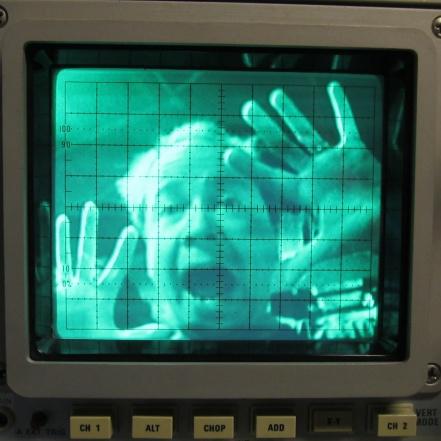
Alan Wolke Rebroadcast: So somebody asked me once about, you know, what are these other inputs and outputs on the back of the scope? What do I use them for? You know, like the Z-axis input or the Z-axis input. I'll do it that way. Yeah, thank you. Some of these other ones. So I started doing some videos on that with like doing like XY mode, listed you patterns. And I did a couple of videos. And that kind of ultimately led to the one that was really popular, which was doing some composite video on the scope screen. Yeah, that's right. That was kind of a follow-on of other videos that I did. It's like, oh, this was fun. Oh, oh, let me do this. You know, and I started going through it. And once I did something fun playing around the bench, it's like, oh, I think I'll do a video with that. So a lot of the videos came out of just fun that I'm having on my bench playing around and saying, yeah.
Dave Jones: Same here, yeah. Yeah, they're not planned at all. I'm just doing something. I go, oh, well, this would make for some interesting content, I think. Maybe some people want to see this. So you switch on the camera and do a video.
Alan Wolke Rebroadcast: I don't even have a proper digital video camera. I mean, the camera that I use is a Canon. Let me look at it here. I've got it right here. It's an SX110IS, which is a 12X optical zoom, 12 megapixel still camera. Okay? Just a still photo camera. But it does a decent job with video. I use the microphone that's in it. You know, so, but, you know, like I said, I think I like the feel that it has that way. So I'm just going to continue to do them that way probably.
Dave Jones: So all about the content. Content is king. Yep.
Chris Gammell: Alan, where do you see scopes going in the future? I mean, you've been using them for a long time and now you see them every day with like how customers are using. Where do you think it's all going towards?
Alan Wolke Rebroadcast: Yeah, I mean, it's, I think the direction is, especially if you compare, you know, over, you know, the past couple of decades, it's changed dramatically, right? There's a whole, there's a lot of difference between, you know, a four channel analog scope from, you know, the 1980s to, you know, even the basic digital scopes today. I mean, people ask an awful lot more of scopes nowadays than they used to, you know, back then. You know, it used to be just a visualization tool, timing measurements, you know, other things like that. But it was just to visualize, you know, signal shapes and that kind of a thing. And now people are doing compliance measurements to standards, you know, jitter decomposition, frequency domain, modulation domain analysis. So I think that's really, you know, where most of the, you know, the changes are, are just being able to do more and more with the same instrument. You know, and, you know, kind of to toot Tech's horn a little bit, you know, kind of this, you know, the mixed domain oscilloscope that Tech came out with last year is a good example of that, of being able to tie multiple domains together. And I think you're just going to see more and more of that. And that's, I think, you know, and then it's just, it's just pushing the envelope in both directions. You're going to see more sophisticated features moving down the food chain into lower cost products. And you're going to see, you know, the other end of the food chain moving up, you know, to, you know, hundreds of gigasample per second sample rates for real time scopes and things like that to go, you know, to the other end of the spectrum. So it's just kind of, it's wherever the technology allows you to go nowadays, you know, because the more people can do with fewer pieces of equipment, the happier they'll be because especially on the high end, if they're spending, you know, several hundred thousand dollars for equipment, they want to do as much as possible. So, yeah.
Chris Gammell: That's right. What are people using the high gig of sample? I mean, like 100 gigasample, that kind of crap.
Alan Wolke Rebroadcast: What are people using that for?
Chris Gammell: Like what kind of NFC?
Alan Wolke Rebroadcast: Hard drives is a big one. Well, hard drives can certainly can be a big one.
Dave Jones: They use lots of bleeding edge, high speed serial scopes. Oh, yeah.
Alan Wolke Rebroadcast: Yeah. They use a lot of high speed serial scopes. They use a lot of very high speed arbitrary waveform generators to generate these test waveforms because they're not just digital patterns. Oh, no. But the users for the kind of the bleeding edge of these scopes, especially the real time scopes, are things like, you know, there's a lot of military applications, obviously, for things like radar, satellite, things like that. But then also a very big one is research area in things like high speed physics research and things like that, as well as high speed optical communications. Because what's it what the interesting thing that we're seeing now is something called coherent optical communications. Okay. And you think about optical communications kind of up until the last, you know, half a decade or so. People were talking about just is basically a very simple type of modulation. Right. You're just turning light on and off. Okay. And so it's kind of like. It sounds easy. Yeah, that's all it is, guys. It sounds easy, right? But the problem is that you get to the point where that can only take you so far. So what's happening now is coherent optical communications where if you think about the light as a carrier and you modulate things like amplitude and phase of that carrier.
Chris Gammell: Hmm.
Alan Wolke Rebroadcast: Whoa. Okay.
Chris Gammell: Make an FM light wave.
Alan Wolke Rebroadcast: Well, now people are doing like binary phase shift. FM PM. You know, binary phase shift keying and quadrature phase shift keying.
Dave Jones: It's kind of like how the modem industry progressed, right? It was very simple stuff at the beginning, 300 bits per second. And then they had to squeeze the, you know, all this advanced modulation stuff into the bandwidth.
Alan Wolke Rebroadcast: Right. So now you're seeing things like, you know, like dual polarization, you know, quadrature phase shift keyed, you know, optical communications. So you've got.
Dave Jones: With tongue angle.
Alan Wolke Rebroadcast: Right. Exactly. You have tongue angle. With added tongue angle, folks. You've got. You can have light at the same, you know, carrier frequency, the same color. Okay. Launched in two different polarizations, a vertical and horizontal polarization into the fiber. Okay. Each of those polarizations can have like a QPSK or 16 QAM modulation on it. And then you could add multiple colors doing the same thing. Okay. Really? So you've got frequency division multiplexing, polarization division, you know, changes. And so it's kind of, it's just a multi-carrier complex. So what's happening is the same modulation techniques that have been used for years for RF are now being used for light. Okay.
Dave Jones: And it has to be because when they string fiber optic between cities and under the oceans, they only string like, you know, like five of them, you know, three or something. You know, they don't string hundreds of them. And so you've got to put, you want to put more, more data down there. You, you don't up the frequency. You change the modulation. Right. Schemes and all that sort of stuff. Yeah. So that's more light down, more, more information down the same.
Alan Wolke Rebroadcast: Right. So now we're talking about, you know. It's a series of Tuesdays. A hundred plus gigabit per second type, you know, a hundred plus. Really? So guys like this need to have very, very high speed scopes because they need to capture the in-phase and quadrature. Because what happens is they'll take this optical signal, they'll demodulate it, but they demodulate it back to IQ, to quadrature data, just like you would do an RF. So you get an in-phase and quadrature component. They're using the scope as a very high speed multi-channel digitizer. Okay. And then doing all the math behind that to demodulate back down to, you know, the ones and zeros again. So, but yeah. That is so cool. It's pretty amazing.
Dave Jones: And here's something a lot of people don't understand, but they keep complaining about the scopes, all the modern scopes, all they're all running windows and all this sort of stuff. Well, you know, they're so advanced and so feature rich. You, you're almost as a, you know, you don't have to speak for tech, but just speak in general. That, that's the way that the industry is forced to go.
Chris Gammell: Really? Yeah. Just for getting software developers. Exactly.
Dave Jones: Because these scopes are all software now. Yeah.
Alan Wolke Rebroadcast: The more sophisticated you make those, those processing algorithms and those are the kinds of things that you want, the post-processing that you're going to do on the, on the data itself. The more sophisticated that is, you know, the, the harder that's going to do, the harder that's going to be to implement it in some kind of a closed operating system. Yeah. Okay. Or, you know, firmware written in assembly.
Dave Jones: Right. So it's all fast and slick like scopes. Oh yeah. Yeah. Uh, right. Uh, right.
Alan Wolke Rebroadcast: So there's more and more gets pushed into firmware and things like that to do more kind of real-time fast hardware-based processing. But you're limited in flexibility of what you can do there. Exactly. So you want to – PC hardware stuff is fast enough that you can actually – once you get down to that point, you can do a lot of this sophisticated post-processing in at least Windows-driven applications. I mean a lot of times the more sophisticated equipment will have a PC in them to run the UI. But they'll also have maybe a PowerPC or other types of processors that do a lot of the hardcore number crunching that you don't have access to but the UI drives it or talks to it. Right.
Dave Jones: And that's pretty much the price we pay for wanting all this high-end software functionality on our scopes really.
Alan Wolke Rebroadcast: It's not a green worm on the screen anymore. No.
Chris Gammell: So in the other direction, what about – so I mean there's all this high-end stuff, right? And – but what about from – I guess this would be a hybrid of your work and also your ham stuff and just your hobby stuff. What do you think is the best scope for someone to start with and maybe is accessible? I mean we're – I'm guessing it might be textbook. It's a long question.
Alan Wolke Rebroadcast: It is. Rather than break it down by brand, let's first just talk about type. To me, because I'm a very hands-on guy. I like to get a good feel for how things work. I'm always – maybe I'm old but I'm very partial to analog scopes because I think that gives you a much more analog closer to the hardware what's going on feel. Okay. There are certainly a lot of things. I mean many, many things that you can't do with an analog scope.
Dave Jones: Well, I posted a forum question where I listed literally a dozen different things that an analog scope cannot do that you can do on a basic $400 digital. Right.
Alan Wolke Rebroadcast: I mean pre-trigger data, storing, single-shot captures. The list goes on forever.
Chris Gammell: Yeah, but you know what? You've never taken a Polaroid of a digital scope before, Dave.
Alan Wolke Rebroadcast: But that's the funny thing because when I first got out of college, my first job, we didn't have digital scopes. We had the Polaroid scope cameras. And one of the rites of passage when you got into the lab is that someone would come up to you in your face with that scope camera and take a picture. And hanging on the wall were little curly Polaroid photos of everybody that worked in that lab that was like a big nose. Oh, that's great. It was a big nose and the eyes sitting right far back. Everybody looks like a horse, but everybody had one of those photos. Do you have it still? I probably have it packed away in a box somewhere. Oh, you've got to get that, man. Yeah, let's go. But yeah, you're right. I mean there's certainly things that you can do with today's digital scopes. But I guess part of the issue is that I'm a big proponent of understanding the fundamentals. And one of the things that I see is that – and it's a good thing and a bad thing is that a lot of folks that are – especially hobbyists that are getting into electronics today are getting in like with Arduinos and things like that. And they're blinking an LED within a half an hour of opening the box being able to do this. They're actually making hardware do something. But – Which is awesome. And I think that's great because it just gets people excited about building things and making things. But it also kind of short circuits or it goes around some of the fundamentals. So how do you bias a transistor? Okay? And how do you get a feel for what circuits are doing? And I think there's value in both of those. And I'll put myself more in the analog fundamentals camp than I am on the microcontroller camp. I've never really done any work with microcontrollers myself. Okay? But I think there's a lot of value in that. I just – I hate to see people lose sight of some of those fundamentals because that's the kind of –
Dave Jones: That's why I always recommend go get yourself a beginner. Which scope do I get? Well, go and get a 20 megahertz dual channel analog. And they're free.
Alan Wolke Rebroadcast: That's the advantage.
Dave Jones: You can get them practically free.
Alan Wolke Rebroadcast: Right. You can. And that's a good thing because then you start to learn the fundamentals. And I remember I was talking with kind of a relatively new engineer. And we were talking about scopes and just basic usage and a couple of different things. And I said, well, if you turn this – I remember saying something like, well, if you turn the sweep speed up to see this, and they said, well, what's a sweep speed? Well, on the new digital scopes, it's not sweep speed. It's horizontal scale. Exactly. Right? Yeah. And that's the kind of – So I think there's a lot of value in understanding those fundamentals and what a scope is showing you, what you're asking it to do and what it's showing you. And then you can better understand and better take advantage of the things that a digital scope can do for you.
Dave Jones: There's an interview question, folks. Trap for young players. Because what's the sweep speed of a scope? Right. Pass or fail right here, folks.
Chris Gammell: Not even triggering too, right? Triggering is a very important concept in both of them. Yeah. And I think in analog scope, you realize that, no, no, this is actually like a comparator. I mean, this is like – it is firing an electron in order to actually capture this waveform. And you don't really get that in a digital scope. It's just a line that moves on a screen, right?
Alan Wolke Rebroadcast: But the thing is, once you go beyond that, the triggering in a digital scope is infinitely better than what you can do in an analog scope because of the capture capability and being able to trigger on different conditions and things like that. But the understanding that concept of why it's called a trigger and what it means, right? What it helps you to do. You need an analog. You need to go back. Yeah. So I always – I like to have people understand the fundamentals, see where this is coming from, and then decide what features you need in a digital scope based on the work you're doing. If you're doing a lot of high-speed serial work, you might need to do single-shot captures of multiple channels to do some decoding. Depending on what you're doing, that will help you decide what type of a scope you need. But like I said, it's almost a no-cost, freebie thing to pick yourself up an older analog scope, whether it's Tektronix or somebody else because they all basically work about the same way. Oh, yeah. 90% of the ones that are out there are – especially nowadays are triggered scopes because before triggered scopes, there were the recurrent sweep scopes, which are far less useful. Oh, no. But there's no – yeah. And there's almost no excuse now if you're going to buy an analog scope to buy anything other than a triggered sweep scope. Oh, of course. Okay. That's a given. Right. And like I said, you can get them for many times free or tens or twenties of dollars type of thing. And learn –
Alan Wolke Rebroadcast: Mostly shipping, right? Yeah. Yeah. Exactly. Yeah. And then learn about what it does for you and how to use it, how to get the most out of it, and then go decide, okay, I know I need this feature, this feature, and this feature, and then go shopping for the next scope.
Chris Gammell: Now, the other – Are you a – Okay, Chris. After you, David. No. No, no, please. No, no, please.
Dave Jones: It's a technical question, which could take some time.
Chris Gammell: All right. Well, mine is too. So anyway – Should we do? So are you a Jim Williams-style fanatic? Are you rebuilding? Are you a scope builder as well?
Alan Wolke Rebroadcast: I'm absolutely a huge fan of Jim Williams, and I was also a huge fan of Bob Pease. Right. You know, and I met Jim Williams twice, and we had some really great conversations. He was just doing one of his like high-speed amplifier seminars or something that I'd gone to years ago. But remember, we had some conversations, and it's funny. We actually started talking about scopes one day because a lot of his stories kind of relate back to them. And he said that the first scope that he used when he was at MIT was a Allen B. Dumont cathode ray oscillograph. So I was just thinking of what we had. Yes. But he also related a great story, and I don't know if it's something you've talked about here before or not, but it appears as one of the chaps in his book, and it also appeared as an editorial in EDN News or one of those or something like one of the electronic rags. It was entitled, Should Ohm's Law Be Repealed? Oh, yes. Have you read it? I don't know if we've talked about it. No, no. And it's a great story. What it talks about is when Jim Williams was growing up, he lived next door to this doctor. I think it was Dr. Stern was his name, who was also an electronic hobbyist, and he had an older tech scope there. And I don't remember the model number now. And Jim would go over there and play with circuits and build things and look at things on the scope. And the scope was also a work of art, some of these older tech scopes, the way they were built and things like that. Oh, yes.
Chris Gammell: The boards are just gorgeous.
Alan Wolke Rebroadcast: But he remembers going through and looking at the circuit, and it was doing some weird things. Like it would do something weird. Voltage readings weren't making sense. Waveforms weren't making sense, and that kind of a thing. And I guess this Dr. Stern kind of looked over his shoulder and kind of moistened a couple of fingers and touched a couple of spots in the board. And then judicially soldered in a couple of puffs of capacitance between two nodes, and the circuit started working. And the story was that Jim's like, what did you do? What did you figure out? And as the doctor explained to him, he said, well, I figured that the circuit was probably oscillating at several hundred megahertz, beyond what the scope can show you. Okay? And just by putting a little bit of capacitance in, I could dampen out the oscillation with my fingers. We soldered some capacitance in there to kind of squelch it, and everything worked fine. And Jim's reaction was like, well, that's not fair. Right? Right? The scope should show me what's going on. And it's really a great lesson in understanding the limitations of your tools. Right? Because every data sheet, no matter what tool you're using, whether it's a scope or a circuit simulator or anything else, the manuals and everything will tell you everything that the thing can do. But they don't tell you what it can't do.
Dave Jones: Can't do. Yep.
Alan Wolke Rebroadcast: Okay? And if you don't understand the limitations of those tools, the tools are going to lie to you. Okay? You've got to be smart enough to recognize the lie. I mean, just like that one with the scope, the one I tell people, you know, when you think about a circuit simulator, like, LTSpice has got no problems putting 1,000 amps through a 1N914 diode. Yeah, exactly. Right?
Chris Gammell: I had a 20-kilovolt signal on my screen the other day. It was awesome.
Alan Wolke Rebroadcast: So it doesn't know you let the smoke out of the part. Right? So you've got to – it's just as and sometimes even more important to understand the limitations of the tools or how you use the tools. Okay? So you don't get lied to. Yep. You know? And that's another – again, probably another good reason for analog scopes. Okay? Because if you've got – it's a simple enough instrument for people to understand how it works. And it's very unlikely that it's going to lie to you about something other than – go ahead.
Dave Jones: I made – when we were talking about this the other day and I listed those things that a digital scope can do that an analog scope can't do, I also pointed out that analog scopes can lie – will not lie to you but not show you. But you can miss stuff on an analog scope as well.
Dave Jones: If you don't turn that brightness all the way up and get that little faint little runt pulse in there. You can miss it, right, just like you can on a digital scope. So they're not magic either. There's limitations everywhere.
Alan Wolke Rebroadcast: It's understanding those limitations. And no matter what the tool is, whether it's a screwdriver or a scope, a spectrum analyzer or a simulator, they all have limitations in terms of what they can and can't do. And it's just as important to understand those limitations as it is to understand what it can do.
Chris Gammell: Are you allowed to give these talks to your customers? I have to ask. Because I have to say if it was me and I was having a bad day, I'd be like, well, you know, there's just limitations in the scope.
Alan Wolke Rebroadcast: Well, the thing is, you know, every tool has got limitations. And that's the thing, you know, as an application engineer, you know, I'll go through and describe. We can do this. You can't do that. You're asking for something that can't be done this way or that way because of whatever it is. Every tool has – Because of physics. Because of physics, right? We can't violate the laws of physics. You can't probe a signal without affecting it in some small way. Sometimes it's not such a small way.
Dave Jones: Bloody Heisenberg, you know.
Alan Wolke Rebroadcast: Right, right. So, but yeah, so it's all about understanding those limitations and the impact of doing – of what you're doing and how much it's going to matter or not. So, but –
Dave Jones: One thing we've been talking about recently on the forum is a couple of new scopes now on the market are going back to low sensitivity, low vertical sensitivities, like 500 microvolts per division. And a lot of people are complaining, well, why is there a million – look, there's a whole division of noise on there. Yeah. You know, and can you explain why that's the case and why that's so difficult over bandwidth to get these low sensitivities?
Alan Wolke Rebroadcast: Sure. And that's – the way to think about that is that, like, if you've ever held your, you know, your hand to your ear to hear something a little bit better, right? What you're doing is trying to cut out noise or signals from other areas, okay? Mm-hmm. So, it's going to amplify noise at every frequency and it's going to add a little bit of its own depending on what its noise figure is, okay? So, the more bandwidth you have, the more noise you have because you essentially could have – even a 50-ohm resistor has got noise, broadband noise.
Dave Jones: Let alone a 1-megohm input impedance, folks.
Alan Wolke Rebroadcast: Right, right, exactly. Which is a regular scope. Right. So, the wider the bandwidth you have, the more total noise you're going to have. And that's why if you hit the bandwidth limit on the scope from 100 megahertz down to 20, that noise goes down, right? Because now you're listening with less bandwidth, okay? So, it's a concept that regular users of spectrum analyzers understand very well. You reduce resolution bandwidth and the noise floor drops. But scope users generally don't think about that. It's like, well, I want to have a scope with 3 gigahertz of bandwidth and I want 100 microvolts worth of noise. Well, you don't get that, right? Exactly. I want a pink pony.
Dave Jones: And a flying unicorn.
Alan Wolke Rebroadcast: Right. Yep. So, it really comes down to the fact you can have low noise amplifiers and all this kind of thing, but at the end of the day, there is no perfect noiseless device. A resistor creates noise, right? So, and that is just going to happen. And the more bandwidth you have, the more noise you have.
Dave Jones: And the higher the input impedance, the more noise you have.
Alan Wolke Rebroadcast: Yes, exactly.
Dave Jones: As the value of the input resistance goes up, the higher your noise goes up.
Alan Wolke Rebroadcast: Yep. QKTR, whatever that formula is. Yeah, the Johnson noise. Yep, exactly.
Dave Jones: Exactly.
Alan Wolke Rebroadcast: So, but there's no getting around the physics unless you bring everything down to super cool temperatures and that kind of stuff to minimize that. So, take the temperature part of that equation down.
Dave Jones: So, be thankful you're getting 500 microvolts per division capability, folks.
Alan Wolke Rebroadcast: Don't bitch about it.
Chris Gammell: Well, if you filter the crap out of it, you might be okay, right?
Alan Wolke Rebroadcast: Or a pile of averaging and things like that. You may be able to get it down, that kind of a thing.
Dave Jones: Well, you can use the high res mode these days, which implements the on-the-fly averaging, you know, between like four samples or ten samples or something.
Alan Wolke Rebroadcast: Yeah, as long as you're not looking at a signal that needs the full sample rate, absolutely.
Dave Jones: Yes, exactly.
Alan Wolke Rebroadcast: So.
Dave Jones: One last question because we're way over time. Okay. On the scope theme again, a lot of people, and I think I was going to actually shoot a video on this and trying to explain why. I get so many people bitching about these scopes and why they have software, you know, they charge more for what is effectively a software option, you know. They'll charge more for, you know, sample memory. They'll charge more for serial decode. They'll charge more for bandwidth. Like, you know, the bandwidth is built in the scope and they'll software limit it back. Yeah. And I'm trying to explain to them that, you know, if companies can afford to keep people on staff and do leading edge R&D, you have to make money on this higher end margin products. And if you just follow the race to the bottom and sell, you know, a one gig bandwidth scope with all the bells and whistles in decoding for $400, the industry won't exist. Yeah. And it's true.
Alan Wolke Rebroadcast: And you're right. I mean, when I was on that. Well, I'll put it this way. When I was on the other side, when I was a customer for 20 years before joining Tektronix, I was in that same camp. It's like, there's just a, it's just changing a digit in this access code turns on this option. It's already there. Why can't I have it? You know, I was in that same camp, you know, but, you know, and I, I, I certainly understand the argument. But, but like I said, on the other hand, all, there is a lot of NRE that went into developing that. Okay. And, and if you don't, you know, if someone doesn't pay for that, the next, the next new project and the next advanced feature doesn't happen. So it's really about paying for the value that you get. But the one thing I should mention.
Chris Gammell: Well, the other option is every, as everyone pays more, right? I mean, it's just the, the base model of it is just goes up. Yeah.
Alan Wolke Rebroadcast: But the other thing I also, you know, think about too, is that especially we, you have to be careful about how we apply this to things like a bandwidth upgrade. Okay. Because a lot of times in the thing I, when I, I cringe sometimes when people say, oh, yeah, I found a hack to turn this 100 megahertz scope into a 200 megahertz scope. The, the thing that they're not taking into account there is that, you know, when that scope is configured as a 200 megahertz scope at the factory, it may go through a different calibration process to level flat and calibrate that channel for 200 megahertz. And if you just turn the bandwidth up, you, you, you don't have the benefit of the calibration of that channel at that frequency. So you may not get the, the flatness and things like that. Possibly. That you might, it depends on who, how they architected the scope, what they did and that kind of thing. That's right. But, but it's, it's one of those unknown things that if you take your 50 megahertz scope and turn it into a hundred megahertz scope, is it going to be flat out? You know, is it going to have the right response? Okay. We don't know that. Right. But so, but people can do what they want with their own equipment, of course, but.
Dave Jones: And yeah, so it is a necessary part of the industry. They have to do this.
Alan Wolke Rebroadcast: Yep.
Dave Jones: Really for companies to exist and companies to innovate.
Alan Wolke Rebroadcast: Right.
Dave Jones: Because if you don't do that, you know, you, no companies would make any money and they'd all be selling, you know, one hung low brand scopes for the lowest possible cost. And nobody would implement any new features.
Alan Wolke Rebroadcast: Right. Yep. Yeah. As I said, it is frustrating from the customer standpoint. And I was the same way. It's like, oh, it's there. I just don't want to turn it on. You know?
Dave Jones: It's a button push away. I know.
Alan Wolke Rebroadcast: Yep. Ah, boy.
Dave Jones: But it's tough. It's tough business.
Alan Wolke Rebroadcast: Yeah. Yeah.
Dave Jones: To be in from a scope manufacturer point of view.
Alan Wolke Rebroadcast: Right.
Dave Jones: But I mean, what we get these days, sorry, we'll finish up in a sec. Like what we get these days for a, you know, for 400 bucks or like sub thousand dollars is sort of, you know, the, you know, most people can afford like a sub thousand dollar scope. And what you, you know, I can remember paying my first scope. I paid like eight, nine hundred dollars for 20 megahertz dual channel analog. Right. It didn't even have delayed time base.
Alan Wolke Rebroadcast: Exactly.
Dave Jones: And, you know, what you can get for under a thousand bucks now is just insane.
Alan Wolke Rebroadcast: It's amazing. And it's one of those things that you're getting a tool that has so much capability. You know, it gets harder and harder, especially from a beginner to understand all the things it can do and how it's doing it. And you run the risk of asking the scope to lie to you because you may not understand all the things it's doing.
Dave Jones: Be careful, you young players out there.
Alan Wolke Rebroadcast: Oh, boy.
Dave Jones: Well, we're way over. Thank you very much for joining us, Alan.
Alan Wolke Rebroadcast: Oh, it was great. Great fun. And I'm certainly glad that you asked me. Thank you.
Chris Gammell: Alan, where can people find you? I want to hear you say the name of your website.
Alan Wolke Rebroadcast: Okay. Well, they can find me on Twitter, of course. I'm Alan at Tech on Twitter.
Dave Jones: That's T-E-K, folks, as in techtronics.
Alan Wolke Rebroadcast: You can also find me on YouTube, as you mentioned. My YouTube channel is my call, W2AEW. But then I know the one that Chris wants me to talk about is my personal website, which is just kind of a little bit of a joke. I haven't updated it in a while. But it's www.dorkage.com.
Chris Gammell: That's a great address. I love it.
Alan Wolke Rebroadcast: O-R-K-A-G-E. Someone once kind of looked in my room with all my equipment and wires and ham radio stuff and said, man, that's a lot of dorkage. I was like, all right. I'm going to say that domain's available. And it was. And I picked up the domain I don't know how many years ago. But that was the best $19.95 a year I spent on the dorkage.com.
Chris Gammell: And yeah, and you've got the, you're rocking the GeoCities look. I like it.
Alan Wolke Rebroadcast: Well, actually, when I first did that website, literally the first version of the website was a HTML coded in like Notepad.
Dave Jones: Oh, yeah.
Alan Wolke Rebroadcast: I've done that. That's the way to do it. And actually, I'll tell you right now, I mean, I don't update the site very often. But the tool that I use to update is Adobe PageMill. How old is that?
Chris Gammell: I don't even know what that is.
Alan Wolke Rebroadcast: So Adobe PageMill is probably from, I don't know, like 2000 or something like that. Ah, that's racing. Come on. Maybe even older. I don't know. It's an old program. It was this millennium, right? It was on Windows 98 when I first did it. So that. Nice. Nice.
Chris Gammell: Wow, that's great. I really enjoyed hearing about all the scope stuff and the ham stuff, too. I mean, that's always interesting because, you know, I should be getting into it more.
Alan Wolke Rebroadcast: It's one of those things. It could offer so much. And it's just a matter of you get out of it what you put into it. There are so many different aspects to it. We had a whole other show on that. Yeah.
Chris Gammell: Well, great. Well, we'll definitely see you on Twitter. And hopefully I'll get to catch you at Dayton this year. Yeah. Hopefully.
Alan Wolke Rebroadcast: Are you going to go out to Dayton this year?
Chris Gammell: I hope so. If it's not the same as Maker Faire this year, I'll probably be there. Okay, great.
Alan Wolke Rebroadcast: I know my wife and I were talking about going out because we've talked about it as long as we've been together. And we've never gone out or I've never gone out since we've been together. We've been married almost four years. But she's looking forward to going out there, too. So hopefully we can make that happen this year. That's awesome. That's a keeper right there. Yeah. I don't understand this.
Dave Jones: What?
Alan Wolke Rebroadcast: Well, she's not technical at all, but she's 100% supportive of what I do. Because she knows if I'm not sitting watching TV with her, I'm downstairs melting solder. I'm upstairs playing on the radio. So she knows where I am and she supports what I do. And she's fantastic. So everybody should have somebody as great as that.
Dave Jones: That's great. Terrific. All right. Thanks, Alan.
Alan Wolke Rebroadcast: Okay, great. Thank you very much, guys.
Chris Gammell: Yeah, we'll talk to you soon.
Dave Jones: Catch you next time.
Alan Wolke Rebroadcast: All right. Take care.
Alan Wolke Rebroadcast: Take care.
Speaker ?: Take care.
Keep current
Every episode, plus the occasional job post, in your inbox.